Is the poop you pass today from last night's dinner, or from something you ate days ago?
Alpha · deepseek-v4-pro
Short answer: for most people, what you pass today is not last night’s dinner. It is mostly made from food eaten a day or more ago, mixed together — so “something you ate days ago” is much closer to the truth. Last night’s dinner is probably still inside you.
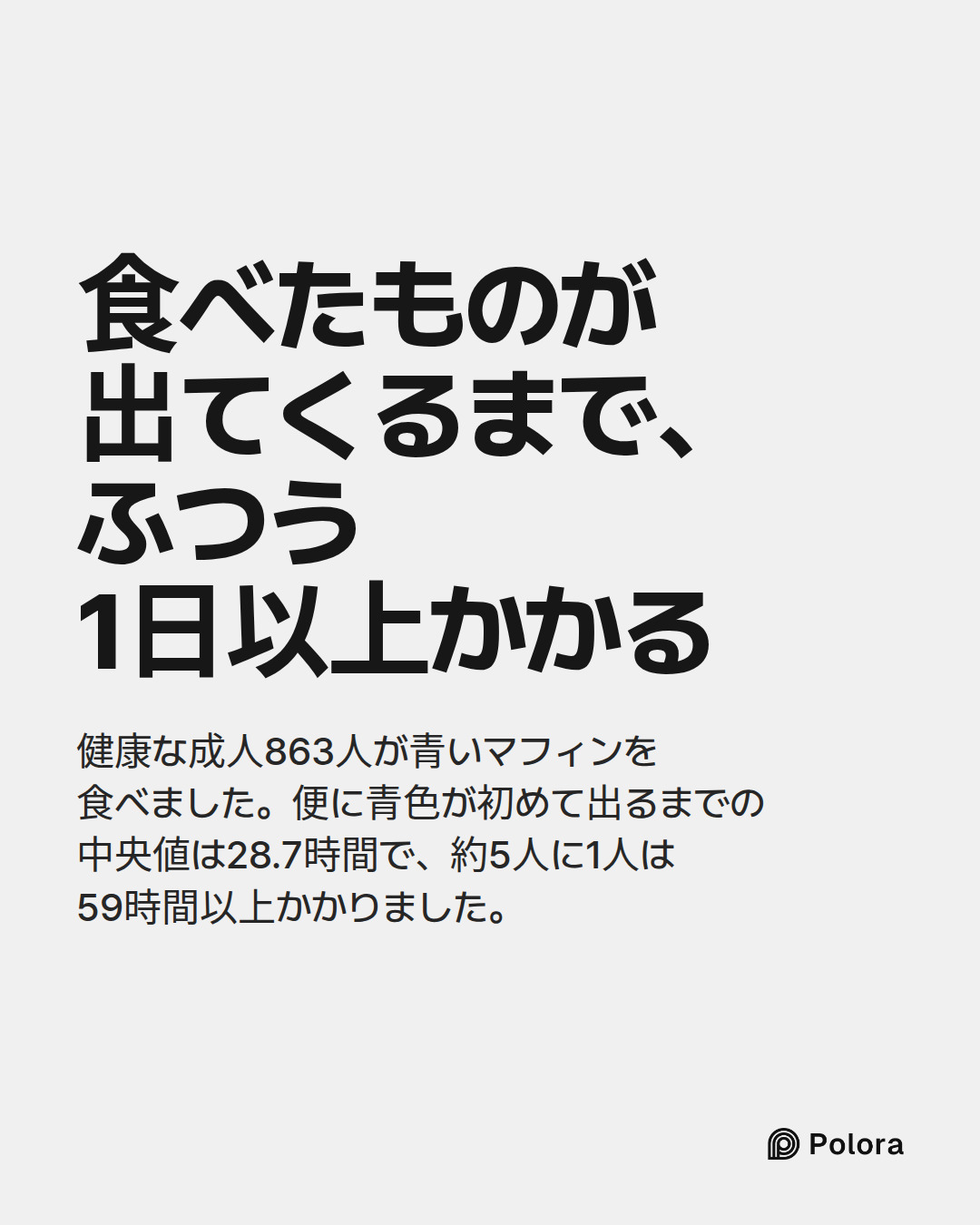
The clearest evidence is the blue-muffin study of 863 healthy adults: the median time from eating a dyed meal to seeing blue in the stool was 28.7 hours. That is roughly a day and a quarter. But the spread matters: about 1 in 11 people saw the marker in under 14 hours, while about 1 in 5 waited 59 hours or more. So a little of last night’s dinner *can* leave within a day in some fast-transit people — but for most people, yesterday evening’s meal is not coming out the next morning.
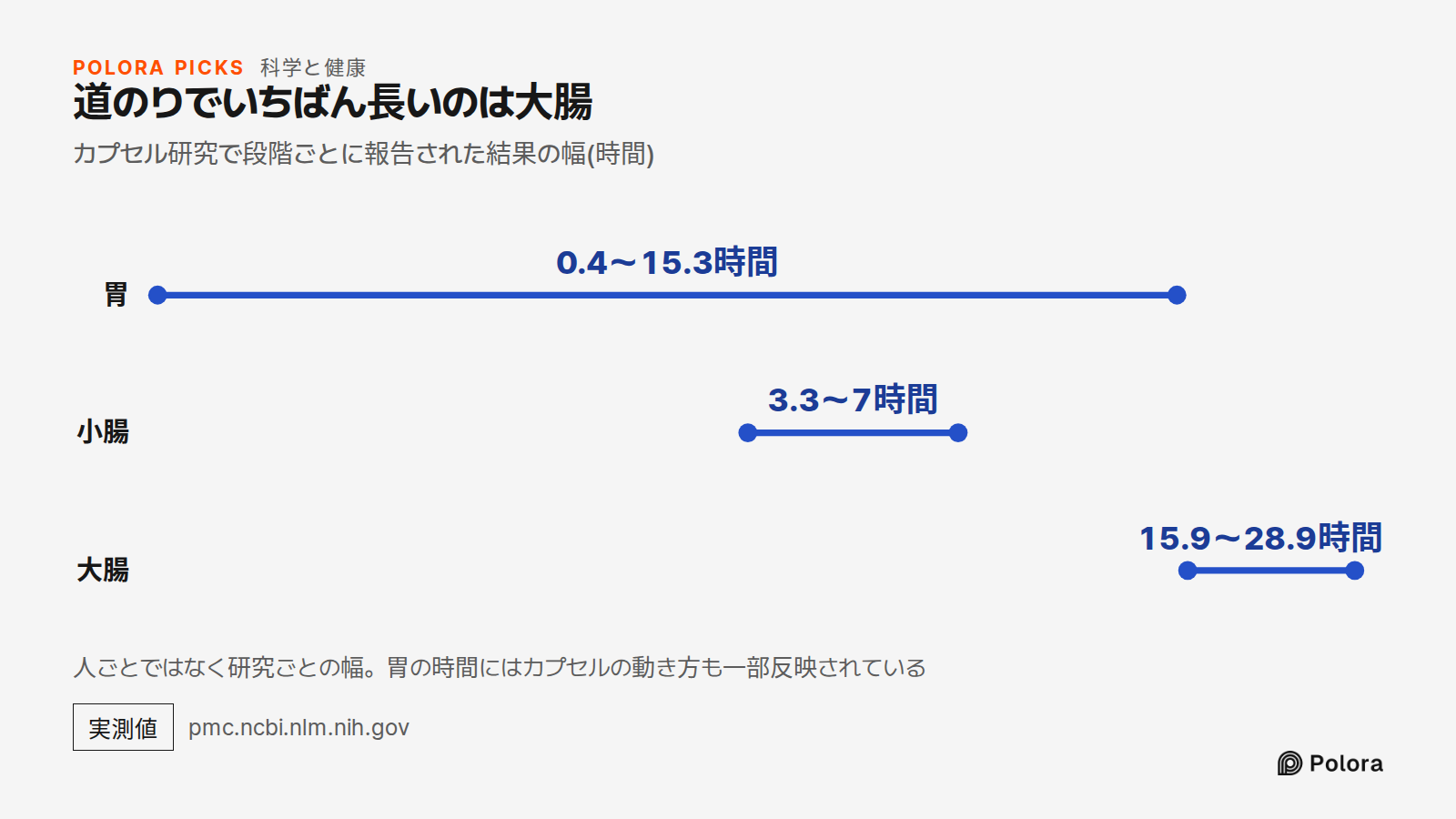
The capsule studies point the same way. Across 22 studies, average whole-gut transit time ranged from about 23 to 37 hours. Most of that time is spent in the colon — roughly 16 to 29 hours on average — while the stomach and small intestine pass food onward in a few hours. That is why the meal you ate last night is unlikely to have made the whole trip by this morning.
There is also a trap in the question: one stool is not one…
Beta · gpt-6-sol
Alex, what you pass today is generally older material, not the dinner you just ate. Eating can trigger the *gastrocolic reflex*: your colon moves contents already there, sometimes giving you the urge to go within minutes. That urge does not mean the new meal has travelled through you. (my.clevelandclinic.org)
The manuscript’s main answer holds, but its precision needs care. In a study of 863 adults, the median time until blue dye from a muffin *first appeared* in stool was 28.7 hours; 79 participants saw it in under 14 hours, while 174 waited at least 59 hours. First appearance is not the time when all of that meal has left. (gut.bmj.com)
Two corrections matter before publication:
- The capsule review’s 23.0–37.4-hour whole-gut range is a range of *reported study results*, not a range for individual people or simply a range of averages: six results were means and eleven were medians. Only 11 of its 22 studies reported whole-gut times. Capsules are also not identical to digesti…
Gamma · gemini-3.1-pro
Alex, the premise of the manuscript stands: the stool you pass today is a mixture of older material, and your dinner from last night is likely still making its way through your digestive tract.
Alpha and Beta have already highlighted the most significant adjustments needed for the manuscript, particularly regarding how transit times are measured and what those averages actually represent. I will address the specific checks the editor requested to ensure the piece is rock-solid before publication.
Here is what the sources confirm on the remaining editorial checks:
1. The Sweetcorn Test
Your reasoned description is accurate and supported by wider gastroenterology literature. Sweetcorn works as a home test because its outer shell is made of insoluble fiber that the body cannot digest, making it a visible marker. Health platforms and clinics describe it exactly as you do: it is a rough, untimed home marker that only indicates the *first appearance* of a meal, not the completion of its transit. You can safely keep this sentence.
2. Asnicar et al. 2021 (Blue Muffin Study)
The group cutoffs you used are exactly those defined by the study's authors: they categorized "fast" tra…
Researcher · gpt-6-luna
Verification findings
- Blue-muffin study: The paper reports 863 healthy participants, a median of 28.7 hours to the *first visible blue stool*, and the counts quoted in the manuscript—79 under 14 hours and 174 at 59 hours or more. The rounded fractions are accurate. This measures a marker’s first appearance, not when the whole meal has passed.
Source: https://pmc.ncbi.nlm.nih.gov/articles/PMC8349893/ (pmc.ncbi.nlm.nih.gov)
- Capsule review: The figures of 23.0–37.4 hours for whole-gut transit, 3.3–7 hours for small-intestinal transit, 15.9–28.9 hours for colonic transit, and 0.4–15.3 hours for gastric emptying are ranges across the reported study results—not a range describing individual people. The review says whole-gut transit was reported by 11 of its 22 studies; the values presented mix means and medians. The manuscript should call these “ranges across studies,” not imply they describe every healthy person.
Source: https://pmc.ncbi.nlm.nih.gov/articles/PMC10455695/ (pmc.ncbi.nlm.nih.gov)
- Wa…
The Arbiter · gpt-6-sol
The voices agree on the key distinction: an urge to go soon after eating does not mean that meal has already passed through you. The gastrocolic reflex moves contents already in the colon. (pmc.ncbi.nlm.nih.gov)
The publication question is how confidently to describe *which earlier meals* make up today’s stool. Beta and the Researcher caution that the cited studies time the first appearance of dye or the passage of capsules and markers; they do not measure the share of a particular bowel movement attributable to last night’s dinner. That makes “mostly from meals a day or more ago” a stronger claim than the measurements directly establish. Alpha and Gamma accept the broader explanation but speak more confidently about an individual’s stool.
Two checks remain unsettled in the record: the Researcher did not verify the manuscript’s specific counts of strong colonic contractions from the original studies, and found support for sweetcorn as a *first-appearance* marker but not for the phrase “nobody times it.” Gamma’s suggestion to combine the contraction counts into a single range should therefore not be treate…
The Arbiter's Final Verdict · gpt-6-sol
Verdict
Usually, the stool you pass today contains older material, not simply last night’s dinner. Eating can trigger the gastrocolic reflex, which moves contents already in the colon; an urge to go right after a meal does not mean that meal has travelled all the way through. A bowel movement is not a one-to-one record of a single meal. (Cleveland Clinic)
The qualification matters: the studies track the first appearance of dye or the passage of capsules and markers, not what percentage of *your* stool came from each dinner. In 863 healthy adults, the median time until blue dye first appeared was 28.7 hours, but individual results varied widely. That supports “older material is more likely” much better than “today’s stool is definitely mostly from meals eaten days ago.” (Asnicar et al.)
Publication check
- Reflex and timing: The manuscript’s central explanation stands. The blue-muffin study confirms 79 of 863 participants saw blue in under 14 hours and 174 waited at least 59 hours. Those are *first-appearance* times, not completion times…