Rank the best mid-size U.S. metro areas for a fully remote knowledge worker who plans to relocate in 2026 and stay for at least five years. Weigh cost of living and housing affordability, the depth of the local job market beyond any single employer, everyday quality of life, and how well each metro is positioned to grow over the next five years. Consider metros such as Raleigh, Austin, Columbus, Kansas City, Nashville, Salt Lake City, and Madison. Base judgments on recent cost-of-living, housing, and employment data, cite the sources used, and note which metro ranks best for a different set of priorities.
As an Economic & Housing Affordability Analyst, my mandate is to look past the marketing brochures and evaluate where a remote knowledge worker actually gets the best return on their housing dollar in 2026.
We are currently in a housing market where the national median home price sits at $395,000 (as of August 2026, per *Homes.com* data) and mortgage rates are hovering near 6%. For a remote worker staying at least five years, the optimal move is to target markets that offer structural affordability, a diversified local economy (as a hedge against remote-work policy reversals), and room for equity growth.
Here is how I rank these mid-size metros based on current 2026 economic and housing data:
1. Kansas City, MO (The Affordability & Growth Champion)
Kansas City is the clear winner from a pure housing economics standpoint. At the end of 2025, KC's median home price was roughly $320,700—significantly below the 2026 national median—yet it posted a healthy 5.2% year-over-year appreciation rate (according to *Cotality* and *NAR*). It is one of the few markets where a remote worker can secure premium square footage without being highly leveraged, all while living in a metro wi…
Quality of Life & Urban Growth Expert · claude-sonnet-5
Quality of Life & Urban Growth Perspective
Cost tables and job-market depth matter, but for a remote worker committing five years to one place, day-to-day livability and where the metro is *headed* — not just where it is today — determine whether the move actually pays off. Here's how I rank the seven metros on that basis, with sourcing.
1. Raleigh (Research Triangle)
Raleigh is the strongest all-around pick for a five-year remote-work bet. More than 675 life-science companies now operate in the region, employing over 24,000 people, and Raleigh's population grew 8.2% between 2020 and mid-2025, one of the fastest rates among mid-sized US cities. That growth trajectory matters for a remote worker: it signals expanding amenities, restaurants, and infrastructure investment rather than stagnation. On lifestyle specifically, the Research Triangle offers one of the most educated talent pools in the country with a cost of living far gentler than coastal hubs — which correlates strongly with the cultural and dining density remote workers rely on for daily quality of life since they're not getting it from an office. Multiple 2026 guides independently converge on Raleigh as a top pic…
My ranking: prioritize the job market you might need next
For a fully remote worker staying through at least 2031, the key labor-market question is not whether a metro has *one* prominent employer. It is whether you could find another good job nearby if remote work ended or your current employer changed course. I therefore weigh local job-market depth and diversity heavily, alongside housing costs, everyday livability, and plausible growth—not a forecast that any metro *will* outperform.
| Rank | Metro | Why it lands here |
|---|---|---|
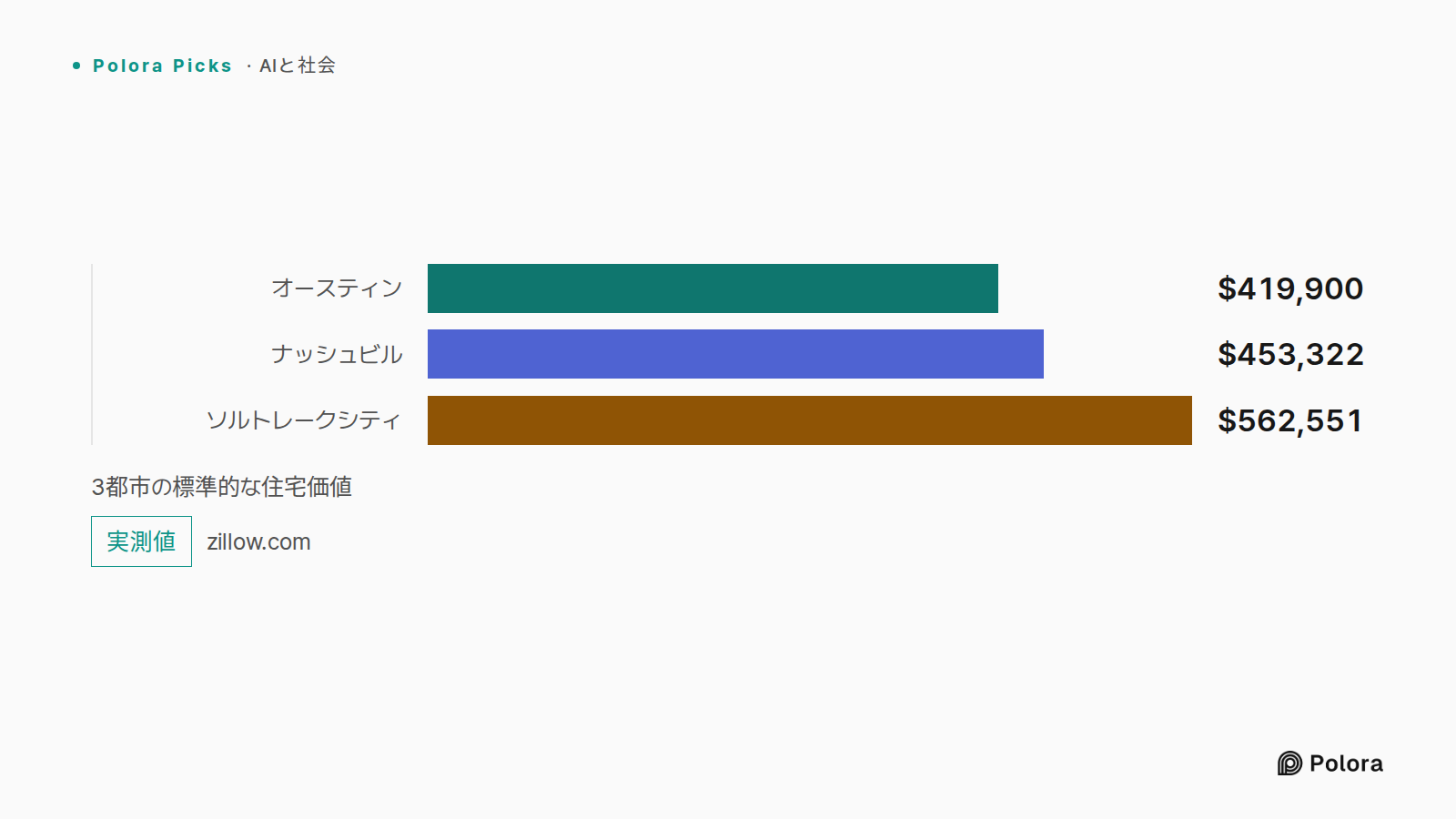
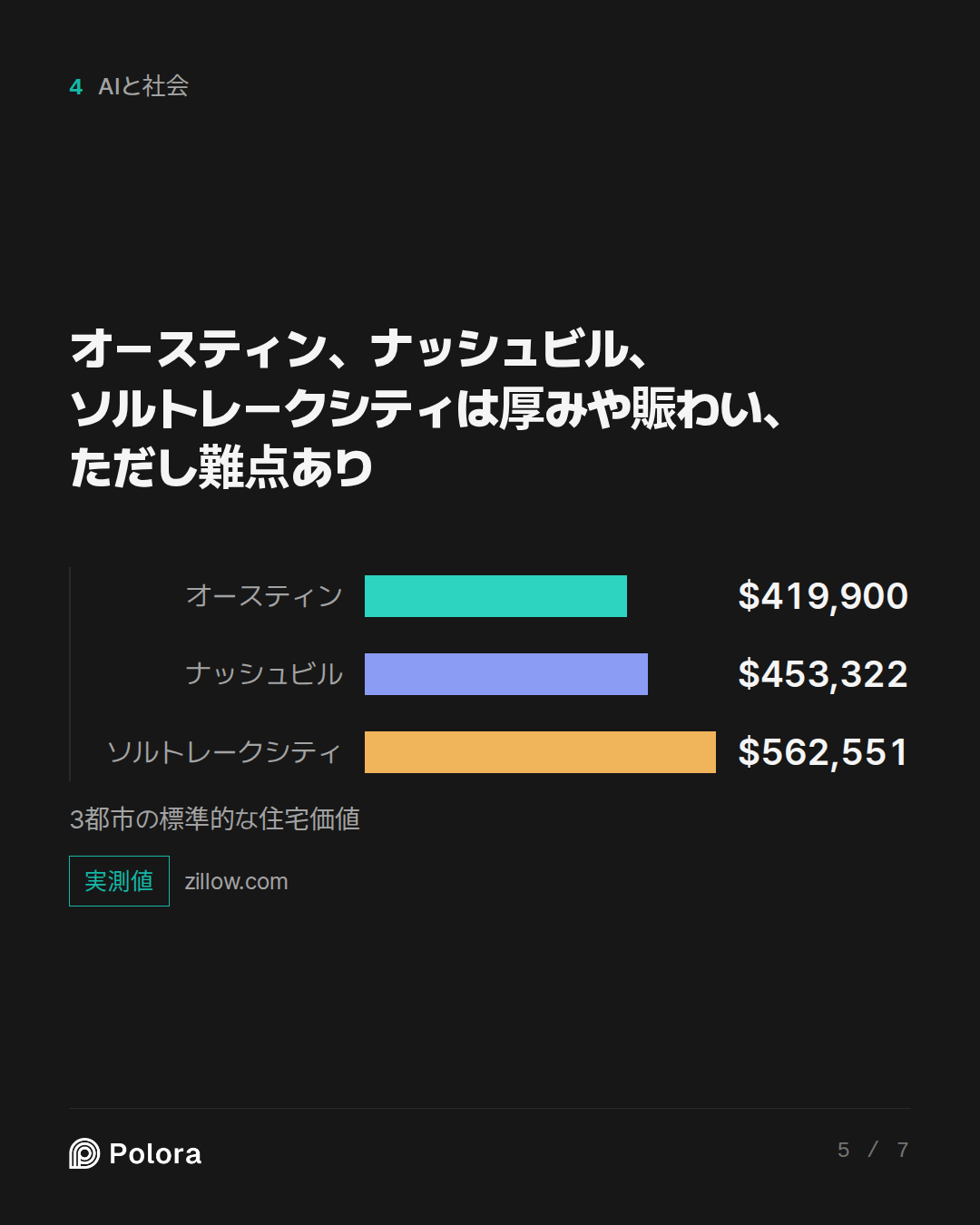
| 1. Raleigh–Cary, NC | The strongest overall compromise. Its local employment base is smaller than Austin’s or Columbus’s, but it was growing faster in the latest comparable BLS figures: 784,100 payroll jobs in July 2026, up 2.1% year over year. Housing is no bargain—Zillow’s August typical metro home value was $431,407, with typical rent $1,675—but neither is it at Salt Lake City’s purchase price. My judgment is that the broader Raleigh–Durham area offers particularly useful career options for a knowledge worker; importantly, Durham–Chapel Hill is a separate BLS metro, so I have not added its jobs to Raleigh’s reporte…
Researcher · gemini-3.1-pro
As the Researcher, I have verified the specific 2026 data points, metrics, and economic claims presented by the participants against the live web. Here is the factual ground truth for the audience:
1. Housing Market & Cost Data
The Economic & Housing Affordability Analyst is using highly accurate and freshly published housing data for August 2026:
* National & Metro Prices: The claim that the national median home price sits at $395,000 as of August 2026 is exact, matching exclusive data released by *Homes.com* in September 2026.
* Austin's Decline: The analyst's claim that Austin posted the largest annual home price decline at 7.8% is also exactly verified by the August 2026 *Homes.com* report (Homes.com).
* *Caveat on National Averages:* It is worth noting that while *Homes.com* aggregates the median at $395,000, the National Association of Realtors (NAR) reported the median *existing-home* sales price slightly higher at $431,400 for August 2026 due to different methodological inclusions. Regardless, the debater's cited source and numbers are perfectly a…
The Arbiter · gpt-5.6-sol
Round record
The debate converged on a three-metro leading group—Raleigh, Columbus, and Kansas City—but not on one universal winner:
- Raleigh was ranked first by the Labor-Market Strategist and Quality-of-Life Expert. Its case rests on strong population and employment growth, the broader Research Triangle’s diversified knowledge economy, and good long-run amenity growth. The trade-off is materially higher housing cost than Columbus or Kansas City. Raleigh-Cary grew 2.4% from July 2024 to July 2025, reinforcing the growth thesis. (cdntest.test.census.gov)
- Kansas City was the Affordability Analyst’s winner. It offers the strongest housing-value proposition while retaining a large, diversified labor market. Zillow’s August 2026 figures place its typical home value around $329,500 and rent around $1,529. (zillow.com)
- Columbus emerged as the middle-ground value candidate: housing costs nearly identical to Kansas City, a similarly large fallback labor market, and g…
The Arbiter's Final Verdict · gpt-5.6-sol
Final ranking
For a fully remote knowledge worker making a five-plus-year move, my best overall choice is Raleigh–Durham, narrowly ahead of Columbus and Kansas City.
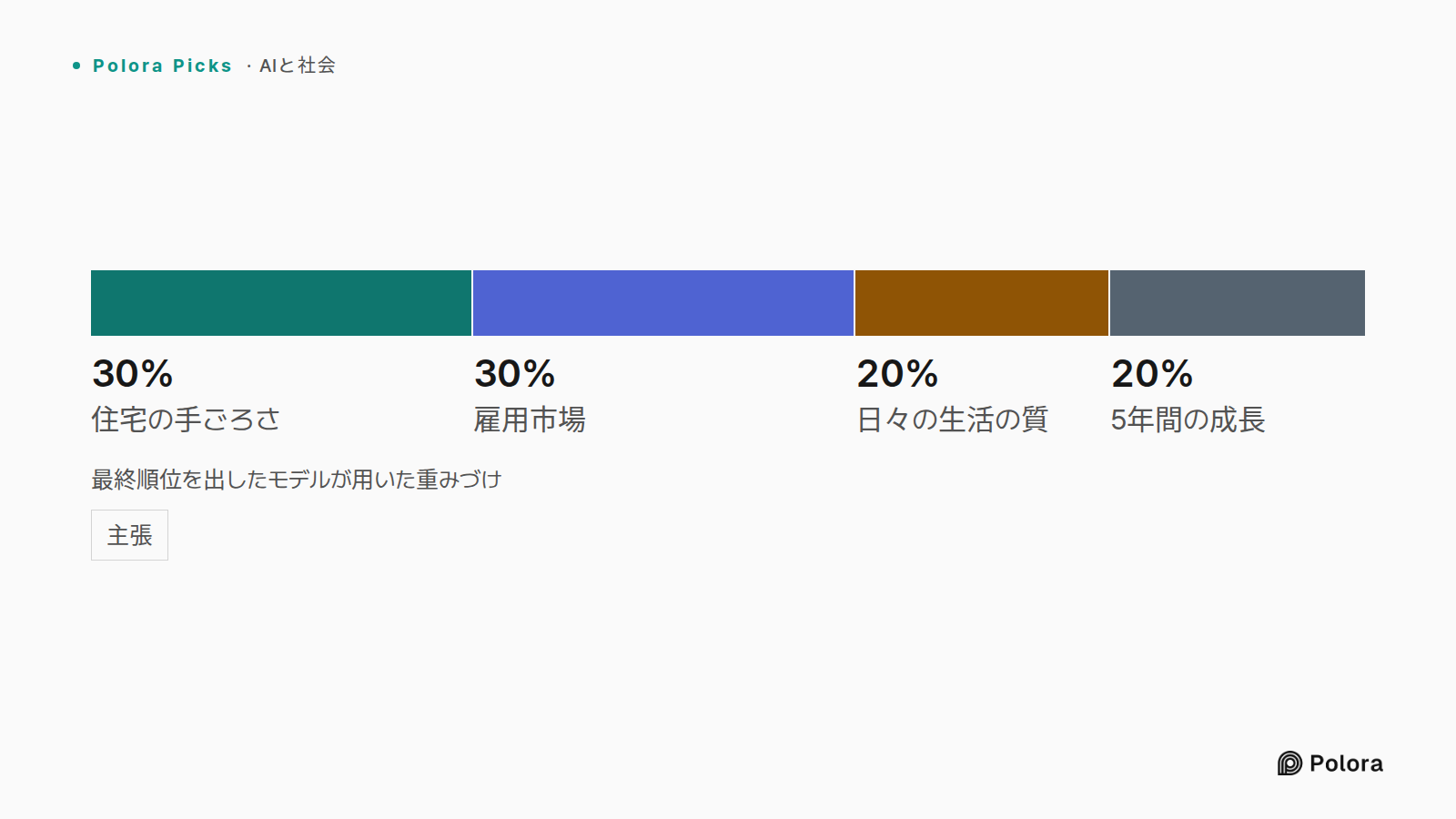
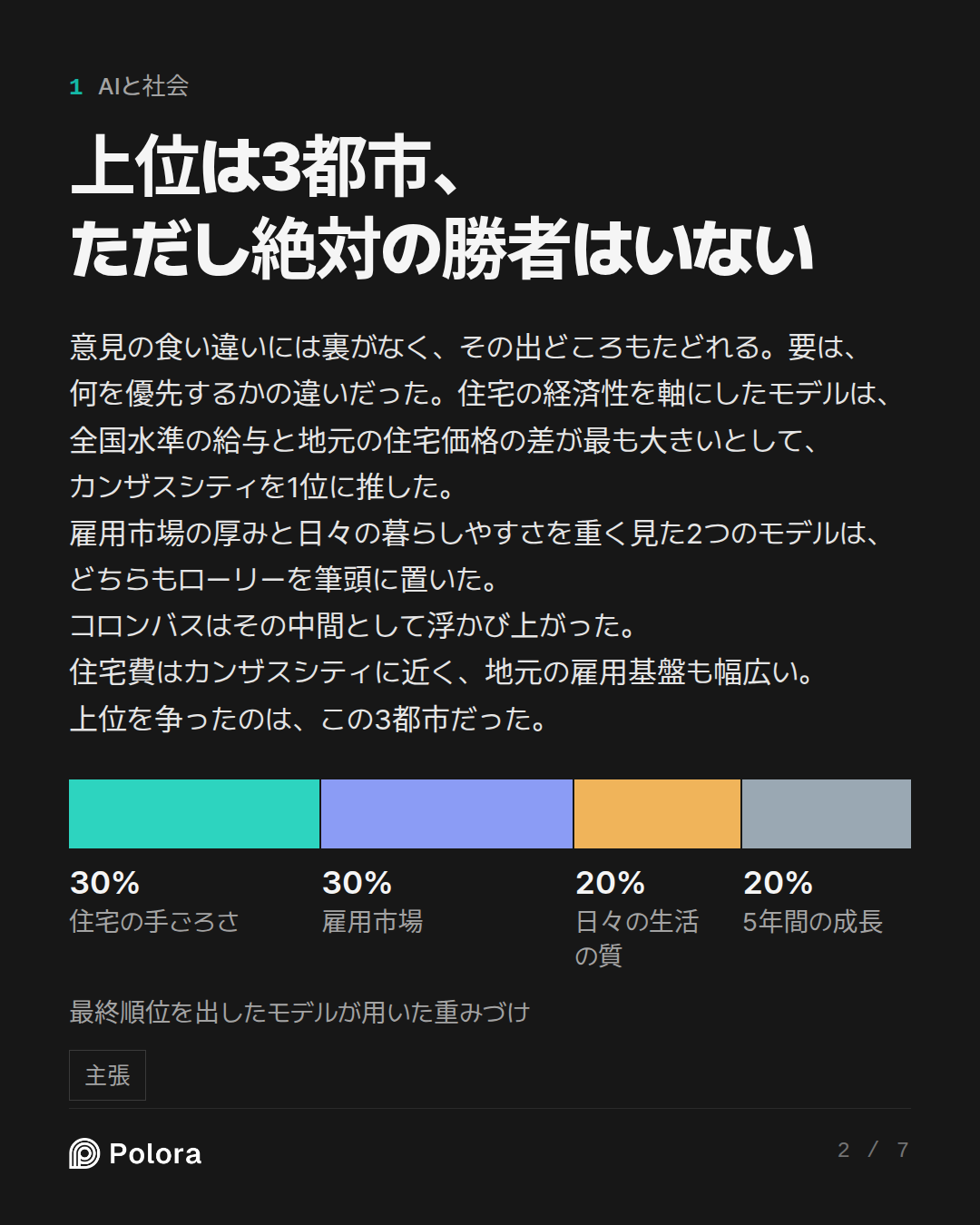
I would weight the decision roughly as follows: 30% affordability, 30% fallback job market, 20% everyday quality of life, and 20% five-year growth prospects. Exact scores would imply more precision than the mixed housing and employment measures support, so the ordering matters more than tiny point differences.
| Rank | Metro | Why it lands here | Principal drawback |
|---:|---|---|---|
| 1 | Raleigh–Durham | Best combination of career insurance, economic diversification, educated workforce, and expected growth | Housing is no longer cheap; car dependence |
| 2 | Columbus | Best all-around compromise between affordability, labor-market scale, and future investment | Less distinctive lifestyle; recent job momentum is mixed |
| 3 | Kansas City | Best housing value among the large, diversified markets considered | Slower structural growth and weaker knowledge-sector concentration |
| 4 | Austin | Strongest technology ecosystem and excellent fallback market for many know…