가장 안전한 선택이 가장 비싼 선택은 아닙니다. 개인용 Pro 요금제를 결제하면 더 나은 모델을 얻을 뿐, 회사 데이터를 지켜 주는 계약을 얻는 것은 아닙니다.
비즈니스와 경제 · 2026-09-03
팀의 누군가가 한쪽 창에는 고객 파일을, 다른 쪽 창에는 챗봇을 띄워 두고 있습니다. 빠르게 요약을 얻으려고 몇 문단을 붙여 넣으니 잘 되고, 다음 날 또 같은 일을 합니다. 그다음에 떠오르는 질문은 당연한 것입니다. 이 도구들 가운데 진짜 업무를 맡겨도 안전한 것은 무엇일까?
그런데 이것은 잘못된 질문이거나, 적어도 가장 먼저 던질 질문은 아닙니다. 위험의 크기를 가르는 것은 어느 챗봇이냐가 아니고, 무료냐 유료냐도 아닙니다. 직원이 입력하는 그 계정이 직원 개인의 것이냐, 회사의 것이냐입니다.
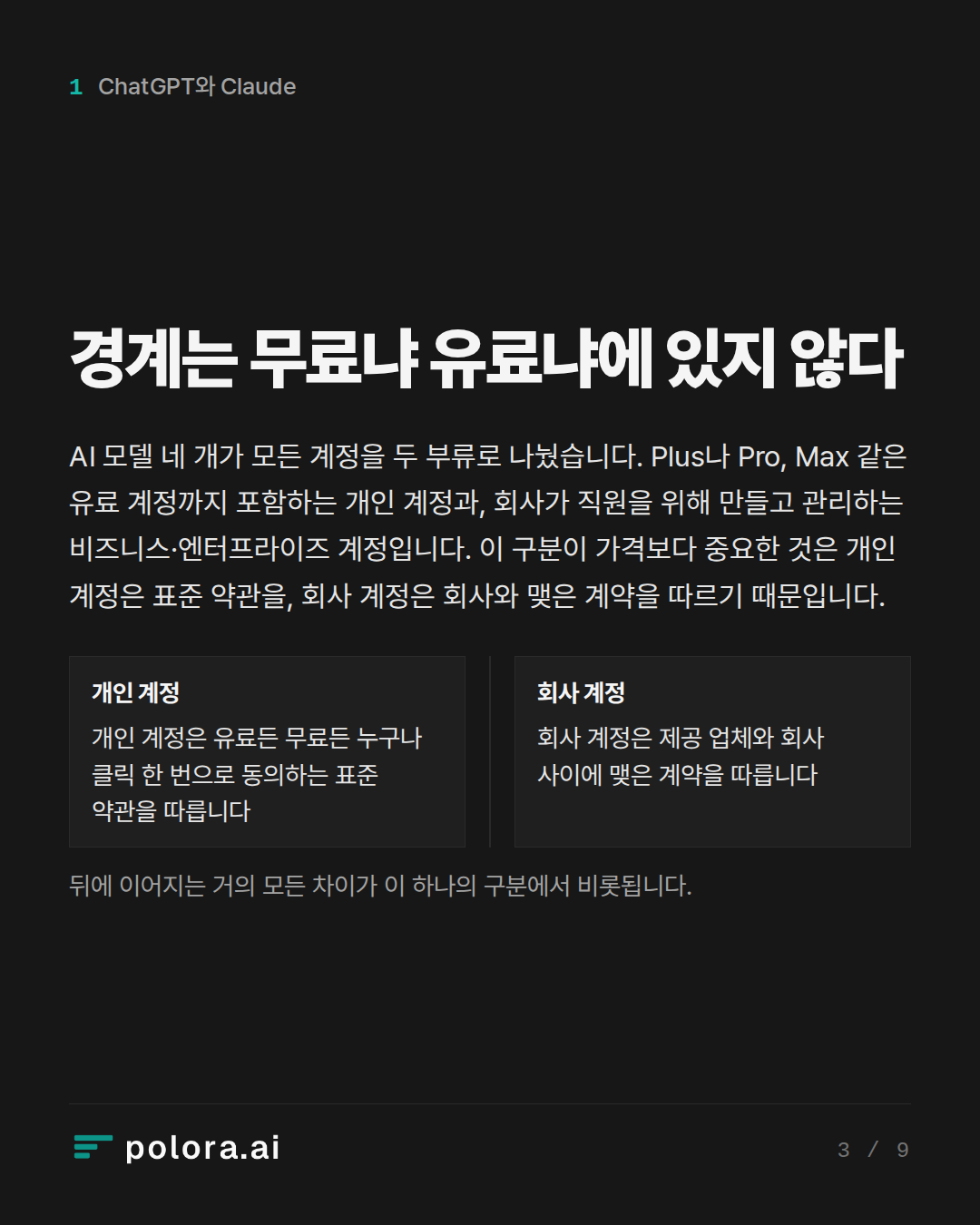
경계는 무료냐 유료냐에 있지 않다
저마다 다른 역할을 맡은 AI 모델 네 개가 폴로라 대화에서 이 질문을 함께 파고들었고, 출발점부터 뜻이 모였습니다. 모든 계정을 두 부류 가운데 하나로 나누라는 것입니다. 첫 번째 부류는 개인 계정으로, Plus와 Pro, Max, Advanced처럼 익숙한 이름이 붙은 유료 계정도 여기에 들어갑니다. 두 번째는 회사가 직원을 위해 만들고 관리하는 계정으로, 비즈니스 요금제나 엔터프라이즈 요금제라는 이름으로 팔립니다.
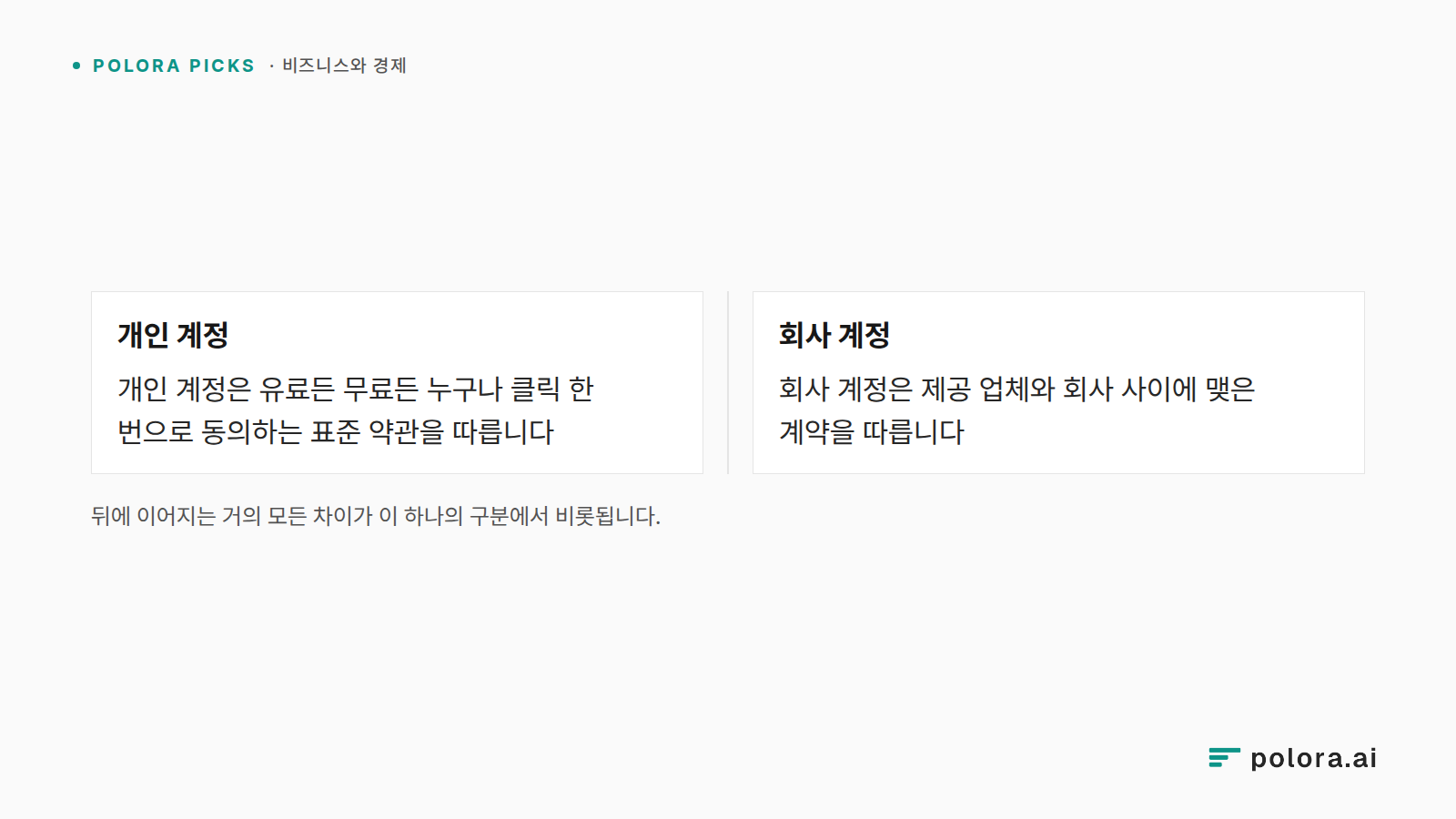
이 구분이 가격보다 더 중요한 까닭은 두 부류에 적용되는 규칙이 다르기 때문입니다. 개인 계정은 유료든 무료든 누구나 클릭 한 번으로 동의하는 표준 약관을 따릅니다. 회사 계정은 제공 업체와 회사 사이에 맺은 계약을 따릅니다. 이 뒤에 이어지는 이야기는 거의 다 그 하나의 차이에서 비롯됩니다.
뒤에 이어지는 거의 모든 차이가 이 하나의 구분에서 비롯됩니다. · 개인 계정 · 회사 계정 · 개인 계정은 유료든 무료든 누구나 클릭 한 번으로 동의하는 표준 약관을 따릅니다 · 회사 계정은 제공 업체와 회사 사이에 맺은 계약을 따릅니다
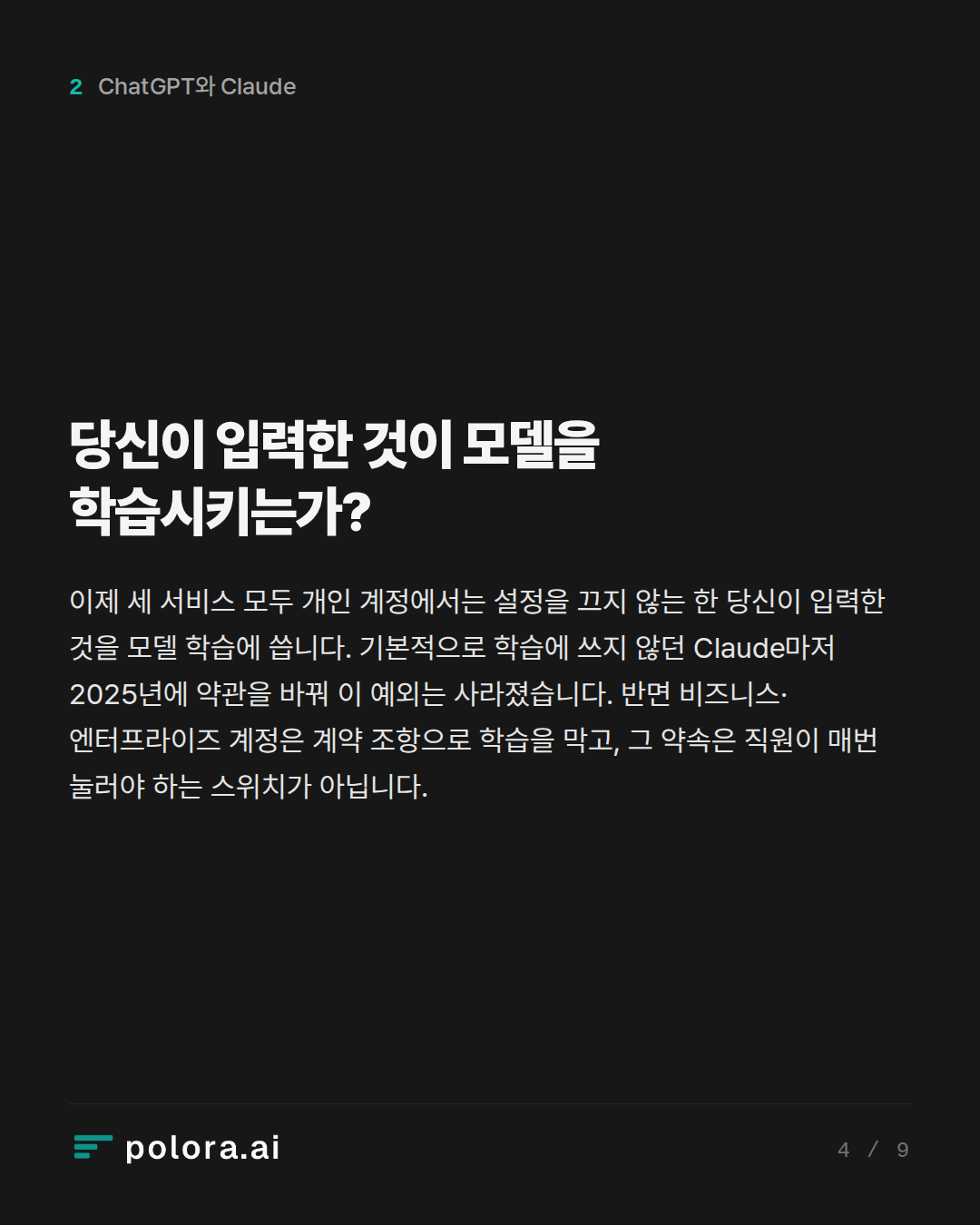
당신이 입력한 것이 모델을 학습시키는가?
개인 계정 쪽에서는 공개된 정책이 이제 한 방향을 가리킵니다. 설정에 들어가 꺼 두지 않으면, 당신이 입력한 것은 앞으로 나올 모델을 학습시키는 데 쓰일 수 있습니다. 세 서비스가 모두 그렇고, 그중 하나는 최근에 바뀌었으니 잠시 짚어 볼 만합니다.
오랫동안 Claude는 개인 대화를 기본적으로 학습에 쓰지 않았고, 안전한 예외로 널리 여겨졌습니다. 연구원 역할을 맡은 모델이 현재 정책을 확인해 보니 그 예외는 사라지고 없었습니다. Anthropic은 2025년에 소비자 약관을 고쳐, Free와 Pro, Max 계정의 데이터를 모델 개선에 쓸 수 있게 했고, 사용자가 따로 거부하지 않는 한 그 설정은 켜져 있습니다. 지금은 세 소비자 제품이 모두 기본값으로 당신의 입력을 학습에 씁니다.
비즈니스 요금제와 엔터프라이즈 요금제에서는 계약이 제 역할을 합니다. OpenAI와 Anthropic, Google은 모두 비즈니스 고객의 콘텐츠를 기본적으로 자사의 일반 모델 학습에 쓰지 않는다고 밝힙니다. 여기서는 회사가 고객이고, 그 약속은 직원 한 사람 한 사람이 잊지 않고 눌러야 하는 스위치가 아니라 계약의 한 조항입니다.
함정은 이렇습니다. 이 거부 설정은 모든 사람이 잊지 않고 기억할 때만 도움이 되는데, 그들이 실제로 그렇게 했는지 증명할 길이 당신에게는 없습니다.
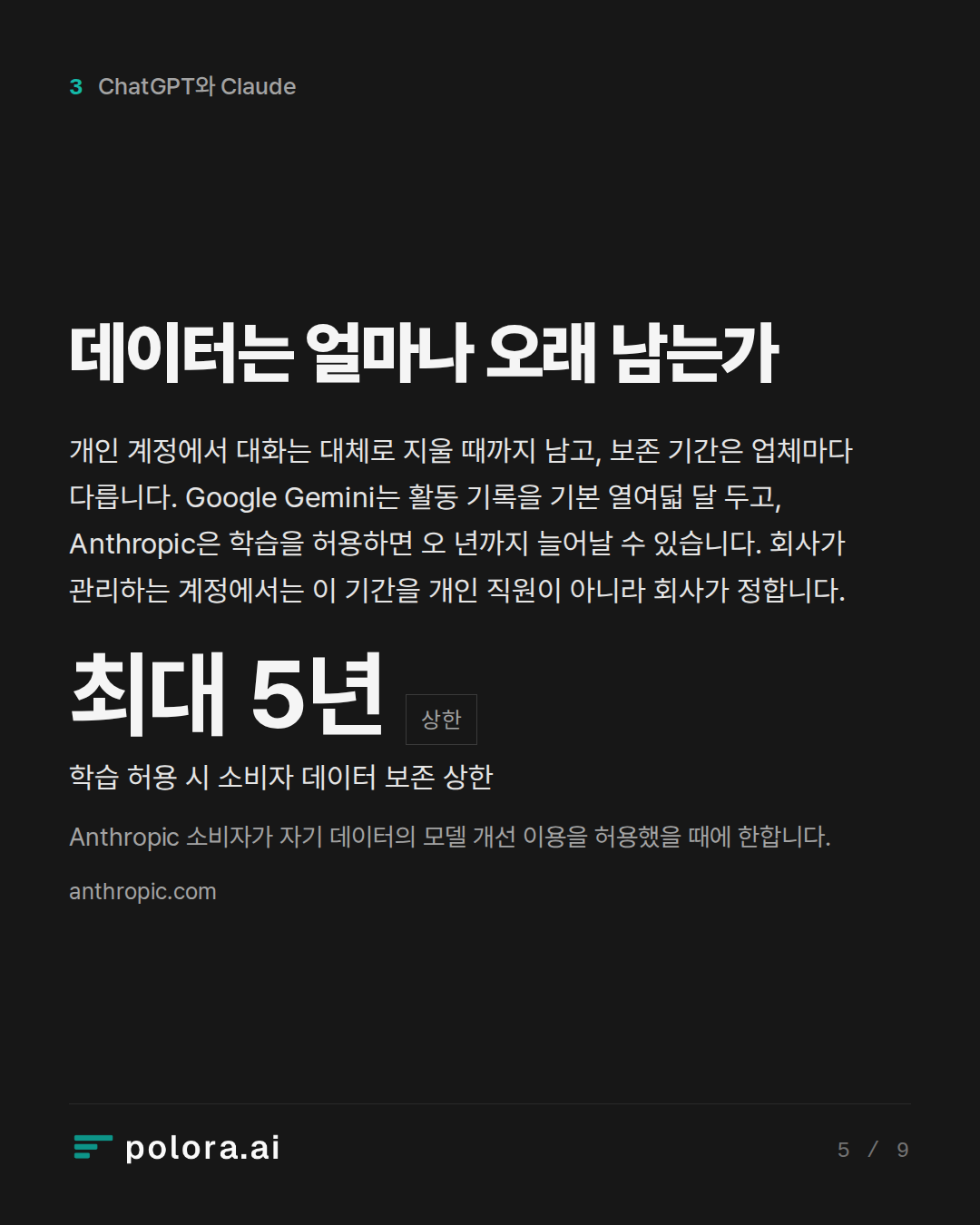
보존 기간은 이런 걱정거리 가운데 가장 눈에 띄지 않지만 종종 가장 놀라운 대목입니다. 개인 계정에서는 대화가 대체로 당신이 지울 때까지 기록에 남아 있고, 삭제가 늘 즉시 이뤄지는 것도 아닙니다.
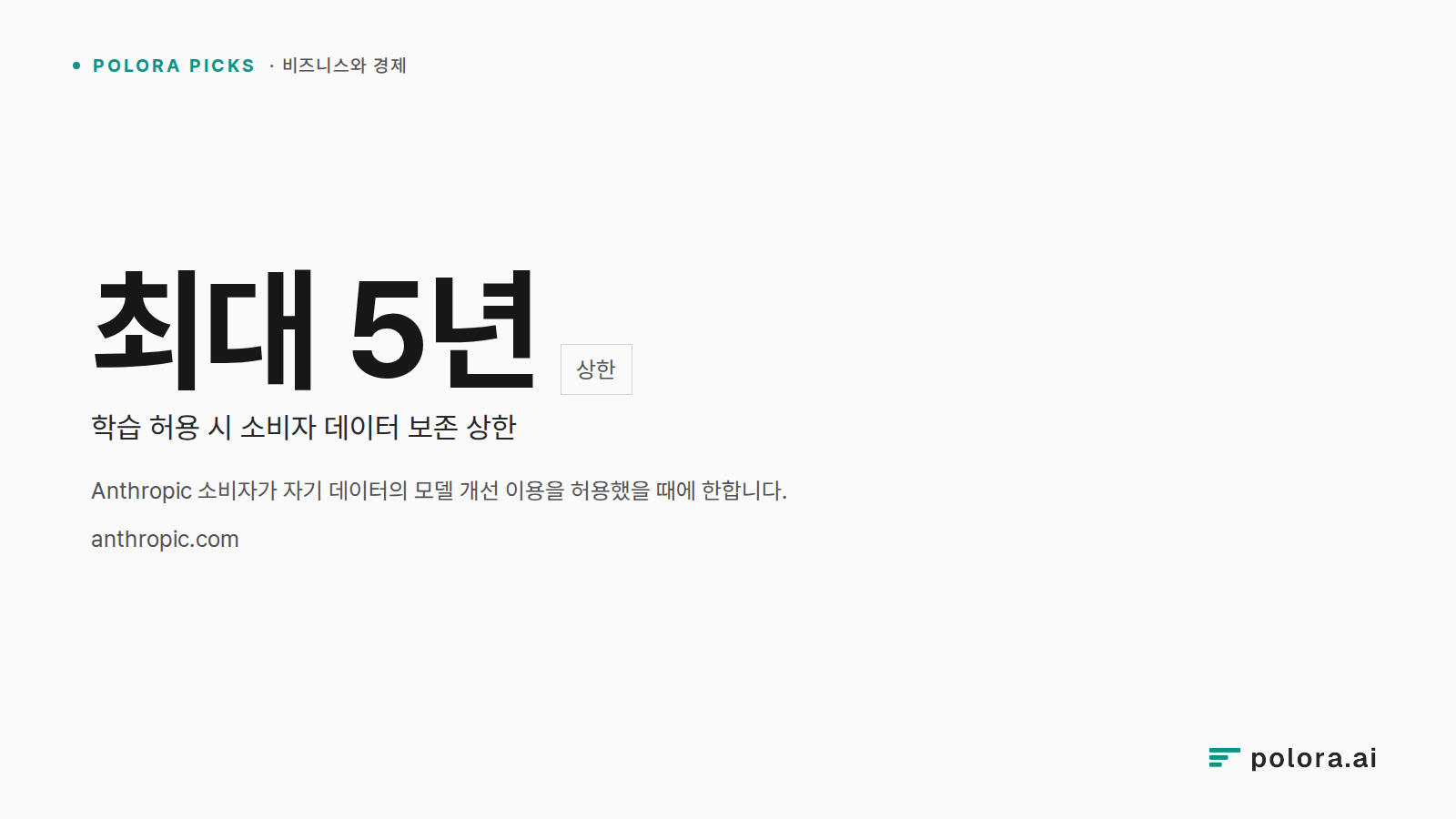
구체적인 기간은 업체마다 다릅니다. OpenAI는 보관이 의무인 경우를 빼면 삭제한 대화를 삼십 일 안에 시스템에서 지운다고 말합니다. Google의 소비자용 Gemini는 활동 기록을 기본값으로 열여덟 달 동안 두고, 이 기간은 석 달이나 서른여섯 달로 바꿀 수 있습니다. 사람 검토자가 한 번 본 대화는 당신이 활동 기록을 지운 뒤에도 최대 삼 년까지 보관될 수 있습니다. Anthropic의 새 약관은 가장 날이 서 있습니다. 소비자 사용자가 자기 데이터를 모델 개선에 쓰도록 허용하면, 보존 기간이 오 년까지 늘어날 수 있습니다.
회사가 관리하는 계정에서는 관리자가 모든 사람을 위한 보존과 삭제 규칙을 정하고, Google Workspace는 기록을 보존하고 다시 찾아오기 위한 도구까지 더해 줍니다. 요점은 이 기간이 늘 더 짧다는 것이 아닙니다. 개인 직원이 아니라 회사가 정한다는 것입니다.
Anthropic 소비자가 자기 데이터의 모델 개선 이용을 허용했을 때에 한합니다. · 최대 5년 · 학습 허용 시 소비자 데이터 보존 상한
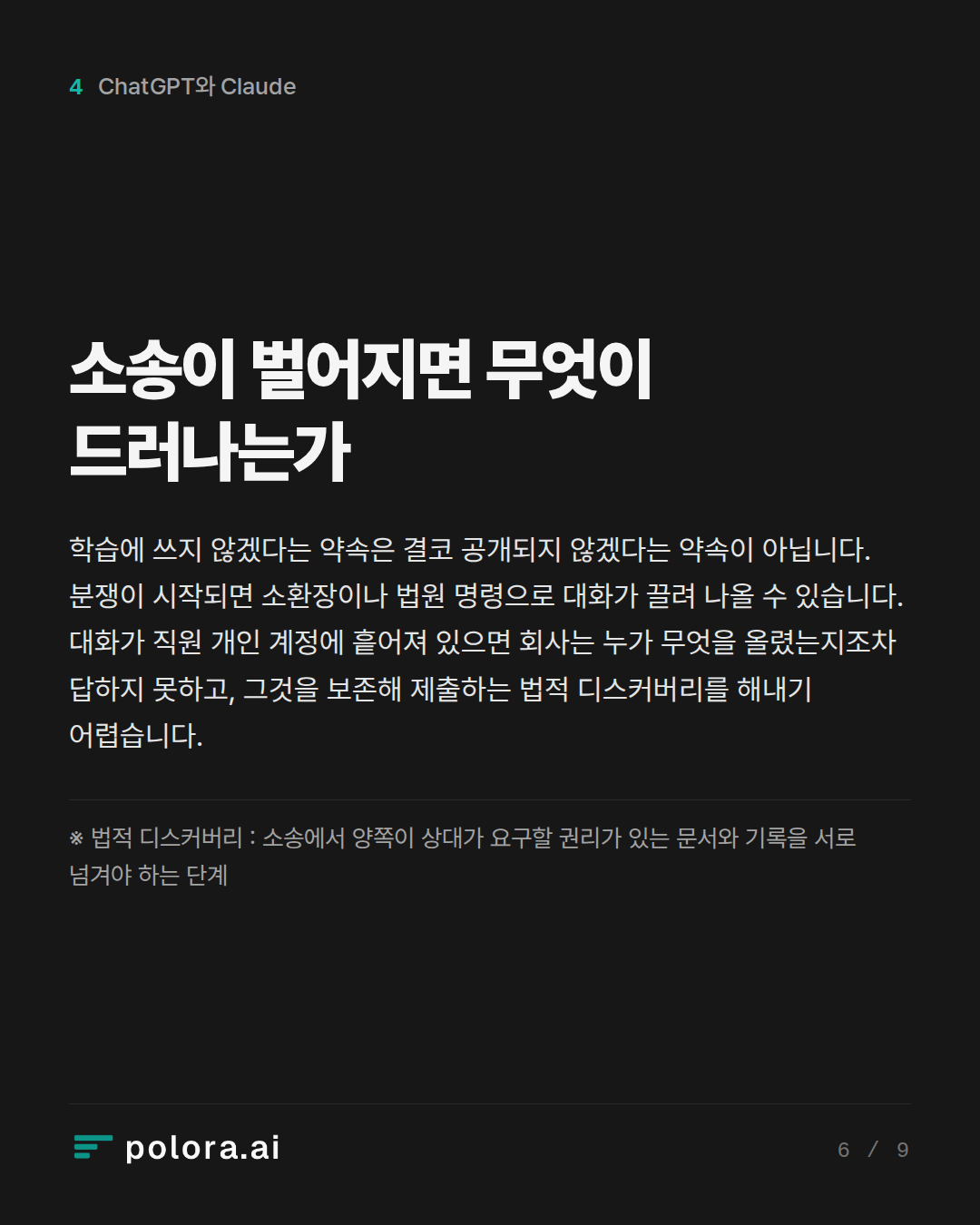
모델들은 놓치기 쉬운 한 가지를 분명히 짚었습니다. 당신의 데이터를 학습에 쓰지 않겠다는 약속은 그 데이터가 결코 공개되지 않는다는 약속이 아닙니다. 어느 업체가 쥐고 있는 정보든, 일단 분쟁이 시작되면 소환장이나 법원 명령, 또는 당신 자신의 의무를 통해 여전히 밖으로 끌려 나올 수 있습니다.
바로 여기서 소비자 계정이 유독 골칫거리가 됩니다. 관련된 대화가 직원 개인 계정에 들어 있으면, 회사는 기본적인 질문에도 답하지 못하는 경우가 많습니다. 누가 고객 데이터를 가지고 AI를 썼는가? 정확히 무엇을 올렸는가? 소송이 시작된 뒤 그 대화를 보존하고, 제대로 모아서 제출할 수 있는가? 법적 디스커버리라고 불리는 이 마지막 과정은, 기록이 회사가 볼 수 없는 계정들에 흩어져 있으면 해내기 어렵습니다. 비즈니스 요금제가 법적 위험을 없애 주지는 않지만, 회사가 대응하는 데 필요한 중앙 집중식 신원 관리와 로그, 보존 통제, 법적 보존 도구를 쥐여 줍니다.
※ 법적 디스커버리 : 소송에서 양쪽이 상대가 요구할 권리가 있는 문서와 기록을 서로 넘겨야 하는 단계.
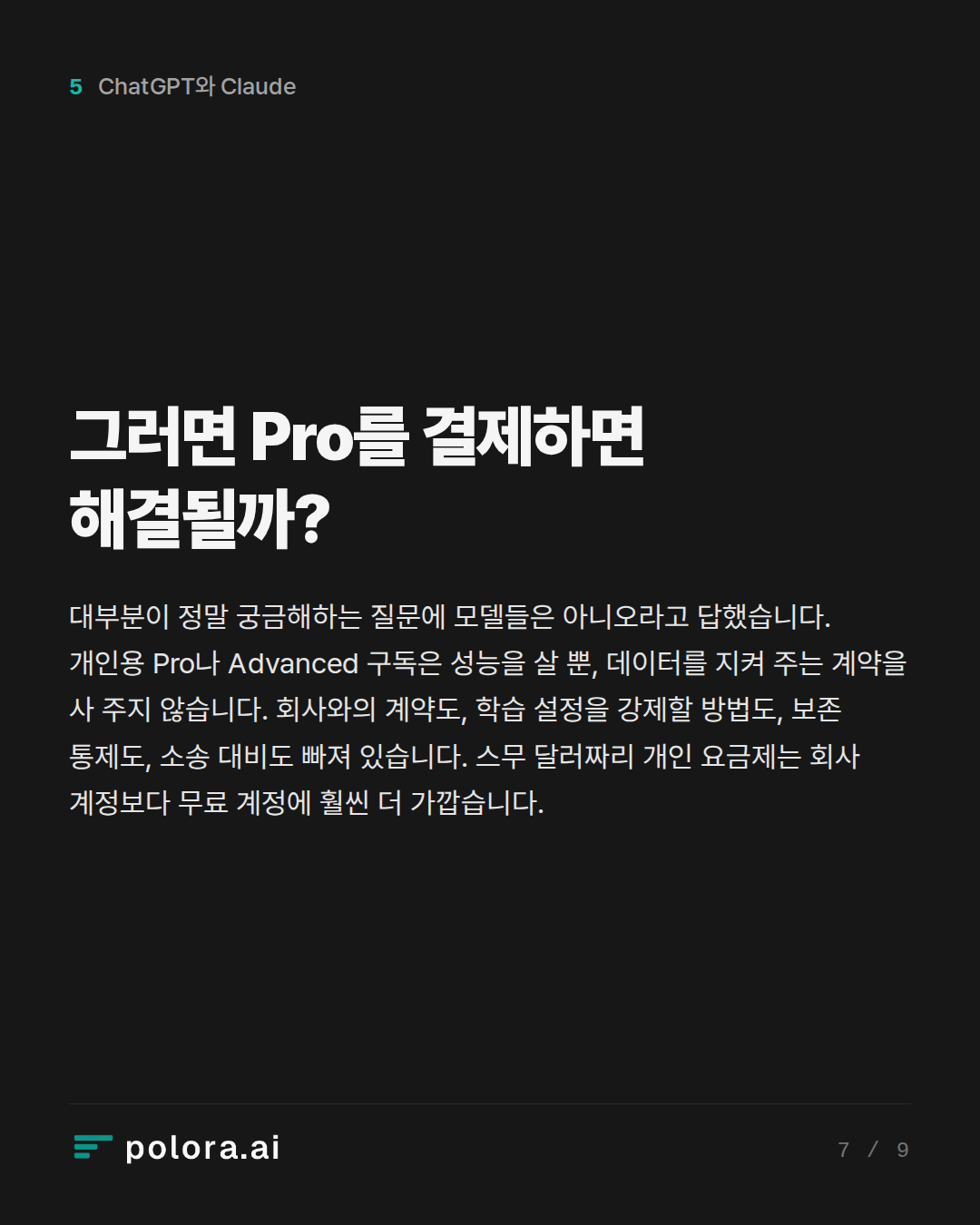
그러면 Pro를 결제하면 해결될까?
이것이야말로 대부분의 사람이 정말로 답을 듣고 싶어 하는 질문인데, 모델들의 답은 아니오였습니다. 개인용 Pro나 Advanced 구독은 성능을 삽니다. 더 강한 모델, 더 높은 한도, 더 긴 기억, 더 많은 기능입니다. 하지만 그것이 당신의 데이터를 지켜 주는 계약을 사 주지는 않습니다.
빠지는 것은 비즈니스 요금제를 다르게 만들었던 모든 요소입니다. 회사와 제공 업체 사이의 계약이 없고, 직원 모두가 학습 설정을 껐는지 강제하거나 확인할 방법조차 없으며, 데이터가 얼마나 오래 남는지에 대한 조직 차원의 통제도 없고, 소송을 당했을 때 대화를 보존하거나 내보낼 믿을 만한 방법도 없습니다. 스무 달러짜리 개인 요금제와 무료 계정은 서로 훨씬 더 닮았습니다. 둘 중 어느 쪽도 회사 계정과는 그만큼 닮지 않았습니다.
모델들이 덧붙인 또 하나의 주의는 어느 요금제를 쓰든 똑같이 적용됩니다. 변호사·의뢰인 비밀에 해당하는 법률 자료나 민감한 협상 내용을 외부 AI 서비스에 붙여 넣는 것은 그 자체로 기밀 문제를 낳을 수 있고, 어떤 구독으로도 이것은 해결되지 않습니다. 그런 용도는 변호사의 승인을 받고 나서야 씁니다.
작은 팀도 실제로 지킬 수 있는 규칙
모델들은 한 장에 담길 만큼 단순한 규칙에 이르렀습니다. 무료든 유료든 개인 AI 계정은 이미 공개된 자료, 지어낸 자료, 또는 신원을 알아볼 만한 정보가 진짜로 지워진 자료를 위한 것입니다. 진짜 고객 데이터와 회사 기밀 문서는 오직 회사가 승인한 비즈니스 또는 엔터프라이즈 작업 공간에만, 그것도 그 특정 용도가 승인을 받았을 때에만 들어갑니다.
쉽게 말하면, 고객 이름과 재무·건강 기록, 비밀번호와 키, 소스 코드, 계약서, 인사 파일, 그리고 남에게 기밀 유지 의무를 지고 넘겨받은 모든 것을, 값이 얼마이든 어떤 소비자 계정에도 넣지 않는다는 뜻입니다. 이 대화 전체에서 가져갈 것은 짧습니다. 무료 도구와 개인 유료 도구를 같은 것으로 여기고, 가격에 맡길 것은 답의 품질이지 데이터의 안전이 결코 아닙니다.
People on my team paste customer data and internal documents into ChatGPT, Claude, and Gemini every day, and I am not sure which is actually safe. Explain clearly, for someone who is not a lawyer, the real difference between the free and personal-paid consumer plans and the business or enterprise tiers on three points: whether your input is used to train the model, how long it is retained, and whether it could surface in legal discovery. Use each provider's current published policy. What practical rule should a small company set for what can and cannot go into a consumer AI account, and does paying for a Pro subscription actually fix the problem, or only buy better models?
Corporate Risk and Compliance Specialist · claude-sonnet-5
The core risk framework, from a compliance perspective
Let me give you the practical mental model, since I don't have live search this round to pull exact clause text — treat specific retention-day numbers as approximate and worth verifying against current policy pages before you finalize a written policy.
The general pattern across all three providers
Free / consumer personal-paid (ChatGPT Plus, Claude Pro, Gemini Advanced):
- Your content can be used to improve/train models by default unless you manually opt out in settings (OpenAI, Google) — Anthropic has generally been more conservative here but check current terms.
- Retention is typically tied to your account and can persist even after deletion for some backend period (often 30 days minimum for abuse/safety review, sometimes longer).
- No contractual protection. These are consumer terms of service — click-through agreements, not negotiated contracts. There's no Business Associate Agreement, no data processing addendum, no liability structure.
- Discovery exposure: consumer accounts have essentially no defined legal hold, litigation hold, or discovery-response process. If you're sued and opposing counse…
IT Operations and Security Administrator · deepseek-v4-pro
I’m an IT/security admin, not a lawyer — so here’s the operational read.
Short answer: none of the consumer plans — free or the paid “Pro/Max/Advanced” ones — are safe for customer data or internal documents. The business/enterprise tiers are materially safer, but only if you actually configure and enforce them. Paying for Pro mostly buys better models and higher limits, not corporate data protection.
The three points that actually matter
1. Is your input used to train the model?
Consumer plans:
- ChatGPT free/Plus/Pro — training is on by default. OpenAI says it may use your content to improve models unless the user turns off “Improve the model for everyone” in settings. That is a personal opt-out, not a company control.
- Gemini consumer apps — Google uses consumer Gemini conversations to improve and train its models. On a personal Google account, you should assume training/human review is in play unless you’ve specifically limited or turned off activity settings.
- Claude free/Pro/Max — this is the exception. Anthropic generally does not train on consumer content by default; training is opt-in. But that still doesn’t make it a corporate too…
Researcher · claude-sonnet-5
Fact-check: one important correction, everything else largely holds up
I ran three searches to verify the specifics both debaters used. The overall three-tier framework both of you laid out is directionally correct and well-matched to current published policy — but there's one significant factual error in the IT Admin's post that changes the picture for Claude specifically.
Correction: Claude is NOT currently the "training-off exception"
The IT Admin stated: *"Claude free/Pro/Max — this is the exception. Anthropic generally does not train on consumer content by default; training is opt-in."*
This was true historically but is no longer accurate. Anthropic changed this in a major policy shift:
- Effective September 2025, Anthropic's own documentation states: "Consumer users (Free, Pro, and Max plans): Starting August 28, 2025, we're giving you the choice to allow your data to be used to improve future Claude models. We will train new models using data from Free, Pro, and Max accounts when this setting is on."
- Critically, the setting defaults to ON, not off — a third-party review notes "The current policy frames consumer training as opt-out, the opt-out itsel…
The Arbiter · gpt-5.6-terra
The useful line is not “free versus paid.” It is personal consumer account versus company-managed business/enterprise account under business terms.
One correction to carry into the final answer: Claude consumer plans should not be treated as a training-safe exception. Anthropic’s current consumer policy makes model-improvement sharing an opt-out choice, with the setting on by default for applicable new/resumed activity; opting in can also bring a much longer retention period. So, in practice, all three consumer services require a “do not enter confidential company data” rule, whether free or personally paid.
Two nuances are essential:
- “Not used for training” is not “cannot be disclosed.” Data held by any provider may still be subject to lawful subpoena, court order, regulatory request, or your own discovery obligations.
- Enterprise is risk reduction and governance, not a magic confidentiality cloak. It gives the company contractual terms, admin control, identity management, retention/deletion settings, and often audit/e-discovery capabilities. It does not cure an NDA breach, eliminate privilege-waiver risk, or make sensitive data appropriate to paste without a…
The Arbiter's Final Verdict · gpt-5.6-terra
Bottom line
For company data, the meaningful dividing line is not free versus paid. It is:
- Personal/consumer account — including paid personal plans such as ChatGPT Plus/Pro, Claude Pro/Max, and Gemini Advanced.
- Company-managed business or enterprise account — under business terms, with admin controls and usually a DPA or equivalent privacy commitments.
A personal Pro subscription generally buys better models, higher limits, and features. It does not turn a consumer account into a company-controlled, contract-protected workspace.
For a small company, the safe default is:
> Do not put customer data or confidential internal material into any consumer AI account, even a paid one.
> Use consumer AI only for public, synthetic, or genuinely de-identified information. Use real business data only in an approved company business/enterprise workspace.
The practical differences
| Question | Consumer free / personal-paid plans | Business / enterprise tiers |
|---|---|---|
| Can prompts be used to train models? | Often yes by default or unless each user opts out. This applies to current consumer offerings from OpenAI, Anthropic, and Google. | Providers…