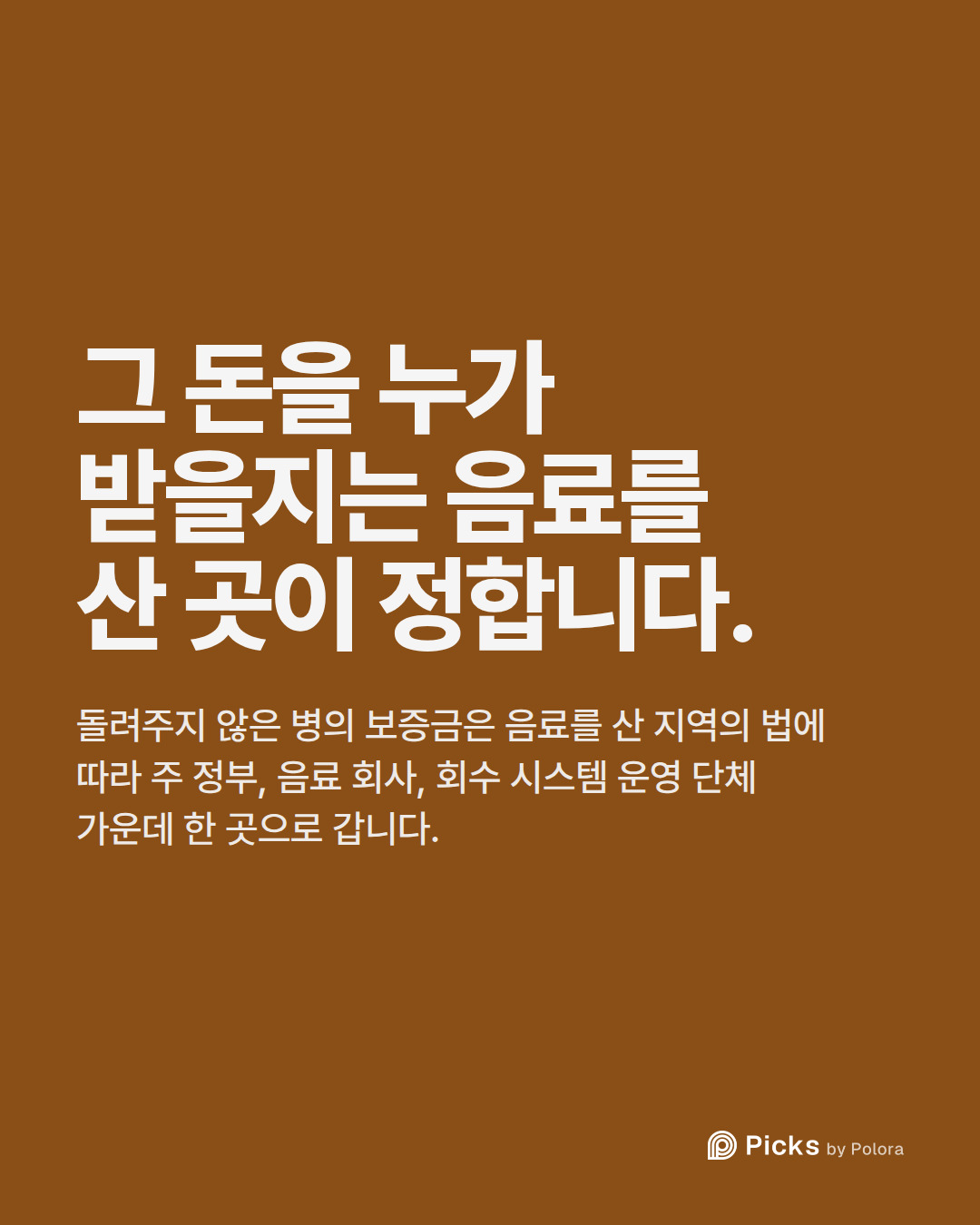
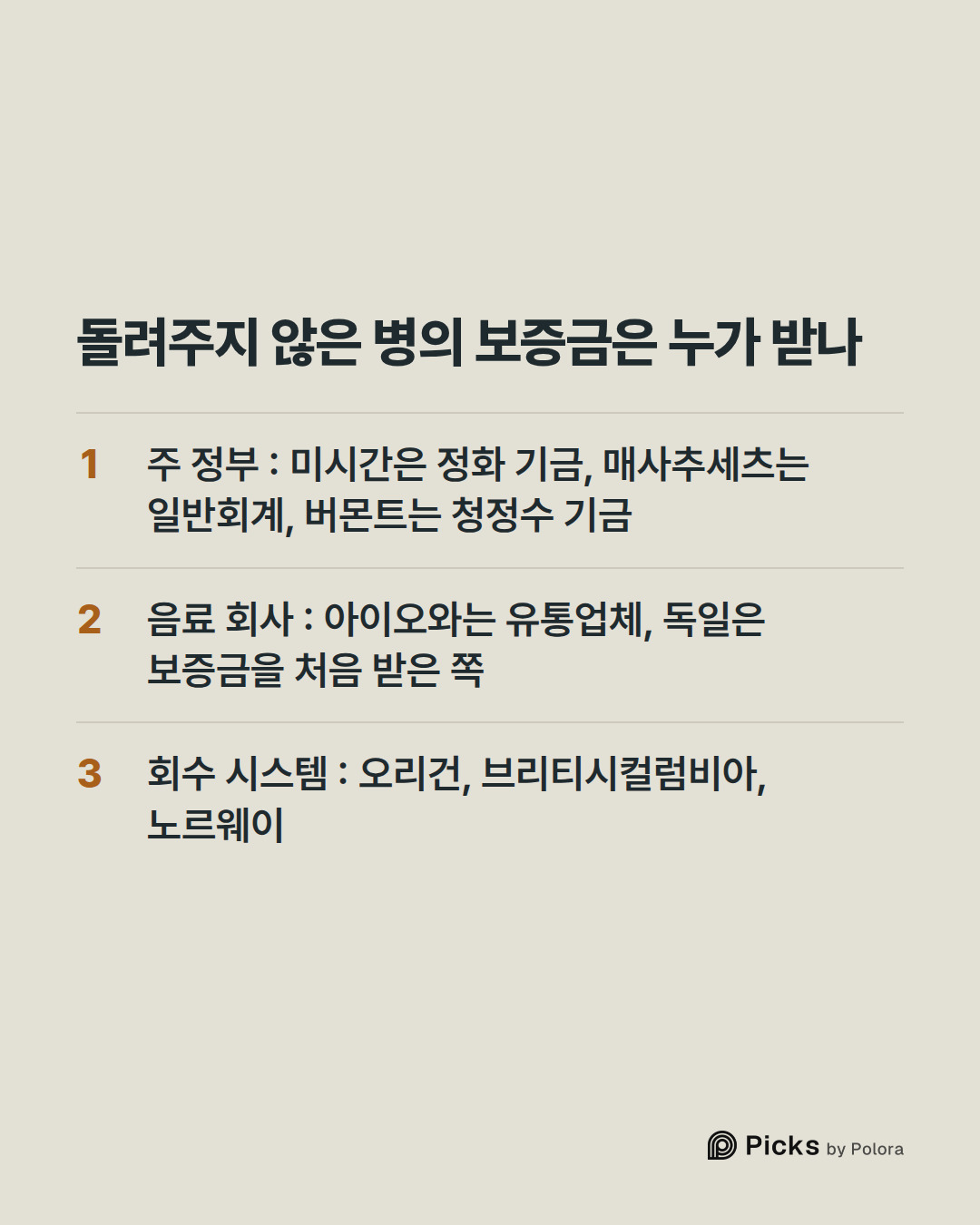
음료를 산 지역의 법에 따라 주 정부, 음료 회사, 회수 시스템 운영 단체 가운데 한 곳으로 갑니다. 미국 미시간주에서는 2025년 주인 없는 보증금이 1.192억 달러였다고 보도됐고, 대부분 주의 오염 정화 기금으로 들어갔습니다. 아이오와주에서는 법이 정한 지급을 마치고 남은 돈을 음료 유통업체가 갖습니다.
비즈니스와 경제 · 2026-11-22
미시간에서 2025년 주인을 못 찾은 보증금은 1.192억 달러
미국 미시간주에서는 탄산음료 캔 하나를 살 때 10센트를 더 내고, 캔을 돌려주면 그 돈을 돌려받습니다. 대개는 캔을 돌려줍니다. 그런데 지역 언론이 전한 주 재무부 수치에 따르면, 2025년 소비자가 낸 보증금은 3.897억 달러, 돌려받은 돈은 2.704억 달러였습니다. 반환율은 69.4%입니다. 재무부가 집계한 주인 없는 돈은 1.192억 달러입니다. 앞의 두 금액은 반올림한 값이라 빼 보면 조금 어긋납니다.
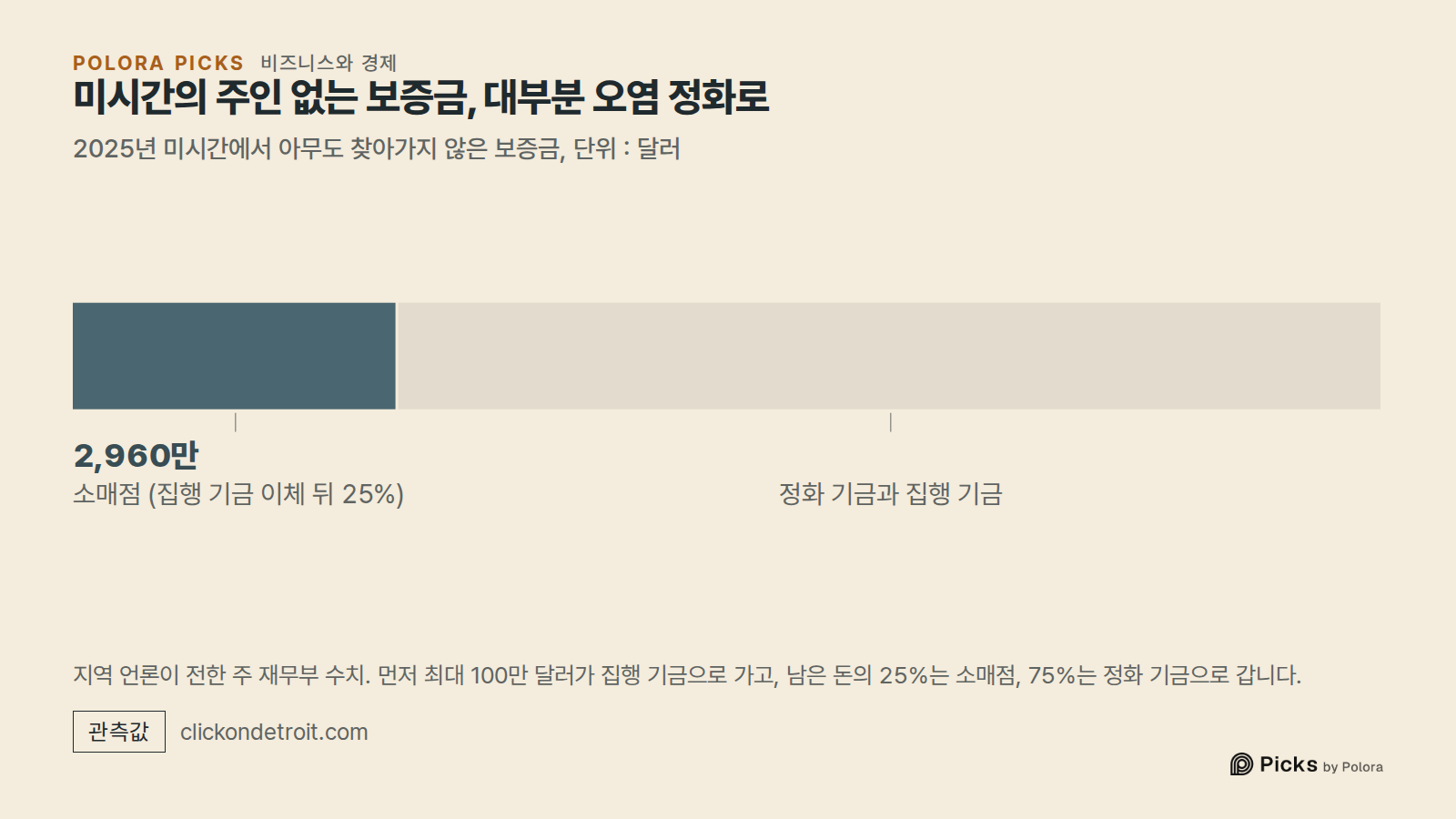
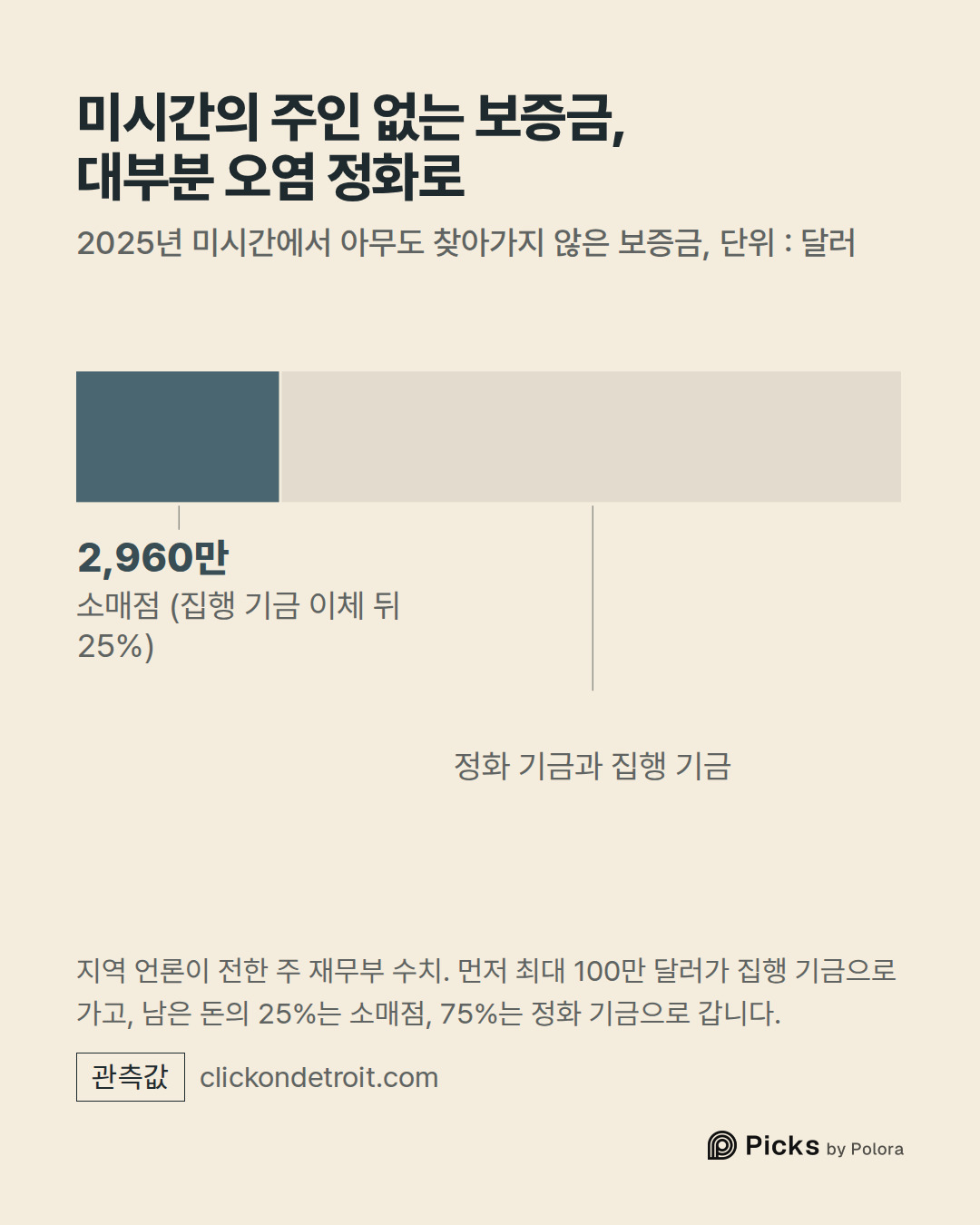
이 돈은 사라지지 않고, 보증금을 받은 가게에 남지도 않습니다. 미시간 법은 먼저 100만 달러를 보증금법 집행 기금으로 보냅니다. 다만 이 기금 잔액이 이미 300만 달러를 넘으면 이체가 멈추고, 잔액이 200만 달러 아래로 내려가야 다시 시작됩니다. 남은 돈은 둘로 나뉩니다. 25%는 소매점 몫이고, 점포마다 취급한 용기 수에 따라 나눠 갖습니다. 같은 보도에 따르면 2025년에는 2,960만 달러였습니다. 나머지 75%는 오염된 땅의 정화 비용을 대는 주의 정화·재개발 신탁기금으로 갑니다.
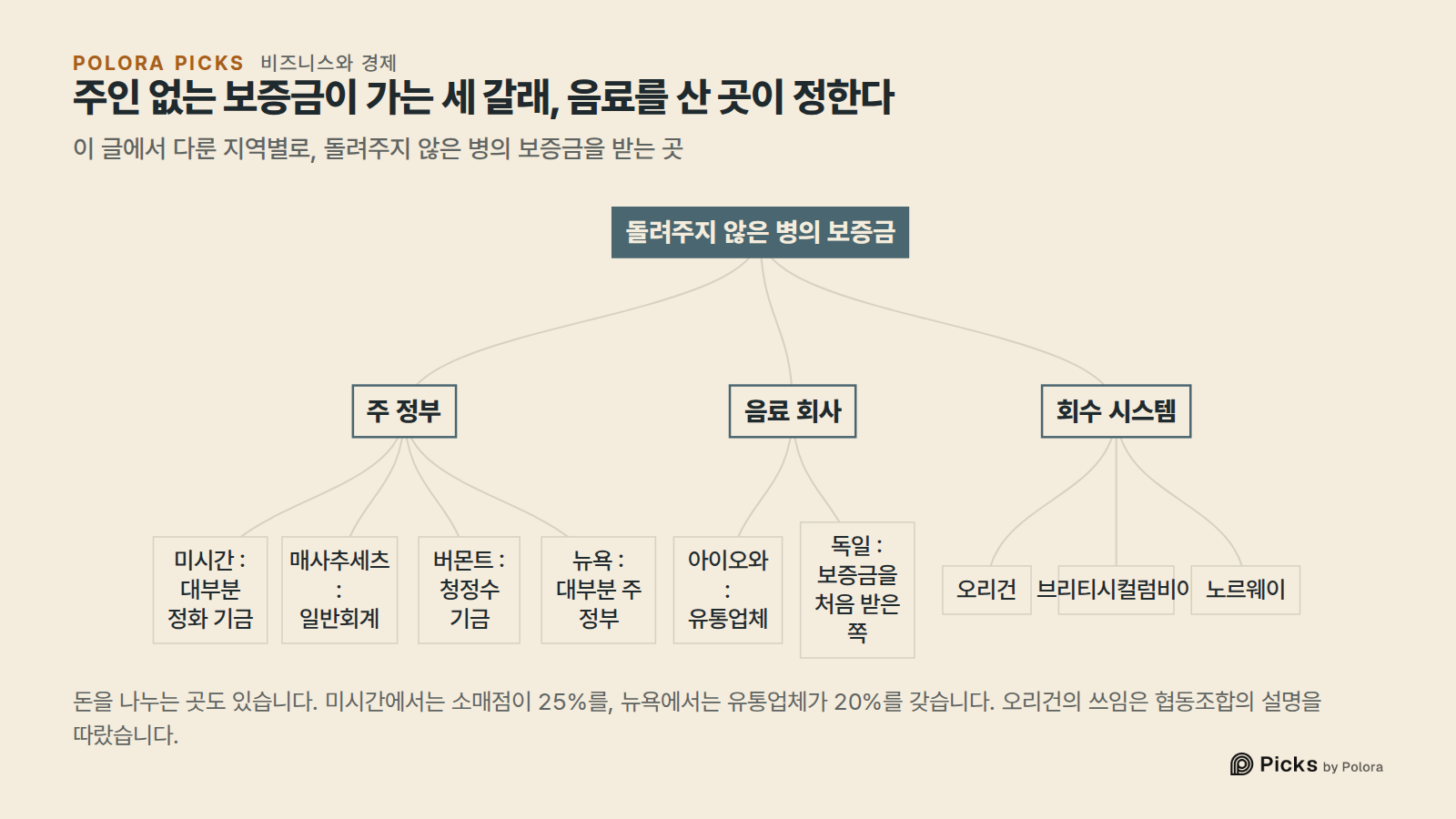
결국 미시간에서는 돌아오지 않은 병의 보증금이 한데 모이고, 그 대부분이 오염된 땅을 정화하는 데 보태집니다. 법은 전체를 어떻게 나눌지만 정할 뿐, 캔 하나의 10센트가 어느 현장으로 갔는지까지 따라갈 수는 없습니다. 주 경계를 넘으면 규칙이 달라집니다. 돈이 가는 곳은 크게 세 갈래로 나뉩니다.
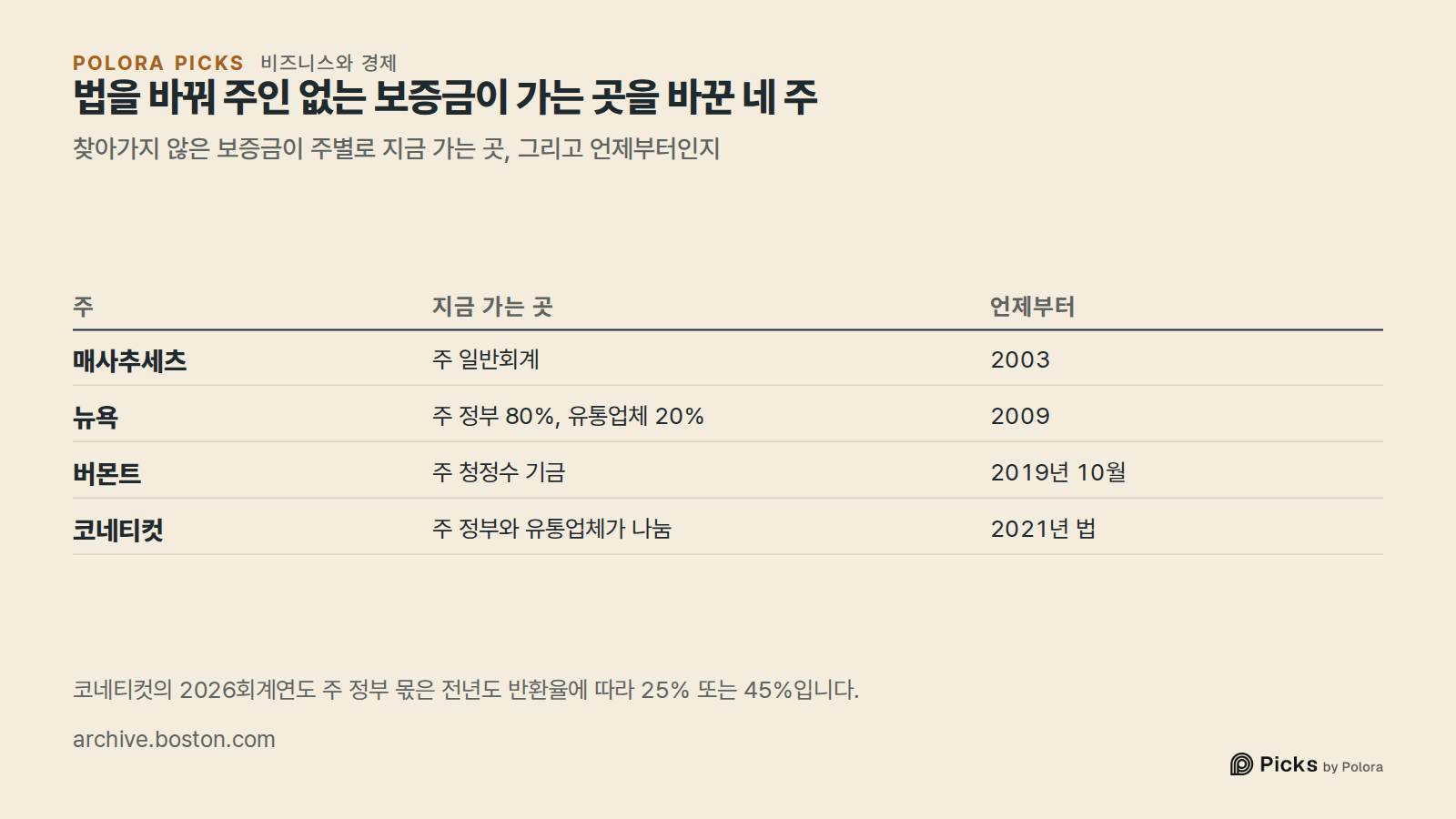
매사추세츠주에서는 1989년 법 개정 이후 찾아가지 않은 보증금이 주 정부 몫입니다. 처음에는 재활용 사업을 지원하는 기금에 쓸 계획이었지만, 2003년부터는 주의 일반회계로 들어갑니다. 주 정부가 다른 모든 일에 쓰는 바로 그 예산입니다.
뉴욕주는 2009년에 규칙을 바꿨습니다. 그 전에는 찾아가지 않은 보증금을 음료 유통업체가 전부 가졌지만, 지금은 20%만 갖고 80%를 주 정부에 넘깁니다. 한 지역 언론의 해설에 따르면, 주 정부 몫 가운데 처음 2,300만 달러는 환경보호기금으로, 나머지는 대부분 일반회계로 들어갑니다.
버몬트주도 더 최근에 같은 쪽으로 돌아섰습니다. 2019년까지는 찾아가지 않은 보증금이 음료 제조사와 유통업체에 남았지만, 2019년 10월부터는 주 정부로 가고 주는 이 돈을 청정수 기금의 수입으로 잡습니다. 현행법은 2030회계연도부터 2033회계연도까지 이 돈의 일부를 고형 폐기물 지원 계정으로 돌릴 수 있게도 해 두었습니다.
반대 방향으로 간 곳도 있습니다. 코네티컷주는 10년 넘게 찾아가지 않은 보증금을 전부 주 정부로 보냈지만, 2021년에 만들고 2023년에 고친 법에 따라 지금은 유통업체가 그 일부를 갖습니다. 주의회 조사국에 따르면 2026회계연도부터는 주 정부로 가는 몫이 전년도 반환율에 따라 달라집니다. 2026회계연도에는 반환율에 따라 25% 또는 45%이고, 그 이후 연도에는 또 다른 비율이 정해져 있습니다.
아이오와주는 2022년에 빈 병 보증금법을 새로 쓰고(상원 법안 2378호) 2023년부터 시행했습니다. 주 법전에 따르면 법이 정한 지급을 다 하고 음료 유통업체에 남은 환급금은 유통업체 몫입니다. 2002년 주 규정은 유통업체가 보증금과 반환 기록을 보관하고 보고하도록 했습니다. 다만 그 기록으로 아이오와에서 해마다 남는 돈의 공식 액수가 나오는지는 분명하지 않습니다.
독일의 일회용 페트병과 캔도 비슷한 원리로 움직입니다. 이런 용기에는 25유로센트의 보증금이 붙고, 돌아오지 않은 병의 보증금은 처음 그 보증금을 받은 쪽에 남습니다. 대개는 음료를 병에 담은 제조사이고, 슈퍼마켓 자체 브랜드 제품이라면 슈퍼마켓입니다. 불법이 아니라, 제도가 처음부터 그렇게 설계된 것입니다.
독일 연방 환경부는 이 돈이 얼마인지 자체 집계가 없다고 말합니다. 가장 널리 알려진 추정치는 독일 환경단체 나부(NABU)가 낸 것입니다. 나부는 병과 캔의 4%가 돌아오지 않는다고 가정하고, 2015년 기준 약 1.8억 유로로 추산했습니다. 가정한 비율을 바꾸면 액수도 따라 바뀝니다. 실제로 센 값이 아니라 오래된 추정치입니다.
오리건주의 회수 시스템은 음료 업계를 대신해 오리건 음료 재활용 협동조합(OBRC)이 운영합니다. 조합의 자체 잠정 집계로는 2024년 용기의 90.4%가 돌아왔고, 소비자가 돌려받은 돈은 2.06억 달러가 넘었습니다. 조합은 주인 없는 돈을 2,190만 달러로 잡고, 이 돈이 전부 시스템 운영에 들어간다고 말합니다. 반환 센터, 봉투째 맡기는 반납 서비스, 운반 트럭, 처리 비용 같은 것들입니다. 나머지 비용은 음료 유통업체가 냅니다.
캐나다 브리티시컬럼비아주에서는 비영리 단체 엔코프 퍼시픽(Encorp Pacific)이 시스템을 운영합니다. 엔코프에 따르면 용기 종류마다 먼저 찾아가지 않은 보증금과 회수한 재료를 팔아 번 돈으로 비용을 댑니다. 그래도 모자랄 때만 음료 가격에 용기 재활용 부담금을 붙여 차액을 메웁니다.
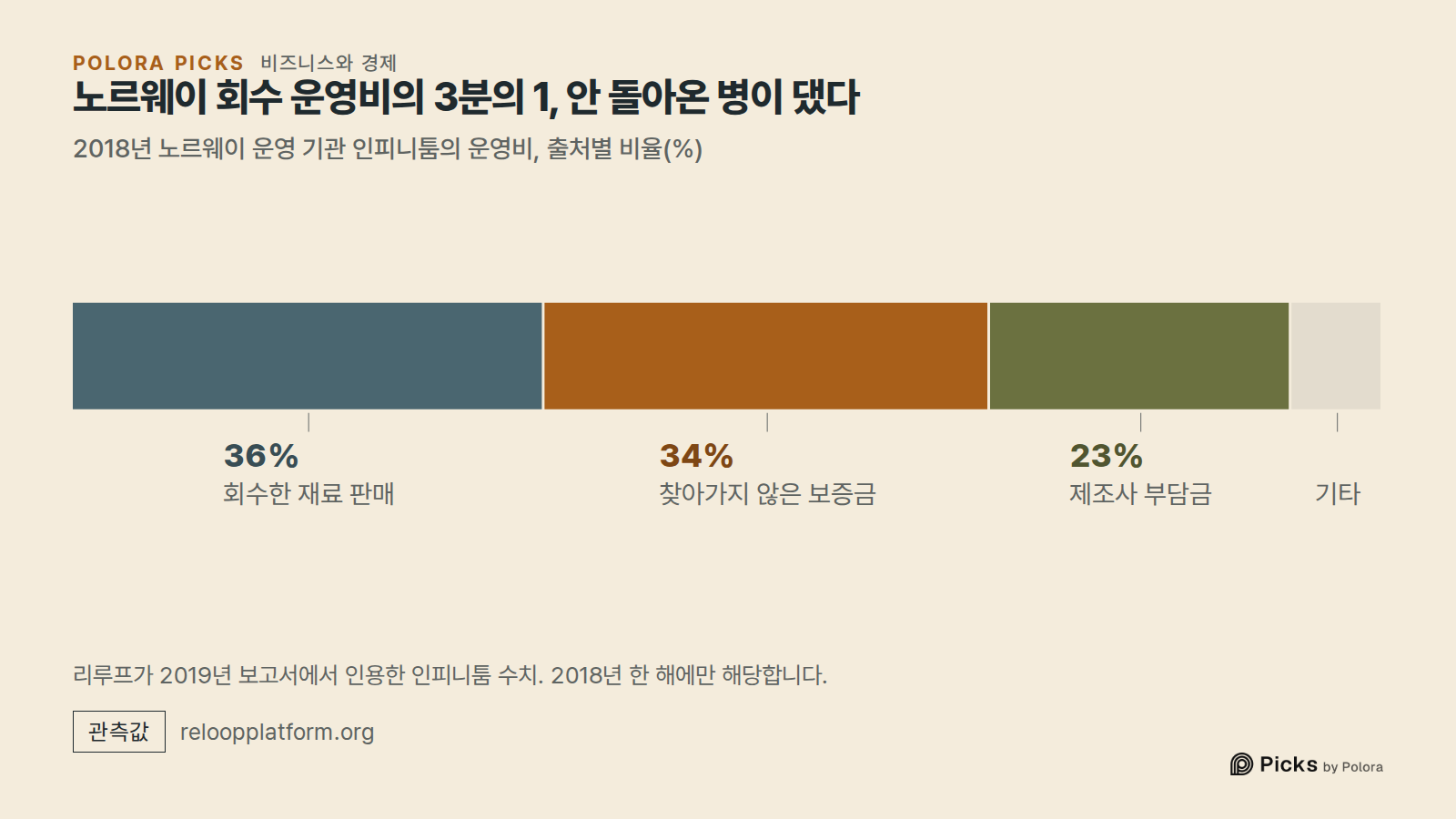
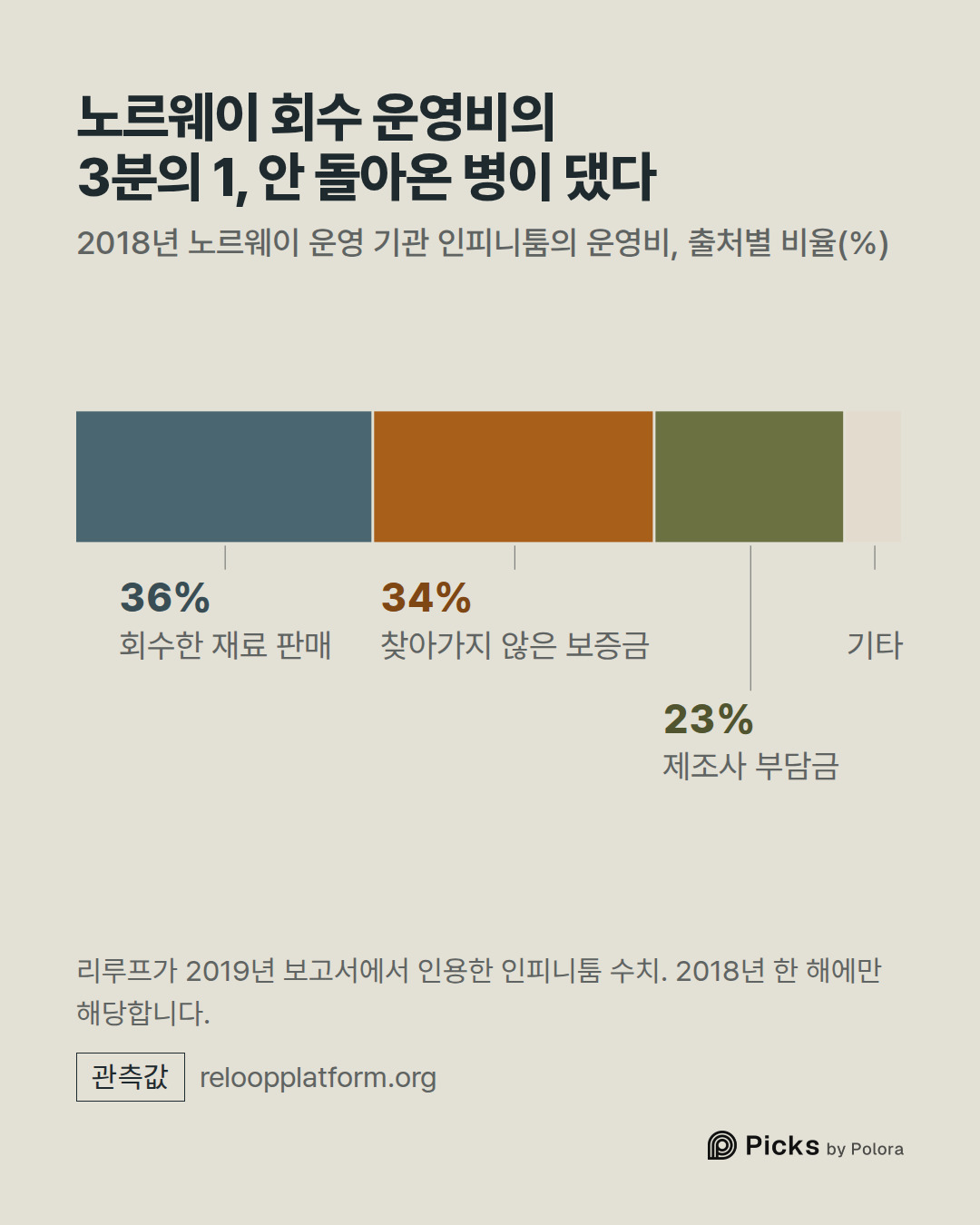
노르웨이의 운영 기관 인피니툼(Infinitum)은 음료 제조사와 소매업체가 함께 소유합니다. 리루프(Reloop)라는 단체가 인피니툼의 수치를 인용해 2019년에 낸 보고서에 따르면, 2018년 운영비의 34%는 찾아가지 않은 보증금이, 36%는 회수한 재료를 판 돈이 댔습니다. 제조사 부담금은 23%였습니다. 모두 2018년 한 해의 비율입니다.
오리건, 브리티시컬럼비아, 노르웨이를 나란히 놓으면 눈에 잘 띄지 않던 사실이 하나 보입니다. 운영 단체가 돌리는 시스템에서는 찾아가지 않은 보증금이 모여, 음료 업계가 원래 내야 했을 회수 비용을 덜어 줍니다. 2018년 노르웨이에서는 시스템 운영비의 약 3분의 1을 이 돈이 댔습니다.
오리건 협동조합은 이것이 잘못된 유인이 될 수 있다고 공개적으로 인정했습니다. 반환율이 충분히 떨어지면 찾아가지 않은 보증금만으로 시스템 전체를 돌릴 수도 있다는 것입니다. 조합 관계자는 2024년 인터뷰에서 이사회가 그런 경우에 대비한 방침을 두고 있다고 말했습니다. 반환율이 80% 아래로 떨어지면, 그 선을 넘어선 미반환 금액은 오리건 커뮤니티 재단의 기금으로 보낸다는 것입니다. 주 법이 아니라 그 인터뷰에서 설명된 조합 자체의 방침입니다. 보고된 반환율이 90%를 넘고 있어 아직 쓰인 적은 없습니다.
캘리포니아주는 두 방식의 중간쯤에 있습니다. 이곳에서는 보증금을 CRV(캘리포니아 재활용 가치)라고 부르고, 이 돈은 주 기금으로 들어갑니다. 캘리포니아 재활용 당국(CalRecycle)의 도표를 보면, 재활용 업체에 주는 돈을 포함해 주가 제도 운영에 쓰는 돈의 약 80%를 찾아가지 않은 CRV가 댑니다. 여기서도 제도의 예산이 돌아오지 않은 병에 묶여 있는 셈입니다. 2015년 캘리포니아 주의회 입법분석관실은 재활용하는 사람이 늘수록 제도의 다른 비용에 쓸 돈이 줄어 기금이 압박을 받는다고 경고했습니다.
헷갈리기 쉬운 것이 하나 있습니다. 보증금은 내 돈이고, 용기를 돌려줄 때까지 맡겨 둔 것입니다. 취급 수수료는 이와 별개로, 가게나 반환 센터가 용기 하나를 받아 줄 때마다 받는 돈입니다. 예를 들어 아이오와에서는 유통업체가 참여 매장이나 반환 센터에서 용기를 넘겨받을 때마다 환급금과 별도로 3센트의 취급 수수료를 내야 합니다.
미시간에서는 이 경계가 흐려집니다. 미시간의 소매점은 집행 기금 이체 뒤 남은 미반환 보증금의 25%를 취급한 용기 수에 따라 나눠 받습니다. 결국 미시간의 가게들은 병을 받아 준 대가의 일부를, 끝내 돌아오지 않은 병의 돈으로 받는 셈입니다.
어느 보증금 제도든 제안은 같습니다. 용기를 가져오면 돈을 돌려준다는 것입니다. 그런데 돌려주지 않으면 어떻게 되는지 적어 둔 라벨은 없습니다. 그건 지역마다 법이 정합니다. 찾아가지 않은 보증금은 한데 모여 미시간에서는 오염 정화에, 매사추세츠에서는 주의 일반 예산에, 버몬트에서는 깨끗한 물 사업에 보태집니다. 아이오와에서는 음료 유통업체의 장부에 남고, 오리건에서는 협동조합의 설명대로라면 반환 센터 운영비가 됩니다.
그러니 돌려주지 않은 병의 보증금은 사라진 돈이 아니라 자리를 옮긴 돈입니다. 그 돈을 누가 받을지는 음료를 산 곳이 정합니다.
이 글에서 다룬 지역별로, 돌려주지 않은 병의 보증금을 받는 곳
Where does the bottle deposit go when nobody returns the bottle?
Alpha · deepseek-v4-pro
The short answer: it doesn't vanish — it gets routed to whoever the law of the place where you bought the drink says it goes. Across the major deposit systems, those destinations fall into three broad groups.
1. To the state.
- Michigan sends the first $1 million of unclaimed deposits to State Police enforcement of the bottle law. Of the rest, about 25% goes to retailers — $29.6 million in 2025 — and the remainder goes to the state's Cleanup and Redevelopment Trust Fund for environmental cleanup. In 2025, the unclaimed amount was about $119.2 million.
- Massachusetts has sent unclaimed deposits to the state since 1989; since 2003 they go into the general fund.
- New York changed the rule in 2009: distributors keep 20%, the state gets 80%. Of the state's share, the first $23 million goes to the Environmental Protection Fund and most of the rest to the general fund.
- Vermont has sent unclaimed deposits to the state's Clean Water Fund since October 2019.
2. To the beverage companies or distributors.
- Iowa, under its 2022 rewrite effective 2023, lets distributors keep unclaimed deposits, with no requirement to track the amount.
- Germany works the…
Beta · gpt-6-sol
Alpha’s central answer is right: an unreturned deposit does not have one universal destination. But I would not publish all of the manuscript’s examples without qualifications.
- Michigan: The statutory route is a bottle-deposit fund, then an enforcement allocation, with the remainder split 75% to the Cleanup and Redevelopment Trust Fund and 25% to dealers. The “first $1 million to enforcement” rule has an important exception: transfers are suspended when the enforcement fund’s balance exceeds $3 million, until it falls below $2 million. I could not independently confirm the manuscript’s 2025 dollar totals from Treasury data this turn. Source: Michigan Senate Fiscal Agency analysis. (legislature.mi.gov)
- Iowa: The 2026 code expressly makes refund value *remaining with a distributor after required payments* the distributor’s property. It separately requires a three-cent handling payment for each container accepted from a participating dealer or re…
Gamma · gemini-3.1-pro
I agree with Beta that the manuscript’s core premise stands—unreturned deposits do not vanish, but are routed differently depending on the jurisdiction—and that the specific tracking of an individual bottle's ten cents is an accounting abstraction, not a physical reality.
To supplement what Alpha and Beta have established, I ran live searches to verify several of the editor's specific requests regarding recent data and historical timelines:
1. Michigan’s 2025 Figures
I can confirm the manuscript’s numbers for Michigan. Recent reporting from late 2026, citing the Michigan Department of Treasury, confirms that the state's return rate dropped to 69.4% in 2025. This left exactly $119.2 million in unclaimed deposits.
*Source: Noticias Ambientales reporting on Michigan Treasury data (October 2026).*
2. Massachusetts General Fund
The manuscript's timeline for Massachusetts is accurate. The state's first escheat law for container deposits was passed in 1989. While funds initially went to a Clean Environment Fund, state audits and legislative reports confirm that since 2003, these unclaimed deposits have been transferred to the state's General Fund.
*Source: Massachusetts Offi…
Researcher · gpt-6-luna
Research check
The broad premise holds: an unredeemed deposit is routed according to the law and accounting rules of the place where the container was sold. But several specific claims need qualification, and some of the most vivid examples are not established by the sources retrieved.
- Michigan: Michigan’s statute is the relevant primary source, but I could not verify the manuscript’s 2025 totals or its specific allocation of unclaimed deposits from the statutory text retrieved. So the figures—$119.2 million unclaimed and $29.6 million to retailers—remain unconfirmed here. Don’t present them as independently verified on this check. Michigan Compiled Laws, chapter 445
- Iowa: The code says that refund value or handling fees remaining with a distributor after required payments are the distributor’s property. That supports the basic claim about where a remaining balance goes, but it does not by itself show that no official tracking exists. A separate Iowa administrative rule requires distributors to keep and report deposit and redemption records; whether that yields an official statewide unclai…
The Arbiter · gpt-6-sol
Round mediation — what remains to test before the verdict
The voices agree on the basic distinction: the rules differ by jurisdiction, and an *aggregate balance* of unredeemed deposits can be allocated without anyone tracing a particular bottle’s ten cents to a particular expense. They also agree that a deposit and a return-site handling payment are different things.
The clearest supported example is Michigan’s allocation rule. I checked the current statute: it directs the first $1 million to a bottle-law enforcement fund, then splits the remainder 75% to the Cleanup and Redevelopment Trust Fund and 25% to dealers according to containers handled. The enforcement transfer is suspended if that fund’s balance exceeds $3 million, until it falls below $2 million. That qualification is missing from the manuscript. The statutory source is MCL § 445.573c; it does not, by itself, establish the manuscript’s 2025 dollar figures. (legislature.mi.gov)
The most consequential unresolved claims are:
- Michigan’s 2025 totals: Gamma r…
The Arbiter's Final Verdict · gpt-6-sol
Verdict
An unreturned bottle deposit has no universal destination. The governing law and the return system’s accounting rules decide whether the unredeemed balance goes to a public fund, remains with a distributor, or helps finance the return system. That central premise of the manuscript stands. What does not follow is that anyone can trace one particular bottle’s ten cents to one particular cleanup job or truck.
For publication, I would separate the well-supported routes from the examples that still need checking:
| Manuscript claim | Finding |
|---|---|
| Michigan’s allocation | Supported, with a missing exception. MCL § 445.573c provides for an enforcement transfer, then a 75% cleanup-fund / 25% dealer split. The enforcement transfer is suspended when that fund exceeds $3 million, until it falls below $2 million. The statute does not establish the manuscript’s 2025 totals; those remain figures attributed to Treasury in news coverage, not independently verified here. The displayed rounded amounts, $389.7 million and $270.4 million, subtract to $119.3 million, so the reported $119.2 million s…