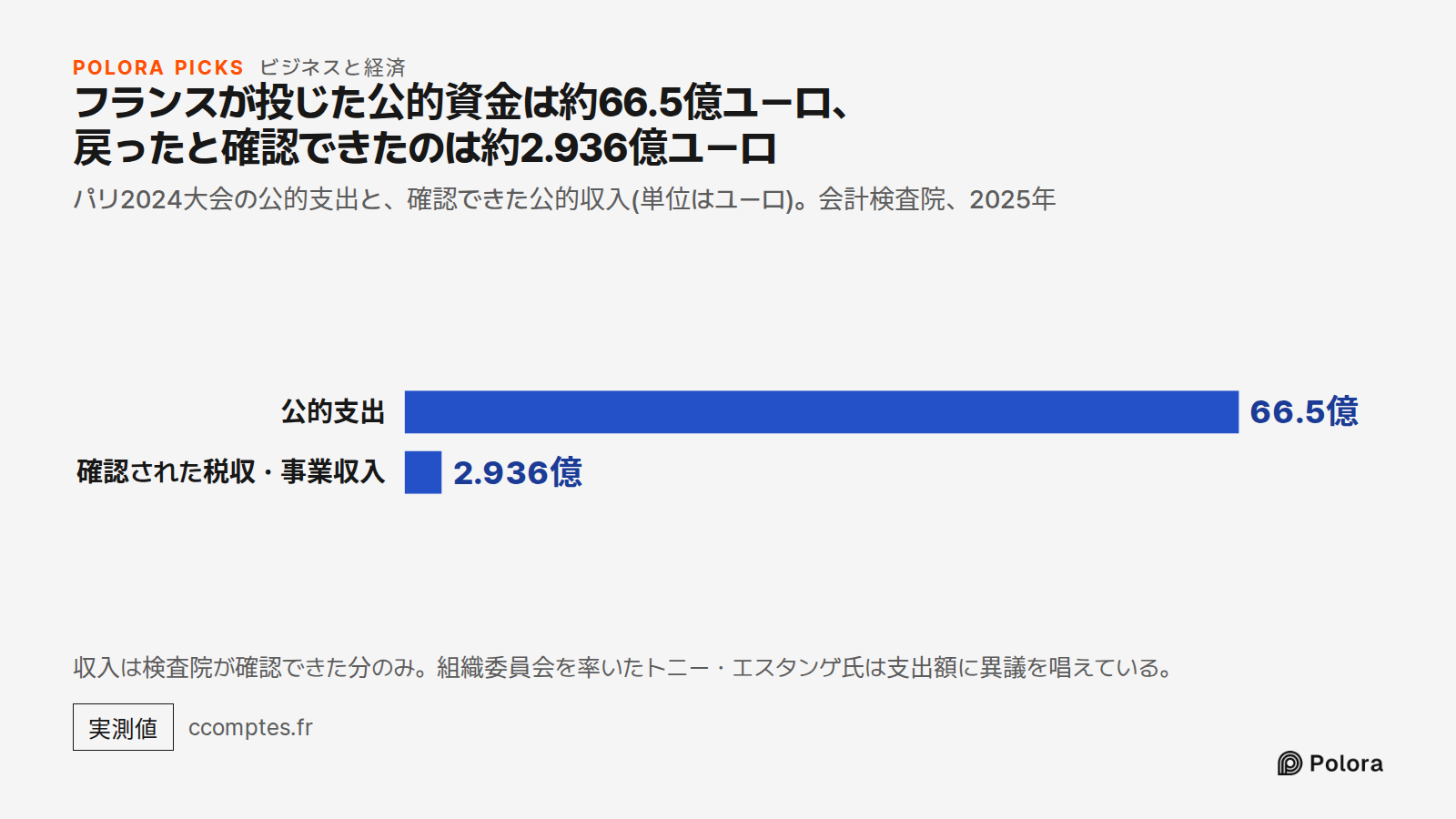
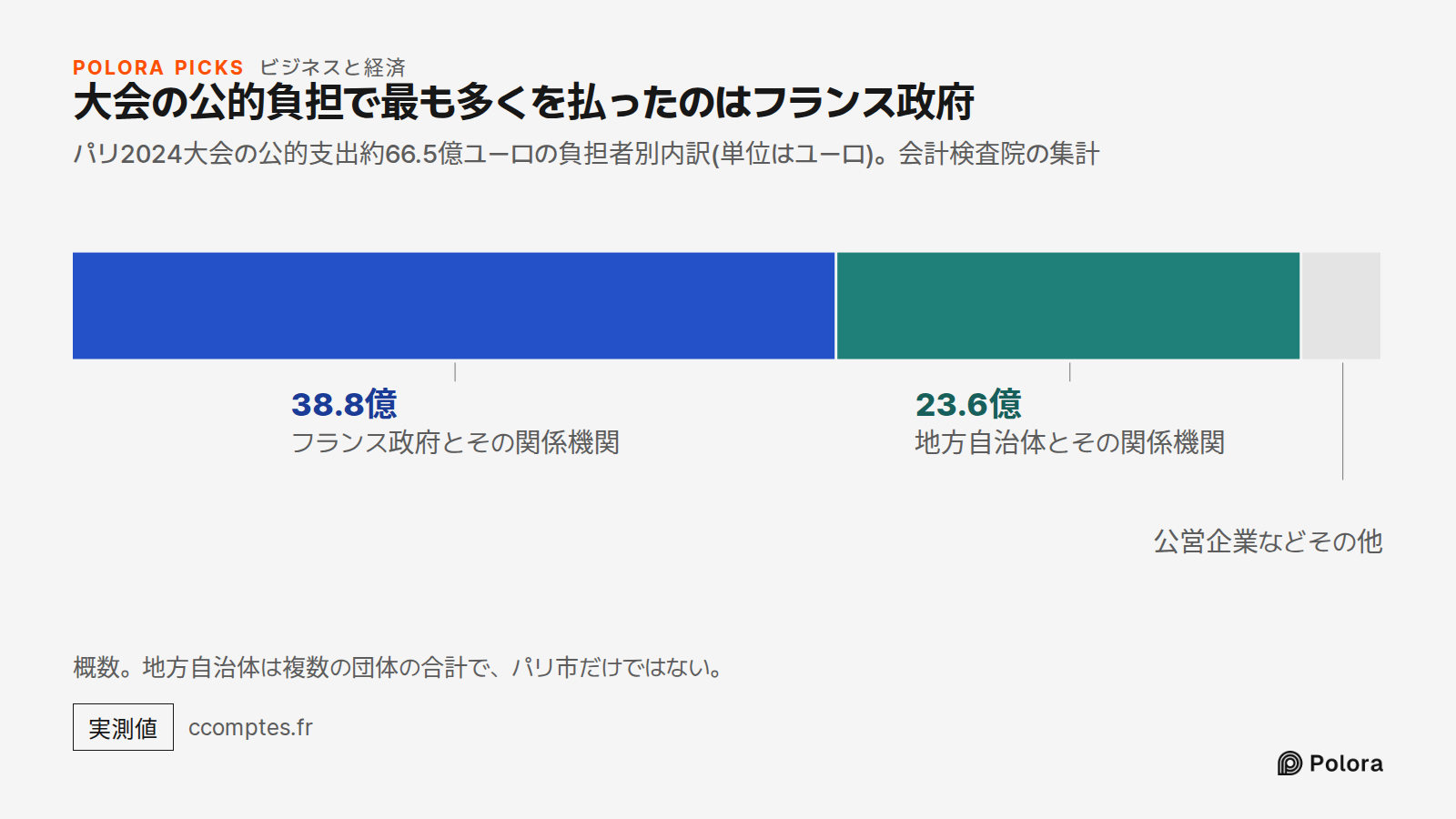
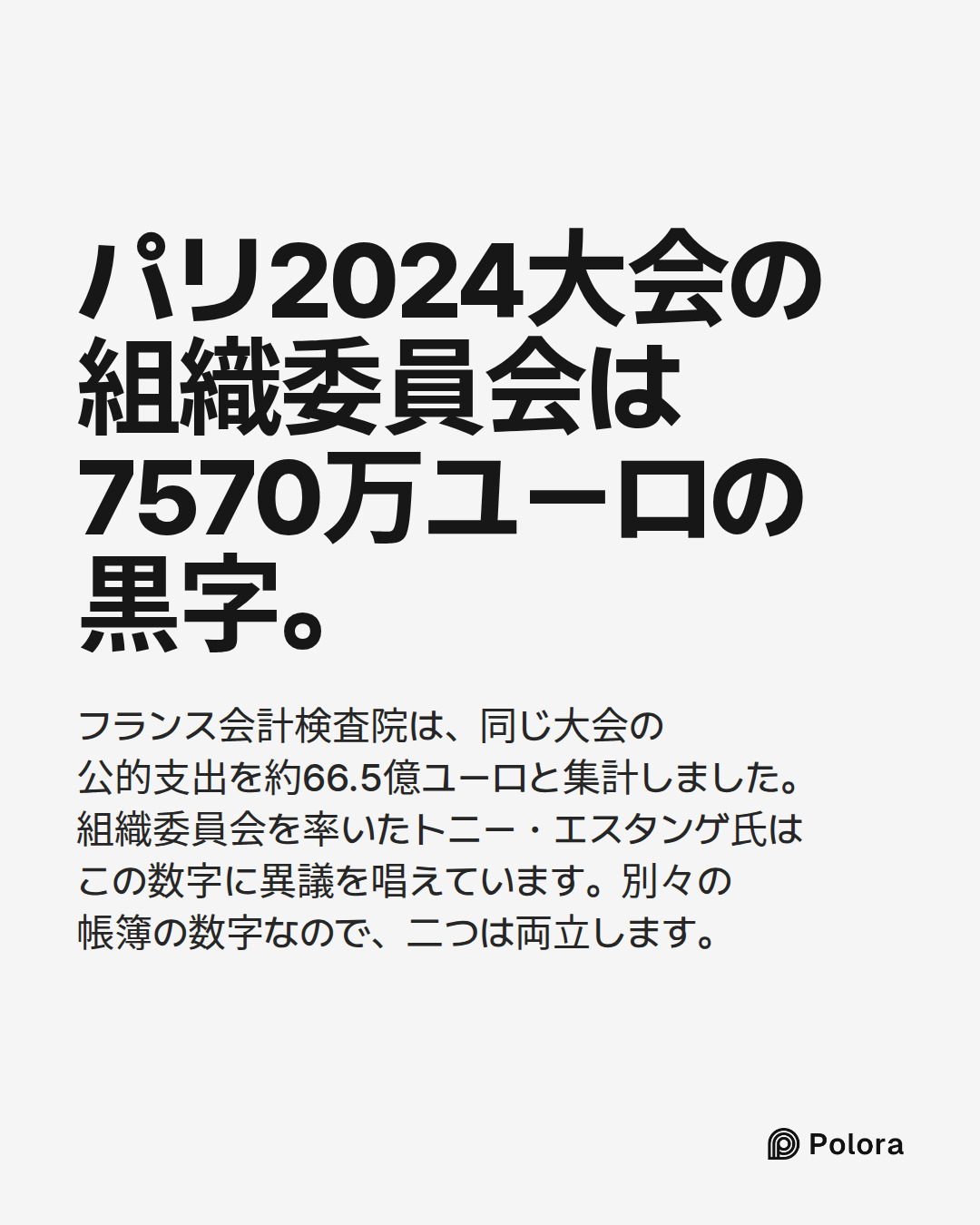
その年の秋、フランスの会計検査院(Cour des comptes)がまったく違う数字を公表しました。同じ大会に投じられた公的資金は約66.5億ユーロ。これに対して、税収や事業収入として公的部門に戻ってきたと確認できたのは約2.936億ユーロにとどまりました。組織委員会を率いたトニー・エスタンゲ氏は、この数字に強く異議を唱えると述べています。
Who really makes money from the Olympics, the host city or the IOC?
Alpha · deepseek-v4-pro
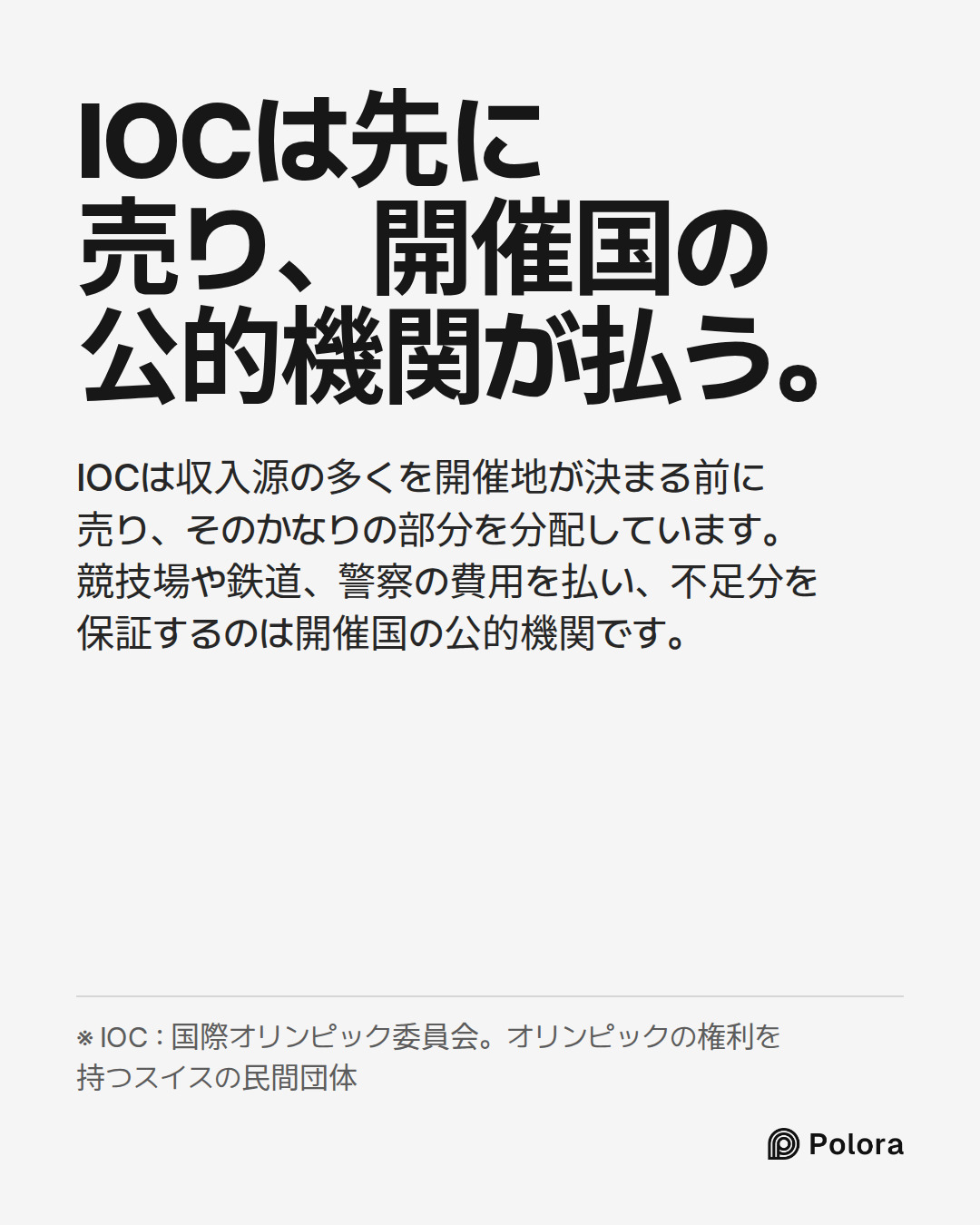
Straight answer: the IOC, far more reliably than the host city. The host city can produce a profitable organising committee — Paris did — but that is not the same as the city making money.
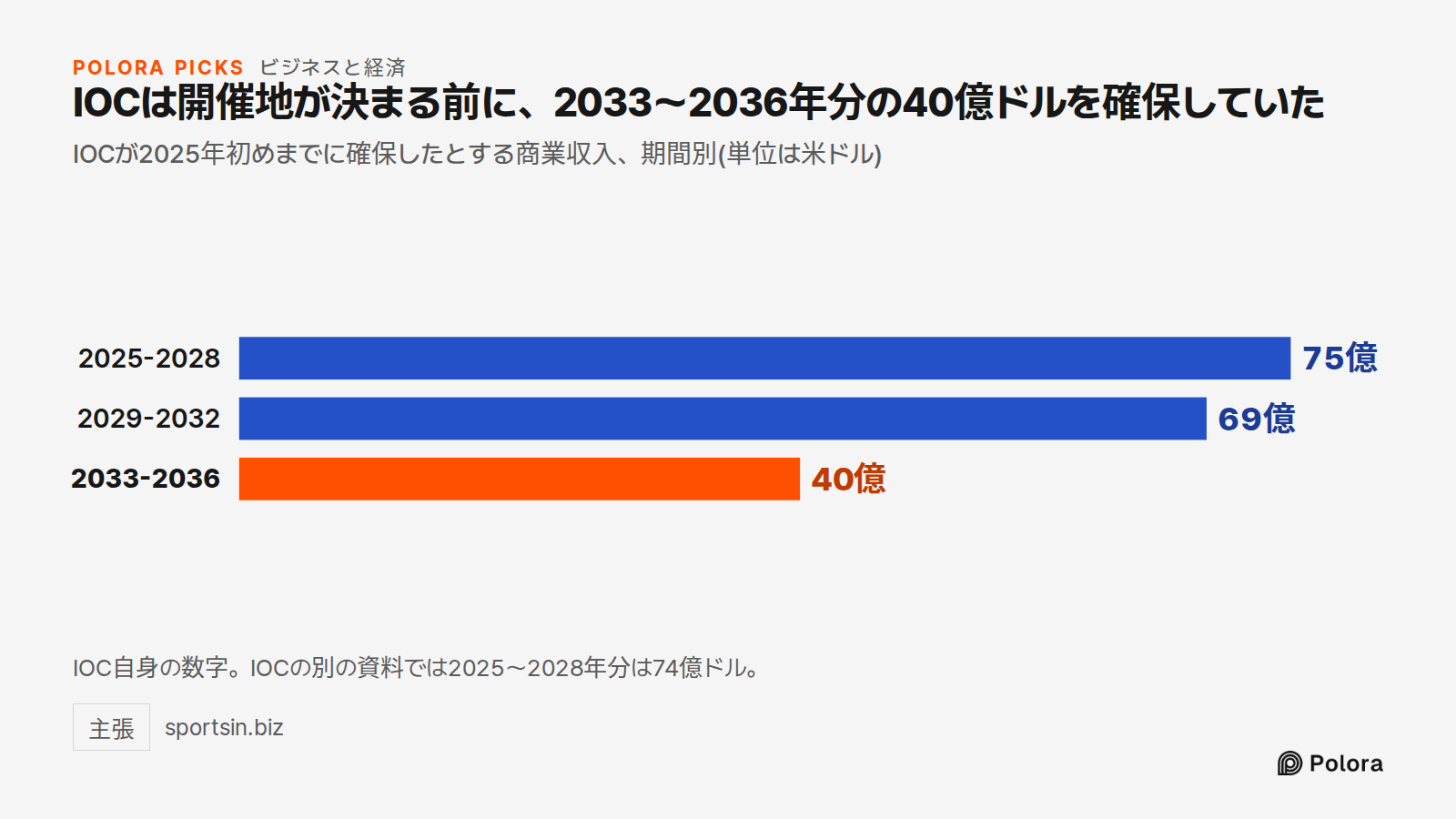
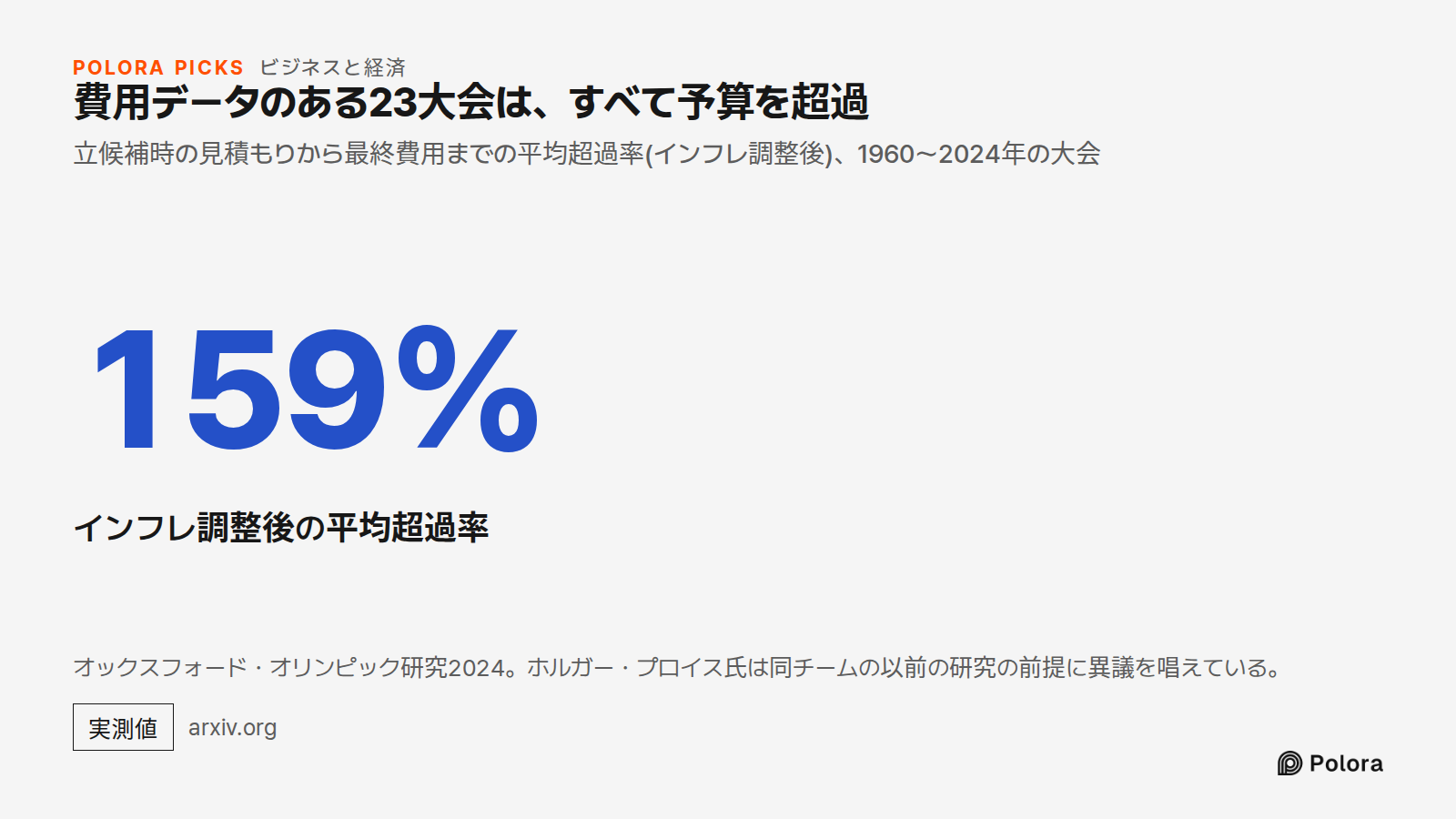
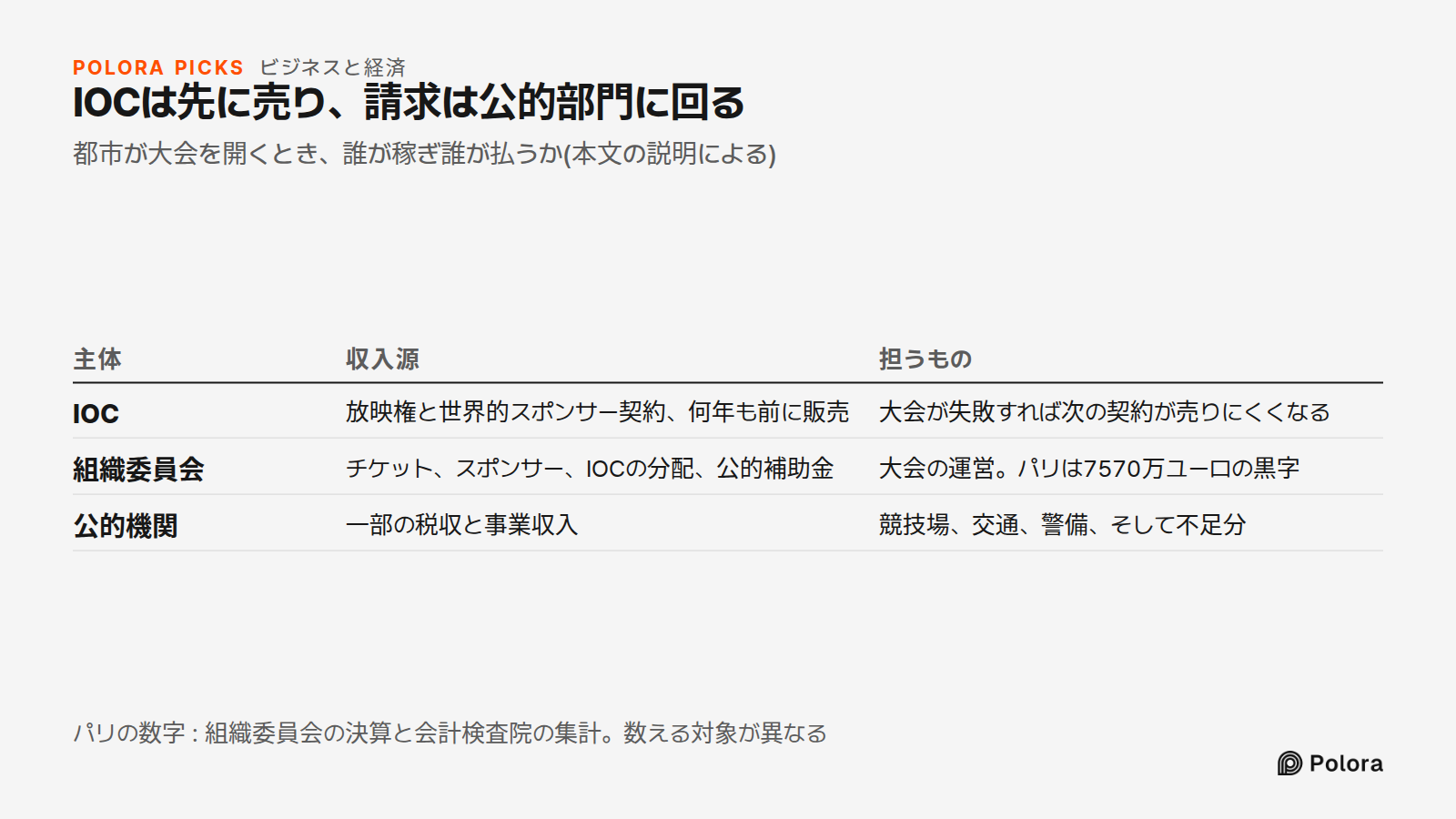
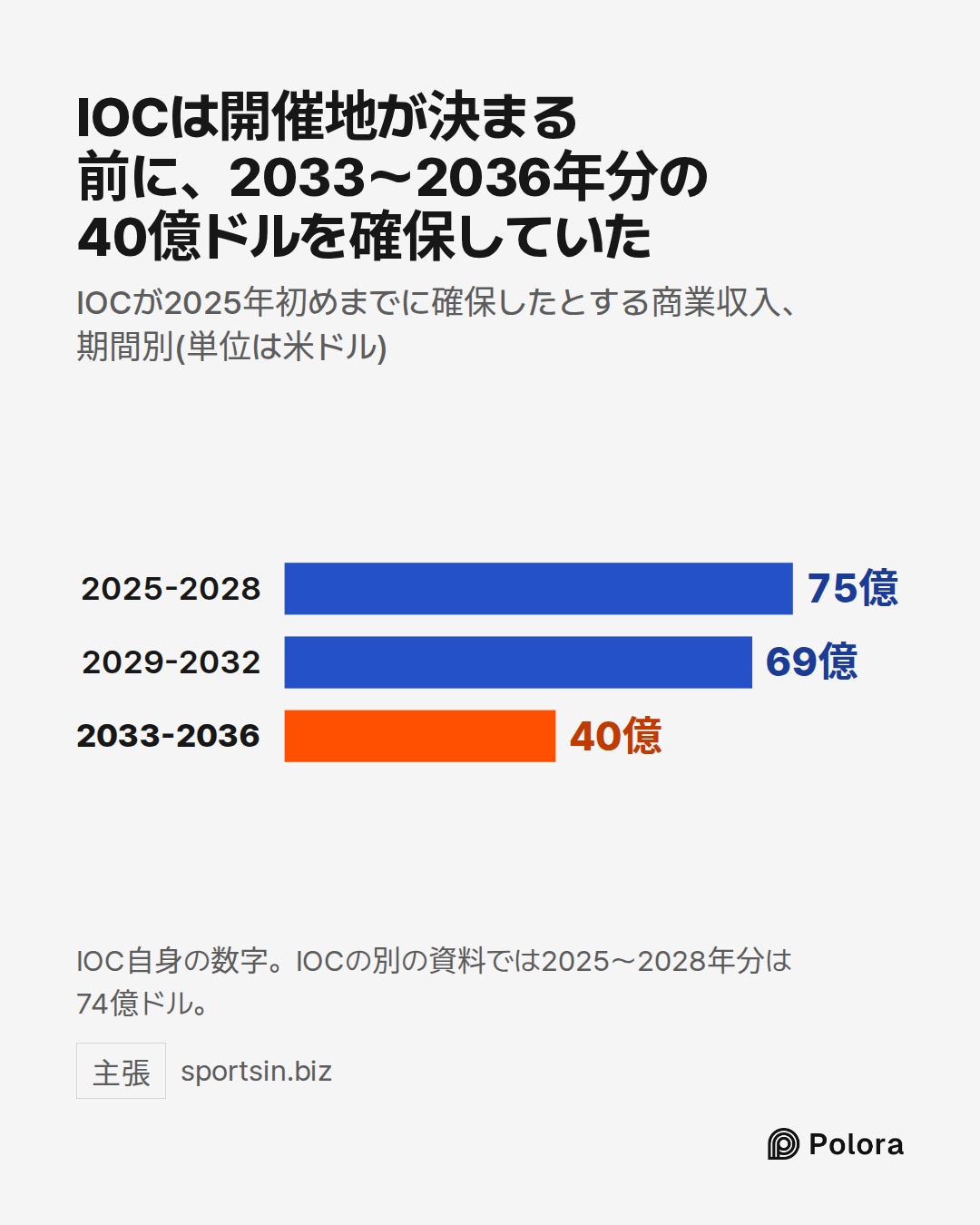
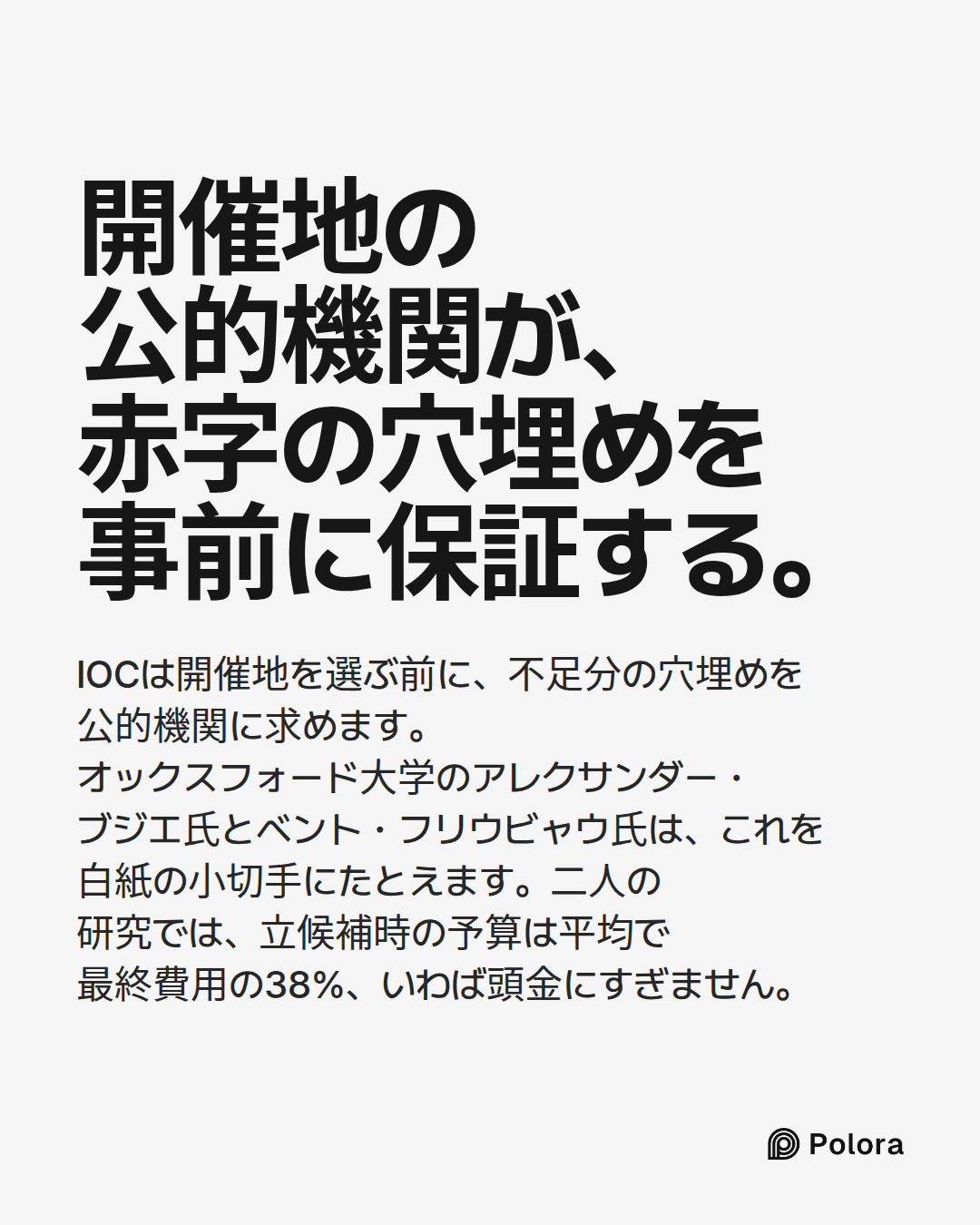
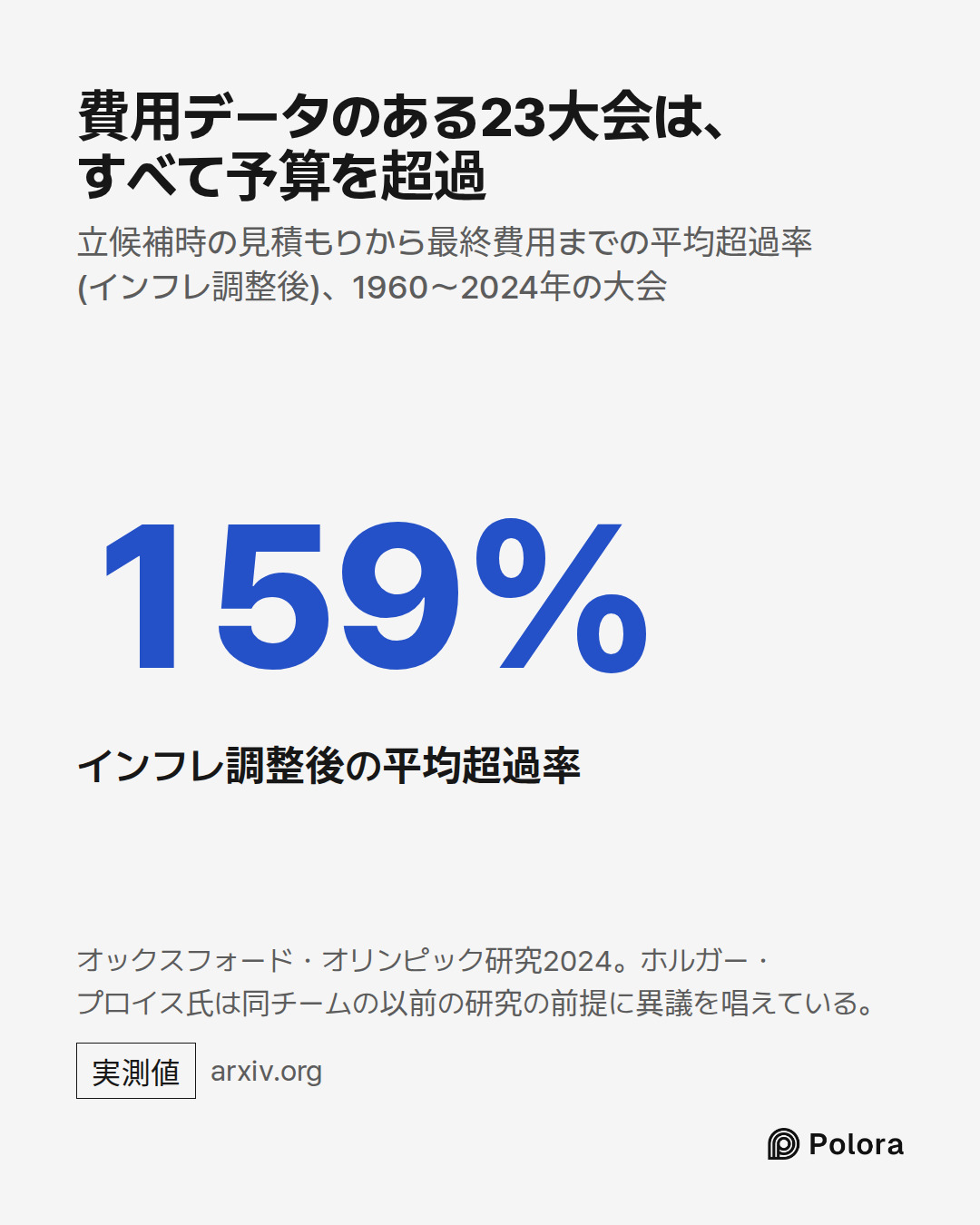
The IOC’s position is structurally safer. It sells broadcast rights and global sponsorships years in advance, under contracts that do not shrink if a venue runs late or a host’s budget blows out. The figures in the record put that in concrete terms: about $7.7 billion in commercial revenue for 2021–2024, with $7.5 billion already secured for 2025–2028, $6.9 billion for 2029–2032, and $4 billion for 2033–2036. That means the IOC has locked in income for Games whose hosts do not even exist yet. The host, by contrast, signs guarantees that the public will cover any shortfall. Los Angeles did exactly that, with California’s backup capped at $250 million. The Oxford Olympics Study is blunt about what this amounts to: the bid budget is on average only a 38 percent down payment on the final cost, and every Games with full data has run over budget, by an average of 159 percent in real terms.
Paris 2024 is the clearest illustration of the real answer. The organising committee closed its books with a €75…
Beta · gpt-6-sol
The IOC earns money more reliably; a profitable organising committee does not mean the host city made a profit. I agree with Alpha on that distinction, but the manuscript should not turn it into a claim that the IOC simply keeps the Games’ proceeds while “the host city” pays the whole bill.
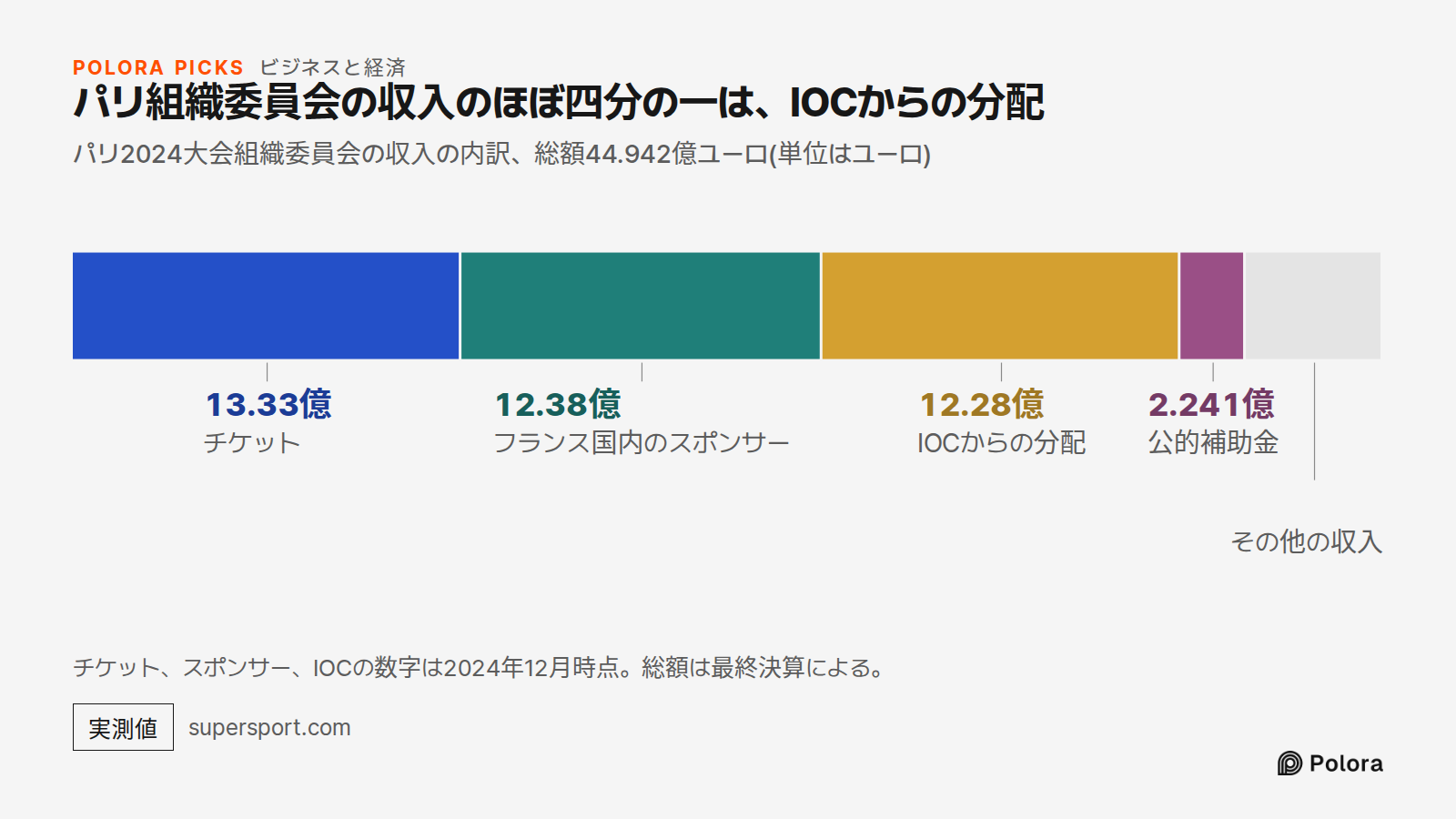
The primary Paris audit is now accessible. It confirms that the Paris 2024 organising committee recorded €4,494.2 million in revenue, €4,418.5 million in expenses and a €75.7 million surplus in June 2025, up from the €26.8 million forecast in December 2024. That surplus *includes* €224.1 million in public subsidies; it is not a return to French taxpayers. The audit separately estimates €3.02 billion in public organisation spending and €3.63 billion in public infrastructure spending, and identifies €293.6 million in public tax and commercial receipts. These are different accounting boundaries—not a calculation showing that the City of Paris itself lost €6.36 billion. (ccomptes.fr)
Audit: https://www.ccomptes.fr/sites/default/files/2025-09/20240929-rapport-JOP-2024_0.pdf
“Host city” needs p…
Gamma · gemini-3.1-pro
The premise holds, but the legal and accounting specifics in the manuscript need tightening. I used Live Search to verify the claims Beta left open. Here is what the sources show:
1. Tony Estanguet’s reaction: The manuscript is correct that he strongly contested the Cour des comptes’ €6.6 billion figure. In responses reported by *Sud Ouest* and *Orange* in late 2025, Estanguet contested the auditors' methodology, arguing that one cannot impute the full cost of long-term infrastructure (such as transport and housing built to last decades) solely to the Olympic event. He maintained that the true cost of organizing the Games was under €4.5 billion.
*(Source: https://www.orange.fr / https://www.sudouest.fr)*
2. The Sports Examiner’s 74% claim: I confirmed this publication and its calculation. In a June 2025 review of the IOC’s 2021–2024 financial statements, *The Sports Examiner* challenged the IOC’s headline claim of distributing 90% of revenue. By their accounting, roughly 74% was actually distributed to the Olympic Movement, with the remaining 26% going toward administrative costs and building the IOC's reserves (which they noted reached nearly $4.9 billion). The manu…
Researcher · gpt-6-luna
The Paris figures in the debate are verified, with important limits on what they mean. The Cour des comptes’ September 2025 report gives the organising committee a €75.7 million surplus on €4,494.2 million in revenue and €4,418.5 million in spending. The surplus includes €224.1 million in public subsidies. Separately, the auditors estimate €3.02 billion in public spending on organising the Games, €3.63 billion on infrastructure, and €293.6 million in public tax and commercial receipts. They say no budgetary revenue had been identified for infrastructure at that point. These are distinct accounts—not a calculation of the City of Paris’s net loss. The auditors also distinguish event costs from infrastructure that adds to the country’s assets, while saying longer-term economic returns remain uncertain. (ccomptes.fr)
The claim that the public bill fell mainly on the national government needs a breakdown, not an assumption. The report says the spending involved the state, local authorities and public enterprises; the figures above do not by themselves show how much Paris’s municipal governmen…
The Arbiter · gpt-6-sol
The round has narrowed the central question to whose accounts are being compared. The debaters agree that Paris 2024’s organising-committee surplus is not a profit for the City of Paris. The French auditors report a €75.7 million committee surplus alongside €3.02 billion in public organisation spending and €3.63 billion in public infrastructure spending. Their report does not turn those nationwide figures into a municipal loss, and it leaves the longer-term value of infrastructure to be assessed. (ccomptes.fr)
The main qualification to the manuscript’s angle is that public spending is not automatically a net loss, and IOC revenue is not all retained by the IOC. There is also an unresolved measurement dispute: the IOC’s stated distribution share and *The Sports Examiner*’s roughly 74% calculation use different accounting definitions. The latter is an outside calculation, not a second figure published by the IOC. ([thesportsexaminer.com](https://www.thesportsexaminer.com/intl-olympic-committee-annual-report-shows-ioc-distributed-almost-74-of-its-revenues-from-2021-24-and-…
The Arbiter's Final Verdict · gpt-6-sol
The IOC earns Olympic revenue more reliably than a host city makes a financial return. It sells broadcast rights and global sponsorships, while host governments and other public bodies pay substantial costs to stage the Games. But the IOC does not simply pocket all that revenue: it distributes a substantial share to organisers and the wider Olympic movement.
Paris shows why *whose accounts?* is the crucial question. Its organising committee reported a €75.7 million surplus. Separately, France’s auditors counted about €6.65 billion in public spending on organisation and infrastructure, against €293.6 million in identified public receipts. A surplus for the committee therefore does not mean that Paris—or French taxpayers—made money. Equally, the public-spending total is not a net-loss figure for the City of Paris: much of the spending was national, and some infrastructure may have lasting value that the audit could not yet establish. Cour des comptes audit
So the manuscript’s central premise stands as a comparison of financial risk, not as a claim that every host loses or…