大きな例外がひとつあります。ノルウェージャンクルーズラインのプライド・オブ・アメリカ(Pride of America)は、外国の港に一度も寄らずにハワイの島々を巡ります。それができるのは、この船が米国の船籍だからです。このハワイ航路のためにわざわざ設けられた規定によって、この船は外国の造船所で仕上げられても米国で登録できました。外国で造られたクルーズ船一般に向けた例外ではありません。
Why are so many cruise ships registered in Panama, Liberia or the Bahamas?
Alpha · deepseek-v4-pro
The short version: these are open registries — often called “flags of convenience” — and a ship’s flag is its governing legal jurisdiction. For cruise ships, the reason not to fly the US flag is mainly operating cost and legal constraint, not simple tax avoidance.
1. A US flag drags in US-built ships and US crews.
Under the Passenger Vessel Services Act, 46 U.S.C. § 55103, a foreign-flagged ship cannot carry passengers from one US port to another unless it is US-owned and holds a coastwise endorsement. Getting that endorsement requires the vessel to be built in the United States (46 U.S.C. § 12112). On top of that, US-documented passenger vessels must have American officers and a crew made up mostly of US citizens or lawful permanent residents (46 U.S.C. § 8103). Almost no modern large cruise ship is built in the US, and most are crewed by international workers at non-US wage scales. That is why a cruise from Miami or Seattle that is foreign-flagged must call at a foreign port — Nassau, Cozumel, Victoria — so the voyage becomes “international” rather than domestic coastwise trade.
2. The flag decides whose rules apply on board.
Panama, Liberia and the Bahamas are open…
Beta · gpt-6-sol
The main reason is that a ship’s flag and its owner’s home country need not be the same. Open registries let cruise operators register ships abroad. The flag state has primary responsibility for the ship’s certification and enforcement of international maritime rules, while its crewing rules can differ from those for a US-documented ship. That can give an operator more flexibility over how it builds and staffs its fleet. It does not mean the ship escapes safety rules: international conventions apply, and countries whose ports it visits can inspect it too. (imo.org)
For cruises involving US ports, a second distinction matters. US law generally reserves transportation of passengers between US ports to vessels qualified for the coastwise trade. A coastwise endorsement ordinarily requires a US-built vessel; US-documented vessels also face citizenship requirements for key officers and crew, subject to statutory exceptions. A foreign-flag ship can instead run an itinerary that meets the rules for calling abroad. But the details matter: a nearby forei…
Gamma · gemini-3.1-pro
I have reviewed the manuscript and checked the specific items requested by the editor. Here is what I found regarding the claims, the required fact-checks, and the manuscript's overall premise.
1. Pride of America’s crewing requirements
The manuscript claims the ship must carry American officers and a mostly American crew. This is supported by 46 U.S.C. § 8103, which mandates that only a citizen of the United States may serve as master, chief engineer, or officer on a documented vessel, and that at least 75 percent of the unlicensed seamen on a U.S. passenger vessel must be U.S. citizens or permanent residents.
*Source: https://www.law.cornell.edu/uscode/text/46/8103*
2. Pride of America’s foreign shipyard exception
The manuscript correctly notes that a special provision allowed the ship to be finished abroad and still fly the U.S. flag. This is found in the "Hawaii Cruise Ship Provision" of the Consolidated Appropriations Resolution, 2003 (Public Law 108-7, Section 211, 117 Stat. 79), which explicitly allowed two partially completed ships contracted in a U.S. yard to be completed outside the U.S. and documented under the U.S. flag for Hawaii service.
*Source: https://w…
Researcher · gpt-6-luna
Researcher’s fact-check
Bottom line: The manuscript’s central distinction holds: registering a ship and incorporating its parent company are separate choices with different legal effects. The draft does, however, overstate what a foreign port call does under U.S. law, and its “the flag decides whose rules apply” language needs qualification.
Claims checked
- Open registries and flag-state responsibility: The IMO explains that an open registry allows ships owned or controlled by foreigners to fly that country’s flag. Under international law, the flag state is responsible for exercising jurisdiction and control over its ships, including on administrative, technical and social matters. That does not mean the flag state supplies every law that could apply: port-state rules and other applicable national or international requirements can also matter.
Address: https://www.imo.org/en/ourwork/legal/pages/registration-of-ships-and-fraudulent-registration-matters.aspx
Address: https://www.imo.org/en/ourwork/iiis/pages/survey-verification-certification.aspx
- The Passenger Vessel Services Act (PVSA): The law bars carrying passengers between U.S. coastwise por…
The Arbiter · gpt-6-sol
The voices agree on the manuscript’s central distinction: a ship’s flag and its parent company’s place of incorporation are separate choices. The Researcher found support for that distinction in the company filings and the shipping-tax rules. The remaining question is how carefully the manuscript describes what each choice does.
The clearest correction concerns foreign port calls. The manuscript’s Miami-to-Miami example is not a rule for every itinerary. Under the passenger-transport regulation, a call at a *nearby* foreign port does not generally allow a passenger to board at one US port and finish at another. The wording should follow the passenger’s actual embarkation and disembarkation, rather than say that a foreign stop simply makes the voyage lawful. (law.cornell.edu)
There is also a meaningful difference in emphasis. Alpha and Gamma stress the costs and constraints associated with US-flag operation; Beta and the Researcher stress that foreign-flagged does not mean unregulated. The strongest challenge to the manuscript’s angle is its suggestion that the flag alone determines the law aboard or re…
The Arbiter's Final Verdict · gpt-6-sol
Verdict
The manuscript’s central premise stands, but its opening answer is too categorical. Cruise operators use foreign registries because they allow ships owned elsewhere to fly their flags and offer flexibility in shipbuilding, crewing and operation. A US-flagged ship seeking to carry passengers between US ports ordinarily needs a coastwise endorsement, which generally requires US construction; US-documented passenger ships also face citizenship rules for officers and crew. But a foreign flag does not put a ship beyond safety regulation or US port inspections. (IMO; 46 USC §§ 12112, 8103)
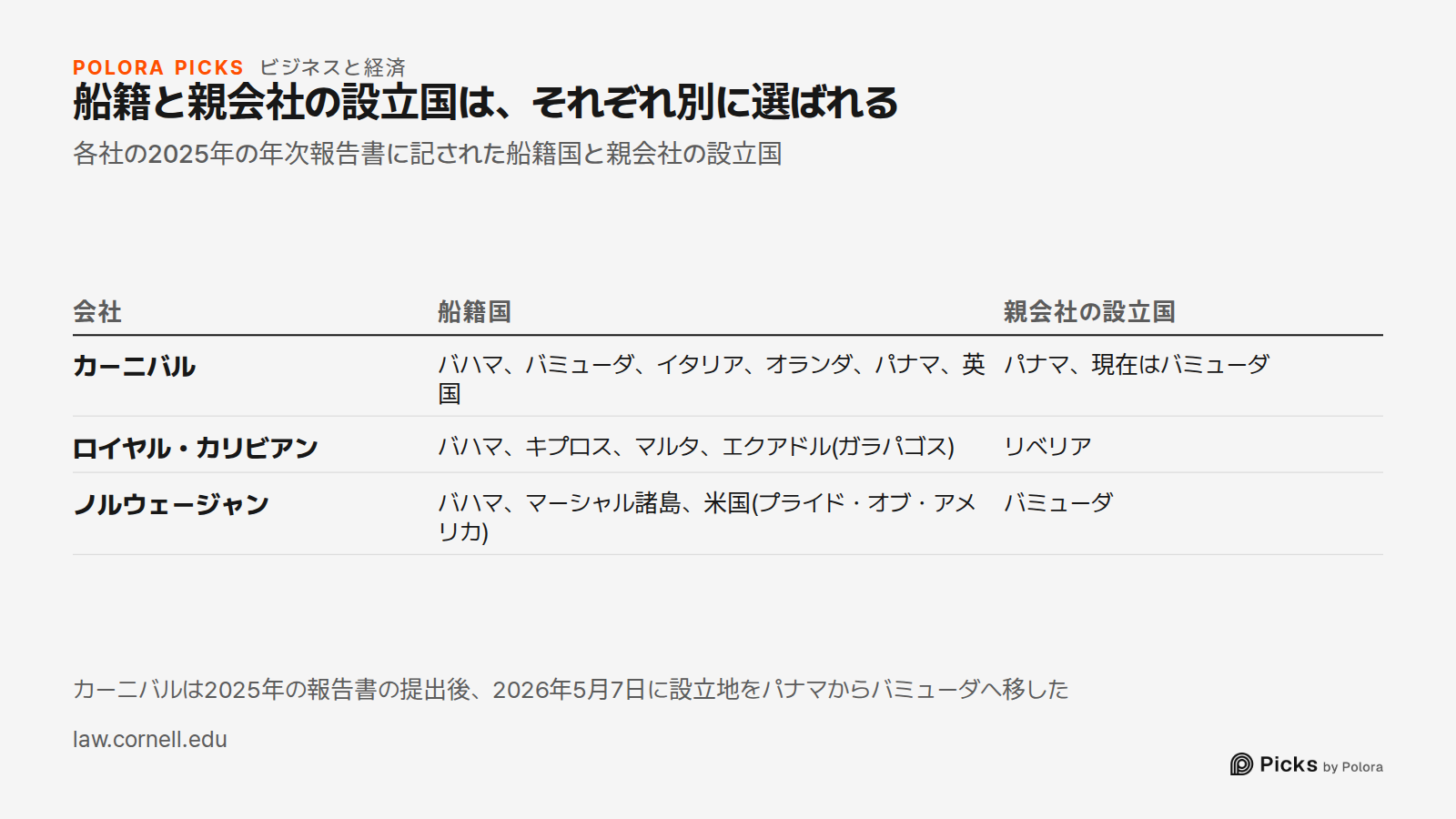
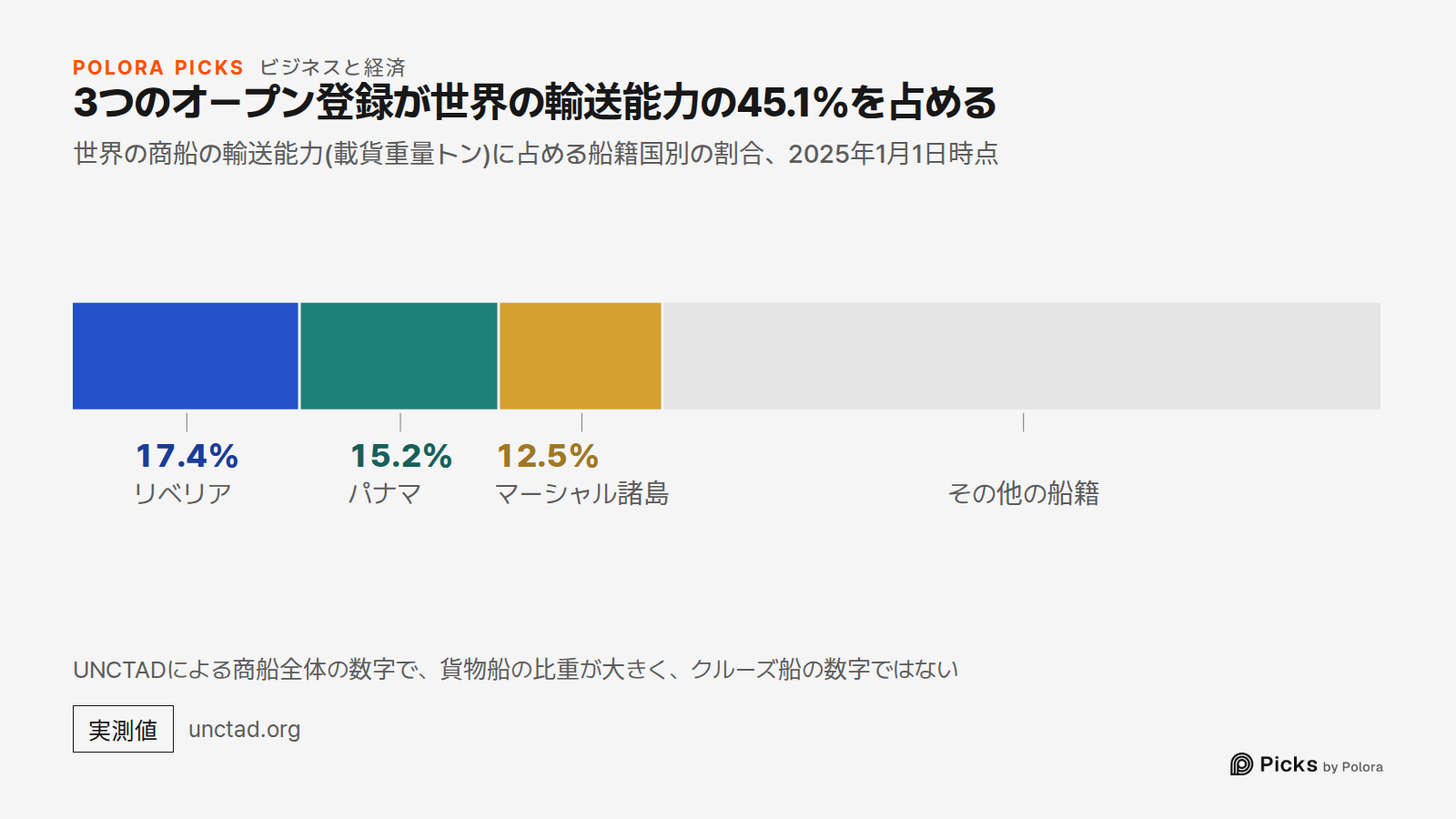
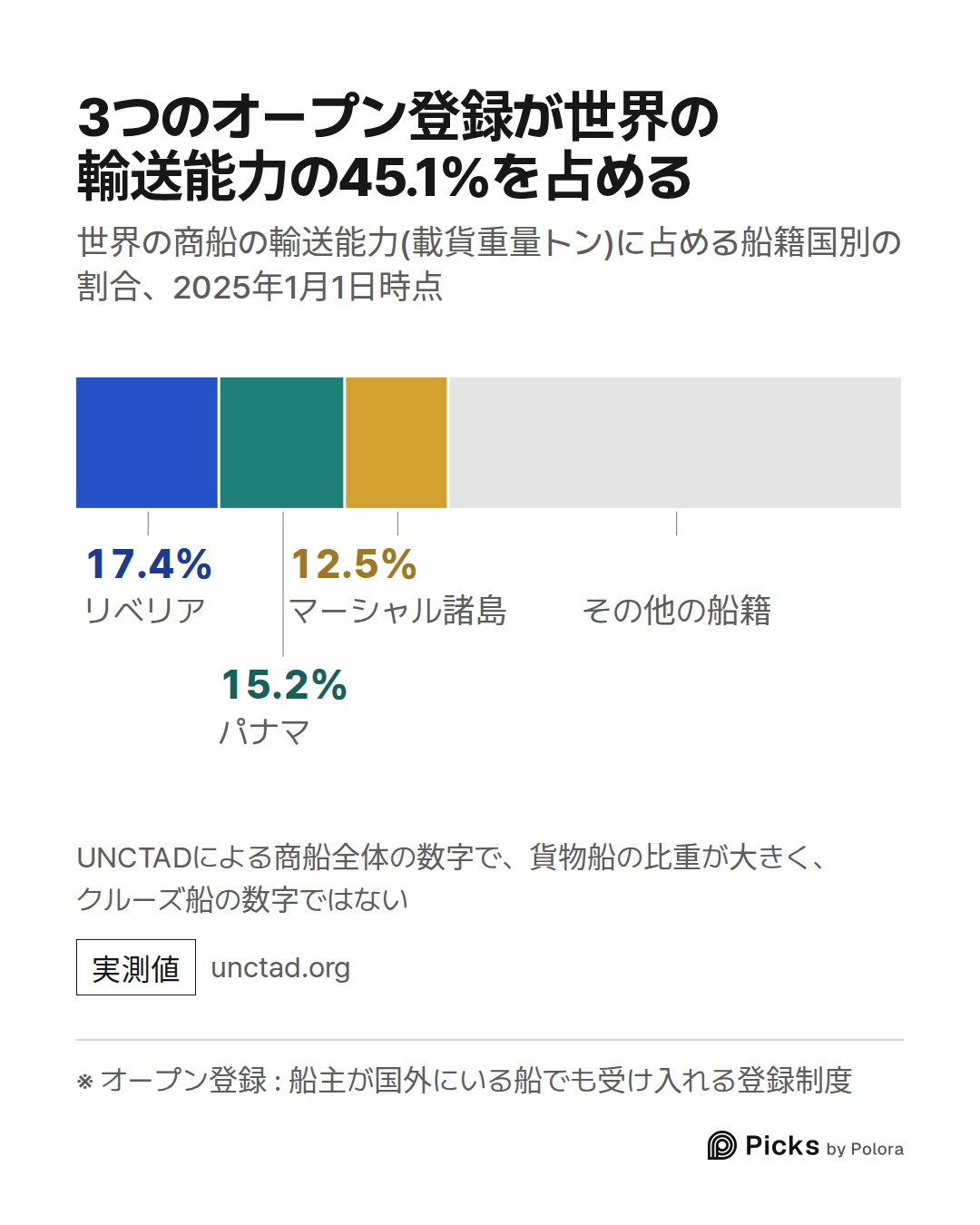
The question’s three countries need separating. In the cited filings, the Bahamas is a flag used by all three major cruise groups. Panama appears among Carnival’s ship flags, while Liberia appears as Royal Caribbean’s *place of incorporation*, not in the three groups’ disclosed flag-state lists. Liberia and Panama’s prominence in world shipping is real, but UNCTAD’s fig…