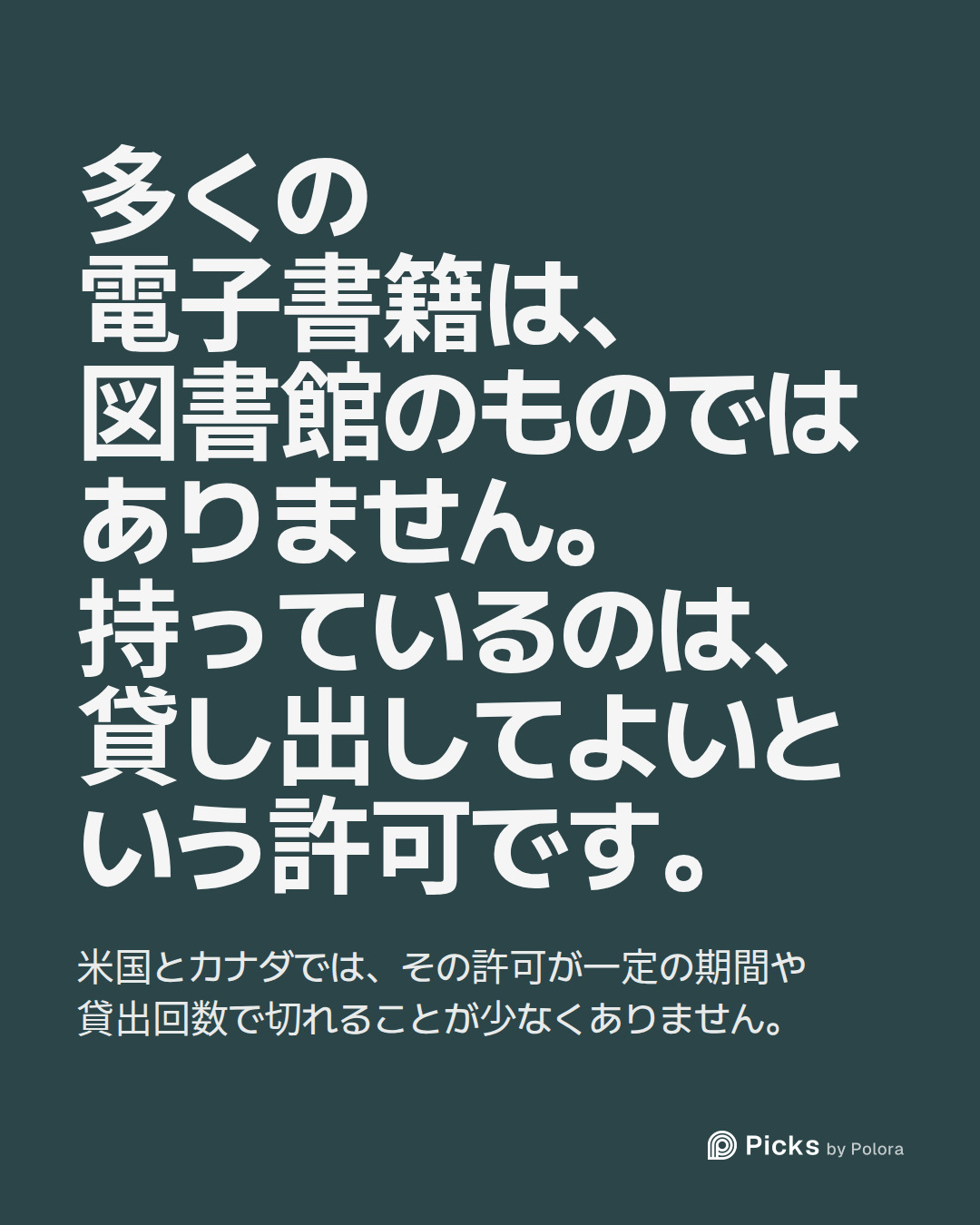
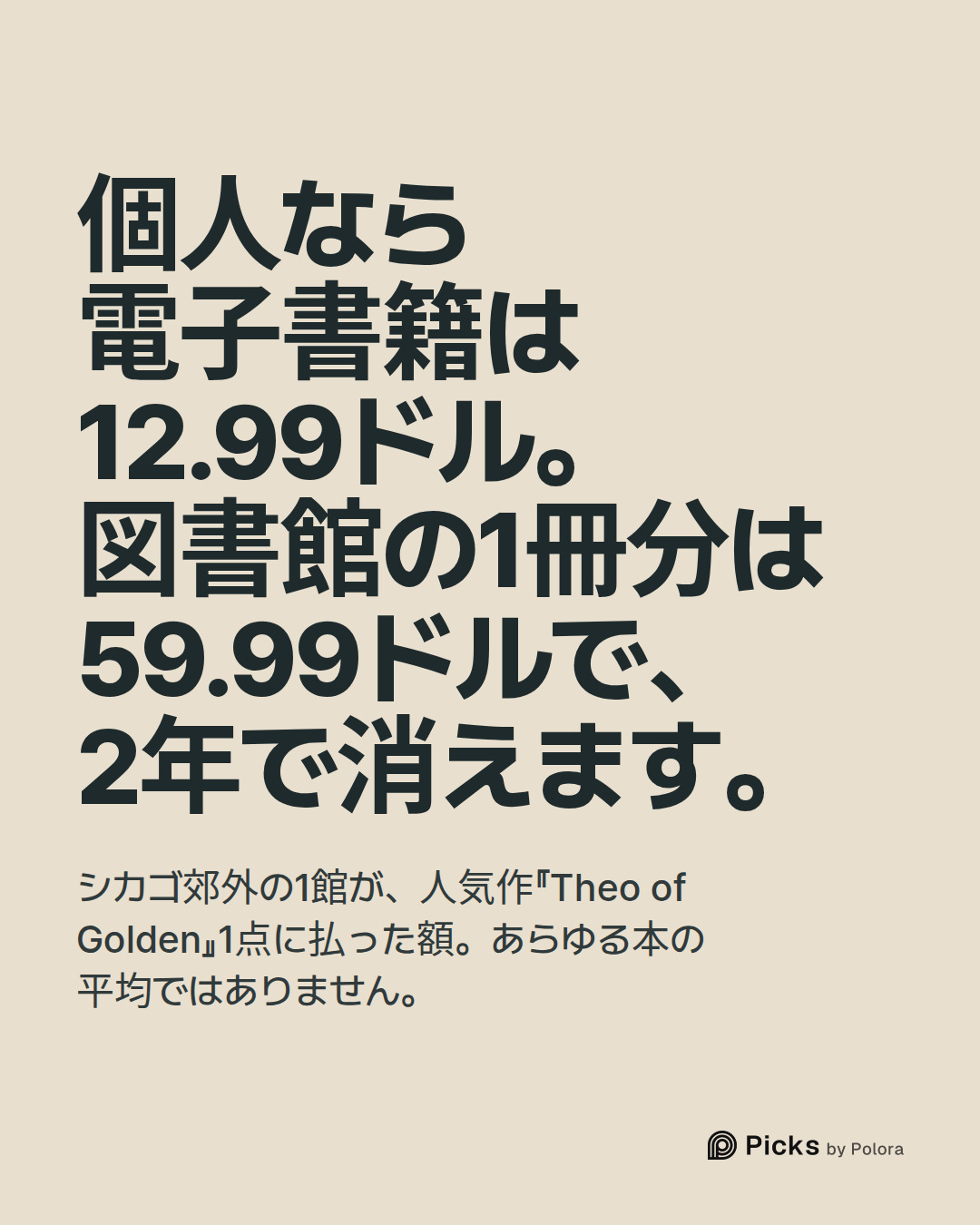
ある図書館の数字を見てみます。シカゴ郊外のシャンバーグ・タウンシップ地区図書館は、小説『Theo of Golden』に支払っている額を公開しました。個人なら電子書籍を12.99ドルで買えます。図書館は1冊分に59.99ドルを払い、その1冊は2年で消えます。オーディオブックは個人が16.99ドル、図書館は89.99ドルで、こちらも期限は2年です。これは人気作1点についての1館の数字で、あらゆる本の平均ではありません。同館のデジタルサービス担当の司書が地元紙デイリー・ヘラルドにこの数字を示し、同紙は2026年10月、図書館が個人の4倍から5倍を払うのはよくあることだと報じました。
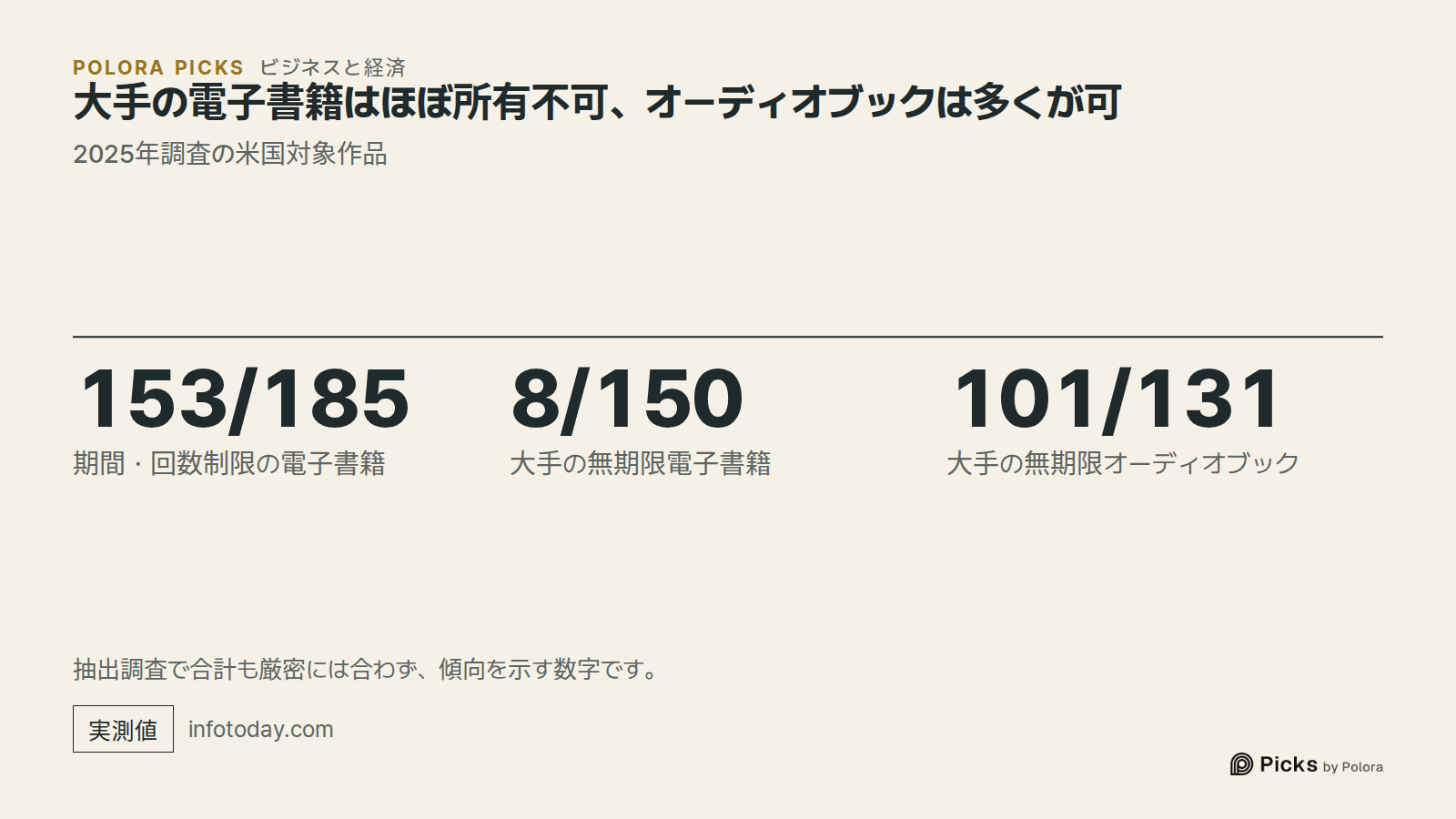
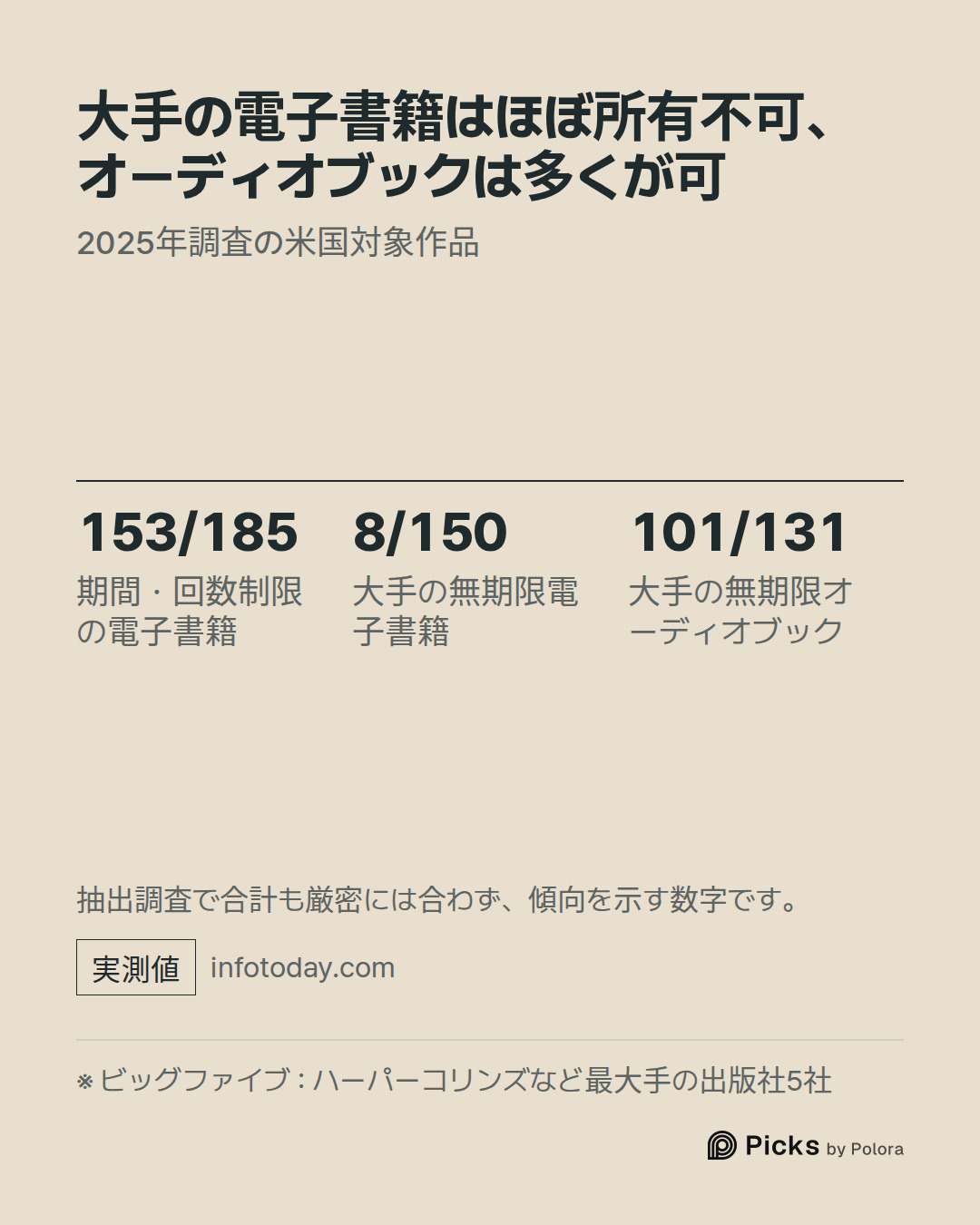
図書館専門誌Computers in Librariesに載った、カナダと米国の電子書籍ライセンスについての2025年の追跡調査によると、米国で入手できた調査対象の電子書籍185点のうち153点、つまり82.7%が、期間か貸出回数で制限される方式でした。この数字は調査対象の全作品についてのもので、ビッグファイブだけのものではありません。ビッグファイブが出版または流通を手がける150点のうち、無期限のライセンスがあったのは8点だけで、それも古いレーベルや小さなレーベルのものでした。たとえばペンギン・ランダムハウスは、同じ電子書籍について1年か2年の期限を選ばせていました。例外はオーディオブックです。ビッグファイブのうち3社はいまも無期限の選択肢を用意していて、米国の調査対象にあるビッグファイブのオーディオブック131点のうち101点はその方式で契約できました。これらは抜き出した作品を調べた結果で、全作品を数えたものではありません。調査自体の合計も正確には合わないため、正確な割合というより、傾向を示すものとして読むのがよいでしょう。
図書館側の団体はこの調査に異論を唱えています。Ebook Study Groupは、Readers Firstなどとともに共同の反論を出し、調査を行った経済学者たちは図書館の連合体が電子書籍を共有する仕組みを読み違えていると主張しました。反論によると、ロードアイランド州では48の図書館がひとつの蔵書目録を共有しているのに、調査はその目録を各館がそれぞれ持っているかのように数え、図書館で読める電子書籍の数を48倍に過大に見積もっていたといいます。これは図書館側の批判であり、独立した検証で決着がついたわけではありません。
Why does your public library pay more for an ebook than you do?
Alpha · deepseek-v4-pro
The short answer is that your library usually isn’t buying the same ebook you buy. It’s renting a license to lend it.
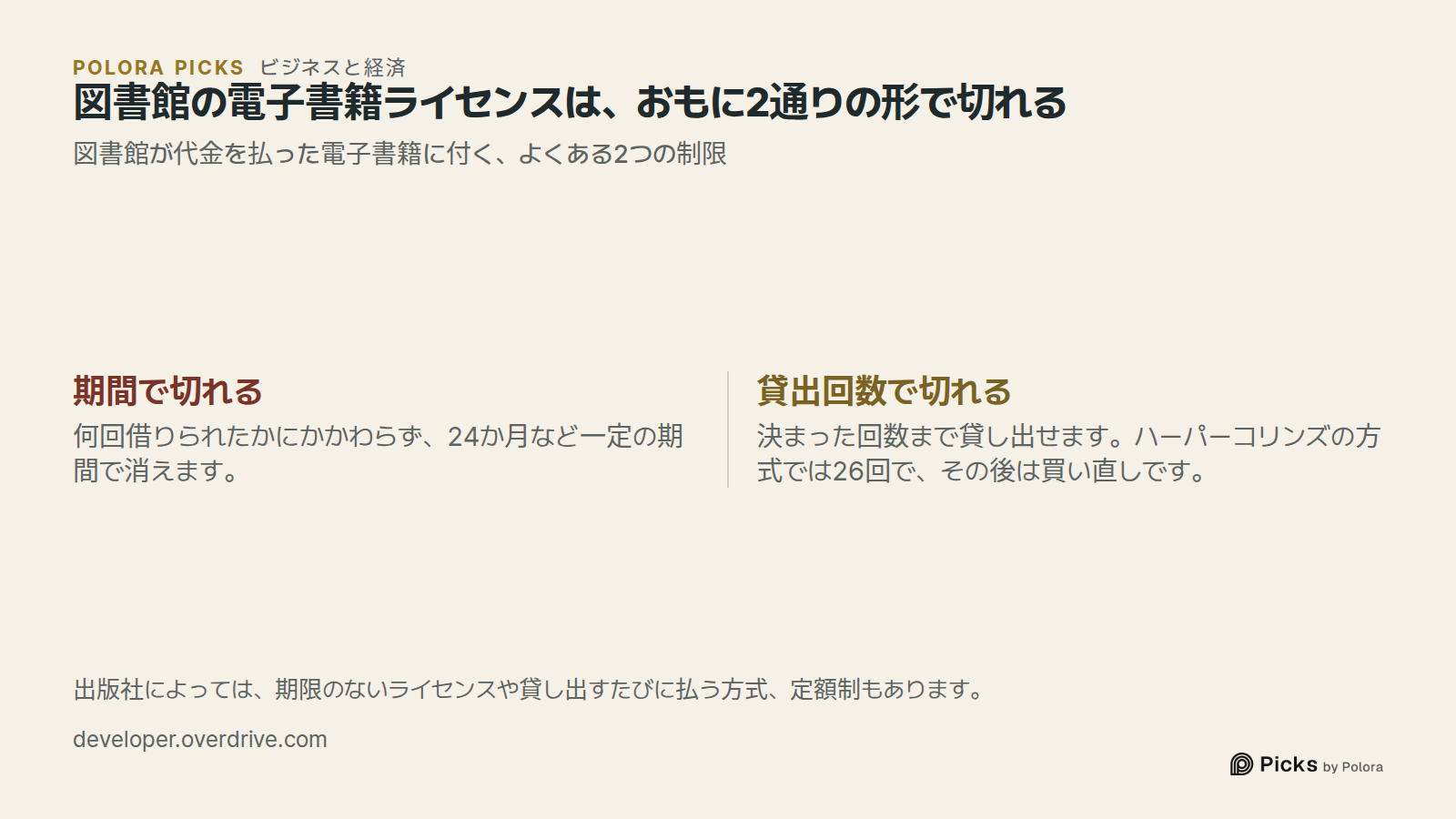
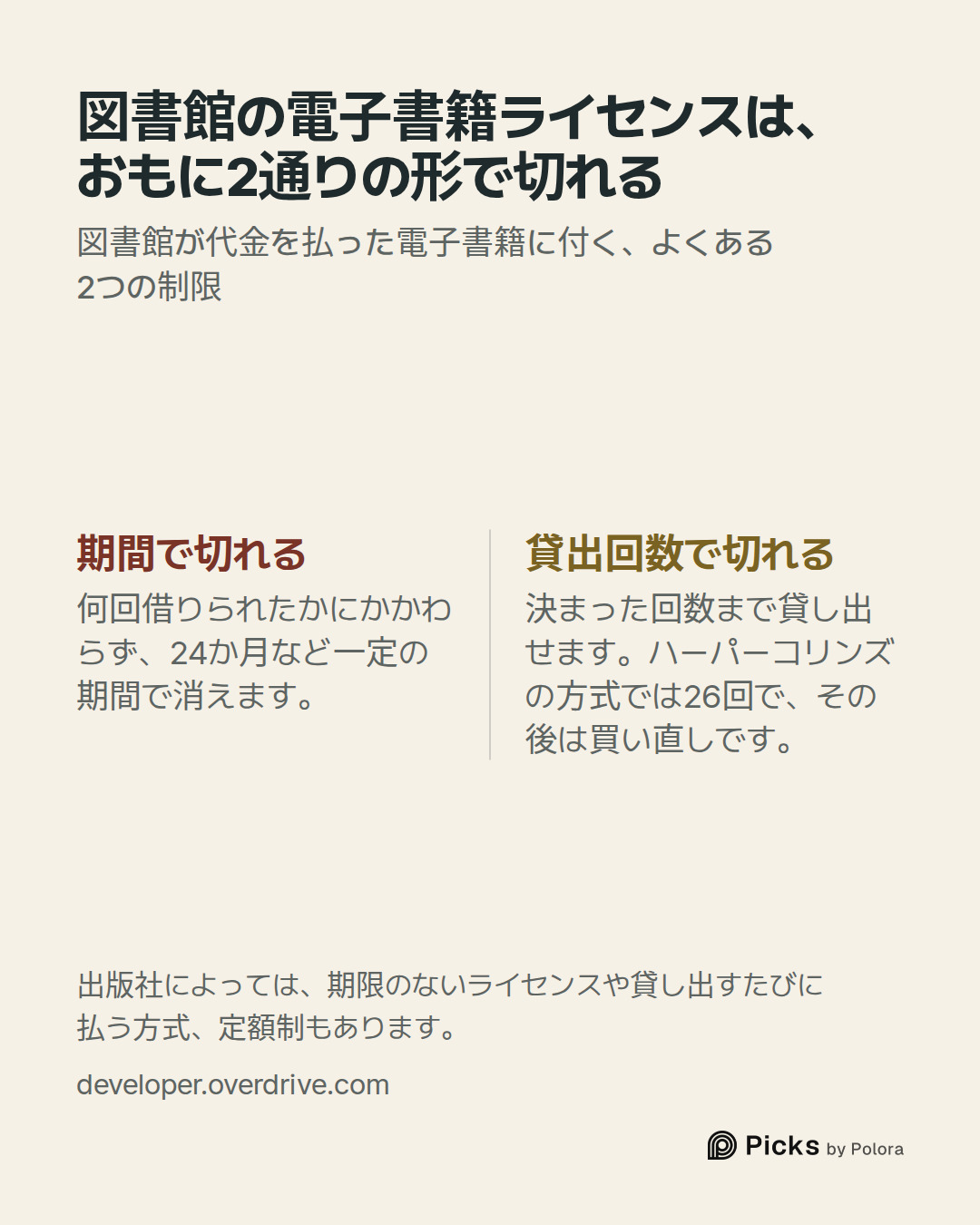
A consumer purchase gives one person permanent access. A library license gives the library permission to lend one digital copy to many people in turn, and that permission typically expires — after a set period such as 24 months, or after a set number of checkouts, such as the 26-loan cap HarperCollins has used since 2011. Because the license is priced as a lending right rather than as a personal copy, it can cost several times the consumer price.
Publishers justify that higher price in two ways. One library copy can be borrowed by hundreds of readers, so a consumer-priced library ebook would, in their view, become a free substitute for retail sales. They also argue that digital borrowing removes the “friction” of going to a library, waiting, and returning a physical book, so higher license fees and expiry dates restore some scarcity and create renewals over time.
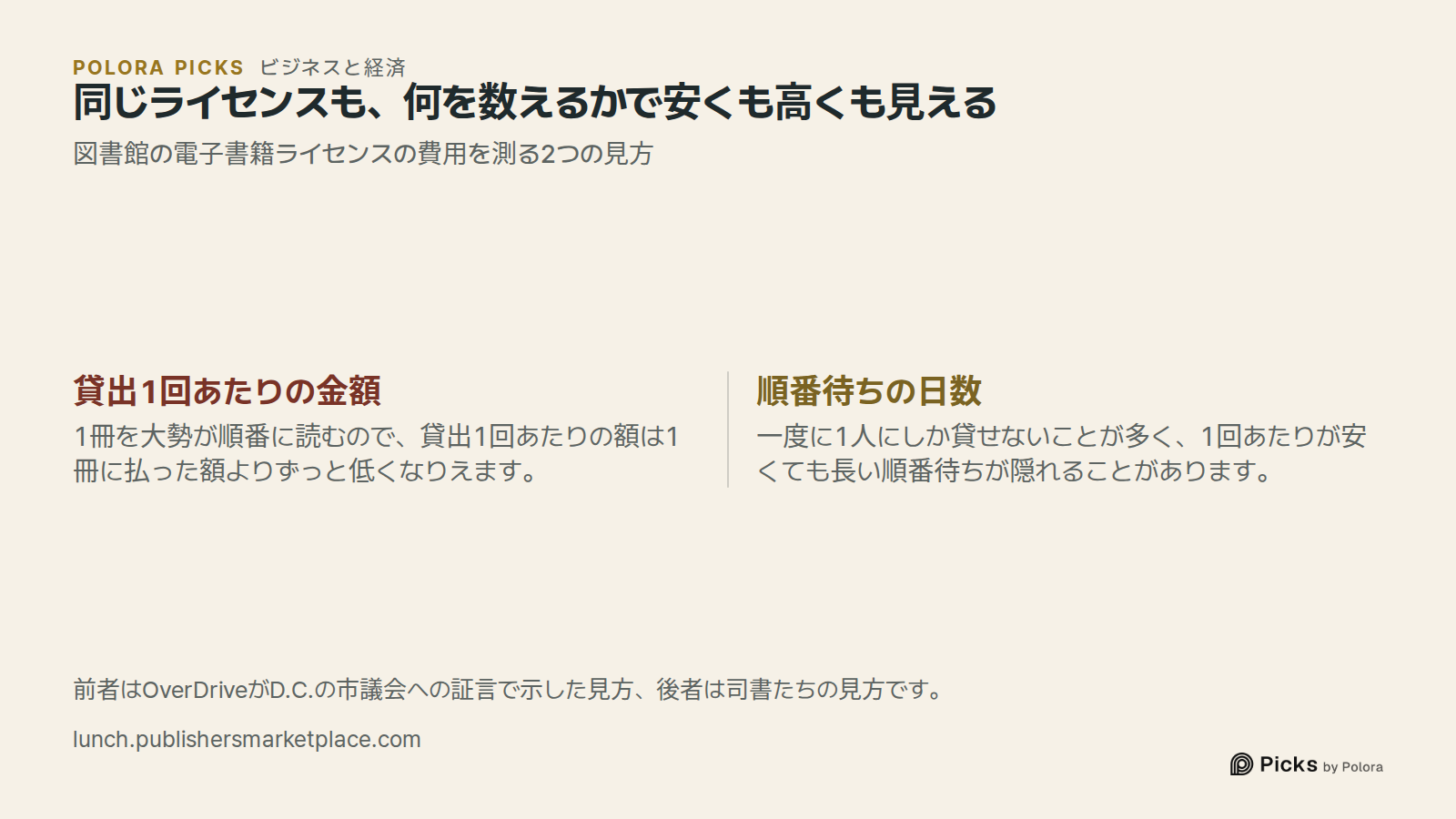
Libraries push back that the price per copy is the wrong measure. One often-cited figure from OverDrive’s testimony to the Washington, D.C. council in January 2026 is that DC Public Library paid about $0…
Beta · gpt-6-sol
The short answer: a public library generally pays for *lending rights*, not the same personal-use access a reader buys. A publisher can limit a library license to one borrower at a time and make it expire after a period or a number of loans. But “every ebook is rented for two years” goes too far: OverDrive also lists nonexpiring, pay-per-checkout, and subscription models. (developer.overdrive.com)
A concrete example supports the price gap, not a universal four- or five-times rule. Schaumburg Library says it paid $59.99 for a two-year *Theo of Golden* ebook license versus a $12.99 consumer price; its audiobook figures were $89.99 versus $16.99. It bought ten licenses of each format—$1,499.80 altogether—to serve more borrowers. Those are that library’s stated prices for one title. (schaumburglibrary.org)
There are two interests behind the dispute. Publishers and authors argue that convenient library lending can substitute for sales, particularly for new bestsellers; a study commissioned by their ass…
Gamma · gemini-3.1-pro
I can verify several of the manuscript’s claims that were left open, using direct searches of the sources mentioned. Here is what the record actually shows regarding the specific verification requests:
The AAP/Authors Guild Study and the Rebuttal
The manuscript’s figures for the publisher-commissioned study and the library rebuttal are completely accurate.
* The 0.85 to 1.0 percent claim: The Secretariat Advisors report, announced by the AAP and Authors Guild on September 1, 2026, explicitly states: “[C]onsumer print sales decline by approximately 0.85 to 1.0 percent for every one-percentage-point increase in the share of e-books in public libraries...” (Source: https://publishers.org/news/new-study-analyzes-the-impact-of-library-e-lending-on-commercial-book-markets/)
* The factor of 48: The Ebook Study Group’s September 11, 2026 joint rebuttal states that the study's economists failed to understand digital library consortia and "inflated library e-book availability by a factor of 48." They cite Rhode Island as an example, noting the state has 48 libraries in a single consortium, and the study's methodology effectively counted the shared catalog 48 separate times.…
Researcher · gpt-6-luna
The Daily Herald article is retrievable in search results, despite the earlier report that it returned 403. It says libraries pay “four or five times more” than consumers, gives Schaumburg’s *Theo of Golden* prices ($59.99 versus $12.99 for the ebook; $89.99 versus $16.99 for the audiobook), and says the library bought ten licenses of each format. It attributes the 26-checkout cap to Schaumburg digital services librarian Amy Peterson. The article describes “friction” as publishers’ rationale, but does not name a particular publisher as the source of that argument.
Address: https://www.dailyherald.com/20261001/news/libraries-pay-more-for-e-books-than-consumers-state-lawmakers-are-trying-to-change-that/ (dailyherald.com)
The study’s 82.7% figure is accurately stated with its denominator: 153 of 185 available U.S. ebook titles in the study’s sample were metered. Separately, eight of the 150 Big Five-published-or-distributed titles had perpetual terms. The article also reports that three Big Five publishers still offered perp…
The Arbiter · gpt-6-sol
Where the voices agree: A library’s digital-lending license is not the same product as a reader’s personal-use ebook. The Schaumburg example establishes a substantial price gap for *one title*, while OverDrive’s documentation confirms that publishers offer several licensing models—not just two-year terms. (developer.overdrive.com)
What needs care in the manuscript: Beta and the Researcher found that the study’s 82.7% figure describes its sample of available U.S. ebooks, not Big Five ebooks alone. The record also identifies a problem with saying all remaining Big Five publishers ended perpetual ebook terms in 2018: OverDrive dates Macmillan’s change to March 2020. These are corrections to the scope and timeline, not competing explanations of the price gap. (infotoday.com)
What remains unconfirmed: The Researcher could not verify the attributed D.C. $0.85-per-checkout and 45-day-wait figures against the testimony. The “…
The Arbiter's Final Verdict · gpt-6-sol
Verdict
The manuscript’s premise stands, with narrower wording. For many ebooks from major publishers in the US and Canada, a library pays for permission to lend a digital copy, often to one patron at a time, rather than buying the same personal-use product a reader buys. That permission may expire by time or checkout count. It can cost substantially more upfront—but the evidence here does not establish that every library ebook costs four or five times the retail price or expires after two years.
What the evidence supports—and what to change
- Price example: Schaumburg Library reports paying $59.99 for a two-year *Theo of Golden* ebook license, versus a $12.99 consumer price; the audiobook figures are $89.99 and $16.99. Ten licenses of each format total $1,499.80. This is a strong illustration, not an average. The *Daily Herald* reports the broader “four or five times” characterization, but the record does not establish it as a direct quote from librarian Amy Peterson. Schaumburg; [*Daily Herald*](https://www.dailyherald.com/20261001/news/libraries-pay-more-for-e-books-than-consume…