Why do ski resorts sell season passes for less than a few day tickets?
Alpha · deepseek-v4-pro
The short answer is that the comparison is engineered: the walk-up day ticket is priced high partly so that the season pass looks like the only rational purchase. The pass is not really a bulk discount. It is prepayment, risk transfer, and price discrimination.
A big ski resort has mostly fixed costs. Lifts turn, snowmaking runs, patrollers patrol, leases and staff are paid whether 5,000 or 15,000 people show up. The extra cost of one more skier on an already-running lift is small. So the resort's real risk is not losing money on a marginal visit; it is empty chairs and a bad snow year.
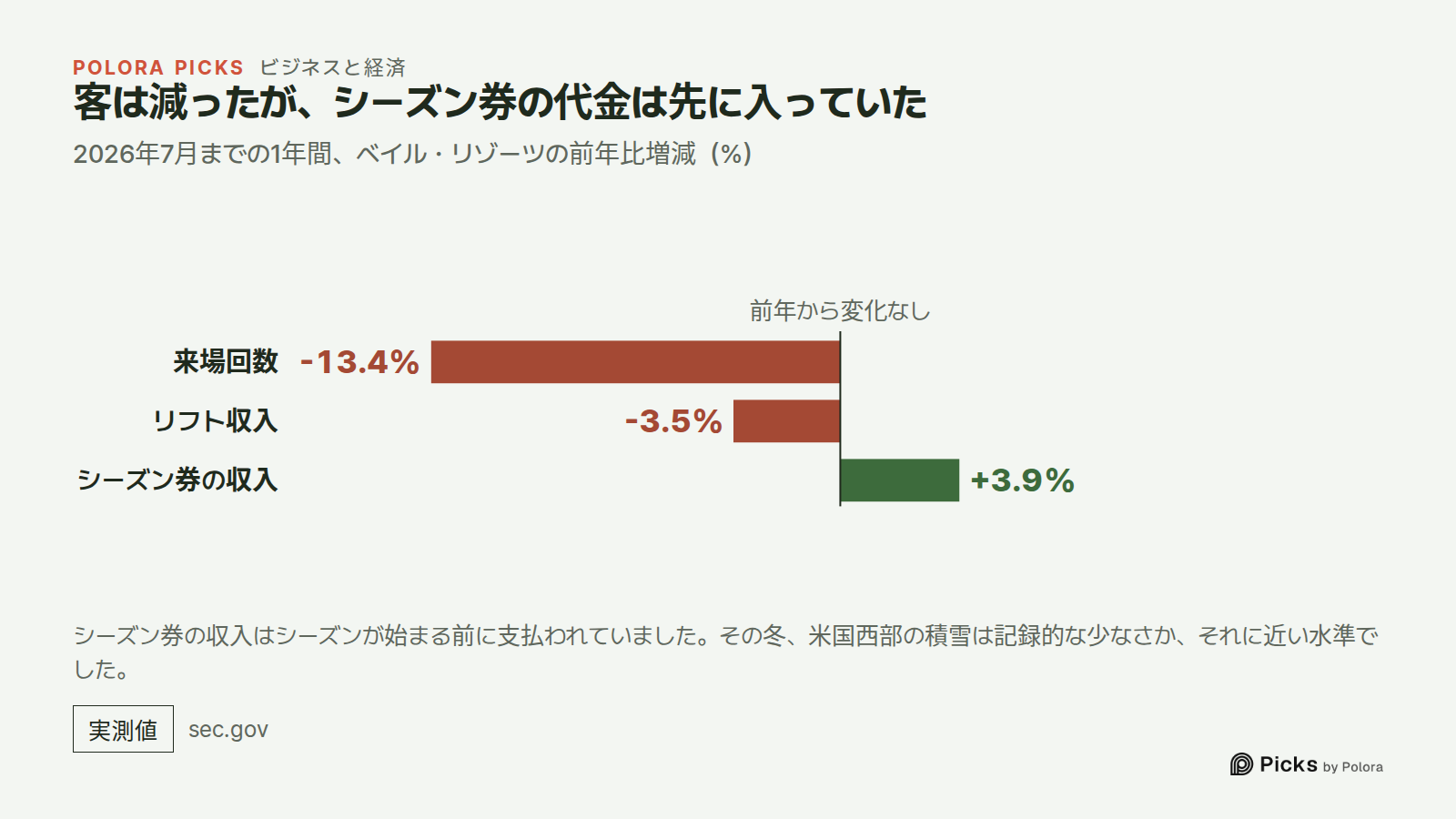
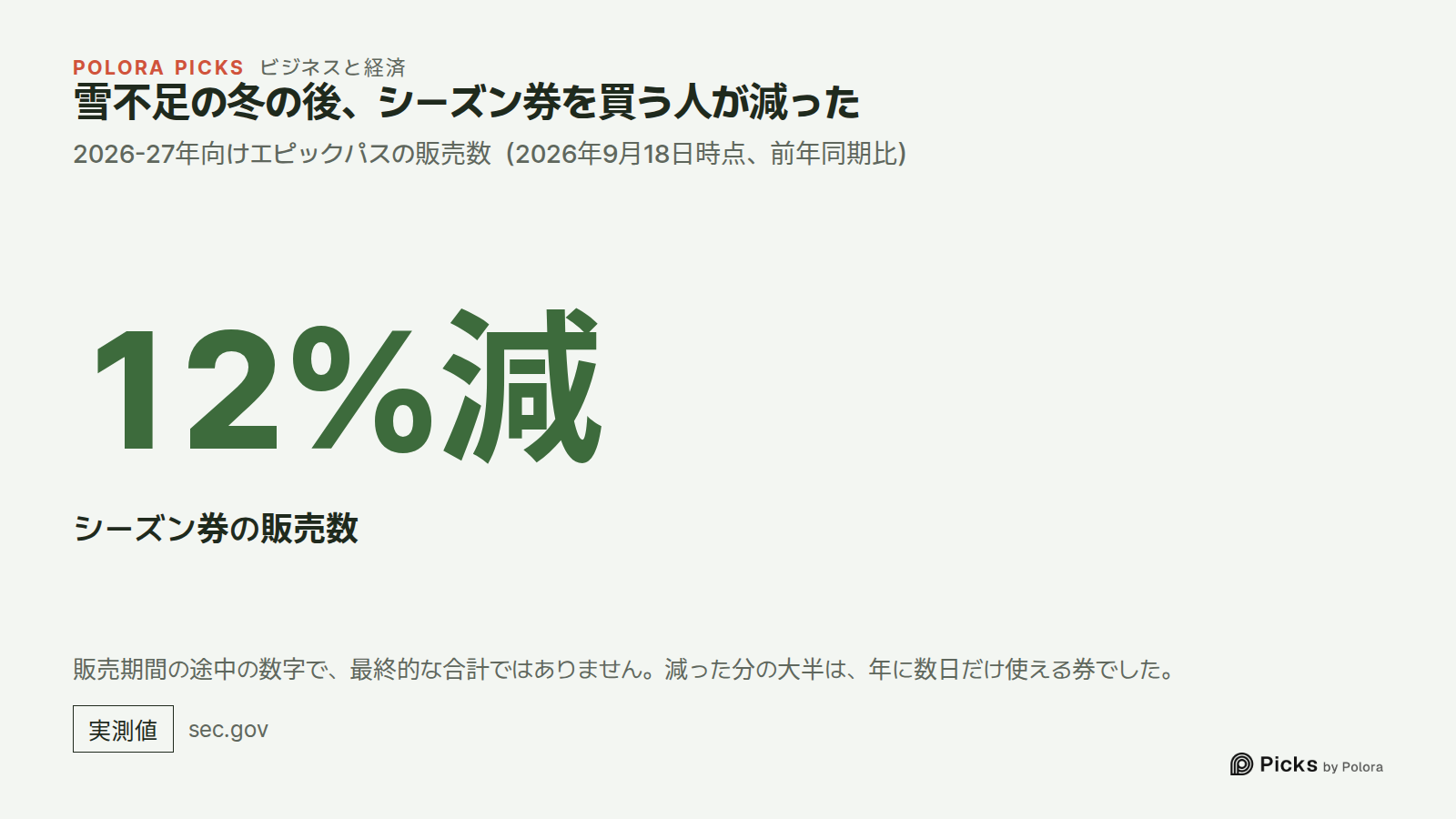
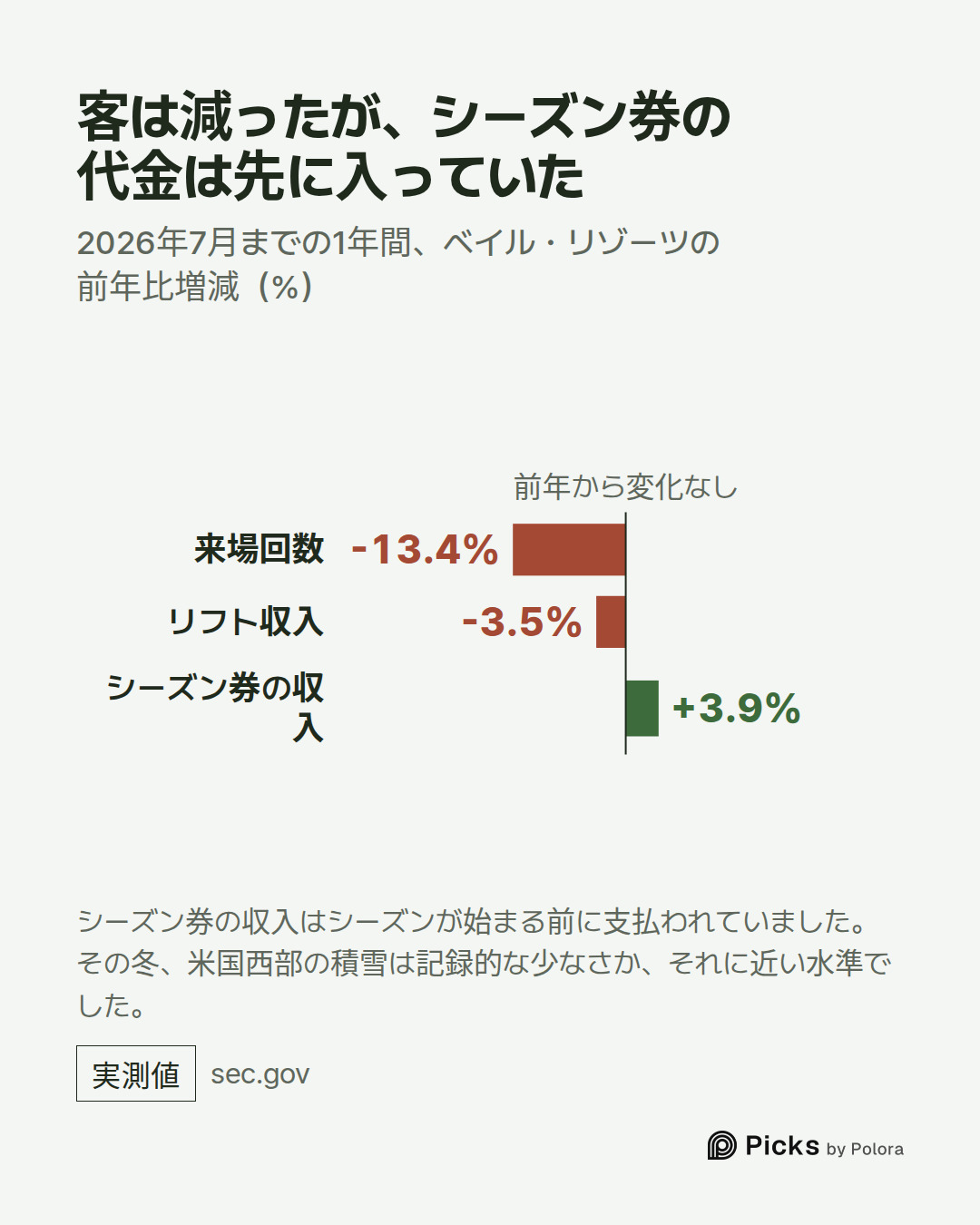
Selling a season pass months before winter moves cash to the resort early and shifts snow risk onto the skier. If the snow is poor, pass revenue is already banked while walk-up revenue collapses. That is why large operators describe pass revenue as "collected in advance" and say it reduces exposure to weather-sensitive demand. The pass buyer gets a cheap full season, but bears the winter's downside.
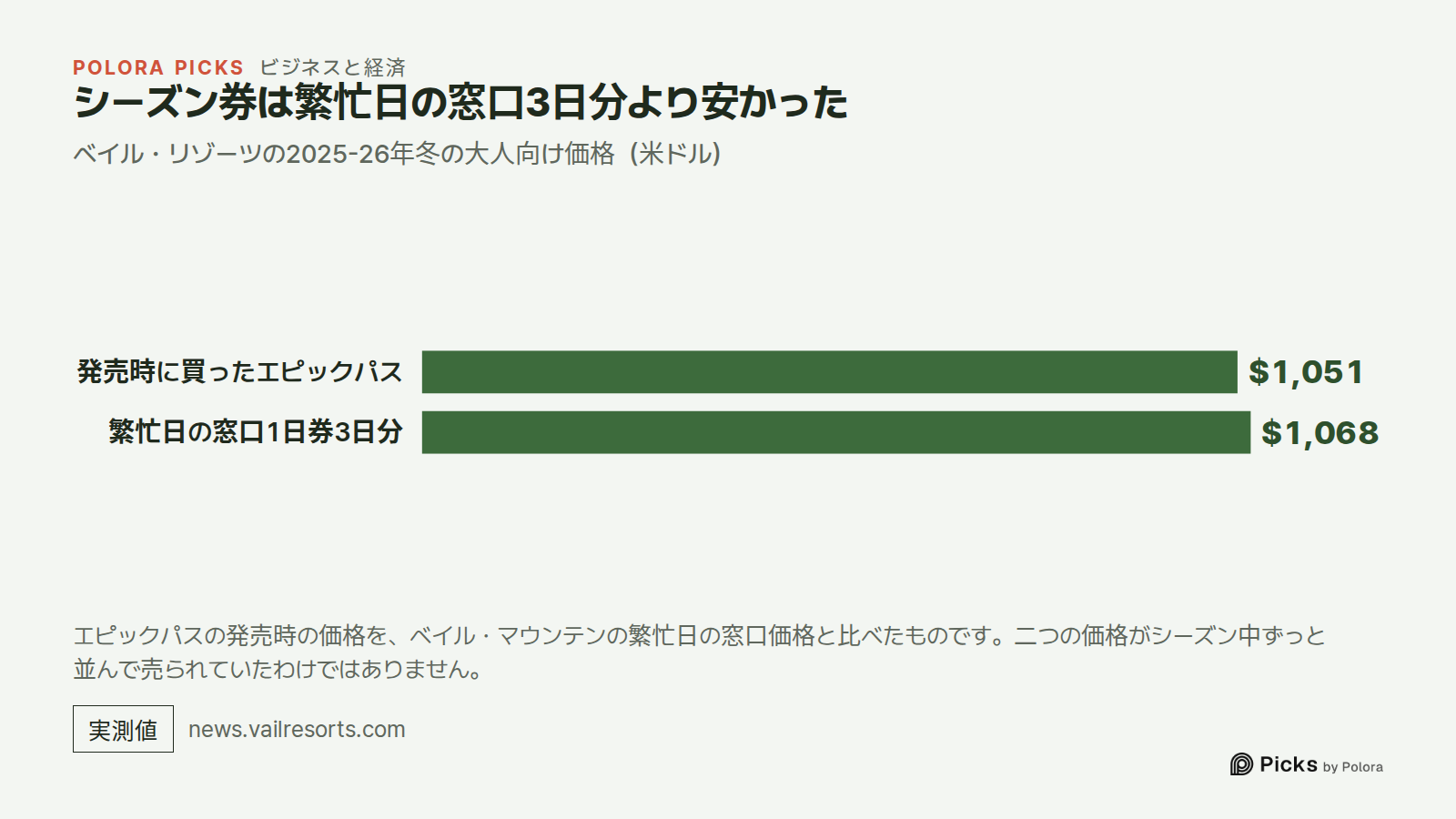
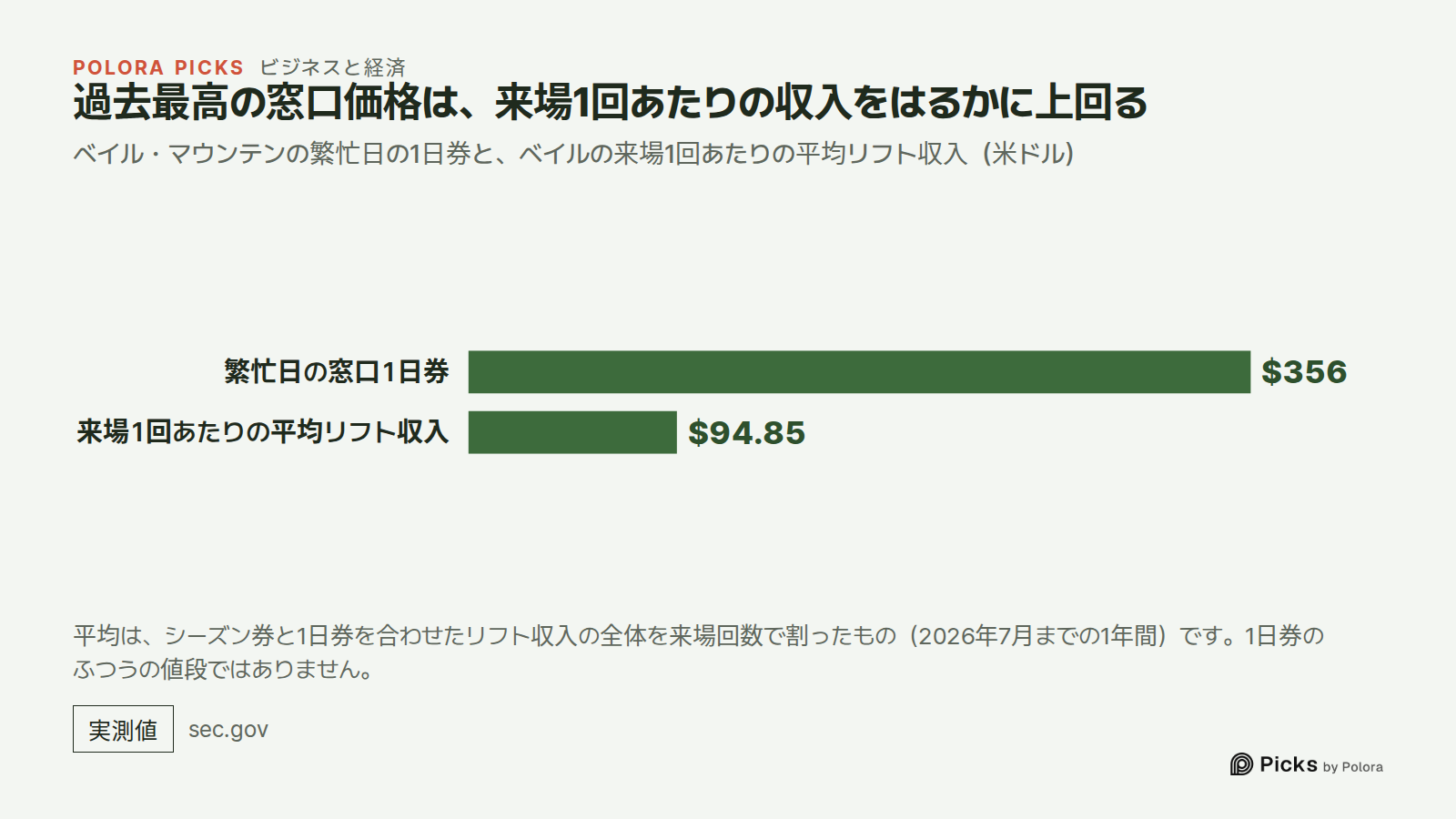
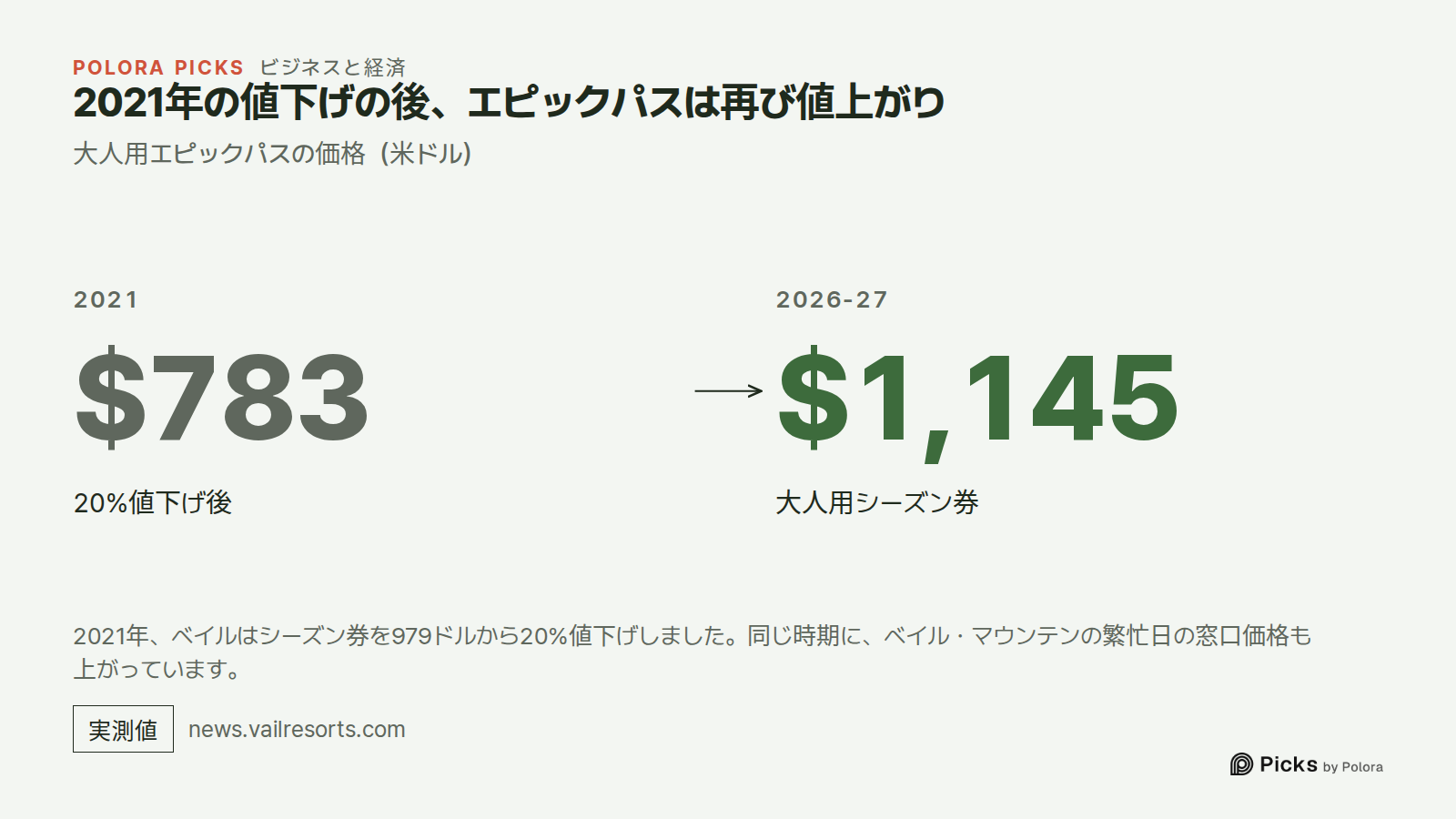
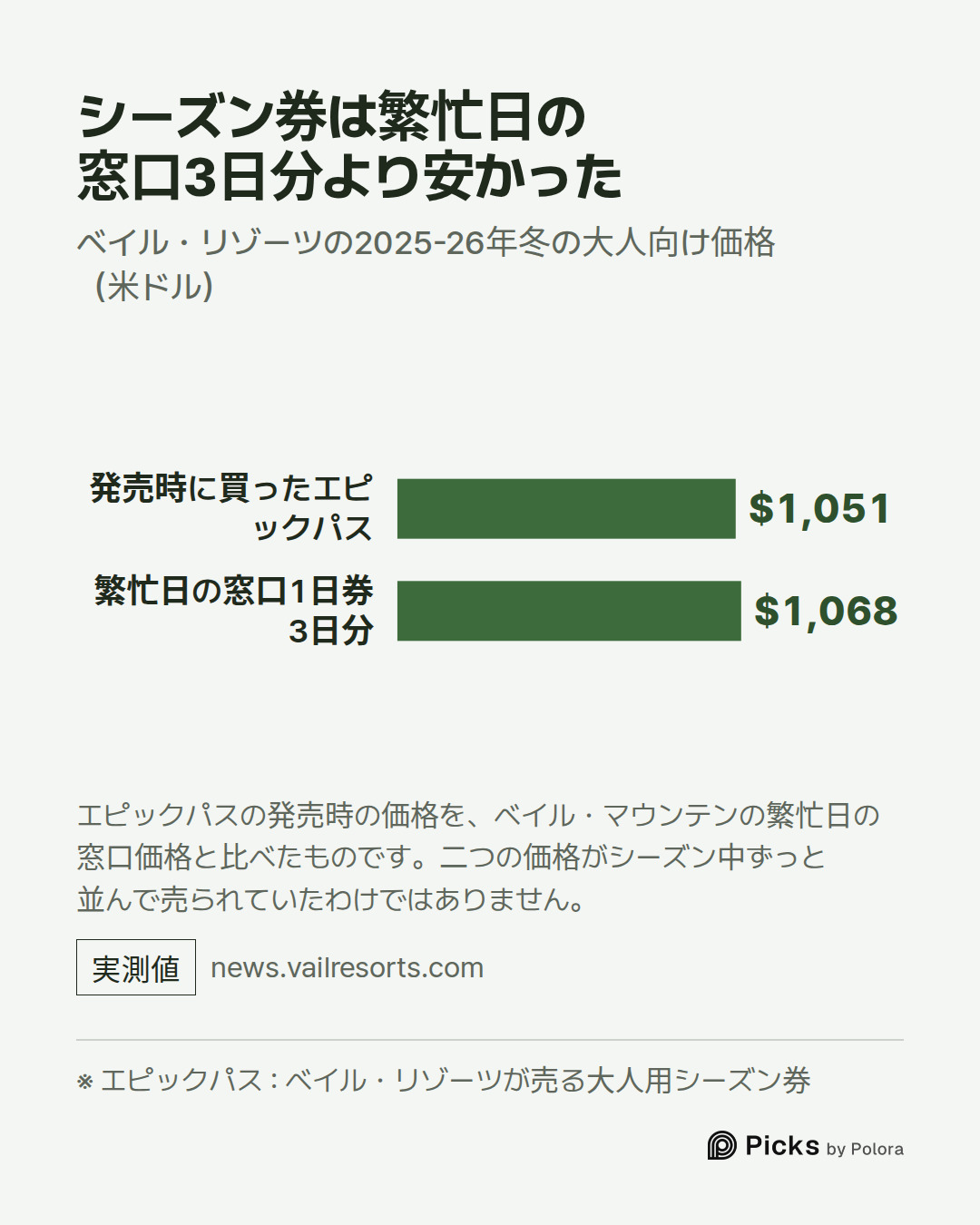
The high window price is the other half of the same strategy. If a peak day costs $356, three days exceed a $1,051 full-season pass, and a family doing the arithmetic buys the pass. The day-ticket rat…
Beta · gpt-6-sol
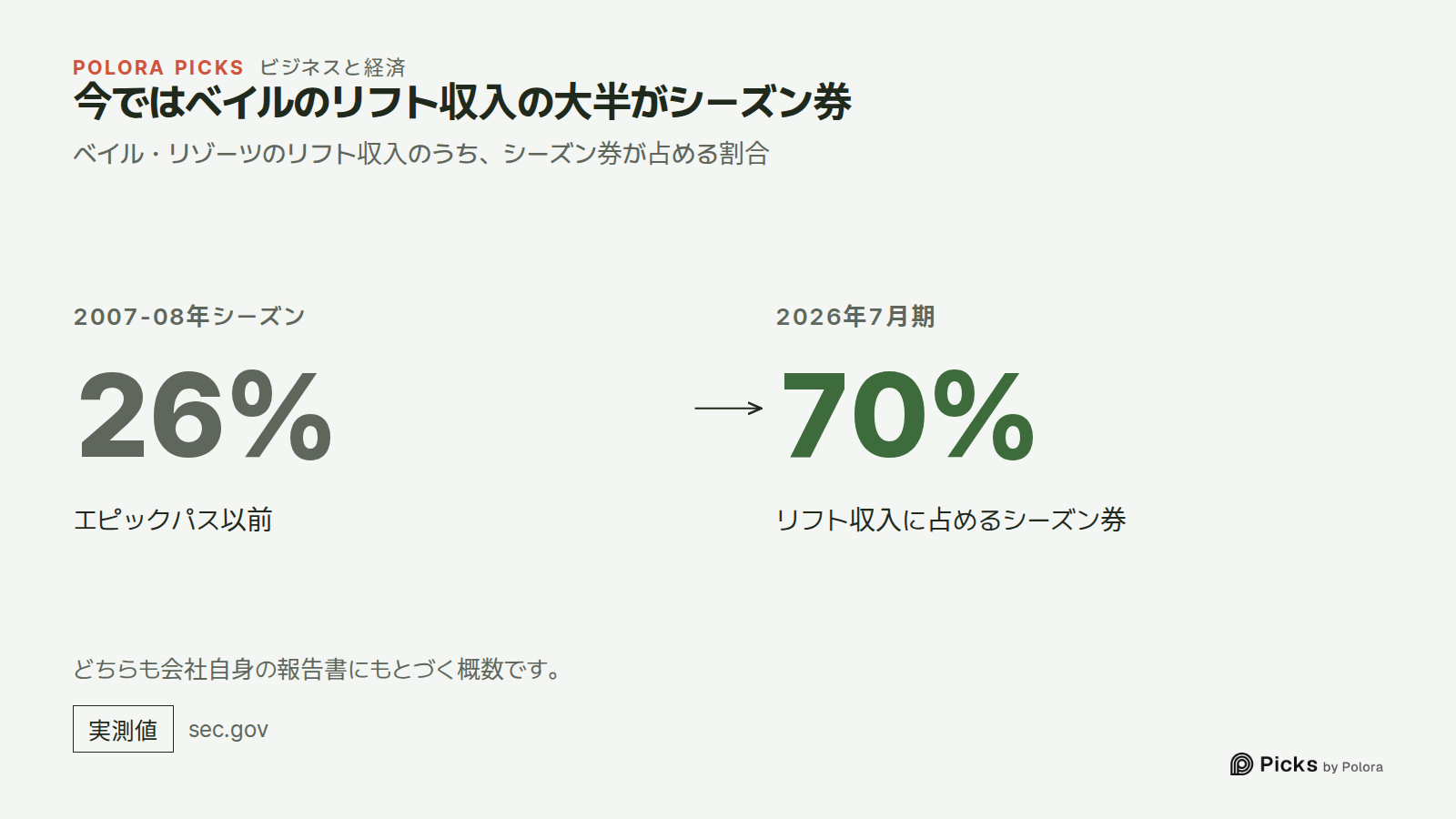
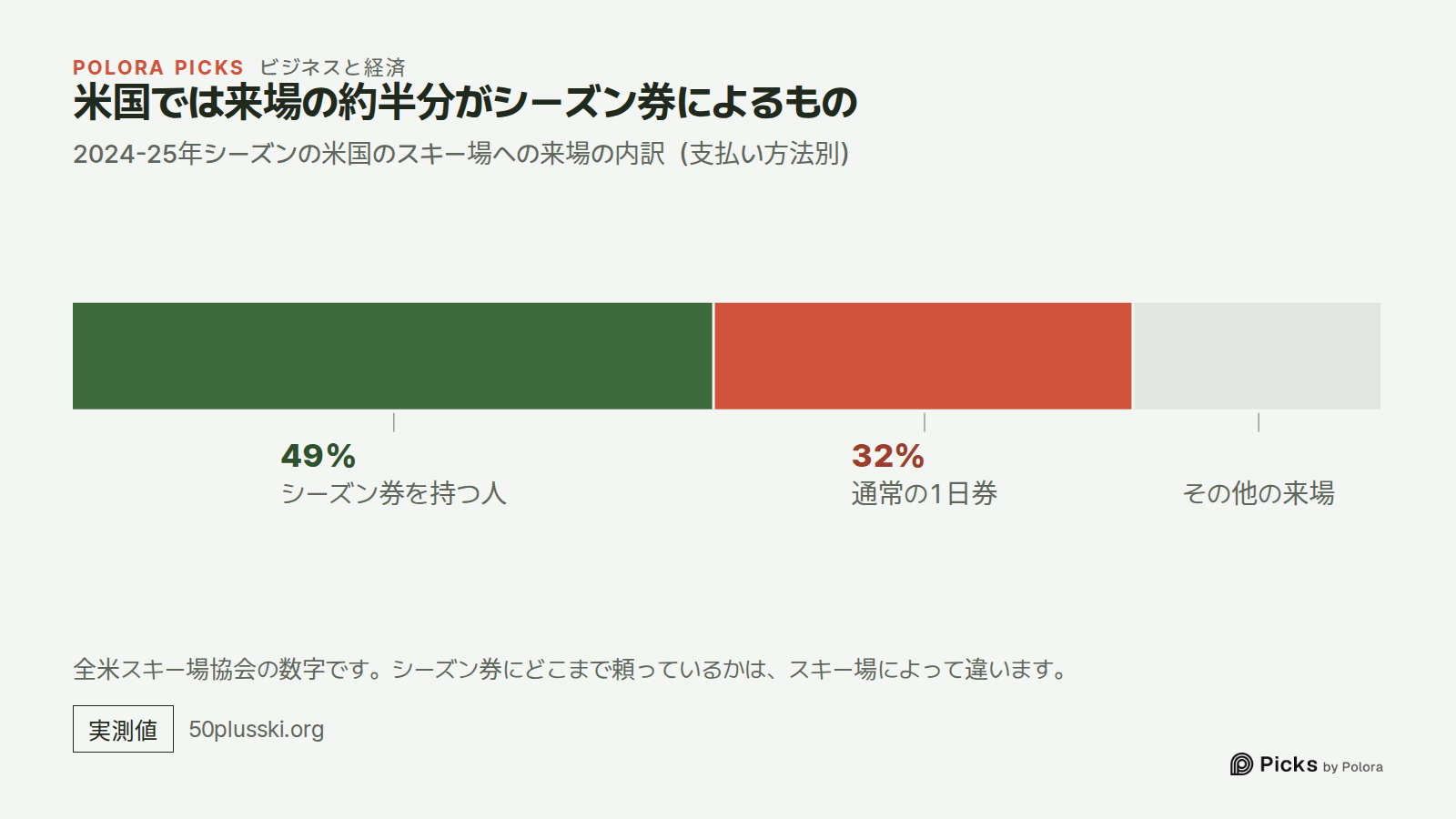
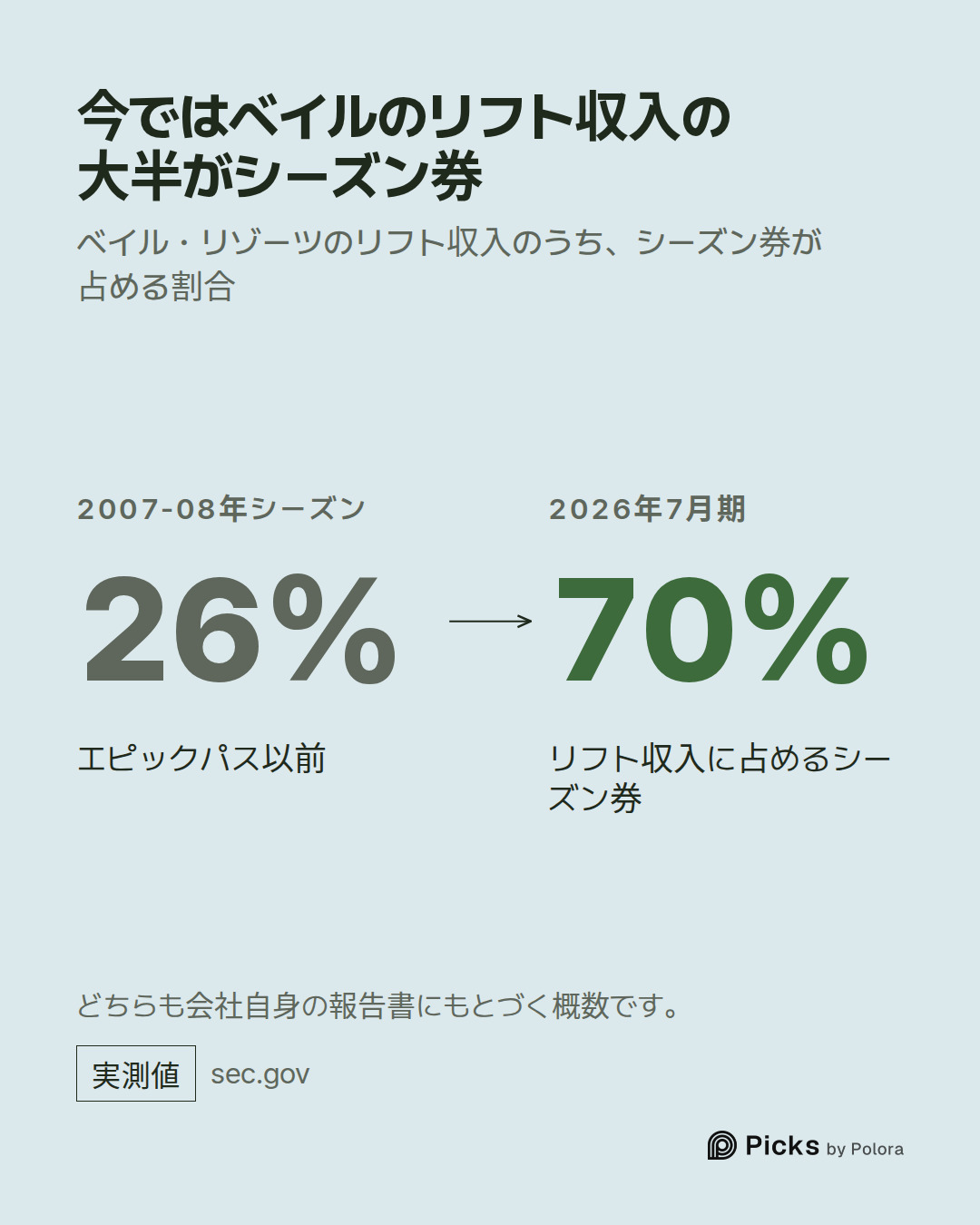
A resort can sell a season pass for less than a few *peak-priced* day tickets because the two products serve different purposes. A pass brings in money before winter and rewards a skier for committing early; a day ticket preserves the option to decide later, once the weather and travel plans are clearer. At Vail Resorts, the company explicitly says its pass program reduces exposure to weather-sensitive guests and makes revenue more stable. In fiscal 2026, pass products supplied about 70% of lift revenue and 73% of visits. (sec.gov)
The comparison is real, but its timing matters. Vail advertised the adult 2025–26 Epic Pass at $1,051 when it launched in March 2025; that was its *lowest price of the year*, not necessarily what a buyer paid later. I could not independently verify the manuscript’s exact $356 Vail Mountain window ticket or its claim that this was a US record, so I would not publish the three-day arithmetic as a verified record-price example yet. Vail’s March announcement: https://news.vailresorts.com/2025-03-04-2025-26-Epic-Pass-Launches-at-Lowest-Pric…
Gamma · gemini-3.1-pro
I have reviewed the manuscript’s claims against live web sources to complete the checks requested in the brief. Here is what I found:
1. The $356 peak window ticket at Vail
* Support: I can verify that Vail Mountain’s single-day peak walk-up rate reached $356 for the 2025–26 season, making it the highest recorded for a US ski resort at the time.
* Source: *SnowBrains* and *The Storm Skiing Journal* (August 2025 reporting). https://snowbrains.com/vail-resorts-peak-lift-ticket-prices-hit-record-356-with-6-mountains-now-over-300/
* Conditions: This is a peak holiday rate. As the manuscript notes, it acts largely as an anchor price; very few skiers actually pay it.
2. The 52.6 million skier visits in 2025–26
* Support: The National Ski Areas Association (NSAA) preliminary data released on May 5, 2026, confirms an estimated 52.6 million snowsports visits for the 2025–26 season.
* Source: NSAA official press release and *SAM Magazine*. https://www.nsaa.org/
* Context/Correction: The manuscript says this was "down nearly 15% from the season before." The prior season (2024–25) saw 61.5 to 61.6 million visits (depending on preliminary vs. fin…
Researcher · gpt-6-luna
Checks and corrections
- $356 peak-day ticket and $1,051 pass: The $356 figure is supported as Vail Mountain’s 2025–26 peak-holiday single-day rate, and SnowBrains reported it as a U.S. record. Vail’s own investor presentation also lists $356 for holidays. Vail’s March 4, 2025 announcement describes the $1,051 adult Epic Pass as the lowest launch price of the year—not a price guaranteed later in the sales period. So the arithmetic ($1,068 for three $356 days) works for those stated prices, but the comparison needs to say which peak dates and pass-buying time it refers to.
Sources: SnowBrains, Aug. 26, 2025 (the page’s actual address uses “overs-300”); Vail investor presentation; Vail’s March 4, 2025 pass announcement. ([snowbrains.com](https://snowbrains.com/vail-resorts-peak-lift-…
The Arbiter · gpt-6-sol
The voices agree on the central mechanism: an early pass sale gives the resort more predictable revenue, while a skier buying a day ticket keeps the option to wait and see the conditions. Vail’s filing explicitly says its pass program reduces exposure to weather-sensitive guests; passes supplied about 70% of its fiscal 2026 lift revenue. That supports the manuscript’s explanation for Vail, not automatically for every ski area. (sec.gov)
The real difference is emphasis. Alpha and Gamma treat the high walk-up price and transfer of weather risk as the design’s defining features. Beta and the Researcher caution that a pass also gives skiers valuable repeat access, and that risk does not move entirely to them: qualifying circumstances can trigger refunds. “The resort keeps the money either way” is therefore stronger than the evidence warrants. (sec.gov)
For publication, the record supports the $1,051 launch-price versus three $356 peak-day tickets…
The Arbiter's Final Verdict · gpt-6-sol
Verdict: The manuscript’s central explanation stands for Vail Resorts, but it overstates it when it says a pass is *mainly* a way to transfer weather risk. Resorts price passes cheaply relative to peak walk-up tickets because an early sale supplies predictable revenue and commits a customer before snowfall is known. The skier gets potentially inexpensive repeat access; the resort gets paid even if that skier visits less than expected. A day ticket, by contrast, lets its buyer wait to see the weather and pay only for days they use. Vail explicitly describes its pass program as reducing exposure to weather-sensitive guests (2026 annual report).
The strongest objection to the manuscript’s angle is that this is a trade, not simply a loss imposed on skiers. A frequent skier can get substantial value from a pass, and a pass offers flexibility across days and mountains. Nor does every bad outcome leave the resort entitled to keep every payment: Epic Coverage provides refunds in specified circumstances, though ordinary poor snow is generally not one of the…