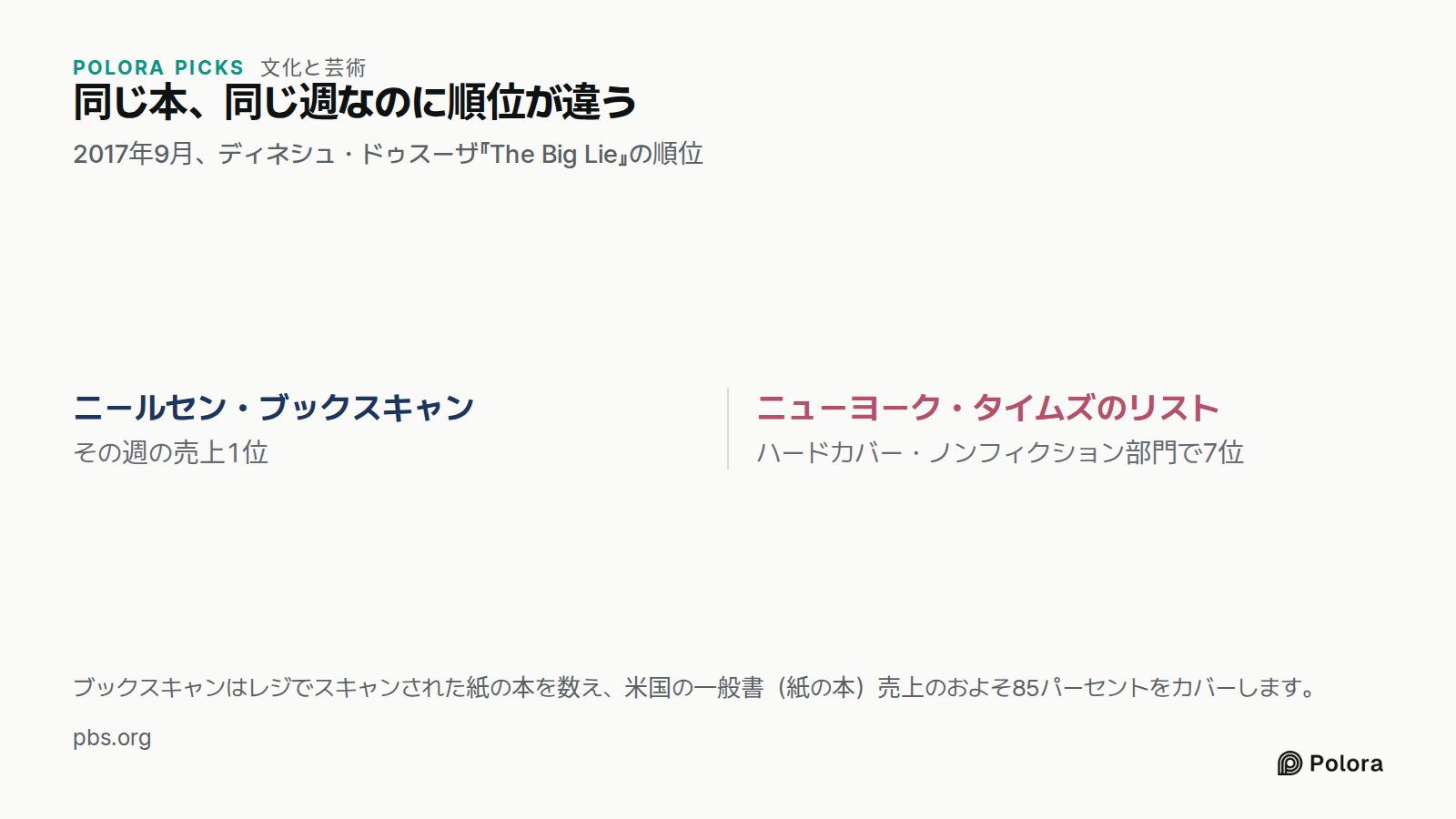
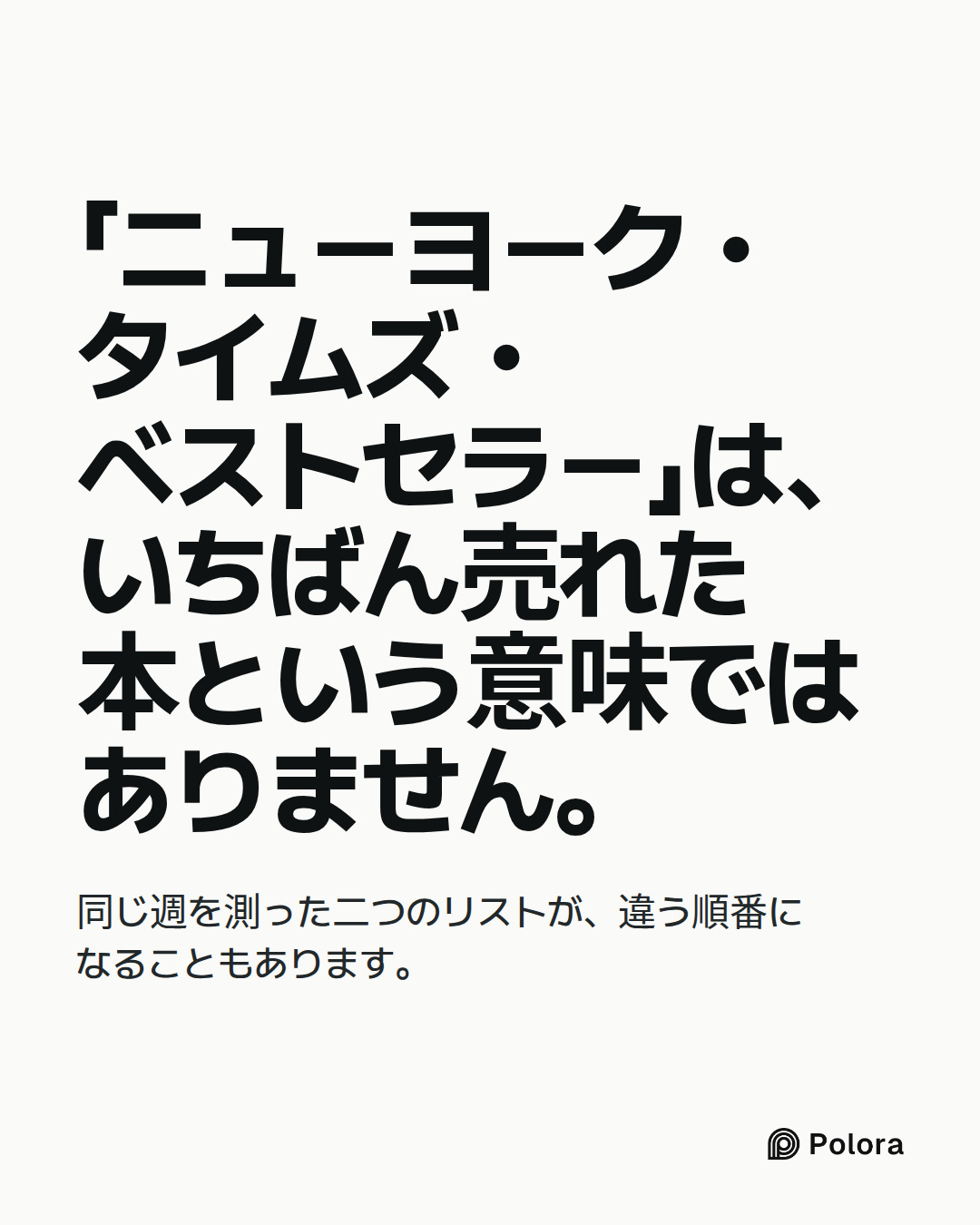
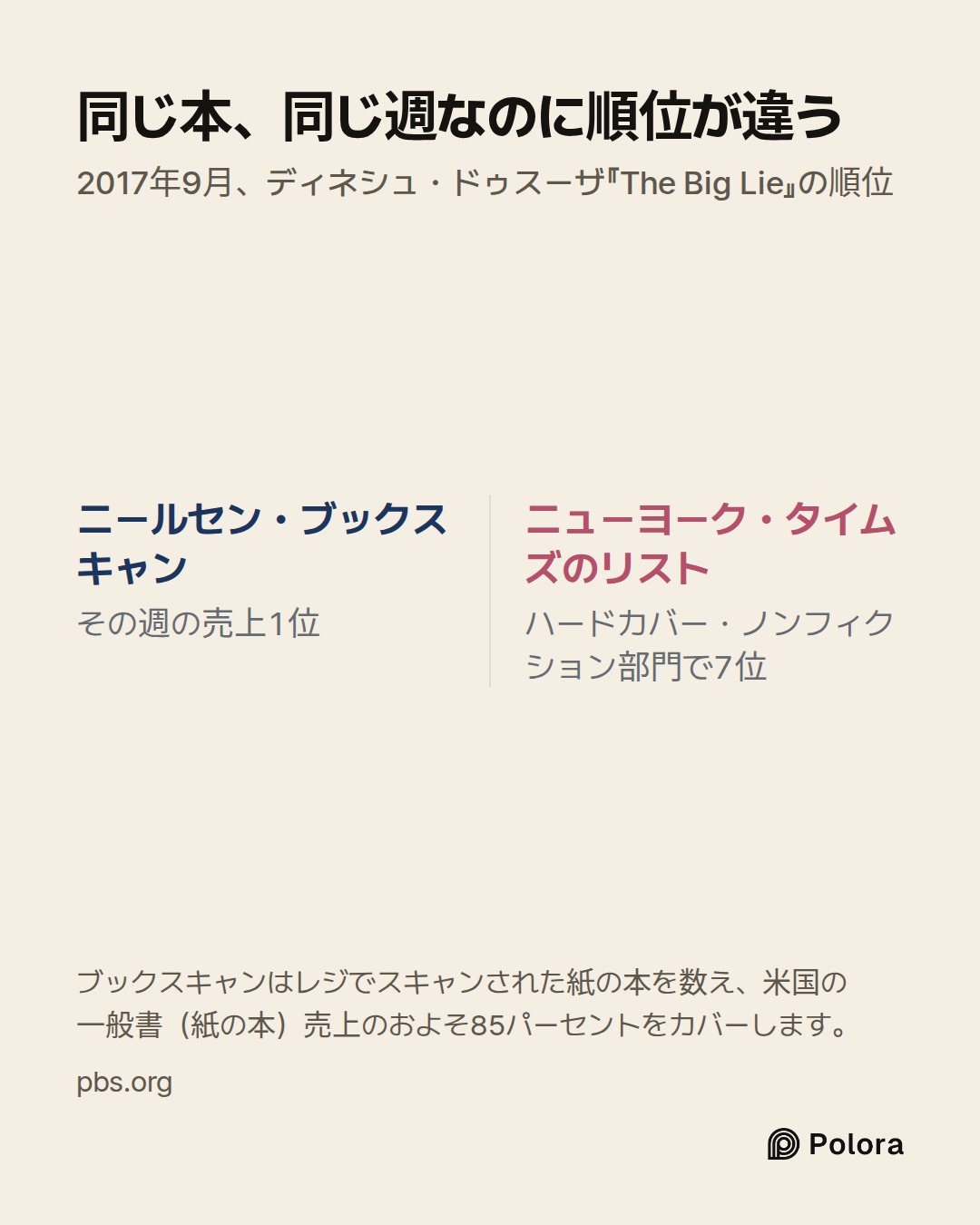
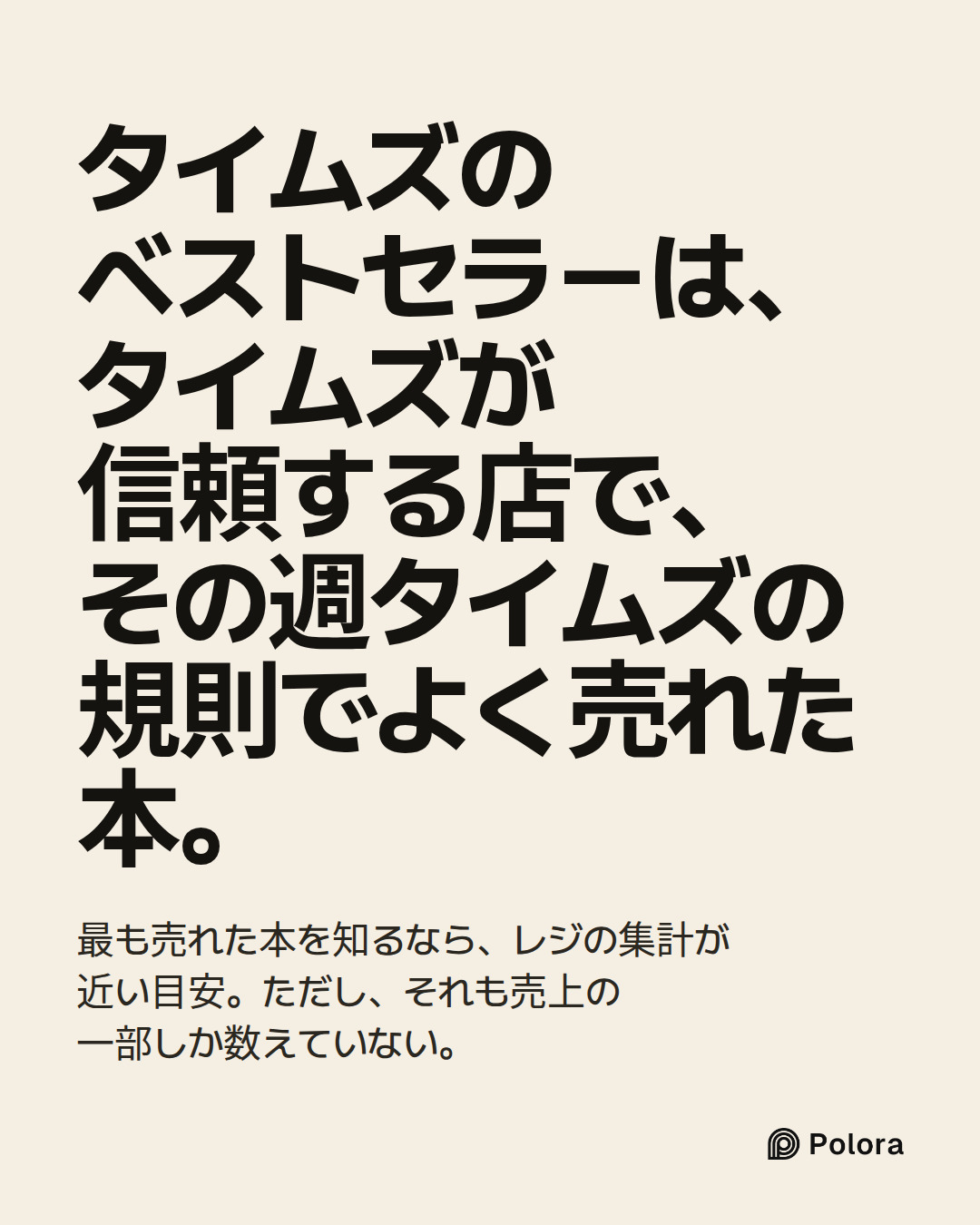
2017年9月、ニールセン・ブックスキャンの集計で、その週にいちばん売れた本はディネシュ・ドゥスーザの『The Big Lie』でした。ブックスキャンは、紙の本がレジでスキャンされた記録を集める調査サービスです。米国で売れる一般書(紙の本)のおよそ85パーセントをカバーしています。ところが同じ週のニューヨーク・タイムズのハードカバー・ノンフィクション部門で、この本は7位でした。版元のレグナリー社は、今後はタイムズのリストを使わないと自社の著者たちに伝えました。タイムズは、著者の政治的立場が順位に影響することはないと答えています。
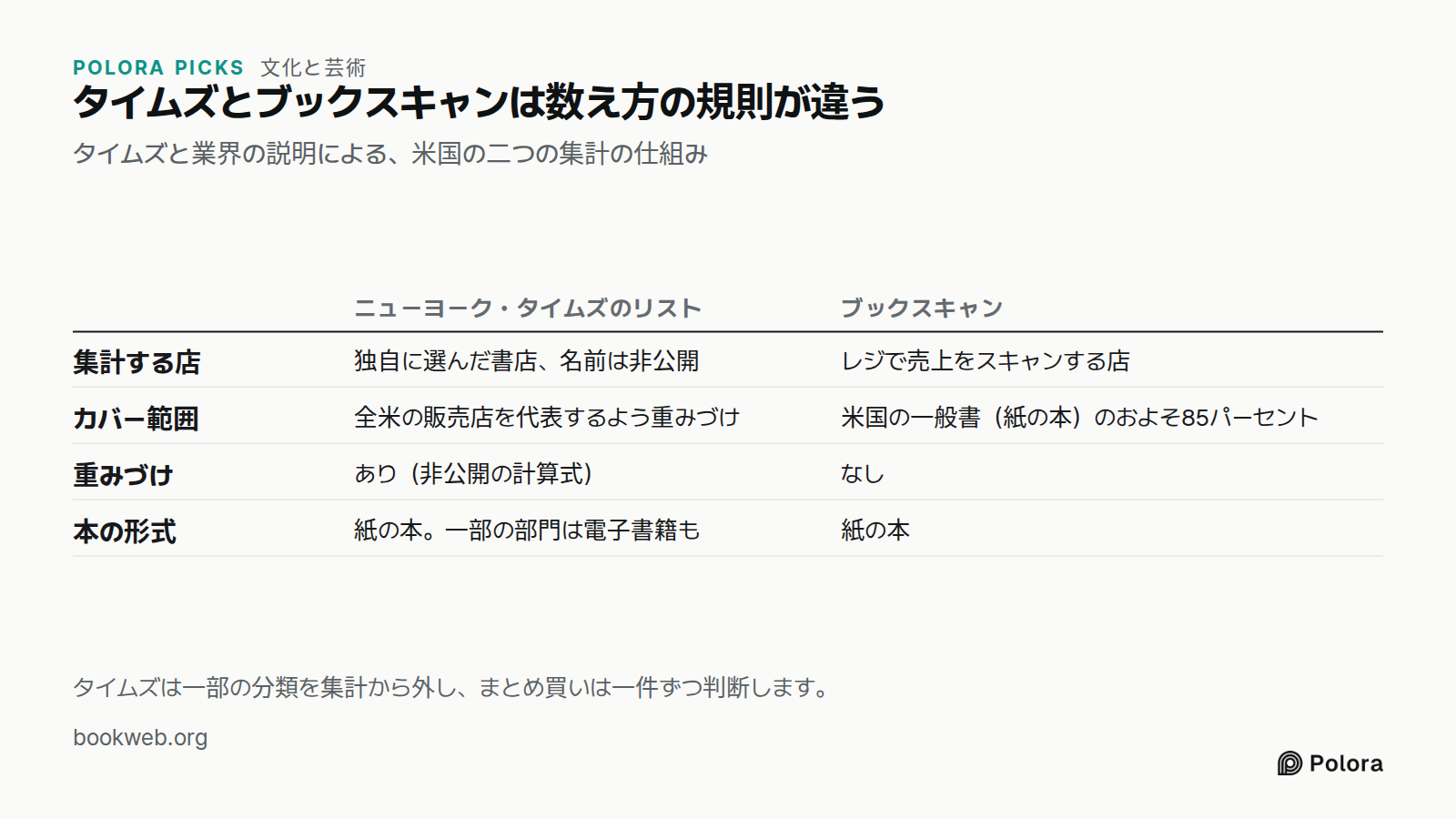
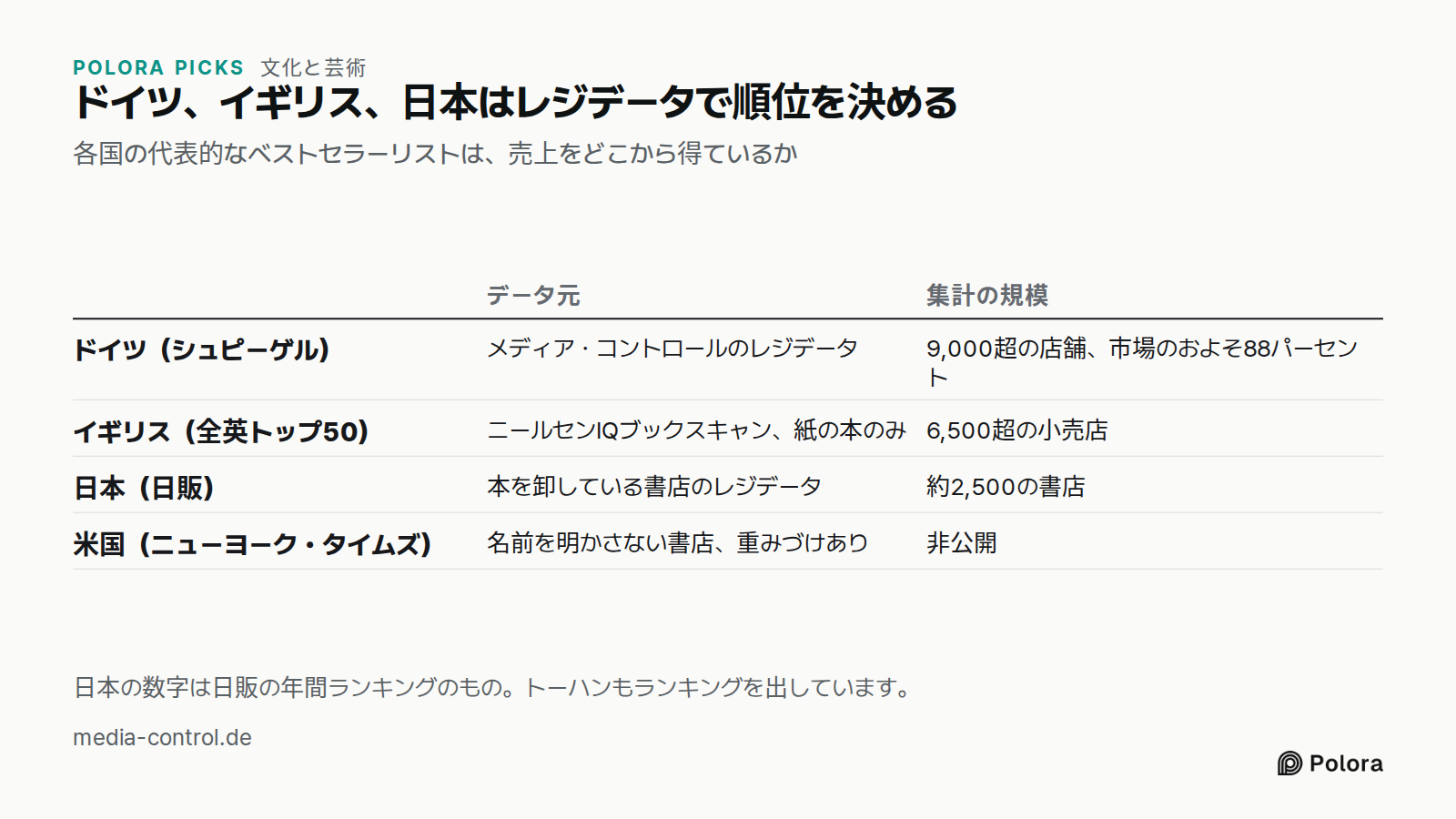
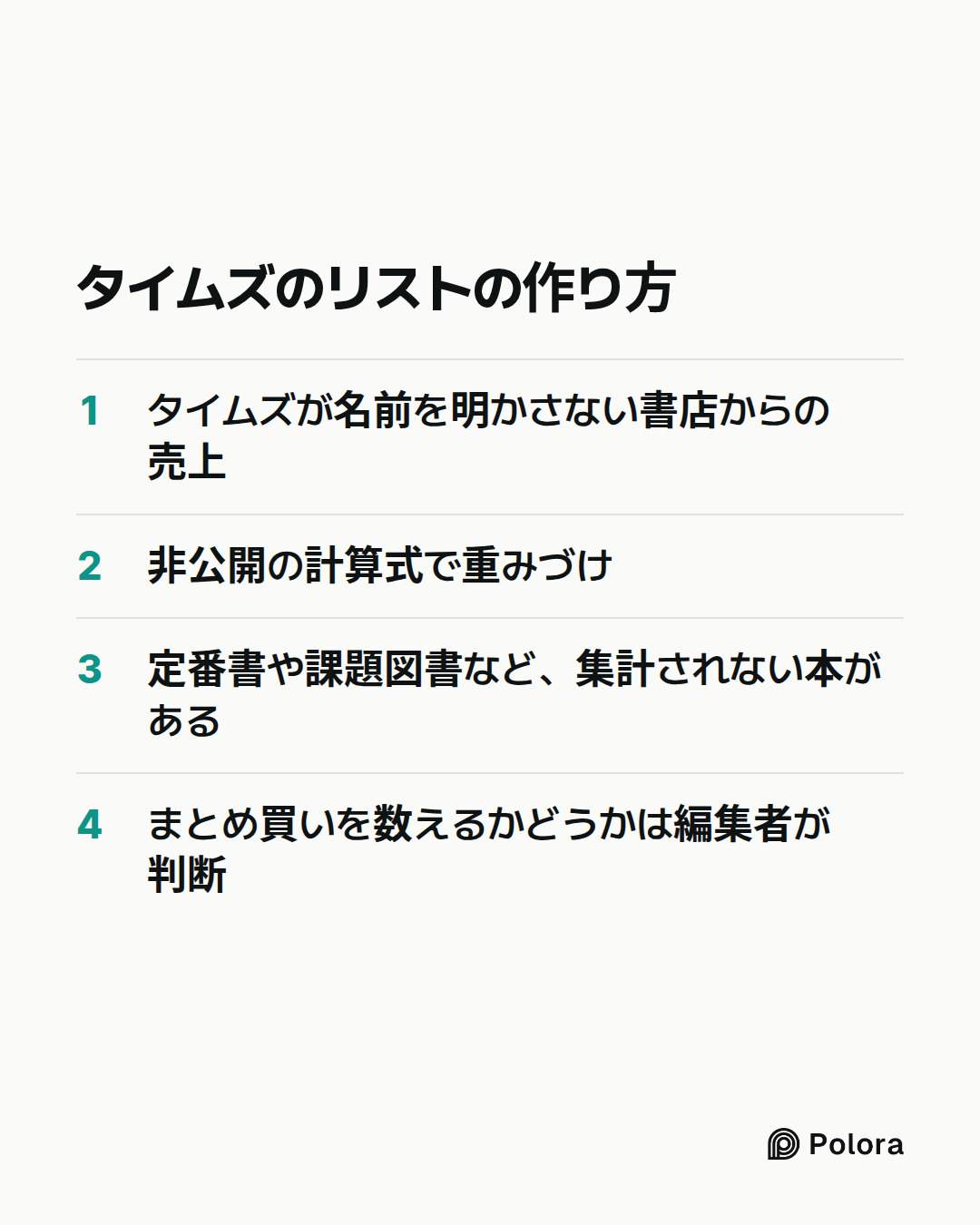
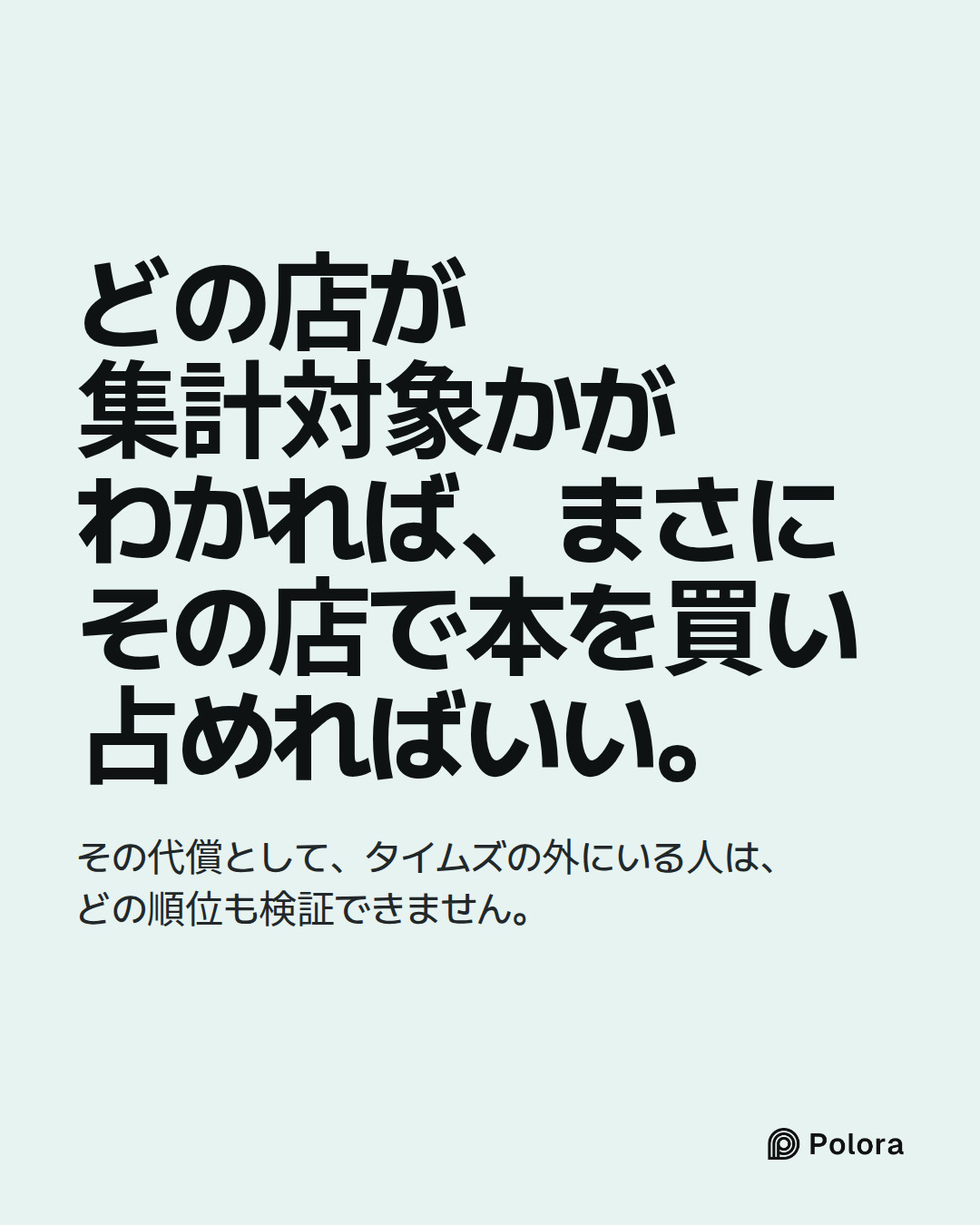
タイムズのリストは、ほぼすべての点でこれと違います。独自に選んだ書店から集計し、いくつかの部門では電子書籍も加え、結果を重みづけし、分類ごとまるごと除外し、まとめ買いの注文は一件ずつ判断します。どれひとつをとっても、本の順位を上げたり下げたりしえます。方法が公開されていないため、このうちどれが『The Big Lie』を7位にしたのかは、タイムズの外の誰にも言えません。この食い違いからわかるのは、二つのリストが違う規則のもとで違う売上を測っているということです。どの規則が原因だったのかまでは示せません。
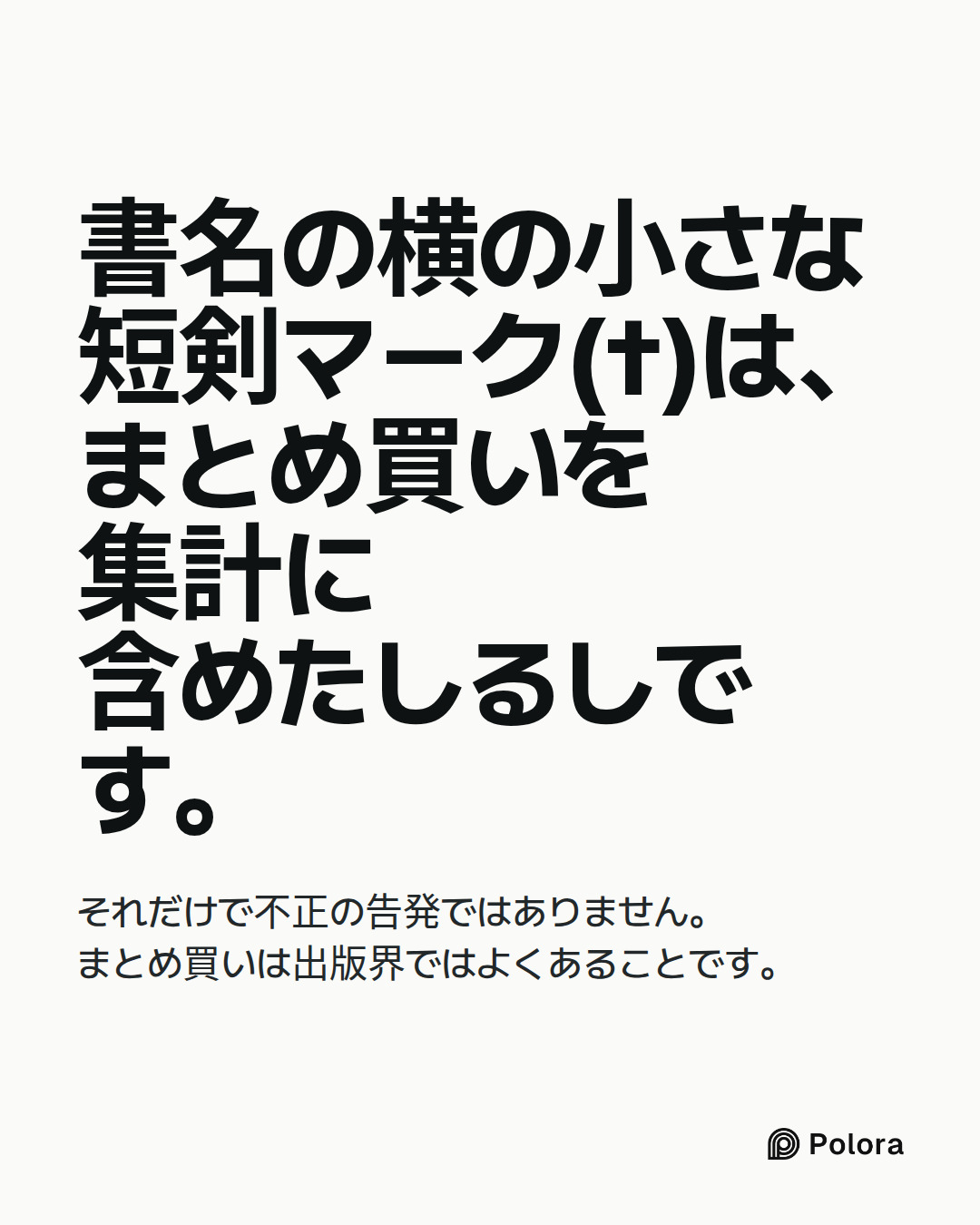
このマークが使われるようになったのは1995年です。きっかけは、ビジネス書『ナンバーワン企業の法則』(原題 The Discipline of Market Leaders)の2人の著者が、自著を大量に買っていたと報じられたことでした。マークが付いたからといって、それだけで不正の告発になるわけではありません。まとめ買いの注文は出版界ではよくあることで、タイムズの広報担当者はフォーチュン誌に、ハードカバー・ノンフィクション、実用、ビジネスの各部門では短剣マークは日常的に付くと語っています。
2017年8月には、ほとんど知られていなかったヤングアダルト小説『Handbook for Mortals』が、タイムズのリストに1位で登場しました。書店員や作家たちがネット上で不自然な注文を指摘し、タイムズは1日もたたないうちにこの本をリストから外しました。「不整合を調査した」結果、売上が「掲載基準を満たしていなかった」というのがその説明です。著者はリストを操作しようとしたことを否定しています。
How does a book become a New York Times bestseller if it isn't just about sales?
Alpha · claude-sonnet-5
Here's what the record supports, and where the manuscript's own self-flagged checks come out.
The Cowles quote holds up as sourced, but only to Wikipedia's citation chain, not to an original interview I could open. Wikipedia gives it verbatim: Book Review staff editor Gregory Cowles explained the method "is a secret both to protect our product and to make sure people can't try to rig the system," adding "Even in the Book Review itself, we don't know [the news surveys department's] precise methods." A second independent outlet, The Conversation, quotes the identical line without naming Cowles, which confirms the phrase circulated but doesn't give me a first-source citation either — "The methodology has been defended as 'a secret both to protect our product and to make sure people can't try to rig the system'". So: the quote is real and widely repeated, but the manuscript's own flagged uncertainty (no primary interview found) stands. State it as Wikipedia-sourced, not Times-sourced.
The Blatty ruling is the manuscript's strongest and most important correction, and my read confirms the manuscript's caution was justified — if anything the record is messier than the manuscript s…
Beta · gpt-6-sol
The premise stands: a New York Times bestseller is a book that ranks highly under the Times’s *sales-based method*, not necessarily the book with the most copies sold nationwide. The important distinction is between an undisclosed, weighted ranking with eligibility and bulk-order rules, and a point-of-sale count of print books. That distinction does not establish that Times editors arbitrarily place books. In a May 2026 interview, the Times editor overseeing the lists acknowledged attempts to influence rankings and described analysis intended to reflect ordinary reader demand. The precise analysis remains undisclosed. (monorepo-sample1.nyt.net)
Two corrections to Alpha’s turn matter before publication.
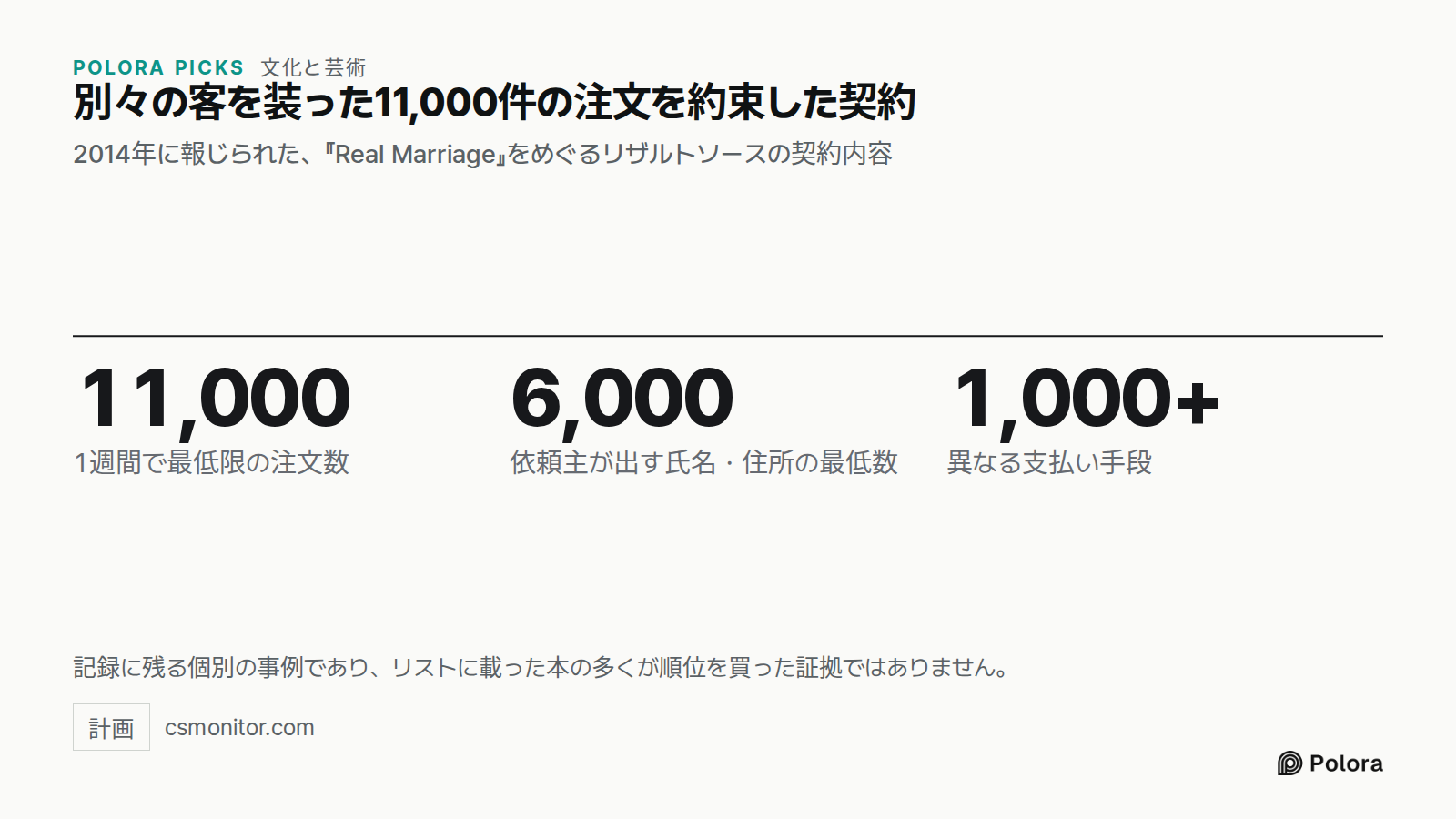
- Do not change the ResultSource book’s No. 1 date to 2014. *Real Marriage* reached No. 1 on the hardcover advice list dated January 22, 2012; the contract became a news story in March 2014. Alpha appears to have conflated the disclosure year with the list year. Reporting also says the book returned at No. 12 two weeks after dropping out of the top ten, so the manuscript’s “was…
Gamma · gemini-3.1-pro
Both Alpha and Beta have done excellent groundwork here. I’ll finalize the remaining self-flagged checks from the manuscript so the editor has exactly what they need to go to press, and I will resolve the timeline dispute between Alpha and Beta.
1. The ResultSource Date Dispute (Beta is correct)
Alpha conflated the date of the *news report* with the date of the *bestseller ranking*. Beta is correct: Mark Driscoll’s *Real Marriage* hit No. 1 on the hardcover advice list on January 22, 2012. WORLD magazine reported on the contract two years later, in March 2014. The manuscript’s 2012 date is accurate and should remain, but Beta’s advice to change "was gone the week after" to "absent the following week" is a smart editorial tweak, as the book did briefly reappear lower on the list later.
2. The 1995 Dagger Origin (Supported)
The manuscript asks for verification of the dagger’s origin. The record fully supports the manuscript’s claim. In 1995, authors Michael Treacy and Fred Wiersema spent hundreds of thousands of dollars to strategically purchase roughly 10,000 copies of their own book, *The Discipline of Market Leaders*, from bookstores whose sales were tracked. Followi…
Researcher · gemini-3-7-flash
Fact-Check and Verification of the Manuscript
1. The Core Premise: Does It Hold?
Status: Confirmed / Stands.
The manuscript’s central premise is that the *New York Times* Best Seller list is an editorially curated, statistically weighted survey of confidential reporting outlets, rather than an exhaustive or unweighted till count of all nationwide unit sales.
The *Times* states in its published methodology that figures are reported confidentially, weighted proportionally across retail types, exclude specific product categories, and subject bulk purchases to editorial review.
---
2. Item-by-Item Verification of Specific Manuscript Claims
* Dinesh D’Souza’s *The Big Lie* (September 2017):
* Finding: Supported. In September 2017, *The Big Lie* reached No. 1 on BookScan’s overall print count while charting at No. 7 on the *New York Times* Hardcover Nonfiction list. Publisher Regnery publicly announced it would cease promoting NYT bestseller status, and the *Times* issued a statement affirming that political viewpoints do not influence list compilation.
* Sources: [PBS NewsHour](https://www.pbs.org/newshour/arts/conservative-book-publisher-…
The Arbiter · gpt-6-sol
The round converged on the manuscript’s central distinction: the *New York Times* list is based on reported sales, but its confidential retail panel, statistical weighting, eligibility rules and review of bulk purchases make it different from a nationwide, unweighted count. That supports the piece’s premise; it does not show that editors arbitrarily assign ranks.
The most important findings to carry into the verdict are these:
- Alpha’s proposed date correction was incorrect. Beta, Gamma and the Researcher agree that Mark Driscoll’s *Real Marriage* reached No. 1 on the list dated January 22, 2012; reporting on its ResultSource arrangement appeared in March 2014. The manuscript’s 2012 date should stay. Its claim that the book was “gone the week after” should be made precise: it was absent the following week but later reappeared at No. 12. (christianitytoday.com)
- The dagger needs a substantive correction. As Beta and the Researcher noted, a dagger indicates that bulk or institutional purchases were included under the Times’s rules. It does…
The Arbiter's Final Verdict · gpt-6-sol
A book becomes a *New York Times* bestseller by ranking highly on one of the Times’s lists, not necessarily by selling more copies than every other book nationwide. The Times uses sales reported confidentially by a panel of retailers, statistically weights those reports, applies category and eligibility rules, and reviews bulk purchases. It does not publish enough of its method for outsiders to reproduce a ranking. (Times methodology)
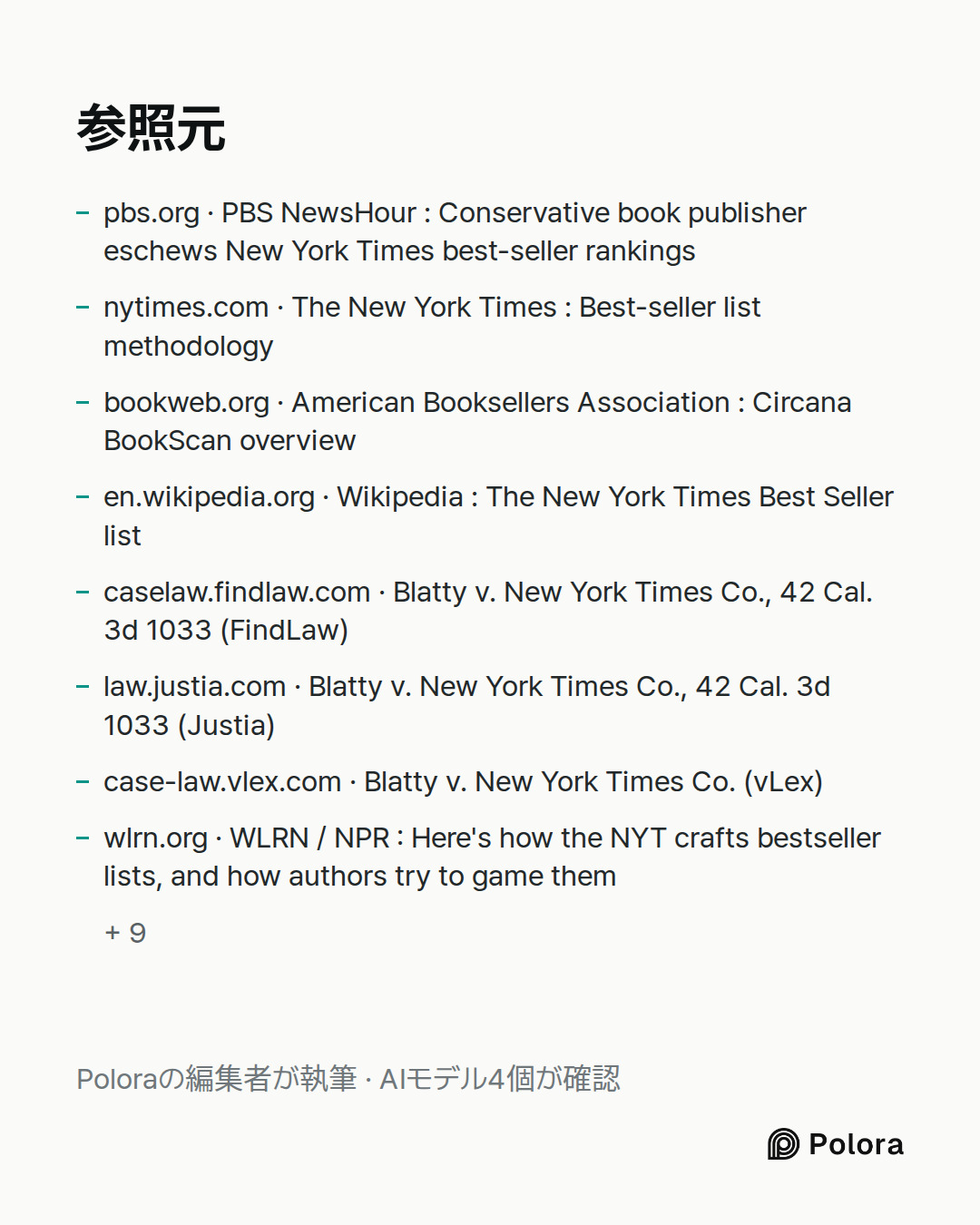
That is why two sales-based rankings can disagree. In 2017, Dinesh D’Souza’s *The Big Lie* was reported as No. 1 in BookScan’s print-sales count but appeared at No. 7 on the Times hardcover nonfiction list. The discrepancy does not establish why the Times placed it seventh: BookScan and the Times measure different sets of sales under different rules. (PBS NewsHour; Circana BookScan overview)
So the answer is sales, filtered through a particular list-making method—not sales alone, and not a free-form editorial pick. A dag…