Why do Japan's biggest banks earn more when interest rates rise?
Alpha · deepseek-v4-pro
The short answer: a rate rise increases what the bank earns faster than it increases what the bank pays out. A bank’s core raw material is the gap between its lending and deposit rates. When the Bank of Japan raises rates, the bank’s loan rates reprice upward quickly, while the interest it pays savers rises later and by smaller steps. The gap widens, so profit rises.
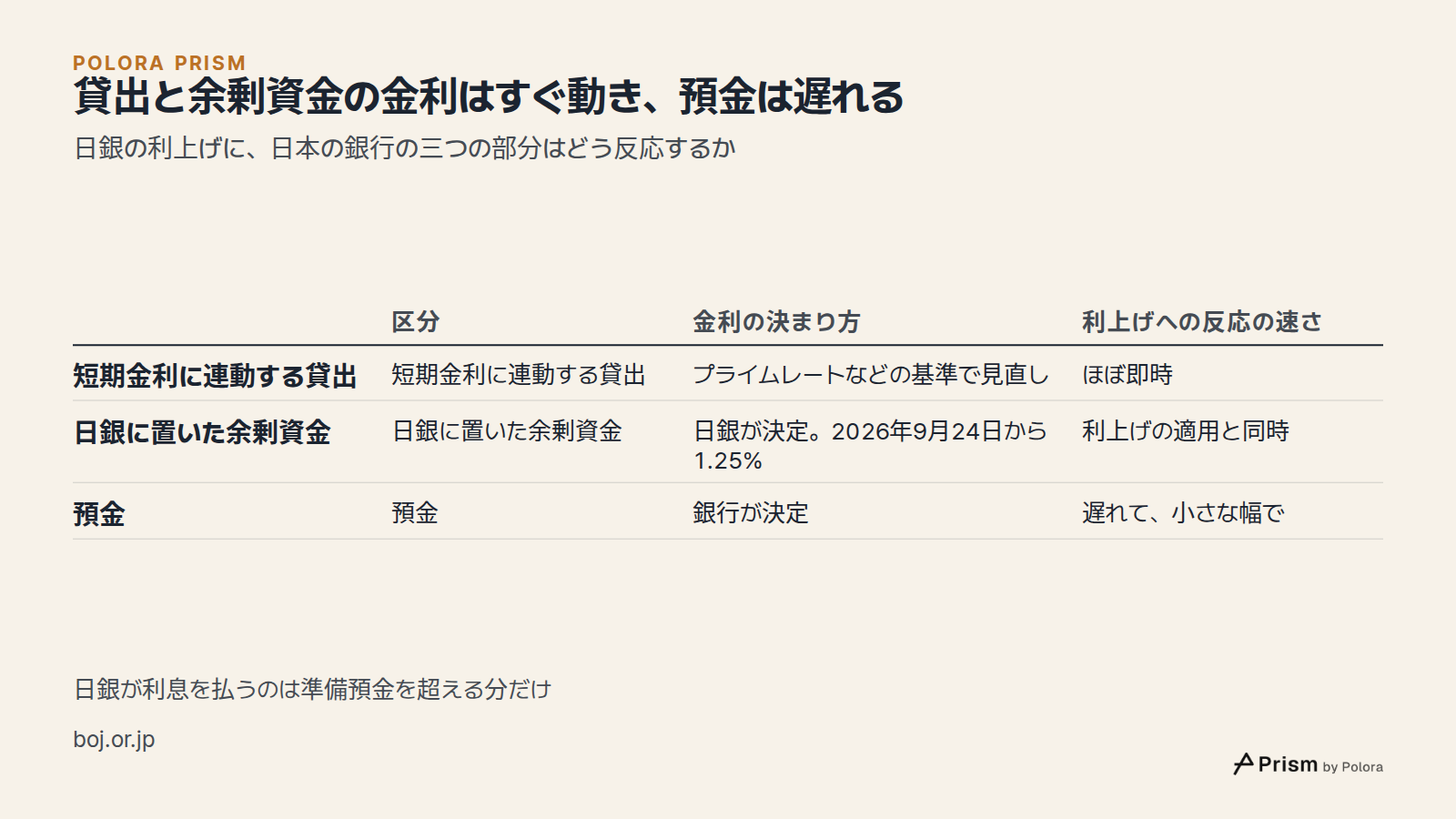
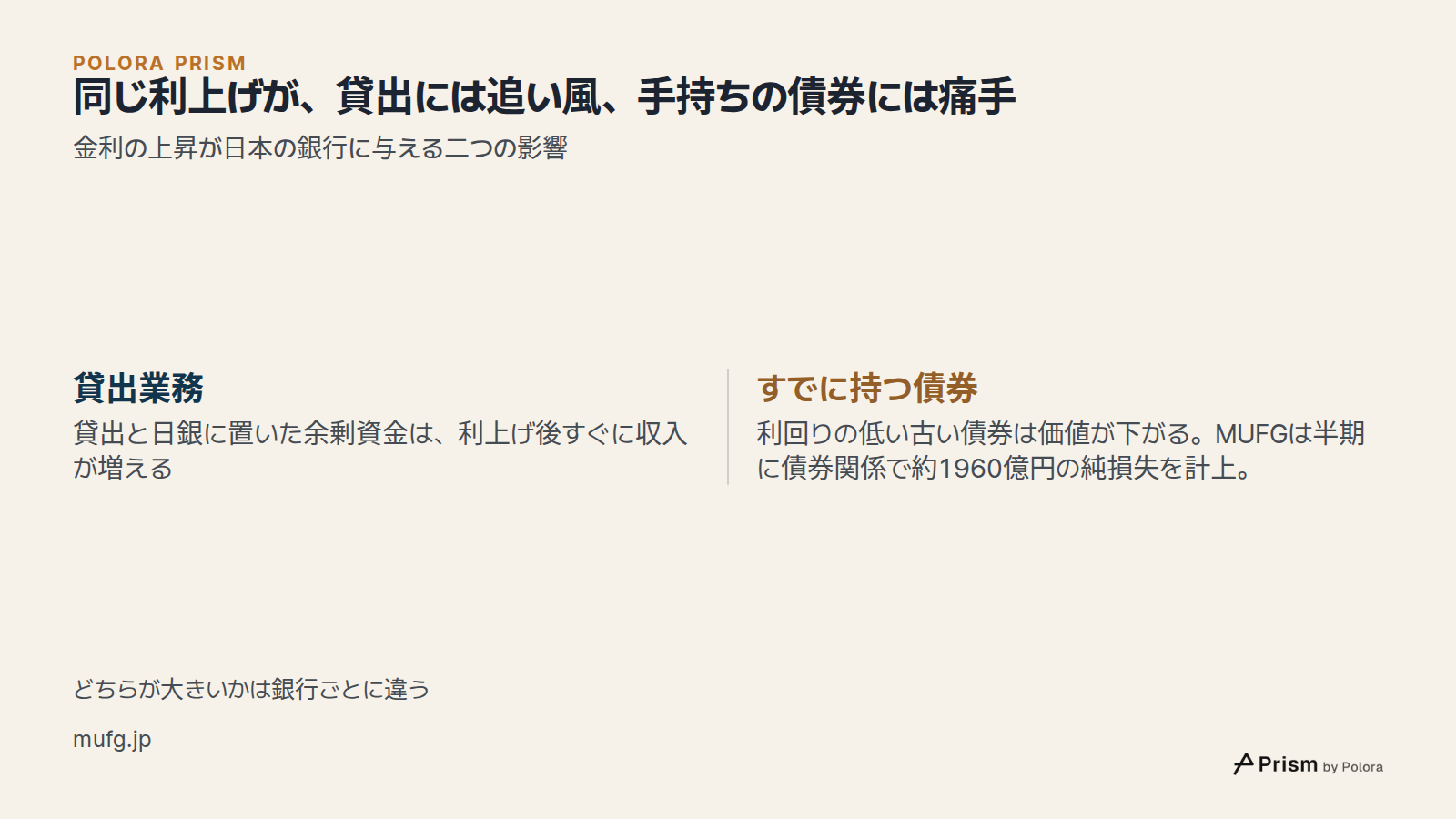
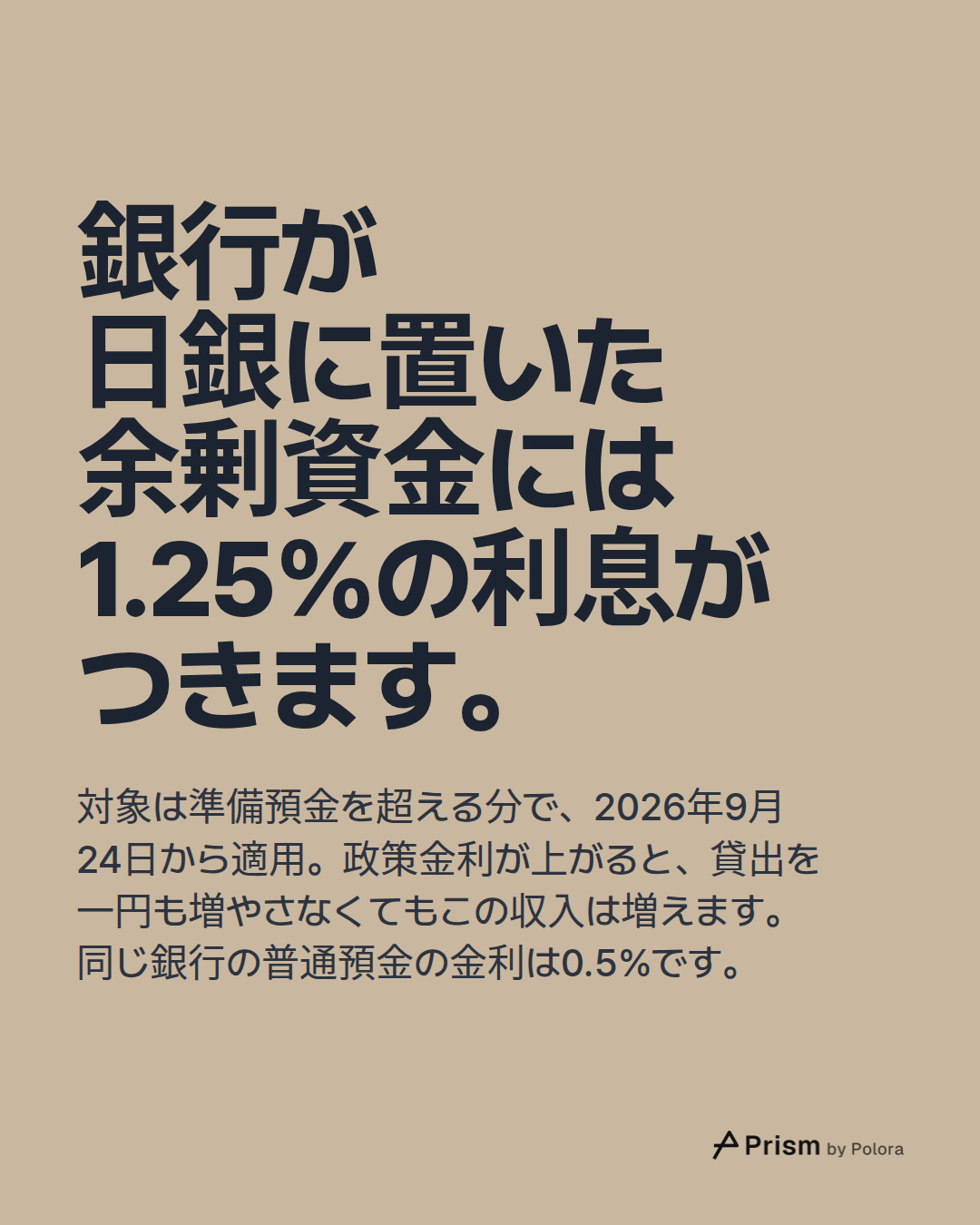
For Japan’s three megabanks, there is a second, very specific channel: they keep huge balances at the Bank of Japan, and the BOJ pays interest on those balances. When the policy rate goes up, that income rises almost immediately, without the bank lending a single extra yen.
The mechanism, at three speeds
1. Loans reprice quickly.
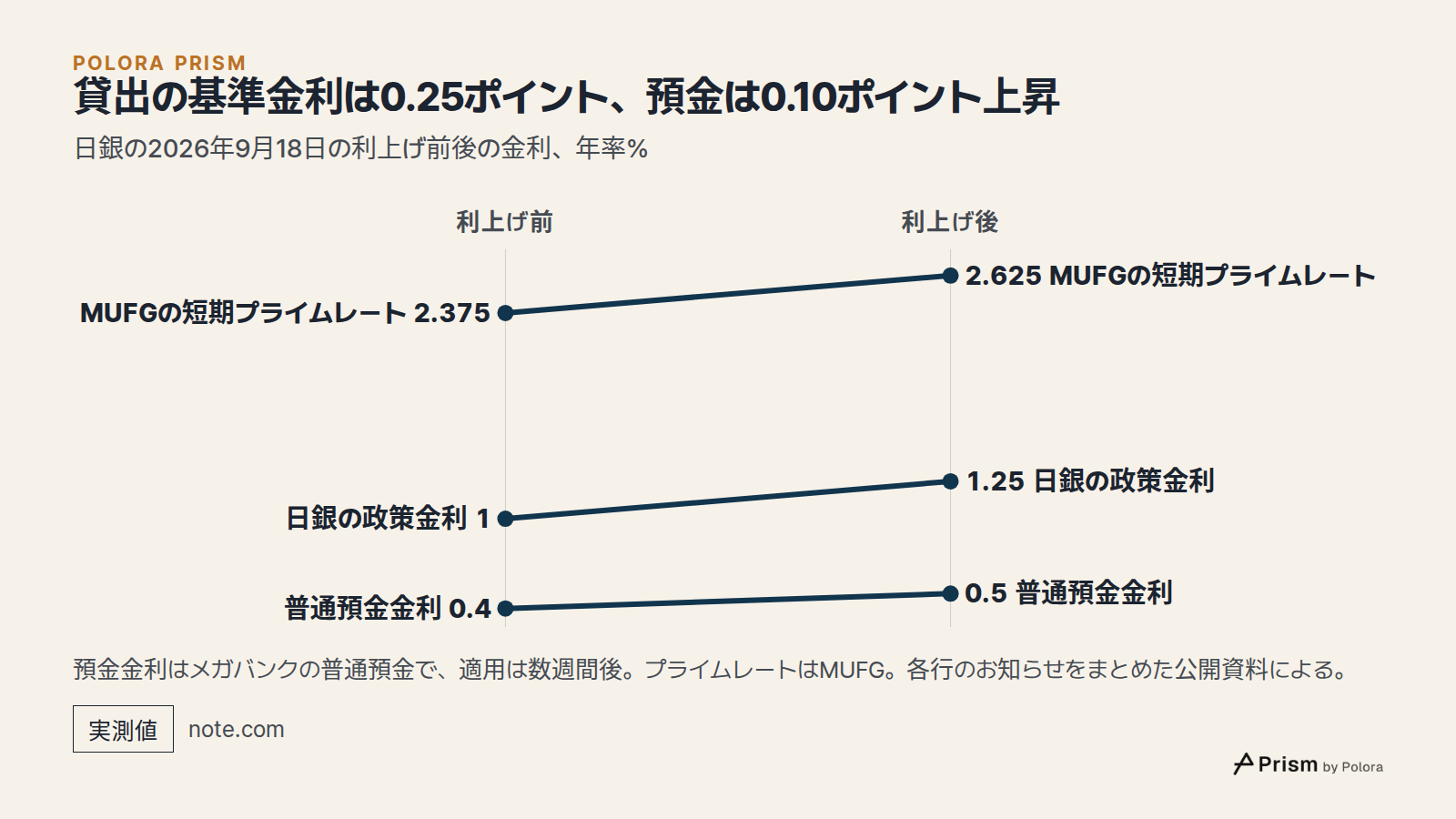
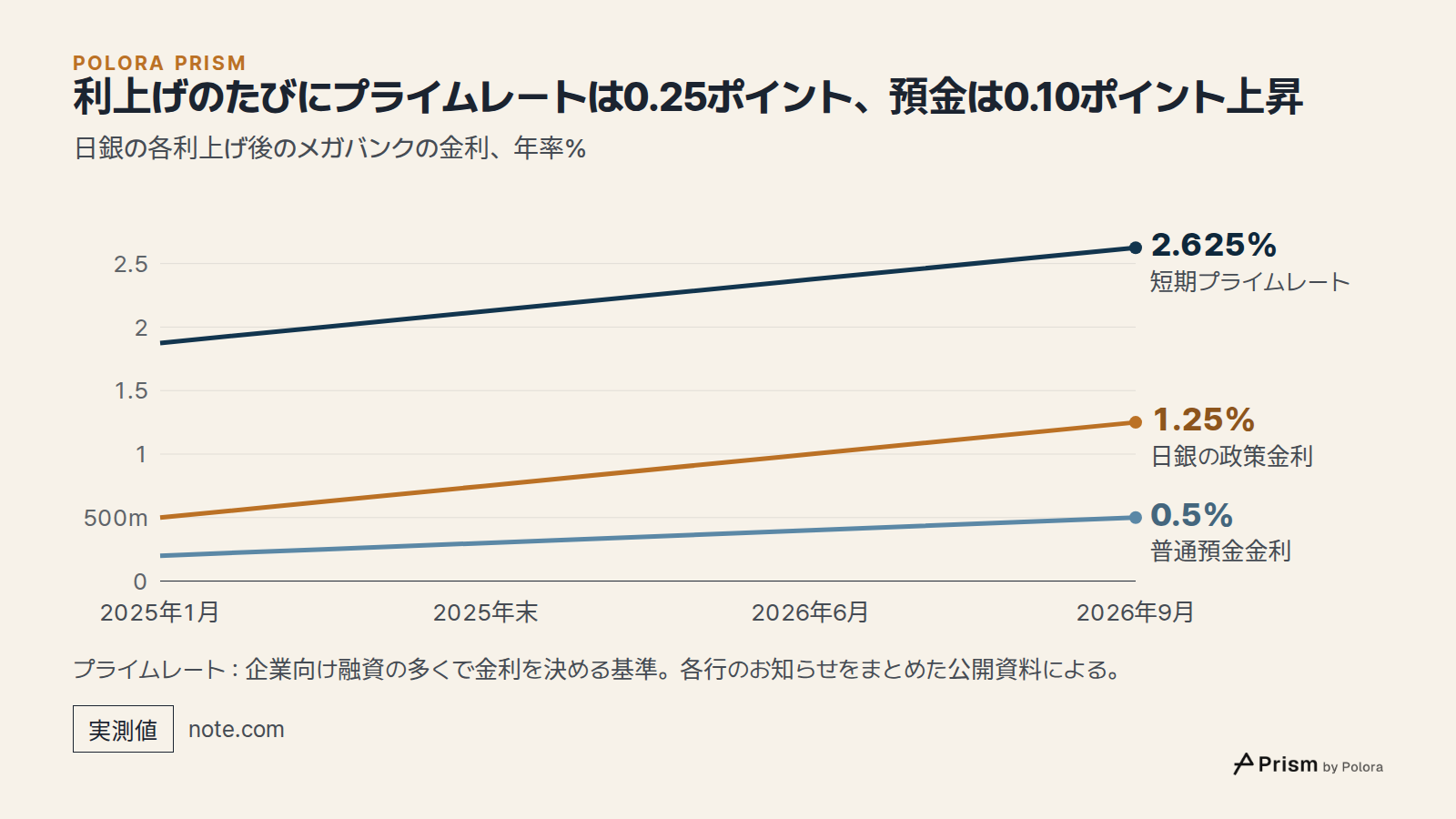
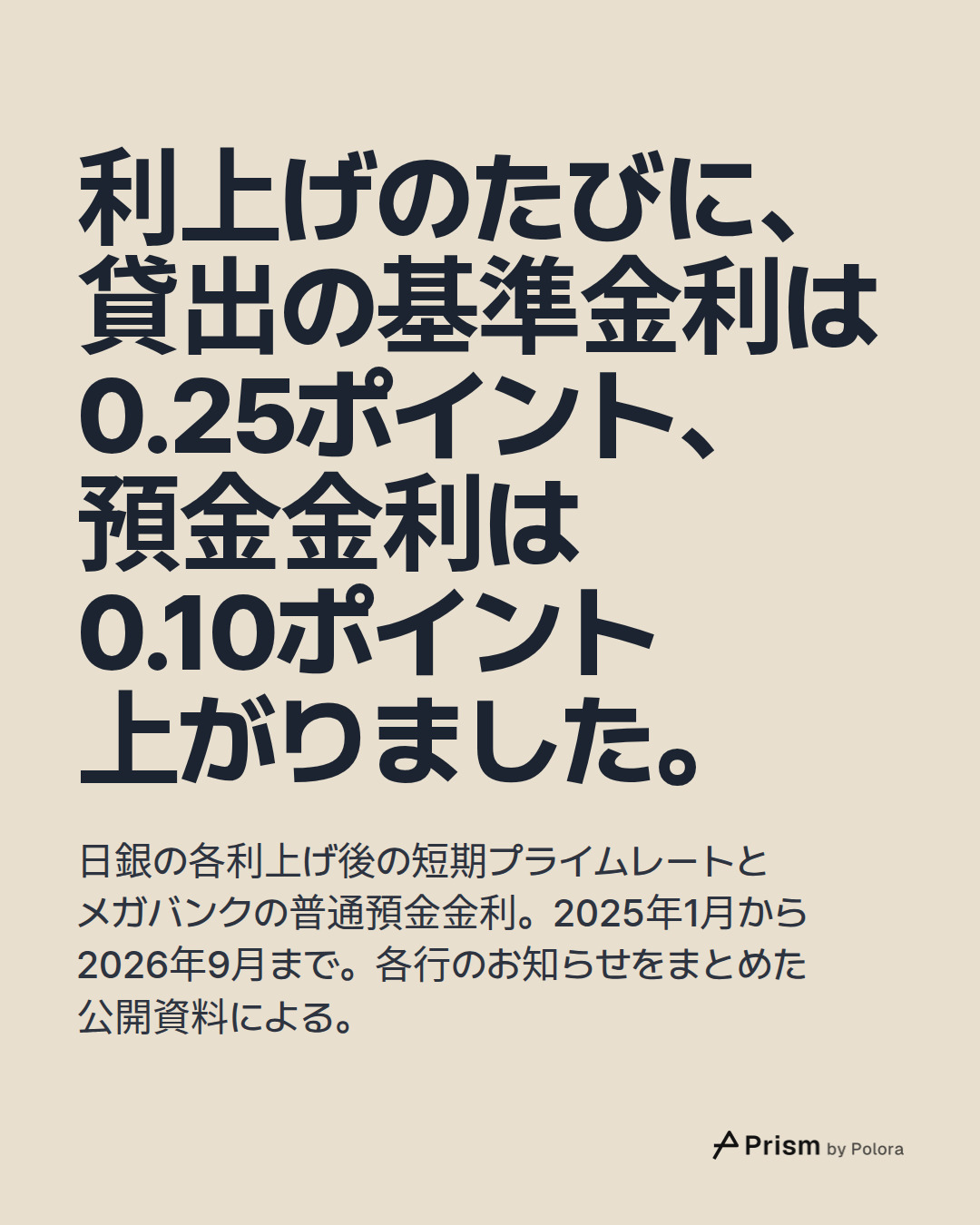
Many corporate loans are tied to the short-term prime rate, and variable-rate mortgages reference it too. When the BOJ raised its policy rate from 1.0% to 1.25% in September 2026, the reported short-term prime rate moved from 2.375% to 2.625% — a rise of 0.25 points.
2. Spare cash at the BOJ starts earning more at once.
The BOJ pays interest on excess reserve balances. In the same September decision, the reported rate on those balances was set at 1.25%, effective shortl…
Beta · gpt-6-sol
The core explanation holds, but it needs a timing qualification. When rates rise, some loans and the megabanks’ eligible balances at the Bank of Japan earn more, while the rates paid on deposits may rise more slowly. That widens the interest margin. The BOJ set the rate on current-account balances *excluding required reserves* at 1.25%, effective September 24, 2026—not on every yen of a bank’s cash. (boj.or.jp)
BOJ decision: https://www.boj.or.jp/en/mopo/mpmsche_minu/minu_2026/g260918.pdf
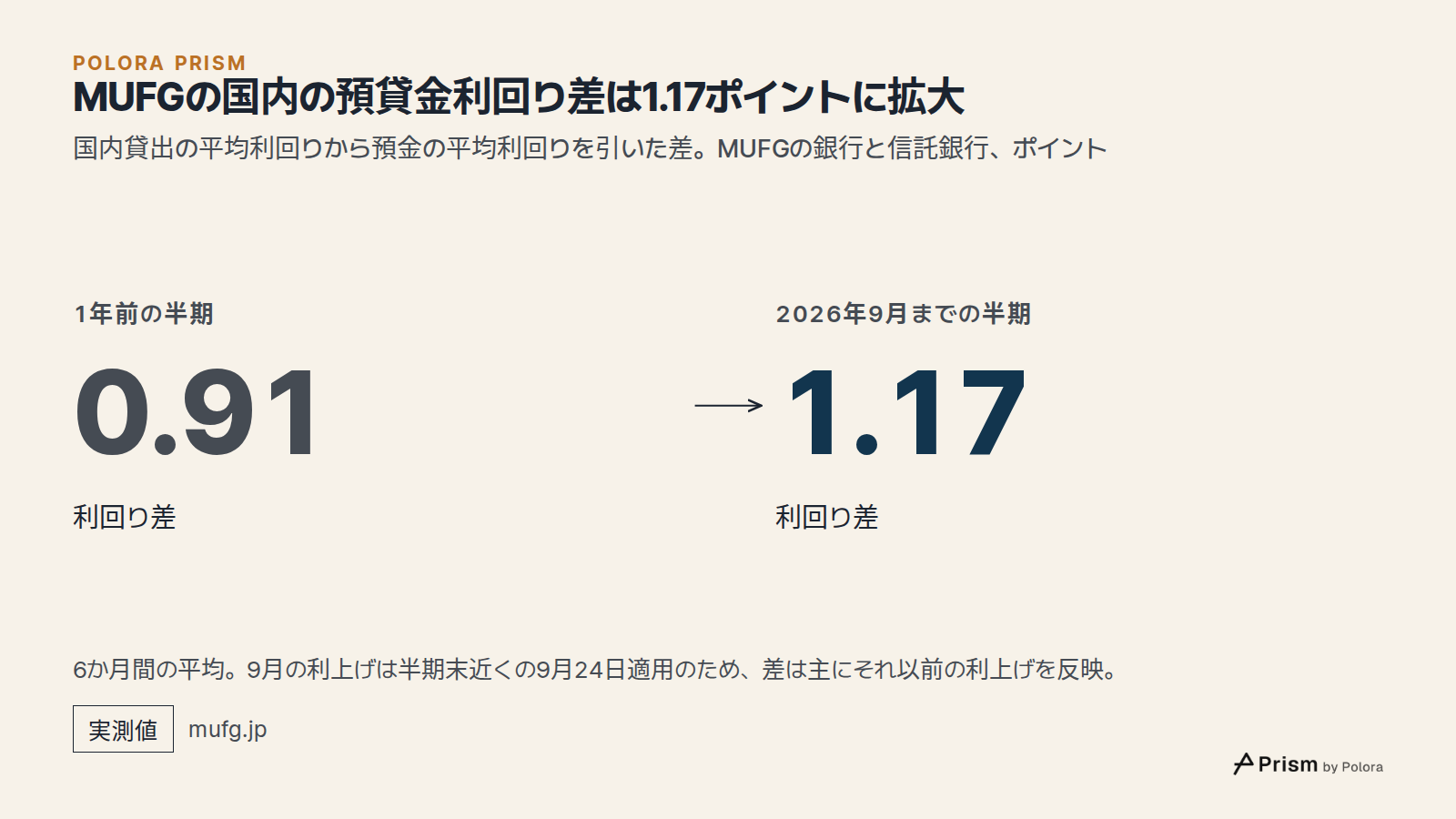
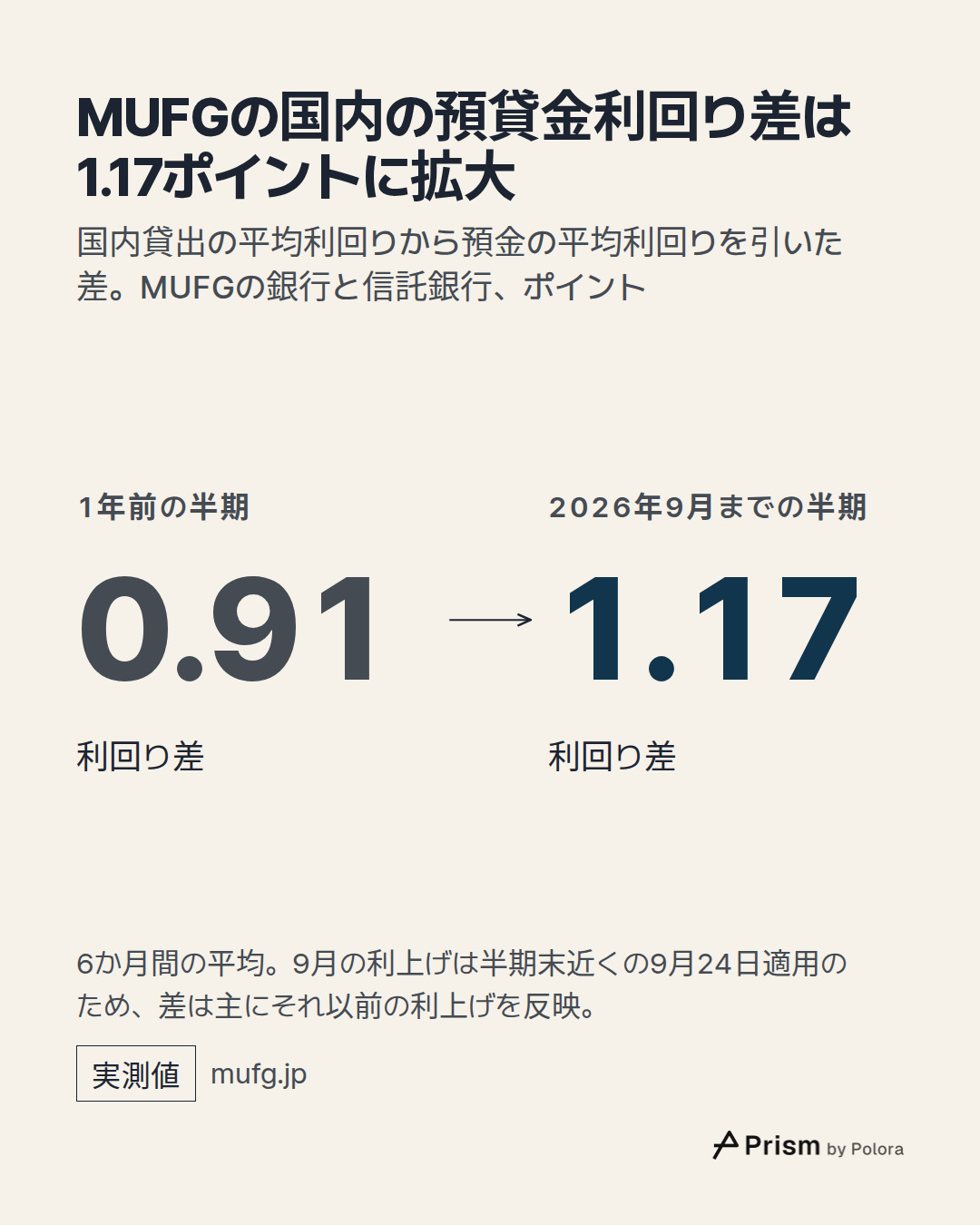
MUFG’s filed figures support the widening-margin claim: for its bank and trust bank combined, domestic business, average loan yield was 1.51%, average deposit-and-negotiable-certificate-of-deposit cost was 0.34%, and the spread was 1.17 percentage points, versus 0.91 a year earlier. Excluding government-related loans produces a *different* pair of figures: 1.53% and 1.19 points. Consolidated net interest income rose from ¥1.440 trillion to ¥1.851 trillion, approximately 29%. Those averages cover the six months ended September 30; they cannot establish that September’s rate increase, effective o…
Gamma · gemini-3.1-pro
Here is what my searches of the live web confirm regarding the manuscript’s claims, the context around them, and the strongest counterargument.
What the sources confirm
MUFG’s Spread and Profits: I confirmed the specific figures for MUFG’s half-year to September 2026. The average loan yield was indeed 1.51%, and the deposit yield was 0.34%, creating a loan-deposit spread of 1.17 points (up from 0.91 points the previous year). The bank reported an interim net profit of ¥1.63 trillion.
*Source trace: MUFG interim results summaries via note.com / SEC filings.*
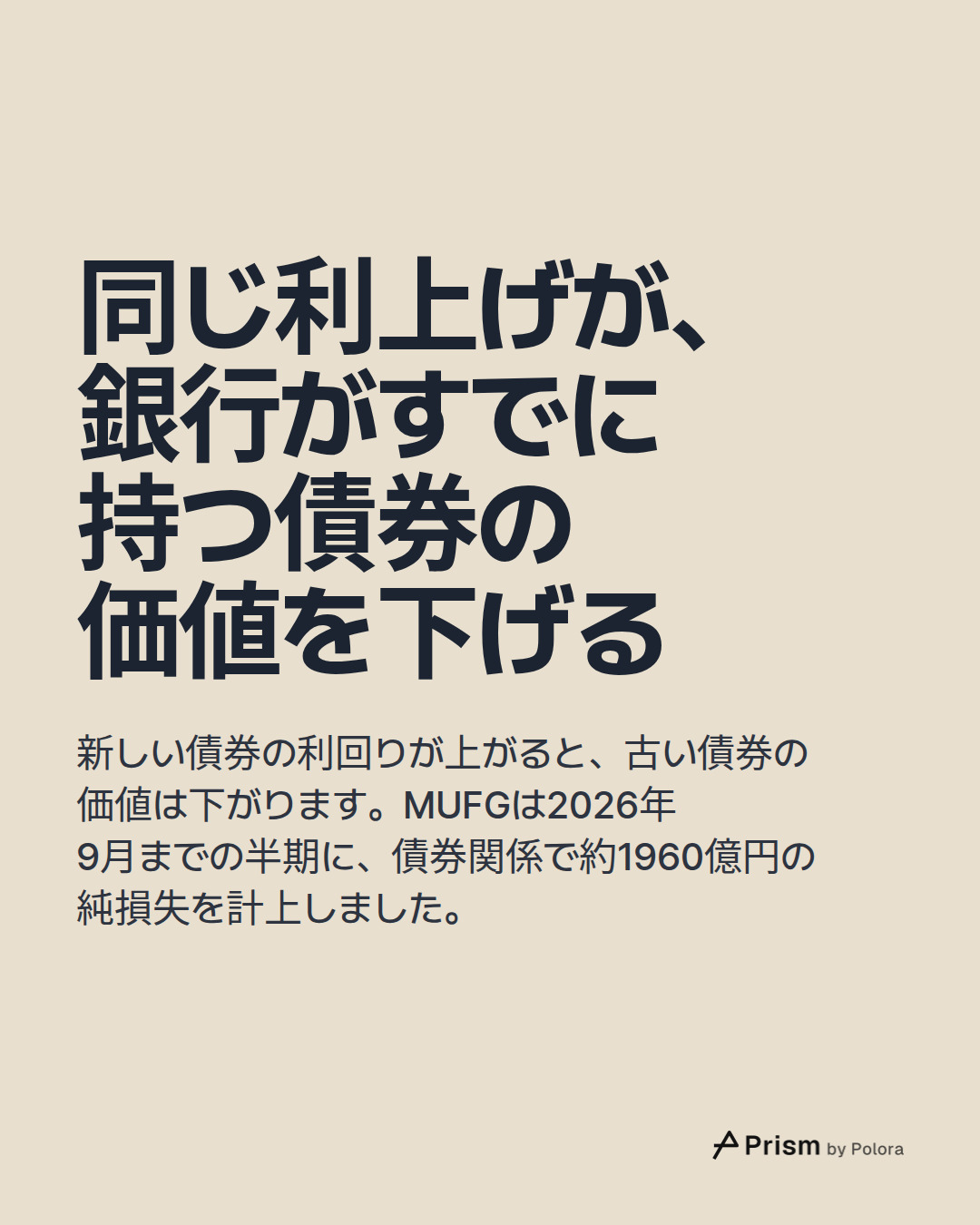
Bond Valuation Losses: The manuscript correctly notes that the same rate rise hurts bond portfolios. MUFG reported a ¥196 billion loss on bonds for the period.
*Source trace: MUFG interim results summaries.*
BOJ Policy Rate: The Bank of Japan did raise its policy interest rate to 1.25% on September 18, 2026, with the new rate taking effect on September 24. The decision was a 7-2 vote.
*Source trace: BOJ September 2026 Monetary Policy Decision / nationthailand.com.*
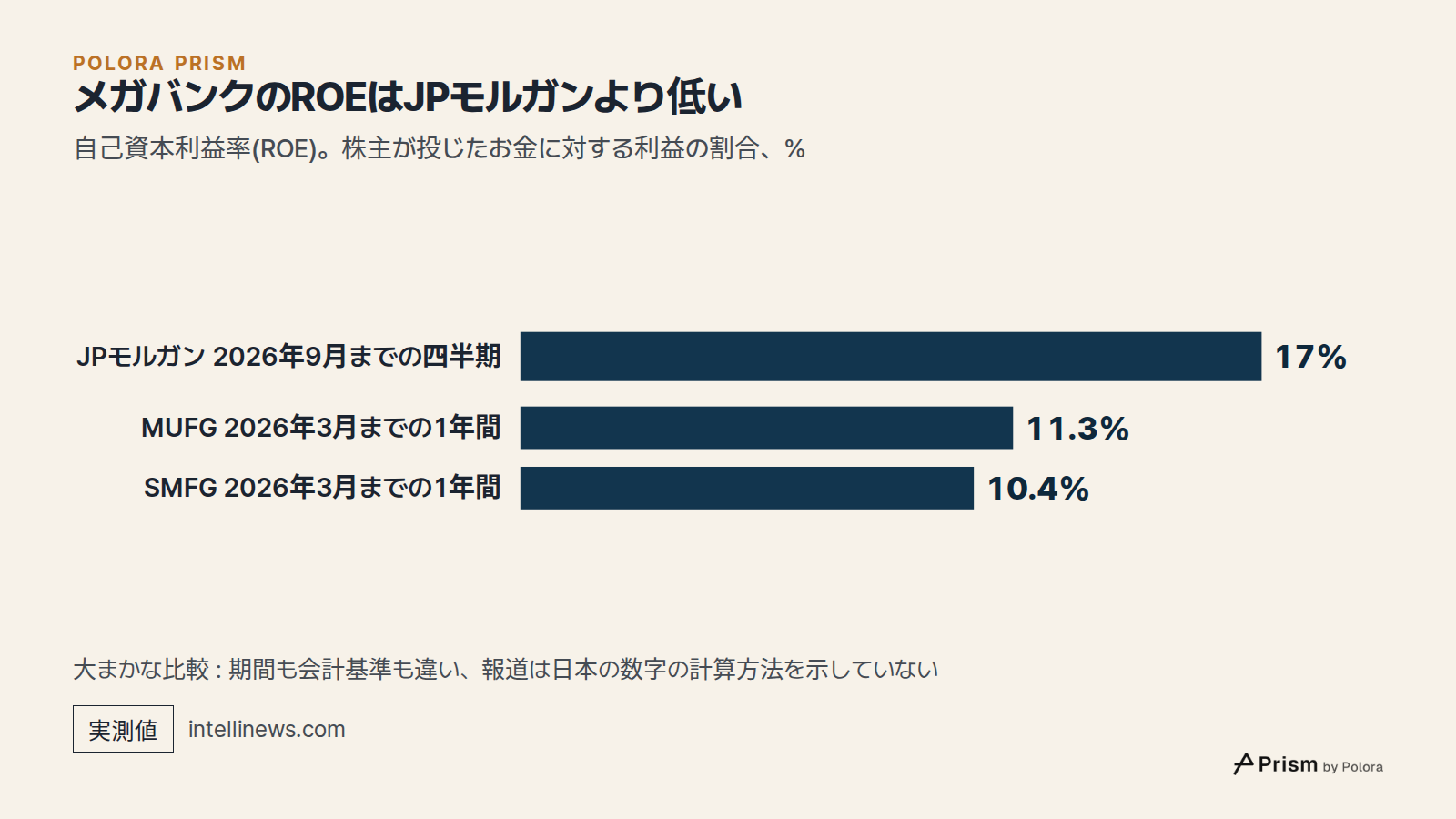
JPMorgan Comparison: The manuscript cites a 17% ROE for JPMorgan in Q3 2026. My search of JPMorgan's Q3 2026 earnings release (October 13,…
Researcher · gpt-6-luna
The primary sources retrieved this turn support the main explanation, with important limits:
- MUFG’s reported spread widened. For the six months ended September 30, 2026, MUFG’s bank and trust bank combined, domestic-business table gives an average loan rate of 1.51%, an average rate on deposits and negotiable CDs of 0.34%, and a spread of 1.17 percentage points, up from 0.91 a year earlier. Excluding loans to the Japanese government and government organizations, the figures are 1.53% and 1.19 points. The filing also reports consolidated net interest income of ¥1.851 trillion, versus ¥1.440 trillion a year earlier. These six-month comparisons show a wider spread and higher net interest income; they do not show that the September rate rise alone caused the whole increase. MUFG interim results summary (mufg.jp)
- The BOJ-rate channel is more specific than “all spare cash.” Its September 18 decision set the complementary deposit facility rate at 1.25% for current-account balances excluding required reserves. That s…
The Arbiter · gpt-6-sol
The voices agree on the mechanism: loan yields and eligible balances at the Bank of Japan can earn more as rates rise, while deposit costs have risen more slowly. MUFG’s interim results support a wider domestic loan–deposit spread of 1.17 percentage points, versus 0.91 a year earlier. The BOJ’s 1.25% rate applies to current-account balances excluding required reserves, not to every yen a bank holds. (mufg.jp)
They also agree on the main qualification: a wider spread does not, by itself, explain all of a group’s profit. The September 2026 increase took effect near the end of MUFG’s six-month reporting period, and bond losses and other sources of income matter. Researcher found no reliable support for Gamma’s more specific claim of *aggressive* household-deposit flight into retail government bonds; it should not be treated as established.
For the publication check, several manuscript details remain open: the bank-by-bank ordinary-deposit and prime-rate timeline, the size of each megabank’s eligible BOJ balance, and some cross-bank profit and ROE comparisons. There is also a date to reconcile:…
The Arbiter's Final Verdict · gpt-6-sol
Verdict: the manuscript’s central explanation stands for Japan’s megabanks, but it overstates how much the latest rate rise explains. When rates rise, some loans earn more as they reprice, and eligible balances held at the Bank of Japan earn more too. If banks raise the rates paid to depositors more slowly, the gap between interest earned and interest paid widens.
MUFG’s interim results show that gap in its domestic bank-and-trust-bank business: the average loan rate was 1.51%, the average cost of deposits and negotiable CDs was 0.34%, and the spread was 1.17 percentage points, up from 0.91 a year earlier. Its consolidated net interest income also rose by about 29%. The BOJ decision supports the second channel, but the 1.25% rate applies to current-account balances excluding required reserves—not to all bank cash.
The strongest objection is that a widening interest spread is not the same as a guaranteed rise in total profit. September’s rate increase came near the end of MUFG’s reporting half, so it cannot explain the who…