영어 사전에는 새 단어를 투표로 정하는 위원회가 없습니다. 여러 해 동안 널리 쓰인 기록이 쌓이면 편집자가 그 증거를 보고 올립니다. 사전에 실렸다는 것은 그 말이 쓰인다는 기록이지 옳은 말이라는 인증이 아닙니다.
문화와 예술 · 2026-10-17
사전에 있다고 공인받은 말은 아닙니다
어떤 말이 맞는지 따질 때 우리는 흔히 "그거 사전에 있는 말이야?"라고 묻습니다. 누군가 그 말을 허락해 주기라도 한 것처럼요. 그런데 큰 영어 사전들은 그렇게 돌아가지 않습니다.
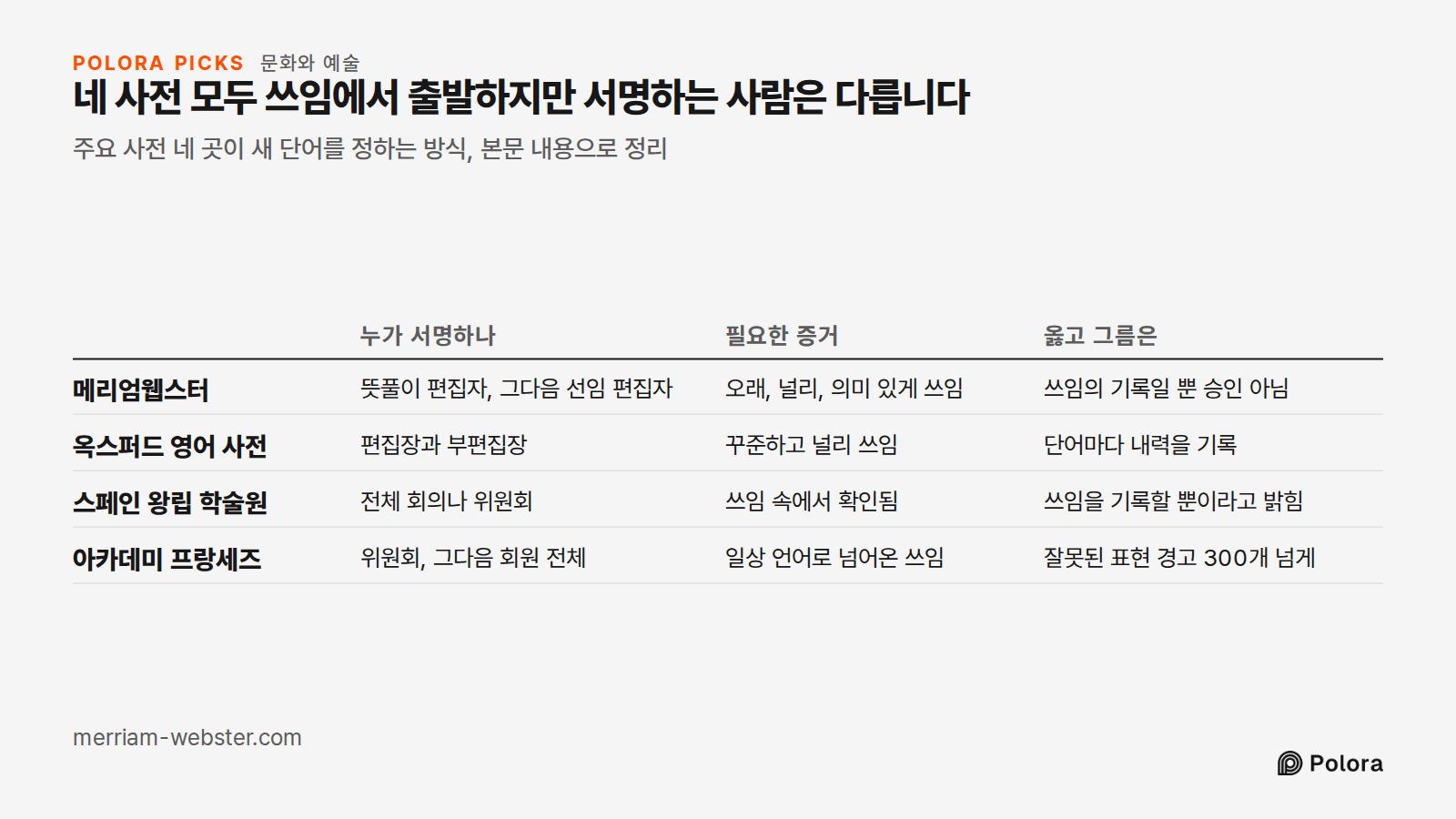
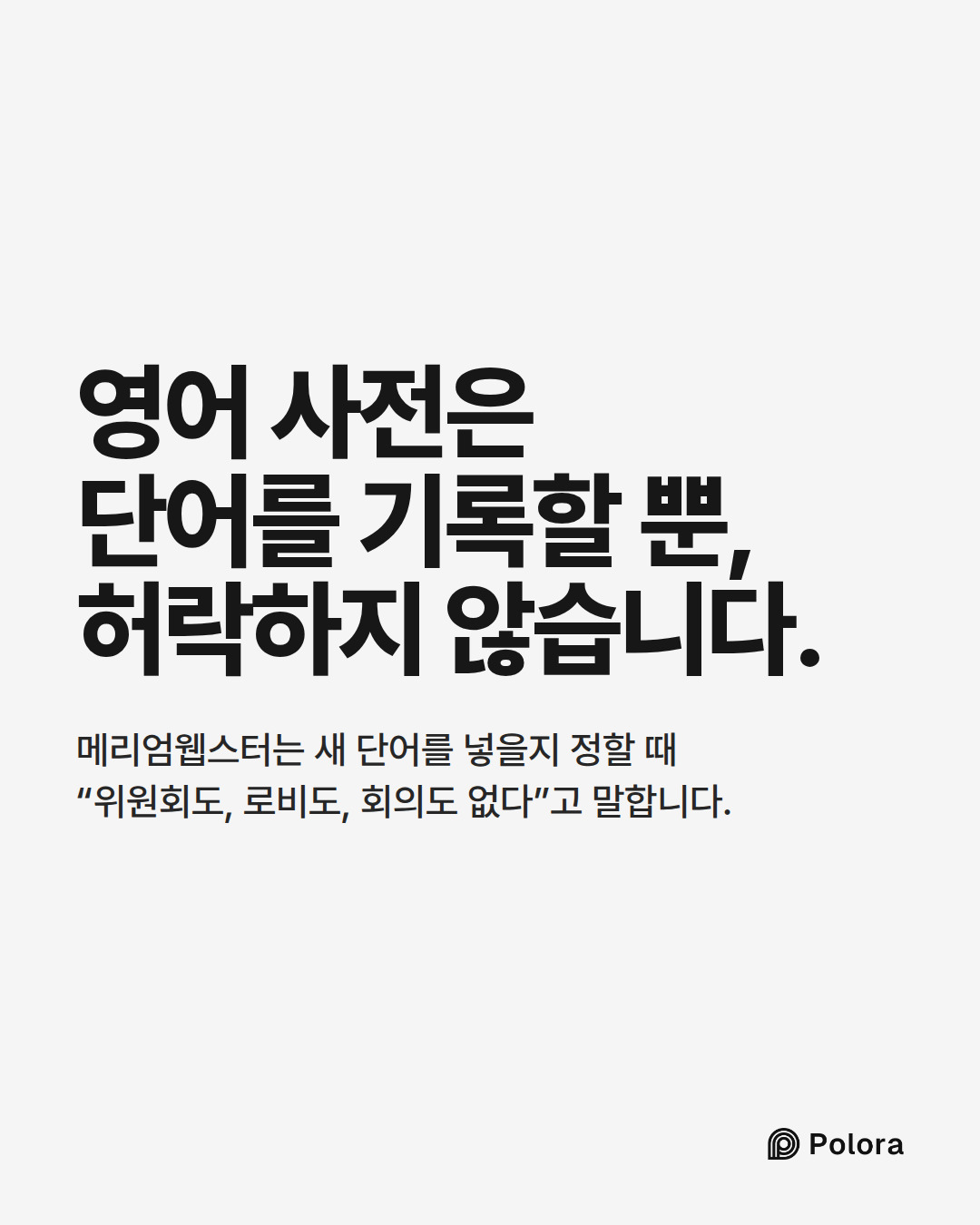
미국 사전 출판사 메리엄웹스터는 새 단어를 넣을지 정할 때 "위원회도, 로비도, 회의도 없다"고 말합니다. 메리엄웹스터의 편집자도, 옥스퍼드 영어 사전의 편집자도 어떤 말을 써도 되는지 허락하는 사람이 아닙니다. 그 말이 이미 충분히 쓰여서 기록으로 남길 만한지를 판단하는 사람입니다.
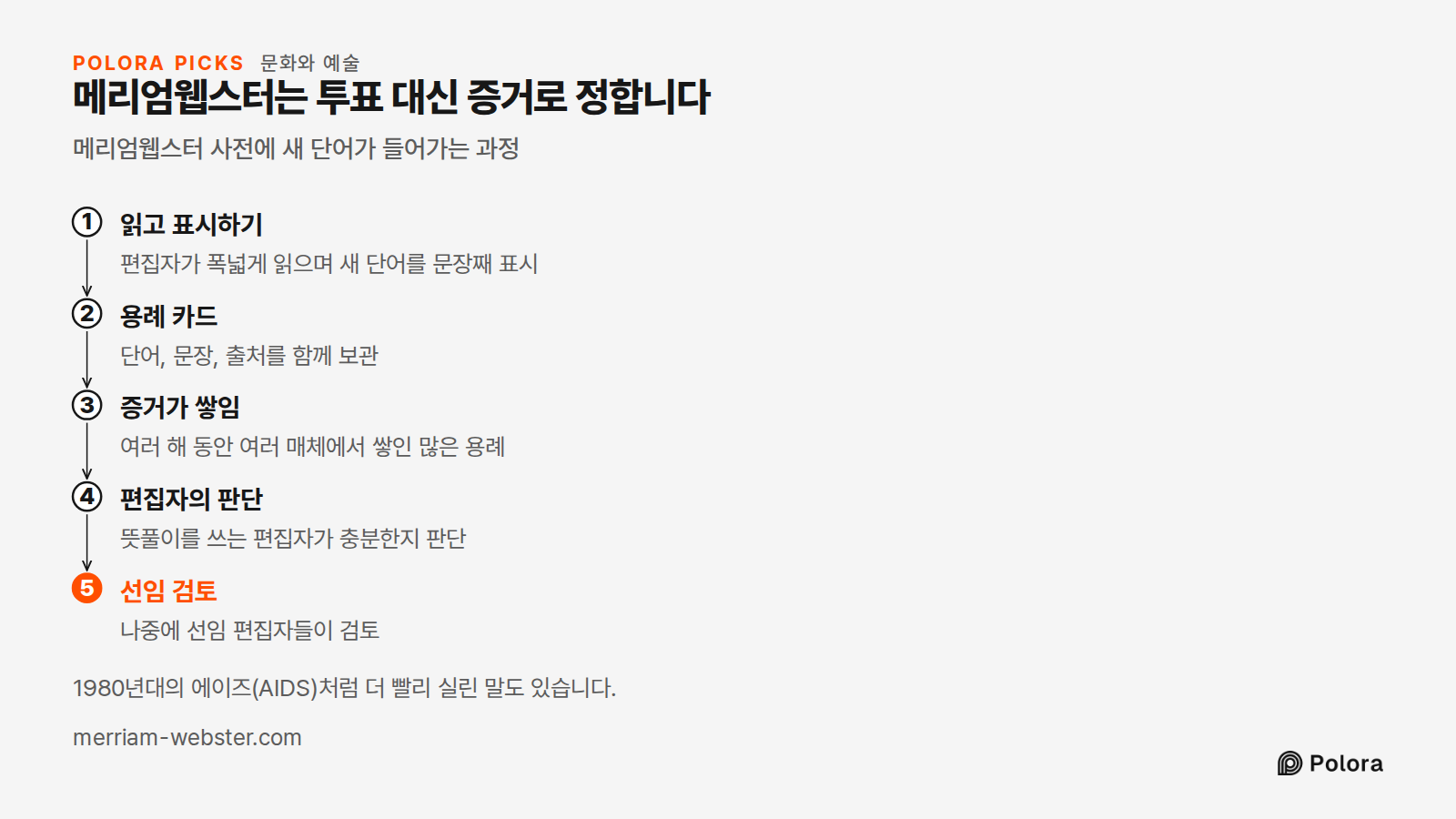
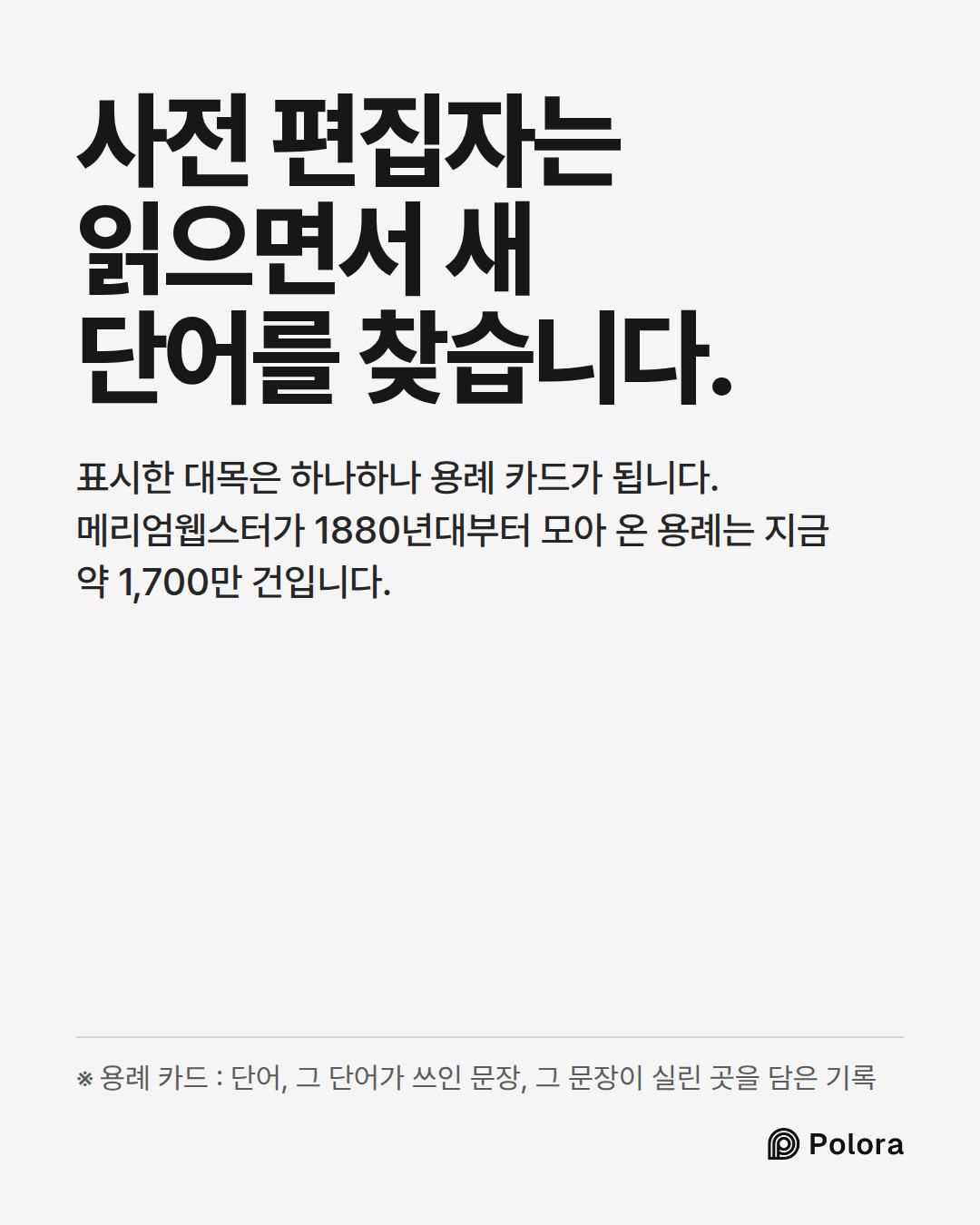
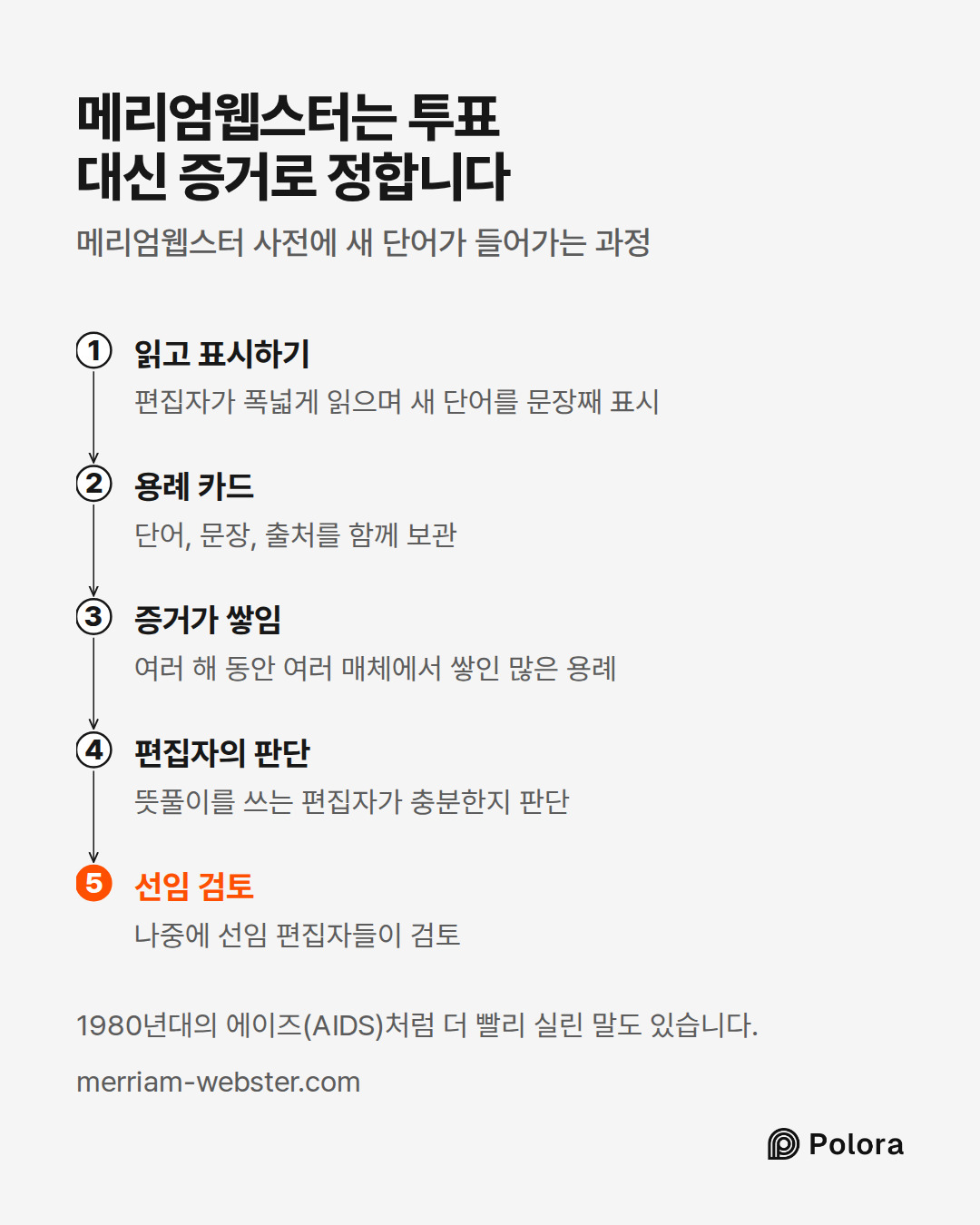
메리엄웹스터의 편집자들은 거의 날마다 한두 시간씩 책, 신문, 잡지, 온라인 매체를 가리지 않고 폭넓게 읽습니다. 회사 안에서는 이 일을 "읽고 표시하기"라고 부릅니다. 새 단어, 기존 단어의 새 뜻, 새 철자를 찾으면 그 단어가 들어 있는 문장과 함께 표시해 둡니다.
표시한 대목은 하나하나 용례 카드가 됩니다. 용례 카드에는 단어, 그 단어가 쓰인 문장, 그 문장이 실린 곳, 이렇게 세 가지가 담깁니다. 회사는 1880년대부터 용례를 모아 왔고, 지금까지 쌓인 용례가 약 1,700만 건입니다. 한 편집자는 예전엔 수프 통조림 라벨과 식당 메뉴판까지 읽었다고 말한 적이 있습니다. 사람들이 실제로 보는 말이 거기 있기 때문입니다.
단어가 사전에 들어가려면 꽤 오랜 기간에 걸쳐 여러 매체에서 상당히 많은 용례가 쌓여야 합니다. 용례가 모두 한 출처에서만 나왔거나 한 분야의 전문지에서만 나왔다면 메리엄웹스터는 그 단어를 넣지 않을 수 있습니다.
이 회사의 편집주간은 이 기준을 세 가지로 설명합니다. 오래 쓰였는가, 널리 쓰였는가, 의미 있게 쓰였는가. 다시 말해 오랜 시간에 걸쳐 많은 매체가 그 단어를 같은 뜻으로 써 왔느냐는 것입니다. 그는 이것을 두고 언어를 "백미러로" 보는 일이라고 합니다. 일반 독자가 사전에서 어떤 단어를 발견할 즈음이면, 그 말을 처음 만든 전문가들에게는 이미 낡은 말인 경우가 많습니다.
예외도 있습니다. 1980년대에 에이즈(AIDS)라는 말은 너무 빨리 퍼졌고 앞으로도 계속 쓰일 것이 분명했기에, 편집자들은 여러 해의 증거를 기다리지 않고 바로 실었습니다. 사전의 크기도 영향을 줍니다. 작은 사전은 가장 흔한 말만 담을 자리밖에 없으니, 거기 들어가려면 증거가 더 많이 필요합니다.
증거가 충분한지는 결국 판단의 문제입니다. 그 판단은 뜻풀이를 쓰는 편집자가 내리고, 나중에 선임 편집자들이 검토합니다. 사전 전체를 새로 손볼 때는 같은 편집자들이 기존 표제어 가운데 무엇을 뺄지도 정합니다.
옥스퍼드 대학 출판부가 펴내는 옥스퍼드 영어 사전(OED)도 비슷하게 일하지만 속도가 더 느립니다. 후보 단어는 먼저 "관찰 목록"에 오릅니다. 후보는 사전이 직접 운영하는 독서 프로그램과 일반인 제보에서 나오고, 요즘은 방대한 텍스트 자료를 자동으로 훑어 찾아내는 경우가 갈수록 늘고 있습니다.
OED가 직접 밝힌 절차에 따르면, 증거가 부족한 단어는 관찰 목록에 남아 있다가 나중에 다시 점검받습니다. "충분히 꾸준하고 널리 쓰인" 단어만 편집자에게 넘어가고, 편집자는 신문 기록 보관소, 온라인 게시판, 법률 문서, 요리책, 소셜 미디어 같은 자료로 그 단어의 내력을 추적합니다. 최종 승인은 편집장과 부편집장이 하고, 새 표제어는 석 달마다 나오는 업데이트에 실립니다.
OED가 이렇게 시간을 들이는 것은 역사 사전이기 때문입니다. 중세부터 오늘까지의 영어를 기록하는 것이 목표이고, 표제어마다 날짜가 붙은 인용문으로 그 단어의 일생을 보여 줍니다. 몇 해 전 OED의 한 편집자는 스미소니언 잡지에 OED가 새 단어를 넣기 전 "전통적으로 10년치 증거를 기다린다"고 말했습니다. 다만 2012년에야 생겨난 화학 원소 리버모륨 같은 예외가 있다고 했습니다. 이것은 편집자 한 사람의 말이지 공표된 규칙이 아닙니다. OED의 현재 정책 안내에는 정해진 대기 기간이 없고, 옥스퍼드 대학 출판부의 한 인터뷰는 10년이 채 안 됐는데도 자리를 확실히 잡은 단어가 있다고 말합니다. 기준선은 사전마다 따로 정합니다.
표제어는 쓰임의 기록이므로, 사전에 어떤 단어가 있다고 해서 그 말이 좋은 문체이거나 점잖은 말이라는 뜻은 아닙니다. 메리엄웹스터는 증거에 기대는 이유를 사전이 "권위주의적이지 않으면서도 권위 있게 말하기" 위해서라고 설명합니다.
아래에서 다룰 스페인어 사전을 비롯해 많은 사전이 이 차이를 꼬리표로 표시합니다. 어떤 단어는 실려 있으면서 "비격식", "모욕적", "예스러운 말" 같은 꼬리표를 달고 있습니다. 표제어는 사람들이 그 말을 쓴다는 것을 알려 주고, 꼬리표는 그 말이 대개 어떻게 받아들여지는지를 알려 줍니다.
일부 사전 출판사가 발표하는 "올해의 단어"는 성격이 다른 선택입니다. 메리엄웹스터는 자사 웹사이트에서 검색이 아주 많았고 전해보다 급격히 늘어난 단어 가운데서 올해의 단어를 고른다고 말합니다. 이것은 대중의 호기심을 재는 것이지, 표제어에 필요한 여러 해에 걸친 글 속 쓰임을 재는 것이 아닙니다.
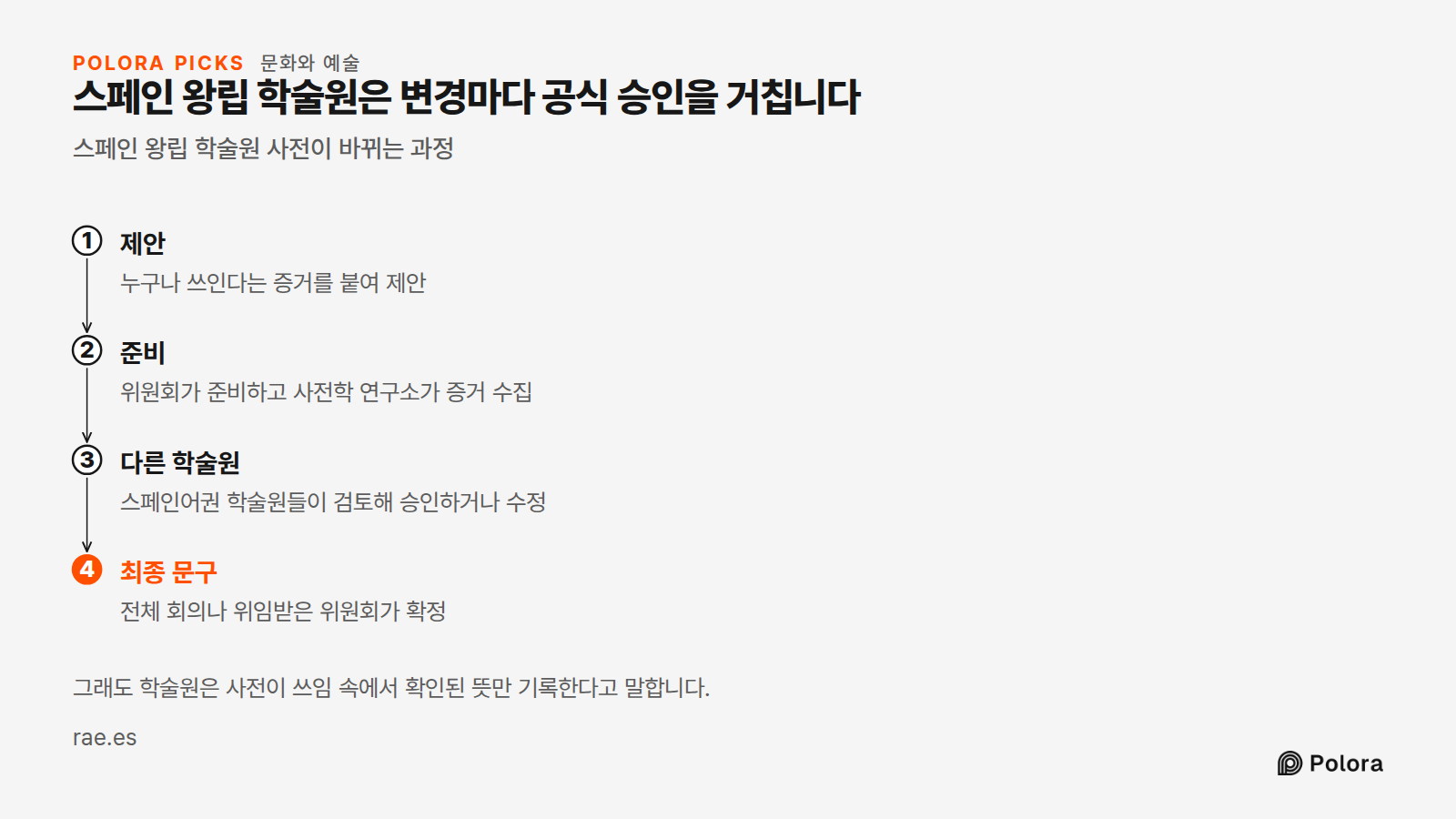
스페인어 사전은 겉보기에는 다르게 돌아갑니다. 스페인의 왕립 언어 학술원인 레알 아카데미아 에스파뇰라가 대표 스페인어 사전을 펴내는데, 이 사전을 바꾸려면 공식 승인 절차를 거쳐야 합니다. 위원회들이 추가, 삭제, 수정안을 준비하고, 학술원 산하 사전학 연구소가 증거를 모읍니다. 누구나 온라인 양식으로 단어를 제안할 수 있지만, 그 말이 쓰인다는 증거를 함께 내야 합니다.
스페인어는 여러 나라에서 쓰이므로 제안은 다른 스페인어권 학술원들에도 보내지고, 각 학술원이 검토해 승인하거나 수정해서 답합니다. 그다음 레알 아카데미아 에스파뇰라의 전체 회의나 그 회의가 위임한 위원회가 최종 문구를 확정합니다. 이 학술원들을 잇는 연합에는 23개 학술원이 회원으로 있지만, 모든 변경을 모든 회원이 승인해야 하는 것은 아닙니다.
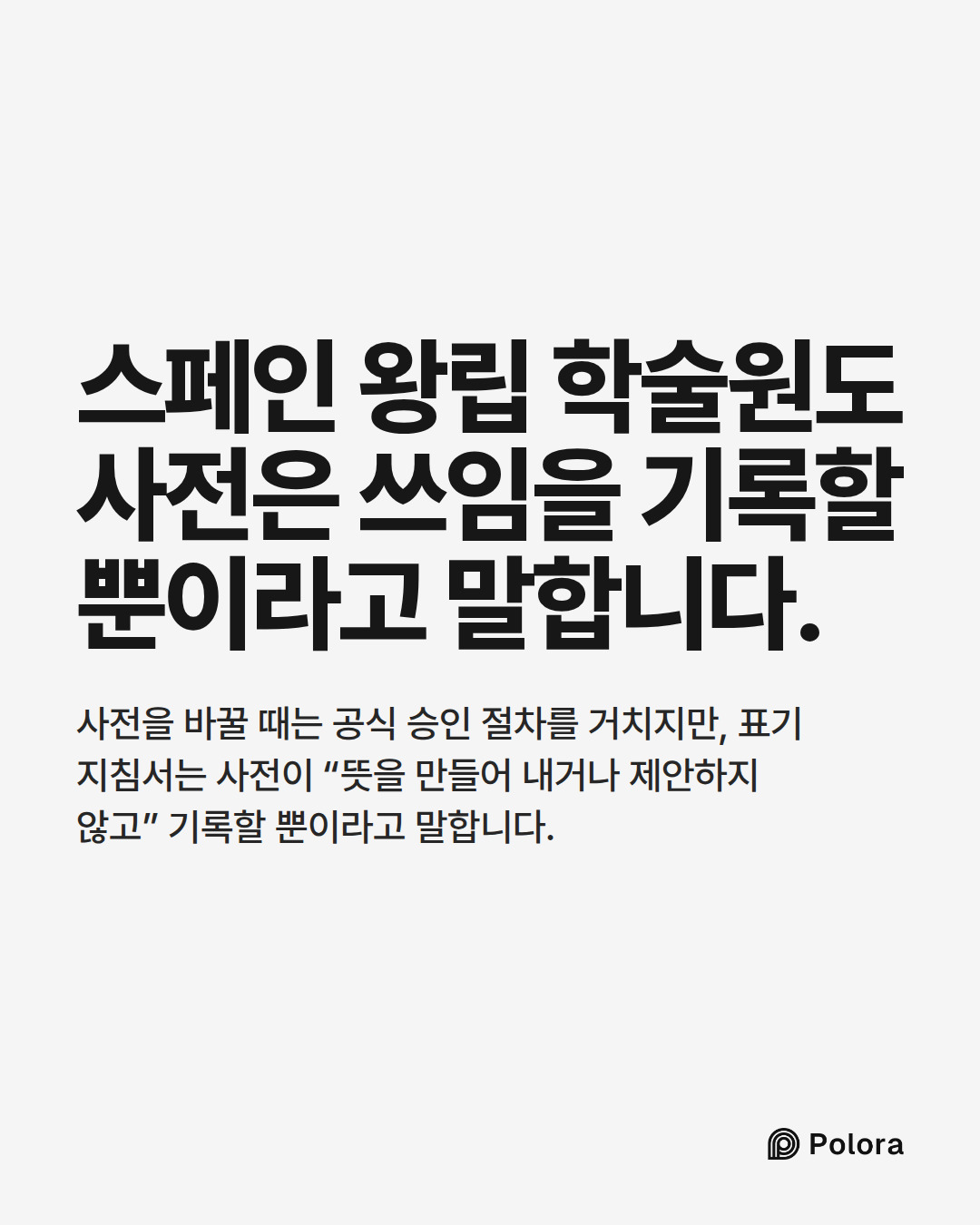
그런데도 이 학술원이 자기 사전을 설명하는 방식은 영어 사전 편집자들과 거의 같습니다. 학술원의 표기 지침서는 사전이 "뜻을 만들어 내거나 제안하지 않고" 기록할 뿐이며, 어떤 뜻이 실리는 것은 "쓰임 속에서 확인되었기 때문"이라고 말합니다. 사람들이 흔히 이 사전을 규범 사전의 본보기로 여기지만, 모든 사전은 대부분 쓰임에 대한 기술이고 규범은 그 기술에서 나온다고도 덧붙입니다.
프랑스의 아카데미 프랑세즈는 한 걸음 더 나아가고, 속도는 훨씬 느립니다. 회원들로 꾸린 위원회가 목요일 오전마다 사전 원고를 검토하고, 목요일 오후에는 회원 전체가 모인 회의에서 그 원고를 함께 다룹니다. 아카데미는 두 자리 모두 "봉 위자주(bon usage)", 곧 바른 쓰임을 길잡이로 삼는다고 말합니다.
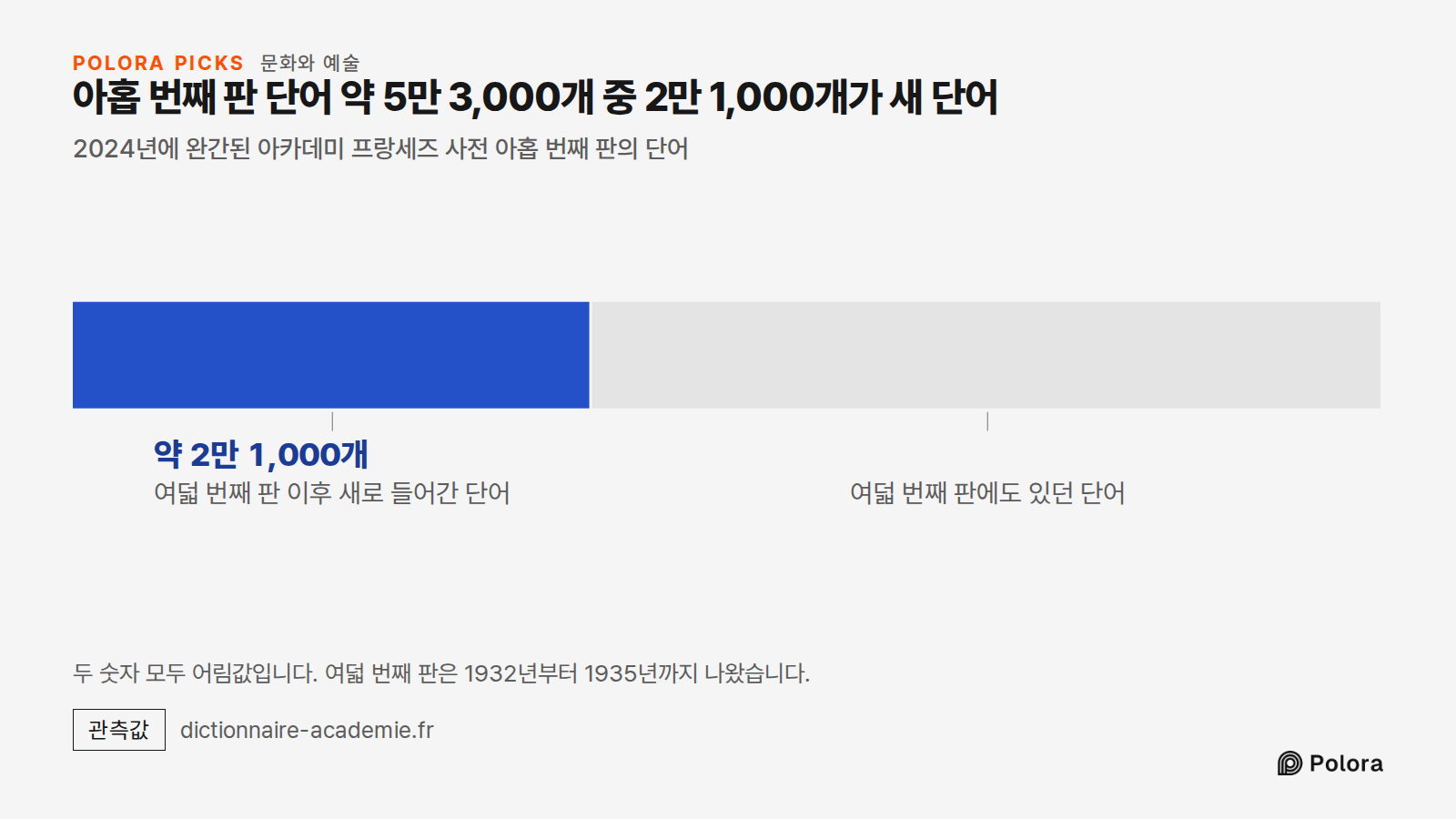
이 사전의 아홉 번째 판은 1986년에 시작했고, 네 권 가운데 마지막 권이 2024년에 나왔습니다. 그 앞의 여덟 번째 판은 1932년부터 1935년까지 나왔습니다. 아홉 번째 판에는 약 5만 3,000개의 단어가 실렸고, 그중 2만 1,000개는 여덟 번째 판 이후 새로 들어간 것입니다.
아카데미는 영어 사전들보다 피해야 할 말을 짚는 데 적극적입니다. 사전에는 잘못된 표현을 경고하는 "규범 주석"이 300개 넘게 들어 있습니다. 그래도 아카데미는 자기 작업을 "쓰임의 사전"이라고 부르고, 전문 용어는 일상 언어로 넘어온 뒤에야 받아들입니다. 심지어 양파를 뜻하는 프랑스어 oignon의 간소화 철자를 스스로 승인해 놓고도, 그 새 철자가 사람들 사이에 퍼지지 않자 자기 사전에는 싣지 않았습니다.
문지기가 미국 매사추세츠의 편집자든, 옥스퍼드의 편집팀이든, 마드리드와 파리의 학술원 회원이든, 모두 같은 데서 출발합니다. 사람들이 그 말을 실제로 어떻게 쓰느냐입니다. 케임브리지 사전도 자사 편집자들이 한 단어가 시간이 지나며 얼마나 자주, 얼마나 여러 맥락에서 나타나는지 확인한다고 말합니다. 다른 것은 누가 최종 서명을 하는지, 증거가 얼마나 있어야 충분한지, 그리고 그 기관이 무엇이 맞는 말인지까지 밝히는지입니다.
그러니 어떤 단어가 사전에 있는 것은 누군가 그 말을 마음에 들어 해서가 아닙니다. 충분히 많은 사람이, 충분히 여러 곳에서, 충분히 오래 그 말을 썼고, 그 사전의 편집자들이 그 증거가 기록할 만큼 탄탄하다고 판단했기 때문입니다.
Who decides when a new word gets into the dictionary?
Alpha · deepseek-v4-pro
The decision is made by lexicographers — the dictionary editors themselves — but they are constrained by a standard, not by personal taste.
For major English dictionaries:
- Merriam-Webster: an editor known as a definer drafts the entry, and senior editors review it. The test is evidence of long-term, widespread, meaningful use — not a committee voting on whether a word is “good” or “acceptable.”
- Oxford English Dictionary: candidate words go onto a watch list, and only after sustained and widespread use does the word reach an editor; the Chief Editor and Deputy Chief Editor give final approval.
So in one sense a small group of editors literally decides. But the real gatekeeper is how people use the word: enough citations, across enough publications, over enough time. If that evidence does not exist, the editor refuses or delays the entry.
That is why I would push back on the simple answer “the dictionary editors decide.” It is more accurate to say the speech community decides by usage, and the lexicographer records that decision afterward. Editors apply judgment about thresholds and labels, but they are not inventing words or certifying them as correct.
T…
Beta · gpt-6-sol
Dictionary editors decide what goes into a particular dictionary; speakers and writers provide the evidence they decide from. I agree with Alpha’s distinction, but would not say that usage *forces* an entry. Editors still judge whether the evidence is sufficient, and different dictionaries serve different purposes.
Merriam-Webster says its definers examine examples of a word in context. For inclusion, they look for substantial evidence across a range of publications and a considerable period—not merely a high count from one source. It explicitly allows exceptions for words that become established quickly, and says a smaller dictionary has a higher bar for inclusion than an unabridged one. Its FAQ also confirms the manuscript’s 1880s starting date and 15.7 million citation count. The FAQ describes definers deciding whether to drop existing entries *while reediting a dictionary*, not necessarily during each online update. Merriam-Webster’s account. (merriam-webster.com)
A useful addition missing from the manuscript is Cambridge. Its own…
Gamma · gemini-3.1-pro
I agree with Beta that the lexicographers' judgment is an active part of the process, but I can resolve some of the factual gaps the manuscript asked to have checked, as my live search confirms several specific claims.
Here is what the sources show regarding the manuscript's checks:
Merriam-Webster’s "No Committee" Quote and Citations
The exact phrase *"there's no committee, no advocacy, no meetings for new word inclusion"* is indeed genuine. It appears directly in Merriam-Webster's own published article, "How a Word Gets Into the Dictionary." The same page confirms their citation collection began in the 1880s and currently states they have *"nearly 17 million such citations,"* not the 15.7 million figure in the manuscript. The manuscript should be updated to "nearly 17 million." Merriam-Webster: How a Word Gets Into the Dictionary.
Word of the Year
The manuscript is correct that "Word of the Year" is a separate process. Merriam-Webster explicitly states that its Word of the Year (such as "pandemic" in 2020) is *"Based upon a statistical analysis of words that are looked up in extrem…
Researcher · gpt-6-luna
Live-source check of the claims raised this round
- Merriam-Webster’s process: Its own article, “How a Word Gets into the Dictionary”, contains the “no committee, no advocacy, no meetings” wording and says the citation file has about 17 million citations. Merriam-Webster’s video gives the same approximate count. That supports Gamma’s correction from 15.7 million, though “about 17 million” is safer than treating it as an exact current total. (scrabble.m-w.com)
- Cambridge: Its dictionary help page says lexicographers check the Cambridge English Corpus for frequency and contexts, and add a word when it is used in many different contexts over time. That supports the broad account, but Cambridge’s stated process should not be treated as identical to Merriam-Webster’s or the OED’s. (dictionary.cambridge.org)
- OED and a ten-year rule: I found no current OED page establishing a fixed ten-yea…
The Arbiter · gpt-6-sol
The debaters agree on the central distinction: people supply the usage; editors decide whether and when a particular dictionary records it. Their real difference is one of emphasis. Alpha gives speakers the stronger role; Beta cautions that usage does not *force* an entry, because editors judge the evidence against their dictionary’s purpose and space. Cambridge’s published account supports the broad usage-based picture without establishing that every publisher follows the same procedure. (letras.rae.es)
Two manuscript corrections are especially clear from the checks reported this round: Merriam-Webster’s own article is the source for the “no committee” quotation and gives its citation total as about 17 million, rather than 15.7 million; and no current OED rule requiring ten years of evidence was established. The Researcher also found that the other Spanish academies have a more active review role than merely sending comments, but not evidence that every academy must endorse every change.
What remains open is narrower but important for publication: direct c…
The Arbiter's Final Verdict · gpt-6-sol
Dictionary editors decide whether and when a word enters *their* dictionary. Speakers and writers provide the evidence: how widely, consistently and for how long the word has been used. The decision is not automatic, and an entry is not a certificate that a word is polite, advisable or “correct.”
Verdict on the manuscript: its premise stands, but its closing line goes too far. Enough usage can make a word a strong candidate; it does not mean editors *“had to write it down.”* Different dictionaries have different purposes and thresholds. Merriam-Webster describes editorial judgment and exceptions to its usual expectation of sustained use; Cambridge says its lexicographers examine frequency and varied contexts over time. The evidence checked here does not justify treating their procedures—or the OED’s—as identical.
For publication, the most consequential claim checks are:
- Supported, with a corrected number: Merriam-Webster’s own account contains the “no committee, no advocacy, no meetings” wording. It gives about 17 million citations,…