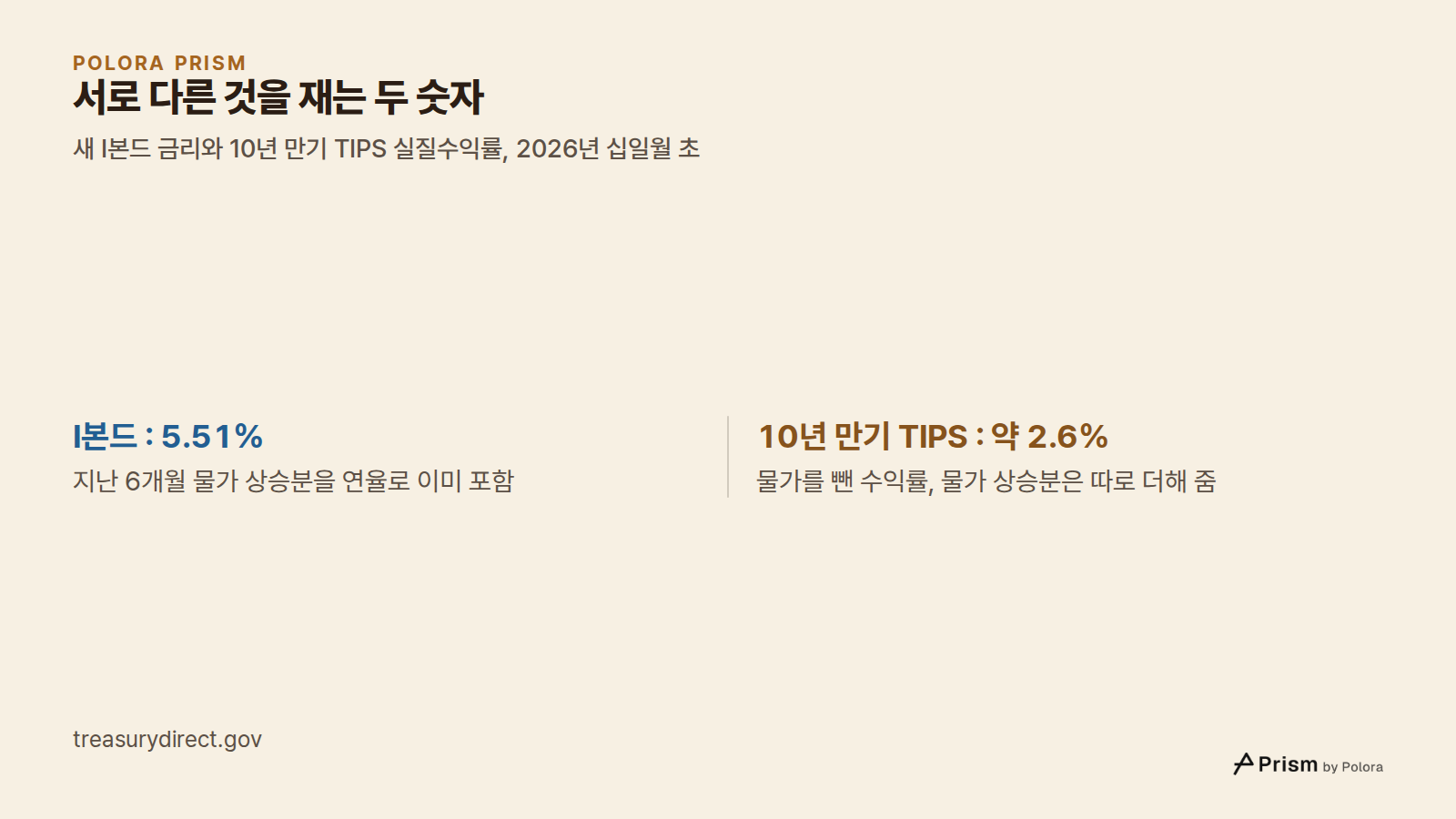
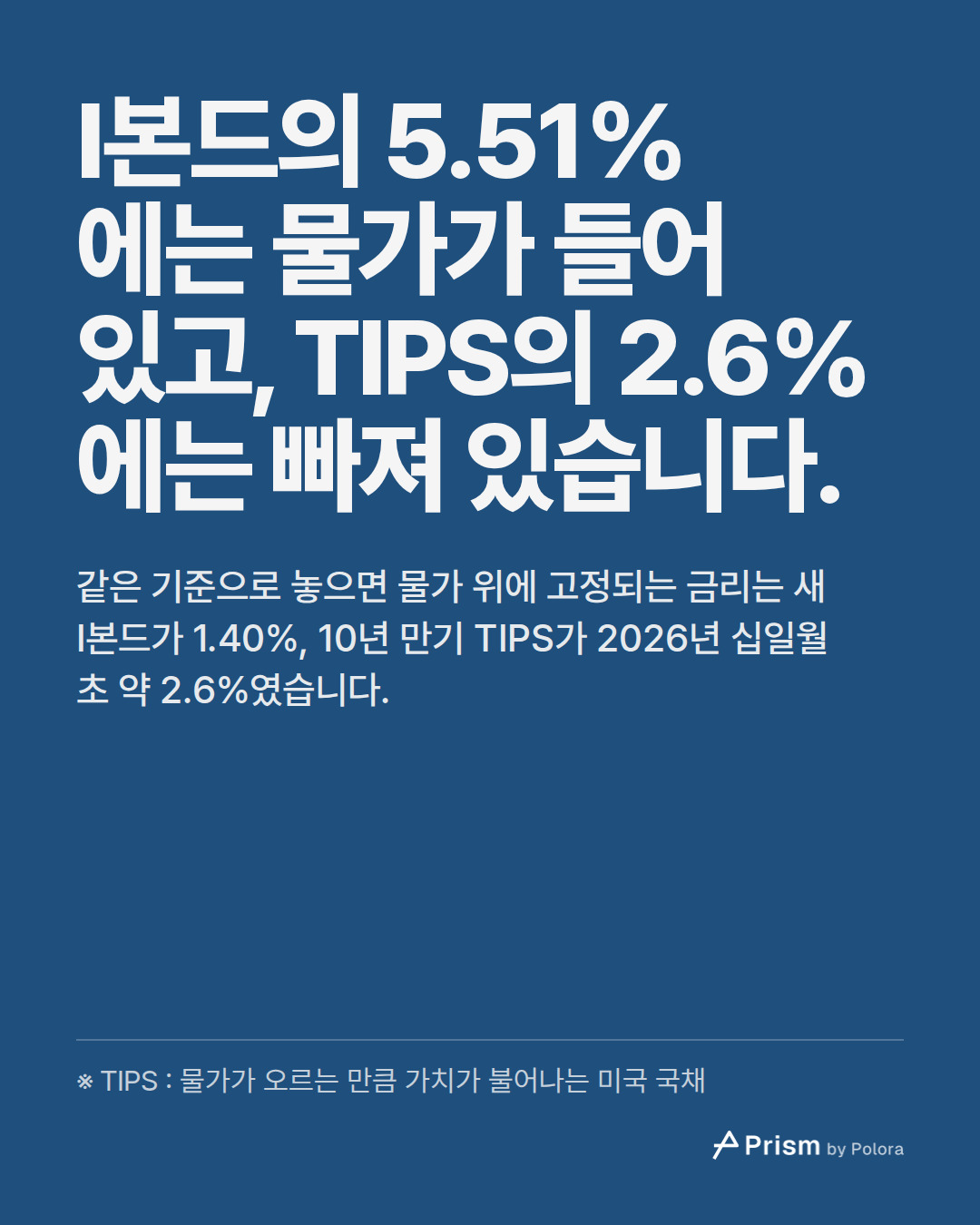
I본드의 5.51%에는 6개월치 물가가 들어 있고, TIPS의 2.6%는 물가를 뺀 수익률이기 때문입니다. 같은 기준으로 놓으면 새 I본드가 물가 위에 고정하는 금리는 1.40%이고, 10년 만기 TIPS의 실질수익률은 2026년 십일월 초 약 2.6%였습니다.
2026-11-25
서로 다른 것을 재는 두 숫자
미국 정부가 개인에게 파는 저축채권인 I본드는 지금 연 5.51%를 줍니다. 물가가 오르는 만큼 가치가 불어나는 미국 국채인 TIPS는 10년 만기 기준으로 2026년 십일월 초 실질수익률이 약 2.6%였습니다. 한 숫자가 다른 숫자의 두 배인데, 물가 위에 더 얹어 주는 쪽은 오히려 작은 숫자입니다.
두 숫자가 같은 종류의 숫자가 아니기 때문입니다. 5.51%에는 물가 상승분이 이미 들어 있고, 그것도 앞으로 6개월치뿐입니다. 2.6%에는 물가가 전혀 들어 있지 않습니다. 물가 상승분은 채권이 그 위에 따로 더해 주기 때문입니다. 둘을 비교하려면 앞의 숫자에서 물가를 빼거나, 뒤의 숫자에 물가를 더해야 합니다.
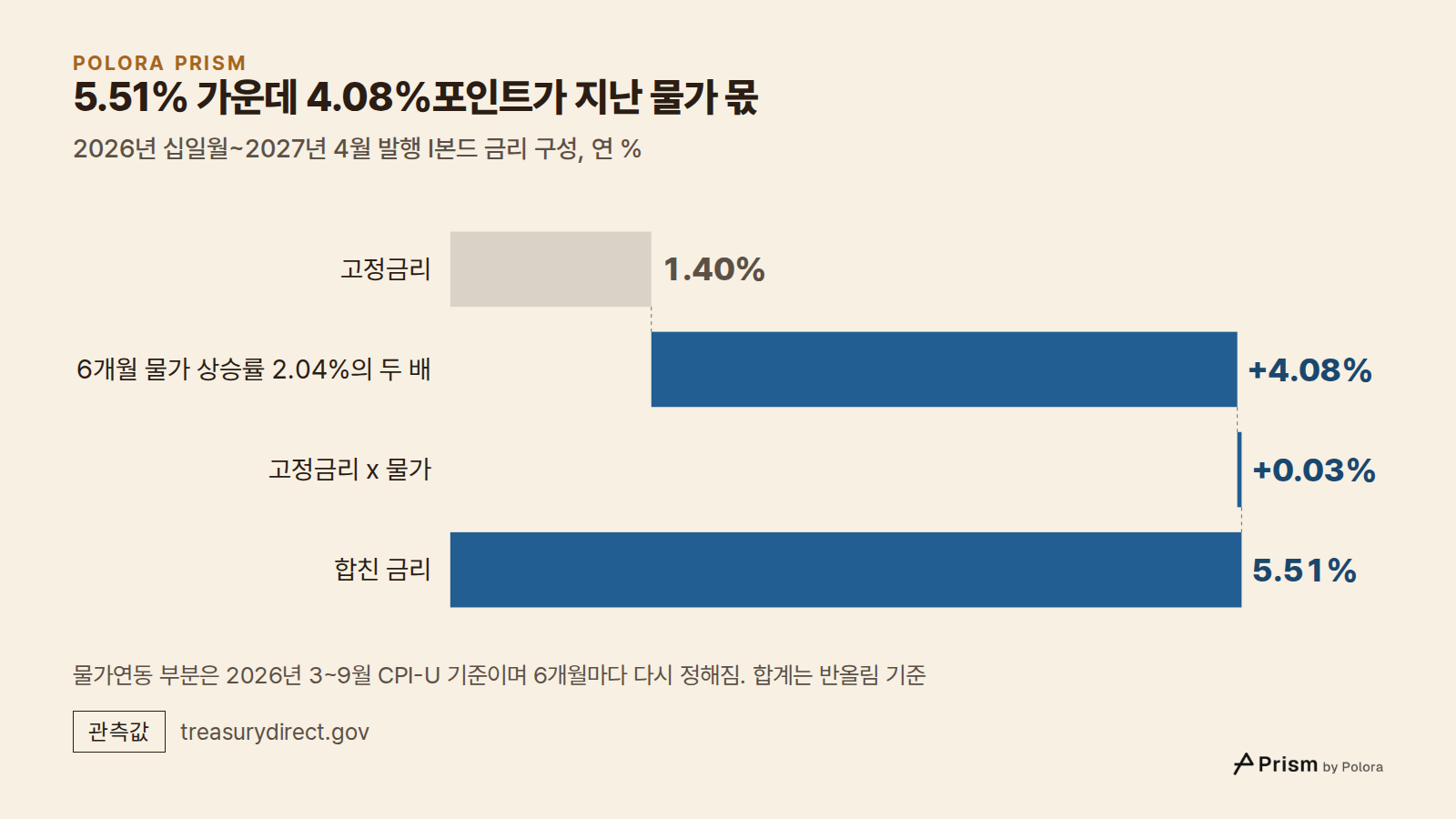
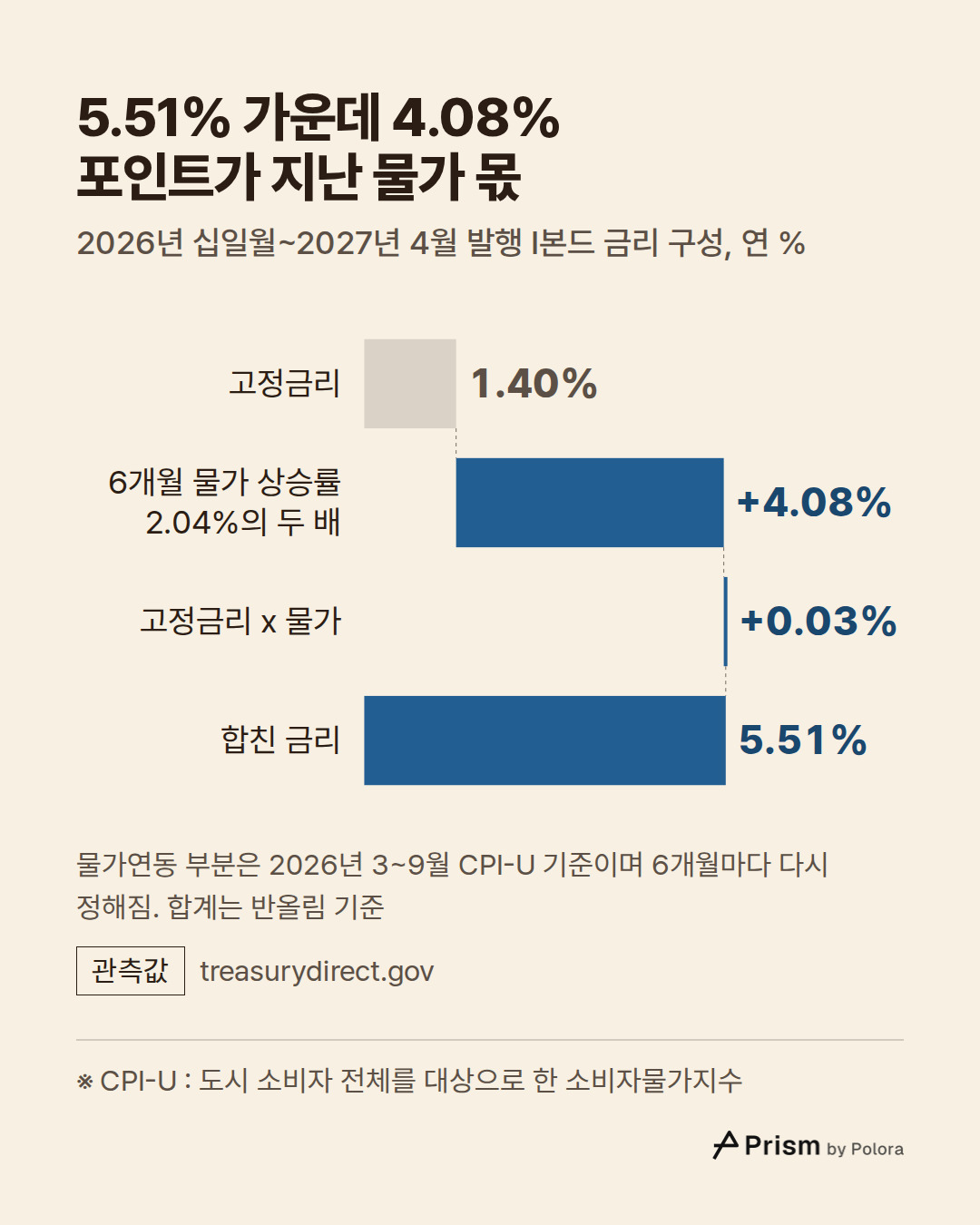
미국 재무부는 I본드 금리를 두 부분으로 만듭니다. 2026년 십일월 1일부터 2027년 4월 30일까지 발행되는 I본드는 고정금리가 1.40%, 물가연동 금리가 2.04%입니다. 재무부의 채권 판매 사이트 TreasuryDirect는 이 둘을 한 공식으로 합칩니다 : 고정금리 + (2 x 6개월 물가 상승률) + (고정금리 x 6개월 물가 상승률).
2.04%는 2026년 3월부터 9월까지 6개월 동안 미국 소비자물가가 오른 폭입니다. 도시 소비자 전체를 대상으로 한 소비자물가지수(CPI-U)로 잽니다. 반년치이므로 공식은 이를 두 배로 늘려 연 4.08%로 바꿉니다. 마지막 항인 1.40% x 2.04%는 약 0.03%를 더합니다. 합치면 1.40% + 4.08% + 0.03% = 5.51%입니다(반올림 기준).
결국 5.51% 가운데 4.08%포인트 남짓은 이미 지나간 물가 상승을 앞으로 6개월 동안 저축자에게 돌려주는 몫입니다.
고정금리는 채권이 발행될 때 정해지고, 만기 30년 동안 바뀌지 않습니다. 물가연동 부분은 최신 CPI-U 수치에 따라 6개월마다 다시 정해지며, 그 주기는 채권마다 발행된 달에서 시작합니다. 십일월에 발행된 채권이라면 매년 5월 1일과 십일월 1일에 새 금리가 적용됩니다.
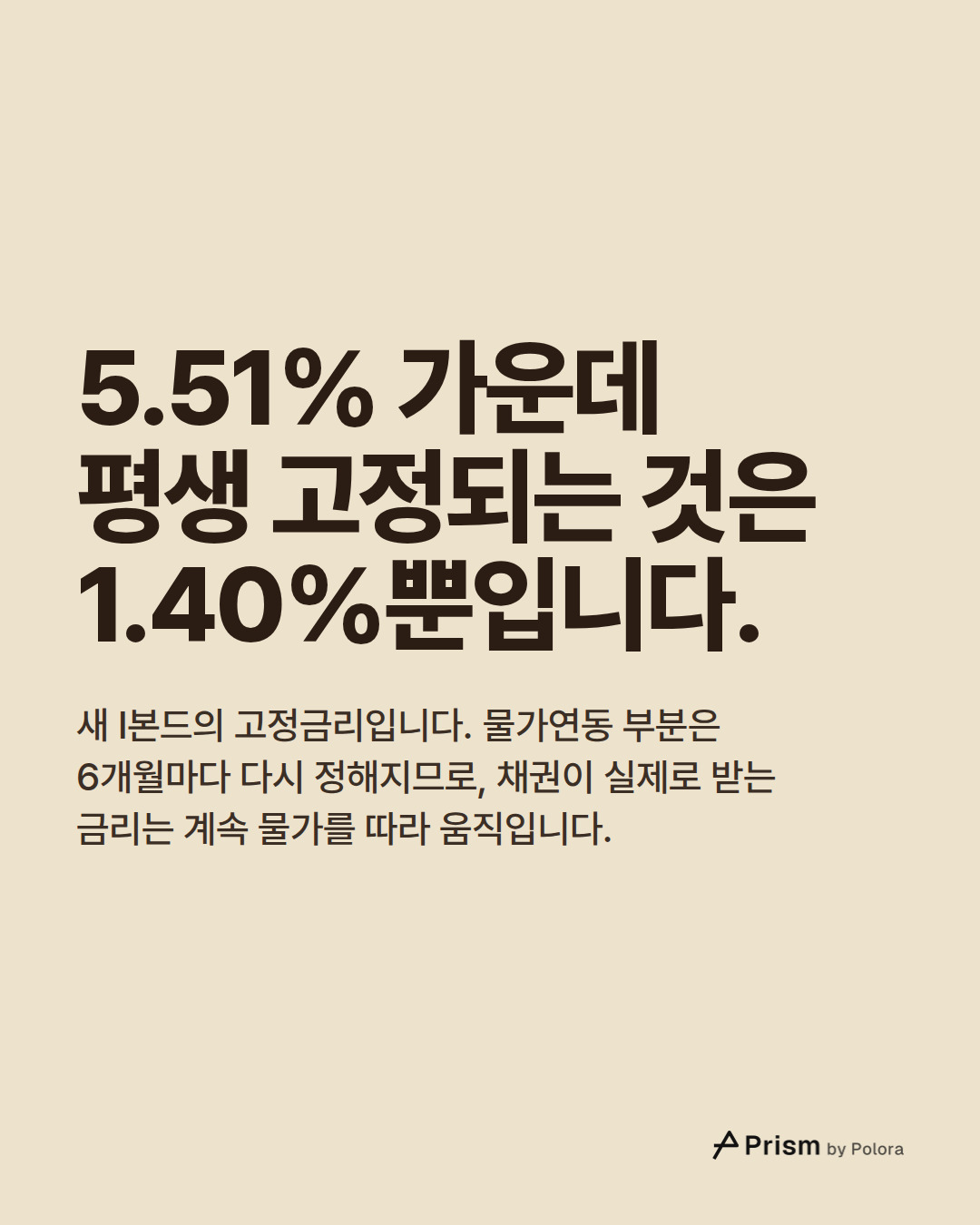
그러니 이 기간에 사는 사람이 최대 30년 동안 쥐고 가는 것은 5.51%가 아니라 고정금리 1.40%입니다. 채권이 실제로 받는 금리는 계속 물가를 따라 움직입니다. 물가 상승이 느려지면 금리가 내려가고, 빨라지면 올라갑니다. 바닥도 있습니다. 재무부는 물가가 떨어져도 합친 금리가 0% 아래로 내려가지 않게 해 두었습니다.
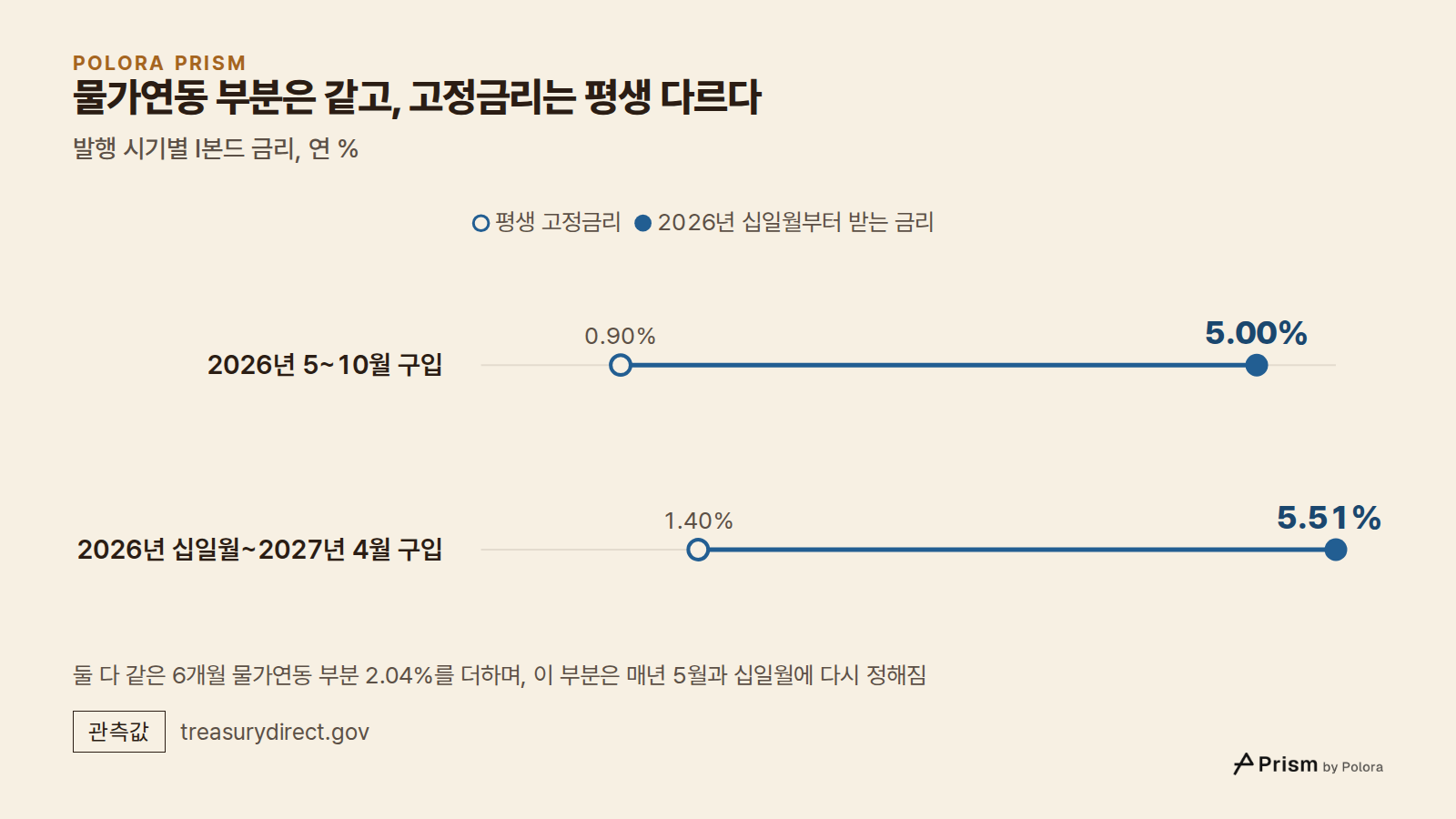
고정금리는 사는 사람이 아니라 채권에 붙습니다. 2026년 5월부터 10월까지 산 채권은 평생 0.90%의 고정금리를 갖습니다. 이 채권들은 십일월부터 5.00%를 받습니다. 같은 2.04%의 물가연동 부분에 자기의 더 낮은 고정금리가 더해진 결과입니다. 일부 금리 안내 사이트에 보이는 5.00%는 이 예전 채권의 금리이지, 새 채권의 금리가 아닙니다.
TIPS는 미국 재무부가 발행하는 물가연동국채(Treasury Inflation-Protected Securities)입니다. 원금이 CPI-U를 따라 물가가 오르면 늘고 물가가 내리면 줄며, 이자는 그렇게 조정된 원금에 대해 1년에 두 번 나옵니다. 시장에서 부르는 수익률은 실질수익률입니다. 그날 가격에 사서 만기까지 들고 있는 사람이 물가 위에 얻는 수익률이라는 뜻입니다.
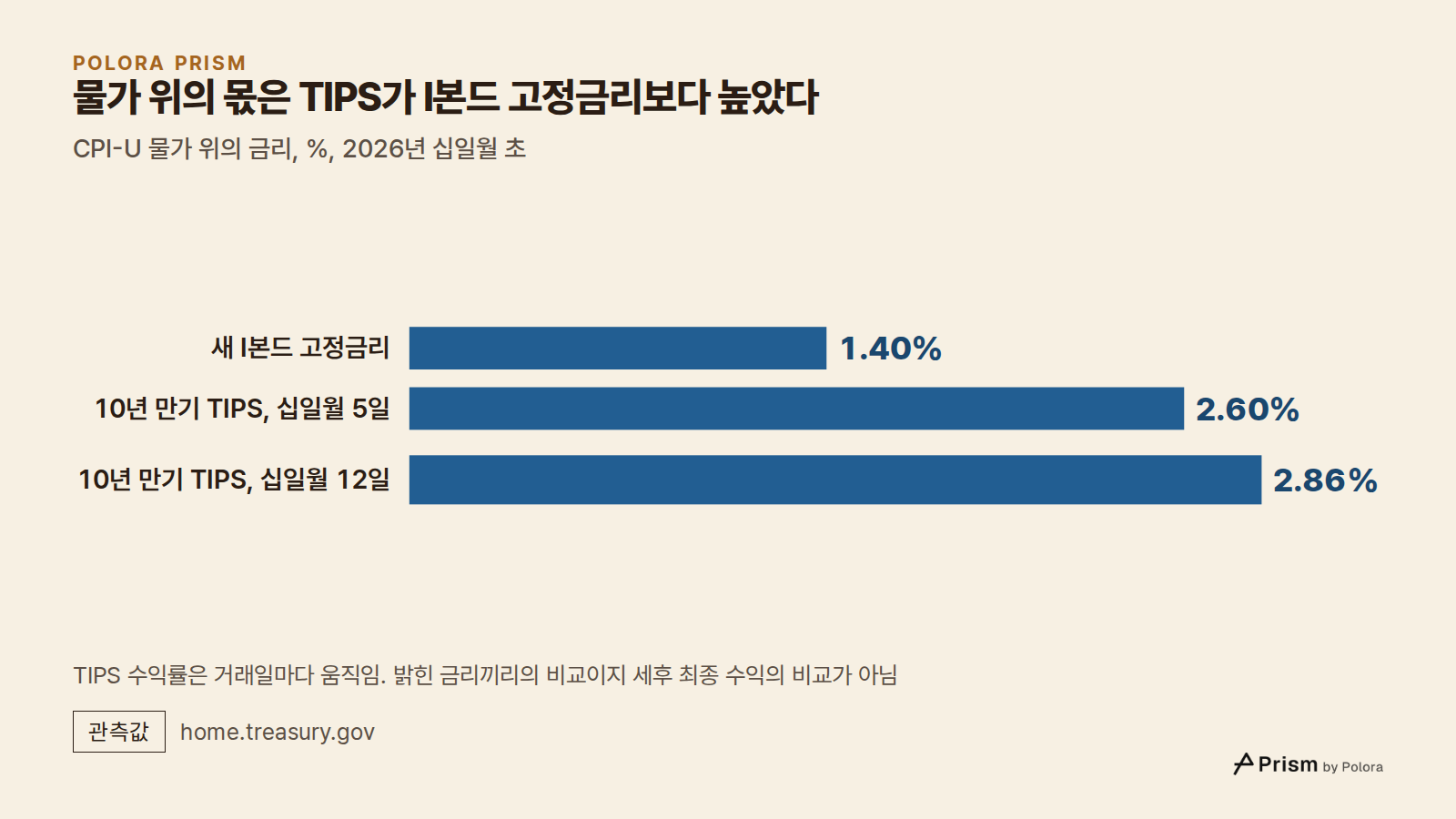
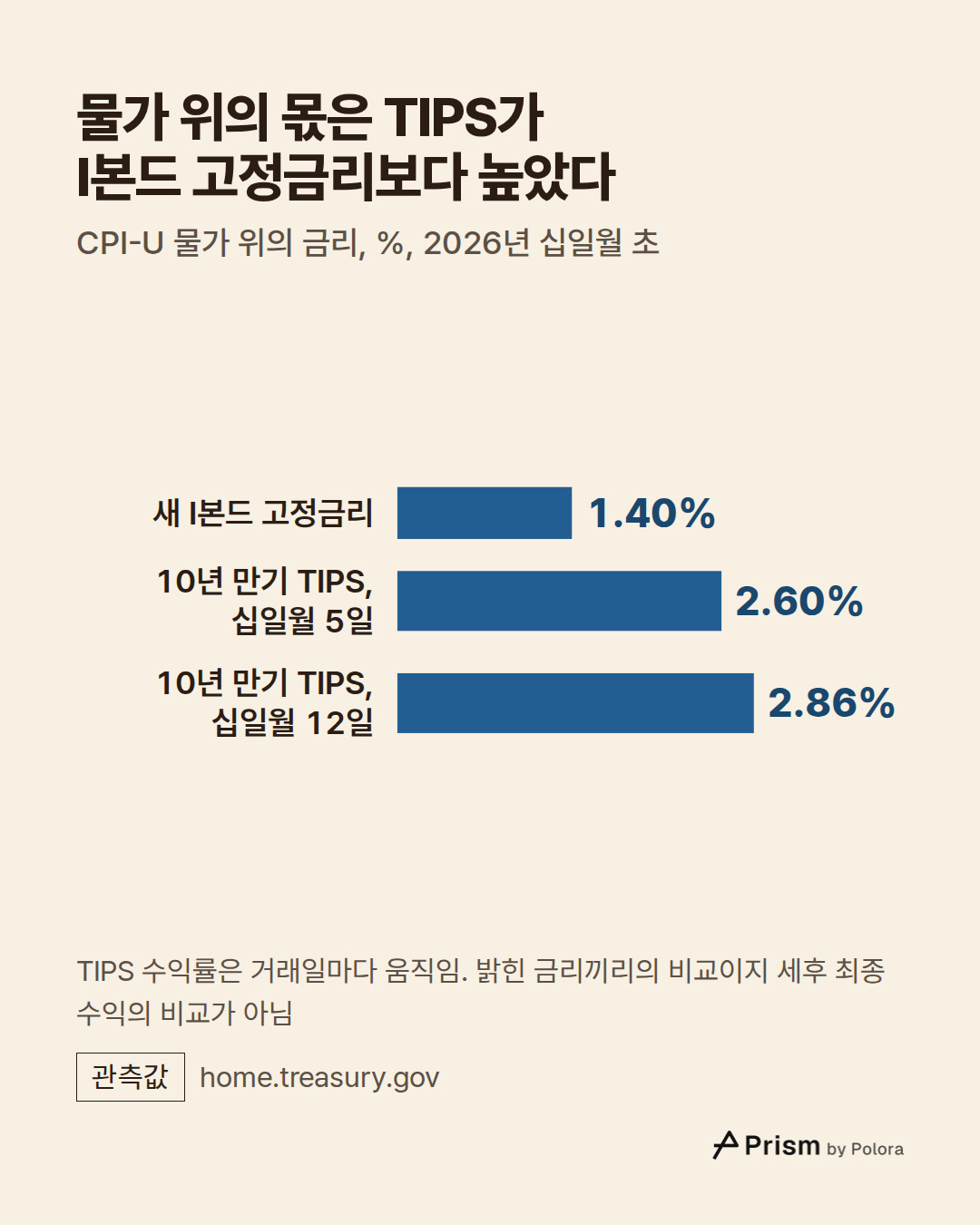
재무부의 일별 실질수익률 곡선과, 같은 수치를 DFII10이라는 이름으로 싣는 미국 연방준비제도의 데이터베이스 FRED에 따르면, 10년 만기 수치는 2026년 십일월 5일 2.60%, 9일 2.66%, 12일 2.86%였습니다. 이 숫자는 거래일마다 움직입니다. 특정 채권 하나의 호가가 아니라 10년 만기 시장의 수준을 읽은 값이고, 나중에 사는 사람은 그날의 수익률을 얻습니다.
같은 종류의 숫자끼리 나란히 놓으면, 새 I본드의 고정금리 1.40%와 그 무렵 10년 만기 TIPS 실질수익률 약 2.6~2.9%를 견주게 됩니다. 둘 다 CPI-U로 잰 물가 상승분을 그 위에 더합니다. 이 비교는 물가 위에 얹어 주겠다고 밝힌 금리끼리의 비교이지, 각 보유자가 결국 손에 쥐는 수익의 비교가 아닙니다. I본드의 합친 금리는 물가가 떨어져도 0% 아래로 가지 않고, TIPS는 만기 전에 팔면 산 값보다 덜 받을 수 있으며, 세금과 보유 기간도 다릅니다. 그래서 이 비교로 세후 최종 수익의 순위를 매길 수는 없습니다.
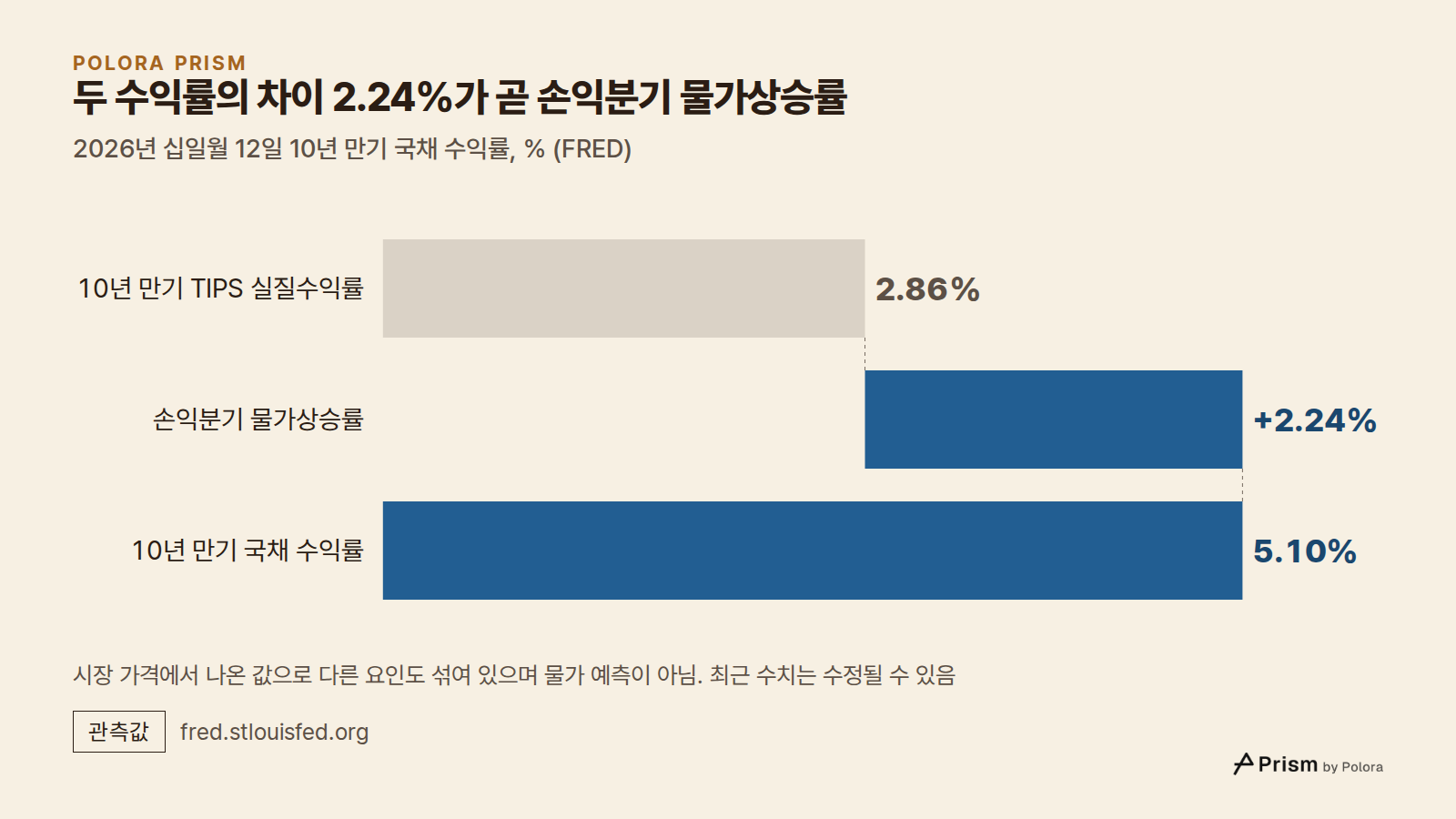
일반 10년 만기 국채 수익률과 10년 만기 TIPS 수익률의 차이를 손익분기 물가상승률(브레이크이븐 인플레이션)이라고 부릅니다. FRED에 따르면 2026년 십일월 12일 10년 만기 국채 수익률은 5.10%, 10년 만기 TIPS는 2.86%로, 손익분기 물가상승률은 2.24%였습니다. 최근 일별 수치는 나중에 수정될 수 있습니다.
이 숫자는 대략 이런 뜻입니다. 앞으로 10년 동안 물가가 평균 이 정도로 오르면 두 채권이 비슷하게 벌어 준다는 것입니다. 그날의 시장 가격에서 나온 값이고 그 가격에는 다른 요인도 섞여 있으므로, 물가가 2.24%가 되리라는 예측도 아니고 두 채권의 수익이 정확히 같아지는 지점도 아닙니다. I본드의 현재 물가연동 부분 4.08%를 10년짜리 금리로 읽으면 안 되는 이유도 여기서 보입니다. 4.08%는 지난 6개월만 반영한 숫자입니다.
I본드는 사회보장번호(미국의 개인 식별번호) 하나당 한 해에 최대 10,000달러어치까지만 살 수 있습니다. 2025년 1월 1일부터는 전자 방식으로만 팔기 때문에, 세금 환급금으로 종이 채권을 추가로 사던 예전 방법은 막혔습니다.
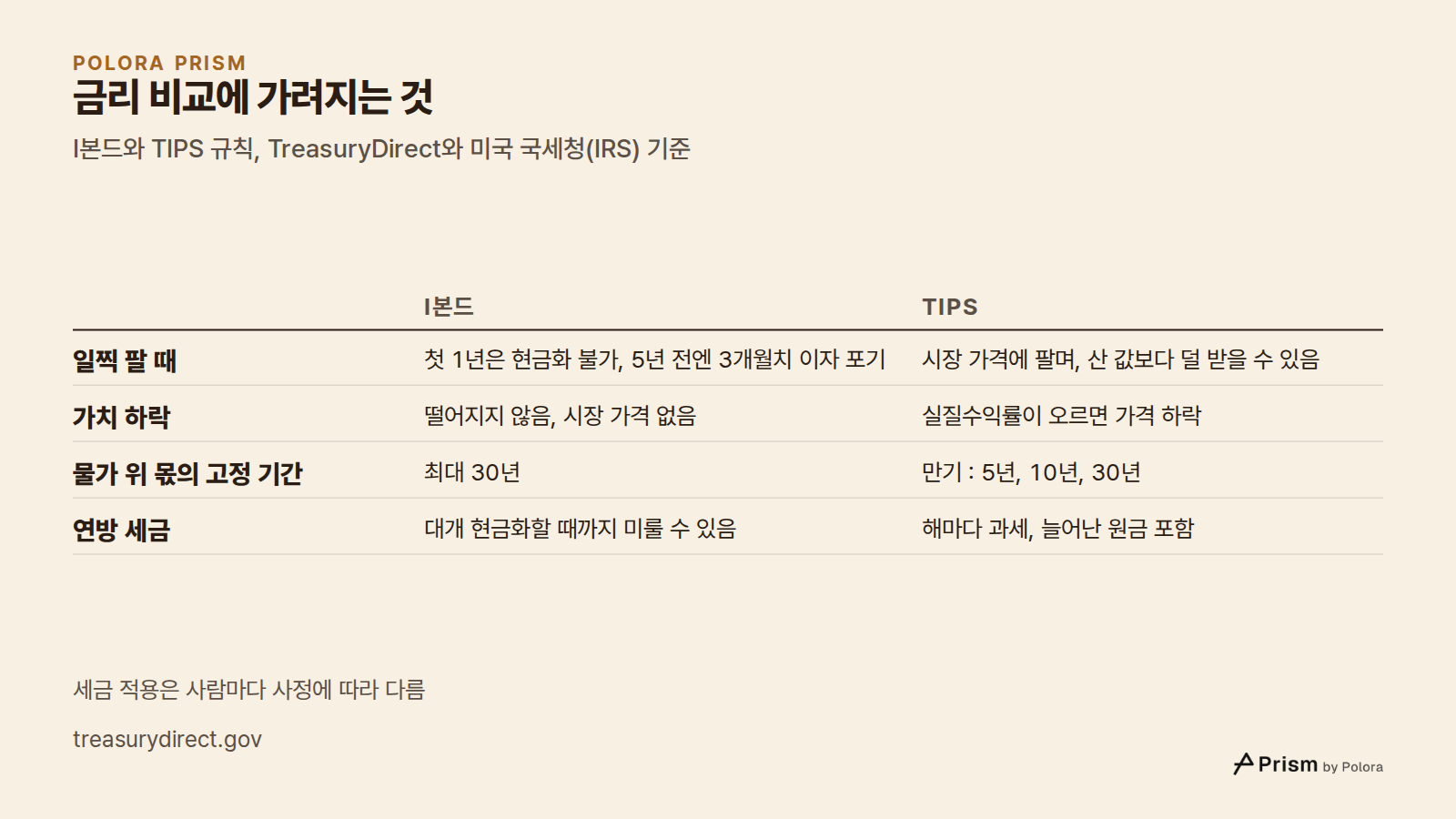
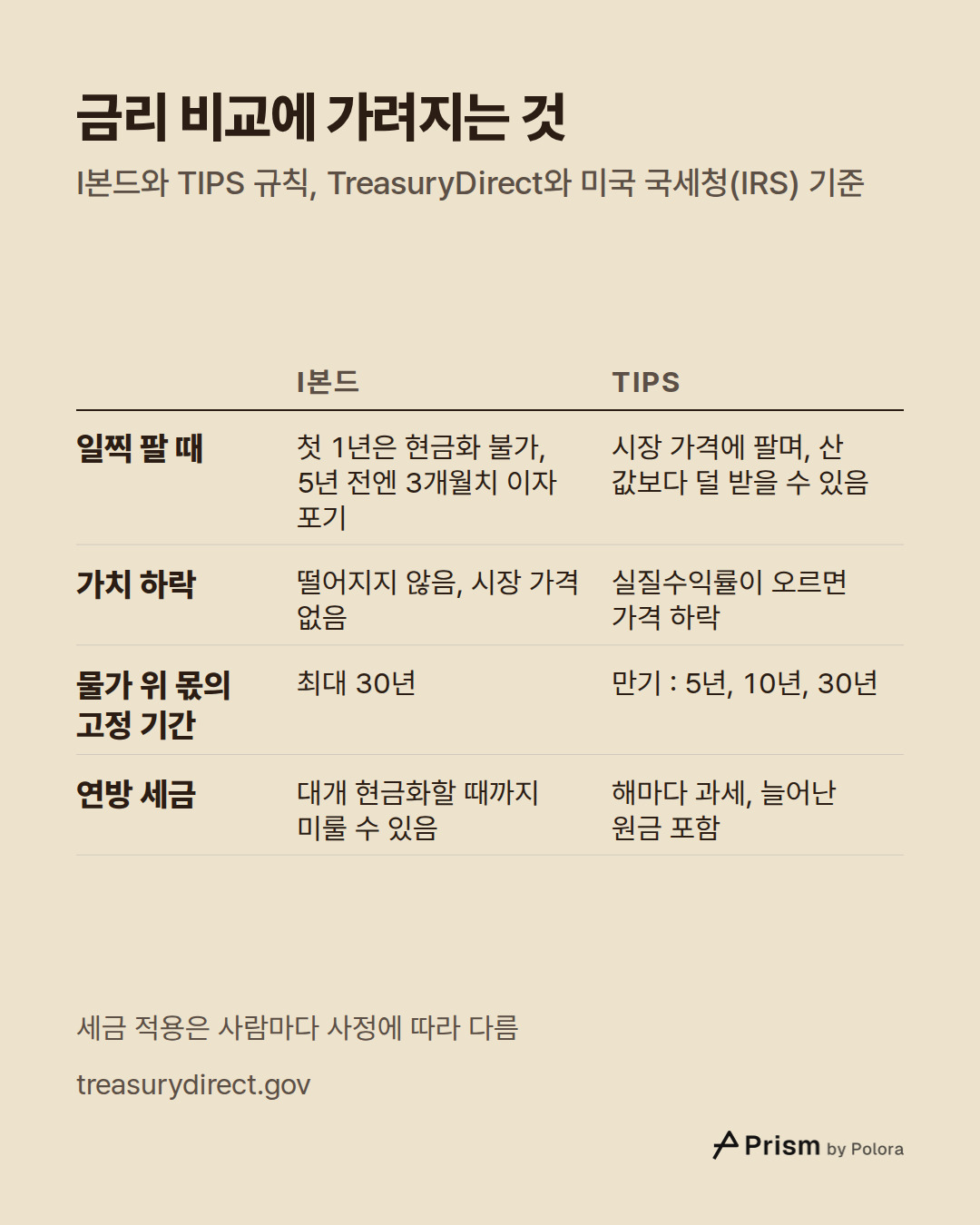
I본드는 처음 1년 동안은 아예 현금으로 바꿀 수 없습니다. 5년이 되기 전에 바꾸면 마지막 3개월치 이자를 포기해야 합니다. 대신 가치가 떨어지지 않습니다. 시장 가격이라는 것이 없고, 1년이 지나면 언제든 그때까지 쌓인 가치로 돌려받을 수 있습니다.
이자에는 미국 연방 소득세가 붙지만 주와 지방 소득세는 붙지 않으며, 연방 세금은 대개 채권을 현금으로 바꾸거나 만기가 될 때까지 미룰 수 있습니다. 경우에 따라 요건을 갖춘 고등교육비에 쓴 이자는 세금이 면제될 수 있습니다. 실제로 어떻게 적용되는지는 사람마다의 신고 방식과 사정에 달려 있습니다.
TIPS의 실질수익률은 그 가격에 사서 만기까지 들고 있는 사람에게만 고정됩니다. TIPS는 시장에서 거래되고, 가격은 금리를 따라 움직입니다. 10년 만기 TIPS 수익률은 2026년 십일월 한 주 사이에 2.60%에서 2.86%로 올랐습니다. 실질수익률이 오르면 이미 나와 있는 TIPS의 가격은 떨어지므로, 일찍 파는 보유자는 산 값보다 덜 돌려받을 수 있습니다.
만기가 되면 TIPS는 물가가 떨어졌더라도 최소한 처음 원금은 돌려줍니다. TreasuryDirect는 TIPS를 5년, 10년, 30년 만기로 팝니다. 그러니 10년 만기 TIPS는 물가 위의 몫을 10년 동안 고정하고, I본드의 고정금리는 최대 30년까지 이어질 수 있습니다.
세금도 다릅니다. TIPS 이자는 주와 지방 소득세가 면제되지만 연방 세금은 해마다 붙고, 해마다 늘어난 원금도 연방 과세 소득으로 잡힐 수 있습니다. 그 돈은 만기가 되거나 팔 때까지 손에 들어오지 않는데도 그렇습니다. 자세한 내용은 사람마다의 사정에 따라 다릅니다.
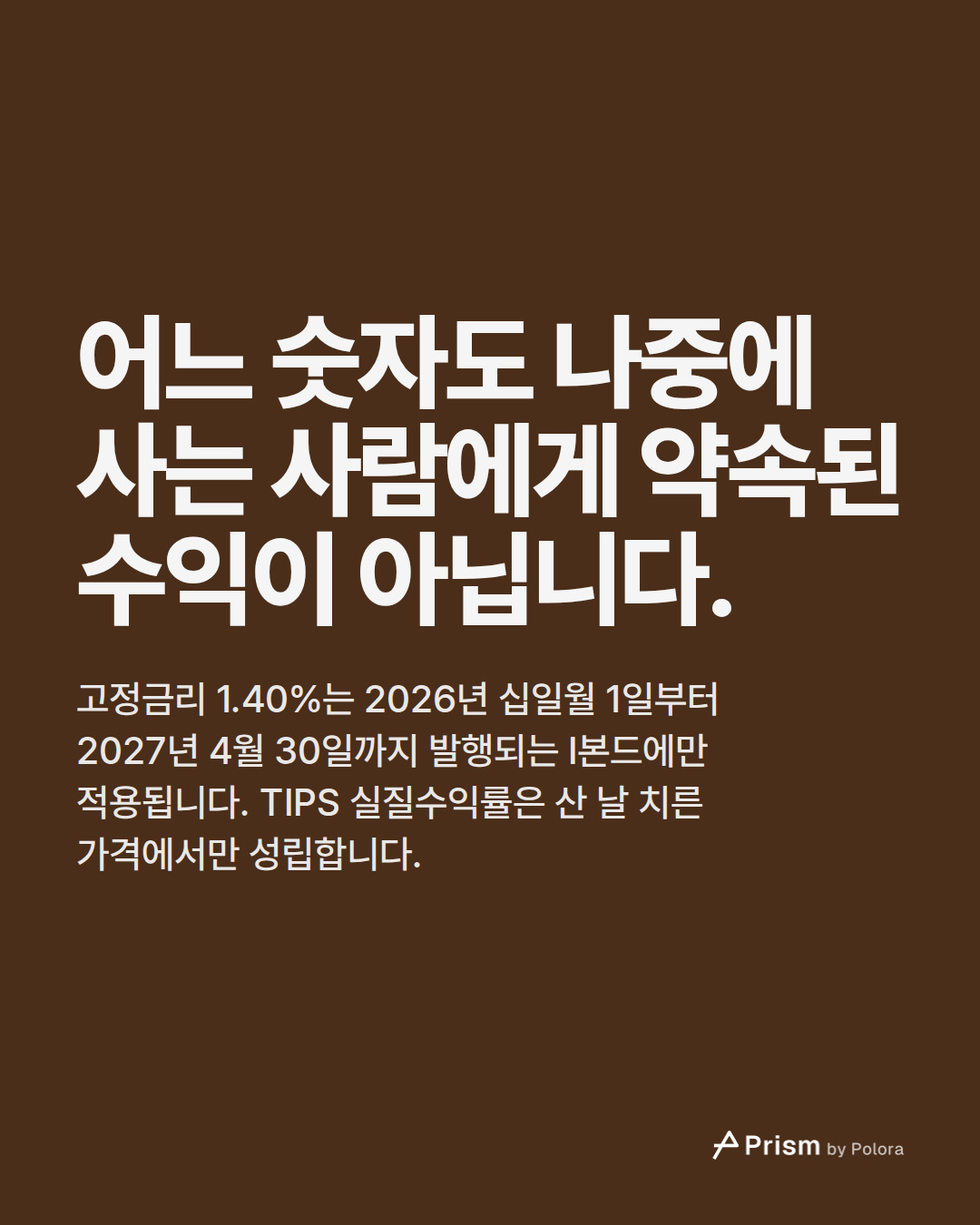
고정금리 1.40%는 2026년 십일월 1일부터 2027년 4월 30일까지 발행되는 I본드에만 적용됩니다. 재무부의 5월과 십일월 주기에 따라, 2027년 5월 1일부터 발행되는 채권에는 새 고정금리가 적용됩니다. TIPS 실질수익률은 산 날 치른 가격에서만 성립합니다. 어느 숫자도 나중에 사는 사람에게 약속된 수익이 아니고, 둘 중 어느 쪽이 특정한 사람에게 맞는지도 말해 주지 않습니다.
점심 자리에서 다시 꺼낼 만한 이야기는 더 단순합니다. 5.51%는 평생 가는 부분과 6개월치 물가가 섞인 숫자이고, 2026년 십일월 초 10년 만기 TIPS에 붙은 약 2.6%의 실질수익률과 견줄 수 있는 것은 평생 가는 부분인 1.40%뿐입니다. 이것은 물가 위에 얹힌다고 밝힌 두 금리를 견준 것이지, 각자가 결국 손에 쥘 몫을 견준 것은 아닙니다.
Why does an I bond paying 5.51% lock in less than a TIPS yielding 2.6%?
Alpha · deepseek-v4-pro
The apparent paradox comes from comparing two numbers that measure different things.
The I bond's 5.51% is a composite annual rate, built from two parts:
- a fixed rate of 1.40%, set at purchase and locked for the bond's life, and
- a six-month inflation adjustment of 2.04%, annualized by doubling it.
So roughly:
1.40% + 2 × 2.04% + a small cross-term ≈ 5.51%
Of that, only the 1.40% is actually locked in. The inflation component resets every six months. If inflation is lower over the next six months, the composite rate falls; if it is higher, the rate rises. The 5.51% is not a promise for 30 years — it is mostly a look back at inflation that already happened, paid forward for six months.
The TIPS 2.6%, by contrast, is a real yield: the return *above* CPI-U inflation for someone who buys at today's market price and holds to maturity. Inflation is added on top of it, not already baked into the headline number.
Put side by side as the same kind of number:
- new I bond: about 1.40% above future inflation
- 10-year TIPS bought near 2.6%: about 2.6% above future inflation
That is why the instrument with the smaller headline yield locks in the larg…
Beta · gpt-6-sol
Alpha has the central comparison right, but I would narrow the word “guarantees.” Treasury lists the November 2026 I bond’s 5.51% as a composite rate: 1.40% fixed for the bond’s life, plus a 2.04% *six-month* inflation figure incorporated into the current rate. The composite resets every six months; it is not 5.51% locked in for 30 years. Treasury’s formula confirms the arithmetic. (treasurydirect.gov)
A TIPS yield near 2.6% is instead a yield above inflation at a particular purchase price, if the security is held to maturity. There is an important precision issue in the manuscript: FRED’s DFII10 is a *10-year constant-maturity market yield*, not an offer to buy one identified bond at exactly that yield. FRED records 2.86% on November 12, 2026 and 2.89% on November 17; the manuscript should keep “about 2.6%” anchored to its early-November date, not present it as today’s purchasable rate. (fred.stlouisfed.org)
The strongest objection to the manuscript’s angle is its claim that, “whatever inflation turns out to be,” a TIPS holder earns the…
Gamma · gemini-3.1-pro
Alpha and Beta have thoroughly covered the core mechanics and the real-yield comparison. I will clear the remaining specific fact-checks the editor asked for, based on live search results.
1. The CPI-U index levels and the 2.04% calculation
The manuscript’s index numbers are correct. The Consumer Price Index for All Urban Consumers (CPI-U, not seasonally adjusted) was indeed 330.213 in March 2026 and rose to 336.940 in September 2026.
*Arithmetic:* 336.940 ÷ 330.213 - 1 = 2.037%, which Treasury rounds to the 2.04% six-month inflation rate.
*Source:* BLS CPI-U data (series CUUR0000SA0), widely cited on financial tracking sites like cpichart.com and tipswatch.com.
2. The 5.00% rate on older I bonds
The manuscript claims bonds bought from May to October 2026 carry a 0.90% fixed rate and now earn 5.00%. This is accurate.
*Arithmetic:* 0.0090 fixed + (2 × 0.0204 inflation) + (0.0090 × 0.0204) = 0.04998, which rounds to 5.00%.
*Source:* TreasuryDirect's historical fixed rate tables confirm the 0.90% fixed rate for that May-October 2026 window.
3. "Roughly three quarters" of the 5.51% is inflation
The manuscript's interpretive arithmetic holds up. The annualized inflatio…
Researcher · gpt-6-luna
The central explanation is sound, and the key market-rate figures can be checked against Treasury’s own daily series. But one important distinction needs tightening: the comparison is between the I bond’s fixed-rate component and the TIPS market’s quoted real yield—not a guarantee that every investor’s eventual return will rank the same way.
- I bond rate: TreasuryDirect explains that the composite rate combines a fixed rate with an inflation rate that changes every six months. Its current page has not yet been updated to confirm the manuscript’s stated November 2026 rates of 1.40% fixed and 5.51% composite, so I could not independently verify those particular announced figures from that page this turn. The formula and reset mechanism are documented there. TreasuryDirect: I bond interest rates (treasurydirect.gov)
- CPI figures: BLS’s September 2026 release confirms the September CPI-U index level of 336.940; its historical table shows 330.213 for March. Those levels imply a…
The Arbiter · gpt-6-sol
The debaters agree on the distinction the reader needs: 5.51% is an I bond’s current composite rate, while 2.6% is a dated TIPS real-yield quote. Their substantive disagreement is about how far the manuscript can take that comparison. Beta and the Researcher caution that comparing the two locked-in *rate components* does not establish which investment will produce the higher eventual after-tax return.
One source gap in the discussion is now closed. TreasuryDirect’s page, read this turn, explicitly lists 5.51% for I bonds issued November 2026–April 2027, comprising 1.40% fixed and 2.04% semiannual inflation. It also lists 0.90% fixed for May–October 2026 issues and 5.00% as their rate for the six-month earning period beginning November 2026. That is stronger support than the snippets cited earlier; the earlier report that TreasuryDirect had not yet updated should not carry forward. (treasurydirect.gov)
Two wording points remain for the verdict. TreasuryDirect says an individual I bond’s rate changes every six months from its issue month, rather than every May 1 and November…
The Arbiter's Final Verdict · gpt-6-sol
Verdict
The manuscript’s premise stands. The 5.51% is a new I bond’s *current composite rate*: it combines a 1.40% fixed rate, which stays with that bond for its life, with an inflation component that changes every six months. The 2.6% is a *real-yield quote* for 10-year TIPS in early November 2026: it measures yield above inflation, at the relevant market price, if held to maturity. Thus the like-for-like comparison is 1.40% fixed on the I bond versus about 2.6% real yield on the TIPS, not 5.51% versus 2.6%. The smaller headline number describes the larger stated margin above inflation.
What the checks support—and what needs changing
- I bond figures and arithmetic: TreasuryDirect lists 5.51% composite, 1.40% fixed, and 2.04% six-month inflation for bonds issued November 2026–April 2027. Its formula gives \(1.40\% + 2(2.04\%) + (1.40\% \times 2.04\%) \approx 5.51\%\). BLS reports the cited March and September CPI-U levels, 330.213 and 336.940; their increase rounds to 2.04%. Calling the annualized inflation portion “roughly three quarters” of 5.51% is fair arithmetic. [TreasuryDirect](https://www.treasurydirect.gov/savings-bonds/i-bonds/i-…