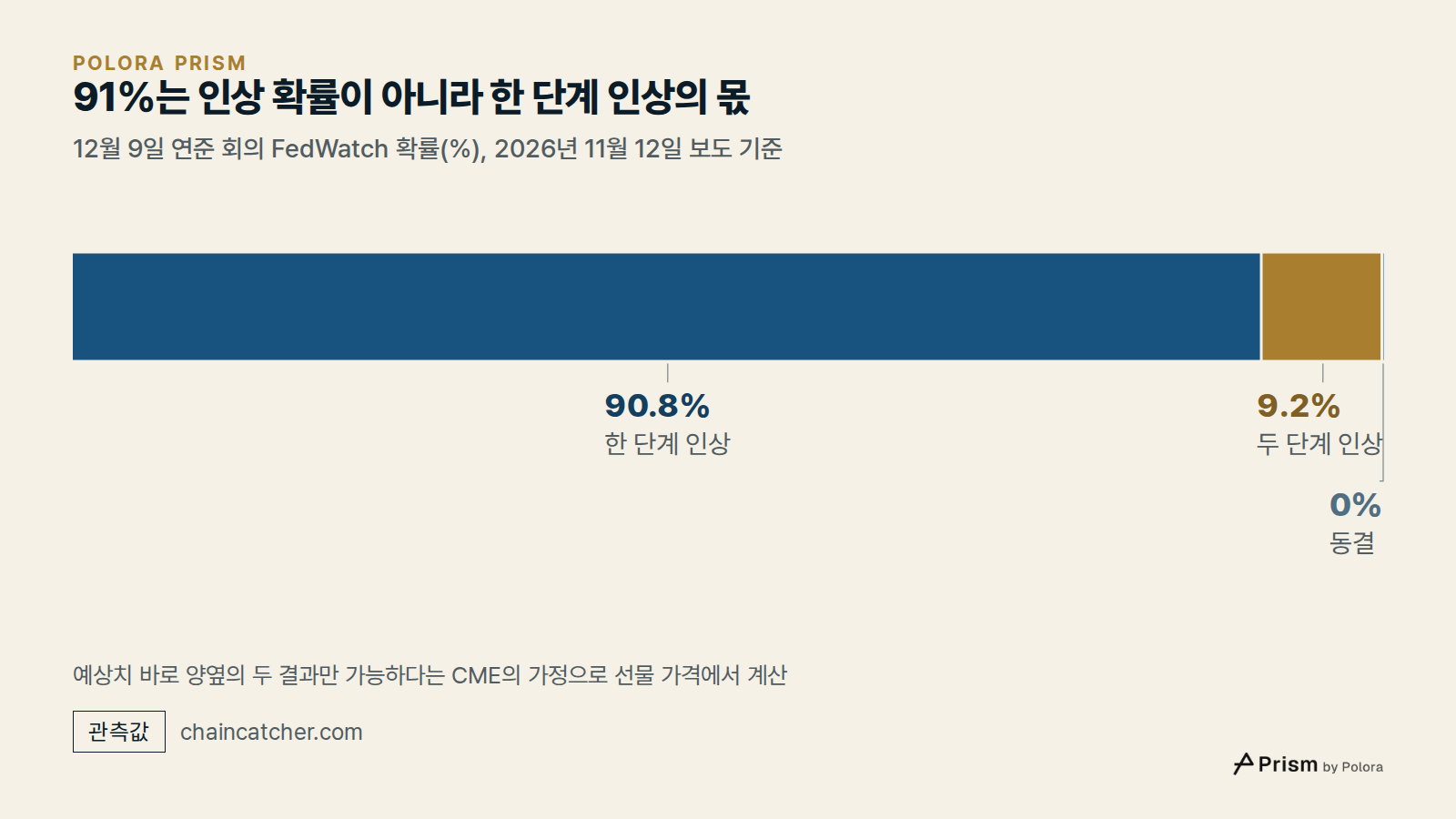
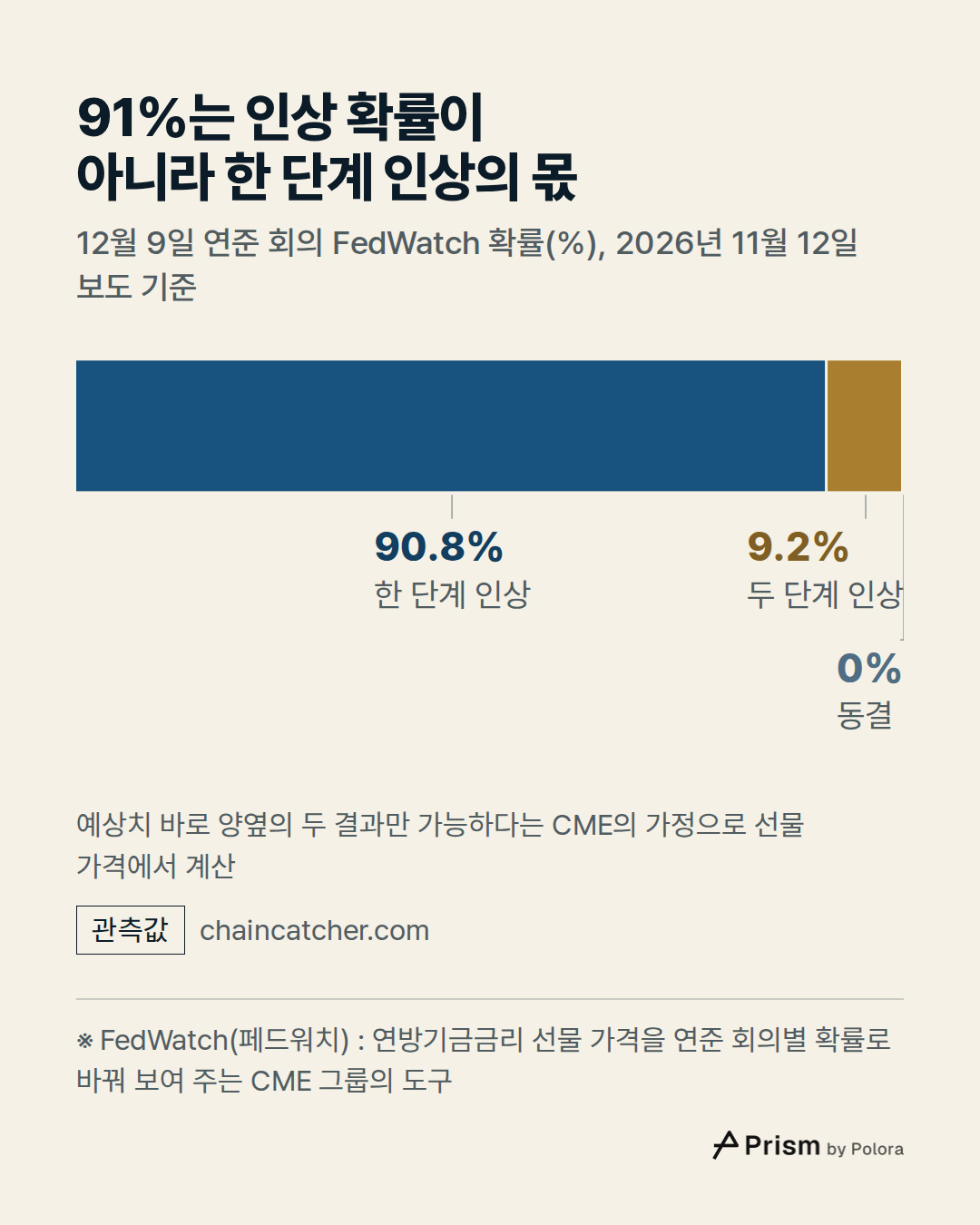
CME FedWatch의 91%는 금리를 올릴지가 아니라 얼마나 올릴지에 붙은 숫자입니다. 2026년 11월 12일 보도 기준 FedWatch는 12월에 한 단계 인상 약 91%, 두 단계 인상 9%, 동결 0%를 보였습니다. 선물 가격에 CME의 가정을 얹어 나눈 값입니다.
2026-11-22
91%는 인상 여부가 아니라 인상 폭에 관한 숫자
10월 물가 지표가 나온 뒤 며칠 동안, 시장이 12월 미국 연방준비제도(연준)의 금리 인상 가능성을 91%로 본다는 기사 제목이 이어졌습니다. 그런데 이 숫자를 낸 CME 그룹의 FedWatch(페드워치) 화면을 열어 보면 내용이 조금 다릅니다. 연준은 보통 금리를 사분의 일 퍼센트포인트씩 움직이는데, 한국 언론은 이 한 단계를 베이비스텝, 그 두 배를 빅스텝이라고 부릅니다. 2026년 11월 12일자로 보도된 FedWatch 수치는 12월 9일 회의에서 금리를 한 단계 올릴 확률을 90.8%, 두 단계 올릴 확률을 9.2%로 잡았고, 동결 확률은 0이었습니다.
그러니까 이 화면에서 91%는 금리를 올릴 확률이 아닙니다. 계산 안에서는 이미 어떤 식으로든 올린다는 쪽에 확률이 전부 실려 있었고, 91%는 두 가지 인상 폭 가운데 작은 쪽에 돌아간 몫입니다. 기사 제목 속 숫자가 늘 같은 뜻으로 쓰이지는 않으니, 그 숫자가 어떤 결과에 붙은 것인지부터 확인해야 합니다. 이 숫자가 왜 이렇게 나오는지, 무엇을 말해 주고 무엇을 말해 주지 못하는지는 그 바탕인 시장 가격을 들여다봐야 보입니다.
연준이 목표로 삼는 금리는 연방기금금리로, 은행끼리 하룻밤 돈을 빌리고 빌려줄 때 붙는 이자율입니다. 뉴욕 연준은 영업일마다 이런 하룻밤 대출의 금리를 거래량으로 가중해 중앙값을 내는데, 이것이 실효 연방기금금리입니다. 연준은 이 금리를 딱 하나의 값으로 못 박지 않고 범위를 정해 두며, 실효금리는 그 범위 안에서 움직입니다.
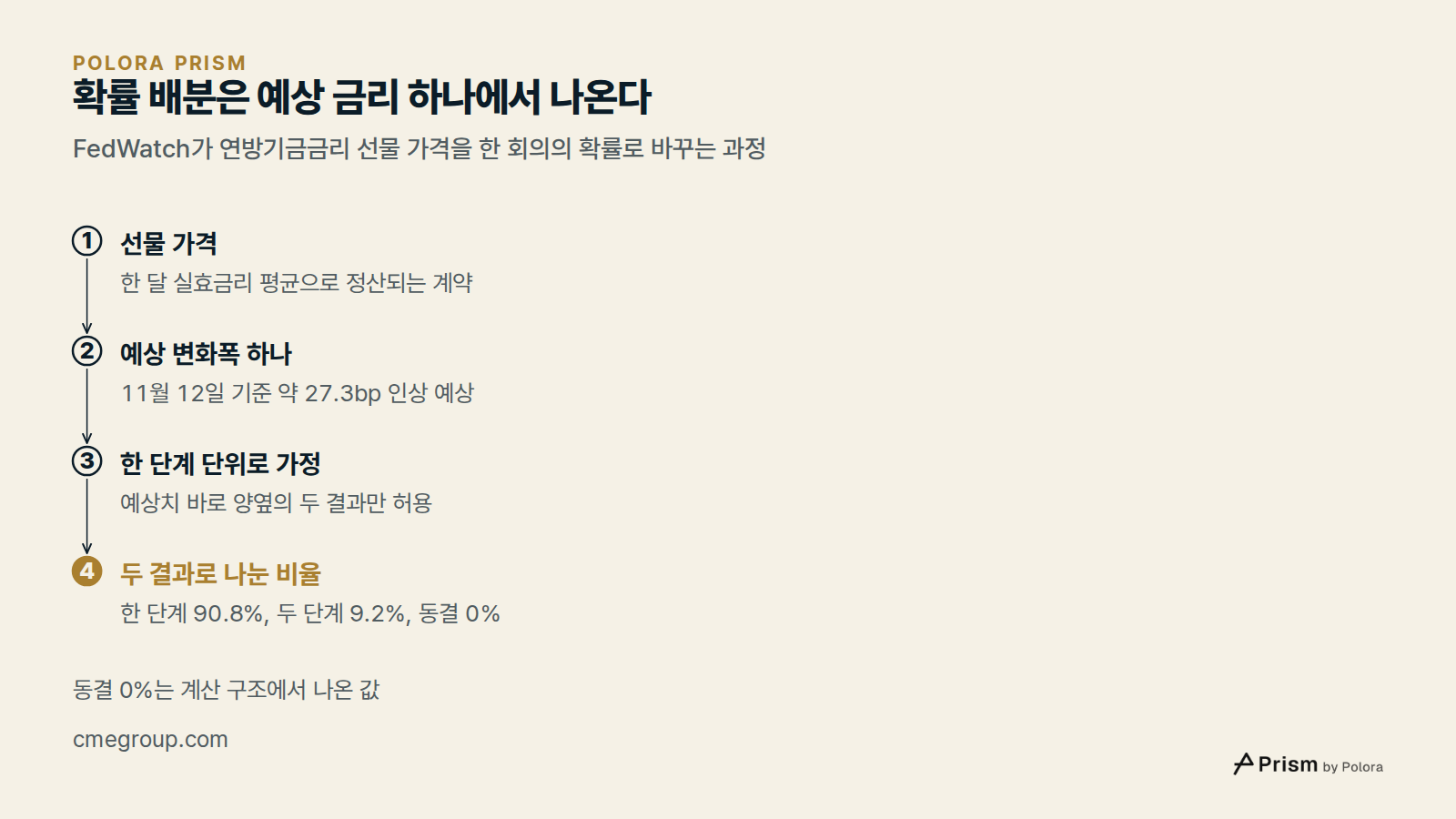
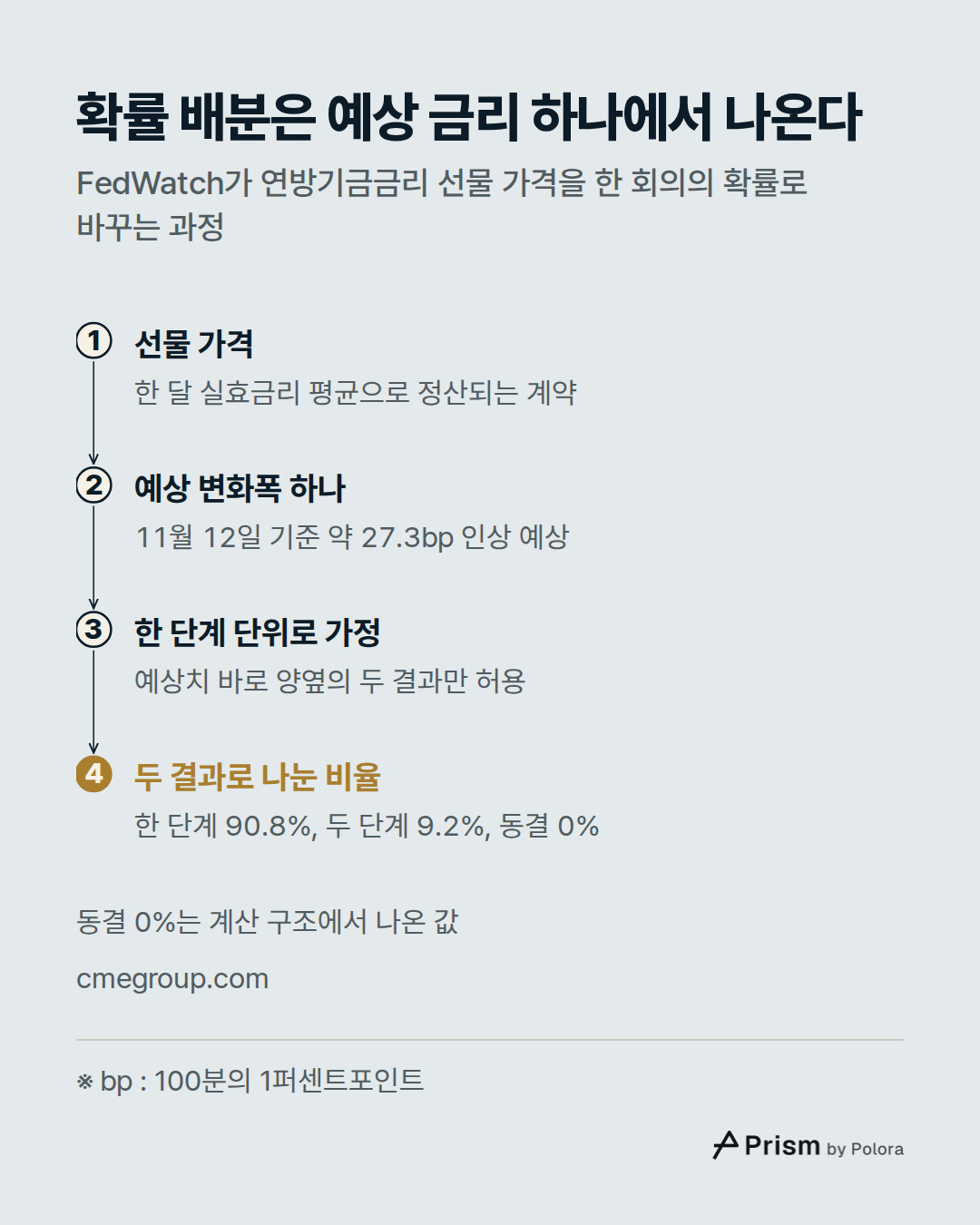
시카고상업거래소(CME)에서는 30일물 연방기금금리 선물이 거래됩니다. 한 달 동안의 실효금리 평균으로 정산되는 계약입니다. 가격은 100에서 그 평균 금리를 뺀 값으로 매겨지므로, 가격만 보면 시장이 어떤 평균 금리에 돈을 걸고 있는지 바로 알 수 있습니다. FedWatch는 연준의 금리 결정 기구인 연방공개시장위원회(FOMC)가 회의를 여는 달과 그 앞뒤 달의 선물 가격을 함께 씁니다. 이 가격들로 회의 다음 날부터 적용될 금리가 얼마로 매겨져 있는지 추정하고, 그것을 회의 전 금리와 비교합니다.
선물 가격이 회의에 대해 알려 주는 것은 숫자 하나, 곧 거래자들이 평균적으로 예상하는 금리 변화폭입니다. 그 예상에 얼마나 확신이 있는지는 알려 주지 않습니다. 이 숫자 하나를 확률로 바꾸려고 FedWatch는 연준이 사분의 일 퍼센트포인트 단위로 움직이고, 예상치 바로 양옆의 두 결과만 가능하다고 가정합니다. 그런 다음 두 결과를 어떤 비율로 섞어야 예상 금리가 나오는지 거꾸로 계산합니다.
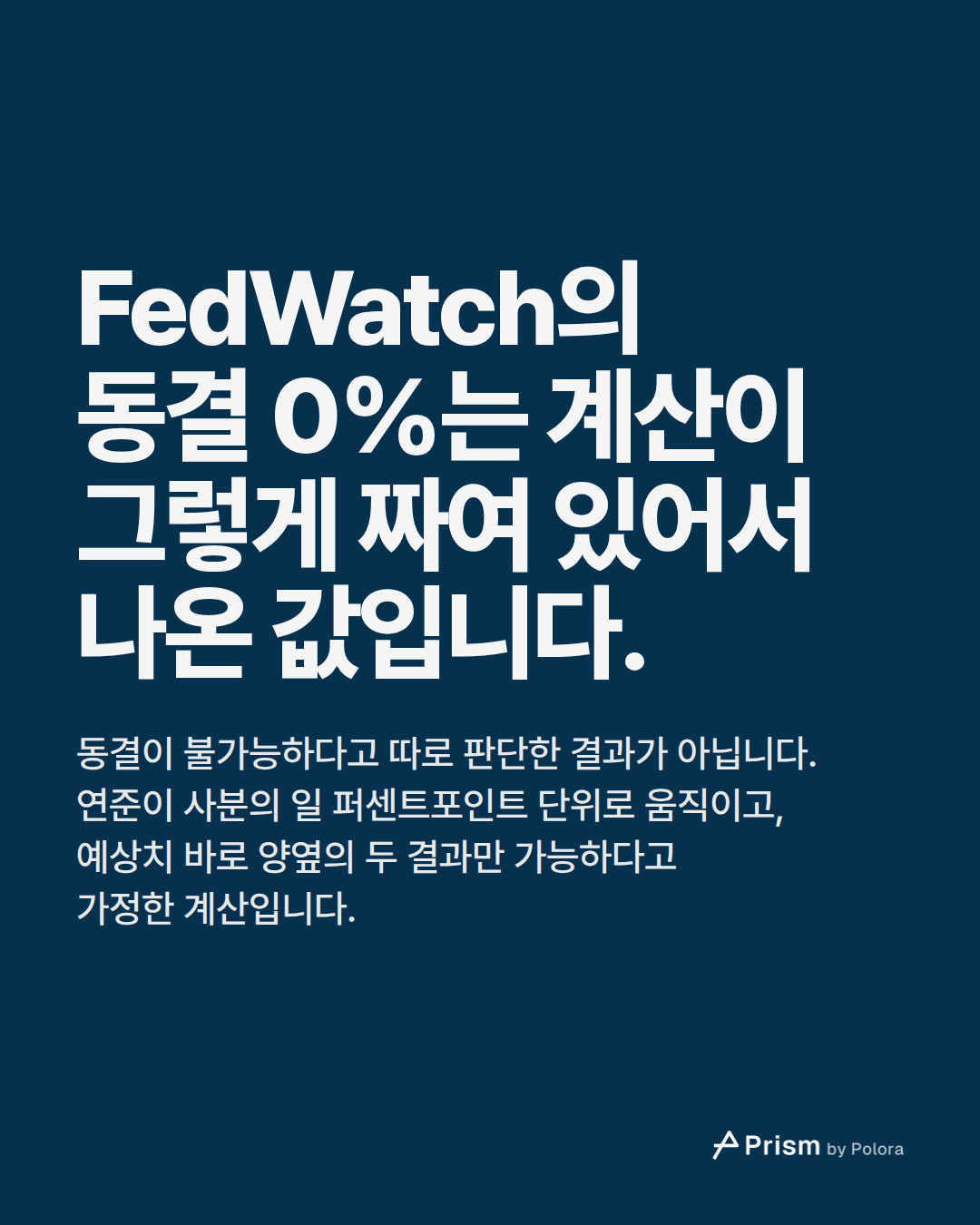
11월 12일 수치를 거꾸로 따라가 보면 이 논리가 드러납니다. 한 단계 인상에 90.8%, 두 단계 인상에 9.2%를 주면 평균 예상 인상폭은 약 100분의 27퍼센트포인트(27.3bp, bp는 100분의 1퍼센트포인트)가 됩니다. 이 값이 한 단계보다 크기 때문에 FedWatch가 고르는 두 결과는 한 단계 인상과 두 단계 인상이 되고, 동결은 계산 구조상 0이 됩니다. 동결 0%는 계산이 그렇게 짜여 있어서 나온 값이지, 동결이 불가능하다고 따로 판단한 결과가 아닙니다.
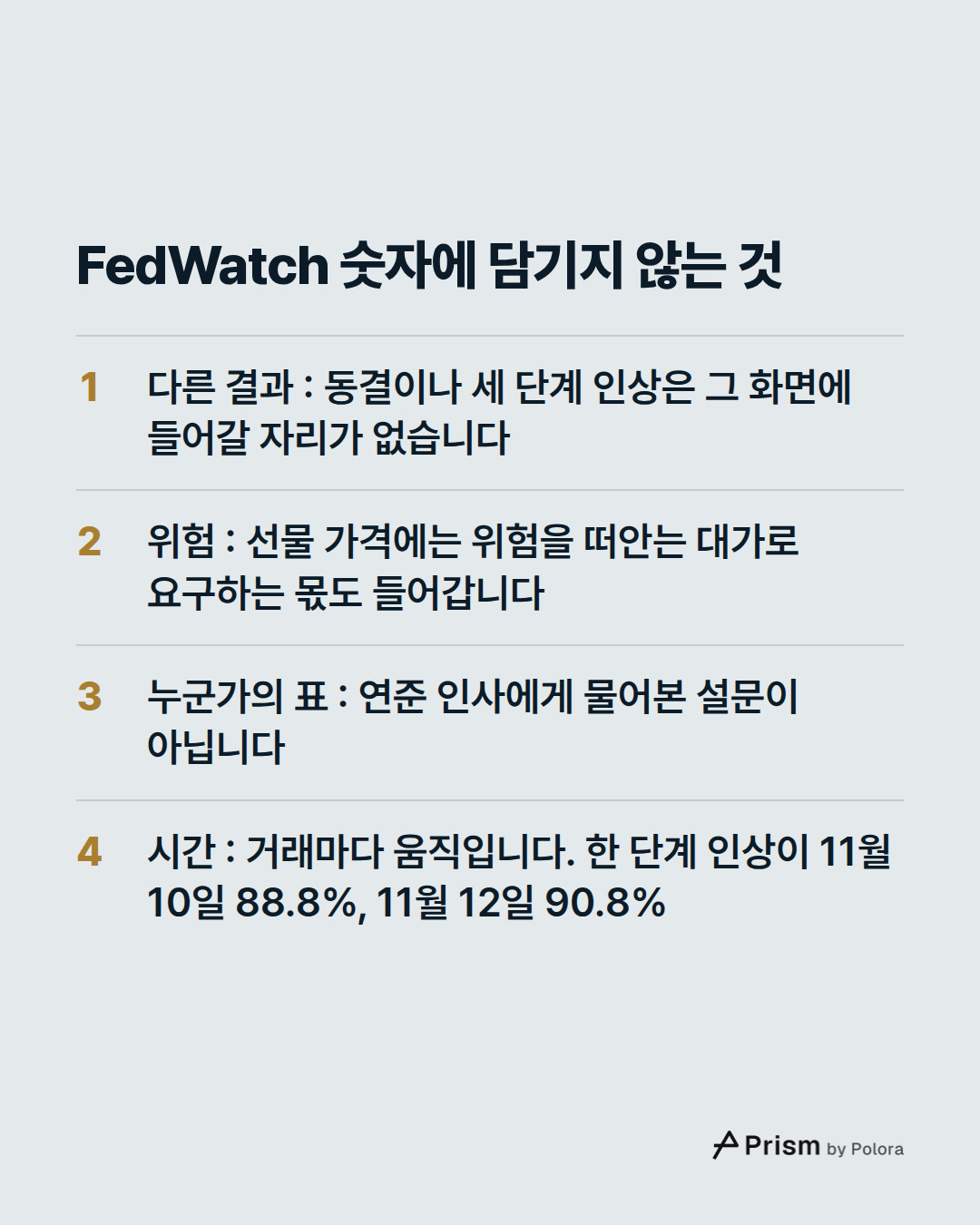
첫째는 가능한 결과의 범위입니다. 미국 연준 이사회 소속 이코노미스트들은 2026년 2월에 낸 연구 보고서에서 이 점을 짚었습니다. 연방기금금리 선물은 한 달 평균 금리는 알려 주지만, 결과가 둘뿐이라고 가정하지 않는 한 가능한 결과의 전체 분포까지 알려 주지는 못한다는 것입니다. 불확실성이 큰 시기에는 이것이 문제가 될 수 있다고 보고서는 지적합니다. 연준이 동결하거나 세 단계를 한꺼번에 올리는 경우는 그 FedWatch 화면에 아예 들어갈 자리가 없습니다.
둘째는 위험입니다. 선물을 사고파는 사람들은 자기 돈을 걸고 있으므로, 가격에는 그들의 예상뿐 아니라 위험을 떠안는 대가로 요구하는 몫도 들어갑니다. 모니카 피아제시와 에릭 스완슨이 학술지 「저널 오브 모네터리 이코노믹스」(2008)에 낸 연구에 따르면 연방기금금리 선물의 초과수익은 평균적으로 플러스였고 경기 순환에 따라 달라졌습니다. 이 위험 프리미엄을 무시하면 선물 가격에서 뽑아낸 정책금리 경로 전망이 한쪽으로 치우친다는 것이 두 사람의 결론입니다.
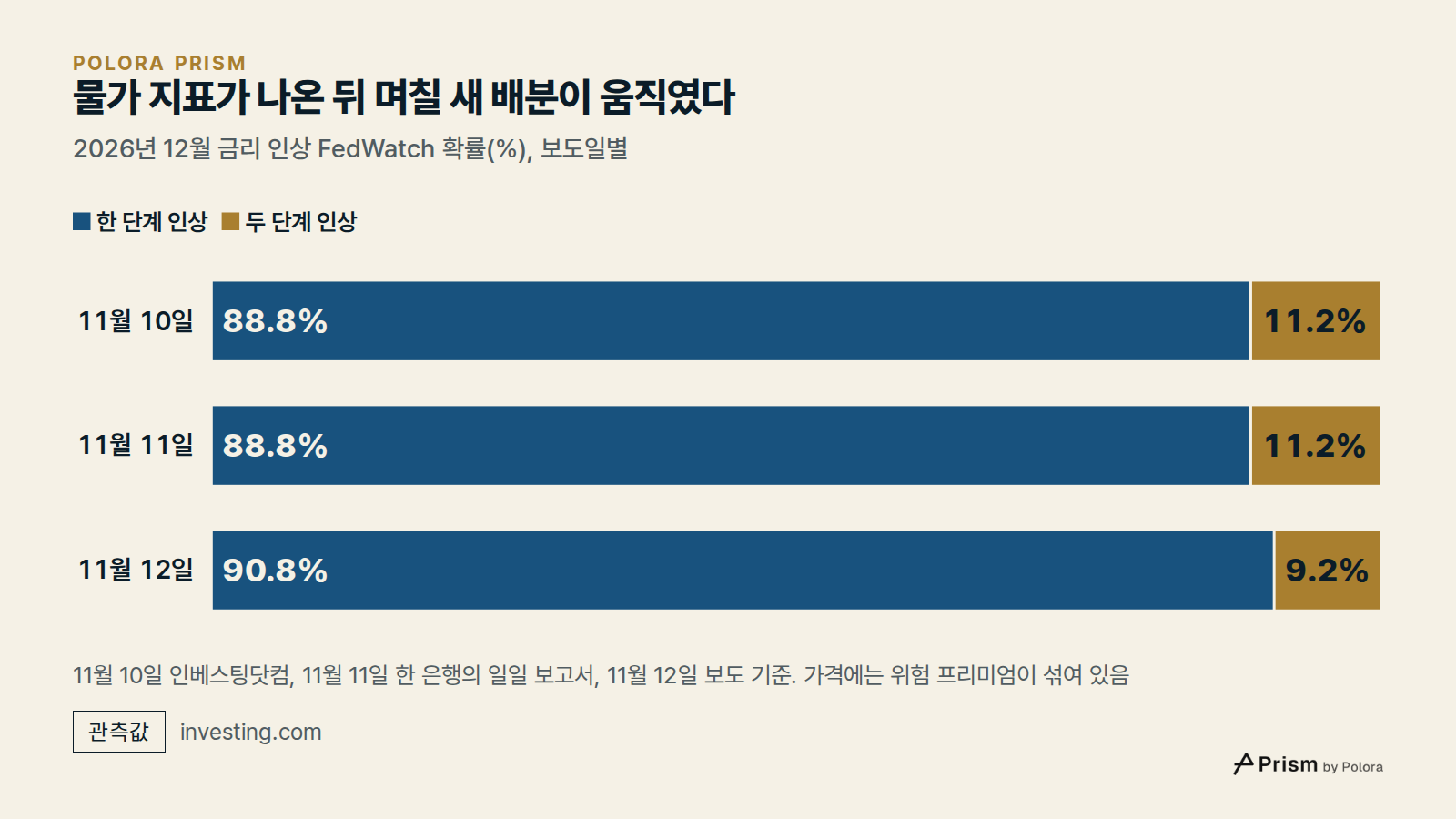
셋째, 이 숫자는 누군가의 표를 센 것이 아닙니다. 연준 인사에게 물어본 설문도 아니고, 어느 이코노미스트의 전망도, 폴로라의 전망도 아닙니다. 이런 확률은 흔히 시장이 보는 전망으로 인용되지만, 모형의 가정에 기댄 값입니다. 한 순간의 가격을 읽은 값이라 거래가 있을 때마다 움직입니다. 인베스팅닷컴에 따르면 물가 지표가 나온 11월 10일 FedWatch는 한 단계 인상 88.8%, 두 단계 인상 11.2%를 보였고, 11월 11일자 한 은행의 일일 보고서도 같은 비율을 적었습니다. 11월 12일자 보도에서는 90.8%와 9.2%였습니다.
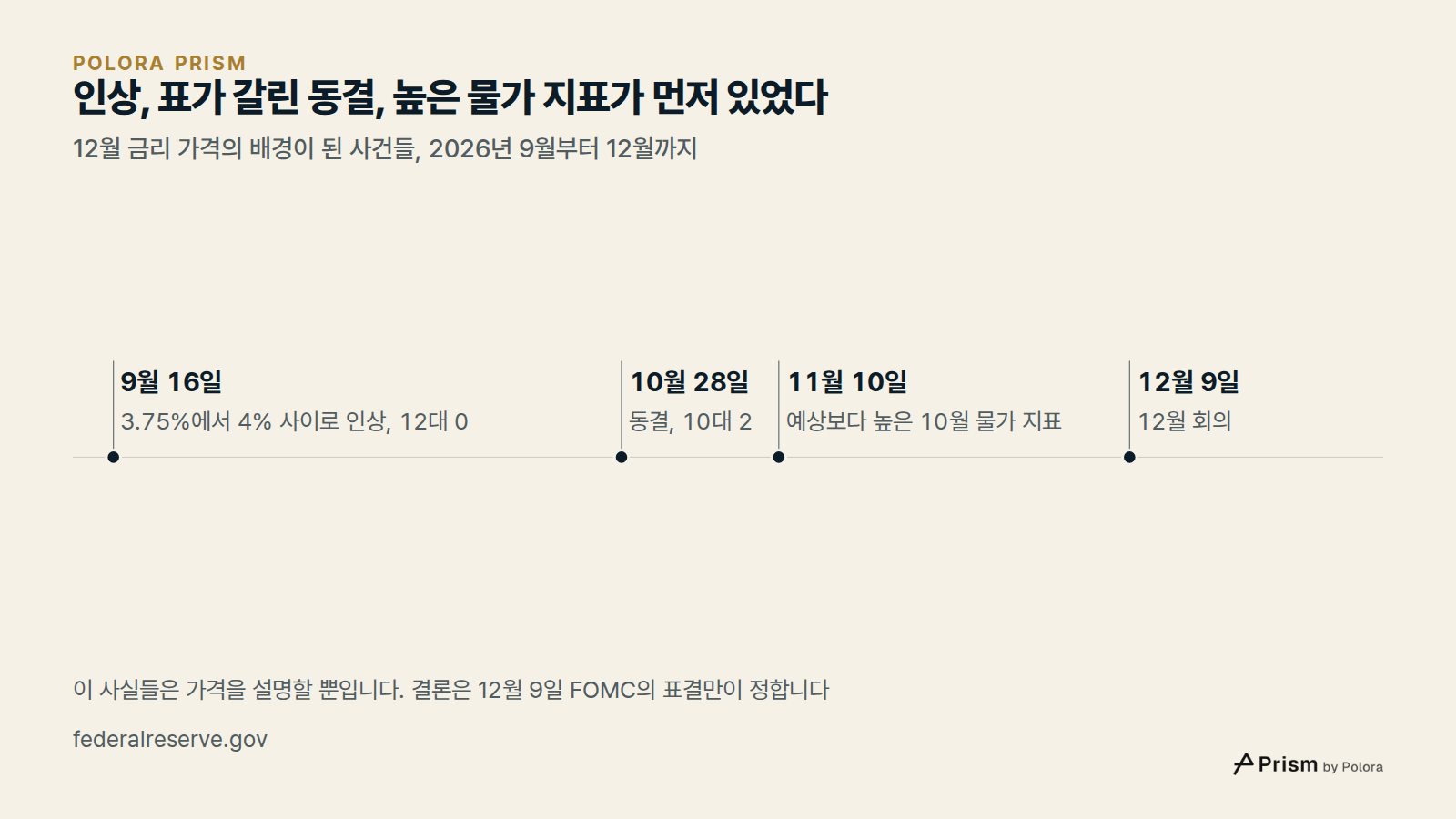
이 가격에는 그간의 흐름이 깔려 있습니다. 2026년 9월 16일 FOMC는 12대 0으로 목표 범위를 한 단계 올려 3.75%에서 4% 사이로 정했습니다. 10월 28일에는 10대 2로 범위를 그대로 두었습니다. 연준 성명에 따르면 반대표를 던진 두 사람, 리사 쿡과 베스 해맥은 그 회의에서 한 단계 더 올리자는 쪽이었습니다.
그리고 11월 10일, 10월 소비자물가 지표가 예상보다 높게 나왔습니다. 보도에 따르면 크리스토퍼 월러 연준 이사는 12월 한 단계 인상을 지지하면서, 10월 물가가 높게 나온다면 두 단계 인상도 검토해야 한다고 말한 바 있습니다. 거래자들이 가격에 담은 사실 가운데 일부가 이런 것들입니다. 이 사실들은 숫자를 설명해 줄 뿐, 12월 회의의 결론을 정하지는 않습니다. 결론은 12월 9일 FOMC의 표결만이 정합니다.
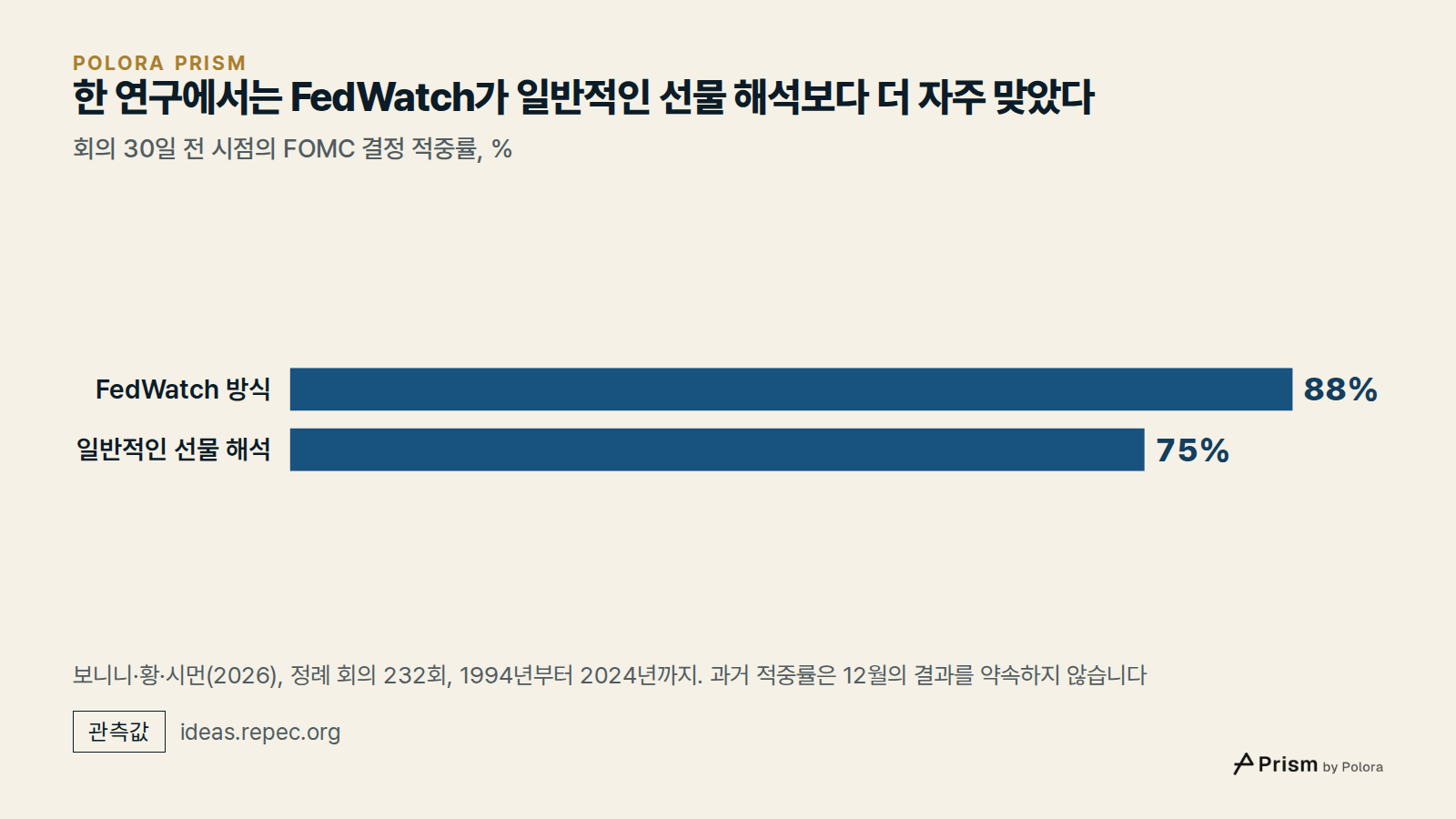
기록은 있지만 한계도 있습니다. 미국 스티븐스 공과대학의 스테파노 보니니, 황성위, 마지드 시먼은 동료 심사를 거친 학술지 「저널 오브 퓨처스 마켓」(2026)에 실린 연구에서, FedWatch 방식이 회의 30일 전 시점에 FOMC 결정을 88% 정확도로 맞혔다고 보고했습니다. 연방기금금리 선물을 일반적인 방식으로 읽었을 때는 75%였습니다. 표본은 1994년부터 2024년까지의 정례 회의 232회입니다. 11월 12일은 12월 회의를 약 4주 앞둔 시점이었습니다.
이것은 그 연구의 정의와 표본 안에서 낸, 과거 여러 회의에 걸친 평균입니다. FedWatch가 91% 안팎을 보였던 회의만 따로 떼어 얼마나 자주 맞았는지는 이 결과로 알 수 없고, 이번 가격이 실제 결과와 맞을지도 이 결과는 말해 주지 않습니다. 과거 회의에서 이 도구가 맞았던 비율은 다음 회의의 규칙이 아니며, 12월의 결과를 약속하지도 않습니다.
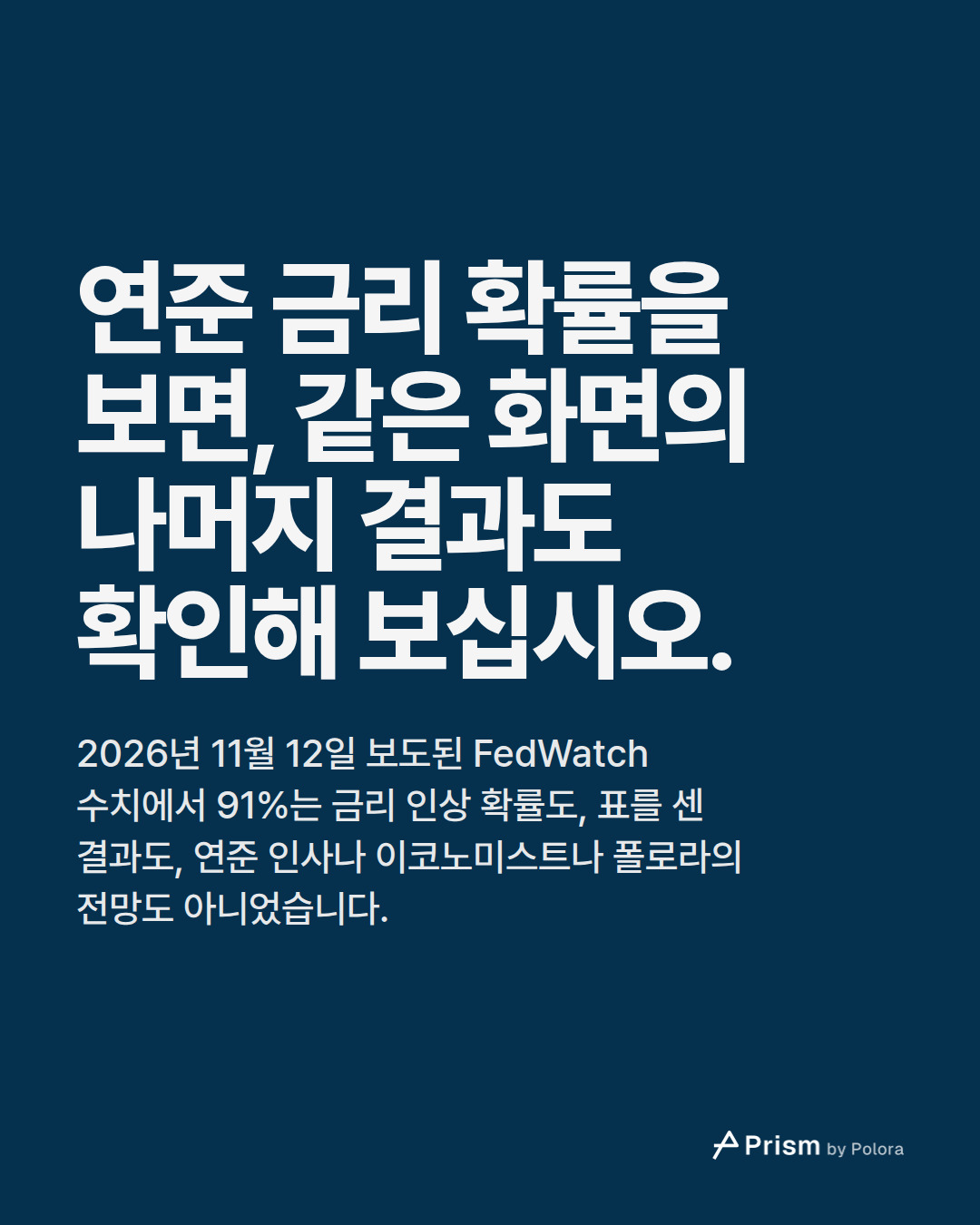
기사 제목에서 연준 금리 확률을 보면, 같은 화면에 나머지 결과로 무엇이 함께 올라 있는지 확인해 보십시오. 2026년 11월 12일 보도된 수치에서 91%는 한 단계 인상과 두 단계 인상 가운데 한 단계 쪽에 시장이 매긴 가격이었습니다. 가능한 결과가 그 둘뿐이라는 가정 아래 연방기금금리 선물 가격에서 계산한 값이었고, 그 안에는 위험 프리미엄이 섞여 있었습니다. 그 화면에서 이 숫자는 금리 인상 확률도, 표를 센 결과도, 연준 인사나 이코노미스트나 폴로라의 전망도 아니었습니다.
What does a 91% chance of a December Fed rate hike actually measure?
Alpha · deepseek-v4-pro
A 91% chance of a December Fed hike does not measure the chance that the Fed hikes. It measures something narrower: the market-implied share of probability assigned to a quarter-point hike rather than a half-point hike, under a restrictive two-outcome assumption.
Where the number comes from
CME FedWatch starts from 30-day fed funds futures. Those contracts settle against the arithmetic average of the daily effective federal funds rate during the contract month, which is why the price is quoted as 100 minus the expected average rate. But a single futures price gives you only one number: the average rate the market is pricing for December.
To turn that one number into probabilities, the tool has to assume a menu of possible Fed actions. It assumes the Fed moves in quarter-point steps, and it usually restricts the possible outcomes to the two neighbouring steps around the implied rate. In mid-November 2026, the December futures price implied a post-meeting target rate roughly 27 basis points above the current 3.75%–4.00% range. That is between one and two quarter-point hikes, so the two outcomes the method considered were:
- a 25 basis point hike to 4.00%–4.25%, and
- a 5…
Beta · gpt-6-sol
The manuscript’s central distinction is sound, but its headline is too absolute. If the cited FedWatch reading really showed roughly 91% for a 25-basis-point hike, 9% for a 50-basis-point hike, and 0% for a hold, then 91% labels the quarter-point outcome—not the sum of all hike outcomes. Within that *particular FedWatch calculation*, the displayed hike outcomes sum to 100%. That does not establish that a hike is certain in the world outside the model. CME describes its nearest-meeting calculation as assigning weights to two adjacent 25-basis-point outcomes. (cmegroup.com)
Here is what I could check for the editor:
- Mechanism: supported, with a correction. CME says 30-day fed funds futures are quoted as 100 minus the expected arithmetic average of the daily effective federal funds rate for the contract month; they ultimately settle against that month’s average. FedWatch uses futures prices and assumptions about 25-basis-point moves to infer meeting outcomes. Thus, if the reported split is 90.8%/9.2%, its weighted increase is 27.3 basis points: \(0.9…
Gamma · gemini-3.1-pro
Here is what I found regarding the manuscript’s claims, building on the previous checks:
* The 90.8% / 9.2% split and timestamp: Supported for November 12. Multiple financial portals reporting on November 12, 2026, confirm that CME FedWatch showed a 90.8% probability for a 25-basis-point hike and a 9.2% probability for a 50-basis-point hike. The editor should update the text to specify November 12, rather than blending it with November 11 or using the brief's 91.2%. (Sources: tradingkey.com, kucoin.com)
* The 27-basis-point calculation: Supported. The arithmetic (0.908 × 25 + 0.092 × 50 = 27.3) is correct. As CME’s methodology restricts probabilities to the two adjacent quarter-point increments bracketing the implied rate, a hold (0 basis points) receives a 0% weight by construction because the implied rate of 27.3 is between 25 and 50.
* Waller's comments on CNBC: Supported. On November 10, 2026, Federal Reserve Governor Christopher Waller stated he would support a 25-basis-point rate increase in December and that a 50-basis-point hike should be considered if October inflation data came in hot (core CPI of…
Researcher · gpt-6-luna
CME’s own methodology supports the basic explanation, with an important nuance: FedWatch is not simply splitting one futures contract into two outcomes. It uses 30-day fed funds futures prices—quoted as 100 minus the contract month’s average effective federal funds rate—and, for a meeting month, uses the surrounding monthly rates to infer the rate change around the meeting. Under its assumptions, it assigns probabilities to two adjacent outcomes, typically one 25-basis-point step apart. (cmegroup.com)
For the reported 90.8% / 9.2% split, the weighted move is 27.3 basis points: \(0.908 \times 25 + 0.092 \times 50\). That makes the displayed 0% hold a consequence of the model’s selected outcomes—not independent evidence that a hold is impossible. The timestamp is better supported as November 12 than November 11: a dated report that day gives the 90.8%/9.2% figures, while I did not find a primary CME snapshot verifying that exact reading. (uat2049.chaincatcher.info)
The manuscr…
The Arbiter · gpt-6-sol
The voices agree on the key distinction: if the reported FedWatch screen showed about 91% for a quarter-point hike and 9% for a half-point hike, the 91% labels the quarter-point outcome, not the total of the displayed hike outcomes. CME’s published method supports the two-adjacent-outcome calculation. It also shows why the manuscript’s phrase “split one futures price” needs care: the calculation can use surrounding contract months to infer the change at a meeting. (cmegroup.com)
The consequential open point is which reading, and when. The Researcher found a November 12 report of the 90.8%/9.2% split, but no primary CME snapshot establishing that exact split on both November 11 and 12. Beta also found a different November 11 reading. The manuscript should not combine those figures or dates without a timestamped source.
There is a difference of emphasis, not arithmetic: Alpha stresses that a displayed 0% hold is produced by the restricted calculation; Beta warns that saying the price is “not a forecast” goes too far, since market-implied probabilities can b…
The Arbiter's Final Verdict · gpt-6-sol
Verdict
For the reported November 12 FedWatch reading, “91%” measured the market-implied weight on a *quarter-point* December hike—not the probability of *any* hike. The report put about 9% on a half-point hike and 0% on a hold. That exact split is supported by a dated secondary report, not by a primary CME snapshot; it should not be attributed to both November 11 and 12 without further evidence.
Here is what the number rests on. CME’s methodology uses prices of 30-day federal funds futures to infer the rate change around a meeting, then assigns weights to adjacent quarter-point outcomes. At the reported 90.8%/9.2% split, the weighted move is 27.3 basis points: \(0.908 \times 25 + 0.092 \times 50\). The displayed 0% for a hold follows from choosing 25 and 50 basis points as the two outcomes; it is not separate proof that a hold is impossible. The calculation can use surrounding months’ futures prices, so the manuscript’s “one futures contract” description is too simple.
The manuscript’s premise stands fo…