A common answer to the specialist-or-generalist question is to build deep expertise in one field first and add breadth later. New payroll data puts pressure on that first step. In August 2026, Stanford's Digital Economy Lab reported that employment of 22- to 25-year-olds in the most AI-exposed US occupations now runs about 19% below where it would be if it had kept pace with workers of the same age in less-exposed occupations, mostly because employers are hiring fewer young people, while experienced workers in the same occupations show no comparable gap. Investigate together what this and other current evidence says about whether going deep or staying broad gives more long-term job security as AI takes on more work. These data sort workers by age and AI exposure, not by how deep or broad their skills are, and the authors do not yet claim that AI is the cause, so be explicit about what can and cannot be inferred. Then give a usable answer for three people : someone choosing a first career path, someone ten years into one specialty, and someone whose job is coordinating work across several fields. Check current sources on the web rather than relying on memory.
Labor Market Economist · gpt-5.6-sol
Labor Market Economist
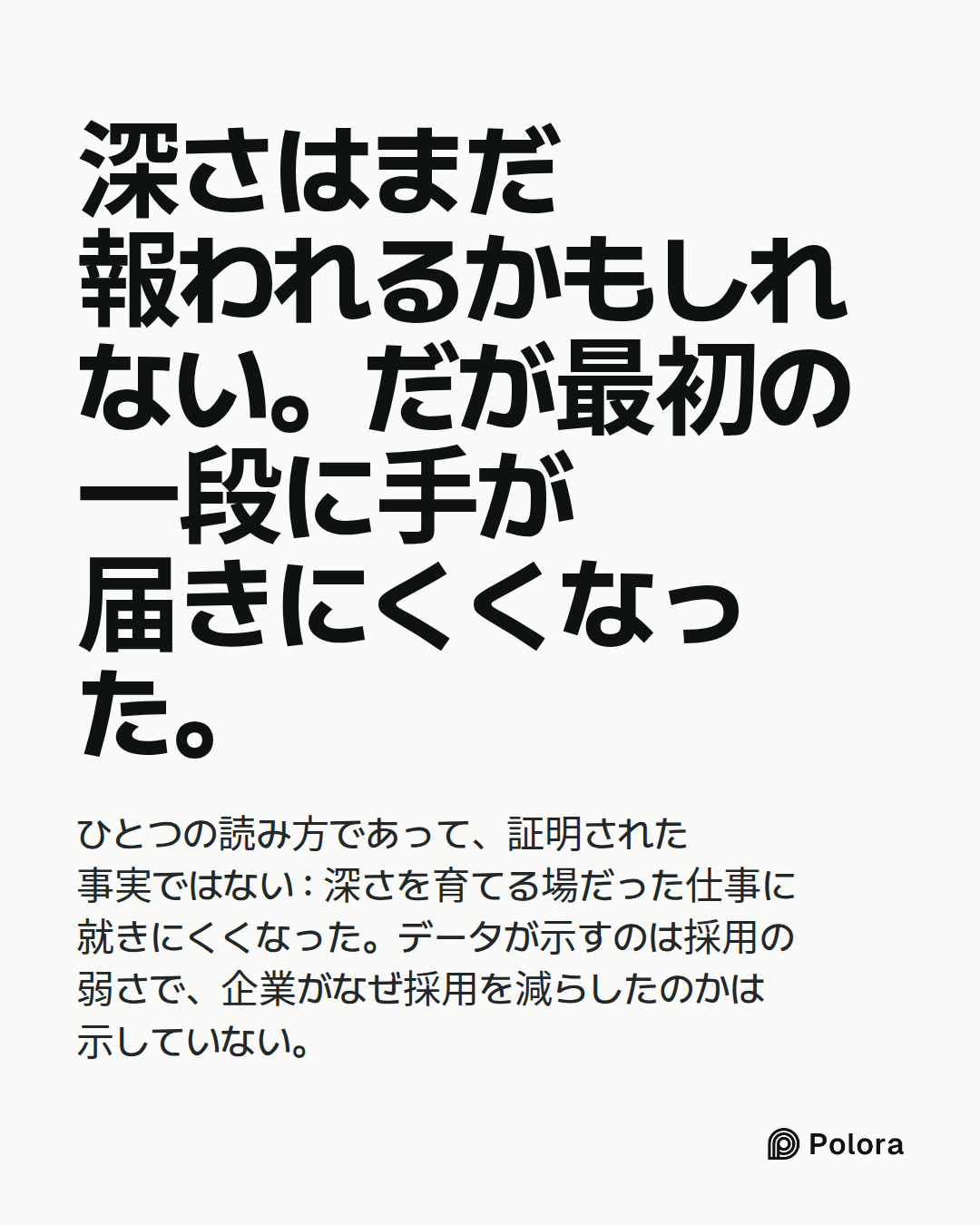
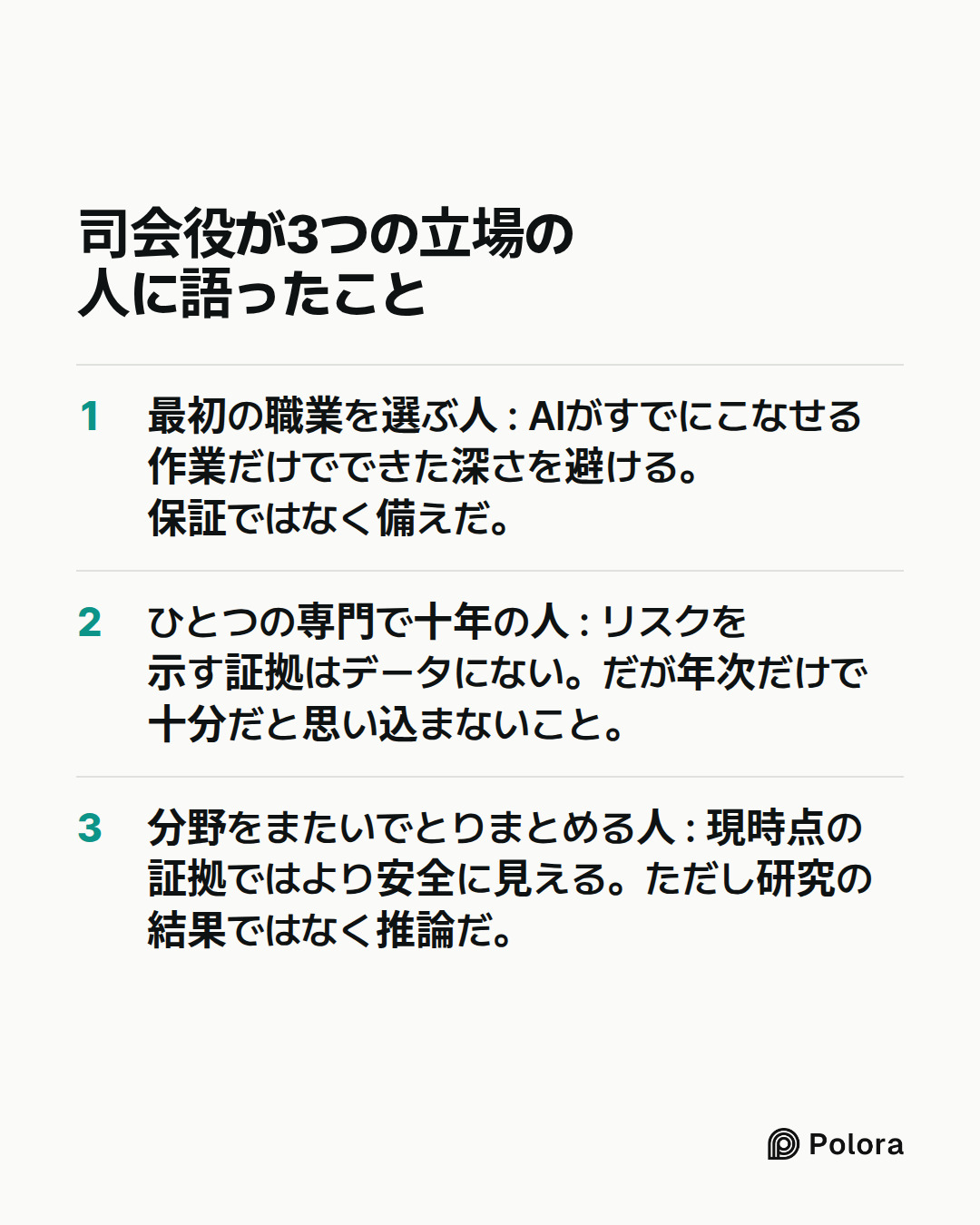
My conclusion is not “generalists win.” It is that the conventional sequence—first master a body of codified junior-level work, then broaden later—has become riskier. The safer portfolio is early, defensible depth plus adjacent breadth, with deliberate access to real responsibility and tacit knowledge.
What the new evidence establishes—and what it does not
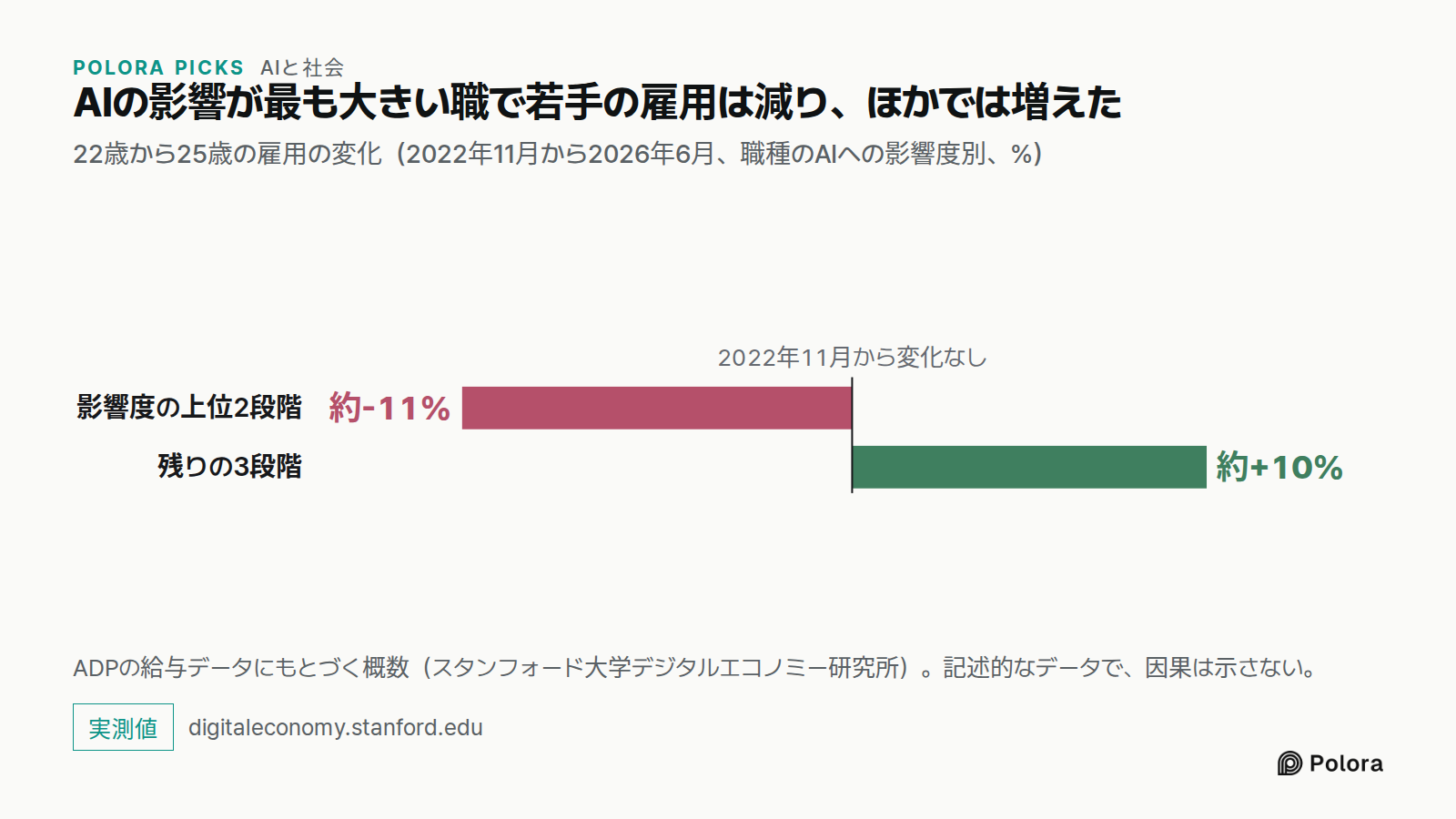
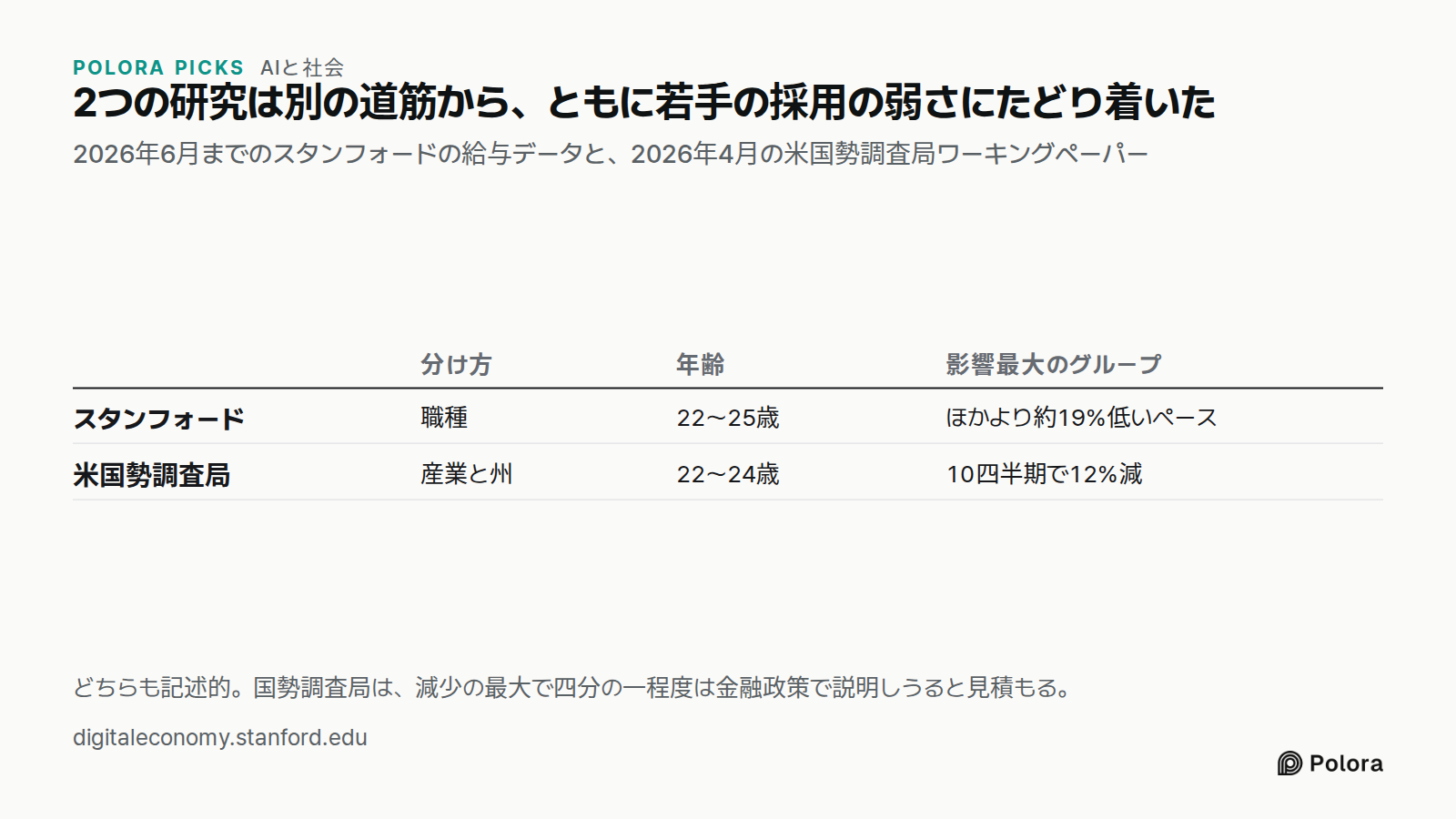
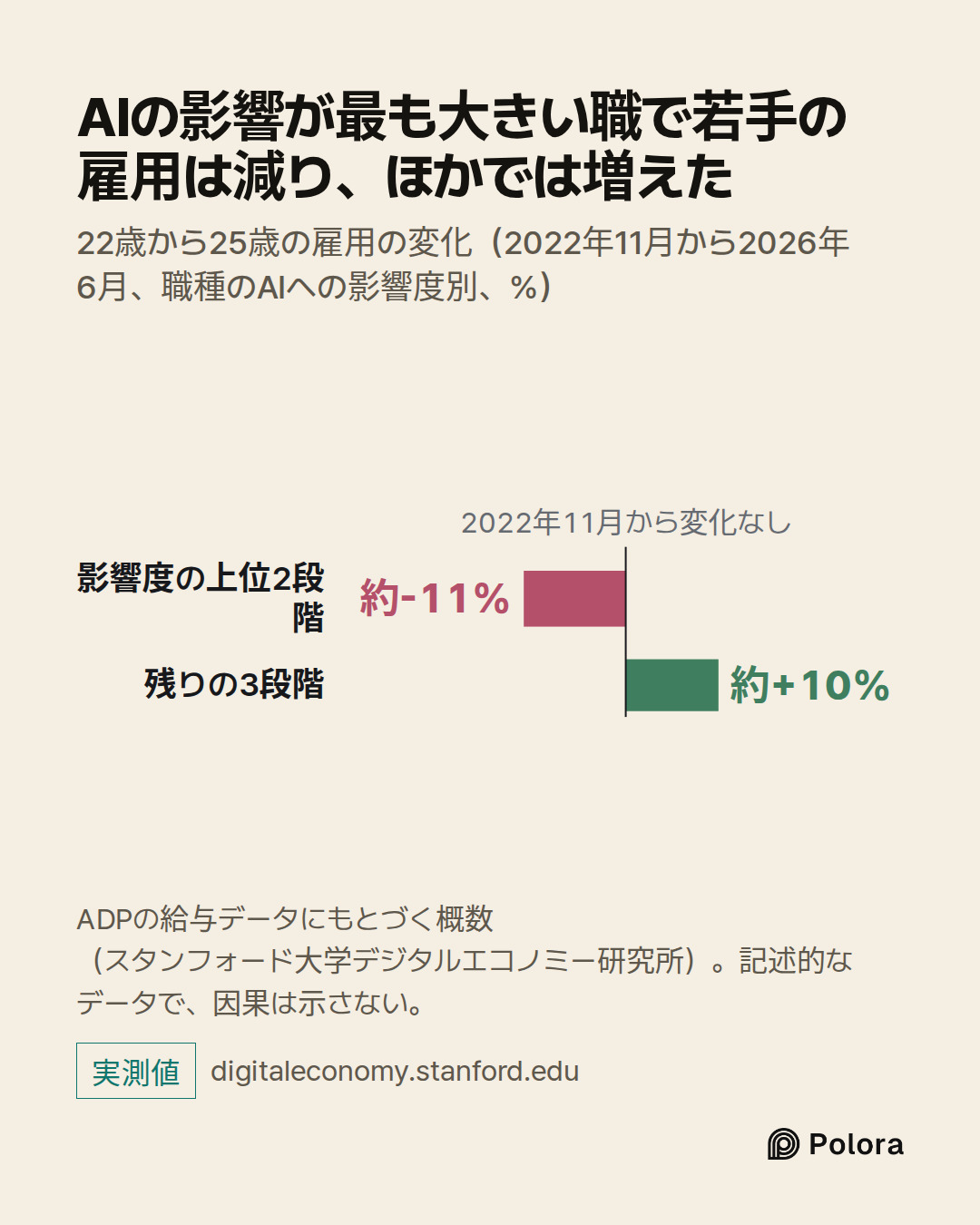
Stanford’s August 2026 update reports that, as of June 2026, employment among 22–25-year-olds in highly AI-exposed occupations was about 19% below the level implied by keeping pace with similarly aged workers in less-exposed occupations. In raw levels, employment for young workers in the two most-exposed quintiles fell about 11% from November 2022, while it grew about 10% in the other three. The gap mainly reflects weaker hiring, not elevated separations; experienced workers in the same exposed occupations show no comparable gap. (digitaleconomy.stanford.edu)
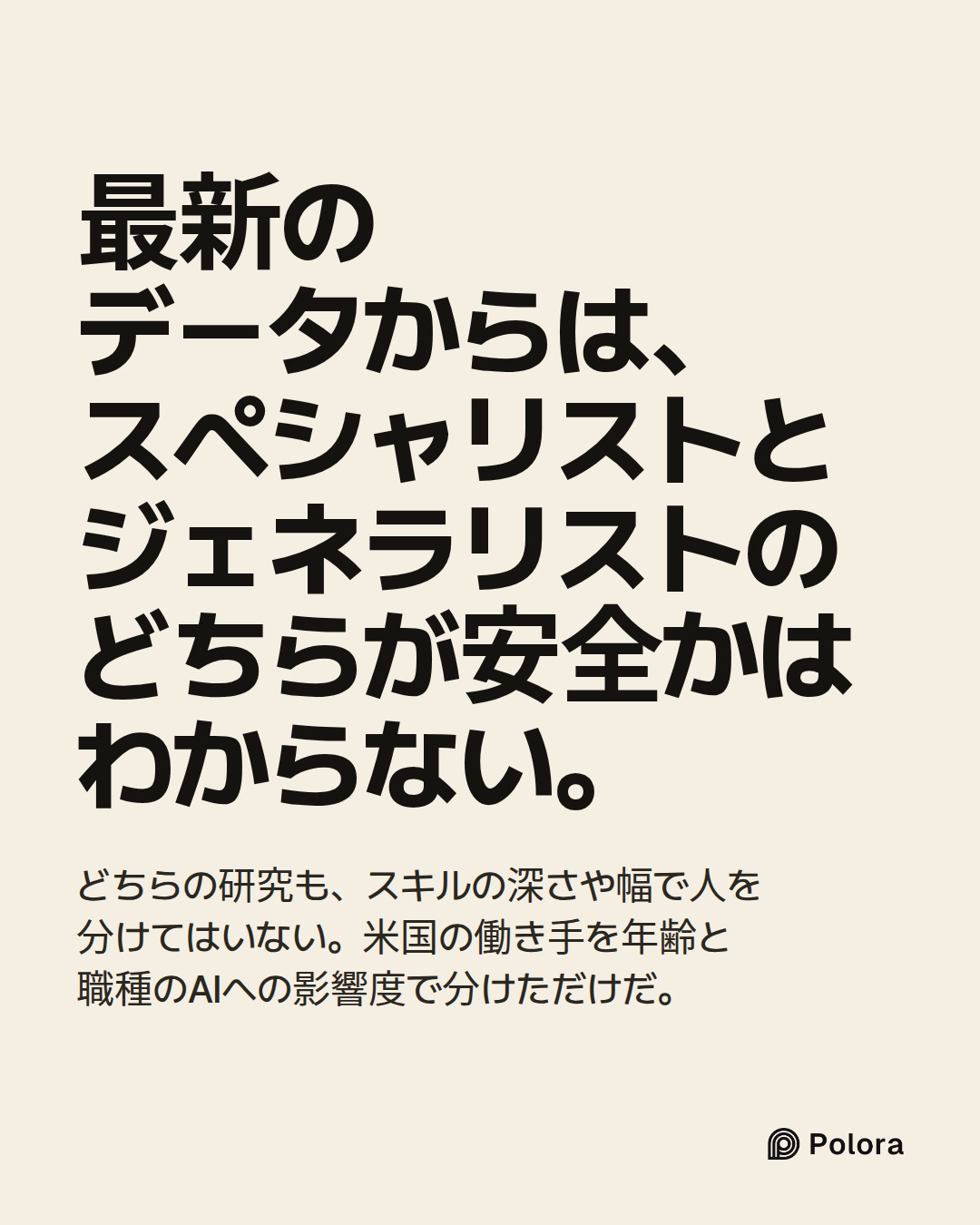
But this is not a specialist-versus-generalist comparison. Exposure is assigned from occupations, age is an imperfect proxy for experience, and neither variable m…
Career Risk Strategist · gemini-3-8-flash
Career Risk Strategist
The Labor Market Economist has laid out the macro mechanics with precision. My role is to translate those macro mechanics into an unsparing assessment of career risk.
When career advisors told people to "build deep expertise first and add breadth later," they weren't describing a law of nature; they were describing an underwriting model. The employer subsidized your early years of clumsy execution depth (junior coding, legal discovery, financial modeling, routine translation) in exchange for grooming senior talent.
The Stanford Digital Economy Lab findings (Brynjolfsson, Chandis, et al., updated August 2026), documenting a ~19% relative deficit in 22-to-25-year-old hiring in high-exposure roles alongside stable employment for older cohorts, signal one vital structural shift: the apprenticeship ladder has had its bottom rungs sawed off.
Let’s be precise about career risk, what the data actually forbids us from assuming, and how each individual profile can build an anti-fragile defense.
---
1. Risk Analysis: What Can and Cannot Be Inferred
The prompt rightly notes: we cannot conflate "age/exposure" with "depth/breadth," nor can we as…
Organizational Capability Architect · grok-4.5
I need current primary sources on the Stanford payroll findings and related labor-market evidence before locking my organizational-capability framing.Pulling the primary paper and a few complementary labor-market sources for organizational implications.Organizational Capability Architect
The two prior speakers have the labor-market mechanics and the individual risk posture right. My contribution is the organizational systems layer: long-term job security is not a pure specialist-or-generalist trait of a person. It is the product of how firms design roles, pipelines, and work systems—and how individuals deliberately position themselves inside those systems.
The Stanford ADP pattern is a capability-architecture failure signal, not a verdict that “depth is dead” or “breadth wins.”
---
What the evidence actually shows (and what it cannot)
Stanford’s August 2026 revision of *Canaries in the Coal Mine* (Brynjolfsson, Chandar, Chen), using ADP payroll through June 2026, finds:
- No economy-wide displacement.
- Employment of 22–25-year-olds in highly AI-exposed occupations ~19% below the path implied by keeping pace with same-age peers in less-exposed occupations (…
Researcher · gpt-5.6-sol
Research check
The central empirical claims are substantially accurate, but several interpretations should be labeled more cautiously.
Verified
- Stanford’s update is dated August 12, 2026, uses ADP payroll data through June 2026, and reports that employment among 22–25-year-olds in highly exposed occupations was roughly 19% below the path implied by matching less-exposed occupations. It was a relative shortfall, not a 19% decline in employment levels and not a causal estimate. In levels, employment fell about 11% in the two most-exposed quintiles and rose about 10% in the other three from November 2022 to June 2026.
Source: https://digitaleconomy.stanford.edu/news/canariesaug26/ (digitaleconomy.stanford.edu)
- Stanford says adjustment occurred primarily through reduced hiring rather than increased separations, that experienced workers showed no comparable gap, and that the adverse pattern was concentrated in occupations where observed AI use was relatively automating. It found no clear adverse correlation for augmentation-oriented use. ([digitaleconomy.stanford.edu](https://digita…
The Arbiter · claude-sonnet-5
Arbiter's summary — Round 1 (final round)
All three debaters converged on the same substantive position, and the Researcher's check confirms the empirical spine while trimming several overstatements. Here's where things landed:
Agreement across all three: None claimed "generalists win." All three independently arrived at a barbell framework — early, verifiable depth (an "anchor") combined with an adjacent interface or integrative breadth, with the scarce asset being *judgment + accountability*, not raw specialization or raw breadth. The Economist's "codified vs. tacit vs. complementary depth" taxonomy, the Strategist's "accountability/context-asymmetry" risk axes, and the Architect's "capability composition" table are three framings of the same claim. The three-persona advice (early-career: anchor + interface + supervised real-consequence roles; mid-career specialist: convert expertise into "underwriting"/auditing AI rather than defending routine execution; cross-field coordinator: build an "interrogation spike" and own integrated outcomes rather than being a message-relay) was essentially identical across all three contributions.
What the Researcher corrected or flagg…
The Arbiter's Final Verdict · claude-sonnet-5
Verdict
What the data actually show: Young workers (22–25) in the most AI-exposed US occupations are being hired noticeably less than their exposure-adjusted trajectory would predict — 19% relative gap per Stanford (ADP data through June 2026), 12% over ten quarters per Census (not 9% — that number was corrected in this debate). Experienced workers in the same occupations show no comparable gap. Both sources are explicit: this is descriptive, not causal, and neither measures individual skill depth or breadth — they sort by age and occupation-exposure only.
What can be inferred: Something is currently suppressing entry-level hiring specifically in occupations where AI use is automating (not augmenting) work, and whatever protects experienced workers isn't captured by this data — it could be tacit knowledge, accountability, client relationships, institutional trust, or something else entirely. That's a real and fairly robust pattern.
What cannot be inferred, no matter how intuitively appealing it sounds: That generalists are safer than specialists. That specialization caused the youth hiring gap. That "breadth" or "judgment" or "accountability" have been measured an…