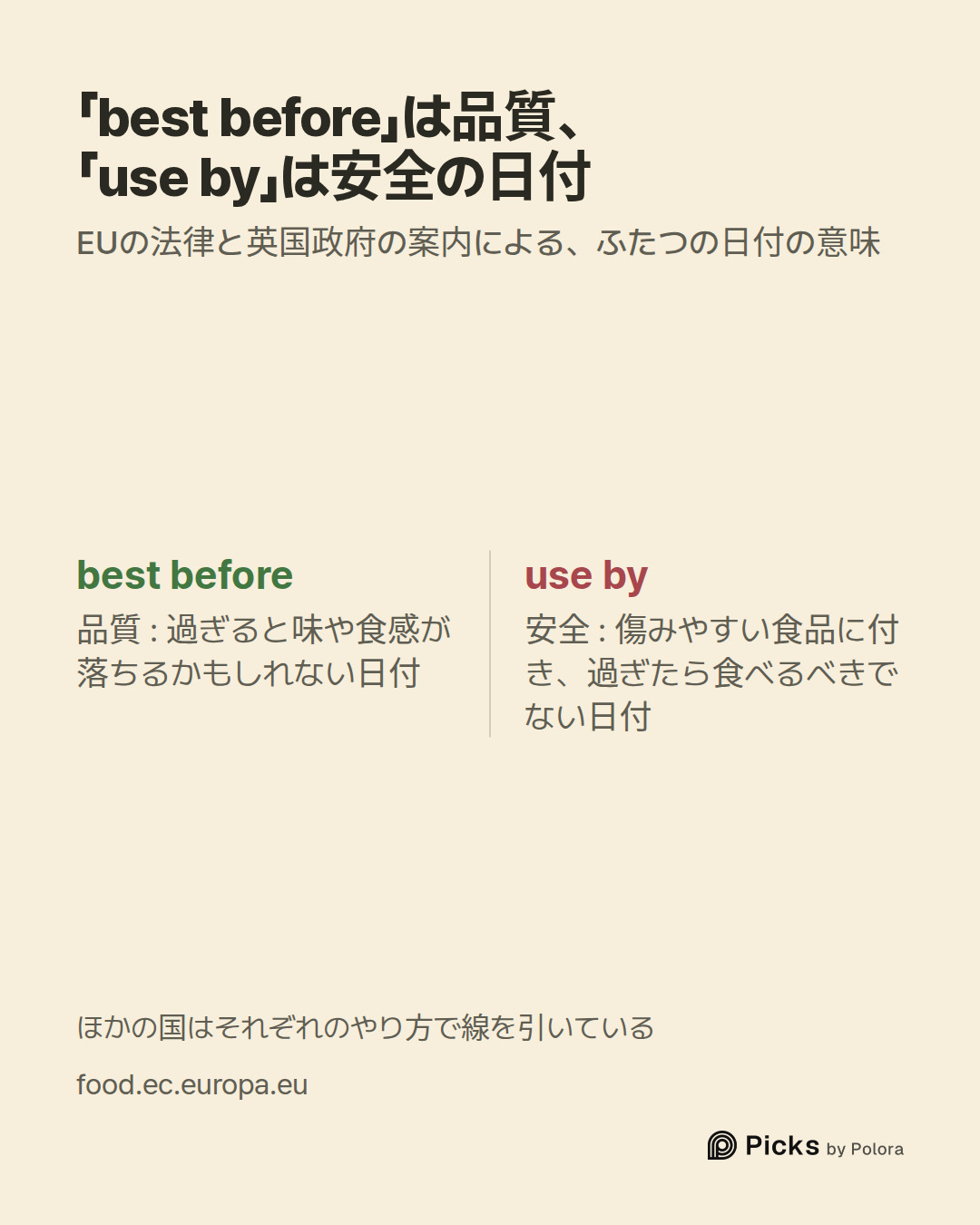
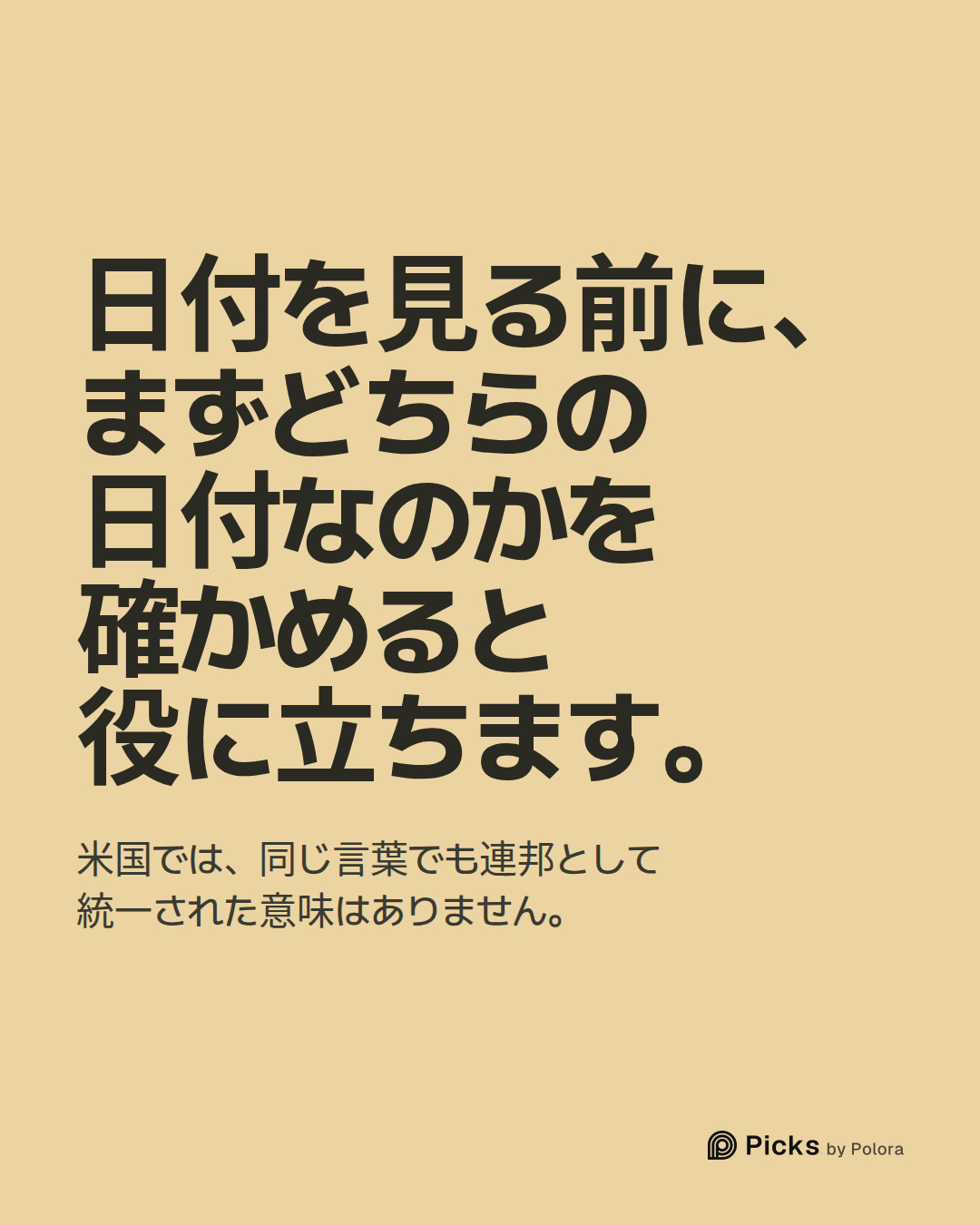
米国農務省の食品安全検査局によると、乳児用調製粉乳を除けば、日付の表示は連邦規則で義務づけられていません。乳児用調製粉乳に義務づけられた「use by」は栄養に関するもので、その日までに使えば表示どおりの栄養素がまだ含まれていることを保証するものです。そのほかの食品については、同局は日付を印字するメーカーに「Best if Used By」という言い回しを勧めており、これを品質の目安として扱っています。つまり米国の包装の「use by」は、連邦のルールの上では、EUや英国のような安全の意味を持っていません。
カリフォルニア州はさらに一歩進めました。州法AB 660が2026年7月1日に施行され、この日以降に製造されて州内で売られる包装食品は、品質の日付には「BEST if Used by」、安全の日付には「USE by」を使わなければならなくなりました。消費者向けの表示では「Sell by」が禁止されました。例外は在庫管理だけのために記号化された日付です。この日より前に製造された食品は対象外です。
Does a best before date mean food is unsafe to eat after it?
Alpha · deepseek-v4-pro
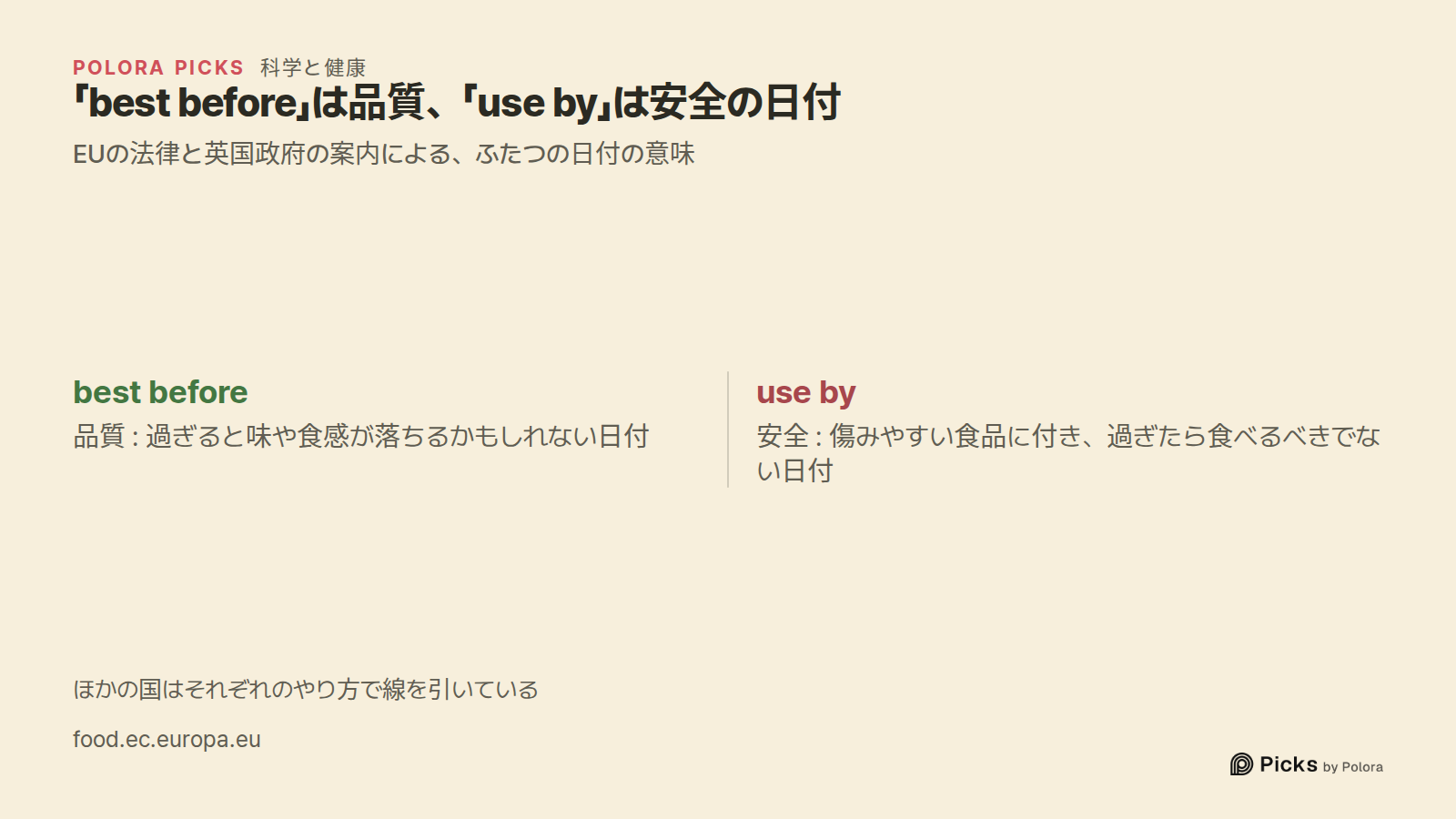
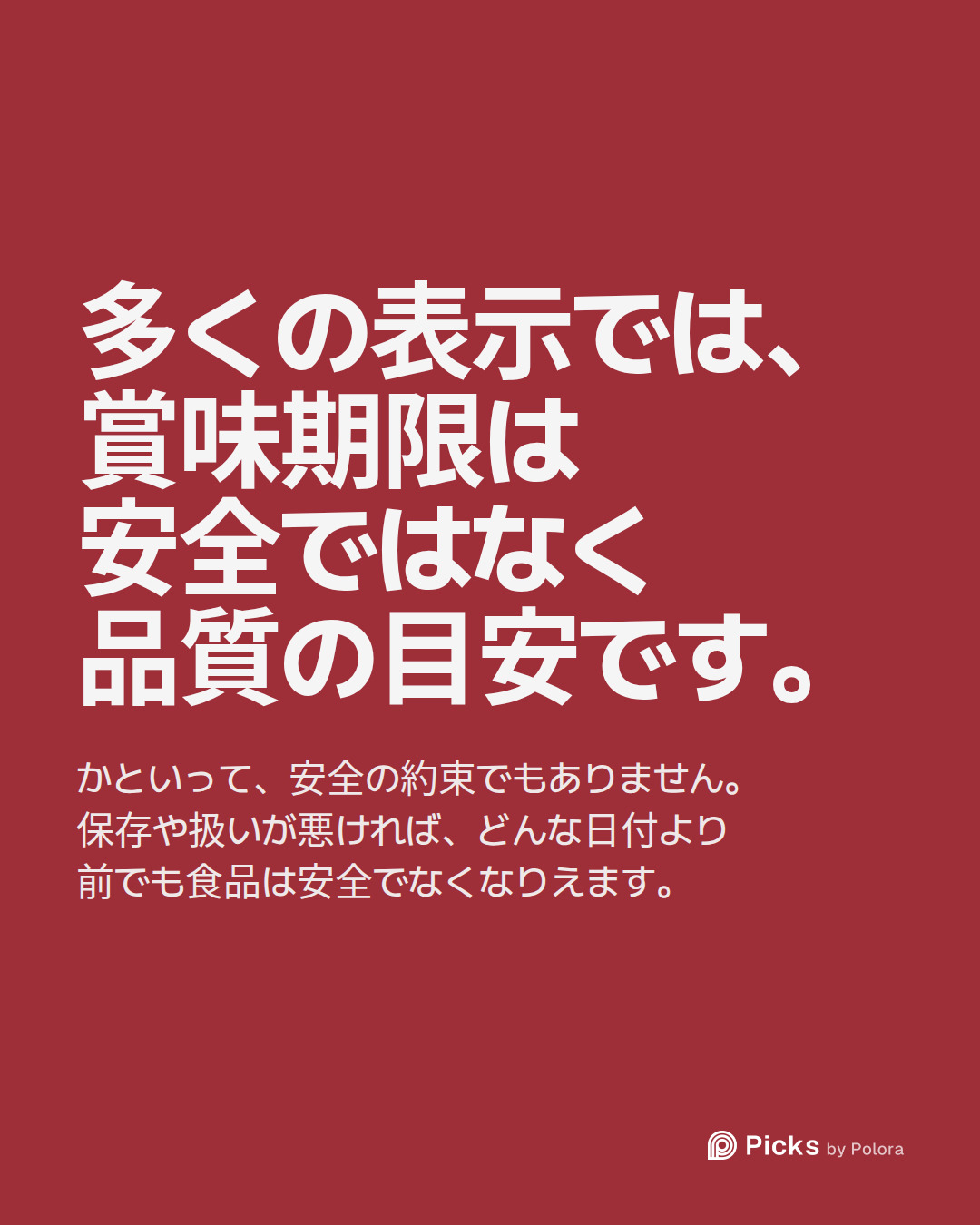
No. On most labels a best before date is a quality marker, not a safety cut-off.
What it means is closer to: *"The maker expects the food to taste or feel its best up to this date, assuming it's stored properly."* It does not mean the food becomes unsafe the next day.
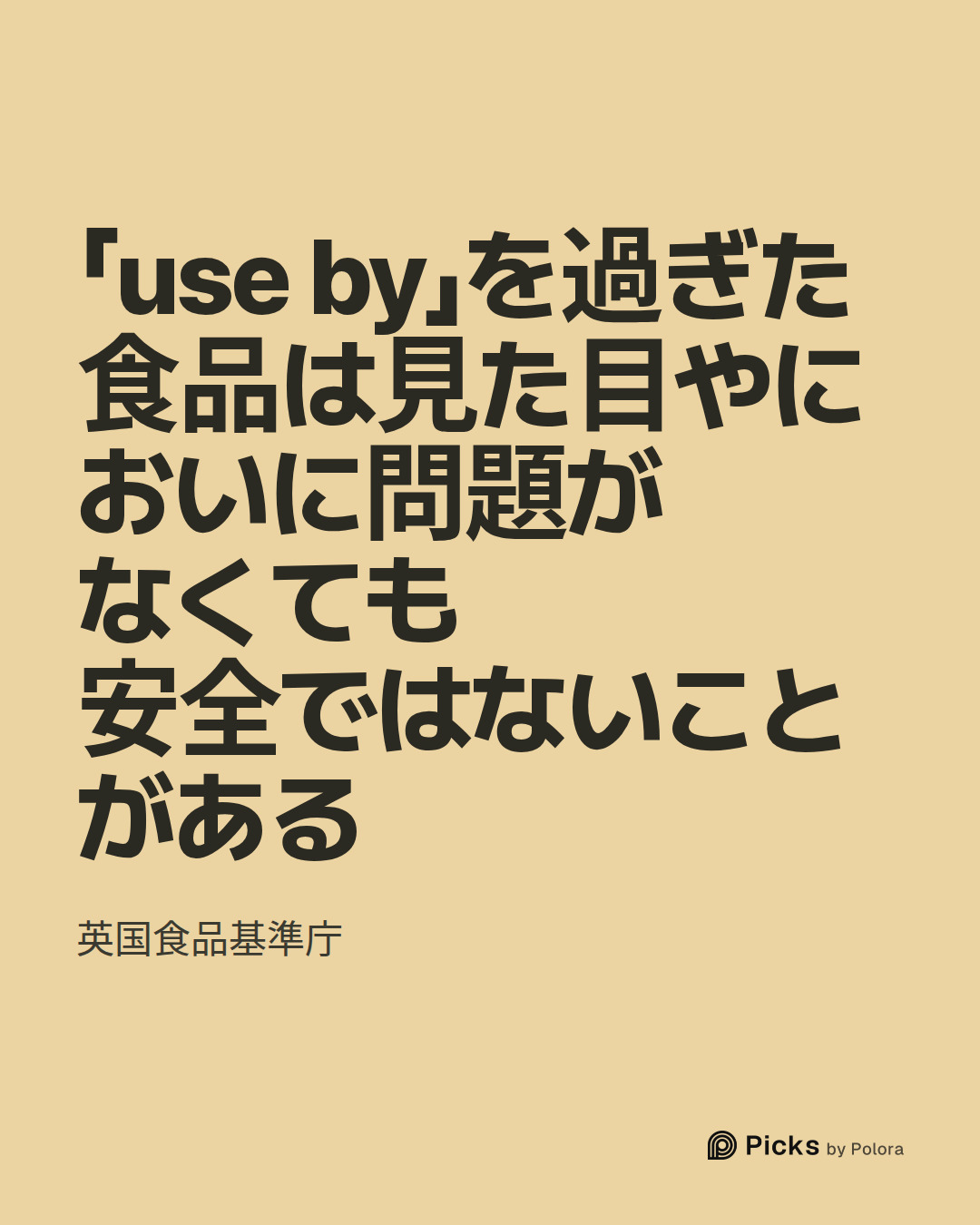
The label that concerns safety is a different one: use by. That goes on highly perishable foods — fresh meat, chilled ready meals, soft dairy — where harmful bacteria can grow. Eating food after its use by date can make you ill.
So the practical reading is:
- Best before → past the date, the food is not automatically dangerous; quality may decline. Inspect it and follow the storage instructions.
- Use by → treat the date as a safety limit. Do not eat it after that.
One caveat: no date guarantees safety. Food handled badly can be unsafe before any date, and opened food often doesn't keep until the printed date. The label's legal meaning isn't a promise of safety — it's a statement about quality or, for use by, about risk.
Beta · gpt-6-sol
No. A best before date generally marks expected quality, not the day food becomes unsafe. A use by date has a different meaning in the UK and EU: it concerns safety on highly perishable food. The distinction depends on the jurisdiction—US federal guidance says a “use by” date on most foods is *not* necessarily a safety date. Storage conditions matter in every case. (food.gov.uk)
For the manuscript, the central premise stands, but these qualifications and corrections matter:
- The yogurt example needs its actual label. Yogurt can carry either kind of date in the UK, depending on the product. “Most people would say” is an unsupported claim about consumers, not something the cited labeling rules establish. The UK Food Standards Agency also says looking or smelling is not a reliable safety test for food bearing a *use by* date. (food.gov.uk)
- EU and UK: The two-date distinction is supported. More precisely, EU Regulation 1169/2011, Article 24(1), replaces the minimum-durability date with *use by* for microbiologically highly per…
Gamma · gemini-3.1-pro
The central premise of the manuscript—that a "best before" date is an indicator of quality rather than a strict safety deadline—stands. The legal distinctions between quality and safety dates across the covered jurisdictions are accurately represented, though some details require adjustment.
Here is what I found regarding the manuscript's claims:
* California AB 660: The manuscript states this law takes effect on July 1, 2026, and the search confirms this. Crucially, the law applies specifically to covered packaged food *manufactured on or after* July 1, 2026, not to all food sitting on store shelves that day. It mandates "BEST if Used by" (or "BEST if Used or Frozen by") for quality, "USE by" (or "USE by or Freeze by") for safety, and bans consumer-facing "sell by" dates. Multiple legal summaries confirm it is indeed the first mandatory state-level date labeling reform of its kind in the US (Sources: reedsmith.com, ofwlaw.com).
* Japan's Consumer Affairs Agency (CAA): The Ma…
Researcher · gpt-6-luna
Research check
The central claim stands with an important jurisdictional caveat: a “best before” date is generally about quality, not a declaration that food becomes unsafe afterward. But date-label rules differ by country, so the manuscript should not imply that “use by” has the same legal meaning everywhere.
- EU: Regulation (EU) No 1169/2011, Article 24, requires a “use by” date for food that is highly perishable microbiologically and deems it unsafe after that date. The Commission describes “best before” as a quality date and notes exceptions to the requirement for a best-before date.
Sources: Regulation 1169/2011, Article 24; Commission date-marking guidance
- US: USDA FSIS says federal law does not generally require product dating, except for infant formula, and describes “Best if Used By/Before” as a quality signal. Be cautious with “dates are not a safety indicator” as a blanket statement: FSIS’s specific wording is about the dates it discusses, and US labels do not necessarily follow the UK/E…
The Arbiter · gpt-6-sol
The voices agree on the key distinction, and the UK Food Standards Agency’s guidance supports it: “best before” concerns quality; “use by” concerns safety. They also agree that a date alone cannot establish whether a particular item was stored safely. (food.gov.uk)
The main publication issue is scope. The EU and UK distinction should not be presented as a uniform rule for US labels. The yogurt opening also needs the date actually printed on the pot; the example cannot establish its meaning without it.
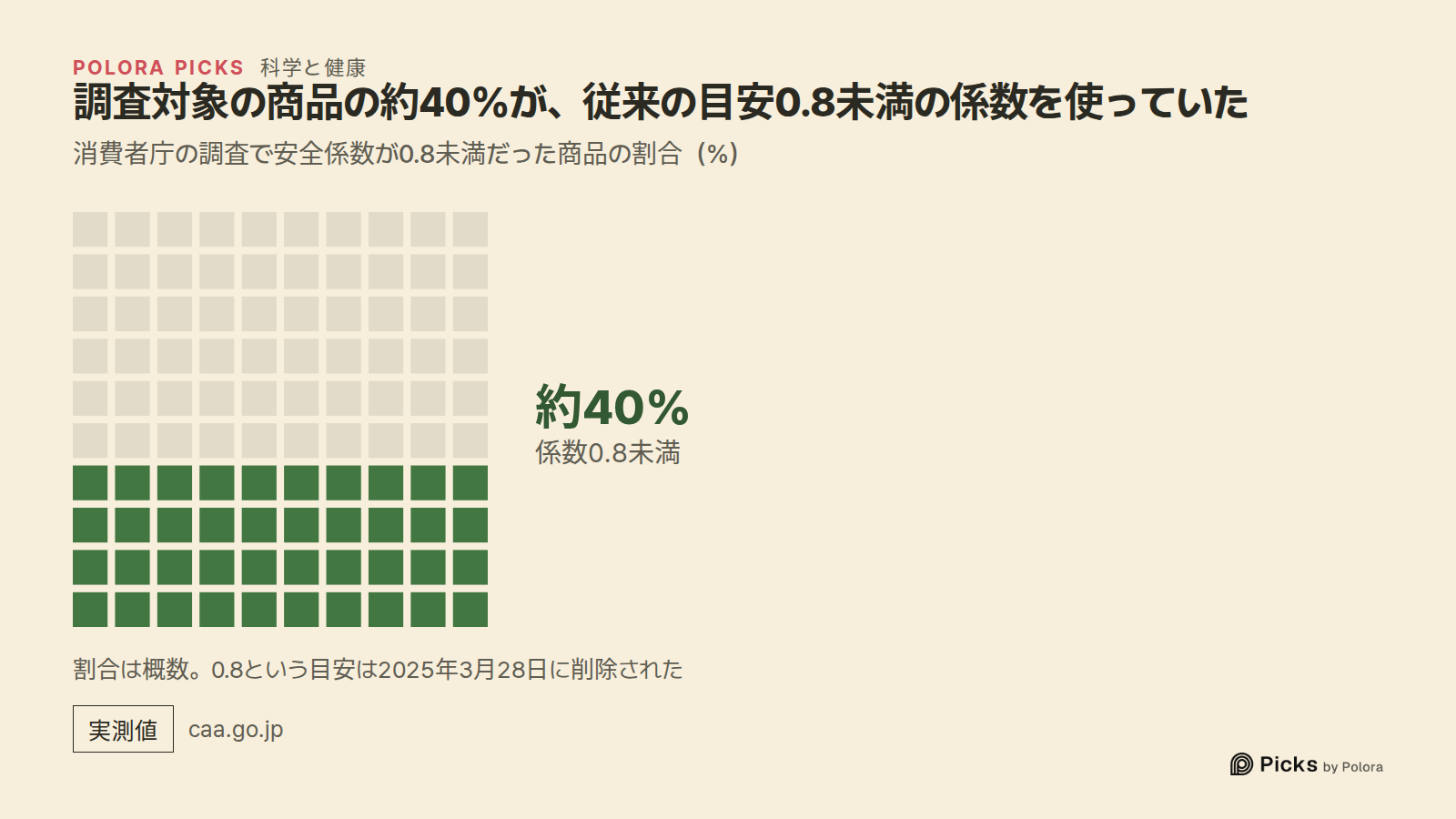
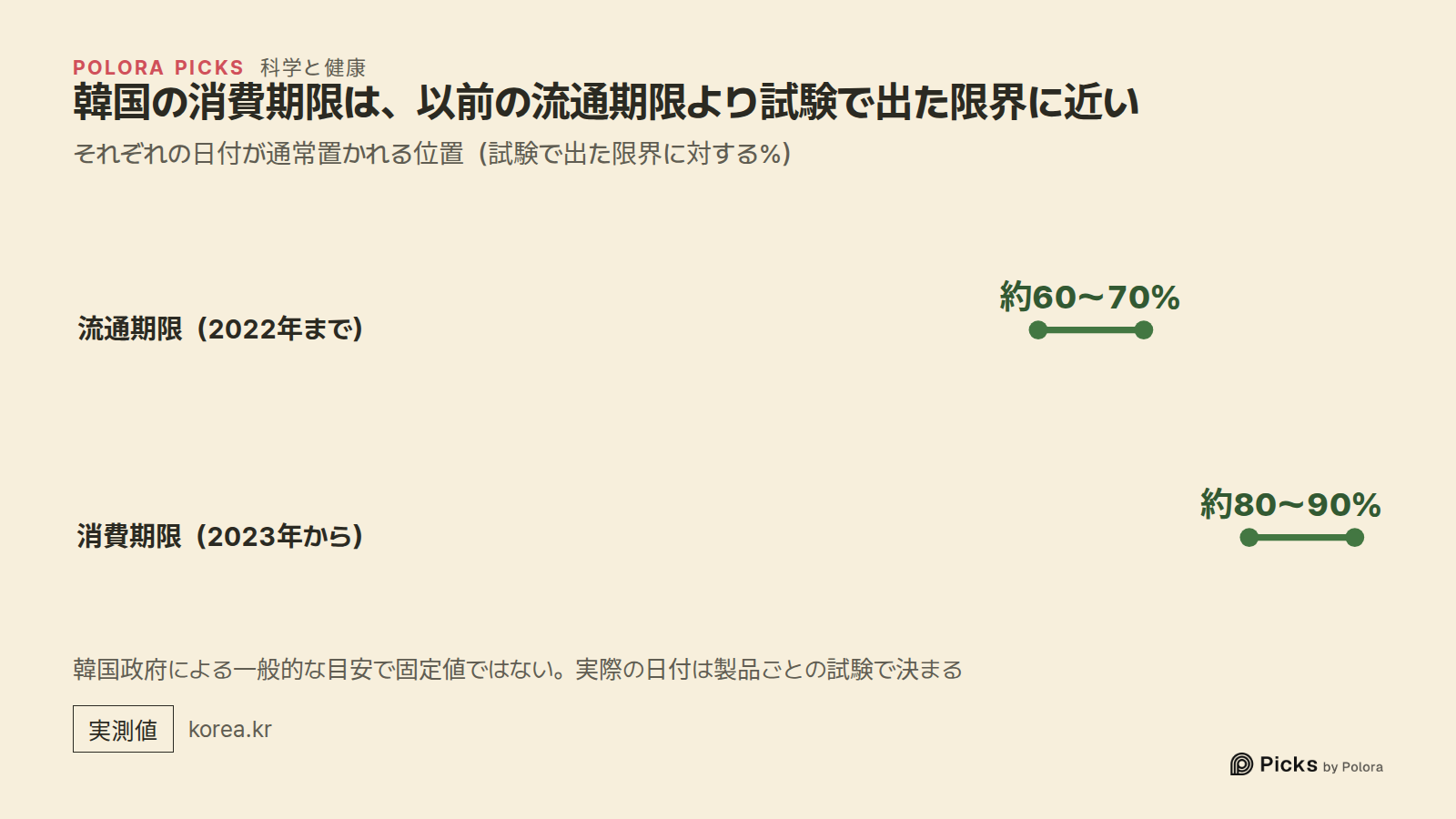
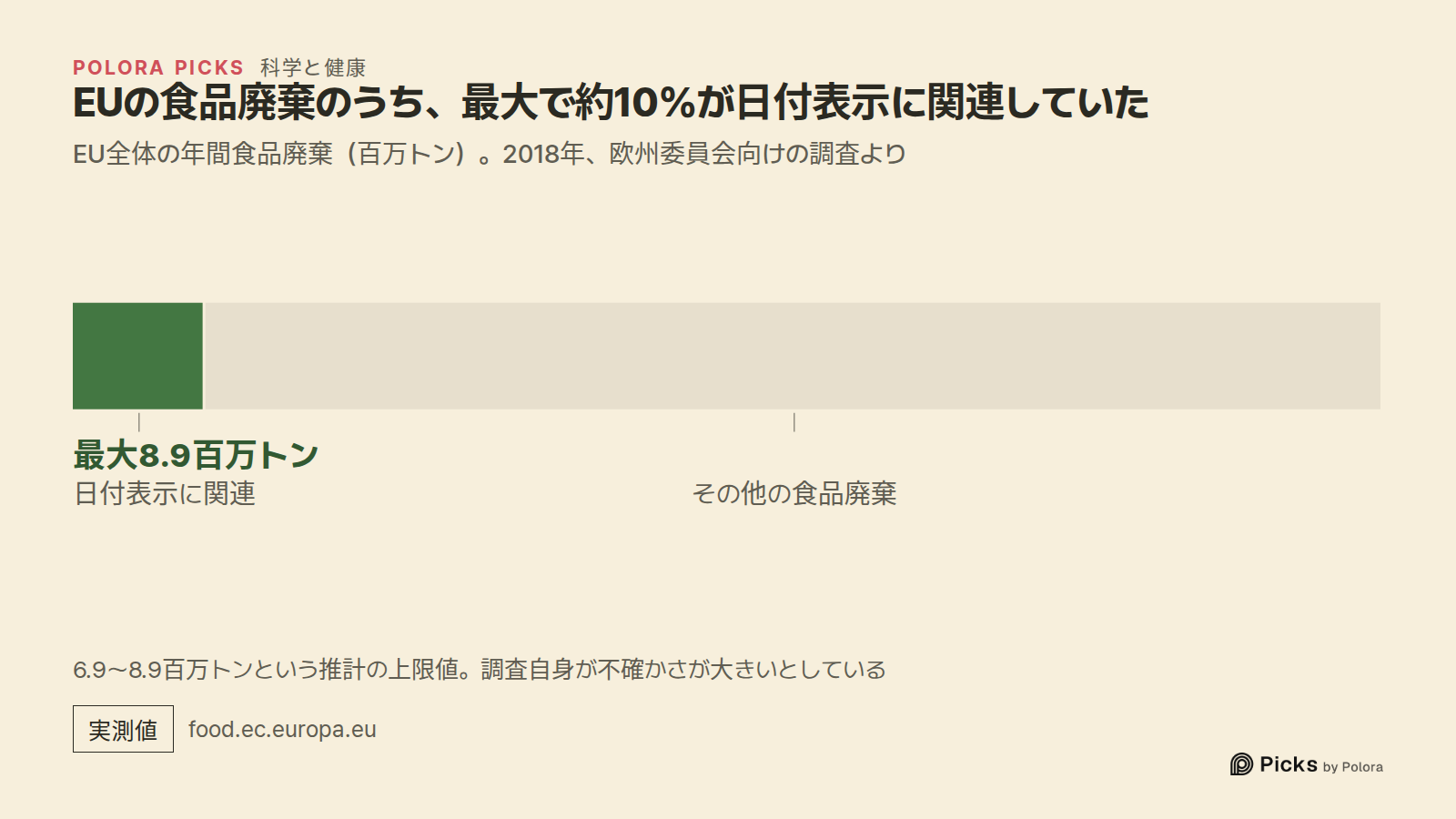
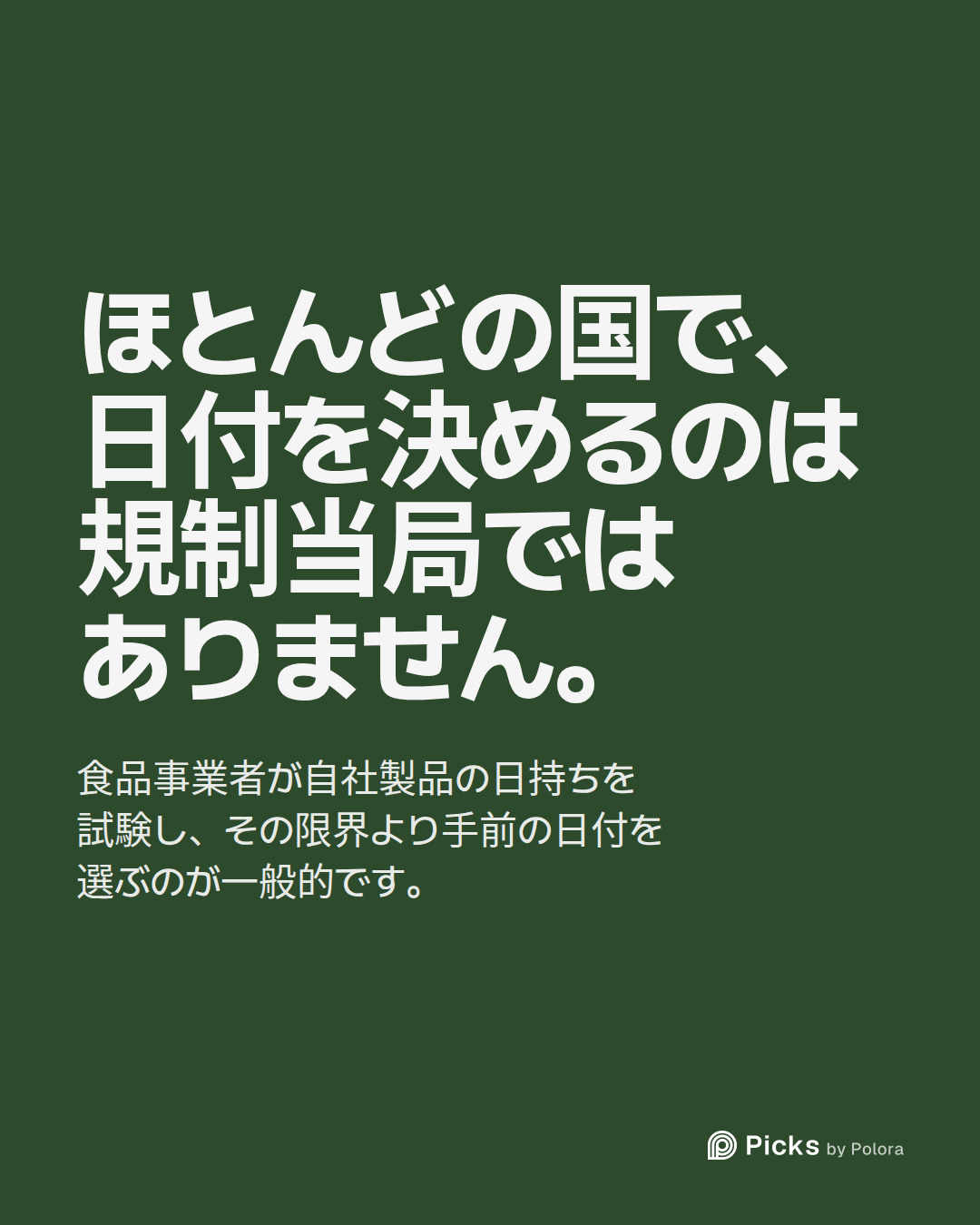
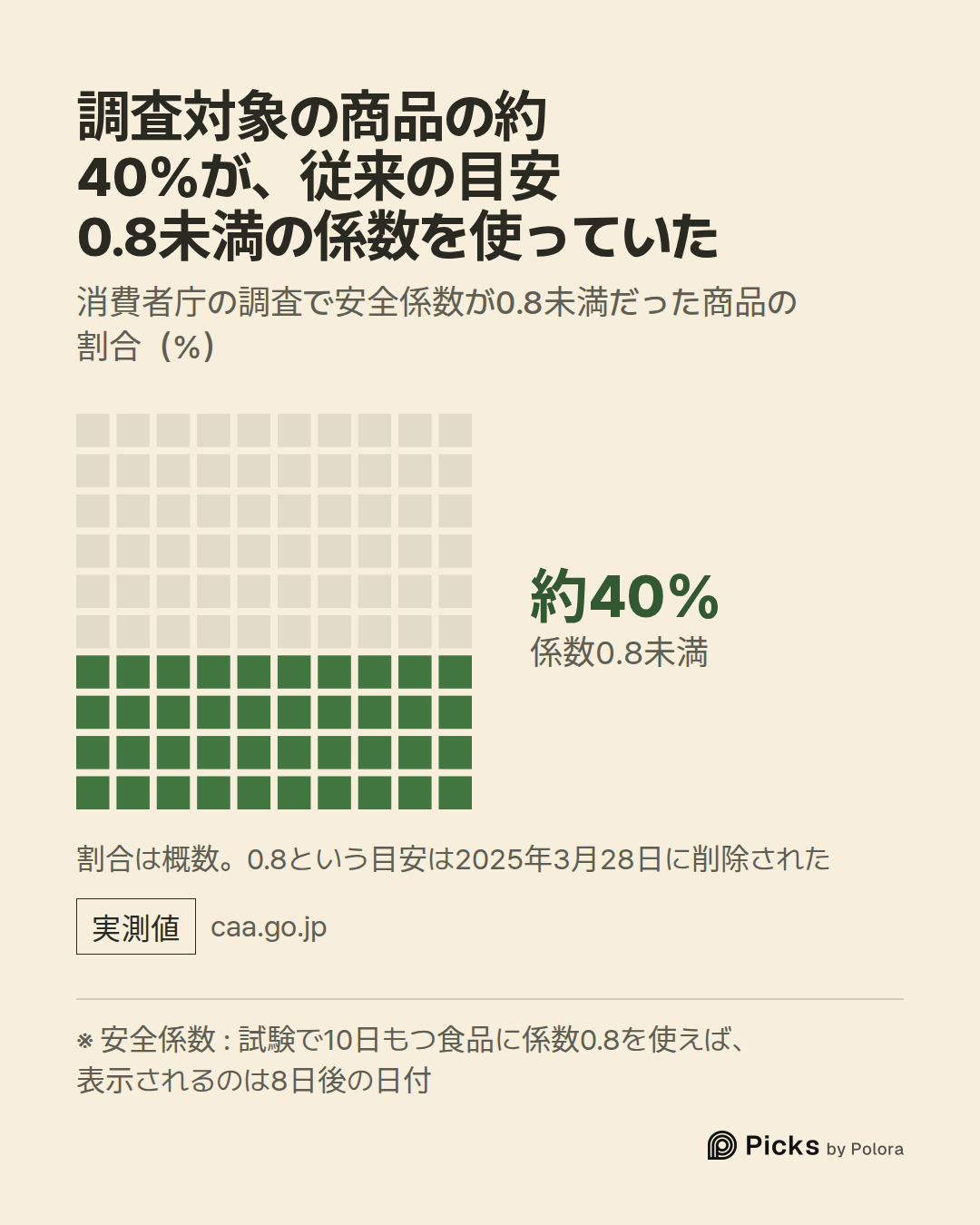
Several supporting details need narrower wording. The evidence discussed does not show that every maker runs its own shelf-life test or freely chooses a margin. Japan’s “about 40%” figure concerns surveyed products, Korea’s percentages are general benchmarks, and the EU waste figures describe waste *linked to date marking*, not waste proved to result solely from consumer confusion. The Researcher did not independently verify California’s statutory wording or the “first state” claim this turn.
The strongest challenge to the manuscript is the risk of turning a label definition into a safety assurance. In…
The Arbiter's Final Verdict · gpt-6-sol
No. A *best before* date generally marks when a food is expected to be at its best quality, not the moment it becomes unsafe. But it does not guarantee that a particular food is safe after the date—or even before it if it was stored improperly.
In the UK and EU, *use by* is the distinct, safety-related date for highly perishable foods. Don’t treat those terms as having identical legal meanings everywhere: US date-label rules differ. The manuscript’s central answer stands, provided it explains the label’s meaning without promising that food past its best-before date is safe to eat. (UK Food Standards Agency; EU Regulation 1169/2011, Article 24)