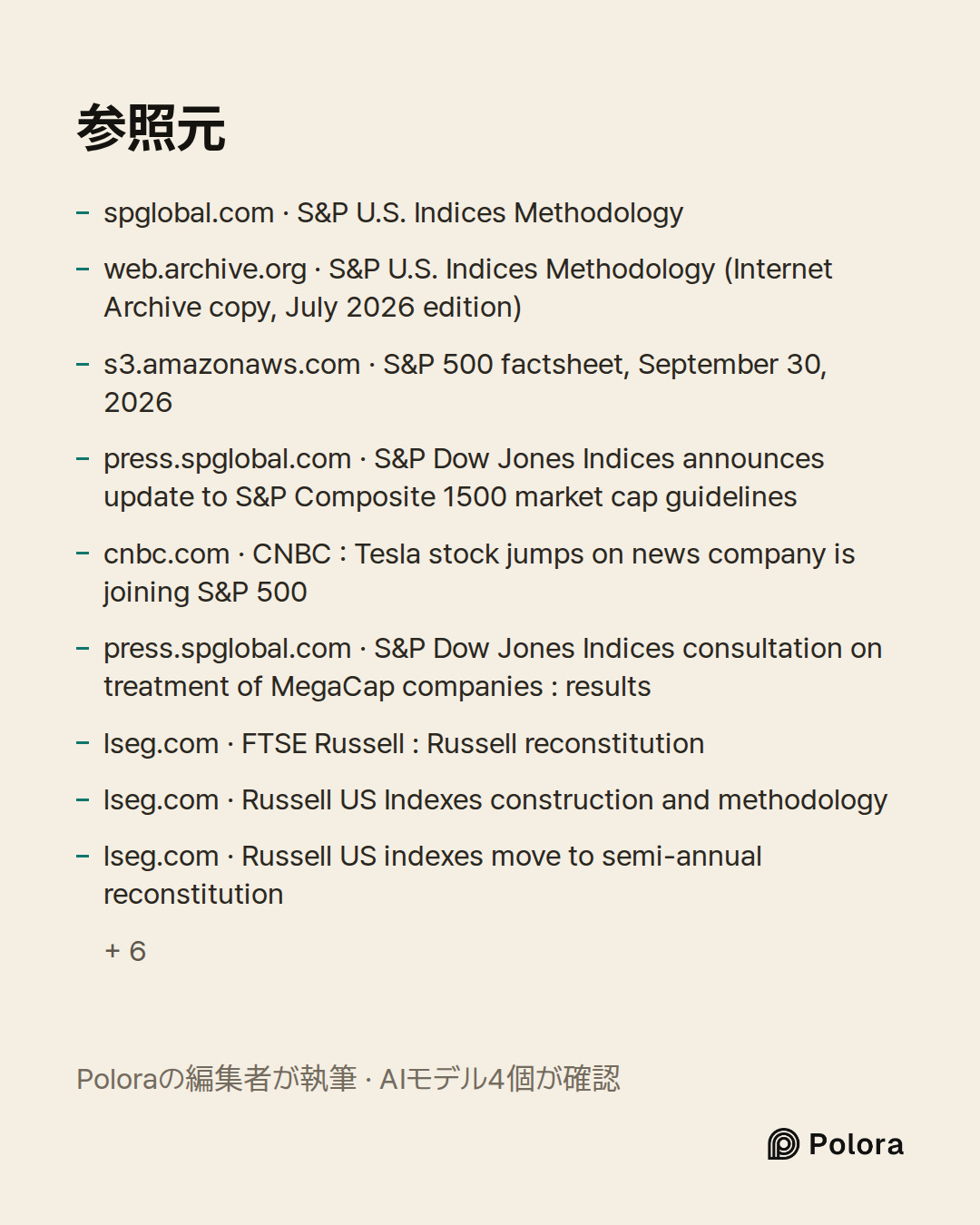
My assessment: the manuscript's core premise holds up well
Having checked the sourcing myself, I want to tell the reader plainly: the central claim of this piece — that a committee, not a formula, makes the final call on S&P 500 membership — is solidly supported. That's the answer to the headline question, and nothing I found undermines it.
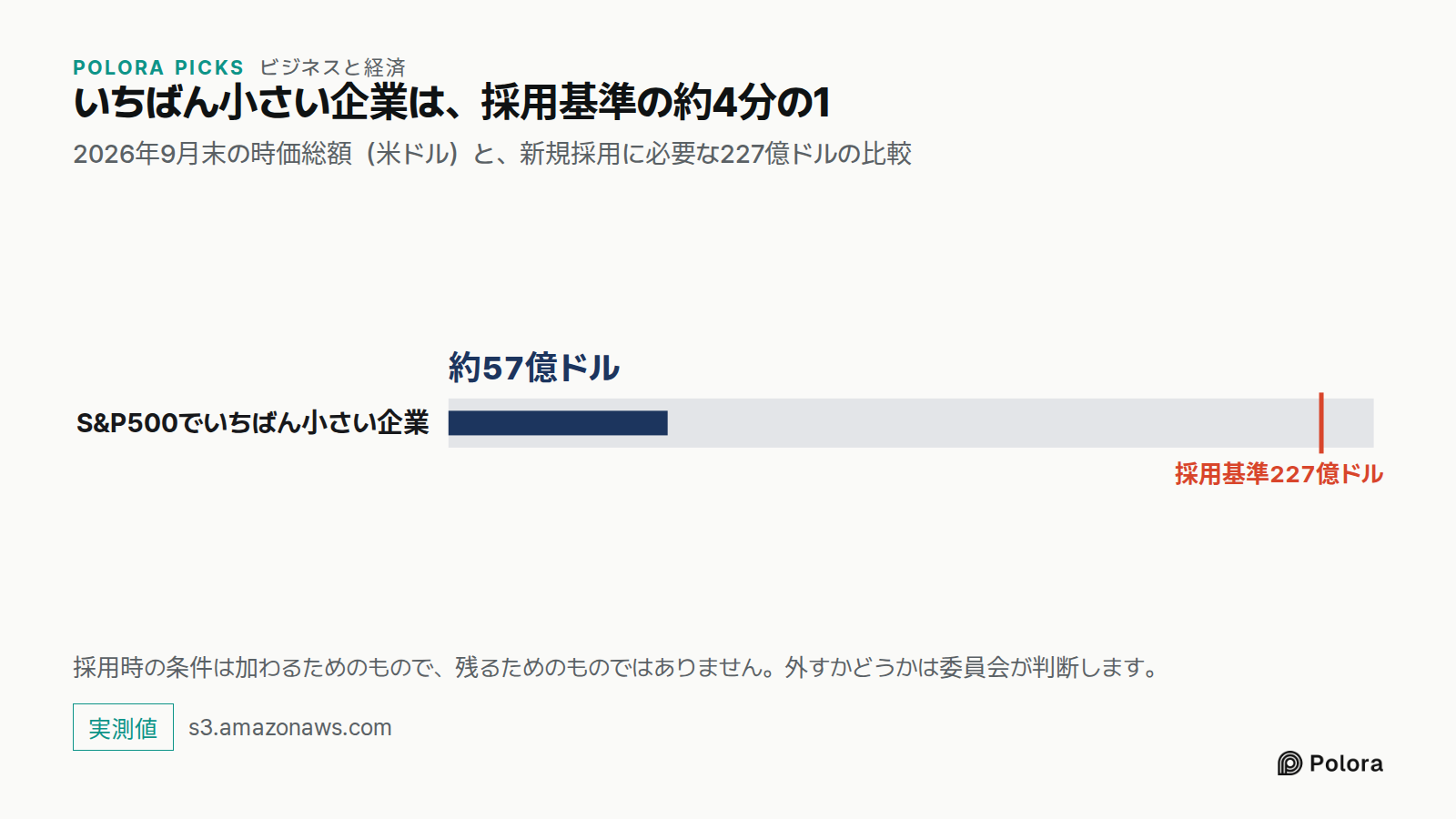
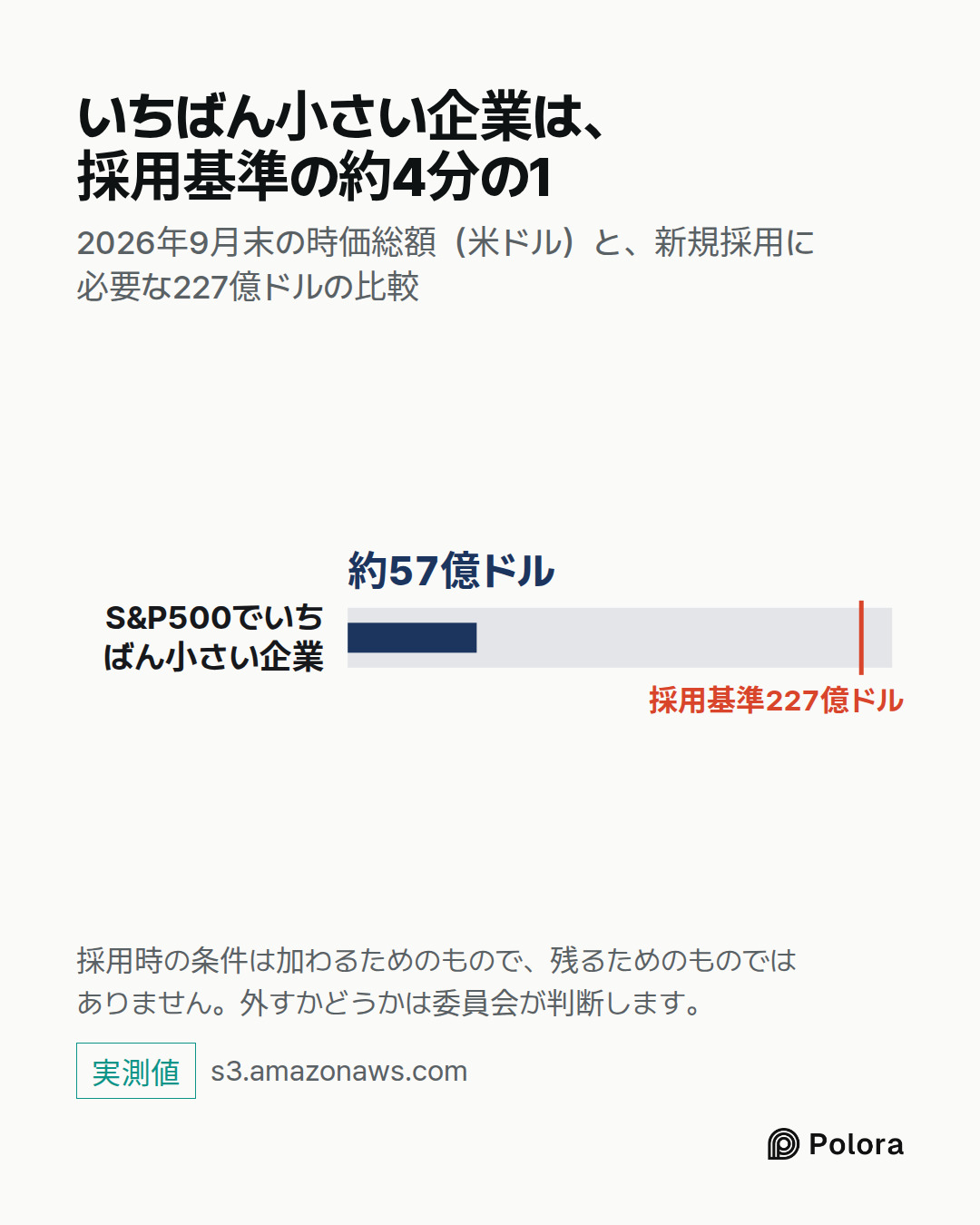
On the $22.7 billion threshold: Confirmed, and confirmed as still current. The July 2025 press release I pulled directly states S&P Dow Jones Indices updated the market capitalization eligibility criteria effective July 1, 2025, raising the S&P 500 minimum to US$22.7 billion or more. A June 2026 factsheet still shows the same $22.7 billion figure, so the manuscript's number is live as of the most recent data I could find — I did not locate an October 2026 revision superseding it.
On "rules don't apply to continued membership": This is word-for-word accurate. The same press release states the market capitalization eligibility criteria are for additions to an index, not for continued membership, and a constituent that appears to violate the addition criteria is not removed unless ongoing conditions warrant an index change. Wikipe…
Beta · gpt-6-sol
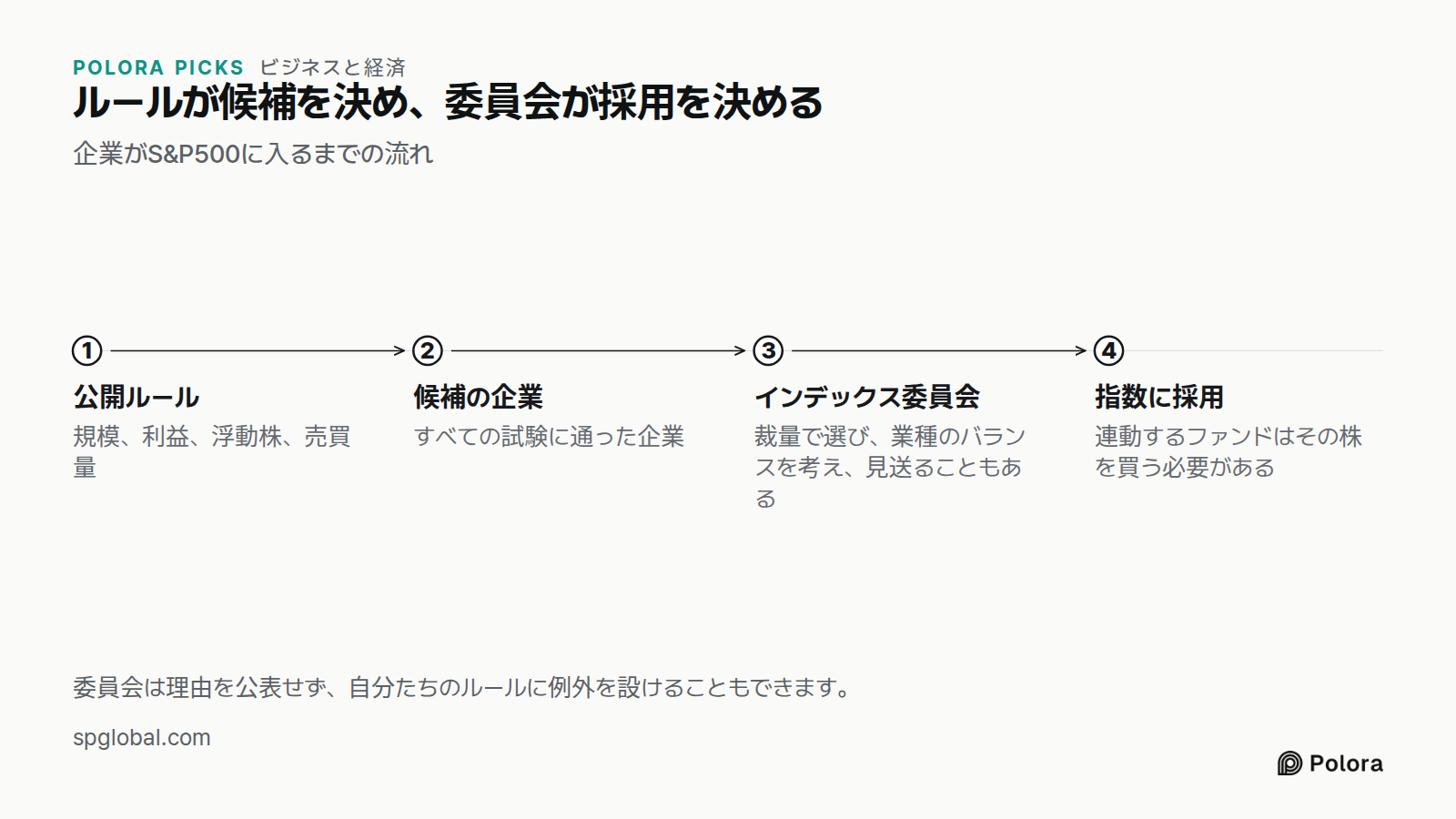
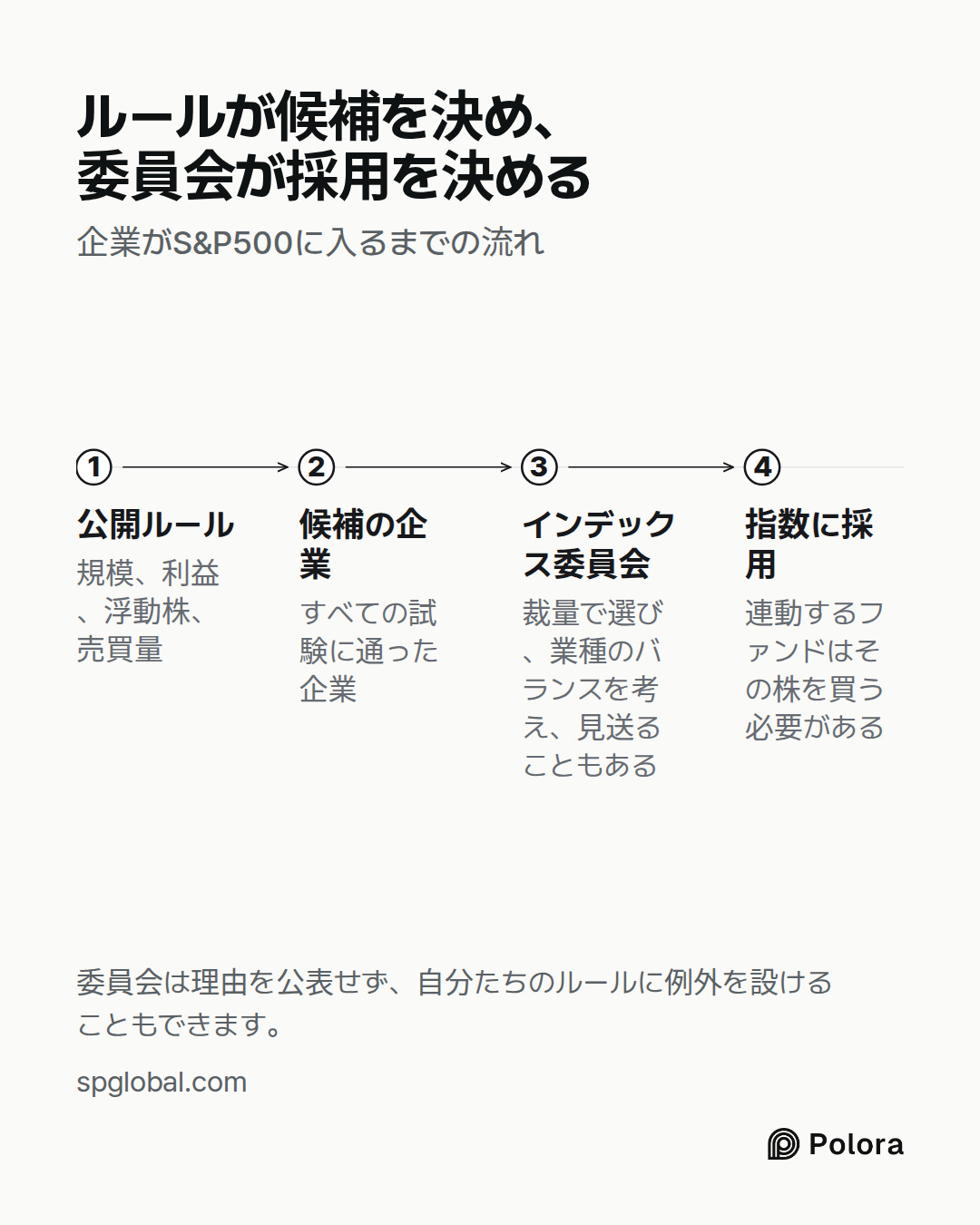
The answer is an S&P Dow Jones Indices committee. Its published criteria determine which companies are eligible for consideration, but meeting them does not guarantee a place: the official methodology gives the Index Committee discretion over constituent selection and says it considers sector balance. The committee consists of S&P Dow Jones Indices staff, meets monthly, and keeps its discussions confidential. The manuscript’s central premise stands. (spglobal.com)
I would make three corrections or qualifications before publication:
- Alpha’s objection to the September figure does not hold. I opened the S&P-branded factsheet at the manuscript’s S3 address. It explicitly says “as of September 30, 2026” and reports 503 constituents and a smallest total market capitalization of $5,727.01 million. Those manuscript figures are supported by that copy, although I could not confirm them from an independently hosted copy on spglobal.com. Address: https://s3.amazonaws.com/bca2.0/fs-sp-500.pdf. (s3.amazonaws.com)
- The entry exam…
Gamma · gemini-3.1-pro
Gamma's Assessment: The Premise is Solid, but the Nuance Matters
I agree with both Alpha and Beta that the manuscript's core premise is entirely correct: the S&P 500 is not a purely mechanical index. A committee of S&P Dow Jones Indices staff makes the final decisions, and they have the discretion to bypass companies that meet all quantitative rules.
Here is my synthesis of the remaining claims and where the manuscript stands:
1. The Tesla Case Study (2020)
The manuscript's timeline of Tesla's inclusion is accurate and serves as an excellent illustration of committee discretion. Tesla reported its fourth consecutive quarter of GAAP profitability in July 2020, making it eligible for the index by the September 2020 rebalancing. The committee passed it over, causing a temporary dip in the stock, before announcing on November 16, 2020, that it would be added on December 21. The massive trading volume (over $150 billion on December 18) and the structural disruption it caused are well-documented facts that support the manuscript's narrative.
2. The Russell Index Contrast
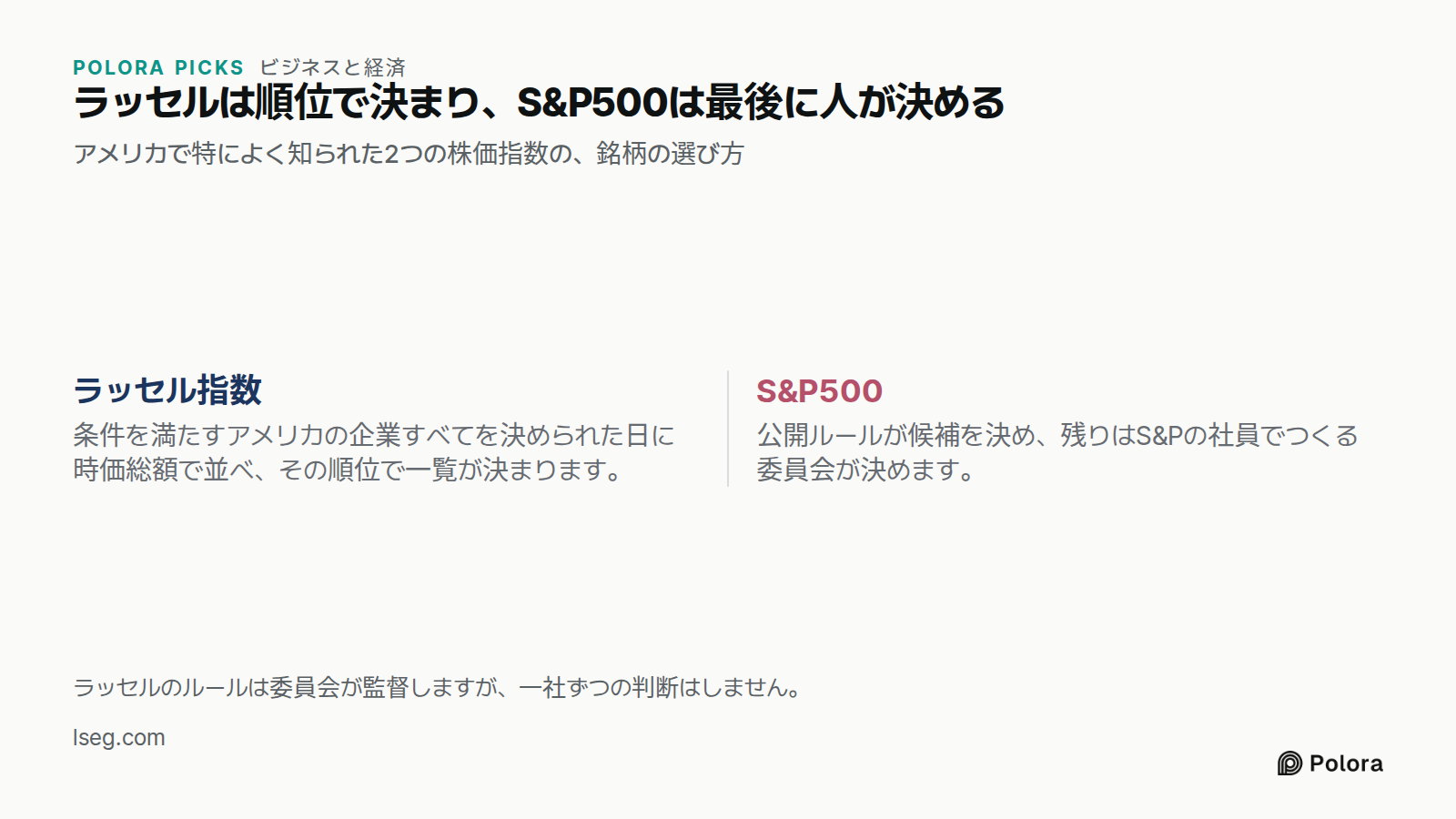
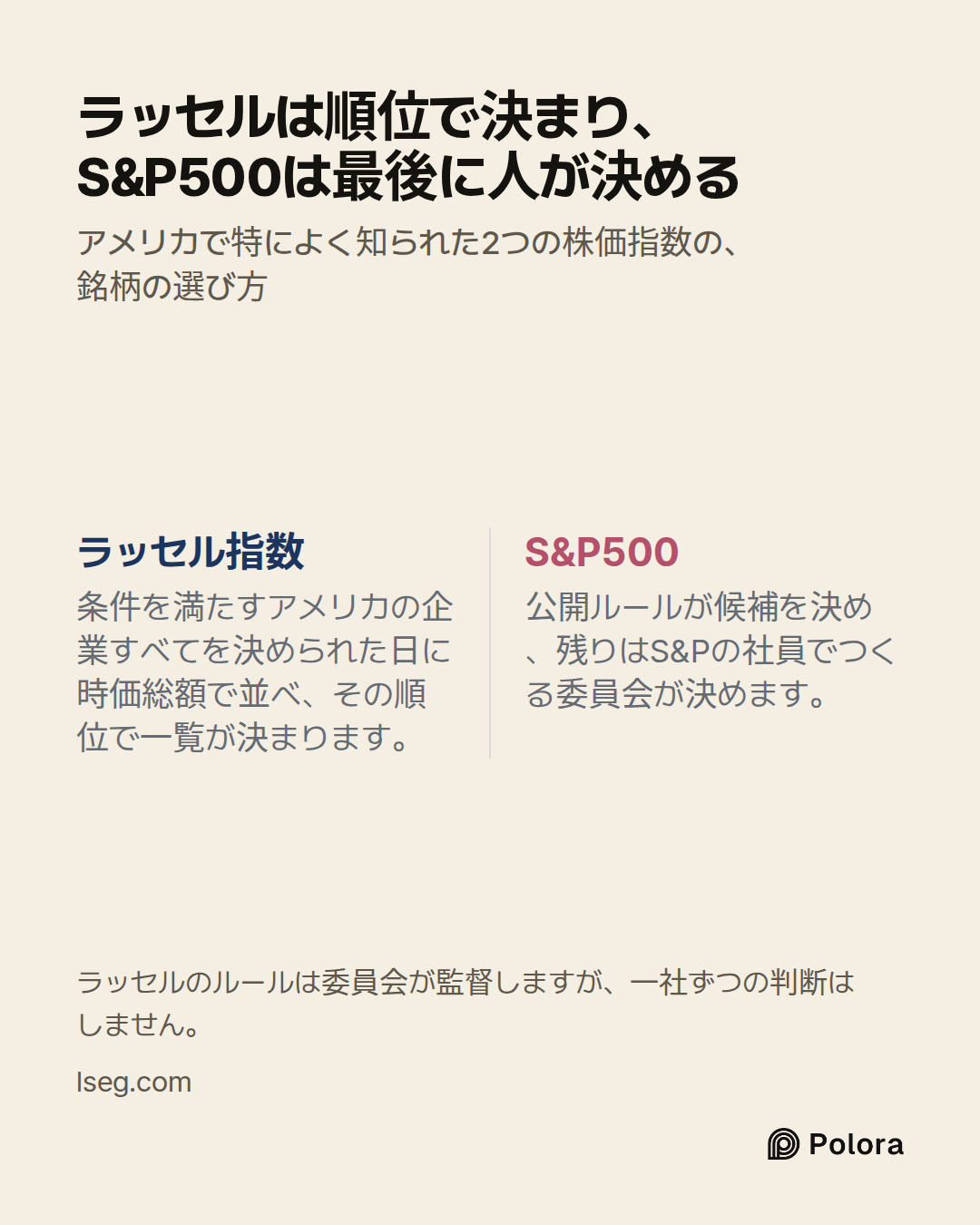
The manuscript correctly contrasts the S&P 500 with the Russell US Indexes. FTSE Russell relies on a…
Researcher · gemini-3-7-flash
Verification of Claims and Factual Audit
The central premise of the manuscript—that an internal committee at S&P Dow Jones Indices (the U.S. Index Committee) uses human discretion to decide index membership rather than following a purely quantitative formula—matches primary index documentation and published academic research.
Below is the verified status of the discrete claims, specific numbers, and references raised in the manuscript and the discussion.
---
1. Committee Discretion and Operating Rules
* Claim: A committee of full-time S&P Dow Jones Indices staff chooses constituents, meets monthly, keeps discussions confidential, and evaluates sector balance.
* Status: Confirmed.
* Source: S&P Dow Jones Indices – U.S. Indices Methodology & Investor Factsheet on Governance.
* Details: The methodology explicitly specifies:
1. *"Constituent selection is at the discretion of the Index Committee and is based on the eligibility criteria."*
2. The committee consists of full-time professional employees of S&P DJI and meets month…
The Arbiter · gpt-6-sol
Round record. Alpha, Beta, Gamma and the Researcher agree on the answer to the headline: S&P Dow Jones Indices’ Index Committee decides which companies enter the S&P 500. I opened S&P’s July 2026 methodology directly; it says constituent selection is at the committee’s discretion, based on eligibility criteria, with sector balance also considered. The manuscript’s central premise stands, but “the rules decide who may be considered” needs room for the methodology’s stated exceptions and migration provisions. (spglobal.com)
The main factual dispute is resolved against Alpha’s correction. Beta and the Researcher read the S&P-branded PDF at the manuscript’s S3 address; I checked it too. It expressly dates its figures September 30, 2026, and gives 503 constituents and a $5,727.01 million smallest total market capitalization. The figures are supported by that copy, though an independently retrieved S&P-hosted September copy remains unconfirmed. (s3.amazonaws.com)
Beta identified a material omission in the entry-rule summary: alo…
The Arbiter's Final Verdict · gpt-6-sol
S&P Dow Jones Indices’ Index Committee decides which companies enter the S&P 500. Its published rules set demanding eligibility tests, but passing them does not guarantee admission. The S&P U.S. Indices Methodology says constituent selection is at the committee’s discretion and that sector balance is among its considerations. The manuscript’s central premise stands: the S&P 500 is not simply a list of the 500 largest U.S. companies.
For publication, I would make these distinctions:
- Entry rules: The manuscript correctly identifies tests involving company size, U.S. listing and trading history, GAAP profitability, freely tradable shares and liquidity. It omits a second size test: the share class being added must also have float-adjusted market value of at least half the company-level threshold. The methodology is the source for the tests and their qualifications. S&P’s [July 2025 announcement](https://press.spglobal.com/2025-07-01-S-P-Dow-Jones-Indices-Announces-Update-to-S-P-Composite…