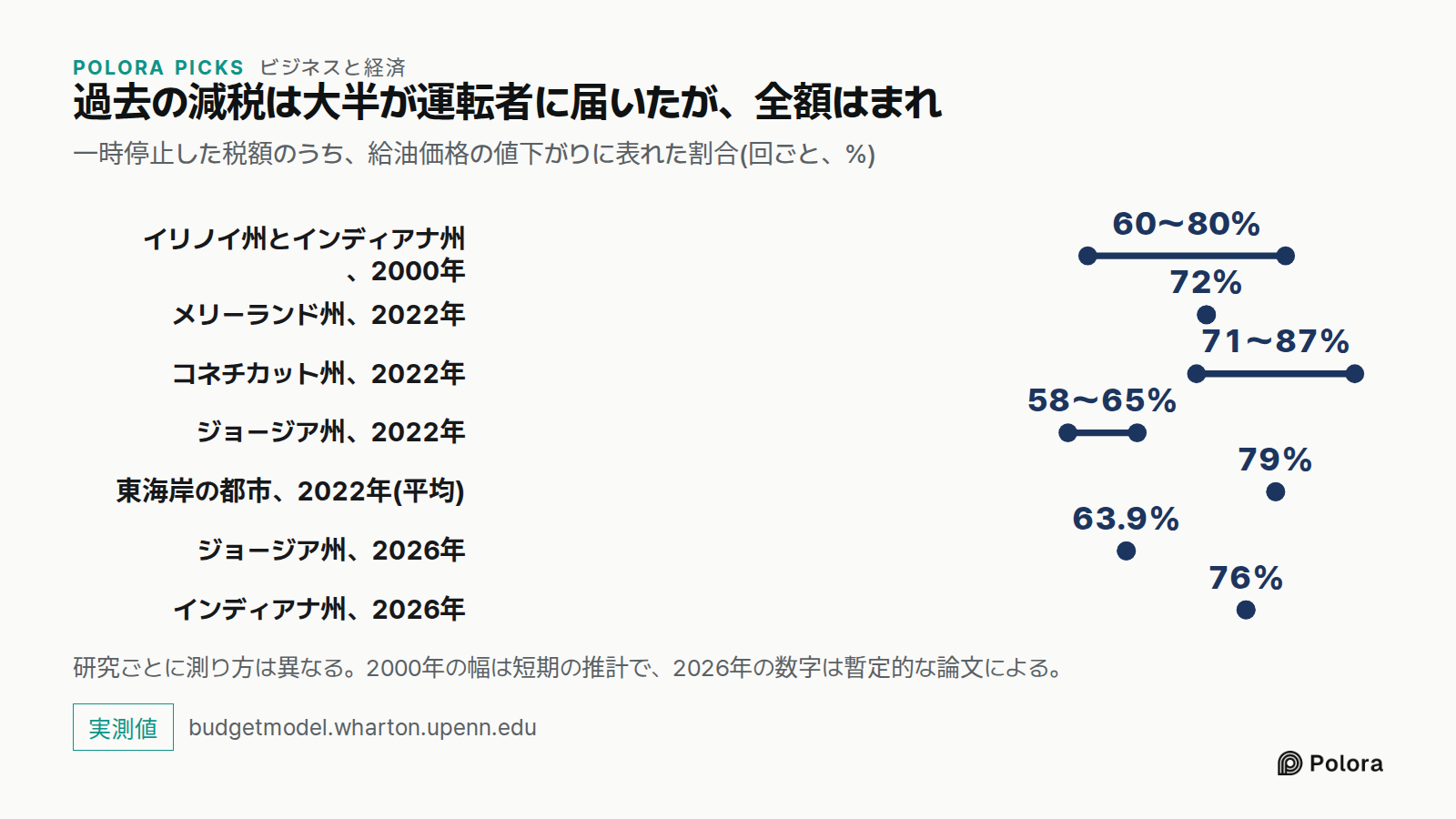
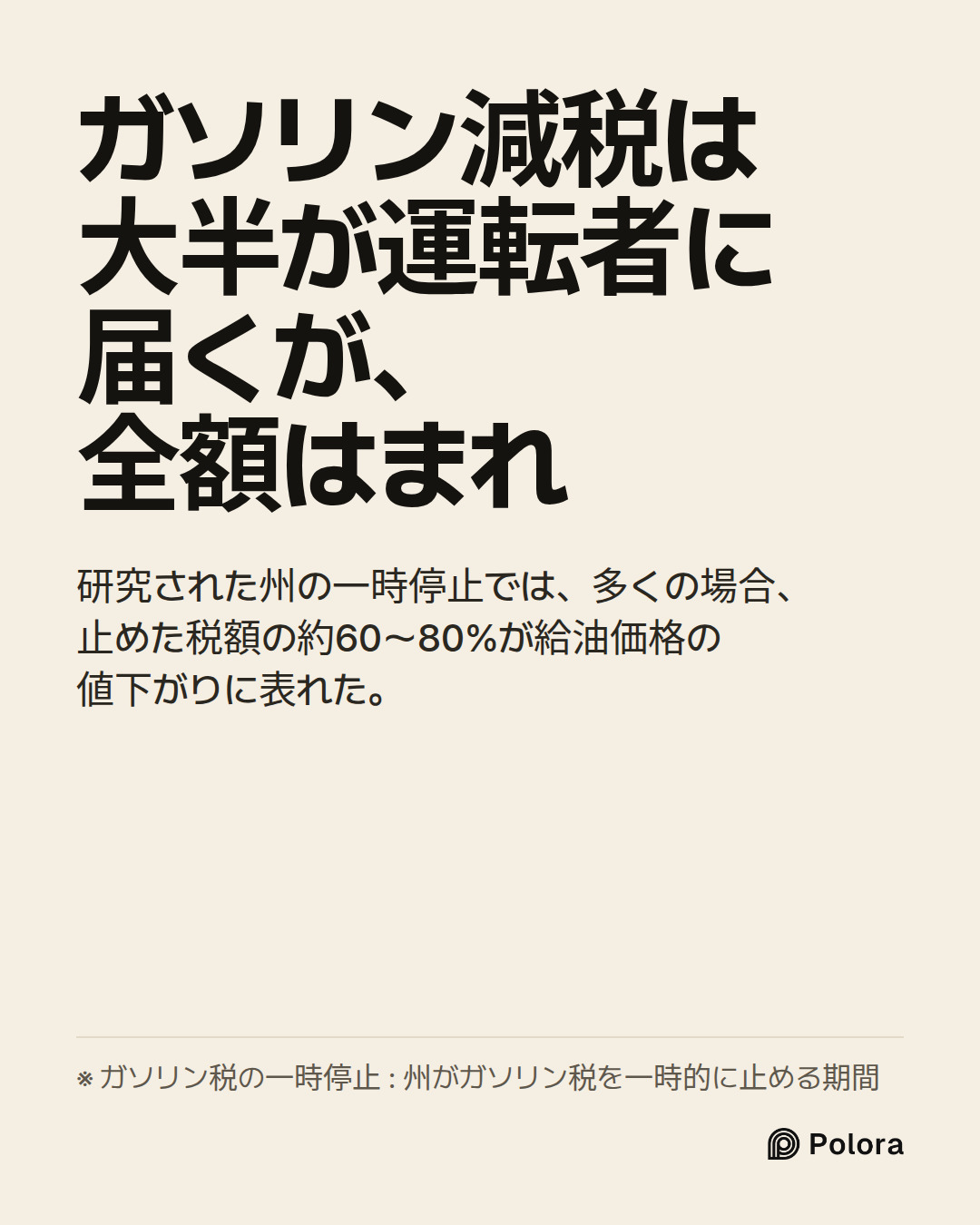
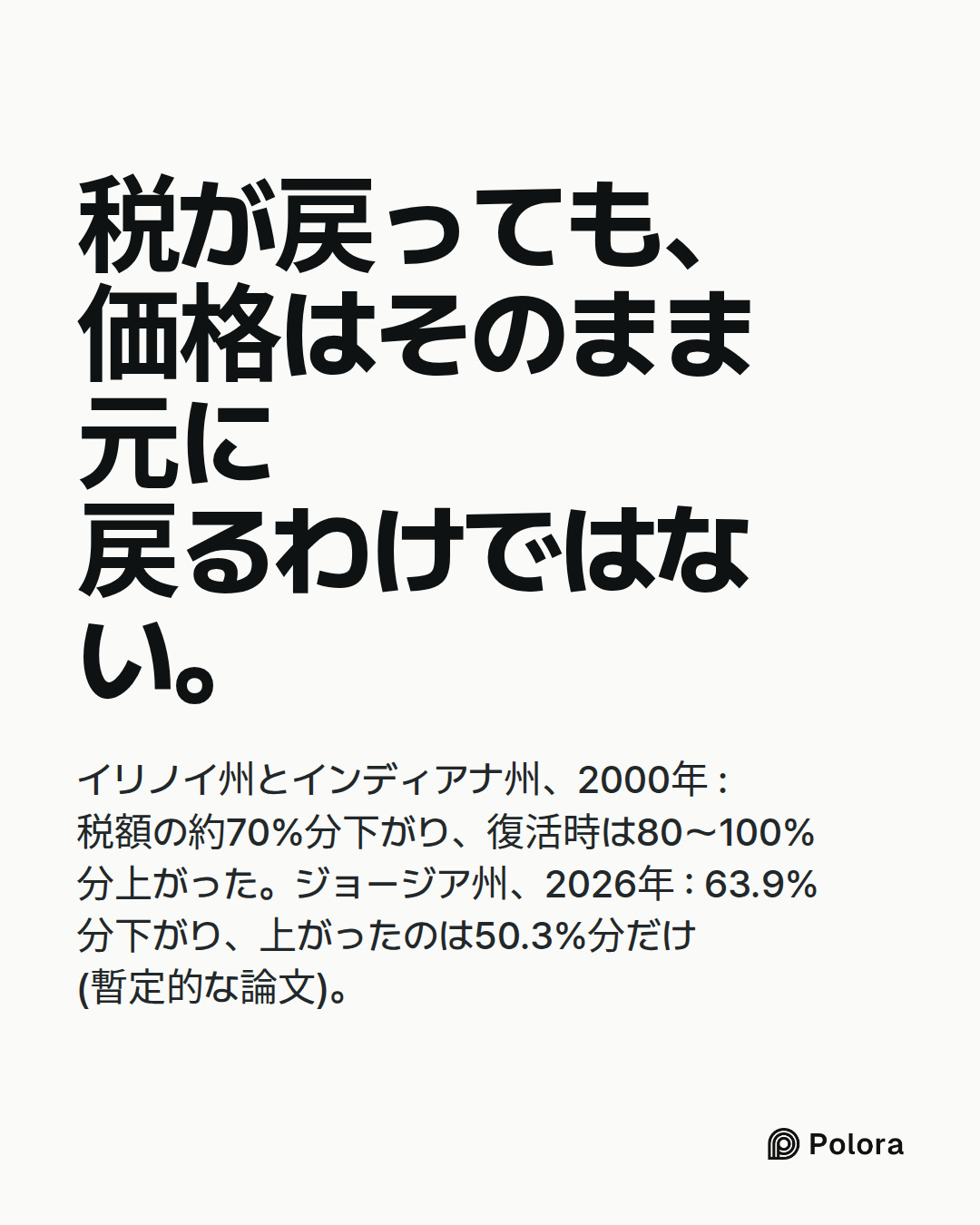
イリノイ州とインディアナ州、2000年 : 両州がガソリンにかかる5%の売上税を止めたとき、減税の約70%が給油価格の値下がりとなって表れました。著者らの推計では、短期的には減税の60〜80%が運転者に届いています(Doyle、Samphantharak、Journal of Public Economics、2008年)。
When a state suspends its gas tax, do drivers actually get the savings?
Alpha · claude-sonnet-5
Good — this confirms and corrects several points in the draft. Here's my read as Alpha.
The $725 million figure: confirmed, but the draft's precision and source are shaky. Multiple outlets converge on $725 million from the General Revenue Fund — WHIZ gives the exact figure of "$725,250,000 from the General Revenue Fund to cover the expected loss from the suspended fuel taxes", and a WJW/Yahoo report independently confirms "The bill offsets lost gas tax revenue with a $725 million appropriation from the state's general fund, with another $250,000 appropriation for administrative expenses." But Signal Ohio complicates this: it says the bill "pulls $725 million out of the state's reserve accounts to cover the lost road and bridge maintenance funding", and separately reports that DeWine would only sign "now that it's funded via general budget dollars and not those earmarked specifically for road repairs and construction". That's two outlets using "reserve accounts" language against two using "General Revenue Fund." I'd call this resolved toward General Revenue Fund given WHIZ's exact-dollar specificity and WJW's independent corroboration, but the manuscript should not present $725…
Beta · gpt-6-sol
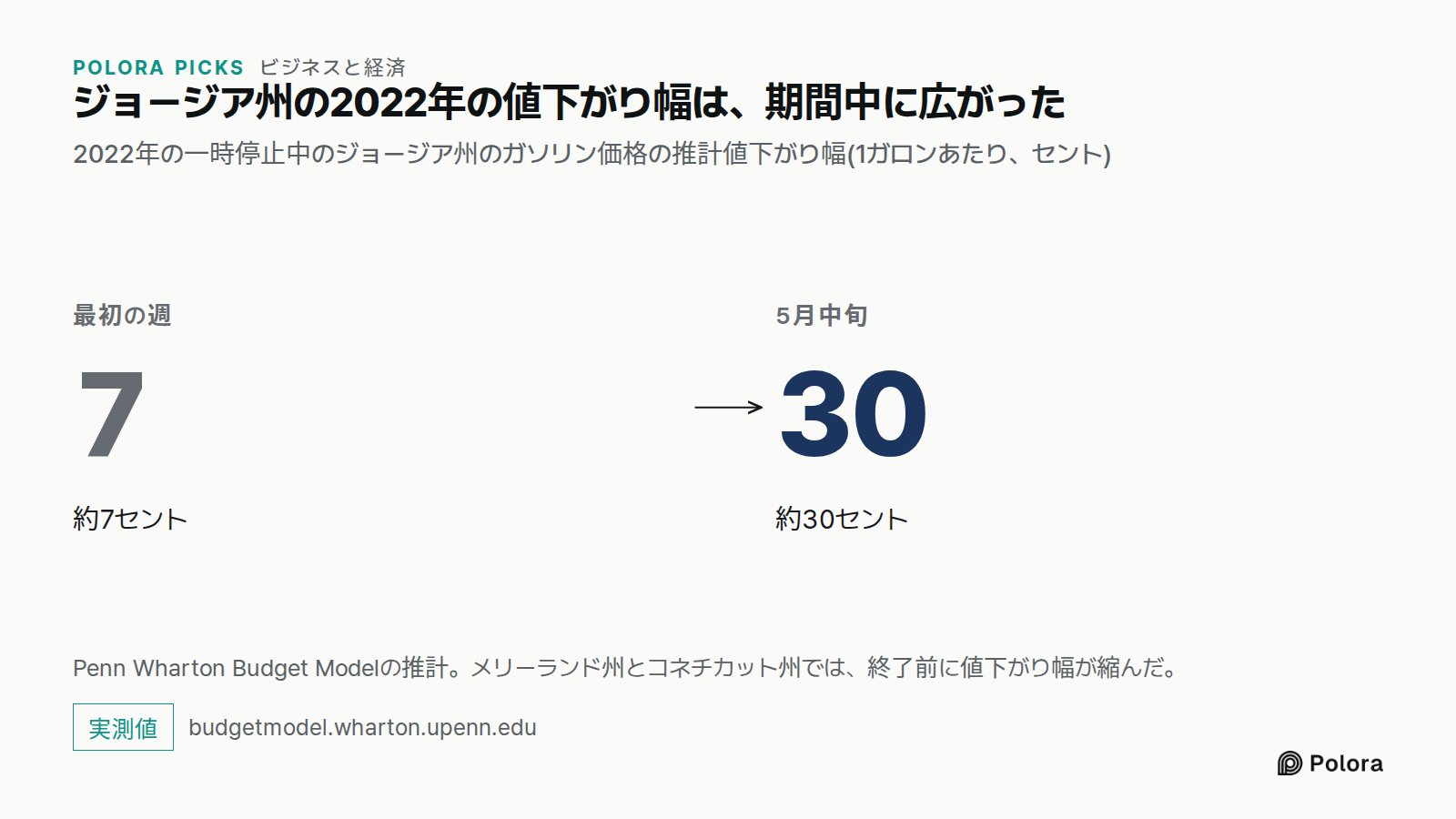
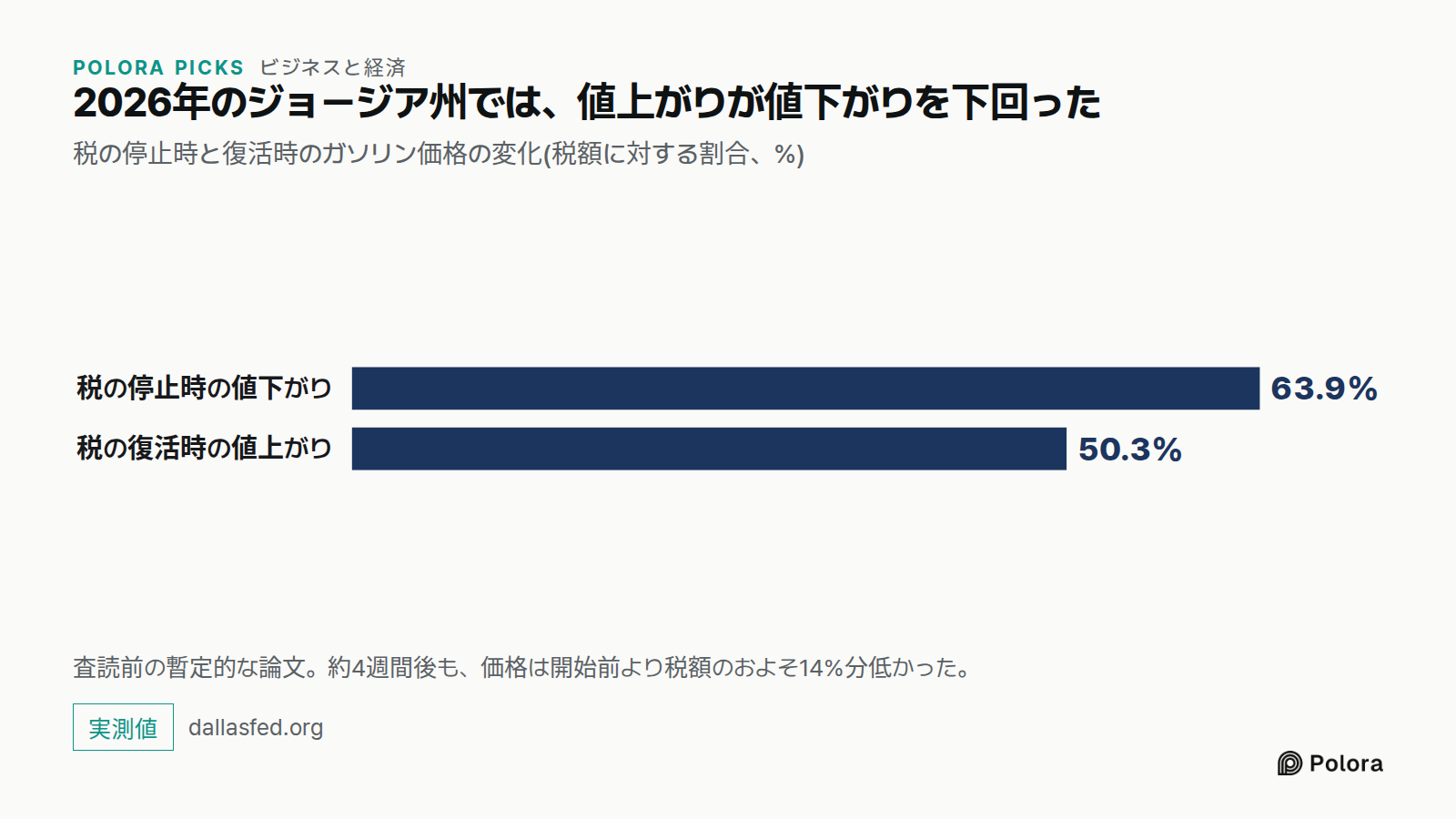
Drivers often get most of a suspended gas tax, but the pump price need not fall by the full tax—or immediately. The manuscript’s answer stands as a description of the holidays it cites, not as a prediction for every state or station. Penn Wharton estimates that consumers received 72% of Maryland’s 2022 cut, 58–65% of Georgia’s and 71–87% of Connecticut’s. Those are estimates against a *no-holiday price*, not necessarily changes a driver could read straight off a price board amid other price movements. (budgetmodel.wharton.upenn.edu)
I would make three substantive corrections before publication:
- The explanation of *why* savings are partial is too certain. The manuscript says that because drivers keep buying roughly the same amount, sellers have little reason to pass on the full cut. Inelastic demand alone does not establish that result; the response of supply and competition matters too. The evidence establishes partial pass-through in the cited episodes, but does not justify that one-sentence causal rule. The draft also says pass-through is decided along the…
Gamma · gemini-3.1-pro
As Gamma, here is my assessment of the manuscript and the evidence surrounding it.
Alpha and Beta have rightly pointed out that while the historical evidence supports the manuscript's core premise—that drivers see most, but rarely all, of a gas tax cut—the manuscript risks turning complex, varied historical estimates into a rigid "60 to 80 percent" rule. I agree with that critique, but I want to focus sharply on the Ohio-specific claims and the strongest argument against the manuscript's angle.
The Ohio Specifics: Funding and Enforcement
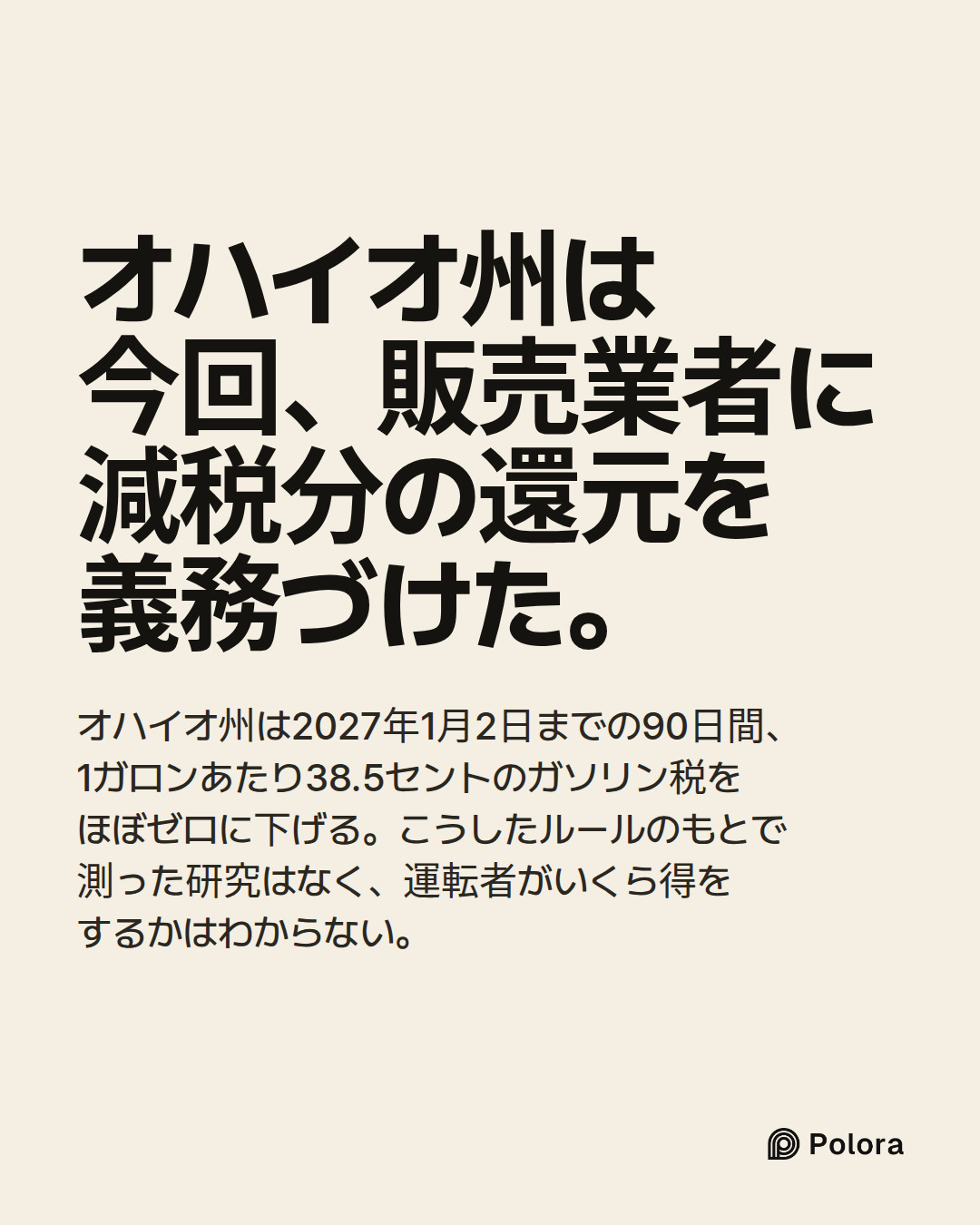
The manuscript claims that $725,250,000 is being moved from the General Revenue Fund to cover the lost tax revenue. Alpha and Beta noted the conflicting reporting between "General Revenue Fund" (WHIZ/Yahoo) and "reserve accounts" (Signal Ohio). In state legislative finance, rainy day or reserve funds are often sub-accounts or transfers managed through the General Revenue Fund framework. Without the final Legislative Service Commission (LSC) fiscal note for HB 519 in front of us, the most accurate and defensible phrasing for the manuscript would be to blend these: "an appropriation of roughly $725 million from general state funds." This avoids…
Researcher · gemini-3-7-flash
Verification of Manuscript Claims Against Current Ground Truth
---
1. Ohio HB 519 Specifics (Start Date, Enforcement, and Funding)
* Start Date (October 4, 2026): Confirmed. House Bill 519 was signed by Gov. Mike DeWine on Thursday, October 1, 2026. The statutory language enacts the suspension three days after signing, placing the effective start date on Sunday, October 4, 2026, running 90 days until January 2, 2027. Outlier reporting citing October 5 stems from counting full business days rather than calendar days.
* *Source:* The Athens Post (Oct 2, 2026); Ohio General Assembly HB 519 Status.
* Enforcement & Mandate Mechanism: Confirmed via LSC Analysis. The Ohio Legislative Service Commission (LSC) analysis confirms that retail dealers are required to pass the tax cut down to consumers. Non-compliance can trigger a licensing inquiry by the Ohio Tax Commissioner, which may be formally referred to the Ohio Attorney General's Office for enforcement under Oh…
The Arbiter · gpt-6-sol
Round record
Alpha, Beta and Gamma agree on the central answer: In the holidays examined, drivers generally received a majority of the suspended tax through lower *estimated* pump prices, but not necessarily every cent or on the first morning. Penn Wharton reports 72% in Maryland, 58–65% in Georgia and 71–87% in Connecticut in 2022. Those figures compare prices with an estimated *no-holiday* price; they are not necessarily the change visible on a station’s sign. (budgetmodel.wharton.upenn.edu)
The principal correction is to the manuscript’s certainty, not its premise. Alpha and Beta caution against presenting “60 to 80 percent” as a general rule assembled from different states, methods and kinds of tax. Beta also identifies two wording errors: an upstream tax can still be embedded in the posted pump price, and inelastic demand alone does not explain partial pass-through without considering supply and competition. The sentence saying the law does not decide pass-through is too absolute when Ohio’s law reportedly requires it.
Ohio is still a prospective case on October…
The Arbiter's Final Verdict · gpt-6-sol
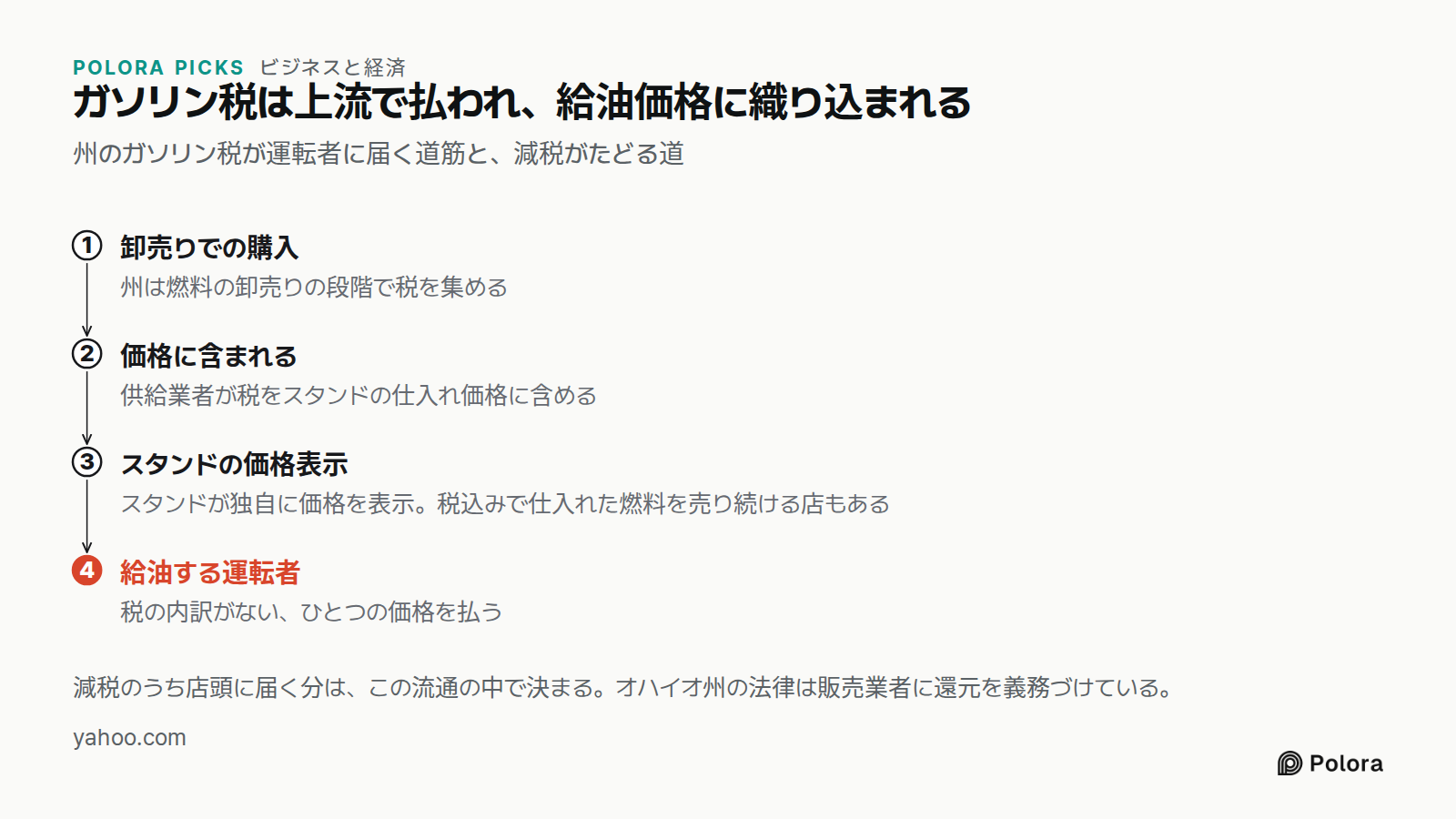
Yes, usually—but not necessarily all of it, and not immediately. A gas tax may be collected from fuel businesses upstream, but its cost is ordinarily built into the price drivers pay. Suspending it lowers a cost in the supply chain; how much of that reduction reaches a pump price depends on suppliers, stations, competition and the timing of fuel purchases.
The measured result is a reduction relative to what prices would likely have been without the holiday, not necessarily a drop visible on the price board. For 2022 holidays, the Penn Wharton Budget Model estimated that drivers received 72% of the suspended tax in Maryland, 71–87% in Connecticut and 58–65% in Georgia. Those are episode-specific estimates, not a dependable “60–80% rule” for every state or station.
Ohio’s result is not known yet as of October 3, 2026. Its reported requirement that dealers pass on the reduction makes past holidays an imperfect forecast; the studies cited here do not establish how much that requirement will change prices. The manuscript’s central premise stands, but it should not promise either…