Do brands pay supermarkets to get their products on the shelf?
Alpha · claude-sonnet-5
Good — I can confirm the core premise and spot two things the manuscript needs to fix.
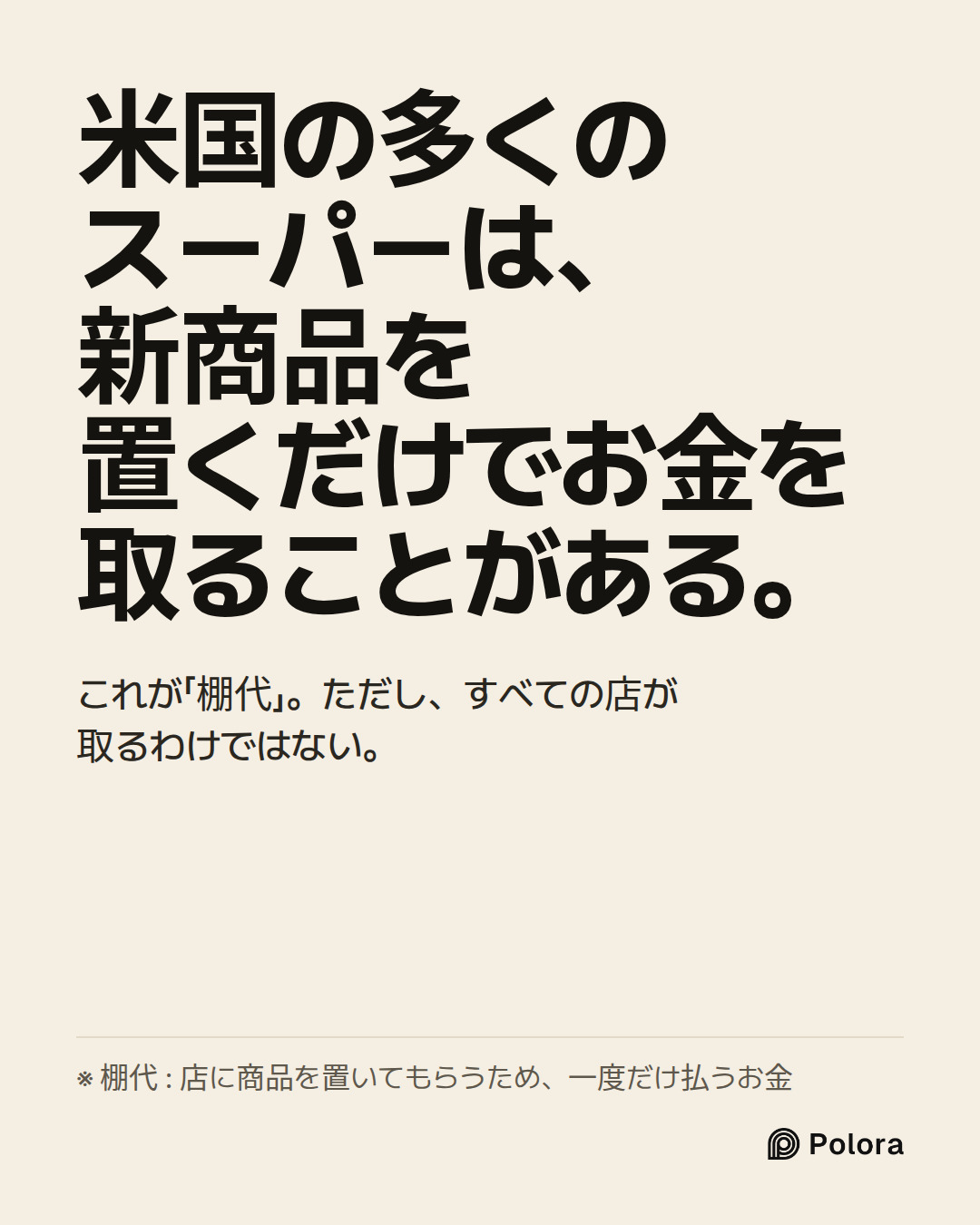
The core premise holds. Yes, brands commonly pay US supermarkets for shelf space. The FTC's own account of its 2003 study confirms the mechanism: "Slotting allowances are one-time payments a supplier makes to a retailer as a condition for the initial placement of the supplier's product on the retailer's store shelves or for initial access to the retailer's warehouse space." The manuscript's framing — entry fee plus ongoing trade spending — is directionally right and matches how the FTC itself summarized it.
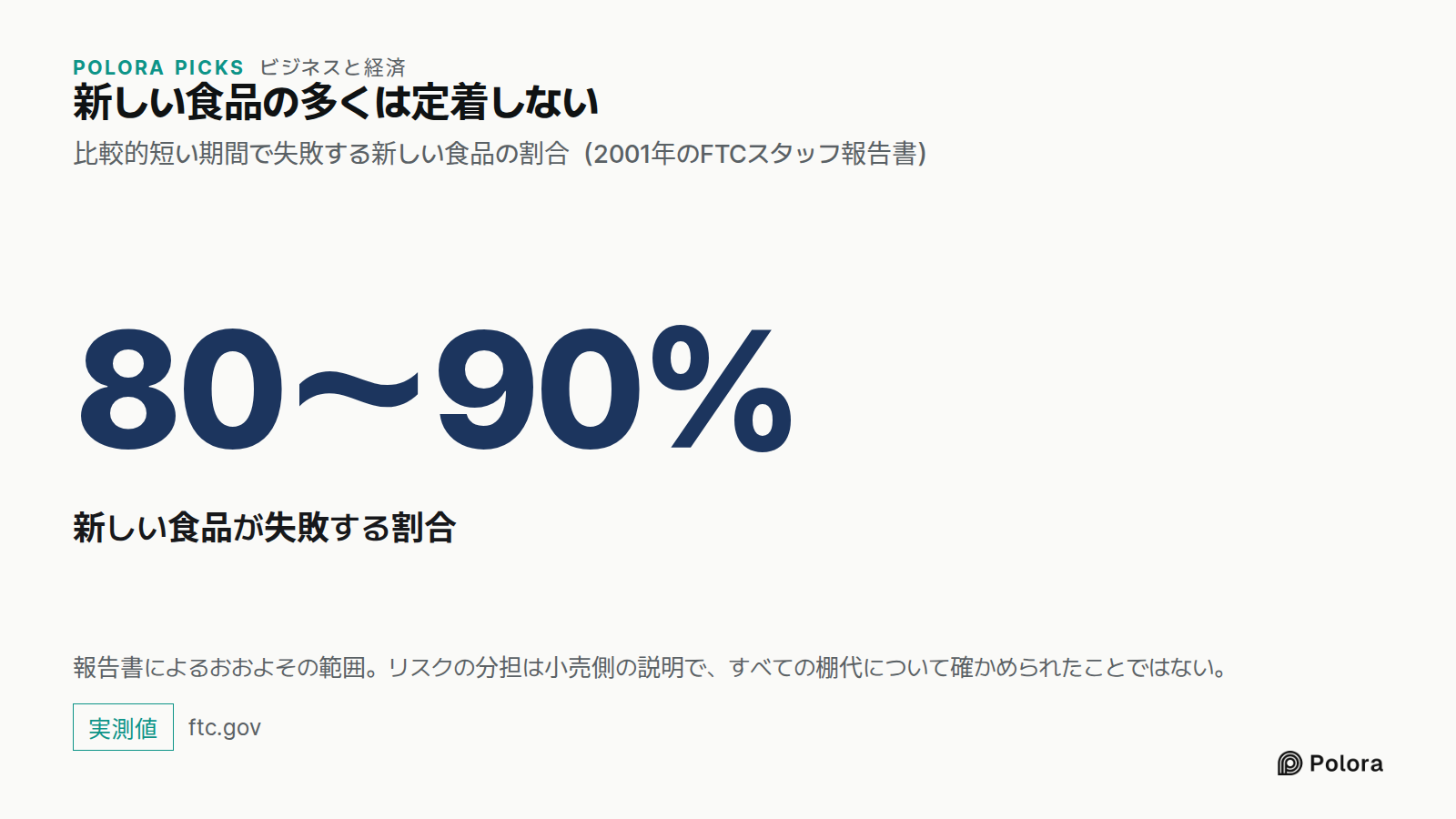
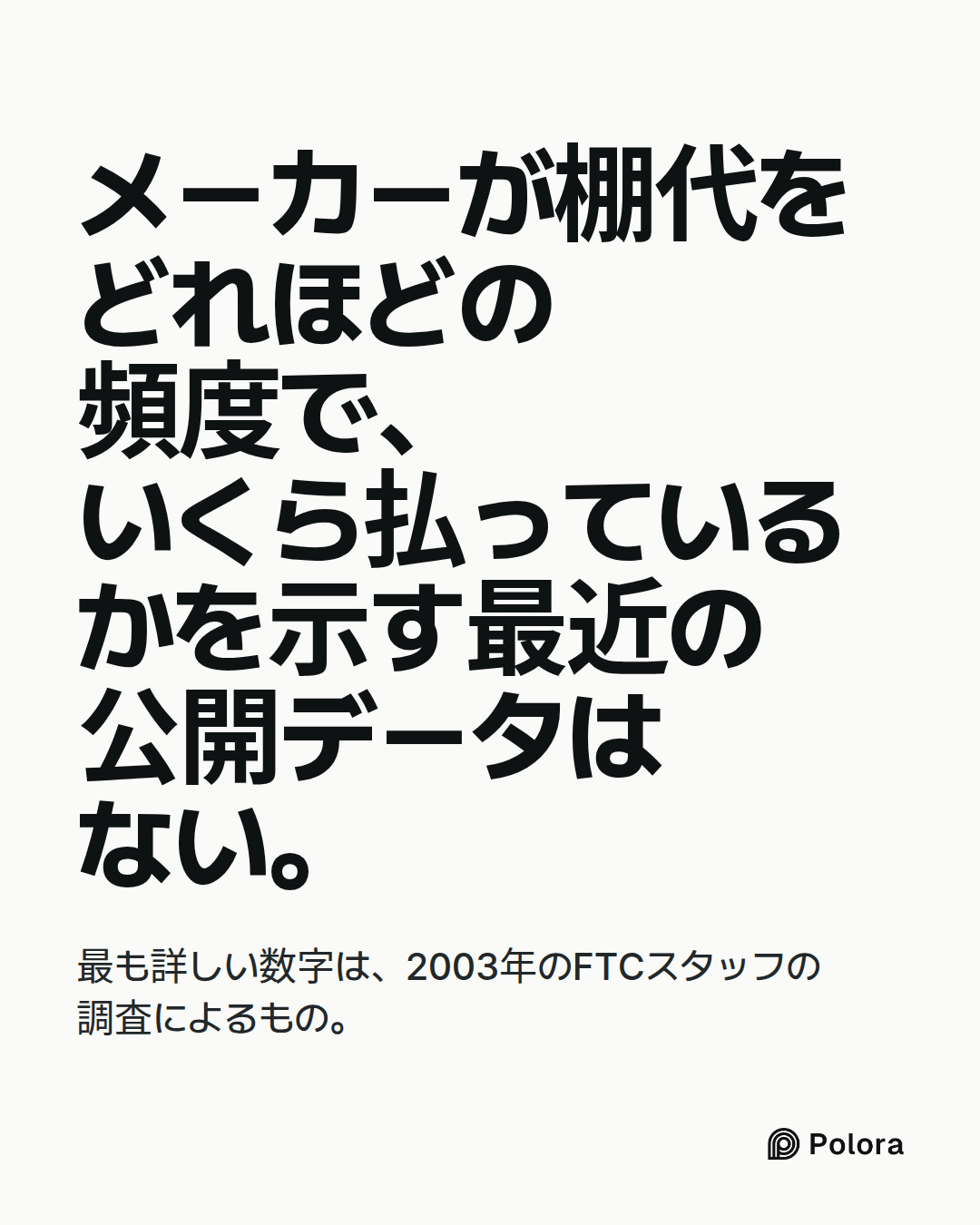
On the numbers, the manuscript is careful in the right way. It correctly flags the limits, and I verified them independently. The FTC's own background documentation states the 2003 case study was a follow-up case study requesting information from nine retailers (seven responded) in five categories, and because of the small, possibly unrepresentative sample, "the FTC stressed that its results 'are suggestive, not probative'". The manuscript's "seven retailers" figure is accurate as the number that actually supplied data, though it's worth noting nine were approached. Good that the pie…
Beta · gpt-6-sol
Yes—but not every brand pays, and not every supermarket charges. A *slotting allowance* is a payment a supplier makes for initial shelf or warehouse placement. Brands and stores may also negotiate separate funding for introductory discounts, advertising, displays and demonstrations. Those are related costs, not all “shelf fees.” The FTC found substantial variation even among the retailers and products it studied. (search.ftc.gov)
For the manuscript, the premise stands, but several qualifications matter:
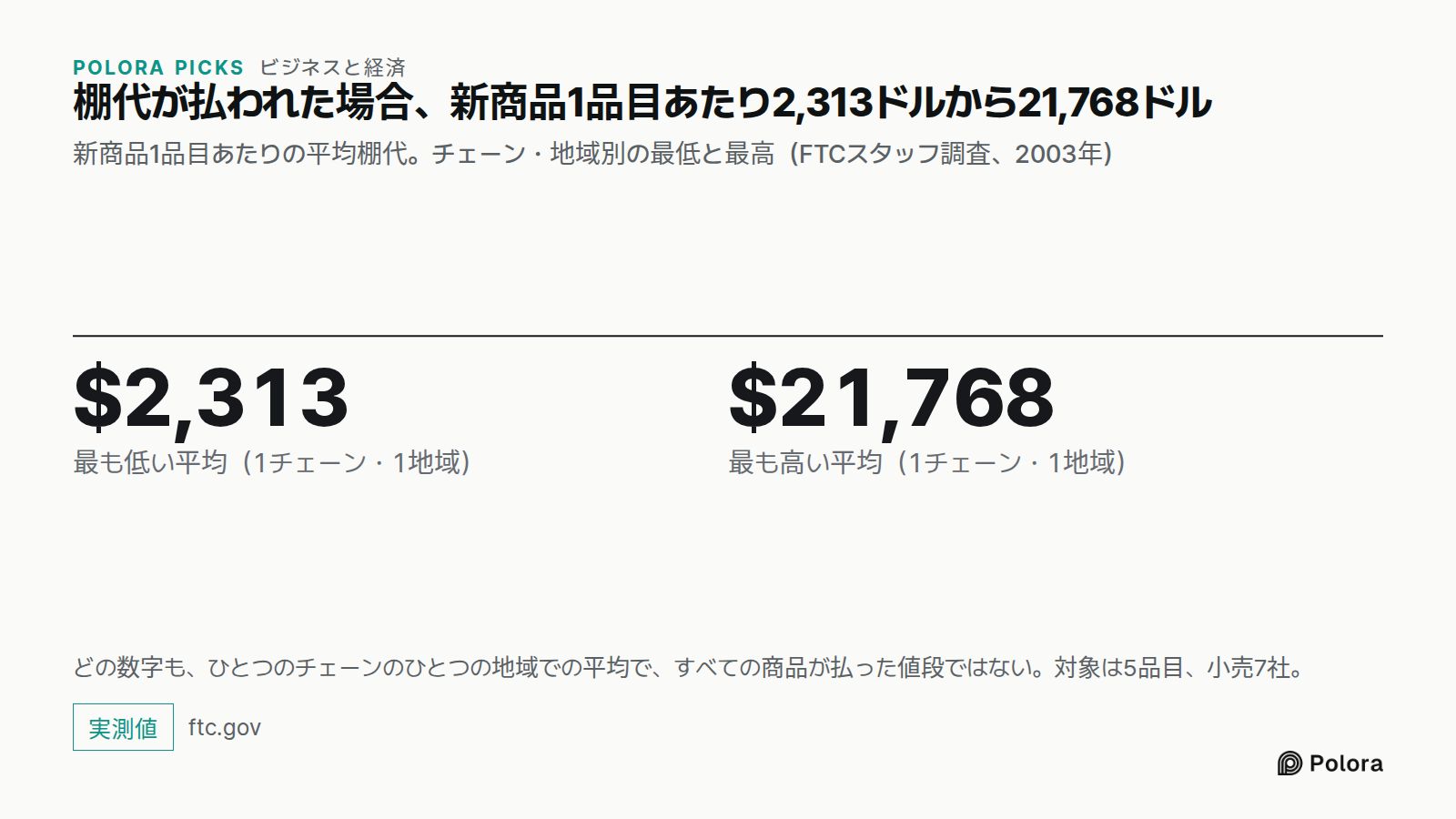
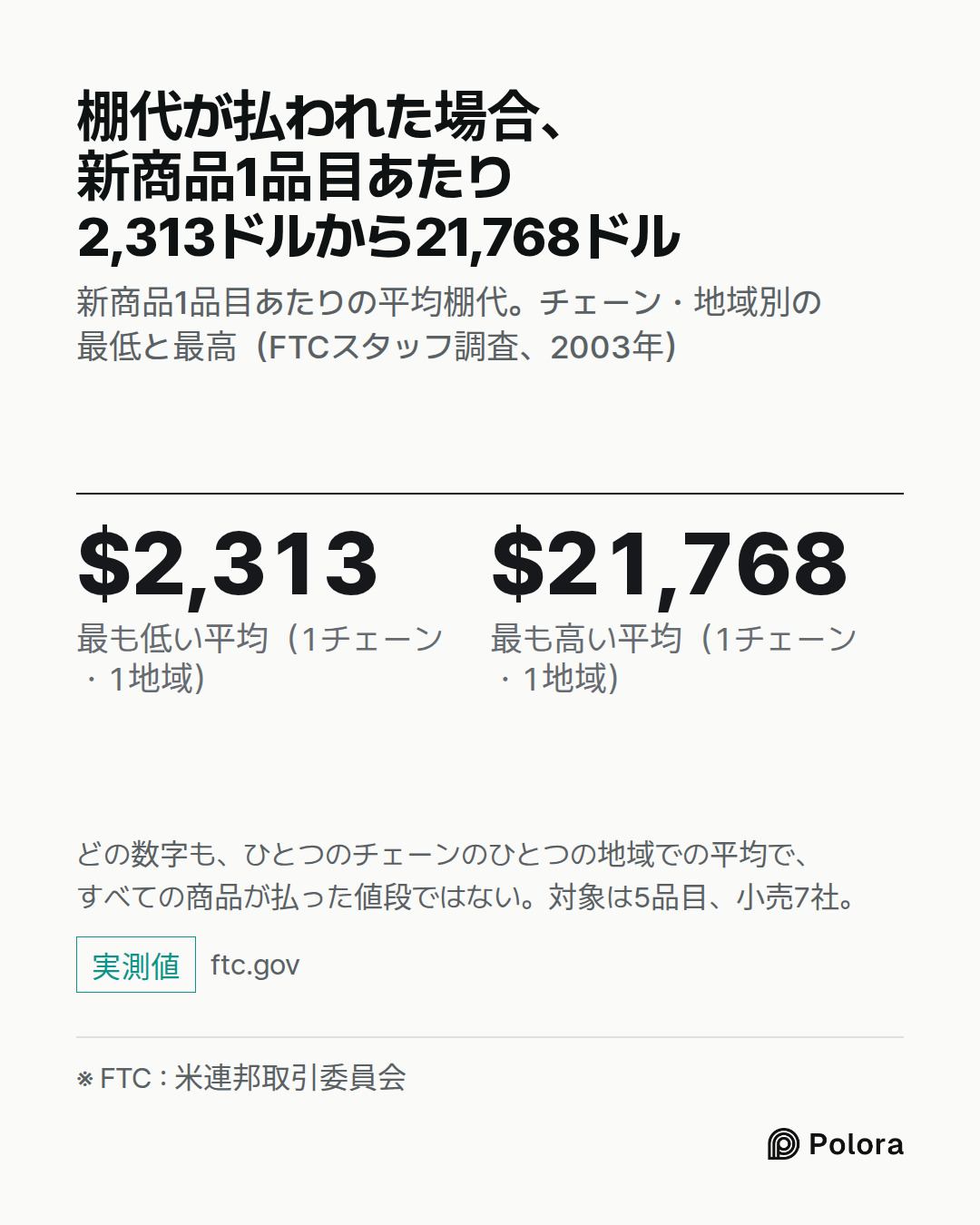
- Amounts and frequency: The FTC’s 2003 study received information from seven retailers across five product categories. Where fees were paid, its *combined-category averages by retailer and metropolitan area* ranged from $2,313 to $21,768 per item—not a range that every product paid. Suppliers estimated $1.5 million–$2 million in slotting fees for a nationwide launch, but the FTC explicitly warned that its findings were “suggestive, not probative.” The figures cannot establish today’s typical fee. ([ftc.gov](https://www.ftc…
Gamma · gemini-3.1-pro
I also confirm the core premise. The manuscript accurately describes the baseline reality of grocery retail: brands frequently pay to get and stay on supermarket shelves. I checked the specific claims the editor flagged, and here is what I found.
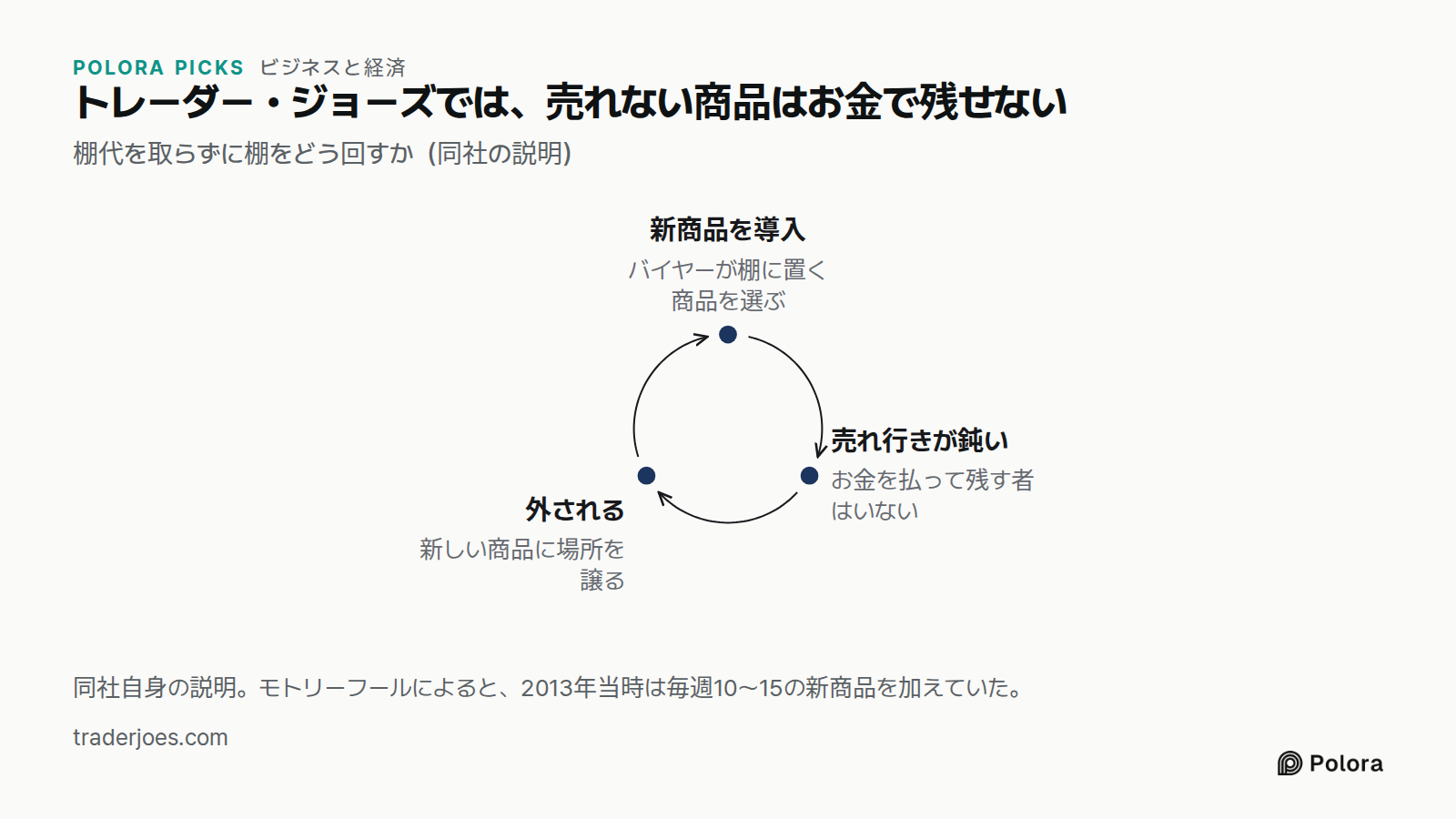
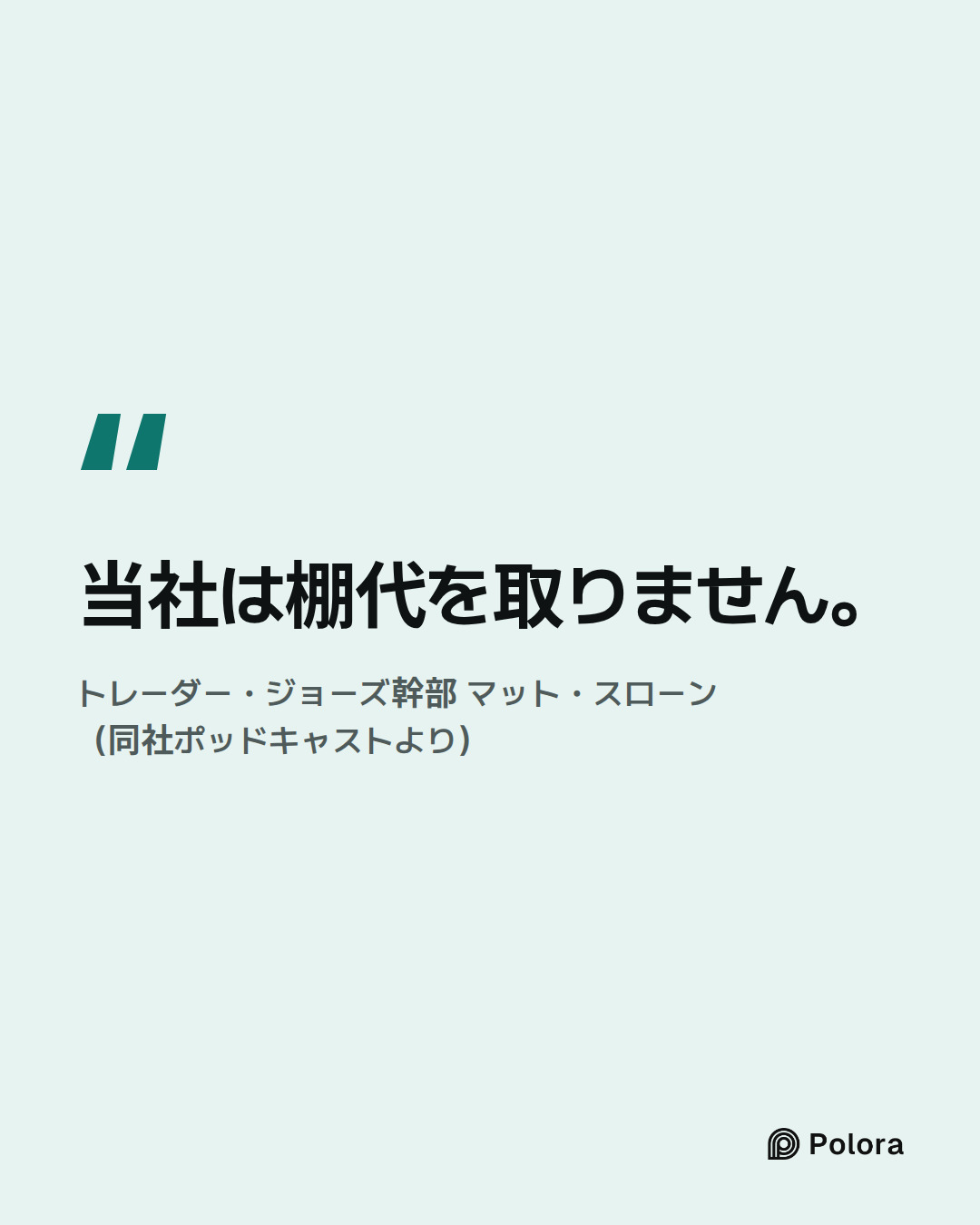
Trader Joe's and the missing fees: The manuscript's claim about Trader Joe's is correct, and you don't need to rely on the 2013 Motley Fool article. In an official Trader Joe's podcast transcript (an "In Case You Missed It" recap covering Episode 4), marketing executive Matt Sloan states explicitly: "We don't collect slotting fees. We don't have the producers of the stuff that we sell pay for privileged space or any space in our stores." The co-host then notes that this happens "everywhere else," and they drop slow-selling products because the store is their brand. (Source: traderjoes.com/content/dam/trjo/pdfs/transcripts/InsideTJs-ICYMI-Transcript.pdf).
Other chains that don't charge (Aldi, Costco, Walmart): The manuscript is right to be careful about naming other chains, but industry consensus backs up the exceptions. Retail finance and export consulting sources consistently state that Costco and Aldi charge $0 in traditio…
Researcher · gemini-3-7-flash
Here is the verification of the specific claims and source checks requested for the manuscript:
---
1. April 2026 Congressional Letter to FTC and DOJ
* Document: Letter to DOJ and FTC on Price Fixing and Anticompetitive Practices in the Food Supply Chain.
* Address: https://www.warren.senate.gov/imo/media/doc/letter_from_warren_schumer_dems_to_the_department_of_justice_and_federal_trade_commission_on_price_fixing_in_food_supply_chain.pdf
* Date & Signatories: Dated April 13, 2026. It was signed by six U.S. Senators (not four): Elizabeth Warren, Charles E. Schumer, Cory A. Booker, Bernard Sanders, Richard Blumenthal, and Peter Welch.
* Exact Recommendation Text:
> *"4. The FTC should pursue rulemaking and enforcement action to tackle exclusionary contracting practices by dominant firms, such as slotting fees, category captain arrangements, and volume-based rebates."*
* Context in Letter: The letter notes that *"Dominant food retailers and suppliers also engage in exclusi…
The Arbiter · gpt-6-sol
The voices agree on the central distinction: a slotting fee pays for initial shelf or warehouse access, while discounts, displays and other promotions may involve separate payments. The FTC documented both, but its seven-retailer study found substantial variation and explicitly warned that its results were “suggestive, not probative.” That leaves today’s prevalence—and what a *typical* supermarket charges—open rather than measured. (search.ftc.gov)
Two points in the record need particular care before the verdict. The April 13, 2026 letter has six signatories, correcting Alpha’s “four senators”; its recommendation names slotting fees as one example within a broader request about exclusionary contracting, not as an FTC finding. (warren.senate.gov) Gamma and the Researcher also make wider claims about Aldi, Costco, Walmart, food-specific advertis…
The Arbiter's Final Verdict · gpt-6-sol
Verdict
Yes—some brands pay supermarkets to stock a new product. The payment is called a *slotting allowance*. Brands may also fund discounts, displays and other promotions after a product is stocked. But not every product pays a slotting fee, and the evidence here does not establish what a “typical” US supermarket charges today. That distinction should govern the manuscript. FTC, 2003
What the manuscript can support
- Fees and amounts: The FTC’s 2003 study supports the definition of a slotting fee, the five named product categories, and the reported $2,313–$21,768 average range where fees were paid, per item for a chain in a metropolitan area. Suppliers’ $1.5 million–$2 million nationwide-launch estimate is an interview finding, not a measured bill for every launch. Only seven retailers supplied data; the FTC called the findings “suggestive, not probative.” These figures cannot be presented as current or universal. [FTC study](https://www.ftc.gov/sites/default/files/documents/reports/use-slotting-allowance…