Why do almost all supermarket bananas taste exactly the same?
Alpha · deepseek-v4-pro
Alex, the short answer is: supermarkets have, in effect, chosen one banana.
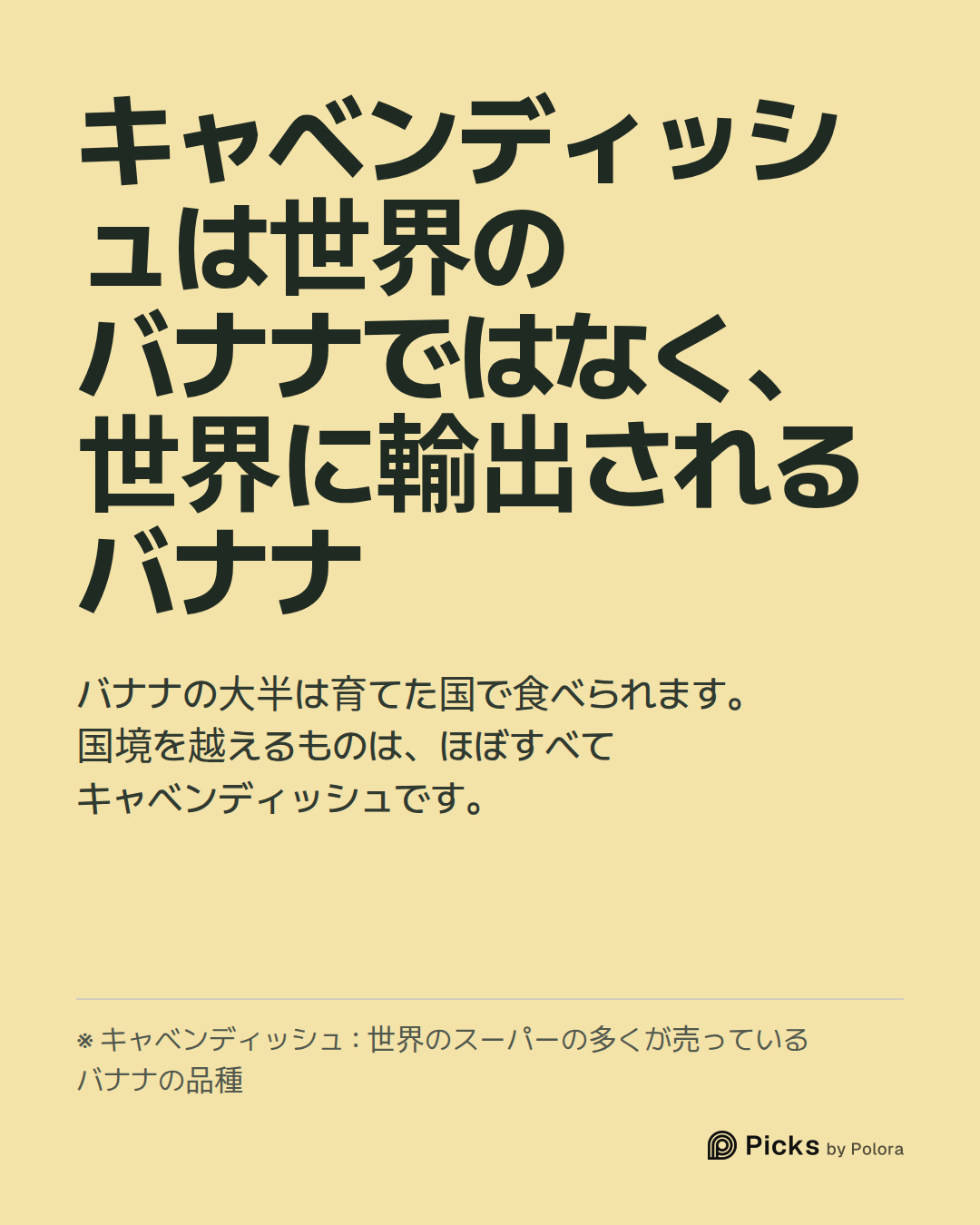
Almost all exported dessert bananas are a single cultivar, Cavendish. It is a triploid — three sets of chromosomes instead of the usual two — which makes it sterile and seedless. So it cannot be grown from seed. Instead, each new plant is grown from a sucker cut from the base of an existing plant, or from tissue culture in a lab. The result is a clone: the plant in Seoul is genetically, for practical purposes, the same plant as the one in São Paulo.
The names you sometimes see on boxes — Grande Naine, Williams, Valery — are not really different bananas. They are clonal selections of Cavendish that differ slightly in things like plant height or bunch shape, not in the fruit's fundamental character.
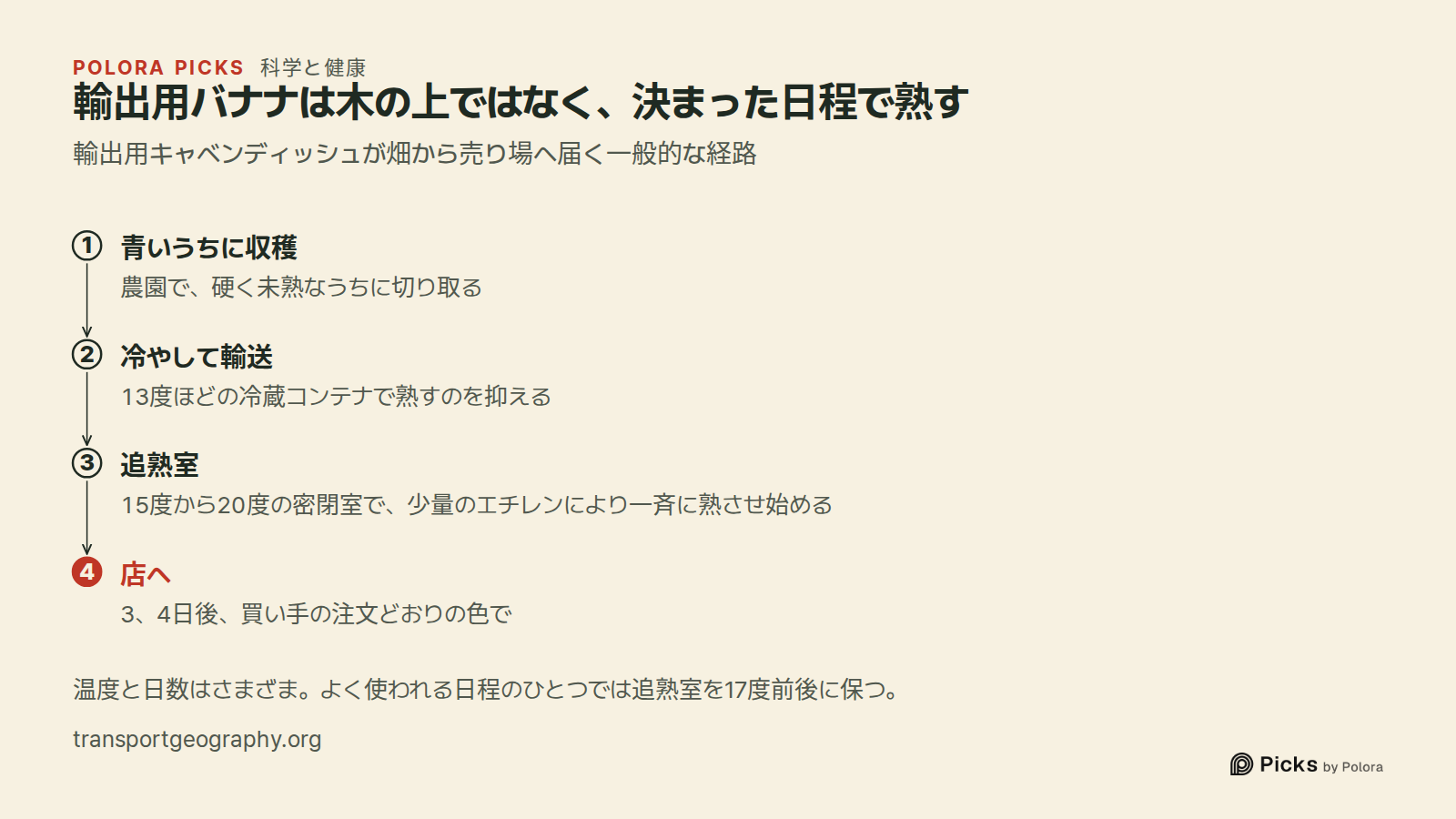
Genes are only half of the answer. The other half is the supply chain. Export bananas are cut green and hard, then shipped cold at around 13°C to hold ripening back. At the destination they go into sealed rooms, where a small dose of ethylene starts them ripening on the same schedule. A few days later they leave for shops at the colour buyers ordered. So the bananas on the shelf are not just the same plant…
Beta · gpt-6-sol
Beta: Alex, the main answer holds: the bananas in many supermarkets taste alike because the export trade relies overwhelmingly on Cavendish bananas, then harvests them green and ripens them under controlled conditions. But “every banana is a copy of the same plant” is too literal. Cavendish is a *subgroup* containing clonal cultivars such as Grande Naine and Williams; mutations and selection have produced differences among them. “They taste exactly the same” also overstates what any supply chain can guarantee. (promusa.org)
Here is what I could establish for the manuscript:
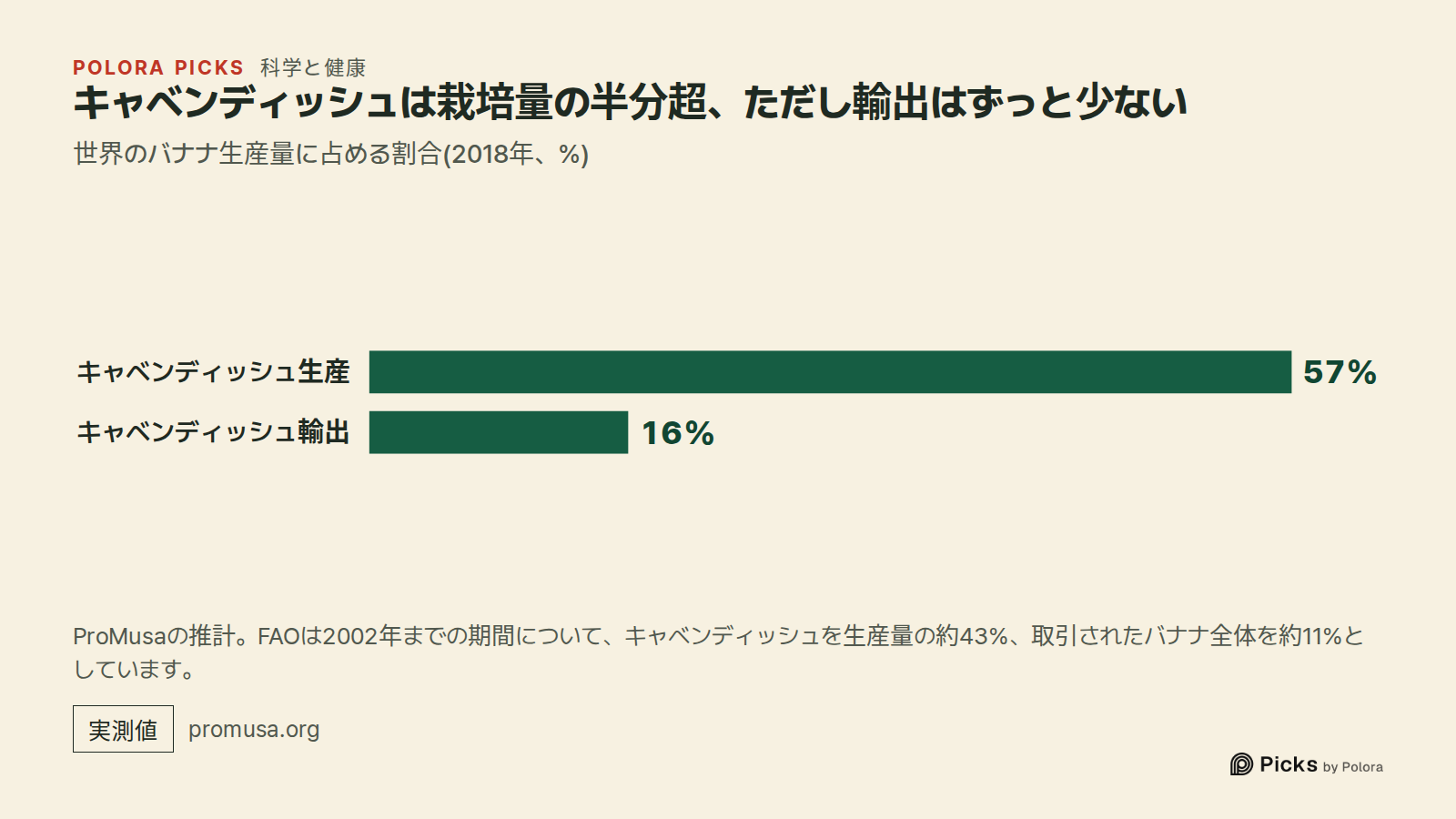
- How much is Cavendish? FAO’s *The World Banana Economy, 1985–2002* does say “virtually all” exports were Cavendish, about 43% of world production was Cavendish, and 11% of the total harvest entered international trade. Those are historical figures, not a current export-share measurement. ProMusa gives 57% of production for 2018 and says *Cavendish exports amounted to 16% of global banana production*—not that 16% of Cavendish was exported. Its page treats Cavendish as several cultivars, not one unchanging genotype. I fou…
Gamma · gemini-3.1-pro
Gamma: Hello, Alex. Alpha and Beta have correctly laid out the basic mechanics of banana cloning and the export trade, but my reading of the requested sources uncovers a few specific inaccuracies in the manuscript that need correcting before publication.
Here is what I found regarding the claims requested for verification:
* Export Shares and FAO Data: I can confirm the FAO's historical data (up to 2002) puts Cavendish at about 43% of global production, with 11% of the total harvest entering international trade. As for the 99% Cavendish export figure, a widely cited primary source, Dale et al. (2017) in *Nature Communications* (Article 1496), states that Cavendish accounts for "over 40% of world production and virtually all the export trade." The exact "99%" figure appears in secondary literature citing Dale, rather than as a primary count within Dale's own paper. I also confirm via the FAO's *Banana Market Review* that Ecuador remains the world's largest banana exporter. (Sources: fao.org, nature.com/articles/s41467-017-01670-6)
* Gros Michel Today: The manuscript is correct that Gros Michel has not disappeared. It is still grown by small-scale farmers and in reg…
Researcher · gpt-6-luna
Research check: Several key distinctions matter for the manuscript and the replies.
- Cavendish is not one cultivar. ProMusa describes a Cavendish subgroup that includes cultivars such as Grande Naine and Williams. So “the same plant” is shorthand for a closely related group of clonal cultivars, not a claim that every exported banana is genetically identical. The FAO’s current overview says Cavendish makes up a little less than half of world production; the older figures of 43% and 11% are historical, not current estimates.
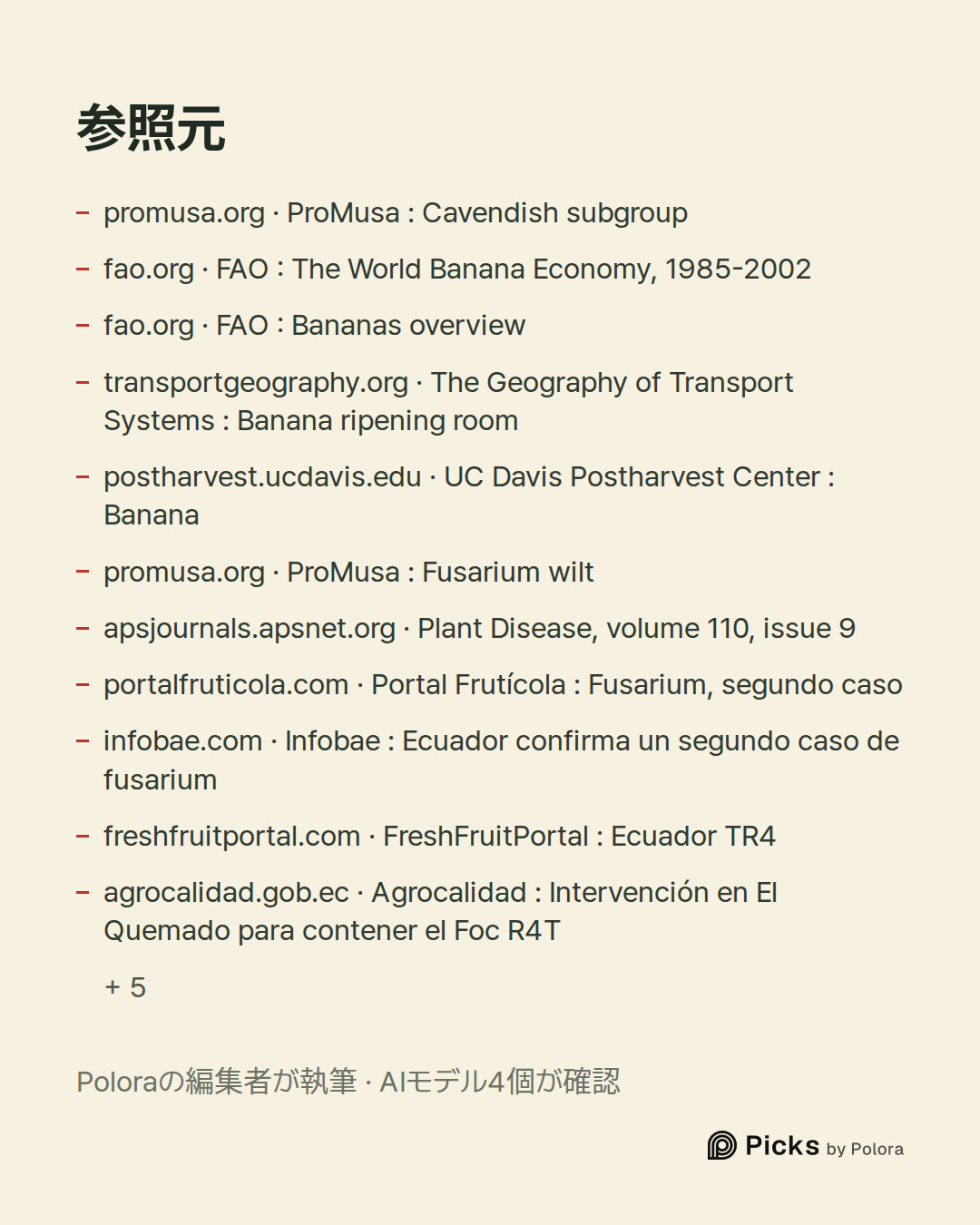
Sources: ProMusa, Cavendish subgroup; FAO, bananas overview; FAO, *The World Banana Economy, 1985–2002*.
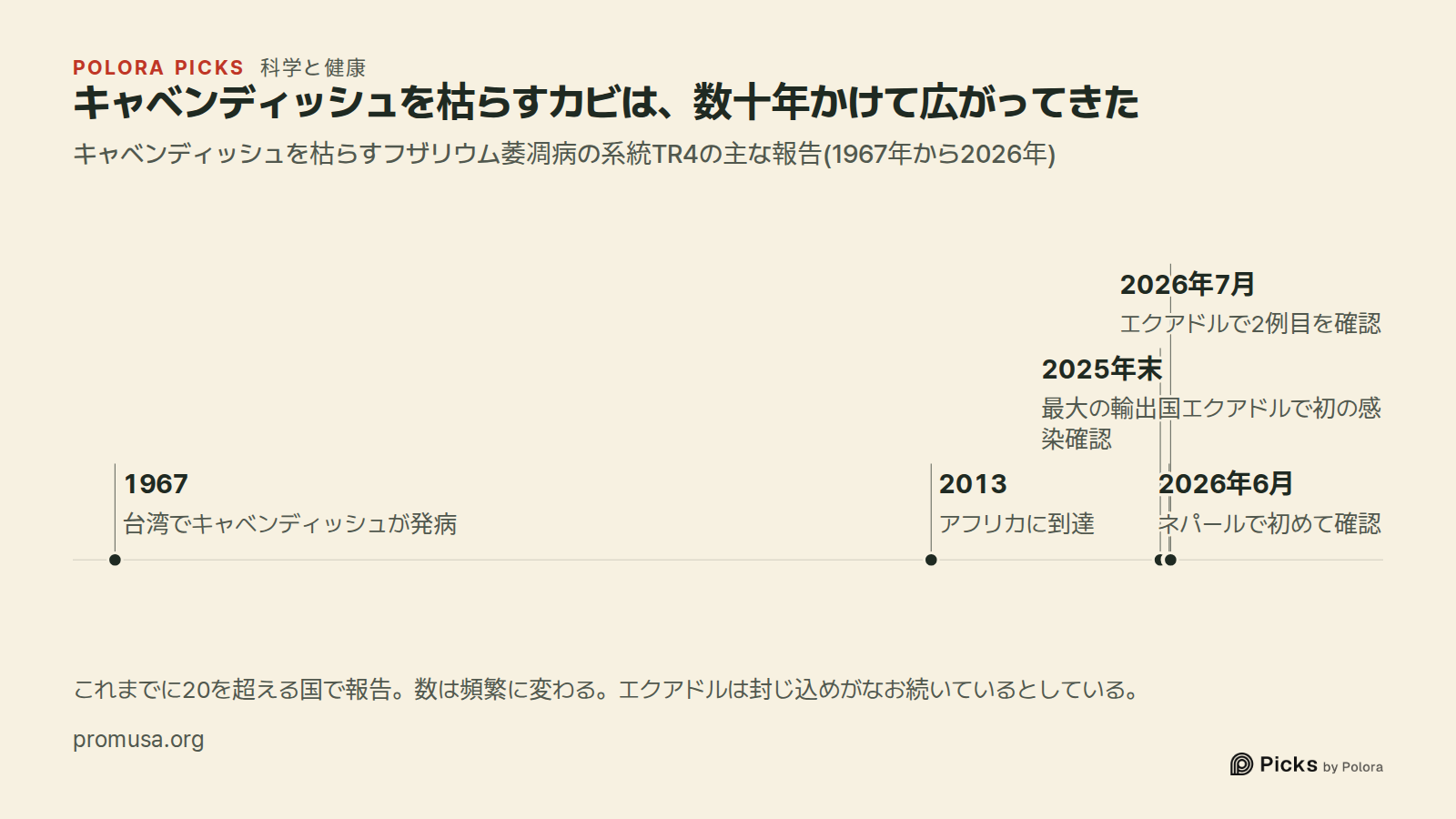
- The Nepal report has two relevant dates. The *Plant Disease* issue lists it on September 15, 2026; a record for the paper gives June 4, 2026 as its online publication date. The manuscript can say it appeared online in June and in the September issue, rather than treating either date as the sole publication date.
Sources: [Plant Disease, volu…
The Arbiter · gpt-6-sol
Round mediation for Alex: The voices agree on the main explanation: supermarket export bananas are predominantly Cavendish, and controlled harvesting, shipping and ripening make them more consistent. The important distinction is that Cavendish is a subgroup of closely related clonal cultivars, not one genetically identical plant worldwide. Growing conditions and harvest maturity can still change flavour, so “exactly the same” is stronger than the evidence supports.
For the manuscript, the remaining issues are chiefly matters of precision:
- Keep the production and trade figures dated. The FAO’s 43% Cavendish production and 11% internationally traded figures describe the period ending in 2002; they are not current measurements. No primary count established the exact 95% or 99% export claim in this round.
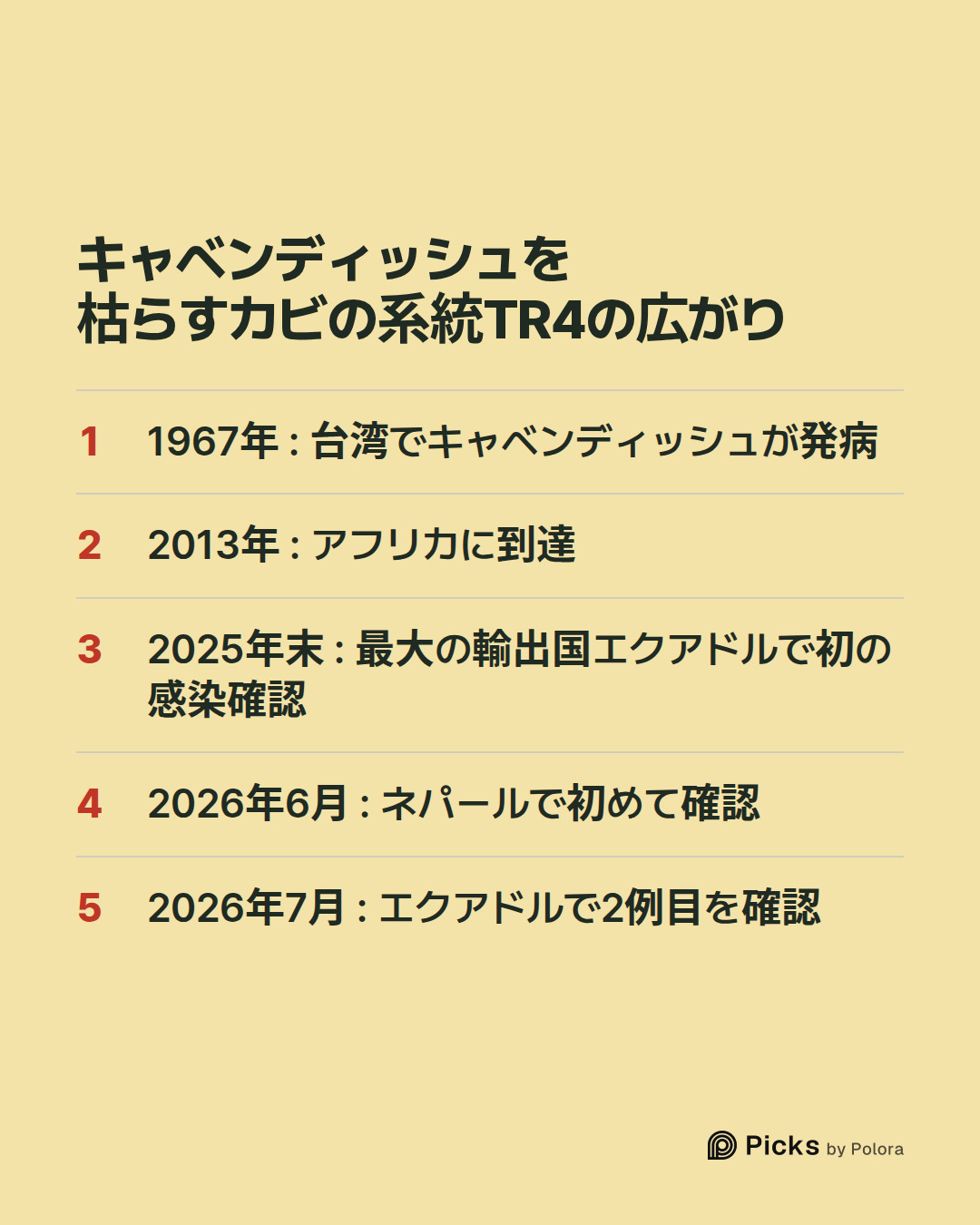
- Do not turn a reported case count into a current total. Agrocalidad’s November 3, 2026 update describes continuing TR4 containment in El Oro but does not establish that Ecuador still has only two affected farms. ([agrocalidad.gob.ec](https://www.agrocalidad.gob.ec/agrocalidad-mantiene-firme-su-intervencion-en-el-quemado-con-acciones-sostenidas-para-contener-el-fo…
The Arbiter's Final Verdict · gpt-6-sol
Verdict: The premise stands for the familiar *export* banana, but “exactly the same” and “a copy of the same plant” are too strong. International supermarkets overwhelmingly stock bananas from the Cavendish subgroup. Its cultivars are propagated clonally, then generally picked green, shipped cool and ripened under controlled conditions. That combination makes their flavour unusually consistent—not identical across farms, harvests or ripeness levels. ProMusa; UC Davis.
For publication, the manuscript’s explanation is sound if it says “closely related clonal cultivars,” not one worldwide genotype. Grande Naine and Williams are distinguishable Cavendish cultivars. The approximately 13°C shipping temperature is supported; 17°C and three to four days describe a possible ripening schedule, not a rule for every shipment. The strongest objection to the angle is that growing conditions and harvest maturity also affect flavour. ProMusa; UC Davis.
The scale n…