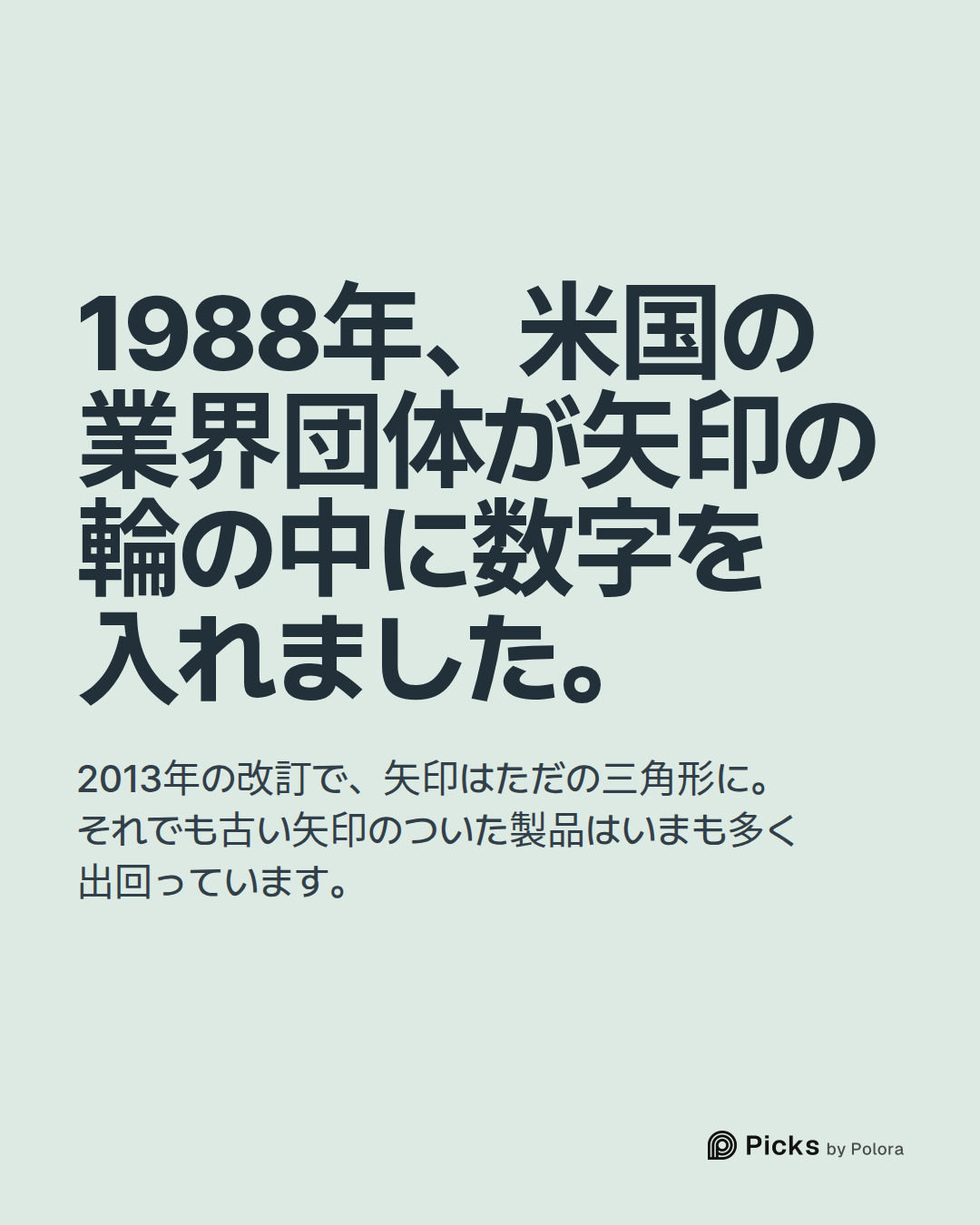
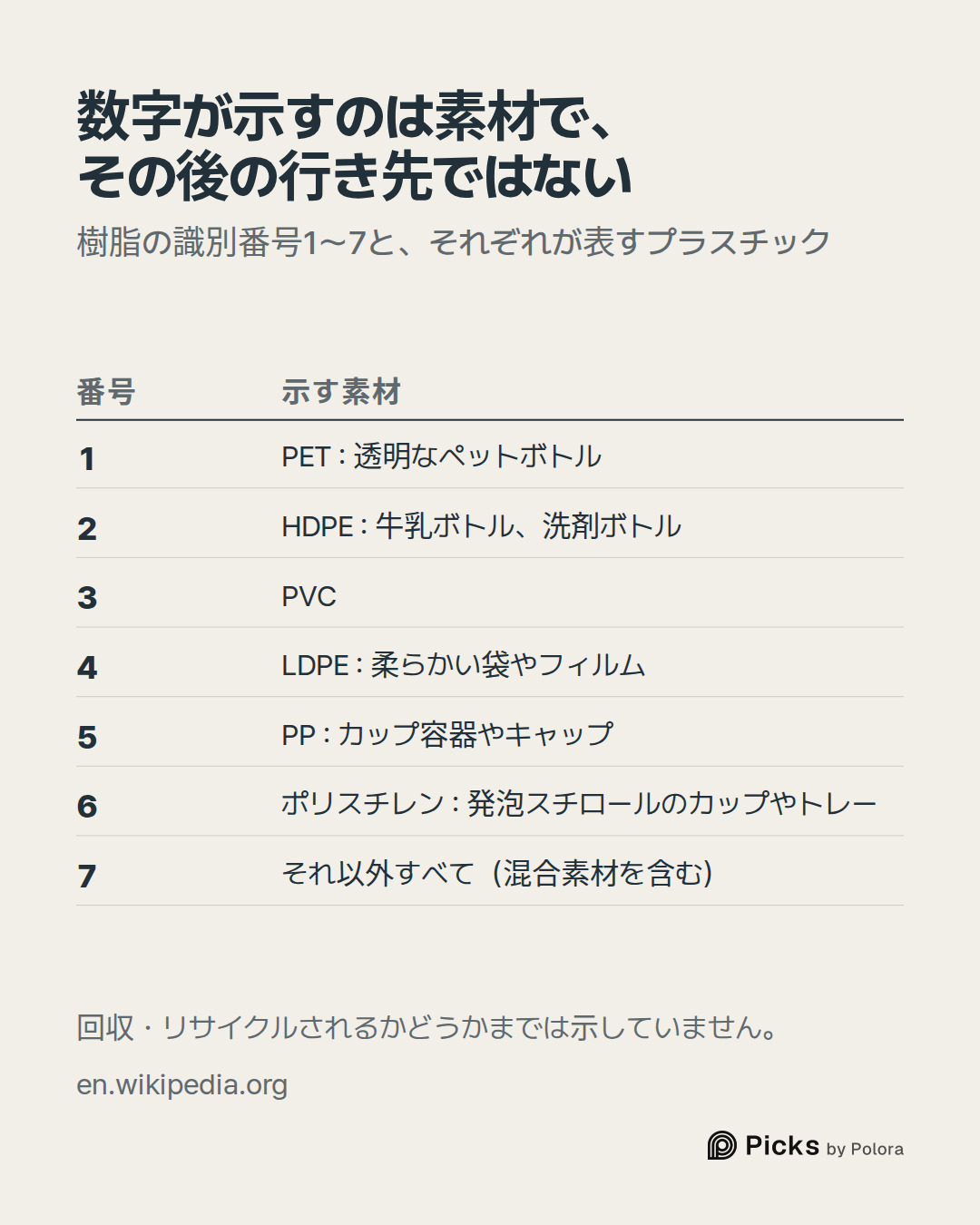
このマークは、米国の業界団体である米国プラスチック工業協会(Society of the Plastics Industry)が1988年に作りました。掲げた目的は、品物ごとの素材を選別する人に伝え、使用済みプラスチックをリサイクルしやすくすることでした。そこで、リサイクルの印として人々がすでに見慣れていた矢印の輪の中に、数字を入れたのです。
Does the recycling symbol with a number on plastic mean it can be recycled?
Alpha · deepseek-v4-pro
No — the number inside the recycling arrows does not mean the item can be recycled.
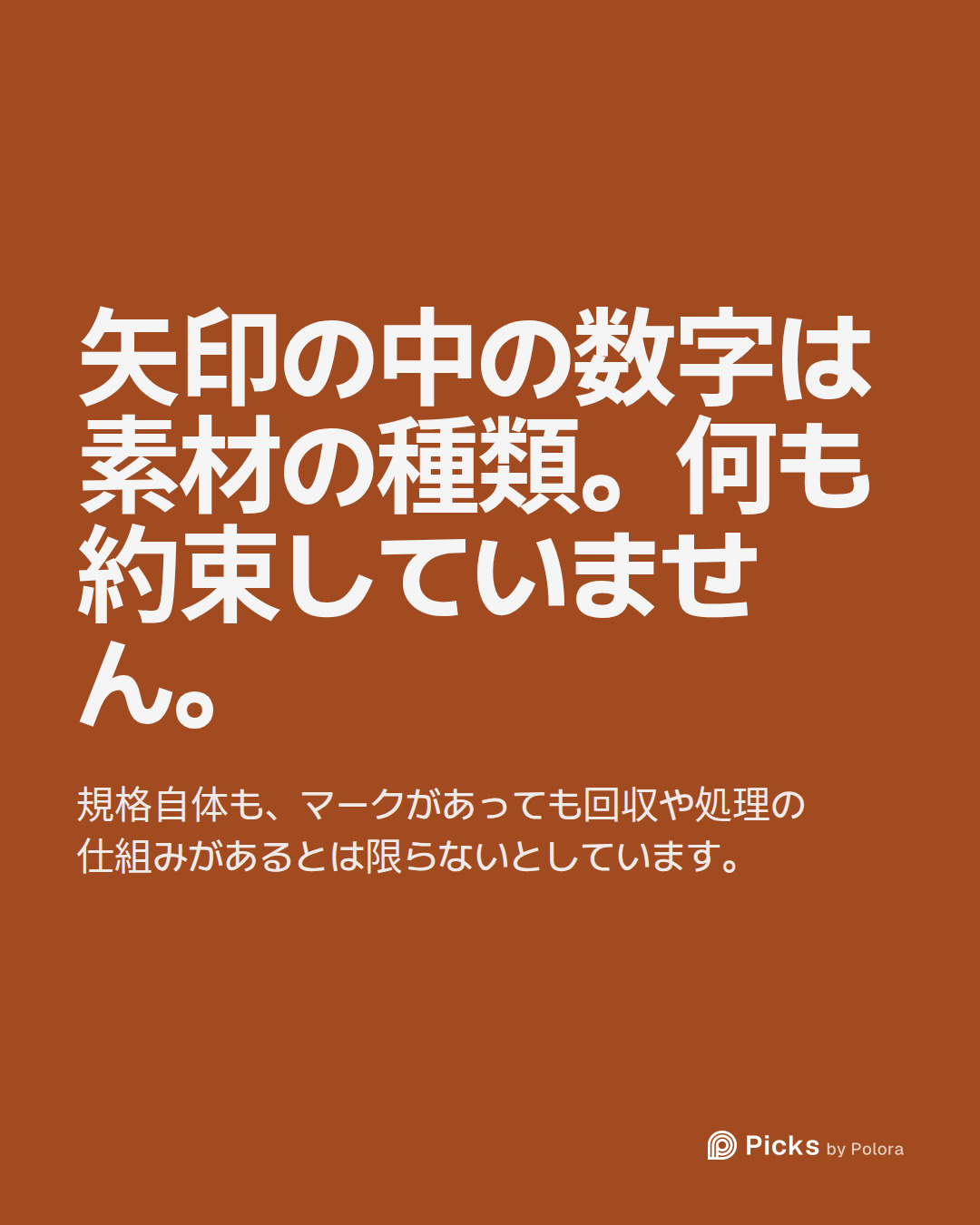
It is a Resin Identification Code: it only names the type of plastic.
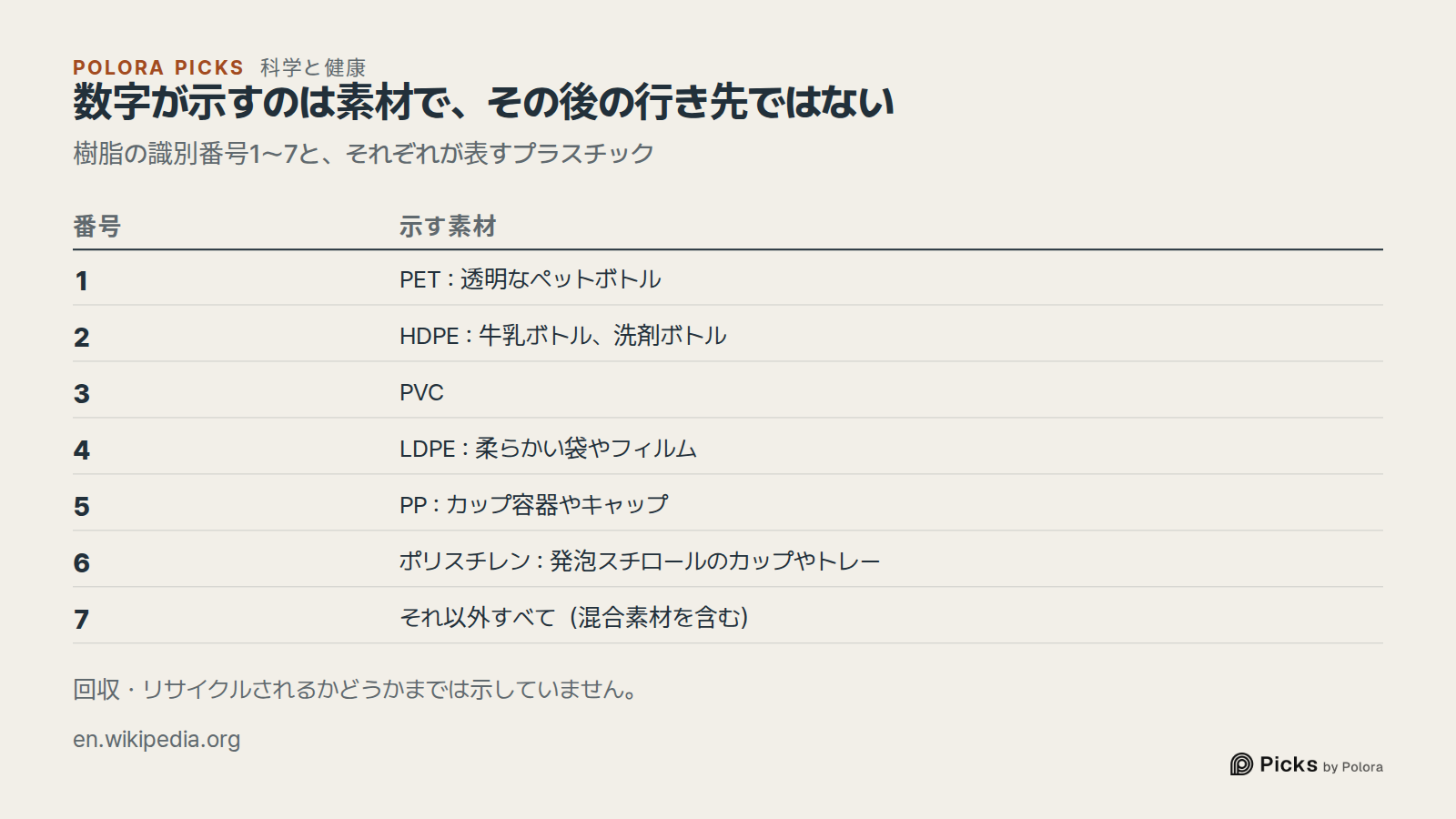
- 1 = PET (drink bottles)
- 2 = HDPE (milk jugs, detergent bottles)
- 3 = PVC
- 4 = LDPE (bags, films)
- 5 = PP (tubs, caps)
- 6 = PS (polystyrene)
- 7 = other or mixed plastics
The chasing-arrow loop around the number was a design choice from the plastics industry in 1988, and it has caused confusion ever since. ASTM later replaced the arrows with a solid triangle in the standard precisely to reduce the impression that the label promises recyclability.
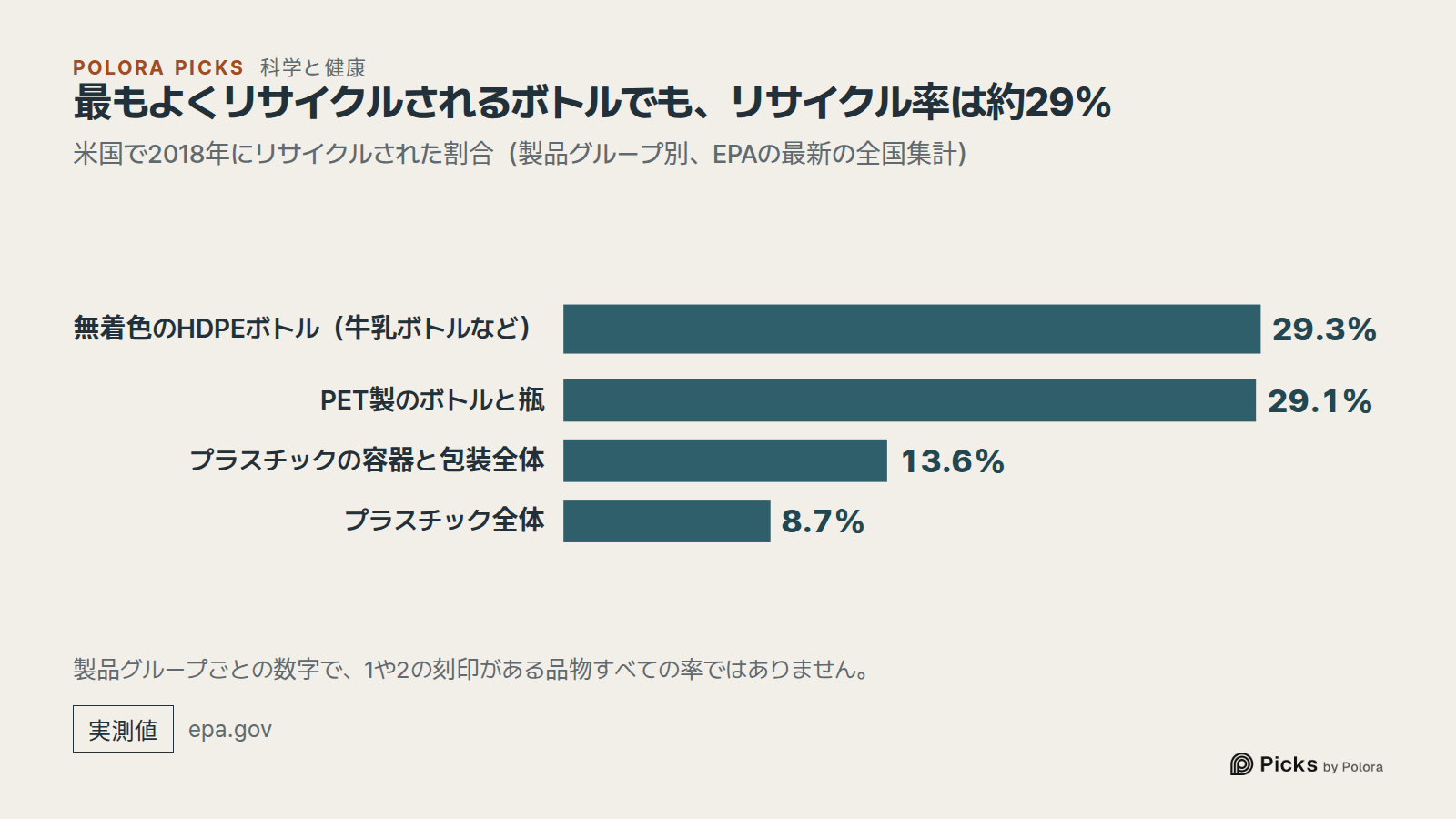
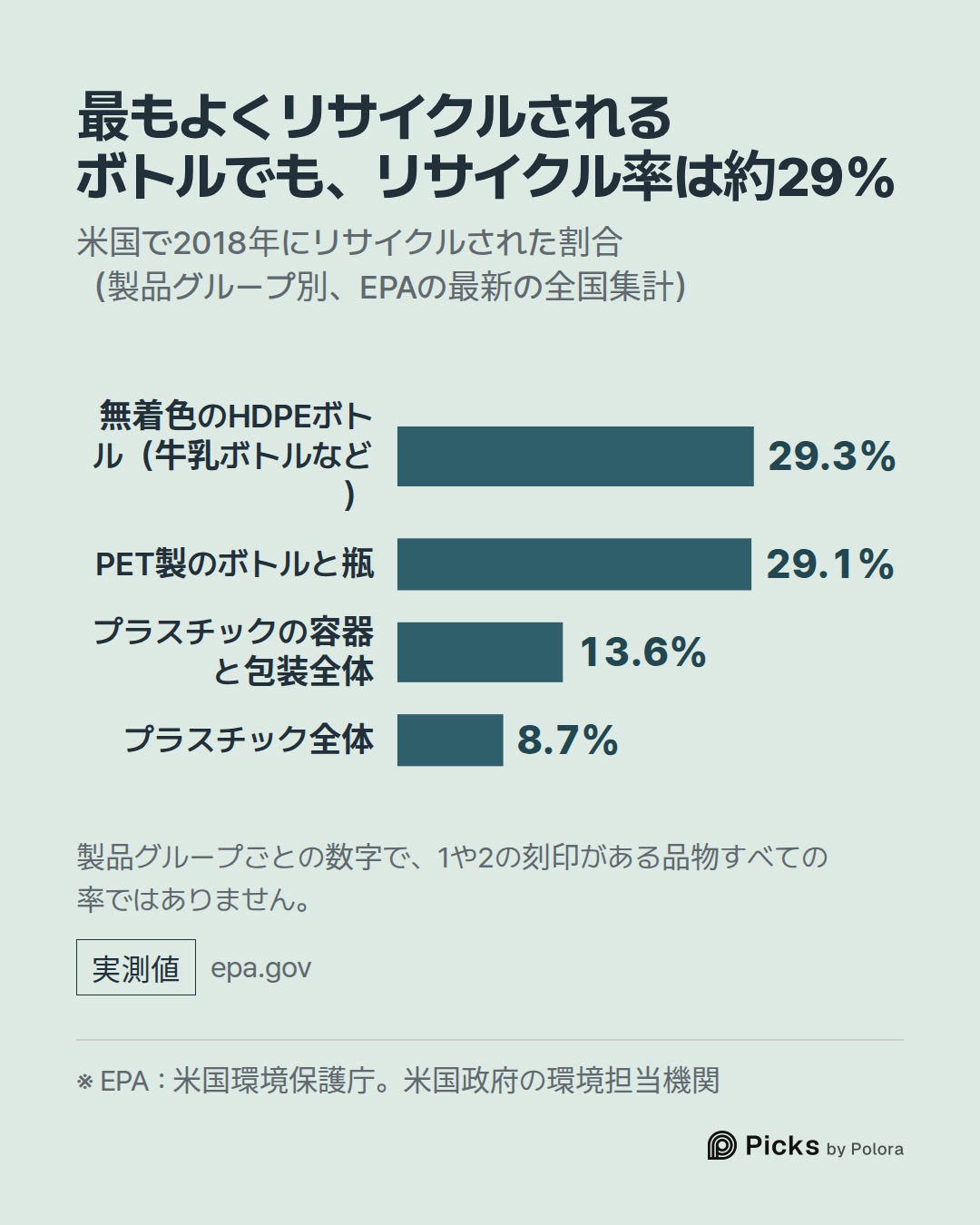
What actually decides recycling is your local collection program and sorting facility, plus whether anyone will buy the recovered material. Even the most commonly accepted plastics — #1 and #2 bottles — are recycled far less than most people assume. National figures are often around 29% for PET and HDPE bottles, and much lower for other resin types.
So the practical rule is: read the number as “what plastic this is,” not “this can be recycled.”
Beta · gpt-6-sol
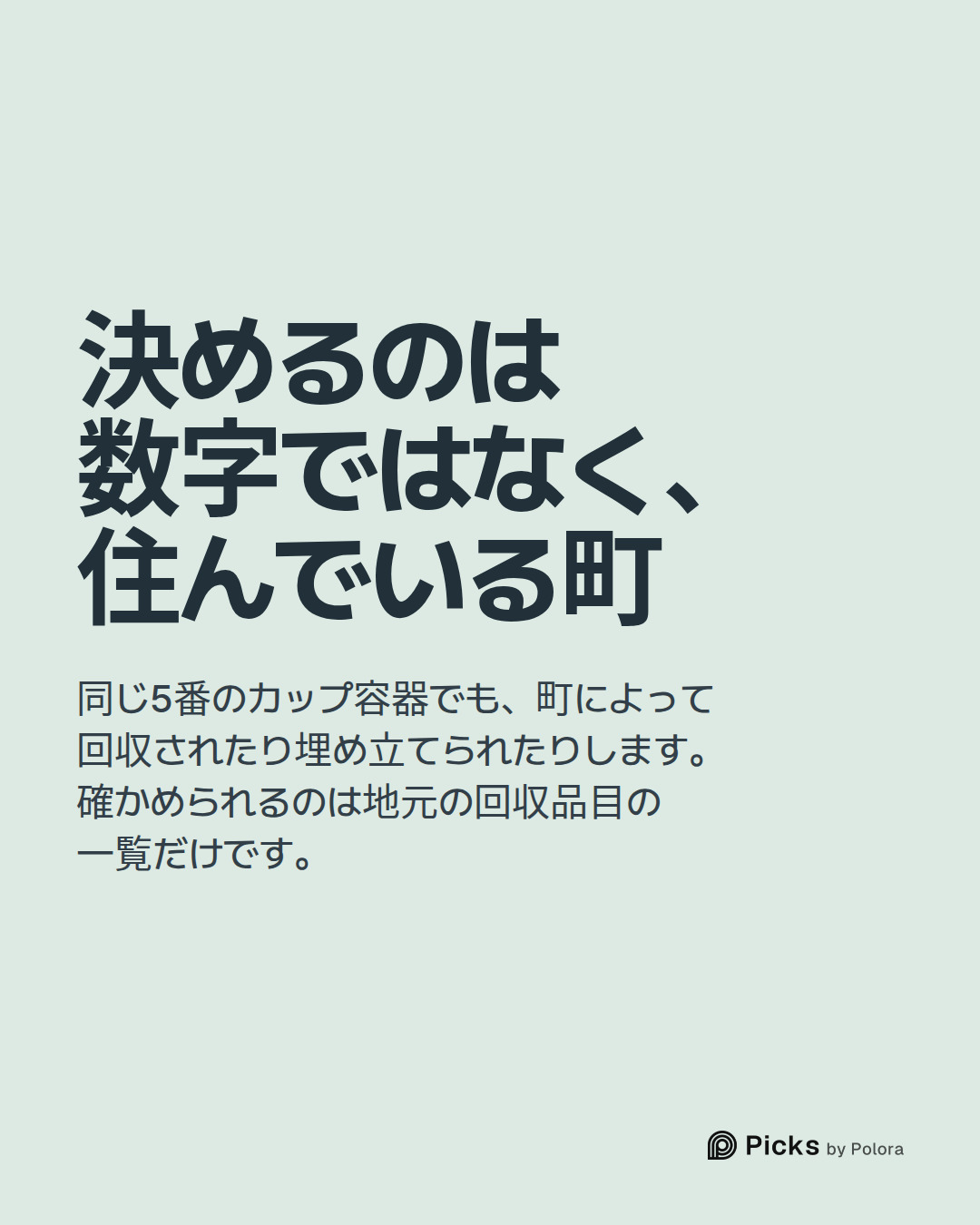
No. The number is a *Resin Identification Code*: it identifies the plastic, not a guarantee that the item will be collected or made into something new. ASTM says explicitly that the code does not imply that systems exist to process the item for reuse. The practical test is your local recycling program’s list for that kind of item—a #1 bottle and a #1 tray need not have the same destination. (store.astm.org)
For the manuscript, the central premise stands, but I would make these corrections before publication:
- Keep the EPA figures, with a qualification. EPA’s current page gives 29.1% for PET *bottles and jars*, 29.3% for natural-HDPE bottles and 8.7% for all plastics in 2018; its tables give 13.6% for plastic containers and packaging. An archived EPA page and archived tables instead give 26.8% for 2018 PET and 8.5% for all plastics. Say explicitly that the manuscript uses EPA’s *current revised figures*; do not silently treat the archived figures as corroboration. These are rates for different product groupings, not rates for every item bearing #1 or #2. ([epa.gov](https:/…
Gamma · gemini-3.1-pro
The core premise of the manuscript stands: the number inside the triangle on a plastic product is a Resin Identification Code (RIC), not a guarantee of recyclability.
I checked several of the outstanding items requested at the end of the manuscript using live web searches. Here is what I found:
* ASTM’s wording on recyclability: ASTM explicitly states that the RIC system "continues to be solely dedicated to identifying resin content, rather than product recyclability." The 2013 shift to the solid triangle was made specifically to decouple the code from the "recycling message" that the chasing arrows imply. (astm.org)
* Meanings of codes 1 to 7: The standard definitions are 1 = PET, 2 = HDPE, 3 = PVC, 4 = LDPE, 5 = PP, 6 = PS, and 7 = Other (including multi-layer or mixed plastics).
* ASTM D7611-26 revision: The July 2026 update (ASTM D7611/D7611M-26) did not change the fundamental definitions. Its most notable update was to Section 4.4, which clarifies the standard's application to new tooling and molds. ([ansi.org](https://blog.ansi.org/ast…
Researcher · gpt-6-luna
No—the number inside the symbol identifies the type of plastic, not whether your particular item can be recycled. Whether it’s accepted depends on local collection and sorting arrangements.
A few checks on the claims above:
- EPA’s 2018 figures check out on its current page: 29.1% for PET bottles and jars, 29.3% for natural-HDPE bottles, and 8.7% for all plastics. The archived EPA tables give the same 29.1% PET figure, so the manuscript’s suggested archived 26.8% PET figure was not supported by the archived table I found. These are rates for particular material categories—not every item marked #1 or #2. (epa.gov)
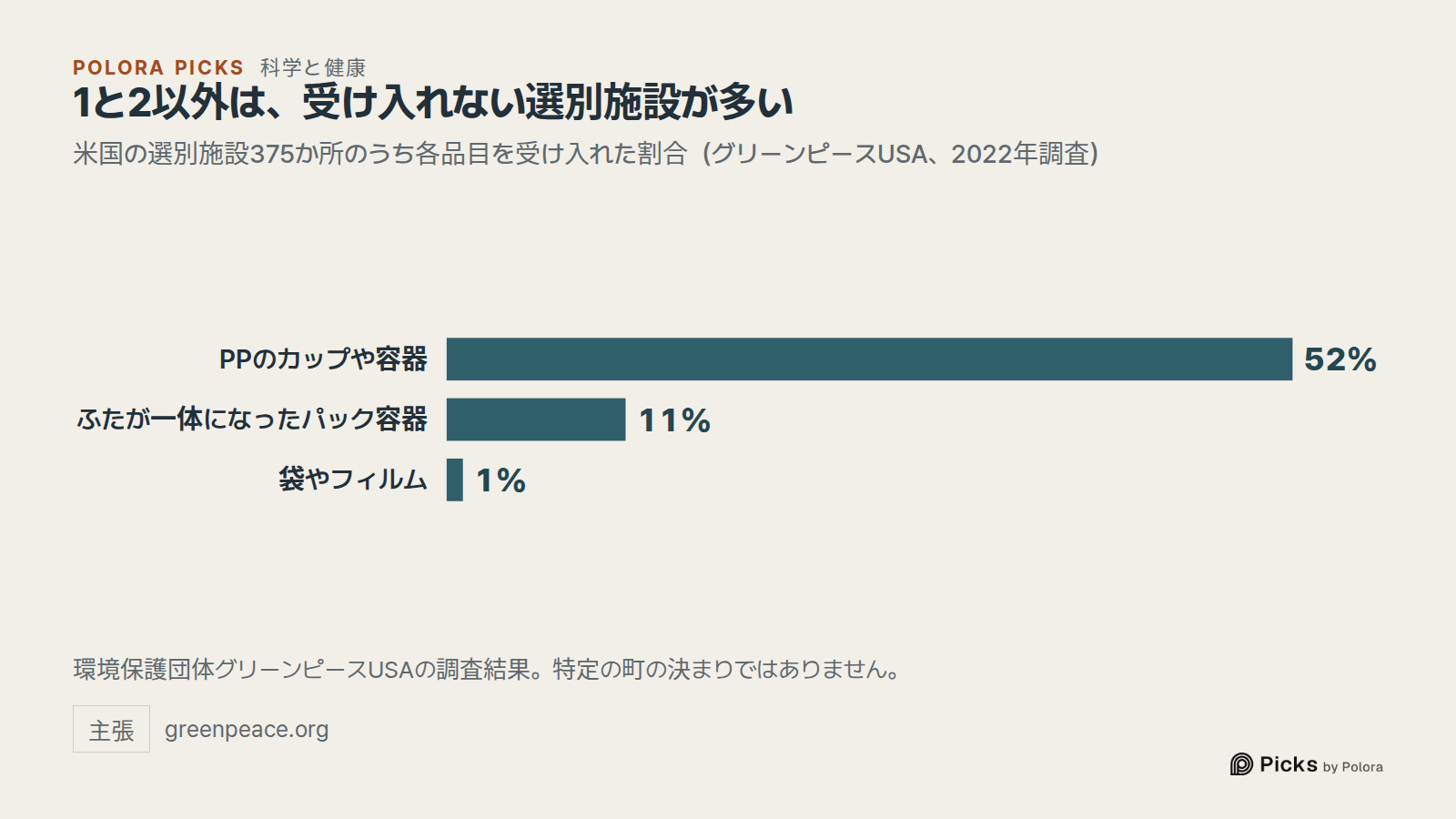
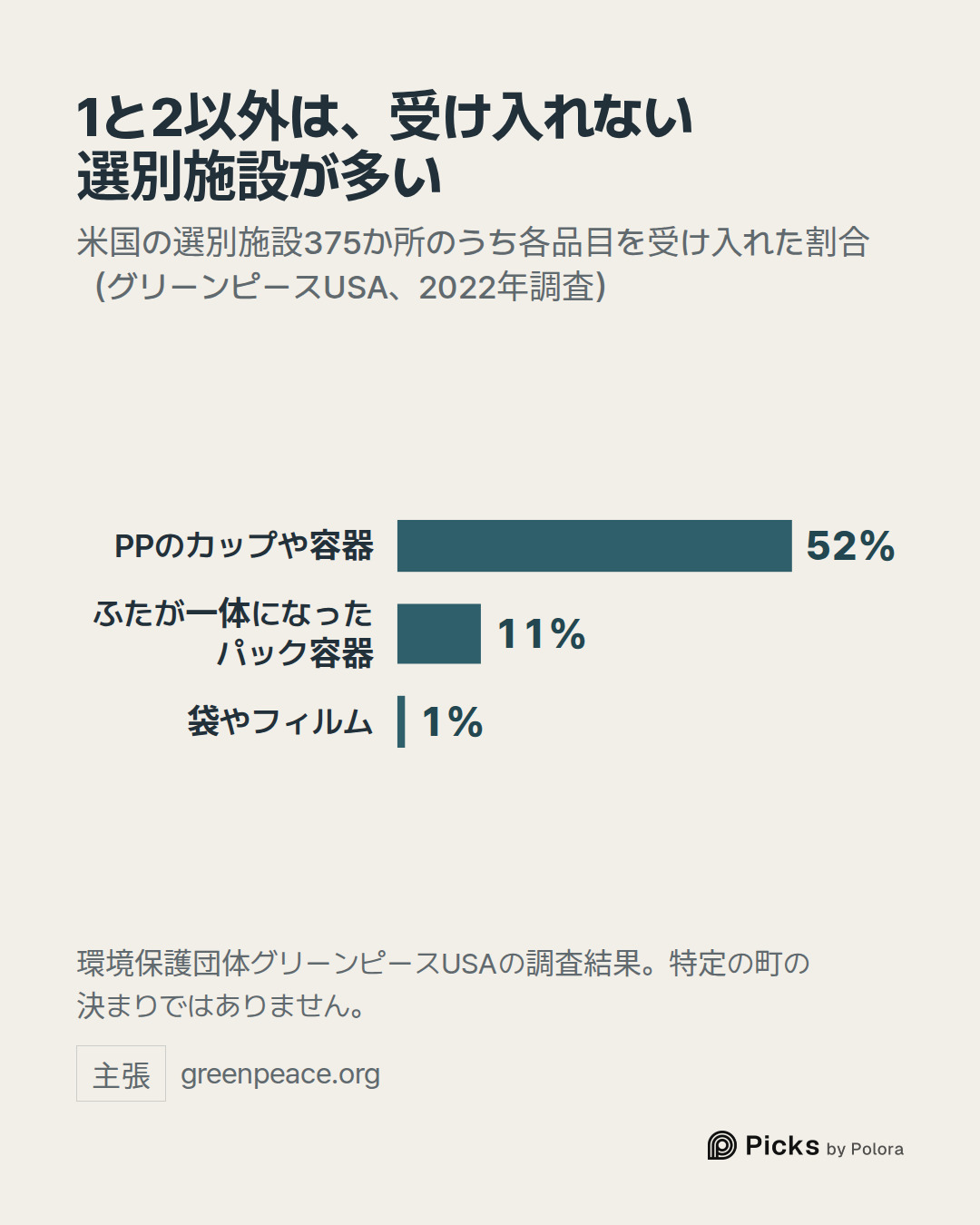
- Greenpeace’s figures are in its 2022 report: it estimates reprocessing rates of 20.9% for PET and 10.3% for HDPE, and reports acceptance of PP tubs by 194 of 375 surveyed facilities. Those are Greenpeace’s estimates and survey findings; they should be presented as such, not as a universal measure of what happens locally. ([greenpeace.org](https://www.greenpeace.org/usa/wp-content/uploads/2022/10/GPUS_FinalReport_2022.pdf?utm_source=…
The Arbiter · gpt-6-sol
The voices agree on the key distinction: the number identifies a plastic resin; it does not, by itself, tell you whether a particular item will be accepted or recycled. ASTM’s standard explicitly says the code can aid recycling without implying that a system exists to process the item. (store.astm.org)
The main qualification for the manuscript is what the percentages measure. EPA’s 2018 figures—29.1% for PET *bottles and jars*, 29.3% for natural-HDPE *bottles*, and 8.7% for plastics overall—do not describe every product marked #1 or #2, or predict what happens in a reader’s town. Beta and the Researcher also flag that collection, facility acceptance, and reprocessing figures should not be treated as interchangeable. (epa.gov)
Two publication checks remain worth handling cautiously. Beta reports an archived-EPA discrepancy, while the Researcher did not reproduce it; the manuscript should identify the exact EPA table behind any comparison rather than assert a revision on that basis. And al…
The Arbiter's Final Verdict · gpt-6-sol
Verdict
No. A number from 1 to 7 inside chasing arrows is a *resin identification code*: it identifies the plastic, not a guarantee that the item is accepted or will become new material. The code can help with sorting, so it is not meaningless to recycling. But a #1 bottle and a #1 tray may face different rules. Check your local program’s list for the type of item, not just its number. ASTM standard
What the manuscript can—and cannot—say
- The central premise stands. ASTM describes the code as identifying resin content rather than asserting product recyclability. ASTM’s 2013 announcement supports the account of replacing chasing arrows with a solid triangle to avoid conveying a recycling message. The record also supports the 1988 plastics-industry origin. The precise 2008 handover, however, was not independently established here.
- The numbered-plastics list is broadly sound: 1 PET, 2 HDPE, 3 PVC, 4 LDPE, 5 PP, 6 PS, and 7 other. “Other” is a category, not one seventh resin. The claim that a…