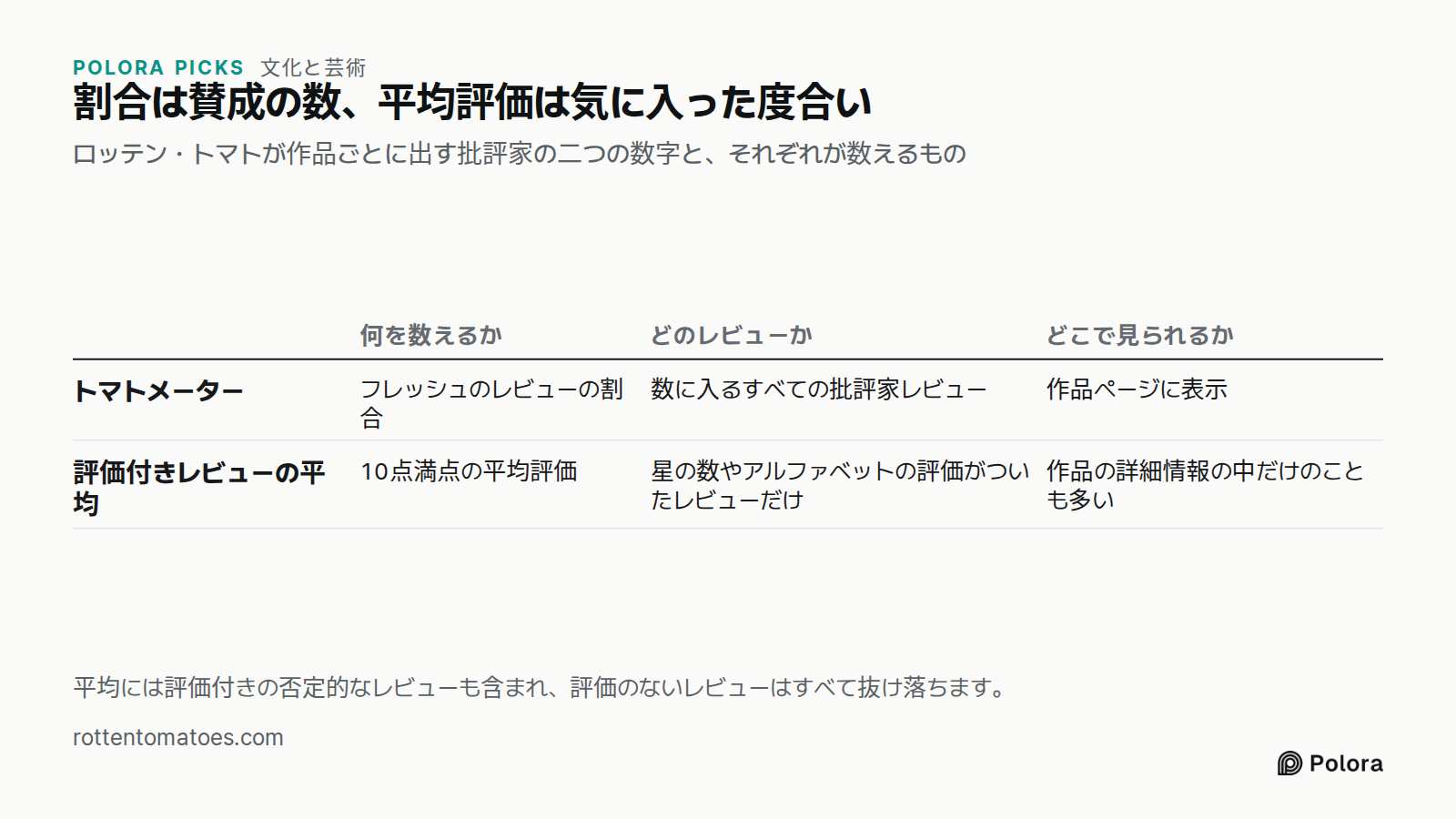
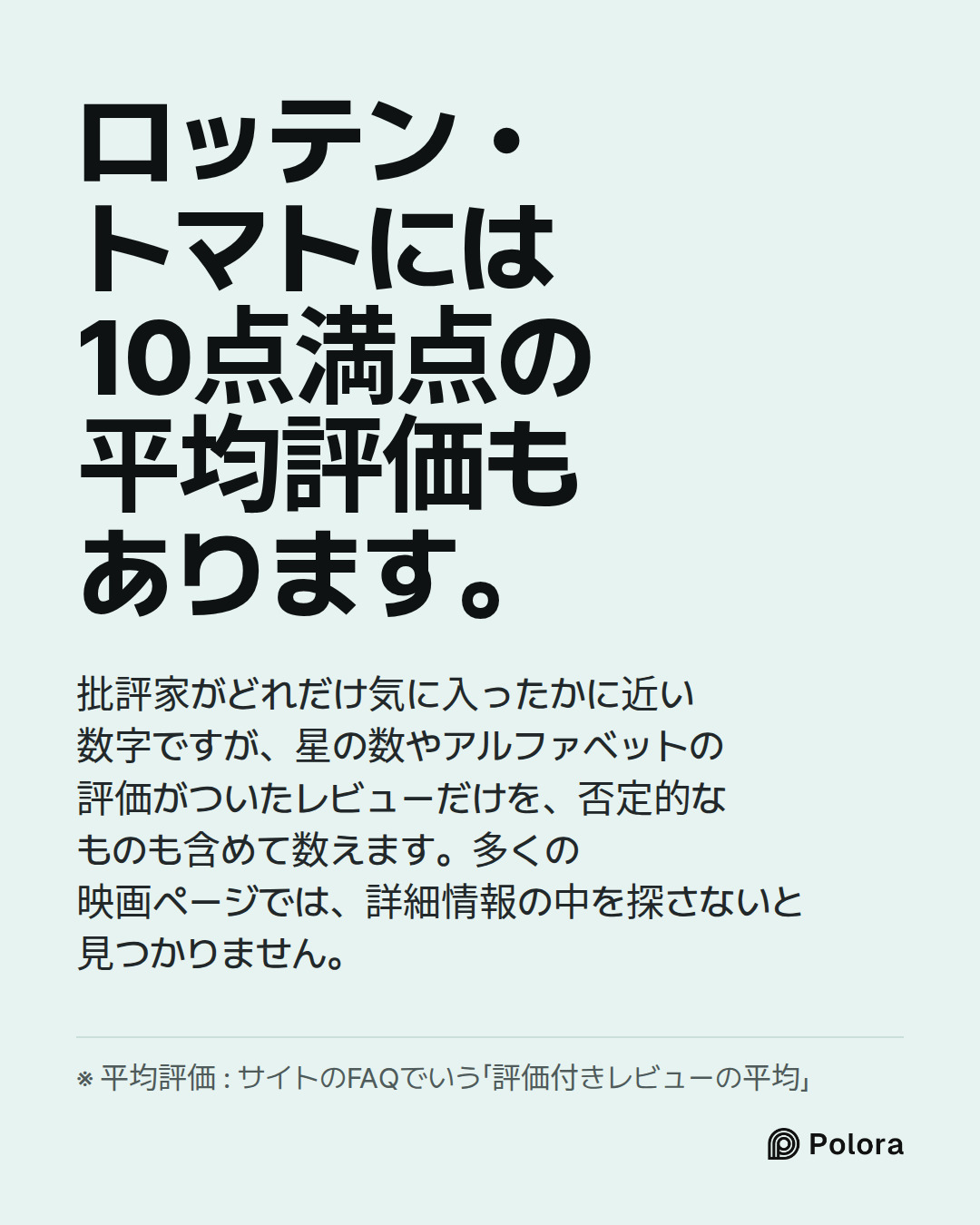
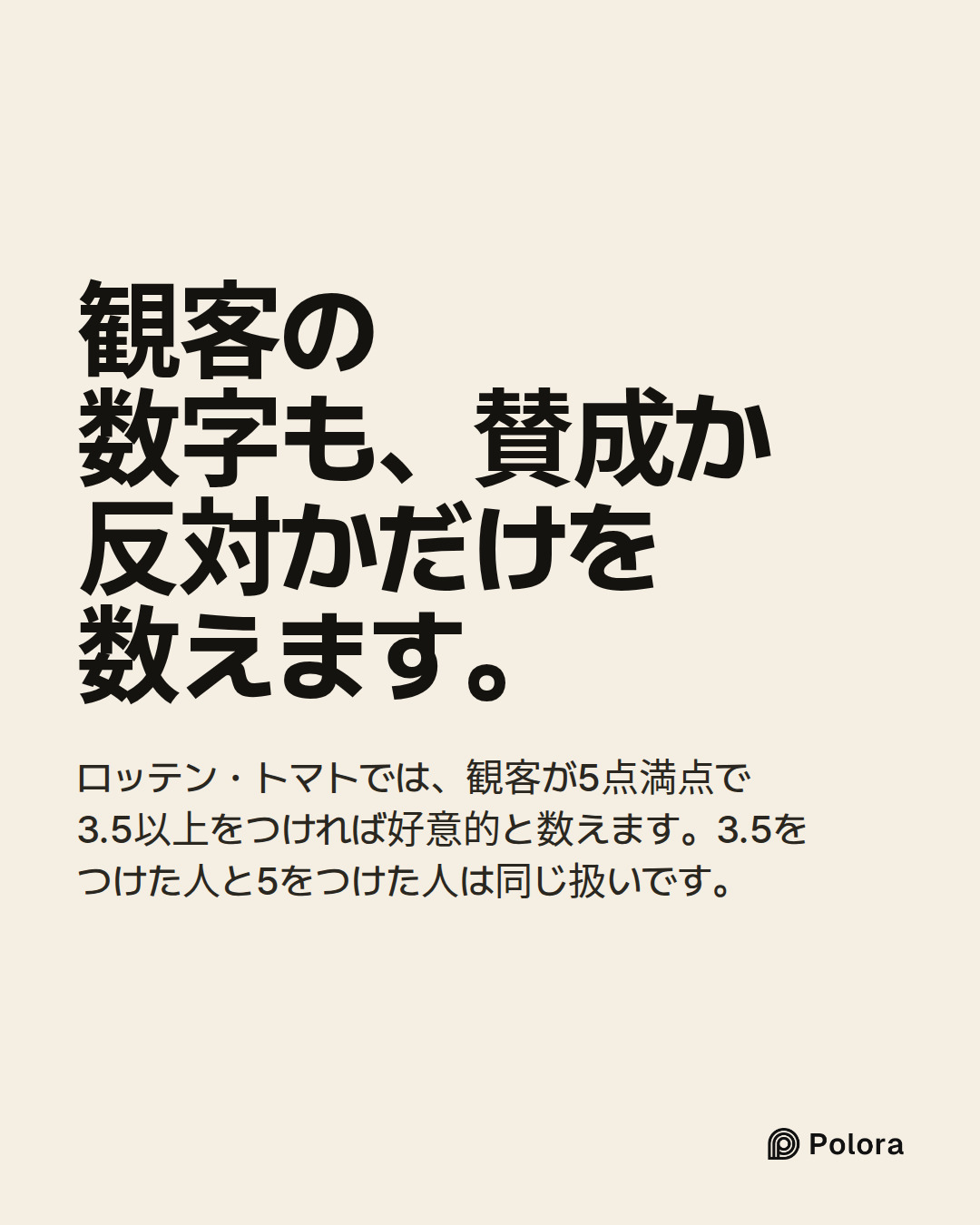
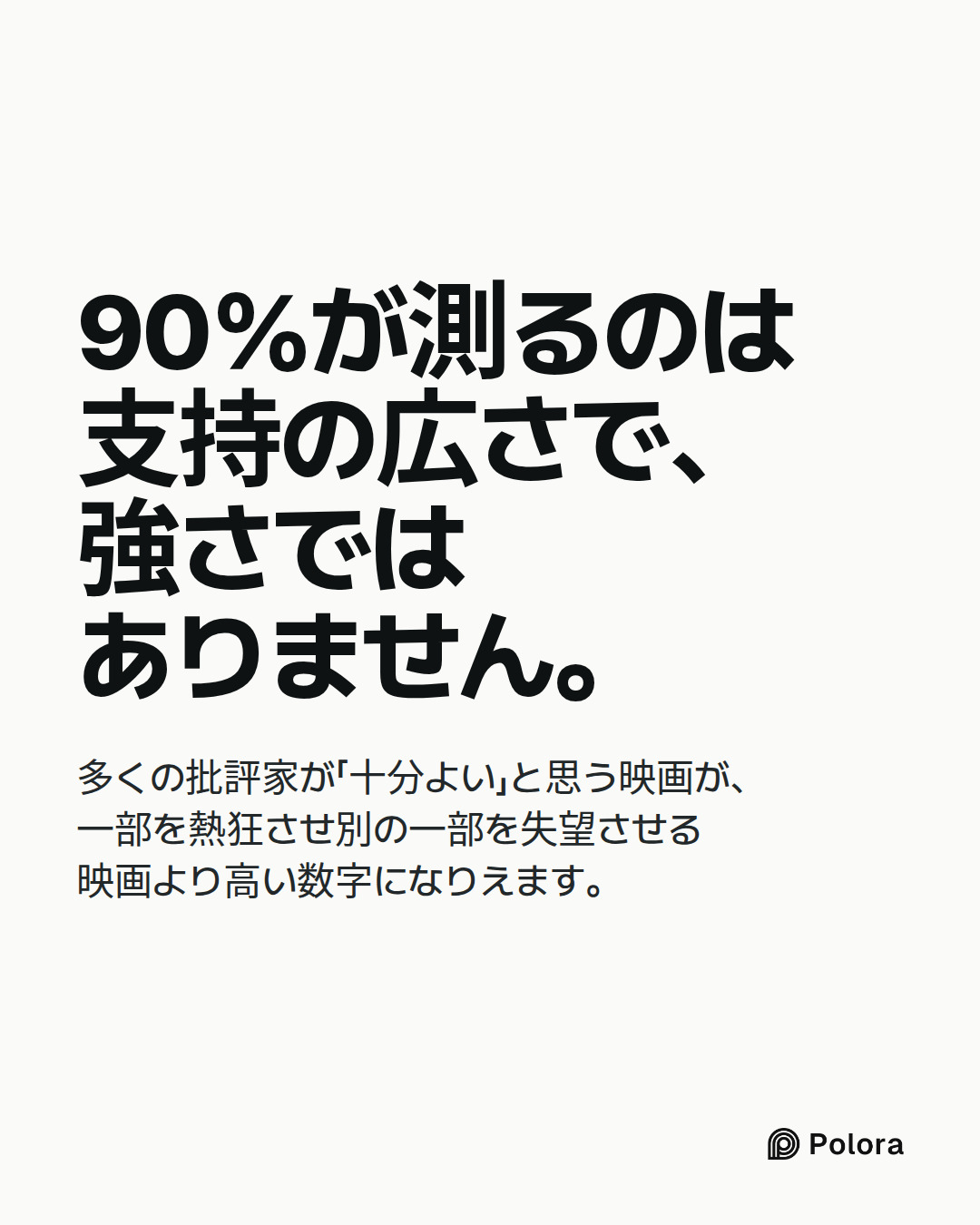
ロッテン・トマトには、ほとんどの人が見ないもう一つの数字があります。レビューに星の数やアルファベットの評価がついている場合、サイトはそれを平均して10点満点の数字にします。サイトのFAQでは「評価付きレビューの平均(Average of Rated Reviews)」と呼ばれています。評価のついていないレビューは計算に入りません。いまの映画ページの多くでは、この数字は割合の隣に表示されておらず、作品の詳細情報の中を探さないと見つからないこともあります。
Does a 90% on Rotten Tomatoes mean critics think a movie is great?
Alpha · claude-sonnet-5
Here's my read on the manuscript, claim by claim, as participant Alpha.
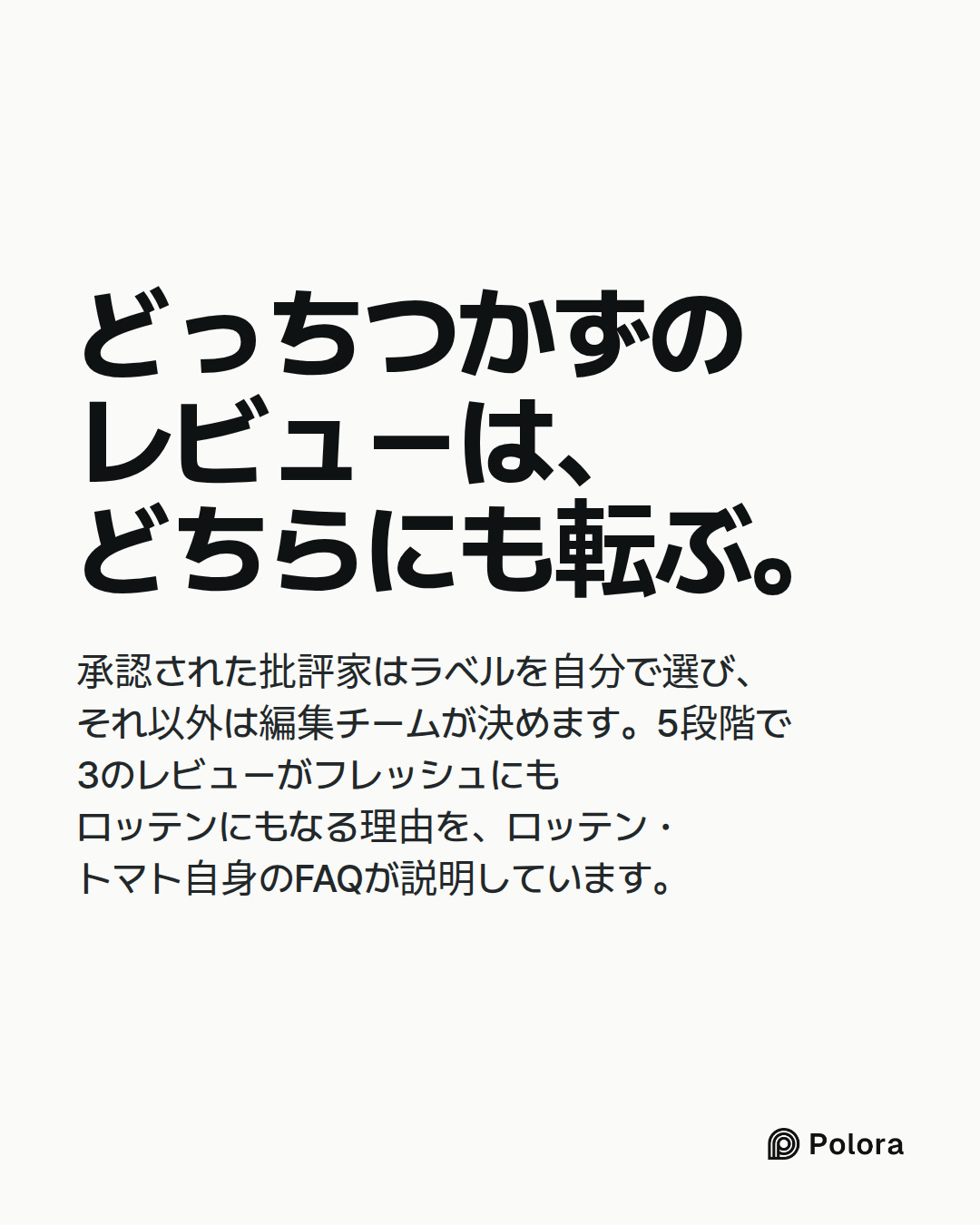
Core mechanism — confirmed, and this is the real story. Rotten Tomatoes' own FAQ states it plainly: "Reviews without individual ratings are not counted in the Average Rating calculation... The Average Rating measures the overall quality of a film or TV show based on an average of individual critic scores. The Tomatometer simply measures the percentage of positive reviews." The About page confirms the binary framing too: "The Tomatometer score represents the percentage of professional critic reviews that are positive for a given film or television show." So the manuscript's headline claim — that 90% is a head count, not a grade — is correct and well-sourced. The 60%/75% thresholds also check out: "When at least 60% of reviews for a movie or TV show are positive, it is considered Fresh and a red tomato is displayed. When less than 60% of reviews for a movie or TV show are positive, it is considered Rotten."
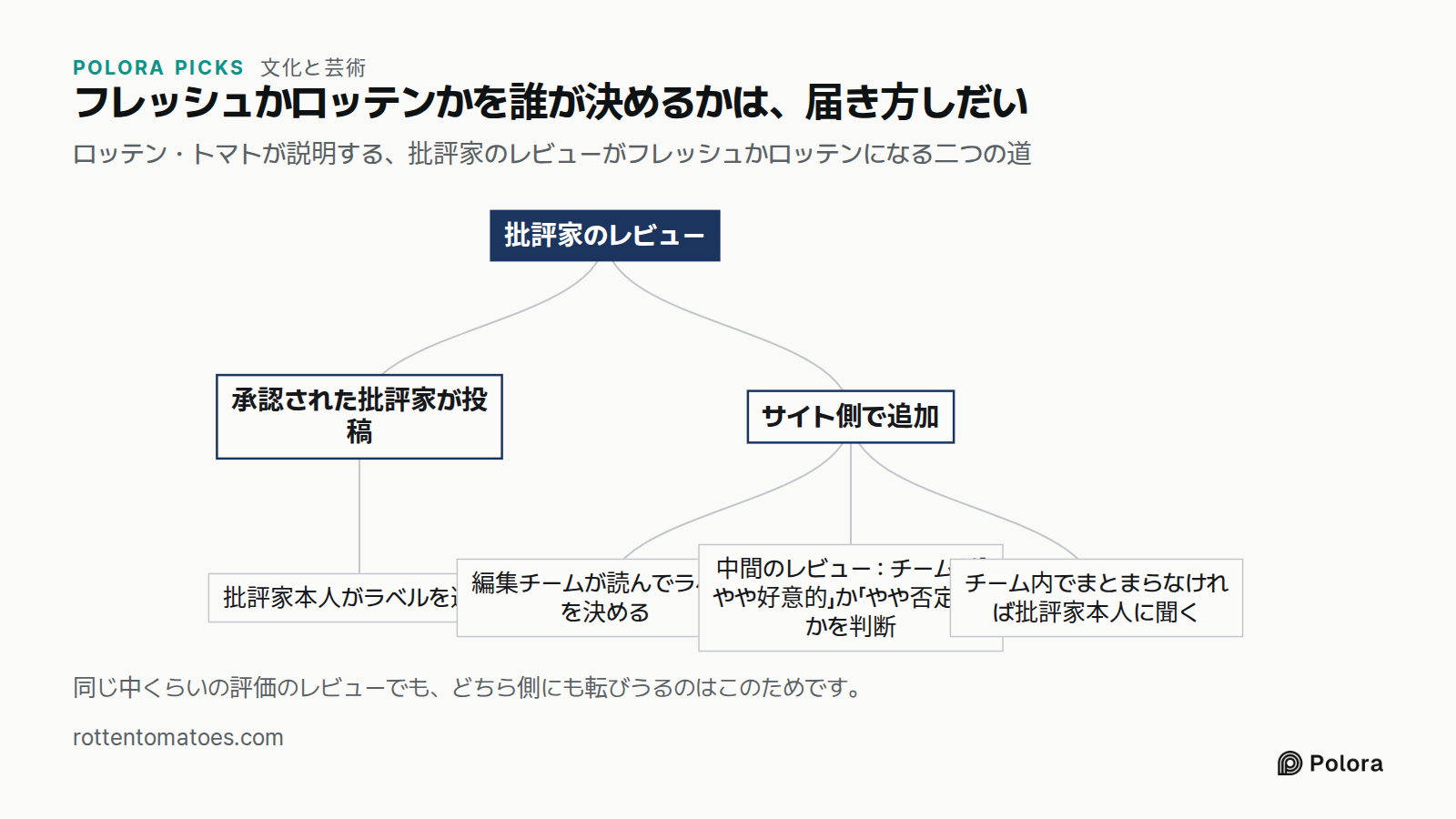
Who decides Fresh/Rotten — confirmed. "Our curation process considers these reviews, noting if they are Fresh or Rotten, and our curators choose a representative pull-quote. Tomatometer-approved crit…
Beta · gpt-6-sol
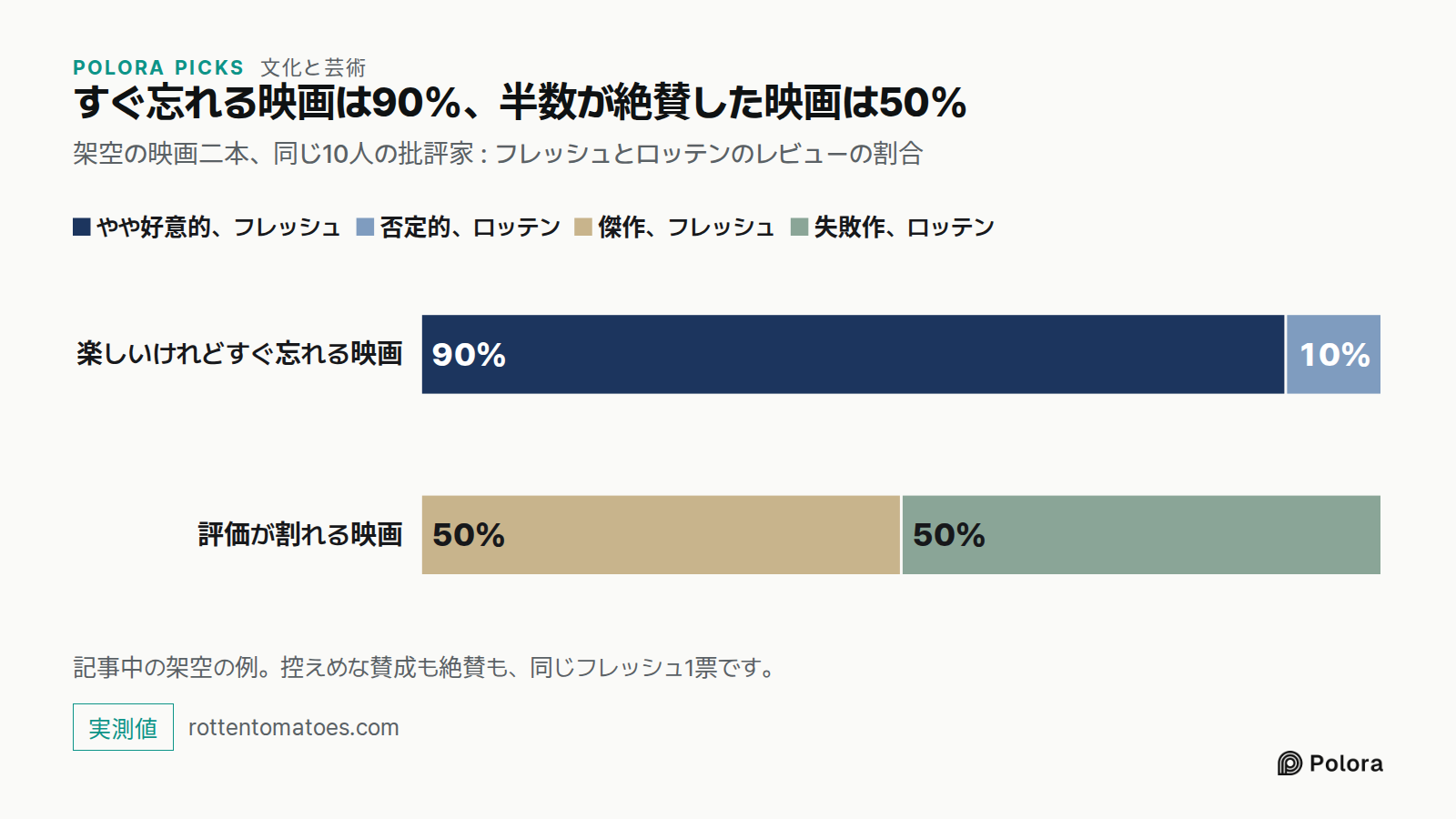
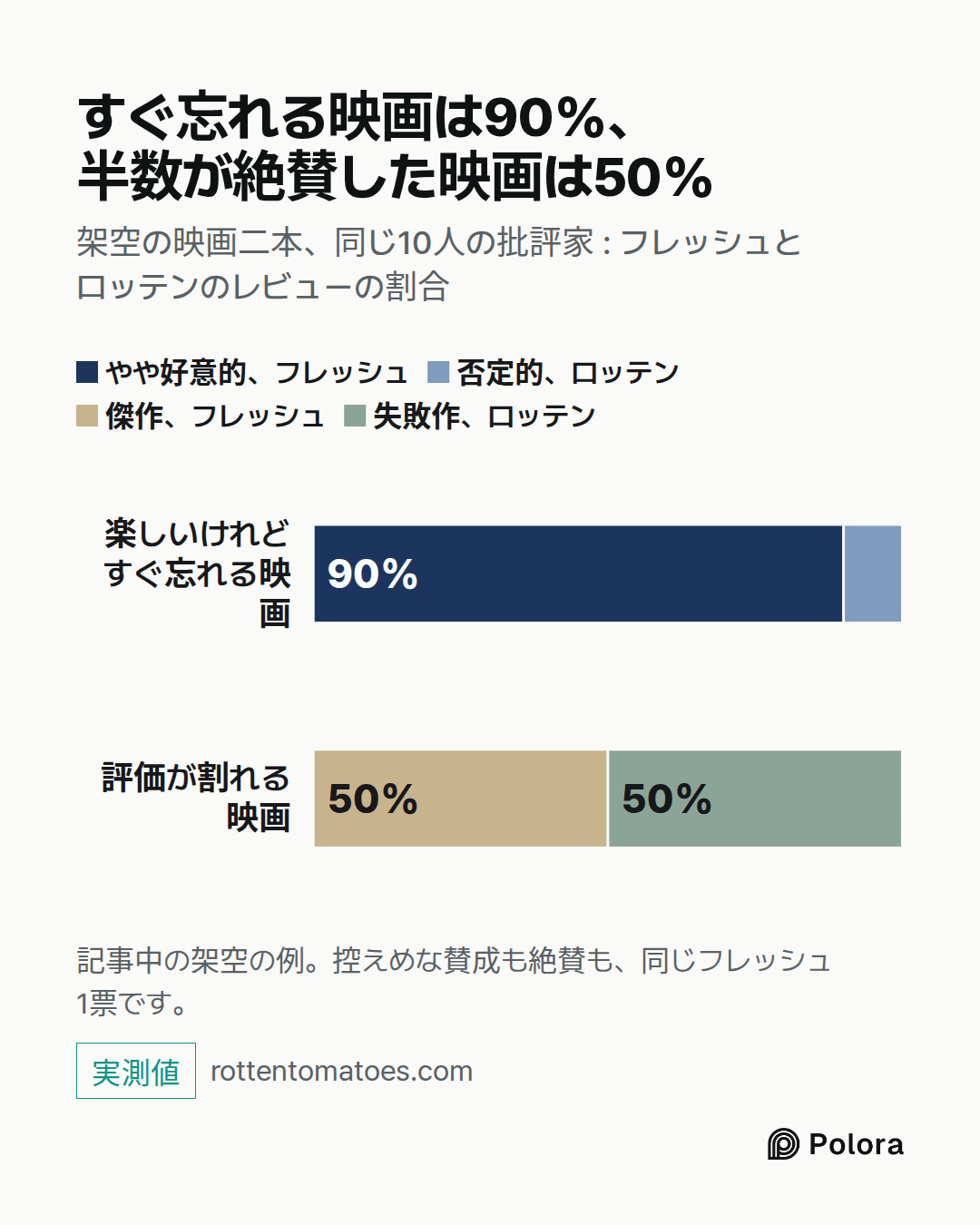
No. A 90% Tomatometer says that about nine in ten *counted reviews* were classified as positive. It does not say critics awarded the movie an average grade of 9/10, or that nine in ten called it great. The manuscript’s two invented films illustrate the distinction correctly: a mild Fresh and an ecstatic Fresh each add one to the numerator. Rotten Tomatoes defines Fresh as at least 60% positive; Certified Fresh requires at least 75%, five Top Critic reviews, and further review-count requirements. (rottentomatoes.com)
I agree with Alpha on that central finding, but “the ownership chain is the one factual repair needed” understates what needs checking or changing:
- The alternative average exists, but its visibility is not established. Rotten Tomatoes’ FAQ says its *Average of Rated Reviews* averages critics’ numerical or letter grades out of 10 and excludes ungraded reviews. A search-engine rendering of its *The Last Viking* page shows 90% positive, 7.20/10 average. Yet the page content I could open displayed the 90% prominently and did not expose that average. The editor can recommend looking for the ave…
Gamma · gemini-3.1-pro
Here is my assessment of the manuscript's claims, building on what Alpha and Beta have surfaced, and bringing in additional verification from the live web.
1. The core mechanism: 90% is a head count, not a grade
The manuscript’s central premise is absolutely correct. Rotten Tomatoes explicitly states that the Tomatometer is "the percentage of professional critic reviews that are positive." A lukewarm positive and a raving masterpiece review both count as exactly one "Fresh." The thresholds (60% for Fresh, 75% plus minimums for Certified Fresh) are also accurate.
*Source: https://www.rottentomatoes.com/about*
*Premise check:* The premise stands firmly. A 90% measures the *breadth* of approval, not the *depth* of enthusiasm.
2. The "Average of Rated Reviews" exists but requires digging
The manuscript is correct that Rotten Tomatoes maintains an average score out of 10 for reviews that include a numeric or letter grade. However, I agree with Beta that we must be careful about implying it is highly visible. My live checks of 2026 Rotten Tomatoes pages show this average is tucked away under "Movie Info" or "Series Info" tabs. Readers have to intentionally look for it.
*Sour…
Researcher · gemini-3-7-flash
Claim-by-Claim Verification
1. Core Mechanism: 90% is a head count, not a quality grade
* Status: Verified.
* Findings: Rotten Tomatoes defines the Tomatometer strictly as the "percentage of professional critic reviews that are positive". The 60% threshold for Fresh and 75% plus minimum review counts (including at least 5 from Top Critics) for Certified Fresh match the site's official methodology. The arithmetic premise holds: lukewarm approval and glowing acclaim count identically toward the percentage numerator.
* Source: Rotten Tomatoes — About, Rotten Tomatoes — FAQ.
---
2. The "Average of Rated Reviews"
* Status: Verified conceptually; caveat on front-page visibility.
* Findings: Rotten Tomatoes maintains an *Average of Rated Reviews* (out of 10), which averages numeric or letter grades and excludes unrated reviews. However, on modern page layouts, this figure is no longer surfaced prominently in the main header beside the percentage, often requiring readers to dig into tab details ("Movie Info").
* Editorial note: The manuscript should clarify that while Rot…
The Arbiter · gpt-6-sol
Round record. Alpha, Beta, Gamma, and the Researcher agree on the central distinction: Rotten Tomatoes defines the Tomatometer as the percentage of counted critic reviews classified as positive, not an average grade. A mildly positive review and a rave each contribute one Fresh review. Thus the manuscript’s invented 90%-versus-50% example works as an illustration, and its premise stands. The site also confirms the 60% Fresh threshold and Certified Fresh’s 75% threshold, subject to additional review requirements. (rottentomatoes.com)
The important qualifications and corrections are these:
- Strength of opinion: Beta’s objection is the sharpest: “a measure of how safe a film is” overstates what the number proves. Broad approval *can* reflect greatness; 90% alone cannot distinguish enthusiastic acclaim from widespread mild approval. Gamma’s counterclaim that 90%-rated films are *usually* very good was not supported by evidence in this round.
- The alternative average: The FAQ confirms an *Average of Rated Reviews* out of 10, but it excludes reviews without numerical or letter grades. Beta and the Researcher could not establish…
The Arbiter's Final Verdict · gpt-6-sol
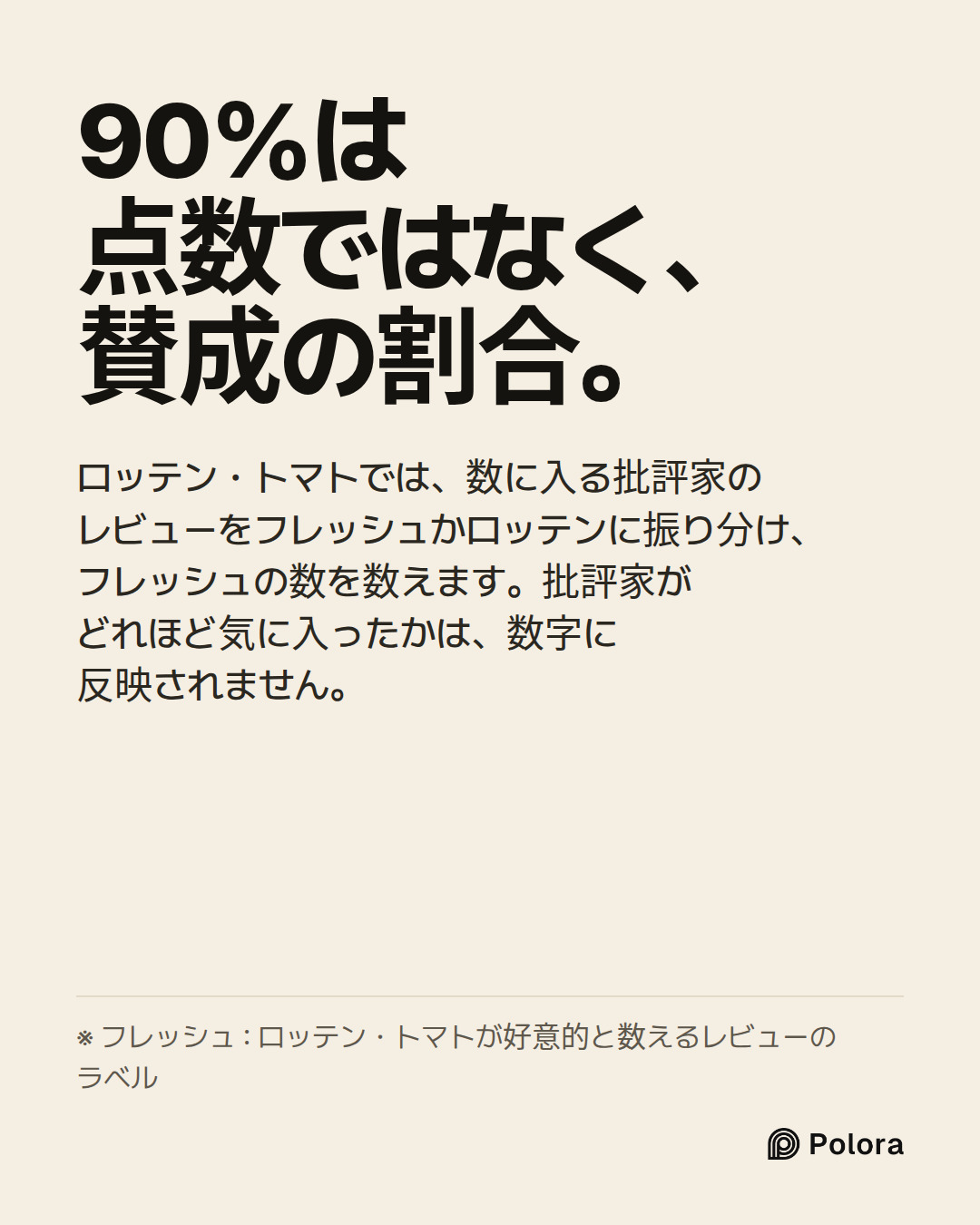
No—not necessarily. A 90% Tomatometer means 90% of the counted critics’ reviews were classified as positive. It does not mean critics gave the movie an average score of 9/10, or that they thought it was great.
A mildly favorable review and an enthusiastic rave each count as one positive review. So 90% tells you there is broad approval, but not how strong that approval is. For that, look at the reviews themselves or Rotten Tomatoes’ Average of Rated Reviews, which covers reviews that include a grade. The Tomatometer explanation confirms the distinction.