미국 새 양장본의 작가 몫은 보통 정가의 10~15%, 28달러 책이면 약 2.80달러입니다. 출판사가 받는 돈을 기준으로 한 계약이면 더 적고, 이 몫은 먼저 선인세에서 차감됩니다.
문화와 예술 · 2026-11-05
28달러짜리 양장본, 그 돈은 누구에게 가나
표지에 28달러가 찍힌 새 양장본이 있다고 해 봅시다. 계산을 따라가기 쉽게 고른 예시 가격입니다. 이 돈에서 가장 큰 몫은 서점에 남습니다. 출판사는 서점에 책을 정가보다 싸게 넘깁니다. 미국 도서 유통사들의 안내서는 이 할인율을 대략 40~55%로 잡고, 오프라인 서점이 보통 기대하는 수치는 55%라고 말합니다. 다만 조건은 서점마다, 주문마다 다릅니다. 판타지 작가 브랜던 샌더슨은 2007년에 내놓은 추정에서 25달러짜리 양장본을 이렇게 나눴습니다. 약 14달러가 출판사에 들어가고, 약 3달러가 작가에게 가며, 인쇄비와 배송비를 치르고 나면 출판사에 남는 돈은 7달러 남짓입니다. 샌더슨은 이 숫자를 회계 자료가 아니라 대략적인 예시로 내놓았습니다.
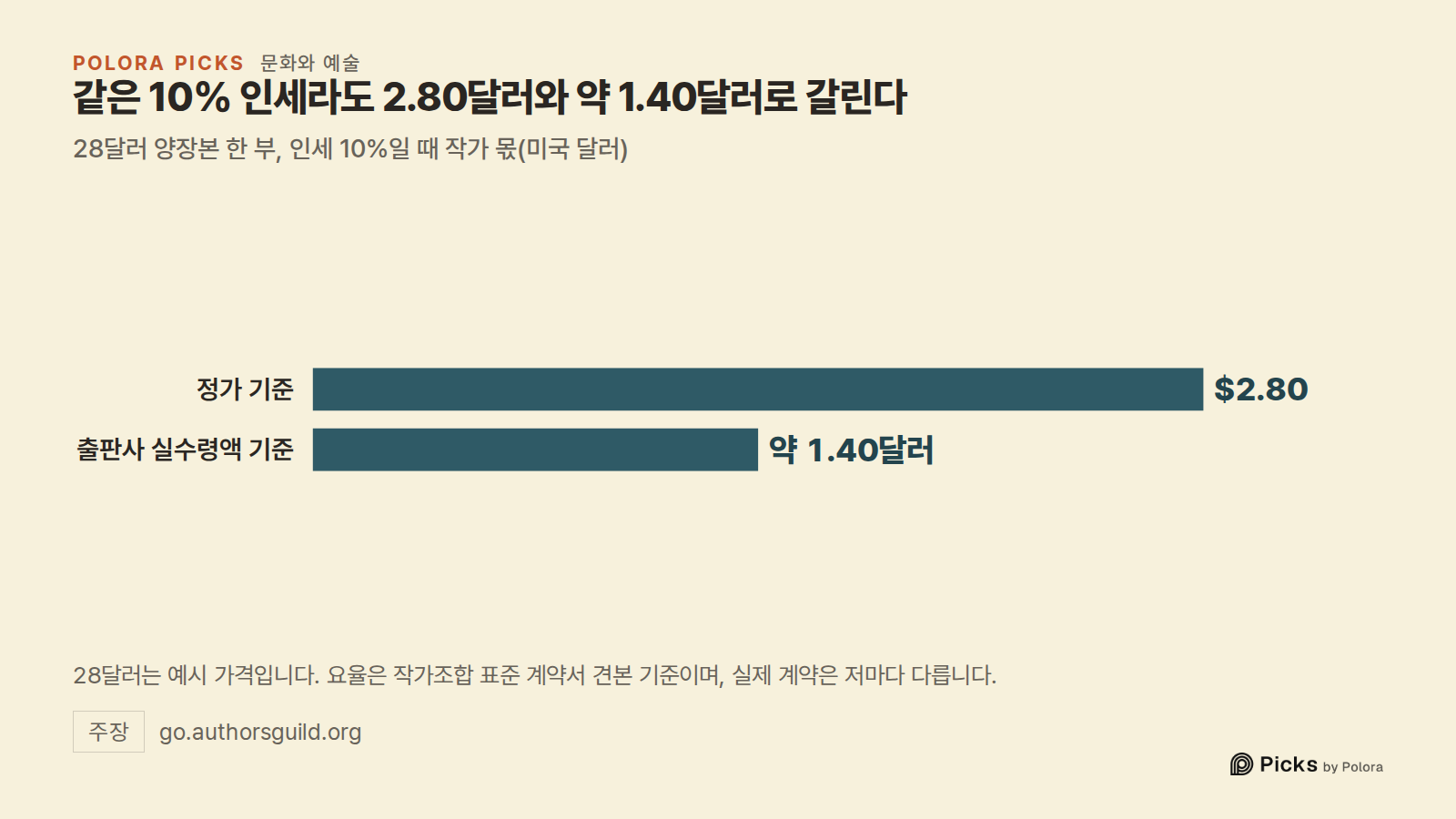
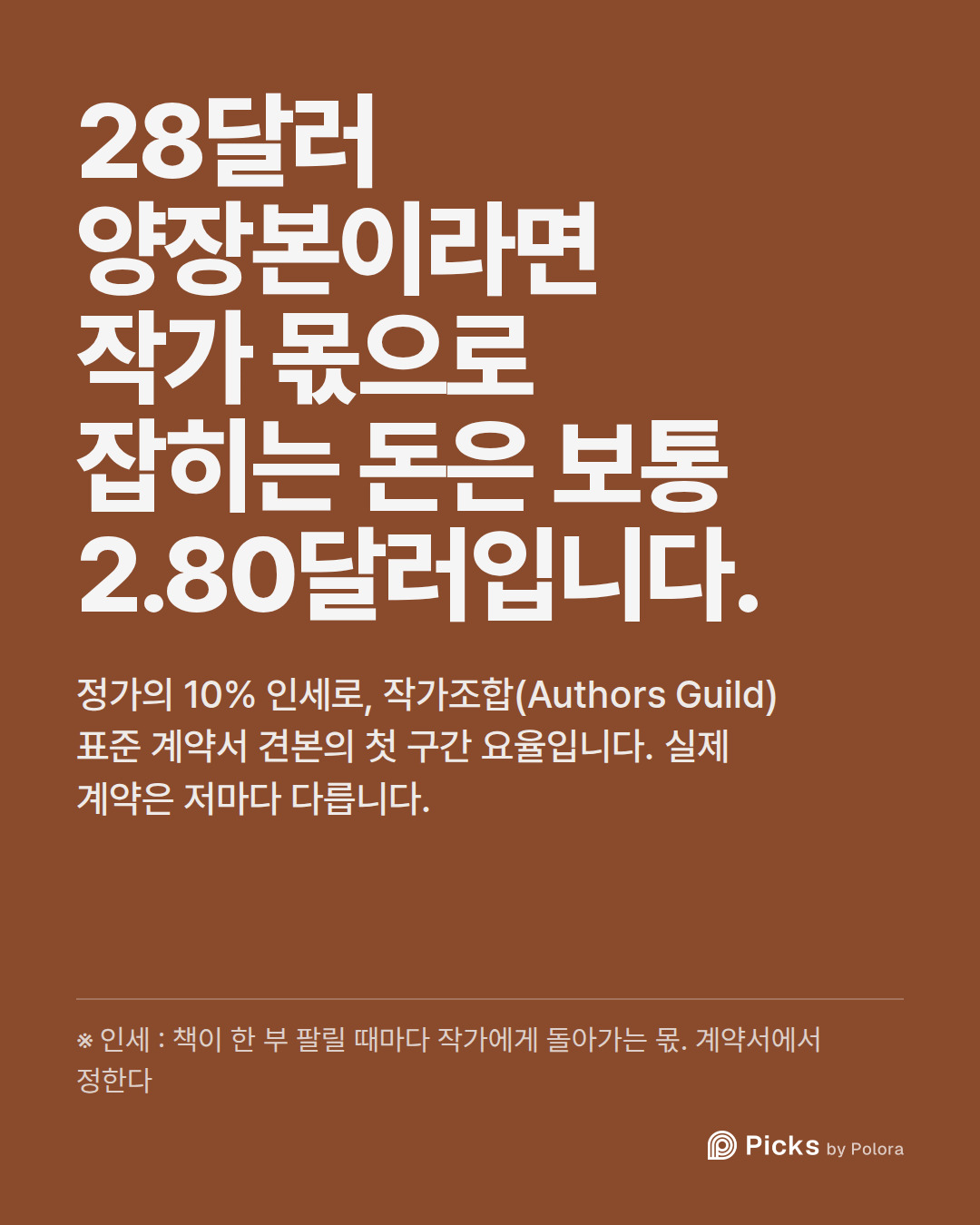
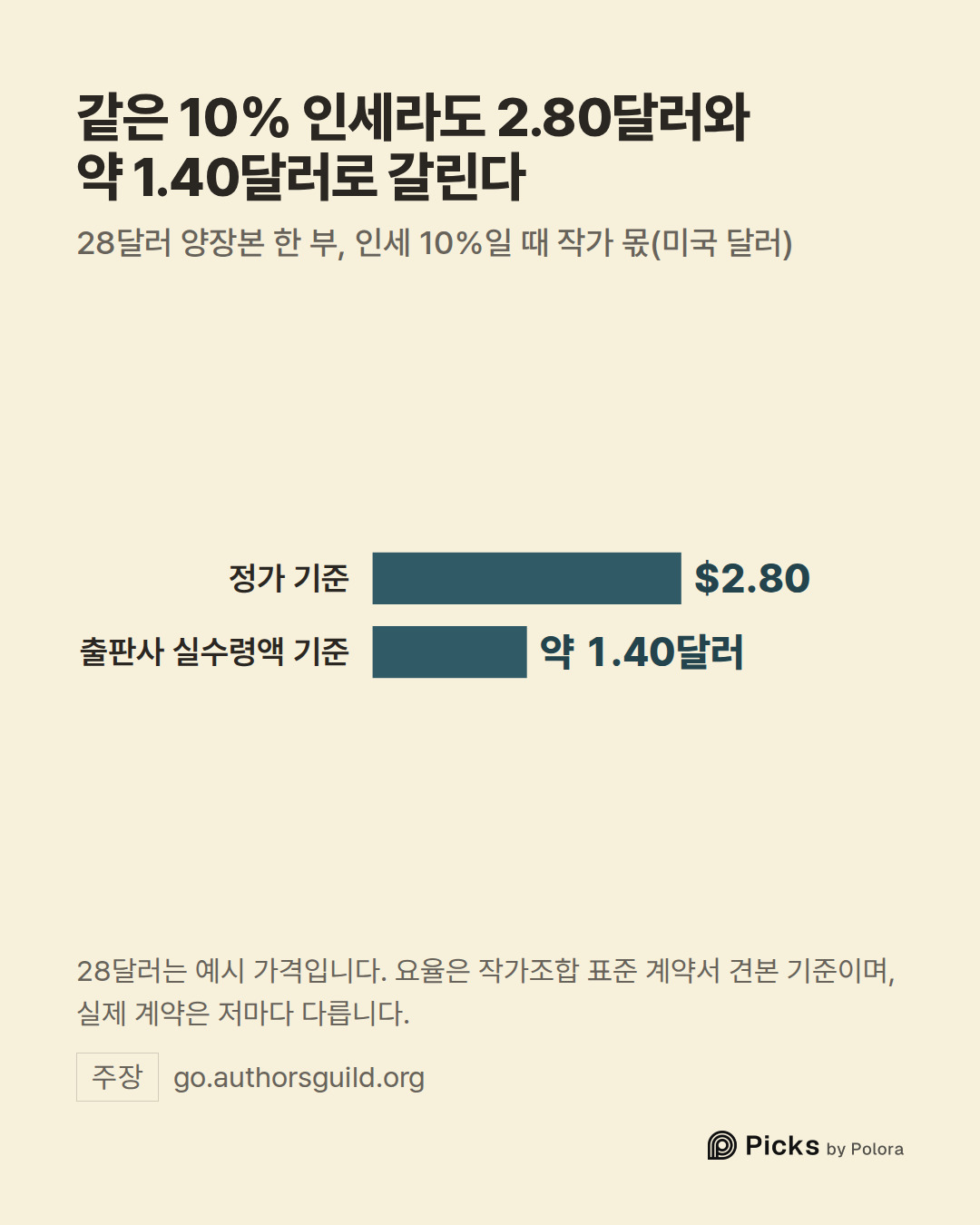
작가의 몫은 계산대가 아니라 계약서에서 정해집니다. 미국의 대표적인 작가 단체인 작가조합(Authors Guild)은 표준 계약서 견본을 공개합니다. 그중 정가 기준 견본은 양장본 인세를 처음 5,000부까지는 소매 정가의 10%, 다음 5,000부는 12.5%, 그 뒤로는 15%로 정합니다. 28달러 책이라면 첫 구간 요율로 2.80달러입니다. 같은 견본에서 일반 페이퍼백은 정가의 7.5%입니다. 작가조합은 같은 요율을 출판사가 실제로 받는 돈에 적용하는 두 번째 견본도 내놓는데, 그 돈이 정가의 절반 정도인 경우가 많다고 설명합니다. 이 방식이면 28달러 책에 같은 10%를 적용해도 작가 몫으로 잡히는 돈은 1.40달러 안팎입니다. 실제 계약은 한 건씩 협상되고 출판사, 판형, 나라마다 다르므로, 이 숫자들은 규칙이 아니라 참고점입니다.
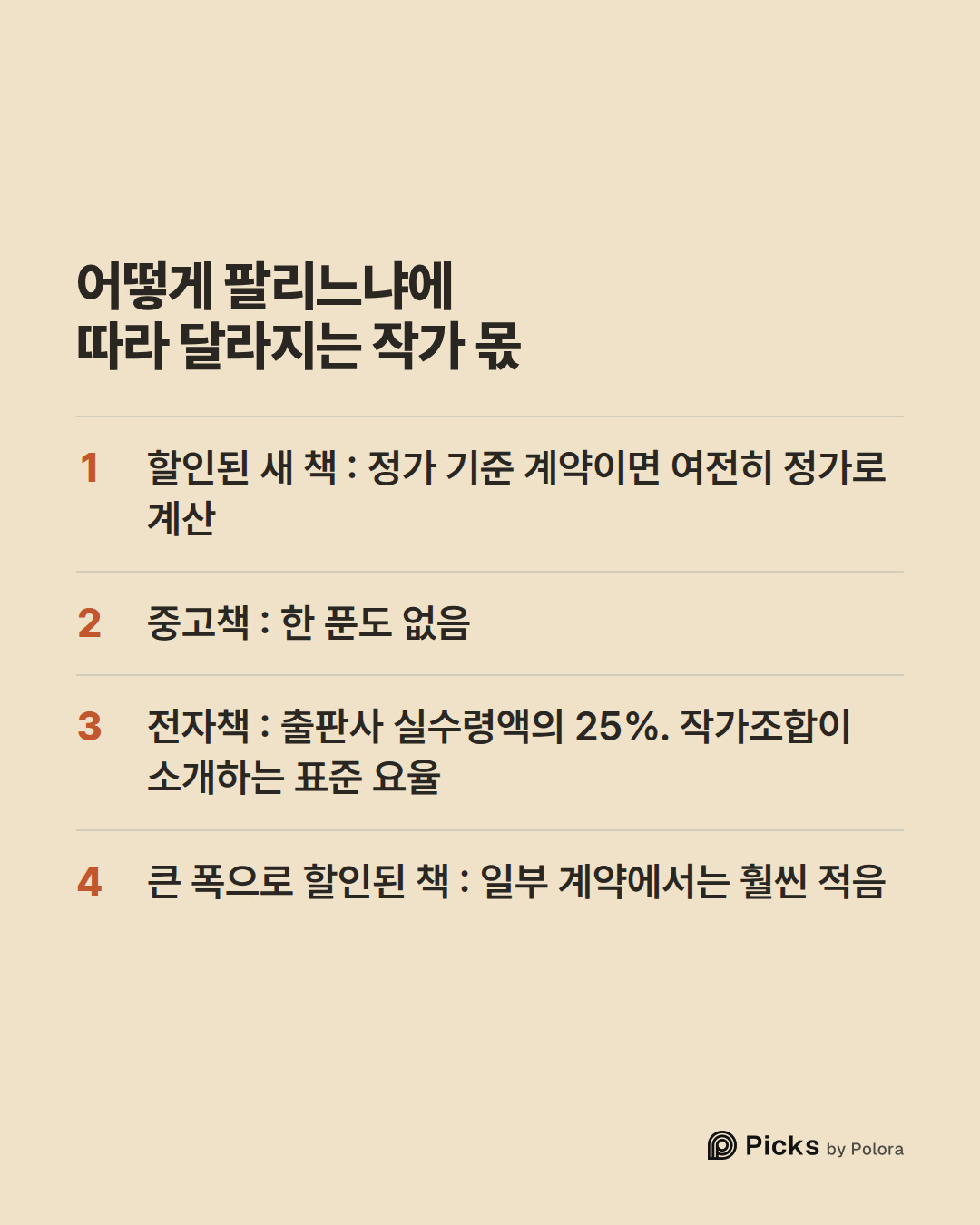
책을 사는 사람 대부분이 놀라는 대목이 하나 있습니다. 정가 기준 계약에서는 일반 판매분의 인세를 독자가 실제로 낸 값이 아니라 정가로 계산합니다. 작가 브라이언 매클렐런은 서점이 26달러짜리 자기 책을 18달러에 팔아도 인세는 여전히 26달러를 기준으로 계산된다고 설명합니다. 중고책이 팔리면 작가에게는 한 푼도 돌아가지 않습니다.
기존 출판사와 계약한 작가는 대부분 책이 나오기 전에 선인세를 받습니다. 앞으로 벌 인세를 미리 당겨 주는 돈이지, 책이 나중에 버는 돈에 얹어 주는 돈이 아닙니다. 책이 버는 인세는 모두 이 선인세에서 차감됩니다. 쌓인 인세가 선인세를 넘어서기 전까지 작가는 더 받는 돈이 없습니다. 이 선을 넘는 것을 영어권 출판계에서는 선인세를 회수한다(earning out)고 말합니다.
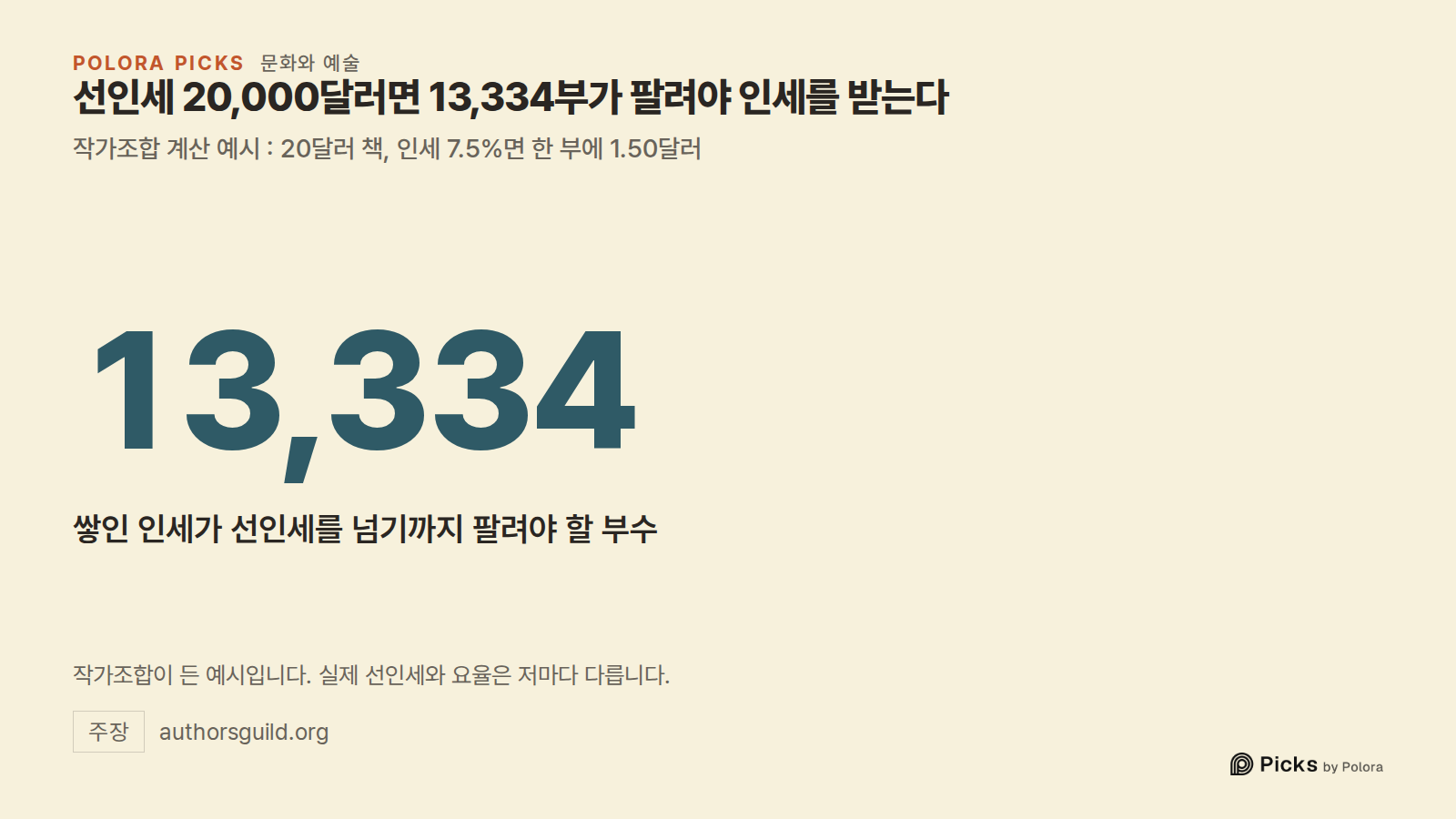
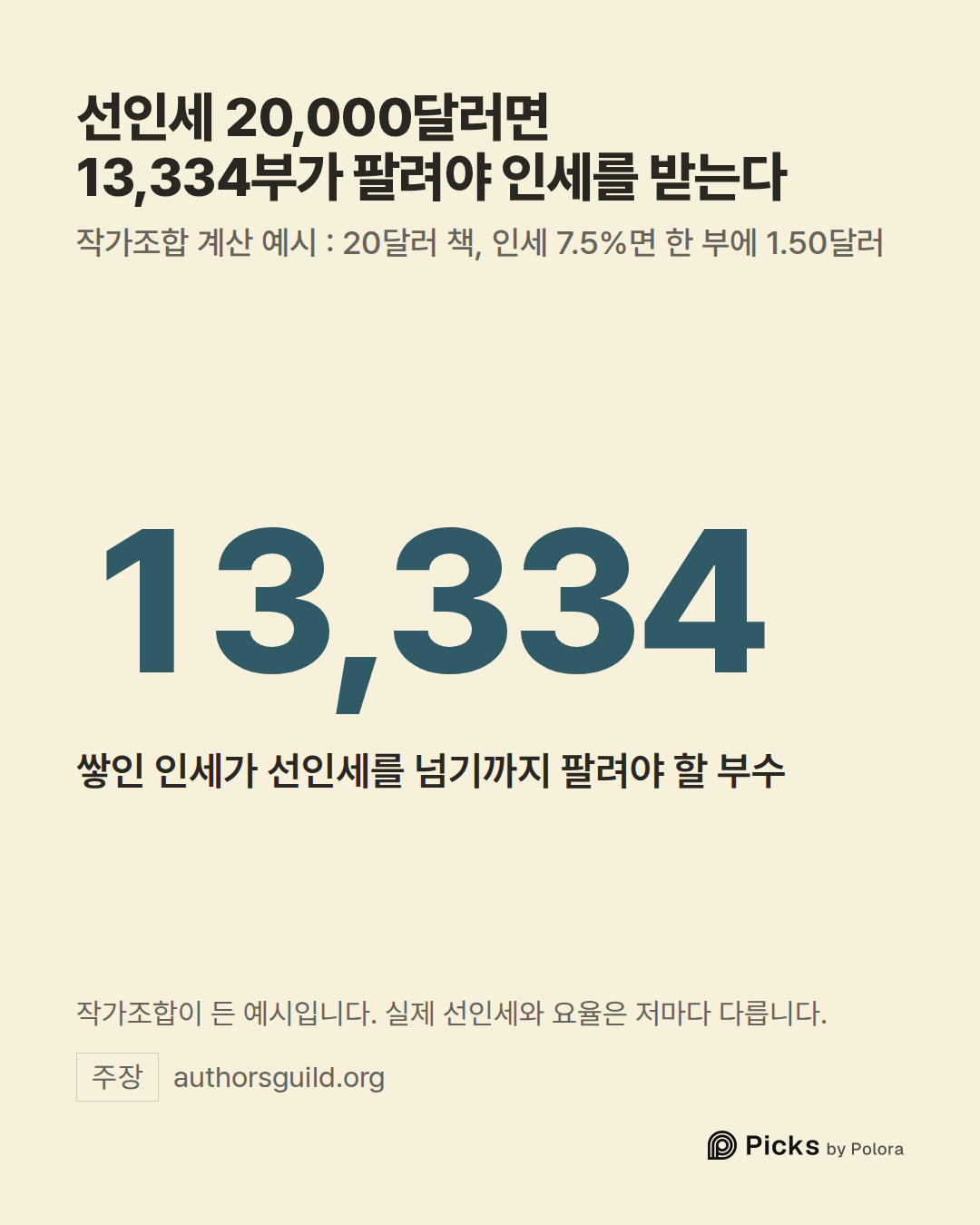
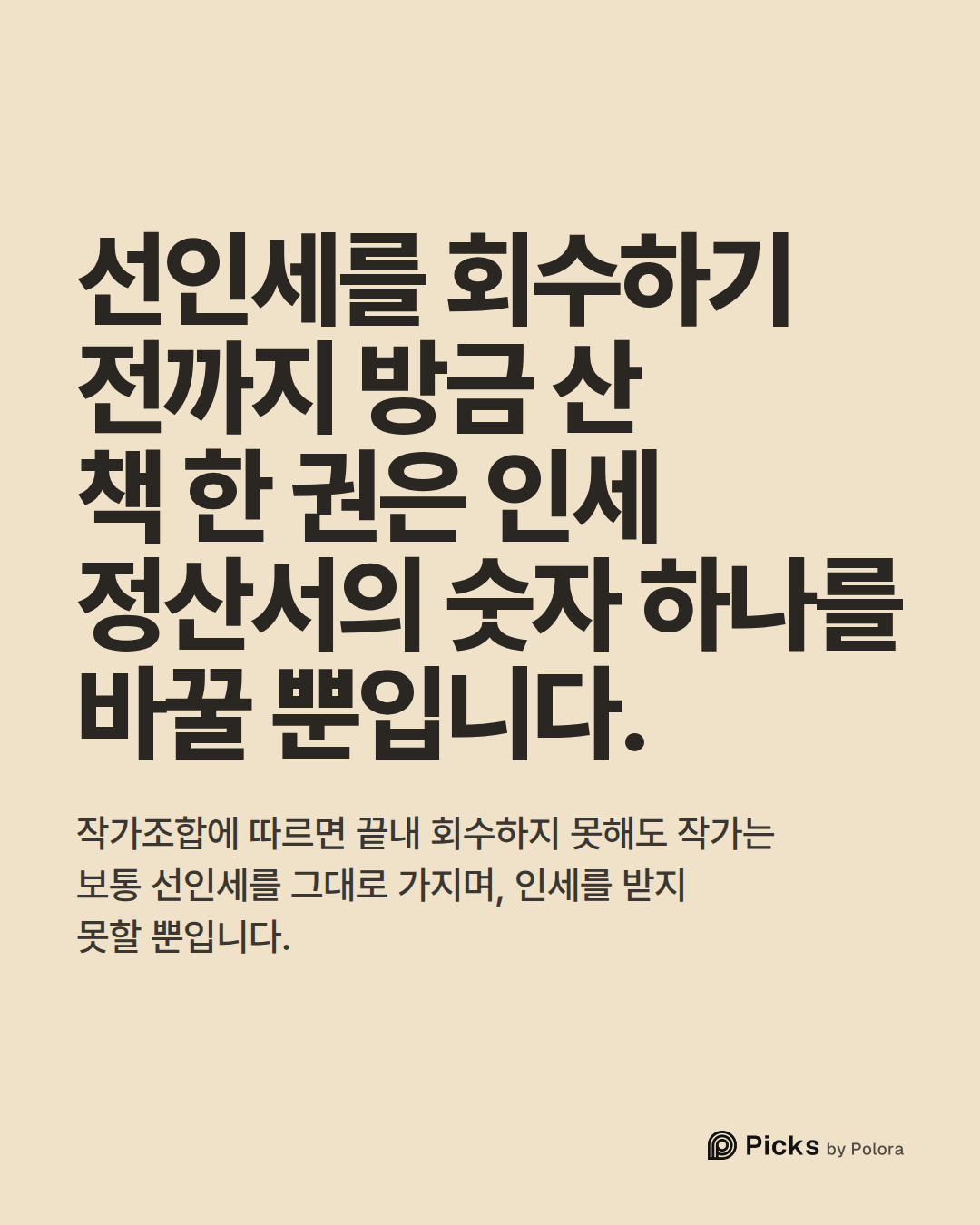
작가조합이 든 계산 예시가 있습니다. 20달러짜리 책의 인세율이 7.5%라면 한 부마다 1.50달러가 작가 몫으로 쌓입니다. 선인세가 20,000달러라면 책이 13,334부 팔려야 쌓인 인세가 선인세를 넘고, 그제야 작가가 인세를 받을 수 있습니다. 그때까지는 방금 산 책 한 권이 인세 정산서의 숫자 하나를 바꿀 뿐, 작가가 받는 돈에는 아무것도 보태지 않습니다.
작가에게 저작권 에이전트가 있다면 에이전트 수수료는 작가 몫에서 나갑니다. 작가조합에 따르면 에이전트는 미국 내 계약에서 보통 15%를 가져가고, 해외 판권 계약에 다른 에이전트가 한 명 더 끼면 20%를 가져갑니다. 돈은 대개 출판사에서 에이전시로 가고, 에이전시가 수수료를 떼고 남은 85%를 작가에게 넘깁니다.
인세가 끝내 선인세를 따라잡지 못해도 작가는 보통 선인세를 그대로 가집니다. 작가조합에 따르면 대부분의 경우 작가는 채우지 못한 만큼을 현금으로 돌려주지 않고, 그저 인세를 받지 못할 뿐입니다. 반환이 문제가 되는 것은 계약을 어겼을 때, 이를테면 원고를 끝내 넘기지 않았을 때입니다.
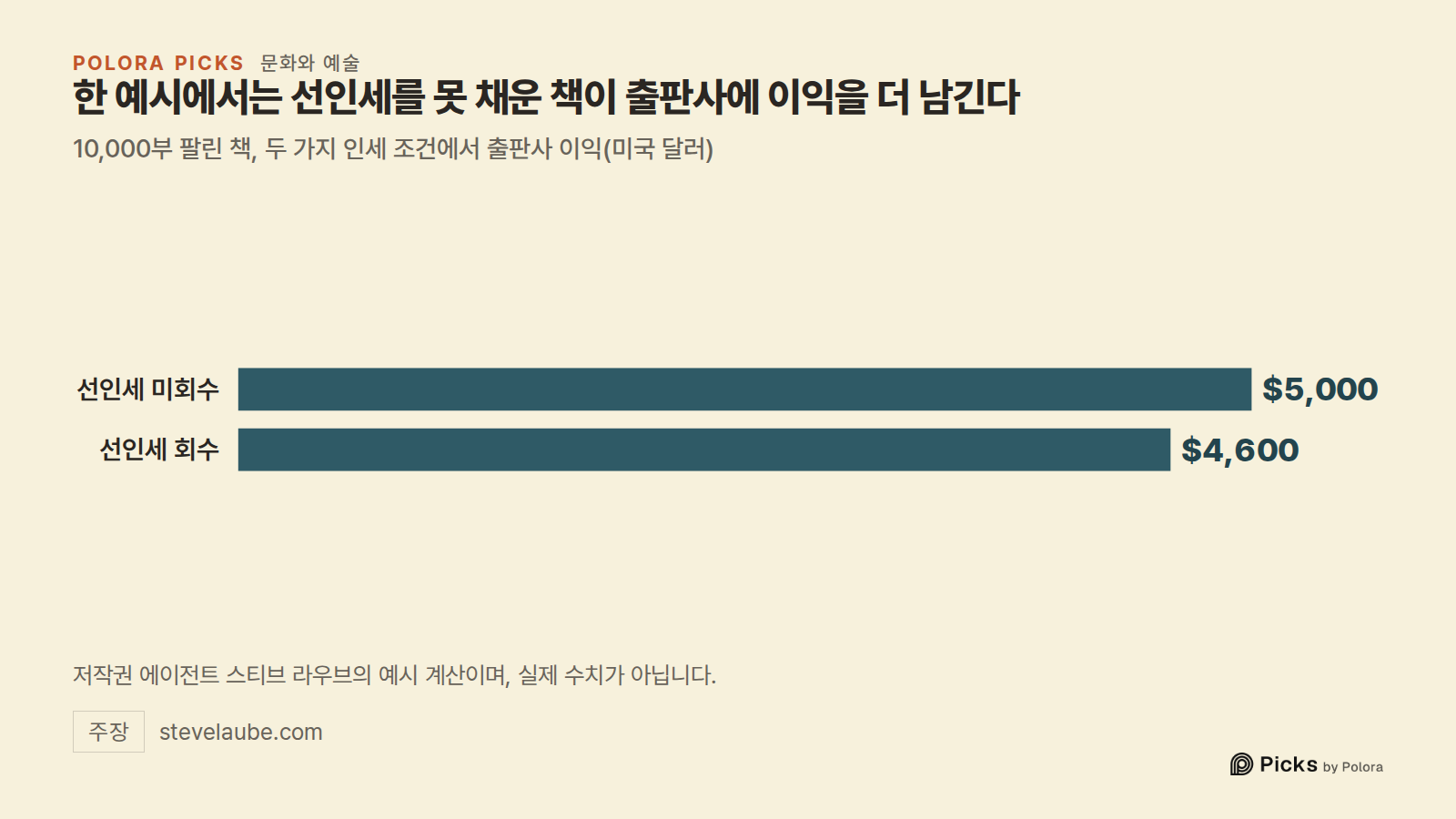
선인세를 채우지 못한 책이 꼭 출판사에 손해를 끼친 것도 아닙니다. 저작권 에이전트 스티브 라우브는 10,000부 팔린 책 한 권을 두 가지 인세 조건에 놓고 예시 계산을 해 보였습니다. 그의 계산에서 선인세를 채우지 못한 쪽은 출판사에 5,000달러의 이익을 남기고, 선인세를 채운 쪽은 4,600달러를 남깁니다. 실제 수치가 아니라 가정으로 한 계산이지만 요점은 드러납니다. 선인세는 출판사가 그 책에 미리 치른 고정 가격처럼 작동하고, 인세 조건은 그 뒤에 들어오는 돈을 어떻게 나눌지 정합니다.
선인세를 끝내 채우지 못하는 책의 비율은 자주 인용되지만 출처가 붙는 일은 드뭅니다. 10권 중 7권이라는 수치가 돌아다니는데, 라우브는 이 숫자가 출처 없이 발표됐다고 지적합니다. 확실히 말할 수 있는 것은, 이 구조에서는 책이 한 권 팔려도 작가 수입에 아무것도 보태지지 않는 일이 흔하다는 점입니다.
모든 인세가 정가로 계산되는 것은 아닙니다. 작가조합은 전자책 인세의 현재 표준 요율을 출판사 실수령액의 25%로 소개합니다. 실수령액은 판매처 몫을 떼고 출판사가 실제로 손에 쥐는 돈입니다. 작가조합의 표준 계약서 견본은 디지털 오디오북에도 같은 실수령액의 25%를 적용합니다. 종이책도, 많은 중소 출판사를 염두에 둔 두 번째 견본에서는 실수령액을 기준으로 인세를 계산합니다.
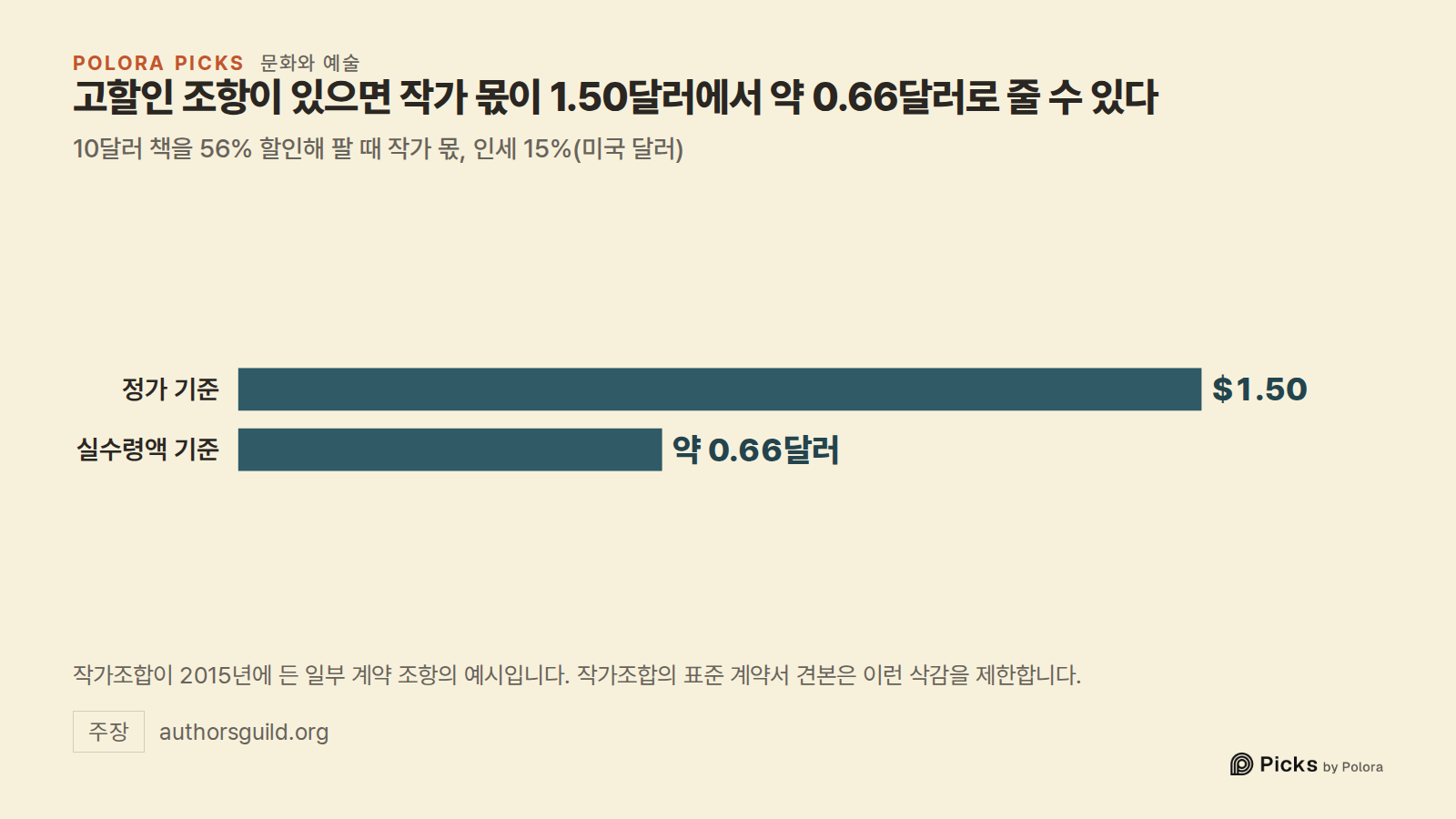
책이 아주 큰 폭으로 할인돼 팔릴 때 인세 계산 방식을 바꾸는 계약도 있습니다. 작가조합의 견본은 이 범위를 좁게 잡습니다. 인세를 낮추는 것은 미국의 일반 도서 유통 바깥에서 들어온 일부 대량 주문 가운데 할인율이 56%를 넘는 경우뿐이고, 그때도 정상 요율의 3분의 2 밑으로는 내려가지 않습니다. 이보다 더 나아가는 계약도 있습니다. 작가조합은 2015년에, 일부 계약에 큰 폭으로 할인된 판매분의 인세 기준을 정가에서 실수령액으로 바꾸는 조항이 들어 있다고 밝혔습니다. 작가조합이 든 예시에서 10달러 책을 56% 할인해 팔면 출판사가 받는 돈은 4.40달러이고, 여기에 15% 인세를 적용하면 작가 몫은 약 0.66달러입니다. 정가 기준이었다면 1.50달러였을 돈입니다. 호주작가협회도 호주 계약서에 들어가는 같은 종류의 고할인 조항을 소개합니다.
그러니 10~15%는 정가 기준 계약에서 양장본이 평범하게 팔렸을 때의 이야기입니다. 크게 할인된 책이나 실수령액 기준 계약에서는 작가 몫이 정가의 10%에 한참 못 미칠 수 있습니다.
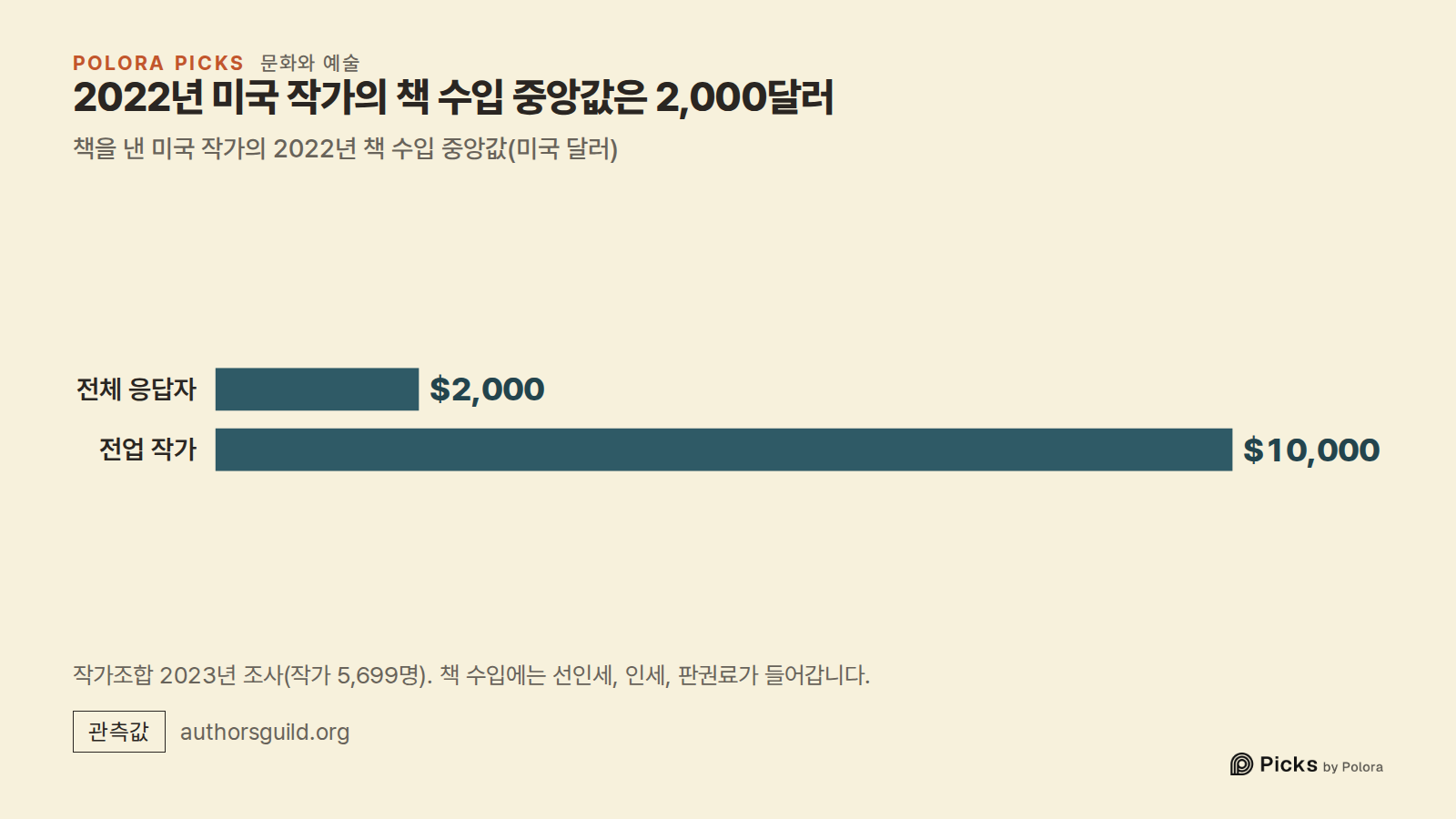
이런 규칙들이 모이면 작가 대부분의 수입은 많지 않습니다. 미국 작가조합의 2023년 조사는 책을 낸 미국 작가 5,699명에게 2022년 수입을 물었습니다. 책 수입에는 선인세, 인세, 판권료가 들어갔습니다. 책 수입의 중앙값은 겸업 작가를 포함한 전체 응답자에서 2,000달러, 전업 작가에서 10,000달러였습니다.
영국에는 작가저작권징수협회(ALCS)가 의뢰하고 글래스고대학교가 수행한 조사가 있습니다. 글쓰기가 주업인 작가, 곧 일하는 시간의 절반 이상을 글쓰기에 쓰는 작가들이 프리랜서로 글을 써서 번 돈은 중앙값이 7,000파운드였습니다. 조사 대상 기간은 2019/20 과세연도와 2020/21 과세연도입니다.
두 조사는 서로 다른 집단에게 서로 다른 해에 대해 서로 다른 질문을 했으므로 하나의 흐름으로 읽을 수 없습니다. 또 중앙값은 집단을 설명할 뿐 작가 한 사람 한 사람을 설명하지는 않습니다. 훨씬 많이 버는 작가도 있고, 덜 버는 작가도 많습니다.
자가출판 플랫폼은 돈을 다르게 나눕니다. 아마존의 킨들 다이렉트 퍼블리싱(KDP)은 작가에게 전자책 정가의 35%를 주거나, 70%에서 전송 비용을 뺀 금액을 줍니다. 전송 비용은 파일 크기에 따라 다르며, 아마존은 평균 한 부에 0.06달러로 잡습니다. 70%는 부가가치세를 뺀 정가로 계산하고, 정해진 나라에서 정해진 가격대 안에서만 적용됩니다. 미국 아마존(Amazon.com)에서 그 가격대는 2026년 7월 7일부터 2.99~12.99달러이고, 그 전까지는 상한이 9.99달러였습니다. 브라질, 일본, 멕시코, 인도에서는 아마존의 KDP 셀렉트 프로그램에도 가입해야 이 요율을 받습니다.
몫이 큰 대신 떠맡는 것도 많습니다. 대개 선인세가 없고, 출판사가 맡았을 편집, 표지, 마케팅, 그리고 위험까지 작가가 떠안습니다. 어느 쪽이 더 낫다고 잘라 말할 수는 없습니다. 두 방식은 같은 돈과 같은 위험을 서로 다르게 나눌 뿐입니다.
정리하면, 새 양장본 한 권을 살 때 계약이 정가 기준이라면 책값의 10분의 1쯤이 그 책을 쓴 사람의 몫으로 잡힙니다. 출판사가 받는 돈을 기준으로 한 계약이라면 28달러 책에서 작가 몫은 2.80달러보다 1.40달러에 가까울 수 있습니다. 그 몫이 작가가 실제로 받는 돈이 되는지는 책이 계산대에 오르기 한참 전에 맺은 계약에 달려 있습니다.
When you buy a book, how much of the price goes to the author?
Alpha · deepseek-v4-pro
I’d answer in three layers, because “how much goes to the author” can mean three different things.
1. The contractual royalty on a new hardcover is usually about 10–15% of the cover price.
On a $28 hardcover, that’s $2.80–$4.20. Trade paperbacks are often lower — around 7.5% of cover price in common reference contracts — and mass-market paperbacks can be less. These are ranges, not fixed rules: royalty rates are negotiated contract by contract, and they differ by publisher, country, and format.
2. The retailer takes a large share before the author is even considered.
Bookstores commonly buy books at a discount of roughly 40–55% of the cover price, so the publisher may receive only about half of that $28. In many print contracts the author’s royalty is still calculated on the cover price, not the discounted price — but not always. Some contracts have “deep discount” clauses that reduce the royalty when the publisher sells at a very high discount.
3. What actually reaches the author’s bank account is often not the same as the royalty credit.
If the author was paid an advance, every royalty is credited against that advance first. Until the book “ea…
Beta · gpt-6-sol
I agree with Alpha’s distinction between a royalty credited on a sale and new cash paid after an advance earns out. But the manuscript’s headline needs a narrower scope: $2.80 on a $28 hardcover is the first-tier royalty in the Authors Guild’s *list-price* model contract, not a dependable amount for every new hardcover. That model sets 10%, then 12.5%, then 15% as sales pass 5,000 and 10,000 copies. Its alternative for many smaller and academic publishers applies those percentages to the publisher’s *net receipts* instead. If net receipts are roughly half the cover price, the same nominal 10% rate credits roughly $1.40, not $2.80. This is the strongest objection to the manuscript’s “about a tenth of its price” conclusion; the basic explanation of advances and differing royalty bases still stands. (go.authorsguild.org)
What I checked in the manuscript:
- Print, ebook and advance figures: The Guild model supports 7.5% of list for a trade paperback and describes 25% of publisher net receipts as the current standard ebook rate; these are contract reference points, not guarantees. Its advance example does say “more…
Gamma · gemini-3.1-pro
I can confirm several of the remaining claims from the manuscript based on my independent checks, while a few need minor adjustments.
What I verified:
* Retailer trade discounts: The 40% to 55% range is accurate for trade publishing. Distributor guides from IngramSpark and Outskirts Press confirm that 40% is generally the minimum wholesale discount required for wider distribution, while 55% is the standard trade discount expected by physical bookstores. (ingramspark.com; outskirtspress.com)
* Agent commissions: The Authors Guild’s "An Author’s Guide to Agency Agreements" confirms that standard industry commissions are 15% on domestic deals and 20% on foreign rights deals when a sub-agent is involved. (authorsguild.org)
* Steve Laube’s example: The numbers in the manuscript match the scenario on his blog, "The Myth of the Unearned Advance." He models a scenario where a book selling 10,000 copies that fails to ear…
Researcher · gpt-6-luna
Research check
The strongest qualification to the manuscript’s headline is confirmed: $2.80 on a $28 hardcover is the first-tier rate in one Authors Guild model-contract option, not a universal share of the price. The Guild’s current model gives eligible hardcover sales 10% of list price for the first 5,000 copies, 12.5% for the next 5,000, and 15% thereafter. But its alternative model for most small and medium-sized publishers calculates those same percentages on publisher net receipts. The Guild says net receipts are often about half of list price, which can make the author’s credit substantially lower. The model’s commentary says adult trade-book rates tend to run around 10–12%, with higher rates after sales thresholds.
Source: https://go.authorsguild.org/contract_sections/5 (go.authorsguild.org)
The same page supports the manuscript’s 7.5% trade-paperback model rate and says 25% of net receipts is the current standard ebook rate. Those are contract models and Guild commentary on practice, not rates guaranteed in every contract. ([go.authorsguild.org](https://go.authorsguild.org/contract_sec…
The Arbiter · gpt-6-sol
The speakers agree on the distinction the manuscript needs to preserve: a royalty credited for a sale is not necessarily new cash paid to the author. They also agree that the royalty’s basis matters. The Authors Guild offers both a list-price hardcover model and a net-receipts alternative, so its $2.80 first-tier example for a $28 book cannot describe every hardcover contract. (authorsguild.org)
Two apparent disagreements can now be resolved from the original pages:
- The US income-survey wording in the manuscript is right. The Guild reports $10,000 median *book income for full-time authors*, not only traditionally published full-time authors. Gamma’s proposed restriction should not be adopted. The $2,000 figure is for all surveyed authors, including part-time authors. (authorsguild.org)
- Sanderson’s cited FAQ does contain the breakdown. In an illustrative estimate dated January 8, 2007, he puts roughly $14 of a $25 hardcover sale with the publisher, about $3 with the auth…
The Arbiter's Final Verdict · gpt-6-sol
Verdict
For a new, traditionally published hardcover, a useful reference point is 10–15% of the *cover price* credited to the author. On a $28 book, that is $2.80–$4.20; $2.80 is the first-tier figure in the Authors Guild’s list-price model contract, not an amount every hardcover sale earns. Some contracts calculate the percentage on the publisher’s *net receipts* instead, which can produce a substantially smaller credit. Rates vary by contract, country and format. The manuscript’s central explanation stands, but its closing claim that “about a tenth” is credited on a new hardcover needs that list-price qualification. Authors Guild model contract
A credit is not necessarily a fresh payment. If the author received an advance, royalties are counted against it until the book earns out. The Guild’s example requires 13,334 copies earning $1.50 each to exceed a $20,000 advance. An advance that never earns out generally is not a debt the author must repay, absent circumstances such as a contract breach. An agent commonly takes 15% of a US deal’s author proceeds, or generally 20% on foreign-rights deals involving a…