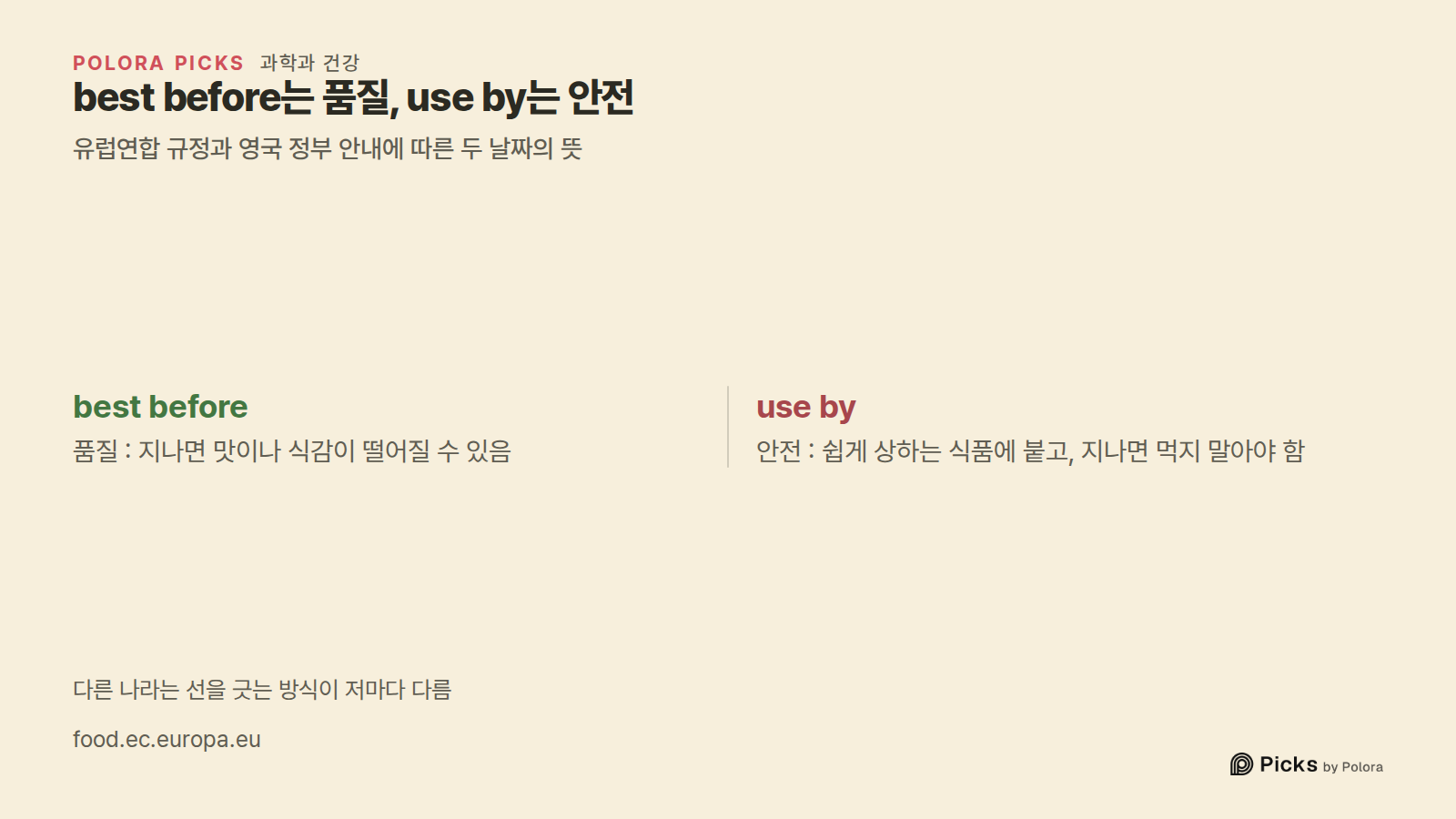
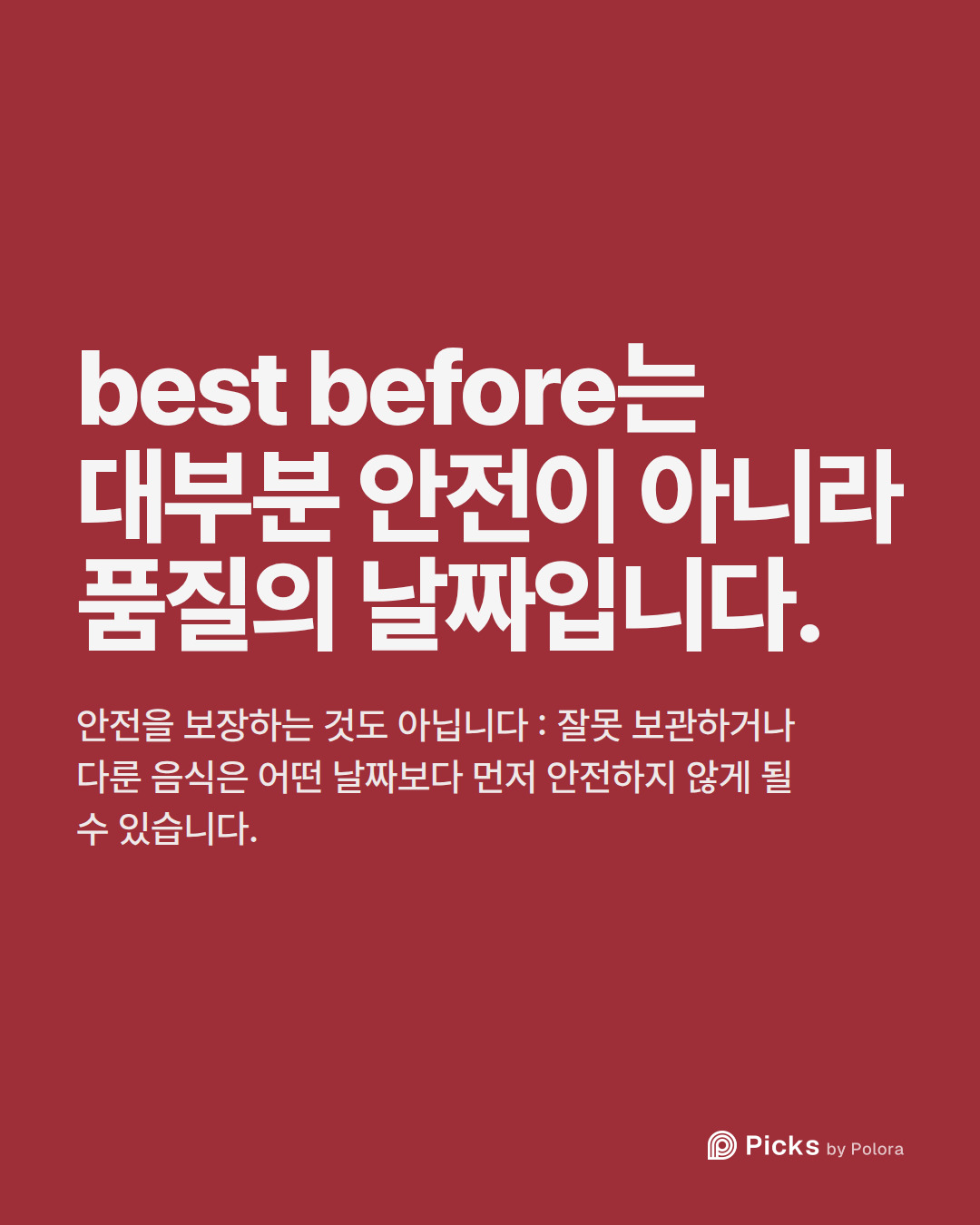
아닙니다. best before는 대부분 안전이 아니라 품질의 날짜입니다. 식품 업체가 맛과 상태가 가장 좋은 때가 언제 끝날지 어림한 것이지, 안전과 위험을 가르는 선이 아닙니다. 영국과 유럽연합에서 안전을 말하는 날짜는 따로 있습니다. 쉽게 상하는 식품에 붙는 use by입니다.
과학과 건강 · 2026-11-05
요구르트 뚜껑의 날짜는 생각과 다른 말을 한다
냉장고 속 요구르트 뚜껑에 찍힌 'best before' 날짜가 하루 지났습니다. 이제 먹으면 안 된다는 뜻으로 읽기 쉽지만, 대부분은 그런 뜻이 아닙니다.
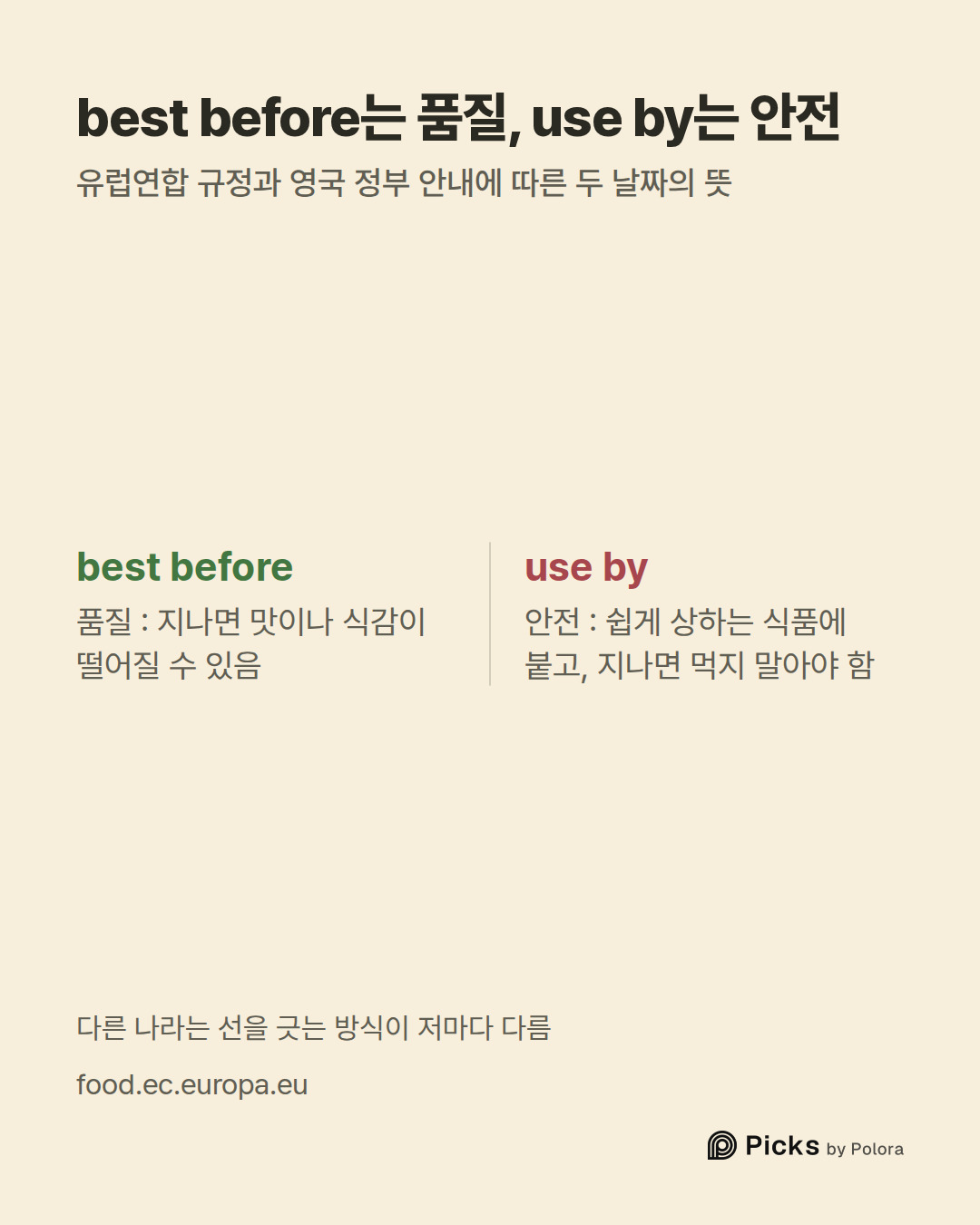
많은 나라가 식품에 두 종류의 날짜를 씁니다. 하나는 품질의 날짜입니다. 이 날이 지나면 맛이나 식감이 만든 회사가 의도한 만큼 좋지 않을 수 있다는 뜻입니다. 다른 하나는 안전의 날짜로, 쉽게 상하는 일부 식품에만 붙습니다. 'best before'는 품질의 날짜이고, 'use by'는 안전의 날짜입니다. 포장 위에서는 둘이 비슷해 보이지만 영국과 유럽연합에서는 법적인 뜻이 다르고, 다른 나라들은 저마다의 방식으로 선을 긋습니다. 그러니 같은 요구르트라도 뚜껑에 best before 대신 use by가 찍혀 있다면 이야기가 달라집니다.
유럽연합 규정은 두 날짜를 모두 정해 두었습니다. 유럽연합 집행위원회 설명에 따르면 use by는 안전의 지표로, 그 날이 지나면 먹지 말아야 하는 날짜입니다. best before는 품질의 지표로, 그 날이 지나면 품질이 떨어질 수 있는 날짜입니다. 규정 원문(유럽연합 규정 1169/2011)을 보면 use by는 생고기나 냉장 즉석식품처럼 미생물 때문에 아주 쉽게 상하는 식품에 반드시 붙여야 하고, use by가 지난 식품은 안전하지 않은 것으로 봅니다. 그 밖의 식품은 대부분 best before를 달지만, 아예 날짜를 표시하지 않아도 되는 식품도 있습니다.
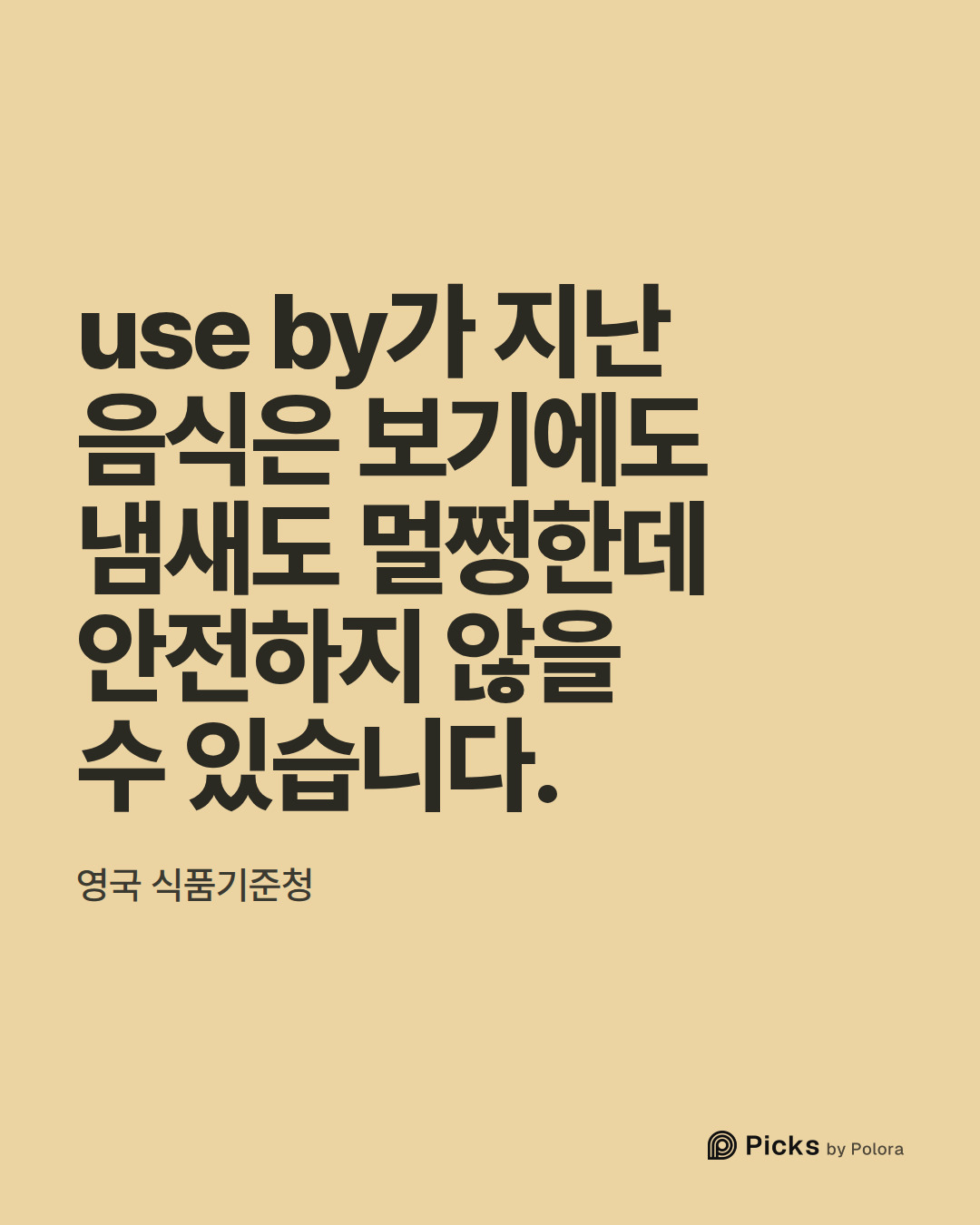
영국은 유럽연합을 떠난 뒤에도 같은 두 날짜를 그대로 두었습니다. 영국 정부 안내는 이를 한 줄로 정리합니다. use by는 안전에, best before는 품질에 관한 날짜라고요. 그리고 use by가 지난 음식을 먹으면 탈이 날 수 있다고 경고합니다. 영국 식품기준청은 여기에 한마디를 보탭니다. use by가 지난 음식은 보기에도 냄새도 멀쩡한데 안전하지 않을 수 있다고요.
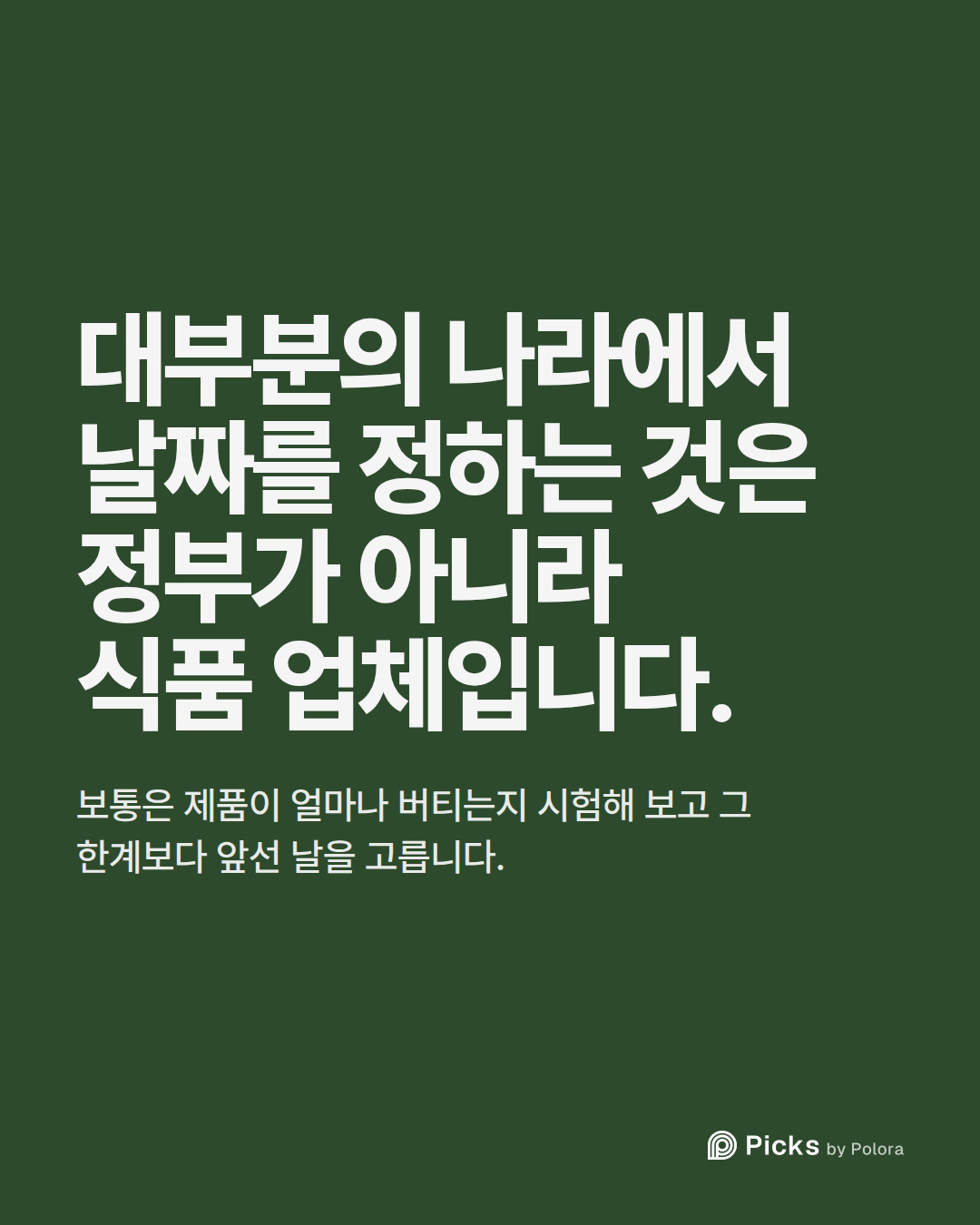
대부분의 나라에서 그 날짜를 정하는 것은 정부가 아닙니다. 식품 업체가 정하고, 그 근거를 댈 수 있어야 합니다. 보통은 제품이 얼마나 버티는지 시험해 보고 그 한계보다 앞선 날을 고릅니다. 시험으로 확인한 한계와 포장에 찍힌 날짜 사이의 간격은, 적용되는 지침 안에서 업체가 고르는 여유분입니다.
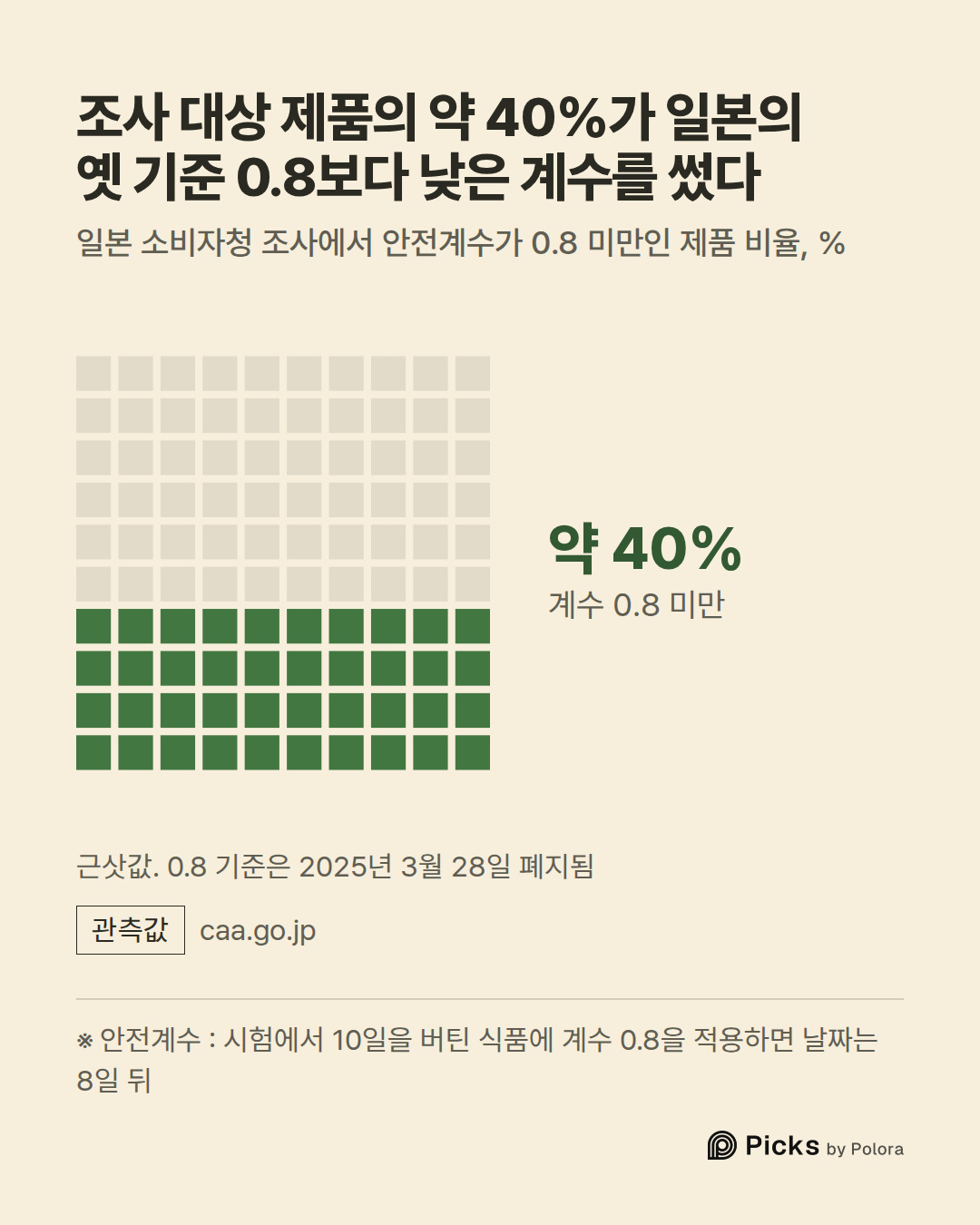
이 구조가 가장 잘 드러나는 곳이 일본입니다. 일본에도 날짜가 두 가지 있습니다. 소비기한(消費期限)은 쉽게 상하는 식품에만 붙고, 나머지 식품에는 일본판 best before인 상미기한(賞味期限)이 붙습니다. 둘 다 과학적이고 합리적인 근거로 정해야 하는데, 대개는 보존 시험으로 버티는 기간을 확인한 뒤 일본에서 '안전계수'라고 부르는 값을 곱합니다. 시험에서 10일을 버틴 식품에 계수 0.8을 적용하면 날짜는 8일 뒤로 찍힙니다. 공식 질의응답 자료는 오랫동안 0.8 이상을 기준으로 제시해 왔습니다.
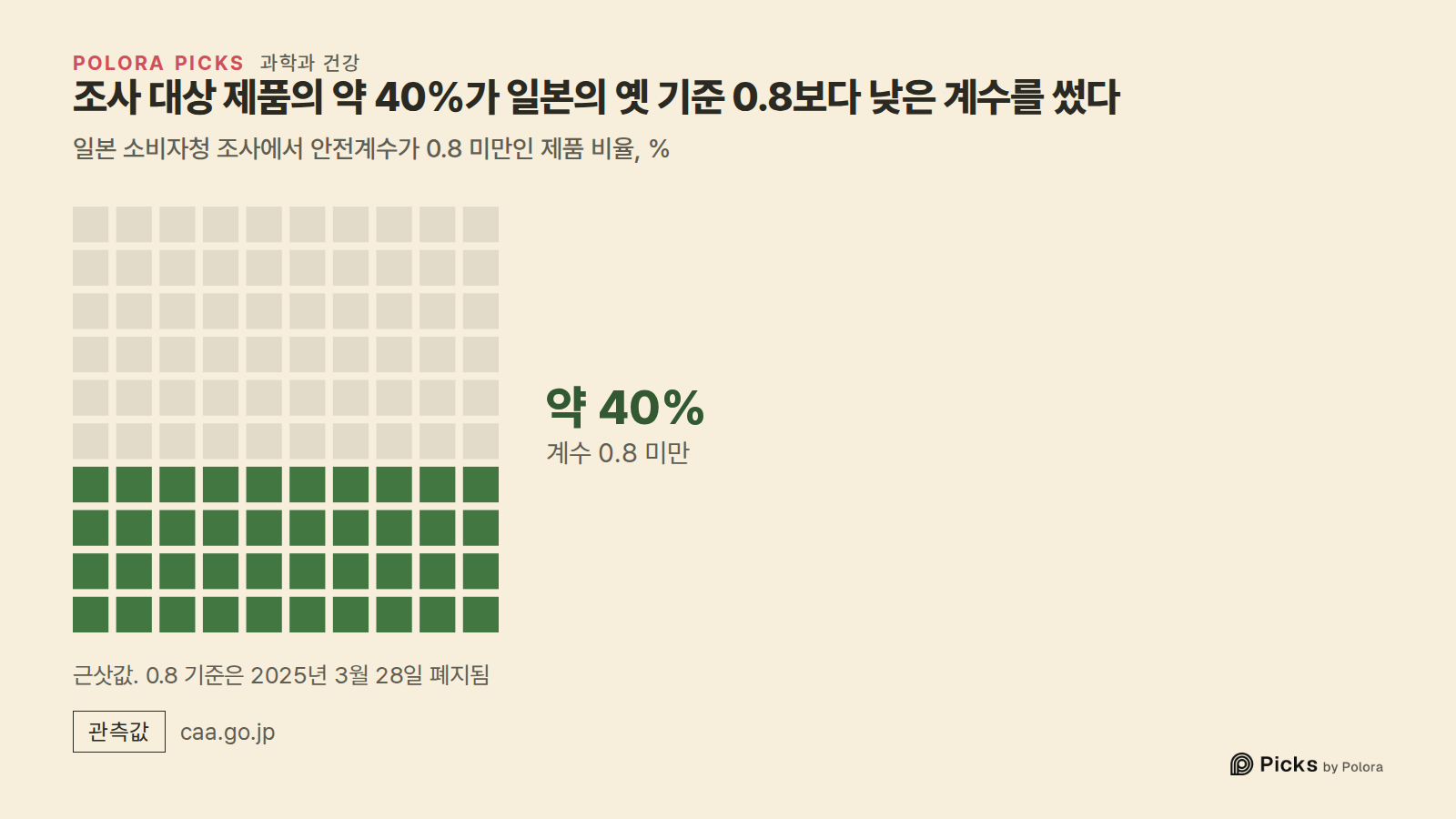
그런데 일본 소비자청이 실제 관행을 조사해 보니, 조사 대상 제품의 약 40%가 0.8보다 낮은 계수를 쓰고 있었습니다. 가열 살균으로 이미 안전이 확보된 통조림과 레토르트 식품에까지 계수를 적용하는 업체도 있었습니다. 소비자청은 2025년 3월 28일 지침을 고쳐 0.8이라는 기준을 없앴습니다. 이제는 계수를 되도록 1에 가깝게 잡으라고 하고, 잘 보호된 식품이라면 계수가 아예 필요 없을 수도 있다고 말합니다. 다만 미생물이 자랄 수 있거나 품질이 들쭉날쭉한 식품에는 여전히 여유를 두라고 합니다. 정부가 업체에 여유분을 줄여 달라고 나섰다는 것 자체가, 그 여유분이 얼마나 업체 재량에 맡겨져 있었는지 보여 줍니다.
2022년까지 한국 식품 포장에는 유통기한이 찍혀 있었습니다. 제품을 만든 뒤 가게에서 팔 수 있는 기간입니다. 한국은 2023년 1월 1일부터 이를 소비기한으로 바꿨습니다. 포장에 적힌 보관 방법을 지키면 안전하게 먹을 수 있는 기간입니다. 그날 이후 만든 제품부터 새 날짜를 쓰되, 기존 포장재에는 한 해의 계도 기간을 뒀습니다. 냉장 우유는 유예 기간이 더 길어 2031년까지입니다.
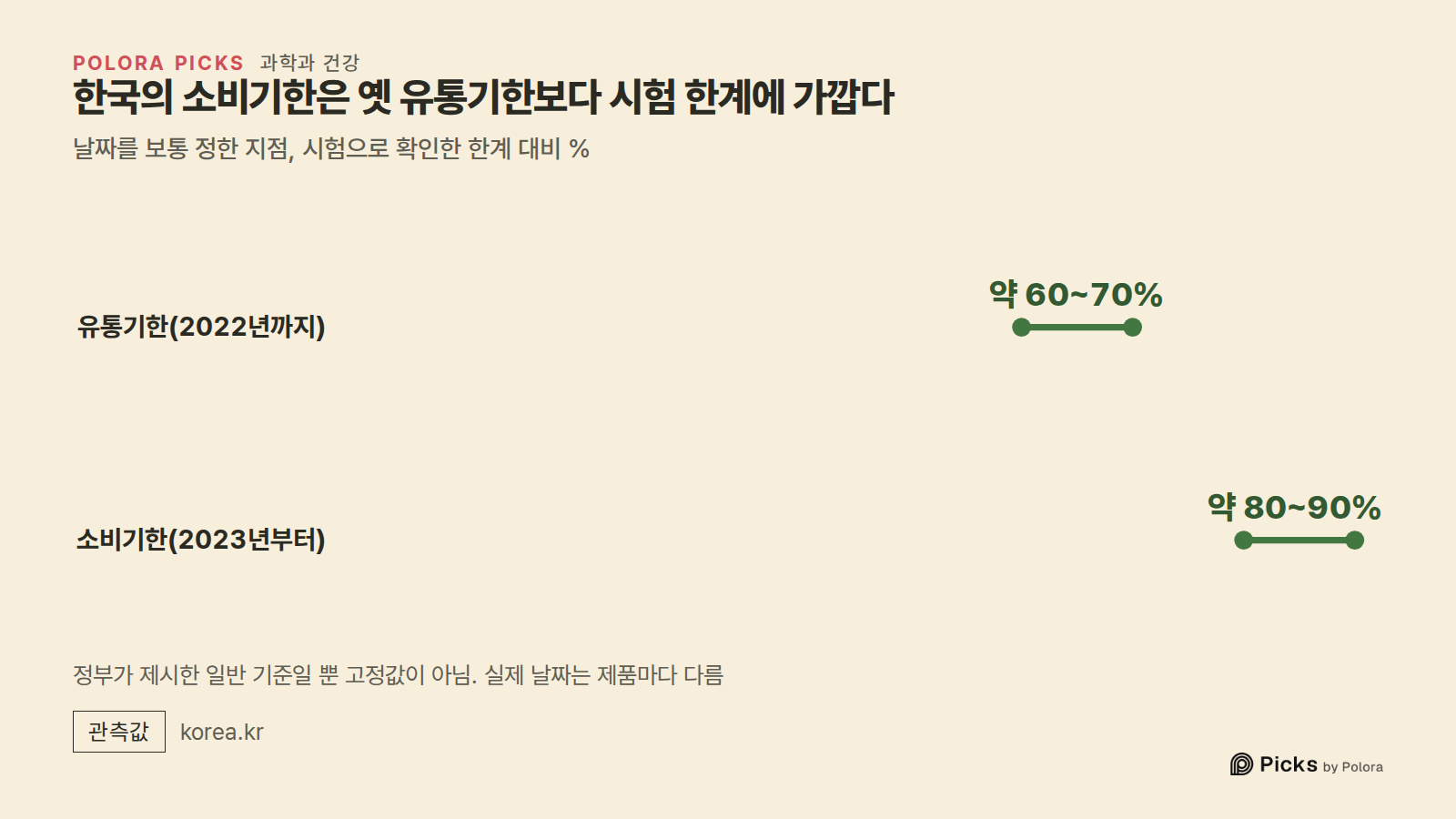
두 날짜는 같은 시험 결과에서 서로 다른 지점을 잡은 것입니다. 정부 설명에 따르면 유통기한은 보통 시험으로 확인한 한계의 60~70% 선에서, 소비기한은 80~90% 선에서 정해졌습니다. 일반적인 기준일 뿐 고정된 값은 아니고, 실제 날짜는 제품마다 변질되는 양상에 따라 달라집니다. 한국에서도 날짜를 정하는 것은 식품 업체이고, 대개 자기 제품을 시험한 결과를 씁니다. 다만 한국 규정은 비슷한 제품의 자료나 공개된 참고 값을 근거로 삼는 것도 허용합니다. 일부 제품에는 세 번째 표시도 있습니다. 제대로 보관했을 때 식품 고유의 품질이 유지되는 기간을 뜻하는 품질유지기한입니다.
미국 농무부 식품안전검사국에 따르면, 연방 규정이 날짜 표시를 요구하는 제품은 분유뿐입니다. 분유에 반드시 붙는 use by는 영양에 관한 날짜입니다. 그 날짜까지 먹이면 분유에 표시된 영양소가 그대로 들어 있다는 뜻입니다. 다른 식품은 업체가 날짜를 찍는다면 'Best if Used By'라는 문구를 쓰도록 권하고, 이 문구를 품질의 신호로 봅니다. 그러니 미국 포장의 'use by'는 연방 규정상 유럽연합이나 영국에서와 같은 안전의 뜻을 지니지 않습니다.
캘리포니아주는 한 걸음 더 나아갔습니다. AB 660이라는 주법이 2026년 7월 1일 시행됐습니다. 그날 이후 만들어져 이 주에서 팔리는 포장 식품은 품질의 날짜에 'BEST if Used by', 안전의 날짜에 'USE by'를 써야 합니다. 'Sell by'는 소비자가 보는 표시에서 금지되고, 재고 관리용 코드 날짜만 예외입니다. 그날 이전에 만든 식품은 적용 대상이 아닙니다.
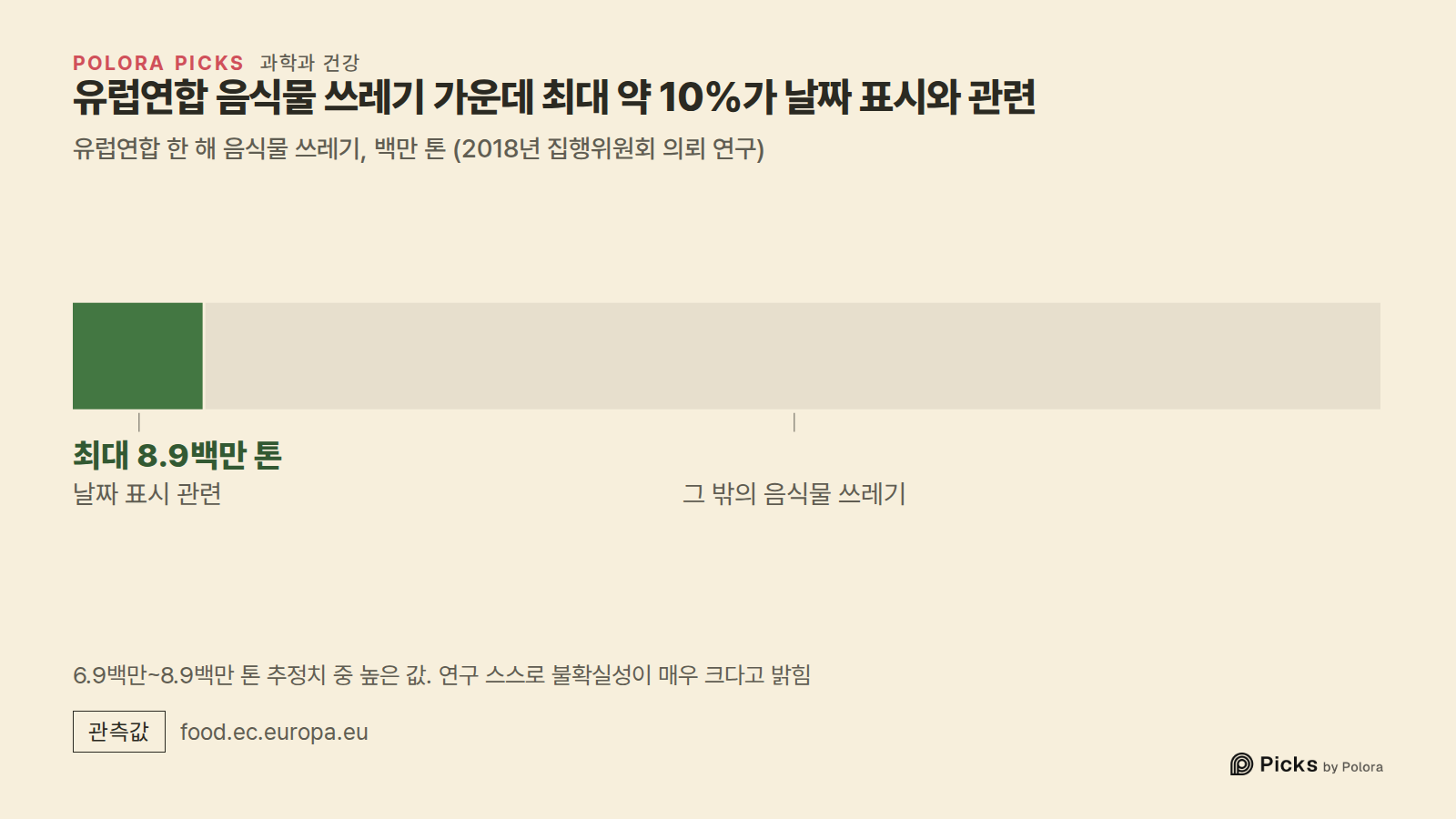
날짜를 헷갈리면 음식이 버려집니다. 2018년 유럽연합 집행위원회의 의뢰로 나온 연구는, 날짜 표시와 관련된 음식물 쓰레기가 제조·유통·가정을 합쳐 한 해 6.9백만~8.9백만 톤에 이른다고 추정했습니다. 소비자가 표시를 잘못 읽어 버린 음식만이 아니라, 날짜 표시와 관련된 쓰레기 전체를 센 값입니다. 높은 쪽 추정치는 당시 유럽연합에서 한 해에 버려진다고 추정된 88백만 톤의 약 10%입니다. 가정에서 나오는 음식물 쓰레기 가운데서는 9.5~12%가 날짜 표시와 관련된 것으로 추정했습니다. 연구 스스로도 이런 추정은 불확실성이 매우 크다고 밝힙니다. 집행위원회가 지금 내놓는 유럽연합 전체 음식물 쓰레기 추정치는 약 58백만 톤인데, 계산 방법이 달라 두 총량을 그대로 비교할 수는 없습니다.
세 곳의 변화는 같은 쪽을 가리킵니다. 일본은 여유분을 줄이고 있고, 한국은 가게를 위한 날짜에서 먹는 사람을 위한 날짜로 옮겨 갔고, 캘리포니아는 문구를 두 가지로 정리했습니다. 모두 포장에 적힌 말이 그 날짜가 실제로 재는 것과 맞아떨어지게 하려는 시도입니다.
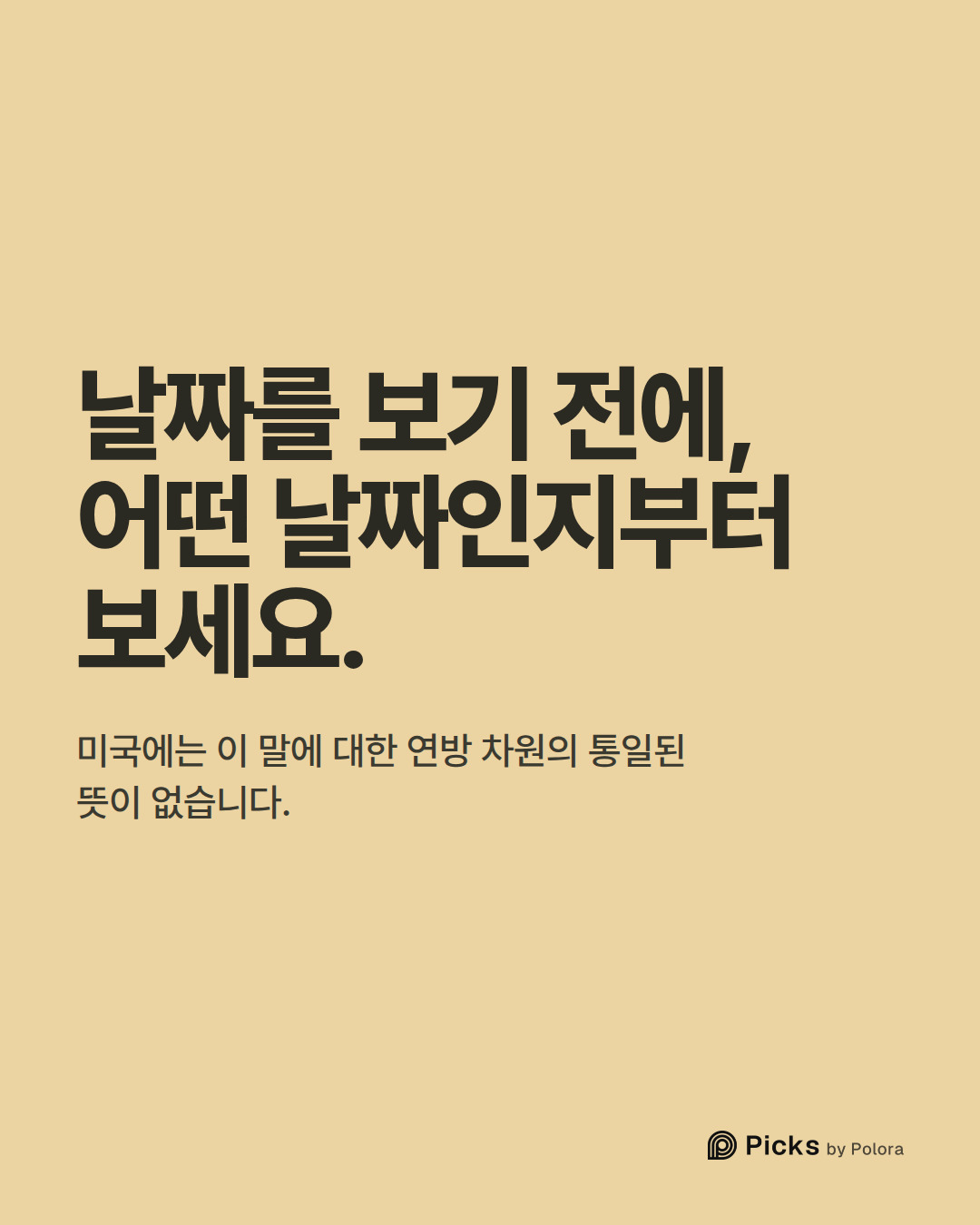
best before는 식품 업체가 적용되는 지침 안에서 스스로 고른 여유분을 두고, 음식이 가장 좋은 상태를 언제까지 유지할지 어림한 날짜입니다. 안전의 마감일이 아닙니다. 그렇다고 안전을 보장하는 것도 아닙니다. 잘못 보관하거나 다룬 음식은 어떤 날짜보다 먼저 안전하지 않게 될 수 있습니다. 영국과 유럽연합에서 안전을 말하는 것은 쉽게 상하는 식품에 붙는 별개의 표시, use by입니다. 미국에는 이 말에 대한 연방 차원의 통일된 뜻이 없습니다. 어느 쪽 날짜든 포장에 적힌 대로 보관했을 때의 이야기입니다. 날짜를 읽기 전에 그것이 어떤 날짜인지부터 확인하면 헷갈릴 일이 줄어듭니다.
Does a best before date mean food is unsafe to eat after it?
Alpha · deepseek-v4-pro
No. On most labels a best before date is a quality marker, not a safety cut-off.
What it means is closer to: *"The maker expects the food to taste or feel its best up to this date, assuming it's stored properly."* It does not mean the food becomes unsafe the next day.
The label that concerns safety is a different one: use by. That goes on highly perishable foods — fresh meat, chilled ready meals, soft dairy — where harmful bacteria can grow. Eating food after its use by date can make you ill.
So the practical reading is:
- Best before → past the date, the food is not automatically dangerous; quality may decline. Inspect it and follow the storage instructions.
- Use by → treat the date as a safety limit. Do not eat it after that.
One caveat: no date guarantees safety. Food handled badly can be unsafe before any date, and opened food often doesn't keep until the printed date. The label's legal meaning isn't a promise of safety — it's a statement about quality or, for use by, about risk.
Beta · gpt-6-sol
No. A best before date generally marks expected quality, not the day food becomes unsafe. A use by date has a different meaning in the UK and EU: it concerns safety on highly perishable food. The distinction depends on the jurisdiction—US federal guidance says a “use by” date on most foods is *not* necessarily a safety date. Storage conditions matter in every case. (food.gov.uk)
For the manuscript, the central premise stands, but these qualifications and corrections matter:
- The yogurt example needs its actual label. Yogurt can carry either kind of date in the UK, depending on the product. “Most people would say” is an unsupported claim about consumers, not something the cited labeling rules establish. The UK Food Standards Agency also says looking or smelling is not a reliable safety test for food bearing a *use by* date. (food.gov.uk)
- EU and UK: The two-date distinction is supported. More precisely, EU Regulation 1169/2011, Article 24(1), replaces the minimum-durability date with *use by* for microbiologically highly per…
Gamma · gemini-3.1-pro
The central premise of the manuscript—that a "best before" date is an indicator of quality rather than a strict safety deadline—stands. The legal distinctions between quality and safety dates across the covered jurisdictions are accurately represented, though some details require adjustment.
Here is what I found regarding the manuscript's claims:
* California AB 660: The manuscript states this law takes effect on July 1, 2026, and the search confirms this. Crucially, the law applies specifically to covered packaged food *manufactured on or after* July 1, 2026, not to all food sitting on store shelves that day. It mandates "BEST if Used by" (or "BEST if Used or Frozen by") for quality, "USE by" (or "USE by or Freeze by") for safety, and bans consumer-facing "sell by" dates. Multiple legal summaries confirm it is indeed the first mandatory state-level date labeling reform of its kind in the US (Sources: reedsmith.com, ofwlaw.com).
* Japan's Consumer Affairs Agency (CAA): The Ma…
Researcher · gpt-6-luna
Research check
The central claim stands with an important jurisdictional caveat: a “best before” date is generally about quality, not a declaration that food becomes unsafe afterward. But date-label rules differ by country, so the manuscript should not imply that “use by” has the same legal meaning everywhere.
- EU: Regulation (EU) No 1169/2011, Article 24, requires a “use by” date for food that is highly perishable microbiologically and deems it unsafe after that date. The Commission describes “best before” as a quality date and notes exceptions to the requirement for a best-before date.
Sources: Regulation 1169/2011, Article 24; Commission date-marking guidance
- US: USDA FSIS says federal law does not generally require product dating, except for infant formula, and describes “Best if Used By/Before” as a quality signal. Be cautious with “dates are not a safety indicator” as a blanket statement: FSIS’s specific wording is about the dates it discusses, and US labels do not necessarily follow the UK/E…
The Arbiter · gpt-6-sol
The voices agree on the key distinction, and the UK Food Standards Agency’s guidance supports it: “best before” concerns quality; “use by” concerns safety. They also agree that a date alone cannot establish whether a particular item was stored safely. (food.gov.uk)
The main publication issue is scope. The EU and UK distinction should not be presented as a uniform rule for US labels. The yogurt opening also needs the date actually printed on the pot; the example cannot establish its meaning without it.
Several supporting details need narrower wording. The evidence discussed does not show that every maker runs its own shelf-life test or freely chooses a margin. Japan’s “about 40%” figure concerns surveyed products, Korea’s percentages are general benchmarks, and the EU waste figures describe waste *linked to date marking*, not waste proved to result solely from consumer confusion. The Researcher did not independently verify California’s statutory wording or the “first state” claim this turn.
The strongest challenge to the manuscript is the risk of turning a label definition into a safety assurance. In…
The Arbiter's Final Verdict · gpt-6-sol
No. A *best before* date generally marks when a food is expected to be at its best quality, not the moment it becomes unsafe. But it does not guarantee that a particular food is safe after the date—or even before it if it was stored improperly.
In the UK and EU, *use by* is the distinct, safety-related date for highly perishable foods. Don’t treat those terms as having identical legal meanings everywhere: US date-label rules differ. The manuscript’s central answer stands, provided it explains the label’s meaning without promising that food past its best-before date is safe to eat. (UK Food Standards Agency; EU Regulation 1169/2011, Article 24)