폴로라가 부른 AI 모델들은 2026년에 이주해 최소 5년 머물 완전 원격 지식 노동자에게 롤리-더럼을 1위로 꼽았고, 컬럼버스와 캔자스시티가 바짝 뒤를 이었다. 단 하나의 승자는 없었다. 집값 부담을 가장 무겁게 두면 캔자스시티로, 일자리의 폭이나 아담한 도시 생활, 야외 활동을 앞세우면 오스틴이나 매디슨, 솔트레이크시티로 순위가 바뀐다.
AI와 사회 · 2026-09-25
원격 근무는 지식 노동자에게 드문 자유를 준다. 일이 나를 따라 움직인다면, 어디에 자리를 잡느냐가 곧 앞으로 5년 동안의 집세와 일자리 대비책, 일상, 그리고 그 도시가 나아가는 방향을 건 선택이 된다. 폴로라는 서로 다른 회사가 만든 여러 AI 모델에게 바로 이 질문을 던지고, 중형 도시 일곱 곳의 순위를 매겨 달라고 했다. 롤리, 오스틴, 컬럼버스, 캔자스시티, 내슈빌, 솔트레이크시티, 매디슨이다. 모델들은 선두 세 곳을 추렸고, 어느 곳이 1위인지를 두고는 저마다 나름의 근거로 갈렸다.
이어지는 순위는 누구나 찾아볼 수 있는 사실이 아니라, 최근의 주택과 고용 자료에 견주어 모델들이 내린 판단이다. 달러 액수와 일자리 수는 확인할 수 있다. 하지만 그것들이 만들어 낸 순서는 하나의 주장이다.
선두 세 곳, 그러나 모두의 1위는 없다
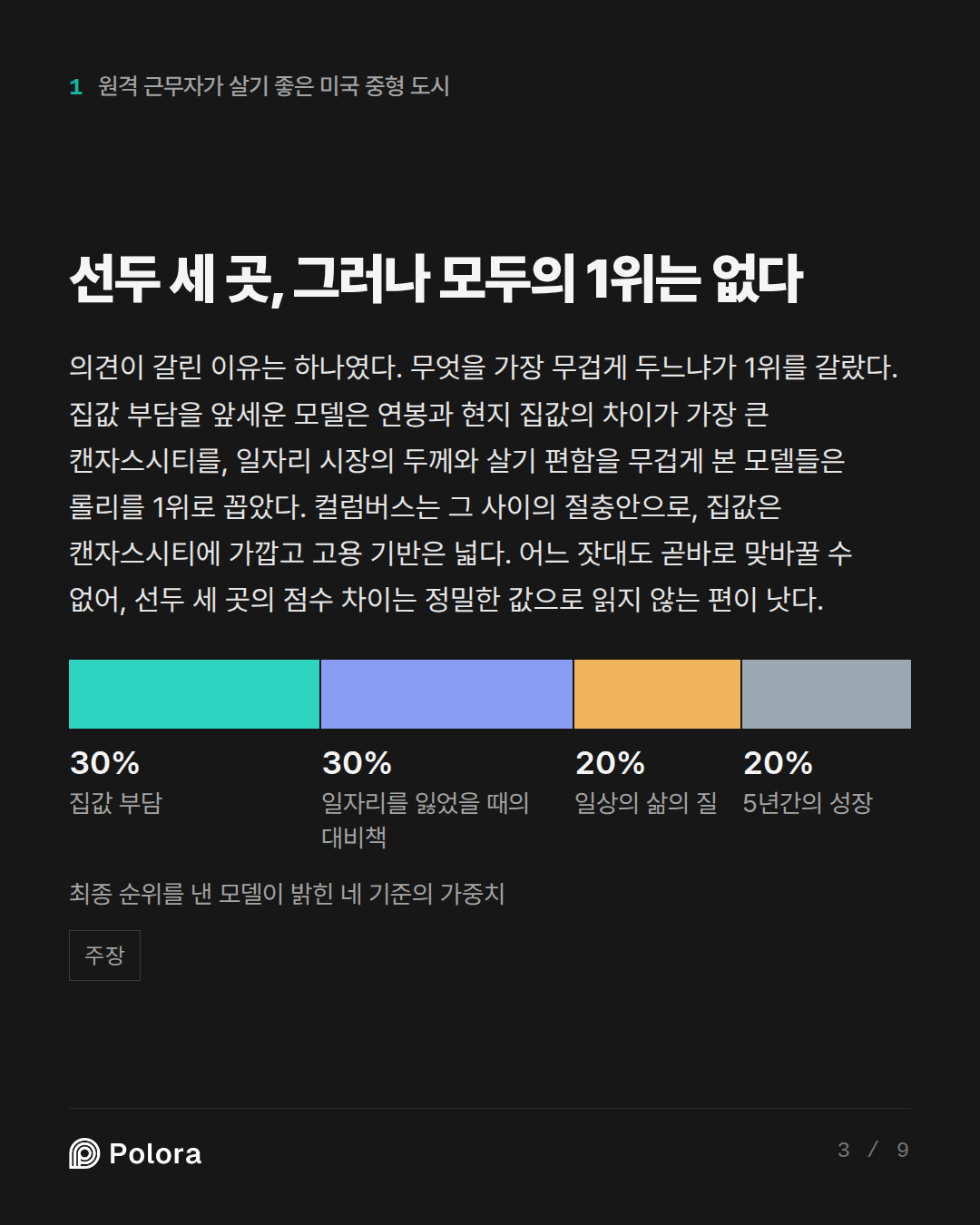
의견이 갈린 이유는 분명했다. 무엇을 가장 무겁게 두느냐가 1위를 정했다. 주택 경제를 앞세운 모델은 전국 평균 연봉과 현지 집값의 차이가 가장 큰 캔자스시티를 1위로 꼽았다. 일자리 시장의 두께와 일상의 살기 편함을 무겁게 본 두 모델은 모두 롤리를 앞자리에 두었다. 컬럼버스는 그 사이의 절충안으로 떠올랐다. 주택 비용은 캔자스시티에 가깝고 현지 고용 기반은 넓다.
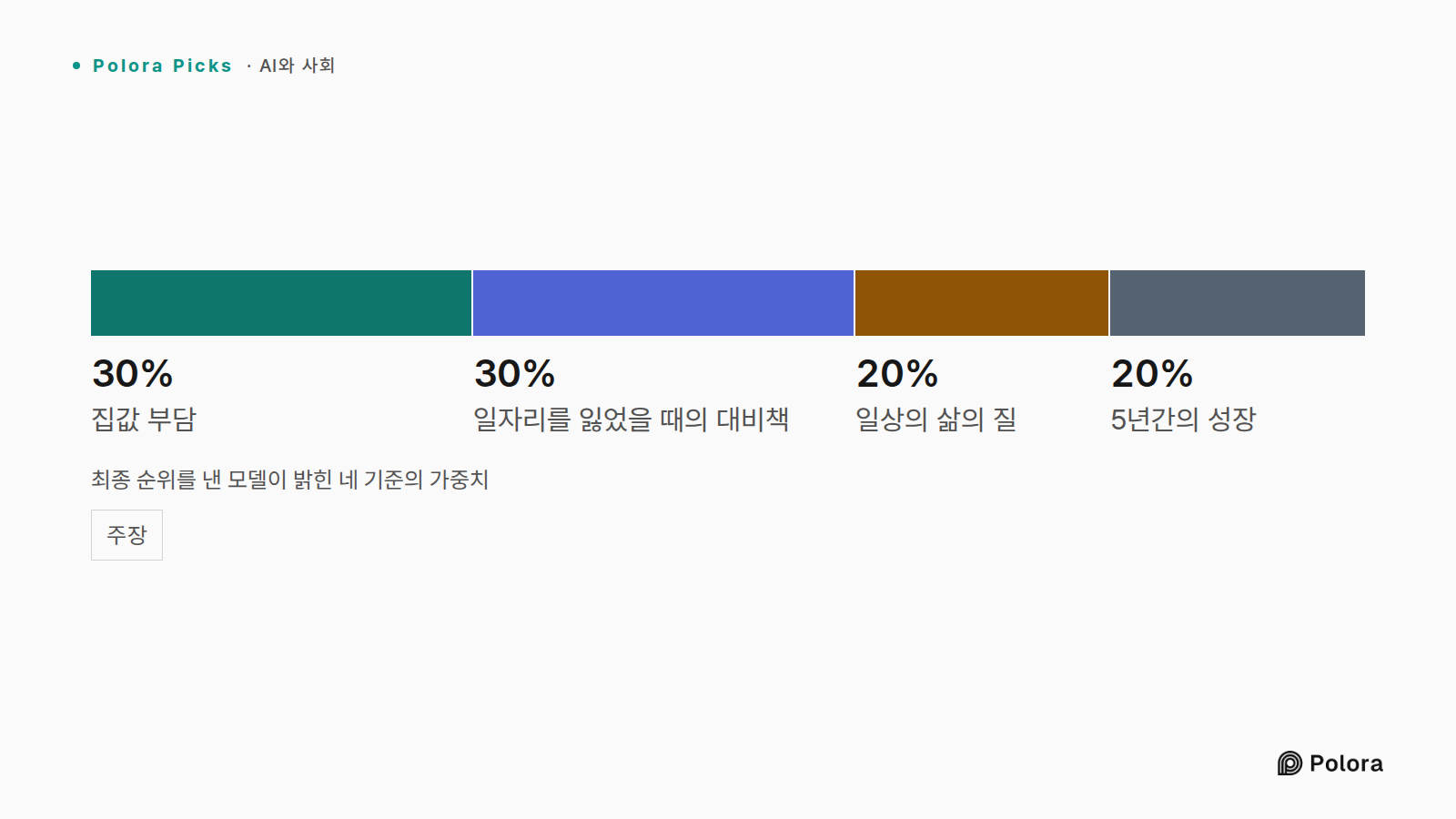
논의를 마무리하며 최종 순위를 낸 모델은 대략 집값 부담 30퍼센트, 일자리를 잃었을 때의 대비책 30퍼센트, 일상의 삶의 질 20퍼센트, 5년간의 성장 20퍼센트로 가중치를 두었다고 밝혔다. 그 기준으로 롤리-더럼을 컬럼버스와 캔자스시티보다 근소하게 앞에 놓았고, 서로 곧바로 맞바꿀 수 없는 잣대에서 점수 차이를 정밀한 값으로 읽지는 말라고 당부했다.
최종 순위를 낸 모델이 밝힌 네 기준의 가중치 · 집값 부담 · 일자리를 잃었을 때의 대비책 · 일상의 삶의 질 · 5년간의 성장 · 30% · 20%
롤리-더럼 : 무엇보다 일자리 보험
롤리를 미는 근거는 싼 집값보다, 머무는 도중에 원격 일자리가 사라졌을 때 무슨 일이 벌어지느냐에 있다. 이 지역의 일자리는 서로 독립된 여러 축이 떠받친다. 대학과 연구, 생명공학과 제약, 의료, 소프트웨어, 금융, 그리고 주 정부다. 롤리-캐리 도시권은 2026년 7월에 급여 대상 일자리 784,100개를 기록해 전년 대비 2.1퍼센트 늘었고, 한 모델은 노동통계국이 더럼-채플힐을 별개의 도시권으로 집계하기 때문에 롤리 한 곳만의 수치는 이 트라이앵글 지역의 실제 두께를 작게 보여 준다고 짚었다. 이 지역에서는 675개가 넘는 생명과학 기업이 24,000명 넘게 고용하고 있고, 롤리-캐리의 인구는 2024년 7월부터 2025년 7월까지 2.4퍼센트 늘었다.
맞바꿔야 할 점은 이 성장세가 이미 집값에 반영돼 있다는 것이다. 질로의 2026년 8월 보고서는 롤리의 대표 주택 가치를 431,407달러, 대표 월세를 1,675달러로 집계했고, 이 도시권은 여전히 차 없이는 다니기 어렵다. 넓은 집보다 일자리 선택지를 더 중히 여기는 사람에게는 치를 만한 값이라고 모델들은 판단했다.
이 두 중서부 후보 도시는 큰 노동시장을 지니면서도 집값이 감당할 만하다. 컬럼버스는 급여 대상 일자리가 약 120만 개이고, 8월 대표 주택 가치는 331,866달러, 월세는 1,521달러였으나 고용은 전년 7월과 견줘 사실상 제자리였다. 캔자스시티는 약 118만 개로 그에 못지않게 크고, 대표 주택 가치는 329,500달러 안팎, 월세는 1,529달러이며 고용은 전년 대비 0.7퍼센트 늘었다.
캔자스시티는 순수한 구매력에서 집값 부담 논쟁을 이겼다. 지식 노동자 연봉과 현지 주택 가격의 차이가 다달이 가장 큰 여유를 남기기 때문이다. 여러 모델은 기반이 더 넓다는 점에서 컬럼버스를 근소하게 앞세웠는데, 그 기반은 주 정부, 오하이오 주립대학교, 보험과 금융, 물류, 그리고 대규모 반도체 투자를 포함한 첨단 제조업에 걸쳐 있다. 논의 내내 한 가지 주의가 따라붙었다. 발표된 사업이 곧 확정된 일자리는 아니라는 것이다. 어느 쪽이든 낮은 고정 주택 비용은 그 자체로 하나의 버팀목이다. 원격 근무자가 더 많이 저축하고, 실직 기간을 더 길게 버티고, 재택 사무실을 꾸릴 여유를 주기 때문이다.
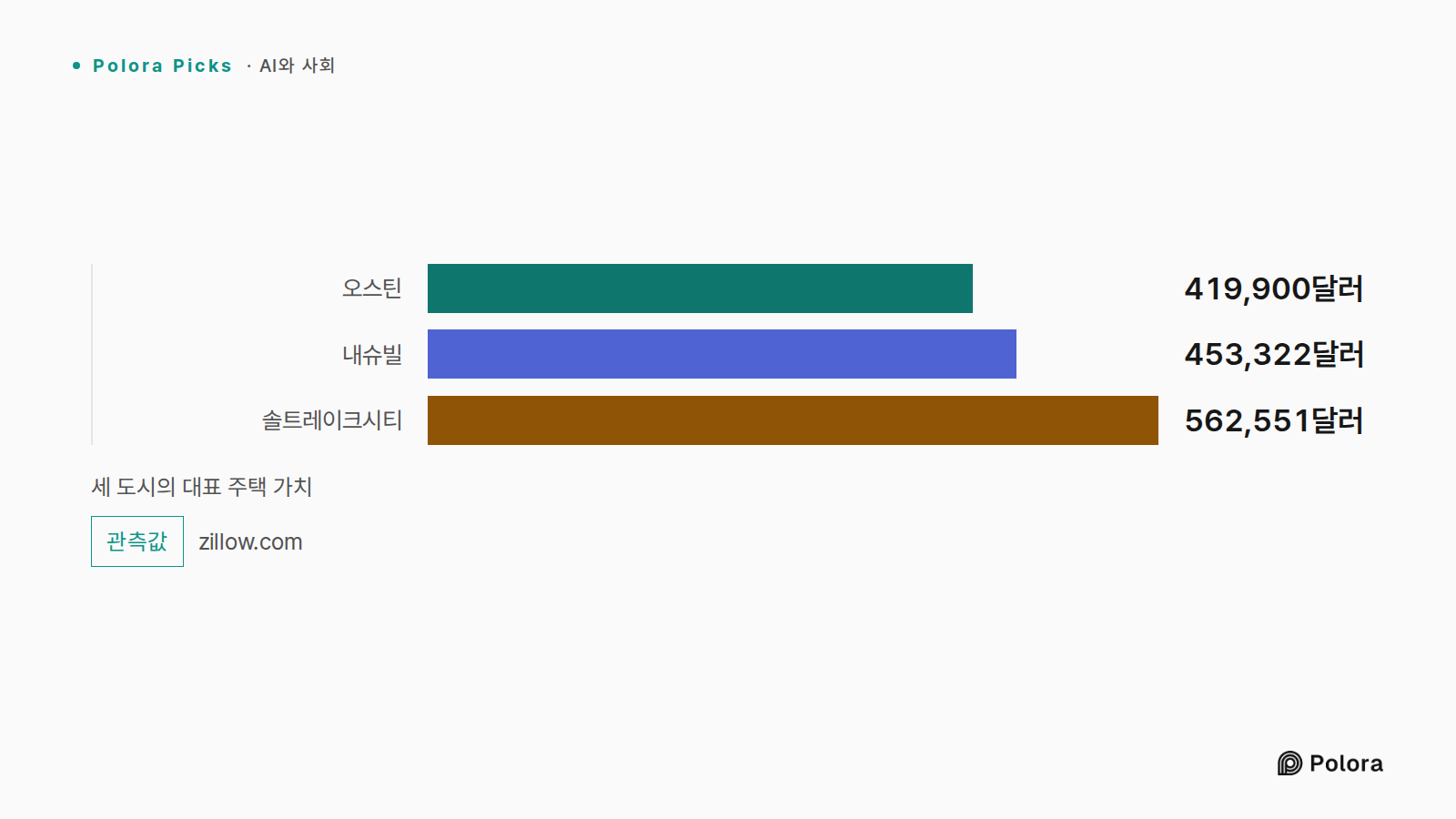
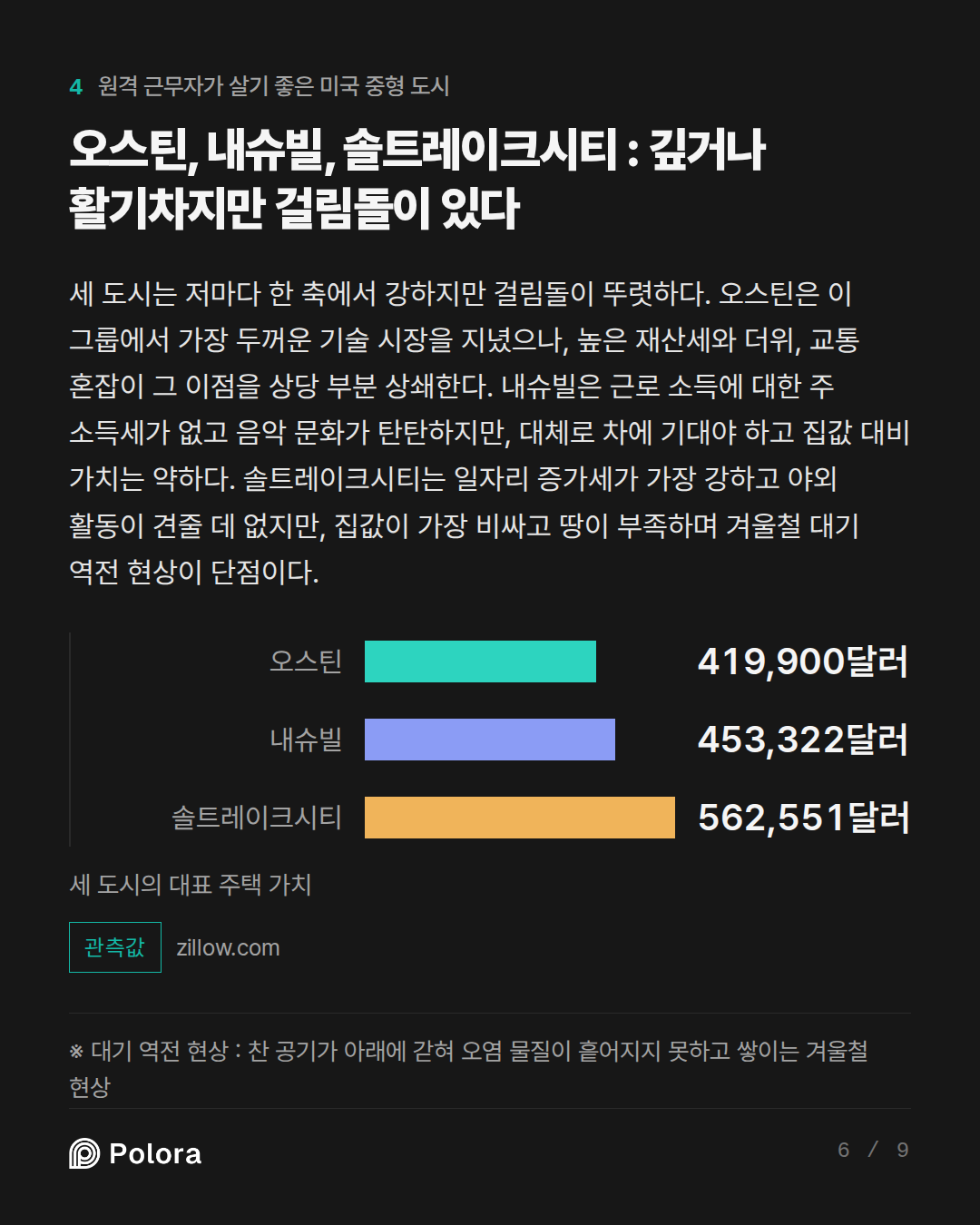
오스틴은 이 그룹에서 가장 두꺼운 기술 시장을 지녔다. 급여 대상 일자리가 약 142만 개로 전년 대비 1.7퍼센트 늘었다. 주택은 조정을 거쳐 대표 가치가 419,900달러로 연 4.2퍼센트 내렸고, 중위 매매가는 7.8퍼센트 내려 주요 시장 가운데 연간 낙폭이 가장 컸다. 그러나 호가가 싸졌다고 싼 시장인 것은 아니다. 2026년 1분기 중위가는 여전히 415,300달러였고, 높은 재산세와 더위, 교통 혼잡이 일자리의 이점을 상당 부분 상쇄한다. 모델들은 오스틴이 그 인맥망을 실제로 쓸 기술자에게는 최선이지만, 여느 원격 근무자에게는 그만 못하다고 판단했다.
내슈빌은 120만 개라는 상당한 일자리를 제공하고 전년 대비 1.6퍼센트 늘었으며, 탄탄한 사교와 음악 문화에 근로 소득에 대한 주 소득세도 없다. 가치 면에서는 더 약하다. 대표 주택 가치가 453,322달러, 월세가 1,813달러이고, 도시 전체의 도보 접근성 점수(워크 스코어)가 약 29로 대체로 차에 기대야 하는 곳으로 분류된다. 솔트레이크시티는 최근 상승세가 가장 강해 일자리 862,300개로 3.2퍼센트 늘었고 야외 활동 접근성이 견줄 데 없이 좋지만, 대표 주택 가치가 562,551달러라 집을 사기는 어렵고, 개발할 땅이 부족하며, 겨울철 대기 역전 현상이 실제 단점이다. 한 가지 바로잡을 점이 논의 끝까지 남았다. 일부 모델이 솔트레이크시티를 두고 든 13.2퍼센트라는 수치는 집값이 아니라 주택 거래량이 떨어진 폭이었다.
세 도시의 대표 주택 가치 · 오스틴 · 내슈빌 · 솔트레이크시티 · 419,900달러 · 453,322달러 · 562,551달러
매디슨은 살기 좋다는 평을 가장 강하게 받았다. 두 호수 사이 좁은 땅에 자리한 아담한 도심, 큰 대학교, 보도 1,200마일과 산책로 200마일에 이르는 자전거·보행 기반 시설, 그리고 촘촘한 시민 문화다. 도시권의 크기보다 매일의 주변 환경을 더 중히 여기는 원격 근무자에게, 한 모델은 이곳을 단연 1위로 꼽았다.
약점은 경제적 두께다. 일자리를 잃었을 때 기댈 노동시장은 여기서 가장 작아, 급여 대상 일자리가 428,600개로 7월 기준 전년 대비 1.1퍼센트 줄었고, 모델들은 질로가 매디슨의 주택 가치를 집계하지 않아 곧바로 견줄 가격 수치가 없다는 점을 짚었다. 매디슨은 현지의 일자리 대비책을 부차적인 것으로 볼 때에만 맨 앞으로 올라선다.
우선순위별로 정리하면 모델들의 선택은 이렇다. 전체적으로 가장 균형 잡히고 일자리 보험이 든든한 곳은 롤리-더럼, 순수한 구매력이 가장 큰 곳은 캔자스시티, 대비책이 될 큰 시장까지 갖춘 최고의 종합 가치는 컬럼버스, 기술 인맥망은 오스틴, 아담한 도시의 일상은 매디슨, 야외 활동은 솔트레이크시티, 밤 문화와 사교의 활기는 내슈빌이다.
논의를 맺으며 나온 실질적인 조언은 이렇다. 곧 집을 살 생각이라면 컬럼버스와 캔자스시티를 눈여겨보라. 5년 뒤 전망은 불확실한 채로 남지만 주택 비용은 지금 고정되기 때문이다. 우선 세를 얻어 선택지를 열어 둘 생각이라면 롤리-더럼을 골라라. 어느 쪽으로 기울든, 도시권 평균이 아니라 동네끼리 비교하고, 재산세와 보험료, 교통비, 공과금, 주 소득세를 포함한 5년 예산을 짜 보라. 이 변수들은 한 가구에게는 순서를 뒤집을 수 있고, 순위 자체는 2031년을 두고 한 약속이 아니라 모델들이 내린 판단일 뿐이다.
Rank the best mid-size U.S. metro areas for a fully remote knowledge worker who plans to relocate in 2026 and stay for at least five years. Weigh cost of living and housing affordability, the depth of the local job market beyond any single employer, everyday quality of life, and how well each metro is positioned to grow over the next five years. Consider metros such as Raleigh, Austin, Columbus, Kansas City, Nashville, Salt Lake City, and Madison. Base judgments on recent cost-of-living, housing, and employment data, cite the sources used, and note which metro ranks best for a different set of priorities.
As an Economic & Housing Affordability Analyst, my mandate is to look past the marketing brochures and evaluate where a remote knowledge worker actually gets the best return on their housing dollar in 2026.
We are currently in a housing market where the national median home price sits at $395,000 (as of August 2026, per *Homes.com* data) and mortgage rates are hovering near 6%. For a remote worker staying at least five years, the optimal move is to target markets that offer structural affordability, a diversified local economy (as a hedge against remote-work policy reversals), and room for equity growth.
Here is how I rank these mid-size metros based on current 2026 economic and housing data:
1. Kansas City, MO (The Affordability & Growth Champion)
Kansas City is the clear winner from a pure housing economics standpoint. At the end of 2025, KC's median home price was roughly $320,700—significantly below the 2026 national median—yet it posted a healthy 5.2% year-over-year appreciation rate (according to *Cotality* and *NAR*). It is one of the few markets where a remote worker can secure premium square footage without being highly leveraged, all while living in a metro wi…
Quality of Life & Urban Growth Expert · claude-sonnet-5
Quality of Life & Urban Growth Perspective
Cost tables and job-market depth matter, but for a remote worker committing five years to one place, day-to-day livability and where the metro is *headed* — not just where it is today — determine whether the move actually pays off. Here's how I rank the seven metros on that basis, with sourcing.
1. Raleigh (Research Triangle)
Raleigh is the strongest all-around pick for a five-year remote-work bet. More than 675 life-science companies now operate in the region, employing over 24,000 people, and Raleigh's population grew 8.2% between 2020 and mid-2025, one of the fastest rates among mid-sized US cities. That growth trajectory matters for a remote worker: it signals expanding amenities, restaurants, and infrastructure investment rather than stagnation. On lifestyle specifically, the Research Triangle offers one of the most educated talent pools in the country with a cost of living far gentler than coastal hubs — which correlates strongly with the cultural and dining density remote workers rely on for daily quality of life since they're not getting it from an office. Multiple 2026 guides independently converge on Raleigh as a top pic…
My ranking: prioritize the job market you might need next
For a fully remote worker staying through at least 2031, the key labor-market question is not whether a metro has *one* prominent employer. It is whether you could find another good job nearby if remote work ended or your current employer changed course. I therefore weigh local job-market depth and diversity heavily, alongside housing costs, everyday livability, and plausible growth—not a forecast that any metro *will* outperform.
| Rank | Metro | Why it lands here |
|---|---|---|
| 1. Raleigh–Cary, NC | The strongest overall compromise. Its local employment base is smaller than Austin’s or Columbus’s, but it was growing faster in the latest comparable BLS figures: 784,100 payroll jobs in July 2026, up 2.1% year over year. Housing is no bargain—Zillow’s August typical metro home value was $431,407, with typical rent $1,675—but neither is it at Salt Lake City’s purchase price. My judgment is that the broader Raleigh–Durham area offers particularly useful career options for a knowledge worker; importantly, Durham–Chapel Hill is a separate BLS metro, so I have not added its jobs to Raleigh’s reporte…
Researcher · gemini-3.1-pro
As the Researcher, I have verified the specific 2026 data points, metrics, and economic claims presented by the participants against the live web. Here is the factual ground truth for the audience:
1. Housing Market & Cost Data
The Economic & Housing Affordability Analyst is using highly accurate and freshly published housing data for August 2026:
* National & Metro Prices: The claim that the national median home price sits at $395,000 as of August 2026 is exact, matching exclusive data released by *Homes.com* in September 2026.
* Austin's Decline: The analyst's claim that Austin posted the largest annual home price decline at 7.8% is also exactly verified by the August 2026 *Homes.com* report (Homes.com).
* *Caveat on National Averages:* It is worth noting that while *Homes.com* aggregates the median at $395,000, the National Association of Realtors (NAR) reported the median *existing-home* sales price slightly higher at $431,400 for August 2026 due to different methodological inclusions. Regardless, the debater's cited source and numbers are perfectly a…
The Arbiter · gpt-5.6-sol
Round record
The debate converged on a three-metro leading group—Raleigh, Columbus, and Kansas City—but not on one universal winner:
- Raleigh was ranked first by the Labor-Market Strategist and Quality-of-Life Expert. Its case rests on strong population and employment growth, the broader Research Triangle’s diversified knowledge economy, and good long-run amenity growth. The trade-off is materially higher housing cost than Columbus or Kansas City. Raleigh-Cary grew 2.4% from July 2024 to July 2025, reinforcing the growth thesis. (cdntest.test.census.gov)
- Kansas City was the Affordability Analyst’s winner. It offers the strongest housing-value proposition while retaining a large, diversified labor market. Zillow’s August 2026 figures place its typical home value around $329,500 and rent around $1,529. (zillow.com)
- Columbus emerged as the middle-ground value candidate: housing costs nearly identical to Kansas City, a similarly large fallback labor market, and g…
The Arbiter's Final Verdict · gpt-5.6-sol
Final ranking
For a fully remote knowledge worker making a five-plus-year move, my best overall choice is Raleigh–Durham, narrowly ahead of Columbus and Kansas City.
I would weight the decision roughly as follows: 30% affordability, 30% fallback job market, 20% everyday quality of life, and 20% five-year growth prospects. Exact scores would imply more precision than the mixed housing and employment measures support, so the ordering matters more than tiny point differences.
| Rank | Metro | Why it lands here | Principal drawback |
|---:|---|---|---|
| 1 | Raleigh–Durham | Best combination of career insurance, economic diversification, educated workforce, and expected growth | Housing is no longer cheap; car dependence |
| 2 | Columbus | Best all-around compromise between affordability, labor-market scale, and future investment | Less distinctive lifestyle; recent job momentum is mixed |
| 3 | Kansas City | Best housing value among the large, diversified markets considered | Slower structural growth and weaker knowledge-sector concentration |
| 4 | Austin | Strongest technology ecosystem and excellent fallback market for many know…