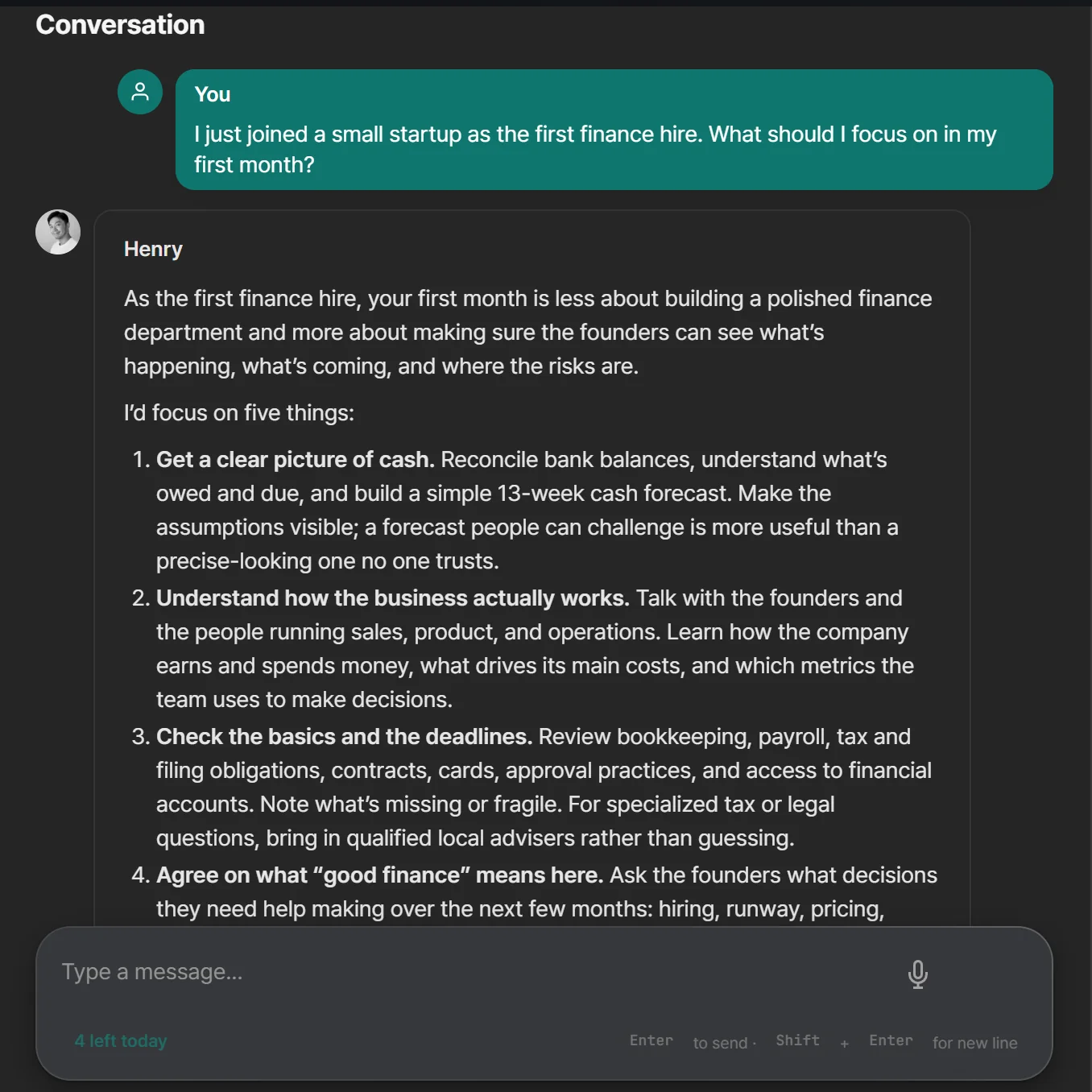
The questions that matter rarely have one right answer. Polora proposes the whole line-up for yours : which models take part and in what role, how the turns run, and whether the web is worth checking. Personas carrying a person's experience can join.
Those are the ones that need more than one angle, and the ones where you wonder how somebody who has been there handled it. Polora brings in AI models with different roles, and personas carrying a person's experience. Sometimes they debate. Sometimes one fills in what another missed. Either way they think it through with you.
For a simple fact any chatbot will do, and Polora does that too. Polora is for the other kind : where the answer turns on what only you know, and getting it wrong is expensive.
Write your question and Polora proposes the whole setup : how many take part and what role each one holds, which models to call, how many turns to run, and whether the web is worth searching.
Behind that sits a catalogue of several hundred models with their scores and prices. A light question does not get an expensive model, and a hard one does not get a model that cannot carry it.
It stays a proposal. You see it before anything starts, and you can change it.
In order, each model reads the answer before it and picks up from there, so the whole thing becomes one conversation. All at once, none of them sees the others, so you get views that did not lean on each other.
Along the way one model searches the web and tests the claims that can be tested. Open that message and you can see where it looked.
Add a moderator and it sums up after each round, then writes the conclusion at the end.
Every message shows which model wrote it and in what role. The cost is on screen before you send, while it runs, and after it ends : one fixed price per call, the same whether the answer is two lines or two pages.
An AI model has read a great many people and answers close to the average. Nobody is the average. What you actually want to know is how someone in a position like yours handled it.
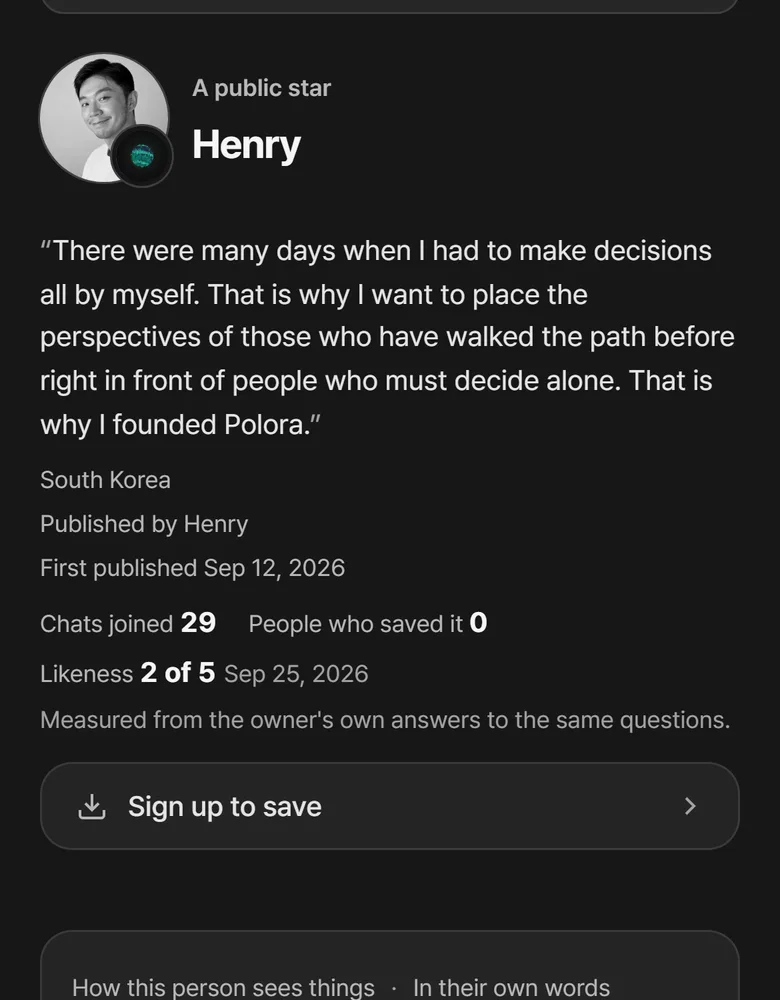
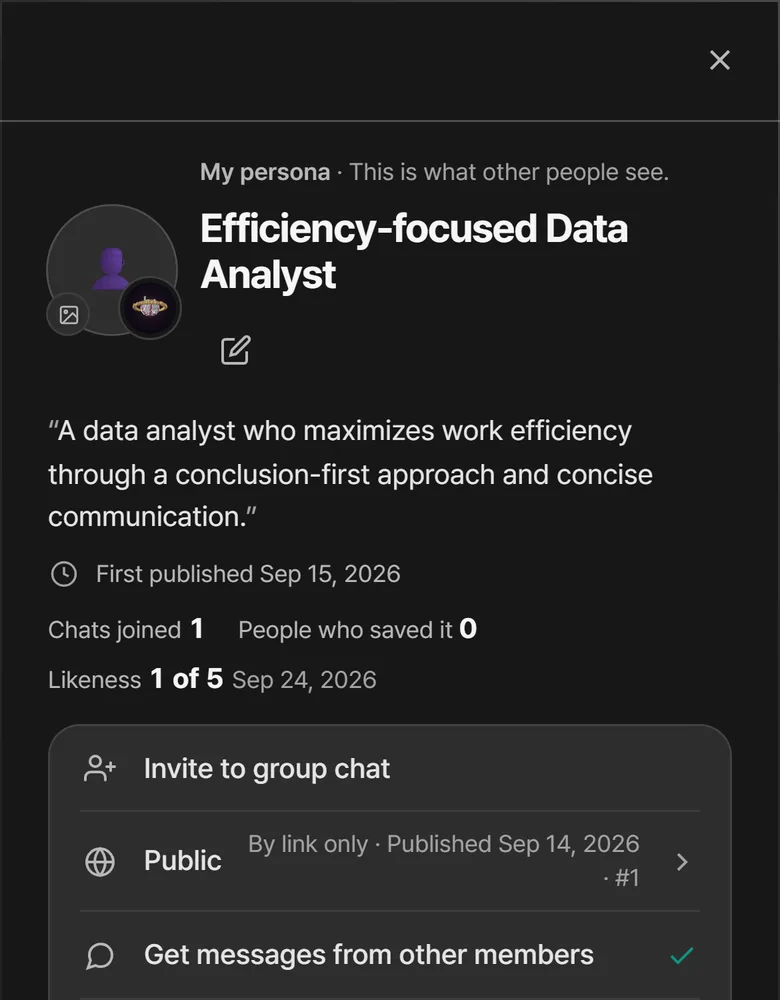
That is what personas are for. Polora asks and you answer, and your story fills in. You can also hand it documents or paste what was actually said, and it picks things up on its own as you debate.
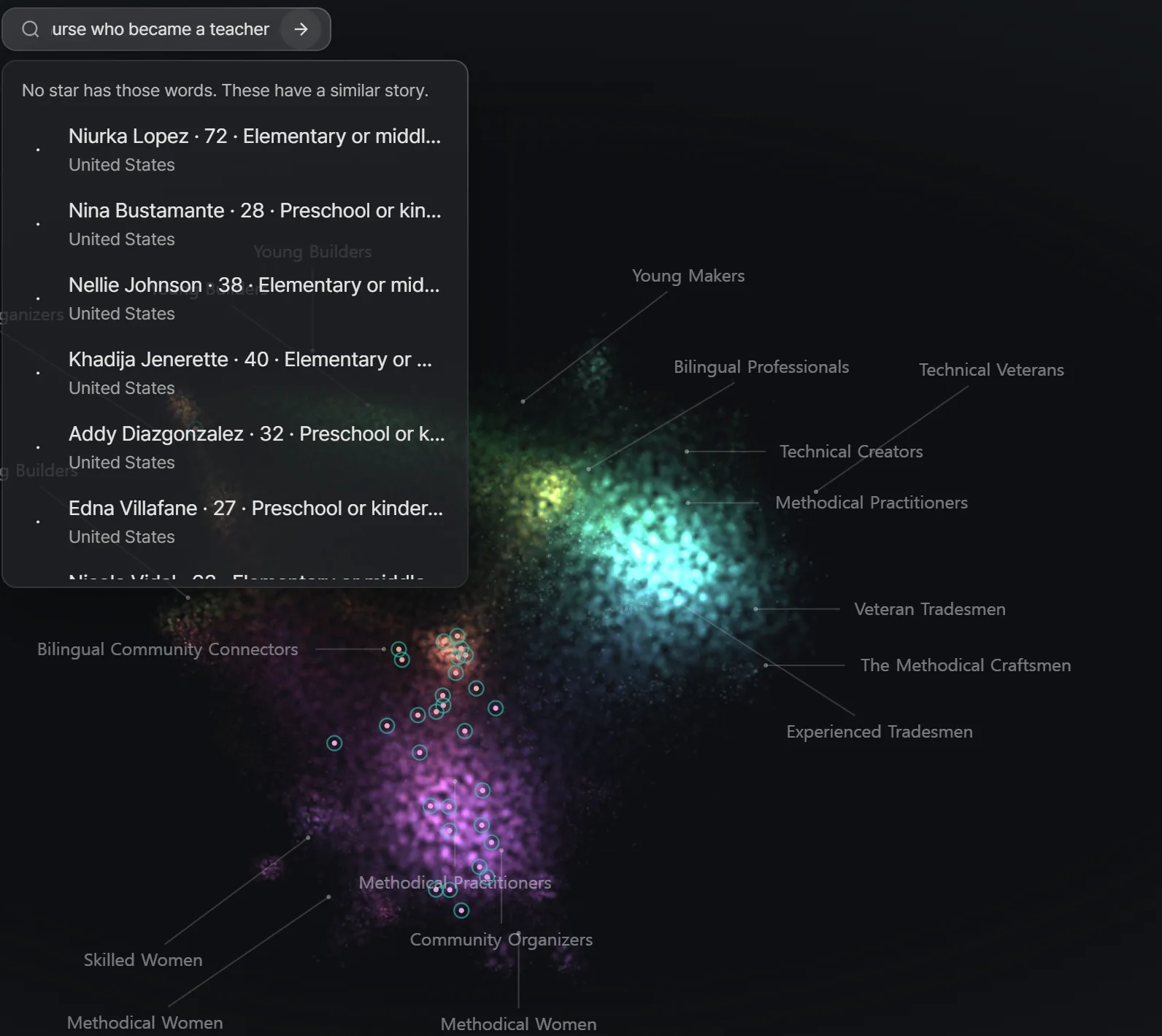
Once it has learned something you can publish it. Published personas gather in the universe, where anyone can call one into their own question.
It is still an AI model speaking. What differs is whose knowledge and experience it answers from, and the screen always says so.
Someone who spent thirty years in a field can keep answering after they have stopped working, and someone just starting can ask that experience directly.
Ask one model and get one answer, the way you already work. Bring in several only when the question is worth it.
Polora runs in a browser side panel. Leave an article or a filing open, press Use this page, and its contents become material for your question. You can add other open tabs too. You still write the question.
Upload the draft you are working on along with the material it has to sit beside. The model you pick reads them together and marks what it would change, and why.
Suggestions come ranked, next to the original. Any spot you are unsure about can go to a debate where several models work the wording out.
Sharing what you know should come back to you. We are building a way for the personas people come to rely on to earn for whoever made them.
What differs at Polora is the road to the conclusion. Several perspectives take turns looking, and whatever can be checked gets checked once more on the web. If one model is confidently wrong, there is a chance for that to be caught inside, before you go and act on it.