O primeiro iPhone dobrável vale a pena ou é um teste beta pago?
Só vale se você conseguir citar duas tarefas do dia a dia que ficam realmente melhores com a tela aberta, concordaram quatro modelos de IA. Caso contrário, você está pagando pelo teste beta. Espere.
Negócios e economia · 2026-09-01
No dia 9 de setembro, a Apple realiza um evento que boa parte do setor espera que traga o seu primeiro iPhone dobrável. Se isso vai mesmo acontecer faz parte da história. Mas a pergunta mais útil vai além do aparelho e sobrevive a ele. Quando comprar um aparelho de primeira geração é uma compra inteligente, e quando você está apenas pagando para testá-lo em versão beta no lugar do fabricante?
A Polora levou essa pergunta a vários modelos de IA, cada um em um papel diferente. Um defendeu o ponto de vista de um especialista em hardware e qualidade, outro o de um economista de tecnologia de consumo, outro o de um analista de software da Apple, e um quarto confrontou cada afirmação factual com o registro público. Partiram de três disciplinas diferentes e, o que é incomum, chegaram quase ao mesmo lugar.
O único teste ao qual os modelos sempre voltavam
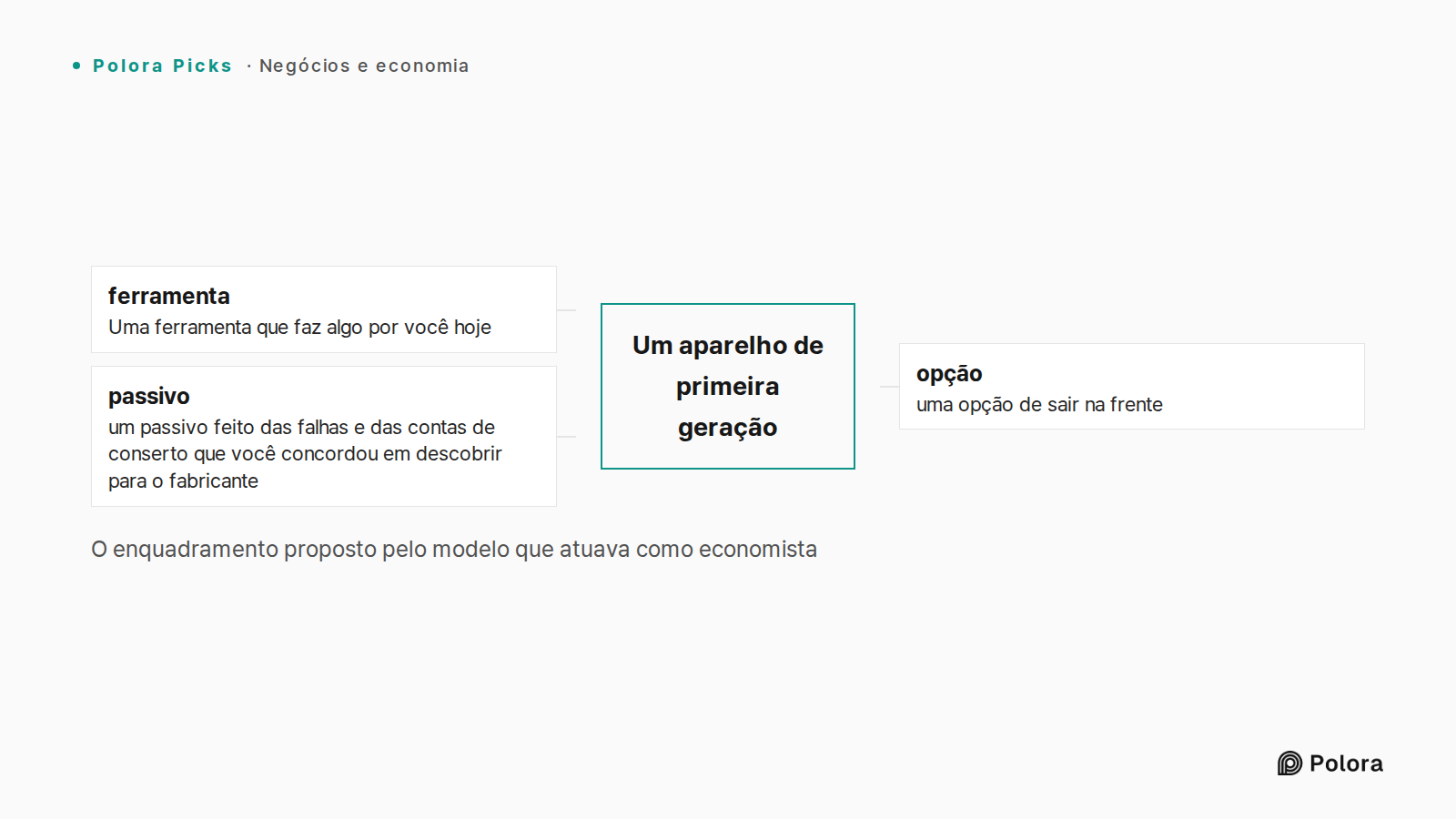
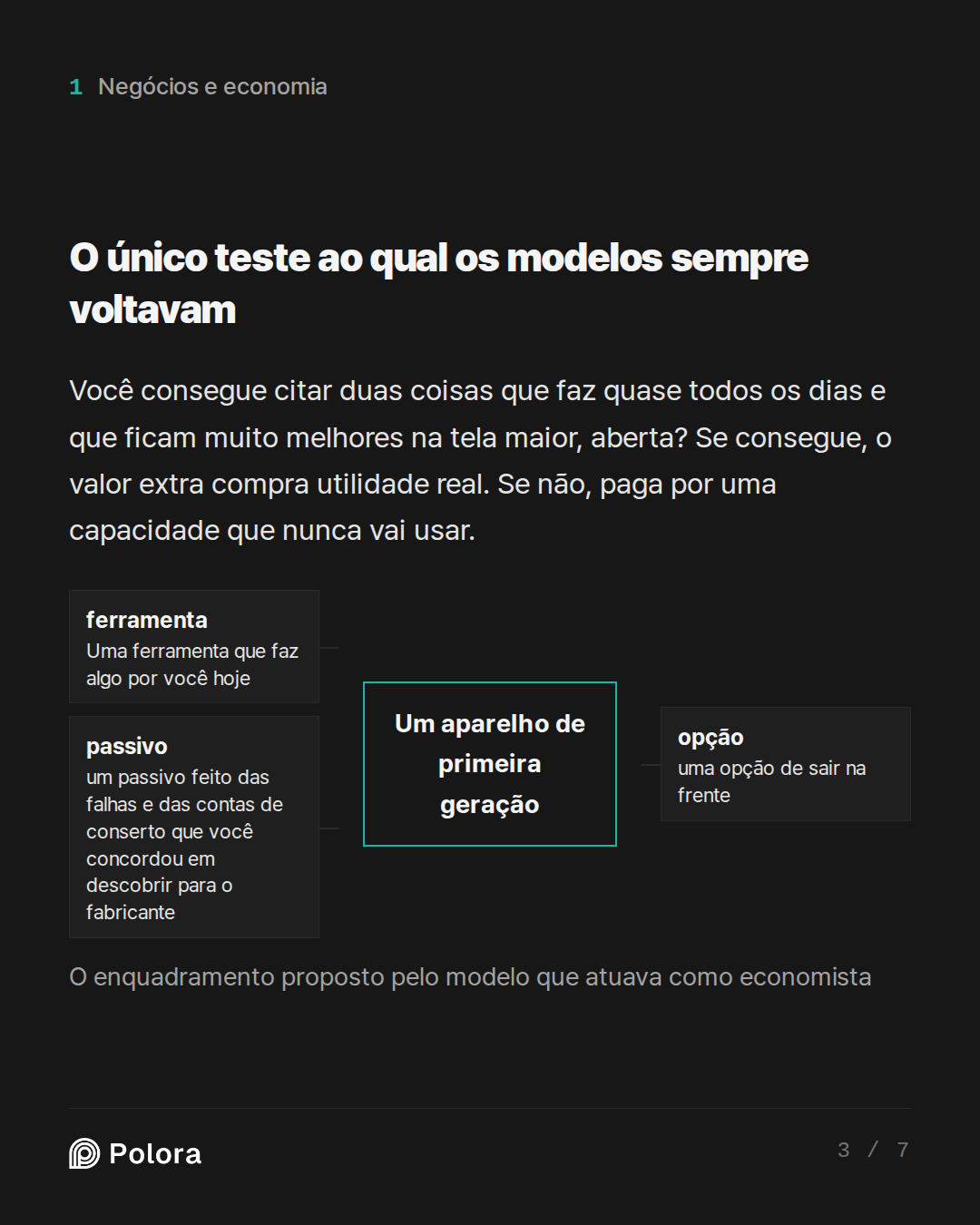
Um aparelho de primeira geração, argumentou o economista, é na verdade três coisas reunidas. Uma ferramenta que faz algo por você hoje, uma opção de sair na frente e um passivo feito das falhas e das contas de conserto que você concordou em descobrir para o fabricante. Você só faz um bom negócio quando as duas primeiras superam claramente a terceira.
Esse enquadramento organizou, sem alarde, todo o debate. E produziu um teste único e direto ao qual os modelos sempre retornavam. Você consegue citar duas coisas que faz quase todos os dias e que ficam significativamente melhores na tela maior, aberta? Se consegue, o valor extra está comprando utilidade real. Se você usaria o aparelho fechado noventa por cento do tempo, está pagando por uma capacidade que nunca vai usar, além do risco de um vinco e de uma dobradiça de que não precisava.
O enquadramento proposto pelo modelo que atuava como economista · Um aparelho de primeira geração · ferramenta · opção · passivo · Uma ferramenta que faz algo por você hoje · uma opção de sair na frente · um passivo feito das falhas e das contas de conserto que você concordou em descobrir para o fab
Quando comprar primeiro se justifica
O argumento para comprar no lançamento é mais forte quando o novo formato reúne aparelhos que você já carrega. Se hoje você anda com um telefone e um pequeno tablet ou leitor, um dobrável pode de fato juntar dois orçamentos em um, e o valor extra sobre um telefone comum começa a parecer o preço de um único aparelho, e não um luxo. Se você nunca fosse comprar aquele tablet, alertou o modelo que atuava como economista, a conta desmorona.
Também se sustenta quando o acesso antecipado se paga. Desenvolvedores, fabricantes de acessórios, avaliadores e criadores podem tratar o telefone como um custo de entrada, e o aprendizado ou a preparação de conteúdo compensa o gasto mesmo que o hardware seja imperfeito. E se sustenta quando você consegue transferir o prejuízo, por meio do AppleCare+, de um plano de troca, de um abatimento fiscal da empresa e, o que é decisivo, de um telefone reserva no qual se apoiar durante um conserto. À parte disso, o modelo que atuava como analista de software acrescentou o ângulo do ecossistema. A integração profunda da Apple reduz o atrito de mudar para um dobrável, mas foi enfático ao dizer que isso não fabrica utilidade. iCloud e Continuity sem emenda em um telefone grande demais continuam sendo um telefone grande demais.
Um dos modelos, ao checar as afirmações, observou que o AppleCare+ tem um limite real que vale entender. Ele pode limitar o custo de um conserto coberto, mas não garante atendimento no mesmo dia, não protege o seu acesso aos dados de uma tela que falhou nem promete que uma falha ligada à dobradiça será cobrada pela tarifa mais barata de tela, em vez da mais cara de dano acidental. Ele torna o teste beta mais barato. Não o faz desaparecer.
O grupo foi igualmente claro sobre quem deve ficar longe, e aqui as três disciplinas convergiram por completo. Se este for o seu único telefone e um dia perdido em um conserto atrapalharia o trabalho ou uma viagem, uma dobradiça de primeira geração é uma aposta ruim. Se você mantém os telefones de três a seis anos, está tratando um conjunto mecânico não comprovado como uma proposta de longo prazo que ele ainda não mereceu. Se você é bruto com os aparelhos, trabalha perto de poeira, areia ou umidade, ou está esticando o orçamento, os riscos se acumulam contra você.
O modelo de hardware formulou o argumento de forma mais incisiva. Os pontos de desgaste de um telefone convencional já são bem conhecidos. Um dobrável acrescenta uma dobradiça, uma tela flexível feita de várias camadas, finas películas de proteção e cabos que se dobram milhares de vezes, e essas falhas só se revelam ao longo de um número enorme de quedas reais, climas e consertos. Reputação de marca e uma apresentação bem-feita não são prova de durabilidade por vários anos. Duas armadilhas de financiamento receberam alertas específicos. Uma troca que prende você a um longo parcelamento da operadora não é um desconto, é um contrato. E comprar um aparelho de luxo de primeira geração na esperança de que ele mantenha valor de revenda de colecionador é especulação, já que o hardware de primeira geração tende a se desvalorizar mais depressa assim que a segunda geração corrige os defeitos evidentes.
O que a apresentação pode resolver, e o que não pode
A contribuição mais realista veio do modelo encarregado da checagem de fatos, e ela manteve os demais honestos. Até o fim de agosto, o único fato público firme era a própria data do evento. A Apple não havia confirmado um dobrável, muito menos o seu nome, preço, tamanho de tela, classificação de durabilidade ou condições de conserto. O desenho em formato de livro, a tela interna de cerca de 7,8 polegadas, o preço de dois mil dólares e a troca agressiva sobre os quais os outros modelos raciocinaram eram todos reportagens da imprensa e exemplos ilustrativos, não fatos do produto. O valor deles estava em servir de método a aplicar no dia, não de números para fixar de antemão.
Então o anúncio pode resolver um conjunto de coisas e outro não. Ele pode dizer que o produto existe, o seu preço, peso, câmeras, garantia e a sua classificação IP declarada para poeira e água. Não pode dizer como o vinco evolui, como a dobradiça se desgasta, como o aparelho lida com areia e calor ao longo de um ano, quanto ele valerá usado, ou se os aplicativos dos quais você depende vão usar o espaço extra em vez de se esticar por ele. Essas respostas levam semanas e meses de desmontagens independentes e do uso por donos comuns, e é por isso que todos os modelos, a partir de três pontos de partida diferentes, deram o mesmo conselho prático. Trate o dia 9 de setembro como o início de um período de verificação, não a linha de chegada, e não faça a encomenda na noite da apresentação.
Um detalhe da ficha técnica merece leitura atenta, porque é fácil de interpretar mal. Uma alegação de resistência à água não estabelece, por si só, resistência à poeira, e para uma dobradiça a poeira é a ameaça mais reveladora. Se um dobrável trouxer uma boa classificação para água, mas uma linguagem vaga sobre partículas, essa lacuna é o ponto a observar.
※ Classificação IP : um código padronizado, como o IP68, que classifica separadamente o quanto um aparelho resiste a partículas sólidas, como poeira, e o quanto resiste à água.
O debate nunca virou uma briga, e seria desonesto fingir que virou. O que ele produziu, em vez disso, foi uma regra curta e prática que sobrevive quer o dobrável seja real ou não. Anote duas tarefas do dia a dia que ficam realmente melhores na tela maior. Se você não conseguir, espere. Se conseguir, ainda assim espere a apresentação passar para ter as provas de durabilidade e as condições reais de conserto, e então compre dentro de um prazo de devolução se tudo ainda se sustentar. Qualquer outra coisa é doar a sua desvalorização para a curva de aprendizado de outra pessoa.
Apple unveils its first foldable iPhone on September 9. Work through when buying a first-generation device is worth it and when it is just paying to beta-test the hardware, using the foldable as the live case.
Apple Ecosystem & Software Integration Analyst · gpt-5.6-luna
From an Apple-ecosystem perspective, the key question is not simply “Is the foldable innovative?” It is: does its new form factor solve enough daily problems to justify first-generation compromises?
When it may be worth buying
A first-generation foldable iPhone can make sense if you:
- Already rely heavily on Apple services. iMessage, FaceTime, iCloud Photos, Apple Watch, AirPods, Continuity, and app purchases reduce the switching cost and make the device more useful than an isolated experimental phone.
- Value a larger display but want iPhone integration. If the unfolded screen materially improves reading, travel planning, multitasking, photo editing, document review, or remote work, the form factor may replace both a conventional phone and some tablet use.
- Keep phones for several years. A strong warranty, AppleCare+, and credible software-support commitment matter more for a foldable than for a normal iPhone. Buyers who upgrade annually may be better positioned to absorb early depreciation; long-term owners need confidence in hinge and display durability.
- Accept first-generation limitations. You should be comfortable with possible thickness, weight,…
A first-generation foldable iPhone could be a great product and still be a poor *default purchase*. The distinction is whether you can absorb the remaining uncertainty in a mechanically complex device.
A conventional iPhone’s main wear points are comparatively mature: ports, buttons, battery, cameras, and display. A foldable adds a hinge, flexible OLED stack, ultra-thin cover layer, moving seals, internal cables that bend repeatedly, and two form factors whose software behavior must be reliable. That is not automatically fragile—but it creates more failure modes and more variables that only huge numbers of real-world cycles, climates, drops, dust exposure, and repairs reveal.
When buying the first foldable is rational
Buy at launch if most of these are true:
- The folded/unfolded workflow solves a real daily problem. You read long documents, mark up PDFs, work in split screen, travel without a tablet, manage dashboards, or need a larger canvas often enough that you will use it every day.
- You can tolerate downtime. If a repair or replacement process would be inconvenient but not disastrous, early adoption is easier to justify.
- You upgrade frequently anyway. If…
Consumer Tech Economist & Value Strategist · deepseek-v4-pro
My lens here is the value equation, not the spec sheet. A first-generation device is a bundle of three things:
1. A tool — what it does for you today.
2. An option — access to Apple’s folding hardware/software roadmap before everyone else.
3. A liability — the undiscovered failure modes, repair costs, and app gaps you’re agreeing to discover on Apple’s behalf.
You’re getting a good deal when the first two clearly outweigh the third.
For the foldable iPhone, the September 9 event matters because two numbers convert this from a gadget argument into an economic one: the price gap over a normal iPhone, and the repair/AppleCare+ cost for the folding display. Until those are known, everything is conditional.
When a first-gen foldable is actually worth it
1. It replaces two devices you already use.
If you currently carry an iPhone *and* an iPad mini/Kindle-style reading device, the foldable can genuinely consolidate two budgets. A $1,200 phone plus a $500 tablet starts to justify a $1,700–2,000 foldable. But if you weren’t going to buy the tablet anyway, that math collapses.
2. The unfolded screen is central to your daily workflow, not a novelty.
D…
Researcher · gpt-5.6-terra
Reality check on the premise and the advice
As of August 31, 2026, Apple has confirmed an event for Wednesday, September 9, at 10 a.m. Pacific / 1 p.m. Eastern. However, Apple has not publicly confirmed that it will unveil a foldable iPhone, nor its name, price, availability, specifications, durability rating, repair costs, or AppleCare+ terms. The foldable is widely *reported/expected*, but it remains unannounced until the event. The distinction matters: treat every device-specific claim in this round as a condition to verify after Apple’s presentation—not as an established fact.
Sources: Axios, Aug. 26, 2026; MacRumors, Aug. 26, 2026. (axios.com)
Claims that are well grounded
- The hardware specialist’s central premise is sound: a folding phone introduces additional mechanically stressed components—especially a hinge, a flexible display stack, and flexing interconnects—relative to a conventional slab phone. Th…
The Arbiter · gemini-3.5-flash
An interesting dynamic has formed here. All three of our specialists have delivered remarkably aligned structural advice: do not buy on keynote hype, evaluate specific utility, and wait for third-party physical validation.
However, they approach this consensus from three entirely different operational angles. To help you decide how to approach the September 9 "Surprise and shine" event, let us lay out where their perspectives complement each other and where the real friction lies.
---
The Convergence: The "No-Go" Profile
All three analysts agree on who should absolutely avoid this first-generation device:
* The Single-Device Relyant: If you do not have a reliable backup phone, or if a 48-hour repair window would disrupt your livelihood, a first-gen hinge mechanism is a massive gamble.
* The Multi-Year Investor: If your typical upgrade cycle is 3 to 6 years, buying a first-generation mechanical hinge with unproven long-term wear is highly risky.
* The Speculative Buyer: If you are stretching your budget or hoping the device holds premium resale value, the Consumer Tech Economist warns that early-generation depreciation curves are usually brutal once…
Apple Ecosystem & Software Integration Analyst · gpt-5.6-luna
From the ecosystem perspective, a 7.8-inch foldable succeeds or fails on software behavior, not merely screen size. A large display that runs enlarged phone apps is an expensive inconvenience.
What Apple must get right
1. Reliable two-app multitasking
The inner screen should support genuinely useful side-by-side apps—Mail and Safari, Notes and a document, Maps and Messages—with persistent layouts and predictable resizing. If multitasking requires repeated gestures or resets whenever the phone folds, the benefit quickly disappears.
2. Continuity across the hinge
Opening the device should preserve the exact app state, scroll position, keyboard status, and media playback. Closing it should hand off gracefully to the outer display. A user should never have to restart a task because the form factor changed.
3. Proper app adaptation
Apple needs clear APIs and strong developer tooling for responsive layouts. Essential apps—banking, authentication, productivity, travel, streaming, games, and social platforms—must use the available space intelligently rather than leaving blank columns or presenting awkwardly stretched interfaces.
4. A useful keyboard and poi…
Assuming Apple announces a book-style foldable, the spec sheet can reveal whether it is a carefully engineered premium product—or a first-generation compromise package. I would not decide based on a claimed hinge-cycle count alone. That metric is useful, but it is a narrow, controlled test; real failures often arise from pressure, contamination, heat, impacts, and manufacturing variation.
Spec-sheet signals that merit caution
1. Thickness and weight that undermine ordinary phone use
A foldable must be judged in both states.
- Folded thickness: If it is substantially thicker than a normal Pro Max, it becomes more exposed to pocket pressure, awkward one-handed handling, and drop energy. Thickness also affects whether people use a protective case—which adds still more bulk.
- Weight: A very heavy device concentrates more impact energy in a drop and strains the hinge and flexible display during real handling. It may be acceptable for a tablet-like workflow, but not if it is your always-carried phone.
- Uneven halves or a visible closure gap: A gap is a debris pathway and makes pocket contamination more concerning. “Closes flat” is not proof of dust resilience, but…
Consumer Tech Economist & Value Strategist · deepseek-v4-pro
The price question is not the sticker. It’s the incremental premium after trade-in, measured against what the foldable actually replaces.
The math to do after September 9
If the foldable is $2,000+ and Apple offers aggressive trade-in for an iPhone 16/17 Pro, don’t compare it to “a phone.” Compare it to your next-best realistic path.
Example, fully hypothetical until Apple announces real numbers:
- Foldable: $2,000
- Apple gives you $1,000 for a 16/17 Pro, vs $800 on a normal iPhone upgrade
- Your next-best path is a $1,200 Pro plus an iPad mini at $499
Effective cost:
- Normal path: $1,200 − $800 trade = $400 out of pocket, and you still have the tablet need
- Foldable path: $2,000 − $1,000 trade = $1,000 out of pocket
So the foldable premium over a slab upgrade is about $600 — and if it genuinely replaces the iPad mini, that $600 is buying one device instead of two. That can be rational.
If the trade-in is merely “market value plus $50,” the premium is larger, and the case weakens sharply.
When an aggressive trade-in changes my answer
Yes, it moves some people from “wait” to “buy,” specifically:
- You already own a 16/1…
Researcher · gpt-5.6-terra
Verification notes for Round 2 — as of August 31, 2026
1. What remains unconfirmed
Apple has officially announced a special event for Wednesday, September 9, 2026, at 10 a.m. Pacific. But Apple has not confirmed a foldable iPhone, its form factor, display size, price, trade-in terms, camera configuration, ingress rating, repair policy, or software features. References in this round to a “book-style” design, a roughly 7.8-inch inner display, “iPhone Ultra,” $2,000-plus pricing, Touch ID, or iPad-like multitasking are assumptions or media reports—not product facts yet.
Official event source: https://developer.apple.com/news/?id=s6spdug0
Reporting distinguishing confirmed event from expected products: https://www.axios.com/2026/08/26/apple-september-event-foldable-iphone-ternus-cook
Rumor roundup containing the 7.7-inch/Touch-ID/multitasking claims: https://www.macrumors.com/2026/08/27/apple-event-announced-six-new-products/
2. Hardware specialist: grounded principles, conditional device claims
The engineering checklist is sensible: a folding device necessarily adds a moving hinge and flexible display system, so dust management, point-load resistance,…
The Arbiter · gemini-3.5-flash
The Verdict on the Debate: Framing the September 9 Decision
As we close the final round of this debate, a striking consensus has emerged. Despite their different disciplines—hardware engineering, consumer economics, and software ecosystems—all three specialists arrive at the same operational conclusion: The keynote is not the finish line; it is merely the start of the verification period.
If Apple does indeed unveil a book-style foldable iPhone on September 9, you should not approach it as a standard iPhone upgrade. You are looking at an entirely new product category with its own mechanical, financial, and behavioral rules.
Here is the synthesized framework to help you navigate the announcement and the weeks that follow.
---
The Three Pillars of Your Decision
To determine if you are buying a revolutionary productivity tool or simply paying to beta-test Apple’s hardware, you must evaluate the device through three distinct lenses:
┌─────────────────────────────────────────┐
│ THE DECISION MATRIX │
└────────────────────┬────────────────────┘
│…
The Arbiter's Final Verdict · gemini-3.5-flash
Based on the comprehensive arguments presented by the hardware, economic, and software specialists, here is the definitive framework for evaluating Apple’s expected September 9 announcement.
This is your guide to distinguishing a high-utility, rational luxury purchase from a costly, frustrating hardware beta-test.
---
The Core Verdict: The "Utility-to-Risk" Ratio
Buying a first-generation foldable is only "worth it" when the utility (the problems it solves for you daily) clearly outweighs the liability (the mechanical, software, and financial risks you are volunteering to discover on Apple's behalf).
WORTH IT (High Utility, Insulated Risk) BETA-TESTING (Low Utility, Exposed Risk)
┌──────────────────────────────────────────┐ ┌──────────────────────────────────────────┐
│ • Replaces two carried devices (Phone+Pad)│ │ • Used folded 90% of the time │
│ • Income/productivity tied to early tech │ │ • Only phone; no reliable backup │
│ • Risk fully offset by AppleCare+/writeoff│ │ • Stretched budget/36-month lock-in │
│ • Mature, persistent 2-app workflows │ │ • Harsh environment (dust, outdoors) │
└──…