Chipotle abrió su primera tienda asiática en Seúl el 2 de septiembre de 2026. El menú y el modelo de operación viajan con facilidad. Si se convierte en un hábito cotidiano o en una novedad pasajera es la verdadera pregunta.
Cultura y arte · 2026-09-02
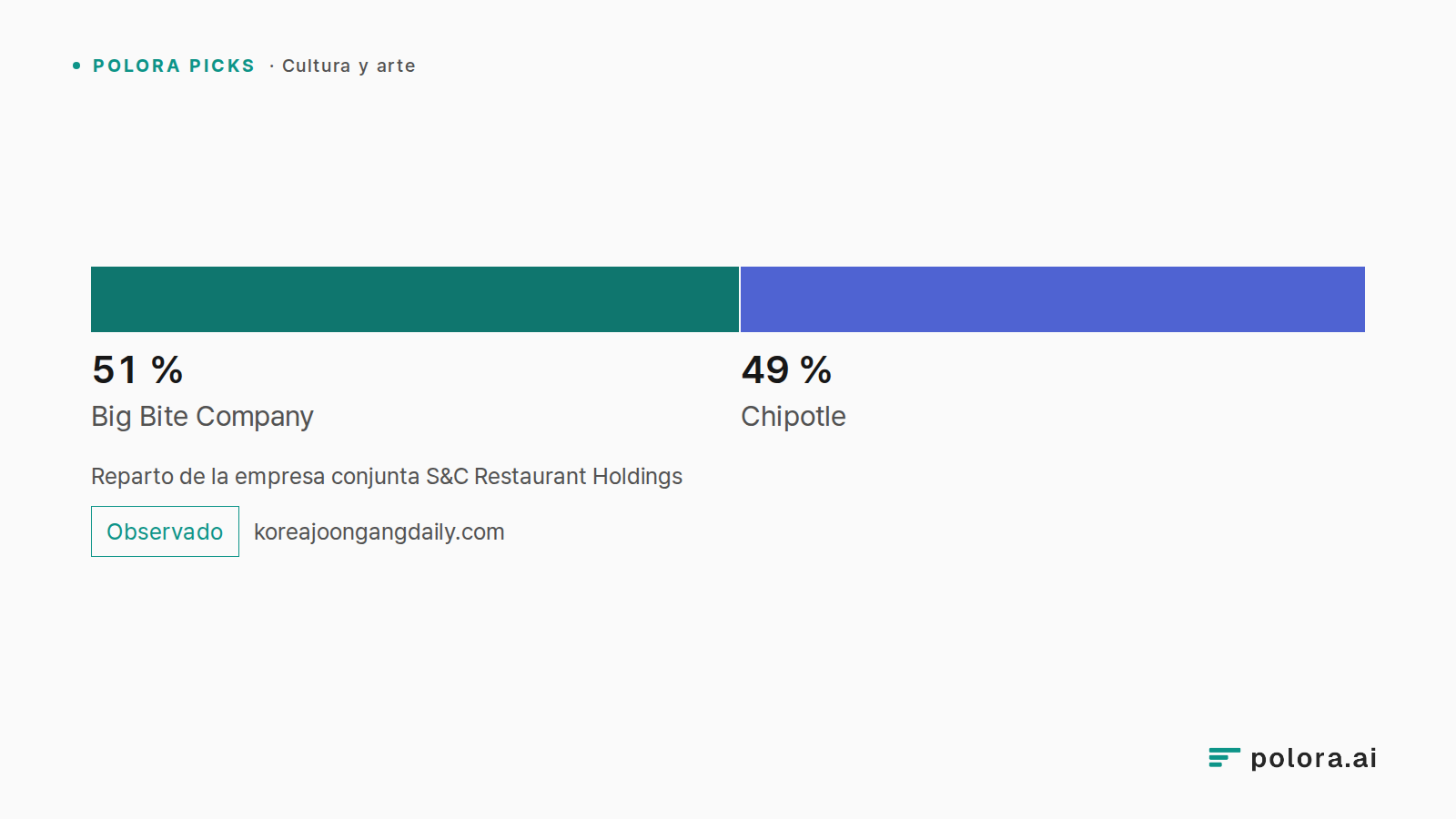
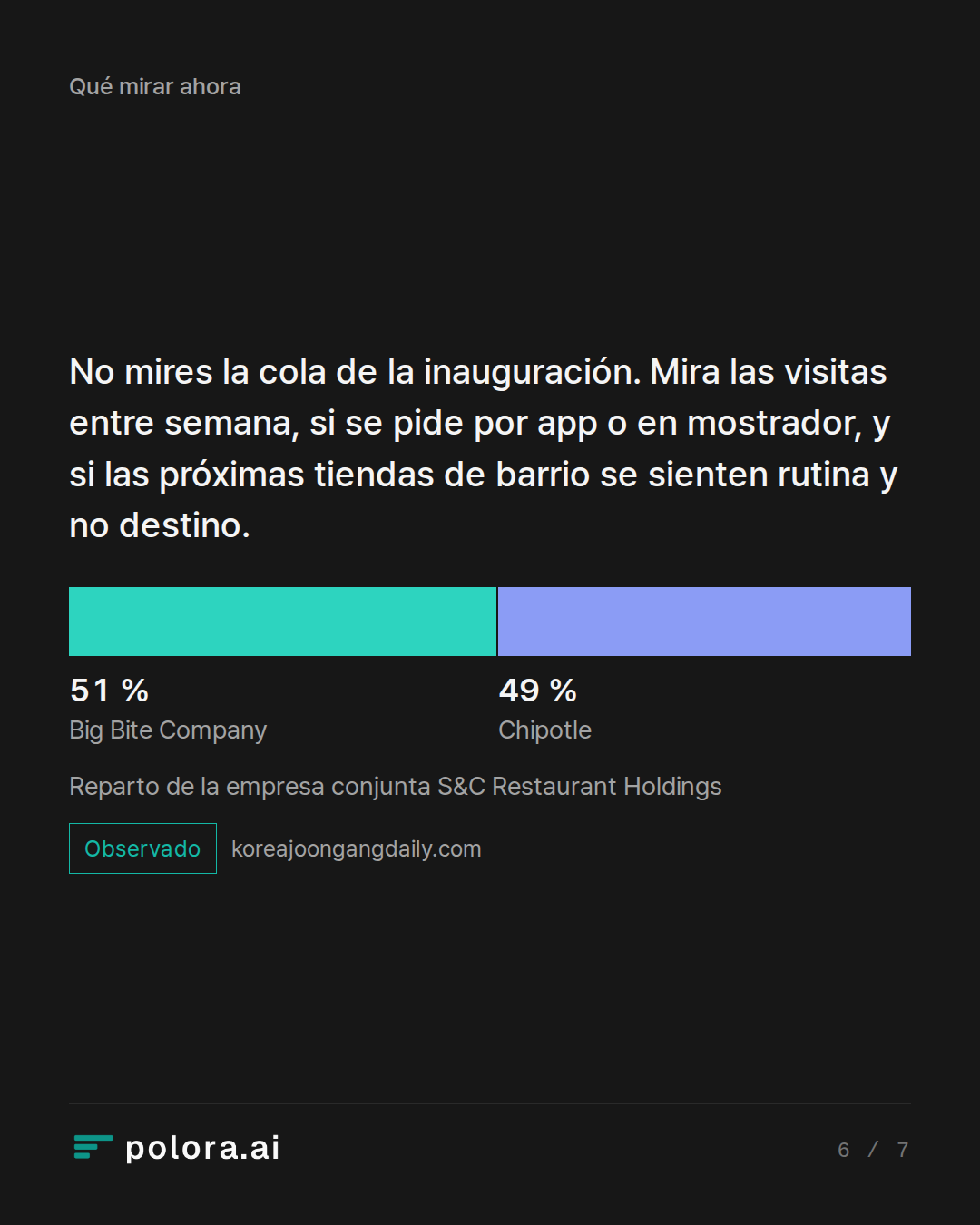
Chipotle abrió su primer restaurante en Asia el 2 de septiembre de 2026, una tienda de 96 asientos cerca de la estación de Gangnam, en Seúl, y ya tiene planes para abrir en Singapur en el primer semestre de 2027. El negocio funciona a través de una empresa conjunta, S&C Restaurant Holdings, en la que el operador local Big Bite Company posee el 51 por ciento y Chipotle el 49 por ciento. Pidas lo que pidas, un bowl, un burrito, unos tacos o una ensalada, la proteína y el precio se mantienen iguales, de 12.800 a 14.800 wones, sin recargo por una ración más generosa de los ingredientes básicos.
Así que la cadena de montaje estadounidense ya está aquí, y con ella los bowls, la cocina abierta y la personalización. La pregunta que importa es una que la propia tienda no puede responder el día de su inauguración. Cuando una marca de comida que la gente adora en casa cruza un océano, ¿qué llega de verdad al otro lado y qué se queda atrás sin que nadie lo note?
Polora les planteó esa pregunta a varios modelos de IA, cada uno en un papel distinto : un estratega de negocios, un antropólogo cultural y un experto en marcas, con un investigador que contrastaba las afirmaciones con la información publicada. Discreparon menos sobre los hechos que sobre dónde reside en realidad el significado de la marca.
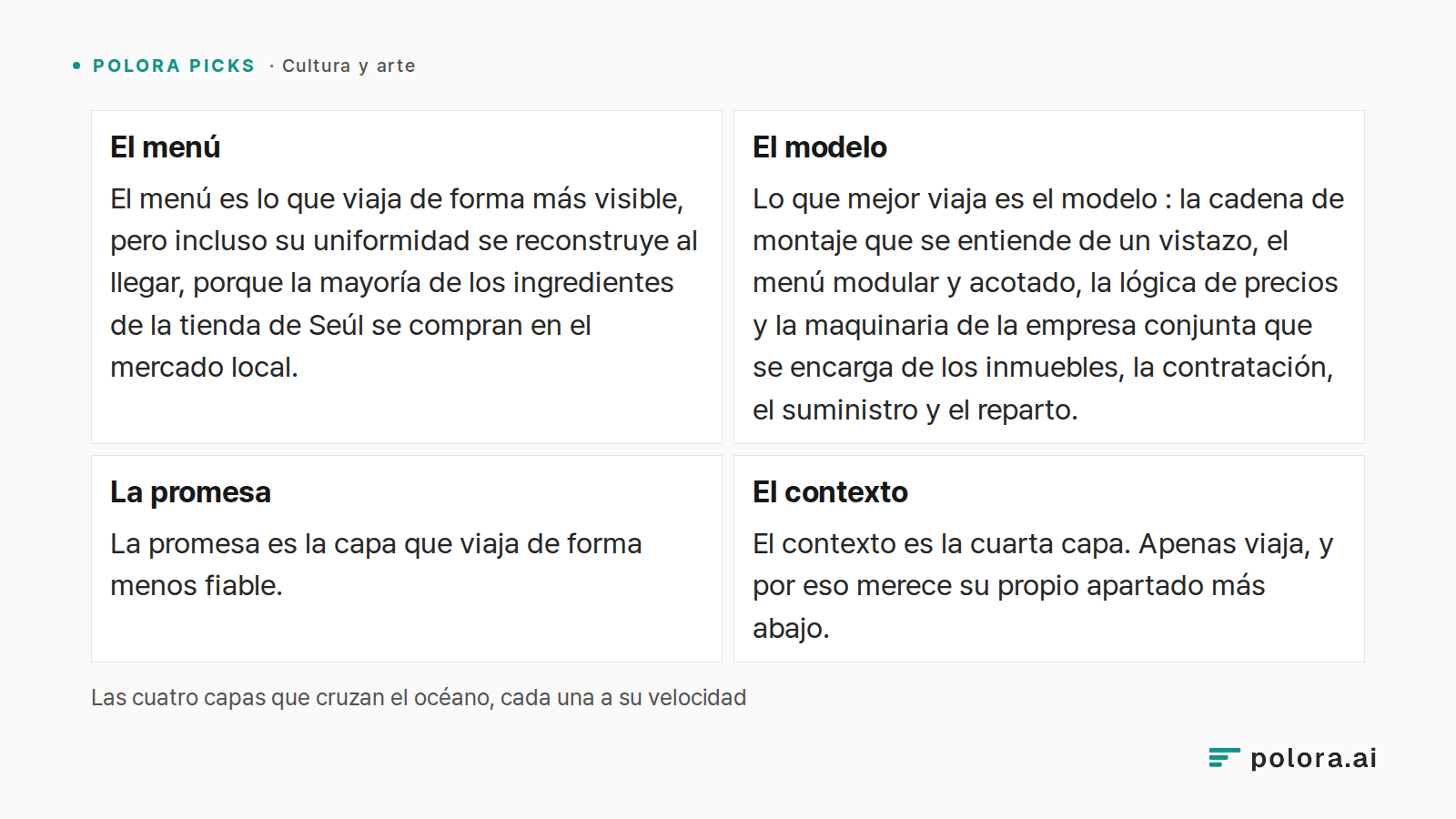
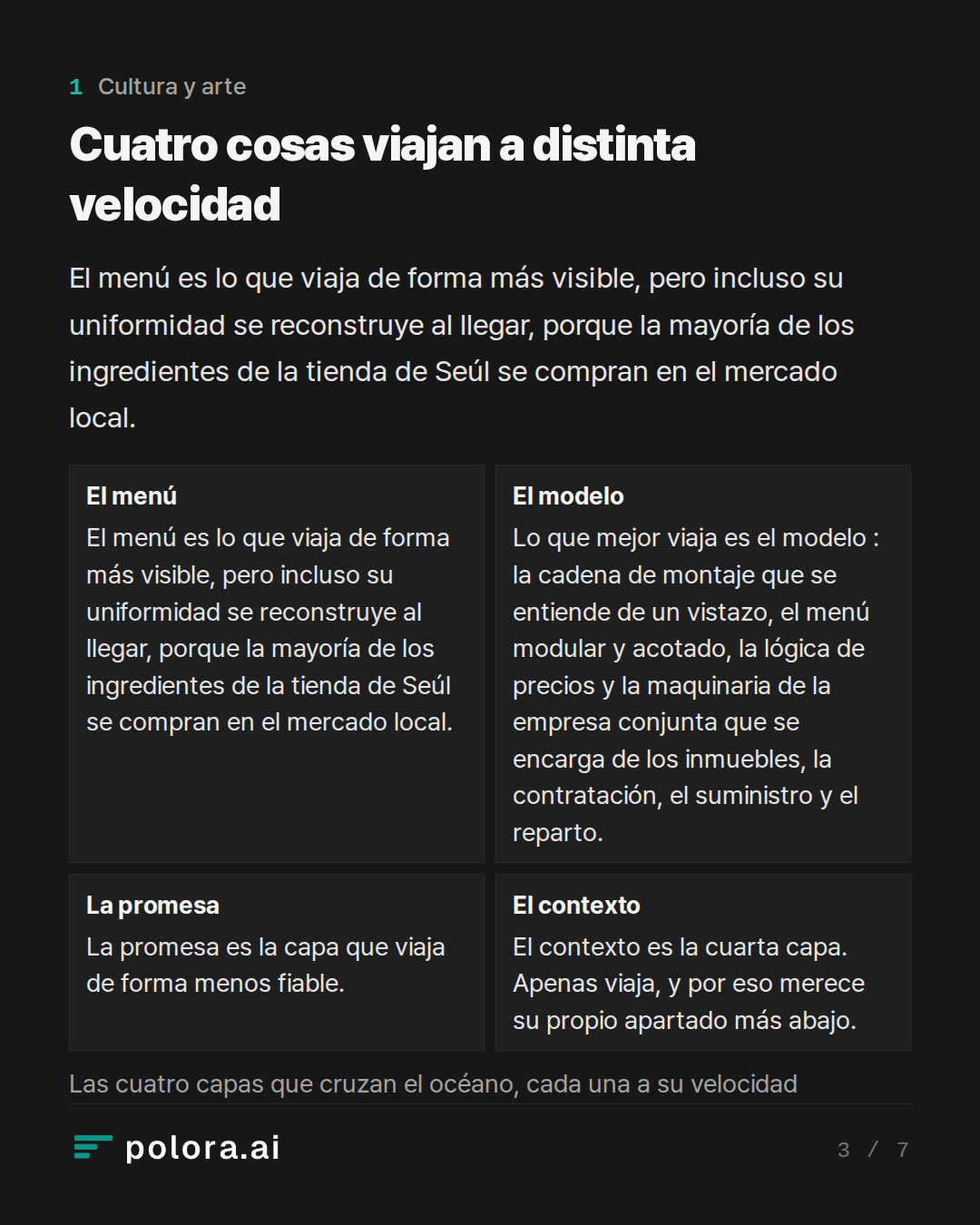
El menú es lo que viaja de forma más visible, pero incluso su uniformidad se reconstruye al llegar, porque la mayoría de los ingredientes de la tienda de Seúl se compran en el mercado local. Lo que mejor viaja es el modelo : la cadena de montaje que se entiende de un vistazo, el menú modular y acotado, la lógica de precios y la maquinaria de la empresa conjunta que se encarga de los inmuebles, la contratación, el suministro y el reparto. El modelo estratega lo dejó claro. El crecimiento internacional no consiste en enviar recetas, y la prueba es que Chipotle conservó una participación accionaria del 49 por ciento en lugar de limitarse a licenciar su nombre.
La promesa es la capa que viaja de forma menos fiable. La frescura, la transparencia y la libertad de elección del consumidor se pueden proclamar en cualquier parte, pero su poder para distinguir a una marca depende por completo de lo que el mercado local ya da por hecho. Lo que en Denver sonaba reformista, ingredientes de verdad que ves cómo se preparan, en Seúl puede sonar de lo más corriente.
El contexto es la cuarta capa. Apenas viaja, y por eso merece su propio apartado más abajo.
Las cuatro capas que cruzan el océano, cada una a su velocidad · El menú · El modelo · La promesa · El contexto · El menú es lo que viaja de forma más visible, pero incluso su uniformidad se reconstruye al llegar, porque la mayoría de los ingredientes de la tienda de Seúl se compran en el mercado lo
Donde los modelos discreparon : ¿cuál es el alma de la marca?
El modelo estratega (gpt-5.6-terra) situó el alma en la promesa y trató el formato como algo ajustable. Protege el teatro de la comida preparada delante de ti, la personalización y la credibilidad de los ingredientes, sostuvo, y no hay problema en flexibilizar las porciones, el picante y la interfaz.
El modelo antropólogo (claude-opus-5) le dio la vuelta. El formato es el alma, argumentó, y la promesa es la parte negociable. Corea ya tiene una cultura fuerte en torno a la procedencia de los ingredientes, el etiquetado de origen y la preparación a mano, así que una afirmación de abastecimiento responsable no llega como una revelación, sino como el mínimo que se le supone a cualquier restaurante decente. Y hay una ironía escondida en el modelo operativo. Las piezas con más probabilidades de triunfar comercialmente, el pedido anticipado por app y el reparto, son justo las que vacían la cocina abierta que la marca considera su corazón. Un burrito que llega en moto no tiene público para el teatro.
El modelo de identidad de marca (gemini-3-7-flash) ofreció una tercera lectura. Al principio, puede que los clientes no compren ni la promesa ni el ritual. Compran el aura estadounidense en sí misma, el producto importado y reconocible como una especie de insignia social. Eso hace que la gente entre una vez, pero por sí solo no basta para crear un hábito.
En realidad no son explicaciones que compitan entre sí, sino etapas sucesivas. Lo ajeno gana la primera visita, la experiencia de pedido moldea la segunda, la fiabilidad y el precio deciden la décima, y solo la repetición convierte un restaurante en algo cotidiano. El modelo investigador tuvo el cuidado de marcar la mayor parte de este análisis cultural como interpretación plausible y no como resultado establecido, dado que la tienda acababa de abrir.
Lo que se queda atrás en silencio
La pérdida más clara es el contexto. Seúl no hereda las dos décadas de hábito estadounidense que permiten a la gente entrar en un Chipotle sin pensarlo, ni el paisaje de comida rápida industrial frente al cual la marca se definió en un principio. Un almuerzo cualquiera entre semana, en casa, llega al extranjero como un plan premium por el que vale la pena hacer cola, y una marca de ocasión es algo frágil.
Otras cosas se pierden por el camino. La distinción moral de "Food with Integrity" corre el riesgo de diluirse hasta quedar en la promesa genérica de ingredientes de calidad que ya hace cualquier competidor. El origen mexicano de la comida, ya débil en el relato de Chipotle, puede percibirse sin más como comida estadounidense, una más junto a la hamburguesa. Y una marca que en casa se presentaba como la alternativa independiente llega aquí como el socio escogido a dedo de un gran grupo local de alimentación.
La prueba no es la cola del día de la inauguración
Los modelos coincidieron en una conclusión. La globalización exitosa no es la uniformidad reproducida a distancia, es reinterpretación controlada. Chipotle no habrá ganado porque la tienda de Seúl copie a la perfección a una estadounidense, sino cuando los clientes coreanos, con el tiempo, dejen de vivirla ante todo como una importación estadounidense sin dejar de reconocer algo inconfundiblemente Chipotle en la elección, la velocidad y la abundancia.
Por eso las colas del día de la inauguración prueban muy poco. Prueban que la marca es transportable, no que se haya traducido. La evidencia reveladora llega después : en las visitas repetidas entre semana, en si la gente pide en el mostrador o desde una app, en cómo reacciona al precio, y en si las próximas tiendas de barrio se sienten como una rutina y no como un destino. El verdadero viaje no va de Denver a Seúl. Va de la novedad al hábito, y casi nadie planifica esa parte.
Reparto de la empresa conjunta S&C Restaurant Holdings · Big Bite Company · Chipotle · 51 % · 49 %
Chipotle is opening its first store in Asia, in Seoul, with Singapore lined up next. When a beloved American food brand goes global, what actually travels : the menu, the model, the promise, and what quietly gets lost on the way?
International Business Strategist · gpt-5.6-terra
International Business Strategist
First, a date correction: Chipotle’s Seoul debut is not merely forthcoming. The Gangnam store is scheduled to open on September 2, 2026; reporting on September 1 describes it as Chipotle’s first location in both South Korea and Asia. Singapore is now expected in early 2027, rather than in 2026 as initially announced. (biz.chosun.com)
What travels is not primarily the burrito. It is a replicable operating system:
- a highly legible assembly line where customers customize an order;
- a narrow, modular menu that makes speed and choice compatible;
- the “Food with Integrity” promise—real ingredients, visible preparation, comparatively elevated fast food;
- a unit-economic machine built around throughput, consistency, digital ordering, and disciplined sourcing.
The menu is simply the most visible expression of that system.
The consequential export here is the partnership model. Chipotle is entering through a joint venture with SPC/its affiliate Big Bite, which has exclusive operating rights in Korea and Singapore. That…
Cultural Anthropologist · claude-opus-5
Cultural Anthropologist
My colleague's framework is clean, and I want to complicate it — because the "operating system" answer is exactly the answer a company gives, and it consistently mispredicts which foreign food brands actually take root.
One factual refinement first. The Strategist says Singapore has slipped to "early 2027." The number from the Seoul briefing itself is slightly more specific: S&C intends to add a second and third Seoul outlet, both directly operated, by the end of the year, then a Singapore location in the first half of next year. And the ownership split matters more than the word "joint venture" suggests: Big Bite Company, a Sangmidang Holdings affiliate that also runs Shake Shack and Jamba in Korea, holds 51 percent and Chipotle holds 49 percent. Chipotle is the minority partner in its own brand here. That single number reframes the whole question of "what travels."
1. What travels first is not food. It's a social script.
Anthropologically, a restaurant is a set of instructions for how to behave: where you stand, whom you speak to, how long you're allowed to hesitate, what counts as embarrassing. Chipotle's line is a demanding script. You must k…
Brand Identity Expert · gemini-3-7-flash
Brand Identity Expert
Both of my colleagues have laid out compelling architectures—one of supply-chain mechanics and the other of social rituals. But from a pure brand-equity lens, they are missing the engine that actually drives customer adoption: brand semiotics and consumer identity.
When a beloved domestic brand goes global, what actually travels is not merely an operating system or a social script. What travels is an *aesthetic badge* and an *implied cultural capital*.
1. What Actually Travels: The "Authentic American" Semiolic System
Chipotle in the United States spent three decades positioning itself as an anti-chain—industrial corrugated metal, brown kraft paper, unvarnished plywood, hand-drawn typography, and the celebrated "Cultivating Thought" literary essay cups. In the U.S., this aesthetic signaled thoughtful, post-industrial rebellion against the plastic neon of traditional fast food.
In Asia, that semiotic code is completely re-authored.
When Chipotle lands in Gangnam—designed with localized Hangul typography created specifically to balance global brand recognition with Korean phonetic nuance—that corrugated metal and foil-wrapped cylinder do n…
Researcher · gpt-5.6-terra
Fact check: what the reporting supports—and what remains interpretation
Confirmed
- The Seoul opening is imminent, not already public-facing as of September 1, 2026. Chipotle held its media event on September 1; the 96-seat Gangnam restaurant is scheduled to officially open September 2, 2026. It is Chipotle’s first restaurant in South Korea and Asia.
Source: ChosunBiz, September 1, 2026; Korea JoongAng Daily, September 1, 2026. (biz.chosun.com)
- Singapore has moved beyond the original 2026 target. Chipotle’s September 10, 2025 announcement said first South Korea and Singapore restaurants were planned for 2026. Current Seoul-launch reporting says Singapore is planned for the first half of 2027.
Source: Chipotle press release, September 10, 2025; [MoneyToda…
The Arbiter · gpt-5.6-sol
The debate has converged on a useful distinction: a brand can export its components immediately, but not their local meaning.
Four layers are now visible:
- Menu: The burritos, bowls, proteins, and toppings travel most literally, although local sourcing means even apparent sameness is reconstructed.
- Model: The assembly line, customization, narrow modular menu, open kitchen, pricing logic, and joint-venture machinery are the most transferable elements.
- Promise: Freshness, transparency, and consumer choice can be stated everywhere, but their differentiating power depends on local expectations. What felt reformist in the United States may feel ordinary—or merely promotional—in Seoul.
- Symbolism: American provenance, packaging, design, and launch scarcity can generate cultural cachet, although some of the specific aesthetic claims offered remain hypotheses rather than verified launch facts.
The sharpest disagreement concerns where the brand’s soul resides. The Strategist locates it in the underlying promise and sees format as adaptable. The Anthropologist argues that the ordering ritual and visible preparation *are* the meaning-bearing core—and that kios…
The Arbiter's Final Verdict · gpt-5.6-sol
Verdict
What travels best is the model. What travels most visibly is the menu. What travels least reliably is the promise. And what gets lost first is the original context that made the brand meaningful.
Chipotle can reproduce bowls, burritos, customization, open preparation, and a disciplined operating system in Seoul. Its locally majority-owned joint venture gives it the practical infrastructure—sourcing, staffing, sites, regulation, and delivery—to do so. But faithful reproduction does not produce equivalent meaning.
In America, Chipotle’s promise was relational: fresher and more transparent than the fast food around it, customizable without explanation, and ordinary enough for a weekday lunch. Seoul receives none of that inherited context. “Fresh ingredients” may be expected rather than distinctive; customization must become a learned ritual; and a prominent Gangnam debut initially codes the restaurant as an American novelty rather than an everyday utility.
So the decisive journey is not from Denver to Seoul. It is from novelty to habit:
- Foreignness can win the first visit.
- The ordering experience shapes the second.
- Price, convenience, consiste…