Is McDonald's really a burger company, or a landlord that sells burgers?
Alpha · claude-sonnet-5
Good — I was able to confirm the core manuscript claims directly against the FY2025 10-K text. Here's my verification pass.
What checks out cleanly
The franchise arrangements language in the manuscript matches the filing almost word for word. The 10-K states: "Conventional franchise arrangements generally include a lease and a license and provide for payment of initial fees, as well as continuing rent and royalties to the Company based upon a percent of sales with minimum rent payments," and "Minimum rent payments are based on the Company's underlying investment in owned sites and parallel the Company's underlying leases and escalations on properties that are leased." This confirms the manuscript's structural claim without needing the famous "we are in the real estate business" quote — good that the brief avoided it, since I found no primary-source confirmation of that line in this filing.
The 20-year term and McDonald's retained control at expiry is also confirmed verbatim: "franchisees are granted the right to operate a restaurant using the McDonald's System and, in most cases, the use of a restaurant facility, generally for a period of 20 years. At the end of the 20-year…
Beta · gpt-6-sol
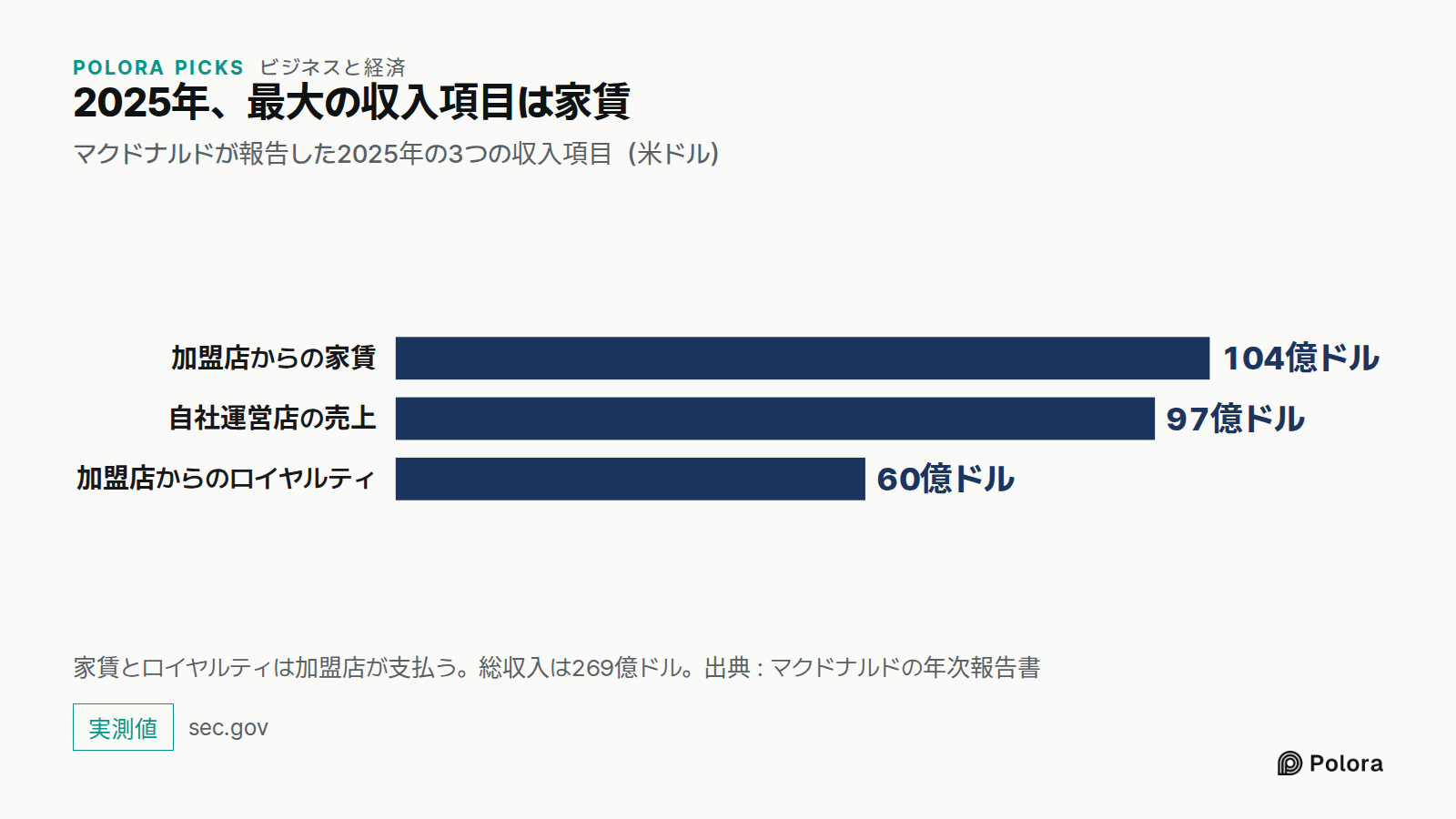
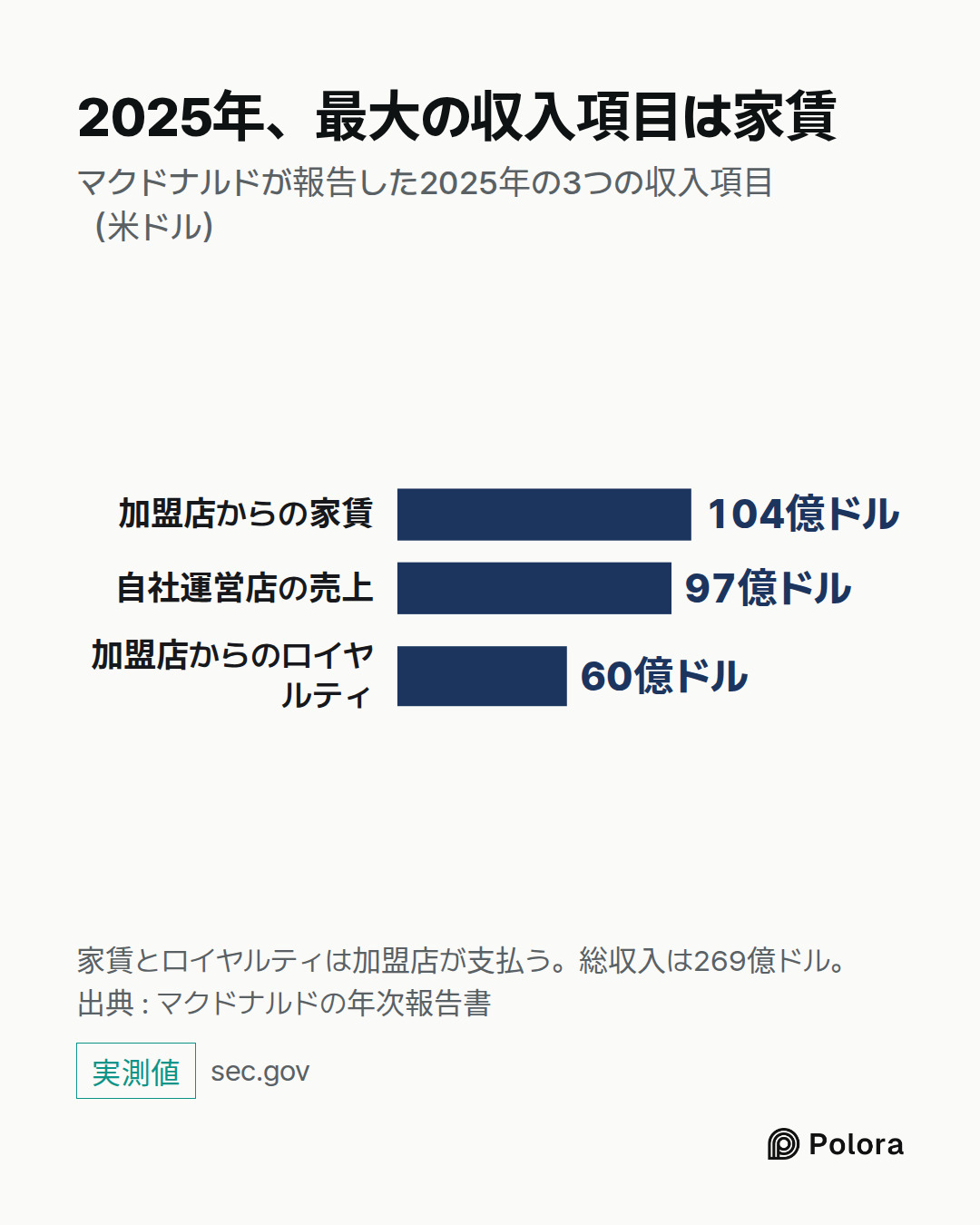
The manuscript’s premise stands, but “landlord” describes how McDonald’s earns much of its revenue—not the whole business. Its 2025 Form 10-K supports the central comparison: McDonald’s reported $10.442 billion in rent, $6.018 billion in royalties, and $9.690 billion in sales from company-operated restaurants. Rent was the largest of those revenue lines. These are *recognized revenues*, however; “took” or “collected” should not be read as a claim about cash received. The same filing reports rent of $10.017 billion in 2024 and $9.840 billion in 2023. (sec.gov)
Here is where I would draw the verification lines:
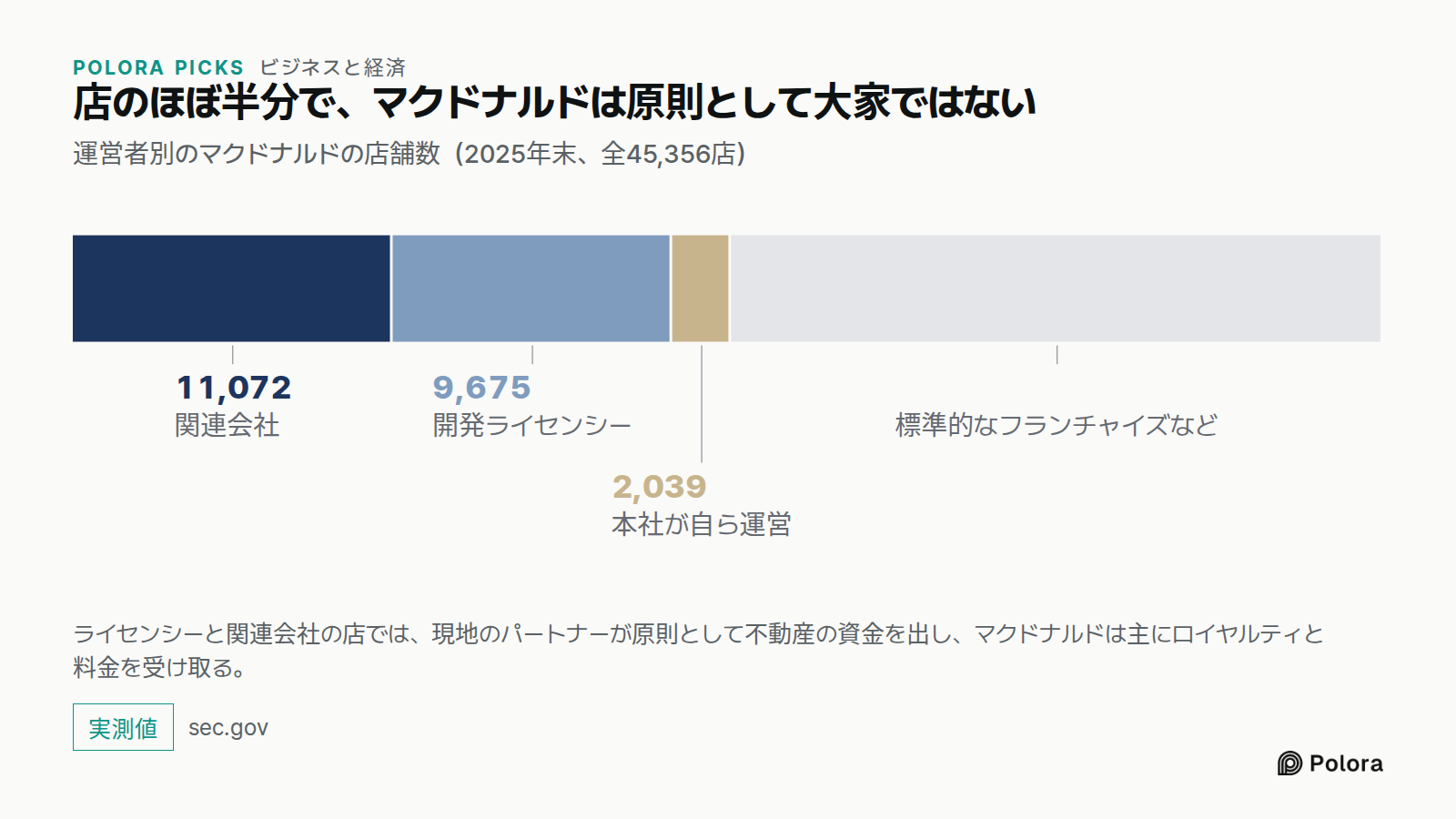
- Who sells the burgers: Confirmed. At December 31, 2025, franchisees operated 43,317 of 45,356 restaurants (about 95%); McDonald’s operated 2,039. Franchisees’ sales are not recorded as McDonald’s corporate revenue. The manuscript’s $26.9 billion total revenue and $16.5 billion franchised-revenue figures also match the filing. (sec.gov)
- Why it earns rent: Confirmed for *conventiona…
Gamma · gemini-3.1-pro
I have reviewed the manuscript against the provided 2025 Form 10-K. The foundational numbers and structural claims are accurate, but the manuscript makes a few analytical leaps that the filing does not support.
Here is what the record actually shows:
What is confirmed by the source:
* Revenue Split: The figures are exact. In 2025, McDonald's recognized $10.442 billion in rent, $6.018 billion in royalties, and $9.690 billion in company-operated sales out of $26.9 billion in total revenue.
* Restaurant Counts: Exactly 45,356 total restaurants at the end of 2025. Franchisees ran 43,317 (about 95%), while the company ran 2,039.
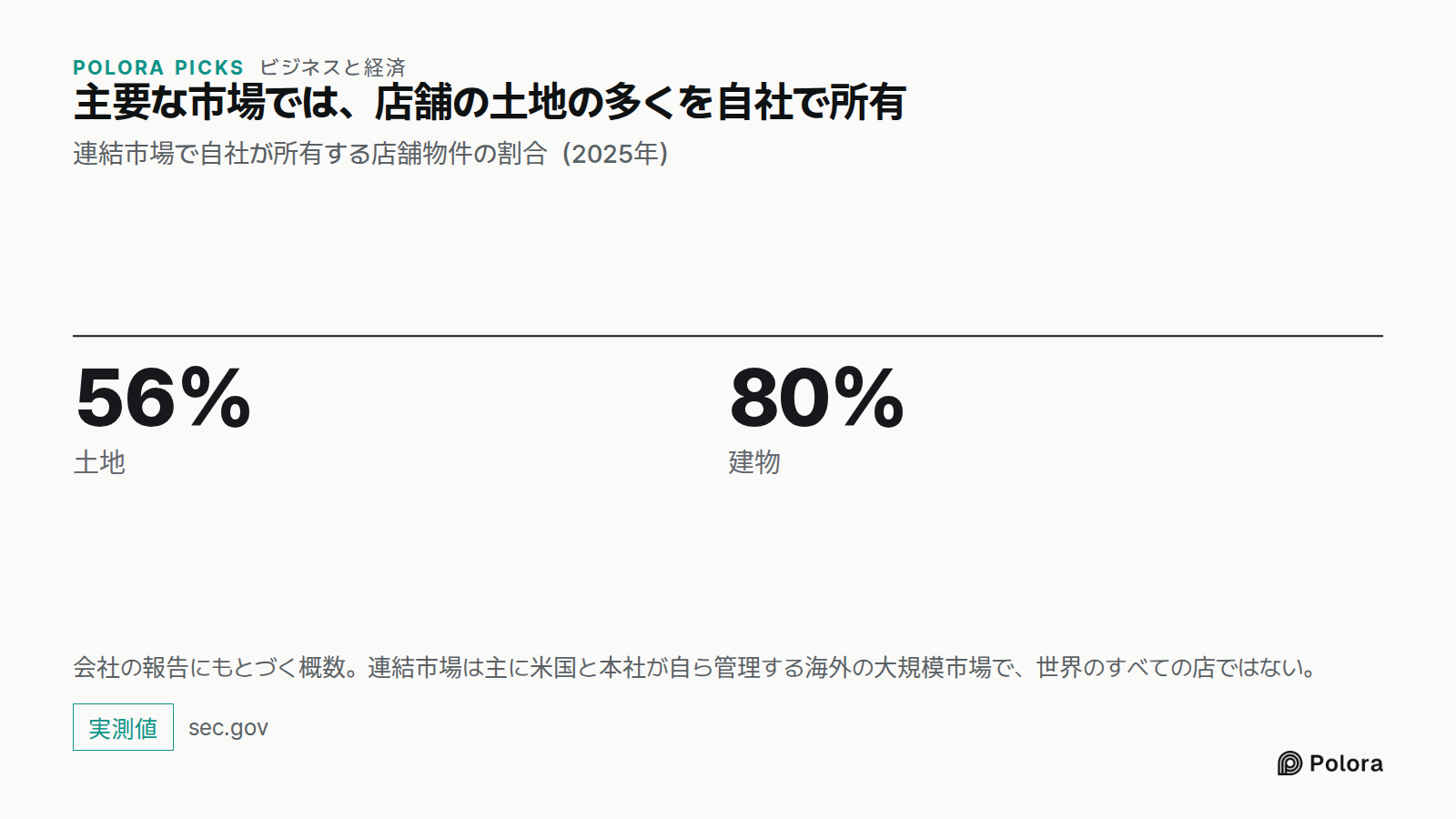
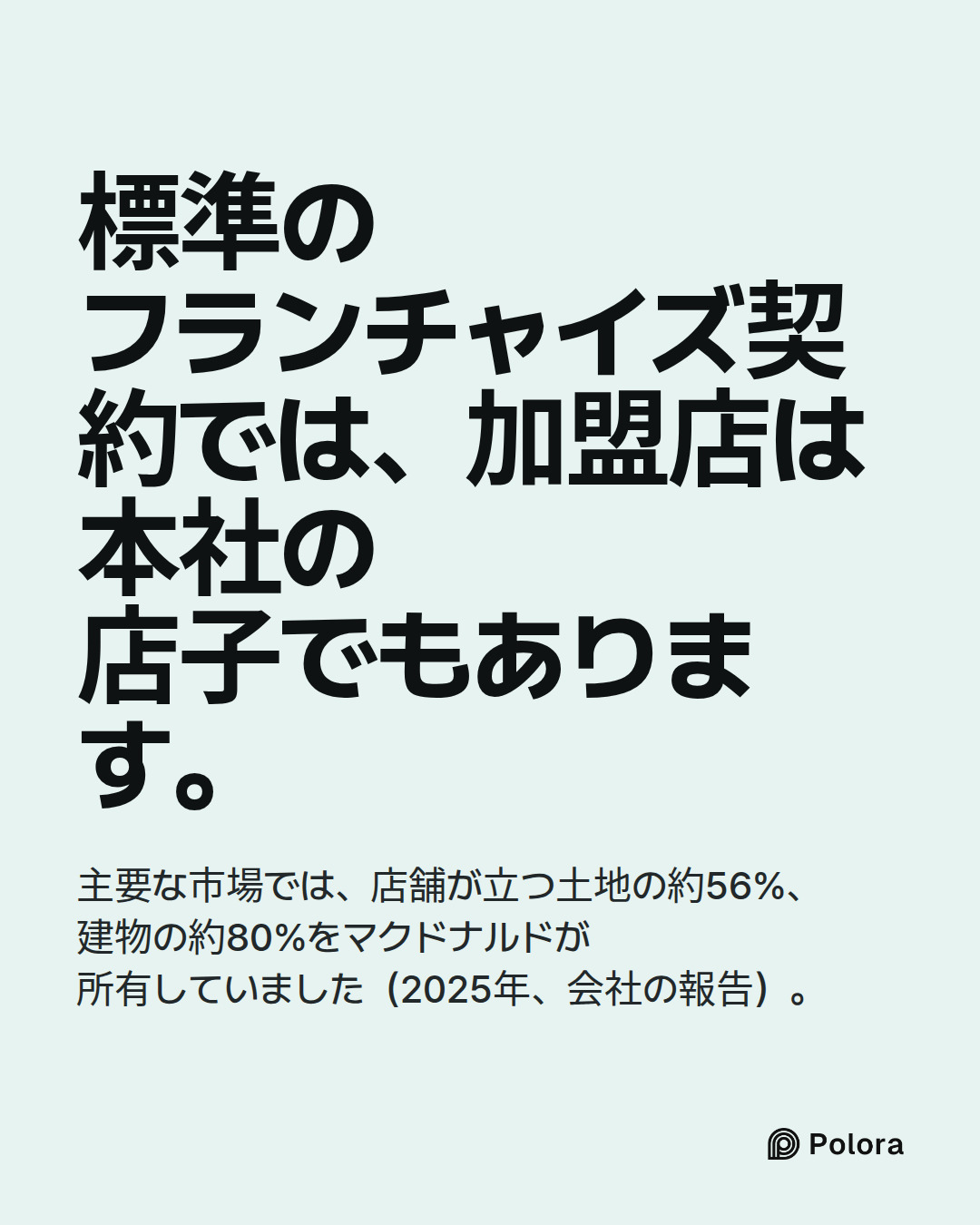
* Real Estate Ownership: The 56% land and 80% building ownership figures are accurate, but apply specifically to its "consolidated markets," not the entire global system. The $22.8 billion net property value (with $7.1 billion in land) is also confirmed.
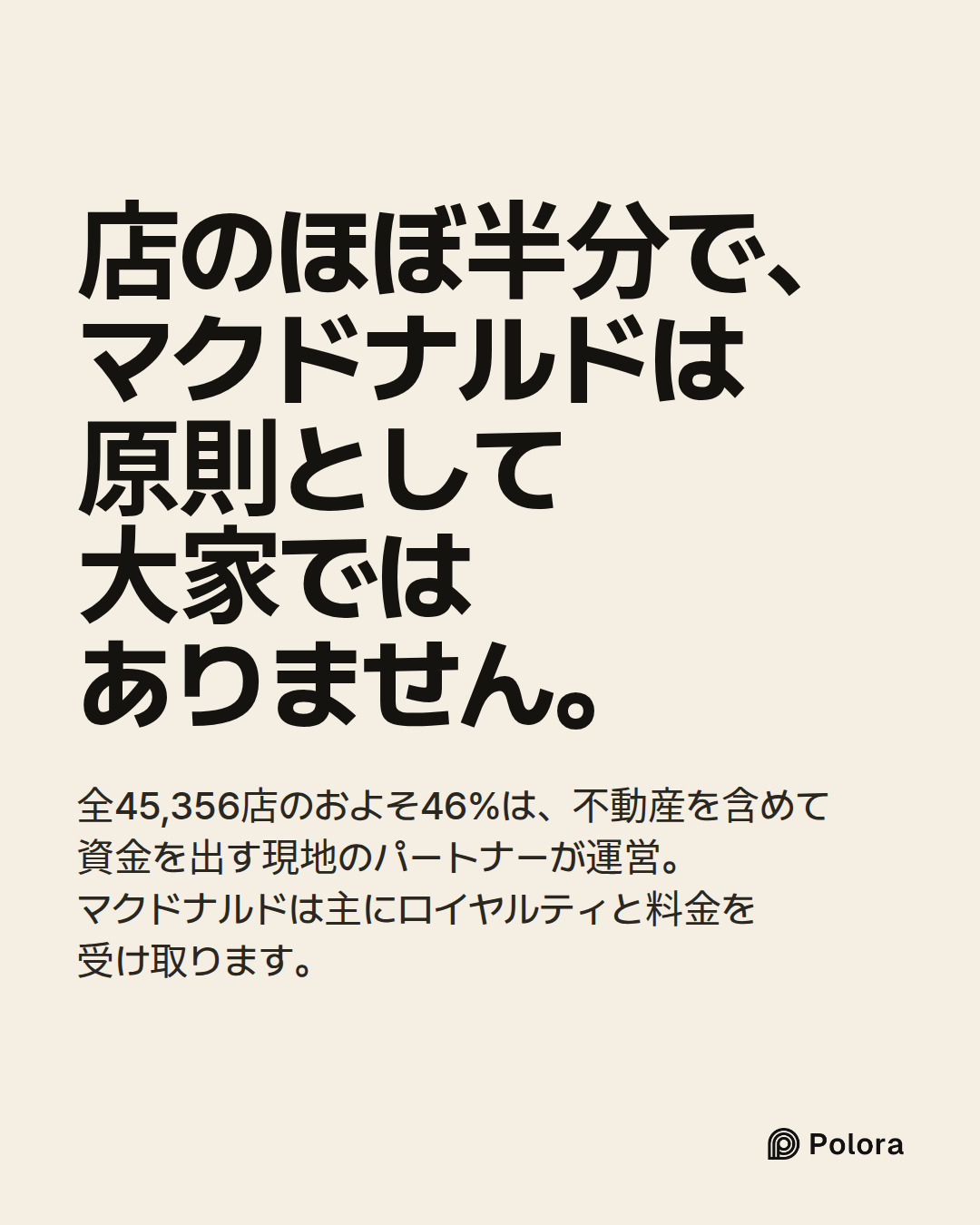
* International Models: The count of 9,675 developmental licensee restaurants and 11,072 affiliate restaurants is accurate, confirming that at nearly half of its locations, McDonald's relies on local partners for capital and real estate.
* Control and Term: The standard 20-y…
Researcher · gemini-3-7-flash
Factual Verification & Evidence Report
Every empirical claim in the manuscript was cross-checked against primary regulatory filings—specifically McDonald’s Corporation Form 10-K for the Fiscal Year Ended December 31, 2025, accessible via the SEC EDGAR system at:
https://www.sec.gov/Archives/edgar/data/63908/000006390826000035/mcd-20251231.htm
---
1. Itemized Claim-by-Claim Verification
A. Revenue Breakdown & "Who Sells the Burgers"
* Manuscript Claim: Total revenue was $26.9B; company-operated restaurant sales were $9.7B; franchised fees were $16.5B (Rent: $10.4B, Royalties: $6.0B). Rent was also the largest line in 2023 ($9.8B) and 2024 ($10.0B).
* Status: Confirmed verbatim.
* Filing Reality: In the 2025 Consolidated Statement of Income, McDonald’s reported total revenues of $26.890B ($26.9B rounded), comprising $9.690B from company-operated sales and $16.546B from franchised restaurants. Within franchised revenues:
* Rent: $10,442M ($10.4B) in 2025, compared to $10,017M in 2024 and $9,840M in 2023.
* Royalties: $6,018M ($6.0B) in 2025.
* Restaurant Count Claim: 43,317 (~95%) run by franchisees out of 45,356 total re…
The Arbiter · gpt-6-sol
Round record
Alpha, Beta, Gamma, and the Researcher agree on the central finding: McDonald’s 2025 filing reports $10.442 billion in franchise rent, more than its $6.018 billion in royalties or $9.690 billion in company-operated restaurant sales. Rent was also the larger franchise-revenue line in 2023 and 2024. The filing describes a conventional franchise as both a lease and a license, with rent and royalties based on restaurant sales and a minimum rent payment. That supports the manuscript’s central angle, but not the idea that property income is independent of burger sales. These are *reported revenues*, not necessarily cash “collected.” (sec.gov)
The filing settles the operating and property claims, with geographic limits. Franchisees ran 43,317 of 45,356 restaurants at year-end 2025; McDonald’s ran 2,039. McDonald’s reports owning approximately 56% of land and 80% of buildings in its consolidated markets, not across its entire worldwide system. It reports $22.8 billion in net property and equipment under franchise arrangements, including $7.1 billion of land. Conve…
The Arbiter's Final Verdict · gpt-6-sol
Both—but “a burger business that gets paid partly as a landlord” is the more accurate description. McDonald’s franchises most of its restaurants, and its conventional franchise deal combines a brand license with a property lease. In 2025, it reported $10.442 billion in rent from franchisees, more than its $6.018 billion in royalties or $9.690 billion in sales at company-operated restaurants. That makes the landlord angle a real feature of its business, not just a clever line. (McDonald’s 2025 Form 10-K)
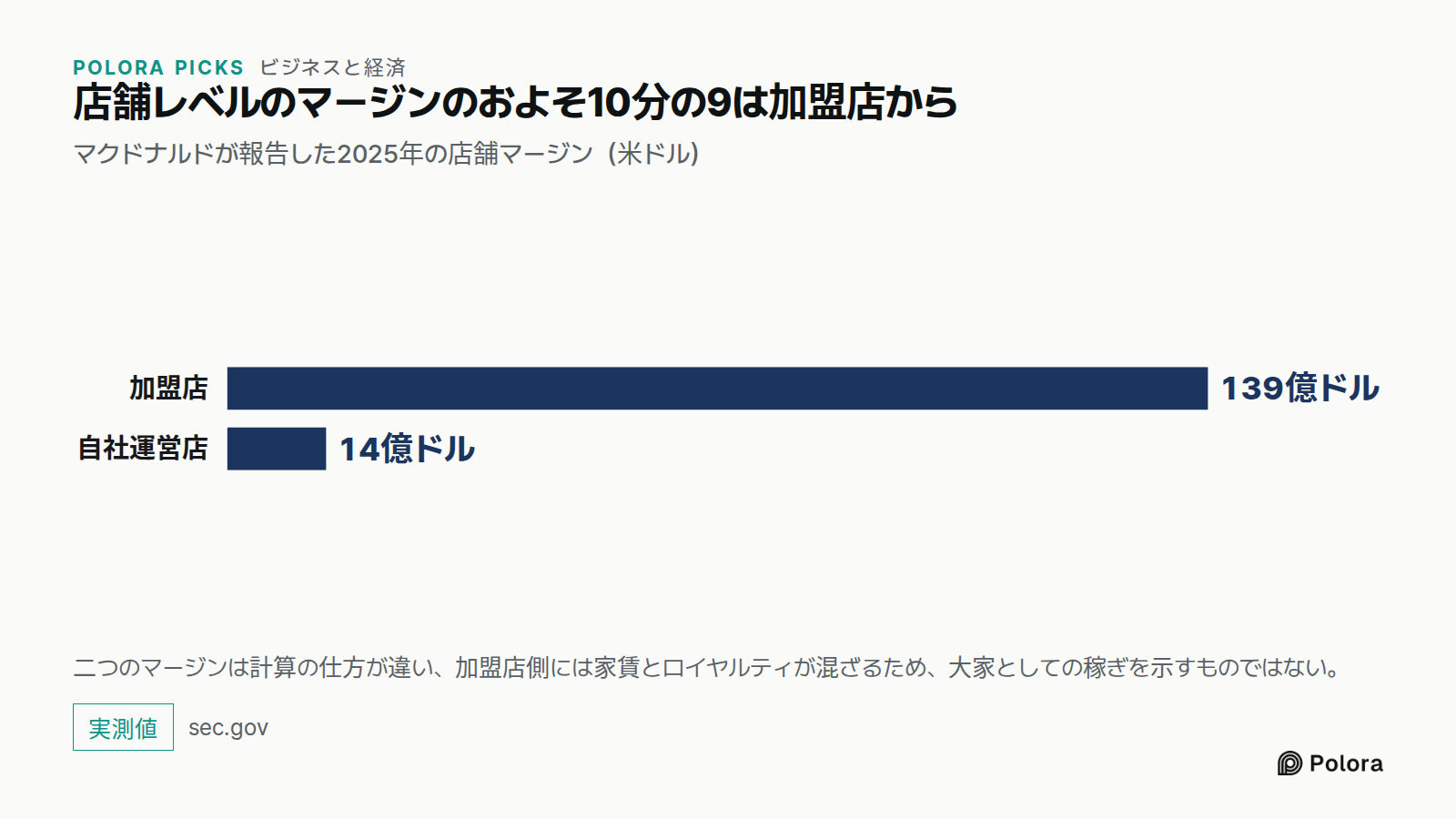
But rent revenue is not real-estate profit, and the filing does not show how much of 2025’s rent came from sales-based payments rather than contractual minimums. McDonald’s says conventional-franchise rent and royalties are based on restaurant sales, subject to minimum rent. Its property and brand therefore work together: strong burger sales help drive what the company earns.
The landlord label also does not fit every market. About 46% of its restaurants were operated under developmental-license or affiliate arrangements at the end of 2025, in which local partners generally…