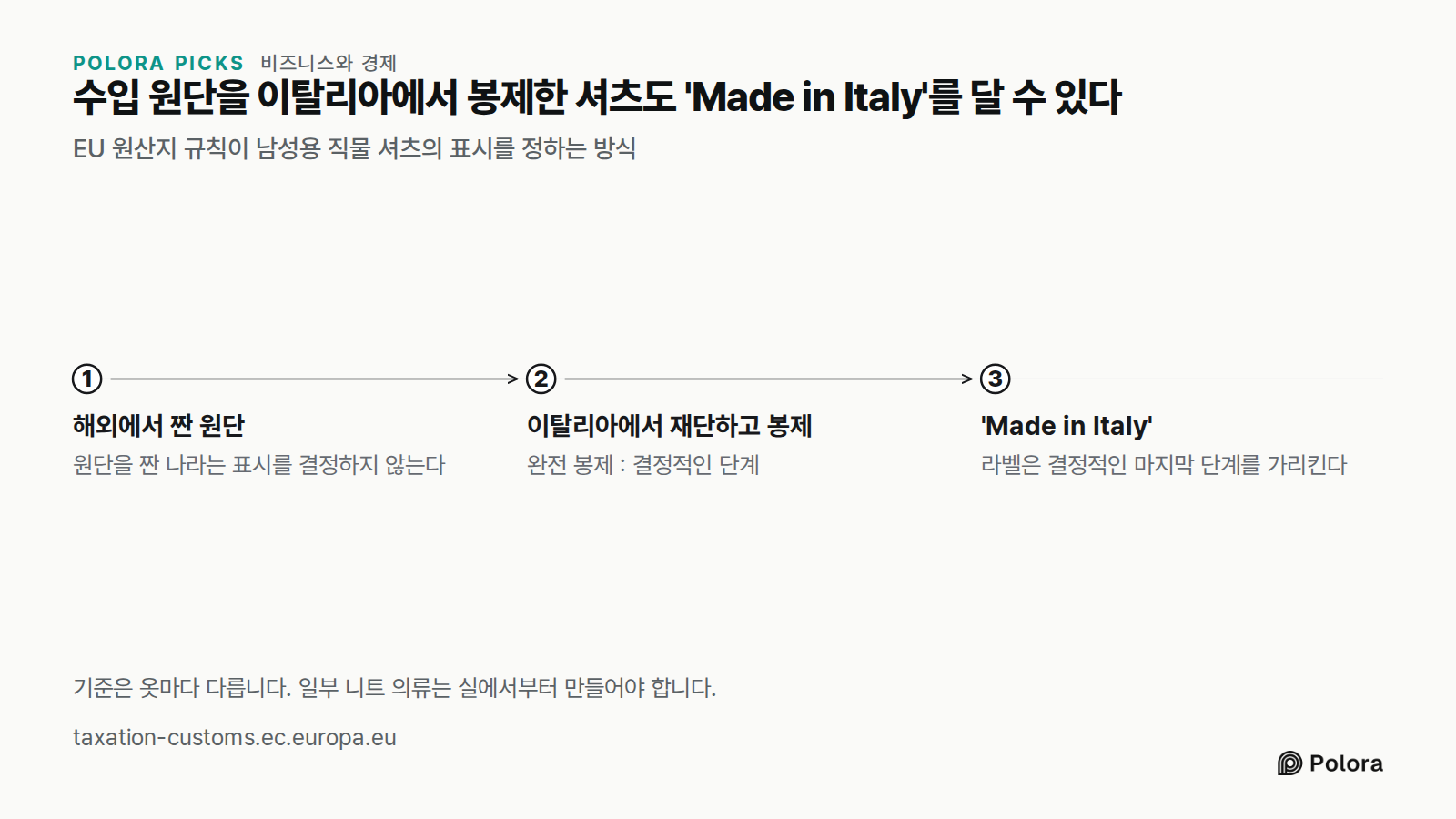
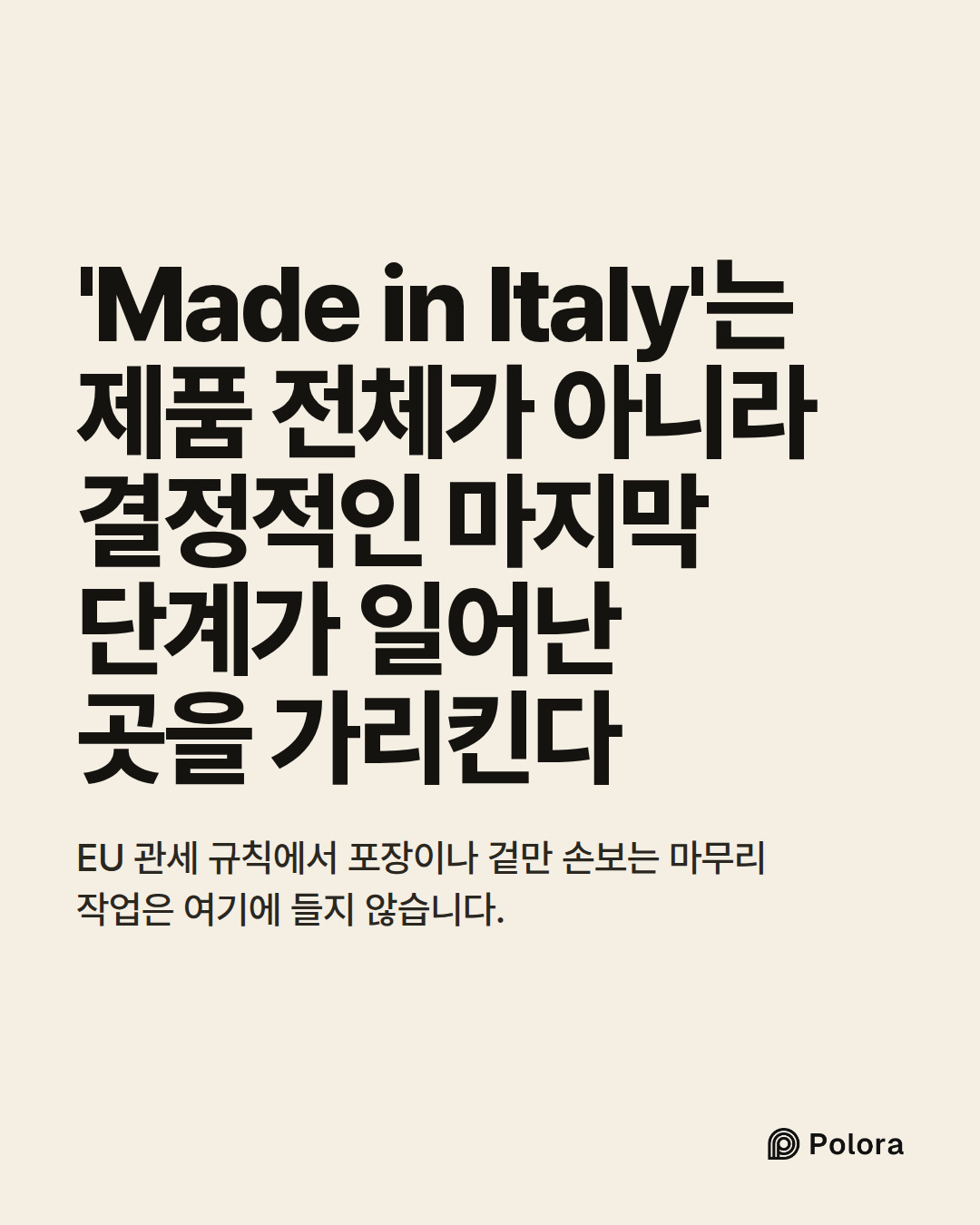
꼭 그렇지는 않습니다. EU 규칙에서 'Made in Italy'는 마지막 실질적 제조 단계가 이뤄진 나라를 뜻하고, 가벼운 마무리 작업만으로는 붙일 수 없습니다. 수입 원단을 이탈리아에서 재단하고 봉제한 셔츠에도 이 표시를 달 수 있습니다.
비즈니스와 경제 · 2026-10-07
원산지 표시는 제품 전체가 아니라 한 단계를 가리킨다
라벨에 'Made in Italy'라고 적힌 셔츠나 구두를 떠올려 보십시오. 어디서 만든 거냐고 물으면 대개 이탈리아라고 답할 겁니다. 원단도 가죽도, 재단과 바느질도 모두 이탈리아에서 했으리라 여기면서요. 하지만 라벨 뒤에 있는 규칙은 그보다 좁은 것을 말합니다.
EU 관세법(Union Customs Code) 제60조에 따르면, 여러 나라를 거쳐 만들어진 제품의 원산지는 마지막으로 '실질적 변형'이 일어난 나라입니다. 이 변형은 경제적으로 타당해야 하고, 그 일을 할 설비를 갖춘 사업장에서 이뤄져야 하며, 새로운 제품을 만들어 내거나 제조의 중요한 단계여야 합니다. 포장이나 겉만 손보는 마무리 작업은 여기에 들지 않습니다. 원산지 표시는 부품의 출신지를 모두 더한 결과가 아니라, 결정적인 마지막 단계가 일어난 곳을 가리킵니다.
이탈리아는 자국 원산지 표시를 이 기준에 묶어 두었습니다. 법률 350/2003 제4조 제49항에 따르면, 유럽 관세 원산지 규칙상 이탈리아산이 아닌 상품에 'Made in Italy'를 붙이는 것은 허위 표시이고, 이탈리아 형법 제517조에 따라 처벌받습니다. 이 기준은 항목만 채우면 통과하는 체크리스트가 아니어서 법적 판단을 거쳐야 합니다. 그래서 기업이 내세운 원산지도 다툼의 대상이 될 수 있습니다.
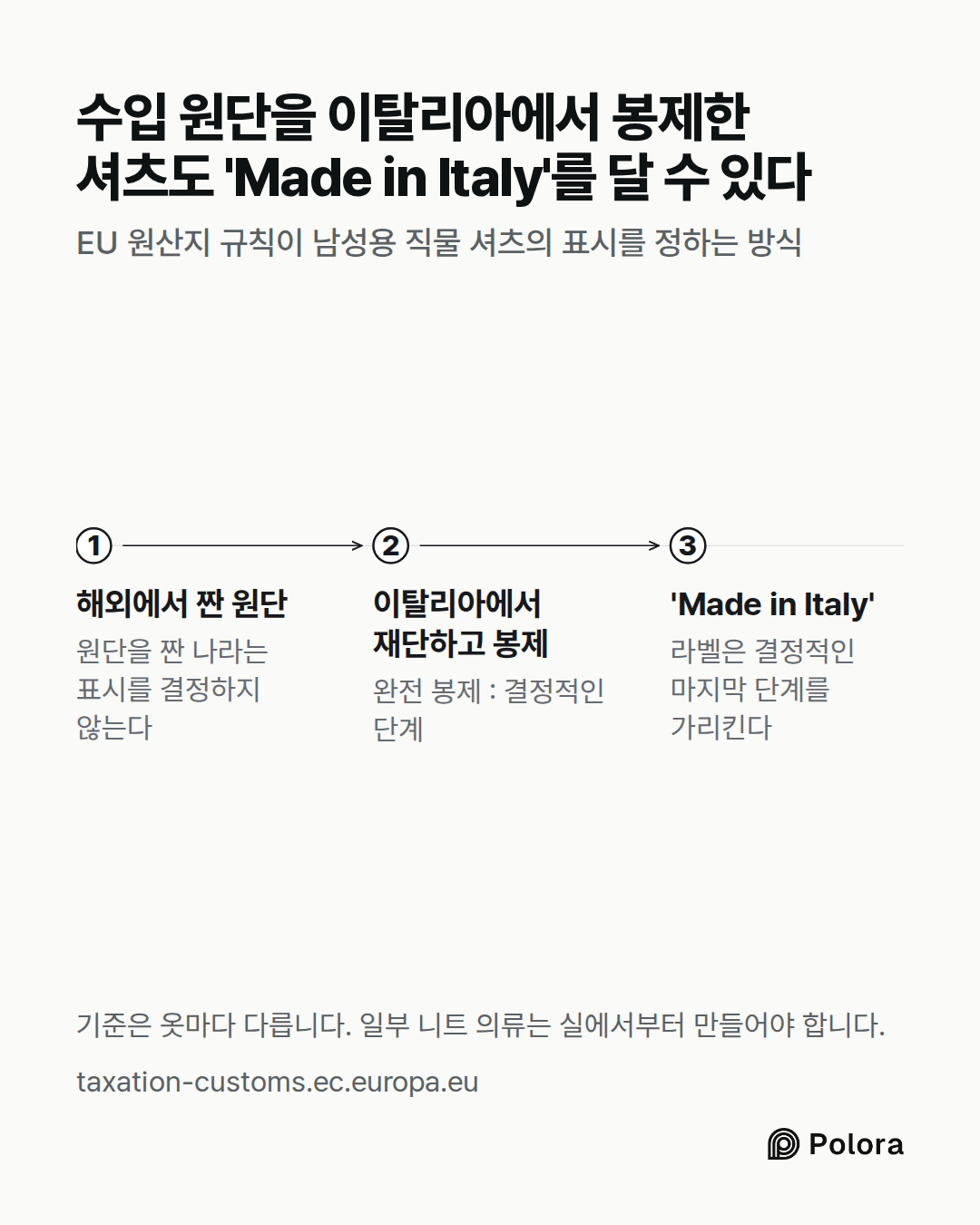
어느 단계를 결정적인 단계로 볼지는 EU가 위임규정 2015/2446 부속서 22-01에 품목별로 정해 두었습니다. 많은 의류에 적용되는 기준은 '완전 봉제'입니다. 원단을 재단한 뒤의 모든 공정이 한 나라에서 이뤄져야 한다는 뜻이고, 몇 가지 마무리 작업만 예외로 둡니다. 니트가 아닌 직물로 만든 남성용 완성 셔츠도 이 규칙을 따릅니다.
그래서 원단을 짠 나라도, 디자인을 그린 나라도 원산지 표시를 결정하지 않습니다. 수입 원단을 이탈리아에서 재단하고 봉제한 직물 셔츠는 'Made in Italy'라고 적어도 거짓이 아닙니다. 법의 빈틈을 파고든 것이 아니라 규칙이 적힌 대로 작동한 결과입니다.
모든 옷이 같은 기준을 따르지는 않습니다. 일부 니트 의류는 실에서부터 제조해야 한다는 기준을 따릅니다. 결국 어떤 기준이 적용되는지는 그 제품이 어떻게 분류되는지, 그리고 어느 공정을 실제로 어디서 했는지에 따라 달라집니다.
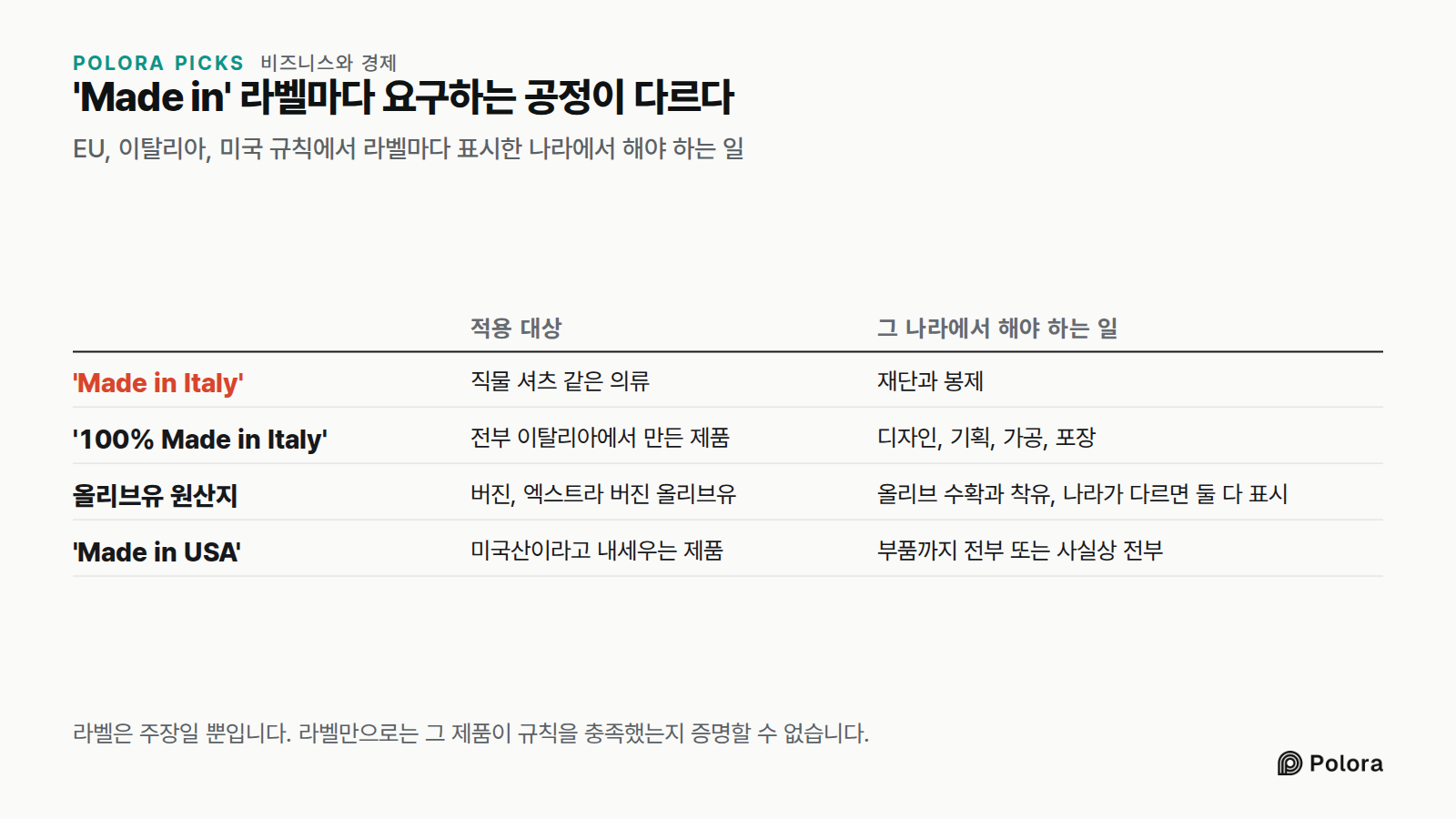
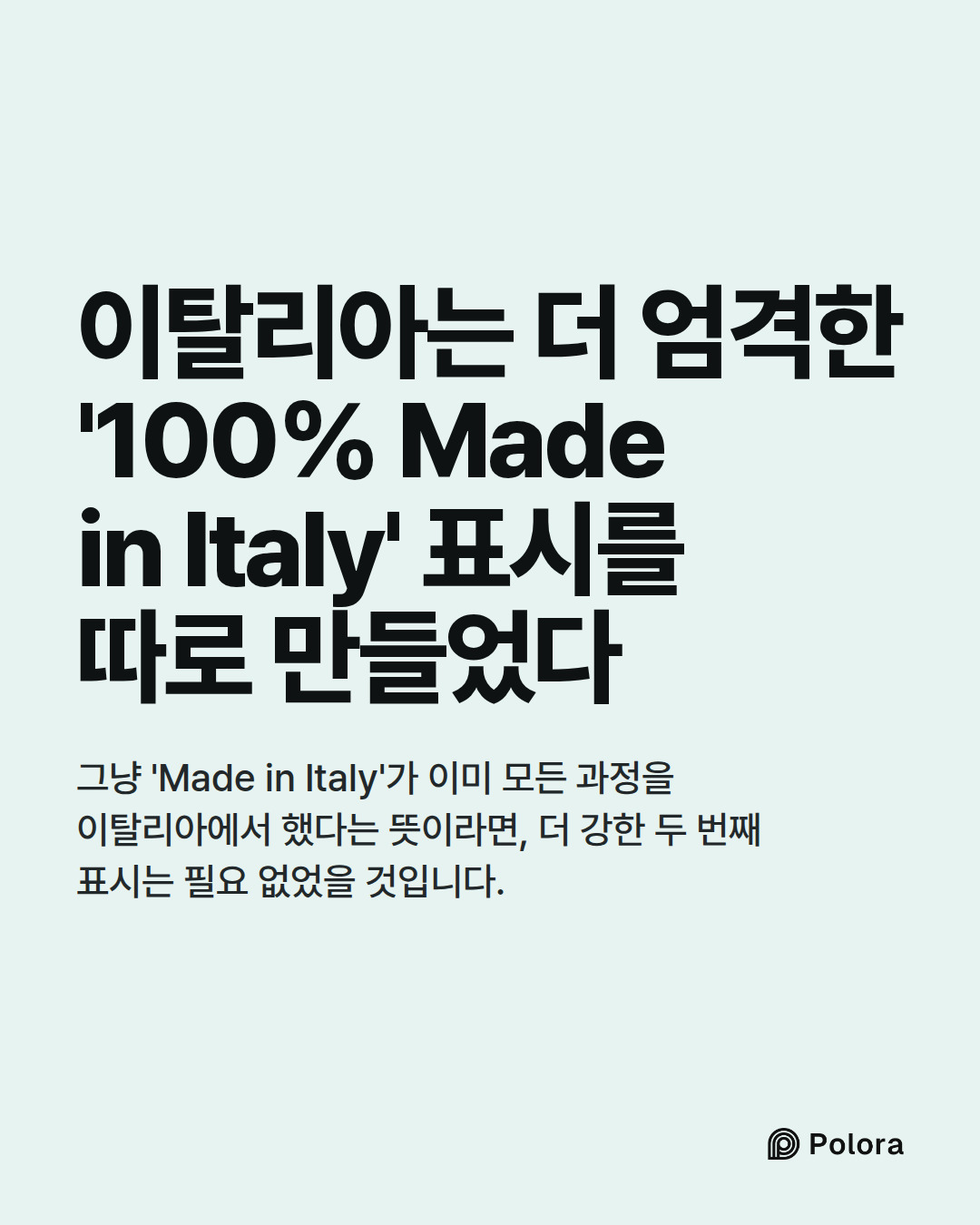
'Made in Italy'와 '전부 이탈리아산'을 법으로 갈라놓은 것은 다름 아닌 이탈리아입니다. 법률 166/2009 제16조는 전부 이탈리아에서 만든 제품을 이렇게 정의합니다. 이미 'Made in Italy' 요건을 갖췄고, 디자인과 기획, 가공, 포장까지 모두 이탈리아에서만 이뤄진 제품입니다.
같은 조항은 이 조건을 갖추지 못한 제품에 '100% made in Italy', '100% Italia', 'tutto italiano'(모두 이탈리아산)라고 적으면 처벌한다고 정합니다. 그냥 'Made in Italy'가 이미 모든 과정이 이탈리아에서 이뤄졌다는 뜻이라면, 이보다 강한 두 번째 표시는 필요 없었을 것입니다.
기준은 품목마다 다릅니다. EU는 버진 올리브유와 엑스트라 버진 올리브유에 원산지 표시를 의무로 정하고, 그 기준을 올리브 열매에 둡니다. 위임규정 2022/2104 제8조에 따르면, 한 나라에서 짠 기름이라도 올리브를 다른 나라에서 수확했다면 라벨에 그 사실을 밝혀야 합니다. 튀니지에서 수확한 올리브로 이탈리아에서 짠 기름이 그런 예입니다.
여러 나라의 기름을 섞은 경우에는 'EU산 올리브유 혼합'이나 'EU산과 비EU산 올리브유 혼합'처럼 정해진 문구를 써야 합니다. 여러 나라의 기름을 섞어 이탈리아에서 병에 담은 버진 또는 엑스트라 버진 올리브유는 그냥 이탈리아산이라고 내세울 수 없습니다.
미국은 자국 이름을 단 제품에 훨씬 높은 기준을 둡니다. 미국 연방거래위원회(FTC)의 기준은 2021년 8월 13일부터 시행된 표시 규칙에 담겼습니다. 이 기준에 따르면 아무 단서 없이 'Made in USA'라고만 적은 라벨은 제품의 '전부 또는 사실상 전부'를 미국에서 만들었다는 뜻입니다. 최종 조립이나 가공이 미국에서 이뤄져야 하고, 중요한 가공도 모두 미국에서 해야 하며, 원료와 부품도 전부 또는 사실상 전부 미국산이어야 합니다.
이 규칙은 실제로 집행됩니다. 2024년 4월, 주방용품 업체 윌리엄스소노마(Williams-Sonoma)는 3,175,000달러의 민사 제재금을 내기로 합의했습니다. 제품이 미국산인지 사실대로 밝히라고 요구한 2020년 FTC 명령을 어겼기 때문입니다. FTC는 미국산이라고 광고한 제품이 실제로는 중국 등 다른 나라에서 만들어졌다고 판단했고, 이 제재금을 'Made in USA' 사건 가운데 역대 최대 규모라고 밝혔습니다.
이 기준은 제품이 미국산이라고 주장할 때만 적용되며, FTC는 이것이 다른 연방 원산지 법률을 대신하지 않는다고 밝힙니다. 이탈리아에서 미국으로 들어오는 셔츠의 원산지 표시는 미국 세관의 기준을 따르는데, 이 기준 역시 마지막 실질적 변형이 어디서 일어났는지를 따집니다. 미국이 이탈리아 라벨을 더 깐깐하게 보는 것은 아닙니다. 미국산이라고 내세우는 제품에 더 많은 것을 요구할 뿐입니다.
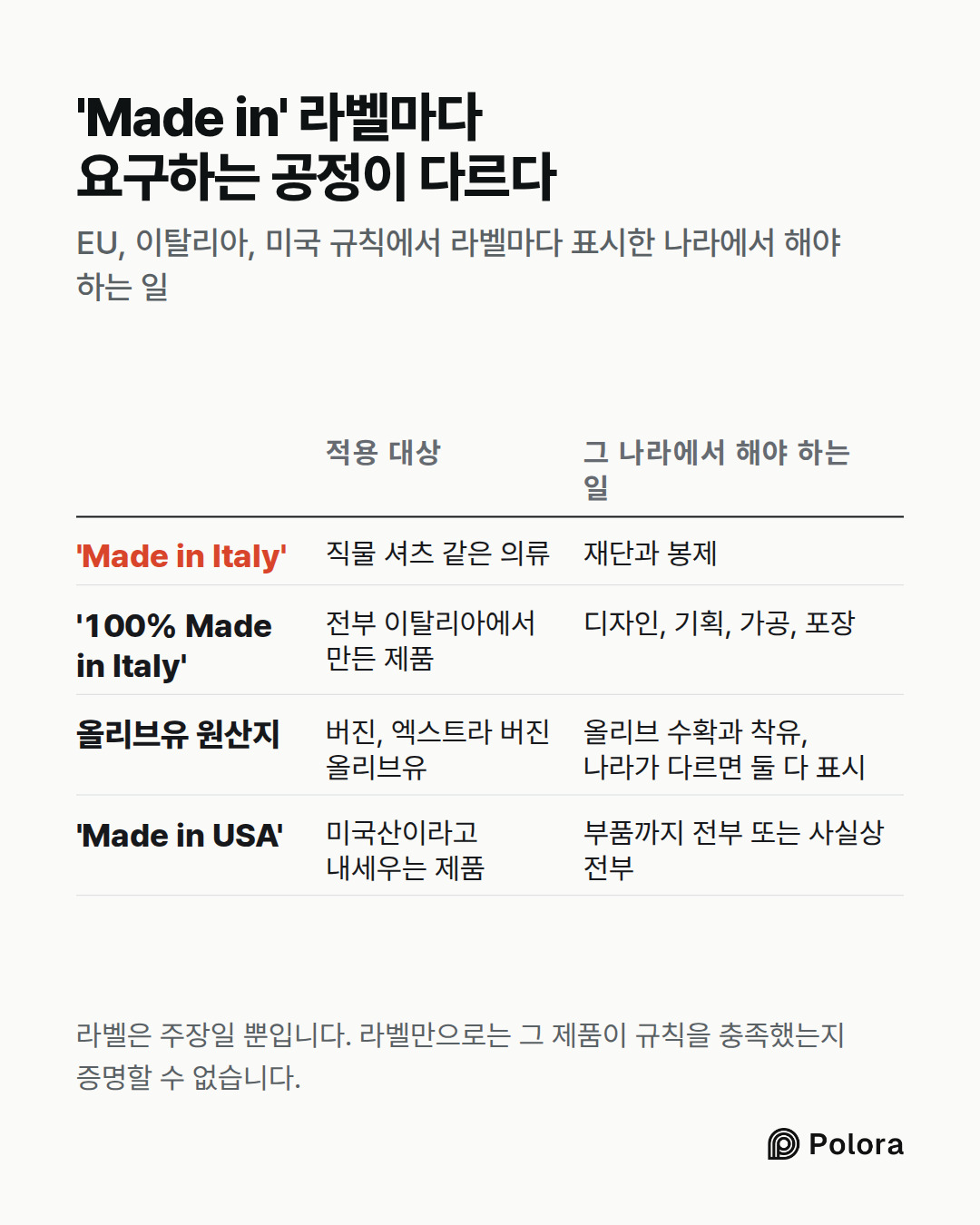
'Made in' 라벨이 답하는 것은 관세상의 질문 하나입니다. 그 제품의 품목에 맞는 규칙으로 따졌을 때 원산지가 어디냐는 질문입니다. 요구하는 수준은 품목에 따라, 그리고 규칙을 정하는 나라에 따라 다릅니다. 옷 한 벌, 올리브유 한 병, 미국산 프라이팬은 저마다 다른 기준을 통과합니다.
더 많은 것을 약속하려면 더 센 표현이 필요합니다. '100%', '전부', '모두' 같은 말은 별개의 주장이고, 그에 맞는 규칙과 처벌이 따로 있습니다. 그냥 'Made in Italy'는 제품이 어디서 시작됐는지가 아니라 어디서 지금의 제품이 되었는지를 알려 주며, 마무리 손질만으로는 이 표시를 얻을 수 없습니다. 라벨은 어디까지나 주장이어서, 라벨만으로는 그 제품이 실제로 규칙을 충족했는지 증명할 수 없습니다.
EU, 이탈리아, 미국 규칙에서 라벨마다 표시한 나라에서 해야 하는 일
Is a product labeled 'Made in Italy' actually made in Italy?
Alpha · claude-sonnet-5
Alpha's verification pass
The core legal architecture in this manuscript checks out, and I want to flag exactly which pieces I verified first-hand versus which I'm taking on trust, because that distinction matters for what the next stage does with this.
Article 60 UCC and "last substantial transformation" — confirmed, and the manuscript understates how contested it is.
The Commission's own page confirms the basic structure: the origin of goods is based on the concept that products which underwent a 'last substantial transformation' in the last country of production get that country's origin, with Article 60(1) applying when one country is involved and Article 60(2) when two or more are. The "economically justified" qualifier is real too — the article provides that goods shall be deemed to originate where they underwent their "last, substantial, economically justified processing or working, in an undertaking equipped for that purpose, resulting in the manufacture of a new product or representing an important stage of manufacture".
Where the manuscript could use a stronger caveat: this test is not mechanical. in cases where no factual information exists to establish that an…
Beta · gpt-6-sol
Yes—if the claim is accurate, “Made in Italy” means the product qualifies as Italian in origin. It does not mean every material and every production step came from Italy. The manuscript’s premise stands, but its closing line—“tells you where a product was finished”—is too loose. Mere finishing need not confer origin.
Here is my check of the claims that matter most:
- The legal link the manuscript was missing is real. Article 4(49) of Italy’s Law 350/2003 expressly treats a “made in Italy” marking on goods *not* of Italian origin under European origin rules as a false indication. Article 60(2) of the EU Customs Code assigns a multicountry good’s origin to the place of its last *substantial, economically justified* processing, subject to its other conditions. This supports the manuscript’s account of an ordinary non-food origin claim, not a claim that any final operation in Italy suffices. Italian law also addresses misleading indications beyond a literally false origin marking. (normattiva.it)
Addresses: https://www.normattiva.it/uri-res/N2Ls?urn:nir:stato…
Gamma · gemini-3.1-pro
The core premise of the manuscript stands: a standard 'Made in Italy' label reflects a specific, narrower customs threshold rather than a guarantee that every material and production phase originated in Italy.
Since Alpha and Beta left the Italian national legislation unverified, I will close that gap.
Law 166/2009 and the "100% Made in Italy" standard — Confirmed.
The manuscript accurately describes Italy's stricter domestic standard. I reviewed the text of Article 16 of Law 166/2009 (Decree-Law 135/2009 converted into law).
* The Conditions: Paragraph 1 explicitly defines a product made entirely in Italy as one that qualifies as 'Made in Italy' under existing rules *and* for which the design, planning, processing, and packaging ("il disegno, la progettazione, la lavorazione ed il confezionamento") are carried out exclusively on Italian territory.
* The Penalties: Paragraph 4 confirms the manuscript's exact phrasing and the researcher's note: falsely using indications like "100% made in Italy," "100% Italia," or "tutto italiano" is punishable under Article 517 of the Italian penal code, with the penalties increased by one third ("con le pene previste dall'arti…
Researcher · gemini-3-7-flash
Verification of Manuscript Claims & Legal Baseline
Here is the item-by-item verification of the legal texts, statutory provisions, and regulatory precedents cited across the manuscript and verification brief:
---
1. Legal Link: Article 60 UCC and Italian Law 350/2003
* Claim: Non-preferential customs origin rules (Article 60 of Regulation (EU) No 952/2013 / Union Customs Code) govern whether a non-food product can lawfully bear "Made in Italy".
* Status: Confirmed.
* Source & Mechanics:
* Under Article 4, paragraph 49 of Italian Law No. 350/2003 (Legge Finanziaria 2004), stamping "Made in Italy" on products not originating in Italy *according to European rules on customs origin* is defined as a false indication punishable under Article 517 of the Italian Criminal Code.
* Article 60(2) of the UCC assigns origin to the country where goods underwent their *last, substantial, economically justified processing or working…
The Arbiter · gpt-6-sol
The round converged on the manuscript’s central point: an accurate “Made in Italy” claim does not promise that every material and production stage was Italian. It identifies Italian origin under the applicable rule. No one verified the origin of any particular product merely from seeing its label.
- EU and Italian rules: Beta and the Researcher connected ordinary non-food “Made in Italy” claims to European customs-origin rules through Italy’s Law 350/2003, Article 4(49). Alpha emphasized that Article 60(2) of the Union Customs Code requires the *last substantial, economically justified* processing—not simply the last operation. Gamma and the Researcher verified the separate conditions and penalties for “100% Made in Italy” claims in Article 16 of Decree-Law 135/2009, converted by Law 166/2009. Their source addresses are https://eur-lex.europa.eu/legal-content/EN/TXT/PDF/?uri=CELEX:32013R0952, https://www.normattiva.it/uri-res/N2Ls?urn:nir:stato:legge:2003;350~art4-com49bis= and https://www.normattiva.it/uri-res/N2Ls?urn:nir:stato:decreto.legge:2009-09-25;135~art16. The Normattiva pages did not open in my independent check; the statutory-text verification here rests o…
The Arbiter's Final Verdict · gpt-6-sol
Yes—if the label is accurate, but not necessarily from start to finish. For a non-food product, “Made in Italy” generally means it acquired Italian origin under the applicable customs rule. When production spans countries, that ordinarily requires its last substantial, economically justified transformation to take place in Italy—not merely packaging or a finishing touch. It does not mean every material, component or earlier manufacturing step came from Italy. EU customs rule, Article 60; Italian origin-marking law.
For example, a finished woven shirt can qualify when it is made up in Italy from imported fabric, subject to the rule for its particular classification. Other products have different requirements: virgin and extra virgin olive oil have specific labeling rules that distinguish where olives were harvested from where the oil was obtained. EU garment rules; [olive-oil regulation, Article 8](https://eur-lex.europa.eu/l…