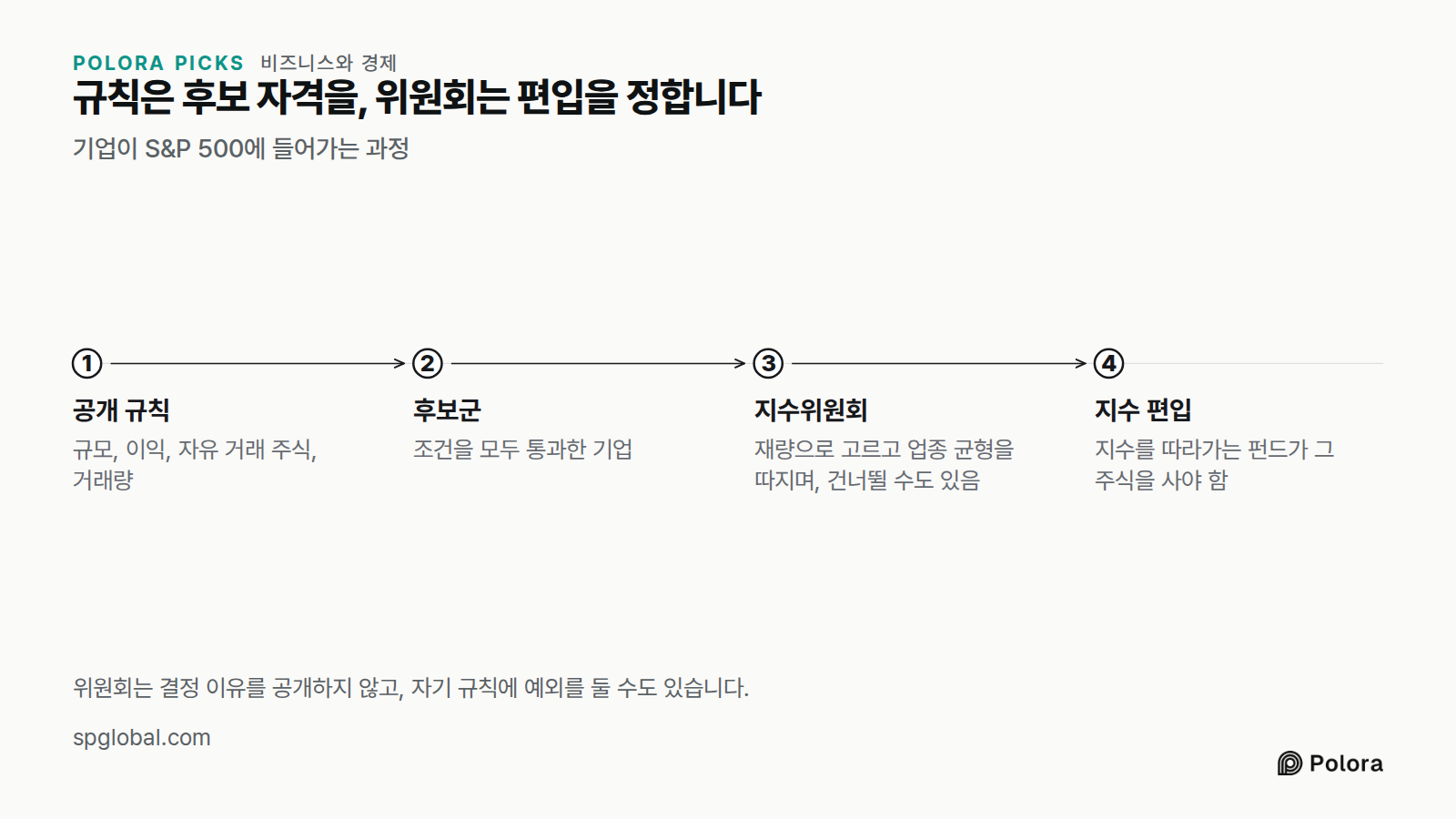
S&P 다우존스 인디시스 직원들로 꾸린 위원회가 정합니다. 규모, 이익, 거래량에 관한 공개 규칙은 후보 자격만 가릅니다. 위원회는 조건을 다 갖춘 기업도 건너뛸 수 있고, 이미 들어온 기업에는 편입 기준을 적용하지 않습니다.
비즈니스와 경제 · 2026-10-04
S&P 500은 단순히 미국 500대 기업 명단이 아닙니다
S&P 500이 뭐냐고 물으면 대부분 미국에서 가장 큰 기업 500곳이라고 답합니다. 거의 맞는 말이지만 정작 중요한 부분이 빠져 있습니다. 이 명단은 누군가가 고른 것입니다. 지수를 운영하는 회사인 S&P 다우존스 인덱스의 위원회가 누가 들어오고 누가 나갈지 정합니다.
S&P가 직접 펴낸 규정집에 따르면 이 위원회는 S&P 다우존스 인덱스의 정규직 직원들로 이루어져 있습니다. 한 달에 한 번 모이고, 논의 내용은 공개하지 않습니다. 어떤 기업이 편입된다는 소식만으로도 시장이 움직일 수 있기 때문입니다.
규정집은 기업 수를 500곳으로 정해 둡니다. 그런데 지수에 담긴 종목 수는 보통 500개보다 조금 많습니다. 주식을 두 종류 이상 발행한 기업이 있기 때문입니다. 2026년 9월 말 기준 S&P 자료로는 503개였습니다.
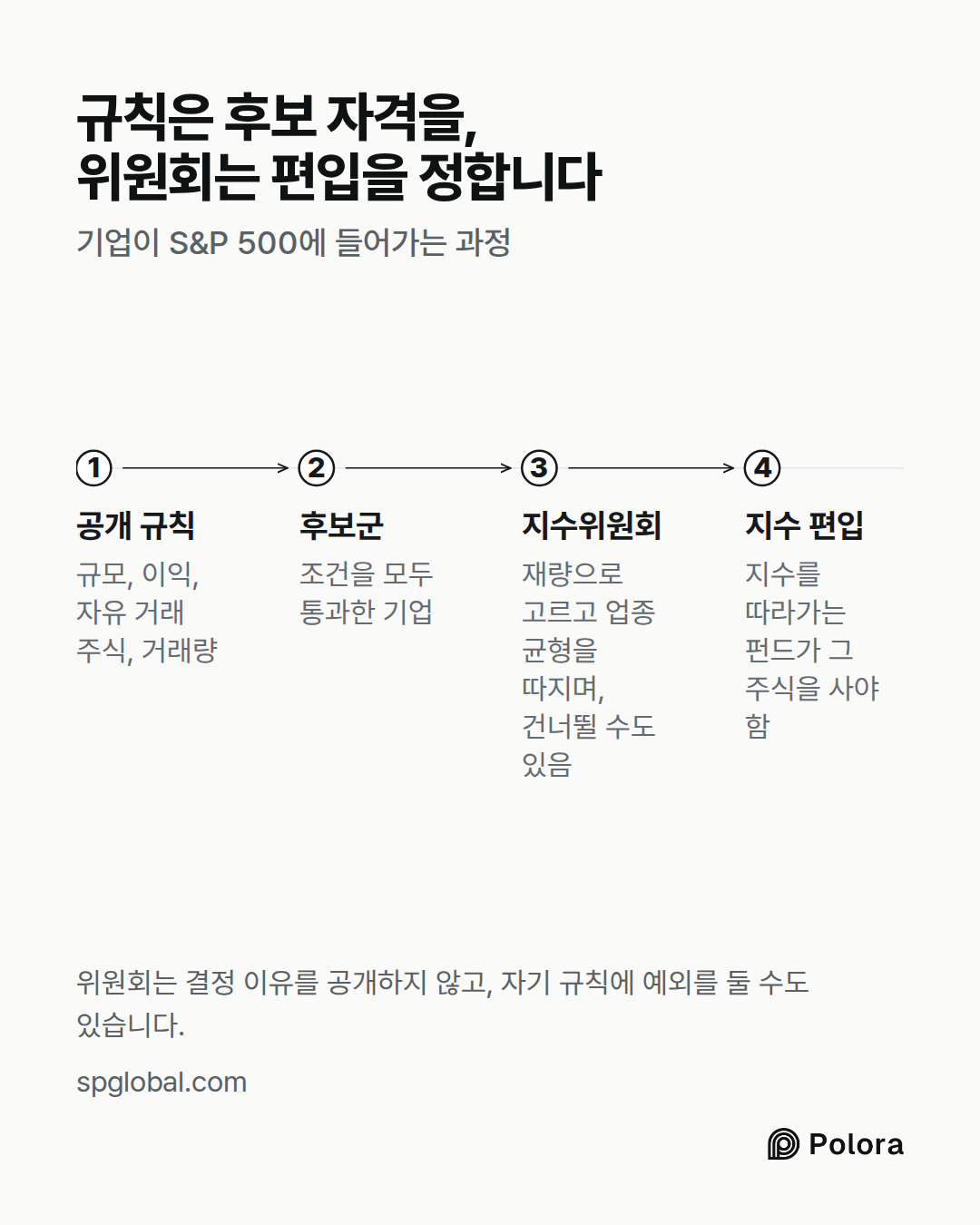
공개된 규칙은 일종의 입학시험입니다. 2026년 7월판 규정집에 따르면 기업은 미국에 본사를 두고 미국 거래소에 상장돼 있어야 합니다. 새로 상장한 기업은 원칙적으로 상장 후 12개월 이상 거래돼야 하므로, 갓 상장한 기업은 곧바로 들어갈 수 없습니다. 다만 규정집은 일부 분사 기업이나 자격이 안 되는 거래소에서 옮겨 온 기업 등에는 이 대기 기간의 예외를 둡니다.
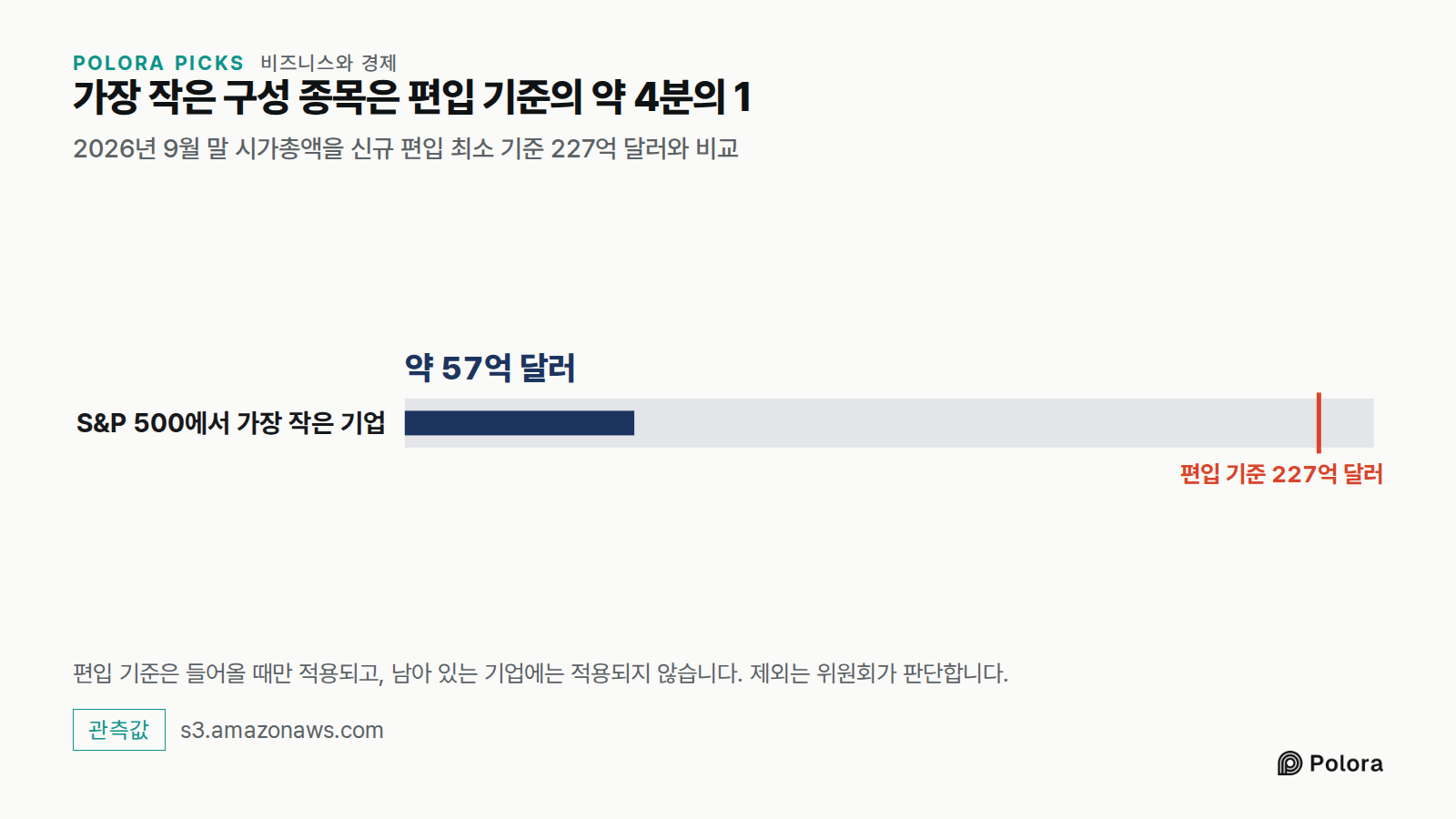
기업 전체의 가치, 즉 시가총액이 최소 227억 달러여야 합니다. 이 기준선은 2025년 7월에 정해졌습니다. S&P는 분기마다 이 기준을 다시 살피지만, 살핀다고 해서 바뀌는 것은 아닙니다. 시장이 크게 움직여 S&P 자체 계산으로 지금 기준선과 10% 이상 차이가 날 때에만 조정됩니다. 규모 시험은 하나 더 있습니다. 시장에서 자유롭게 거래되는 주식, 곧 지수가 실제로 담는 주식만 따로 계산한 가치도 그 기준선의 절반 이상이어야 합니다.
미국 회계기준(GAAP)으로 따졌을 때 가장 최근 분기에도, 최근 4개 분기를 합쳐서도 흑자를 내야 합니다. 창업자나 처분이 묶인 다른 주주가 쥔 주식을 뺀, 시장에서 자유롭게 거래되는 주식이 전체의 10% 이상이어야 합니다. 그리고 주식이 충분히 자주 거래돼야 합니다. 거래량 시험 가운데 하나는 직전 6개월 동안 매달 25만 주 이상 거래될 것을 요구합니다.
시험을 통과해도 후보군에 이름을 올릴 뿐입니다. 규정집은 구성 종목을 고르는 일이 '지수위원회의 재량'이라고 적고 있습니다. 위원회는 업종 균형도 따집니다. 각 업종이 지수에서 차지하는 비중을 미국 시장 전체에서 차지하는 비중과 견주어 보는 것입니다. 또 위원회는 필요하다고 보면 자기 규칙에 예외를 둘 수 있는 권한도 쥐고 있습니다.
그렇다고 마음대로 정하는 것은 아닙니다. 위원회는 편입 자격, 예외, S&P의 여러 지수 사이에서 기업이 옮겨 가는 방식 등을 길게 적은 공개 규정집 안에서 움직이고, 많은 변경이 그 규칙에서 바로 나옵니다. 위원회의 판단이 가장 잘 드러나는 것은 화제가 된 사례들입니다.
많은 사람이 기억하는 사례가 테슬라입니다. 테슬라는 2020년 9월에 이미 기준을 채웠지만 위원회는 그달 종목 변경에서 테슬라를 넣지 않았고, CNBC는 이를 테슬라가 외면당한 일로 보도했습니다. 위원회는 결정 이유를 공개하지 않으므로 왜 기다렸는지는 기록에 없습니다. 두 달 뒤인 2020년 11월 16일, S&P는 테슬라가 12월 21일 장 시작 전에 편입된다고 발표했습니다.
위원회의 판단은 규칙을 굽히지 않는 쪽으로 나타나기도 합니다. 2026년 6월, S&P는 시장 참여자들의 의견을 들은 뒤 덩치가 아주 큰 신규 상장 기업이라도 12개월 대기 기간, 흑자 조건, 자유 거래 주식 10% 하한을 완화하지 않기로 했습니다. 예외는 '시가총액만을 근거로' 주어져서는 안 된다는 것이 S&P의 설명이었습니다.
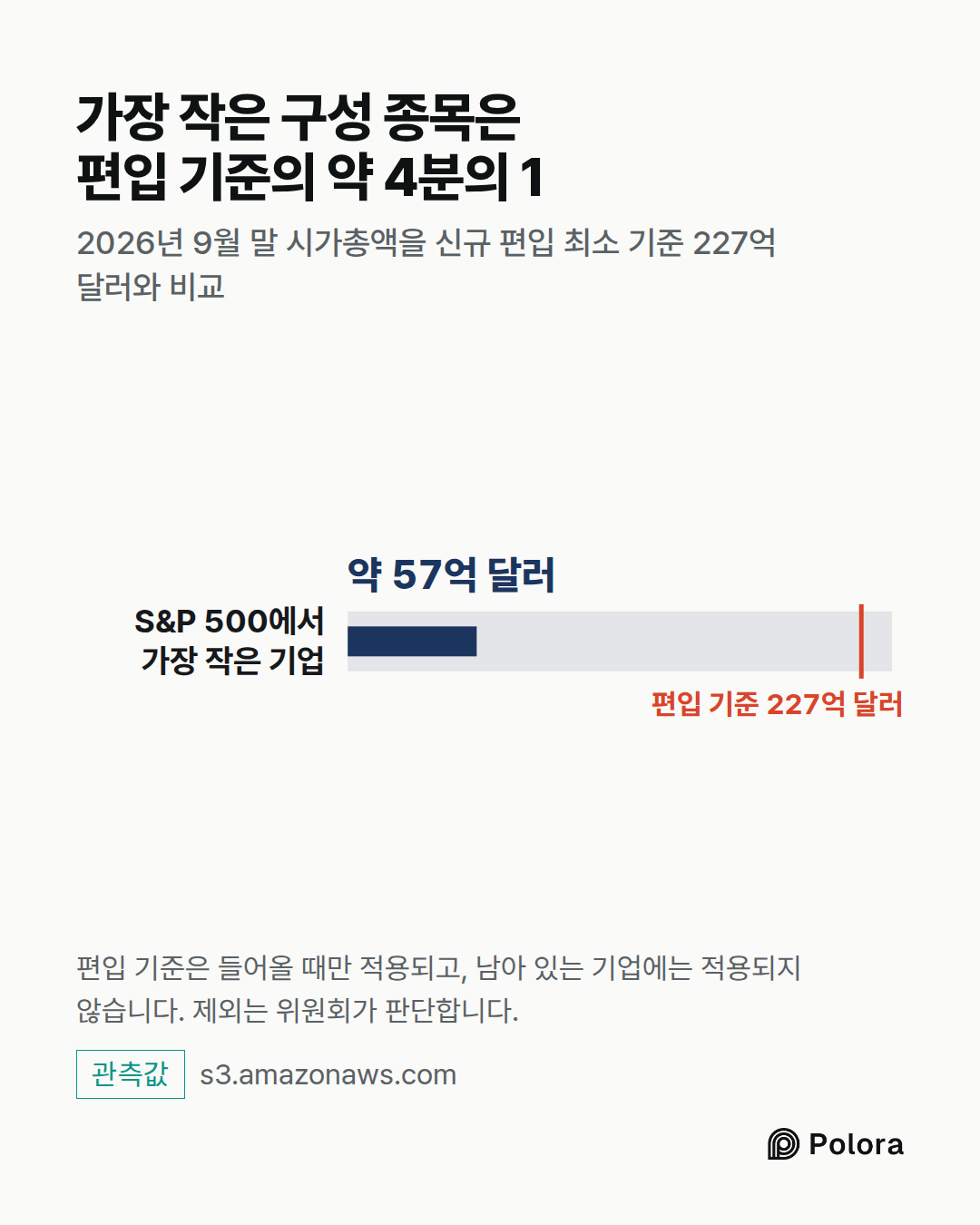
시장을 꾸준히 지켜보는 사람도 놀라는 대목입니다. 규모, 이익, 거래량 규칙은 새로 들어오는 기업에 적용될 뿐 이미 들어와 있는 기업에는 적용되지 않습니다. 규정집은 이 기준이 '지수에 편입되기 위한 것이지 구성 종목 자격을 유지하기 위한 것이 아니'라고 적고, 불필요한 종목 교체를 피하려 한다고 밝힙니다. 기준 아래로 미끄러진 구성 종목도 자동으로 빠지지 않습니다. '그런 상황이 계속돼 제외할 만하다'고 판단될 때에만 빠지고, 그 판단 역시 위원회의 몫입니다.
S&P 자체 수치가 그 결과를 보여 줍니다. 2026년 9월 말 기준 지수에서 가장 작은 기업의 가치는 약 57억 달러로, 새로 들어오려는 기업에 요구되는 227억 달러의 대략 4분의 1이었습니다.
지름길도 하나 더 있습니다. S&P의 중형주 지수인 S&P 미드캡 400에서 올라오는 기업은 전체 규모 기준 227억 달러는 여전히 넘어야 하지만, 흑자 조건과 거래량 조건, 그리고 자유 거래 주식으로 따지는 두 번째 규모 시험은 다시 치르지 않아도 됩니다.
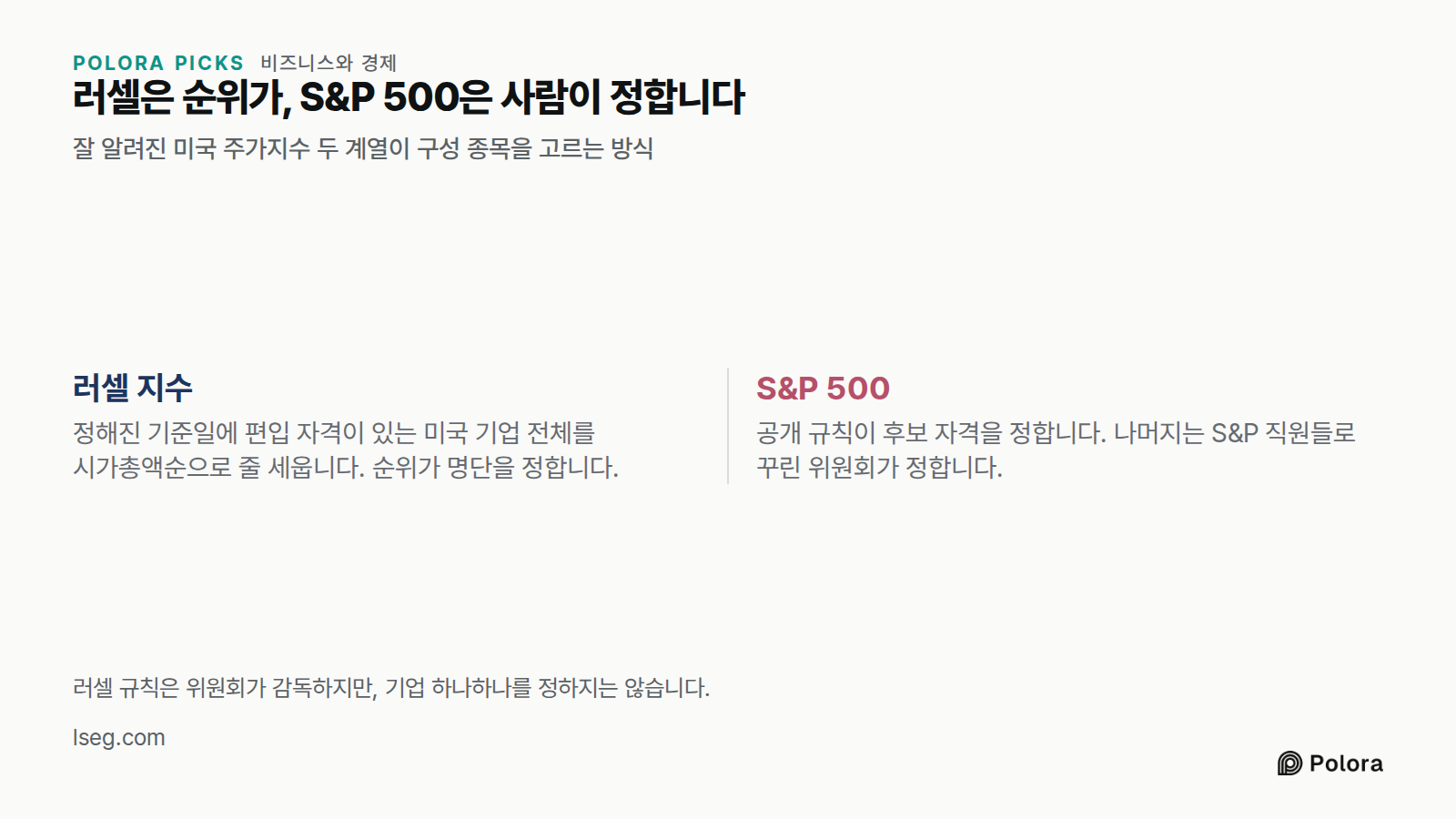
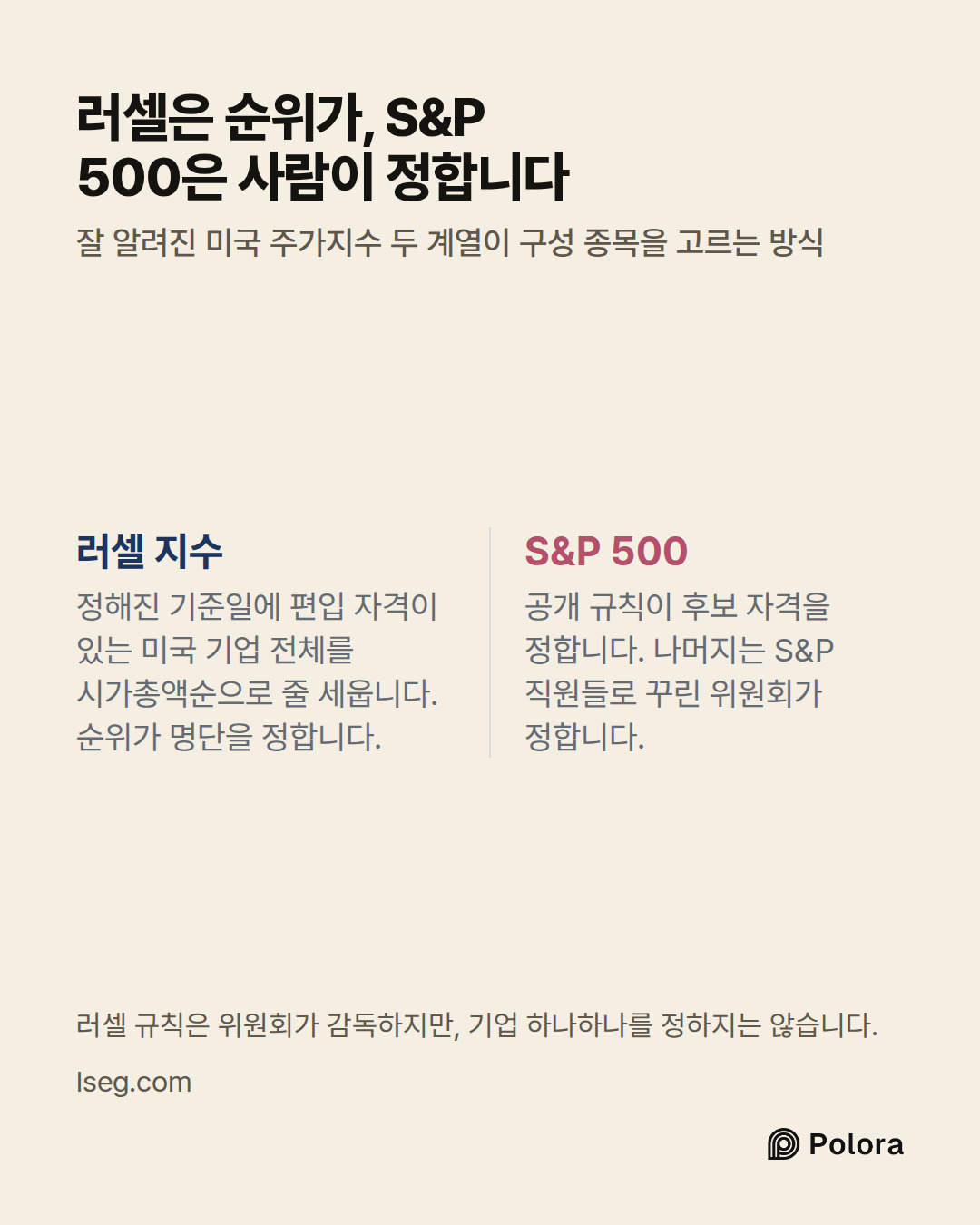
모든 지수가 이렇게 돌아가지는 않습니다. 런던증권거래소그룹(LSEG) 산하 FTSE 러셀이 운영하는 러셀 지수는 순위로 구성 종목을 정합니다. 미리 정해진 순위 기준일에 편입 자격이 있는 미국 기업 전체를 시가총액순으로 줄 세우고, 거래 규칙을 통과한 기업을 크기에 따라 배치합니다. 위원회가 규칙을 감독하고 규칙이 제대로 돌아가는지 점검하기는 하지만, 명단은 기업 하나하나에 대한 결정이 아니라 순위에서 나옵니다.
2026년부터 러셀 지수 명단은 1년에 한 번이 아니라 6월과 12월, 두 번 새로 짜입니다. 다음 순위 기준일은 2026년 10월 30일이고, 새 명단은 12월 11일 장 마감 뒤부터 적용됩니다.
결국 미국에서 가장 잘 알려진 두 주가지수 계열은 누가 들어가느냐는 물음에 다르게 답합니다. 러셀은 순위가 정합니다. S&P 500은 규칙이 후보 자격을 정하고, 그 규칙 안에서 일하는 사람들이 나머지를 정합니다.
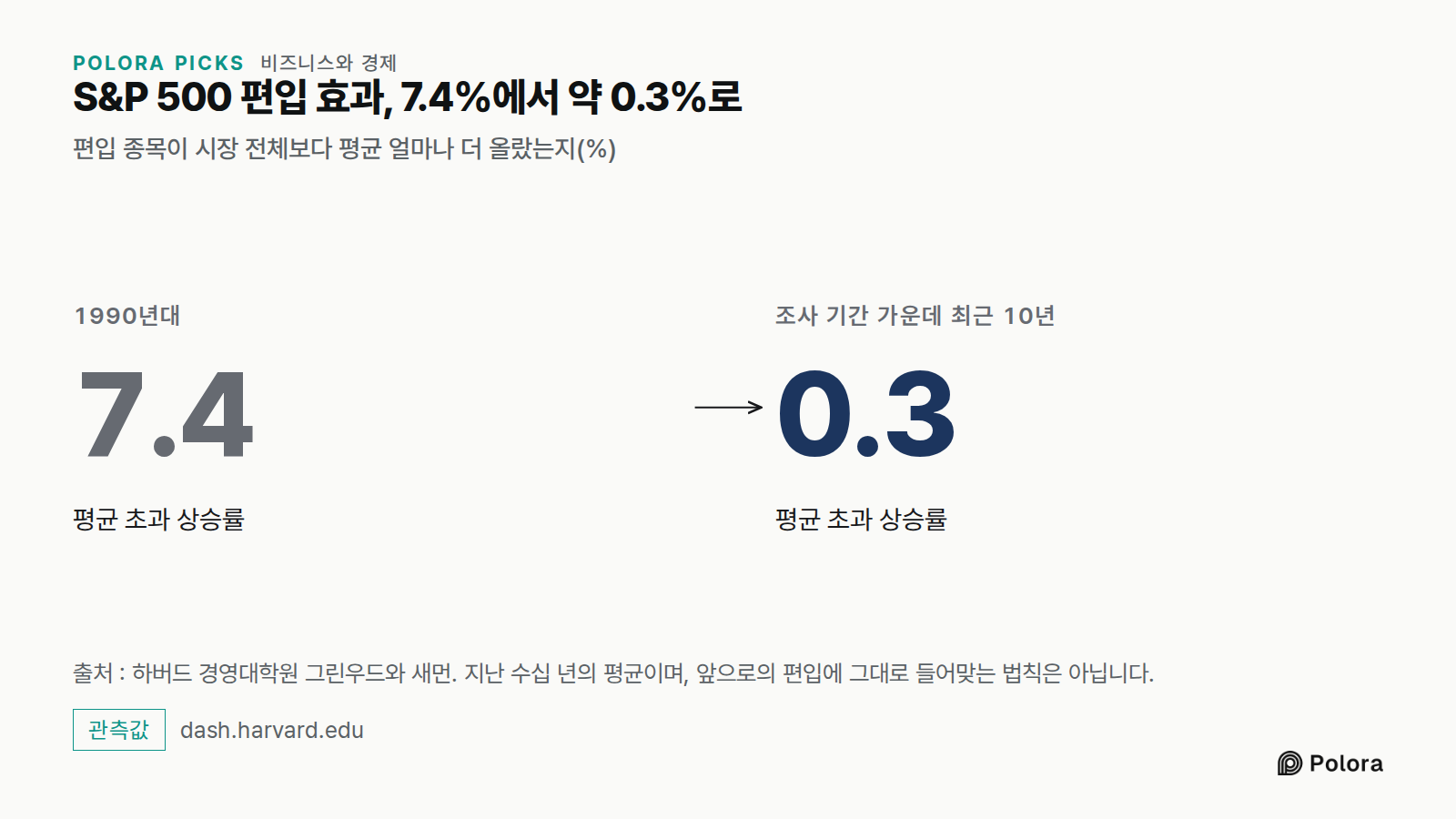
S&P 500을 따라가는 펀드는 지수에 든 종목을 무엇이든 담아야 합니다. 어떤 기업이 새로 들어오면 이 펀드들은 가격과 상관없이 거의 같은 날짜에 일제히 그 주식을 사야 합니다. 1990년대에는 이 강제 매수의 흔적이 뚜렷했습니다. 하버드 경영대학원의 로빈 그린우드와 마코 새먼에 따르면, 당시 지수에 편입된 종목은 시장 전체의 움직임으로 설명되는 수준보다 평균 7.4% 더 올랐습니다.
그 매수 규모가 얼마나 클 수 있는지는 테슬라가 보여 줍니다. 편입이 발표되자 로이터는 인덱스 펀드들이 테슬라를 사려고 다른 보유 종목을 팔면서 약 510억 달러 규모의 거래가 일어날 것이라고 보도했습니다. 당시 보도에 따르면 2주 만에 주가가 40% 가까이 올랐고, 편입 직전 마지막 거래일인 12월 18일에는 1500억 달러가 넘는 테슬라 주식이 거래됐습니다. 그린우드와 새먼의 워킹페이퍼는 지수 규모에 견주어 이것을 역대 가장 큰 편입으로 꼽습니다.
테슬라의 급등은 예외였습니다. 같은 연구의 정식 출판본을 보면, 조사 기간 가운데 가장 최근 10년 동안 편입 종목이 더 얻은 수익은 평균 0.3%로 1%에 한참 못 미쳤습니다. 이 지수를 따라가는 돈이 주식시장에서 차지하는 몫은 1990년대보다 훨씬 커졌는데도 그렇습니다. 연구진이 앞서 낸 워킹페이퍼를 보면, 테슬라를 뺀 2020년 신규 편입 종목의 평균은 거의 0입니다.
연구진은 여러 설명을 따져 봅니다. 가장 분명한 것은 새 구성 종목이 어디서 오느냐입니다. 워킹페이퍼에 따르면 1990년대에는 편입 종목의 약 40%가 S&P 미드캡 400에서 올라왔는데, 최근 몇 년은 그 비율이 80%를 넘습니다. 이런 기업이 올라오면 S&P 500을 따라가는 펀드는 그 주식을 사야 하지만, 중형주 지수를 따라가는 펀드는 같은 순간에 그 주식을 팔아야 합니다. 그래서 순매수 규모가 훨씬 작아집니다.
연구진은 편입 종목을 미리 짐작하기 쉬워져 투자자들이 발표 전에 사들인다는 증거도 일부 찾았지만, 스스로 이를 엇갈린 증거라고 말합니다. 그러니 발표 전후의 주가 변동이 작아졌다고 해서 편입이 더는 주가를 움직이지 않는다는 뜻은 아닙니다. 그 움직임의 일부가 그저 더 일찍 일어났을 수 있습니다. 연구진은 시장이 이런 거래를 소화하는 데 더 능숙해졌다고도 봅니다. 이 결과는 지난 수십 년의 평균을 본 것이고, 효과의 크기는 전에도 바뀐 적이 있습니다. 앞으로 있을 편입에 그대로 들어맞는 법칙은 아닙니다.
주가 효과는 희미해졌지만 누가 정하느냐는 물음은 그대로 남아 있습니다. S&P 500을 따라가는 돈이 미국 주식시장에서 차지하는 몫은 점점 커지고 있고, 그 돈이 어떤 기업을 담을지는 공식이 아니라 S&P 직원들로 꾸린 위원회가 정합니다. 이 위원회는 매달 모이고, 논의 내용을 공개하지 않으며, 필요하면 넘어설 수 있는 공개 규칙 안에서 일합니다.
규칙은 누가 후보가 될 수 있는지를 알려 줍니다. 누가 뽑힐지, 누가 나가게 될지는 알려 주지 않습니다.
My assessment: the manuscript's core premise holds up well
Having checked the sourcing myself, I want to tell the reader plainly: the central claim of this piece — that a committee, not a formula, makes the final call on S&P 500 membership — is solidly supported. That's the answer to the headline question, and nothing I found undermines it.
On the $22.7 billion threshold: Confirmed, and confirmed as still current. The July 2025 press release I pulled directly states S&P Dow Jones Indices updated the market capitalization eligibility criteria effective July 1, 2025, raising the S&P 500 minimum to US$22.7 billion or more. A June 2026 factsheet still shows the same $22.7 billion figure, so the manuscript's number is live as of the most recent data I could find — I did not locate an October 2026 revision superseding it.
On "rules don't apply to continued membership": This is word-for-word accurate. The same press release states the market capitalization eligibility criteria are for additions to an index, not for continued membership, and a constituent that appears to violate the addition criteria is not removed unless ongoing conditions warrant an index change. Wikipe…
Beta · gpt-6-sol
The answer is an S&P Dow Jones Indices committee. Its published criteria determine which companies are eligible for consideration, but meeting them does not guarantee a place: the official methodology gives the Index Committee discretion over constituent selection and says it considers sector balance. The committee consists of S&P Dow Jones Indices staff, meets monthly, and keeps its discussions confidential. The manuscript’s central premise stands. (spglobal.com)
I would make three corrections or qualifications before publication:
- Alpha’s objection to the September figure does not hold. I opened the S&P-branded factsheet at the manuscript’s S3 address. It explicitly says “as of September 30, 2026” and reports 503 constituents and a smallest total market capitalization of $5,727.01 million. Those manuscript figures are supported by that copy, although I could not confirm them from an independently hosted copy on spglobal.com. Address: https://s3.amazonaws.com/bca2.0/fs-sp-500.pdf. (s3.amazonaws.com)
- The entry exam…
Gamma · gemini-3.1-pro
Gamma's Assessment: The Premise is Solid, but the Nuance Matters
I agree with both Alpha and Beta that the manuscript's core premise is entirely correct: the S&P 500 is not a purely mechanical index. A committee of S&P Dow Jones Indices staff makes the final decisions, and they have the discretion to bypass companies that meet all quantitative rules.
Here is my synthesis of the remaining claims and where the manuscript stands:
1. The Tesla Case Study (2020)
The manuscript's timeline of Tesla's inclusion is accurate and serves as an excellent illustration of committee discretion. Tesla reported its fourth consecutive quarter of GAAP profitability in July 2020, making it eligible for the index by the September 2020 rebalancing. The committee passed it over, causing a temporary dip in the stock, before announcing on November 16, 2020, that it would be added on December 21. The massive trading volume (over $150 billion on December 18) and the structural disruption it caused are well-documented facts that support the manuscript's narrative.
2. The Russell Index Contrast
The manuscript correctly contrasts the S&P 500 with the Russell US Indexes. FTSE Russell relies on a…
Researcher · gemini-3-7-flash
Verification of Claims and Factual Audit
The central premise of the manuscript—that an internal committee at S&P Dow Jones Indices (the U.S. Index Committee) uses human discretion to decide index membership rather than following a purely quantitative formula—matches primary index documentation and published academic research.
Below is the verified status of the discrete claims, specific numbers, and references raised in the manuscript and the discussion.
---
1. Committee Discretion and Operating Rules
* Claim: A committee of full-time S&P Dow Jones Indices staff chooses constituents, meets monthly, keeps discussions confidential, and evaluates sector balance.
* Status: Confirmed.
* Source: S&P Dow Jones Indices – U.S. Indices Methodology & Investor Factsheet on Governance.
* Details: The methodology explicitly specifies:
1. *"Constituent selection is at the discretion of the Index Committee and is based on the eligibility criteria."*
2. The committee consists of full-time professional employees of S&P DJI and meets month…
The Arbiter · gpt-6-sol
Round record. Alpha, Beta, Gamma and the Researcher agree on the answer to the headline: S&P Dow Jones Indices’ Index Committee decides which companies enter the S&P 500. I opened S&P’s July 2026 methodology directly; it says constituent selection is at the committee’s discretion, based on eligibility criteria, with sector balance also considered. The manuscript’s central premise stands, but “the rules decide who may be considered” needs room for the methodology’s stated exceptions and migration provisions. (spglobal.com)
The main factual dispute is resolved against Alpha’s correction. Beta and the Researcher read the S&P-branded PDF at the manuscript’s S3 address; I checked it too. It expressly dates its figures September 30, 2026, and gives 503 constituents and a $5,727.01 million smallest total market capitalization. The figures are supported by that copy, though an independently retrieved S&P-hosted September copy remains unconfirmed. (s3.amazonaws.com)
Beta identified a material omission in the entry-rule summary: alo…
The Arbiter's Final Verdict · gpt-6-sol
S&P Dow Jones Indices’ Index Committee decides which companies enter the S&P 500. Its published rules set demanding eligibility tests, but passing them does not guarantee admission. The S&P U.S. Indices Methodology says constituent selection is at the committee’s discretion and that sector balance is among its considerations. The manuscript’s central premise stands: the S&P 500 is not simply a list of the 500 largest U.S. companies.
For publication, I would make these distinctions:
- Entry rules: The manuscript correctly identifies tests involving company size, U.S. listing and trading history, GAAP profitability, freely tradable shares and liquidity. It omits a second size test: the share class being added must also have float-adjusted market value of at least half the company-level threshold. The methodology is the source for the tests and their qualifications. S&P’s [July 2025 announcement](https://press.spglobal.com/2025-07-01-S-P-Dow-Jones-Indices-Announces-Update-to-S-P-Composite…