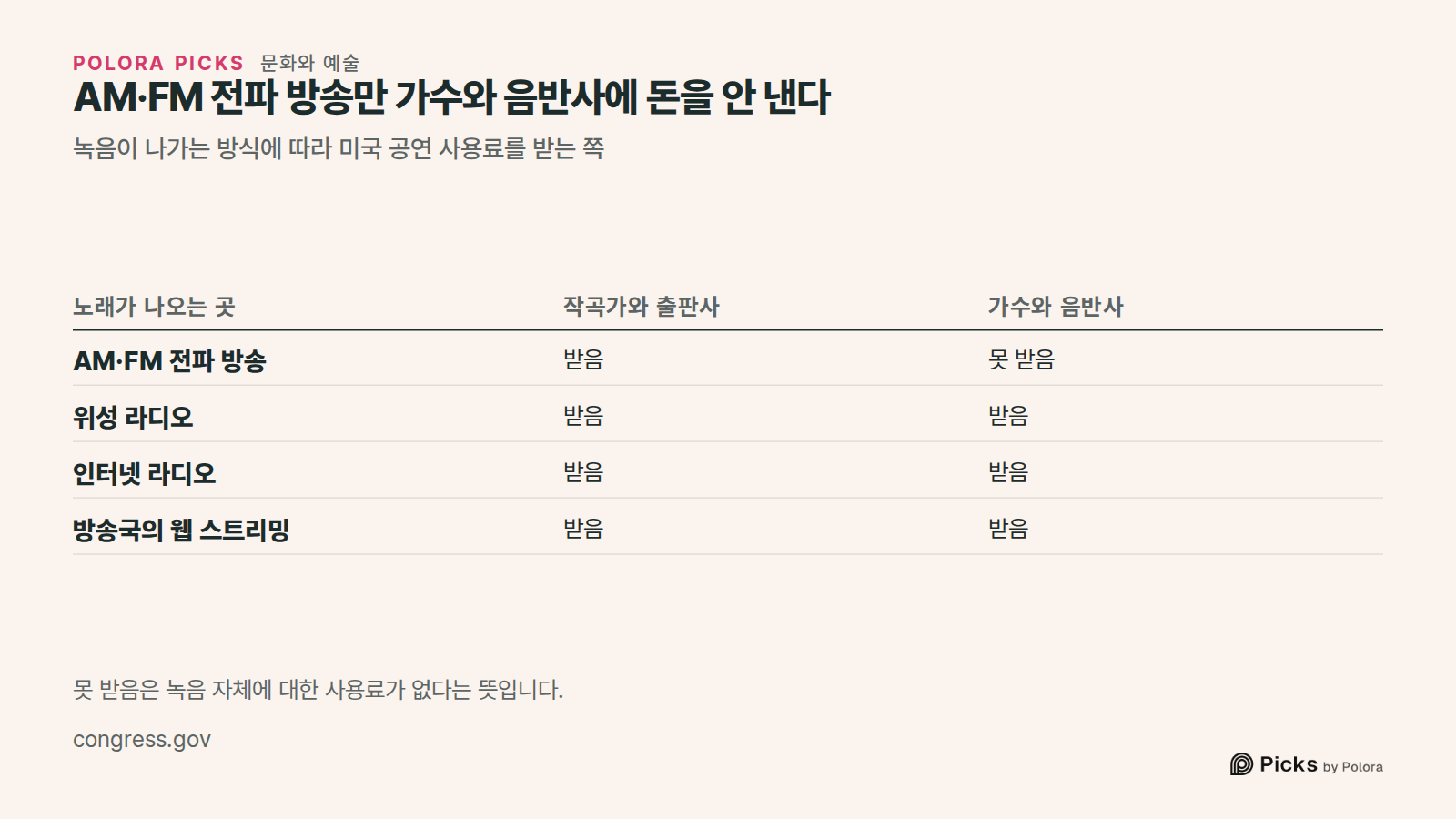
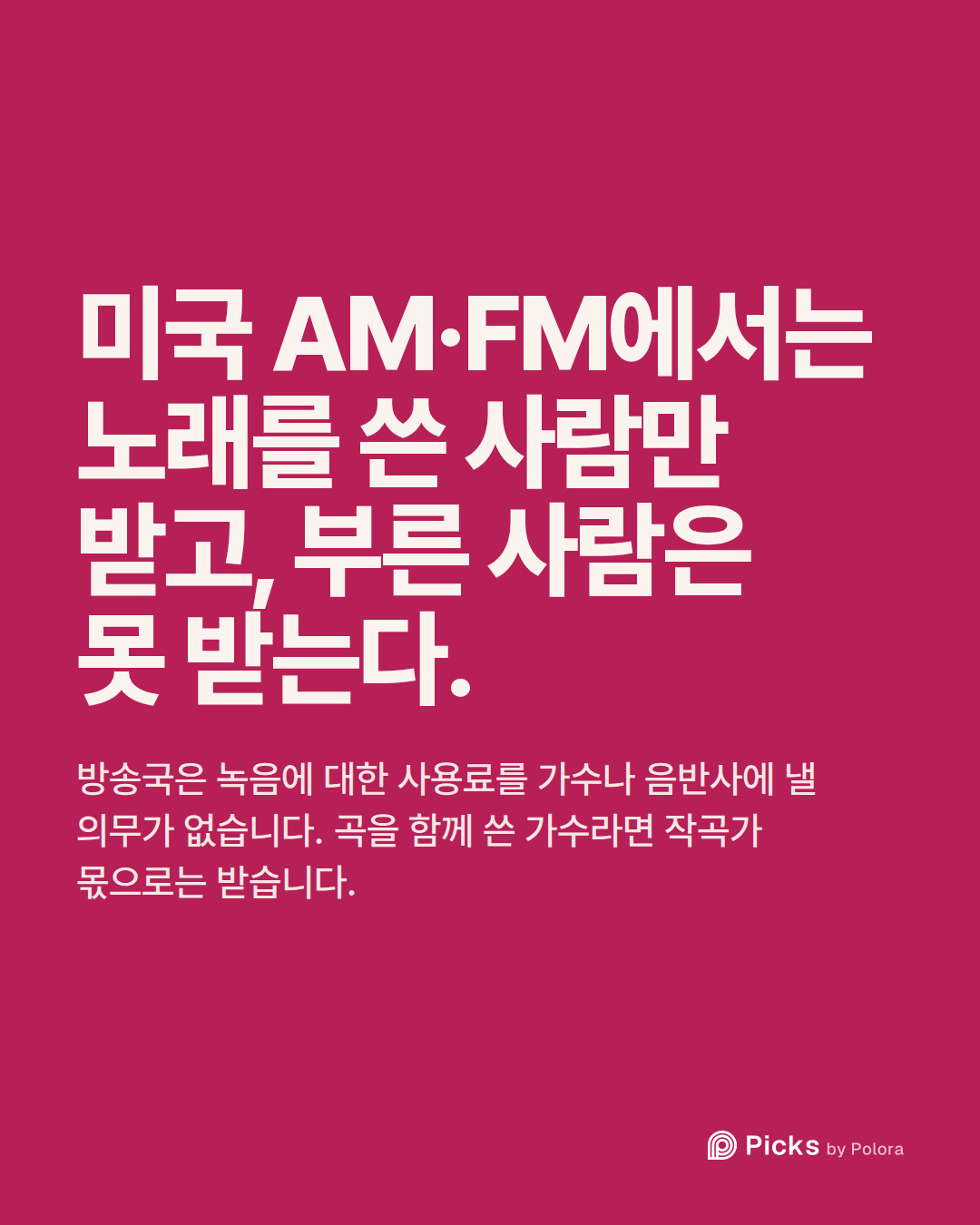
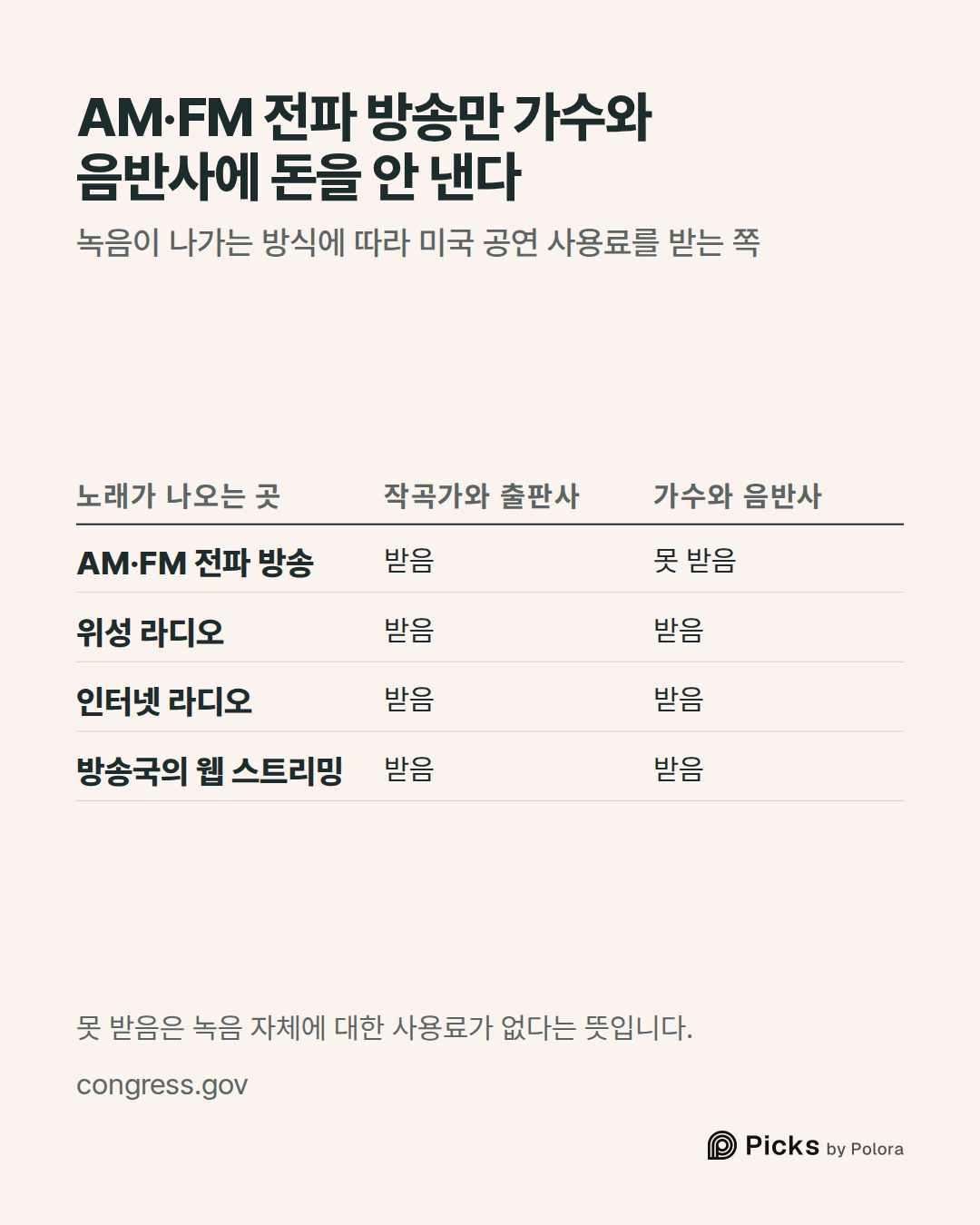
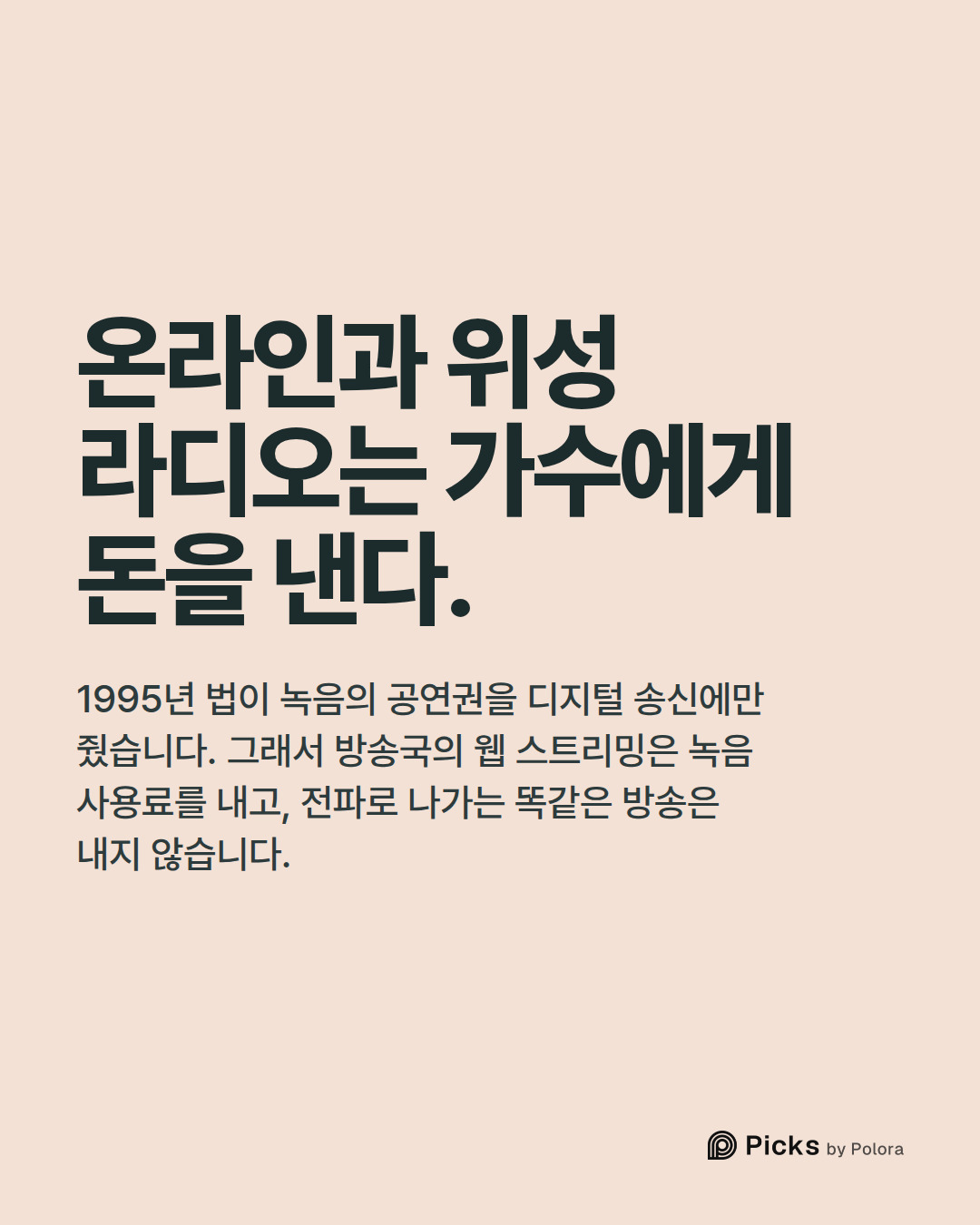
내지 않습니다. 미국 AM·FM 방송국은 곡을 쓴 작곡가와 작사가에게는 돈을 내지만, 녹음에 대한 사용료를 가수나 음반사에 낼 의무는 없습니다. 위성 라디오, 인터넷 라디오, 심지어 같은 방송국의 온라인 스트리밍은 이 돈을 냅니다. 1995년 법이 녹음의 공연권을 디지털 송신에만 줬기 때문입니다.
문화와 예술 · 2026-11-16
FM에서는 노래를 쓴 사람만 받고, 부른 사람은 못 받는다
미국에서 FM 라디오를 켜고 히트곡 하나가 나오기를 기다려 봅시다. 방송국이 그 노래를 틀려면 곡에 대한 이용 허락을 받아야 하고, 그 대가로 내는 돈은 곡을 쓴 사람들에게 갑니다. 작곡가, 작사가, 그리고 이들의 음악출판사입니다. 반면 녹음 자체에 대해서는 아무에게도 돈을 내지 않아도 됩니다. 귀에 들리는 가수도, 뒤에서 연주한 밴드도, 녹음 비용을 댄 음반사도 받을 돈이 없습니다.
계약의 빈틈이나 밀린 지급 이야기가 아닙니다. 미국 저작권법이 원래 그렇게 쓰여 있습니다. 대부분은 라디오가 가수에게도 당연히 돈을 낸다고 생각하지만, AM과 FM에서는 그렇지 않습니다. 노래가 전파를 타도 가수가 그 녹음을 부른 대가로 받는 사용료는 없습니다. 가수가 그 곡의 공동 작곡가이거나 별도 계약이 있다면 다른 길로 돈을 벌 수는 있습니다. 다만 직접 곡을 쓴 가수라도 이때 받는 돈은 작곡가 몫이지, 노래를 부른 대가가 아닙니다.
미국 법은 녹음된 음악 한 곡을 서로 다른 두 저작물로 봅니다. 하나는 음악저작물, 곧 멜로디와 가사로, 처음에는 곡을 쓴 사람이 권리를 가집니다. 다른 하나는 음반, 곧 한 번의 연주를 녹음한 것입니다. 이 권리의 첫 주인은 연주자나 프로듀서, 또는 둘 다일 수 있고, 업무상 만든 녹음이라면 고용주입니다. 그리고 이 권리는 음반사로 넘어가는 경우가 아주 많습니다.
두 저작물에 붙는 권리는 다릅니다. 음악저작물의 권리자는 오래전부터 공개 연주를 허락하거나 막을 권리를 가져 왔고, 그래서 라디오 방송국은 곡에 대한 이용 허락이 필요합니다. 작곡가와 출판사는 이 권리를 ASCAP, BMI, SESAC, GMR 같은 공연권 관리단체에 모아 맡깁니다. 이 단체들은 곡이 나갈 때마다 작곡가에게 따로 돈을 치르게 하는 대신, 정액이나 매출의 일정 비율을 받고 자기 목록에 있는 모든 곡을 틀 수 있는 포괄 이용 허락을 방송국에 팝니다. 반면 음반 권리자의 권리는 훨씬 좁고, AM·FM에서 누가 돈을 받는지는 바로 이 차이로 갈립니다.
똑같은 녹음을 SiriusXM에서, Pandora 같은 인터넷 라디오에서, 또는 방금 듣던 FM 방송국의 실시간 웹 스트리밍에서 틀면 가수와 음반사는 돈을 받습니다. 차이는 단어 하나, '디지털'에서 나옵니다. 1995년 미국 의회는 처음으로 음반에 공연권을 줬는데, 그 범위를 디지털 오디오 송신으로 이뤄지는 연주로 한정했습니다.
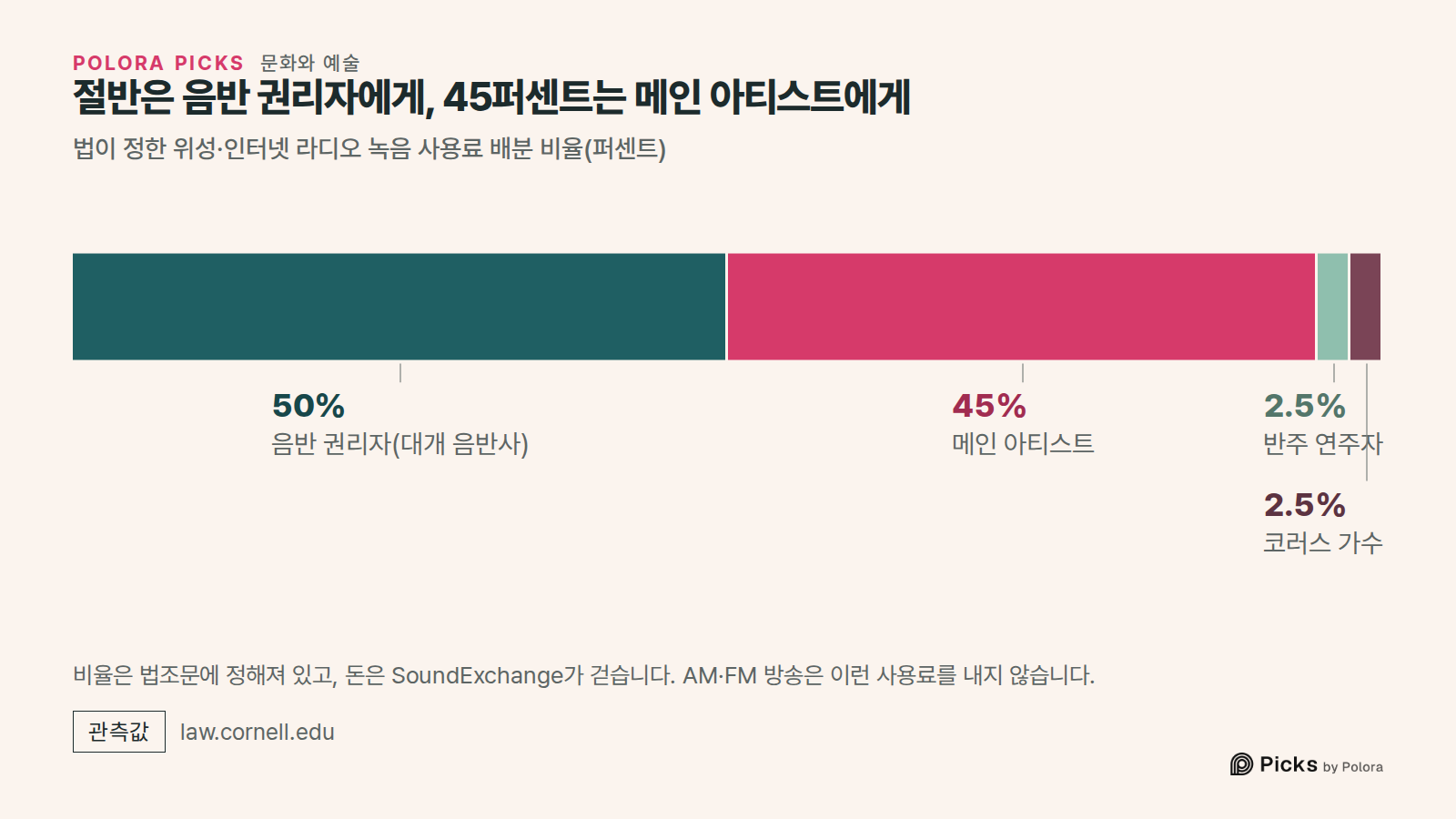
위성 라디오와 인터넷 라디오는 디지털이므로 이 권리가 적용됩니다. 대부분 법정 이용 허락 제도에 따라 돈을 냅니다. 요율은 저작권 사용료 심판관(Copyright Royalty Judges)이 정하고, 돈은 SoundExchange라는 단체가 걷습니다. 나누는 비율은 법조문에 직접 정해져 있습니다. 음반 권리자(대개 음반사)가 50퍼센트, 메인 아티스트가 45퍼센트, 반주 연주자와 코러스 가수가 각각 2.5퍼센트입니다.
방송국들은 방송을 온라인으로도 내보내기 시작하면서 이 스트리밍도 면제해 달라고 주장했습니다. 그러나 미국 저작권청의 수장인 저작권청장은 방송 면제가 그런 인터넷 재송신까지 덮지는 않는다고 결론 내렸습니다. 그래서 방송국이 온라인으로 동시에 내보내는 방송은 녹음 사용료를 내고, 전파로 나가는 똑같은 방송은 내지 않습니다.
음반이 저작권 보호를 받기 시작한 것은 1971년으로, 음반 불법 복제를 막기 위해서였습니다. 1976년 의회는 저작권법을 전면 개정하면서 제114조에 음반 권리자의 권리에는 "어떠한 공연권도 포함되지 않는다"고 적었습니다. 이 문제는 당시에도 논의됐고 그 뒤로도 검토됐지만, 법은 1995년까지 바뀌지 않았습니다.
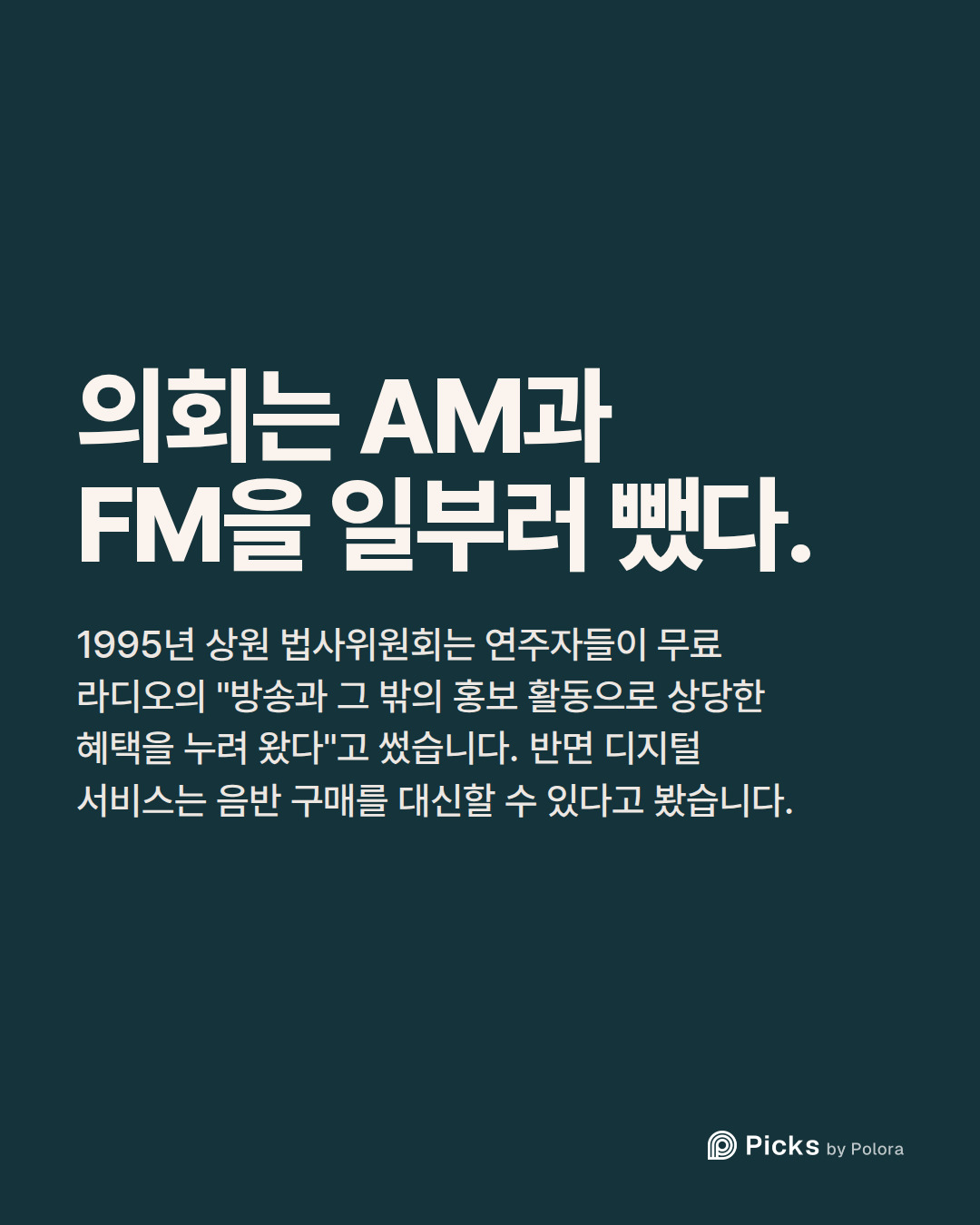
1995년 마침내 디지털 권리를 만들면서도 의회는 전파 방송을 일부러 뺐습니다. 상원 법사위원회는 연주자들이 광고로 운영되는 무료 라디오의 "방송과 그 밖의 홍보 활동으로 상당한 혜택을 누려 왔다"고 썼습니다. 그리고 "음반 산업과 전통적인 방송 산업 사이의 서로에게 이로운 경제적 관계"를 흔들고 싶지 않다고 밝혔습니다. 디지털 서비스는 다르게 봤습니다. 음반을 광고해 주기보다 음반 구매를 대신할 수 있는 것으로 본 것입니다.
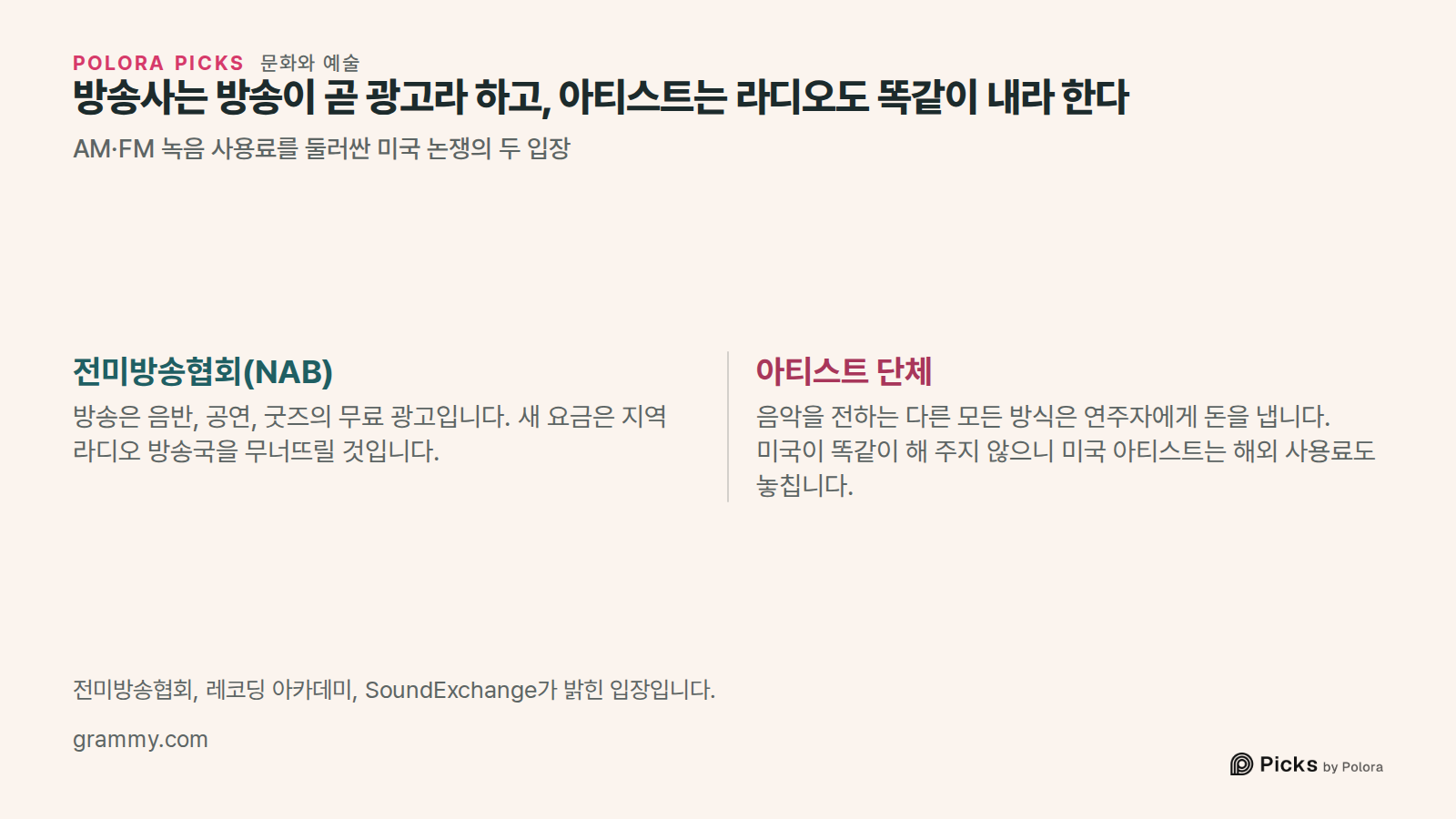
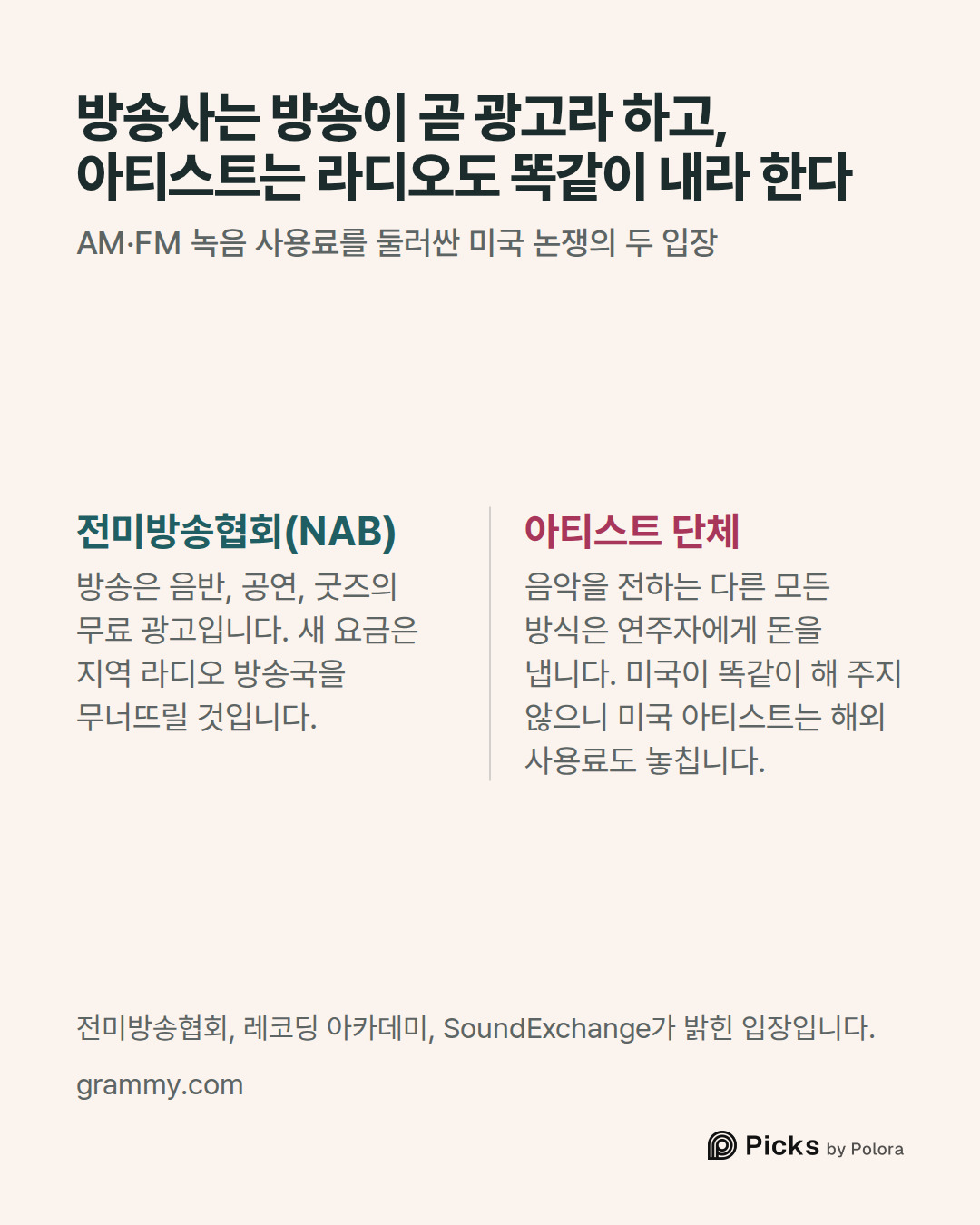
업계 단체인 전미방송협회(NAB)는 전파 방송에 대한 사용료를 "공연세"라고 부릅니다. 곡이 방송에 나가는 것 자체가 음반, 공연, 굿즈의 사실상 무료 광고라는 것입니다. 협회는 라디오의 무료 홍보가 음반사에 해마다 24억 달러가 넘는 가치를 안겨 준다고 말합니다. 또 새 요금이 생기면 청취자들이 뉴스, 날씨, 재난 정보를 얻는 "지역 라디오 방송국을 재정적으로 무너뜨릴 것"이라고 합니다. 이 숫자와 주장은 모두 협회가 내놓은 것입니다.
의회에서 이 입장은 '지역 라디오 자유법(Local Radio Freedom Act)'으로 나타납니다. 이름에는 '법'이 붙었지만 법안이 아닙니다. 지역 라디오 방송국에 새 공연 사용료를 물려서는 안 된다고 선언하는, 구속력 없는 양원 공동 결의안입니다. 이번 의회에서 하원 결의안은 H.Con.Res.12로, 이 글을 쓰는 2026년 가을 기준 공동 발의자가 233명이고, 상원 결의안은 S.Con.Res.8로 25명입니다.
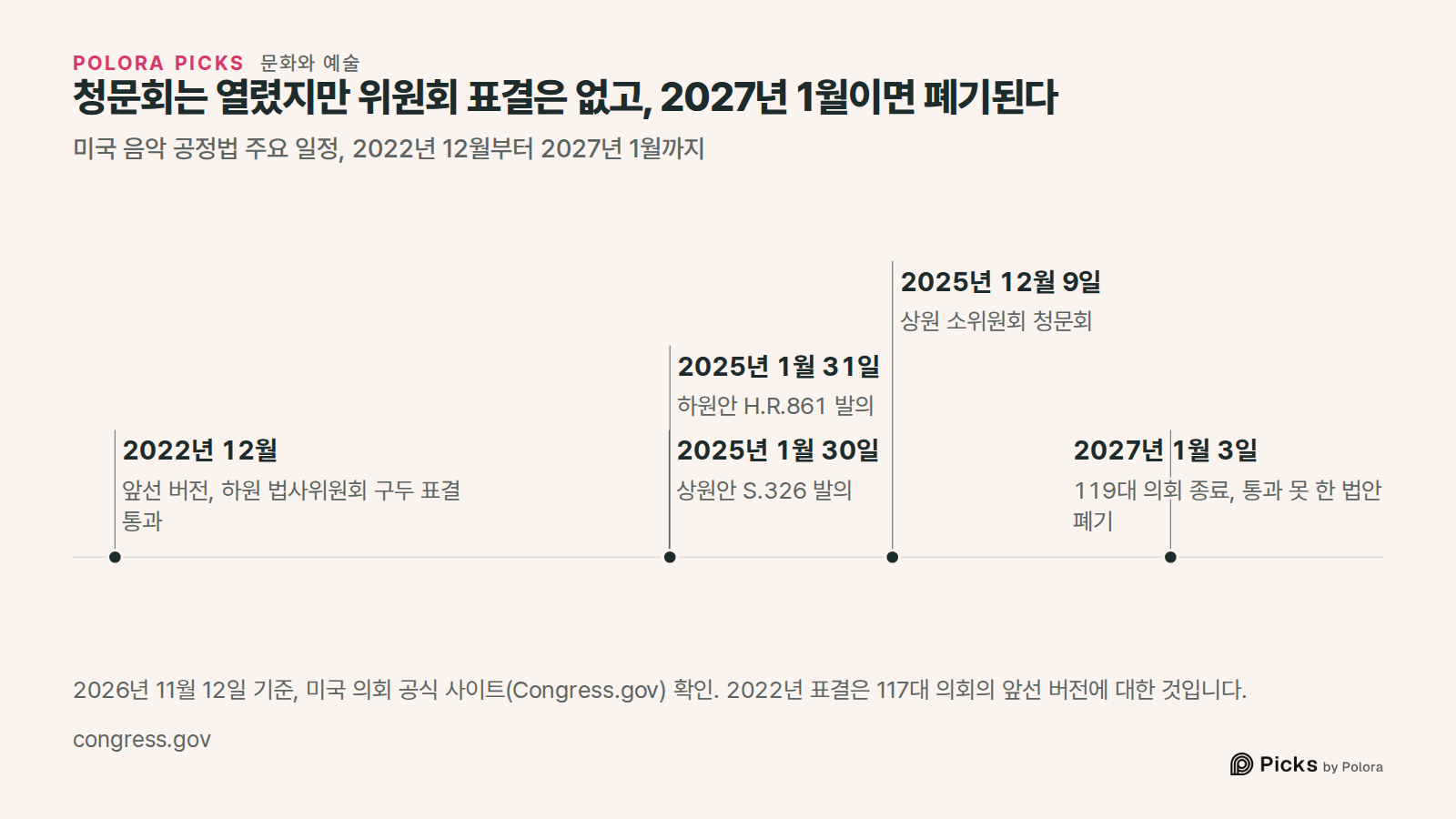
아티스트 쪽에서는 그래미상을 주관하는 레코딩 아카데미와 SoundExchange가 앞장서서, 음악을 전하는 다른 모든 방식이 연주자에게 돈을 내니 AM·FM도 내야 한다고 주장합니다. 2025년 12월 9일 상원 법사위원회 소위원회가 이 문제로 청문회를 열었습니다. 그 자리에서 SoundExchange 최고경영자는 홍보 효과 주장을 반박하며, 라디오에서 노래를 듣고 앨범을 사러 나가던 시절은 지났다고 상원의원들에게 말했습니다.
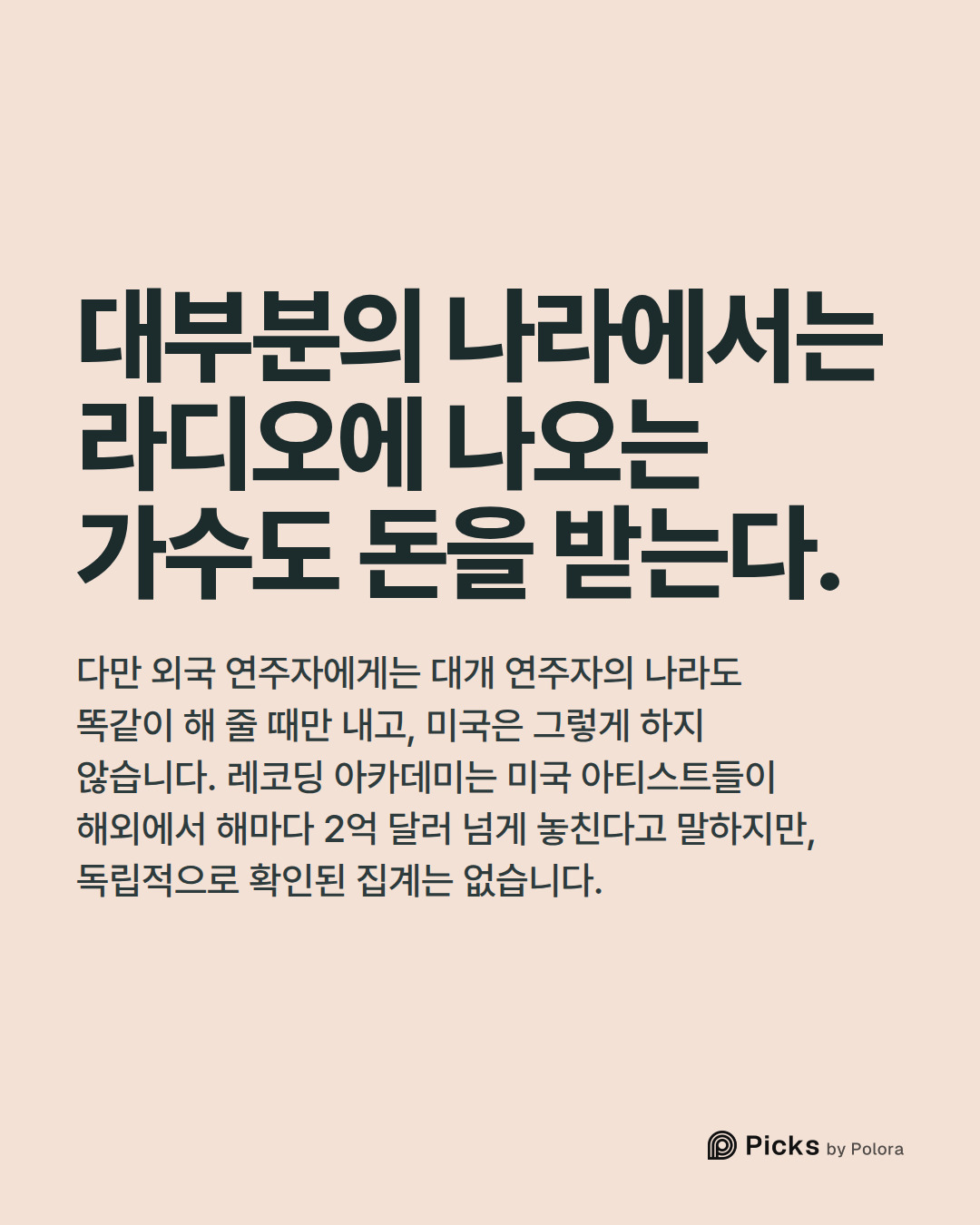
두 번째 주장은 해외에서 들어와야 할 돈에 관한 것입니다. 대부분의 나라는 녹음이 방송되면 연주자에게 돈을 냅니다. 하지만 외국 연주자에게는 대개 그 연주자의 나라도 똑같이 해 줄 때만 냅니다. 미국은 그렇게 하지 않으니, 레코딩 아카데미는 미국 아티스트들이 해외에서 해마다 2억 달러 넘는 사용료를 놓친다고 말합니다. SoundExchange도 아티스트와 음반사를 합쳐 약 2억 달러라는 비슷한 추정을 내놓습니다. 두 숫자 모두 이 단체들의 자체 추정이고, 독립적으로 확인된 집계는 없습니다.
그러니 미국의 규칙이 세계의 규칙은 아닙니다. 대부분의 나라에서는 라디오에 나오는 가수도 돈을 받습니다.
'미국 음악 공정법(American Music Fairness Act)'은 이 권리에서 '디지털'이라는 단어를 지우자는 법안입니다. 그러면 AM과 FM을 포함한 모든 오디오 송신이 녹음 사용료를 내게 됩니다. 방송국은 인터넷 라디오와 같은 종류의 법정 이용 허락 제도 안으로 들어오고, 연 매출 150만 달러 미만인 소형 방송국은 사용료에 상한이 붙습니다. 다만 매출 1000만 달러가 넘는 회사에 속한 방송국은 예외입니다.
이 글을 쓰는 2026년 가을 기준, 상원안(S.326, 2025년 1월 30일 마샤 블랙번 상원의원 발의)과 하원안(H.R.861, 2025년 1월 31일 대럴 아이사 하원의원 발의)은 각각 소속 원의 법사위원회에 회부된 상태입니다. 상원 소위원회가 청문회를 열긴 했지만, 미국 의회 공식 사이트(Congress.gov)에는 두 법안 모두 축조 심사(위원회가 법안을 고치는 회의)도, 위원회 표결도 기록돼 있지 않습니다. 앞선 버전은 117대 의회 때인 2022년 12월 하원 법사위원회를 구두 표결로 통과했지만 거기서 멈췄습니다. 119대 의회는 2027년 1월 3일에 끝나고, 그때까지 통과되지 못한 법안은 폐기됩니다.
법이 바뀌기 전까지는 이렇게 기억하면 됩니다. 미국 AM이나 FM에서 노래가 나오면 곡을 쓴 사람들은 돈을 받습니다. 하지만 귀에 들리는 그 목소리의 주인에게는 그 방송에 대한 사용료가 가지 않습니다.
Do radio stations in the US pay the singers whose songs they play?
Alpha · deepseek-v4-pro
No, with a key distinction: US AM/FM radio stations pay the songwriters and publishers — but not the singers, players, or record label on the recording.
Every song played contains two copyrights:
1. The musical work — melody and lyrics. AM/FM stations pay for public performance of this work through performing rights organizations like ASCAP, BMI, SESAC, and GMR.
2. The sound recording — the particular recorded performance. Under US law, the owner of a sound recording has a public performance right only for *digital audio transmissions*. Traditional AM/FM over-the-air broadcasts are exempt.
So when a song is played on FM, the station owes money to the people who wrote it. It owes nothing to the featured vocalist, the backing musicians, or the label that put out the record.
If the singer also co-wrote the song, they can be paid — but as a songwriter, not as the performer.
The same song played on satellite radio or internet radio does generate a performer payment, because those are digital audio transmissions. That money is collected and distributed by SoundExchange.
Until the law changes, the rule is: on AM/FM in the US, the writer gets paid and the voice you hear does not.
Beta · gpt-6-sol
For ordinary over-the-air AM/FM radio in the U.S., generally no. Stations pay for the right to play the *song*—the music and lyrics—but U.S. law does not require them to pay a sound-recording performance royalty to the singer, other performers, or record label for that broadcast. A singer who also wrote the song may receive songwriter royalties, but not a royalty *for singing on the recording*. (congress.gov)
The distinction is how you hear the station. Its internet stream, as well as satellite and internet radio, is subject to the sound-recording digital-performance right; eligible services pay royalties that are distributed to recording owners and performers. That is why the same station can owe a recording royalty for its web stream but not its over-the-air signal. (congress.gov)
One precision for the manuscript: “every time it plays, the station owes money to the writer” suggests a separate payment for each spin. Stations commonly use *blanket licences*, paid as a fee or share of rev…
Gamma · gemini-3.1-pro
Here is my review of the manuscript’s claims, based on the provided brief and live web searches.
1. The core premise: AM/FM radio does not pay performers, while digital radio does
The premise stands. US copyright law (17 U.S.C. § 114) grants a performance right to sound recordings only for digital audio transmissions. Over-the-air AM/FM broadcasts are exempt, meaning they pay songwriters (via ASCAP, BMI, etc.) but not the recording artists or labels. Digital services like SiriusXM and internet radio pay via SoundExchange.
*Source:* Congress.gov (CRS Report R47642) and 17 U.S.C. § 114.
2. The Local Radio Freedom Act (H.Con.Res.12 / S.Con.Res.8)
The manuscript correctly identifies this as a non-binding resolution opposing a performance tax on local radio. My search confirms that in the 119th Congress, H.Con.Res.12 has 233 cosponsors and S.Con.Res.8 is the Senate companion. The NAB's claim that radio promotion is worth $2.4 billion annually is accurately attributed to them.
*Source:* Congress.gov (H.Con.Res.12, 119th Congress) and nab.org.
3. The American Music Fairness Act (S.326 / H.R.861)
The manuscript correctly summarizes the bill's intent to remove the "digital"…
Researcher · gpt-6-luna
Verification: The central answer is supported: for ordinary U.S. over-the-air AM/FM broadcasts, stations generally do not owe a sound-recording performance royalty to singers, other performers, or record labels. The Copyright Office’s summary of the law says the sound-recording performance right is limited to digital audio transmissions; CRS likewise explains that radio stations’ online simulcasts generally fall under the statutory licensing scheme. That supports the distinction between a station’s broadcast and its web stream.
Sources: U.S. Copyright Office, “What Musicians Should Know about Copyright”; CRS, *On the Radio: Public Performance Rights in Sound Recordings*
Two qualifications to the manuscript and the debaters’ summaries:
- “Every time it plays, the station owes money to the people who wrote the song” is too literal. Stations commonly license public performances of musical works through blanket licenses, rather than making a separate payment to a songwriter for each spin. The song-performance royalty is also not necessarily paid directly to…
The Arbiter · gpt-6-sol
The voices agree on the key distinction: over-the-air AM/FM play and a station’s internet stream are treated differently. The Researcher found support for that distinction in the Copyright Office and CRS sources. Beta and the Researcher also flagged two wording issues: a blanket licence is not a separate payment to a writer on every spin, and a singer may earn money as a songwriter or through a contract even when the broadcast creates no *sound-recording performance royalty*.
Several manuscript details remain open rather than confirmed by this round’s source checks. In particular, the Researcher could not independently verify the November 12, 2026 bill statuses or cosponsor counts that Gamma affirmed. The overseas-loss estimates and the broadcasters’ response to them also have not been independently checked here. Those claims should not inherit the confidence of the central legal distinction.
The substantive tension is whether radio’s promotional value is a reason to keep its different treatment—not whether the treatment exists. The verdict can separate that policy argument from what the sources establish about current payments.
The Arbiter's Final Verdict · gpt-6-sol
Verdict
For an ordinary over-the-air AM or FM broadcast in the United States, generally no: the station does not owe a *sound-recording performance royalty* to the singer, other performers, or record label. It does pay to license the song—its music and lyrics—so a singer who also wrote it may receive songwriter royalties. A station’s internet stream is different: digital transmissions can generate royalties for the recording and its performers. This central distinction is supported by the U.S. Copyright Office and CRS.
What the manuscript needs to qualify:
- “Every time it plays, the station owes money to the writer” sounds like a separate, direct payment per spin. Stations commonly pay for blanket licences instead.
- “The voice you hear is not paid” works only as shorthand for no royalty for performing on that AM/FM broadcast. A singer might earn money as a co-writer or under a contract. Nor is a recording’s initial copyright owner invariably its singer.
- The manuscript’s November 12, 2026 bill statuses, resolution cosponsor coun…