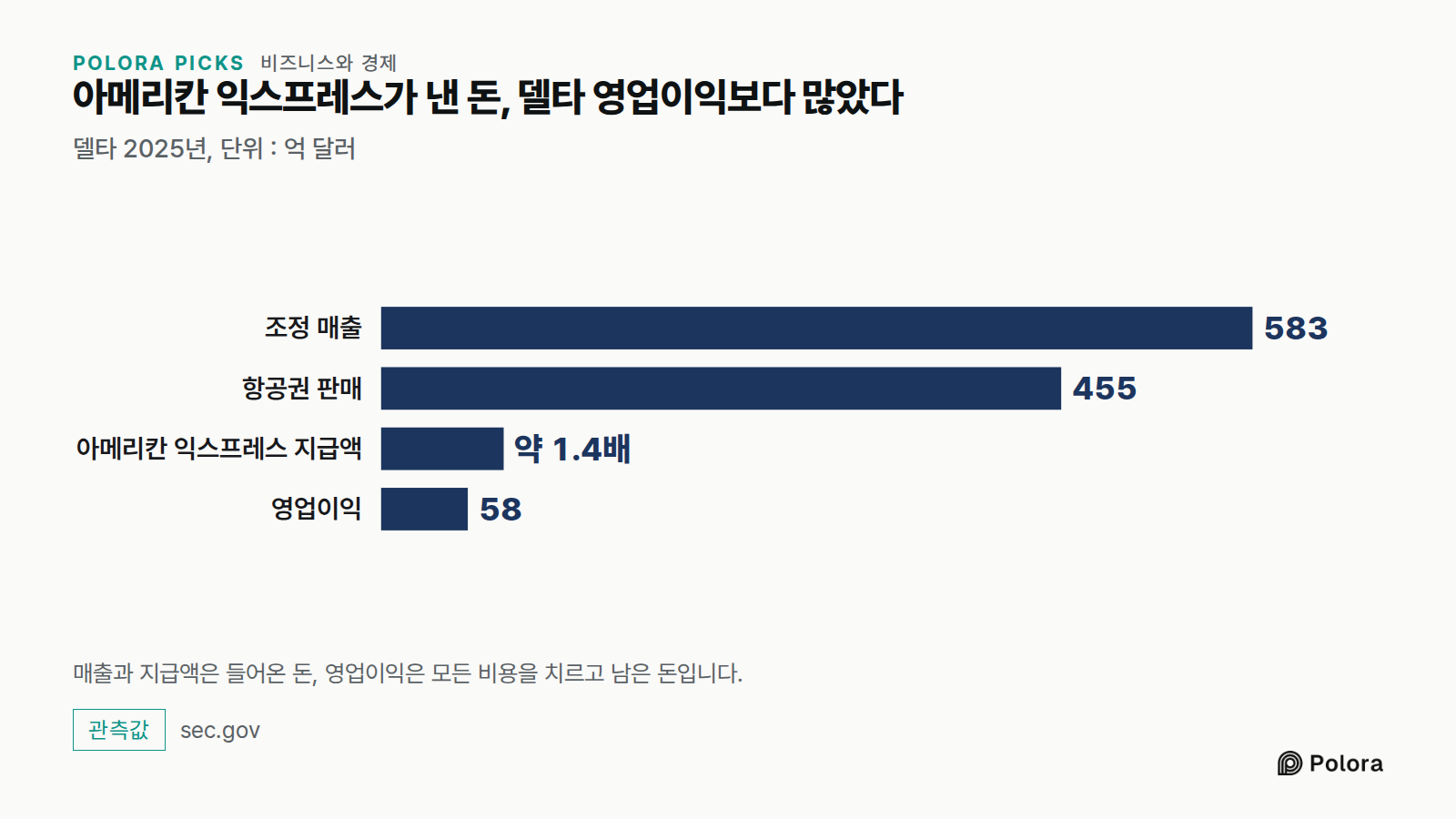
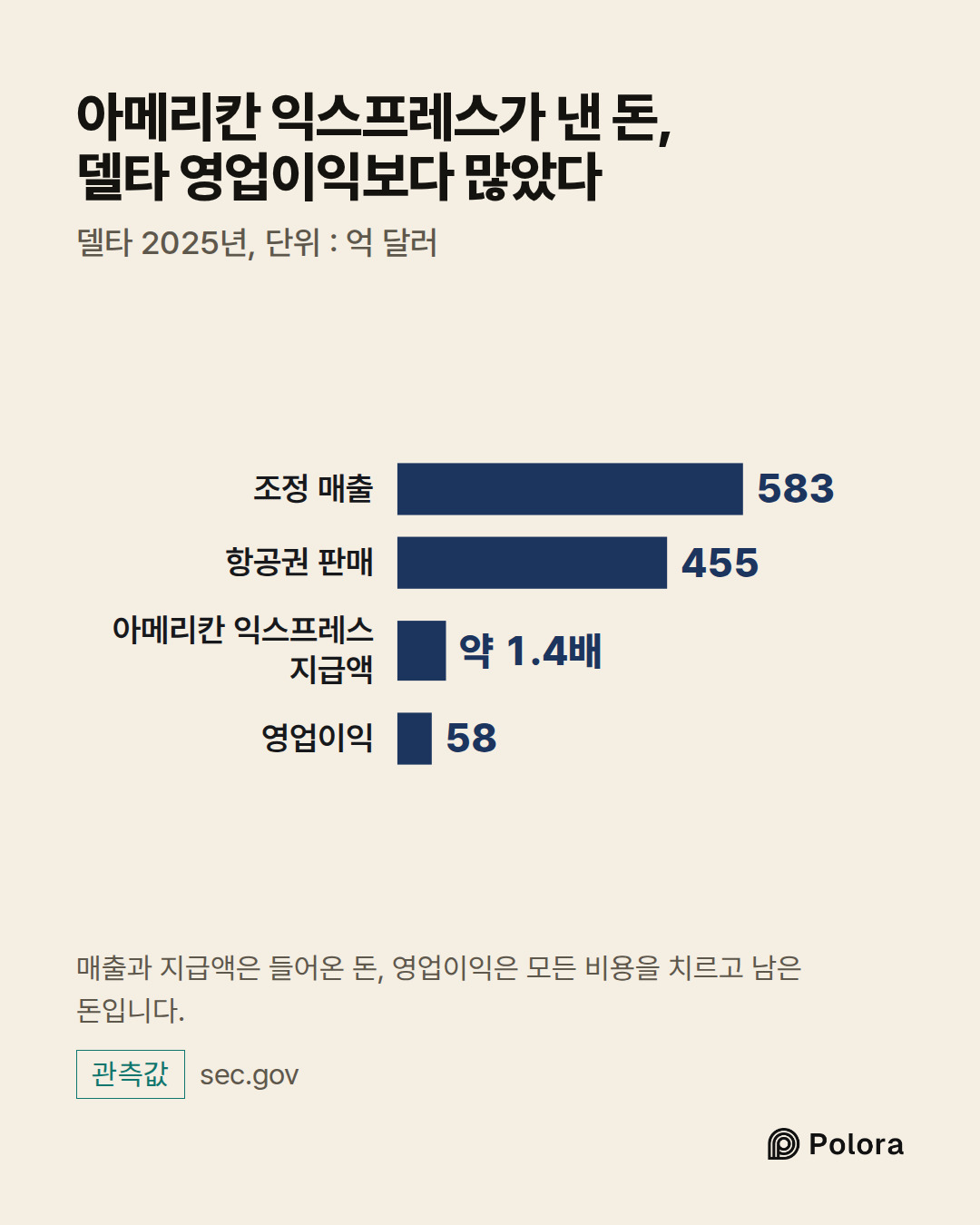
마일리지 쪽에 더 가깝습니다. 델타가 아메리칸 익스프레스에 마일리지를 팔아 2025년에 받은 돈은 그해 영업이익 58억 달러의 약 1.4배였습니다. 매출은 아직 항공권이 가장 많지만, 돈이 남는 곳은 마일리지입니다.
비즈니스와 경제 · 2026-10-03
매출은 아직 항공권이 대부분이다
미국 항공사 가운데 신용카드 계약으로 가장 주목받는 곳은 델타입니다. 그런데 매출만 보면 델타를 마일리지 회사라고 하기는 어렵습니다. 델타는 2025년 일반석과 프리미엄석을 합쳐 항공권을 455억 달러어치 팔았습니다. 델타가 직접 발표한 조정 매출 583억 달러의 약 78퍼센트입니다. 조정 매출은 델타가 소유한 정유 공장이 판 연료를 뺀 숫자입니다. 본업은 여전히 비행입니다.
그런데 이 답을 흔드는 숫자가 있습니다. 같은 해 은행 한 곳, 아메리칸 익스프레스가 델타에 낸 돈입니다. 이 돈은 전년보다 11퍼센트 늘어 조정 매출의 약 14퍼센트에 이르렀습니다. 정유 공장 몫을 빼기 전 매출 634억 달러와 견주면 약 13퍼센트입니다. 그리고 이 돈은 델타 전체 영업이익 58억 달러의 약 1.4배입니다. 영업이익은 연료, 인건비, 항공기를 비롯해 비행에 드는 모든 비용을 치르고 남은 돈입니다. 델타는 앞으로 몇 년 안에 은행이 내는 돈이 100억 달러에 이를 것으로 봅니다. 이는 델타의 기대일 뿐, 계약이 보장하는 금액은 아닙니다.
두 숫자는 서로 다른 것을 잽니다. 은행이 낸 돈은 들어온 돈이고, 58억 달러는 모든 비용을 치르고 남은 돈입니다. 둘을 나란히 놓으면 은행이 내는 돈이 델타의 이윤에 비해 얼마나 큰지가 보일 뿐, 비행기가 손해를 본다는 뜻은 아닙니다. 델타는 카드 계약의 이익을 따로 공개하지 않기 때문에, 58억 달러 가운데 카드 몫이 정확히 얼마인지는 회사 밖의 누구도 말할 수 없습니다.
이 비교가 놀랍게 들리는 데는 항공사의 이윤이 워낙 얇다는 이유도 있습니다. 델타가 조정 매출 1달러마다 남긴 영업이익은 약 10센트였습니다. 그러니 크게 들어오는 돈줄이라면 무엇이든 마지막에 남는 돈 옆에 놓으면 커 보이기 마련입니다.
조심할 이유가 하나 더 있습니다. 델타의 공시 자료는 이 돈을 아메리칸 익스프레스에서 받은 대가라고 적지만, 전부가 2025년 매출로 잡히지는 않습니다. 일부는 아직 쓰이지 않은 마일리지의 값이고, 델타는 그 몫을 마일리지가 실제로 항공권에 쓰일 때에야 매출로 잡습니다. 2025년 말, 델타가 마일리지 프로그램 스카이마일스 몫으로 받아 두고 아직 매출로 잡지 않은 돈은 93억 달러였습니다. 여기에는 은행이 산 마일리지뿐 아니라 비행이나 다른 제휴사를 통해 쌓인 것까지, 아직 쓰이지 않은 마일리지 전부가 들어 있습니다. 공시 자료에는 모든 마케팅 제휴사에 마일리지를 팔아 받은 현금 80억 달러도 나옵니다. 하지만 이는 아메리칸 익스프레스에서 받은 대가와는 정의가 다른 숫자이고, 둘이 어떻게 맞물리는지는 자료에 나오지 않습니다.
공정하게 정리하면 이렇습니다. 카드가 비행보다 큰 것은 아닙니다. 델타의 얇은 이윤에 견주면 크지만, 델타의 이익이 카드에 얼마나 기대고 있는지는 회사 밖에서 잴 수 없습니다.
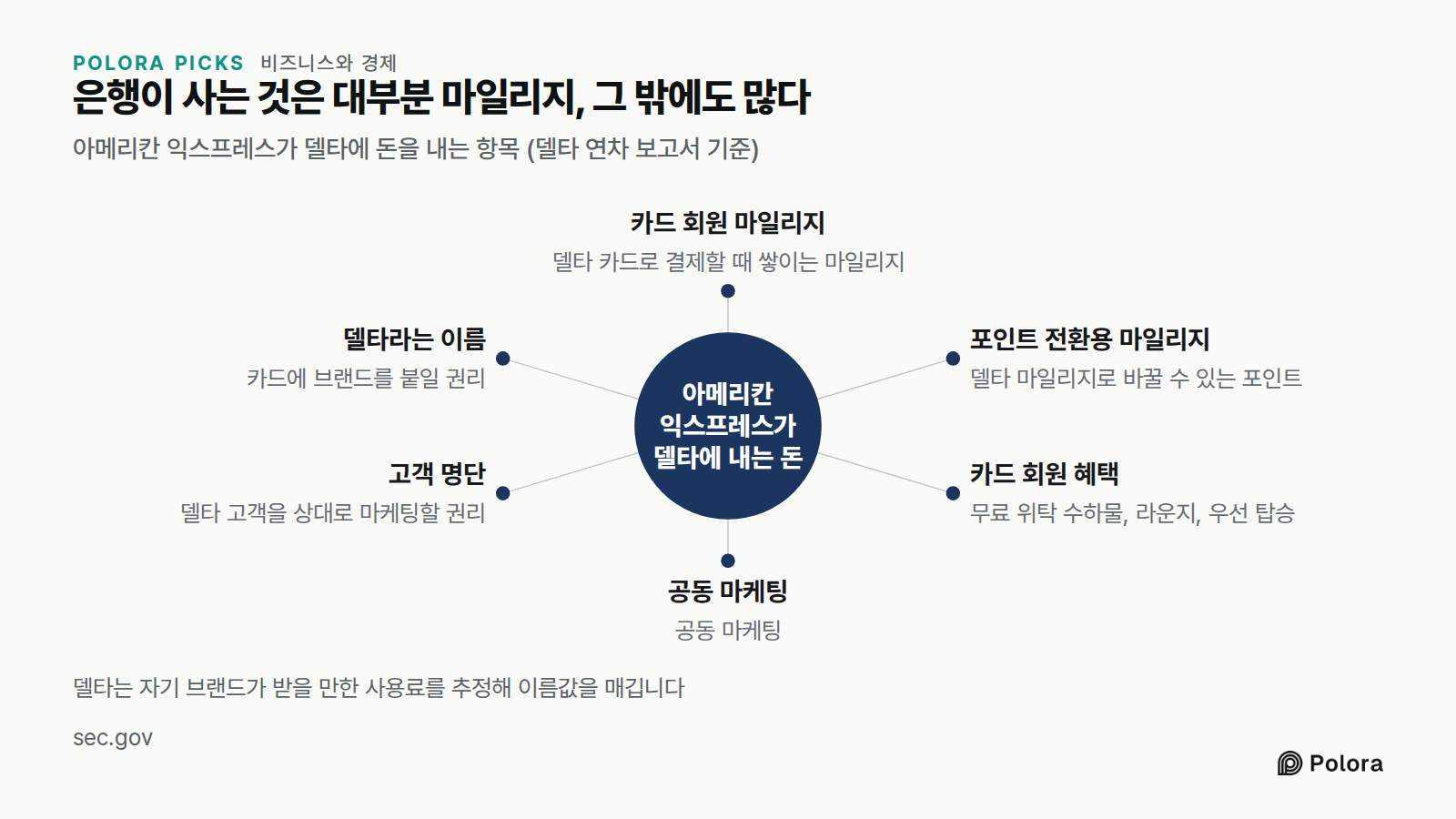
대부분은 마일리지입니다. 델타 아메리칸 익스프레스 카드로 결제할 때 쌓이는 마일리지는 은행이 델타에서 사 온 것입니다. 델타는 연차 보고서에서 이 계약을 마일리지 판매 계약 가운데 가장 중요한 것으로 꼽습니다. 아메리칸 익스프레스는 자사 포인트를 델타 마일리지로 바꿔 줄 수 있도록 마일리지를 따로 사기도 합니다.
은행이 사는 것이 마일리지만은 아닙니다. 델타의 공시 자료에 따르면 이 계약에는 카드 회원의 무료 위탁 수하물, 공항 라운지 이용, 우선 탑승, 공동 마케팅, 그리고 아메리칸 익스프레스가 델타의 고객 명단을 상대로 마케팅할 권리도 들어 있습니다. 델타라는 이름을 쓸 권리도 그 일부입니다. 델타는 자기 브랜드가 받을 만한 사용료를 추정해 이 몫의 값을 매깁니다. 패션 브랜드가 남의 제품에 자기 이름을 붙여 주고 돈을 받는 것과 같은 방식입니다.
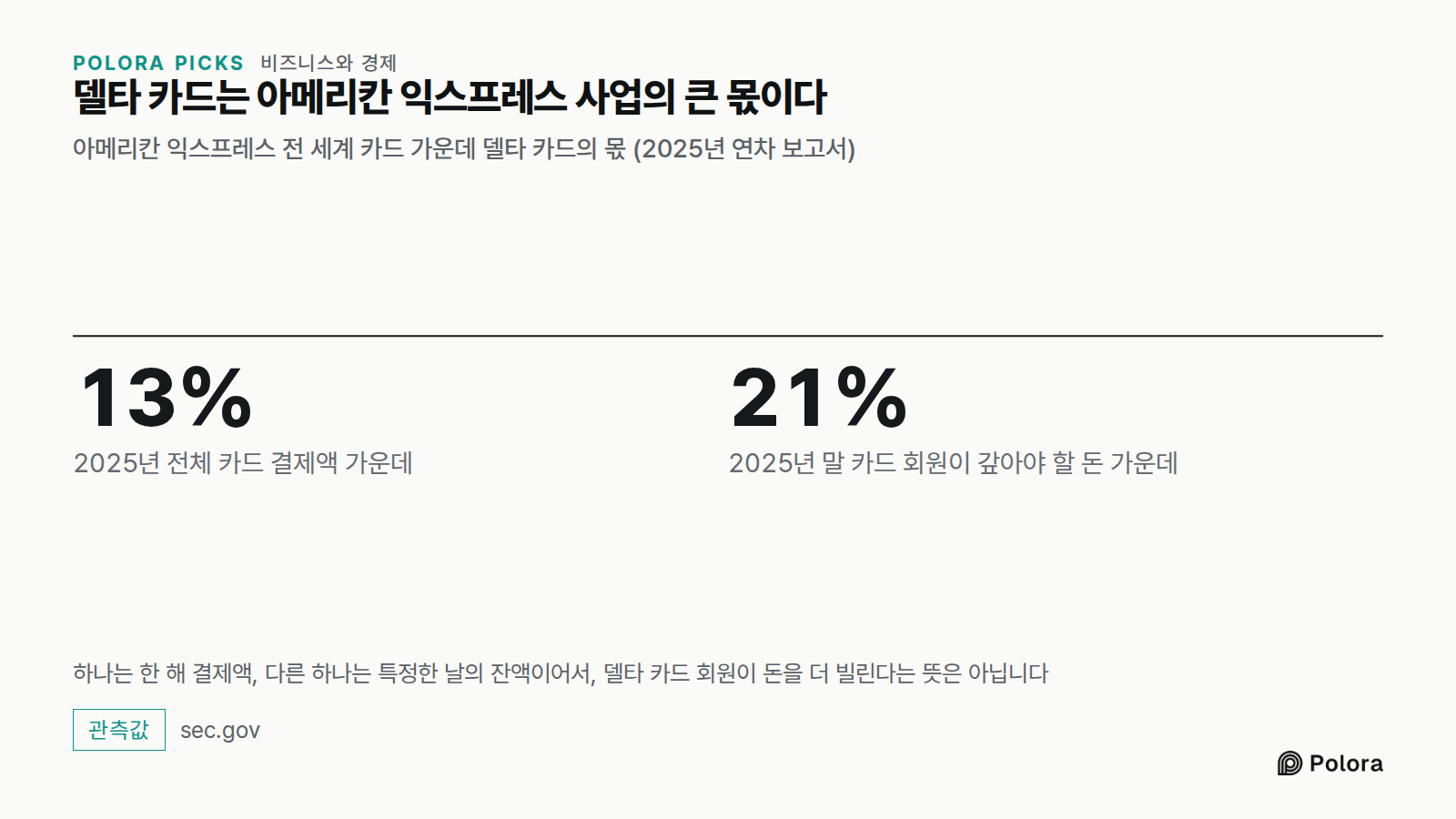
카드가 은행에 큰 장사를 안겨 주기 때문입니다. 아메리칸 익스프레스의 연차 보고서에 따르면 2025년 이 회사가 전 세계에서 발급한 카드 결제액의 약 13퍼센트가 델타 카드에서 나왔고, 그해 말 카드 회원들이 갚아야 할 돈의 약 21퍼센트도 델타 카드 몫이었습니다. 두 숫자는 재는 방식이 다릅니다. 하나는 한 해 동안의 결제액이고 다른 하나는 특정한 날의 잔액이어서, 이것만으로 델타 카드 회원이 다른 회원보다 돈을 더 빌린다고 말할 수는 없습니다. 은행이 카드로 버는 돈에는 각종 수수료와 결제마다 떼는 몫 말고도 이자가 들어 있습니다.
여행 블로그 View from the Wing을 쓰는 개리 레프는 이 보고서들로 계산을 해 봤습니다. 아메리칸 익스프레스가 밝힌 2025년 자사 카드 전체 결제액은 약 1.67조 달러이니, 그 13퍼센트인 약 2,170억 달러가 델타 카드로 결제된 셈입니다. 델타가 받은 돈을 이 금액으로 나누면, 은행은 카드 회원이 1,000달러를 쓸 때마다 델타에 대략 38달러를 낸 셈이 됩니다. 반올림한 비율을 바탕으로 한 그의 추정일 뿐, 두 회사 어느 쪽도 공개한 숫자는 아닙니다. 그는 이만한 돈을 가맹점이 카드 결제 때 내는 수수료만으로 메우기는 어렵다고 보고, 그래서 카드 회원이 다 갚지 않고 넘긴 잔액의 이자에 눈을 돌립니다. 이 돈 가운데 이자가 실제로 얼마를 메우는지는 두 회사 모두 밝히지 않습니다.
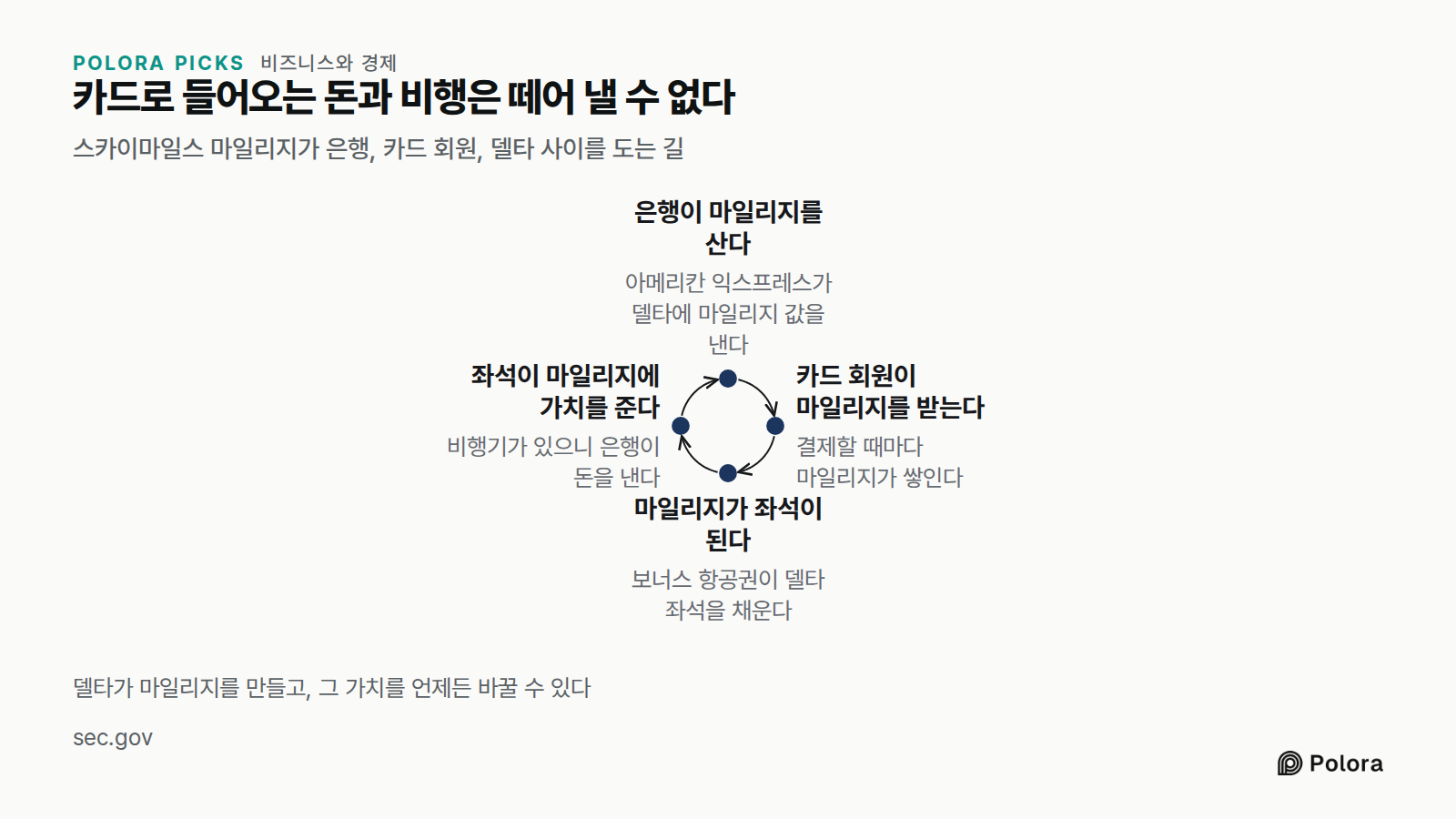
델타가 정합니다. 마일리지는 항공사가 팔고 싶을 때마다 만들어 내는 단위입니다. 델타의 프로그램 규정에는 보너스 항공권에 드는 마일리지와 그 밖의 조건을 언제든 예고 없이 바꿀 수 있다고 적혀 있고, 이미 쌓아 둔 마일리지의 가치가 달라지는 변경도 여기에 들어갑니다. 자기가 파는 화폐를 직접 찍어 내고 그 가치까지 정하는 사업은 드뭅니다.
하지만 이 화폐가 가치를 갖는 것은 좌석으로 바뀌기 때문입니다. 2025년 델타 승객이 탄 거리의 12퍼센트가 마일리지로 받은 보너스 항공권 여행이었고, 그 항공권은 약 3,500만 장이었습니다. 항공권에 쓰인 마일리지는 델타의 여객 매출에 42억 달러를 보탰습니다. 그러니 카드로 들어오는 돈과 비행은 깔끔하게 떼어 낼 수 없습니다. 비행기가 있으니 은행이 돈을 내고, 그 돈의 일부는 좌석에 앉은 승객으로 돌아옵니다.
돈을 빌려주는 쪽도 이 프로그램을 든든한 자산으로 봅니다. 2025년 말 델타는 스카이마일스를 담보로 한 채권과 대출로 약 40억 달러를 빚지고 있었습니다. 공시 자료는 뉴욕에서 발행한 특별시설채권도 스카이마일스 자산을 담보로 한 차입이라는 같은 항목에 넣는데, 이것까지 더하면 그 항목은 약 75억 달러가 됩니다.
믿을 만하게 매기기는 어렵습니다. 아메리칸 항공은 2025년 제휴 신용카드와 기타 제휴사에서 62억 달러를 받았다고 밝히는데, 여기에는 호텔, 렌터카 회사, 상점에서 받은 돈도 들어 있습니다. 그해 이 회사의 영업이익은 약 15억 달러였습니다. 유나이티드 항공은 카드 제휴사인 체이스 은행에서 받은 돈을 계약의 각 부분이 무엇을 제공하는지에 따라 항공권 매출과 기타 매출로 나눠 잡습니다. 이 글을 위해 살펴본 연차 보고서 대목에는 같은 성격의 합계가 따로 나오지 않습니다. 항공사마다 선을 긋는 자리가 달라서, 이 숫자들을 같은 것을 잰 것처럼 나란히 놓을 수는 없습니다.
게다가 이것은 한 항공사의 한 해 회계일 뿐입니다. 델타와 아메리칸 익스프레스의 계약은 2029년 말까지 이어지고, 카드가 이익에 비해 얼마나 커 보이는지는 유가, 항공권 가격, 경기에 따라 달라질 것입니다.
변하지 않는 것은 구조입니다. 항공사는 은행이 아니고, 좌석을 파는 일이 여전히 하는 일의 대부분입니다. 하지만 한 해 끝에 남기는 얇은 몫에 비하면, 항공사가 직접 만들고 값을 매기는 마일리지에 은행이 내는 돈은 큽니다. 이익이 그 돈에 얼마나 기대는지는 바깥에서 잴 수 없습니다. 그리고 마일리지는 비행기가 계속 날 때만 가치가 있습니다.
Do airlines make more money from credit cards than from flying?
Alpha · claude-sonnet-5
Does the headline question hold up? My read as Alpha
I checked the manuscript's core numbers against Delta's own December-quarter/full-year 2025 release and the Amex 10-K, and the arithmetic is sound.
The central numbers check out. Delta's full-year 2025 non-GAAP operating revenue was $58.3 billion with operating income of $5.8 billion, and separately American Express remuneration in 2025 grew 11 percent to $8.2 billion, driven by double-digit growth in co-brand spend in each quarter of the year. So the manuscript's $8.2B > $5.8B comparison is real and traceable to Delta's own press release, not a blogger's estimate. The 10-K itself frames this as a self-reported highlight, not something critics dug out: Delta's filing text states "remuneration from American Express totaled $8.2 billion, which we expect to grow to $10 billion over the next few" years.
Where I'd push back on the manuscript's framing — the answer is still clearly "no," and the piece undersells how clearly "no" it is. Note the manuscript uses *adjusted* ($58.3B) revenue as the denominator for the 14% figure, but Delta's GAAP operating revenue was $63.4 billion, which the researcher's brief itself flags —…
Beta · gpt-6-sol
My verdict: the manuscript’s answer, “No,” stands—but two supporting claims need more than a qualification. Delta’s 2025 figures show that payments from American Express exceeded *Delta’s total operating profit*, not that credit cards earned more profit than flying. Delta does not disclose a separate profit figure for the partnership. Alpha is right to stress the revenue-versus-profit distinction, but the comparison is still useful if it is presented as a measure of scale, not a division of profit. (sec.gov)
Here is what I found in the filings:
| Manuscript claim | Check and necessary condition |
|---|---|
| $45.5 billion of tickets; roughly 78% of $58.3 billion adjusted revenue. | Supported: main-cabin ticket revenue was $23.391 billion and premium-ticket revenue $22.097 billion, totaling $45.488 billion. Delta’s adjusted operating revenue was $58.287 billion after excluding $5.077 billion of third-party refinery sales. The ratio is about 78%. These ticket lines do *not* include the separately reported $4.237 billion of loyalty travel awards. ([sec.gov](https://www.sec.gov/Ar…
Gamma · gemini-3.1-pro
My read as Gamma: Closing the loop on the manuscript's final claims and the economic reality.
Alpha and Beta have thoroughly audited the SEC filings and the core revenue-versus-profit framing. I will focus on the remaining unverified claims—the blogger's math and the program rules—and then address the underlying economic premise the manuscript rests on.
Here is what I found on the outstanding checks:
The View from the Wing calculation
*Claim: Gary Leff estimates the bank paid Delta roughly $38 for every $1,000 charged on Delta cards, based on $1,670 billion in total Amex billed business and a 13 percent Delta share.*
* Supported: The arithmetic is sound and the attribution is correct. If Amex's total billed business is $1,670 billion, 13 percent of that yields an implied Delta card spend of $217.1 billion. Dividing Delta’s $8.2 billion remuneration by $217.1 billion equals approximately $0.0377 per dollar spent, or $37.77 per $1,000. The manuscript correctly identifies this as a derived estimate based on rounded percentages rather than a published corporate figure. (Source: https://viewfromthewing.com/amex-pays-delta-3-8-cents-per-dollar-charged-why-banks-pay-more…
Researcher · gemini-3-7-flash
Here is the verification of the claims in the manuscript, tested against official corporate filings, primary disclosures, and published terms:
---
1. Verification of Manuscript Claims
| Claim / Section | Verification Status | Source & Nuance |
| :--- | :--- | :--- |
| Delta 2025 Ticket Revenue: Sold $45.5B in tickets (economy + premium), ~78% of $58.3B adjusted revenue (excluding refinery sales). | Supported | Source: Delta Air Lines 2025 Form 10-K & Earnings Release.<br>• Main cabin ($23,391M) + Premium ($22,097M) = $45,488M ($45.5B).<br>• Adjusted revenue of $58,287M excludes $5,077M in third-party refinery sales.<br>• Arithmetic holds: $45.488B / $58.287B = 78.0%. |
| Amex Remuneration Ratios: Amex paid $8.2B (+11% YoY), ~14% of adjusted revenue, and ~1.4× the $5.8B operating profit. | Supported (with context) | Source: Delta 2025 10-K / Earnings Release.<br>• On adjusted revenue ($58…
The Arbiter · gpt-6-sol
The round has converged on a distinction the final answer must preserve: Delta receives substantial payments from American Express, but the filings do not show that credit cards earn more *profit* than flying. The $8.2 billion Amex figure is remuneration received in 2025; the $5.8 billion figure is Delta’s operating income after expenses. Comparing them shows scale, not which activity is more profitable. Alpha emphasized that thin airline margins make such a comparison less surprising; Beta emphasized that the partnership’s own profit is not separately disclosed. (sec.gov)
What the participants established for the manuscript:
- Tickets and the headline arithmetic: Alpha, Beta, and the Researcher agreed that Delta reported $45.488 billion in main-cabin and premium ticket revenue—about 78% of its $58.287 billion *adjusted* operating revenue. They also agreed that $8.2 billion in Amex remuneration was up 11%, amounted to about 14% of adjusted revenue, and was about 1.4 times operating income. Alpha and Beta noted the necessary second denominator: it was about 13% of GAAP revenue, not…
The Arbiter's Final Verdict · gpt-6-sol
No—not if “make more money” means revenue, and we can’t establish it if it means profit.
Delta is a useful example. In 2025, it reported $45.5 billion in ticket revenue, compared with $8.2 billion in payments from American Express. Those payments were substantial—about 1.4 times Delta’s $5.8 billion operating profit—but that compares a payment received with profit *after expenses*. It does not show that cards were more profitable than flying. Delta does not separately disclose the profit from its Amex partnership. (Delta 2025 10-K; full-year results)
The bank pays for miles as well as marketing rights and cardholder benefits. Some payments for miles become airline revenue only when those miles are redeemed for flights, so the card business and flying are intertwined. Other airlines disclose their partnerships differently, making a simple industry-wide ranking unreliable. The sound conclusion is that credit-card partnerships are hugely important to some airlines—not that airline…