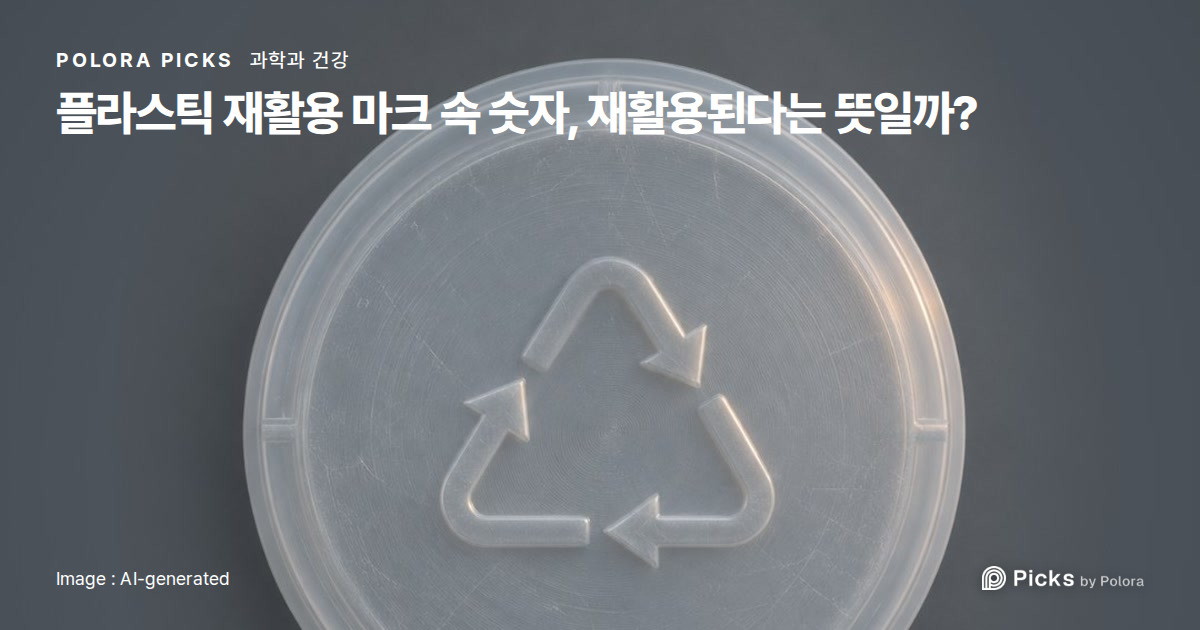
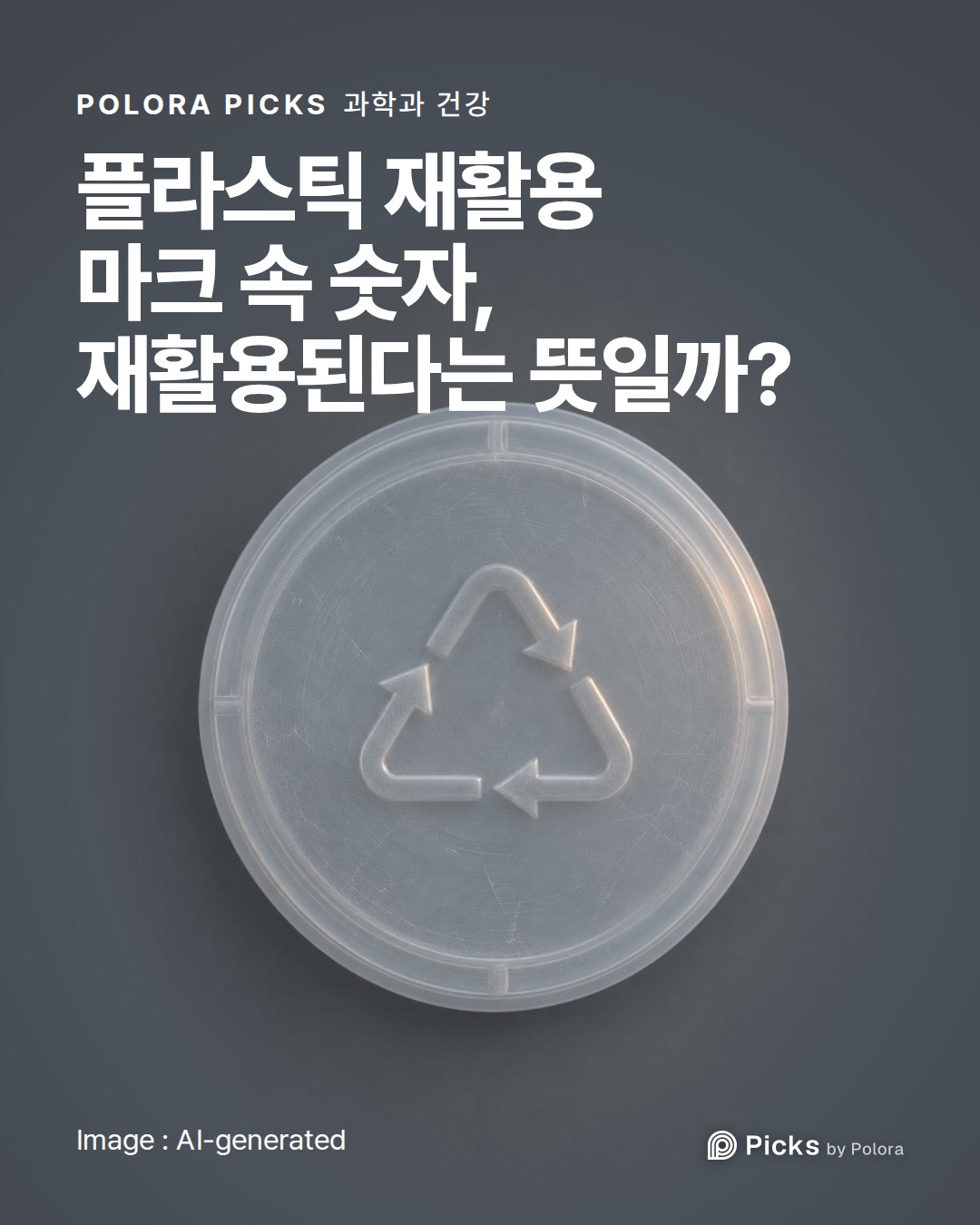
아닙니다. 화살표 안의 숫자 1~7은 플라스틱 종류를 알려 줄 뿐, 재활용 여부는 말하지 않습니다. 미국에서 가장 많이 재활용되는 1번 음료 페트병과 2번 우유통조차 미국 환경보호청(EPA)의 최신 전국 집계(2018년)에서 재활용률이 약 29%였습니다.
과학과 건강 · 2026-11-13
플라스틱의 작은 화살표 표시, '재활용 가능'이라는 뜻이 아니다
요거트 통, 생수병, 배달 음식 뚜껑을 뒤집어 보면 화살표 세 개가 숫자 하나를 빙 둘러싼 표시가 보입니다. 대부분은 보이는 그대로 받아들입니다. 재활용 통에 넣으면 된다는 뜻으로요.
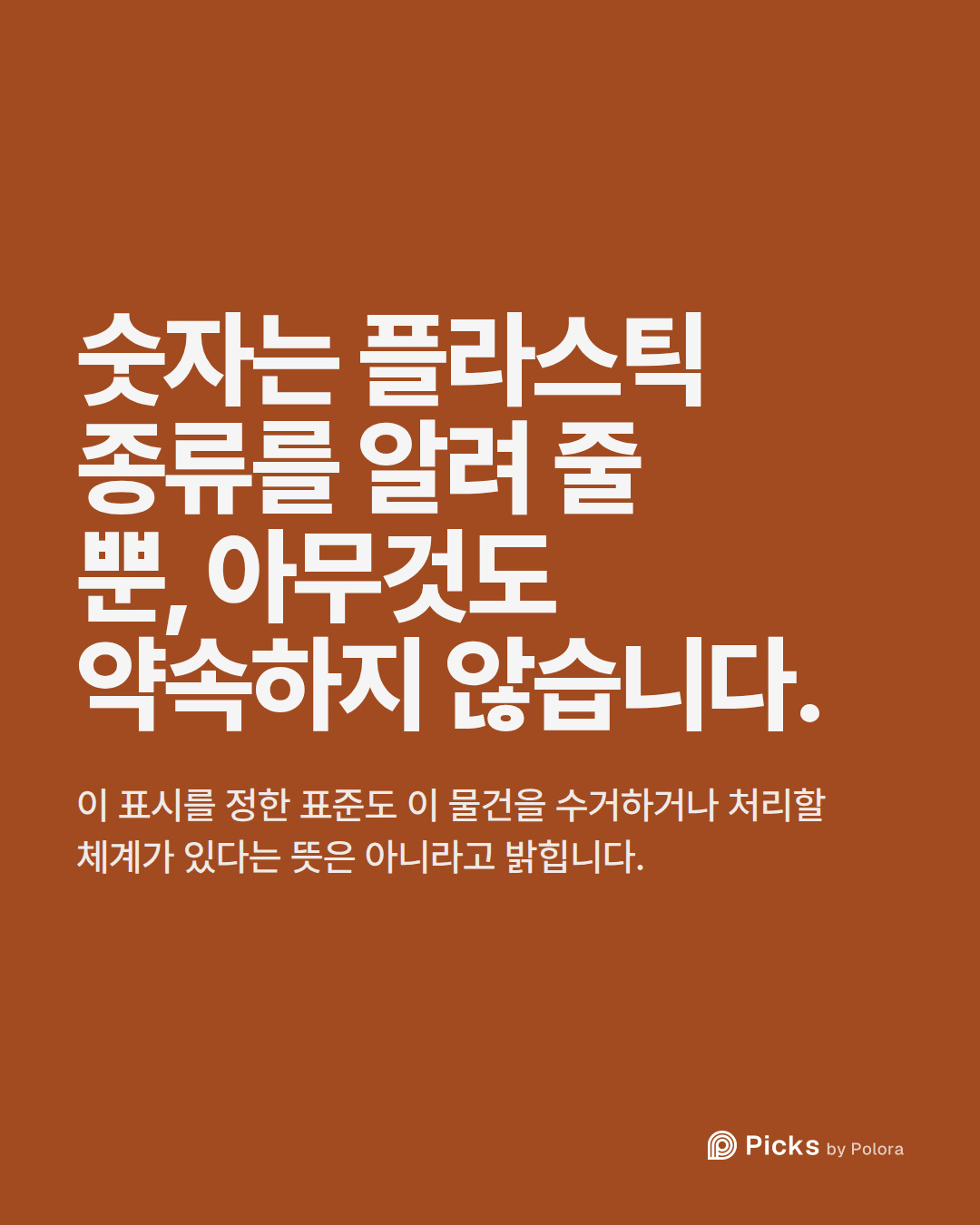
하지만 그 표시는 그런 말을 하지 않습니다. 숫자는 그 물건이 어떤 플라스틱으로 만들어졌는지를 알려 줍니다. 플라스틱을 선별하는 사람에게는 도움이 되지만, 아무것도 약속하지 않습니다. 이 표시를 정한 표준도 이 물건을 수거하거나 처리할 체계가 있다는 뜻은 아니라고 밝힙니다. 그 플라스틱을 누가 수거해 골라내고 새것으로 만드는지는 전혀 다른 곳에서 정해집니다. 동네 수거 업체가 보내는 선별장이 그것을 받는지, 그리고 거기서 나온 재료를 사 갈 사람이 있는지에 달려 있습니다.
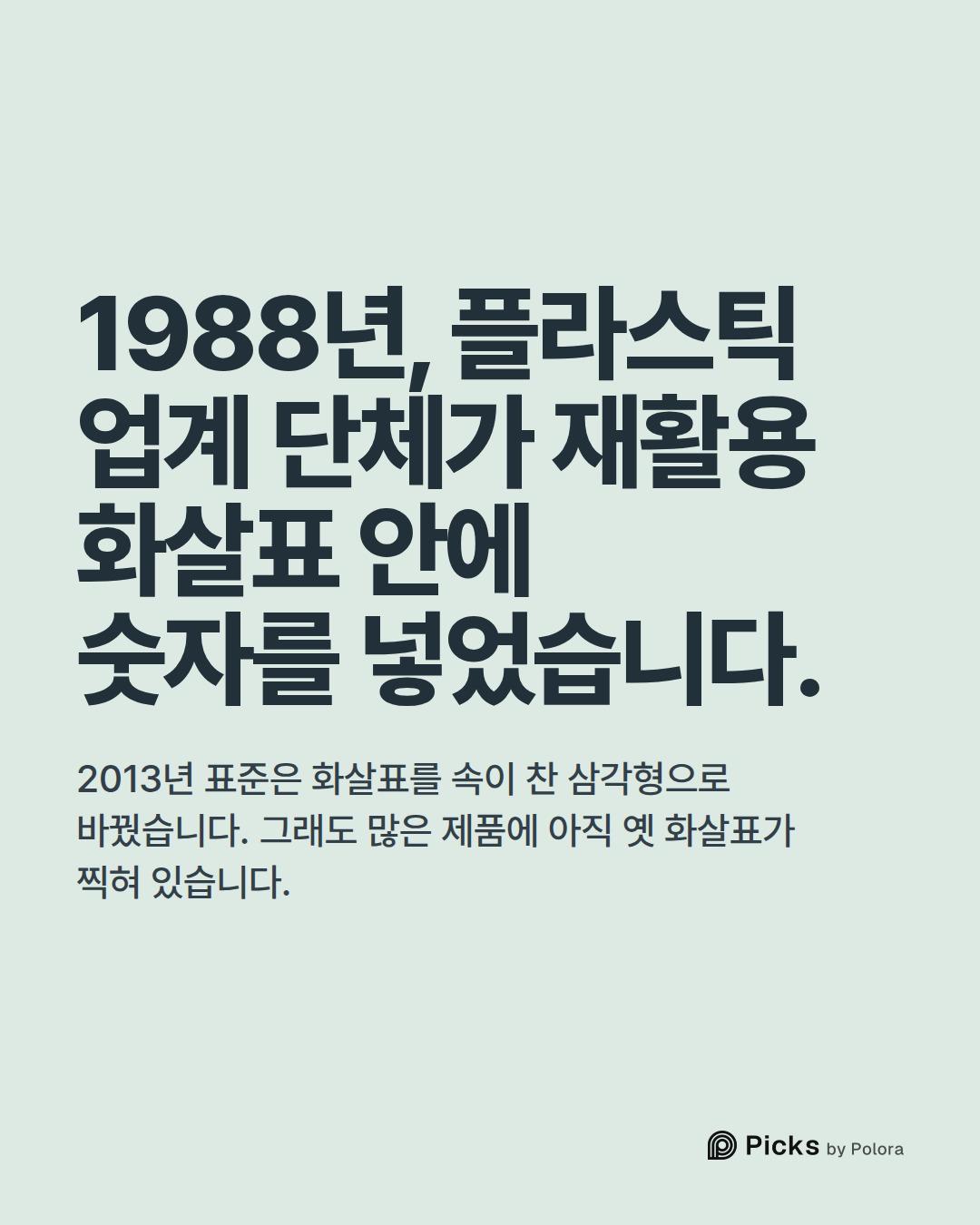
이 표시는 1988년 미국 업계 단체인 플라스틱산업협회(SPI)가 만들었습니다. 내세운 목적은 물건마다 무슨 소재인지 선별하는 사람에게 알려 줘서, 다 쓴 플라스틱을 재활용하기 쉽게 하자는 것이었습니다. 그래서 사람들이 이미 재활용 표시로 알던 세 화살표 고리 안에 숫자를 넣었습니다.
2008년에는 기술 표준을 만드는 기구인 ASTM 인터내셔널이 이 표시를 넘겨받았고, 지금은 D7611이라는 표준에 들어 있습니다. 2013년 개정에서는 돌아가는 화살표를 속이 찬 단순한 삼각형으로 바꿨습니다. 재활용을 떠올리게 하는 모양을 버려, 바로 이 글이 다루는 혼동을 없애려는 조치였습니다. 그런데도 많은 제품에 아직 예전 화살표가 찍혀 있는 것은 표준이 이미 쓰고 있는 금형까지 바꾸라고 요구하지 않기 때문입니다. 표준은 2026년 7월에 한 번 더 개정됐습니다.
ASTM도 이 점을 분명히 합니다. 이 표시는 물건이 어떤 수지(플라스틱 원료)로 만들어졌는지 알려 주려는 것이지, 제품이 재활용 가능한지를 말하려는 것이 아닙니다.
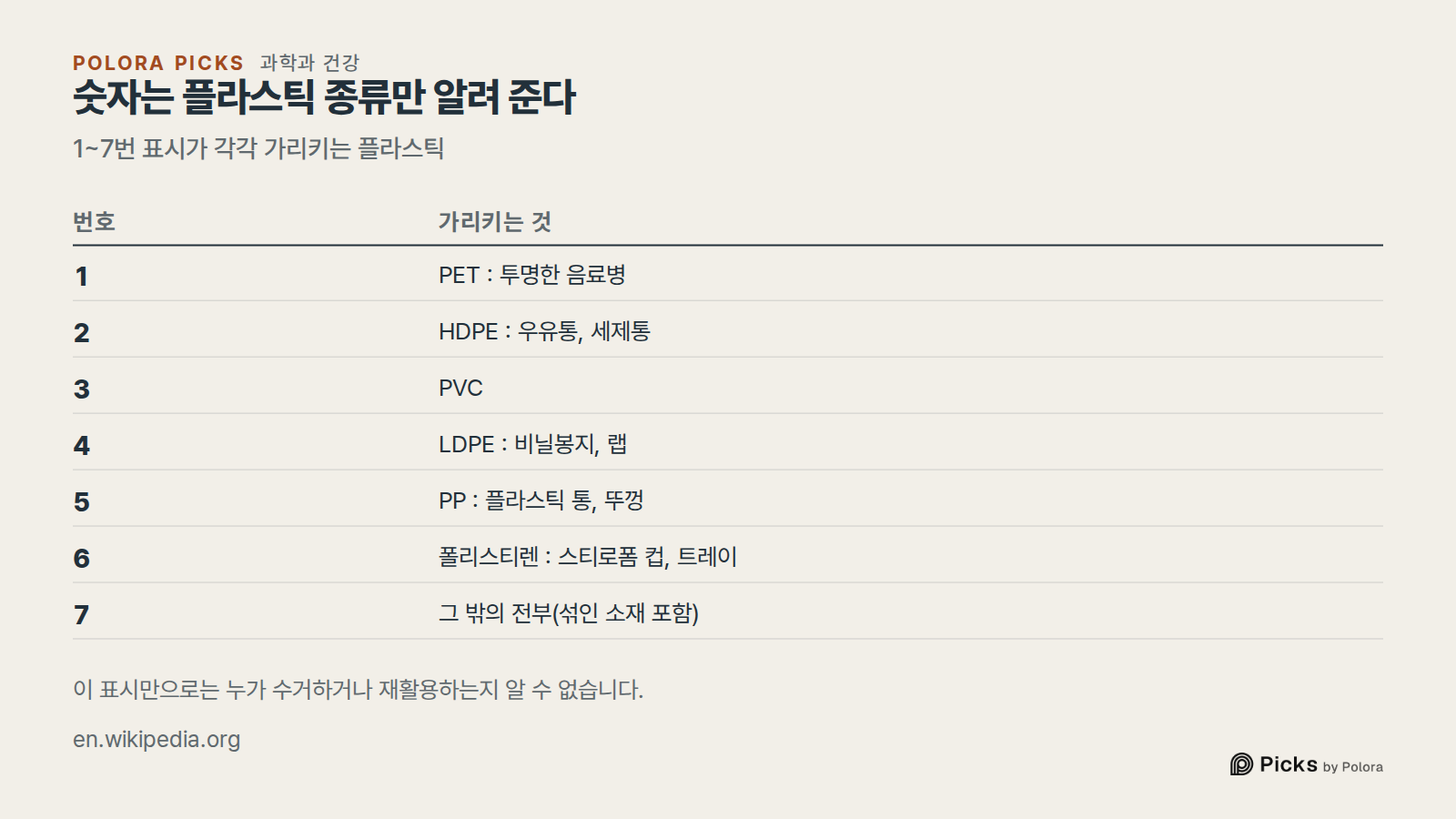
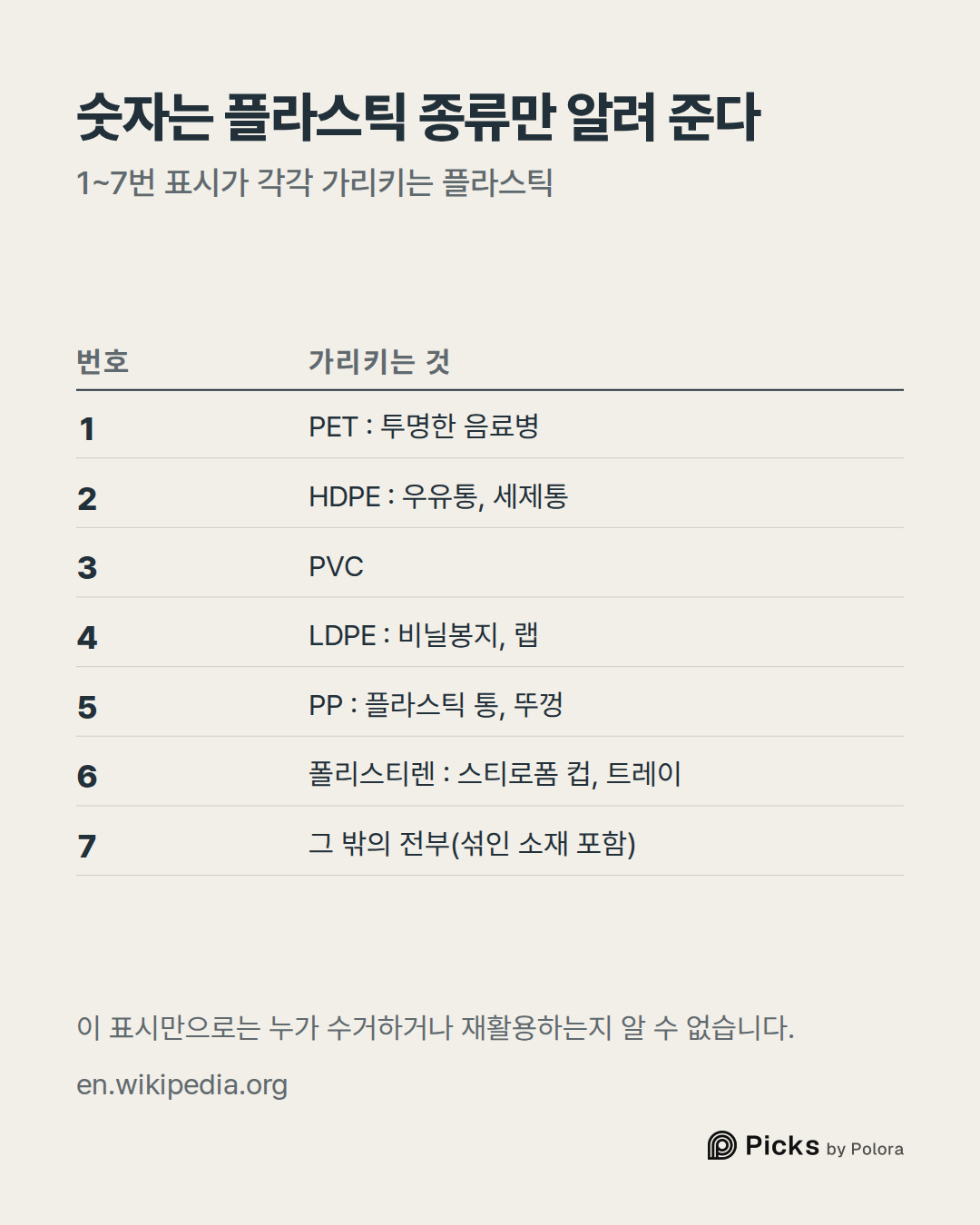
1번은 PET(페트)로, 대부분의 음료병에 쓰이는 투명한 플라스틱입니다. 2번은 HDPE(고밀도 폴리에틸렌)로, 우유통과 세제 통에 쓰이는 단단한 플라스틱입니다. 3번은 PVC입니다. 4번은 LDPE(저밀도 폴리에틸렌)로, 비닐봉지와 랩 같은 부드러운 플라스틱입니다. 5번은 PP(폴리프로필렌)로, 통과 뚜껑에 흔히 쓰입니다. 6번은 폴리스티렌으로, 컵과 트레이에 쓰이는 스티로폼이 여기 속합니다. 7번은 나머지 전부이고, 여러 소재가 섞인 것도 여기 들어갑니다.
그러니 7번은 일곱 번째 플라스틱 종류가 아닙니다. 앞의 여섯 가지에 들지 않는 것을 모두 몰아넣는 서랍입니다. 그래서 이 숫자만 보고는 선별장이 그 물건에 대해 알 수 있는 것이 거의 없습니다.
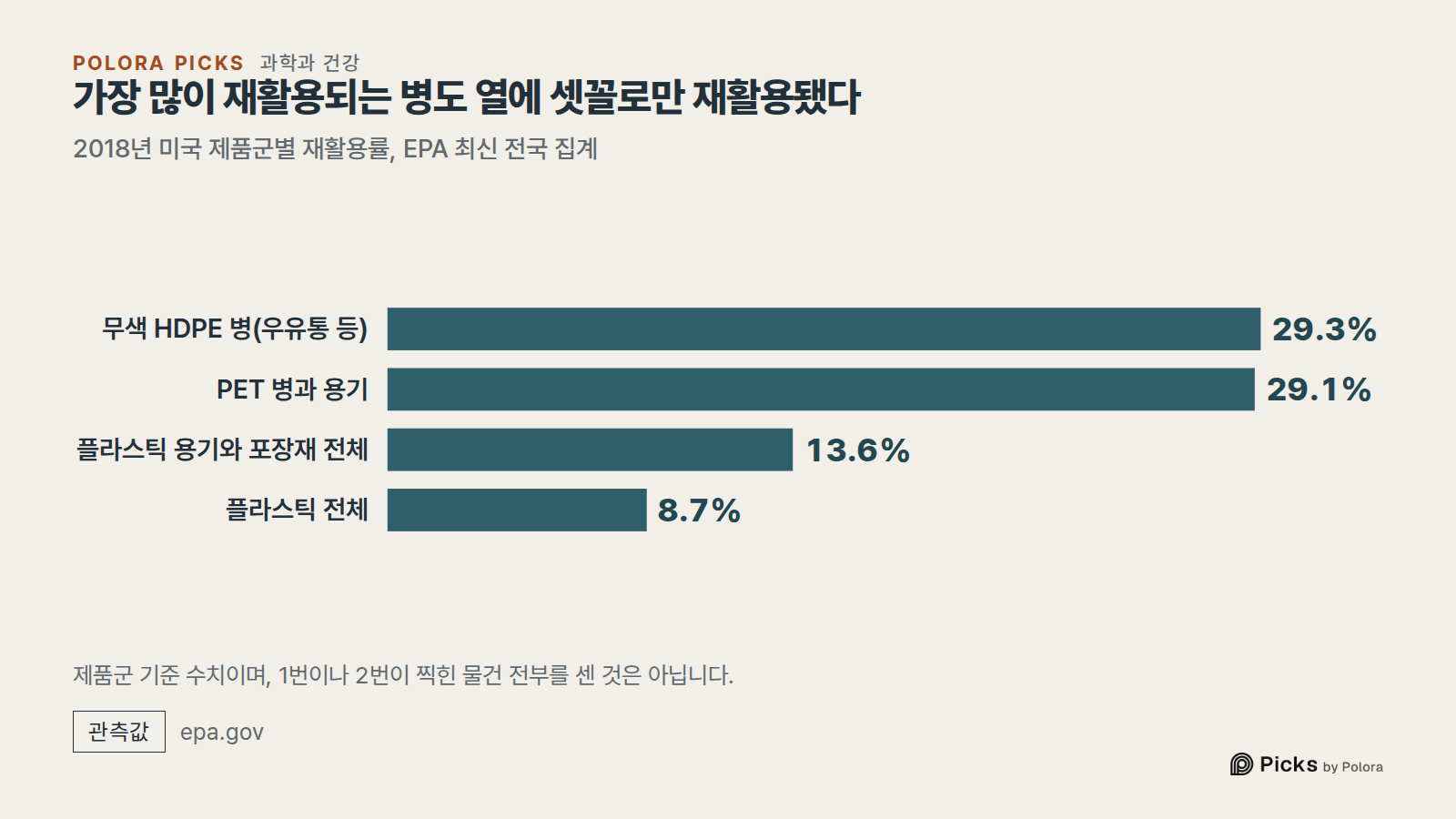
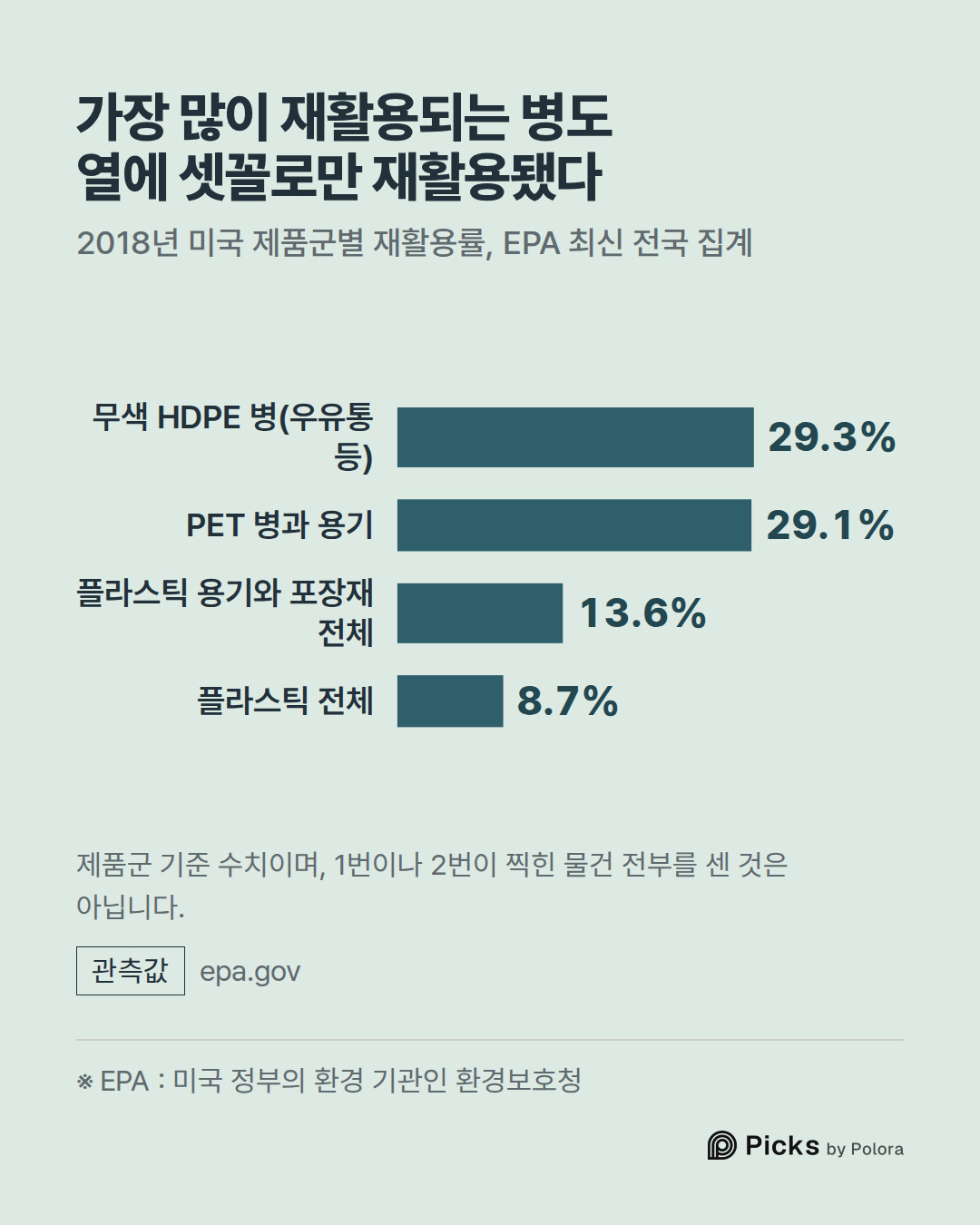
미국 환경보호청(EPA)의 가장 최근 전국 집계는 2018년 것입니다. 그해 PET 병과 용기는 29.1%, 우유통 같은 무색 HDPE 병은 29.3%가 재활용됐습니다. 플라스틱 용기와 포장재 전체로 보면 13.6%, 플라스틱 전체로는 8.7%였습니다. 이것은 해당 제품군을 기준으로 한 수치이고, 1번이나 2번이 찍힌 물건 전부를 센 것은 아닙니다.
다른 집계도 비슷한 이야기를 하지만, 세는 대상이 다릅니다. PET 업계 단체인 NAPCOR는 미국 PET 병 가운데 재활용용으로 수거된 비율을 2023년 32.5%(처음엔 33.0%로 발표했다가 수정), 2024년 30.2%로 집계합니다. 환경 단체인 그린피스 미국 지부는 실제로 재처리된 양을 추정해 2021년 기준으로 더 낮은 수치를 내놓았습니다. PET 20.9%, HDPE 10.3%, 3번부터 7번까지 나머지 종류는 각각 5% 미만입니다. 그린피스가 앞세운 대표 추정치는 그해 미국 가정에서 나온 플라스틱 쓰레기 가운데 약 5%가 재활용됐다는 것이었습니다. 재활용 업계는 이 수치의 계산 방식에 이의를 제기합니다.
집계마다 숫자가 다른 것은 어느 지점에서 재느냐가 다르기 때문입니다. 수거된 양인지, 재처리 업체가 사들인 양인지, 실제로 새 소재가 된 양인지요. 그래도 큰 그림은 같습니다. 1번과 2번 병이 가장 자주 재활용되는 플라스틱인데도 그 대부분은 재활용되지 않습니다. 나머지는 거의 재활용되지 않습니다.
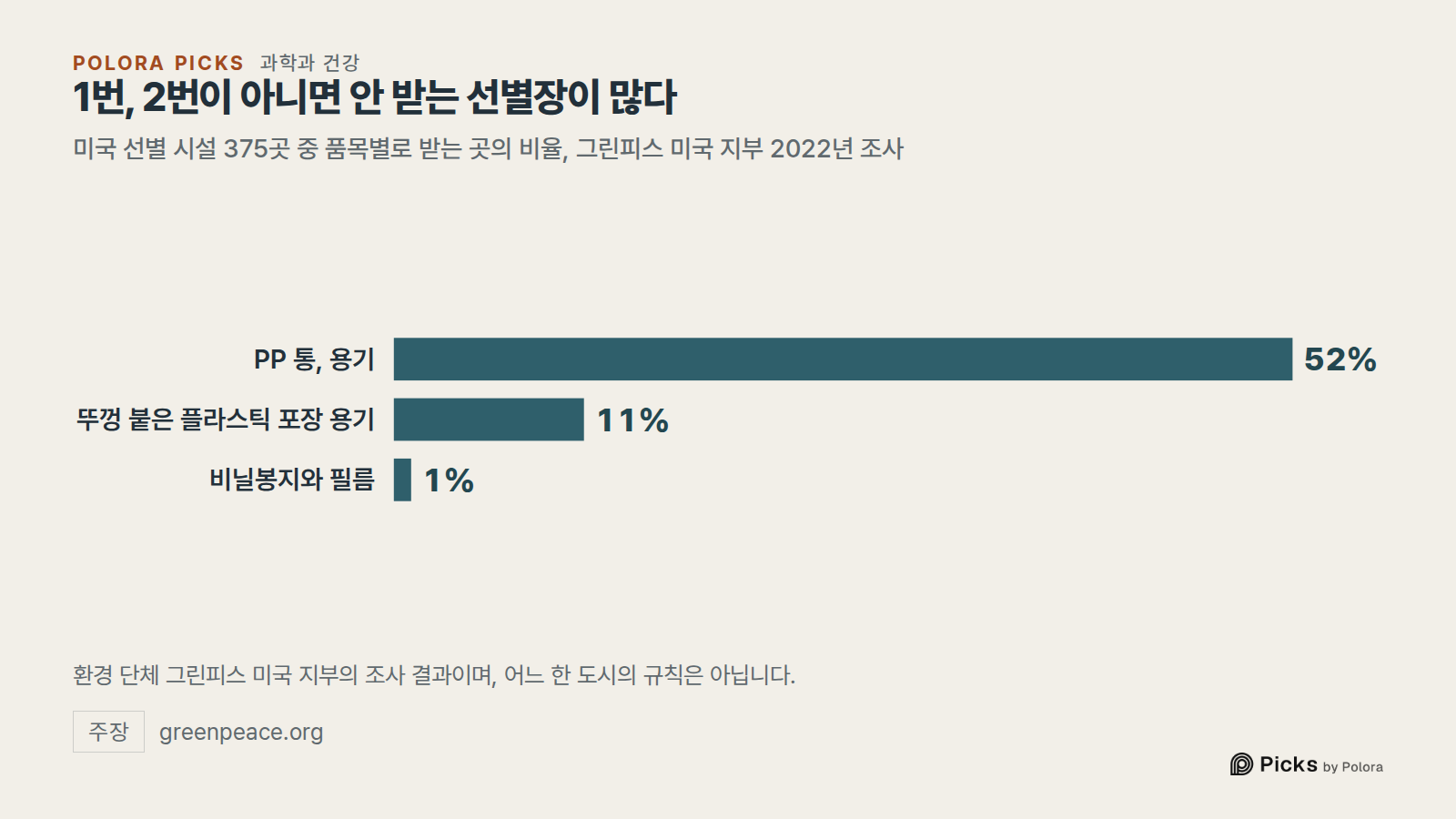
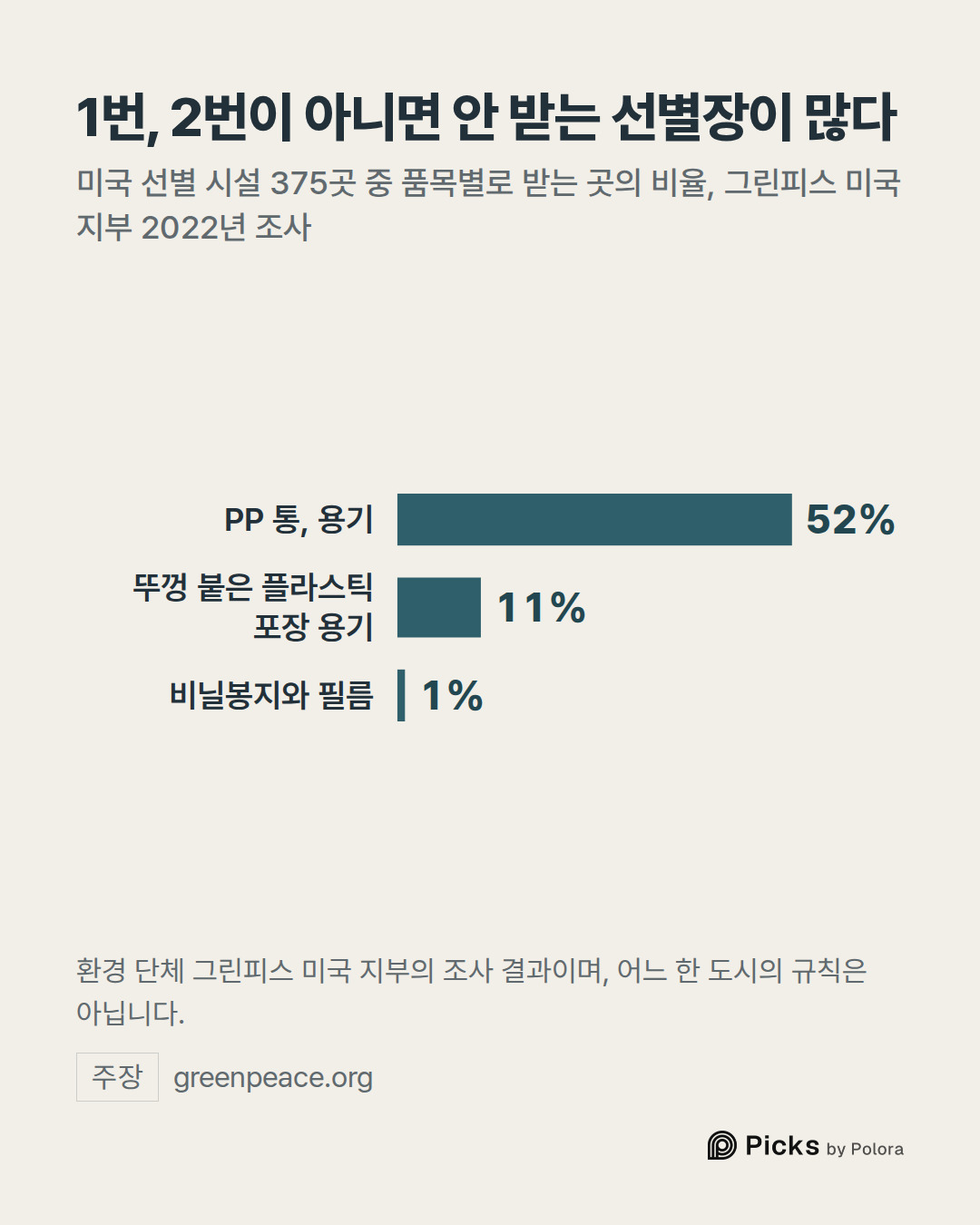
여기까지는 전국 평균입니다. 내가 버린 통이 어떻게 되는지는 수거 업체가 이용하는 선별장에 달려 있고, 선별장마다 사정이 다릅니다. 그린피스가 2022년 미국 선별 시설 375곳을 조사한 결과, 널리 받아 주는 것은 1번과 2번뿐이었습니다. PP로 된 통이나 용기를 받는 곳은 52%, 뚜껑이 붙은 플라스틱 포장 용기를 받는 곳은 11%, 비닐봉지와 필름을 받는 곳은 1%였습니다. 어디까지나 이 조사의 결과이고, 어느 한 도시의 규칙은 아닙니다.
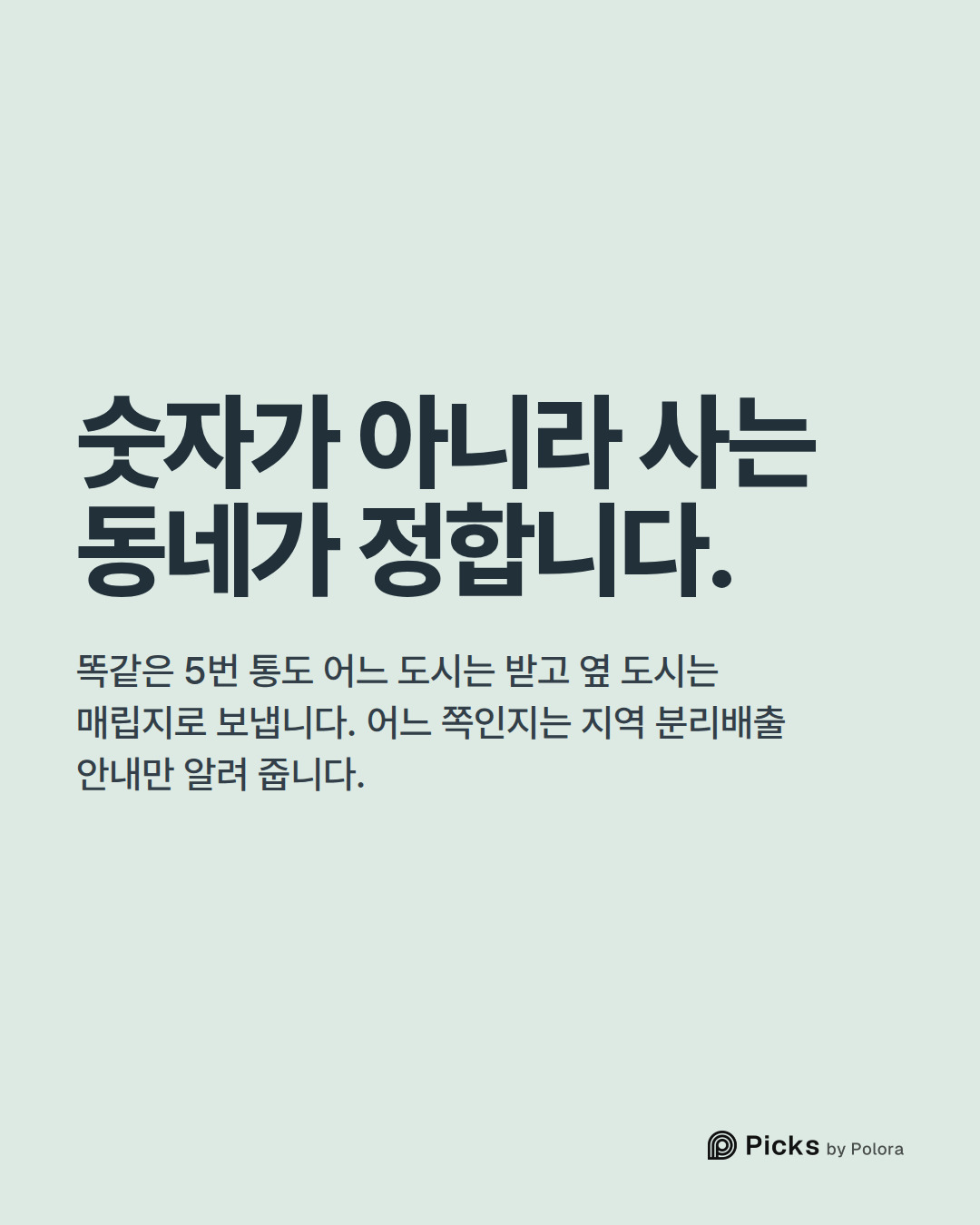
그래서 똑같은 5번 통을 어느 도시에서는 재활용 자원으로 반기고, 바로 옆 도시에서는 매립지로 보냅니다. 어느 쪽인지는 그 지역의 분리배출 안내만이 알려 줄 수 있습니다. 안내를 볼 때는 숫자만이 아니라 물건의 종류까지 확인해 볼 만합니다. 1번 병과 1번 트레이가 같은 곳으로 간다는 보장은 없으니까요.
미국 선별 시설 375곳 중 품목별로 받는 곳의 비율, 그린피스 미국 지부 2022년 조사
2021년 캘리포니아주는 SB 343이라는 법을 통과시켰습니다. 이 법에 따르면 돌아가는 화살표를 비롯해 재활용 가능을 뜻하는 표시는, 주 안에서 정기적으로 수거돼 재활용 처리되는 소재에만 쓸 수 있습니다. 구체적으로는 주 인구의 60% 이상을 아우르는 재활용 프로그램들이 그 소재를 수거하고, 주 전체 재활용 프로그램의 60% 이상이 이용하는 시설들이 그것을 선별해야 합니다. 이 기준에 못 미치지만 수지 표시는 해야 하는 플라스틱 제품은 화살표 대신 속이 찬 단순한 삼각형 안에 숫자를 넣어야 합니다.
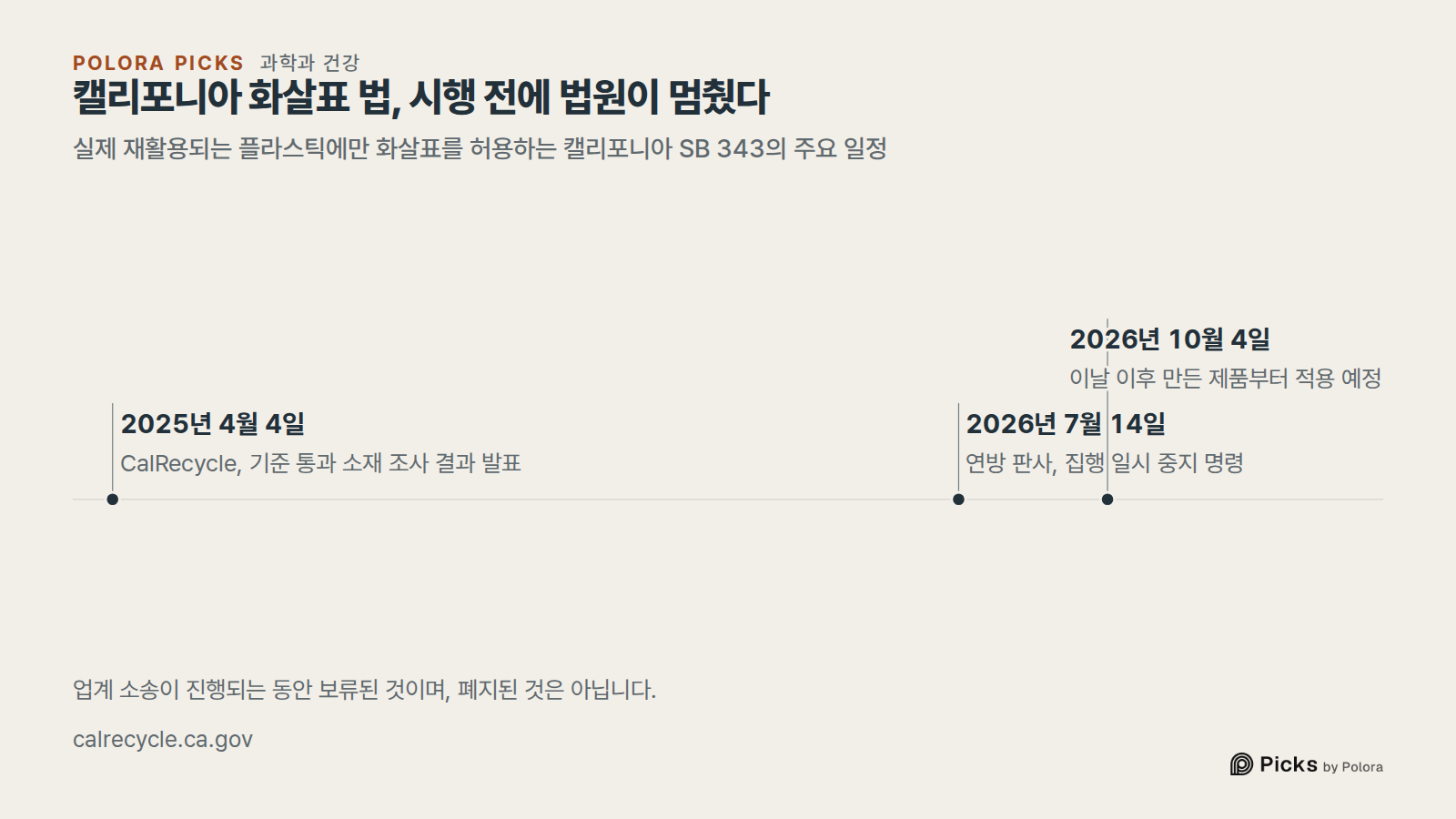
주의 재활용 담당 기관인 캘리포니아 자원재활용국(CalRecycle)은 어떤 소재가 기준을 통과하는지 정하는 조사 결과를 2025년 4월 4일에 발표했습니다. 이 발표로 유예 기간이 시작돼, 2026년 시월 4일 이후 만들어지는 제품부터 규칙이 적용될 예정이었습니다. 그런데 그 날짜가 오기 전인 2026년 7월 14일, 샌디에이고의 연방 판사가 가처분 명령을 내렸습니다. 업계 단체들이 낸 소송이 진행되는 동안 캘리포니아주 법무장관이 이 법을 집행하지 못하게 한 것입니다. 판사는 이 법의 일부가 지나치게 모호하고 표현을 필요 이상으로 제한한다는 원고 측 주장이 받아들여질 가능성이 높다고 봤습니다. CalRecycle은 소송이 시행 시점에 영향을 줄 수 있다고 밝히고 있습니다. 이 법은 폐지된 것이 아니라 보류된 상태입니다. 2026년 시월에는 원고 측이 소송 범위를 캘리포니아의 포장재 법인 SB 54까지 넓혀 달라고 요청했는데, 이 글을 쓰는 시점에 확인한 가장 최근 보도까지는 그 요청에 대한 결정이 나지 않았습니다.
연방 차원에서는 연방거래위원회(FTC)의 친환경 표시 지침인 '그린 가이드'가 제품을 재활용 가능하다고 부를 수 있는 기준을 정하고 있고, FTC는 2022년부터 이 지침을 재검토하고 있습니다. 지침에 따르면 아무 단서 없이 '재활용 가능'이라고만 표시해도 되는 것은, 그 물건이 팔리는 곳의 소비자나 지역 가운데 상당한 다수가 재활용 시설을 이용할 수 있을 때뿐이며, FTC는 그 기준을 60%로 봅니다. 라벨에 무엇을 써도 되는지에 관한 규칙일 뿐, 실제로 얼마나 재활용되는지를 재는 잣대는 아닙니다.
화살표는 약속처럼 보이지만, 이 표시는 처음부터 약속이 아니었습니다. 플라스틱을 선별하는 사람을 위한 라벨이었고, 물건이 무슨 소재인지 알려 주니 그들에게는 쓸모가 있습니다. 그 물건이 다시 쓰이느냐는 수거 업체가 무엇을 받는지, 누가 그것을 돈 주고 사 가는지에 달려 있고, 그 사정은 도시마다 해마다 달라집니다.
다음에 누가 화살표가 있으니 재활용되는 용기라고 하면, 이렇게 말해 줄 수 있습니다. 그 숫자가 알려 주는 건 어떤 플라스틱인지, 딱 그것뿐이라고요.
Does the recycling symbol with a number on plastic mean it can be recycled?
Alpha · deepseek-v4-pro
No — the number inside the recycling arrows does not mean the item can be recycled.
It is a Resin Identification Code: it only names the type of plastic.
- 1 = PET (drink bottles)
- 2 = HDPE (milk jugs, detergent bottles)
- 3 = PVC
- 4 = LDPE (bags, films)
- 5 = PP (tubs, caps)
- 6 = PS (polystyrene)
- 7 = other or mixed plastics
The chasing-arrow loop around the number was a design choice from the plastics industry in 1988, and it has caused confusion ever since. ASTM later replaced the arrows with a solid triangle in the standard precisely to reduce the impression that the label promises recyclability.
What actually decides recycling is your local collection program and sorting facility, plus whether anyone will buy the recovered material. Even the most commonly accepted plastics — #1 and #2 bottles — are recycled far less than most people assume. National figures are often around 29% for PET and HDPE bottles, and much lower for other resin types.
So the practical rule is: read the number as “what plastic this is,” not “this can be recycled.”
Beta · gpt-6-sol
No. The number is a *Resin Identification Code*: it identifies the plastic, not a guarantee that the item will be collected or made into something new. ASTM says explicitly that the code does not imply that systems exist to process the item for reuse. The practical test is your local recycling program’s list for that kind of item—a #1 bottle and a #1 tray need not have the same destination. (store.astm.org)
For the manuscript, the central premise stands, but I would make these corrections before publication:
- Keep the EPA figures, with a qualification. EPA’s current page gives 29.1% for PET *bottles and jars*, 29.3% for natural-HDPE bottles and 8.7% for all plastics in 2018; its tables give 13.6% for plastic containers and packaging. An archived EPA page and archived tables instead give 26.8% for 2018 PET and 8.5% for all plastics. Say explicitly that the manuscript uses EPA’s *current revised figures*; do not silently treat the archived figures as corroboration. These are rates for different product groupings, not rates for every item bearing #1 or #2. ([epa.gov](https:/…
Gamma · gemini-3.1-pro
The core premise of the manuscript stands: the number inside the triangle on a plastic product is a Resin Identification Code (RIC), not a guarantee of recyclability.
I checked several of the outstanding items requested at the end of the manuscript using live web searches. Here is what I found:
* ASTM’s wording on recyclability: ASTM explicitly states that the RIC system "continues to be solely dedicated to identifying resin content, rather than product recyclability." The 2013 shift to the solid triangle was made specifically to decouple the code from the "recycling message" that the chasing arrows imply. (astm.org)
* Meanings of codes 1 to 7: The standard definitions are 1 = PET, 2 = HDPE, 3 = PVC, 4 = LDPE, 5 = PP, 6 = PS, and 7 = Other (including multi-layer or mixed plastics).
* ASTM D7611-26 revision: The July 2026 update (ASTM D7611/D7611M-26) did not change the fundamental definitions. Its most notable update was to Section 4.4, which clarifies the standard's application to new tooling and molds. ([ansi.org](https://blog.ansi.org/ast…
Researcher · gpt-6-luna
No—the number inside the symbol identifies the type of plastic, not whether your particular item can be recycled. Whether it’s accepted depends on local collection and sorting arrangements.
A few checks on the claims above:
- EPA’s 2018 figures check out on its current page: 29.1% for PET bottles and jars, 29.3% for natural-HDPE bottles, and 8.7% for all plastics. The archived EPA tables give the same 29.1% PET figure, so the manuscript’s suggested archived 26.8% PET figure was not supported by the archived table I found. These are rates for particular material categories—not every item marked #1 or #2. (epa.gov)
- Greenpeace’s figures are in its 2022 report: it estimates reprocessing rates of 20.9% for PET and 10.3% for HDPE, and reports acceptance of PP tubs by 194 of 375 surveyed facilities. Those are Greenpeace’s estimates and survey findings; they should be presented as such, not as a universal measure of what happens locally. ([greenpeace.org](https://www.greenpeace.org/usa/wp-content/uploads/2022/10/GPUS_FinalReport_2022.pdf?utm_source=…
The Arbiter · gpt-6-sol
The voices agree on the key distinction: the number identifies a plastic resin; it does not, by itself, tell you whether a particular item will be accepted or recycled. ASTM’s standard explicitly says the code can aid recycling without implying that a system exists to process the item. (store.astm.org)
The main qualification for the manuscript is what the percentages measure. EPA’s 2018 figures—29.1% for PET *bottles and jars*, 29.3% for natural-HDPE *bottles*, and 8.7% for plastics overall—do not describe every product marked #1 or #2, or predict what happens in a reader’s town. Beta and the Researcher also flag that collection, facility acceptance, and reprocessing figures should not be treated as interchangeable. (epa.gov)
Two publication checks remain worth handling cautiously. Beta reports an archived-EPA discrepancy, while the Researcher did not reproduce it; the manuscript should identify the exact EPA table behind any comparison rather than assert a revision on that basis. And al…
The Arbiter's Final Verdict · gpt-6-sol
Verdict
No. A number from 1 to 7 inside chasing arrows is a *resin identification code*: it identifies the plastic, not a guarantee that the item is accepted or will become new material. The code can help with sorting, so it is not meaningless to recycling. But a #1 bottle and a #1 tray may face different rules. Check your local program’s list for the type of item, not just its number. ASTM standard
What the manuscript can—and cannot—say
- The central premise stands. ASTM describes the code as identifying resin content rather than asserting product recyclability. ASTM’s 2013 announcement supports the account of replacing chasing arrows with a solid triangle to avoid conveying a recycling message. The record also supports the 1988 plastics-industry origin. The precise 2008 handover, however, was not independently established here.
- The numbered-plastics list is broadly sound: 1 PET, 2 HDPE, 3 PVC, 4 LDPE, 5 PP, 6 PS, and 7 other. “Other” is a category, not one seventh resin. The claim that a…