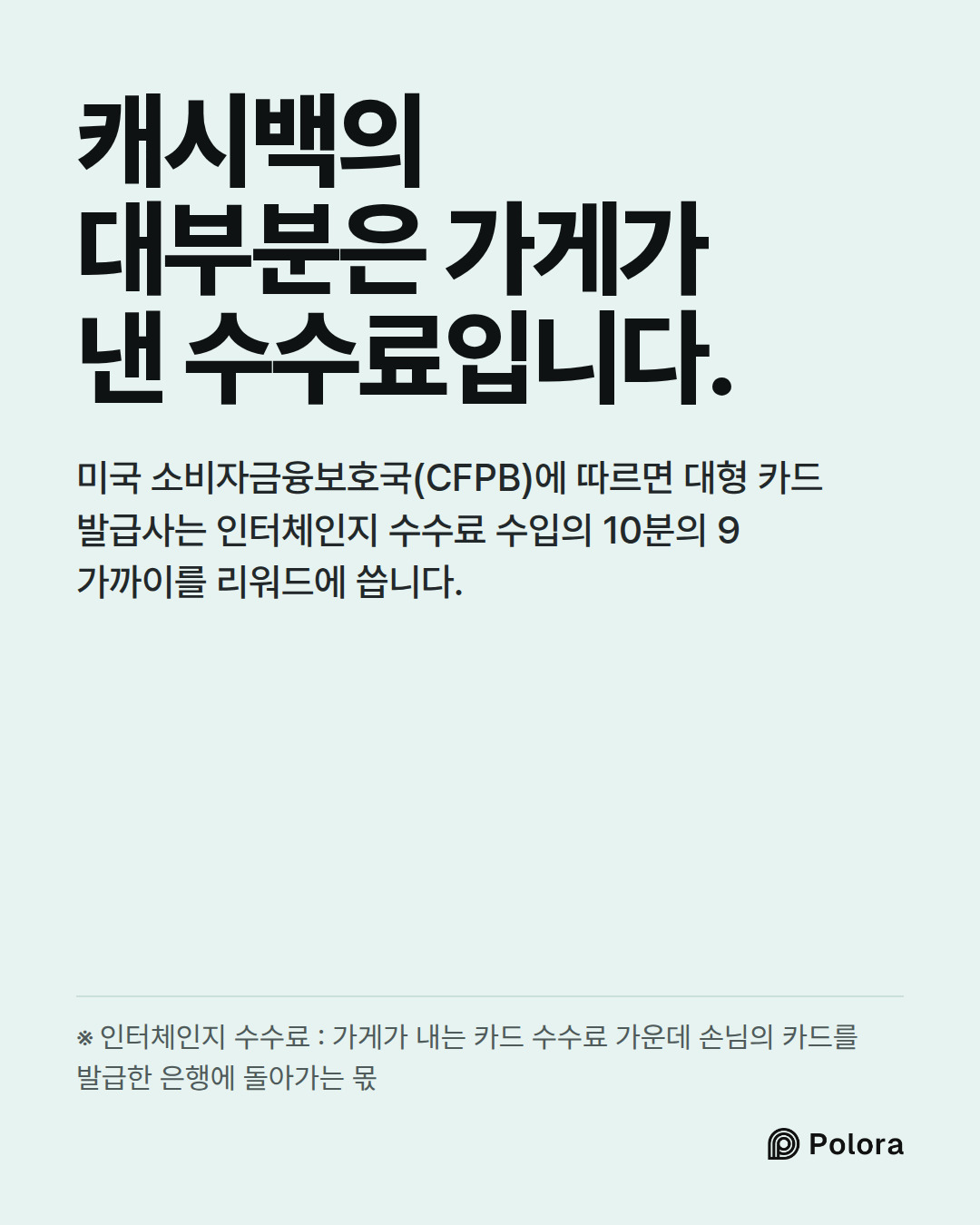
대부분은 가게가 냅니다. 카드 결제마다 가게가 내는 수수료가 재원이고, 그 수수료가 값에 얹히면 현금이나 체크카드로 사는 손님도 함께 냅니다. 미국 카드사는 이 수수료 수입의 10분의 9 가까이를 리워드로 돌려줍니다. 카드 사업의 주 수입원은 카드값을 다 갚지 않고 넘기는 사람이 내는 이자입니다.
비즈니스와 경제 · 2026-10-03
캐시백은 실제로 어디서 나올까?
결제할 때마다 몇 퍼센트씩 돌려받는 캐시백은 은행이 주는 선물처럼 느껴집니다. 하지만 실은 내 눈에 보이지 않던 수수료가 되돌아오는 것에 더 가깝습니다. 신용카드로 결제할 때마다 가게는 카드를 받는 대가로 수수료를 냅니다. 그 가운데 손님의 카드를 발급한 은행에 돌아가는 몫을 인터체인지 수수료라고 부릅니다. 한국식으로 말하면 가맹점 수수료 가운데 카드사 몫에 해당합니다.
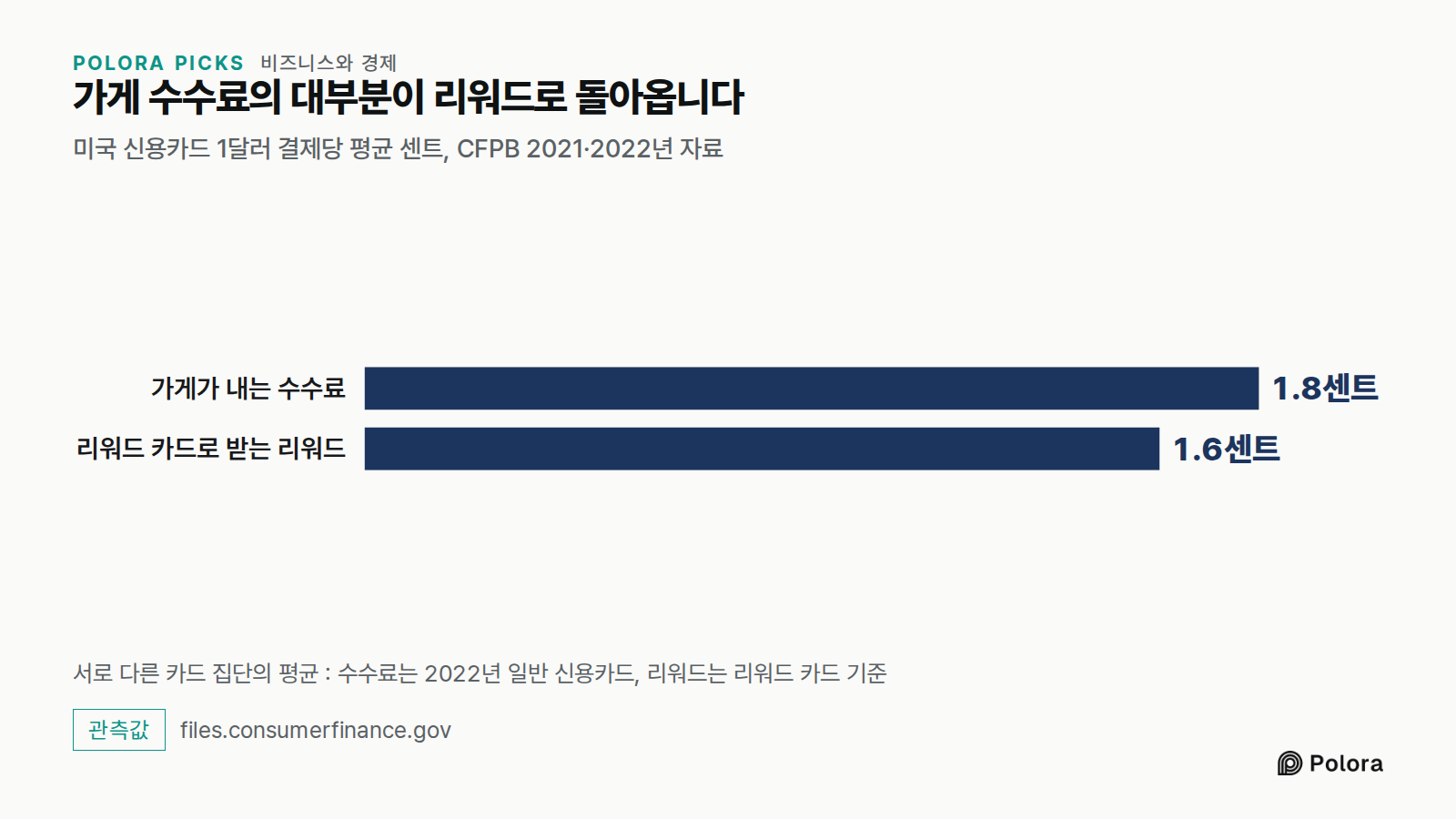
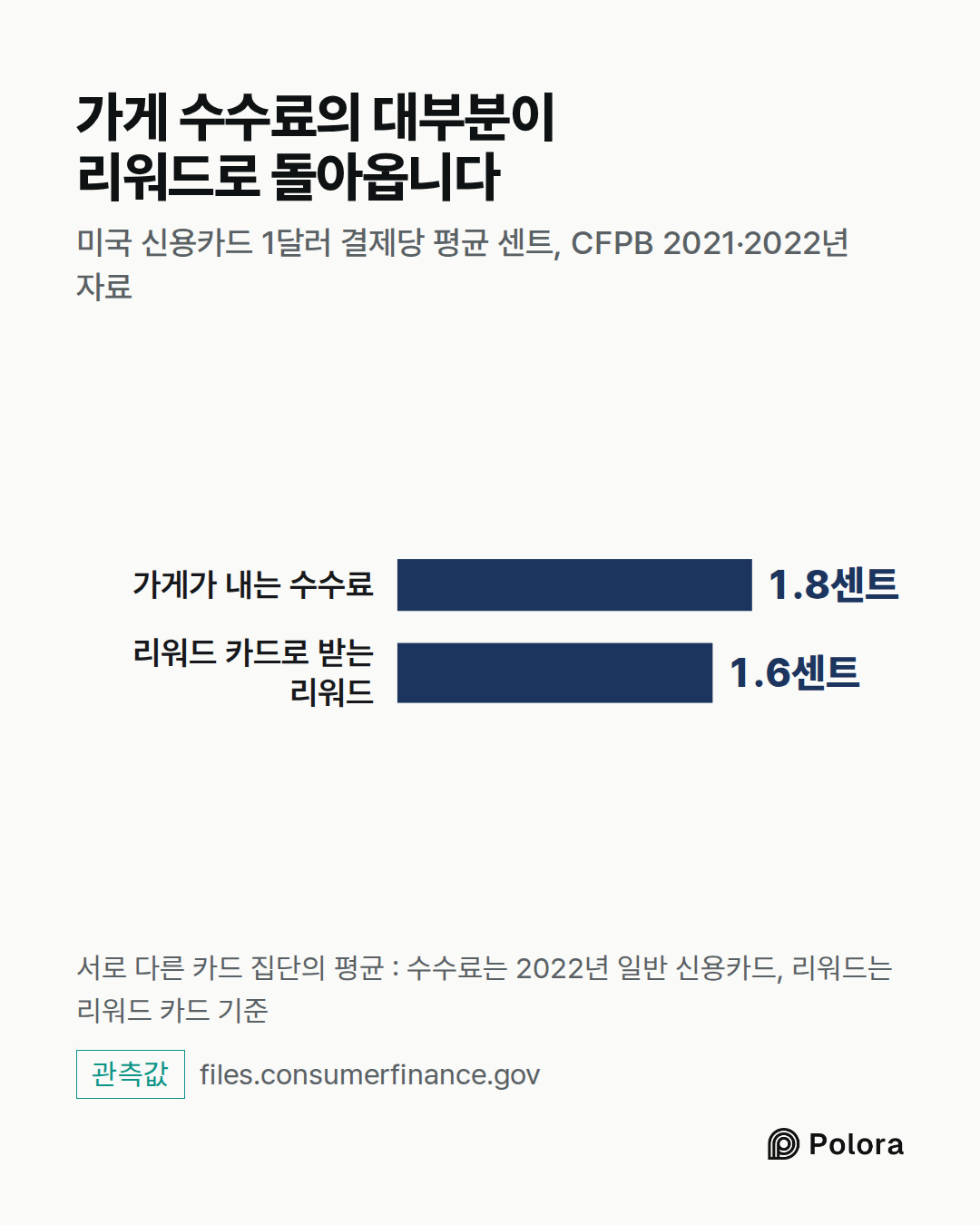
미국 소비자금융보호국(CFPB)은 대형 카드 발급사들로부터 자료를 받습니다. 이 기관에 따르면 2022년 일반 신용카드의 평균 인터체인지 수수료는 결제액의 1.8%였습니다. 보호국은 카드사가 보통 이 수수료 수입으로 리워드를 충당한다고 설명했고, 리워드에 들어간 돈은 그 수입의 10분의 9 가까이였습니다. 리워드 카드를 쓰는 사람들은 2021년과 2022년에 그 카드로 1달러를 쓸 때마다 포인트, 마일리지, 현금으로 1.6센트를 돌려받았습니다.
대략 말하면, 신용카드로 1달러를 쓸 때 가게는 은행에 약 1.8센트를 내고, 리워드 카드에서는 약 1.6센트가 리워드로 돌아옵니다. 두 숫자는 서로 다른 카드 집단의 평균이라, 시장 전체의 그림이지 내 결제 한 건의 장부는 아닙니다. 그래도 보이는 것은 분명합니다. 리워드는 은행의 너그러움에서 나오지 않습니다. 그 돈의 대부분은 가게가 낸 수수료입니다.
같은 보고서는 카드사가 인터체인지 수수료로 버는 돈이 리워드에 쓰는 돈보다 많다고 밝혔습니다. 다만 그 차이가 고스란히 이익은 아닙니다. 미국 연방준비제도(연준)의 분석에 따르면 리워드와 그 밖의 결제 비용을 합치면 은행의 수수료 수입을 조금 넘었고, 은행이 카드로 버는 돈의 대부분은 대출에서 나왔습니다.
가게가 수수료를 늘 떠안는 것은 아닙니다. 미국의 많은 가게는 무엇으로 결제하든 값을 하나로 받기 때문에, 카드를 받는 비용이 모든 상품 값에 고르게 퍼집니다. 그런 가게에서는 현금이나 체크카드로 사는 손님도 포인트를 모으는 손님과 같은 값을 냅니다. 신용카드에 추가 요금을 붙이거나 현금 할인을 해 주는 가게라면 이 연결이 끊깁니다.
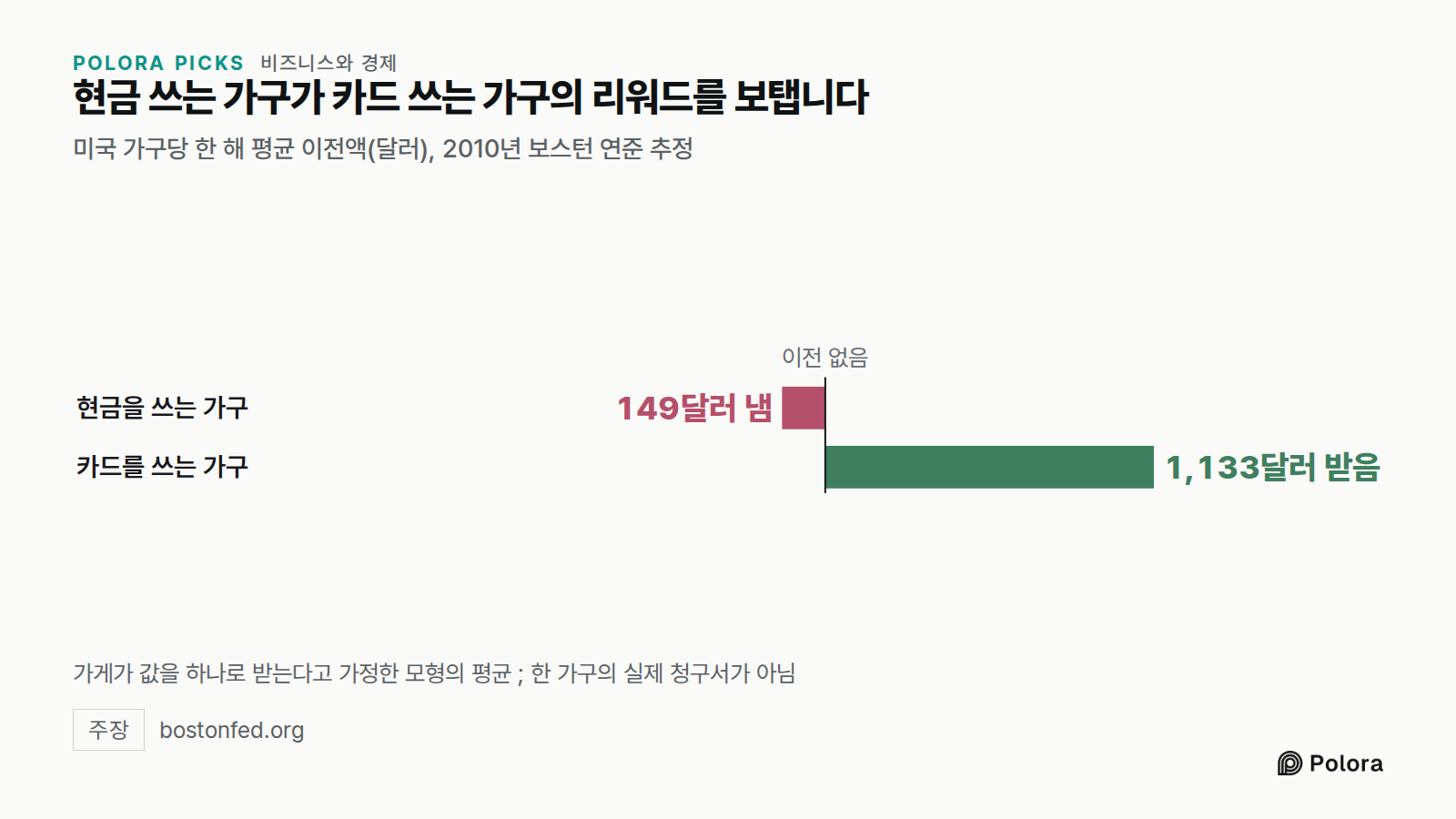
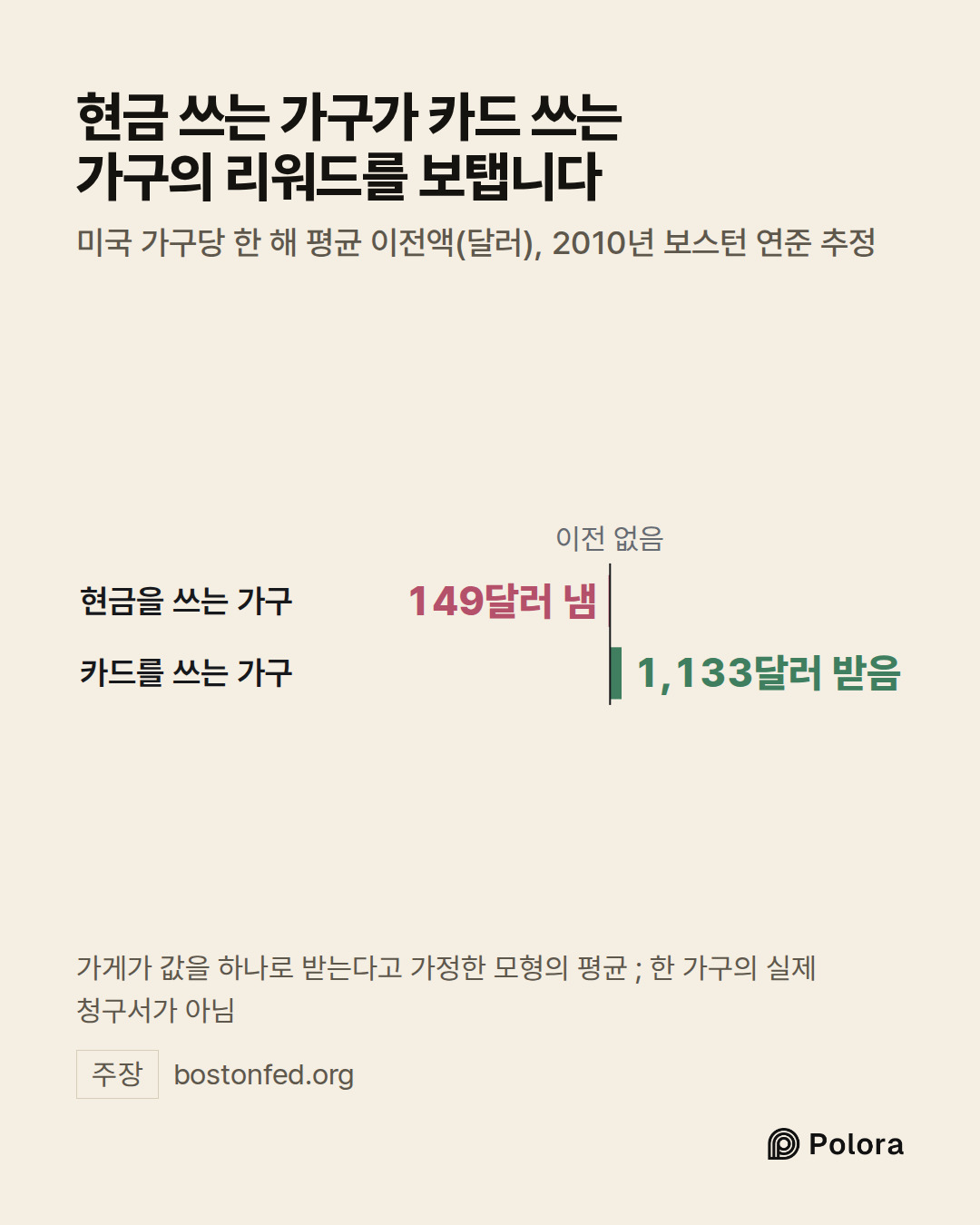
2010년 보스턴 연방준비은행의 경제학자 스콧 슈, 오즈 샤이, 조애나 스태빈스 세 사람이 이 돈이 얼마나 되는지 추정했습니다. 현금을 쓰는 가구는 평균 한 해 149달러를 카드를 쓰는 가구에 넘겨주고, 카드를 쓰는 가구는 평균 1,133달러를 받는다는 결과였습니다. 카드 사용액과 리워드는 소득이 높을수록 커지므로, 이 돈은 소득이 높은 쪽으로도 흐릅니다. 이들의 추정으로는 연소득 20,000달러 이하인 최저소득 가구가 한 해 21달러를 내고, 연소득 150,000달러 이상인 최고소득 가구가 750달러를 받습니다.
이 숫자는 가게가 값을 하나로 받는다고 가정한 경제 모형에서 나온 평균이지, 어느 한 가구가 실제로 받는 청구서가 아닙니다. 가게가 수수료를 값에 얼마나 넘기는지에 대한 가정에 따라서도 달라집니다. 이후 마리엘렌 펠트, 하야시 후미코, 조애나 스태빈스, 앙겔리카 벨테가 보스턴과 캔자스시티 연방준비은행을 통해 낸 연구도 미국과 캐나다에서 같은 방향을 가리킵니다. 수수료, 리워드, 값에 얹힌 가게의 비용을 모두 따지면, 지출 대비 순비용은 최저소득층이 가장 높고 최고소득층이 가장 낮았습니다.
경제학자 이건(Egan)과 동료들이 미국 전미경제연구소(NBER)에서 낸 2026년 논문은 개별 가게 단위 자료를 썼는데, 여기서도 현금과 체크카드 사용자가 신용카드 리워드를 보탠다는 결과가 나옵니다. 다만 모두가 같은 가게에서 장을 본다고 놓는 단순한 모형보다는 옮겨 가는 돈이 작았습니다. 현금 사용자와 카드 사용자는 서로 다른 가게를 찾는 경향이 있고, 두 집단이 겹치는 가게에서는 수수료가 낮은 편입니다. 이 두 가지 때문에 옮겨 가는 돈은 논문이 세운 단순 기준치보다 약 25% 작아집니다. 두 연구는 같은 기준으로 잰 것이 아니므로, 새 연구가 보스턴 연준의 숫자를 그만큼 깎는 것은 아닙니다. 새 연구가 보여 주는 것은 실제로 옮겨 가는 돈이 가게마다 고르지 않다는 점입니다.
인터체인지 수수료가 이야기의 전부는 아닙니다. 소비자금융보호국에 따르면 대형 은행 카드 사업의 주 수입원은 인터체인지 수수료가 아니라 이자입니다. 그 이자의 대부분은 카드값을 다 갚지 않고 다음 달로 넘기는 사람들에게서 나옵니다.
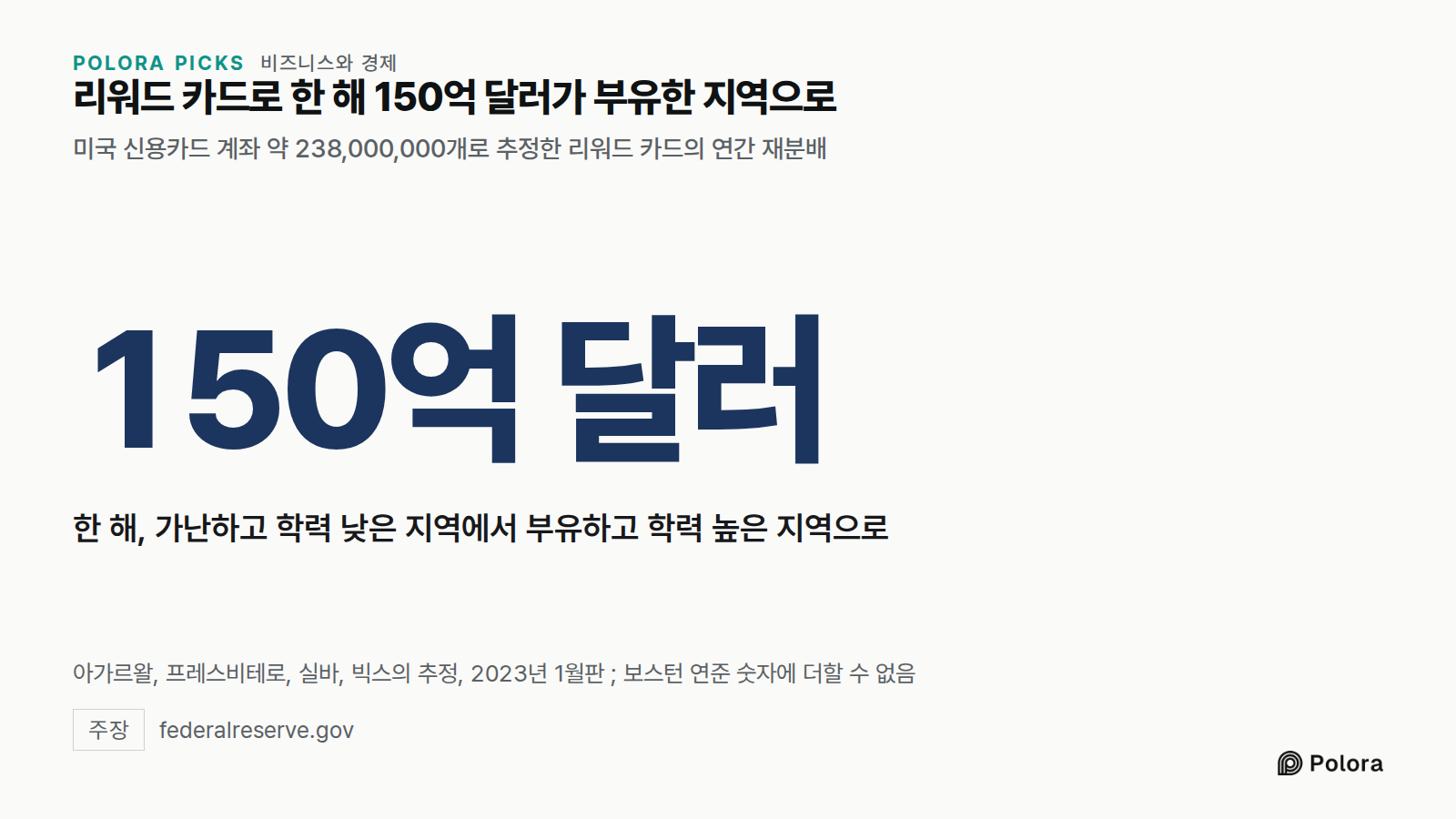
수미트 아가르왈, 안드레아 프레스비테로, 안드레 실바, 카를로 빅스가 쓴 연준 워킹페이퍼는 미국 신용카드 계좌 약 238,000,000개를 들여다봤습니다. 저자들의 결론은 카드값을 전액 갚는 사람들이 리워드 카드로 이득을 보고, 그 부담은 저자들이 '순진한 소비자'라고 부르는 사람들에게 간다는 것입니다. 리워드 카드는 모두의 지출을 늘리지만, 갚지 못한 잔액과 거기 따라붙는 이자가 불어나는 것은 일부 사람뿐입니다. 2023년 1월판 논문에서 저자들은 한 해 150억 달러가 가난한 지역에서 부유한 지역으로, 교육 수준이 낮은 지역에서 높은 지역으로 옮겨 간다고 추정했습니다.
그렇다고 카드값을 이월하는 사람 한 명 한 명이 다른 누군가의 캐시백 가운데 정해진 몫을 낸다거나, 그 몫을 알 수 있다는 뜻은 아닙니다. 또 150억 달러를 보스턴 연준의 가구별 숫자에 더할 수도 없습니다. 두 연구가 재는 것이 다르기 때문입니다.
그러니 리워드의 물주는 하나가 아닙니다. 리워드의 대부분은 가게의 수수료가 대고, 그 수수료는 흔히 손님이 값으로 메웁니다. 카드 사업이 버는 돈의 대부분은 빚을 이월하는 카드 사용자가 내는 이자에서 나옵니다. 리워드에 드는 돈이 둘 사이에 어떻게 나뉘는지는 지금의 근거로는 말할 수 없습니다.
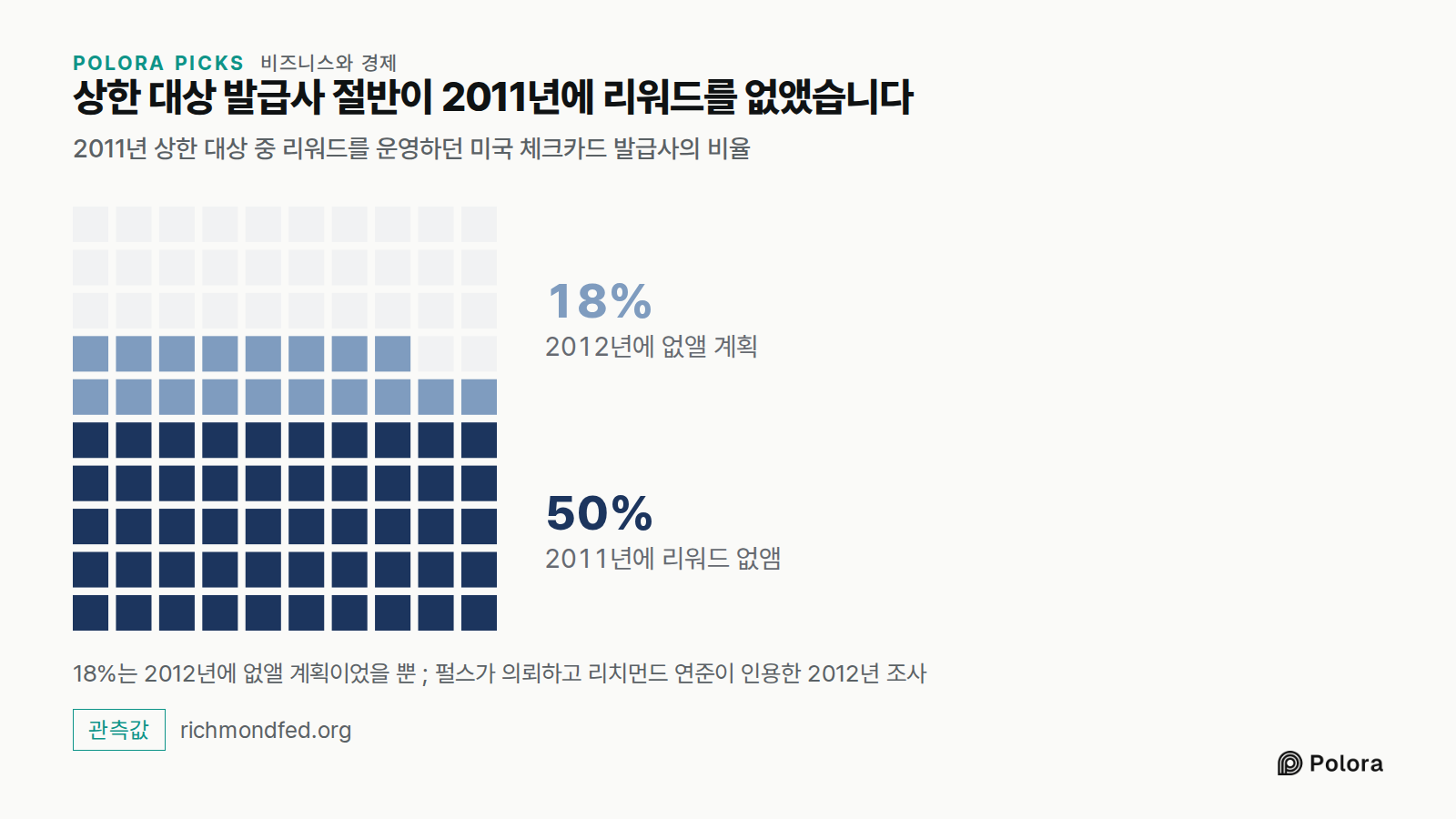
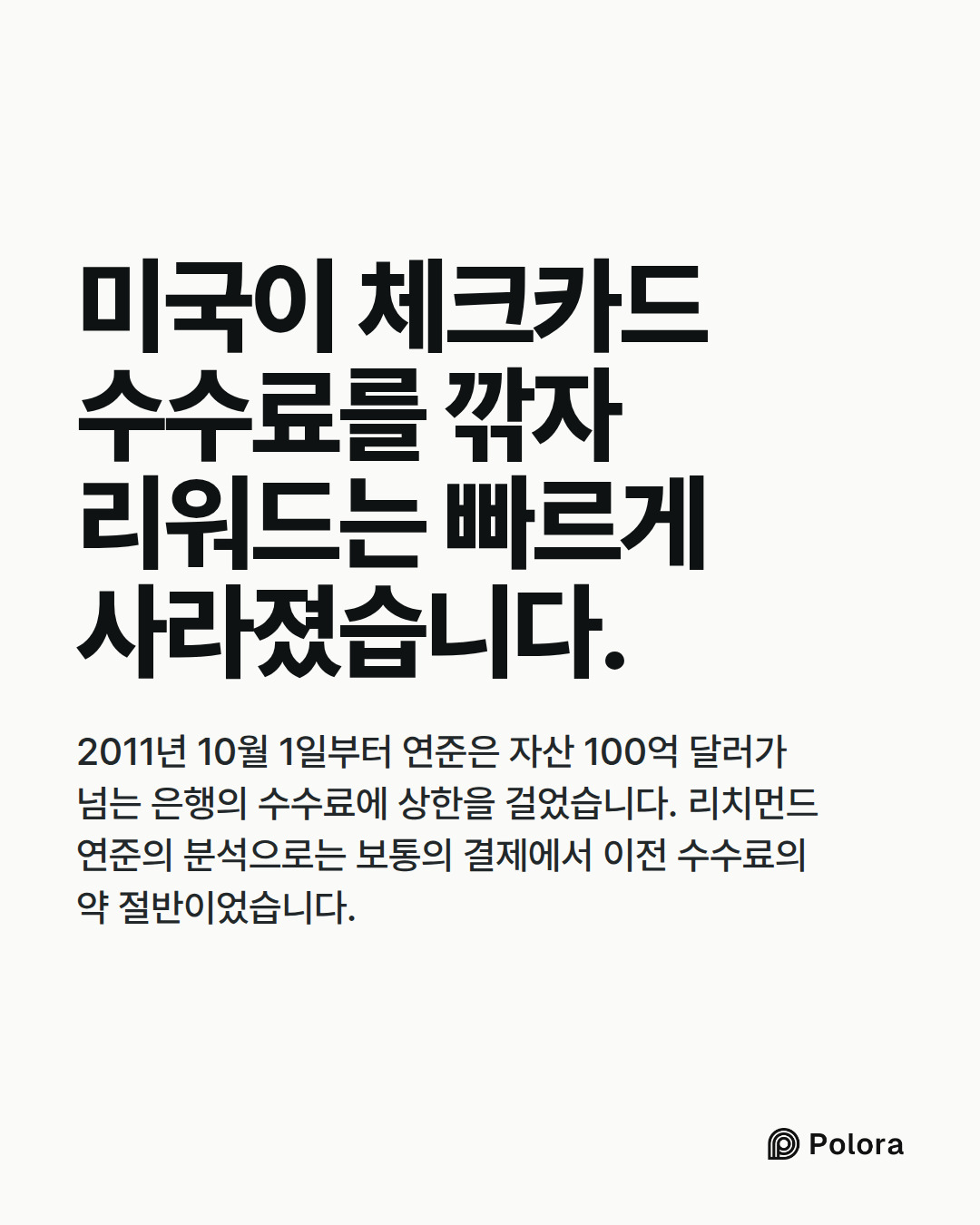
리워드가 정말 수수료에서 나온다면, 수수료를 깎으면 리워드도 줄어야 합니다. 미국은 체크카드로 이 실험을 해 봤습니다. 2010년 도드-프랭크법의 한 조항, 이른바 더빈 수정안에 따라 연준은 2011년 10월 1일부터 자산 100억 달러가 넘는 은행의 체크카드 수수료에 상한을 걸었습니다. 상한은 21센트에 결제액의 0.05%를 더한 금액이고, 부정 사용 방지 명목으로 1센트를 더 받을 수 있습니다. 리치먼드 연방준비은행의 분석으로는 보통의 결제에서 이는 이전 수수료의 약 절반이었습니다.
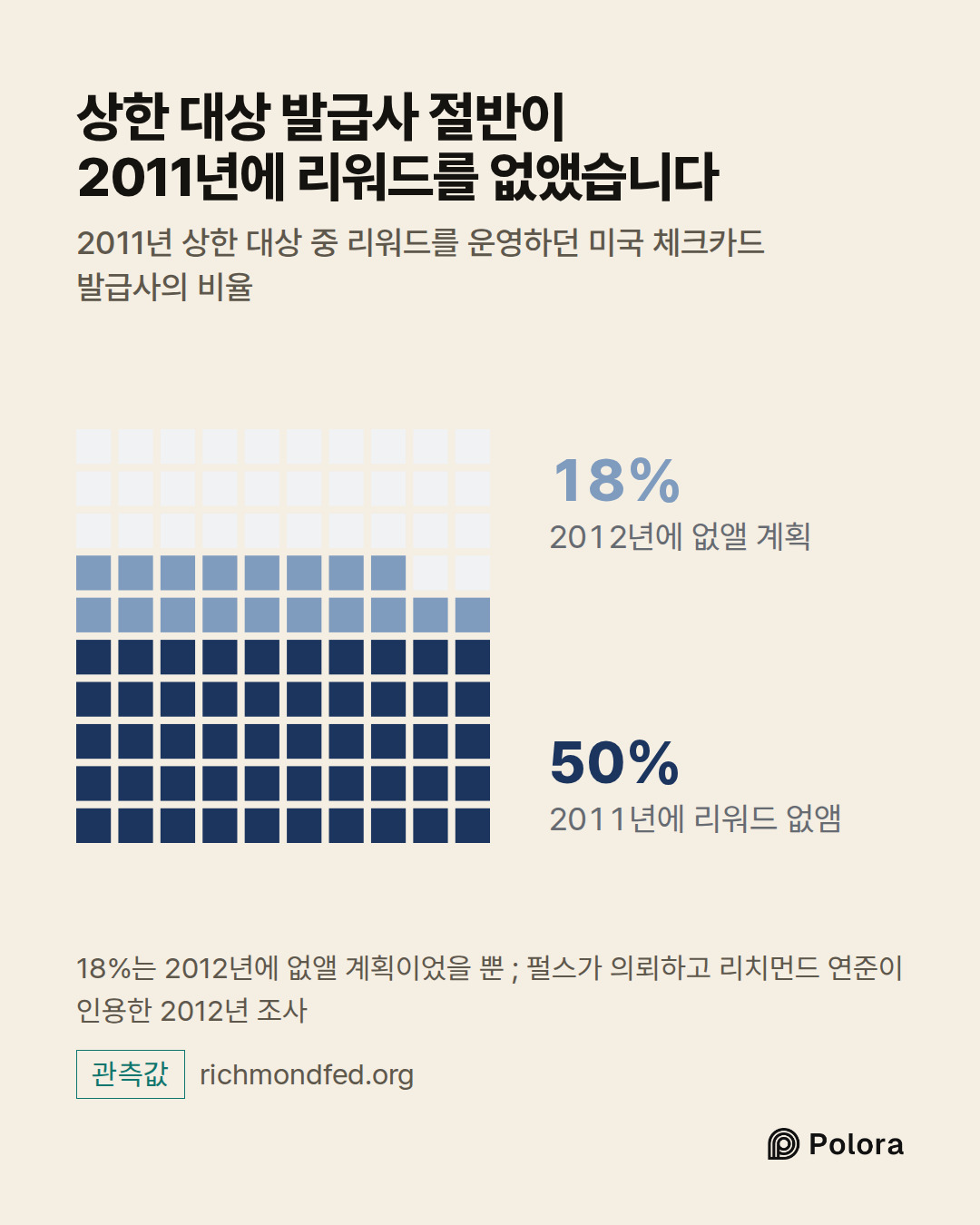
리워드는 빠르게 사라졌습니다. 결제망 회사 펄스가 의뢰하고 리치먼드 연준이 인용한 2012년 업계 조사는 상한 대상이면서 체크카드 리워드 프로그램을 운영하던 발급사들을 살폈습니다. 그 가운데 50%가 2011년에 프로그램을 없앴고, 18%는 2012년에 없앨 계획이었습니다. 같은 분석은 무이자 입출금 계좌의 평균 월 수수료가 25% 올랐다는 금융정보업체 뱅크레이트의 조사도 인용하는데, 이 상승을 상한 하나의 탓으로 돌릴 수는 없습니다.
자산 100억 달러 기준선 아래의 은행은 상한에서 빠졌기 때문에, 작은 은행과 신용협동조합은 계속 높은 수수료를 받을 수 있었습니다.
유럽의 답은 덜 깔끔합니다. 2015년 유럽연합(EU)은 개인용 카드의 인터체인지 수수료에 상한을 걸었습니다. 체크카드는 결제액의 0.2%, 신용카드는 0.3%이고, 규정에 정한 몇 가지 예외가 있습니다.
2020년 상한을 점검한 유럽연합 집행위원회는 상한 때문에 카드 사용자가 내는 수수료가 체계적으로 올랐다고 볼 수는 없다고 보고했고, 포인트 같은 로열티 프로그램이나 은행이 발급한 카드 수에서도 뚜렷한 변화를 찾지 못했습니다. 카드 발급사의 4분의 3 가까이가 카드 혜택이 그대로이거나 나아졌다고 집행위원회에 답했습니다. 상한을 비판하는 쪽은 같은 시기를 다르게 읽습니다.
집행위원회의 결론 가운데 일부는 발급사가 스스로에 대해 보고한 내용에 기대고 있습니다. 그러니 유럽은 어느 쪽의 증거로 삼기보다 열린 질문으로 두는 편이 낫습니다. 가장 분명한 실험은 여전히 미국 체크카드 사례입니다.
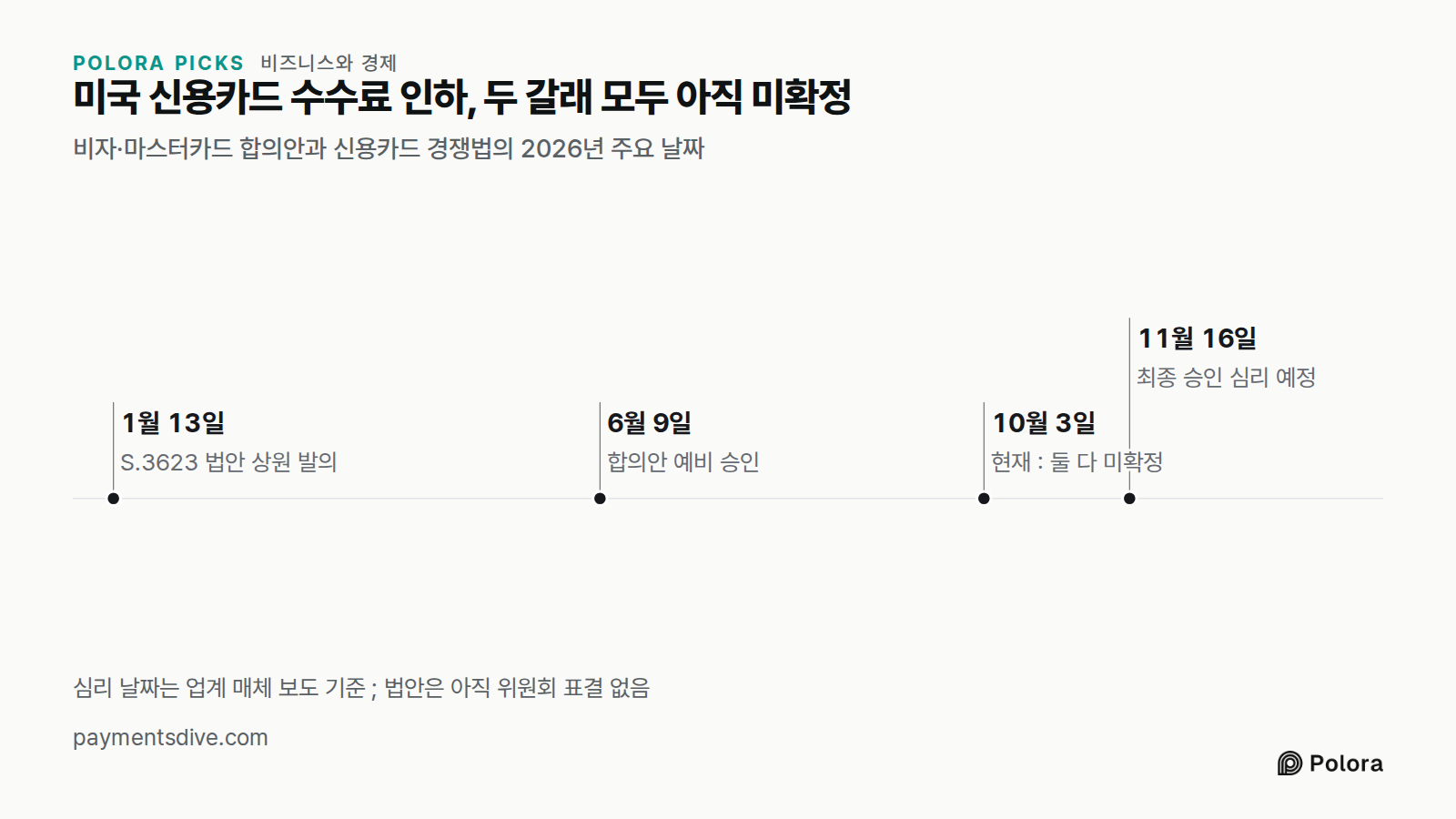
2026년 10월 3일 현재, 미국 신용카드 수수료를 낮추려는 움직임이 두 갈래로 진행 중이고, 어느 것도 확정되지 않았습니다.
2026년 6월 9일, 뉴욕 브루클린 연방법원의 브라이언 코건 판사는 비자, 마스터카드와 가맹점들 사이의 수정 합의안을 예비 승인했습니다. 2005년에 시작된 소송입니다. 합의안은 평균 수수료를 5년 동안 0.1%포인트 낮추고, 일반 개인용 신용카드 수수료를 8년 동안 1.25%로 묶습니다. 가게가 프리미엄 카드를 거절하거나 추가 요금을 붙이기도 더 쉬워집니다. 예비 승인은 최종 승인이 아닙니다. 업계 매체 보도에 따르면 수백 곳의 가맹점과 업계 단체가 이의를 냈고, 최종 승인 심리는 다음 달 16일로 잡혀 있으며, 한 편의점 업계 단체는 합의안이 승인되면 항소하겠다고 밝혔습니다.
의회에서는 2026년 신용카드 경쟁법(S.3623)이 2026년 1월 13일 상원에 발의되어 은행위원회로 넘어갔습니다. 이후 공동발의자는 늘었지만, 위원회 표결이나 그다음 절차는 없었습니다. 이 법안은 대형 카드 발급사가 가게에 신용카드 결제를 둘 이상의 결제망으로 보낼 수 있게 하도록 요구합니다.
어느 쪽으로 결론이 나든 위의 셈법은 그대로입니다. 리워드는 대부분 수수료에서 나옵니다. 그래서 이 싸움의 양쪽이 모두 리워드를 이야기하고, 미국이 수수료를 크게 깎았던 단 한 번의 경우에 은행이 가장 먼저 없앤 것 가운데 하나가 리워드였습니다. 유럽은 수수료를 깎는다고 리워드가 꼭 사라지는 것은 아니라는 점을 일깨웁니다.
Alpha's assessment
The manuscript's central arithmetic holds up well under checking, with a few precision points worth flagging.
The CFPB numbers check out, with a nuance. The 2023 CFPB report does state what the manuscript claims. Searching corroborates this independently: a 2026 New York Fed staff paper on credit card banking found banks' interchange income is 1.82% of purchase volume on average, while rewards costs are 1.57% — essentially the same 1.8%/1.6% split the manuscript cites, from a different dataset covering 90% of the market. That's a genuine independent confirmation, not just an echo of the same CFPB report. The nuance: CFPB's own 2023 report frames net economics slightly differently than "issuers keep a slice" implies — it describes a net interchange rate of 1.1 percent of average receivables (or 0.3 percent of annual purchase volume), calculated after both interchange expense and rewards expense are netted out, which is a more conservative framing than simply subtracting 1.6 from 1.8. The directional claim — issuers earn more in interchange than they spend on rewards — is confirmed by the source itself.
New, stronger evidence has emerged since the manus…
Beta · gpt-6-sol
The premise stands, but the manuscript makes the funding chain sound more exact than the evidence permits. A merchant pays to accept a credit-card purchase; interchange is the portion received by the card issuer, not necessarily the merchant’s entire card-acceptance charge. Issuers commonly use that revenue to fund rewards. When a merchant charges customers the same price regardless of payment method, cash and debit customers can bear part of the cost without receiving the credit-card reward. Borrowers who carry balances supply another important stream of issuer revenue. None of this means the bank simply takes *the fee on your particular purchase* and returns most of it to you. (files.consumerfinance.gov)
Here is what I could check against sources, rather than against the manuscript’s assertions:
| Manuscript claim | Finding and condition |
|---|---|
| 1.8% interchange; rewards nearly nine-tenths of it; 1.6 cents per dollar | Supported for the CFPB’s reported populations and years. Its 2023 report gives 1.8% average interchange for general-purpose cards…
Gamma · gemini-3.1-pro
As Gamma, I have reviewed the manuscript, Alpha and Beta's evaluations, and run live searches to verify the outstanding claims—especially those concerning the 2026 legislative and legal events that Beta could not definitively clear.
Here is what I found regarding the open questions in the editor's brief, fully verifying the 2026 timeline:
The Visa/Mastercard Settlement Timeline and Objections
* Preliminary Approval Date: The manuscript's assertion of "June 2026" is correct but imprecise. I confirmed via contemporary trade press (Payments Dive, June 9, 2026) that U.S. District Judge Brian Cogan granted preliminary approval on June 9, 2026. The manuscript should be updated to this exact date.
* Final Approval Hearing and Objectors: The manuscript is completely accurate here. The final fairness hearing is indeed scheduled for November 16, 2026. Furthermore, on September 15, 2026, Walmart along with roughly 900 other merchants and trade groups (including the National Retail Federation and the National Restaurant Association) filed formal objections to the settlement, asking the court to reject it or allow them to opt out.
* NACS Appeal Pledge: The manus…
Researcher · gemini-3-7-flash
Research Verification & Fact-Check
Below is the verification of the specific claims made in the manuscript and debater briefs against live primary and secondary sources.
---
1. Verification of Manuscript Claims & Numbers
* CFPB Interchange and Rewards Numbers (1.8% interchange, 1.6% rewards earn rate, ~90% spent on rewards):
* Status: Supported as market/portfolio averages.
* Source: CFPB Consumer Credit Card Market Report (2023) & CFPB (2025/2024 update).
* Nuance: The CFPB reports that across general-purpose credit cards at major Y-14+ issuers, average interchange revenue was approximately 1.8% of purchase volume, and rewards expenses accounted for almost 90% of interchange revenue. The 1.6 cents per dollar ($0.016 / 1.6%) reflects the average earn rate specifically on *rewards cards*, not an entitlement on every individual general-purpose transaction.
* Boston Fed Study on Cash-to-Card Cross-Subsidy ($149, $1,133, $21, $750):…
The Arbiter · gpt-6-sol
Round record
The central finding is shared, but the size and route of the subsidy need care. Alpha, Beta, Gamma, and the Researcher agree that interchange paid by merchants is a major source of credit-card rewards. They also agree that customers who do not receive rewards can bear some of that cost when merchants use a common price. Beta’s important distinction is that interchange is the issuer’s portion of card-acceptance costs, not necessarily the merchant’s entire fee, and that a reward is not a refund traceable to the fee on one particular purchase.
- CFPB arithmetic: Alpha and the Researcher confirm the manuscript’s roughly 1.8% interchange, nearly nine-tenths spent on rewards, and 1.6 cents earned per dollar figures in the CFPB’s 2023 report. Beta identifies a consequential mismatch in the manuscript’s illustrative dollar: 1.8% averages *general-purpose card purchases*, whereas 1.6 cents averages spending *on rewards cards*. Neither is a promise about the reader’s transaction. Beta also disputes that the difference can simply be called a slice the ba…
The Arbiter's Final Verdict · gpt-6-sol
Your cash back is mainly funded by merchants’ card fees—but who ultimately bears the cost depends on how stores set prices. When you buy something with a credit card, the merchant pays a card-acceptance fee; its interchange portion goes to your card issuer. Issuers use interchange revenue to help fund rewards. The bank is not simply giving money away, but neither can a particular reward be traced to the fee on your particular purchase.
The CFPB’s 2023 report puts average issuer interchange revenue at about 1.8% of general-purpose credit-card purchase volume and says rewards expense was almost 90% of interchange revenue. Its 1.6 cents earned per dollar figure applies to *rewards-card spending*. Those are different averages, so “the store pays 1.8 cents and you get 1.6 cents” is a useful illustration, not transaction-by-transaction accounting. Any remainder is not automatically bank profit.
When a store charges everyone the same price, some card-acceptance cost can be built into that price. Cash and debit customers may then help fund rewards they do not receive. A […