아닙니다. 미국 노조 배우는 스트리밍용 대작에서 재생 횟수와 상관없이 출연료와 서비스 가입자 수로 정해진 금액을 해마다 받습니다. 시청량은 흥행작 보너스에만 쓰입니다.
비즈니스와 경제 · 2026-11-05
재생 버튼을 눌러도 배우 몫이 쌓이지 않는다
흔히 이렇게 생각합니다. 에피소드 하나를 틀 때마다 화면 속 배우들에게 몇 원씩 돌아간다고요. 하지만 미국에서 구독형 스트리밍 서비스용으로 만든 드라마나 영화, 그중에서도 예산이 커서 배우 노조의 '고예산 스트리밍 작품' 규칙을 따르는 작품은 그렇게 돌아가지 않습니다.
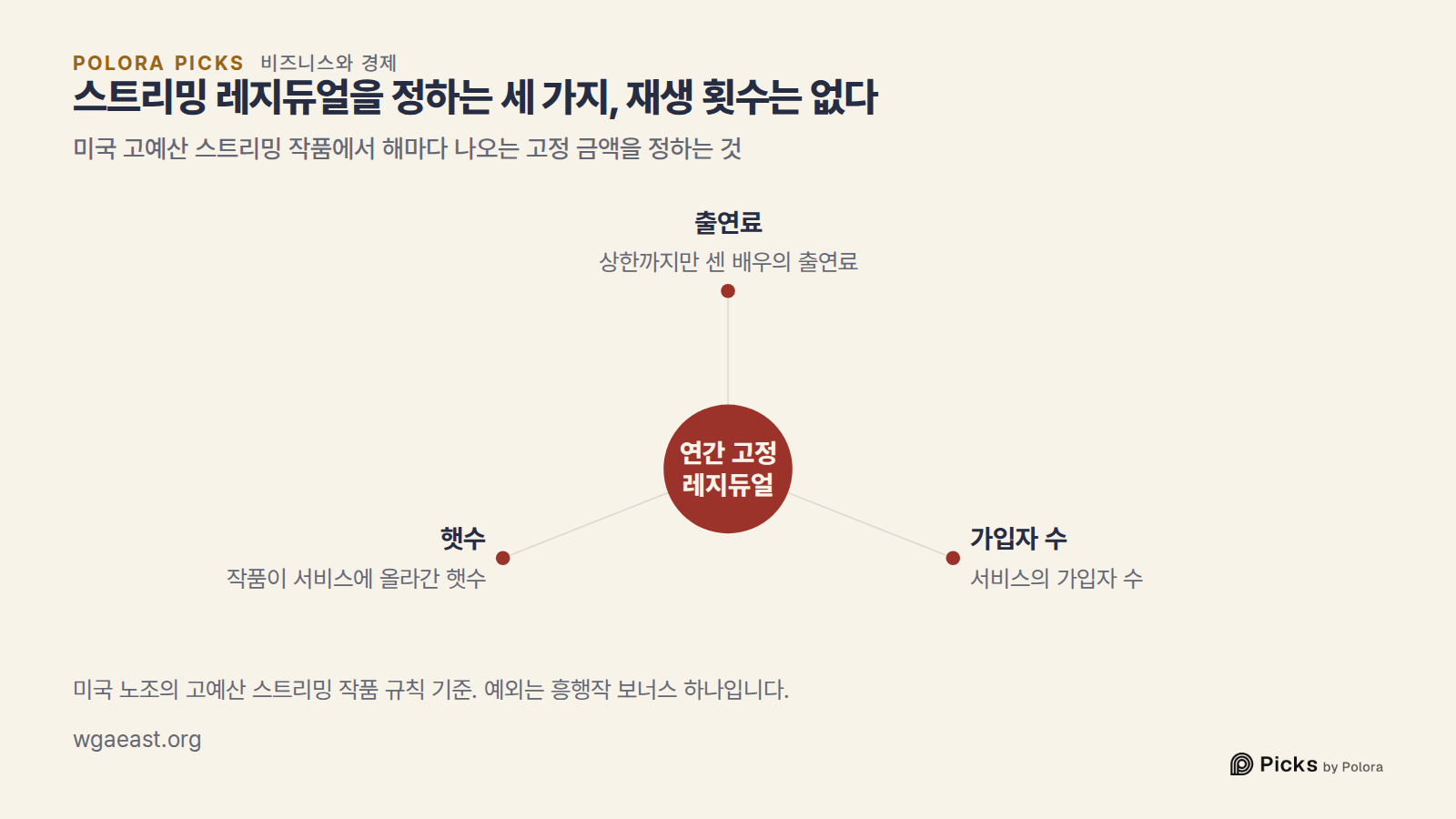
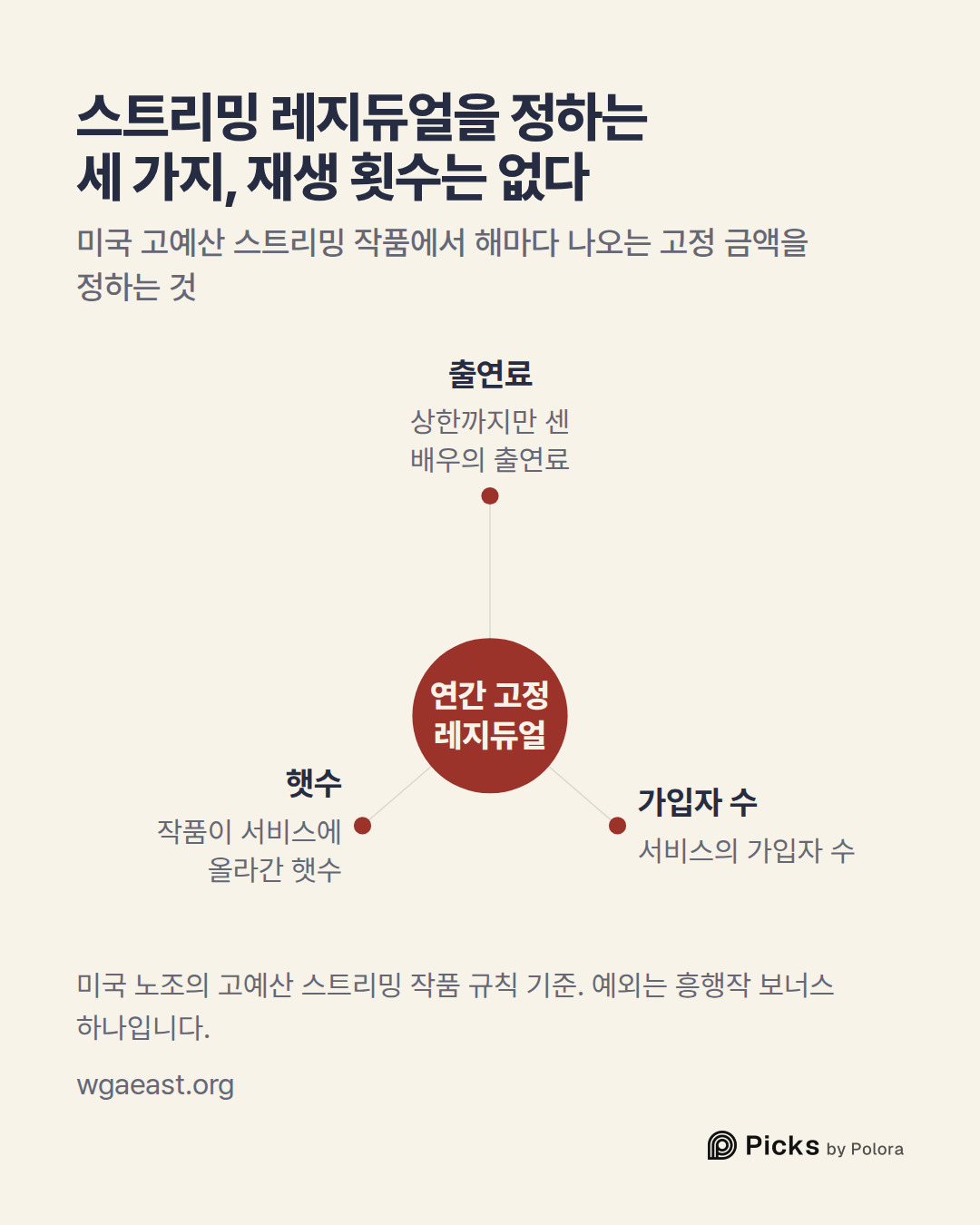
작품이 다시 쓰일 때 배우가 받는 돈을 업계에서는 레지듀얼(residual)이라고 부릅니다. 이 돈은 작품이 서비스에 올라가 있는 동안 해마다 정해진 금액으로 나옵니다. 금액을 정하는 것은 세 가지입니다. 배우가 받은 출연료(상한까지만 칩니다), 서비스의 가입자 수, 작품이 올라간 지 몇 해째인지입니다. 뒤에서 설명할 보너스 하나를 빼면, 한 번 재생된 작품이든 셀 수 없이 재생된 작품이든 출연진이 받는 레지듀얼은 같습니다.
계약서도 이 점을 분명히 합니다. 작가들도 같은 방식으로 돈을 받는데, 미국작가조합(WGA)은 이 돈이 작품 수입의 일정 몫이 아니라, 지상파 재방송처럼 금액이 미리 정해진 고정 레지듀얼이라고 설명합니다.
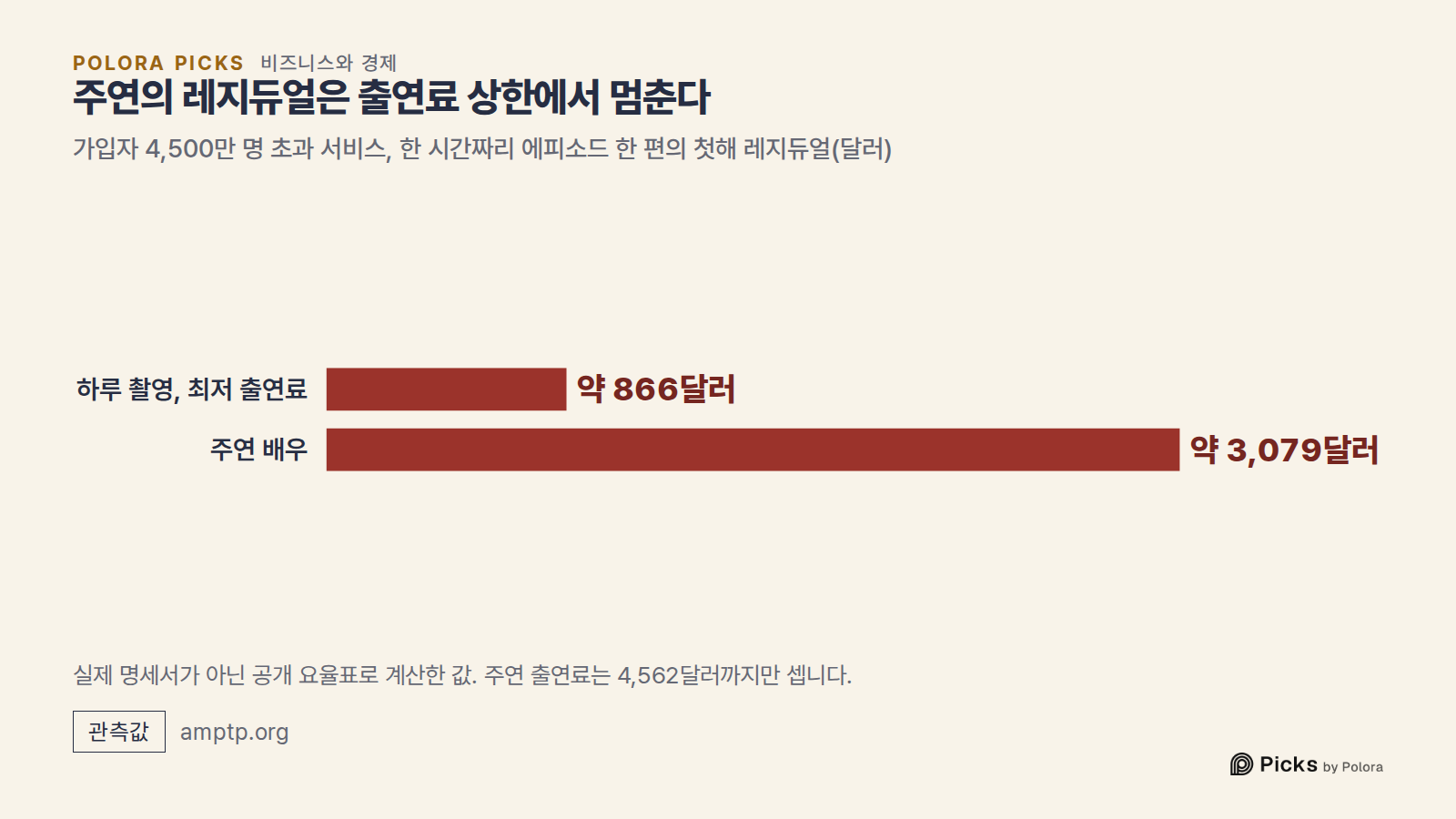
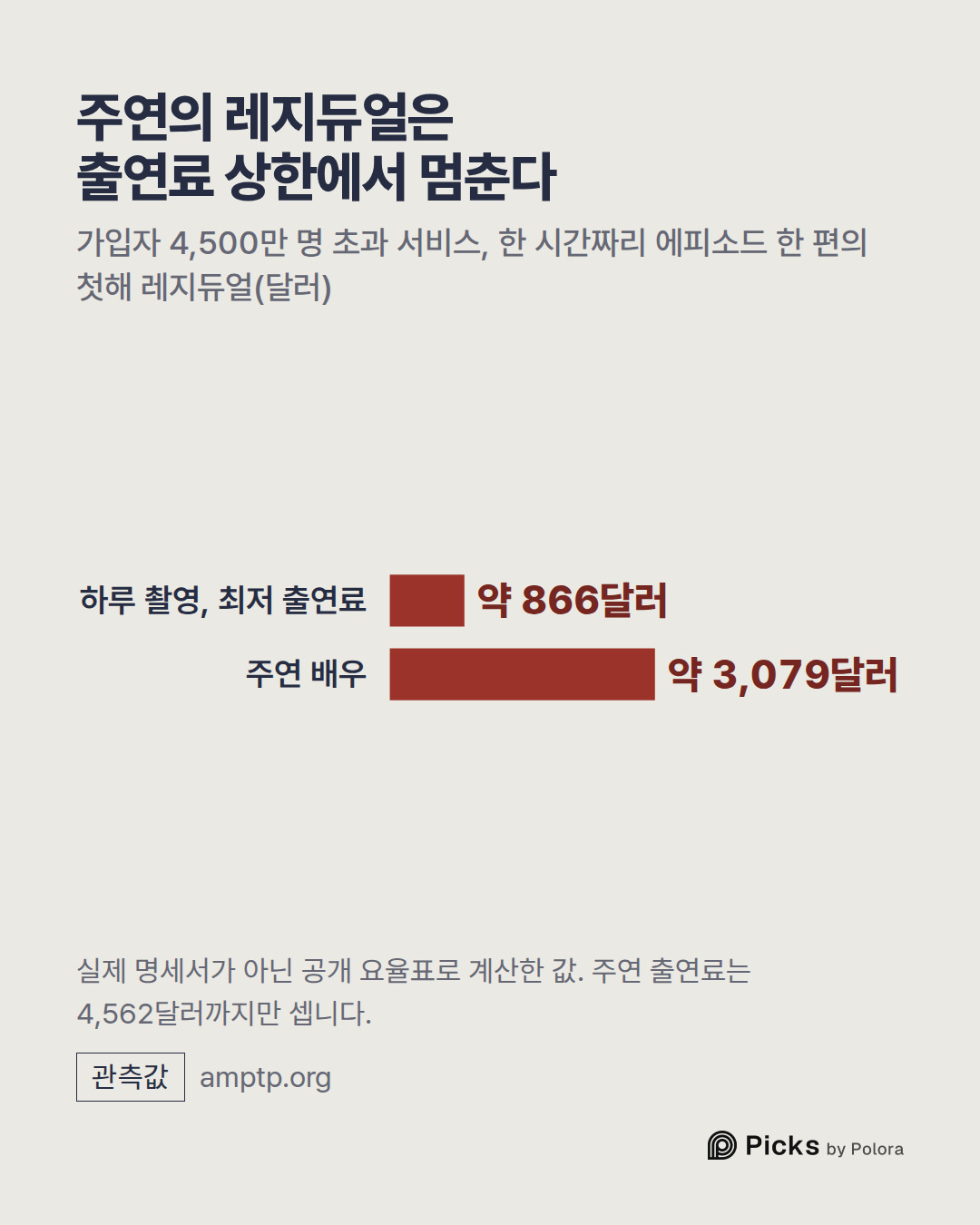
첫째는 그 에피소드의 출연료입니다. 다만 상한까지만 셉니다. 36분에서 65분짜리 에피소드라면 현재 요율표의 상한은 4,562달러이고, 2027년 7월에 4,676달러로 오릅니다.
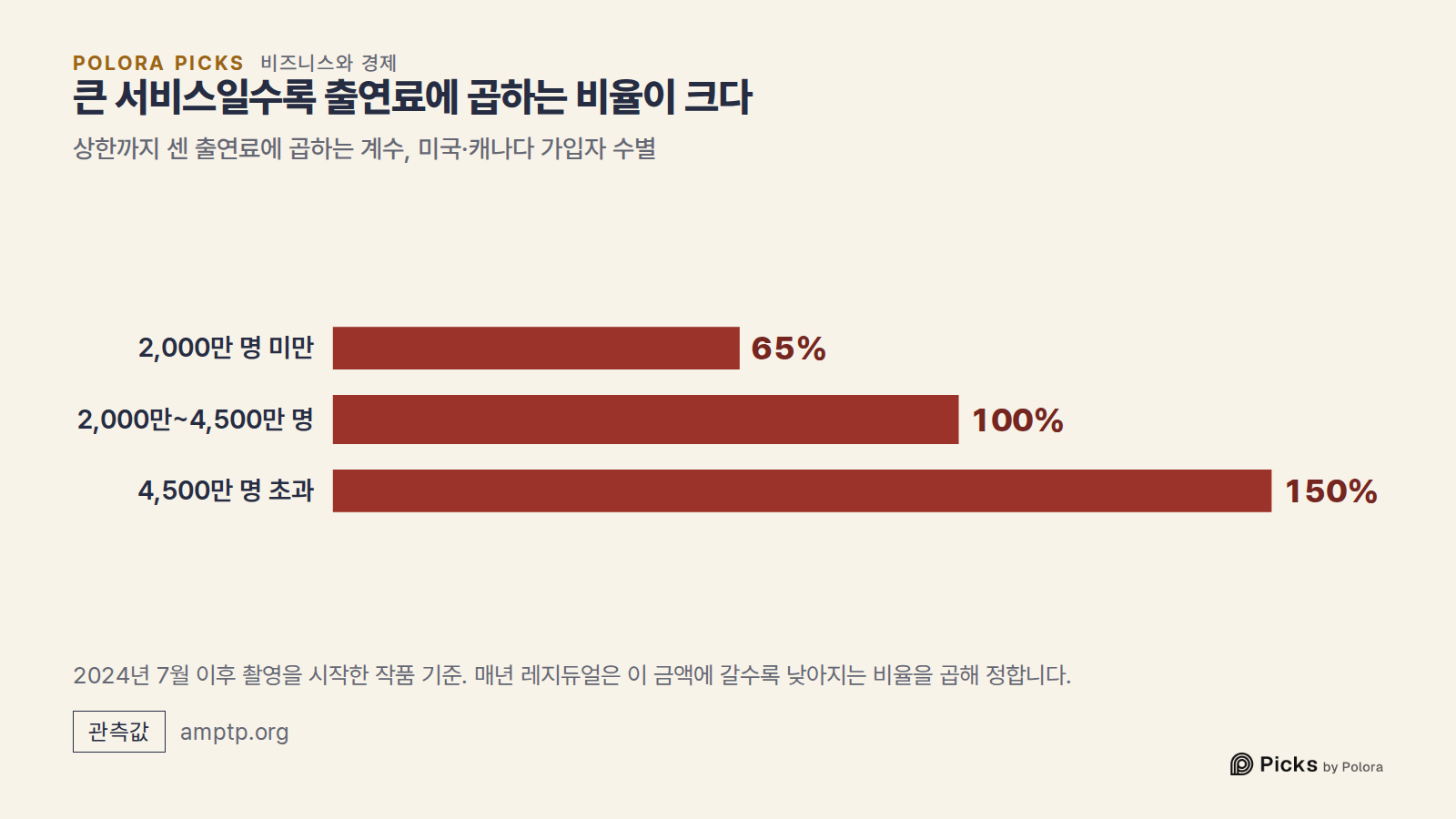
둘째는 미국과 캐나다에서의 서비스 규모입니다. 그 지역 가입자가 2,000만 명 미만인 서비스는 상한까지 계산한 출연료에 65%를 곱하고, 2,000만 명에서 4,500만 명이면 100%를, 4,500만 명을 넘으면 150%를 곱합니다. 이 3단계 기준은 2024년 7월 이후 촬영을 시작한 작품에 적용됩니다. 그 전에는 아주 작은 서비스에 쓰이는 20%와 40% 단계가 더 있었습니다.
셋째는 시간입니다. 공개 후 첫해에는 출연료에 가입자 계수를 곱한 금액의 45%를, 둘째 해에는 40%를, 셋째 해에는 35%를 주고, 그 뒤로도 비율은 계속 떨어집니다.
미국과 캐나다 밖에서 시청된 몫은 같은 방식으로 따로 계산하되, 서비스의 해외 가입자 수를 씁니다. 해외 가입자가 7,500만 명 이상인 가장 큰 서비스는 2026년 7월부터 이 계수가 95%입니다.
이 숫자들은 고예산 스트리밍 규칙에 해당합니다. 배우 한 사람이 실제로 받는 금액은 출연자 구분, 에피소드 길이, 관련 날짜에 따라서도 달라집니다.
예전 지상파 방송은 방영 횟수대로 돈을 줬습니다. 작가는 지금도 작품이 지상파 황금시간대에 재방송될 때마다 레지듀얼 기준액을 전부 받습니다. 한 법률회사의 해설에 따르면, 2014년 이전 규칙에서는 다른 방송사에 판매돼 재방송된 작품의 배우가 재방송이 거듭될수록 줄어드는 비율로 돈을 받았습니다. 첫 재방송에 최저 출연료의 40%, 두 번째에 30%, 그리고 열세 번째부터는 5%까지 내려갔습니다. 방영은 누구나 볼 수 있는 일이었으니 하나하나 셀 수 있었습니다.
스트리밍에는 방영이라는 것이 없고, 서비스들은 대체로 작품별 시청량을 공개하지 않았습니다. 넷플릭스가 거의 모든 작품의 시청 시간을 담은 첫 보고서를 낸 것은 2023년 12월이 되어서였고, 그때 한 해 두 번 내겠다고 약속했습니다.
그래서 기본 레지듀얼 공식은 양쪽이 모두 볼 수 있는 숫자로 짜였습니다. 계약서에 적힌 배우의 출연료와 서비스의 가입자 수입니다. 시청 데이터는 지금도 서비스가 쥐고 있습니다. 2023년 합의에 따라 이 데이터는 노조에 비공개로 공유되고, 어떤 작품이 아래의 보너스 기준을 넘었는지 노조가 이의를 제기하면 외부 감사인은 넘었는지 아닌지만 알려 줍니다.
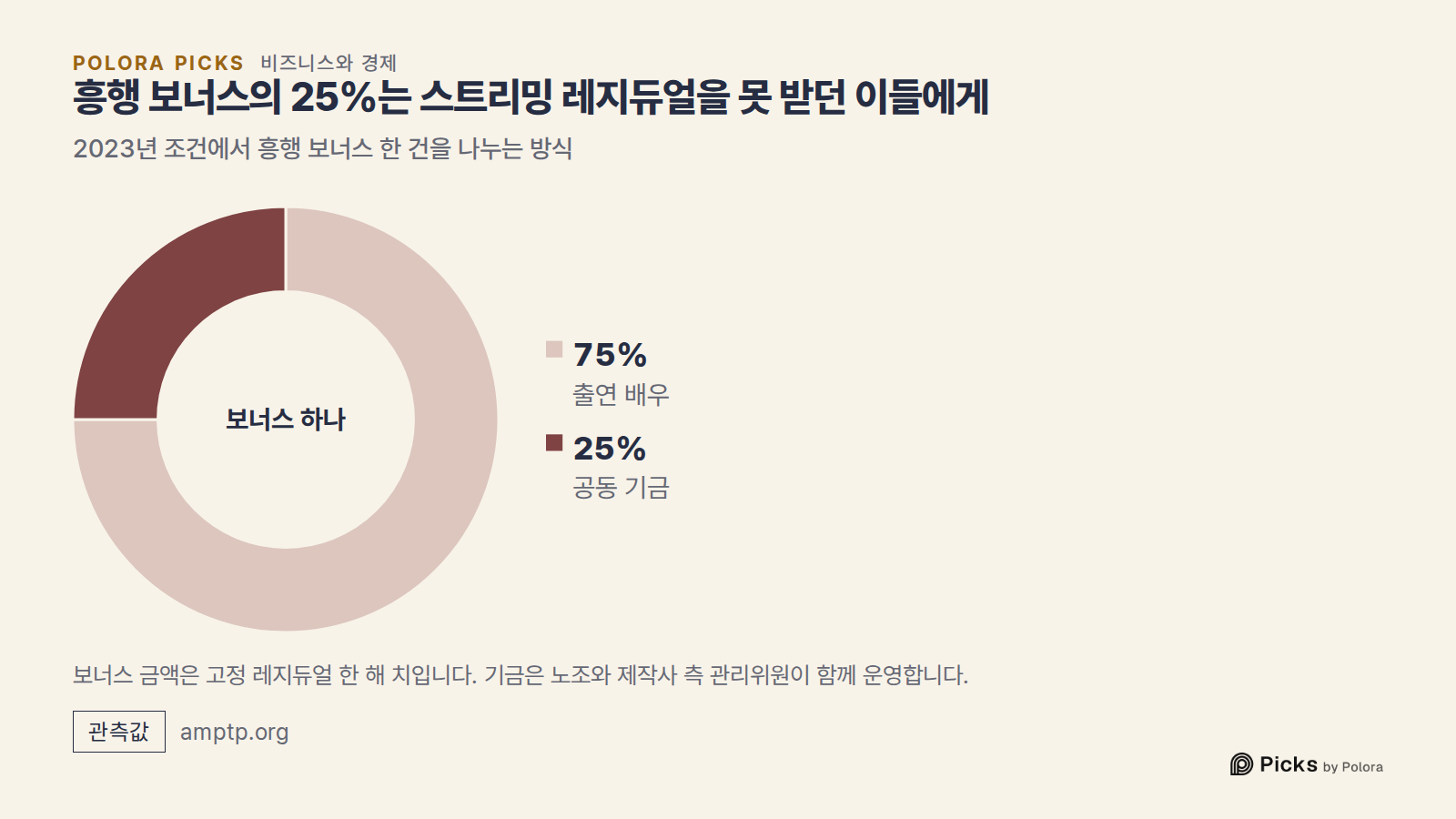
2023년 조건에서 보너스 금액은 고정 레지듀얼 한 해 치입니다. 이 가운데 75%는 그 작품에서 레지듀얼을 받는 배우들에게 가고, 나머지 25%는 노조와 제작사 측 관리위원이 함께 운영하는 기금으로 들어갑니다.
이 기금은 그동안 스트리밍 레지듀얼을 한 번도 받지 못한 사람들에게 돈을 줍니다. 관리위원회 규칙에 따르면, 보너스 대상 작품에서 25일 이상 일한 대역 배우, 보조 출연자, 화면에 나오지 않는 스턴트 연기자가 몫을 받을 수 있고, 기준선 가까이 갔지만 넘지 못한 작품의 출연진도 받을 수 있습니다.
2026년 10월 미국 연예 매체 데드라인과 더랩은 2024년 공개작을 대상으로 한 기금의 첫 지급 소식을 전했습니다. 약 700명의 연기자에게 약 150만 달러가 돌아갔는데, 회원이 16만 명이 넘는 노조에서 1%가 안 되는 인원입니다. 이 숫자는 기금 지급분만이며, 보너스의 75%를 직접 받은 배우들은 들어 있지 않습니다. 어떤 작품이 기준을 넘었는지는 서비스가 보고한 시청 데이터에 기댑니다.
노조원들은 2026년 6월 새 계약을 91.42%의 찬성으로 승인했습니다. 기간은 2026년 7월부터 2030년 6월까지입니다.
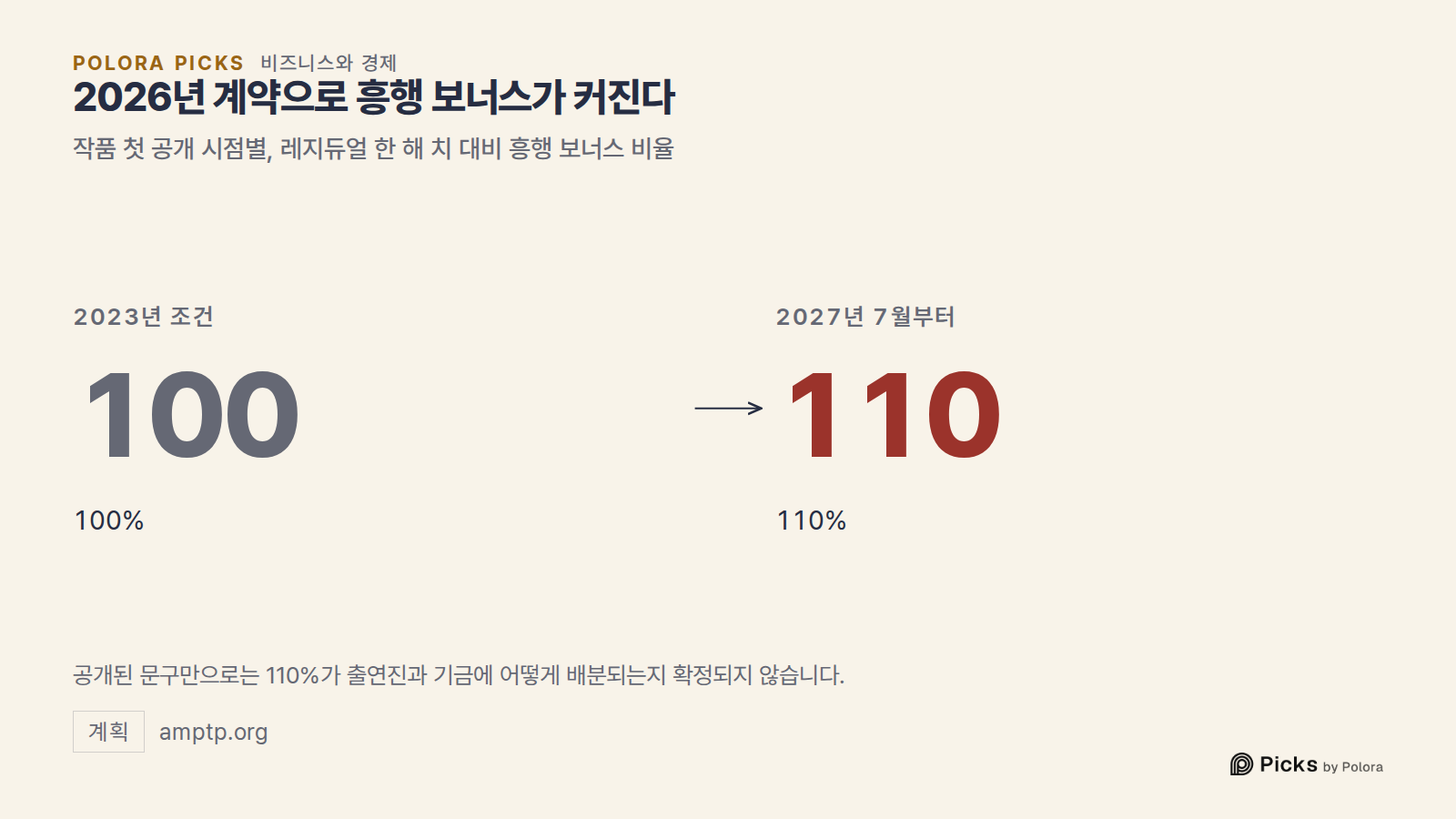
2027년 7월 이후 처음 공개되는 작품부터 흥행 보너스는 레지듀얼 한 해 치의 100%에서 110%로 커집니다. 노조의 안내서는 기금 몫이 한 해 치의 25%에서 35%로 오른다고 설명하고, 합의문은 출연진 몫을 75%로 정합니다. 둘을 더하면 110%입니다. 그런데 서명된 문서에는 제작사가 내는 총액을 보너스의 100%로 묶는 예전 문장도 남아 있어서, 공개된 문구만으로는 배분이 어떻게 되는지 확정되지 않습니다. 또 새 합의에 따라 맺은 계약에서는 제작사가 보너스를 배우 출연료 안에 미리 지급한 것으로 칠 수 없습니다.
출연료 상한은 2027년 7월에 2.5%, 2029년 7월에 다시 2.5% 오르고, 가장 큰 서비스의 해외 계수는 90%에서 95%로 오릅니다.
작가에게도 따로 맺은 작가 계약에 비슷한 규칙이 있습니다. 같은 20% 기준을 넘었을 때 작가가 받는 보너스는 2027년 1월 1일 이후 공개되는 작품부터 국내·해외 레지듀얼의 50%에서 75%로 오릅니다.
계산의 바탕이 그 에피소드의 출연료라서, 하루 이틀 일했다면 바탕부터 작습니다. 해마다 곱하는 비율은 계속 떨어집니다. 해외 몫은 따로 나오고 그보다 더 작을 수 있습니다. 게다가 제작사는 출연료의 일부를 레지듀얼을 미리 준 것으로 칠 수 있습니다. 2024년 12월 이후 맺은 계약에서 주당 또는 에피소드당 보장 출연료가 7만 5,000달러 미만인 연기자는 이 부분이 출연료의 15%로 제한되고, 이 기준선은 2027년 7월 이후 맺는 계약부터 8만 달러로 오릅니다.
처음엔 극장이나 TV 방송용으로 만들었다가 나중에 스트리밍으로 넘어간 작품은 계산법이 다릅니다. 배급사 총수입, 곧 판권료의 3.6%를 출연진이 나눠 갖습니다. 2026년 계약서가 든 예에서는 총수입이 3,152.78달러일 때 이 몫에서 각종 기금 납입금을 떼면 100달러가 남고, 이것을 세 배우가 16.67달러, 33.33달러, 50달러씩 나눠 갖습니다.
실제 명세서에 어떤 금액이 찍히는지는 한 배우의 사례에서 엿볼 수 있습니다. 넷플릭스 드라마 '오렌지 이즈 더 뉴 블랙'에 나온 키미코 글렌은 27.30달러가 찍힌 2020년 12월자 해외 레지듀얼 명세서를 공개하며, 스트리밍된 만큼 돈을 받아야 한다고 주장했습니다. 이것은 배우 한 사람의 명세서 한 장일 뿐 일반적인 금액이 아니고, 넷플릭스 초기작인 이 드라마에 어떤 레지듀얼 조건이 적용됐는지는 확인되지 않았습니다.
여기 나온 내용은 모두 미국 노조가 대형 제작사들과 맺은 계약으로 만든 작품에 해당합니다. 다른 나라에서 만든 작품은 그 나라의 노조와 법을 따르고, 노조 계약 없이 만든 작품에는 계약서에 따로 넣지 않는 한 레지듀얼 규칙이 없습니다.
작품을 언제 만들었는지도 중요합니다. 가입자 단계는 촬영 시작 시점에, 보너스는 공개 시점에, 2026년 조건은 2026년과 2027년의 기준일에 달려 있습니다. 같은 서비스의 흥행작 두 편이 서로 다른 규칙으로 출연진에게 돈을 줄 수 있습니다.
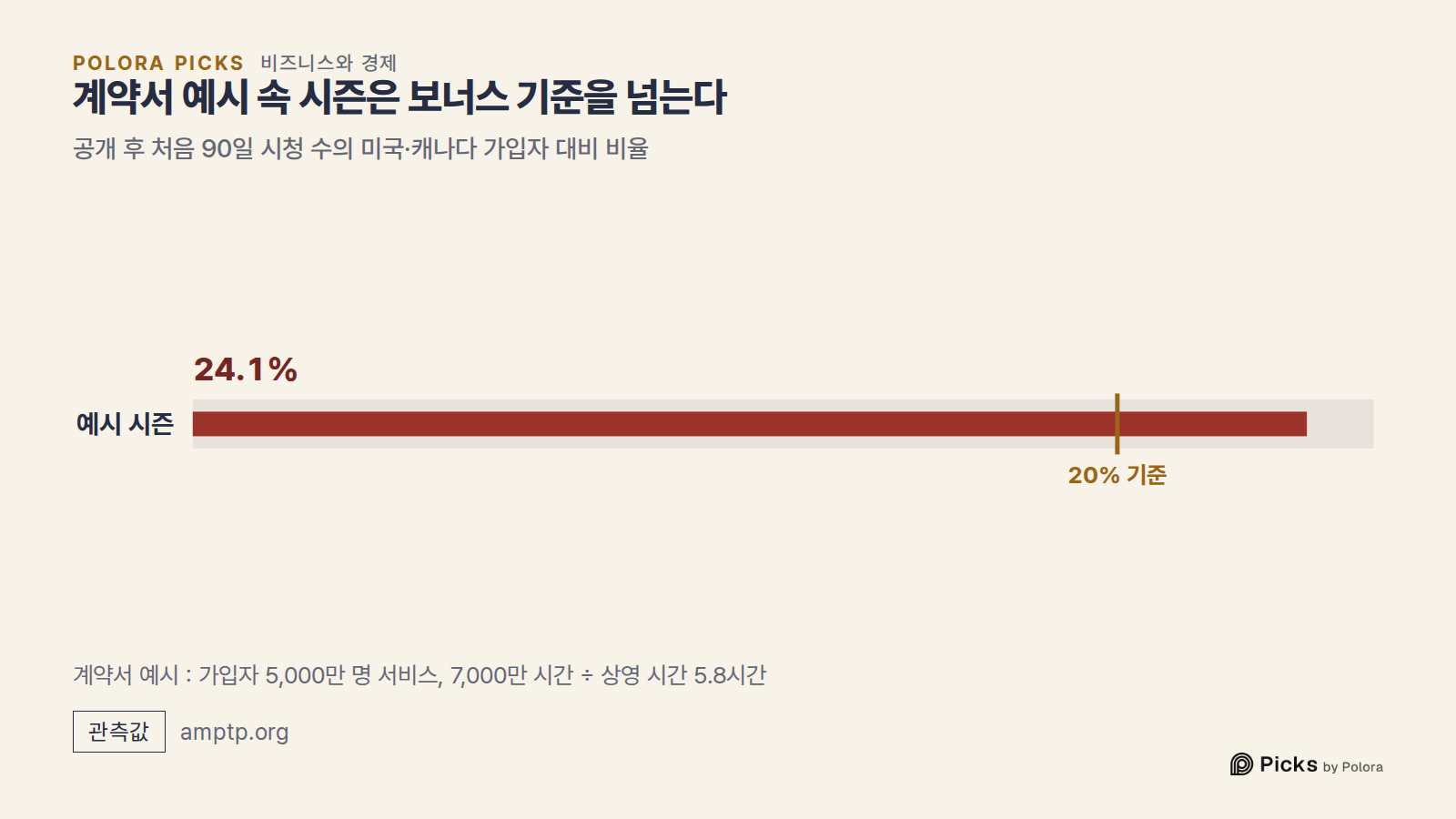
그래서 처음 질문의 답은 '아니요'입니다. 내가 재생 버튼을 누른다고 출연진에게 돈이 가지는 않습니다. 내 시청 시간은 다른 모든 사람의 시청 시간과 합쳐져, 작품 공개 후 처음 90일과 그 뒤 해마다 첫머리에 따지는 20% 기준선에서만 의미가 있습니다. 나머지는 출연료와 가입자 수, 그리고 달력이 정합니다.
Do actors get paid every time you stream their show?
Alpha · deepseek-v4-pro
No — not in the sense most people mean. For a US union actor appearing in a show made specifically for a subscription streaming service, your individual play does not trigger a payment to the cast.
What actors get instead is a residual: a fixed annual sum for each year the show stays on the service. It is calculated from three things:
1. The actor’s pay for the episode, counted only up to a cap — for example, $4,562 for a one-hour episode under current union tables.
2. The streaming service’s subscriber count in the US and Canada, which sets a multiplier — currently 65%, 100%, or 150% depending on the service’s size.
3. How long the show has been available — the percentage starts around 45% of the capped pay in year one, then falls.
So a show streamed once and a show streamed ten million times can earn the same cast the same residual, unless it clears a separate bonus threshold.
There is one place where viewing counts: the success bonus from the 2023 actors’ contract. If a title’s first 90 days of viewing reaches roughly 20% of the service’s domestic subscribers, the show qualifies for an extra payment. But that is a yes/no test based on aggregate hours, not…
Beta · gpt-6-sol
No—not each time you press play. For a US union-covered show made for subscription streaming, an actor’s ordinary residual is calculated under a contract formula, rather than paid once per individual stream. Viewing can matter if a season or film crosses a success-bonus threshold: roughly 20% of the service’s domestic subscribers in its first 90 days. That is a threshold for an additional payment, not a per-play rate. These rules do not describe every production or every country. (amptp.org)
For the manuscript, the central answer stands, but several qualifications matter:
- The formula and examples need a tighter scope. The stated pay cap, subscriber multipliers and worked dollar amounts are presented as though they describe every streaming show. They should be explicitly limited to the applicable *high-budget SVOD* provisions, performer category, episode length and effective dates. The 2026 agreement itself distinguishes titles first exhibited before July 1, 2027, from those first exhibited on or af…
Gamma · gemini-3.1-pro
I have reviewed the manuscript and checked several of its claims against live sources. Here is what I found regarding the details, the angle, and the core premise:
What was confirmed:
* The 45% / 40% / 35% residual schedule: The manuscript correctly states the percentage of capped pay for the first three years of exhibition for high-budget streaming. I confirmed this schedule (45% in year one after the initial 90 days, 40% in year two, 35% in year three) through industry payroll guides and SAG-AFTRA contract summaries. (wrapbook.com)
* The 2026 contract ratification: The voting figures and timeline are accurate. SAG-AFTRA announced on June 4, 2026, that members ratified the new TV/Theatrical Agreement with 91.42% voting in favor (and 8.58% opposed) on a 19.25% turnout. The contract runs through June 30, 2030. (sagaftra.org)
What could not be verified this turn:
* The October 2026 bonus payout figures: A live search for the specific October 2026 payout reporting did not return the Deadline or TheWrap articles mentioning the "$1.5 million to about 700 performers" figures.…
Researcher · gpt-6-luna
The official sources support the central answer: one person’s stream does not trigger a separate payment to an actor. Under the SAG-AFTRA rules for qualifying high-budget subscription-streaming productions, actors receive residuals under a contract formula; aggregate viewing can also qualify a title for a success bonus. (servicesagaftra.custhelp.com)
A few details in the discussion need care:
- The 2026 bonus wording is genuinely hard to reconcile. SAG-AFTRA’s own contract FAQ says the fund’s share increases from 25% to 35% of an annual SVOD residual. But the executed agreement describes a total bonus of 110%, allocates 75% to performers and 35% to the fund, and also says the producer’s total obligation cannot exceed 100% of the bonus plus specified contributions. The public text alone does not resolve that tension, so avoid asserting “nobody’s share shrinks” or presenting the 2026 split as straightforward arithmetic. (sagaftra.org)
- The $75,000 advance-payment limit is d…
The Arbiter · gpt-6-sol
The voices agree on the distinction that matters to your question: an individual stream is not a separate payment event under the US union rules they examined. They also agree that a title’s *aggregate* viewing can matter when it reaches a success-bonus threshold. SAG-AFTRA’s materials distinguish residuals for high-budget programs made for subscription streaming from the rules for television or theatrical work later shown there. (sagaftra.org)
The manuscript’s detailed claims need different levels of confidence:
- Confirmed against SAG-AFTRA: members approved the 2026 agreement by 91.42%, for a term from July 1, 2026, through June 30, 2030. The union’s summary also lists the $4,562 ceiling for a 36–65-minute program, rising to $4,676 in July 2027, and a foreign-subscriber factor rising from 90% to 95% for the largest tier. (sagaftra.org)
- Not fully resolved in the record: Beta and the Researcher identify conflicting-looking language in t…
The Arbiter's Final Verdict · gpt-6-sol
No—not each time you press play. For an actor on a qualifying US union production made for subscription streaming, the ordinary residual is set by a contract formula, not a payment triggered by your individual stream. A title’s *total* viewing can nevertheless unlock a success bonus. That distinction supports the manuscript’s central premise. It does not support saying that views never affect actors’ pay. SAG-AFTRA 2026 contract materials; 2023 agreement.
For publication, I would keep that answer but qualify the manuscript’s detail:
- Formula, tiers and dollar examples: These belong specifically to the applicable *high-budget subscription-streaming* rules, not every streaming appearance. The 45%/40%/35% early-year schedule has support in the payroll guide, but the actor-specific schedule and the manuscript’s $866 and $3,079 examples were not independently established from an actor contract table in this record. The example…