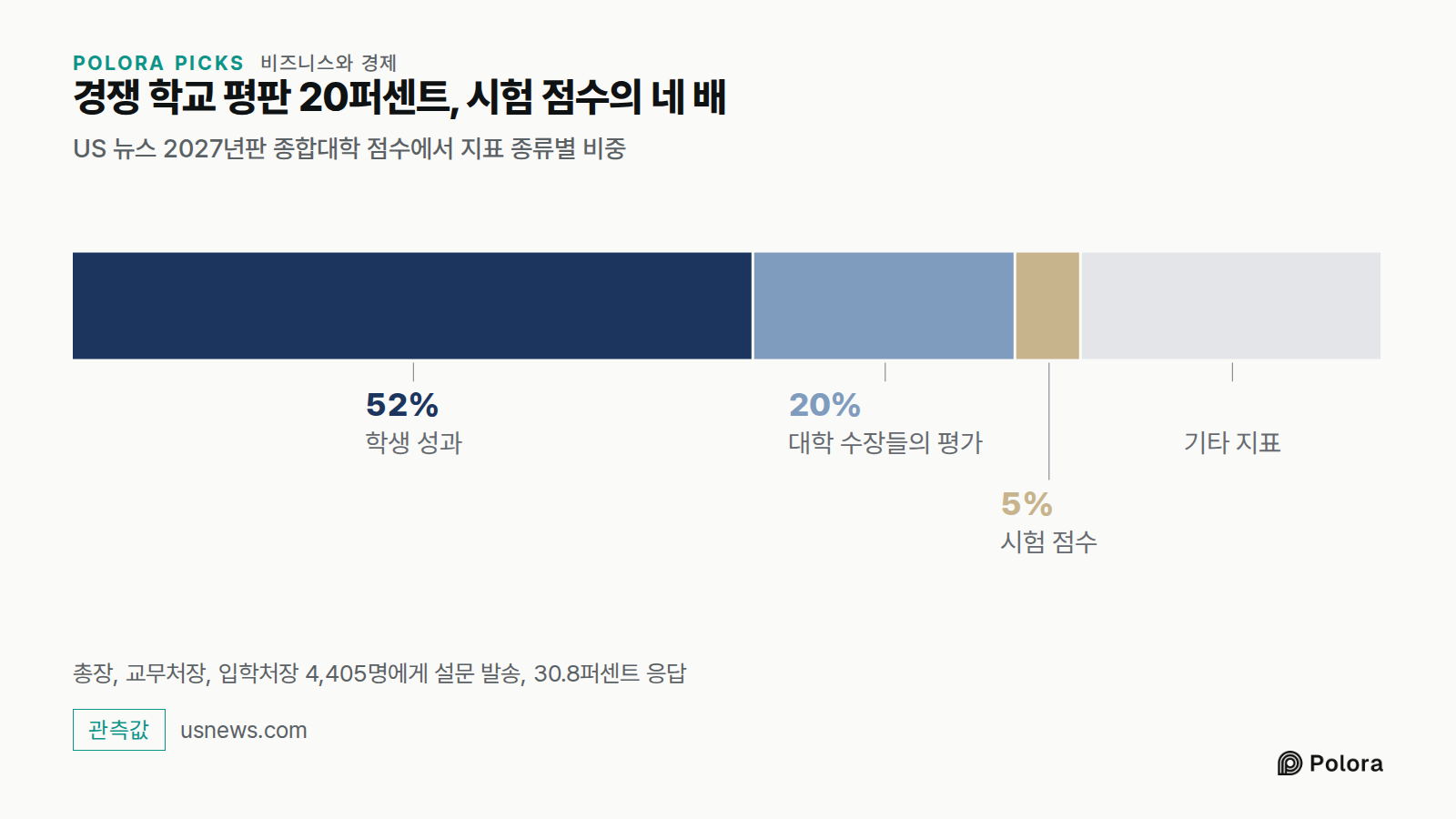
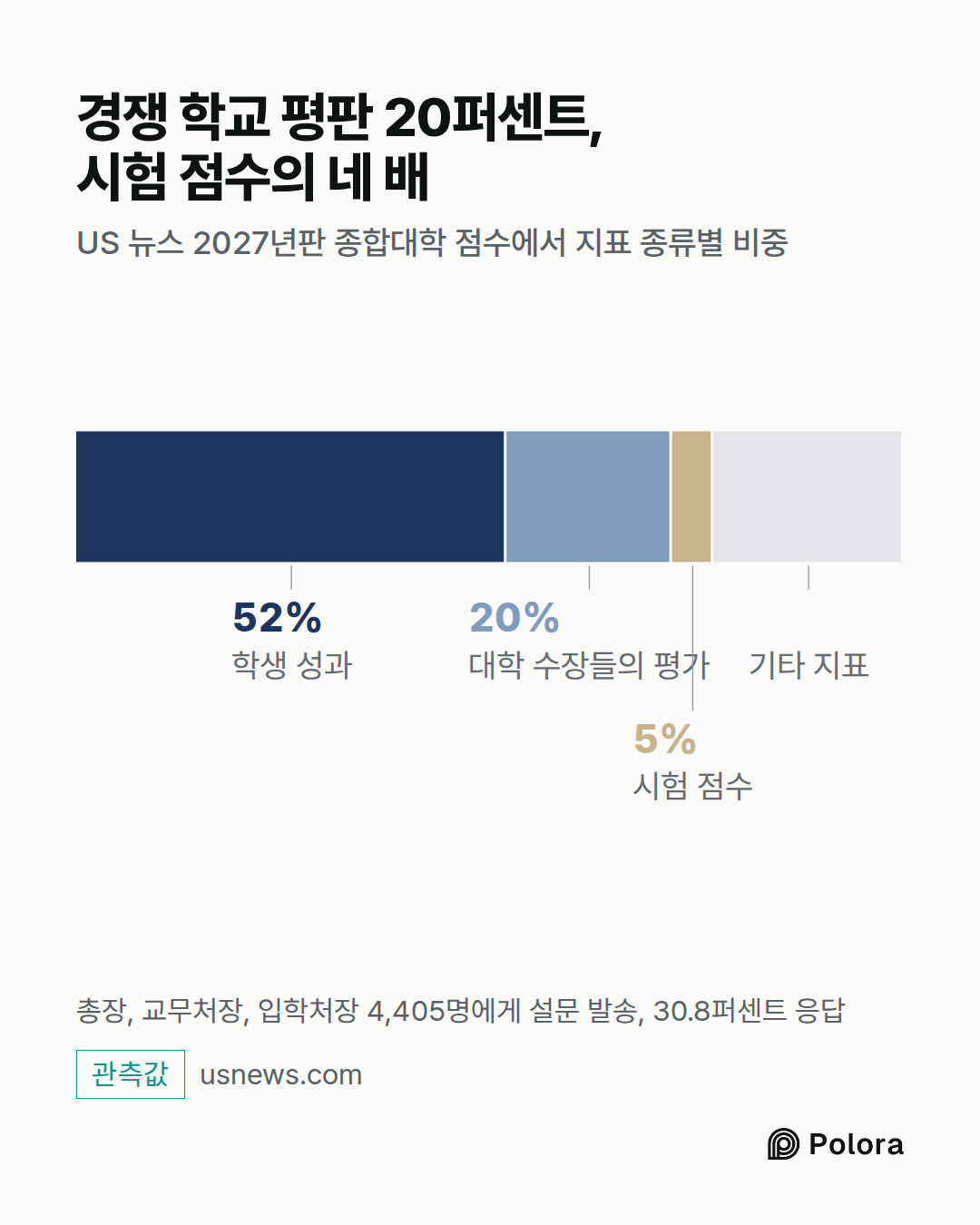
US 뉴스가 계속 손보는 가중치 공식으로 매깁니다. 종합대학 기준으로 점수의 52퍼센트는 입학 뒤 학생들이 거둔 성과, 20퍼센트는 다른 대학 수장들이 매긴 평판이고, 합격률은 아예 들어가지 않습니다.
비즈니스와 경제 · 2026-10-10
올해는 왜 MIT가 1위에 올랐을까?
2026년 9월 22일, 미국 시사 매체 US 뉴스 앤드 월드 리포트(이하 US 뉴스)가 2027년판 대학 순위를 발표했습니다. 미국 전역에서 학생을 뽑는 연구 중심 종합대학 부문에서 프린스턴이 1위를 놓친 것은 2012년판 이후 처음이었습니다. 1위는 MIT였고 프린스턴이 2위, 하버드가 그다음이었습니다.
분명히 달라진 것 하나는 공식입니다. US 뉴스는 졸업생이 떠안은 연방 학자금 대출 빚을 재던 항목을 뺐습니다. 그 자리에 들어간 새 항목은 졸업하고 네 해가 지났을 때, 같은 전공을 공부한 다른 졸업생들과 비교해 얼마나 버는지를 봅니다. 자료는 미국 교육부의 대학 정보 공개 데이터베이스인 칼리지 스코어카드에서 가져옵니다. 이 새 항목은 대학 점수의 5퍼센트를 차지합니다.
프린스턴은 오래전부터 학생의 학비 부담을 대출이 아니라 갚을 필요 없는 장학금으로 채워 왔기 때문에, 빚 항목에서는 다른 학교가 이기기 어려운 상대였습니다. US 뉴스의 교육 데이터 분석 책임자 에릭 브룩스는 프린스턴 동문 잡지에 프린스턴의 기본 데이터가 “대체로 비슷하게 나왔다”고 말했습니다. 그는 또 US 뉴스가 교수진 연구 지표를 넣은 뒤로 프린스턴과 다른 대학들 사이의 격차가 여러 해에 걸쳐 좁혀져 왔다고 했습니다. US 뉴스는 MIT가 교수진 연구, 시험 점수, 졸업생 소득에서 높은 점수를 받았다고 짚었습니다. 두 학교를 잰 저울이 바뀐 것은 맞지만, 그게 이야기의 전부는 아닙니다. 1위와 2위가 뒤바뀐 데에 새 소득 항목이 얼마나 작용했고 이미 좁혀지던 격차가 얼마나 작용했는지는, 공개된 설명 어디에도 나와 있지 않습니다.
좋은 대학이 뭐냐고 물으면 대부분 들어가기 어려운 곳이라고 답할 것입니다. 이 순위는 그것을 재지 않습니다. US 뉴스는 2018년 9월에 낸 2019년판에서 합격률을 공식에서 뺐습니다. 그때도 비중은 1.25퍼센트에 불과했습니다. US 뉴스는 지금도 합격률이 가장 낮은 학교 목록을 따로 내지만, 그 목록은 본 순위 점수에 아무 영향도 주지 않습니다.
입학 난이도와 그나마 가까운 항목은 시험 점수입니다. 신입생들의 SAT와 ACT, 즉 미국 대학 입학시험 성적으로, 종합대학 부문에서 5퍼센트를 차지합니다. 고등학교 석차와 동문 가운데 기부하는 사람의 비율도 한때 공식에 있었지만, 둘 다 2024년판에서 빠졌습니다.
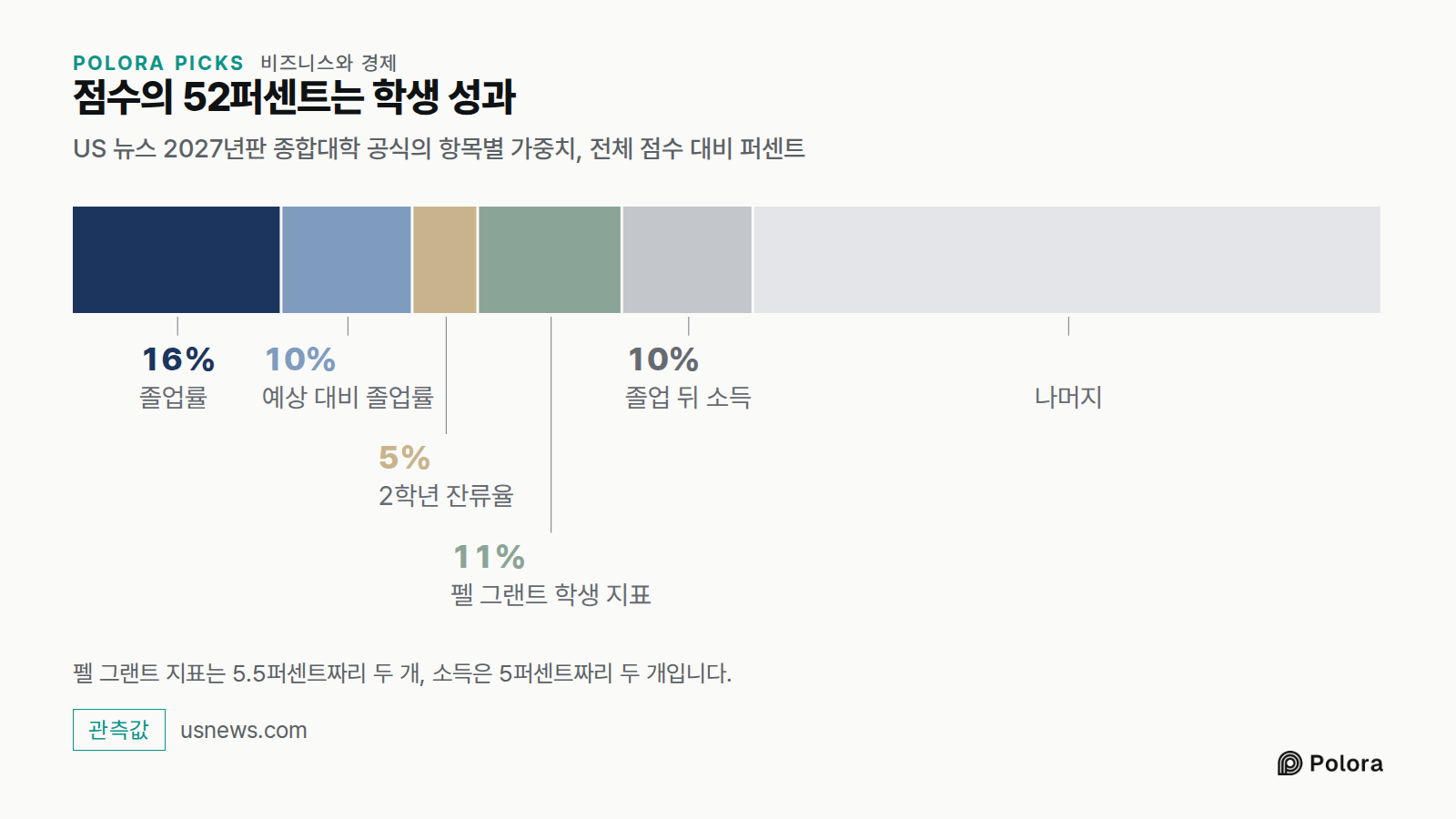
종합대학 점수의 52퍼센트는 US 뉴스가 학생 성과라고 부르는 부분입니다. 가장 큰 조각은 졸업하는 학생의 비율로, 16퍼센트입니다. 또 다른 10퍼센트는 실제 졸업률을 예상 졸업률과 견줍니다. 예상 졸업률은 그 학교가 뽑은 학생들을 보고 US 뉴스가 내다본 값이어서, 예상보다 많은 학생을 졸업시킨 학교가 점수를 얻습니다. 1학년 학생이 2학년에도 학교에 남는지는 5퍼센트입니다.
저소득층 학생을 위한 몫도 따로 있습니다. 저소득층 학부생을 위한 대표적인 연방 장학금인 펠 그랜트를 받는 학생들입니다. 각각 5.5퍼센트인 두 지표가 이 학생들이 얼마나 졸업하는지, 그리고 그 졸업률이 다른 학생들과 비교해 어떤지를 봅니다. 마지막 10퍼센트는 졸업 뒤의 돈 문제입니다. 고졸자의 일반적인 소득보다 많이 버는 졸업생의 비율이 5퍼센트, 앞에서 말한 전공별 소득 항목이 5퍼센트입니다.
US 뉴스는 펠 그랜트 지표로 만든 사회 이동성 순위도 따로 냅니다. 본 순위와는 다른 목록이고, 본 순위를 대신하지 않습니다.
학생 성과 다음으로 큰 항목은 설문입니다. US 뉴스는 학교마다 총장, 교무처장(학사를 총괄하는 책임자), 입학처장에게 설문지를 보냅니다. 이들은 같은 부문에 속한 학교들의 학문적 수준을 1점에서 5점으로 매기는데, 자기가 아는 학교만 평가합니다. 그 평균 점수가 전체 점수의 20퍼센트를 차지합니다.
US 뉴스의 2027년판 방법론 문서에 따르면 설문지는 4,405명에게 발송됐고 30.8퍼센트가 응답했습니다. 종합대학 부문의 응답률은 41퍼센트였습니다. US 뉴스는 이 설문이 강의의 질이나 학교의 건전성처럼 달리 재기 어려운 것을 잡아낸다고 설명합니다. 반면 고등교육 전문 매체에 글을 써 온 비판자들은 이 설문이 결국 평판을 잴 뿐이라고 여러 해째 지적해 왔습니다.
공식에 들어가는 수치는 두 군데서 옵니다. 일부는 US 뉴스가 학교마다 보내는 통계 설문에서 오는데, 학교가 자기 학교에 관한 내용을 직접 채워 넣는 방식입니다. 나머지는 연방 정부에서 옵니다. 학교가 교육부에 의무적으로 보고하는 졸업 자료, 그리고 학비와 졸업 뒤 성과를 공개하는 교육부 데이터베이스인 칼리지 스코어카드의 소득 자료가 여기에 들어갑니다.
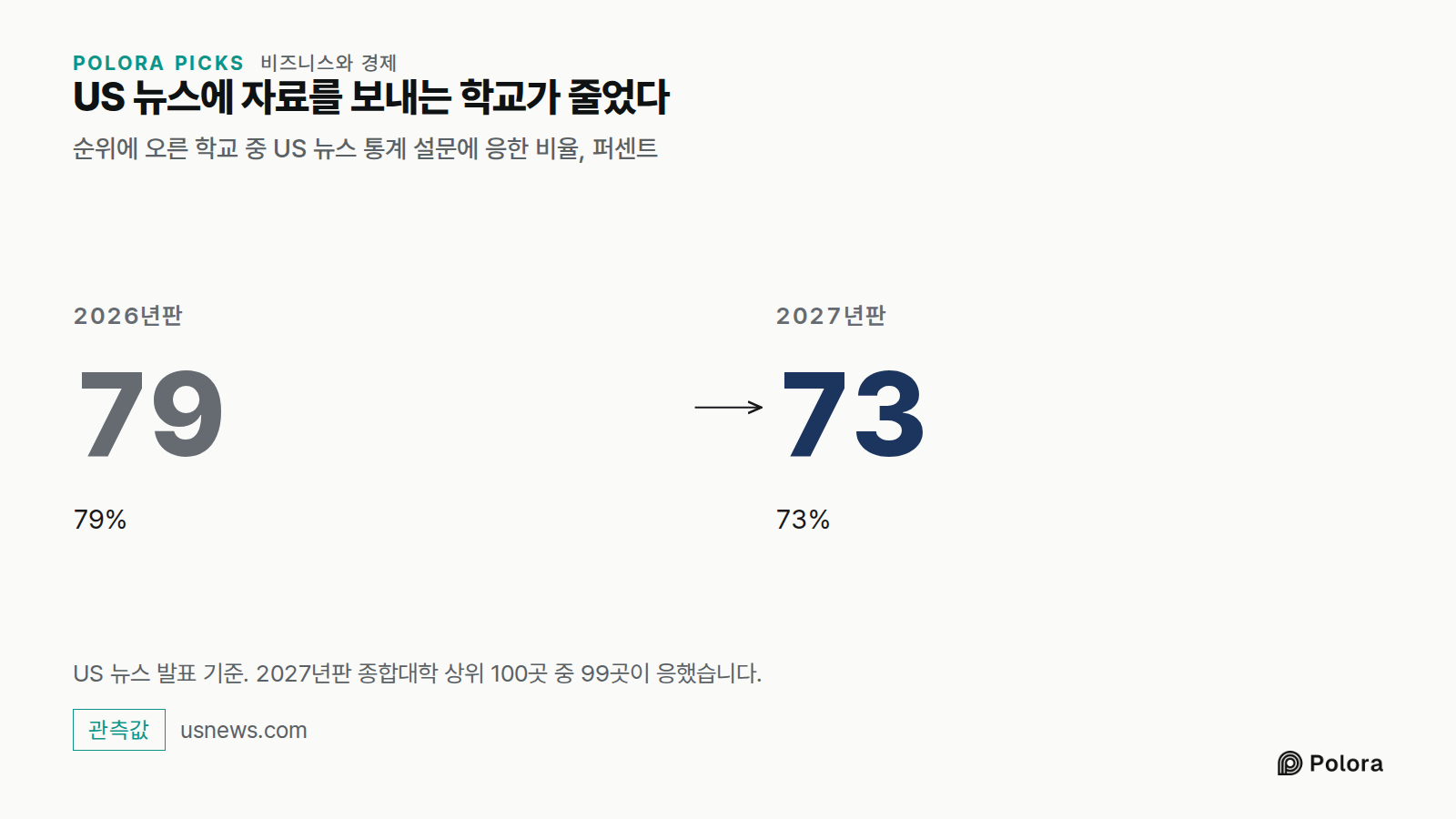
무게중심은 연방 자료 쪽으로 옮겨 왔습니다. US 뉴스는 2024년판에서 합쳐서 18퍼센트를 차지하던 항목 다섯 개를 뺐습니다. 학급 규모, 동문 기부, 그 분야 최고 학위를 가진 교수의 비율 등입니다. 연방 대출을 받은 졸업생의 비율도 그중 하나였는데, 2027년판에서 교체된 빚 항목과는 다른 지표입니다. US 뉴스는 모든 학교가 보고하지는 않는 지표들이라 바꿨다고 설명했습니다. 2027년판의 경우, 순위에 오른 학교 가운데 통계 설문에 응한 곳은 73퍼센트로 한 해 전 79퍼센트에서 줄었고, 종합대학 상위 100곳 중에서는 99곳이 응했다고 US 뉴스는 밝혔습니다.
학교가 직접 보고한 숫자는 그 보고가 정확한 만큼만 믿을 수 있습니다. 2022년 컬럼비아대는 2위였습니다. 그해 컬럼비아대 수학과 교수 마이클 대디어스가 이 순위의 근거 자료에 의문을 제기하는 분석을 발표했습니다. 그가 문제 삼은 것 가운데에는 컬럼비아대 수업의 83퍼센트가 학생 20명 미만이라는 주장도 있었습니다.
2022년 9월 컬럼비아대는 학급 규모와 그 분야 최고 학위를 가진 교수 비율, 이 두 수치에 문제가 있었다고 인정하며 “오래되었거나 잘못된 방법론”에 기댔다고 밝혔습니다. 이 인정은 그 두 수치에 대한 것이지, 교수가 문제 삼은 모든 것에 대한 것은 아니었습니다. 컬럼비아대는 새 설문 자료를 내지 않았고, US 뉴스는 그달 컬럼비아대를 18위로 매겼습니다. 2025년 컬럼비아대는 이 자료 문제로 학생들이 낸 집단소송에서 900만 달러를 지급하기로 하고 합의했습니다. 다만 잘못은 인정하지 않았습니다. US 뉴스는 컬럼비아대가 다른 세 가지 수치에 대한 의문에 답하지 않았으며, 순위에 계속 넣을지 검토를 이어 가겠다고 밝혔습니다.
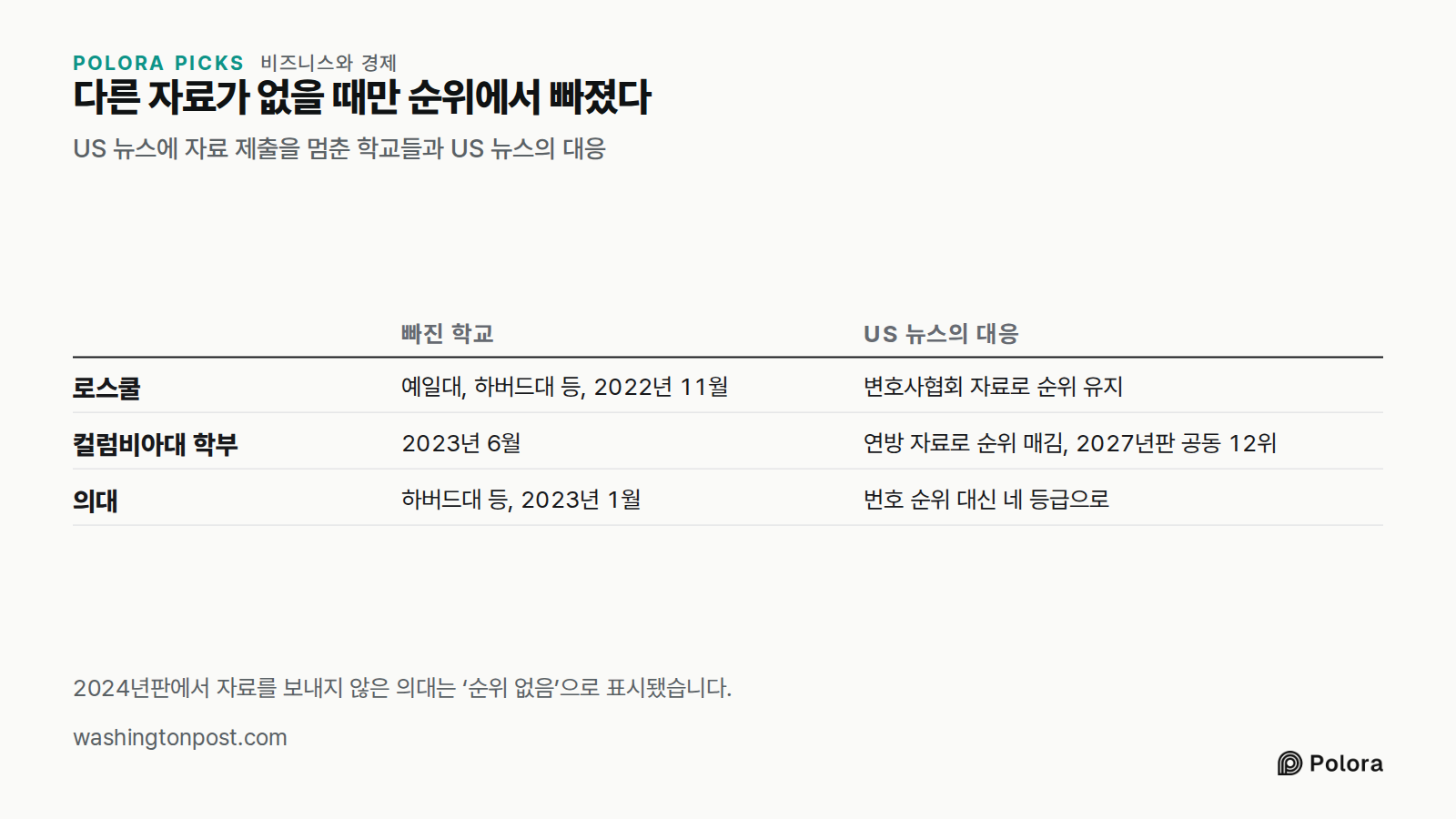
2022년 11월 16일, 예일대 로스쿨이 US 뉴스에 더는 자료를 보내지 않겠다고 밝혔고, 몇 시간 뒤 하버드대 로스쿨이 뒤따랐습니다. 스탠퍼드, 컬럼비아, UC 버클리, 조지타운 등도 합류했습니다. US 뉴스는 미국변호사협회가 공개를 의무화한 자료로 인가받은 로스쿨 전부의 순위를 계속 매기겠다고 답했습니다. 또 40퍼센트였던 로스쿨 평판 설문의 비중을 낮췄습니다. 예일대는 US 뉴스가 1990년 로스쿨 순위를 매기기 시작한 뒤로 줄곧 1위이거나 공동 1위였습니다. 예일대는 그 뒤로도 순위에 계속 나왔고, 2026년 로스쿨 순위에서는 스탠퍼드가 단독 1위, 예일대가 공동 2위였습니다.
컬럼비아대 학부는 2023년 6월에 참여를 그만뒀습니다. 그래도 US 뉴스는 대학이 연방 정부에 보고한 수치로 컬럼비아대의 순위를 매기고 있습니다. 2027년판에서 컬럼비아대는 공동 12위입니다.
의대는 사정이 달랐습니다. 하버드 의대가 2023년 1월에 빠졌고, 스탠퍼드, 존스홉킨스, 컬럼비아 등이 뒤따랐습니다. 그러자 US 뉴스는 의대에 번호를 붙인 순위를 매기지 않기로 하고, 2024년판에서는 네 등급으로 나눴습니다. 그 판에서 자료를 보내지 않은 학교는 ‘순위 없음’으로 표시됐습니다. 빠지겠다고 한 학교가 실제로 순위에서 사라지는지는, US 뉴스가 공개 기록만으로 그 학교의 숫자를 다시 만들어 낼 수 있느냐에 달려 있습니다.
종합하면 US 뉴스 순위는 열 개가 넘는 지표에서 나오고, 각 지표의 가중치는 US 뉴스가 정합니다. 자료의 일부는 학교에서, 일부는 정부에서 오므로 학교도 숫자를 만드는 데 한몫합니다. 무엇을 보고하는지, 아예 보고를 하는지에 따라서입니다. 학교를 서로 비교하는 부문의 경계도 다시 그어집니다. 올해는 미국 대학을 유형별로 나누는 전국 분류 체계인 카네기 분류가 개정됐습니다. 그 결과 그전까지 순위에 오르던 학교 다섯 곳 가운데 한 곳꼴로 다른 순위 부문으로 옮겨 갔고, 그것만으로도 학교의 순위가 움직일 수 있습니다.
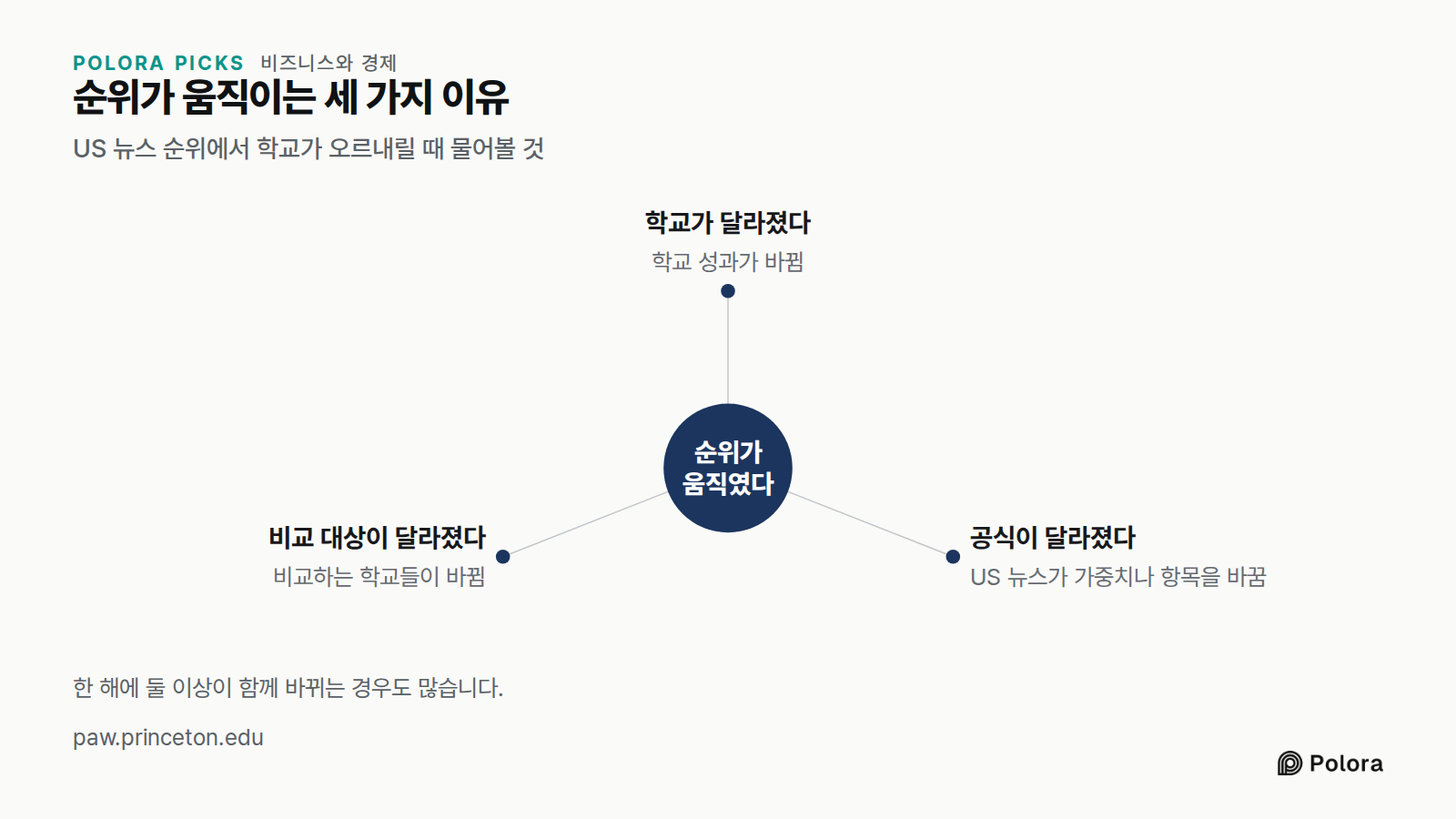
그렇다고 순위가 의미 없다는 말은 아닙니다. 다만 어떤 학교의 순위가 오르거나 내렸다면 이렇게 물어볼 만합니다. 학교가 달라졌는가, 공식이 달라졌는가, 비교 대상이 된 학교 무리가 달라졌는가. 둘 이상이 한꺼번에 달라진 경우도 많습니다. 올해 맨 꼭대기 자리를 두고도 US 뉴스의 데이터 책임자는 공식이 바뀐 점과 함께, 여러 해째 좁혀지던 격차를 이야기했습니다.
How does U.S. News decide which colleges rank best?
Alpha · claude-sonnet-5
Alpha
J'ai vérifié les chiffres-clés de ce manuscrit et la plupart tiennent, avec quelques précisions à apporter.
Les poids 2027 sont confirmés, avec une nuance. La page méthodologie de U.S. News confirme que les résultats étudiants (« student outcomes ») comptent pour 52% du score total, incluant les taux de diplomation (16%) et la rétention en première année (5%), ainsi que la performance par rapport à un taux de diplomation prédit (10%). Le détail Pell est légèrement différent de ce qu'écrit le manuscrit : ce n'est pas un bloc unique de 11%, mais le taux de diplomation Pell (5,5%) et la performance de diplomation Pell (5,5%) — soit bien 11% au total, donc le manuscrit arrive au bon chiffre global mais simplifie la structure interne. Le nouveau facteur de revenus par filière est confirmé : les métriques post-diplôme évaluent le pourcentage de diplômés gagnant plus qu'un diplômé du secondaire typique (5%) et un nouveau facteur sur les revenus par filière (5%) qui remplace un facteur de dette fédérale médiane.
Les autres poids cités (peer assessment 20%, faculty resources 11%, financial 8%, tests 5%, faculty research 4%) sont confirmés par Poets&Quants : l'évaluation par l…
Beta · gpt-6-sol
Beta: The manuscript’s core explanation holds: U.S. News ranks colleges *within categories* using a weighted formula, not a direct measure of how hard they are to enter. For national universities in the 2027 edition, the stated weights are 52% student outcomes, 20% peer assessment, 11% faculty resources, 8% financial resources, 5% entering students’ test scores, and 4% faculty research. The outcomes portion includes graduation, retention, Pell-recipient outcomes and post-college earnings. I could not open U.S. News’s 2027 methodology document directly, so I would not present its more granular figures—particularly the survey response and school-submission rates—as independently checked by me. The document’s address is https://www.usnews.com/media/ai/education/2027BC-methodology.
Two corrections matter before publication:
- The 2024 and 2027 debt measures must not be conflated. The five factors removed for 2024 included the *proportion of graduates who borrowed*. The factor replaced by earnings-by-major for 2027 was *graduate indebtedness*. Thus the manuscript’s account of the 2024 removals should say “proportion of graduates borrowing,” not “share of graduates with deb…
Gamma · gemini-3.1-pro
Gamma: I have run live searches to verify the remaining specific claims about the graduate schools and Columbia's 2027 position, as well as the 2026 law school rankings.
Here is what the live web confirms:
* Yale Law's rank in 2026: The manuscript is correct. In the 2026 U.S. News Best Law Schools ranking, Stanford took the No. 1 spot alone, and Yale (which had held or tied for No. 1 since 1990) dropped to a tie for No. 2 with the University of Chicago. This is confirmed by multiple legal news outlets, including Justia News (https://news.justia.com/stanford-overtakes-yale-for-top-u-s-law-school/).
* Medical schools moving to tiers: The manuscript's claim holds. U.S. News overhauled its medical school rankings for the 2024 edition, moving away from ordinal rankings to place schools into four tiers (Tier 1 through Tier 4) for both Research and Primary Care. Schools that refused to submit statistical data were indeed labeled as "Unranked." This is confirmed by Becker's Hospital Review (https://www.beckershospitalreview.com/hospital-management-administration/us-news-releases-medical-school-rankings.html).
* Columbia's 2027 rank: I can confirm Columbia is tied f…
Researcher · gemini-3-7-flash
Researcher Verification Report
I have checked the remaining specific factual claims, weights, and dates against live web sources.
---
1. Methodology Weights & Formula Components (2027 Edition)
* Status: Verified.
* Details:
* Outcomes (52% total): Six-year graduation rate is 16%, graduation rate performance (predicted vs. actual) is 10%, first-year retention is 5%, Pell Grant graduation metrics comprise 11% combined (split 5.5% Pell graduation rate and 5.5% Pell graduation rate performance), post-college earnings above a high school graduate is 5%, and the newly introduced "Earnings by Major" metric is 5% (replacing graduate indebtedness).
* Remaining National University Weights: Peer assessment is 20%, faculty resources is 11% (faculty salary, student-faculty ratio, full-time faculty share), financial resources (per-student instructional spending) is 8%, entering class standardized test scores is 5%, and faculty research/citations is 4%.
* Source:
* *Poets&Quants / U.S. News 2027 Breakdown:* https://poetsandquantsforundergrads.com/news/u-s-news-best-colleges-ranking-2027-mit-ends-princetons-long-run-…
The Arbiter · gpt-6-sol
The voices agree on the shape of the answer: U.S. News compares colleges within categories using a weighted formula. For national universities in the 2027 edition, the reported weights are 52% student outcomes, 20% peer assessment, 11% faculty resources, 8% financial resources, 5% test scores and 4% faculty research. They also agree that the 11% attributed to Pell-recipient outcomes consists of two 5.5% measures, rather than one measure.
Two distinctions matter for the manuscript. The debt-related factor removed for the 2024 edition was the *proportion of graduates who borrowed*; the factor replaced by earnings-by-major for 2027 was *graduate indebtedness*. And Princeton’s data reportedly “netted out about the same,” but that does not establish that neither Princeton nor MIT changed on any measure, or that the new earnings factor alone caused the change at No. 1.
The principal evidence gap is direct access to U.S. News’s 2027 methodology: my attempt to open its document was blocked. In particular, the manuscript’s precise peer-survey response rates and school-survey submission rates remain supported here by search excerpts rather than a document someone in thi…
The Arbiter's Final Verdict · gpt-6-sol
Verdict
The manuscript’s premise stands: U.S. News decides which colleges rank best by comparing schools *within ranking categories* on measures it selects and weights. A change in rank can therefore reflect a change in the school’s reported results, a change in the formula, or a change in which schools are compared—not necessarily one cause alone.
For national universities in the 2027 edition, the reported formula assigns 52% to student outcomes, 20% to peer assessment, 11% to faculty resources, 8% to financial resources, 5% to entering students’ SAT/ACT scores, and 4% to faculty research. Within outcomes, graduation is worth 16%, graduation relative to a predicted rate 10%, first-year retention 5%, Pell-recipient graduation measures 5.5% each, and two earnings measures 5% each. The new earnings-by-major measure replaced *graduate indebtedness*. These weights are supported by the published breakdown at Poets&Quants and U.S. News’s [methodology address](https://www.usnews.com/education/best-colleges/articles/how-us-new…