그렇습니다. 다만 모든 매장, 모든 제품이 그렇지는 않습니다. 미국 마트는 신제품을 들이는 대가로 돈을 받기도 하고, 브랜드는 그 뒤 할인과 진열 비용까지 댑니다. 트레이더 조는 이런 돈을 받지 않는다고 말합니다.
비즈니스와 경제 · 2026-10-10
신제품이 팔리기도 전에 브랜드가 먼저 돈을 내기도 한다
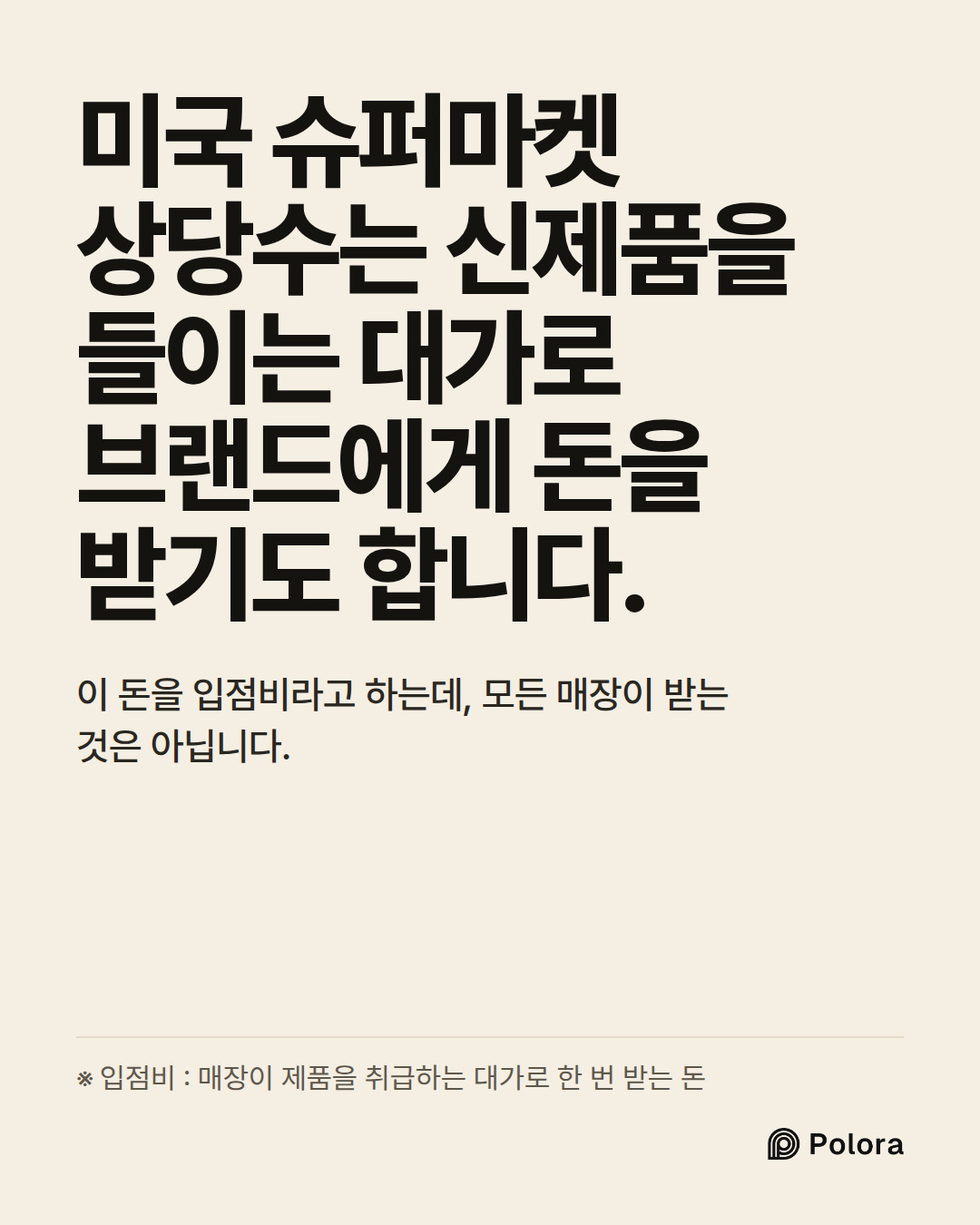
미국의 많은 슈퍼마켓 체인에서는 브랜드가 신제품을 진열대에 올리려면 매장에 먼저 돈을 내야 하는 경우가 있습니다. 업계에서는 이 돈을 입점비, 영어로 슬로팅 피(slotting fee)라고 부릅니다. 매장이 그 제품을 취급하고 진열대나 물류창고에 자리를 내주는 대가로 공급업체가 한 번 내는 돈입니다.
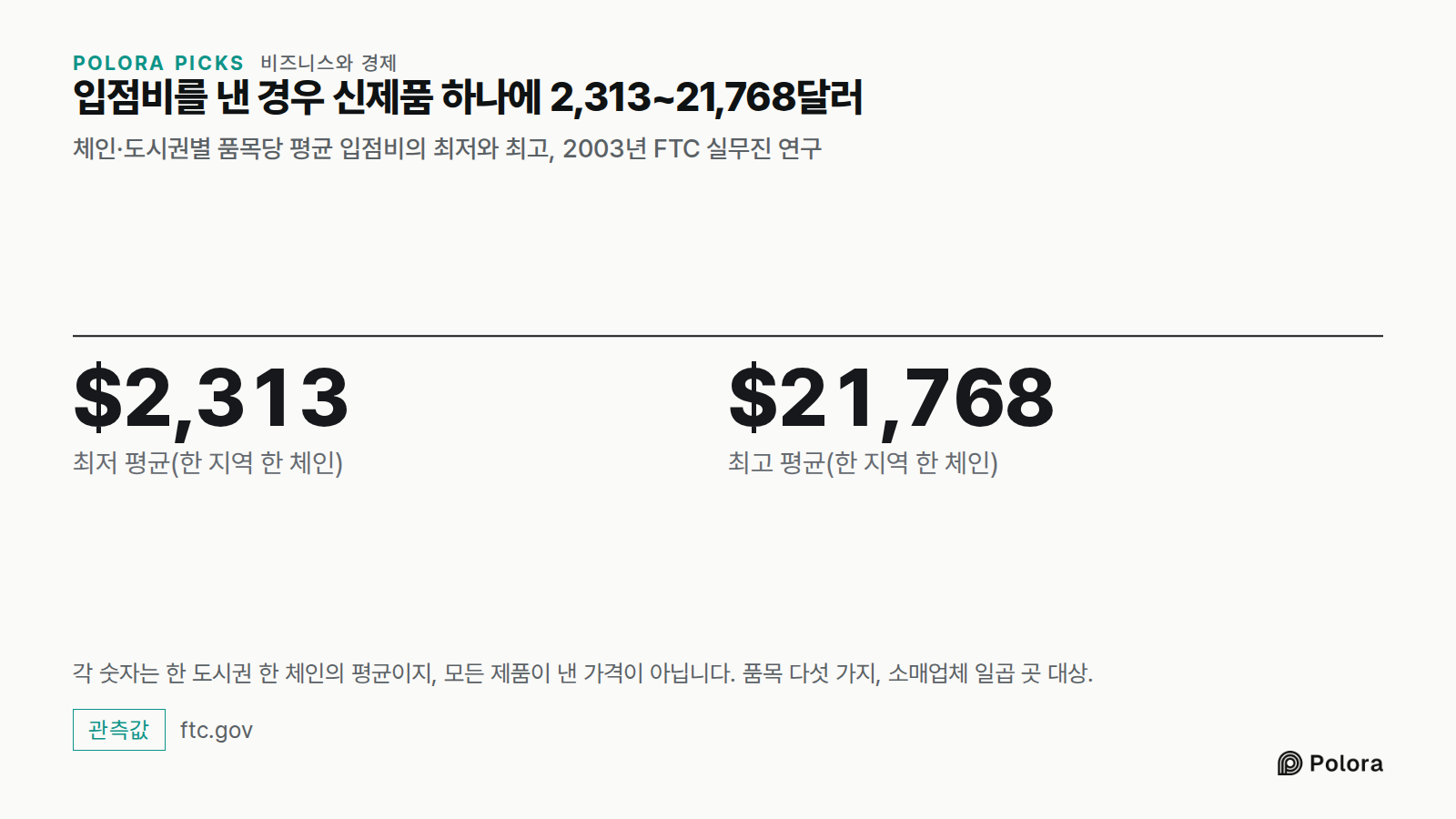
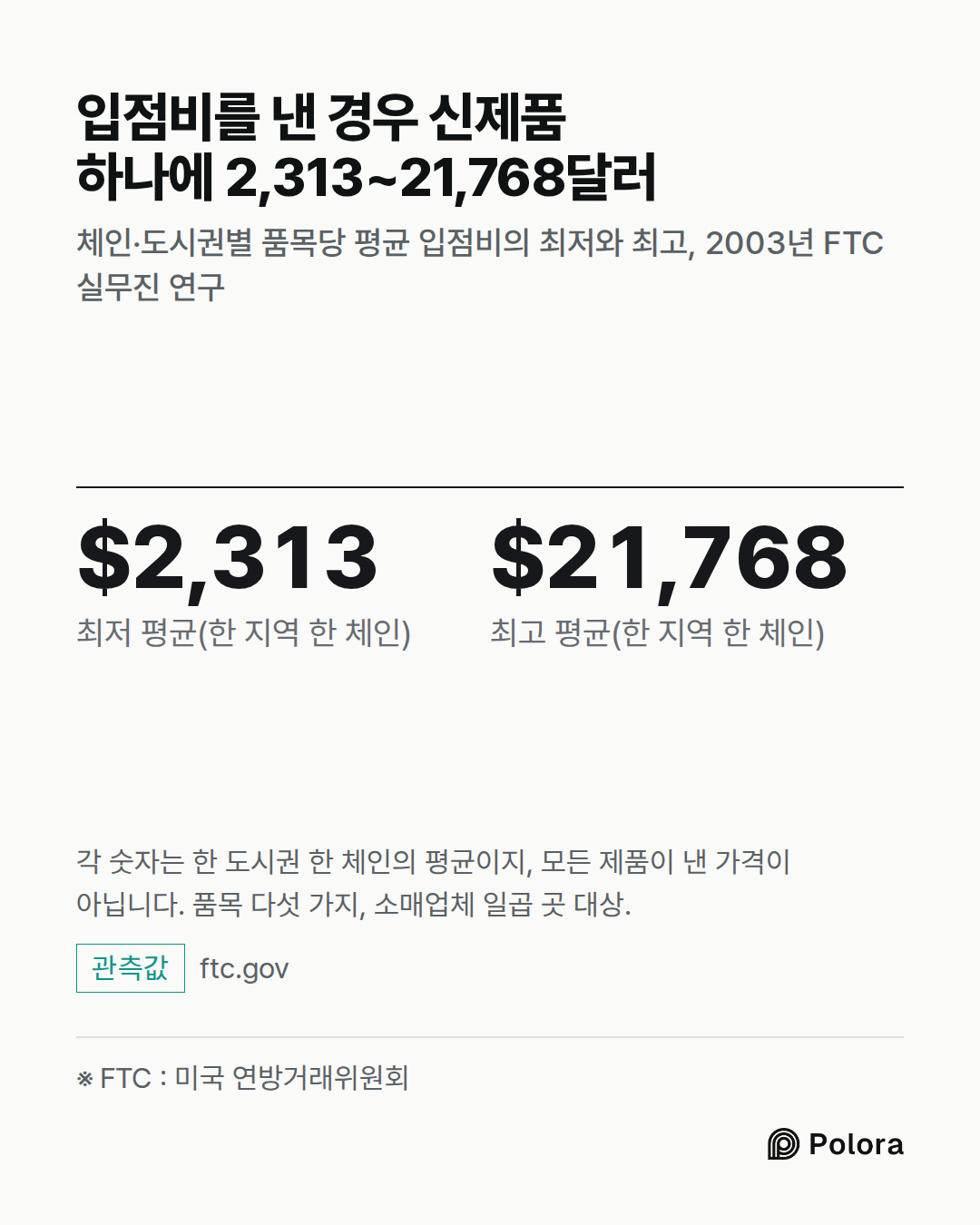
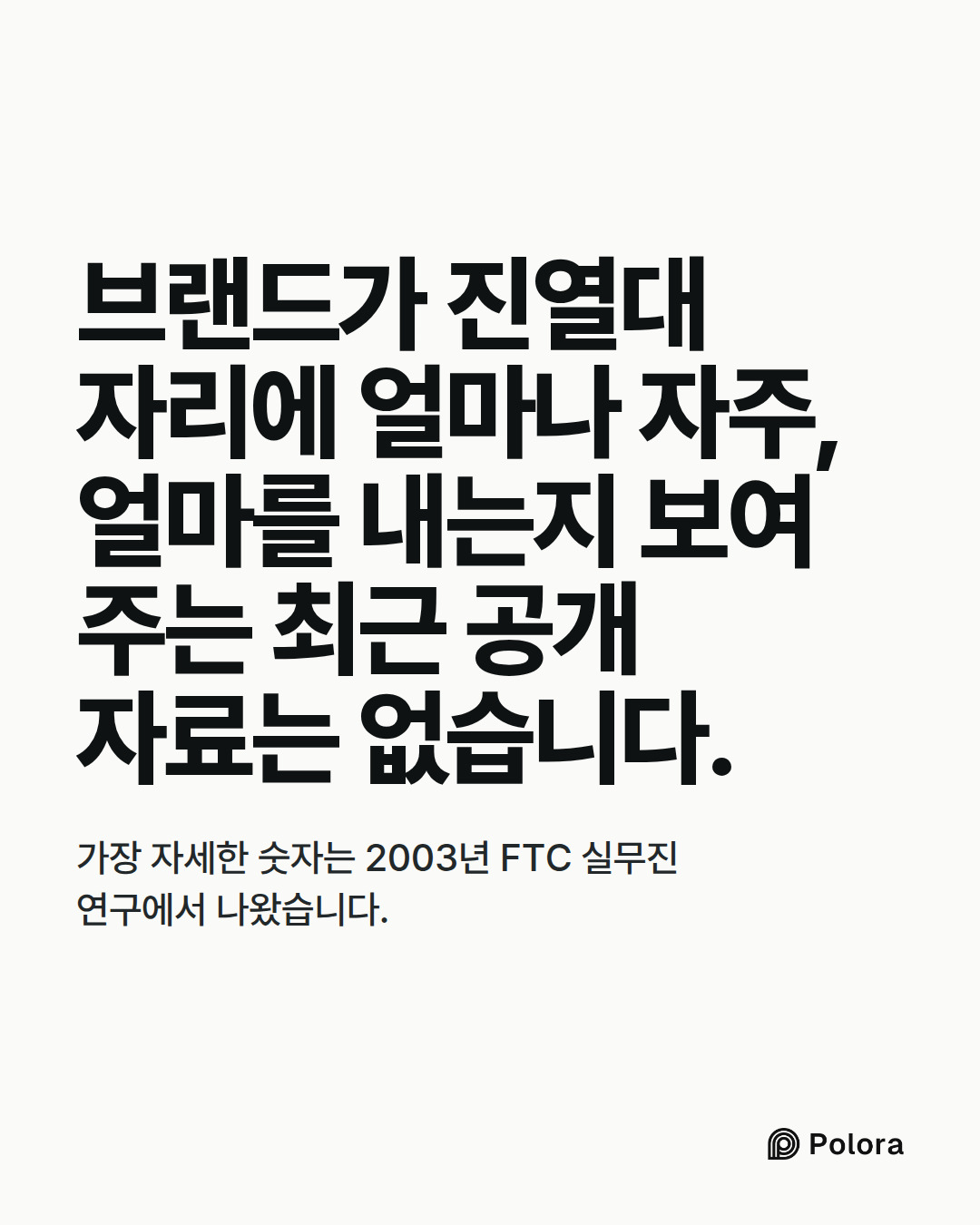
금액을 가장 자세히 들여다본 공개 자료는 지금도 미국 연방거래위원회(FTC) 실무진이 2003년에 낸 연구입니다. 이 연구는 식빵, 핫도그용 소시지, 아이스크림과 냉동 디저트, 건조 파스타, 병에 든 샐러드드레싱 다섯 가지 품목을 살폈습니다. 입점비가 오간 경우 품목 하나당 평균 금액은 체인과 도시권에 따라 2,313달러에서 21,768달러까지 벌어졌습니다. 각 숫자는 한 지역의 한 체인에서 나온 평균이지, 모든 제품이 낸 가격이 아닙니다. 인터뷰에 응한 공급업체 대부분은 식료품 신제품 하나를 미국 전역에 내놓으려면 입점비만으로 1.5백만~2백만 달러가 든다고 추정했습니다. 어디까지나 업체들의 추정이지, 실제 청구액을 잰 것이 아닙니다.
이 숫자에는 FTC가 스스로 밝힌 한계가 있습니다. 소매업체 아홉 곳에 자료를 요청했는데 일곱 곳만 냈고, 결과가 미국 소매업체 전체를 대표하지 않을 수 있으며, FTC는 그 결과를 "시사적일 뿐 입증하는 것은 아니다"라고 표현했습니다. 게다가 20년도 더 된 숫자입니다. 이 자료로 알 수 있는 것은 이런 관행이 있었고 그 규모가 대략 어느 정도였는지까지입니다. 오늘날 얼마나 자주 일어나는지, 지금 어떤 제품이 얼마를 내는지는 알 수 없습니다.
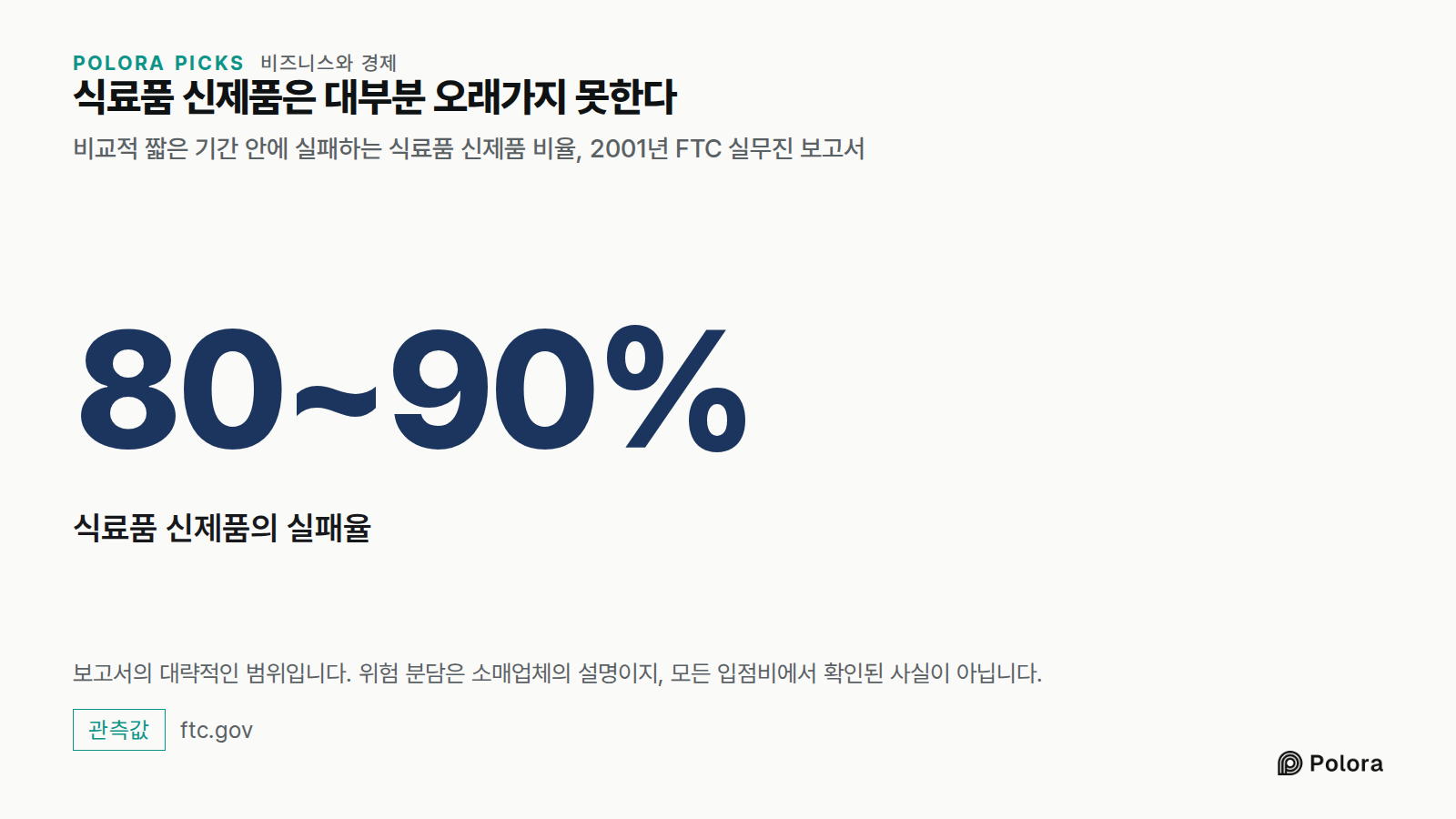
진열대는 한정돼 있고, 신제품은 대부분 오래가지 못합니다. FTC 실무진의 2001년 보고서는 식료품 신제품의 약 80~90퍼센트가 비교적 짧은 기간 안에 실패한다고 봤습니다. 새 제품을 받는다는 것은 자리를 비워 주고, 안 팔릴 때의 위험을 떠안는다는 뜻입니다. 소매업체들은 입점비가 그 위험을 브랜드와 나눠 지는 방법이라고 설명합니다.
2003년 연구에서도 이 설명과 맞아떨어지는 모습이 보였습니다. 냉동·냉장 품목인 아이스크림과 핫도그용 소시지의 품목당 평균 입점비가 가장 높았고, 공급업체들은 냉장 진열 공간은 늘리기 어려워 더 비싸다고 말했습니다. 반대로 공급업체가 체인 물류창고를 거치지 않고 매장에 직접 배송하고 진열까지 하는 일이 많은 제품은, 입점비를 내는 경우가 더 드물었고 금액도 적었습니다.
그렇다고 위험 분담이 전부는 아닙니다. 같은 체인, 같은 품목 안에서도 어떤 신제품은 돈을 냈고 어떤 신제품은 내지 않았으며, 금액도 들쭉날쭉했습니다. 연구에 참여한 공급업체 대부분은 입점비가 주로 매장의 비용을 메우기 위한 것이라는 설명에 회의적이었습니다. 위험 분담은 소매업체의 설명이지, 연구가 모든 입점비에 대해 확인한 사실은 아닙니다.
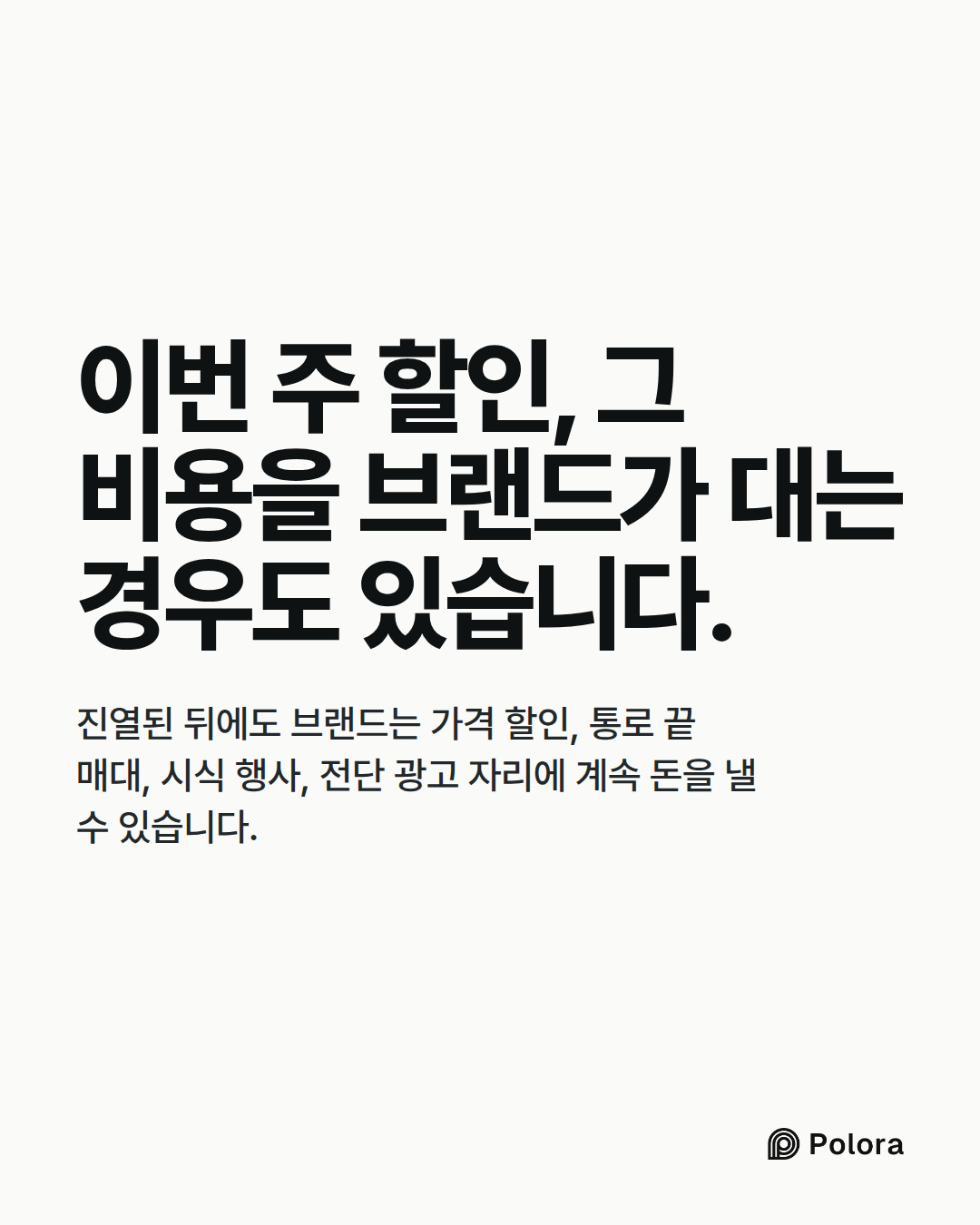
진열대에 오르는 것은 시작일 뿐입니다. 일단 진열된 뒤에도 브랜드는 매장에 계속 돈을 낼 수 있습니다. 한시적인 가격 할인, 통로 끝 매대 진열, 매장 시식 행사, 주간 전단 광고 자리 같은 것에 드는 돈입니다. 업계는 이를 통틀어 유통 판촉비(트레이드 스펜딩)라고 부릅니다.
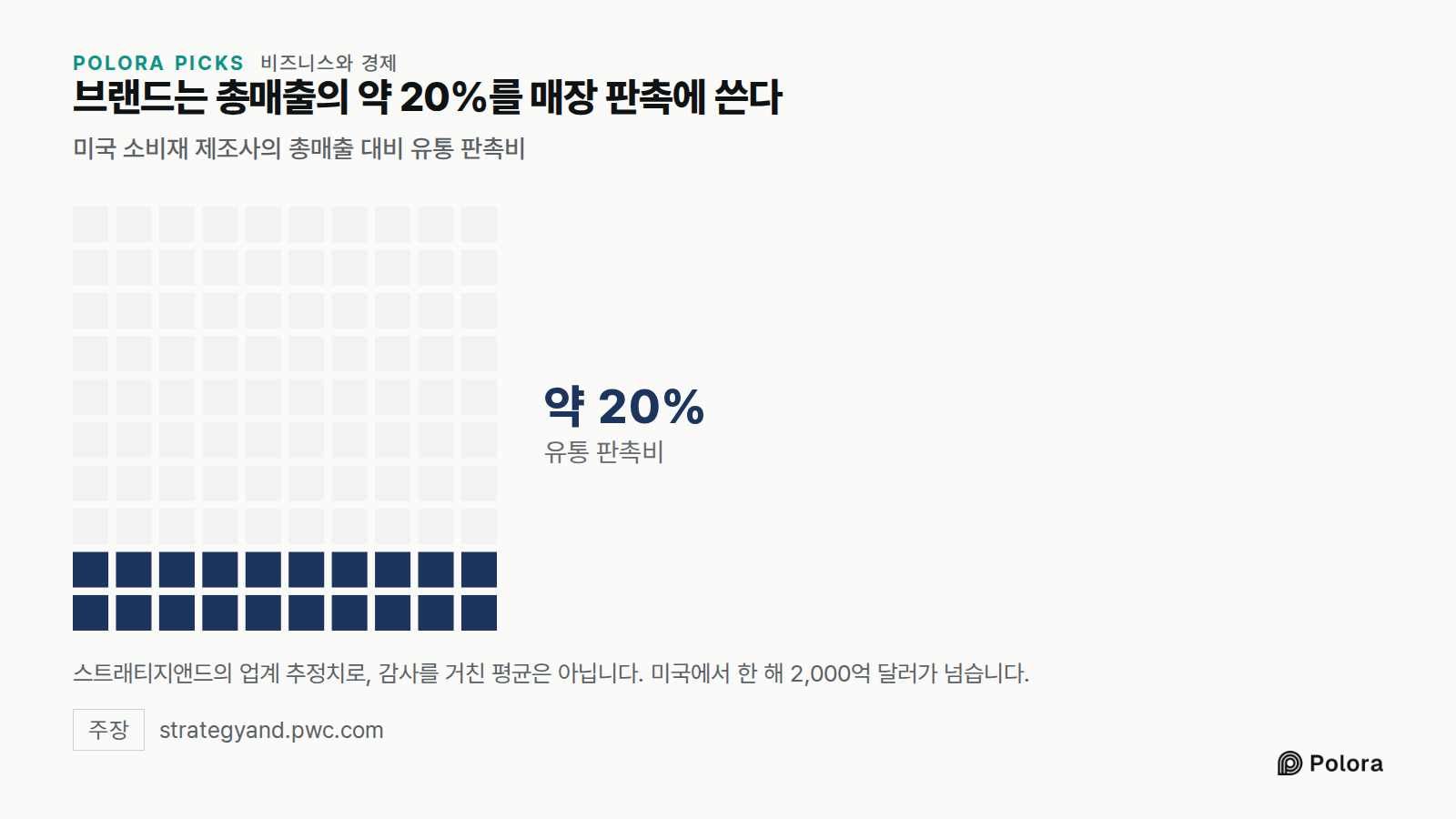
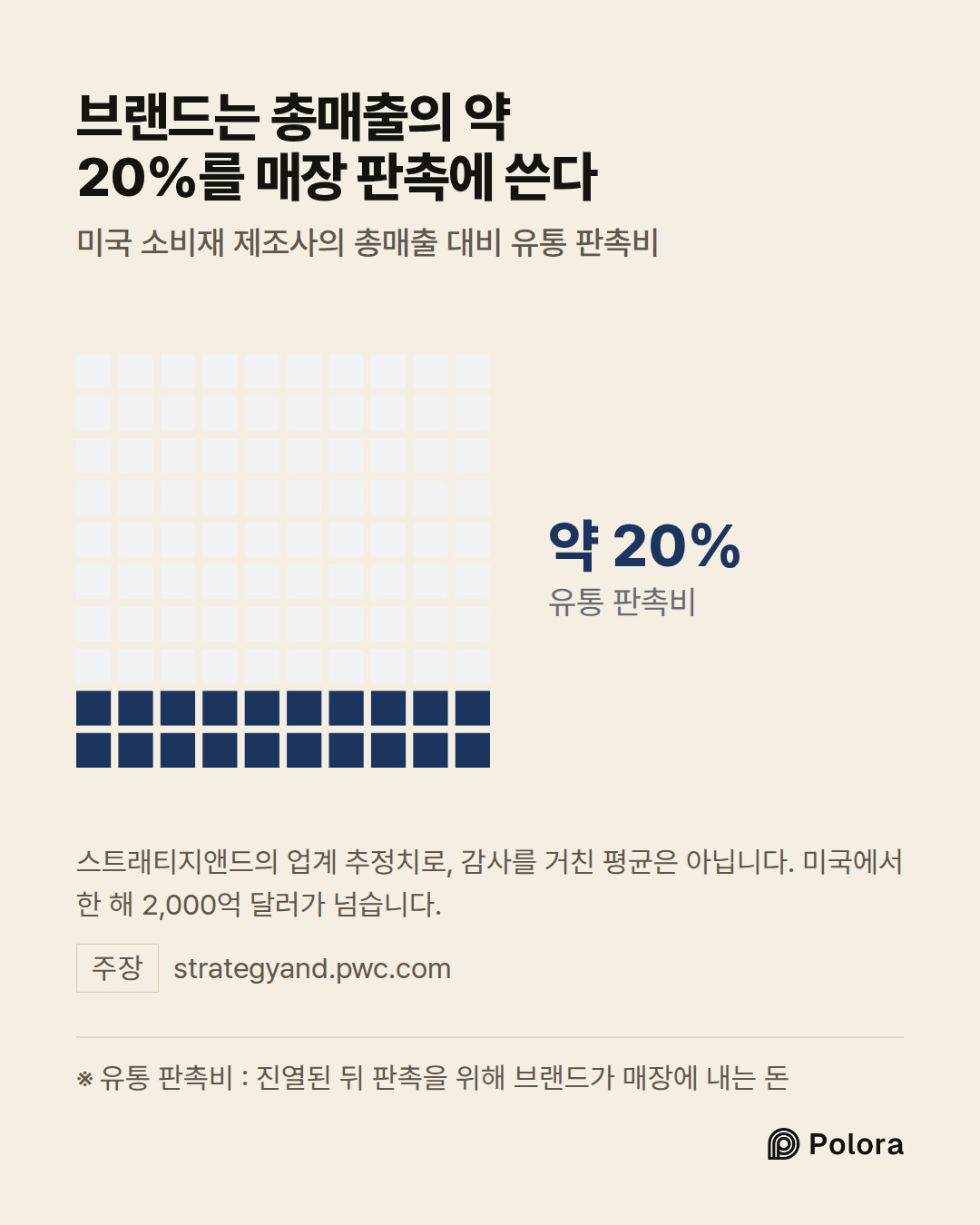
컨설팅 회사 스트래티지앤드(Strategy&)는 식품 회사만이 아니라 생활용품을 포함한 소비재 제조사 전반에서 이 판촉비가 총매출의 약 20퍼센트, 미국에서 한 해 2,000억 달러가 넘는다고 봅니다. 그리고 이들 회사에서 보통 제품 원가 다음으로 큰 비용 항목이라고 설명합니다. 업계 추정치이지 감사를 거친 평균은 아닙니다. 그래도 이 회사들이 물건을 팔려고 쓰는 돈의 상당 부분이 소비자 눈에 잘 띄지 않는 방식으로 매장에 흘러간다는 점을 짐작하게 합니다.
FTC의 2003년 연구에서는 협상 테이블에서도 같은 모습이 드러났습니다. 소매업체와 공급업체들은 신제품 하나를 두고 입점비뿐 아니라 광고 지원금, 출시 때의 개당 할인, 마케팅 자금, 진열·시연 비용까지 한데 묶어 흥정한다고 말했습니다. 2024년 미국 의회 의원들이 FTC에 보낸 서한도 입점비와 나란히 "진열", "판촉", "통로 끝 매대", "진열대에 계속 남는 대가" 명목의 돈을 꼽습니다. 그러니 '이번 주 할인' 가격표 뒤에서 그 할인 비용을 브랜드가 대고 있을 때도 있습니다.
어떤 체인은 한발 더 나아가, 수프나 과자 같은 품목군 전체를 두고 공급업체 한 곳에 조언을 구합니다. FTC의 2001년 보고서는 이런 회사를 "카테고리 캡틴"이라고 부릅니다. 무엇을 들이고 어디에 놓고 어떻게 판촉할지 소매업체에 조언하는 바깥 회사로, 흔히 큰 공급업체가 이 역할을 맡습니다. 2003년 연구에서는 소매업체 일곱 곳 가운데 다섯 곳이 어느 정도 카테고리 캡틴을 활용한다고 했고, 두 곳은 쓰지 않는다고 했습니다.
카테고리 캡틴의 발언권이 얼마나 큰지는 매장마다 다릅니다. 2001년 보고서에 따르면 어떤 소매업체는 그 품목군의 결정을 전부 캡틴에게 맡기고, 어떤 곳은 조언을 검토한 뒤 직접 결정합니다. 2000년 FTC 워크숍에서는 이 관행이 효율적일 수 있다는 데 의견이 모였지만, 주의할 점도 함께 나왔습니다. 캡틴이 경쟁사의 기밀 계획을 보게 되거나, 경쟁 제품에 불리한 쪽으로 조언을 기울일 수 있다는 것입니다. 이런 방식이 오늘날 얼마나 흔한지는 제대로 측정된 바가 없습니다.
큰 회사에 입점비는 여러 제품에 나눠 지는 사업 비용입니다. 작은 회사에는 출시 예산 전부가 될 수도 있습니다. 2000년 FTC 워크숍에 나온 소규모 제조사들은 입점비를 대형 체인에 들어가는 길의 "큰 걸림돌"이라고 불렀고, 2001년 보고서는 입점비가 자금이 넉넉지 않은 작은 회사의 진입 비용을 끌어올린다는 우려를 기록했습니다.
모두에게 벽인 것은 아닙니다. 2003년 연구에서 일부 소매업체는, 특히 자기 매장 손님들이 찾는 제품이라면 작은 공급업체의 입점비를 면제해 주기도 한다고 말했습니다. 그렇게 들어가더라도 바로 옆자리에는 매주 할인과 진열 비용을 대는 기존 브랜드가 있을 수 있습니다.
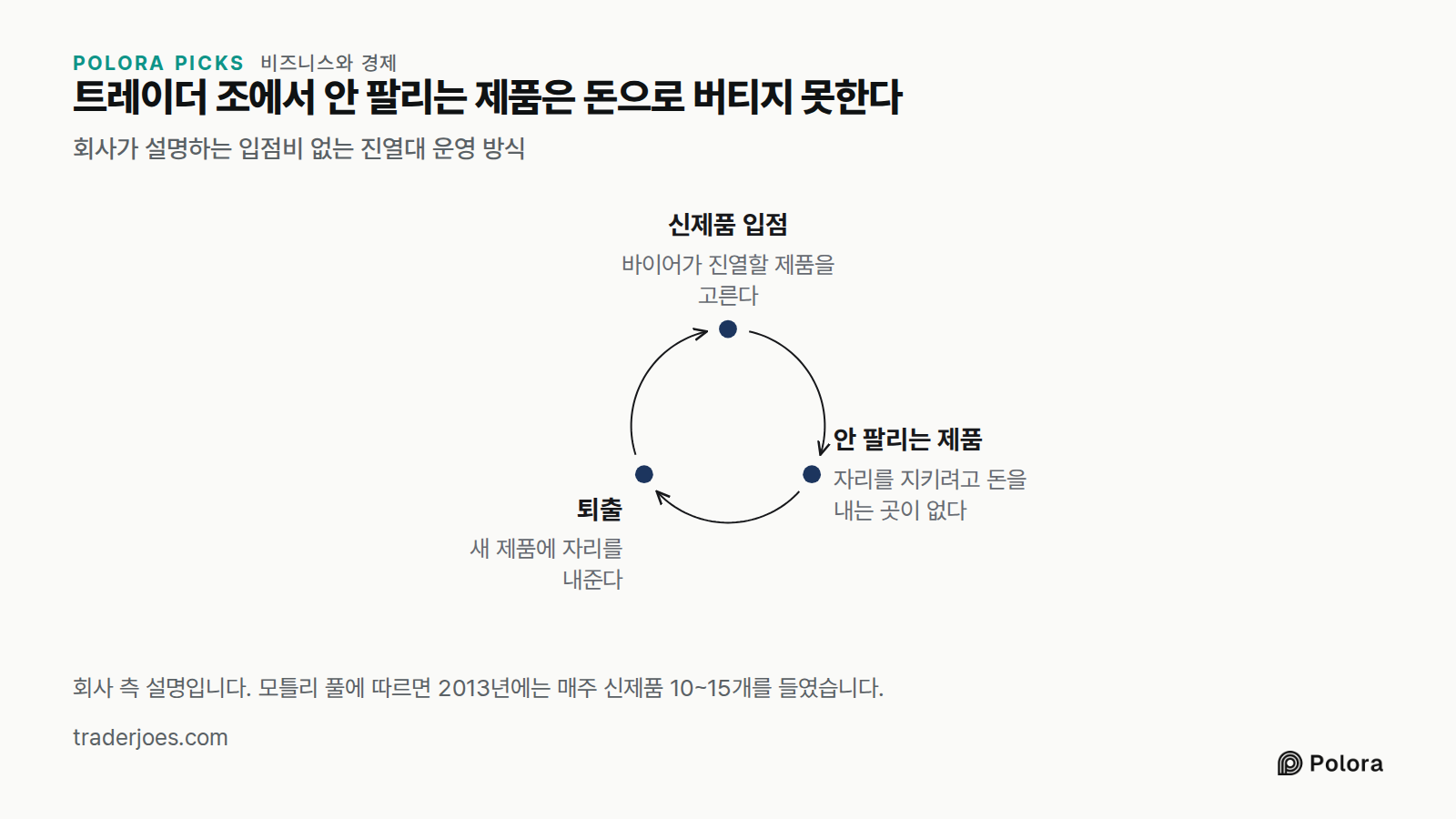
모든 체인이 이렇게 돌아가지는 않습니다. 미국 식료품 체인 트레이더 조(Trader Joe's)의 마케팅 임원 맷 슬론은 회사 팟캐스트에서 이렇게 말했습니다. "우리는 입점비를 받지 않습니다. 우리가 파는 물건을 만드는 곳에 매장의 좋은 자리든 어떤 자리든 돈을 내게 하지 않습니다." 회사는 이것이 진열대를 운영하는 방식과 맞물려 있다고 설명합니다. 자리를 지키려고 돈을 내는 곳이 없으니, 잘 안 팔리는 제품은 빠지고 그 자리에 새 제품이 들어옵니다. 2013년 모틀리 풀(Motley Fool) 기사는 당시 이 회사가 매주 신제품 10~15개를 들이고 비슷한 수를 뺐다고 전했습니다. 2013년의 속도이지, 지금도 꼭 그렇다는 뜻은 아닙니다.
이 방식은 바이어가 직접 고른 적은 가짓수의 제품, 그것도 대부분 자체 브랜드 상품에 기대고 있는데, 이는 따로 다룰 만한 이야기입니다. 입점비를 거의 또는 전혀 받지 않는 체인으로 업계 논평에서 자주 거론되는 곳은 더 있지만, 이 글이 참고한 자료에는 그 회사들이 직접 이를 확인한 발언이 없습니다.
이 글을 검증하면서 찾아본 범위에서, FTC가 입점비를 두고 벌인 대규모 자료 조사 가운데 가장 최근 것은 2003년 연구입니다. 다만 빠짐없이 찾아본 것은 아닙니다. 그 뒤로 압박은 의회에서 나왔습니다. 2024년 3월, 엘리자베스 워런 상원의원을 비롯한 의원들은 차별적인 입점비가 미국의 가격 차별 금지법을 어기는지 살펴보라고 FTC에 촉구했습니다. 2026년 4월 13일에는 워런과 척 슈머를 포함한 상원의원 여섯 명이 식품 가격과 식품 공급망의 집중을 두고 FTC와 법무부에 서한을 보냈습니다. 여러 요청 가운데에는 시장을 지배하는 기업의 배타적 계약에 대해 FTC가 규칙을 만들고 법을 집행해 달라는 것도 있었고, 그 예로 입점비, 카테고리 캡틴 방식, 물량에 따른 리베이트를 들었습니다.
이것들은 요청이지, 조사 결과가 아닙니다. 그래도 처음 물음의 답은 분명합니다. 미국에서 브랜드는 제품을 슈퍼마켓 진열대에 올리기 위해, 그리고 그 제품이 어떻게 진열되고 할인될지에 대해 매장에 돈을 낼 수 있고 실제로 냅니다. 오늘날 그런 돈이 얼마나 자주, 얼마씩 오가는지는 최근 공개 자료로 측정된 적이 없습니다.
Do brands pay supermarkets to get their products on the shelf?
Alpha · claude-sonnet-5
Good — I can confirm the core premise and spot two things the manuscript needs to fix.
The core premise holds. Yes, brands commonly pay US supermarkets for shelf space. The FTC's own account of its 2003 study confirms the mechanism: "Slotting allowances are one-time payments a supplier makes to a retailer as a condition for the initial placement of the supplier's product on the retailer's store shelves or for initial access to the retailer's warehouse space." The manuscript's framing — entry fee plus ongoing trade spending — is directionally right and matches how the FTC itself summarized it.
On the numbers, the manuscript is careful in the right way. It correctly flags the limits, and I verified them independently. The FTC's own background documentation states the 2003 case study was a follow-up case study requesting information from nine retailers (seven responded) in five categories, and because of the small, possibly unrepresentative sample, "the FTC stressed that its results 'are suggestive, not probative'". The manuscript's "seven retailers" figure is accurate as the number that actually supplied data, though it's worth noting nine were approached. Good that the pie…
Beta · gpt-6-sol
Yes—but not every brand pays, and not every supermarket charges. A *slotting allowance* is a payment a supplier makes for initial shelf or warehouse placement. Brands and stores may also negotiate separate funding for introductory discounts, advertising, displays and demonstrations. Those are related costs, not all “shelf fees.” The FTC found substantial variation even among the retailers and products it studied. (search.ftc.gov)
For the manuscript, the premise stands, but several qualifications matter:
- Amounts and frequency: The FTC’s 2003 study received information from seven retailers across five product categories. Where fees were paid, its *combined-category averages by retailer and metropolitan area* ranged from $2,313 to $21,768 per item—not a range that every product paid. Suppliers estimated $1.5 million–$2 million in slotting fees for a nationwide launch, but the FTC explicitly warned that its findings were “suggestive, not probative.” The figures cannot establish today’s typical fee. ([ftc.gov](https://www.ftc…
Gamma · gemini-3.1-pro
I also confirm the core premise. The manuscript accurately describes the baseline reality of grocery retail: brands frequently pay to get and stay on supermarket shelves. I checked the specific claims the editor flagged, and here is what I found.
Trader Joe's and the missing fees: The manuscript's claim about Trader Joe's is correct, and you don't need to rely on the 2013 Motley Fool article. In an official Trader Joe's podcast transcript (an "In Case You Missed It" recap covering Episode 4), marketing executive Matt Sloan states explicitly: "We don't collect slotting fees. We don't have the producers of the stuff that we sell pay for privileged space or any space in our stores." The co-host then notes that this happens "everywhere else," and they drop slow-selling products because the store is their brand. (Source: traderjoes.com/content/dam/trjo/pdfs/transcripts/InsideTJs-ICYMI-Transcript.pdf).
Other chains that don't charge (Aldi, Costco, Walmart): The manuscript is right to be careful about naming other chains, but industry consensus backs up the exceptions. Retail finance and export consulting sources consistently state that Costco and Aldi charge $0 in traditio…
Researcher · gemini-3-7-flash
Here is the verification of the specific claims and source checks requested for the manuscript:
---
1. April 2026 Congressional Letter to FTC and DOJ
* Document: Letter to DOJ and FTC on Price Fixing and Anticompetitive Practices in the Food Supply Chain.
* Address: https://www.warren.senate.gov/imo/media/doc/letter_from_warren_schumer_dems_to_the_department_of_justice_and_federal_trade_commission_on_price_fixing_in_food_supply_chain.pdf
* Date & Signatories: Dated April 13, 2026. It was signed by six U.S. Senators (not four): Elizabeth Warren, Charles E. Schumer, Cory A. Booker, Bernard Sanders, Richard Blumenthal, and Peter Welch.
* Exact Recommendation Text:
> *"4. The FTC should pursue rulemaking and enforcement action to tackle exclusionary contracting practices by dominant firms, such as slotting fees, category captain arrangements, and volume-based rebates."*
* Context in Letter: The letter notes that *"Dominant food retailers and suppliers also engage in exclusi…
The Arbiter · gpt-6-sol
The voices agree on the central distinction: a slotting fee pays for initial shelf or warehouse access, while discounts, displays and other promotions may involve separate payments. The FTC documented both, but its seven-retailer study found substantial variation and explicitly warned that its results were “suggestive, not probative.” That leaves today’s prevalence—and what a *typical* supermarket charges—open rather than measured. (search.ftc.gov)
Two points in the record need particular care before the verdict. The April 13, 2026 letter has six signatories, correcting Alpha’s “four senators”; its recommendation names slotting fees as one example within a broader request about exclusionary contracting, not as an FTC finding. (warren.senate.gov) Gamma and the Researcher also make wider claims about Aldi, Costco, Walmart, food-specific advertis…
The Arbiter's Final Verdict · gpt-6-sol
Verdict
Yes—some brands pay supermarkets to stock a new product. The payment is called a *slotting allowance*. Brands may also fund discounts, displays and other promotions after a product is stocked. But not every product pays a slotting fee, and the evidence here does not establish what a “typical” US supermarket charges today. That distinction should govern the manuscript. FTC, 2003
What the manuscript can support
- Fees and amounts: The FTC’s 2003 study supports the definition of a slotting fee, the five named product categories, and the reported $2,313–$21,768 average range where fees were paid, per item for a chain in a metropolitan area. Suppliers’ $1.5 million–$2 million nationwide-launch estimate is an interview finding, not a measured bill for every launch. Only seven retailers supplied data; the FTC called the findings “suggestive, not probative.” These figures cannot be presented as current or universal. [FTC study](https://www.ftc.gov/sites/default/files/documents/reports/use-slotting-allowance…