아닌 경우가 많습니다. 큰 의류 브랜드의 아울렛 상품은 상당수가 처음부터 아울렛용으로 만든 것이고, 일부 브랜드는 이를 직접 밝힙니다. 진짜 재고를 파는 아울렛도 있어 브랜드마다 다릅니다.
비즈니스와 경제 · 2026-11-07
아울렛 옷은 정말 지난 시즌 이월 상품일까?
아닌 경우가 많습니다. 큰 의류 브랜드의 아울렛에서 파는 상품은 상당수가 처음부터 아울렛용으로 만든 것이고, 정규 매장에 걸린 적이 없습니다. 일부 브랜드는 이를 직접 밝힙니다. 지금도 진짜 남은 재고를 파는 아울렛이 있고, 방식은 브랜드마다 다릅니다.
우리가 알고 있던 아울렛 이야기
아울렛이 어떤 곳이냐고 물으면 대부분 같은 답을 합니다. 브랜드가 정가에 팔지 못한 옷을 보내는 곳이라는 것입니다. 지난 시즌 색상일 수도 있고, 남은 재고일 수도 있고, 단추가 하나 헐거운 재킷일 수도 있습니다. 아무도 사 가지 않은 물건이니 같은 브랜드를 더 싸게 살 수 있다는 이야기입니다.
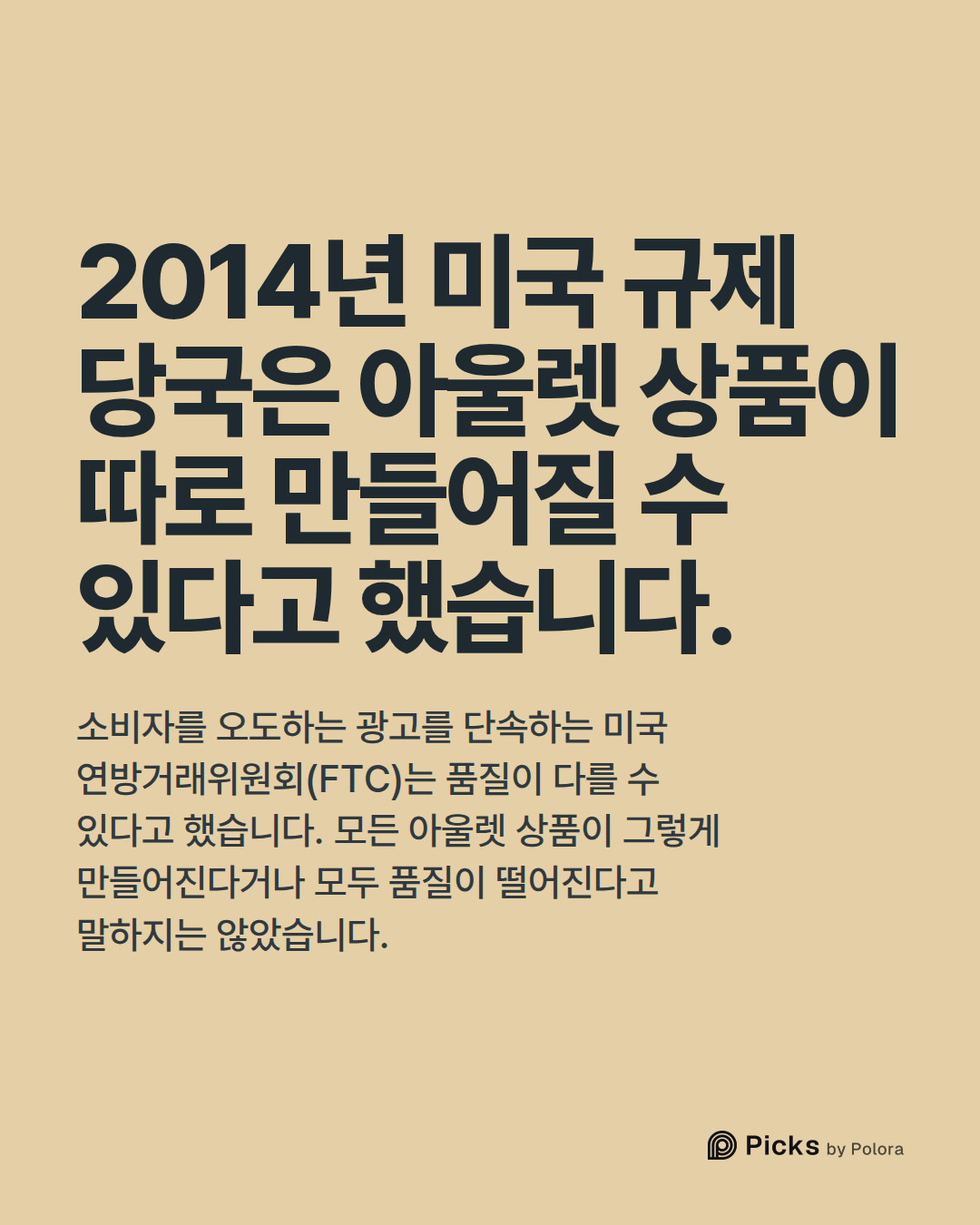
한때는 이 답이 대체로 맞았습니다. 2014년 1월 30일, 미국 하원의원 애나 에슈와 상원의원 세 명(셸던 화이트하우스, 리처드 블루먼솔, 에드 마키)이 미국 연방거래위원회(FTC)에 서한을 보냈습니다. 연방거래위원회는 소비자를 오도하는 광고를 단속하는 미국 정부 기관입니다. 서한은 아울렛이 원래 소매업체가 정규 매장에서 팔지 못한 초과 재고와 흠이 조금 있는 상품을 팔던 곳이라고 적었습니다. 의원들이 서한에서 짚은 것은, 이제는 그 설명이 아울렛 상품 대부분에 들어맞지 않는다는 점이었습니다.
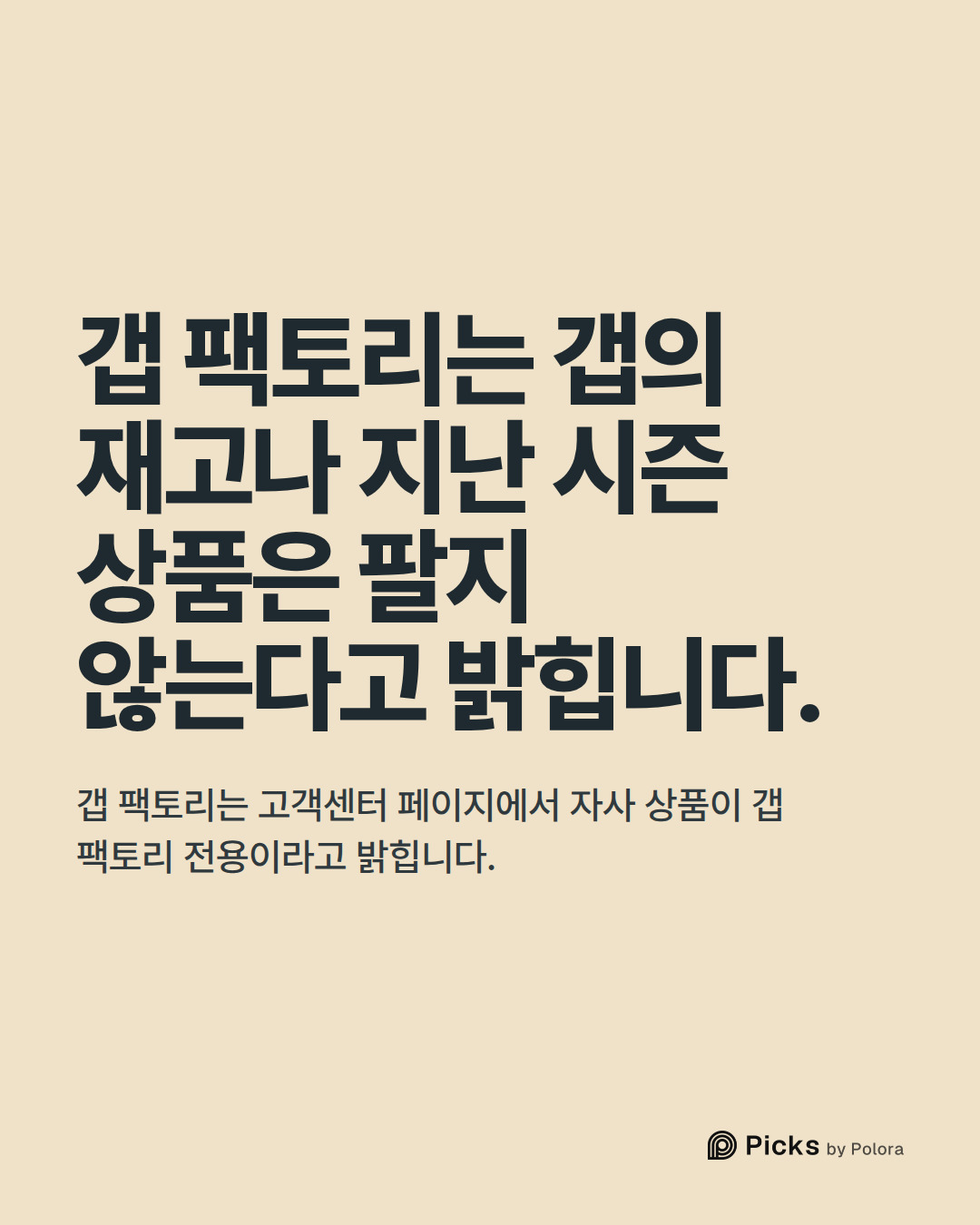
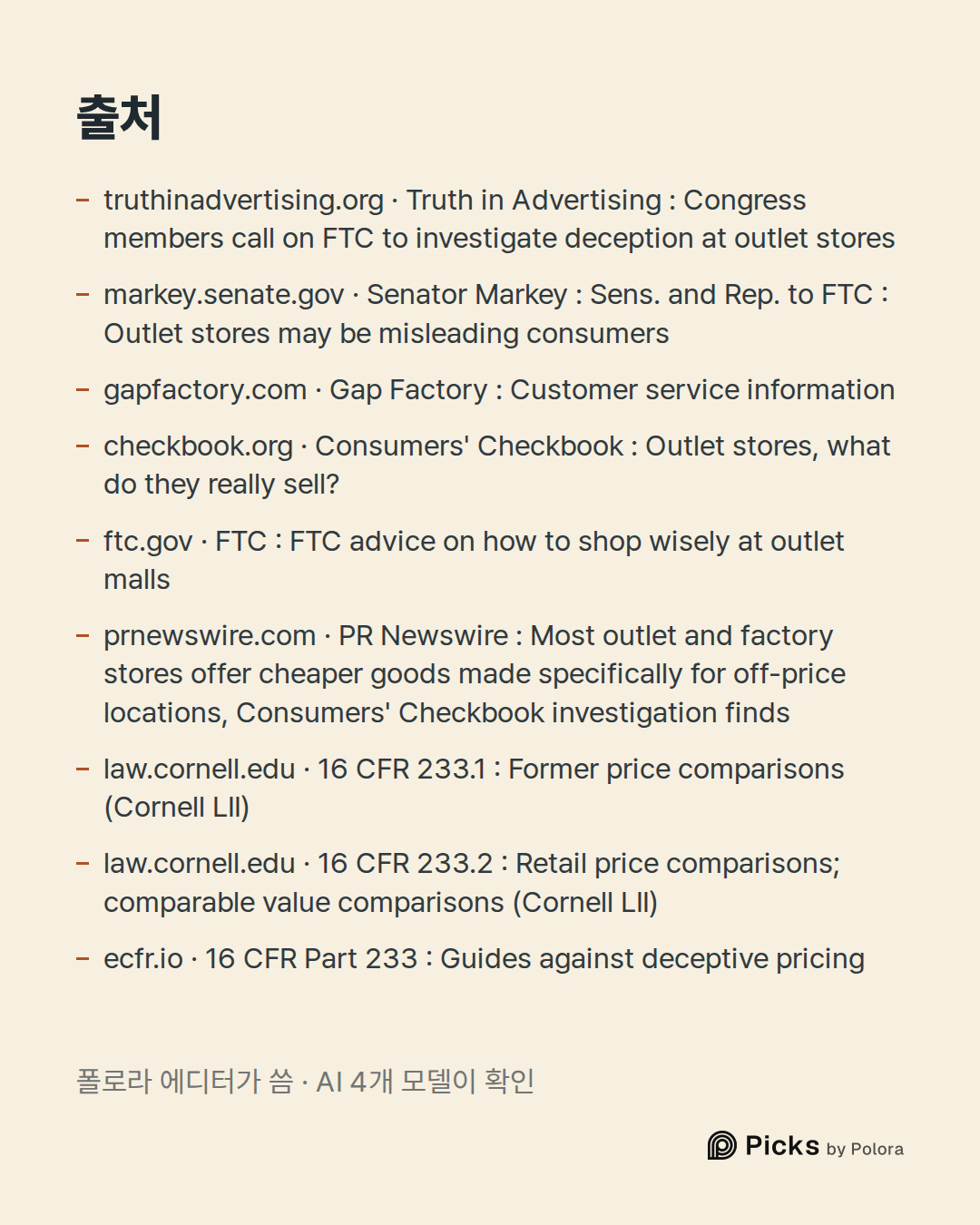
가장 분명한 근거는 브랜드 쪽에서 나옵니다. 갭의 아울렛인 갭 팩토리(Gap Factory)는 자사 고객센터 페이지에서, 자사 상품은 갭 팩토리 전용이며 갭의 재고나 지난 시즌 상품은 팔지 않는다고 밝히고 있습니다.
2016년 캐나다 공영방송 CBC의 소비자 고발 프로그램 '마켓플레이스'는 바나나 리퍼블릭, 제이크루, 케이트 스페이드, 코치의 아울렛 상품과 정규 매장 상품을 비교 취재했습니다. 마켓플레이스 보도에 따르면 코치, 바나나 리퍼블릭, 제이크루는 모두 아울렛 전용 상품을 따로 만든다고 확인했습니다. 제이크루는 아울렛에서는 아울렛 전용 상품만 팔며, 더 낮은 가격을 맞추려고 때로 다른 원단이나 디자인 디테일을 쓴다고 말했습니다. 바나나 리퍼블릭은 아울렛 매장에 정규 매장 상품이 없다고 했습니다. 코치는 어느 매장용이든 모든 제품에 고급 가죽과 원단을 쓴다고 했습니다. 케이트 스페이드는 답변을 거절했습니다. 다만 이 픽을 검증하면서 마켓플레이스 보도 원문은 열어 보지 못했습니다. 위 발언들은 그 보도와 이후 기사들이 전한 브랜드 측 입장이고, 원문 문구와 대조해 확인한 것은 아닙니다.
다시 말해 이 브랜드들에게 아울렛은 정규 매장 옷이 마지막에 가는 곳이 아닙니다. 상표만 같은 별도의 상품 라인입니다.
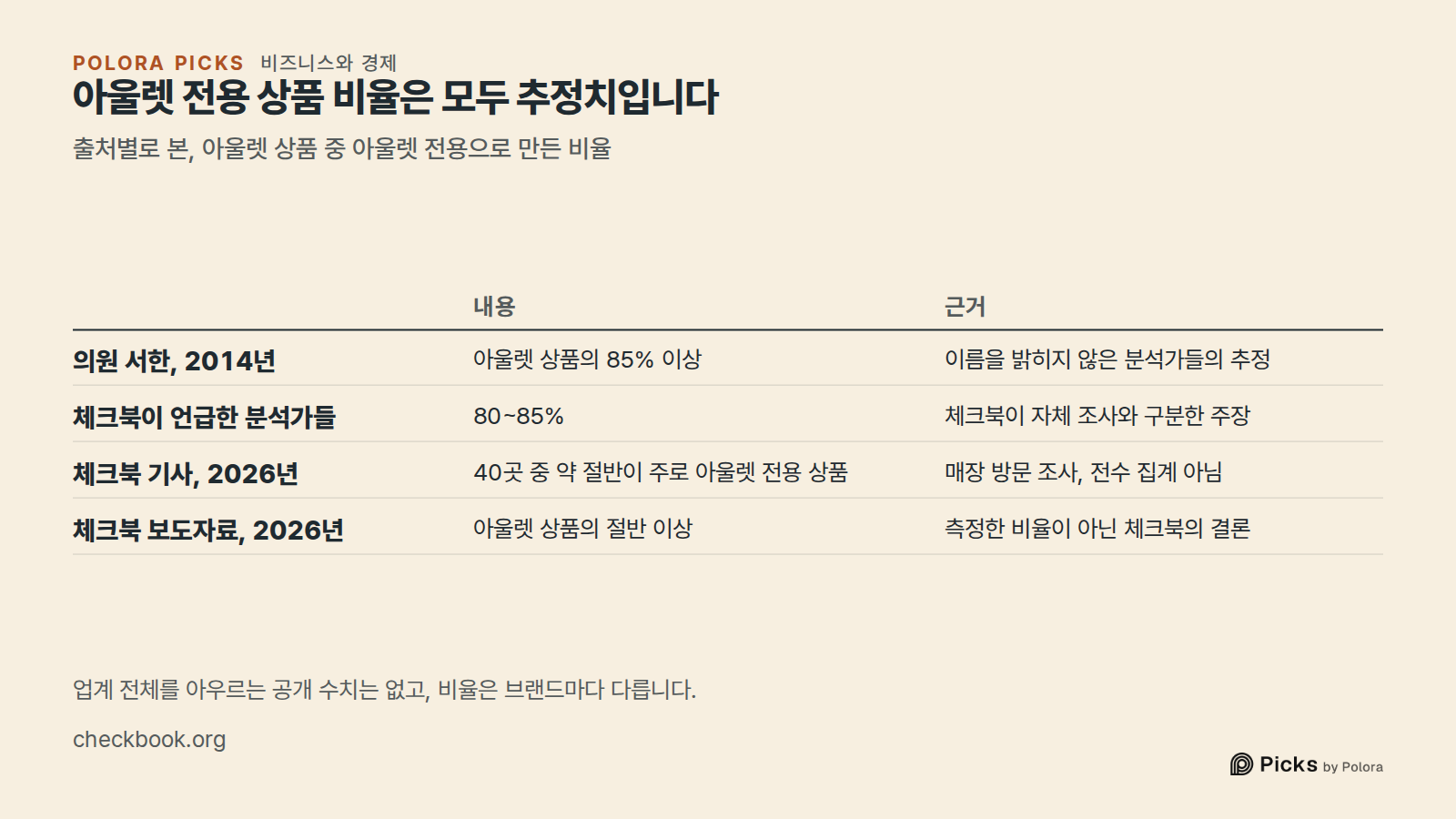
가장 자주 보이는 숫자는 85%입니다. 출처는 앞의 2014년 서한으로, 일부 분석가들은 아울렛에서 파는 상품의 85% 이상이 아울렛 전용으로 만들어진 것으로 추정한다고 적었습니다. 서한은 그 분석가가 누구인지 밝히지 않았습니다. 그러니 이 숫자는 측정값이 아니라 의원들이 인용한 추정치입니다.
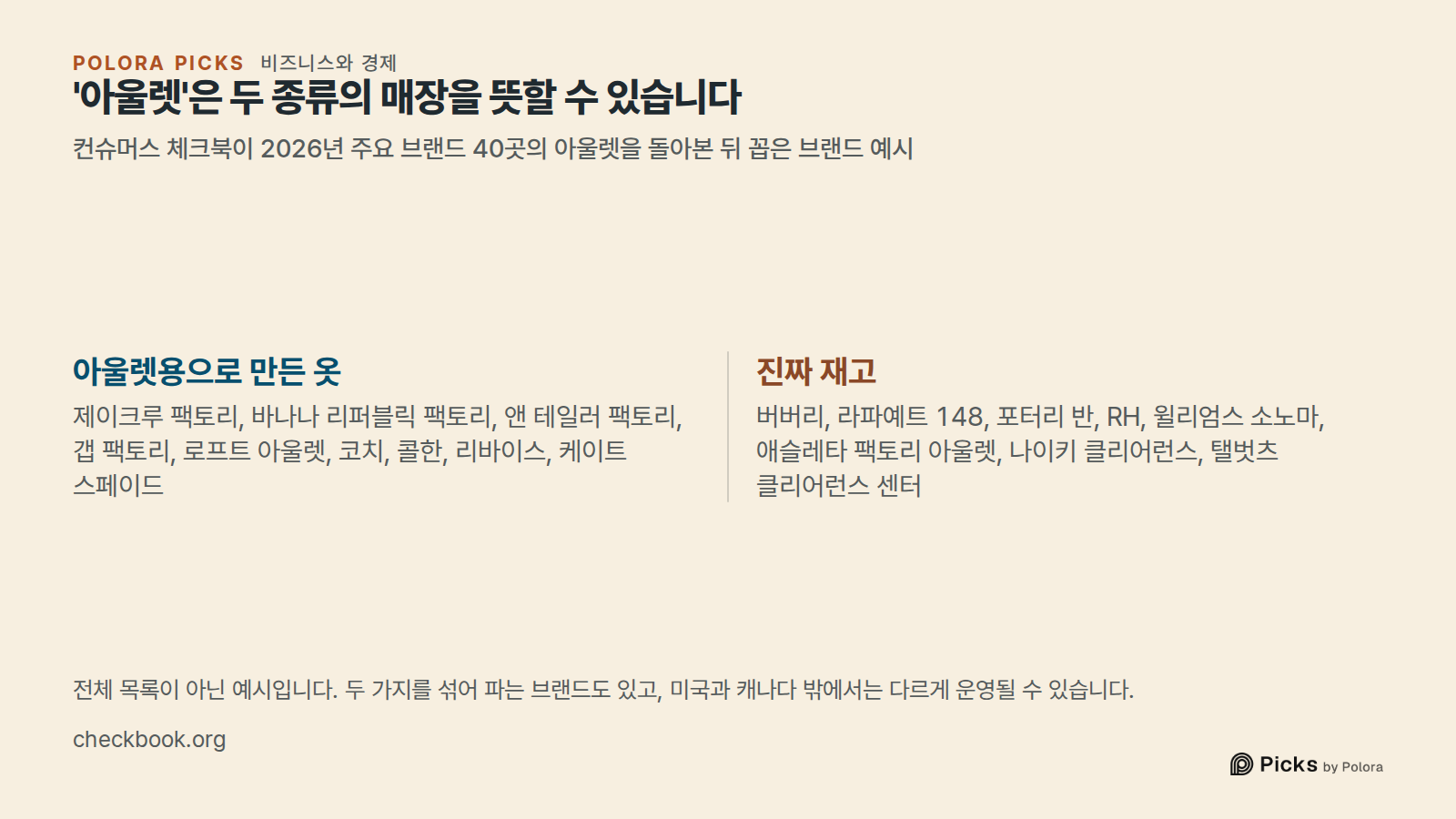
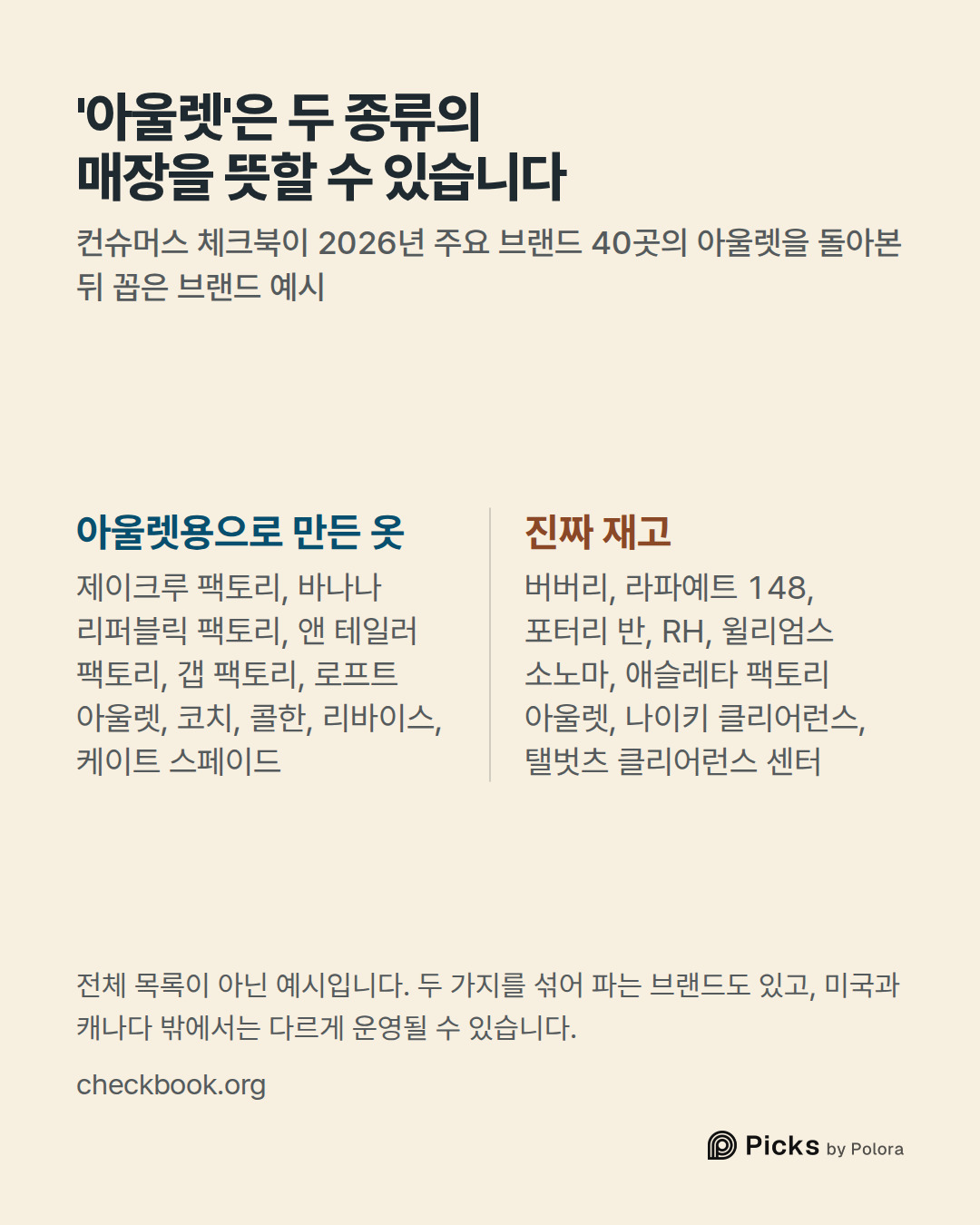
더 최근의 조사도 같은 방향을 가리키지만, 재는 범위는 더 좁습니다. 2026년 6월, 미국의 비영리 소비자 단체 컨슈머스 체크북(Consumers' Checkbook)은 주요 브랜드 40곳의 아울렛, 팩토리 스토어, 재고 정리 매장을 석 달 동안 찾아다닌 결과를 발표했습니다. 단체 직원들이 라벨과 가격표를 확인하고 매장 직원에게 질문했습니다. 체크북은 자체 기사에서, 조사한 브랜드의 약 절반이 아울렛에 아울렛 전용 상품만 두거나 주로 그런 상품을 둔다고 보고했습니다. 보도자료에서는 결론을 더 넓게 표현해, 아울렛과 팩토리 스토어에서 파는 상품의 절반 이상이 정규 매장 상품을 할인한 것이 아니라 그 매장용으로 따로 만든 것이라고 했습니다. 매장을 돌아본 조사로 판매 상품을 모두 센 것은 아니므로, 이 넓은 표현은 측정한 비율이 아니라 체크북의 결론입니다. 체크북이 아울렛 전용 상품을 파는 브랜드로 꼽은 곳에는 제이크루 팩토리, 바나나 리퍼블릭 팩토리, 앤 테일러 팩토리, 갭 팩토리, 로프트 아울렛, 코치, 콜한, 리바이스, 케이트 스페이드가 있습니다.
같은 체크북 기사는 80~85%라고 주장하는 유통 분석가들도 언급하지만, 그 주장은 자체 조사 결과와 따로 구분합니다. 체크북이 내놓은 것은 한 단체가 직접 매장을 돌며 관찰한 결과이고, 비율은 브랜드마다 다릅니다. 업계 전체를 아우르는 공개 수치는 없습니다.
이 사실을 알면 아울렛 가격표가 다르게 보입니다. 아울렛 가격표에는 실제 판매가 옆에 더 높은 '비교 가격'이나 '정가'가 함께 적혀 있는 경우가 많습니다. 가격 비교 표시에 관한 연방거래위원회 지침은, '이전 가격'이 비교 기준으로 정당하려면 그 상품이 상당히 긴 기간 동안 일반 소비자에게 정기적으로 실제로 제시되던 가격이어야 한다고 말합니다. 이 지침은 일반 규칙입니다. 아울렛 매장이나 아울렛 전용 의류에 관한 별도 규정은 없습니다. 지침에 'outlet'이라는 단어가 나오기는 하지만, 판매자의 '주요 소매 판매처(principal retail outlets)'라는 일반적인 뜻일 뿐입니다.
2014년 서한은 이 점이 아울렛 전용 상품에서 문제가 된다고 주장했습니다. 의원들의 말을 빌리면, 정규 매장에서 한 번도 판 적 없는 상품에도 아울렛 가격 옆에 정가를 적는 일이 흔한데, 그 상품은 그 정가에 팔린 적이 없으니 그 가격은 입증할 수 없다는 것입니다. 이것은 의원들의 주장이지 판정이 아닙니다.
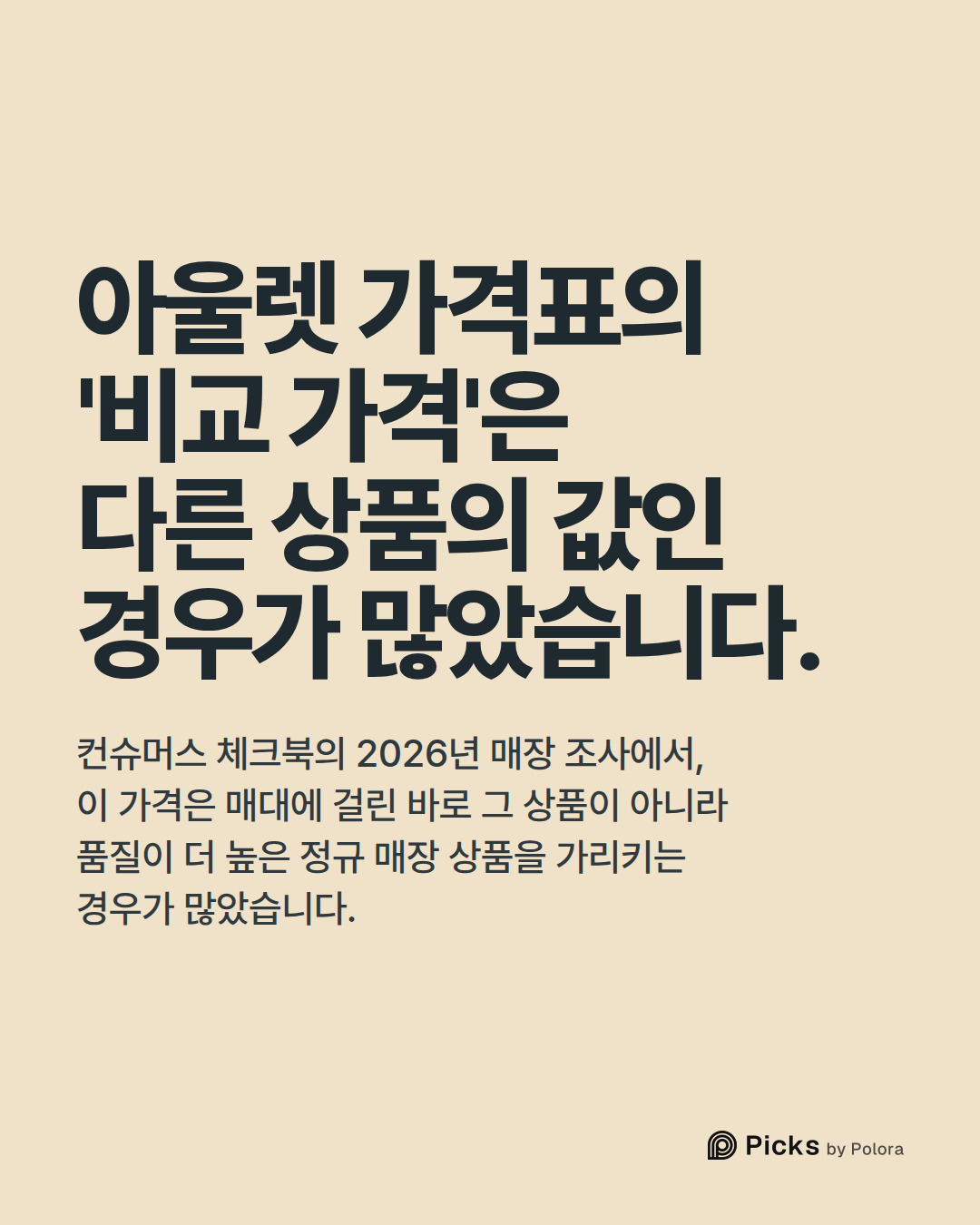
컨슈머스 체크북도 2026년에 이와 관련된 결과를 내놓았습니다. 매장을 돌아보니 아울렛에 표시된 '비교 가격'과 '권장 소비자가격'은 매대에 걸린 바로 그 상품이 아니라, 품질이 더 높은 다른 정규 매장 상품을 가리키는 경우가 많았다고 합니다.
예전 방식이 사라진 것은 아닙니다. 같은 체크북 조사에서는 수는 더 적지만 진짜 재고를 파는 업체도 확인됐습니다. 정규 매장에서 나온 지난 시즌 상품이나 전시 상품을 파는 곳으로, 버버리, 라파예트 148, 포터리 반, RH, 윌리엄스 소노마, 애슬레타 팩토리 아울렛, 나이키 클리어런스, 탤벗츠 클리어런스 센터 등입니다. 두 가지를 섞어 파는 브랜드도 있습니다. 여기 나온 취재와 조사는 대부분 미국과 캐나다의 것이고, 같은 브랜드라도 다른 나라에서는 아울렛을 다르게 운영할 수 있습니다.
'아울렛'은 원래 브랜드의 남은 옷이 마지막에 가는 곳을 뜻했습니다. 지금 많은 큰 의류 브랜드에서는 그 매장을 위해 따로 디자인하고 만든, 정규 매장과 이름만 같은 별도의 옷 라인을 뜻합니다. 다른 브랜드에서는 여전히 예전 뜻 그대로입니다. 그러니 '아울렛'이라는 간판만 봐서는 그 옷이 어디서 왔는지 알 수 없습니다.
Are outlet store clothes really last season's leftovers?
Alpha · deepseek-v4-pro
No — not as a general rule, though the old story is not completely dead either. The honest answer is: some outlet clothes are last season’s leftovers, but at many big clothing brands the bigger share is a separate product line made only for the outlet.
Where the “leftovers” story came from
The 30 January 2014 letter from Senators Whitehouse, Blumenthal and Markey and Representative Eshoo to the FTC said outlets historically sold excess inventory and slightly damaged goods that regular stores couldn’t move. That was once largely true — but the letter’s whole point was that it no longer described most of what outlets sold.
What the brands themselves said
The 2016 CBC Marketplace investigation compared outlet and regular-store products from Banana Republic, J.Crew, Kate Spade and Coach. The material in front of me says J.Crew told Marketplace its outlets sell only made-for-outlet products, sometimes using different fabrics or design details to reach a lower price. Banana Republic said its outlets carry no product from its regular stores. Coach said everything it makes uses fine leathers and fabrics. Kate Spade declined to comment.
That’s not “unsold mainline stock.” Tha…
Beta · gpt-6-sol
Not necessarily. Some outlets sell past-season stock, but others sell clothes designed specifically for the outlet rather than leftovers from regular stores. Gap Factory, for example, says its line is exclusive to Factory and that it does not sell Gap overstock or last season’s products. The FTC likewise says outlet merchandise *can* be made exclusively for outlets and *may* differ from regular-store merchandise—not that every outlet item is made that way or is worse. (gapfactory.com)
One important correction to the manuscript and Alpha’s answer: Consumers’ Checkbook’s June 2026 investigation says about half the 40 brands it studied had outlets carrying *only or mostly* made-for-outlet goods. Its article does not establish that “more than half of outlet goods” across the industry are made for outlets. It also found genuine past-season merchandise and clearance at some stores. The often-repeated 85% figure comes from analysts cited in a January 30, 2014 lawmakers’ letter, not an industry-wide count performed by the lawmakers. ([checkbook.org](https://www.checkbook.org/twin-cities…
Gamma · gemini-3.1-pro
Here is what a live check of the manuscript’s specific requests reveals:
1. The 2016 CBC Marketplace investigation and J.Crew’s exact words
I was able to locate the CBC reporting (published online in January 2016). The manuscript's summary of the brands' statements is accurate.
For J.Crew, their exact quote regarding fabrics is: *"In some cases, we do utilize different fabrics or adjust design details to maintain a more reasonable price point,"* followed by, *"We always make sure to preserve the quality and design integrity that you would expect from J. Crew."* Banana Republic did confirm its outlet stores do not sell any products from its retail stores.
*(Source: cbc.ca)*
2. The 2014 lawmakers' letter
I searched the official press release archives on the senators' websites (markey.senate.gov and whitehouse.senate.gov) for the specific phrasing of the January 30, 2014 letter, but the searches returned no matching live text. I could not verify the exact original wording directly from the Senate servers.
3. Consumers’ Checkbook (June 2026)
The manuscript correctly represents the Checkbook findings. The organization's press release explicitly concludes that "more than…
Researcher · gpt-6-luna
Researcher’s check
The record supports a qualified answer: outlet merchandise is not always last-season stock. The important limit is that available evidence does not establish what share of all outlet *items* are made for outlets.
- 2014 lawmakers’ letter — verified from the letter’s text. The January 30, 2014 letter says outlets “historically” offered excess inventory and slightly damaged goods, then attributes the “upwards of 85%” estimate to unnamed market analysts. It also says a retail price is “impossible to substantiate” when the item was never sold in regular retail stores or at that price. These are the lawmakers’ claims and concerns—not a government finding or an industry-wide measurement. The official letter is readable on Senator Markey’s site: https://www.markey.senate.gov/news/press-releases/sens-and-rep-to-ftc-outlet-stores-may-be-misleading-consumers (markey.senate.gov)
- FTC guidance — verified. The FTC’s March 20, 2014 release says outlet merchandise *can* be made exclusively for outlets and *may* differ in qualit…
The Arbiter · gpt-6-sol
The voices agree on the central distinction: an outlet can sell merchandise made specifically for that outlet, genuine overstock, or a mix. The FTC’s wording is deliberately limited—it says outlet goods *can* be made exclusively for outlets and *may* differ in quality. (checkbook.org)
The material dispute is about how much. Checkbook’s June 2026 article says *about half of the 40 brands it studied* carried only or mostly made-for-outlet goods. Its press release goes further, saying *more than half of the goods sold* at outlet and factory stores are made for them. The described store visits do not show an industry-wide count of items sold, so the manuscript should attribute that latter wording to Checkbook rather than present it as a measured share of all outlet merchandise. The 85% figure is a separate estimate attributed to analysts in the 2014 lawmakers’ letter. (checkbook.org)
One requested check remains open: Gamma reports finding the CBC *Marketplace* article and…
The Arbiter's Final Verdict · gpt-6-sol
Sometimes, but not as a rule. Some outlets sell genuine past-season stock or overstock; others sell clothes made specifically for the outlet rather than clothes left unsold in regular stores. Gap Factory, for example, says it does not sell Gap overstock or last season’s products. The FTC likewise says outlet goods *can* be made exclusively for outlets and *may* differ from regular-store goods—not that all are made that way or are lower quality.
The strongest evidence for how much this varies is Consumers’ Checkbook’s 2026 investigation: about half of the 40 brands it studied carried only or mostly made-for-outlet goods, while others offered genuine clearance stock. That does not establish the share of all outlet garments nationwide. The often-quoted 85% figure is an estimate attributed to unnamed analysts in a 2014 lawmakers’ letter, not an industry census.
So the manuscript’s…