FTC는 실수로 눌릴 수 있는 프라임 가입과 사람을 지치게 하려고 만든 해지 절차를 문제 삼아 아마존에게서 25억 달러를 받아 냈습니다. 어디서든 같은 수법을 알아보는 법을 정리했습니다.
비즈니스와 경제 · 2026-09-20
무언가를 사려고 들어갔습니다. 눈에 띄는 버튼이 무료 배송을 약속하기에 눌렀습니다. 몇 주 뒤 결제 내역이 찍혔고, 그것을 멈추려 하자 나가는 길은 자꾸 그대로 있어 달라고 붙잡는 다른 화면으로 바뀌었습니다. 이 이야기가 익숙하게 들린다면, 이제 연방 법원이 당신이 짐작하던 것을 소리 내어 말했습니다. 그것은 그렇게 만들어진 것이었습니다.
2025년 9월, 불공정 상거래를 단속하는 기관인 미국 연방거래위원회(FTC)는 아마존이 사람들을 프라임에 가입시킨 방식과 해지하게 만든 방식을 문제 삼아 아마존과 25억 달러에 합의했습니다. 이 금액에는 FTC 규칙 위반에 매겨진 것으로는 역대 가장 큰 10억 달러의 과징금과, 고객에게 돌려줄 최대 15억 달러가 들어 있습니다. 이 사건이 남다른 것은, 한 달로 예정됐던 배심 재판이 시작되고 이틀 만에 아마존이 돈을 내기로 했는데, 그러기 전에 이미 판사가 법률 판단에서 아마존에게 불리한 결정을 내렸다는 점입니다.
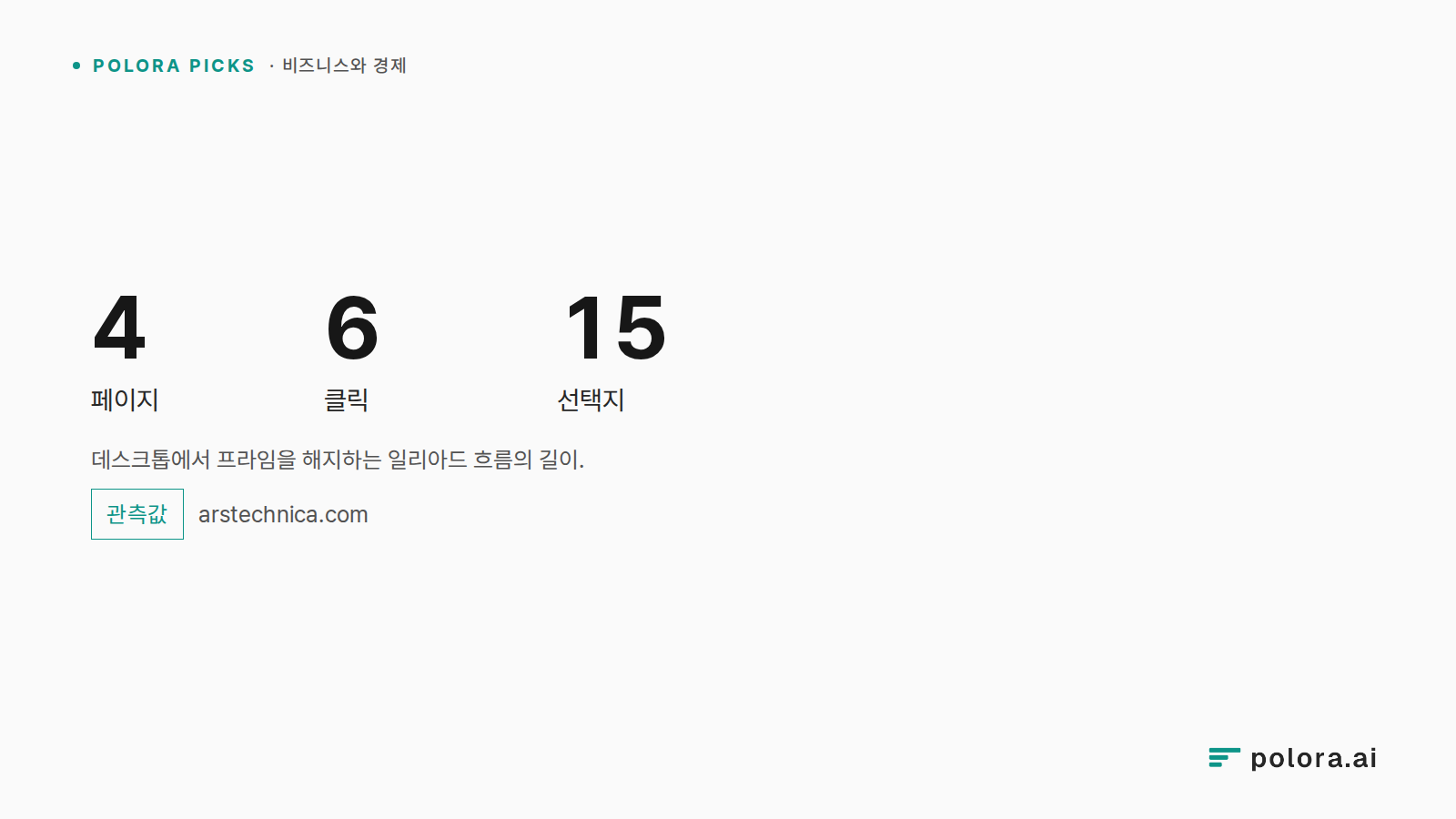
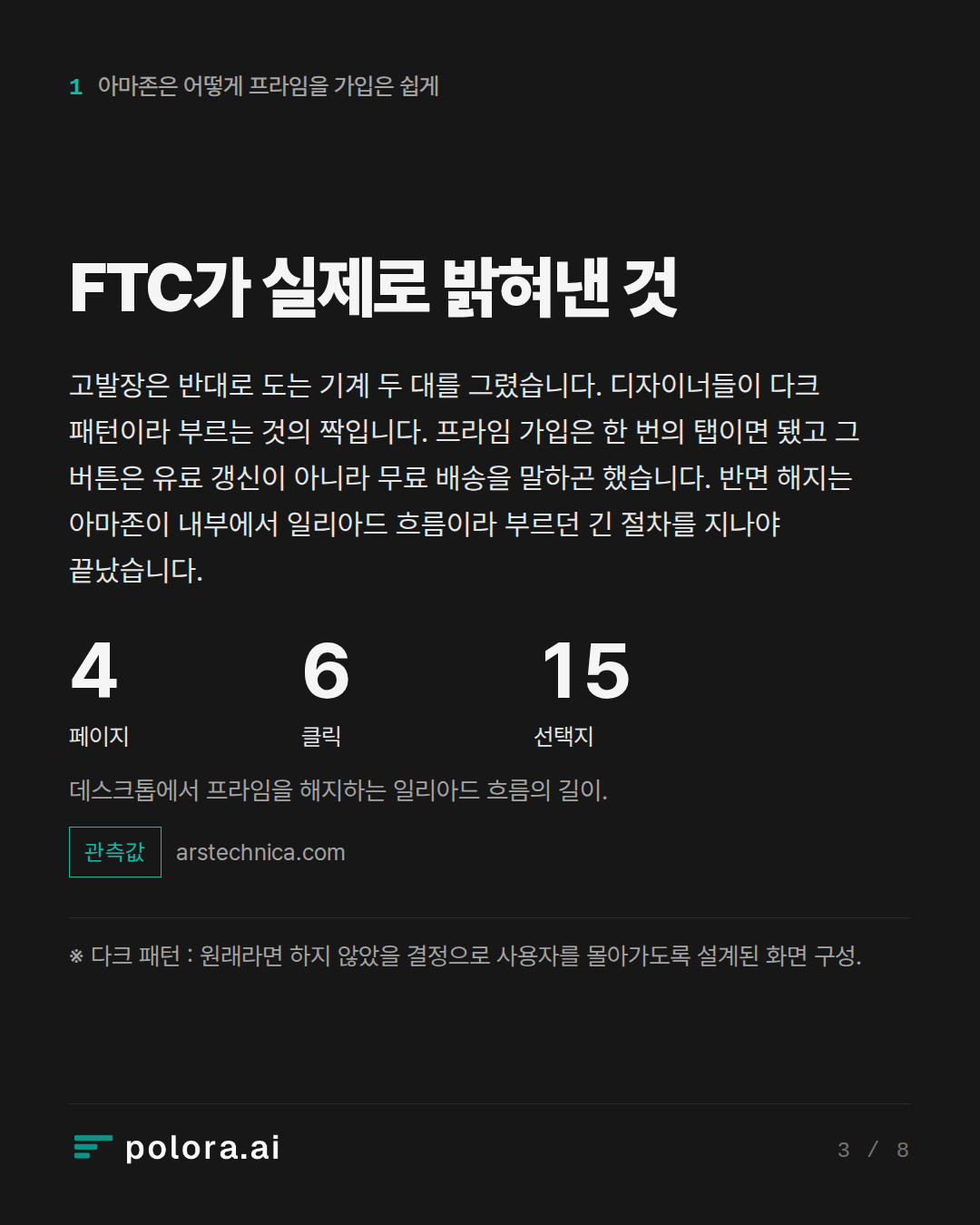
고발장은 서로 반대 방향으로 돌아가는 기계 두 대를 묘사했습니다. 디자이너들이 다크 패턴이라 부르는 것이 짝을 이룬 셈입니다. 프라임 가입은 한 번의 탭이면 됐고, 그 버튼은 유료로 자동 갱신되는 멤버십이 아니라 무료 배송을 말하는 경우가 많았습니다. 반면 데스크톱에서 해지하려면 아마존 직원들이 내부에서 일리아드 흐름이라 부르던 절차를 거쳐야 했습니다. 호메로스의 긴 전쟁 서사시에서 따온 이름으로, 멤버십이 실제로 끝나기까지 네 페이지와 여섯 번의 클릭과 열다섯 개의 선택지를 지나야 했습니다.
이 기관은 동기를 짐작할 필요가 없었습니다. 재판 전에 드러난 아마존 자신의 문서는 구독을 밀어붙이는 일을 "약간은 떳떳하지 못한 세계"라 불렀고, 원치 않은 가입을 "말하지 않는 암"이라 불렀습니다. FTC는 아마존 경영진이 해지를 더 쉽게 만들었을 설계를 늦추거나 반려했다고 밝혔는데, 해지가 쉬워지면 회사가 돈을 잃기 때문이었습니다.
※ 다크 패턴 : 실수로 구독하게 되는 것처럼, 원래라면 하지 않았을 결정으로 사용자를 몰아가도록 설계된 화면 구성.
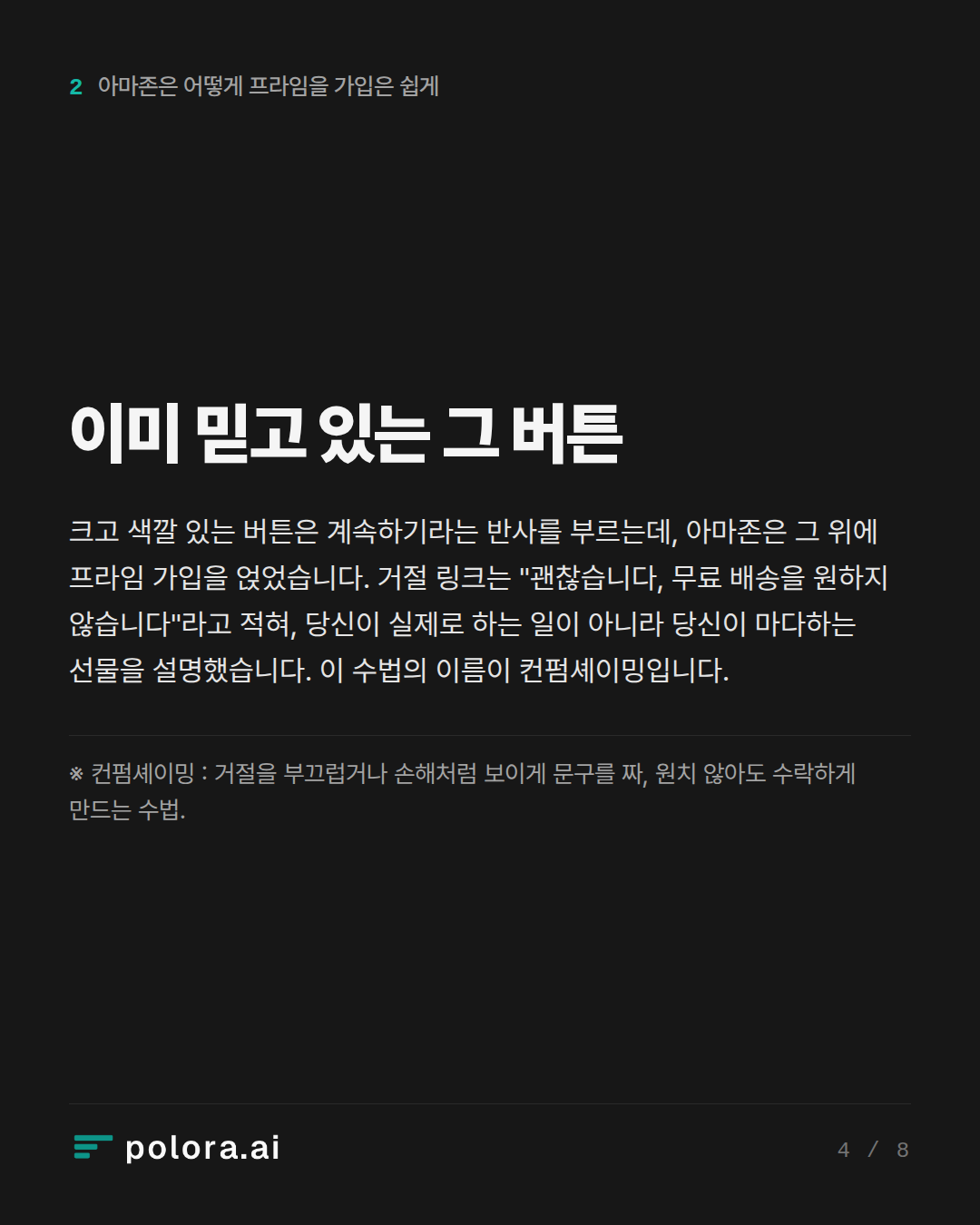
여러 해 동안 쇼핑을 하면 반사 하나가 몸에 뱁니다. 크고 색깔 있는 버튼은 계속하기를 뜻한다는 것입니다. 아마존은 그 버튼에 프라임 가입을 얹었습니다. 눈에 띄는 그 버튼은 "당일 무료 배송 받기" 같은 문구를 내밀었고, 프라임 없이 넘어가는 길은 "괜찮습니다, 무료 배송을 원하지 않습니다"라고 적힌, 더 작고 조용한 링크였습니다.
디자이너들은 그 마지막 수법에 이름을 붙여 두었습니다. 컨펌셰이밍입니다. 거절 선택지는 당신이 실제로 하는 일, 곧 프라임 없이 계속하는 것을 설명하지 않습니다. 당신이 마다한다는 선물을 설명합니다. 어떤 결제 화면에서는 수법이 더 나아가, "주문하기"를 누르면 상품을 사는 동시에 자동 갱신 멤버십이 시작됐습니다. 클릭 한 번에 계약 둘입니다.
이번 합의는 이제 아마존이 "아니요, 무료 배송을 원하지 않습니다"라고 적은 거절 버튼을 쓰지 못하게 하고, 가입 화면에 프라임이라는 이름과 가격, 그리고 갱신된다는 사실을 밝히도록 했습니다. 거절은 고백이 아니라 진짜 선택처럼 보여야 합니다.
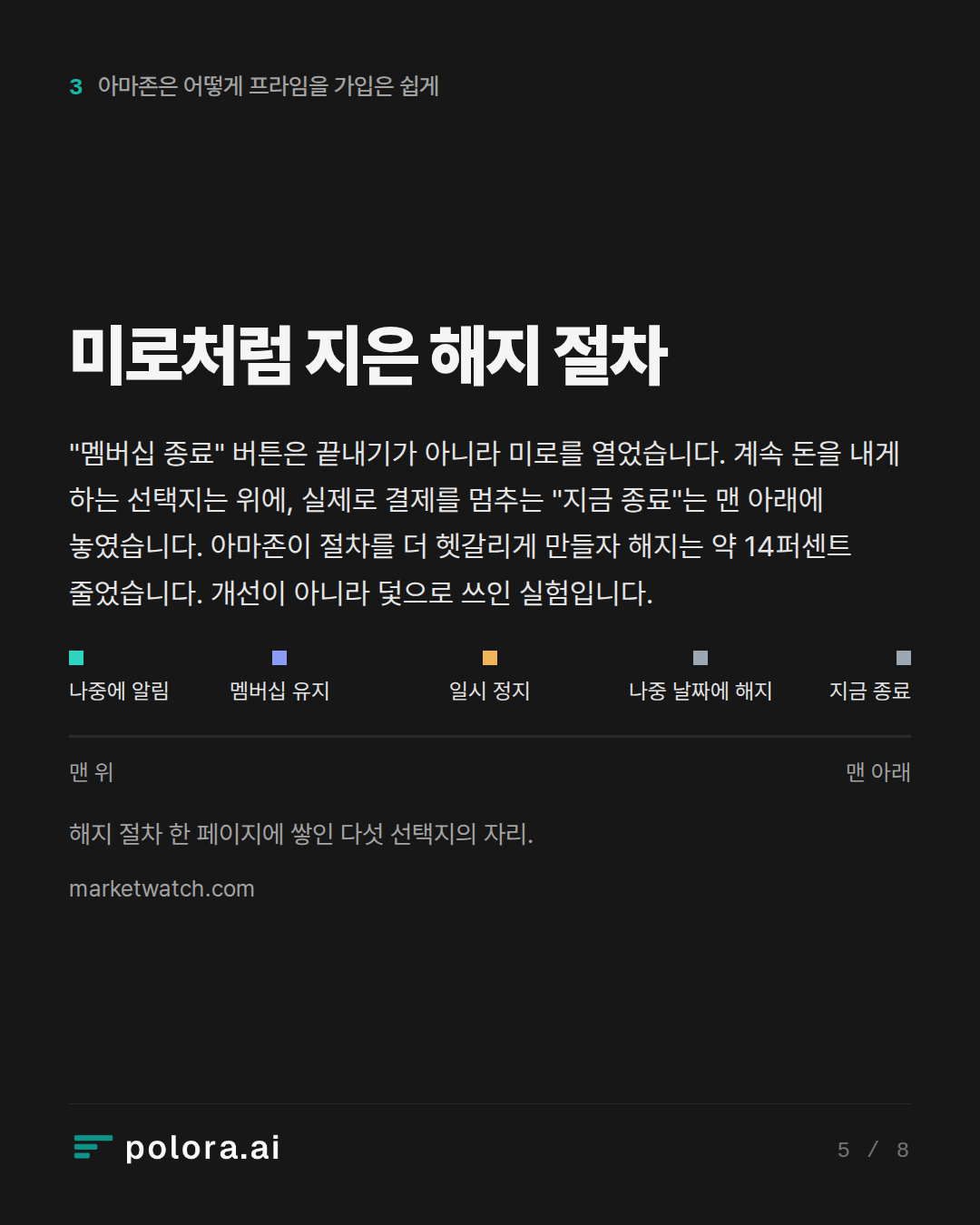
나가는 길에서는 설계가 주의를 붙잡는 쪽에서 인내를 소진시키는 쪽으로 뒤집혔습니다. "멤버십 종료"라고 적힌 버튼은 멤버십을 끝내지 않았습니다. 미로를 열었습니다. FTC에 따르면, 거기서부터 고객은 절차 밖으로 튕겨 나가 처음부터 다시 시작하게 만드는 버튼들을 피해 가며 떠나겠다는 결정을 여러 번 확인해야 했습니다.
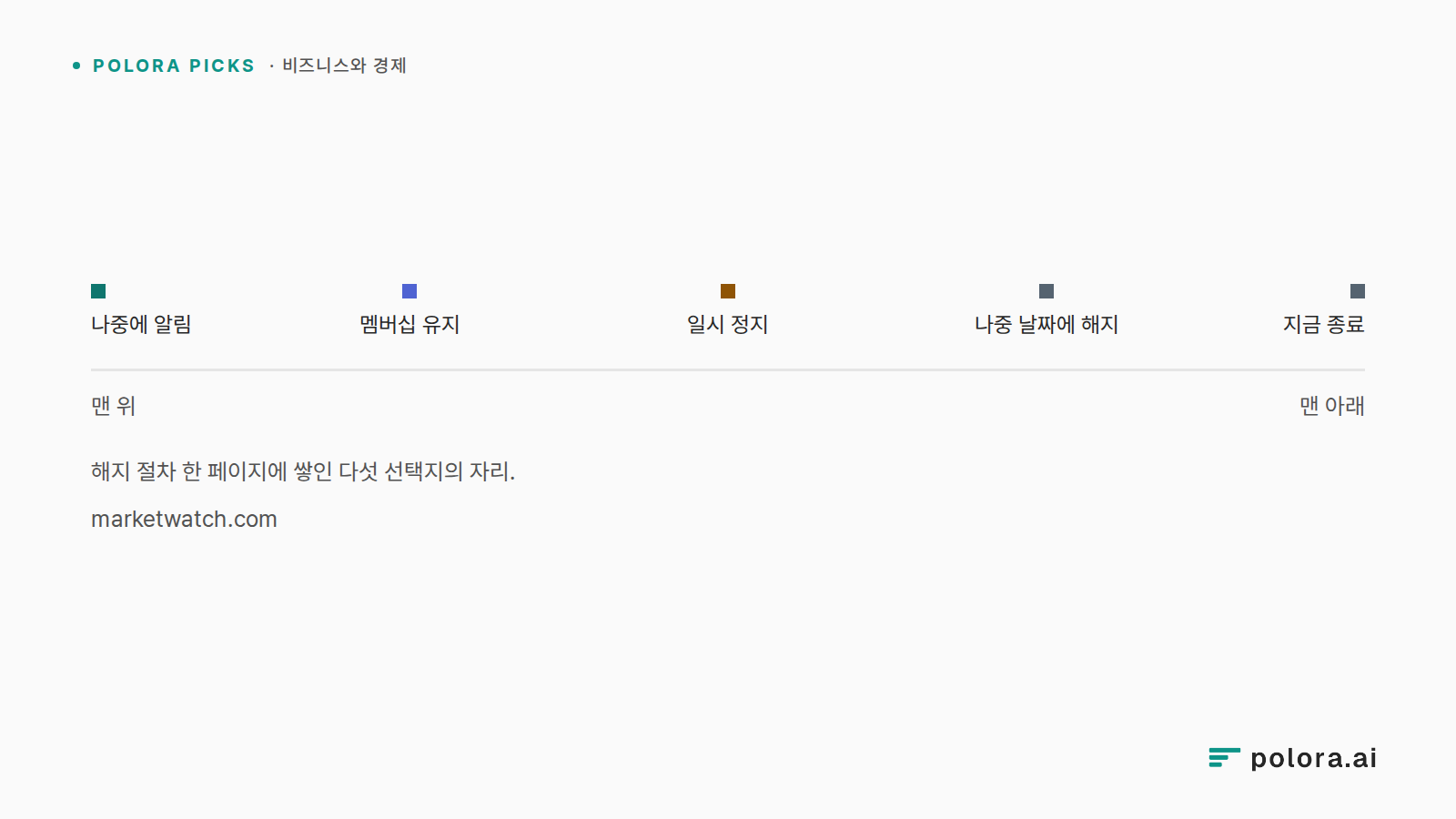
한 페이지에는 다섯 개의 선택지가 쌓여 있었습니다. "나중에 알림", "멤버십 유지", 일시 정지, 나중 날짜에 해지, 그리고 맨 아래 마지막에 놓인 "지금 종료"입니다. 실제로 결제를 멈추는 것은 이것뿐이었습니다. 계속 돈을 내게 하는 선택지들은 맨 위에 있었고, 정작 그 하나만 맨 아래에 있었습니다.
이 기관은 또 그 설계를 점수판이 달린 실험으로 보았습니다. 아마존이 절차를 더 헷갈리게 만들자 끝내기 전에 포기하는 사람이 수십만 명 더 늘었고, 더 어려운 버전이 나온 뒤 해지는 약 14퍼센트 줄었습니다. 개선이 아니라 덫으로 쓰인 A/B 테스트입니다.
해지 절차 한 페이지에 쌓인 다섯 선택지의 자리. · 맨 위 · 맨 아래 · 나중에 알림 · 멤버십 유지 · 일시 정지 · 나중 날짜에 해지 · 지금 종료
이 가운데 어느 것도 당신이 부주의해야 성립하는 것이 아닙니다. 그저 휴대폰으로 일을 끝내려는 사람이면 됩니다. 건전지를 사려고 사이트를 열었으니 프라임 질문에는 남은 주의만 돌아가고, 밝은 버튼을 누르려는 반사가 이깁니다.
해지 화면은 같은 원리를 거꾸로 씁니다. 혜택을 잃는 것은 연 139달러라는 추상적인 액수보다 더 아프게 다가오는데, 행동 연구자들은 이를 손실 회피라 부릅니다. 그래서 당신이 포기하게 될 것을 모두 늘어놓는 페이지는 설정 메뉴로 꾸민 설득입니다. 이미 결정을 내린 뒤에 나오는 선택지 여섯 개는 충분한 설명에 따른 동의가 아닙니다. 끈기를 겨루는 시험이고, 그 설계는 이기도록 지어졌습니다.
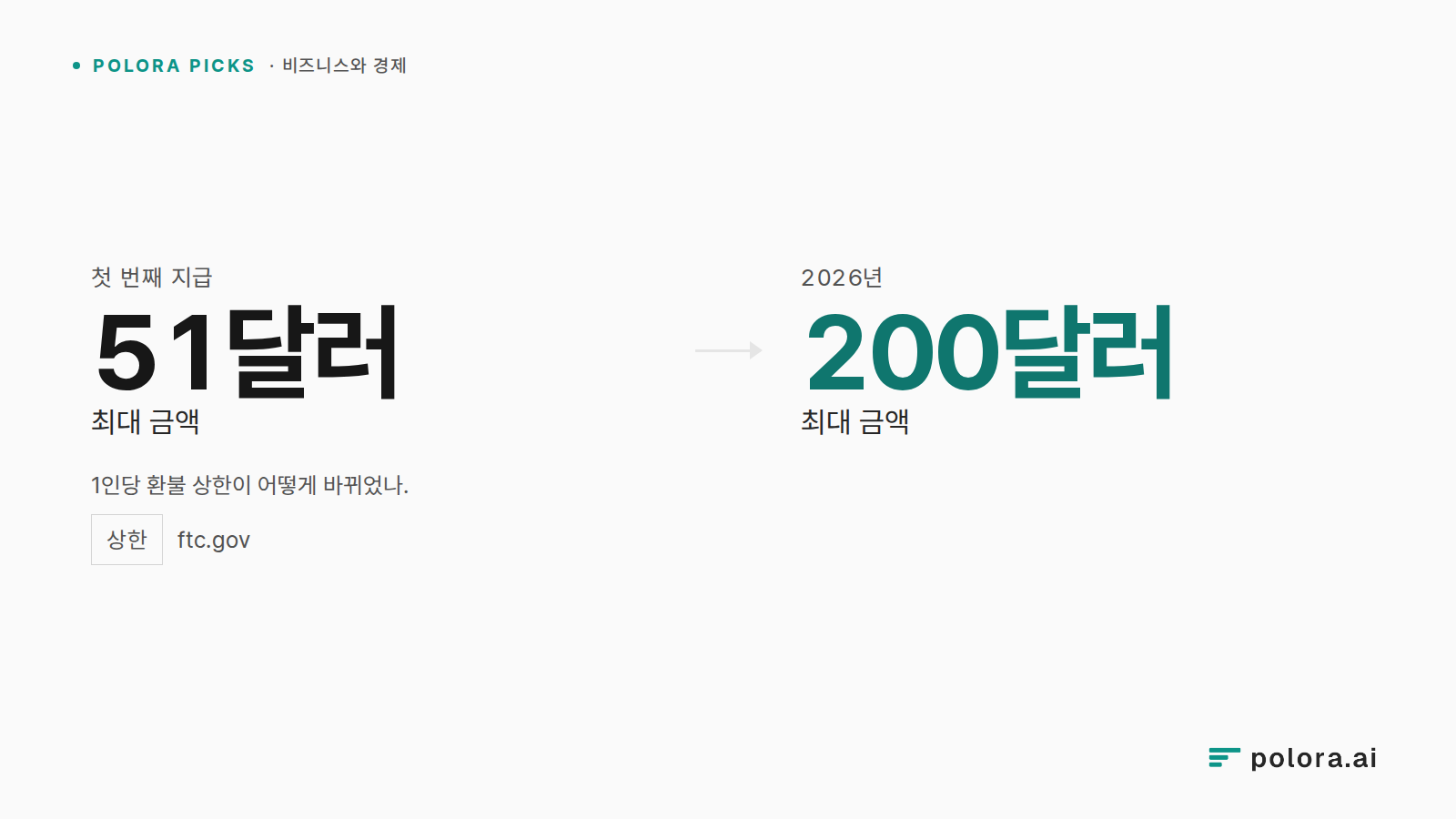
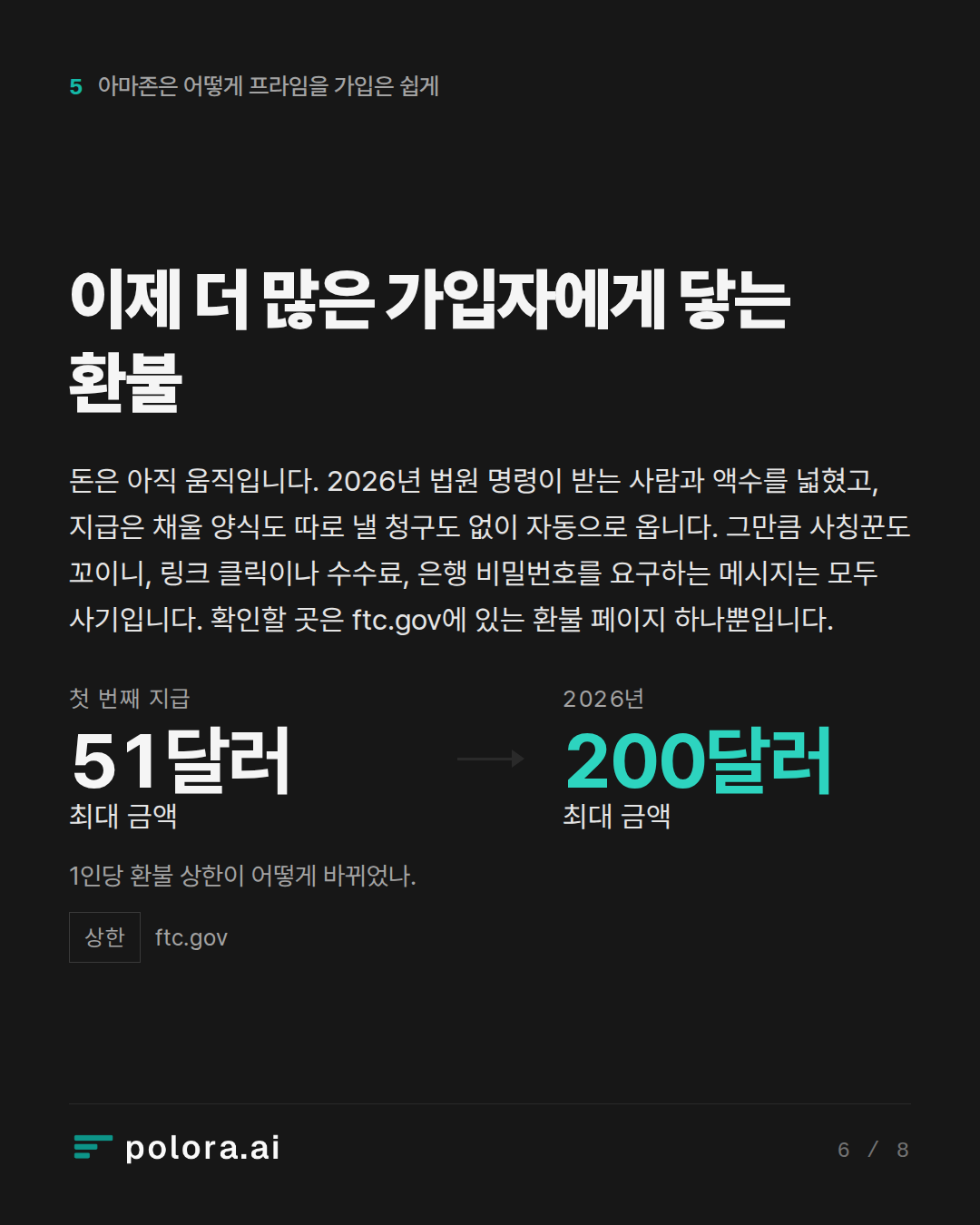
돈은 아직 움직이고 있습니다. 2026년 법원 명령이 누가 얼마를 받는지를 넓혔습니다. 한 사람이 받을 수 있는 최대 금액은 51달러에서 200달러로 올랐습니다. 1년에 프라임 혜택을 11개에서 20개 사이로 쓴 사람들, 곧 첫 번째 지급에서 빠졌던 이들이 이제 포함됩니다. 이미 더 적은 수표를 받아 간 사람은 최대 149달러를 더 받을 수 있고, 그 추가 지급은 2027년 4월부터 시작됩니다. 새 자동 지급은 2026년 10월 1일부터입니다.
중요한 낱말은 자동입니다. 지급은 PayPal, Venmo, 또는 우편으로 부친 수표로 오고, 채울 양식도, 따로 낼 청구도 없습니다. 이 점이 중요한 데는 또 다른 이유가 있습니다. 이만큼 큰 합의는 사칭꾼을 불러들이니, 아마존 환불을 받으려면 링크를 클릭하라거나 수수료를 내라거나 은행 비밀번호나 인증 번호를 넘기라고 요구하는 메시지는 모두 사기입니다. 정당한 지급은 당신에게 아무것도 요구하지 않으며, 확인할 곳은 오직 ftc.gov에 있는 FTC 자신의 환불 페이지 하나뿐입니다.
1인당 환불 상한이 어떻게 바뀌었나. · 첫 번째 지급 · 51달러 · 최대 금액 · 2026년 · 200달러
이것을 모든 구독을 쉽게 해지하게 만드는 새 법으로 읽고 싶어집니다. 그렇지 않습니다. FTC가 거기에 가까운 것을 써 두긴 했는데, 흔히 클릭 한 번으로 해지하기라 불리는 조치였습니다. 하지만 연방 항소법원이 2025년 7월, 시행을 며칠 앞두고 절차를 문제 삼아 그것을 무효로 했습니다. 그것은 끝내 구속력 있는 법이 되지 못했습니다.
그러니 아마존의 새 의무, 곧 분명한 거절 방법과 정직한 가입 조건, 그리고 가입할 때 쓴 것과 같은 방법으로 하는 해지는 바로 이 특정 법원 명령에서 나온 것이고, 이 명령은 아마존을 십 년 동안 구속합니다. 그것들은 당신이 다음에 구독하는 앱까지 미치지 않습니다. 다른 곳에서 당신을 지키는 것은 누덕누덕 기운 조각들입니다. 사건마다 이루어지는 연방 집행, 캘리포니아, 콜로라도, 미네소타, 오리건 같은 곳의 주 자동 갱신법, 그리고 무엇보다 당장은 해지한 뒤에도 계속 들어오는 결제에 이의를 제기할 수 있는 카드 발급사의 권한입니다.
폴로라는 이 질문을 서로 다른 회사가 만든 여러 AI 모델에게 던지고 이 사건을 함께 짚어 보게 했습니다. 그들이 다다른 곳은 어디에나 들고 다닐 수 있는 한 문장이었습니다. 기업은 당신에게 남아 달라고 부탁해도 됩니다. "해지 완료" 버튼과 똑같이 잘 보이는 자리에 선택 사항인 할인 하나를 함께 보여 주는 것은 판매 권유이고, 성가신 권유라도 여전히 합법입니다.
제안이 나가는 길에 딸려 오는 것이 아니라 그 길을 대신할 때, 그것은 FTC가 문제 삼은 설계로 선을 넘습니다. 시험은 기업이 당신을 붙잡으려 해도 되느냐가 아닙니다. 나가는 길이 있으며 그 길이 진실을 말하느냐입니다. "해지"가 또 다른 마케팅을 열면, 끝내는 것처럼 들리는 버튼이 사실은 복도라면, 일시 정지와 "나중에 알림"이 결제를 멈추는 선택지보다 더 밝고 더 높은 곳에 있다면, 또는 이미 결정을 내린 뒤에도 아니라고 여러 번 말해야 한다면, 그 제안은 제안이기를 그치고 장애물이 된 것입니다.
이십 초 만에 알아보는 법
전국 규칙이 당신을 위해 이 일을 해 주지 않을 테니, 대신 습관 하나를 지니고 다니십시오. 프라임에도, 그 밖의 모든 것에도 통합니다. 머리글이 아니라 버튼을 읽으십시오. 버튼은 자기가 하는 일을 말해야 하니, "무료 배송 받기"가 아니라 "프라임 가입, 연 139달러, 자동 갱신"이어야 합니다. 예와 아니요의 무게를 견주십시오. 수락은 색이 꽉 찬 버튼이고 거절은 흐린 회색 글자라면, 그 페이지는 이미 당신 대신 골라 놓은 것입니다. 클릭 수를 세십시오. 떠나는 데 가입의 몇 배나 되는 수고가 든다면, 당신은 디자이너들이 바퀴벌레 여관이라 부르는 곳, 들어가기는 쉽고 나오기는 어려운 곳에 있는 것입니다.
그런 다음 실제로 해지되었는지 확인하십시오. "일시 정지", "혜택 끄기", "기간 끝에 해지"는 멈춤과 같지 않으니, 날짜가 찍힌 확인을 기다리고, 계정 상태를 살피고, 끝났다고 믿기 전에 다음 명세서를 지켜보십시오.
아마존 사건이 남긴 오래갈 교훈은 25억 달러보다 작고 하루하루에는 더 쓸모가 있습니다. 결제 화면 근처의 "무료", "배송", "계속" 버튼은 계약에 서명하게 할 수도 있는 것으로 여기고, 해지는 결제가 끝났다는 증거를 손에 넣기 전까지 끝나지 않은 것으로 여기십시오. 당신이 서툴렀던 것이 아닙니다. 당신은 몰이를 당하고 있었고, 몰이를 당한 선택은 다가오는 것을 미리 알아보는 법을 익힐 수 있는 선택입니다.
In September 2025 the U.S. Federal Trade Commission won a $2.5 billion settlement against Amazon over 'dark patterns' that nudged people into Prime and made canceling hard, and a 2026 court order has now widened automatic refunds to millions more subscribers, raising the cap from $51 to $200. Investigate together what the FTC actually found, how these interface tricks work, and what an ordinary subscriber should take away about spotting and escaping manipulative sign-up and cancellation flows.
Regulatory & Legal Compliance Analyst — Opening
Let me lay out the legal record precisely, since that's the foundation everyone else in this debate will build on.
What the FTC actually alleged and found
The FTC's 2023 complaint, litigated for two years, alleged Amazon used "manipulative, coercive, or deceptive" user interface designs to dupe millions of consumers into automatically renewing Prime subscriptions. Critically, on the eve of trial, the court had already ruled against Amazon on the merits: on September 17, 2025, the court granted the FTC's partial motion for summary judgment, finding that Amazon Prime is subject to ROSCA, that Amazon obtained billing information before disclosing material terms (a violation), and that individual defendants Neil Lindsay and Jamil Ghani had authority to control the enrollment and cancellation flows. That's not a settled-without-admission dodge — a federal judge had already found a legal violation before Amazon agreed to pay.
Two days into what was supposed to be a month-long jury trial, the FTC announced it had settled its claims against Amazon.com and two Amazon executives... in a record-breaking deal that could cost Amazon up t…
UX Dark Patterns & Behavioral Design Expert · grok-4-6
I'll ground the UX and behavioral-design side in the actual Prime flows and the 2026 refund expansion, then turn that into a practical spotting-and-escape guide.# UX Dark Patterns & Behavioral Design Expert — Opening
The legal record my colleague laid out is the *what*. The interface is the *how*. Amazon did not accidentally make Prime hard to refuse and harder to leave. It ran a conversion funnel on both ends of the subscription, then measured which screens made people give up. That is the part an ordinary subscriber can actually use.
This was not “bad UX.” It was a two-sided trap.
Dark patterns are not ugly screens. They are design choices that exploit how people actually decide — fast, tired, on a phone, trying to finish a purchase — so the company gets a yes the user did not mean to give. Harry Brignull coined the term; later taxonomies (Gray, Mathur, the FTC’s own work) break them into families. Amazon’s Prime flows used several at once, which is why they were so effective. Isolated tricks are annoying. Stacked tricks feel like the site is just “how shopping works.”
Two different machines were running:
Enrollment hijacked an unrelated goal: “buy this thing.”
Ca…
Consumer Advocacy & Practical Guidance Specialist — Opening
My colleagues have laid out the legal docket and dissected the behavioral psychology behind the "Iliad Flow." As a consumer advocate, my job is to translate this historic $2.5 billion enforcement action into immediate, defensive financial literacy and operational self-defense for everyday consumers.
The FTC’s victory against Amazon is monumental, but the most dangerous mistake any consumer can make today is assuming that Amazon was an isolated bad actor, or that regulatory settlements mean you are now safe. Dark patterns remain the dominant business model of the subscription economy.
Here is what every subscriber needs to know about securing their share of the expanded 2026 redress, understanding the broader regulatory landscape (including the FTC's Click-to-Cancel rule), and bulletproofing their personal finances against predatory subscription design.
---
1. Actionable Redress Guide: Getting Your 2026 Amazon Refund
With the court widening eligibility in September 2026, millions of additional subscribers are entitled to payments. Here is how to navigate the refund safely and verify your status:
Who is…
Researcher · claude-sonnet-5
Researcher — Fact-Check on Round 1
Most of the factual record laid out by all three debaters checks out well. One important correction is needed, plus a few precision notes.
✅ Confirmed accurate
The 2026 refund expansion — verified in detail. This week, a federal court approved a joint motion filed by the FTC and Amazon, approving measures to accelerate and expand future redress payments to consumers. Under the revised order, more consumers will now qualify for refunds from Amazon, the maximum payment cap has been raised from $51 to $200 total, and all future payments will be distributed automatically. Amazon will begin issuing automatic redress payments to millions of additional consumers who used between 11 and 20 Prime benefits during a one-year period, who will now be eligible for automatic refunds starting on October 1, 2026. The additional-$149-by-April-2027 detail for people who already cashed checks also checks out: those who have already cashed earlier checks could see an additional automatic supplemental payment of up to $149 starting by April 2027. The settlement structure is confirmed too: Amazon was required to pay up to $1.5 billion in redress to consumers…
The Arbiter · gpt-5.6-terra
Arbiter’s Round 1 Record
There is strong agreement on the core consumer lesson: Amazon’s alleged Prime practices were not merely inconvenient design. The FTC case centered on subscription flows that made joining easy or ambiguous while making cancellation deliberately laborious—especially through repeated retention screens, visually unequal choices, unclear enrollment consequences, and extra cancellation steps.
What the legal record supports
Regulatory & Legal Compliance Analyst correctly emphasized that the September 2025 resolution was not simply a no-fault business settlement. Before the settlement, the court had granted the FTC partial summary judgment on important ROSCA issues, including Amazon’s collection of billing information before proper disclosure of material terms. The eventual resolution required up to $2.5 billion: $1 billion as a civil penalty and up to $1.5 billion for consumer redress, while also imposing interface-related conduct requirements on Amazon.
The Analyst also highlighted an important procedural factor: the court sanctioned Amazon over privilege assertions during discovery, finding bad-faith conduct. That is relevant to the li…
Regulatory & Legal Compliance Analyst — Closing Round
Thank you to the Researcher for the correction on the Click-to-Cancel Rule — that's an important legal precision, and I want to build directly on it, because it sharpens exactly the question the Arbiter posed: where's the legal line between a lawful retention offer and unlawful cancellation friction?
Let me check one detail on the actual injunction terms before answering that.This settles the Arbiter's open question with real precision, and it actually sharpens the correction the Researcher flagged.
The FTC's own findings show exactly where the legal line sits
The FTC's summary judgment record — which I can point you to directly — shows this wasn't a close call on the facts. The FTC provided evidence that consumers needed to reaffirm their desire to cancel their Prime membership three times once they entered the flow, and highlighted evidence that Amazon employees knew the goal of the Iliad flow was to "retain members who attempt to cancel their membership." That last phrase — captured in Amazon's own internal documents — is the legal fingerprint of a ROSCA violation: intent to obstruct, not merely to offer.
Notably,…
UX Dark Patterns & Behavioral Design Expert · grok-4-6
The Analyst nailed the legal line; I need the current Prime flows and the FTC’s interface evidence so the UX distinction between a lawful save offer and obstruction is grounded, not theoretical.The injunction language and current cancel screens are the missing pieces. I’ll pull those so the UX line between a save offer and obstruction is specific, not abstract.The Analyst’s legal line is right: the exit has to exist, and it cannot be dressed up as something else. From a design standpoint I want to tighten that one notch, because ROSCA does not ban a save offer. The FTC’s own witness said so in the Amazon litigation: there is no blanket prohibition on presenting a retention offer before a cancellation is processed, *so long as a simple cancellation mechanism still exists*. That is the whole fight. The question is not “may they ask me to stay?” It is “does the interface treat leaving as a first-class action, or does the save offer *become* the interface?”
That is the difference between a lawful retention offer and a dark pattern.
What the old Prime flows actually did to you
The FTC’s expert walkthrough and the court record are unusually specific, which is rare and useful. T…
Consumer Advocacy & Practical Guidance Specialist — Closing Round
First, I acknowledge and embrace the Researcher’s correction regarding the federal Negative Option ("Click-to-Cancel") Rule: there is currently no nationwide, generally applicable federal rule requiring cancellation to be as simple as signup.
As a consumer advocate, that makes our practical playbook even more vital. You cannot rely on a universal federal umbrella to protect you across the internet. Instead, your defense relies on three pillars: understanding the specific Amazon redress expansion, recognizing manipulative interface architecture in the wild, and wielding the self-defense tools (like chargebacks and state statutes) that actually work today.
---
1. The Amazon Redress Expansion: Clear Steps for Affected Users
Under the newly expanded 2026 court order, redress distribution has shifted to automatic delivery with higher caps:
* Automatic Distribution (No Claims Required): Beginning October 1, 2026, Amazon will automatically issue payments to millions of newly eligible subscribers (specifically targeting those who used between 11 and 20 Prime benefits over a one-year period).
* …
Researcher · claude-sonnet-5
Both debaters' key new claims check out well. Here's what I verified:
✅ Confirmed: Analyst's injunction quotes and UX Expert's evidence
"Same method to cancel" and "clear decline button" requirements are accurately quoted. Multiple independent sources confirm the settlement requires an easy way for consumers to cancel Prime, using the same method that consumers used to sign up, and a clear and conspicuous button for customers to decline Prime, with Amazon no longer able to use a button that says "No, I don't want Free Shipping". The FTC's own release confirms this. FTC.gov
The "shady world" / "unspoken cancer" internal quotes are accurate and correctly attributed. The FTC's own press release states Amazon documents discovered in the lead up to trial showed that Amazon executives and employees knowingly discussed these unlawful enrollment and cancellation issues, with comments like "subscription driving is a bit of a shady world" and leading consumers to unwanted subscriptions is "an unspoken cancer." [FTC.gov](https://www.ftc.gov/news-events/news/pr…
The Arbiter · gpt-5.6-terra
Arbiter’s Round 2 Record
The discussion has converged on a practical distinction: a company may offer a customer a reason to stay, but it may not make that offer functionally replace the ability to leave.
What the FTC case established
Regulatory & Legal Compliance Analyst and UX Dark Patterns & Behavioral Design Expert agree that the Prime case concerned a coordinated enrollment-and-cancellation design, rather than a mere complaint about extra clicks:
- On enrollment, the FTC alleged Amazon made Prime acceptance visually prominent while making refusal obscure or guilt-laden—such as presenting “free delivery” as the salient action while framing refusal as “No, I don’t want FREE delivery.”
- The challenged flows could combine completing a purchase with enrollment in a renewing Prime membership, without adequately clear consent and material terms before billing information was collected.
- On cancellation, Amazon’s internally named “Iliad” process used repeated retention screens, options such as pausing or delaying cancellation, and labels that could suggest a cancellation had already occurred when further steps remained.
- Internal Amazon material cited by…
The Arbiter's Final Verdict · gpt-5.6-terra
Verdict
The essential claim is sound: the FTC’s Amazon Prime case was about more than annoying checkout design. It targeted subscription interfaces that allegedly made paid, auto-renewing Prime enrollment insufficiently clear and made cancellation a deliberately exhausting process. The September 2025 resolution—$1 billion civil penalty plus up to $1.5 billion for consumer refunds—also required Amazon to change key enrollment and cancellation practices.
The later 2026 court-approved expansion is likewise material: additional eligible consumers are to receive automatic redress, with the potential total per-person amount increased from $51 to $200. Eligible people who already received and cashed an earlier payment may receive a supplemental payment of up to $149. Additional automatic payments are scheduled to begin October 1, 2026.
What the FTC’s case showed
The problematic pattern was asymmetry:
- Joining looked like ordinary shopping—for example, accepting a shipping-related offer—while the paid Prime enrollment and renewal consequences were less prominent.
- Declining was harder or emotionally loaded, including wording that framed refusal as turning down somethi…