새로 시작한 클라우드 등 여러 AI 서비스에서 나오며, 약 3분의 2는 이름이 공개되지 않은 고객 한 곳이 냅니다. 영업이익은 여전히 약 85%를 스타링크가 속한 부문이 벌었습니다(2026년 3분기 공시).
2026-10-29
스페이스X에서 AI는 매출로는 1등, 이익으로는 아니다
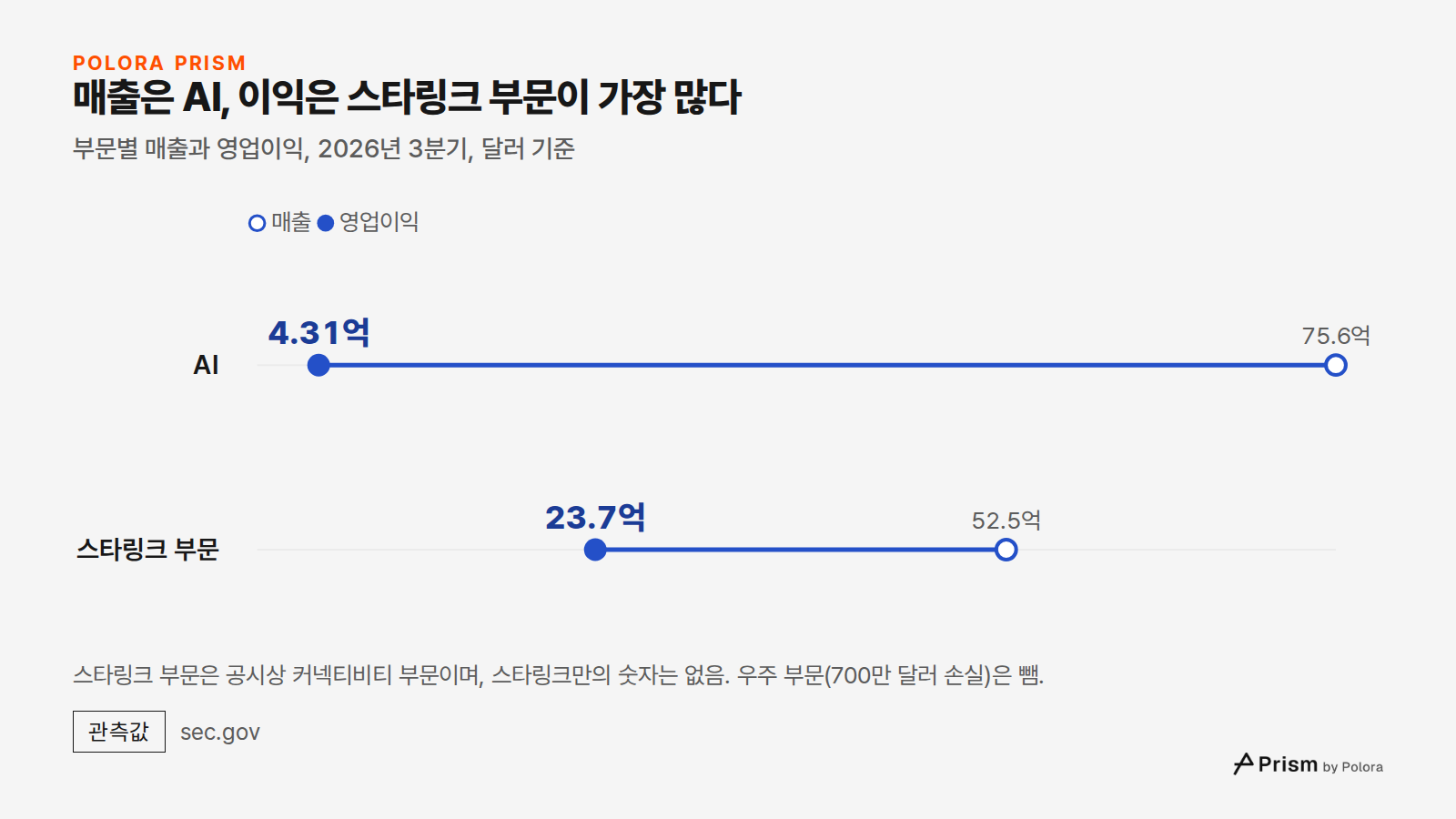
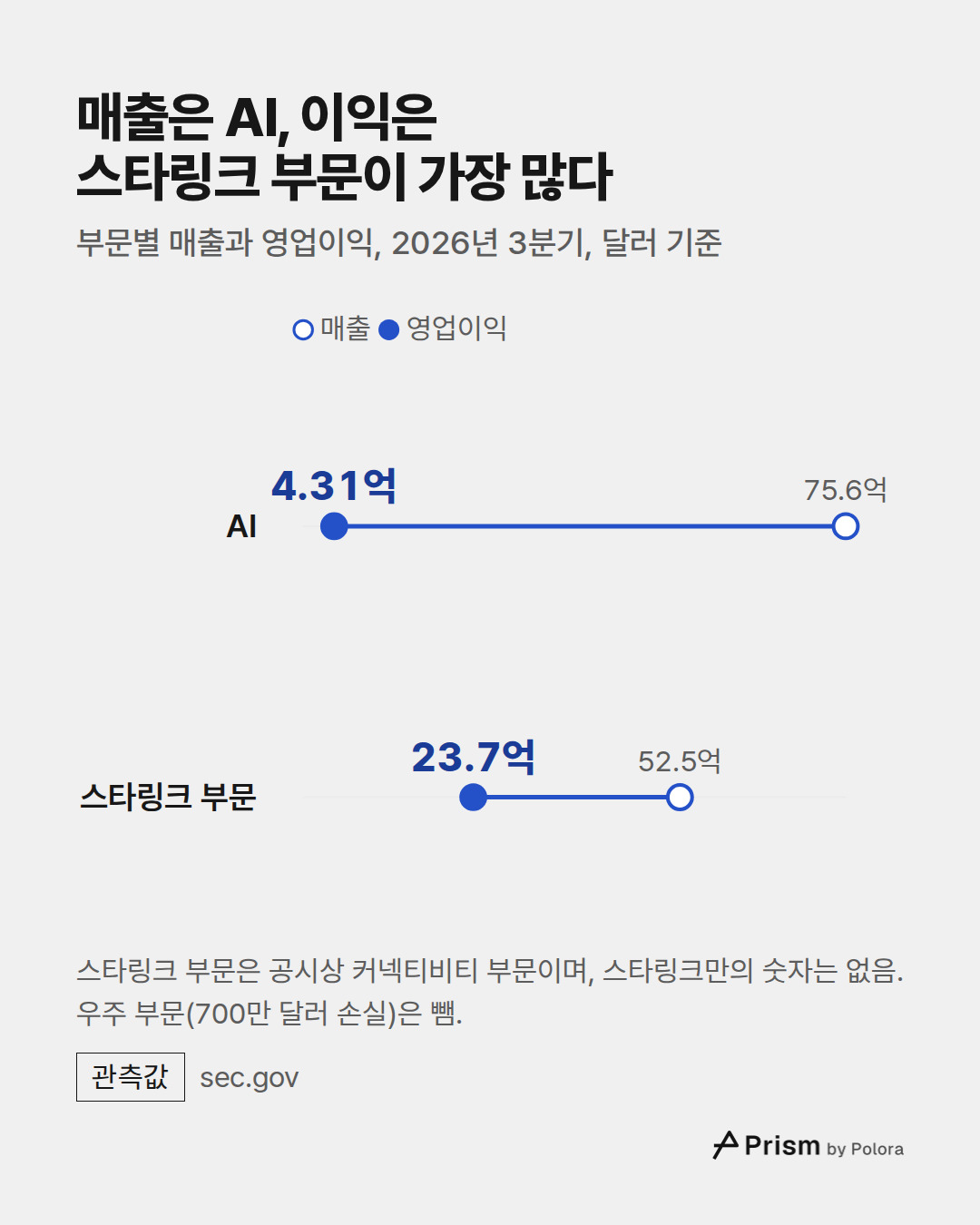
2026년 9월 30일로 끝난 석 달 동안 스페이스X의 매출은 145.8억 달러였습니다. 이 가운데 75.6억 달러를 AI 부문이 냈습니다. 회사가 이제 슈퍼 인텔리전스(Super Intelligence)라고 부르는 부문입니다. 위성 인터넷 서비스 스타링크가 속한 커넥티비티 부문은 52.5억 달러였습니다. 공시에는 스타링크만 떼어 낸 숫자가 없어서, 여기서는 두 부문을 비교합니다. 이번 분기 매출만 놓고 보면 AI 쪽이 더 큰 사업입니다.
이익을 보면 이야기가 뒤집힙니다. 영업이익은 매출에서 사업을 굴리는 데 든 비용을 치르고 남은 돈으로, 이자와 세금을 내기 전의 금액입니다. 이번 분기 스페이스X의 영업이익은 27.9억 달러였고, 그중 23.7억 달러, 약 85%를 커넥티비티 부문이 벌었습니다. AI 부문은 4.31억 달러였고, 로켓과 발사를 맡은 우주 부문은 700만 달러 손실을 냈습니다.
그러니 AI가 스타링크를 넘어섰다는 말은 절반만 맞습니다. 이번 분기에 돈을 가장 많이 벌어들인 것은 AI였지만, 이익을 가장 많이 남긴 것은 스타링크가 속한 부문이었습니다. 아래에서는 AI 매출이 어디서 오는지, 공시가 그에 대해 무엇을 말하지 않는지, 그리고 이 두 사실이 어떻게 함께 성립하는지를 차례로 풉니다.
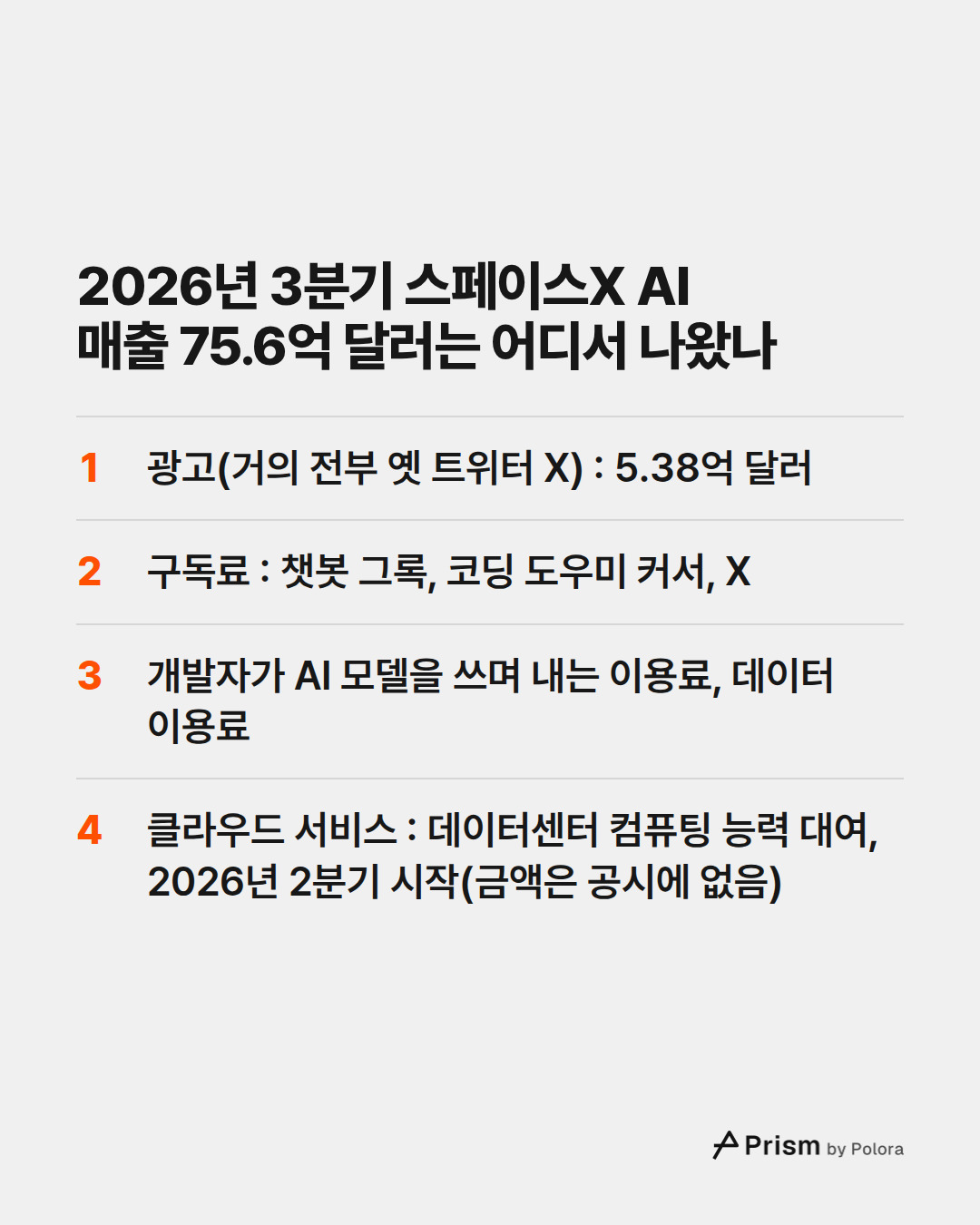
회사는 75.6억 달러를 둘로 나눕니다. 5.38억 달러는 광고로, 거의 전부 옛 트위터인 소셜 네트워크 X에서 나옵니다. 나머지 70.2억 달러는 회사가 '솔루션·인프라'라고 부르는 몫입니다. 챗봇 그록(Grok), 8월에 인수한 코딩 도우미 커서(Cursor), X의 구독료가 여기에 들어가고, 다른 개발자들이 이 회사의 AI 모델을 연결해 쓰며 내는 이용료와 데이터 이용료도 들어갑니다. 클라우드 서비스도 여기에 포함됩니다. 자사 데이터센터의 컴퓨팅 능력을 AI를 만드는 다른 회사에 빌려주는 사업입니다.
클라우드 서비스는 새 사업입니다. 스페이스X는 2026년 2분기에 이 서비스를 시작했다고 밝혔고, 부문이 성장한 주된 요인으로 새 클라우드 계약과 함께 커서 인수, AI 모델과 소프트웨어의 성장을 꼽습니다. 다만 70.2억 달러 중 클라우드 서비스가 얼마인지는 따로 밝히지 않습니다. 그래서 공시만으로는 컴퓨팅 능력을 빌려주고 받은 돈이 AI 매출의 대부분인지 알 수 없습니다.
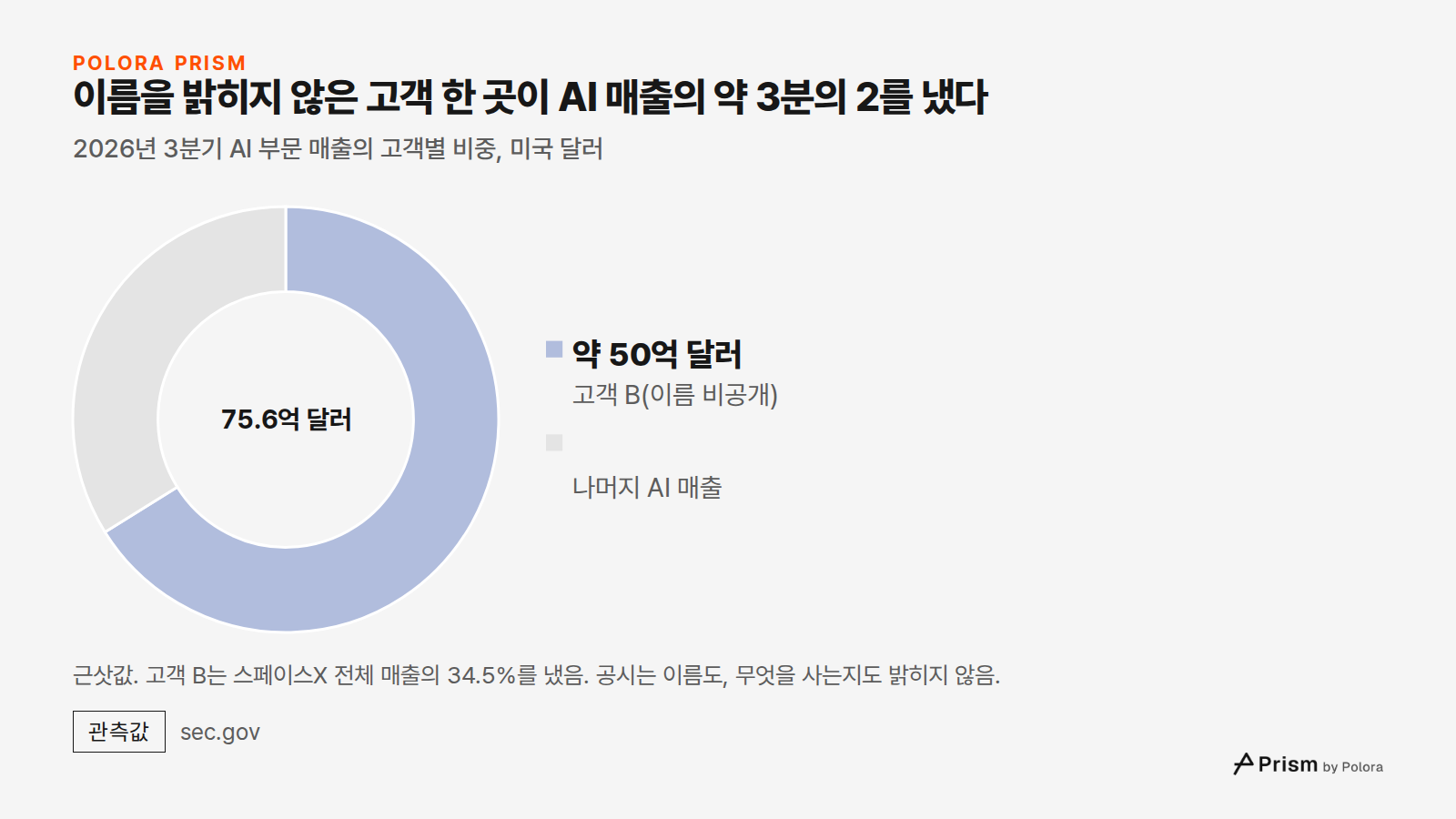
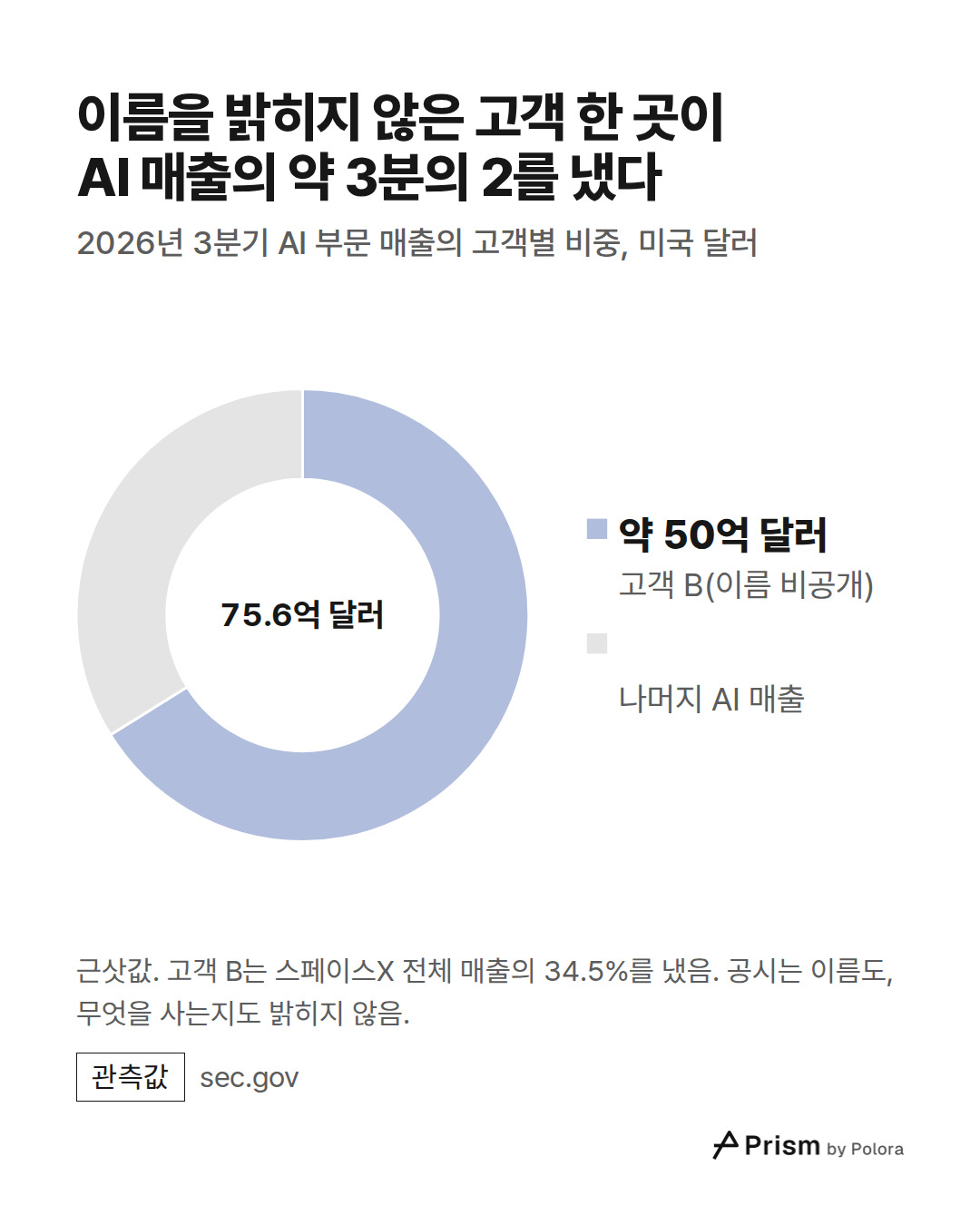
이 돈이 얼마나 한곳에 몰려 있는지 보여 주는 숫자가 있습니다. 분기 보고서에 따르면 '고객 B'라고만 적힌 고객 한 곳이 이번 분기 스페이스X 전체 매출의 34.5%를 냈고, 그 전부가 AI 부문에 잡혔습니다. 금액으로 약 50억 달러, AI 부문 매출의 대략 3분의 2입니다. 1년 전만 해도 이 고객의 몫은 전체의 10%에 못 미쳤습니다. 공시는 이 고객이 누구인지도, 무엇을 사는지도 밝히지 않습니다. 컴퓨팅 능력인지, 모델 이용권인지, 다른 무엇인지 알 수 없습니다.
공시가 설명하는 것은 클라우드 서비스를 파는 방식입니다. 매달 정해진 요금을 받고, 계약 기간은 보통 3년이며, 어느 쪽이든 90일 전에 통보하면 계약을 끝낼 수 있습니다. 다만 이것은 클라우드 계약 전반에 대한 설명입니다. 고객 B의 계약이 여기에 해당하는지는 공시에 없으니, 이 고객이 얼마나 쉽게 떠날 수 있는지도 알 수 없습니다. 공시로 알 수 있는 것은 AI 부문 매출의 약 3분의 2가, 무엇을 사는지 드러나지 않은 고객 한 곳에 기대고 있다는 사실입니다.
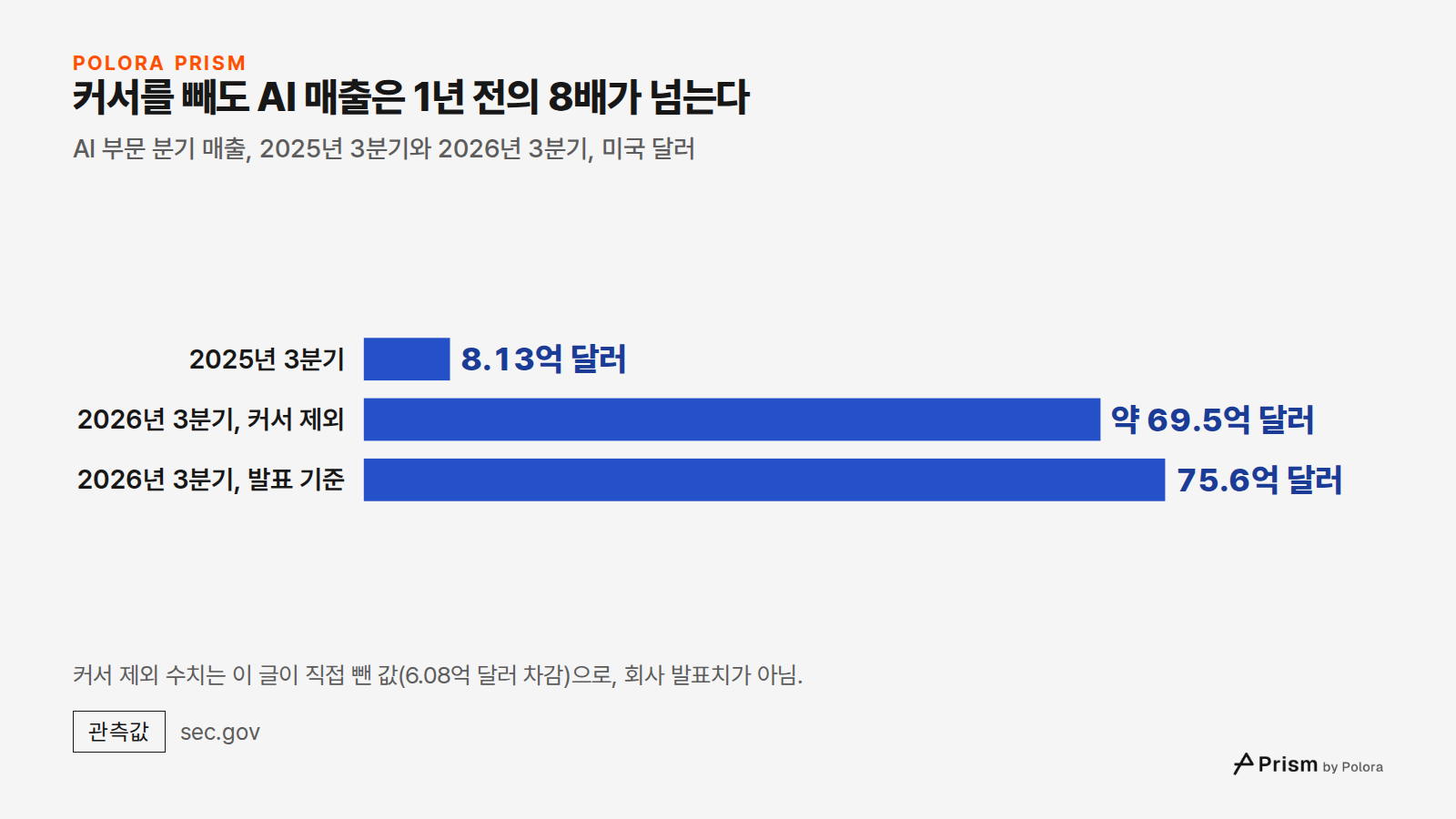
1년 전인 2025년 3분기에 같은 부문의 매출은 8.13억 달러였으니, 9배 넘게 늘어난 셈입니다. 그중 일부는 키운 것이 아니라 사 온 것이고, 어느 부분이 그런지 알아 둘 만합니다.
스페이스X는 2026년 2월 그록을 만든 AI 회사 xAI와 합병했고, xAI는 이미 X를 소유하고 있었습니다. 공시는 이 거래들을 '동일 지배 합병', 즉 양쪽 회사를 같은 사람이 지배하던 상태에서 이뤄진 합병이라고 설명합니다. 이 부문의 1년 전 숫자에는 광고 매출 4.54억 달러가 들어 있는데, X가 이미 8.13억 달러에 포함돼 있었다는 뜻으로 읽힙니다. 이 글에서 확인한 공시는 2025년 숫자를 어떻게 다시 작성했는지 밝히지 않으므로, 이 해석은 명시적인 설명이 아니라 그 숫자들에 기댄 것입니다. 이 해석대로라면 1년 사이의 급증을 이끈 것은 합병이 아닙니다.
사 온 몫은 커서입니다. 스페이스X는 2026년 8월 14일 커서 인수를 마쳤고, 이 거래에서 매겨진 기업가치는 600억 달러였습니다. 커서는 인수 후 6주 동안 6.08억 달러의 매출을 보탰습니다. 이를 빼도 AI 부문 매출은 약 69.5억 달러로, 1년 전의 8배가 넘습니다. 회사가 발표한 성장률이 아니라 단순한 뺄셈입니다. 직전 분기와 비교해도 커서를 뺀 솔루션·인프라 매출은 21.9억 달러에서 약 64.1억 달러로 3배 가까이 늘었습니다. 회사는 이 증가의 주된 요인으로 새 클라우드 계약을 꼽지만, 그 몫이 얼마인지는 밝히지 않습니다.
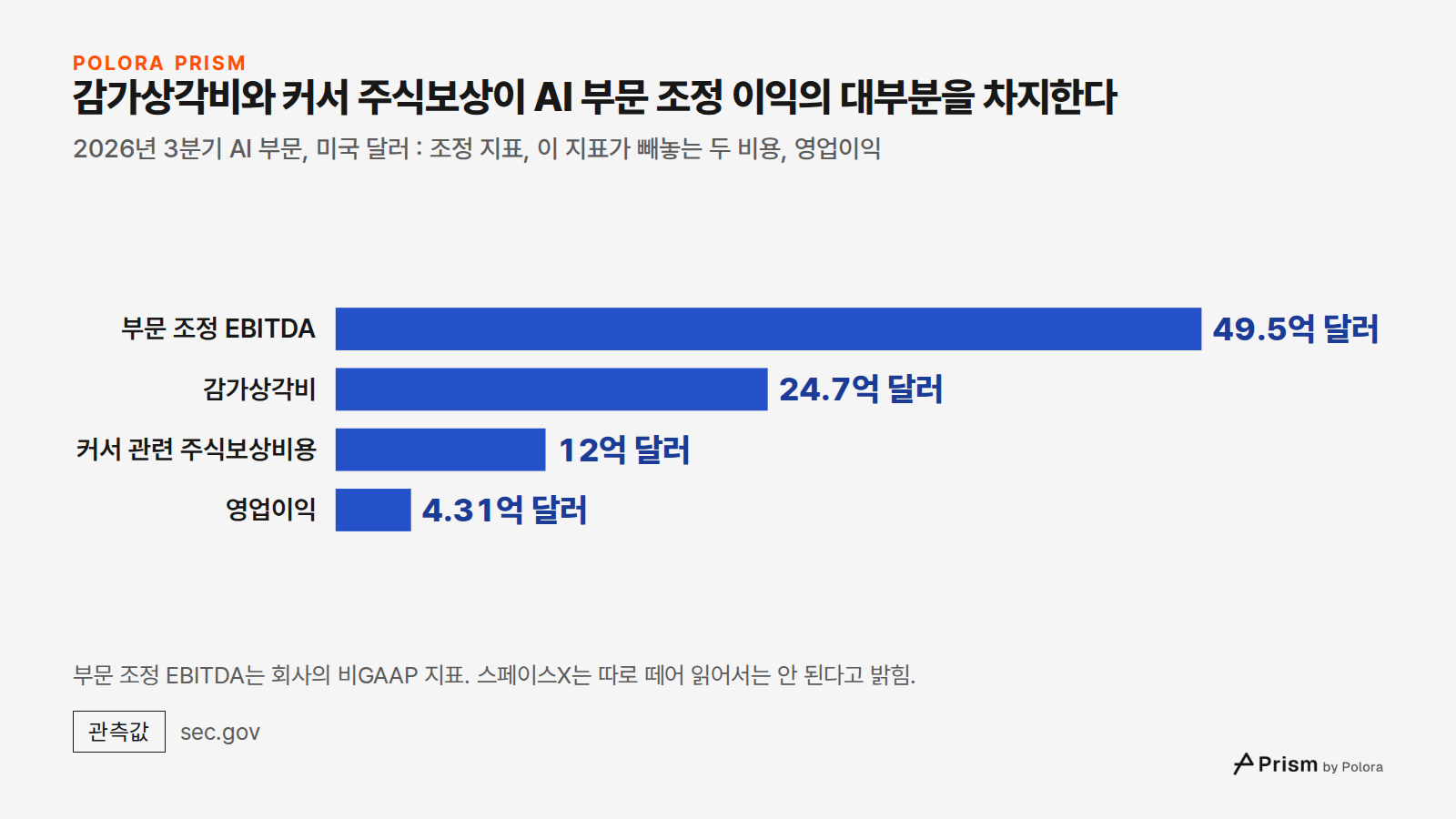
AI 부문의 영업이익 4.31억 달러는 커서 인수와 관련된 주식보상비용 12억 달러를 반영한 뒤의 숫자입니다. 회사는 이 주식 보상을 인수 이후 근무에 대한 대가로 봅니다. 사실상 커서 직원들을 붙잡아 두려고 나눠 준 스페이스X 주식의 비용입니다. 회사 밖으로 현금이 나가지는 않지만 비용은 실재합니다. 같은 회사를 더 많은 주식으로 나누게 되어, 기존 주식 한 주의 몫이 줄어들기 때문입니다.
비용이 무거운 또 다른 이유는 장비가 닳는다는 데 있습니다. AI 부문은 이번 분기 감가상각비 24.7억 달러를 잡았습니다. 컴퓨터와 데이터센터가 쓰이면서 줄어드는 가치를 회계상 비용으로 반영한 금액입니다.
스페이스X는 '부문 조정 EBITDA'라는 지표도 냅니다. 감가상각비, 주식보상비용과 몇 가지 다른 비용을 반영하지 않은 이익입니다. 이 기준으로 AI 부문은 49.5억 달러를 벌었습니다. 회사는 공시에서 이를 비GAAP 지표, 즉 표준 회계 기준이 정의하지 않는 지표라고 부르며, 따로 떼어 읽어서는 안 된다고 적고 있습니다. 4.31억 달러와 49.5억 달러의 차이는 대부분 이 지표가 빼놓는 비용입니다.
스타링크가 속한 부문에는 이런 간극이 없습니다. 커넥티비티 매출은 1년 전보다 69% 늘었고, 영업이익은 두 배 가까이 늘어 23.7억 달러가 됐습니다. 이번 분기 스페이스X의 이익을 떠받친 것은 이 부문이었습니다.
2026년 3분기 AI 부문, 미국 달러 : 조정 지표, 이 지표가 빼놓는 두 비용, 영업이익
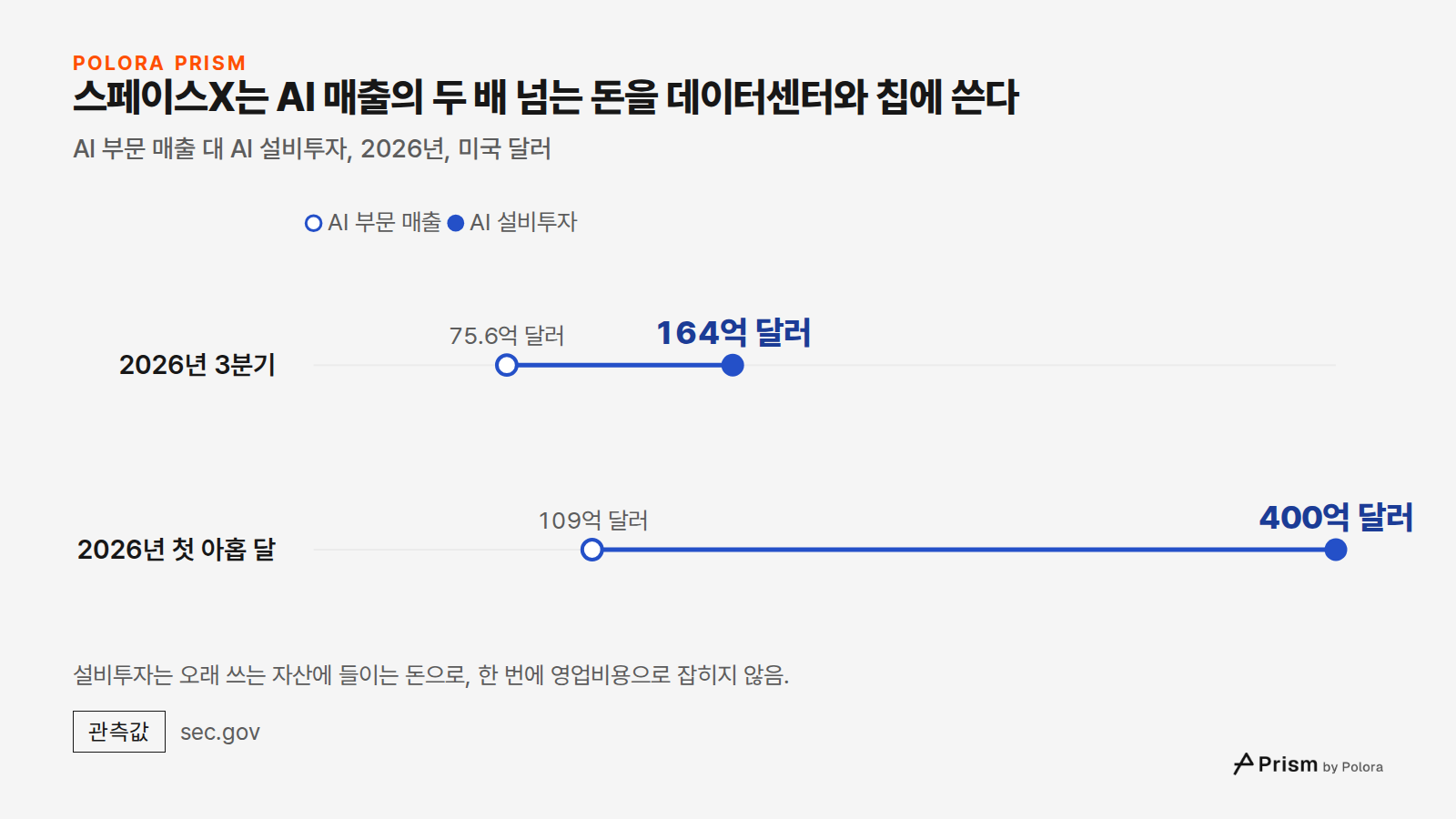
설비투자는 건물, 칩, 기계처럼 오래 쓰는 자산에 들이는 돈으로, 한 번에 영업비용으로 잡히지 않습니다. 스페이스X는 이번 분기 설비투자에 196억 달러를 썼고, 그중 164억 달러가 AI 부문에 들어갔습니다. 같은 석 달 동안 이 부문이 벌어들인 75.6억 달러의 두 배가 넘습니다. 커넥티비티 부문은 15억 달러를 썼습니다.
2026년 첫 아홉 달로 넓혀 보면 AI 설비투자는 400억 달러, 같은 기간 AI 부문 매출은 109억 달러였습니다.
세 숫자는 각기 다른 물음에 답합니다. 매출은 지금 누가 돈을 내는지를 보여 주고, AI 매출의 약 3분의 2는 무엇을 사는지 공시가 설명하지 않는 고객 한 곳에서 나옵니다. 영업이익은 운영비를 치르고 무엇이 남는지를 보여 주고, 그 대부분은 스타링크가 속한 부문에서 나옵니다. 설비투자는 돈이 어디로 가는지를 보여 줍니다. 대부분은 데이터센터로, 그 비용을 갚아 줄 매출이 들어오기도 전에 먼저 나가고 있습니다.
이 숫자들은 석 달의 모습이고, 성장의 상당 부분을 이끈 클라우드 사업은 시작한 지 여섯 달쯤 됐습니다. 이 숫자들로는 큰 고객이 계속 이 규모로 사 줄지, 무엇을 사고 있는지, 새 계약이 그 자리를 대신할지 아니면 더해질지, 지금 짓고 있는 컴퓨팅 능력이 쓰일 곳을 찾을지 알 수 없습니다.
조심해서 읽어야 할 숫자도 하나 있습니다. 스페이스X가 발표한 순이익은 44억 달러로 영업이익 27.9억 달러보다 많습니다. 그 차이는 3.9억 달러의 세금 혜택을 비롯해 본업 바깥의 항목에서 나왔습니다. 이 글이 부문을 비교할 때 영업이익을 쓴 것도 그래서입니다.
이 글은 스페이스X의 한 분기 공시가 보여 주는 것을 설명할 뿐, 스페이스X 주식이나 주가에 대한 견해가 아닙니다. 이 숫자들만으로는 앞으로 무슨 일이 일어날지 알 수 없습니다.
SpaceX now earns more from AI than from Starlink, so where does that money actually come from?
Alpha · deepseek-v4-pro
Short answer: the AI revenue is mostly rented computing power, and in Q3 2026 it was dangerously concentrated in one unnamed customer.
If the Q3 2026 figures in the filing excerpts are right, SpaceX’s AI segment — now called Super Intelligence — did $7.56 billion of revenue. That breaks into two pieces:
- $538 million of advertising, nearly all on X.
- $7.02 billion of “solutions and infrastructure.” That covers Grok, Cursor and X subscriptions, API/data fees, and — the big new piece — cloud services: renting out data-centre compute to other AI developers.
The cloud part is new. It only began in Q2 2026, and the filing claims it is responsible for most of this year’s growth. So the headline is not really “AI passed Starlink because of chatbots”; it is “SpaceX became a compute landlord.”
The concentration is the most important line. One customer — only ever identified as Customer B — paid 34.5% of all SpaceX revenue for the quarter, and all of that sat inside the AI segment. That works out to about $5.0 billion, or roughly two-thirds of the whole AI segment. A year earlier the same customer was below 10% of total revenue.
So where does the money…
Beta · gpt-6-sol
I checked the Q3 earnings release and 10-Q. The headline holds for revenue in this quarter, but Alpha’s answer goes further than the disclosures allow.
SpaceX reported $7.56 billion in Super Intelligence (SI) revenue, versus $5.25 billion for *Connectivity*, the segment containing Starlink. Of SI revenue, $538 million was advertising and $7.02 billion was “solutions and infrastructure”: a combined category for subscriptions, data licensing, model access and cloud services. SpaceX says its new cloud services were a *primary driver of the increase*, but it does not report a separate cloud-revenue figure. (sec.gov)
The striking disclosure is Customer B: it accounted for 34.5% of SpaceX’s $14.575 billion total revenue, entirely within SI. That calculates to about $5.03 billion—66.5% of SI revenue. But the filing does not say what Customer B bought. We cannot t…
Gamma · gemini-3.1-pro
Beta has correctly identified the most significant leap of logic in the manuscript, and I strongly agree with their assessment: the manuscript conflates general segment disclosures with the specific terms of Customer B.
Here is my review of the claims and what needs to change before publication:
1. The Customer B Assumption (Needs Revision)
The manuscript states: *"Mostly from renting computing power to other AI companies, and one unnamed customer paid about two-thirds of it... Much of the AI segment's revenue therefore depends on one customer that can leave with about three months' notice."*
As Beta noted, the 10-Q states that Customer B makes up 34.5% of total consolidated revenue and sits entirely within the Super Intelligence (SI) segment. However, the filing *does not* state that Customer B is purchasing cloud services, nor does it state that Customer B is on the standard 90-day termination contract. The manuscript is combining three separate disclosures (Customer B's concentration, the launch of cloud services, and general cloud contract terms) into one definitive claim. The editor must revise this to state simply that a single SI customer accounts for two-thirds o…
Researcher · gpt-6-luna
Verification against the SEC filings and release: Beta is right to flag the key overreach in Alpha’s answer. The filings support saying that one unnamed customer accounted for a very large share of the SI segment’s revenue; they do not identify what that customer bought. So the customer cannot be described as the buyer of two-thirds of the rented compute—or as being on a 90-day cancellation term.
- Customer concentration: SpaceX’s 10-Q says Customer B supplied 34.5% of consolidated Q3 revenue and that its revenue was in the SI segment. At $14.575 billion in total revenue, that is about $5.03 billion, or 66.5% of SI’s $7.56 billion. The filing says Customer B was below 10% in Q3 2025. These dollar and percentage conversions are calculations from the filing, not figures it states directly. SEC 10-Q, concentration disclosure (sec.gov)
- What the customer bought and its contract: The 10-Q describes cloud-service fees and typical contract terms, including three-year terms terminable by…
The Arbiter · gpt-6-sol
Round mediation — what has been established, and what remains open
The voices agree on the central comparison: in Q3 2026, SpaceX reported $7.56 billion of Super Intelligence (SI) revenue, more than the $5.25 billion of Connectivity revenue from the segment containing Starlink. Connectivity, however, supplied about 85% of company operating income. This is a comparison of reported *segments* in one quarter, not a separately disclosed Starlink-only revenue figure. (sec.gov)
The consequential disagreement is about who paid for what. Alpha describes the money as mostly rented compute from one buyer. Beta and the Researcher draw a narrower line: the filings say cloud services helped drive growth, and they say Customer B supplied 34.5% of company revenue, entirely within SI—about $5.03 billion, or 66.5% of SI revenue. They do not say what Customer B bought or disclose a separate cloud-revenue total. The filing’s typical 90-day termination provision applies to cloud-service contracts generally; it does not establish Customer B’s terms. Those distinctions matter for the man…
The Arbiter's Final Verdict · gpt-6-sol
Verdict
The premise holds for reported revenue in Q3 2026, with one qualification: SpaceX reported $7.56 billion from its Super Intelligence (SI) segment, versus $5.25 billion from *Connectivity*, the segment that contains Starlink. The filings do not give a Starlink-only figure for this comparison. This is one quarter, not an established trend. Earnings release
Where did the AI money come from? SpaceX reported $538 million in advertising and $7.02 billion in “solutions and infrastructure”—a broad category covering cloud computing alongside subscriptions, model access, data and other services. The company identifies new cloud agreements as an important driver of growth, but does not disclose how much of the $7.02 billion was rented compute. Earnings release · 10-Q
The clearest answer about *who* paid is also the biggest limit on what we know. An unnamed Customer…