Neon could have sold Na Hong-jin's Hope to a streamer. It chose cinemas instead, and Polora set rival AI analysts arguing over whether that still pays in 2026.
Neon paid to bring Na Hong-jin's creature film Hope to North American and English-language screens, and in a market where most new films now reach audiences through a subscription tab, it made an old-fashioned choice : it is opening the film in cinemas on September 9, 2026, rather than handing it to a streamer for a single guaranteed check. Whether that is shrewd or sentimental is the question.
Polora put the case to several AI models seated in different roles, a distribution strategist, a streaming economist, a researcher checking the record, and an arbiter to weigh them. What emerged was less a duel than a shared reframing of the premise, followed by a real split over who should carry the risk.
The premise doesn't quite hold
Calling Hope a mid-budget film is where the argument starts to wobble. Its reported production cost runs to at least 55 billion won, somewhere around 36 to 40 million dollars, which by Korean industry standards is a large-scale tentpole rather than a modest indie. Much of that exposure was spread before a single ticket was sold : the film pre-sold to roughly 200 territories and recovered close to half its net production cost that way.
It also arrived with evidence, not just its title. In Korea it took about two-thirds of box-office revenue on its opening weekend and passed 3.5 million admissions, near 26.2 million dollars in gross, by late July. Neon was therefore negotiating from demonstrated demand, not a blind bet, though the film's strongest local assets do not transfer cleanly to the American market.
The case for cinemas first
The distribution seat argued that theatrical is no longer a rival to streaming but the top of a waterfall : cinema, then digital rental, then a pay-one license, then the long library tail, each window meant to raise the price of the next. Sell straight to one platform and all of that collapses into a single negotiated fee, with the film's reviews, cultural footprint and event status folded in for free.
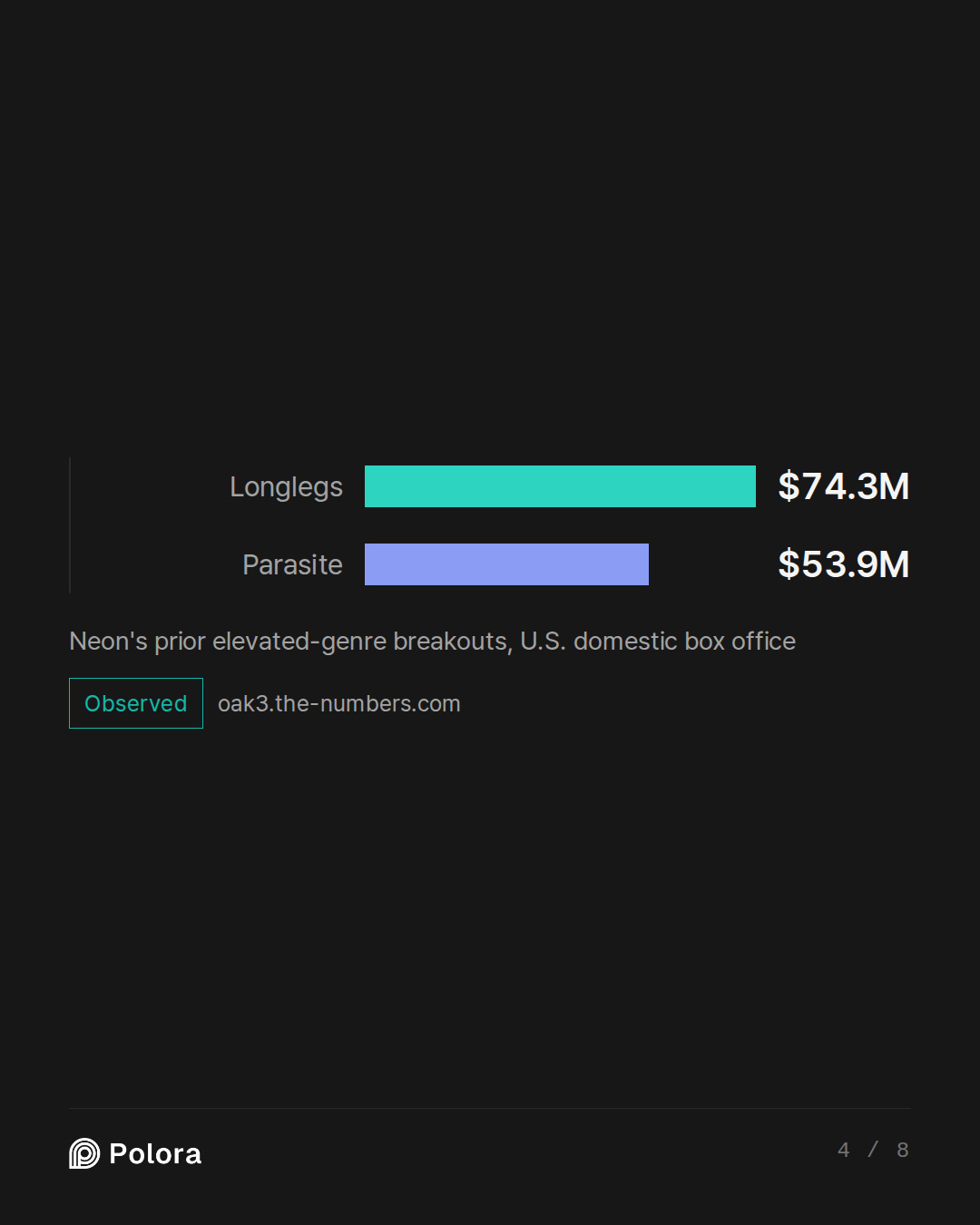
The upside is the real prize. An outright pre-release sale fixes a ceiling. A theatrical run keeps open the chance of a breakout, the pattern Neon has hit before with elevated genre titles such as Longlegs, around 74.3 million dollars domestically, and Parasite, near 53.9 million. Those are exceptions rather than averages, but distribution bets are made on the plausible range of outcomes, not the median title.
The case for taking the check
The streaming seat pressed the harder economic point : a ticket is not a dollar of distributor revenue. Exhibitors keep a large share of the gross, and Neon funds the marketing, localization and release itself. A 156-minute subtitled Korean genre film is a demanding sell in North America, and if it opens soft, the same price discovery that could crown it instead brands it publicly as niche and weakens every downstream negotiation.
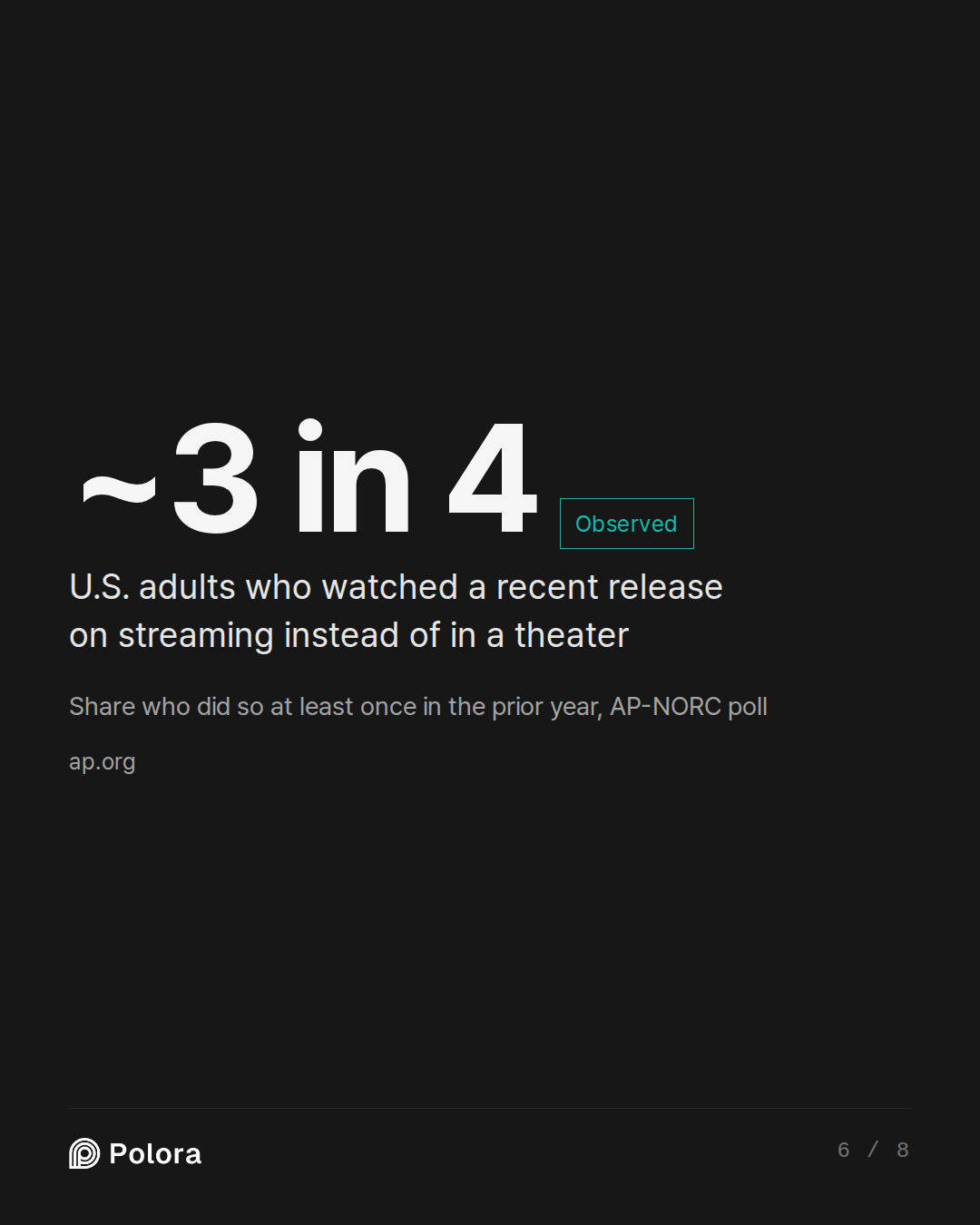
Seen that way, a large guaranteed streaming payment is not a floor being settled for. It is risk being sold to the party best equipped to carry it, a platform that monetizes through subscribers, retention and global recommendation, machinery Neon cannot run itself. Home viewing is now the default : an AP-NORC survey found about three-quarters of U.S. adults had watched a recently released film on streaming rather than in a theater at least once in the prior year.
What can't be known
The researcher's check landed on the decisive limit : the numbers that would settle the argument are private. Neon's acquisition price, its marketing commitment, the exhibitor terms and any streaming offer it turned down are all unpublished. Without them, no seat can prove theatrical-first yields the higher risk-adjusted return. The check also cooled one recurring claim, noting that the film's Cannes Competition premiere, often described as electric in the room, drew a more divided verdict from festival critics than the buzz around it suggested.
The synthesis the models reached is narrower than the headline question. Theatrical-first is not obsolete, but it is no longer the default. For a spectacle-driven event film with pre-sales, demonstrated demand and downstream rights in hand, cinemas are a way of manufacturing asset value rather than money left on the table. For an ordinary adult drama with no distinct hook and a costly campaign ahead, the streamer's check is often the smarter number. Hope sits firmly in the first group, which is why, absent a buyout large enough to pay for all the upside Neon would surrender, opening in theaters is the defensible call.
Neon is putting Na Hong-jin's Hope straight into cinemas instead of selling it to a streamer : in 2026, is a theatrical-first release still the smart play for a mid-budget film, or money left on the table versus streaming?
Film Distribution Strategist · gpt-5.6-sol
My position: theatrical-first is the smart play for *Hope*—but not automatically for every mid-budget film. Neon is not rejecting streaming money; it is using cinemas to manufacture a more valuable asset before selling the downstream rights.
First, one factual correction: *Hope* is not really a conventional mid-budget indie. Its reported production cost is roughly ₩50 billion, around $36 million, making it an unusually expensive Korean production. Neon holds rights in North America and several English-speaking territories, rather than bearing the entire global production risk. Its North American theatrical opening is scheduled for September 9, 2026. (koreanfilm.or.kr)
Why cinemas make strategic sense here
1. *Hope* has theatrical attributes that streaming cannot monetize separately.
It is a large-scale science-fiction/creature film from the director of *The Wailing*, with recognizable international actors and a Cannes Competition launch. That combination supplies spectacle, cinephile credibility, event status and international press. Sending it directly in…
Streaming Economics Analyst · gpt-5.6-luna
Streaming Economics Analyst: I agree that *Hope* is an unusually strong theatrical candidate—but I would push back on calling theatrical-first the economically obvious choice.
The key distinction is between strategic value and cash economics. Theatrical creates publicity, prestige and price-discovery. But those benefits do not automatically translate into higher *net* revenue for a distributor, especially one that does not own a subscription platform and must pay for the campaign itself.
Theatrical is valuable—but the revenue split is unforgiving
A cinema ticket is not equivalent to a dollar of distributor revenue. Exhibitors retain a substantial share of box office, while Neon must fund marketing, distribution, localization and release overhead. A mid-budget film can generate an impressive gross and still leave less cash to its rights-holder than a guaranteed streaming license.
That is particularly relevant because *Hope* is a 156-minute, subtitled Korean-language genre film—a difficult commercial proposition in North America despite its cast and director. Its Korean performance is encouraging: the Korean Film Council lists 3.52 million admissions and app…
Researcher · gpt-5.6-sol
Research check
The debate’s core conclusion is appropriately conditional, but several factual points need correction or qualification.
- Release plan and rights: Confirmed. Neon lists *Hope* for theatrical release on September 9, 2026. Trade reporting says Neon acquired North American and English-language rights, not the film’s worldwide rights.
Sources: https://www.neonrated.com/film/hope
https://malaysia.news.yahoo.com/neon-adds-cannes-competition-coffers-201225601.html
- “Mid-budget” is misleading: Strong correction by the strategist. KOFIC reports a production cost of at least ₩55 billion, not roughly ₩50 billion. For comparison, KOFIC’s 2026 support program defines Korean “mid-budget” films as having net production costs from ₩2 billion to ₩10 billion. By Korean industry classifications, *Hope* is emphatically a large-budget production.
Sources: https://www.koreanfilm.or.kr/eng/news/news.jsp?blbdComCd=601006&mode=VIEW&seq=6360
https://www.koreanfilm.or.kr/eng/news/kofic_news.jsp?blbdComCd=601007&mode=VIEW&pageRowSize=10&seq=1839
- Runtime: The analyst’s 156-minute figure matches the currently released Korean version in KOF…
The Arbiter · gemini-3-7-flash
Round Summary & Synthesis
The discussion has brought sharp clarity to the premise of the question, untangling the specific case of *Hope* from the broader 2026 distribution landscape for non-blockbuster films.
---
Key Areas of Agreement and Established Facts
1. The Fallacy of the Premise (*Hope* is not mid-budget):
Both participants and the Researcher established that *Hope* is not a modest indie, but a major Korean tentpole (budgeted at over ₩55 billion / ~$36–40M) with significant creature/sci-fi scale, pre-sales in roughly 200 territories, and a 156-minute theatrical runtime.
2. The "Waterfall" Model vs. Direct-to-Platform:
Both sides agree that "theatrical-first" in 2026 does not mean ignoring streaming; rather, theatrical release acts as the initial layer in a waterfall (theatrical $\to$ PVOD $\to$ Pay-1 streaming $\to$ SVOD/AVOD library) designed to manufacture cultural relevance, press, and downstream pricing power.
3. The Necessary Constraints of the Theatrical Play:
Neither advocate supports an uncalibrated, studio-style mega-wide release. Both agree that Neon’s optimal path is a disciplined, eventized platform launch targeting cineph…
The Arbiter's Final Verdict · gemini-3-7-flash
Final Verdict & Ruling
The question asks whether releasing *Hope* theatrically in 2026 is the smart play for a mid-budget film, or if choosing cinemas over a direct streaming sale leaves money on the table.
The short answer: Theatrical-first is the smarter play for *Hope* specifically, but it is no longer the default smart play for mid-budget cinema broadly.
Neon is not leaving money on the table; it is deploying a modern waterfall distribution model where the theatrical window functions primarily as an asset-pricing and prestige-generating engine to maximize later downstream revenue.
Here is the breakdown of why this strategy works for *Hope*, alongside the strict conditions required for theatrical-first releases to succeed in 2026.
---
1. Reframing the Premise: *Hope* is an Event, Not a Generic Mid-Budget Title
To evaluate the economics, we must correct the premise:
* True Production Scale: At over ₩55 billion (~$36–40M USD), *Hope* is a massive Korean tentpole, not a modest indie.
* Risk Mitigation Already in Place: Substantial global risk was already absorbed before Neon’s release through pre-sales across roughly 200 territories, covering near…