The pharmacist reads your price off a screen
You hand over the same prescription you filled last month, and this time it costs several times more. Or a colleague on a different plan pays far less for the same pill. Ask at the counter and the answer is usually the same : that is what your plan says.
For an insured prescription, that answer is close to literal. When a pharmacy submits the prescription, it goes electronically to a company working for your health plan. What comes back tells the pharmacist how much the pharmacy will be paid and how much you owe. The pharmacy reads that number. It does not choose it. If you pay cash without insurance, it works differently : the pharmacy's own cash price, or a discount arrangement, is what matters. For everyone else, who does decide?
Four parties stand behind one price at the counter
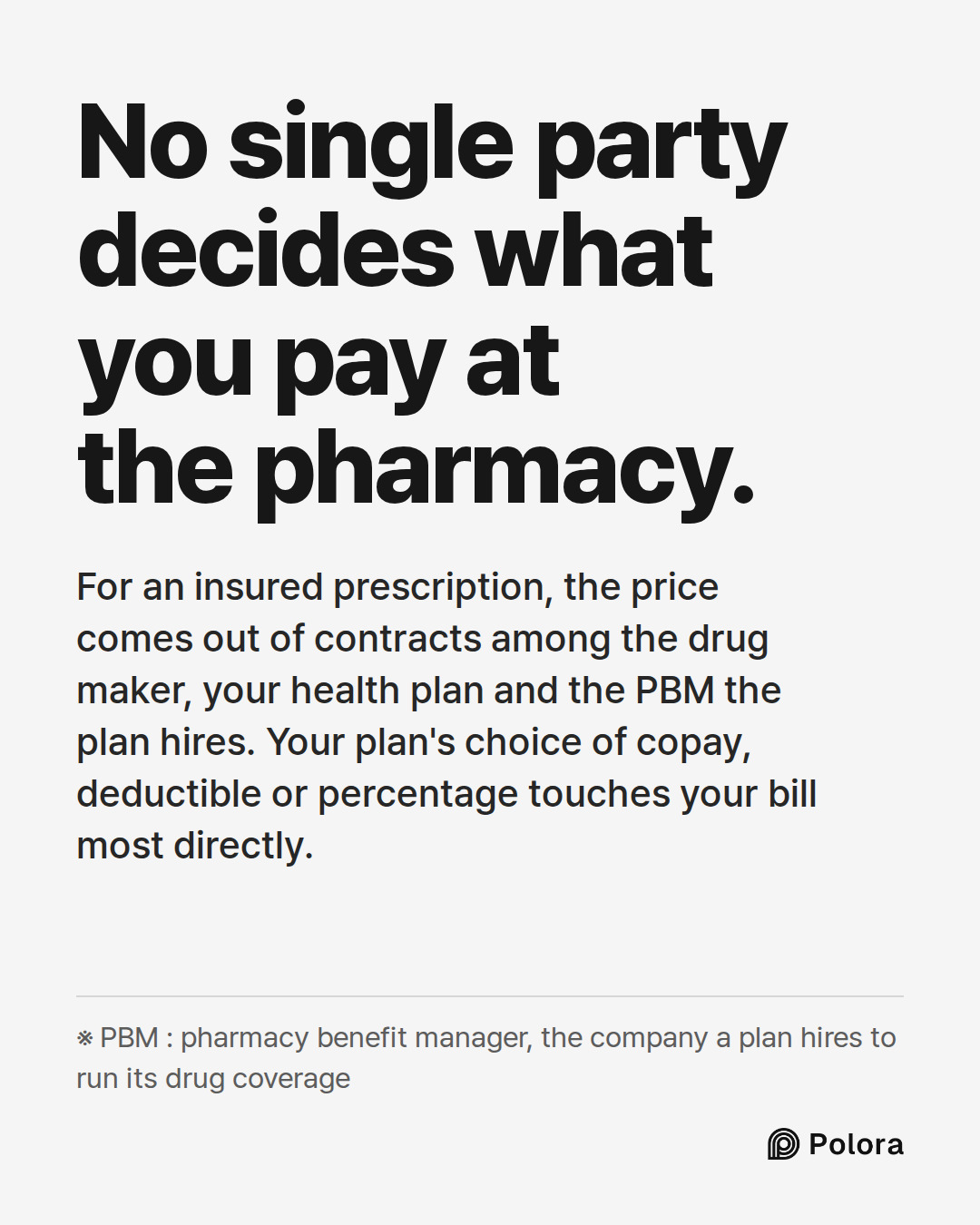
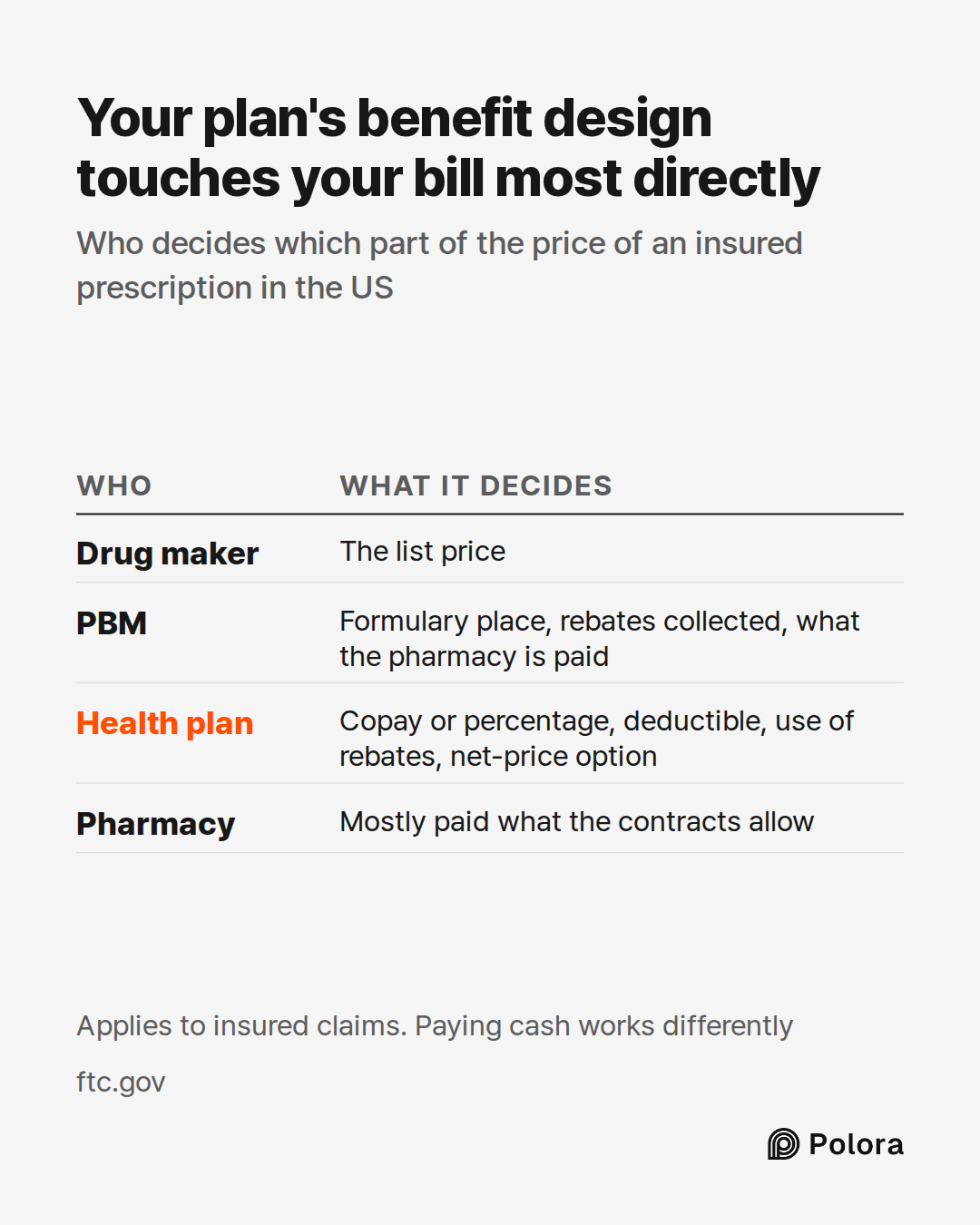
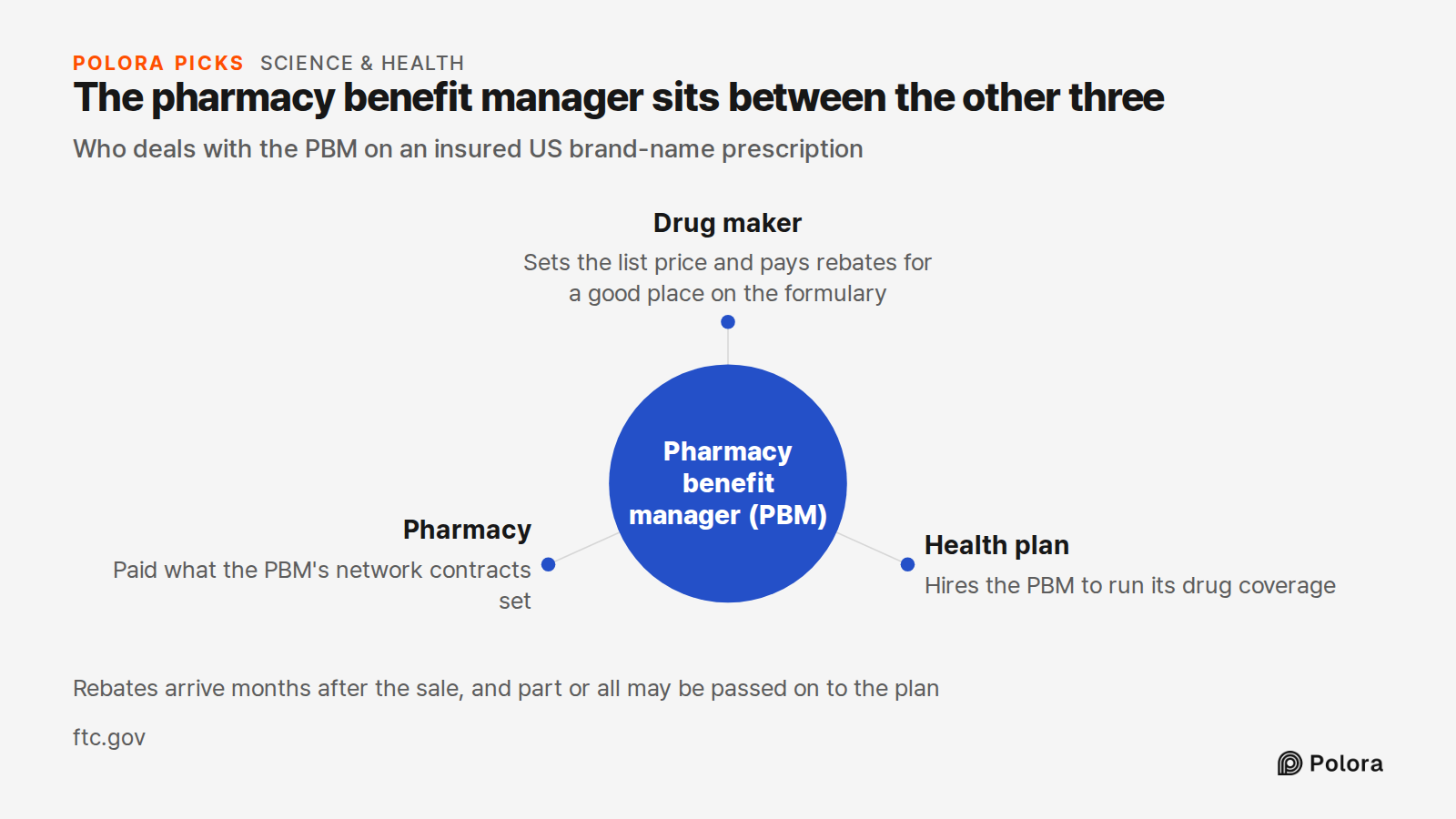
For a brand-name drug in the United States, the number comes out of a chain of contracts. The drug maker sets a list price, which is the published price before any discount. Your health plan, often run by your employer, decides the terms of your coverage : whether you pay a flat copay or a percentage, how large your deductible is, and which drugs sit on which tier. The plan hires a pharmacy benefit manager, or PBM, to run its drug coverage. The PBM manages the plan's formulary, the list of drugs the plan covers and on what terms.
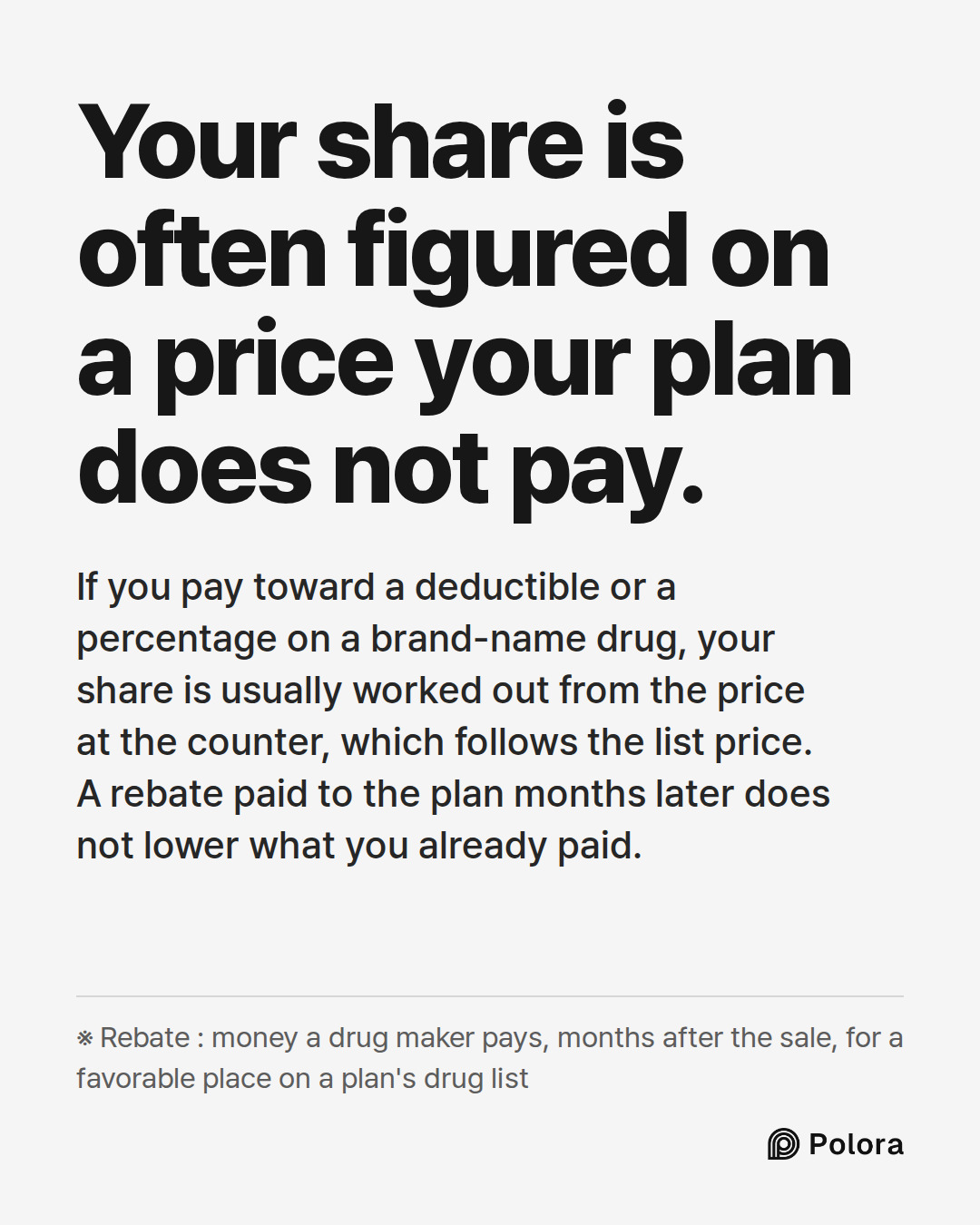
Drug makers pay PBMs rebates in exchange for a favorable place on that list, the Federal Trade Commission's staff wrote in a 2024 report. The rebate arrives months after the sale, and part or all of it may be passed on to the plan, a 2024 federal report to Congress explains. The PBM also signs the contracts that set what each pharmacy in its network is paid.
So the plan's real cost for a drug, after rebates, is often substantially less than the price rung up at the counter. That later, lower number usually never appears on your receipt.
Your share is often figured on a price your plan does not pay
Here is the part most people would get wrong. If you pay a flat copay, a fixed amount per prescription, the list price matters little to you. But you may still be paying toward your deductible, or you may owe a percentage of the price, which is called coinsurance. Then your share is usually worked out from the pharmacy's price at the counter. That price is not exactly the list price, but it follows it, and a rebate paid to the plan months later does not lower what you already paid. The FTC staff report puts it directly : the net prices of drugs to payers, such as health plans, are often substantially less than the point-of-sale prices that determine patient cost sharing and deductibles.
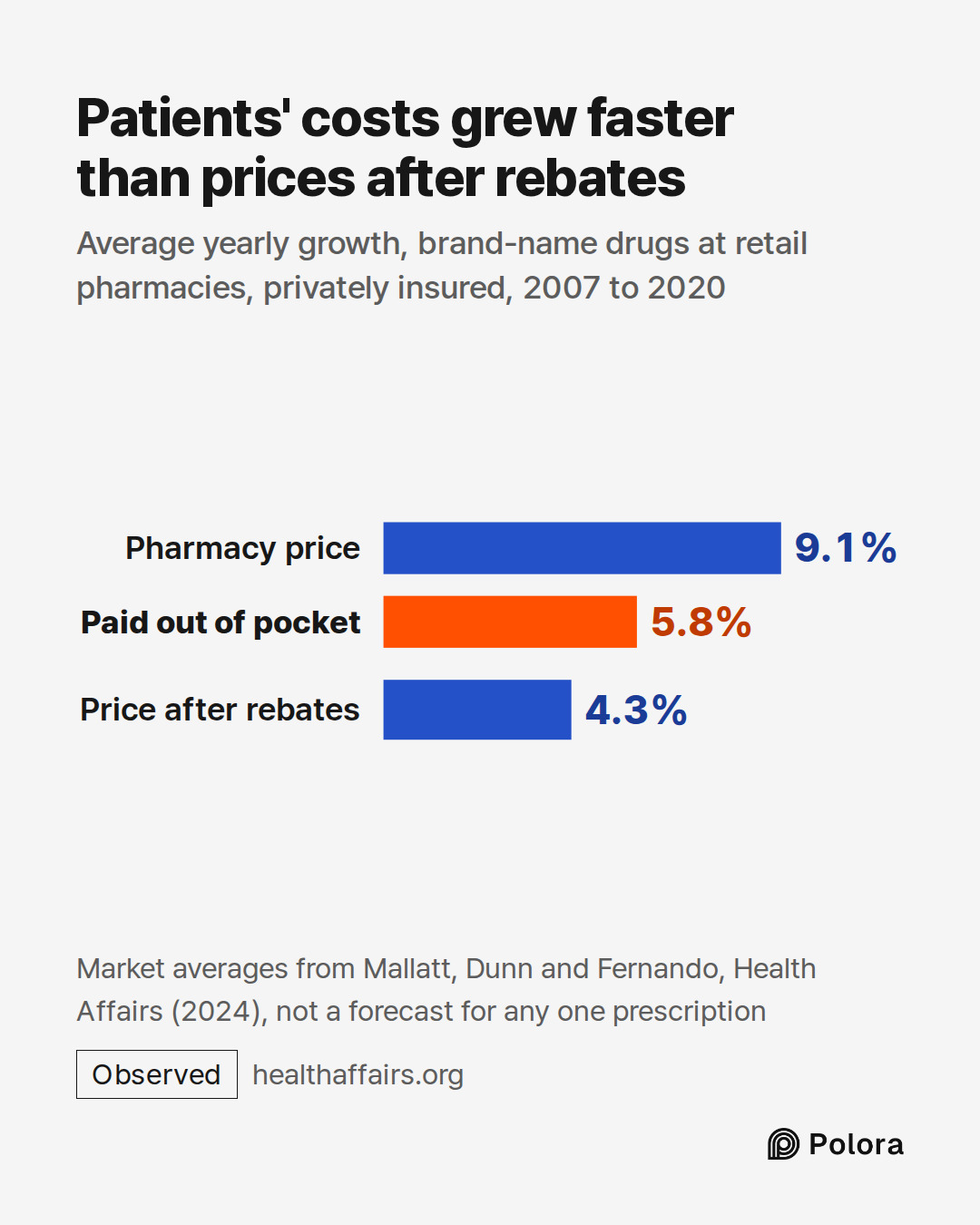
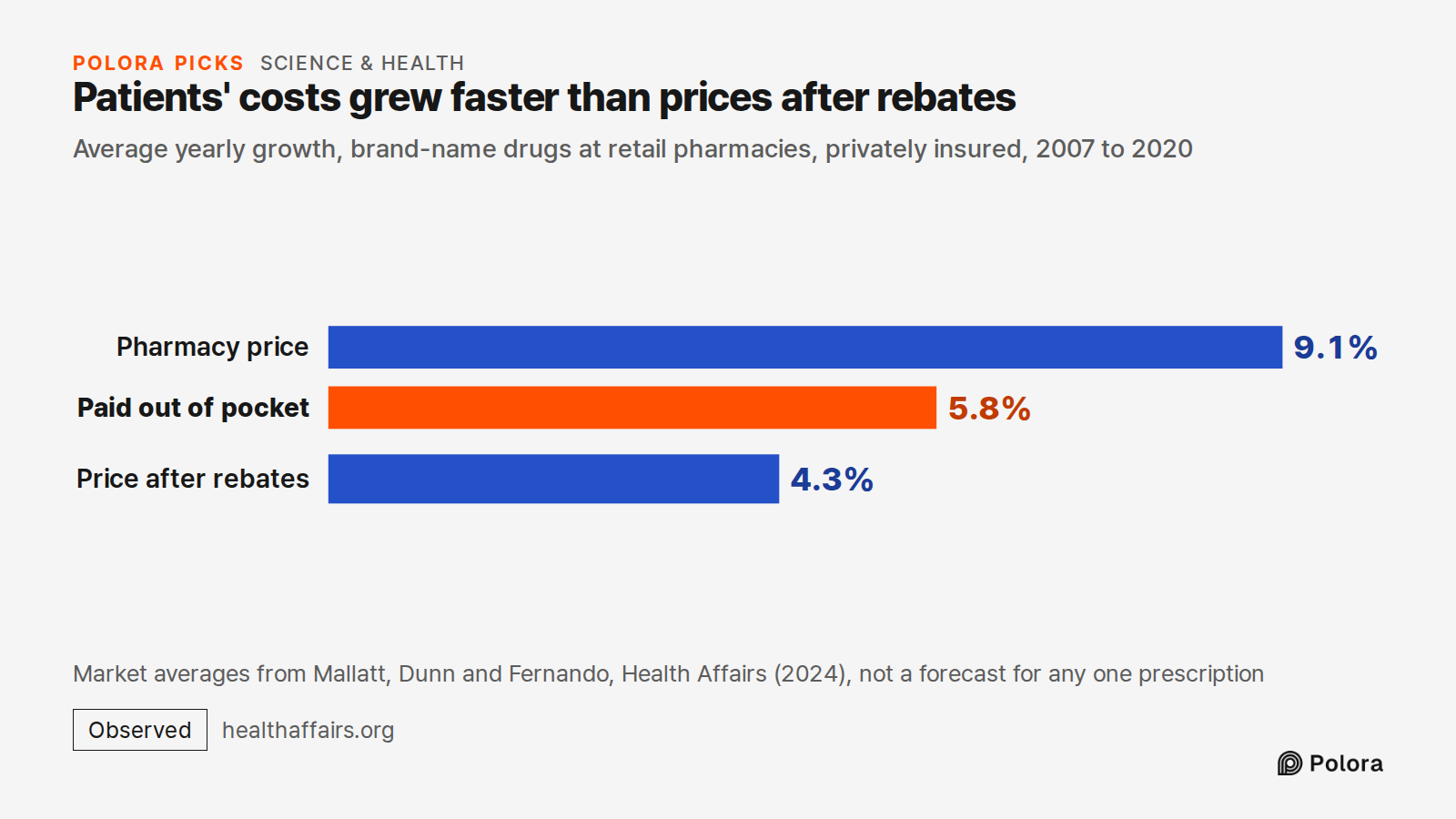
Over time, that gap shows up in what patients pay. Economists Justine Mallatt, Abe Dunn and Lasanthi Fernando studied brand-name drugs bought at retail pharmacies by privately insured people from 2007 to 2020. In Health Affairs (2024) they found that pharmacy prices grew 9.1 percent a year, prices after rebates grew 4.3 percent, and what patients paid out of pocket grew 5.8 percent. These are averages across the market, not a forecast for any one prescription. As the federal report to Congress sums up their finding, much of that growth came from deductible and coinsurance payments, which are largely set on prices tied to the list price.
- FTC, Pharmacy Benefit Managers : The Powerful Middlemen Inflating Drug Costs and Squeezing Main Street Pharmacies (interim staff report, 2024)
- US Departments of Labor, Health and Human Services and Treasury, 2024 Report to Congress on prescription drug and health care spending
- US Department of Labor, Prescription Drug Prices, Rebates, and Insurance Premiums (2024 appendix)
- Mallatt, Dunn and Fernando, Health Affairs (2024)
Rebates hold down premiums and raise some bills at the counter
Plans don't simply pocket rebates. They can use them to hold down premiums, the regular cost of coverage that everyone in the plan pays, though how much of any rebate reaches a given plan's premium varies and is rarely known. The cost of that choice falls on people who fill high-rebate drugs while paying a deductible or a percentage, because their share is still cut from the higher price.
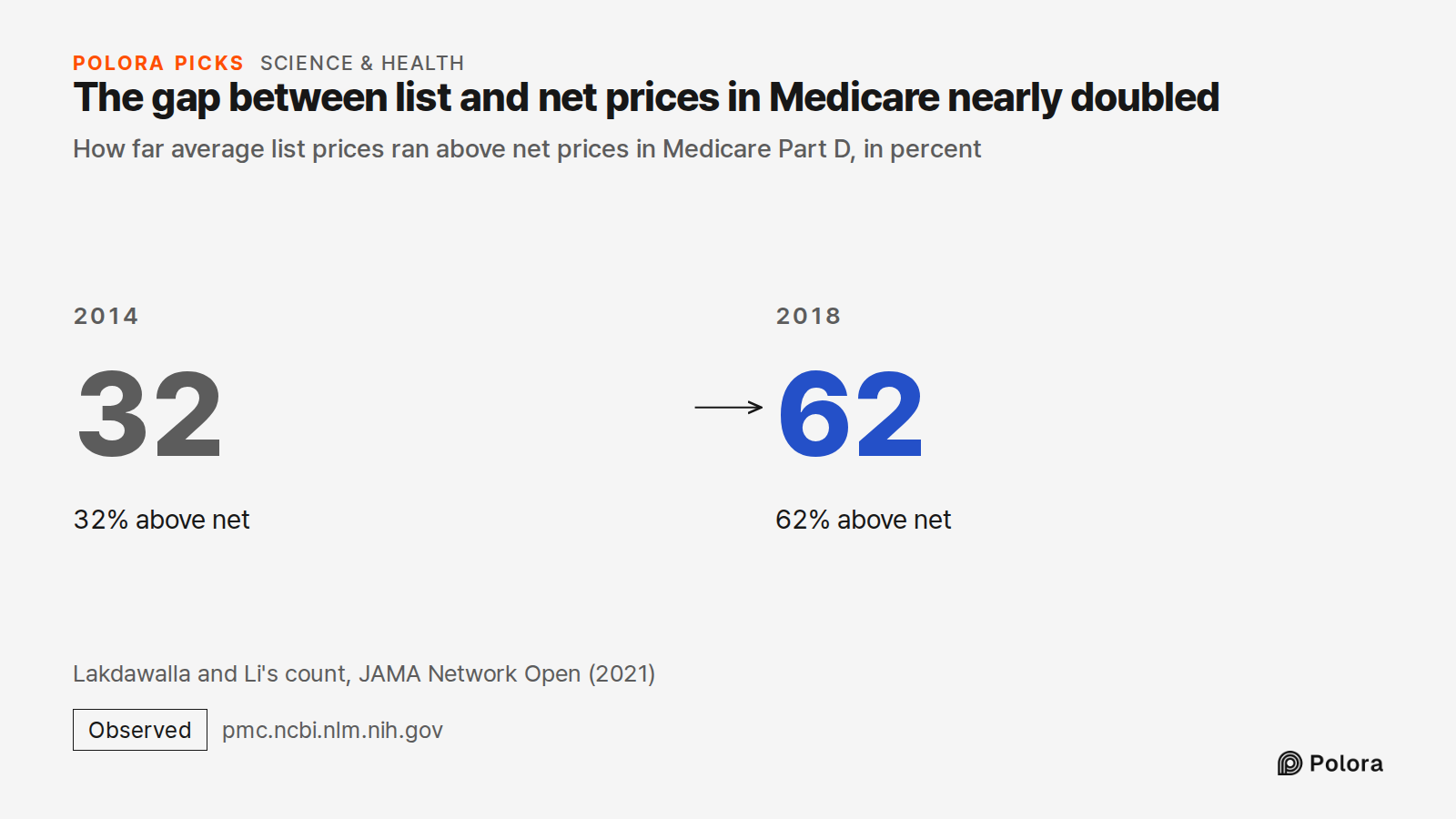
Darius Lakdawalla and Meng Li studied Medicare's drug coverage for older Americans, known as Part D, in JAMA Network Open (2021). By their count, average list prices ran 32 percent above net prices in 2014 and 62 percent above in 2018. The study also cites earlier research, not its own result, estimating that passing rebates through to patients at the counter would raise Part D premiums by 13 percent.
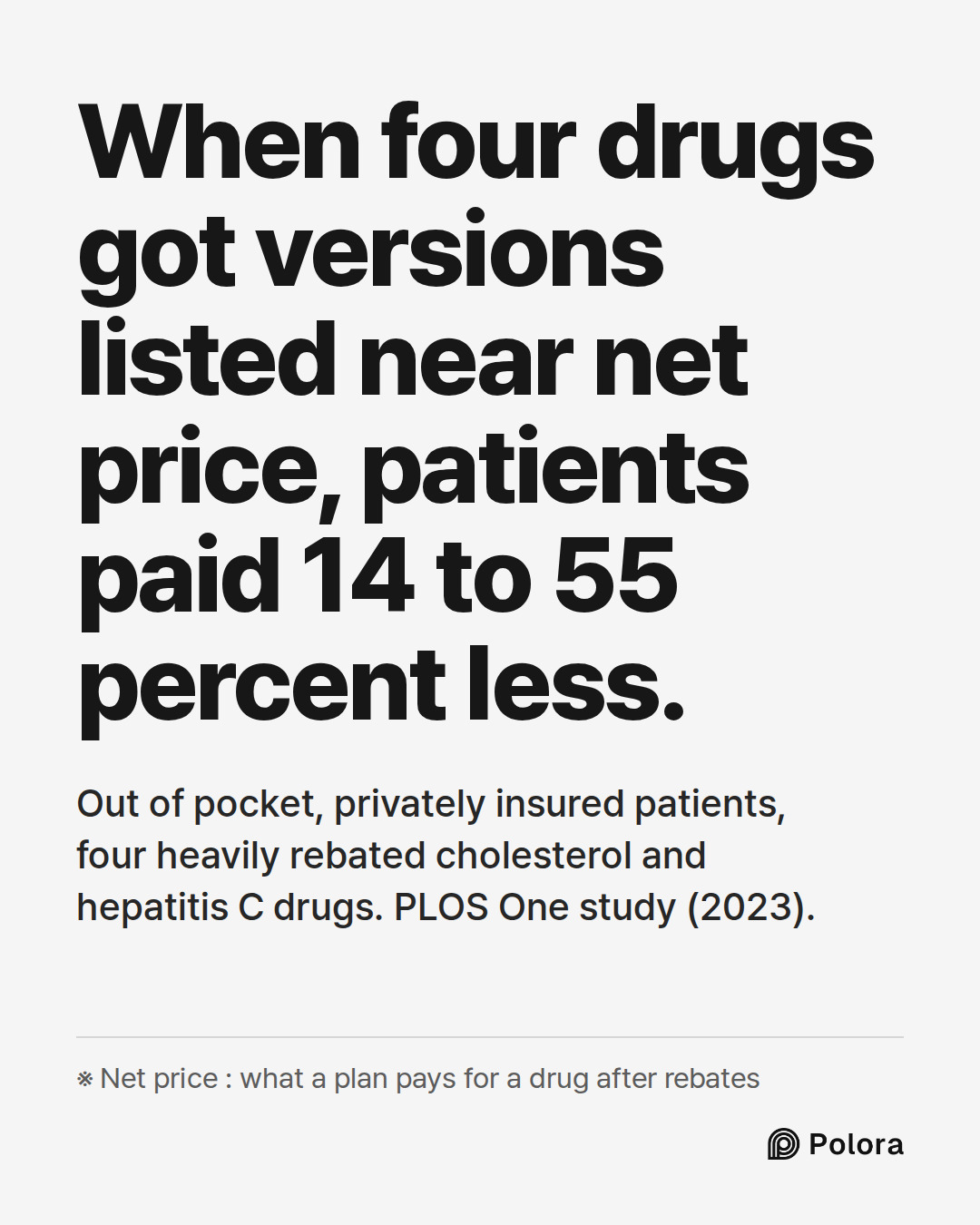
The reverse has also been measured. Four expensive, heavily rebated drugs for cholesterol and hepatitis C got lower-priced versions with list prices close to the net price. After that, privately insured patients paid 14 to 55 percent less out of pocket, a 2023 study in PLOS One reported. Out-of-pocket costs fell by more than 60 percent for patients whose costs came mainly from coinsurance, and by less than $65 per prescription for those paying mainly copays.
Generic drugs run on a different lever
Generic drugs, the cheaper copies sold once a patent runs out, bring another lever into view : what the PBM pays the pharmacy, and whose pharmacy it is. Each of the three largest PBMs belongs to a company that also owns pharmacies. These include specialty pharmacies that handle expensive drugs for conditions such as cancer and HIV.
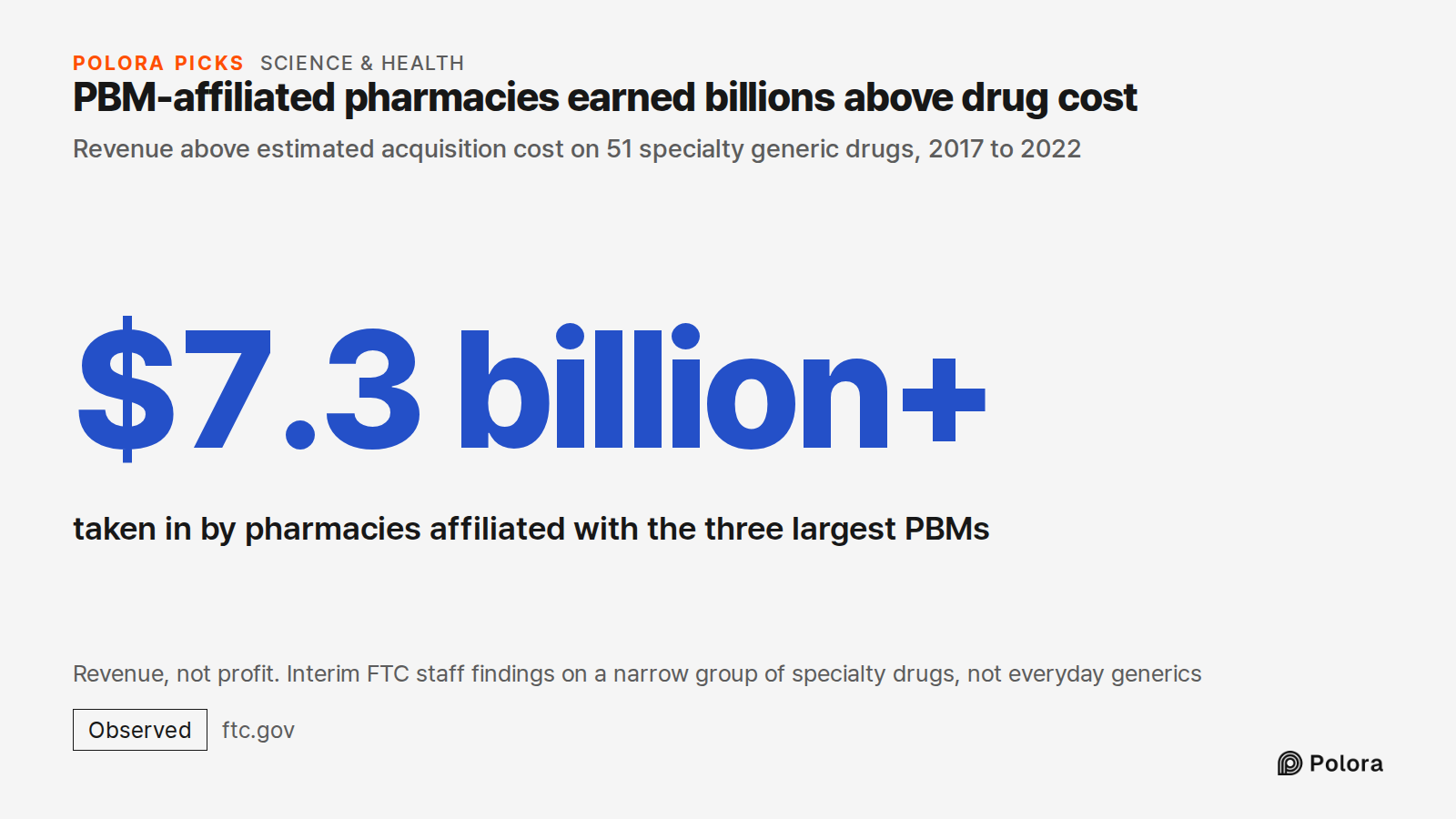
In a second staff report, in January 2025, the FTC looked at 51 specialty generic drugs. From 2017 to 2022, it found, pharmacies affiliated with the three largest PBMs took in more than $7.3 billion in revenue above the drugs' estimated acquisition cost. That is revenue, not profit. It also found that the PBMs paid their own pharmacies more than outside pharmacies on nearly every drug examined. These are interim findings by FTC staff about a narrow group of specialty drugs, not about the everyday generics most people pick up.
Three companies handle most US prescriptions
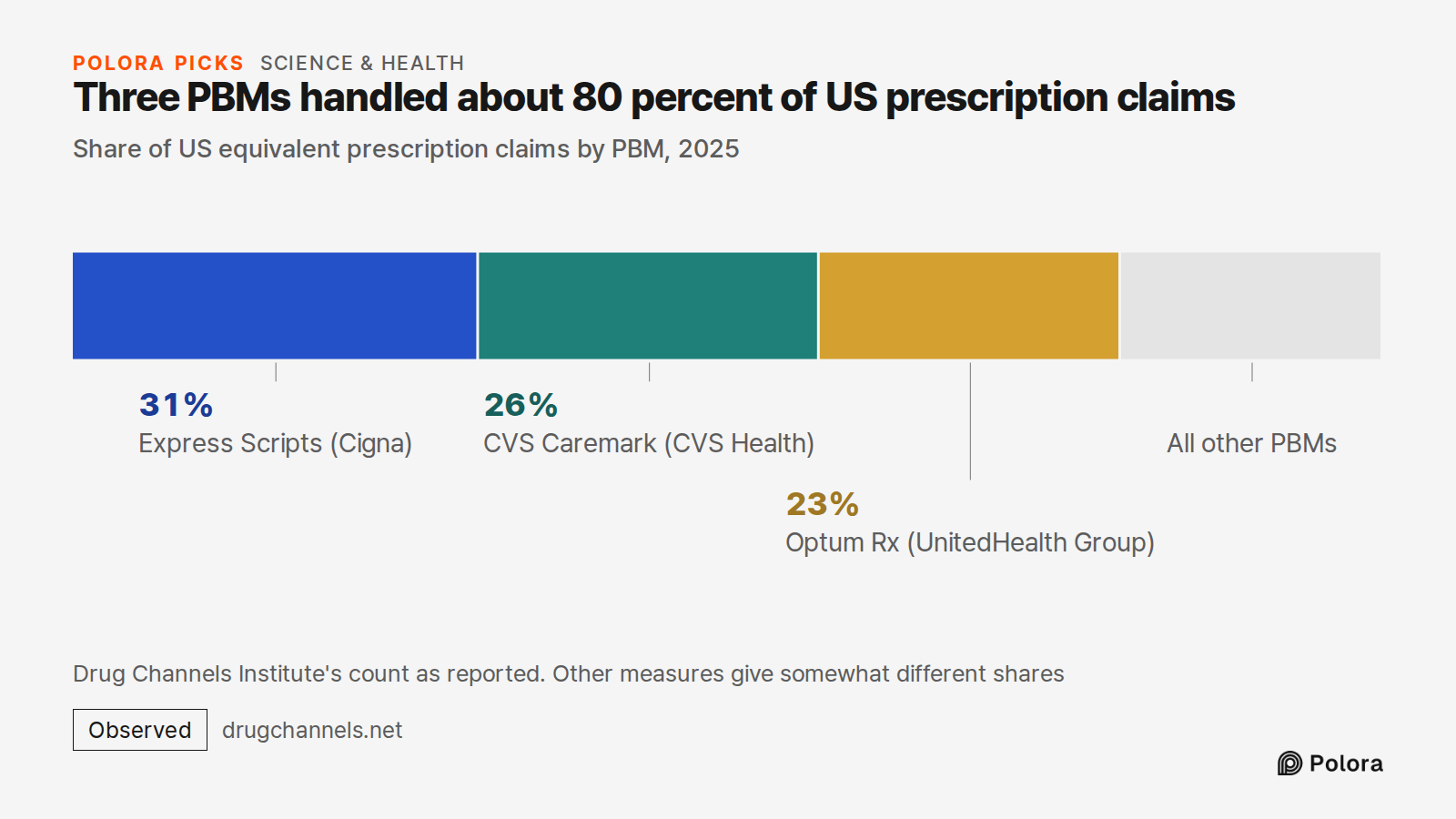
Three PBMs processed about 80 percent of US prescription claims in 2025, by the Drug Channels Institute's count, measured in what it calls equivalent prescription claims. Reports of that count put Express Scripts, part of Cigna, at 31 percent, CVS Caremark, part of CVS Health, at 26 percent, and Optum Rx, part of UnitedHealth Group, at 23 percent. Counting another way, by retail prescriptions or by rebate negotiations, gives somewhat different shares, but every measure puts most of the market with these three.
Where the legal cases over PBM rebates stand
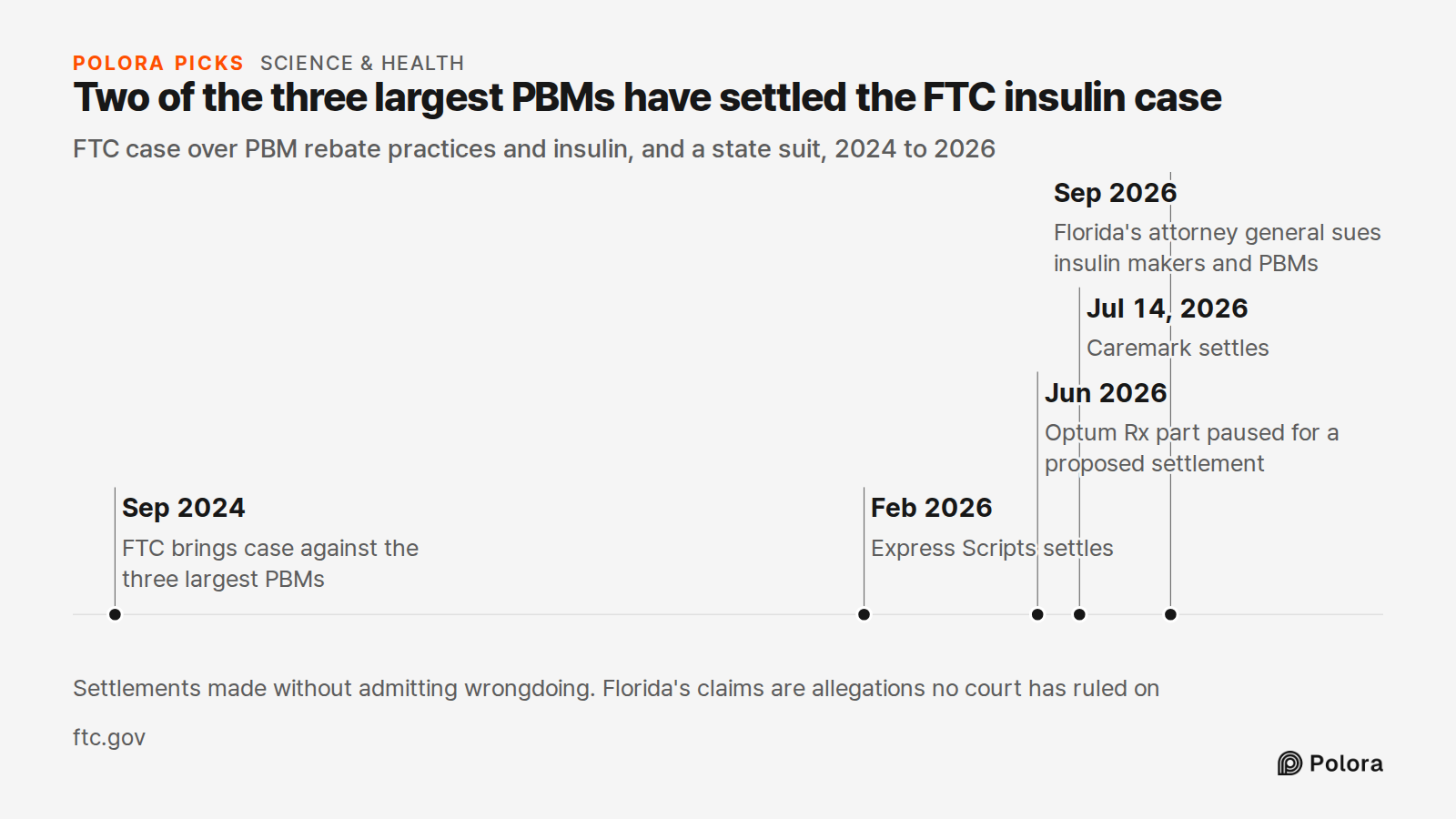
In September 2024 the FTC brought an administrative case against the three largest PBMs. It alleged that their rebate practices pushed up the list price of insulin. Express Scripts settled in February 2026 and Caremark on July 14, 2026, each without admitting wrongdoing. According to the FTC, the Express Scripts order requires it to offer plans a standard option in which members' out-of-pocket costs are based on the net price rather than the list price. It is an option a plan can choose, not an automatic change to every member's bill.
Optum Rx is at a different stage. In June 2026 its part of the case was taken out of litigation so the FTC could consider a proposed settlement, known as a consent agreement. The FTC's case page records no final settlement, and the terms had not been made public when this was written. The PBMs had also filed their own suit against the FTC. A federal appeals court dismissed it in mid-2026 after both sides asked to end it. In September 2026 Florida's attorney general sued the three largest insulin makers and the three PBMs. Those claims are allegations, and no court has ruled on them.
- FTC case page, In the Matter of Insulin (Caremark Rx, Zinc Health Services et al.)
- FTC press release, February 2026, Express Scripts settlement
- FTC press release, July 2026, Caremark settlement
- Healthcare Dive, CVS Caremark FTC settlement
- Healthcare Dive, PBM countersuit against FTC dismissed
- News4JAX, Florida attorney general sues insulin makers and PBMs
So who decides what you pay?
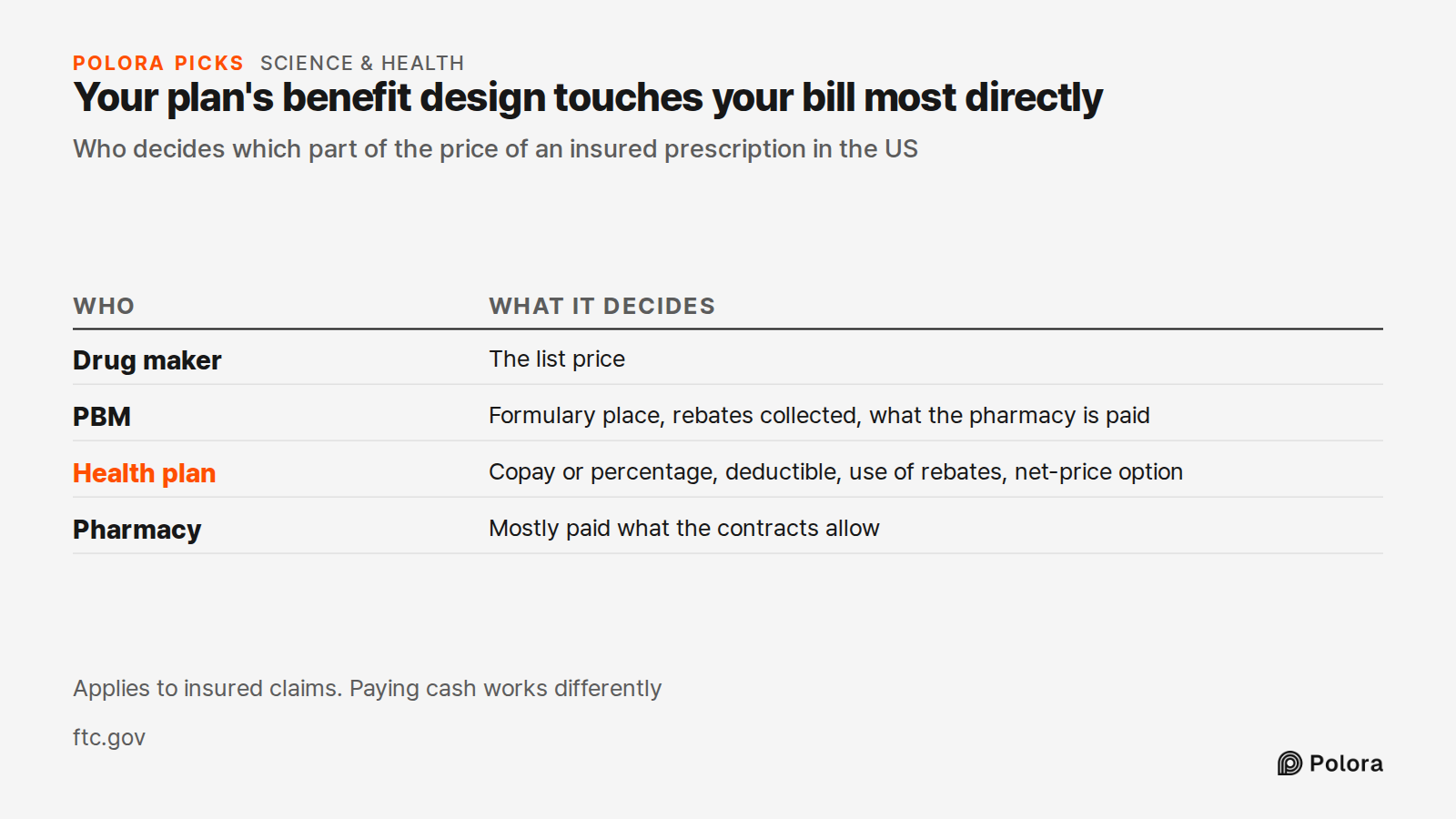
No single party. The drug maker sets the list price. The PBM, working for your plan, decides where the drug sits on the formulary, collects the rebates and sets what the pharmacy is paid. The plan decides how much of those rebates goes to holding down premiums, and whether your share is a flat copay or a percentage. That choice, the design of your benefit, is the one that touches your bill most directly. Under the new FTC orders, it is also the plan that decides whether to take up a net-price option. The pharmacy, on an insured claim, is mostly paid what those contracts allow.
That is why two people can pay very different amounts for the same pill. The plan itself often does not end up paying the list price. Yet for anyone paying toward a deductible or a percentage, the price their share is cut from usually follows the list price.
- FTC, Pharmacy Benefit Managers : The Powerful Middlemen Inflating Drug Costs and Squeezing Main Street Pharmacies (interim staff report, 2024)
- US Departments of Labor, Health and Human Services and Treasury, 2024 Report to Congress on prescription drug and health care spending
- FTC press release, February 2026, Express Scripts settlement