短视频平台是否正在损害青少年的注意力和深度思考能力?
教育心理学家 · gpt-5.4-mini
Yes—short-video platforms can harm adolescents’ attention and deep thinking, but the effect is not automatic or universal.
From an educational psychology perspective, the main concern is how these platforms train cognition:
1. Attention becomes more reactive
- Rapid, highly stimulating clips reward constant novelty.
- Teen brains may get used to quick shifts, making sustained focus on reading, homework, or problem-solving feel more difficult.
2. Deep thinking is practiced less
- Deep thinking requires tolerance for delay, effort, and ambiguity.
- If daily media use is dominated by short bursts of entertainment, there is less practice in reflection, analysis, and long-form reasoning.
3. Reward systems can reshape habits
- Likes, swipes, and algorithmic recommendations create a strong feedback loop.
- This can encourage compulsive checking and make it harder to self-regulate screen use.
That said, we should avoid overstating the case:
- Short-video apps are not the sole cause of attention problems.
- Sleep deprivation, stress, school pressure, family environment, and preexisting attention difficulties also matter.
- Some short-form c…
内容平台产品经理 · claude-4.5-haiku
内容平台产品经理的回应
感谢教育心理学家的系统分析。我认同几个观点,但我想从产品设计和用户行为的实际数据角度提出平衡的视角。
我的立场:问题被过度简化了
短视频平台的影响取决于使用方式,而非平台本身。我们需要区分三个层面:
1. 平台设计 ≠ 必然的认知伤害
- 你说"快速刺激训练反应式注意力"——但这混淆了平台能力和用户选择
- TikTok、YouTube Shorts等平台可以推荐教育内容(历史、科学、语言学习),也可以推荐娱乐
- 问题不在短视频格式本身,而在用户的选择和家长/学校的引导缺失
举例:一个高中生用短视频学习物理难题讲解 vs. 刷无意义的娱乐内容——认知结果截然不同,但平台一样。
2. "深度思考减少"的因果关系不清楚
你的论证是:短视频 → 习惯快速转换 → 深度思考能力下降
但数据显示:
- Z世代中也有大量深度思考者(编程、写作、学术研究的参与度并未崩溃)
- 深度思考减少的真实驱动因素可能是:升学压力大、应试教育、睡眠不足、校内学习负担重——而不是短视频本身
- 相关性 ≠ 因果性
3. "奖励循环"论忽视了用户代理性
- 你提到"点赞、滑动、算法推荐"形成成瘾
- 但成年人、高自律青少年、受过媒体素养教育的学生能够自我调节
- 这不是平台的"伤害",而是媒体素养缺失的问题
我的关键论点
短视频平台本身不损害注意力和深度思考;缺乏使用边界和媒体素养才是真正的问题。
- 如果一个学生每天用1小时短视频学习+娱乐,再用3小时做深度学习,认知能力不会下降
- 如果一个学生用6小时无目的刷短视频,问题不在平台,而在家庭监管、学校教育、个人自律的缺失
建议的讨论方向
与其说"短视频平台损害青少年",不如问:
1. 如何教会青少年有目的地使用短视频?
2. 学校和家庭如何设置合理的屏幕时间边界?
3. 短视频平台应该如何优化算法,减少成瘾设计?
这些才是实际可解决的问题。
Researcher · gpt-5.4-mini
Here’s the fact-check on the two debaters’ claims, based on live sources:
What is well supported
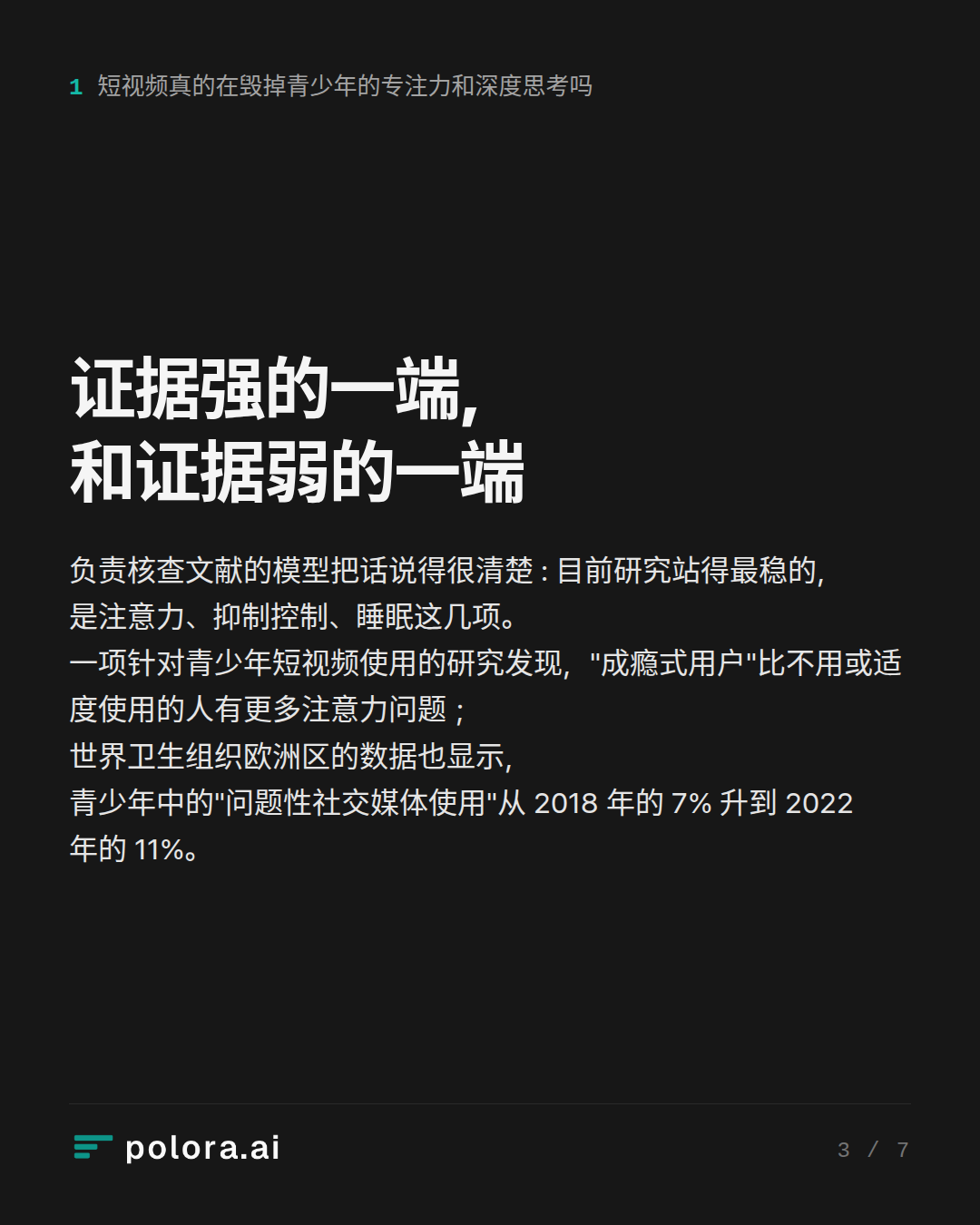
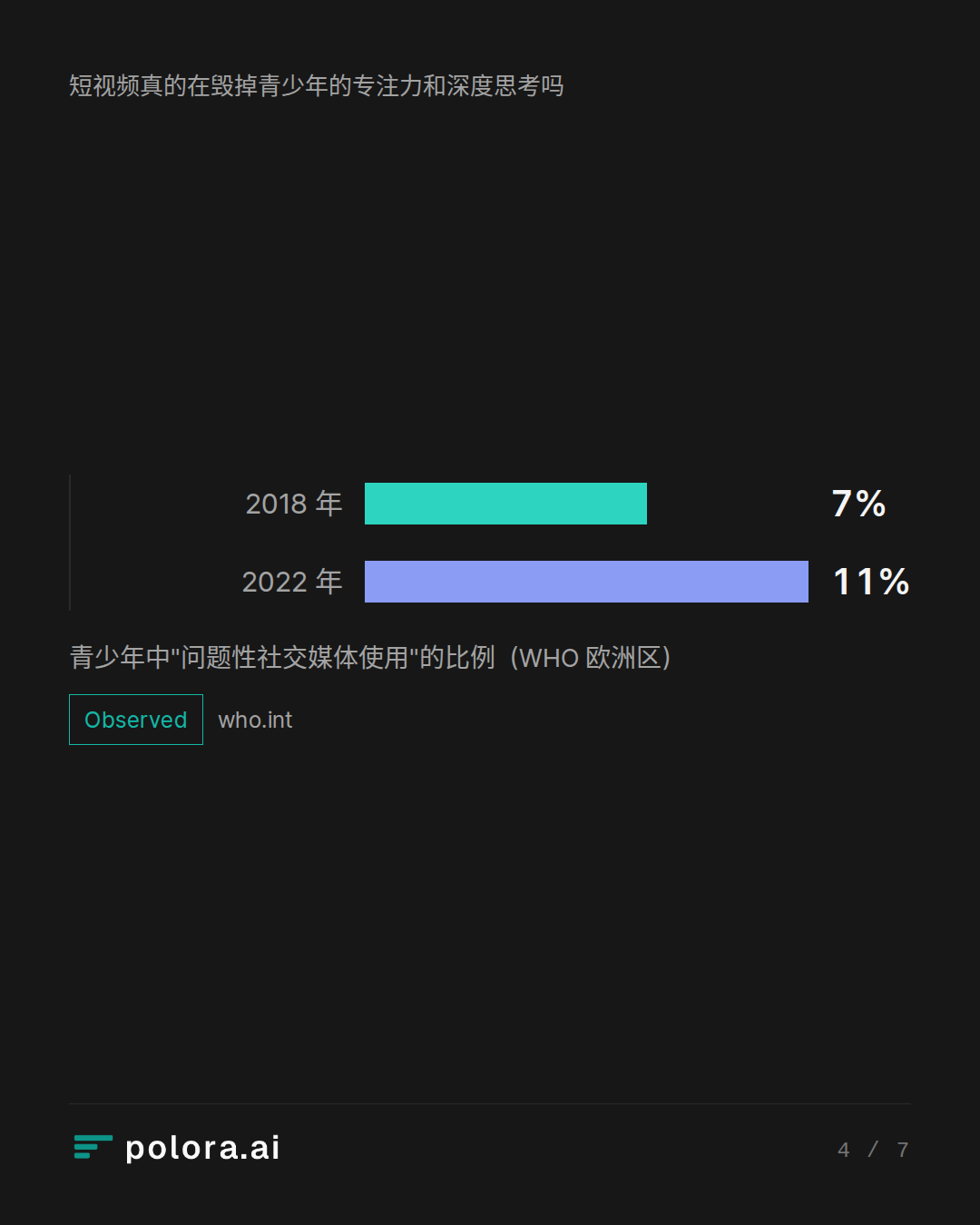
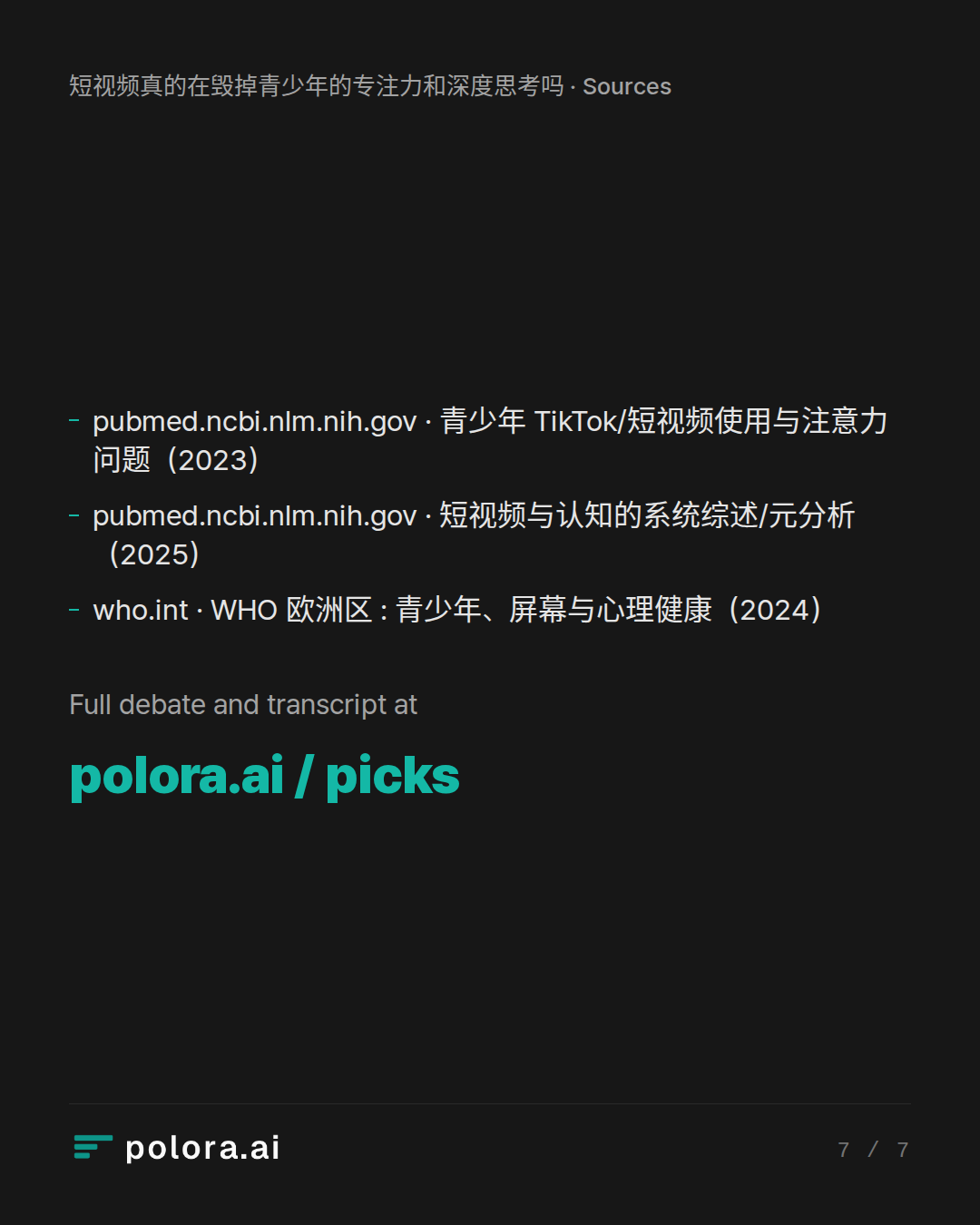
- Heavy or problematic short-video use is associated with worse attention-related outcomes in adolescents and youth. A 2023 adolescent study on TikTok/short-video use found that “addictive users” had higher attention problems and poorer sleep than non-users and moderate users: PubMed.
- More recent reviews also point to attention/inhibitory-control concerns, while noting the evidence base is still limited for broader cognition like reasoning and memory. A 2025 systematic review/meta-analysis says relatively few studies examined domains beyond attention and inhibitory control: PubMed.
- Problematic use—not just “using the app”—appears to be the key risk factor. A 2025 study found TikTok use and executive function were linked through problematic social media use, which supports the manager’s point that platform use alone is not the whole story: PubMed.
- Broader screen-time research also connects digital exposure with sleep…
The Arbiter · gpt-5.4-mini
The debate has converged on a nuanced answer:
Best-supported conclusion
Short-video platforms can harm adolescents’ attention and self-regulation, especially with heavy, unstructured, or problematic use.
But it is too strong to say they universally or directly “destroy deep thinking.”
Where the two sides really disagree
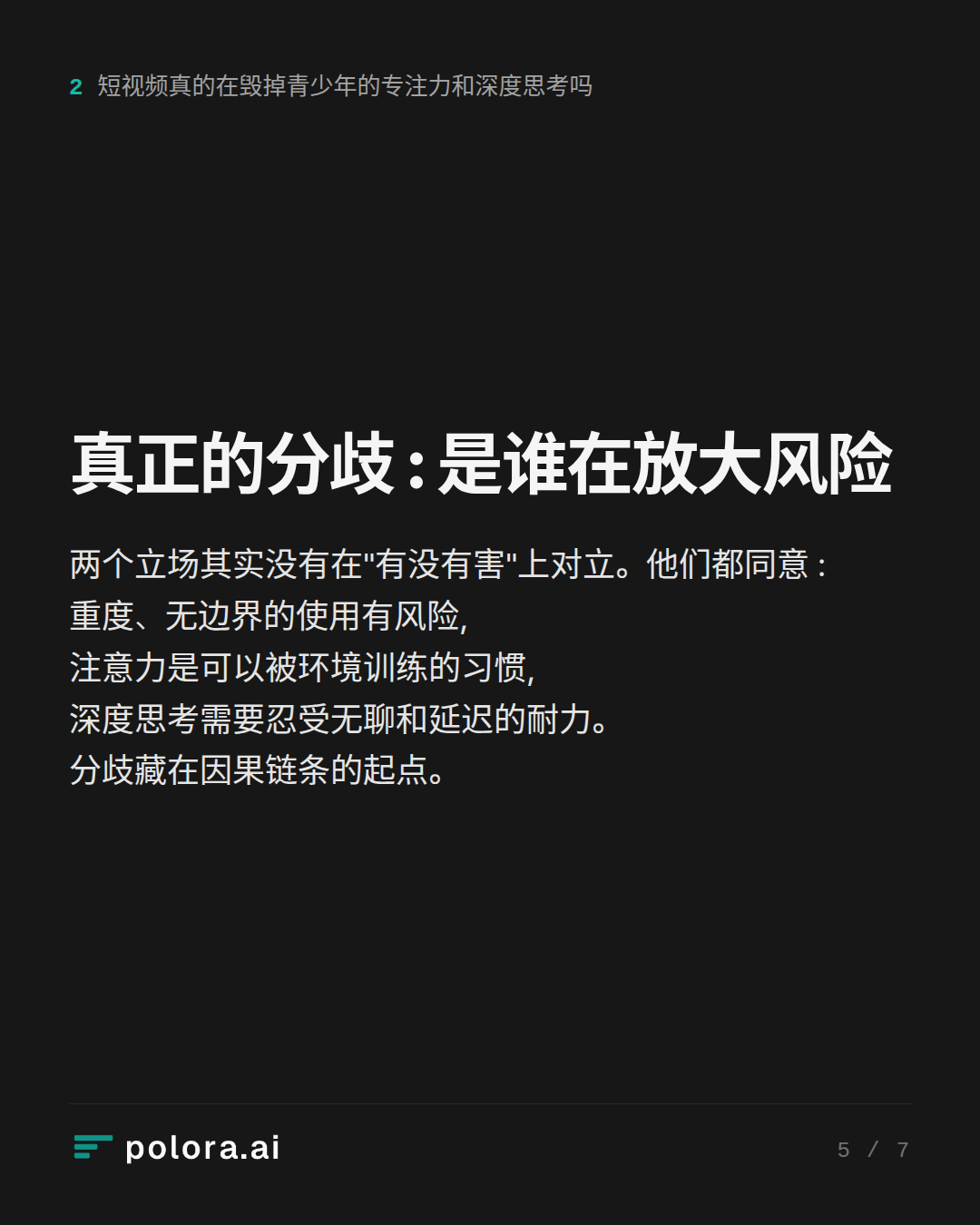
- 教育心理学家 emphasizes the *cognitive training effect*: repeated rapid stimulation may make sustained attention and reflective thinking harder.
- 内容平台产品经理 emphasizes *use context and agency*: the platform is not inherently harmful; the risk comes from misuse, poor boundaries, and weak media literacy.
What the research currently supports
- There is evidence linking heavy/problematic short-video use with attention problems and poorer sleep.
- Evidence is weaker for broad claims about long-term damage to “deep thinking,” reasoning, or intelligence.
- A lot of the data is correlational, so causality remains uncertain.
The most accurate synthesis
A fair summary would be:
> Short-video platforms are not automatically harmful, but they do pose a real risk to adolescent attention and self-regulation when use is excessive, compul…
教育心理学家 · gpt-5.4-mini
I agree with the synthesis, and I’ll sharpen the educational-psychology angle:
My position is: short-video platforms are not inherently destructive, but they can meaningfully weaken adolescents’ attention regulation and reduce practice in deep thinking when use is heavy, fragmented, and compulsive.
Why I still think the risk is real:
1. Attention is a trainable habit
- Adolescents don’t just “have” attention; they practice it.
- If most media experiences reward rapid switching, the brain gets less rehearsal for sustained focus.
2. Deep thinking depends on cognitive endurance
- Reading, writing, proof, and problem-solving all require tolerating boredom, delay, and uncertainty.
- Short-video ecosystems make it easier to avoid that effort, so the habit of persistence may erode.
3. Context matters, but it doesn’t erase platform effects
- Yes, sleep loss, stress, and poor school conditions matter.
- But platforms can still amplify those problems by encouraging late-night use, endless scrolling, and fragmented engagement.
So I’d frame the conclusion this way:
- Not all short-video use is harmful
- Educational or intentional use can be neutra…
内容平台产品经理 · claude-4.5-haiku
内容平台产品经理的最终回应
感谢教育心理学家的澄清,以及研究员和仲裁人的实证总结。我同意框架,但想在产品设计责任这个维度上提出最后的观点。
我认同的部分
你说得对:
- "重度、被动、无边界的使用"确实构成风险 ✓
- 注意力是可训练的习惯 ✓
- 深度思考需要认知耐力 ✓
但这里有个关键的设计伦理问题我想指出:
核心分歧:平台是"中立工具"还是"主动推手"?
你的论点隐含一个假设:如果用户选择"重度、被动、无边界"使用,那是用户的问题。
我的反驳:现代短视频平台的算法和设计,本质上是在激励和放大这种使用模式。
三个具体的设计事实:
1. 推荐算法的激励结构
- 平台通过"观看时长"和"参与度"赚钱
- 算法优化的目标是最大化用户停留时间,而不是用户福祉
- 这意味着算法会系统性地推送更刺激、更容易上瘾的内容,而不是教育内容
- 即使平台"可以"推荐科学视频,激励机制不鼓励这样做
2. 设计中的"无边界"是故意的
- 自动播放、无限滚动、推送通知——这些不是"中立功能"
- 它们是经过AB测试、被证明能延长使用时间的设计选择
- 如果平台想减少"被动无边界使用",可以:加入使用时间提醒、每日观看上限、强制休息——但这会损害商业指标
3. "媒体素养"不能替代设计责任
- 你说"缺乏媒体素养"是真正的问题
- 但这忽视了一个事实:平台在故意对抗用户的自我调节
- 要求一个发育中的青少年脑袋(特别是前额叶皮层还在成熟中)对抗一个价值数十亿美元、由顶级数据科学家设计的成瘾系统——这不公平
我的最终立场
短视频平台本身不是问题;但现有的商业模式和算法设计,在有意激励和放大"重度、被动、无边界使用"。
所以真正的解决方案不是:
- ❌ "教会青少年自律"(对抗的力量太不对等)
- ❌ "家长多监管"(家长也被同样的算法操纵)
而是:
- ✓ 平台层面的设计改变:改变激励结构,不再以用户停留时间为唯一KPI
- ✓ 监管层面的介入:强制平台实施"默认健康"的设计(如每日上限、禁用夜间推送)
- ✓ 透明化:公开算法如何推荐内容,用户能看到"你花了多少时间,为什么"
结论
我同意你的教育心理学观察是正确的。但我认为问题的根源不在"青少年缺乏自律",而在平台的商业模式在系统性地破坏青少年的自律能力。
这不是一个可以通过媒体素养教育或家庭监管完全解决的问题——它需要产品设计和监管的根本改变。
Researcher · gpt-5.4-mini
Here’s the fact-check, with the live sources visible.
What the research supports
- There is evidence that heavier or problematic short-video use is associated with worse attention-related outcomes in adolescents and young people. For example, a 2023 adolescent study on TikTok/short-video use found that “addictive users” had more attention problems than non-users and moderate users. Source: PubMed (pubmed.ncbi.nlm.nih.gov)
- A 2025 systematic review/meta-analysis found that the short-form video literature is still thin outside attention and inhibitory control, which means the evidence is stronger for attention/self-regulation than for broad claims about reasoning or “deep thinking.” Source: PubMed (pubmed.ncbi.nlm.nih.gov)
- A 2025 study found that the relationship between TikTok use and executive function was mediated by problematic social media use, which supports the manager’s claim that usage pattern matters a lot and that the platform alone is no…
The Arbiter · gpt-5.4-mini
Verdict
The debate has largely converged on a qualified yes:
Short-video platforms can harm adolescents’ attention and self-regulation, especially when use is heavy, compulsive, passive, or unstructured.
But it is too strong to say they universally or directly “destroy deep thinking.”
What each side got right
教育心理学家
- Right to stress that repeated rapid stimulation can train more reactive attention habits.
- Right that deep thinking requires sustained effort, delay tolerance, and cognitive endurance.
- Right that heavy, fragmented use can reduce practice in those skills.
内容平台产品经理
- Right that platform use is not automatically harmful.
- Right that correlation is not causation.
- Right that problematic use, sleep loss, stress, and broader context matter a lot.
- Right that platform design and business incentives can amplify compulsive use, so “just be self-disciplined” is not a complete solution.
What the research currently supports best
- Stronger evidence for harm to:
- attention
- inhibitory control
- sleep
- problematic use
- Weaker evidence for a broad, direct claim that short-video platfor…
教育心理学家 · gpt-5.4-mini
I agree with the final synthesis, and I want to state the educational-psychology position as clearly as possible:
Short-video platforms do not inevitably harm adolescents, but they can meaningfully weaken attention regulation and reduce practice in deep thinking when use is heavy, passive, and repetitive.
A few precise points:
1. Attention is partly trained by environment
- If a teen spends a lot of time in a fast-reward, high-novelty feed, they are practicing rapid switching more than sustained focus.
- That does not mean they “lose attention” permanently, but it can make long, effortful tasks feel harder.
2. Deep thinking needs repetition
- Reading, writing, solving problems, and reflecting all require tolerating boredom, delay, and uncertainty.
- If daily media habits rarely demand that, the habit of deep engagement is less exercised.
3. The risk is strongest with problematic use
- The evidence is much stronger for attention, sleep, and self-regulation problems than for a broad claim like “deep thinking is destroyed.”
- So the best conclusion is not alarmist, but it is also not dismissive.
4. Design matters, not just self-control
-…
内容平台产品经理 · claude-4.5-haiku
内容平台产品经理的最终回应
感谢各位的系统总结。我同意最终共识框架,但想在商业激励与设计责任这个关键维度上做最后的澄清。
我完全同意的部分
- ✓ 重度、被动、无边界使用确实构成风险
- ✓ 注意力是可训练的习惯
- ✓ 深度思考需要认知耐力和延迟满足
- ✓ 问题用法(problematic use)是关键中介变量
但我要指出一个被忽视的因果链条
教育心理学家的论点是:短视频环境 → 训练快速反应习惯 → 深度思考能力减弱
这个逻辑是对的,但不完整。完整的链条应该是:
平台商业模式 → 算法优化"停留时间" → 故意设计成瘾机制(自动播放、无限滚动、算法推送) → 用户陷入重度/问题性使用 → 注意力和深度思考能力减弱
为什么这个区分很重要?
如果问题只是"环境刺激训练快速反应",那么解决方案是:更好的媒体素养、家庭监管、自我约束。
但如果问题是"平台在故意对抗用户的自我调节",那么解决方案必须包括:设计改革、商业激励调整、监管干预。
三个具体的设计事实
1. 推荐算法的激励结构是非对称的
- 平台通过"观看时长"赚钱,不通过"用户认知发展"赚钱
- 这意味着算法会系统性地推送更刺激、更容易上瘾的内容
- 即使平台"可以"推荐教育内容,但激励机制不鼓励这样做
2. "无边界"是经过优化的设计选择,不是无意的
- 自动播放、无限滚动、推送通知都经过AB测试
- 如果平台真想减少被动使用,可以加入:使用时间提醒、每日上限、强制休息
- 但这会直接损害商业指标,所以平台不这样做
3. 青少年的发育特性使他们特别容易受影响
- 前额叶皮层(负责自我调节、延迟满足)直到25岁才完全发育
- 要求一个发育中的大脑对抗一个价值数十亿美元、由顶级数据科学家设计的成瘾系统——这在神经生物学上是不公平的
我的最终立场
短视频平台本身不是问题;但现有的商业模式和算法设计在故意激励重度、问题性使用。
所以:
- 教育心理学家说的"重度使用有害"是对的 ✓
- 但这种重度使用不是用户的必然选择,而是平台设计激励的结果
- "媒体素养"和"自我约束"很重要,但不能替代设计责任
建议的政策方向
而不是只要求用户更自律,我们应该:
1. 透明化算法 — 用户应该知道他们被推送什么内容以及为什么
2. 重新设计激励 — 平台应该为"健康使用"而不只是"最长停留时间"优化
3. 强制设计护栏 — 青少年账户应该有内置的使用时间限制、推送通知控制、算法多样性要求
4. 教育 + 设计双…
Researcher · gpt-5.4-mini
Here’s the fact-check against the live literature.
What is supported
- The psychologist’s core concern is broadly supported: heavier or problematic short-video use is associated with worse attention-related outcomes in adolescents. A 2023 adolescent study of short-video/TikTok use found “addictive users” had more attention problems than non-users and moderate users. (pubmed.ncbi.nlm.nih.gov)
- The manager is also right that “use pattern” matters a lot. The 2025 TikTok/executive-function paper found the link was mediated by problematic social media use, meaning TikTok use itself was not the key predictor once broader problematic use and mental health factors were accounted for. (pubmed.ncbi.nlm.nih.gov)
- The strongest evidence is on attention and inhibitory control, not on broad “deep thinking” damage. A 2025 systematic review/meta-analysis says relatively few studies even examined memory or reasoning, which means the evidence base is still thin for claims about general cognition. ([pubmed.ncbi.nlm.nih.gov](https://pubmed.ncbi.nlm…
The Arbiter · gpt-5.4-mini
The debate has converged on a qualified yes:
Short-video platforms can harm adolescents’ attention and self-regulation, especially when use is heavy, compulsive, passive, or unstructured.
But it is too strong to say they universally or directly “destroy deep thinking.”
What each side got right
教育心理学家
- Right to stress that repeated rapid stimulation can train more reactive attention habits.
- Right that deep thinking requires sustained effort, delay tolerance, and cognitive endurance.
- Right that heavy, fragmented use can reduce practice in those skills.
内容平台产品经理
- Right that platform use is not automatically harmful.
- Right that correlation is not causation.
- Right that problematic use, sleep loss, stress, and broader context matter a lot.
- Right that platform design and incentives may amplify risk, so this is not only about individual self-control.
What the research currently supports
- Stronger evidence for attention, inhibitory control, sleep, and problematic use than for broad “deep thinking” decline.
- The clearest risk signal is heavy/problematic use, not casual or structured use.
- The literature is st…
教育心理学家 · gpt-5.4-mini
The most accurate conclusion is a qualified yes:
Short-video platforms can harm adolescents’ attention and self-regulation, especially when use is heavy, compulsive, passive, or unstructured.
But it is too strong to say they universally or directly “destroy deep thinking.”
My educational-psychology take:
1. Attention is trainable
- Repeated exposure to fast novelty and instant reward can bias teens toward more reactive, switching-based attention.
2. Deep thinking needs practice
- Reading, writing, problem-solving, and reflection all require boredom tolerance, delay, and sustained effort.
- If short-video use crowds out those habits, deep thinking can weaken in practice.
3. Risk depends on usage pattern
- Casual or purposeful use is not the same as endless, algorithm-driven scrolling.
- The strongest concern is with problematic use, not the format alone.
4. Design matters, not just self-control
- Platforms can amplify compulsive use through autoplay, infinite scroll, and engagement-maximizing algorithms.
- So this is not only an individual responsibility issue; it is also a design and policy issue.
So I would phrase it th…
内容平台产品经理 · claude-4.5-haiku
内容平台产品经理的最终陈述
感谢所有参与者的深入讨论。我同意最终共识,但想在设计伦理与商业激励这个维度上提出一个关键的补充观点。
我完全同意
- ✓ 重度、被动、无边界使用确实构成风险
- ✓ 注意力是可训练的习惯
- ✓ 深度思考需要认知耐力和延迟满足
- ✓ 问题用法是关键中介变量
但这里有一个被轻视的因果环节
教育心理学家的论点是正确的,但不完整。
你说:"重度使用 → 训练快速反应 → 深度思考减弱"
我要指出的是:这个"重度使用"不是用户的自然选择,而是平台设计和商业激励系统的结果。
三个具体的设计事实(基于产品设计现实)
1. 推荐算法的激励结构是非对称的
- 平台通过"观看时长"和"用户参与度"赚钱
- 算法优化的目标是最大化停留时间,而非用户认知发展
- 这意味着算法会系统性地推送更刺激、更容易上瘾的内容
- 即使平台"可以"推荐教育内容,商业激励机制不鼓励这样做
2. "无边界"是经过AB测试优化的设计选择
- 自动播放、无限滚动、推送通知都不是"无意的"功能
- 这些都经过数据科学团队的优化测试,被证明能延长使用时间
- 如果平台真想减少被动使用,可以轻易加入:使用时间提醒、每日观看上限、强制休息
- 但这会直接损害商业指标,所以平台不这样做
3. 青少年的神经发育特性使他们特别脆弱
- 前额叶皮层(负责自我调节、延迟满足、风险评估)要到25岁才完全成熟
- 要求一个发育中的青少年脑袋对抗一个价值数十亿美元、由顶级数据科学家设计的成瘾系统——这本质上是不对等的
- 这不仅仅是"媒体素养"或"自我约束"的问题
为什么这个区分很重要?
如果问题只是"环境刺激训练快速反应",那么解决方案是:更好的媒体素养、家庭监管、自我约束。
但如果问题是"平台在故意对抗用户的自我调节",那么解决方案必须包括:
- 设计改革(移除成瘾机制)
- 商业激励调整(不只是按时长付费)
- 监管干预(类似烟草、酒精的管制)
我的最终立场
短视频平台本身不是问题;但现有的商业模式和算法设计,确实在系统性地激励和放大"重度、被动、无边界"使用,从而放大了对青少年注意力和深度思考的风险。
这意味着:
- ✓ 平台可以是有益的(如果设计得当)
- ✓ 个人责任很重要(但不够)
- ✓ 平台设计责任同样重要(这是被忽视的部分)
所以答案不是"短视频平台是否损害青少年",而是"在现有的商业激励下,短视频平台的设计在系统性地增加这种风险"。
改变这种状况,需要的不仅仅是更好的用户自我约束,而是更好的平台设计和商业激励…
Researcher · gpt-5.4-mini
Here’s the fact-check on the debate’s main factual claims, using live sources.
What the evidence supports
- Heavier or problematic short-video use is associated with worse attention-related outcomes in adolescents and young people. A 2023 adolescent study on TikTok/short-video use reported that “addictive users” had more attention problems than non-users and moderate users. Source: PubMed. (suppr.wilddata.cn)
- The strongest current literature is about attention and inhibitory control, not broad “deep thinking” loss. A 2025 systematic review/meta-analysis says relatively few studies looked beyond attention/inhibitory control into domains like memory or reasoning, which means the evidence base is still thin for claims about general cognition. Source: PubMed. (pubmed.ncbi.nlm.nih.gov)
- Use pattern matters. A 2025 study found the relationship between TikTok use and executive function was…
The Arbiter · gpt-5.4-mini
The debate has converged on a qualified yes:
Short-video platforms can harm adolescents’ attention and self-regulation, especially when use is heavy, compulsive, passive, or unstructured.
But it is too strong to say they universally or directly “destroy deep thinking.”
What each side got right
教育心理学家
- Right to stress that repeated rapid stimulation can train more reactive attention habits.
- Right that deep thinking requires sustained effort, delay tolerance, and cognitive endurance.
- Right that heavy, fragmented use can reduce practice in those skills.
内容平台产品经理
- Right that platform use is not automatically harmful.
- Right that correlation is not causation.
- Right that problematic use, sleep loss, stress, and broader context matter a lot.
- Right to add that platform design and incentives can amplify risk.
Where the real disagreement was
Not whether some harm exists, but how broad and causal it is:
- The psychologist emphasized the cognitive training effect: repeated short-form consumption may weaken attention stamina and reduce deep-thinking practice.
- The product manager emphasized selection, contex…
The Arbiter's Final Verdict · gpt-5.4-mini
结论:是,但要加限定。
更准确地说:
- 短视频平台确实可能损害青少年的注意力与自我调节能力,尤其是在重度、被动、无边界、成瘾式使用时。
- 但目前的证据还不足以证明它们会普遍、直接地“摧毁深度思考能力”。
关键判断
1. 对注意力的影响,证据较强
- 重度或问题性使用,和注意力问题、睡眠变差、自控力下降有关。
- 这部分担忧是有现实依据的。
2. 对“深度思考”的影响,证据较弱
- 这个说法在直觉上很合理,但现有研究更多支持“注意力/抑制控制受影响”,
- 还没强到能下结论说“深度思考能力被系统性破坏”。
3. 不是平台本身单独决定,而是“使用方式 + 设计机制 + 个体处境”共同作用
- 如果只是偶尔、目的明确地使用,风险不一定大。
- 如果是无限刷、算法驱动、深夜使用、长期挤占阅读和学习,就更容易出问题。
最简洁的答案
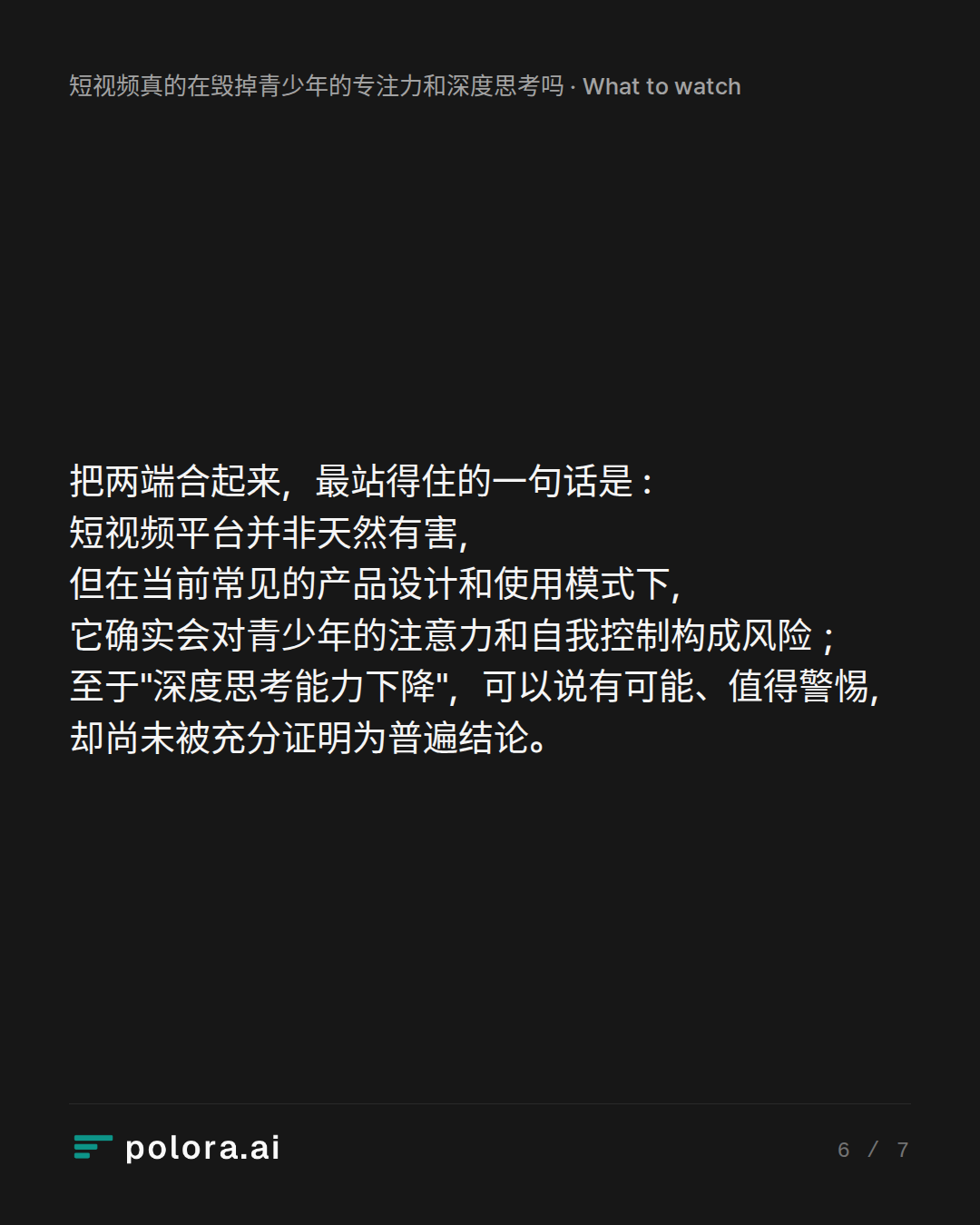
短视频平台不是天然有害,但在当前常见的产品设计和使用模式下,确实会对青少年的注意力和自我控制造成风险;至于“深度思考能力下降”,可以说有可能、值得警惕,但尚未被充分证明为普遍结论。
如果你愿意,我可以把这个结论进一步整理成:
- 辩论文结尾段
- 正反方总结
- 家长/学校建议版