Two federal tax credits that helped pay for home energy upgrades, Sections 25C and 25D, no longer apply to work installed in 2026. The IRS says 25C does not cover property placed in service after December 31, 2025. It says 25D does not cover expenditures made after that date, and an installation generally counts as an expenditure when it is completed. State and utility rebates can still lower the price. Without one, a homeowner starting a project now pays the full amount.
Polora put that situation to several AI models built by OpenAI, Anthropic and xAI. It asked them to rank seven upgrades for one specific household : an older single-family house in a cold-winter state, heated with natural gas, with about $15,000 to spend over two years. The measure was how quickly each upgrade pays for itself at full 2026 prices. Comfort and backup power during outages counted only as secondary benefits. One model argued from payback math, one from building science and one from budget constraints, and a fourth checked their claims against public sources.
The payback order AI models reached for a cold-climate, gas-heated house
The three models that proposed rankings agreed from the start, and the final verdict kept their order. Air sealing and attic insulation come first. After them come a smart thermostat, a heat pump water heater, a cold-climate air-source heat pump, rooftop solar and replacement windows, with a home battery last. None of the models presented this as a fixed schedule. The model acting as judge called it a default ranking for screening options, not a universal payback table.
The middle of the list is the least stable part. The research model found no defensible national order among the water heater, the heat pump and solar, because gas and electricity prices vary widely between states and utilities. It also warned that the payback periods the models offered, such as 5 to 12 years for attic work or 9 to 18 years or more for solar, are plausible starting assumptions and not established nationwide figures for 2026.
※ Air-source heat pump : an electric system that pulls heat from outdoor air to warm the house in winter and runs in reverse to cool it in summer, taking the place of a furnace and air conditioner or working alongside a furnace. A cold-climate model is built to keep working in hard freezes.
※ Heat pump water heater : a water heater that uses the same principle, pulling heat from the surrounding air to warm the water in its tank
Why AI models put air sealing and attic insulation first
The building science model's argument went beyond payback. In an older attic, much of the heat escapes through gaps around chimneys, plumbing stacks, wiring and the attic hatch, so those gaps should be sealed before any insulation goes down. Loose-fill insulation poured over unsealed gaps wastes money. After sealing, the model suggested insulating to at least R-49 in cold-winter climates, subject to the state's energy code. The payback model estimated the work often costs roughly $3,000 to $8,000, depending on the condition of the house.
All the models recommended starting with an energy assessment that includes a blower door test. It costs a few hundred dollars and can show that one hidden leak or leaky ductwork matters more than anything else on the list. The building science model went further. It claimed that no heating system can be sized correctly until the house's shell, meaning its walls, attic, windows and doors, has been fixed. The research model called that too absolute. A contractor can calculate how much heat the house needs on the coldest days as it stands today and also model the improvements already planned. The sounder rule, it said, is to finish known sealing work, or include it in that calculation, before settling on a heat pump's size. First place also assumes the attic actually needs the work. If it is already sealed and well insulated, the ranking does not apply.
※ Blower door test : a fan fitted into an outside doorway that pulls air out of the house to measure how much leaks in
※ R-49 : a rating of how well insulation resists heat flow, where higher numbers insulate better
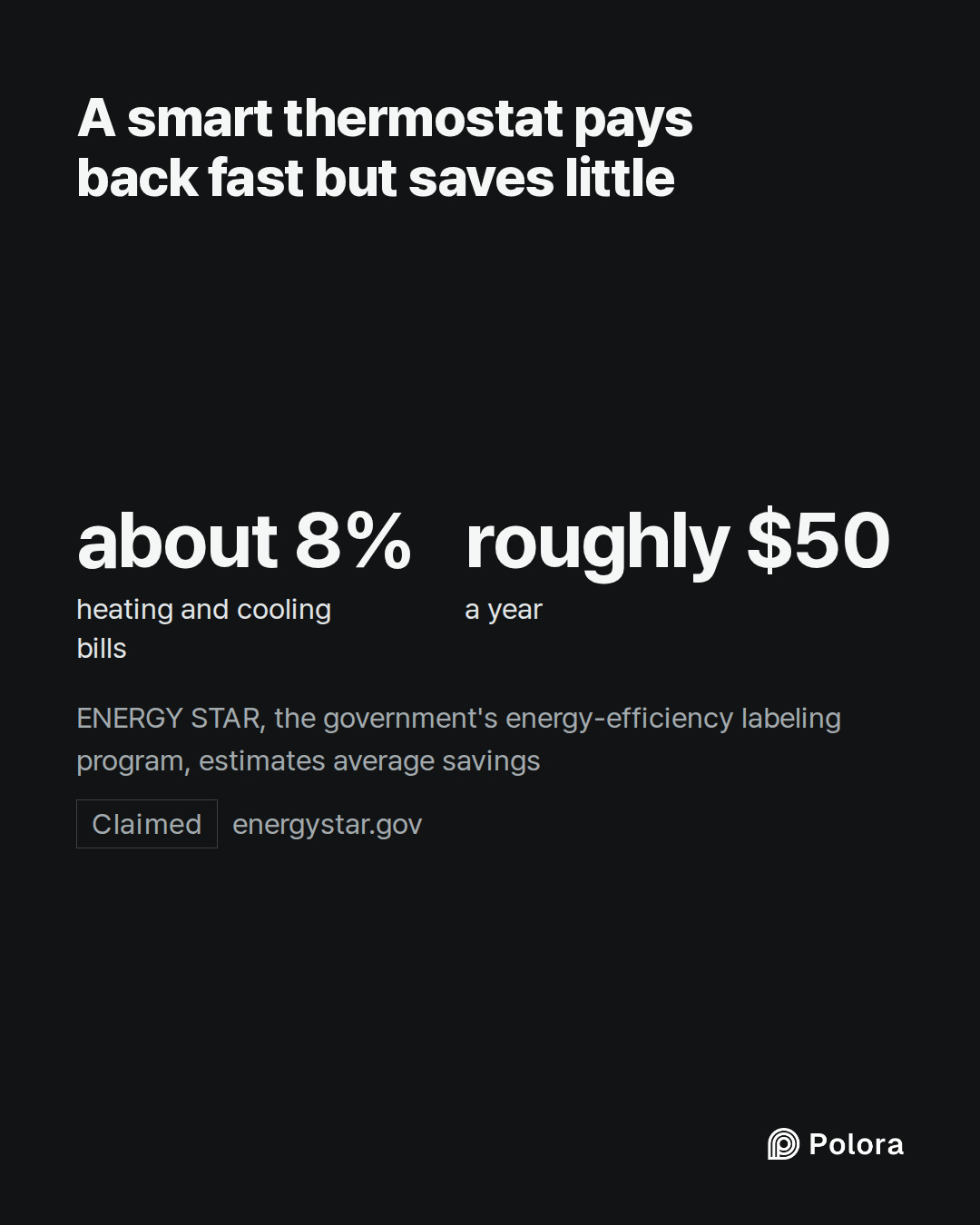
A smart thermostat pays back fast but saves little
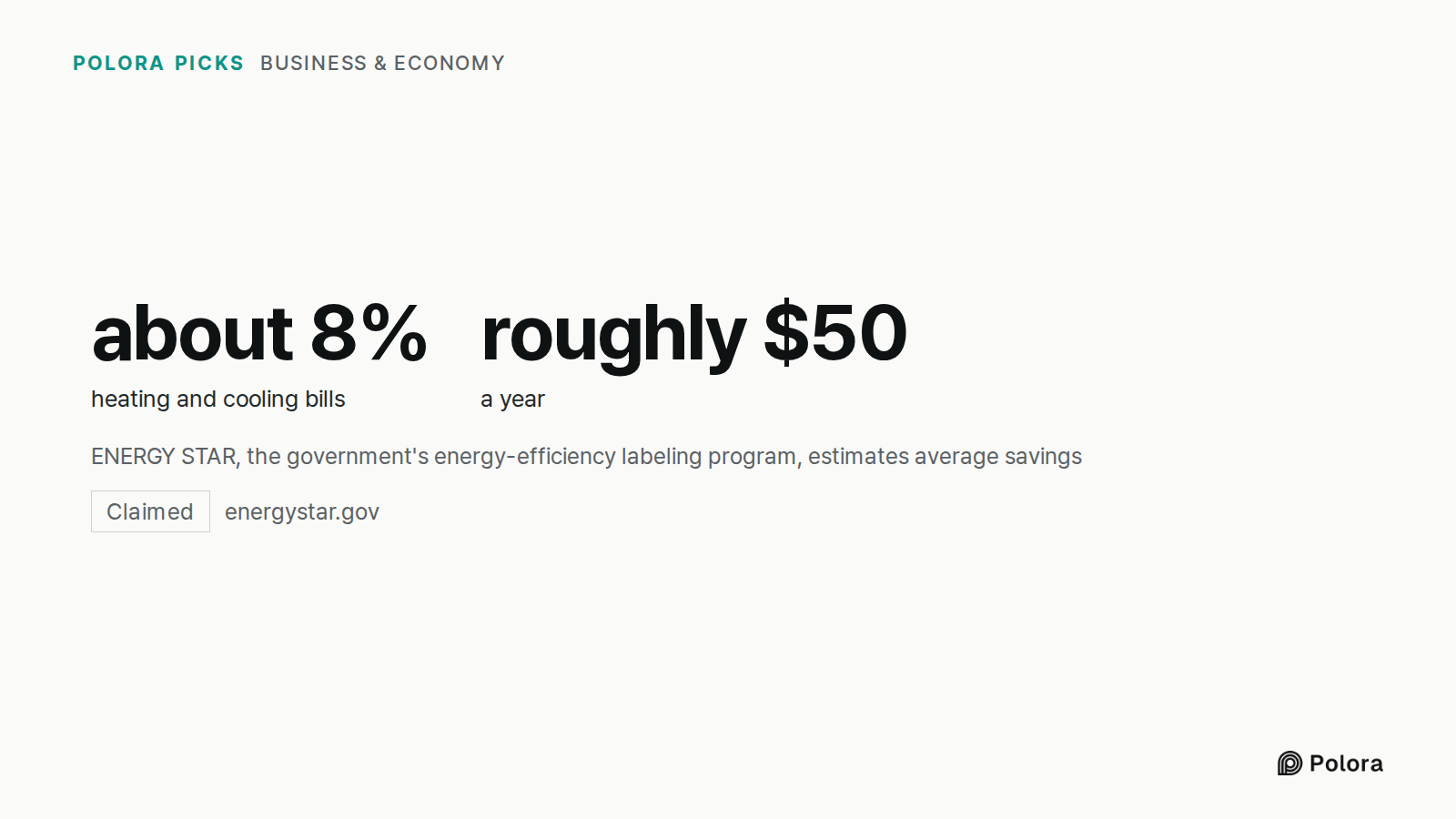
As a share of its price, a thermostat can repay itself faster than anything else on the list, because it costs only a few hundred dollars. ENERGY STAR, the government's energy-efficiency labeling program, estimates average savings of about 8% on heating and cooling bills, or roughly $50 a year, according to the research model. At that rate, the 2 to 6 year payback the payback model suggested holds only if the installed cost is around $100 to $300.
That is why the models ranked it second but warned against letting it take money from attic work, which saves far more in total. A household that already turns the heat down at night or while away may save almost nothing, and an expensive installation pushes the thermostat further down the list.
A heat pump water heater pays off mainly when the old tank is failing
The three models that proposed rankings agreed that timing decides this upgrade. If the gas water heater is near the end of its life, the fair comparison is the extra cost of the heat pump model over the gas tank that would be bought anyway, divided by the yearly savings. Replacing a working gas heater early means paying the full price to displace fuel that was already cheap to burn, which makes the payback much harder to reach. Expensive gas, cheap electricity, a local rebate or avoided venting work all improve the case.
Where the tank sits also matters. A heat pump water heater pulls heat from the surrounding air, so in heated living space it adds to winter heating demand. The building science model suggested that an unheated basement or garage avoids that penalty. The research model corrected this. A cold room can also lower the unit's efficiency or fall outside its permitted operating range. According to Department of Energy guidance, some units fall back on a plain electric heating element, which is far less efficient, at around 45°F or below. That makes the room's actual winter temperature and the unit's installation limits worth checking before buying. Noise, a drain for the water the unit produces, and the electrical circuit also matter.
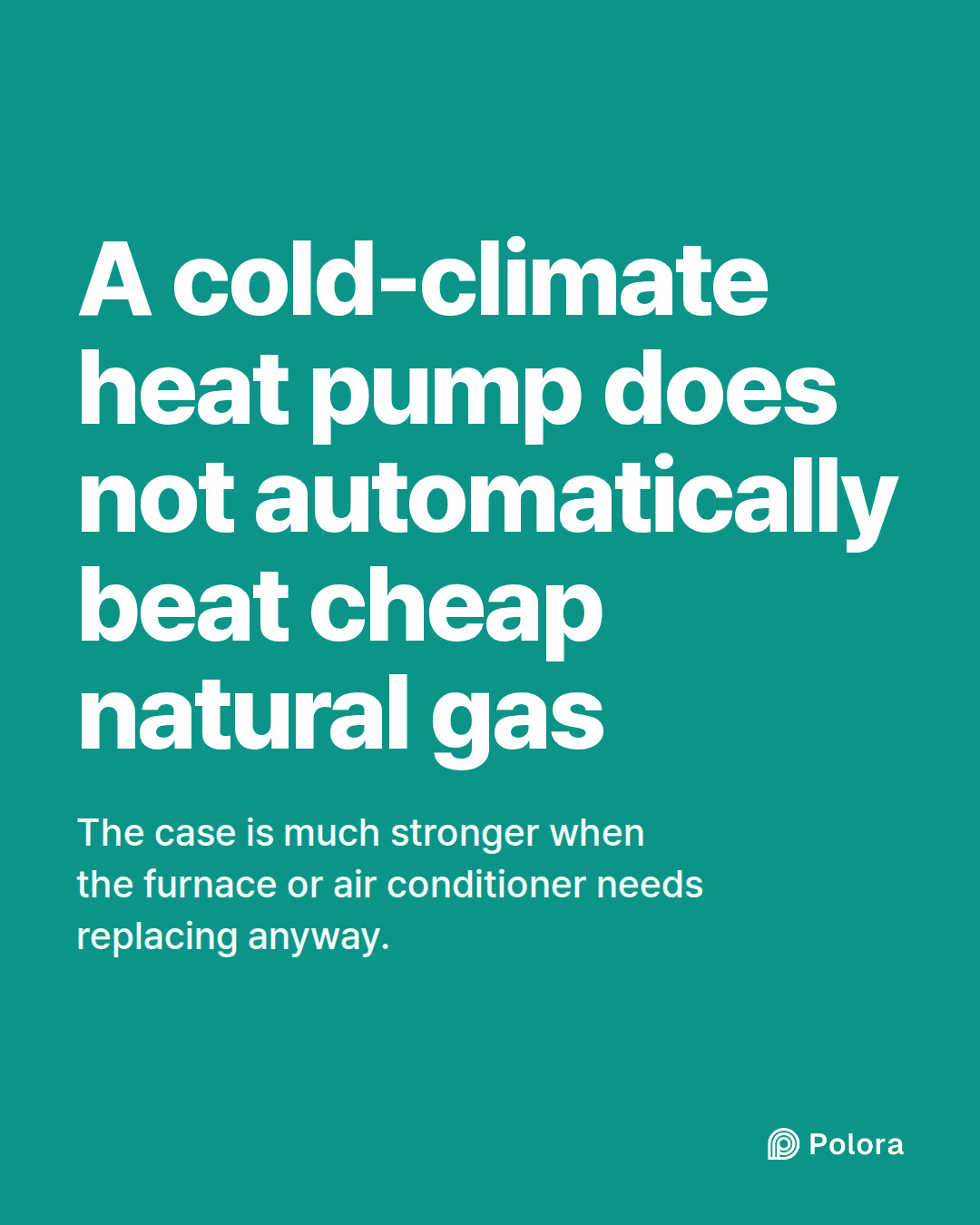
A cold-climate heat pump does not automatically beat cheap natural gas
In a cold state where gas is cheap and electricity is expensive, the payback model argued, a heat pump installed only to cut gas use may save little or nothing on bills. The case is much stronger when the furnace or air conditioner needs replacing anyway, when the house has no air conditioning and cooling has real value, when local prices favor electricity, or when a rebate cuts the cost. The capital model added that a whole-home system can use up the entire $15,000 budget by itself.
The building science model identified what it considered the biggest single variable : the unit's real efficiency at the local design temperature, not the cold-climate label on the box. The research model confirmed that ENERGY STAR's cold-climate designation requires a coefficient of performance of at least 1.75 at 5°F, and at 5°F the unit must still deliver at least 70% of the heating capacity it has at 47°F. Performance still varies from model to model. A heat pump in a state with a design temperature of 10 to 20°F works under very different conditions from one where the design temperature is -10°F or lower.
The building science and capital models backed dual fuel as a practical hedge. In that setup, the gas furnace stays in place for the coldest days. The research model accepted it as a valid option but not an automatic winner, because the point at which gas becomes cheaper depends on the heat pump's efficiency curve, the furnace, both energy prices and the fixed monthly gas charge.
※ Coefficient of performance : units of heat delivered per unit of electricity used, so 1.75 means 1.75 times as much heat as the electricity consumed
※ Design temperature : the cold outdoor temperature a heating system in a given location is sized to handle
Rooftop solar rises or falls with the roof and the utility
Without the federal credit, the payback model said, solar holds up mainly where installed prices are low, electricity is expensive, the roof is sound and sunny, and the utility pays fairly for exported power through net metering or a similar credit. Under those conditions solar can outrank both heat pump options. Shade, poor export rates or an aging roof can push it far down the list. The capital model warned against installing panels on a roof that will need replacing in 5 to 8 years. It said the roof should have about 20 years of life left, unless the owner knowingly replaces the roof along with the solar project.
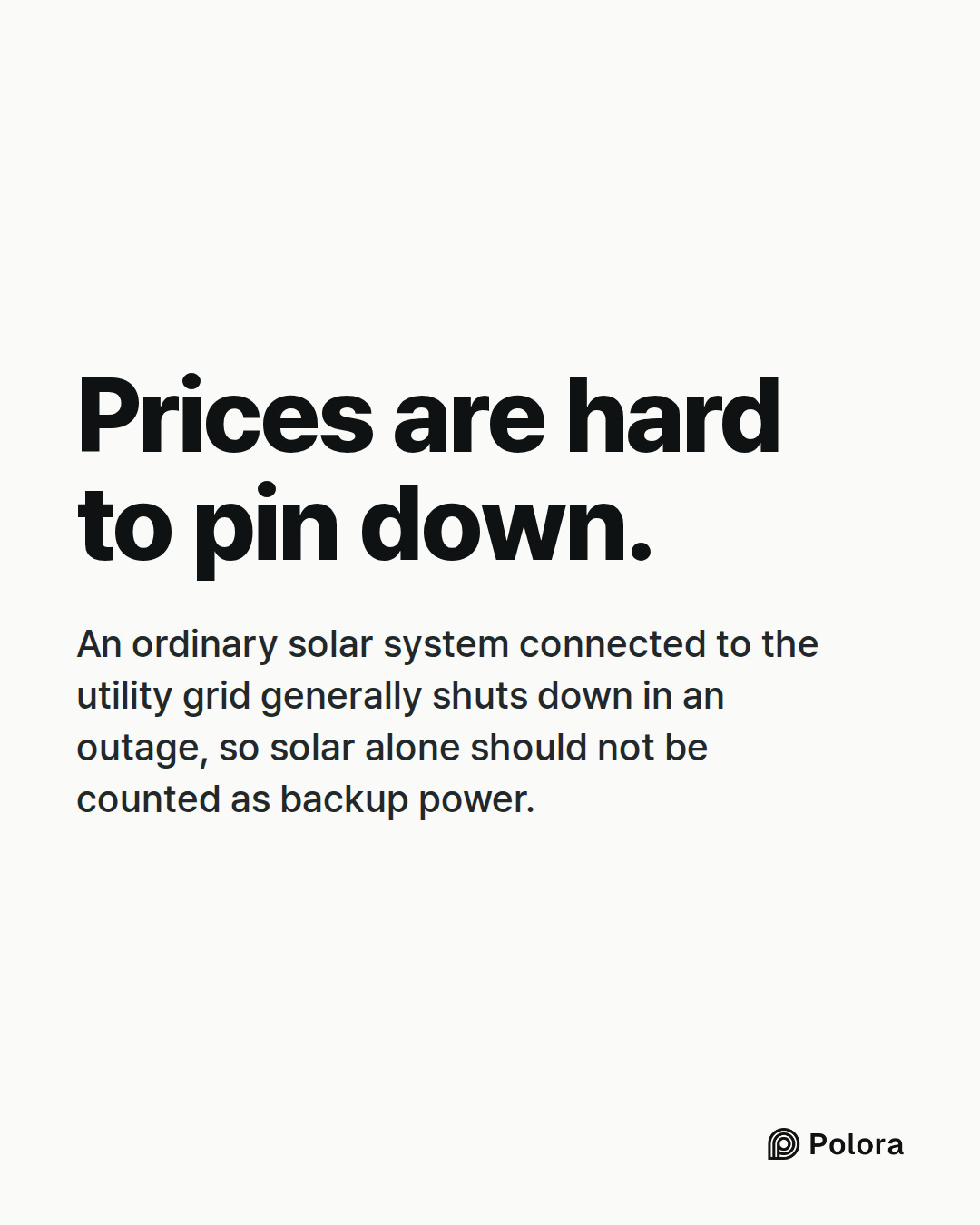
Prices are hard to pin down. The research model found a median quoted price of about $2.48 per watt on the EnergySage marketplace in the first half of 2025. A dataset from Lawrence Berkeley National Laboratory, a federal research lab, showed a median cash price of $3.50 per watt for systems completed in 2024. Because of that gap, the research model rejected any single national payback period and called for a production estimate for the actual roof and a model of the actual utility rate. The models also flagged dealer loans advertised at low rates that can hide large fees. An ordinary solar system connected to the utility grid generally shuts down in an outage, so solar alone should not be counted as backup power.
※ Net metering : a utility arrangement that credits solar owners for the electricity their panels send back to the grid
Windows and home batteries rank last on bill savings in the AI models' view
According to the research model, ENERGY STAR itself says new windows may not repay their full cost from energy savings alone. It puts replacement at roughly $400 up to $1,600 or more per window, and the capital model noted that a whole-house job can cost as much as the entire budget or far more. New windows can still improve comfort near the glass, reduce drafts and noise, and fix windows that no longer open. The models simply did not count those benefits as payback.
The cheaper routes are repair, weatherstripping, replacing only the worst units, or adding storm windows, which are a second pane fitted inside or outside an existing window. For single-pane windows with no storms, ENERGY STAR estimates that storm windows with a heat-reflecting coating, known as low-e, earn back their added cost in about three years under its national assumptions. The building science model put storm windows at $150 to $400 each, but the research model could not verify that price.
A home battery is mainly a purchase of resilience. It generates no electricity, loses some energy in storage, and lowers bills only under specific conditions : electricity rates that change by time of day, payments from grid programs, or fees based on a household's peak power use. The research model could not confirm the payback model's estimate of 15 to 25 years or more, but it agreed with the narrower point that without such rates, or a dollar value placed on backup power, a battery usually lacks a good bill-savings case. The capital model suggested pricing resilience directly by asking which circuits must run, for how many hours, and how often the power goes out. Where outages are rare, it said, a small generator or a plan for critical circuits may buy more backup per dollar, though generators bring their own fuel, maintenance and noise.
What $15,000 can realistically buy in two years, according to the AI models
The capital model's central point was that $15,000 does not cover seven projects. A whole-home heat pump, a meaningful battery or a full set of new windows can each take most or all of the budget. Its plan moved in stages. First come the assessment, attic sealing and insulation if the house needs them, any duct leaks the audit finds, and a thermostat if the system is compatible and the household will actually use schedules. Then the homeowner stops and checks what money is left.
The remainder is held for whichever piece of equipment fails first. If the water heater is dying, that means getting a heat pump bid alongside a standard gas bid. If the furnace or air conditioner is failing, it means getting bids for a cold-climate heat pump and for a dual-fuel system. Solar, selective window work and a battery come only with leftover cash and a site that clearly suits them. The same model flagged a hidden cost : a heat pump or heat pump water heater that forces an electrical panel upgrade can add two to five thousand dollars that was never in the budget.
On the secondary measures, the capital model noted that a sealed, insulated house holds its warmth longer when the heat goes out in a cold snap. It also noted that a heat pump adds cooling to a house that has none, which can be real comfort value even when the heating savings are thin.
Which conclusions depend on local energy prices and on the age of your equipment
The models separated conclusions that hold for most cold, gas-heated houses from those that swing. Fixing a leaky, under-insulated attic usually wins. A thermostat involves small money either way. Whole-house windows and batteries rarely pay back on energy savings alone. Local gas and electricity prices, along with the utility's rules for solar exports and time-of-day pricing, decide how the heat pump, the heat pump water heater and solar compare. The age of the existing furnace, air conditioner and water heater decides whether the two heat pump options count as a sensible upgrade or an expensive early retirement.
The judge model's final advice rested on two comparisons. Use the prices actually paid locally, including delivery charges, and the household's real utility rate plan, not national averages. When equipment is failing, compare the extra cost of the efficient option with the conventional replacement. When it still works, weigh the full cost of retiring it early. The lesson the models converged on is sequence : fix what leaks, then let failing equipment, not the calendar, decide when to switch to electric. The judge model added that any state or utility rebate should be applied to real quotes before the final choice.