Does a 90% on Rotten Tomatoes mean critics think a movie is great?
No. A 90% means 9 in 10 counted critics leaned positive, however mildly. A film most critics call merely fine can outscore one half of them call a masterpiece.
Culture & The Arts · 2026-10-07
A 90% is a head count, not a grade
Most people read a Rotten Tomatoes score the way they read a school mark. A 90% looks like an A. That is not what the number measures.
The site's main score, the Tomatometer, is defined by Rotten Tomatoes itself as the percentage of professional critic reviews that are positive. Each counted review is reduced to one of two labels, Fresh for positive or Rotten for negative. Then the site counts the Fresh ones. A shrug that says the film is fine and a rave that calls it the best of the year each count as one Fresh. How much a critic liked the film plays no part in the score.
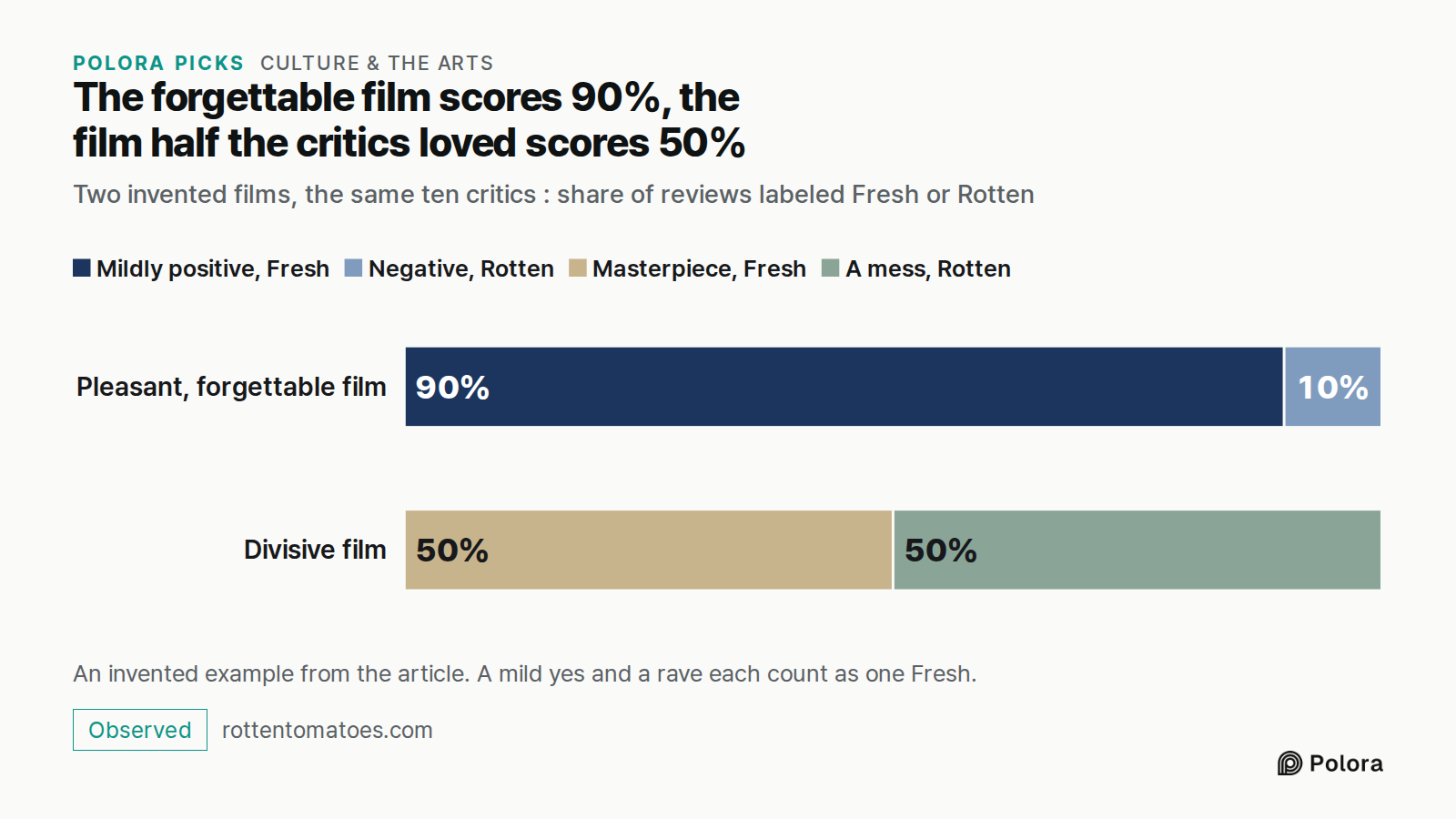
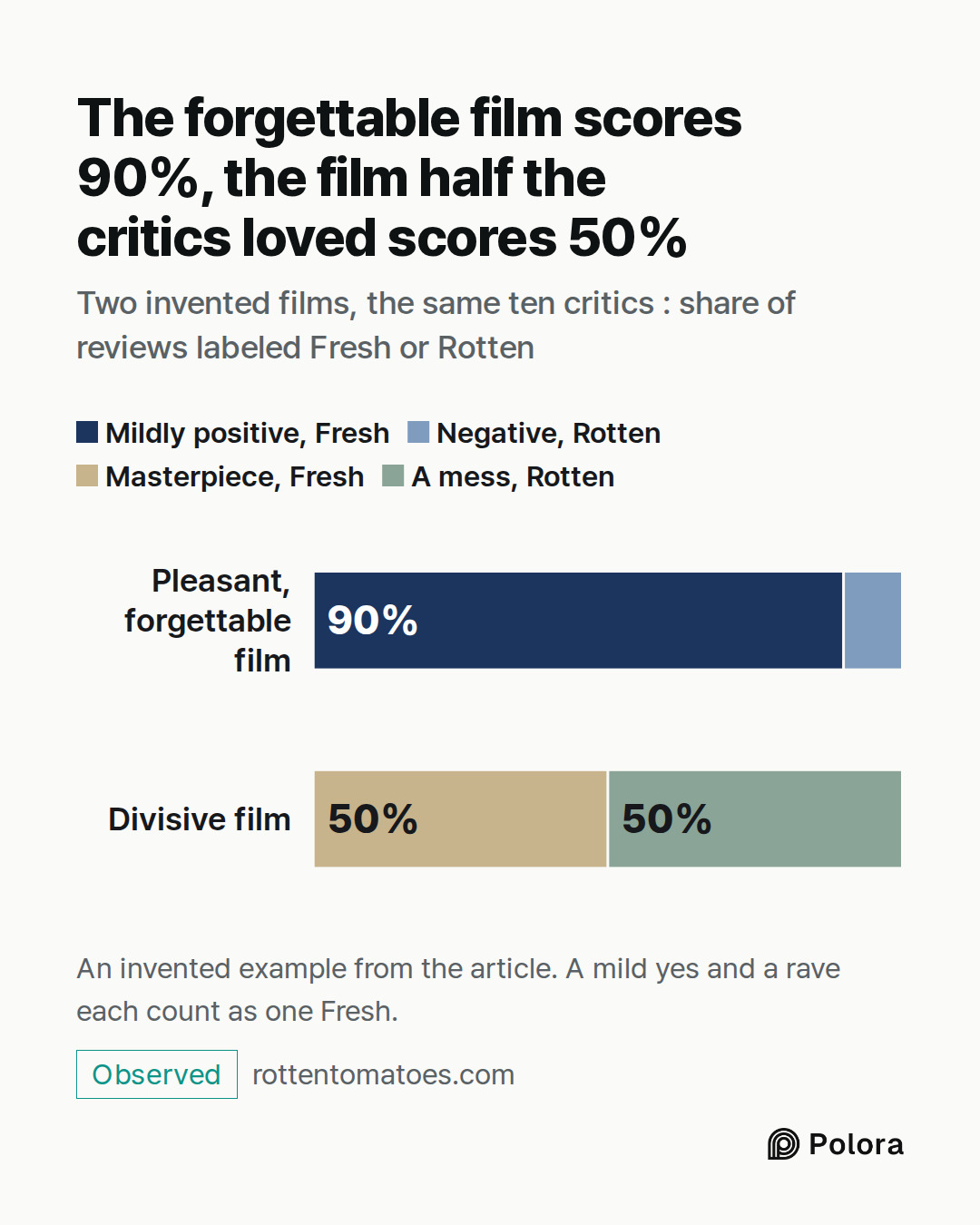
Take two invented films reviewed by the same ten critics. Nine of them find the first film pleasant and forgettable, and their mild reviews are labeled Fresh. It scores 90%. The second film splits them. Five call it a masterpiece and five call it a mess. It scores 50%. On the page, the forgettable film looks far better.
The thresholds work the same way. A title is Fresh when at least 60% of its reviews are positive. To earn the Certified Fresh badge it needs 75% or more, a minimum number of reviews, and at least five reviews from Top Critics, a group Rotten Tomatoes selects. None of these lines measure how strongly critics felt.
Two invented films, the same ten critics : share of reviews labeled Fresh or Rotten
The number that does measure how much critics liked it
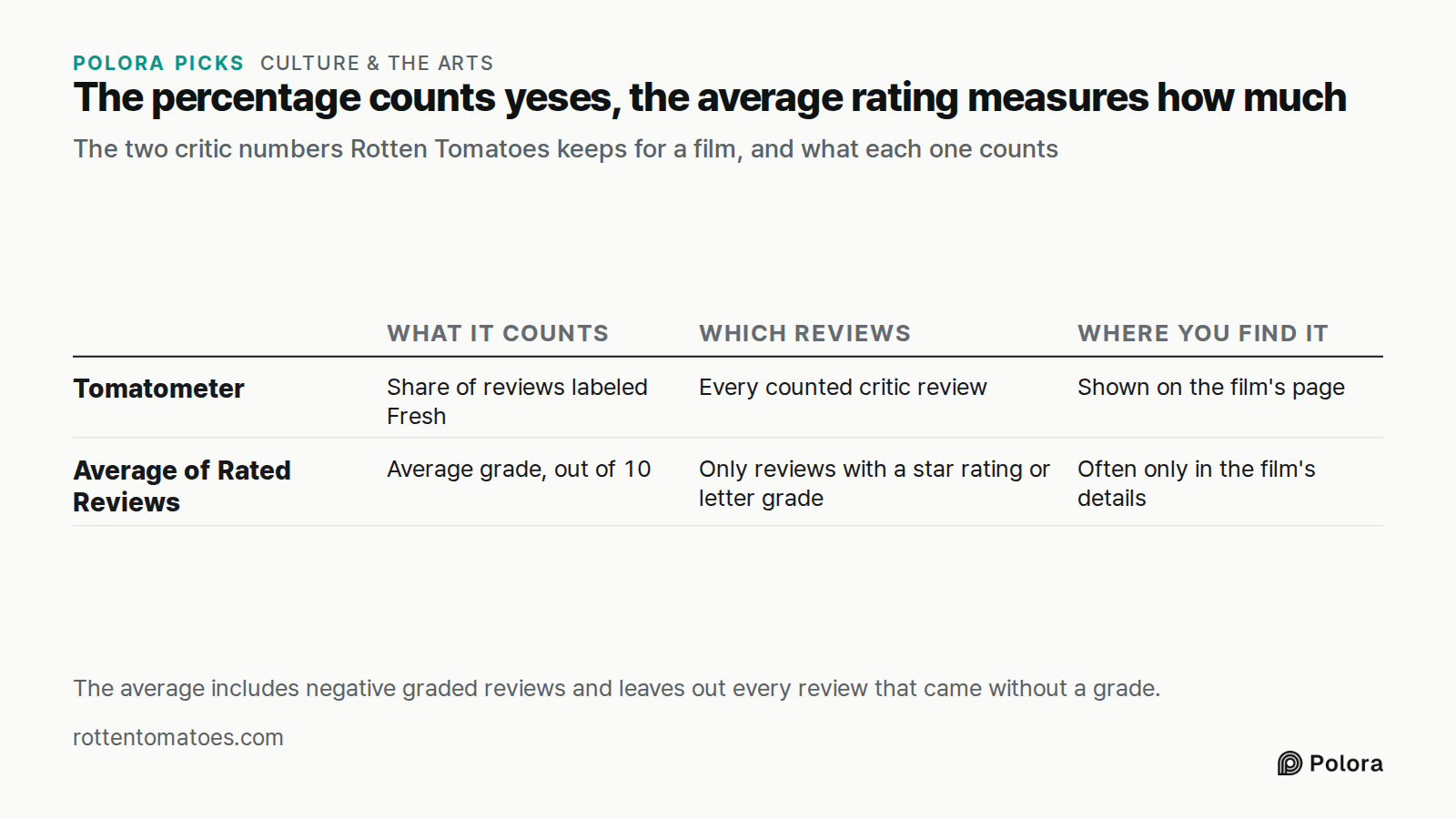
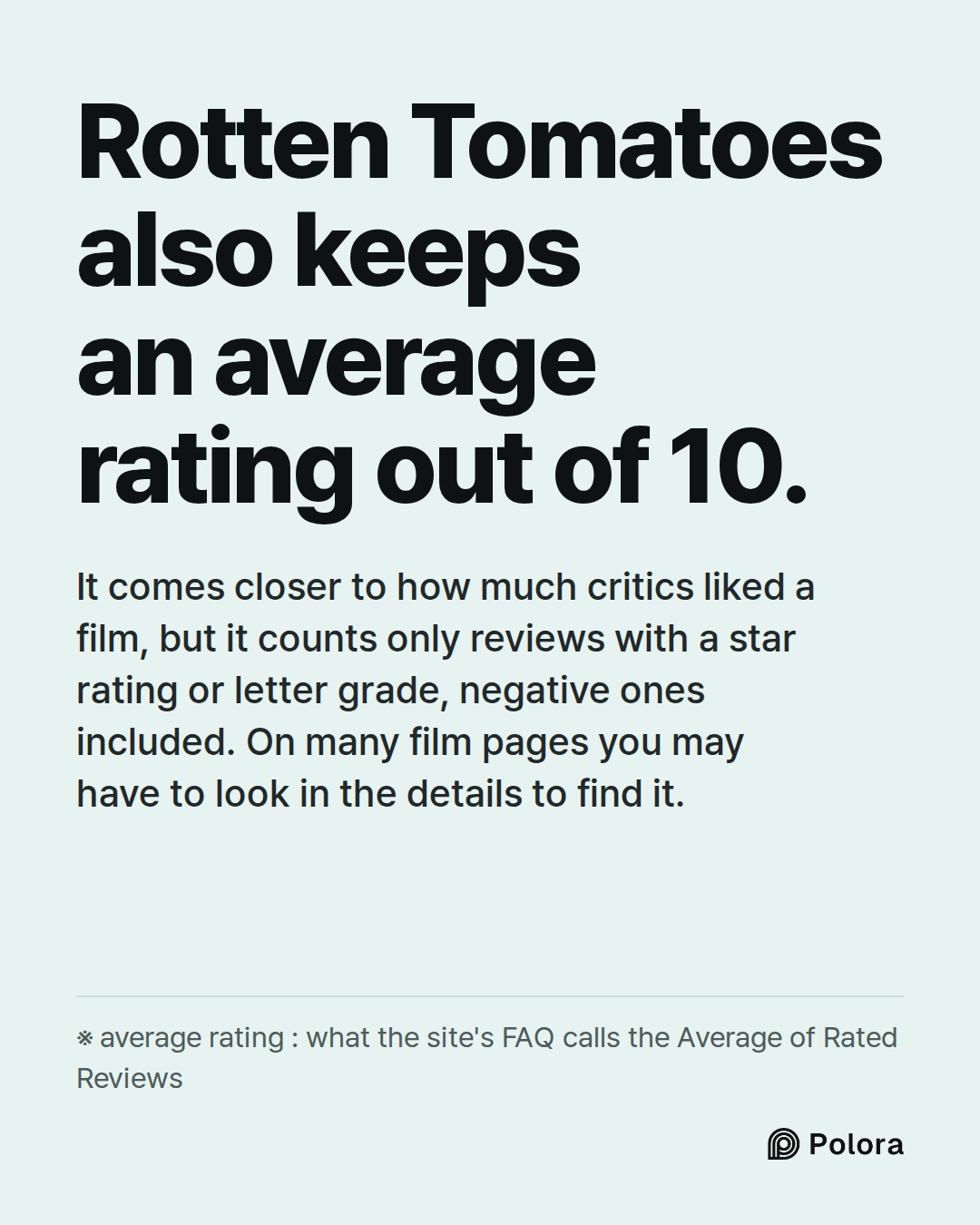
Rotten Tomatoes keeps a second figure that most people never look at. When reviews come with a star rating or a letter grade, the site averages them into a number out of 10, which its FAQ calls the Average of Rated Reviews. Reviews without a grade are left out of it. On many current film pages it is not shown next to the percentage, and you may have to look in the film's details to find it.
That figure comes closer to the question people think the percentage answers. A film can hold a high percentage with a modest average, which often suggests many critics liked it a little. A high average next to a lower percentage can mean the critics who liked it liked it a great deal. Not always, though. The average also includes the graded reviews that were negative, and it leaves out every review that came without a grade.
The two critic numbers Rotten Tomatoes keeps for a film, and what each one counts
Who decides whether a lukewarm review counts as a yes
Many reviews are not clearly for or against. Someone has to turn each one into Fresh or Rotten, and Rotten Tomatoes says reviews reach the site in two ways.
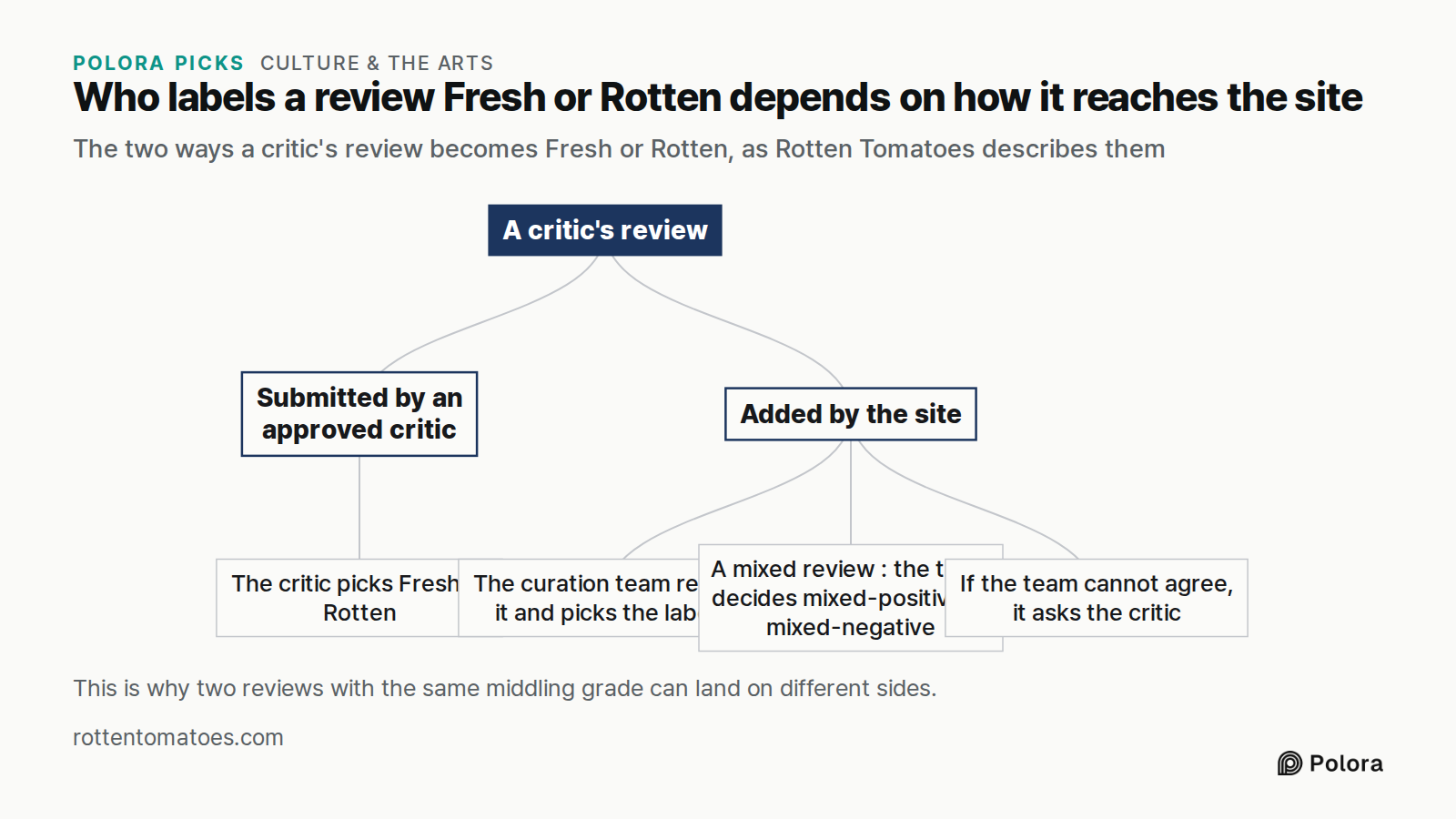
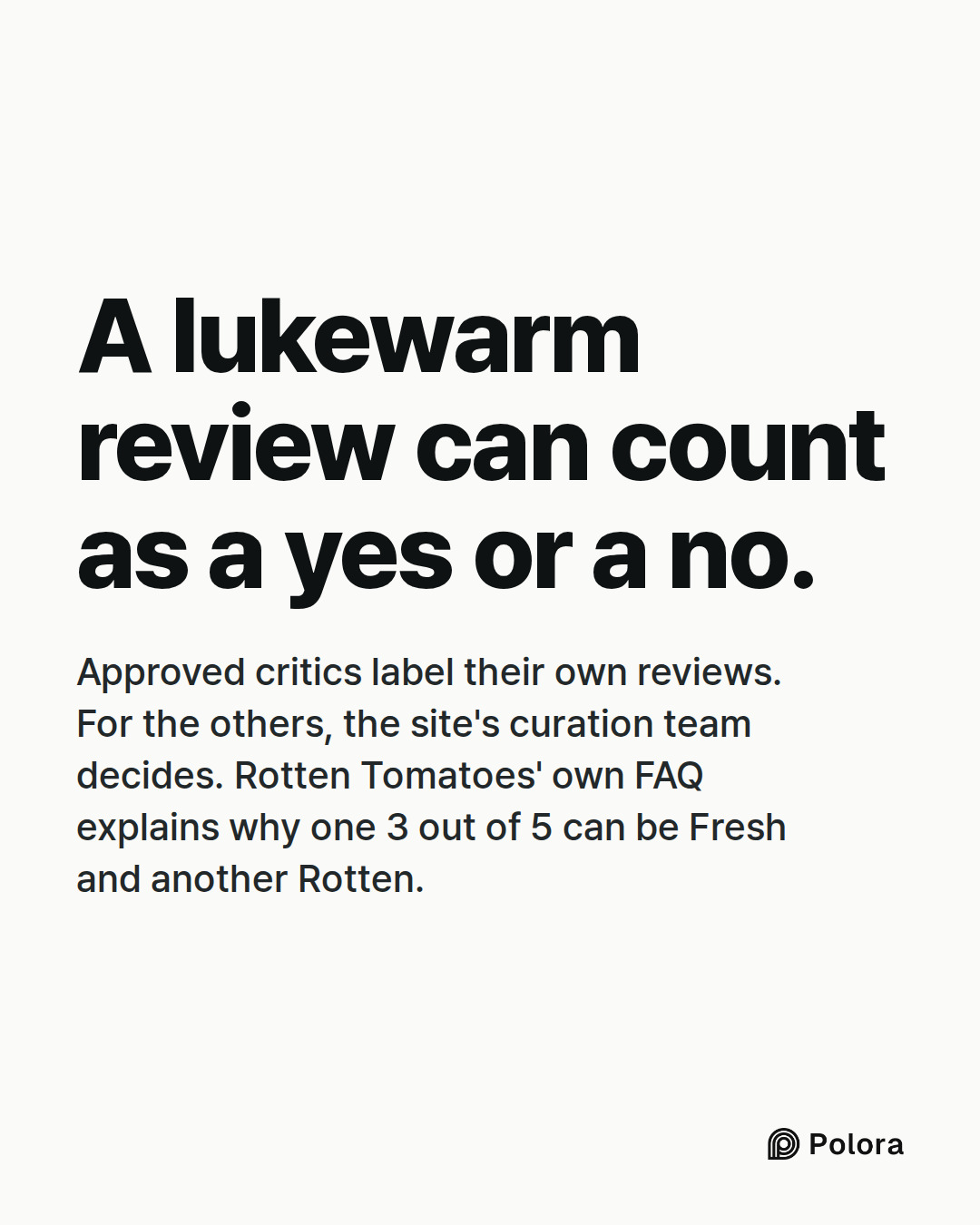
Critics the site has approved can submit their own reviews and choose the label themselves. For other reviews, the site's curation team reads the review, decides whether it is Fresh or Rotten, and picks a quote. When a review sits in the middle, the FAQ says the team decides whether it is mixed-positive or mixed-negative. If the team cannot agree, it asks the critic to make the call.
So the same middling grade can land on either side. Rotten Tomatoes' own FAQ explains why one 3 out of 5 can be Fresh and another Rotten. Two critics who gave the same grade can see their reviews differently, and for a self-submitted review the site goes with the critic's choice.
The two ways a critic's review becomes Fresh or Rotten, as Rotten Tomatoes describes them
Rotten Tomatoes does not employ critics. It decides which outside critics count. It takes applications once a year, each March, and assesses them against the site's criteria and a Critics Code of Conduct, which among other things look for at least two years of consistent review work.
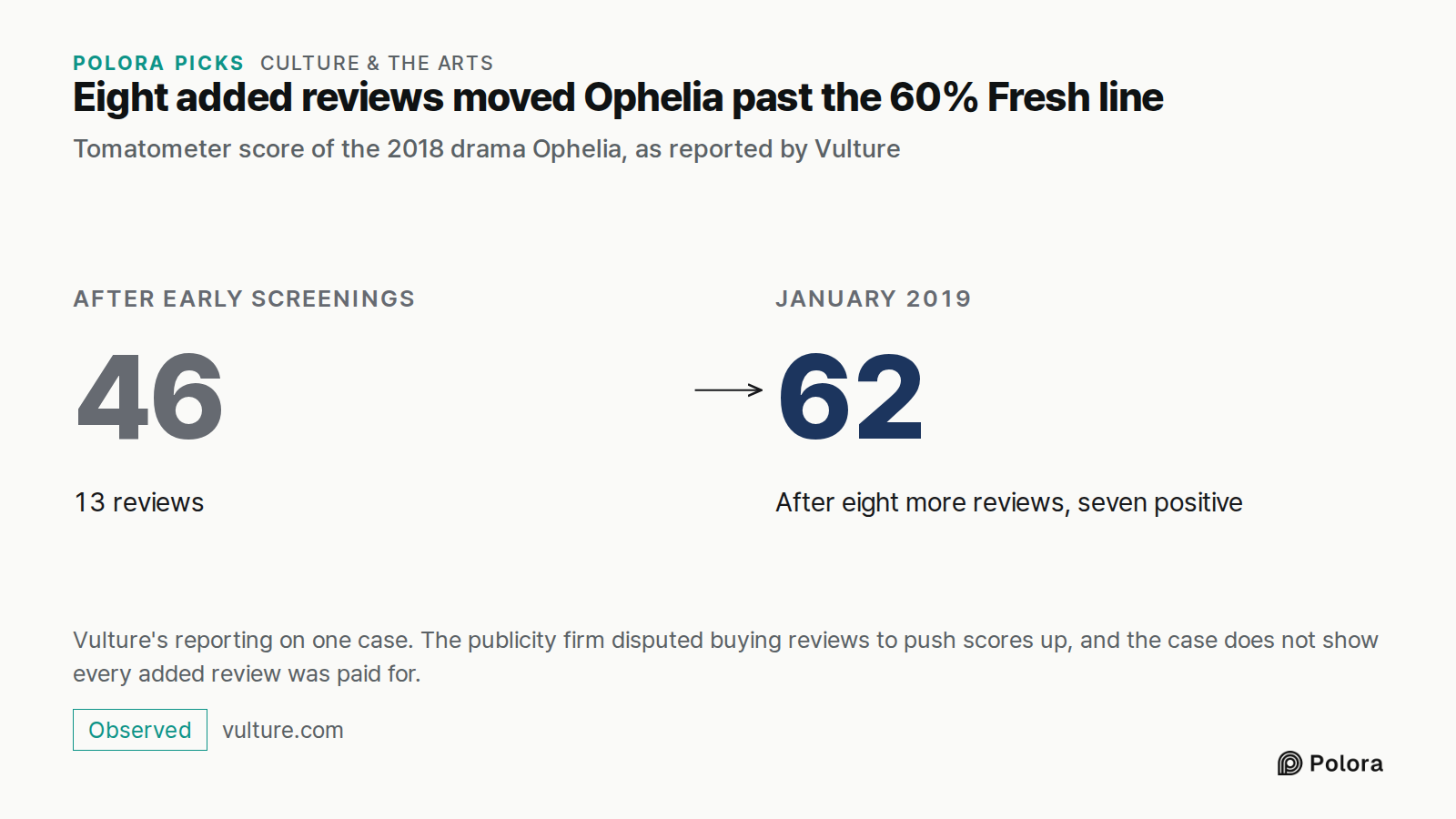
Because the score is a head count, adding a few reviews can move a film across a line. A 2023 investigation by the magazine Vulture described this happening to Ophelia, a 2018 drama. After early screenings the film stood at 46% from 13 reviews. Between October 2018 and January 2019 eight more reviews were added, seven of them positive, and the score rose to 62%, past the Fresh line. Several critics told Vulture that the publicity firm Bunker 15 had paid them $50 or more per review, which Rotten Tomatoes' rules forbid. The firm's founder disputed that it bought reviews to push scores up, while acknowledging to Vulture that a small handful of writers on its list had set up systems where filmmakers can pay to have a film reviewed.
Vulture also noted that the site had widened its critic pool in 2018 to include more freelance and self-published critics, YouTubers and podcasters. Rotten Tomatoes said it does not tolerate attempts to manipulate its scores and removed the film from its search results and most cast pages. These are Vulture's reported findings about one case. They do not show that every added positive review was paid for, or how common this is. They do show that who is counted shapes the result as much as what they think.
Tomatometer score of the 2018 drama Ophelia, as reported by Vulture
The audience score follows the same yes-or-no rule
Next to the critics' score sits the audience score, which Rotten Tomatoes now calls the Popcornmeter. It is the share of viewers who rated the title positively, and a rating counts as positive at 3.5 stars out of 5 or higher. A viewer who gives 3.5 stars and one who gives 5 count the same.
Since May 2019, viewers who bought a ticket through Fandango, the ticketing company that owns Rotten Tomatoes, can have their ratings marked Verified. This applies to eligible theatrical films in the United States, not to streaming titles or television. Where verified ratings exist, the page shows them first, and you have to switch to All Audience to see everyone else's ratings, including those from people the site cannot confirm saw the film. Where they do not exist, the page shows the All Audience score.
The site has since added a Verified Hot badge for theatrical films with a verified score of 90% or more and a minimum number of verified ratings. It also made the number of reviews a film needs before any score appears depend on its box office forecast. A film expected to earn $120 million or more now needs 40 critic reviews before its critics' score shows.
Read correctly, a 90% says that nine in ten counted critics found the film at least worth a mild yes. It measures how widely critics approved, not how much. Broad approval can belong to a film critics adore as easily as to one they found merely agreeable, and the percentage alone cannot tell the two apart. That is why a film many critics find good enough can score higher than one that thrills some and loses others.
None of this depends on whether any score has been gamed. It is simply what the number counts. How much critics liked a film is in the reviews themselves, and partly in the average rating, which covers only the reviews that carry a grade.
Does a 90% on Rotten Tomatoes mean critics think a movie is great?
Alpha · claude-sonnet-5
Here's my read on the manuscript, claim by claim, as participant Alpha.
Core mechanism — confirmed, and this is the real story. Rotten Tomatoes' own FAQ states it plainly: "Reviews without individual ratings are not counted in the Average Rating calculation... The Average Rating measures the overall quality of a film or TV show based on an average of individual critic scores. The Tomatometer simply measures the percentage of positive reviews." The About page confirms the binary framing too: "The Tomatometer score represents the percentage of professional critic reviews that are positive for a given film or television show." So the manuscript's headline claim — that 90% is a head count, not a grade — is correct and well-sourced. The 60%/75% thresholds also check out: "When at least 60% of reviews for a movie or TV show are positive, it is considered Fresh and a red tomato is displayed. When less than 60% of reviews for a movie or TV show are positive, it is considered Rotten."
Who decides Fresh/Rotten — confirmed. "Our curation process considers these reviews, noting if they are Fresh or Rotten, and our curators choose a representative pull-quote. Tomatometer-approved crit…
Beta · gpt-6-sol
No. A 90% Tomatometer says that about nine in ten *counted reviews* were classified as positive. It does not say critics awarded the movie an average grade of 9/10, or that nine in ten called it great. The manuscript’s two invented films illustrate the distinction correctly: a mild Fresh and an ecstatic Fresh each add one to the numerator. Rotten Tomatoes defines Fresh as at least 60% positive; Certified Fresh requires at least 75%, five Top Critic reviews, and further review-count requirements. (rottentomatoes.com)
I agree with Alpha on that central finding, but “the ownership chain is the one factual repair needed” understates what needs checking or changing:
- The alternative average exists, but its visibility is not established. Rotten Tomatoes’ FAQ says its *Average of Rated Reviews* averages critics’ numerical or letter grades out of 10 and excludes ungraded reviews. A search-engine rendering of its *The Last Viking* page shows 90% positive, 7.20/10 average. Yet the page content I could open displayed the 90% prominently and did not expose that average. The editor can recommend looking for the ave…
Gamma · gemini-3.1-pro
Here is my assessment of the manuscript's claims, building on what Alpha and Beta have surfaced, and bringing in additional verification from the live web.
1. The core mechanism: 90% is a head count, not a grade
The manuscript’s central premise is absolutely correct. Rotten Tomatoes explicitly states that the Tomatometer is "the percentage of professional critic reviews that are positive." A lukewarm positive and a raving masterpiece review both count as exactly one "Fresh." The thresholds (60% for Fresh, 75% plus minimums for Certified Fresh) are also accurate.
*Source: https://www.rottentomatoes.com/about*
*Premise check:* The premise stands firmly. A 90% measures the *breadth* of approval, not the *depth* of enthusiasm.
2. The "Average of Rated Reviews" exists but requires digging
The manuscript is correct that Rotten Tomatoes maintains an average score out of 10 for reviews that include a numeric or letter grade. However, I agree with Beta that we must be careful about implying it is highly visible. My live checks of 2026 Rotten Tomatoes pages show this average is tucked away under "Movie Info" or "Series Info" tabs. Readers have to intentionally look for it.
*Sour…
Researcher · gemini-3-7-flash
Claim-by-Claim Verification
1. Core Mechanism: 90% is a head count, not a quality grade
* Status: Verified.
* Findings: Rotten Tomatoes defines the Tomatometer strictly as the "percentage of professional critic reviews that are positive". The 60% threshold for Fresh and 75% plus minimum review counts (including at least 5 from Top Critics) for Certified Fresh match the site's official methodology. The arithmetic premise holds: lukewarm approval and glowing acclaim count identically toward the percentage numerator.
* Source: Rotten Tomatoes — About, Rotten Tomatoes — FAQ.
---
2. The "Average of Rated Reviews"
* Status: Verified conceptually; caveat on front-page visibility.
* Findings: Rotten Tomatoes maintains an *Average of Rated Reviews* (out of 10), which averages numeric or letter grades and excludes unrated reviews. However, on modern page layouts, this figure is no longer surfaced prominently in the main header beside the percentage, often requiring readers to dig into tab details ("Movie Info").
* Editorial note: The manuscript should clarify that while Rot…
The Arbiter · gpt-6-sol
Round record. Alpha, Beta, Gamma, and the Researcher agree on the central distinction: Rotten Tomatoes defines the Tomatometer as the percentage of counted critic reviews classified as positive, not an average grade. A mildly positive review and a rave each contribute one Fresh review. Thus the manuscript’s invented 90%-versus-50% example works as an illustration, and its premise stands. The site also confirms the 60% Fresh threshold and Certified Fresh’s 75% threshold, subject to additional review requirements. (rottentomatoes.com)
The important qualifications and corrections are these:
- Strength of opinion: Beta’s objection is the sharpest: “a measure of how safe a film is” overstates what the number proves. Broad approval *can* reflect greatness; 90% alone cannot distinguish enthusiastic acclaim from widespread mild approval. Gamma’s counterclaim that 90%-rated films are *usually* very good was not supported by evidence in this round.
- The alternative average: The FAQ confirms an *Average of Rated Reviews* out of 10, but it excludes reviews without numerical or letter grades. Beta and the Researcher could not establish…
The Arbiter's Final Verdict · gpt-6-sol
No—not necessarily. A 90% Tomatometer means 90% of the counted critics’ reviews were classified as positive. It does not mean critics gave the movie an average score of 9/10, or that they thought it was great.
A mildly favorable review and an enthusiastic rave each count as one positive review. So 90% tells you there is broad approval, but not how strong that approval is. For that, look at the reviews themselves or Rotten Tomatoes’ Average of Rated Reviews, which covers reviews that include a grade. The Tomatometer explanation confirms the distinction.