The AI boom runs on the same chips as your laptop
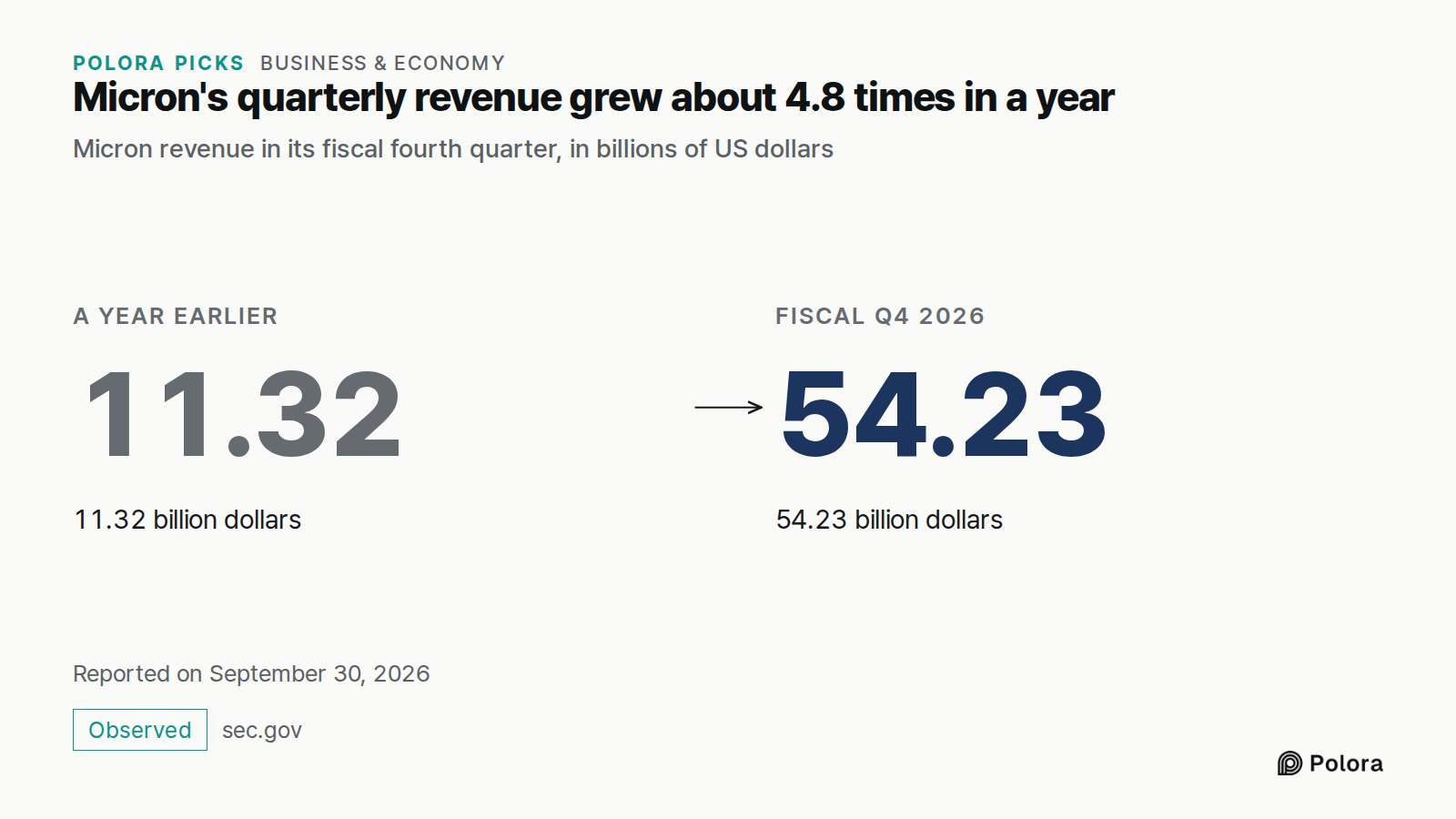
On September 30, a company most people have never heard of reported the biggest quarter in its history. Micron took in 54.23 billion dollars in revenue, about 4.8 times the 11.32 billion it earned in the same quarter a year earlier. It makes memory, the chips that hold whatever a computer or phone is working on at a given moment. Three months earlier, Apple had raised the prices of its Macs and iPads and pointed to a memory shortage driven by AI.
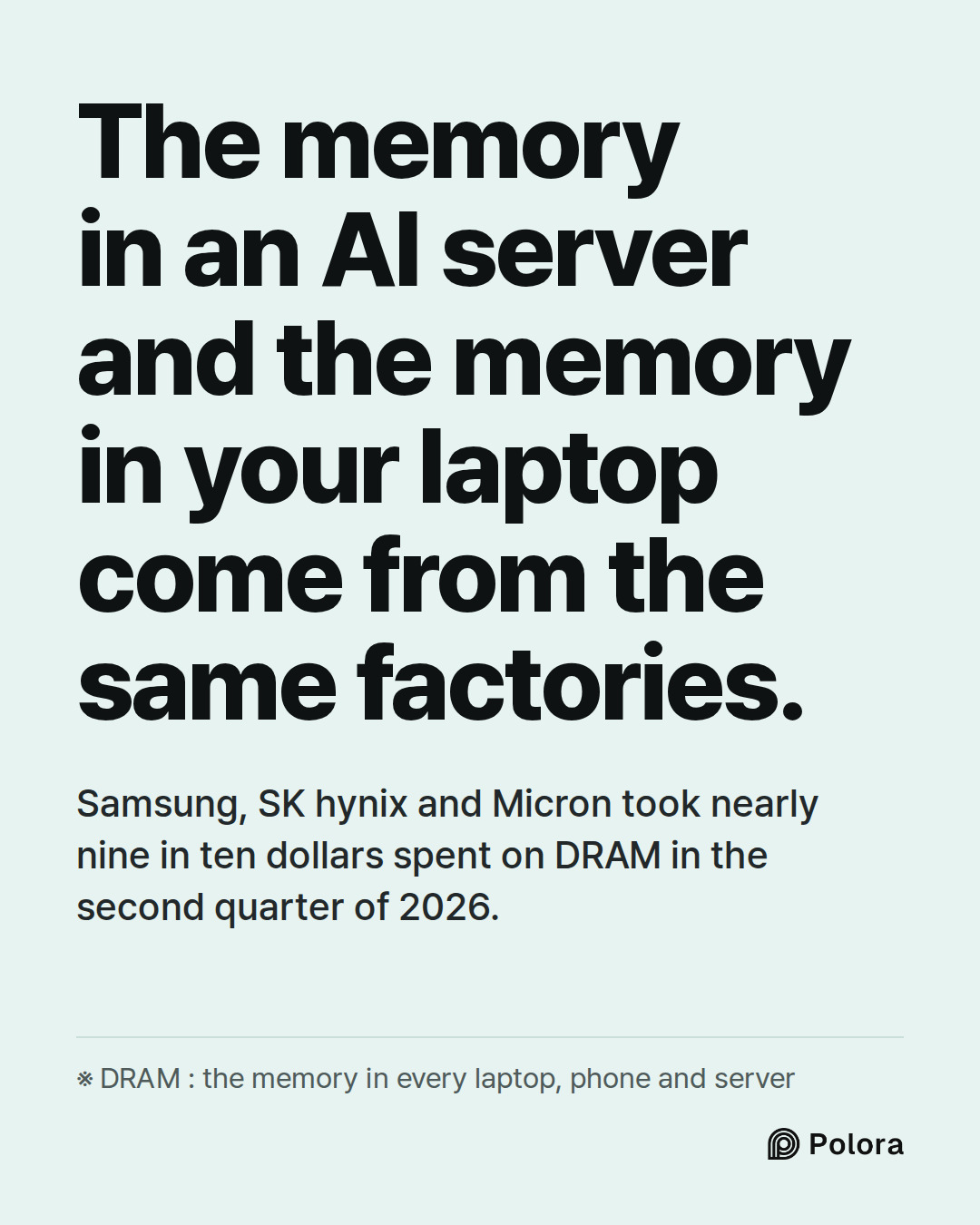
It is easy to picture the AI boom happening somewhere else, in data centers full of machines that have nothing to do with the phone in your pocket. That picture is wrong in one precise way. The memory inside an AI server and the memory inside your laptop are cut from the same silicon discs, in the same factories, by the same few companies. When one side takes more, the other gets less.
Three companies make most of the world's computer memory
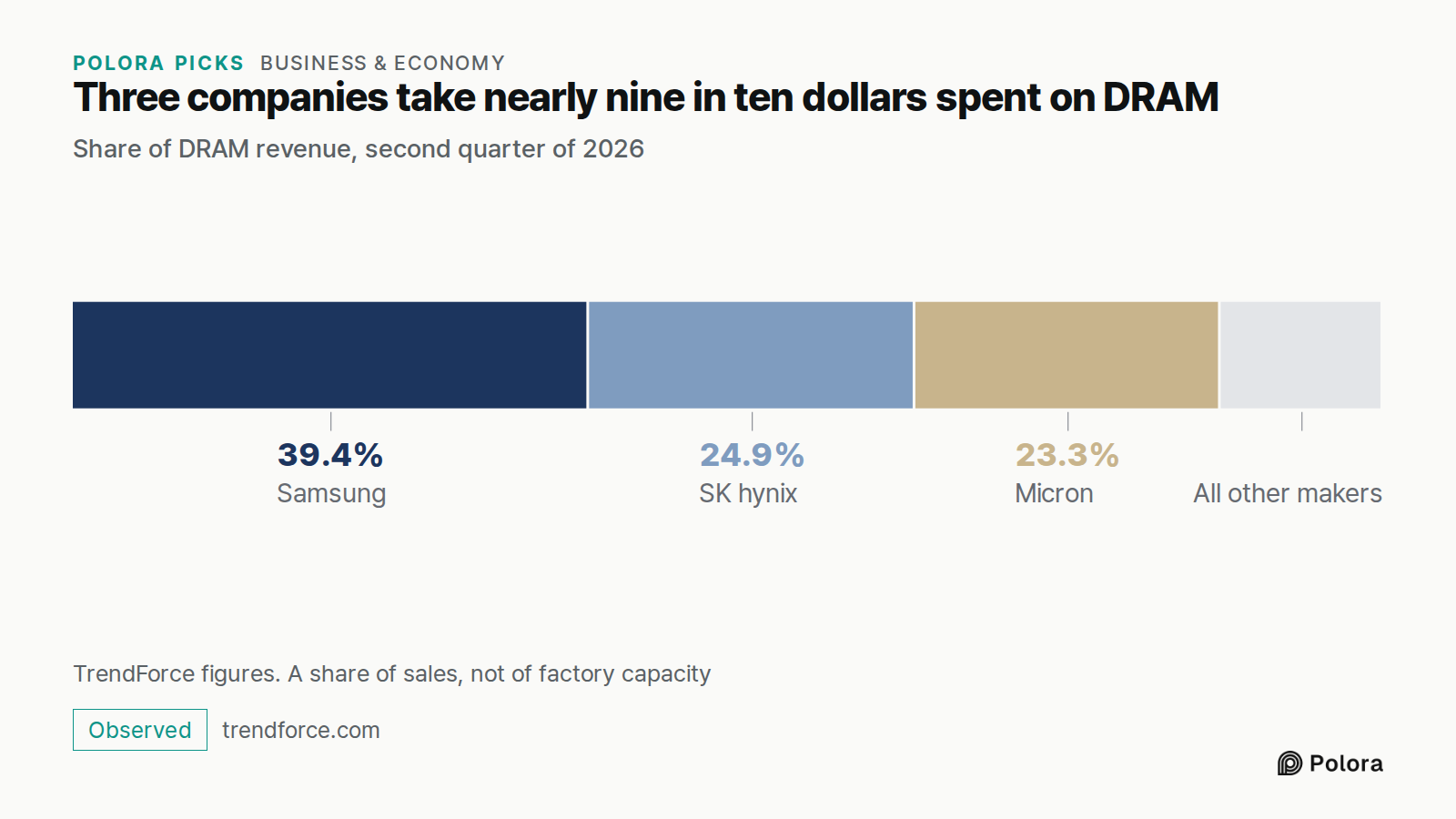
The kind of memory at stake is called DRAM, and it sits in every laptop, phone and server. In the second quarter of 2026, three companies took 87.6 percent of all the money spent on it, nearly nine in ten, according to the market research firm TrendForce : Samsung with 39.4 percent, SK hynix with 24.9 percent and Micron with 23.3 percent. That is a share of sales, not of factory capacity, and another tracker, Counterpoint Research, splits it a little differently while arriving at about the same total.
A Chinese maker, CXMT, has been gaining ground in ordinary memory, though it is too early to say whether the three leaders' share is in lasting decline. For now, when these three decide what to make, the whole market follows.
AI memory needs about three times the silicon for the same capacity
Memory chips are printed on round silicon wafers, and a factory can only process so many wafers a month. Each wafer can be turned into ordinary memory for PCs and phones, or into the special memory that AI chips need. That special kind is called high-bandwidth memory, or HBM : chips stacked on top of each other so they can feed data to an AI processor very fast.
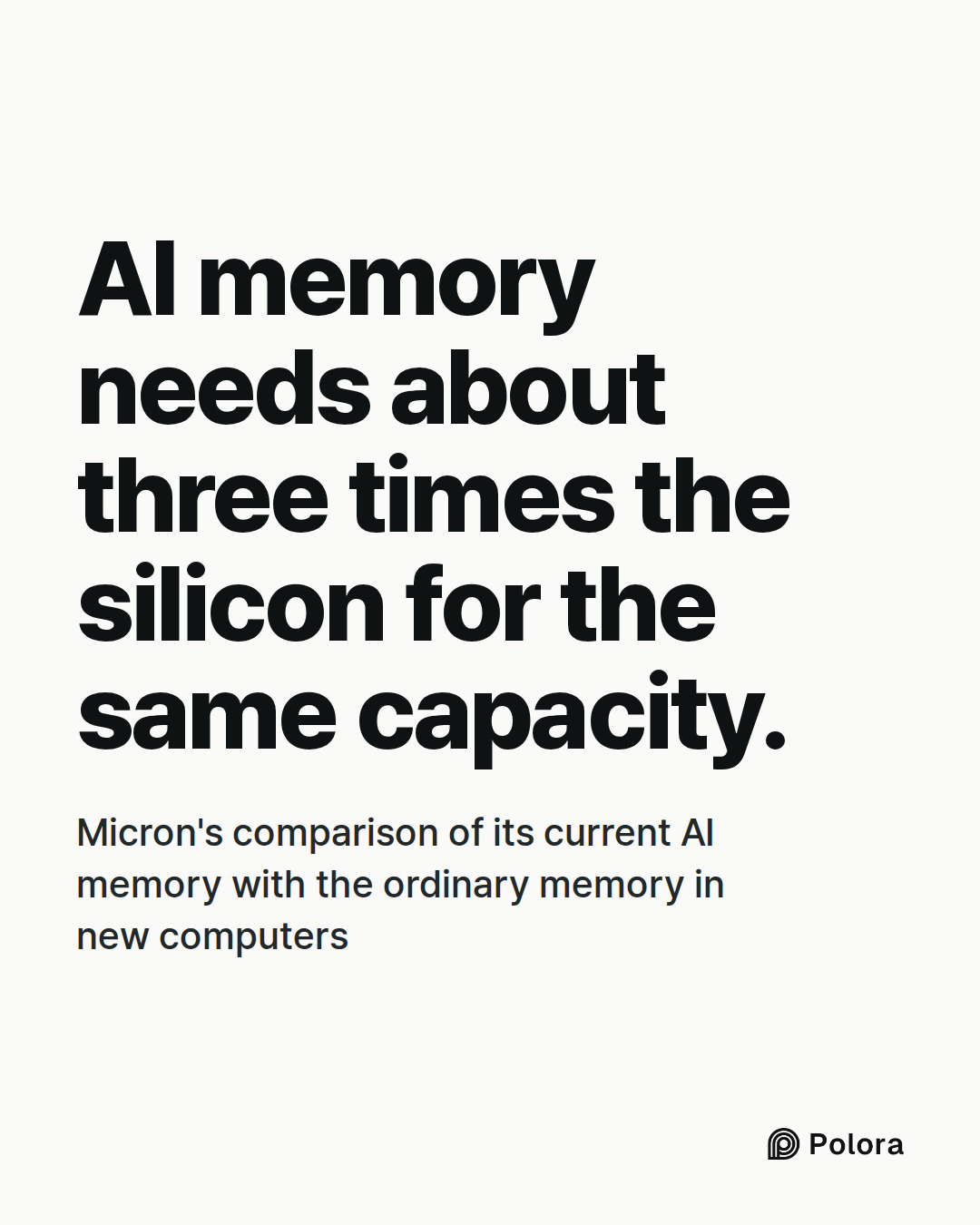
Speed costs space. Micron has said that its current AI memory, HBM3E, consumes approximately three times the wafer supply of DDR5, the ordinary memory in new computers, to make the same amount of memory on the same manufacturing process. At the Hot Chips conference in August 2026, a Micron engineer said the gap is not shrinking with newer generations, and the company expects it to be larger for the next one. The ratio is a comparison between these products, not a fixed rate for every memory chip.
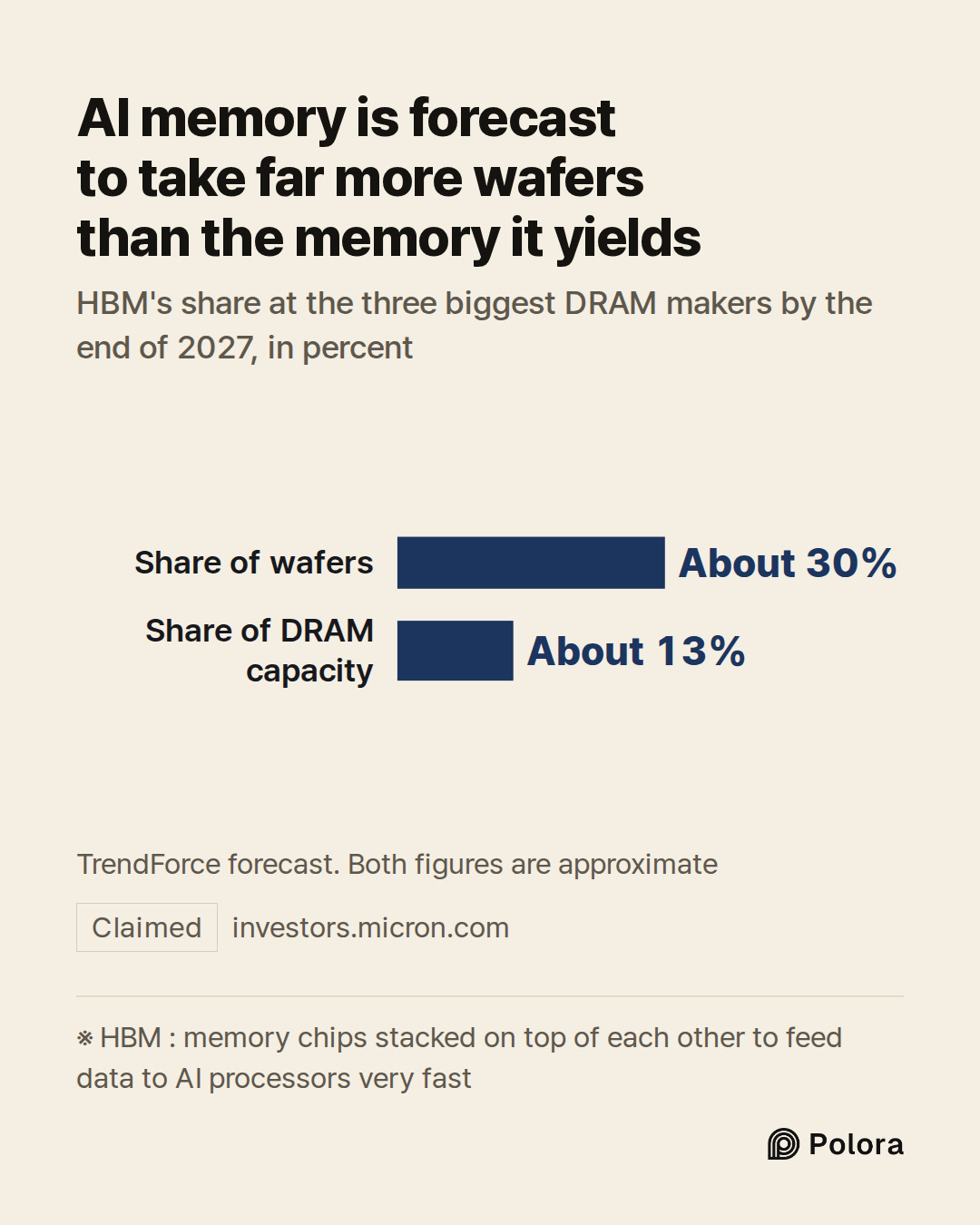
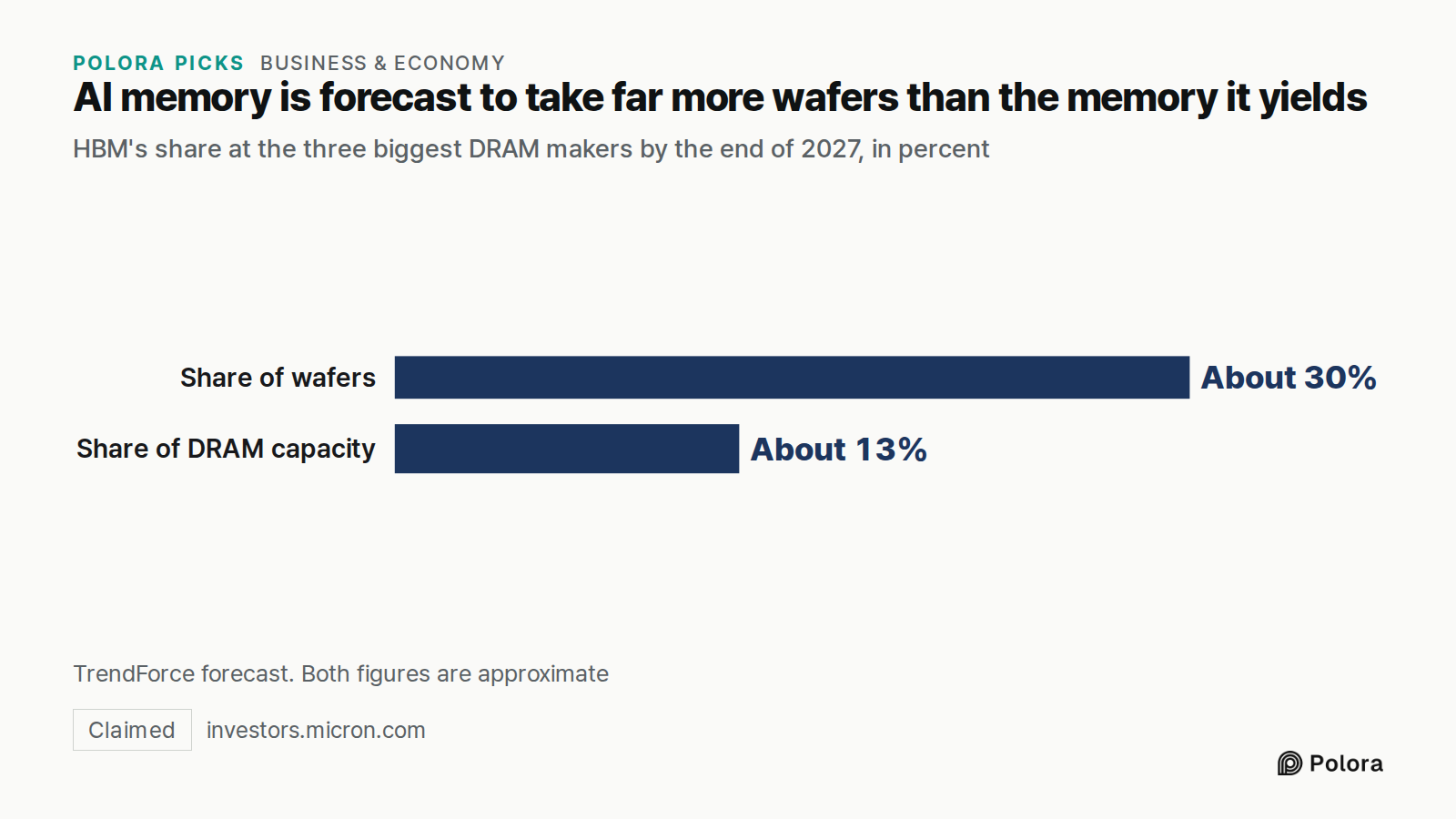
So moving a wafer from ordinary memory to AI memory is not a one-for-one swap. It gives up roughly three units of ordinary memory for every one unit of AI memory. A Samsung executive, Kim Taewoo, told Reuters that HBM takes about 20 percent of the industry's DRAM wafer capacity today and should take nearly 30 percent next year. Separately, TrendForce forecasts that by the end of 2027, HBM will take about 30 percent of the wafers at the three biggest makers while yielding only about 13 percent of their DRAM by capacity.
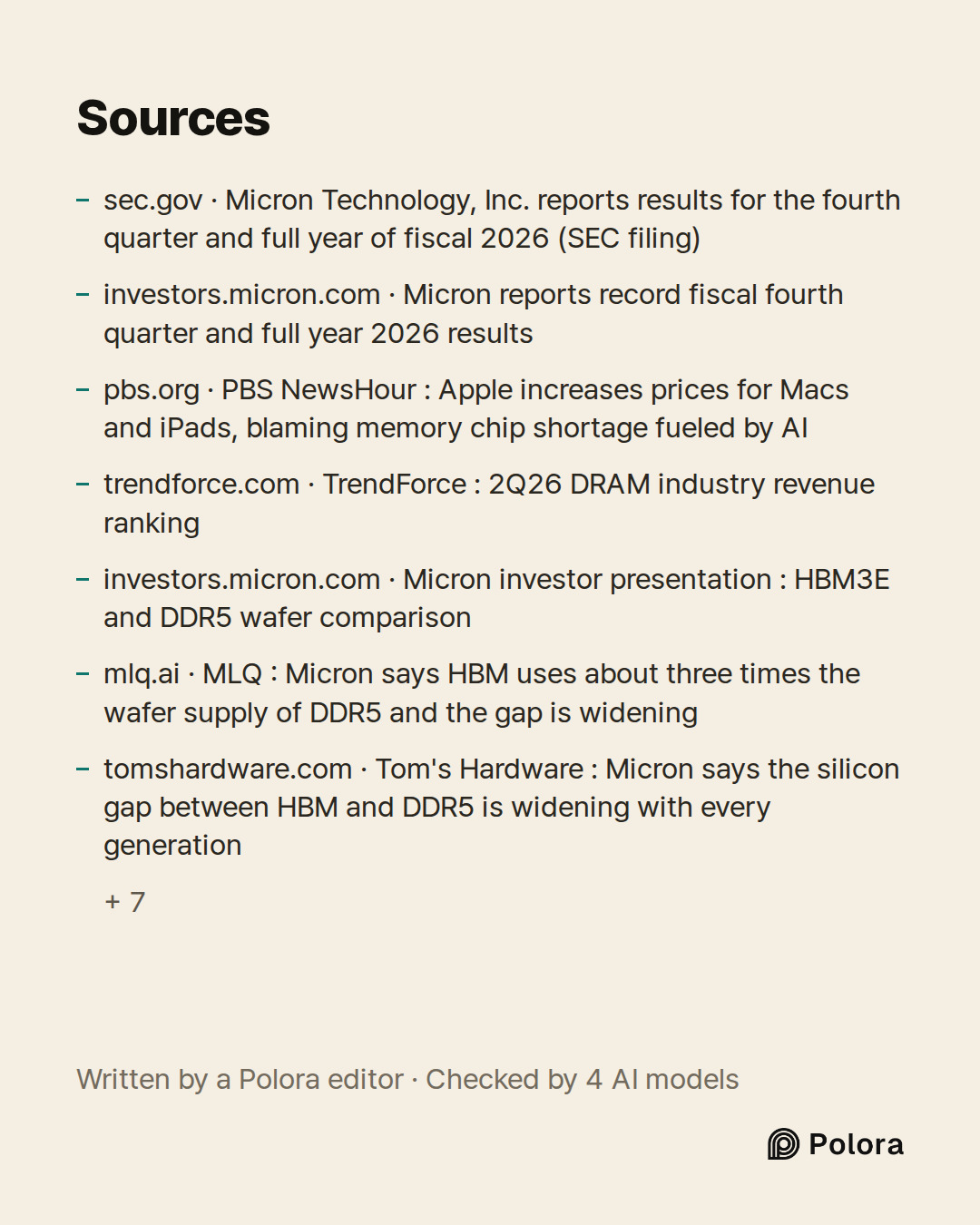
- Micron investor presentation : HBM3E and DDR5 wafer comparison
- MLQ : Micron says HBM uses about three times the wafer supply of DDR5 and the gap is widening
- Tom's Hardware : Micron says the silicon gap between HBM and DDR5 is widening with every generation
- TrendForce : Samsung sees HBM taking nearly 30% of industry DRAM capacity in 2027, up from 20% currently
Why the wafers go to AI first
Memory makers choose where their wafers go, and AI customers are the ones they choose first. The large cloud companies building AI data centers buy in huge volumes and lock in supply with long-term agreements. TrendForce reported that DRAM makers were "reallocating capacity toward HBM and server applications" in the second quarter, while cutting what they shipped to PC makers.
Not all of that pull is HBM. AI data centers also buy large amounts of ordinary server memory, and TrendForce found that in the first quarter of 2026 ordinary DDR5 server memory actually earned more per wafer than HBM. What puts AI buyers first is the size and length of their contracts, not a premium that always holds. Makers' inventories of memory are also historically low, which gives them more power over prices.
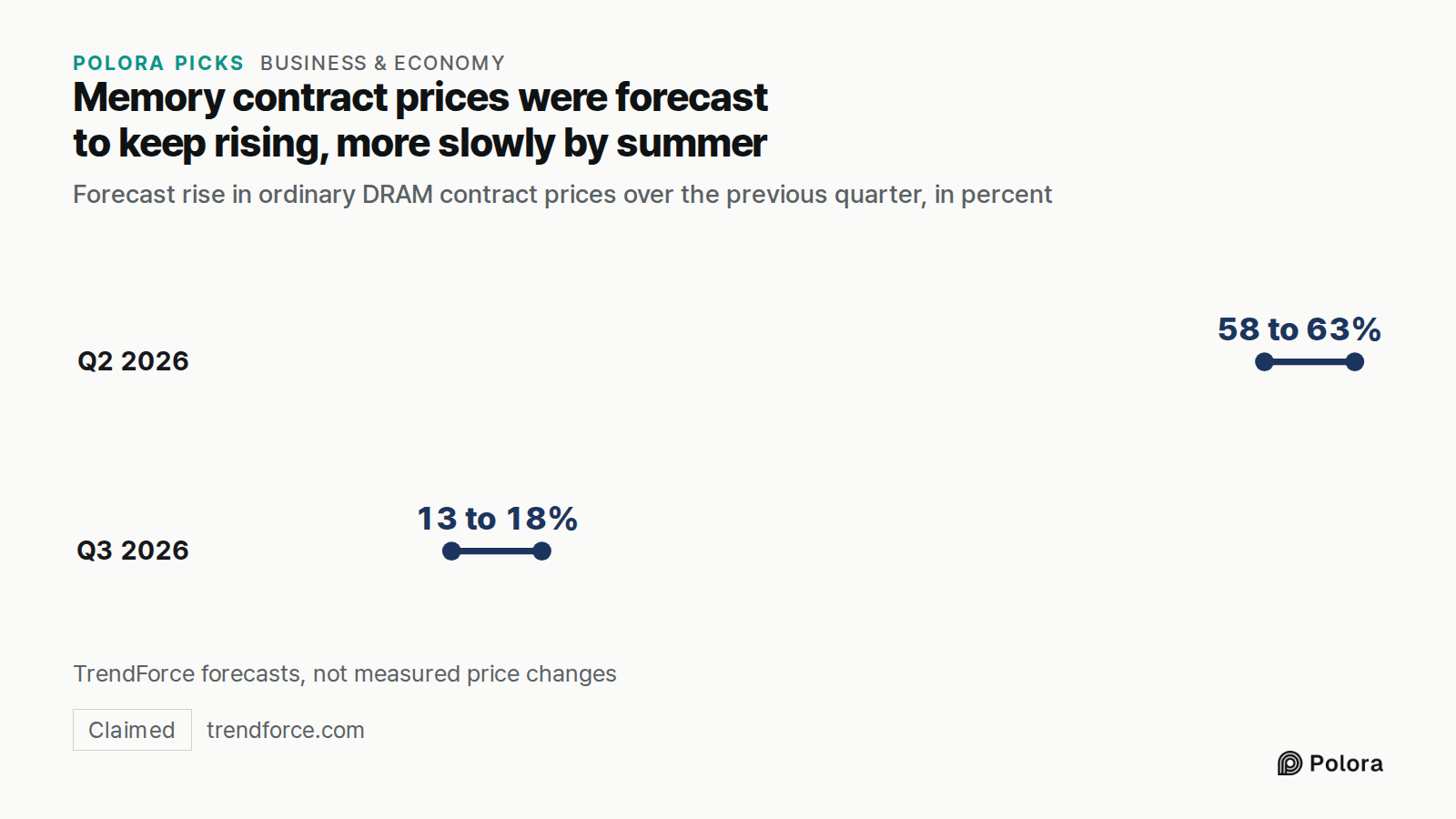
The result shows up in contract prices, the prices device makers pay memory makers under deals agreed each quarter. TrendForce forecast that contract prices for ordinary DRAM would rise 58 to 63 percent in the second quarter of 2026 over the first, which had itself set a record. For the third quarter it forecast a smaller rise of 13 to 18 percent, partly because PC and phone makers cannot absorb much more. Both are forecasts, not measured price changes.
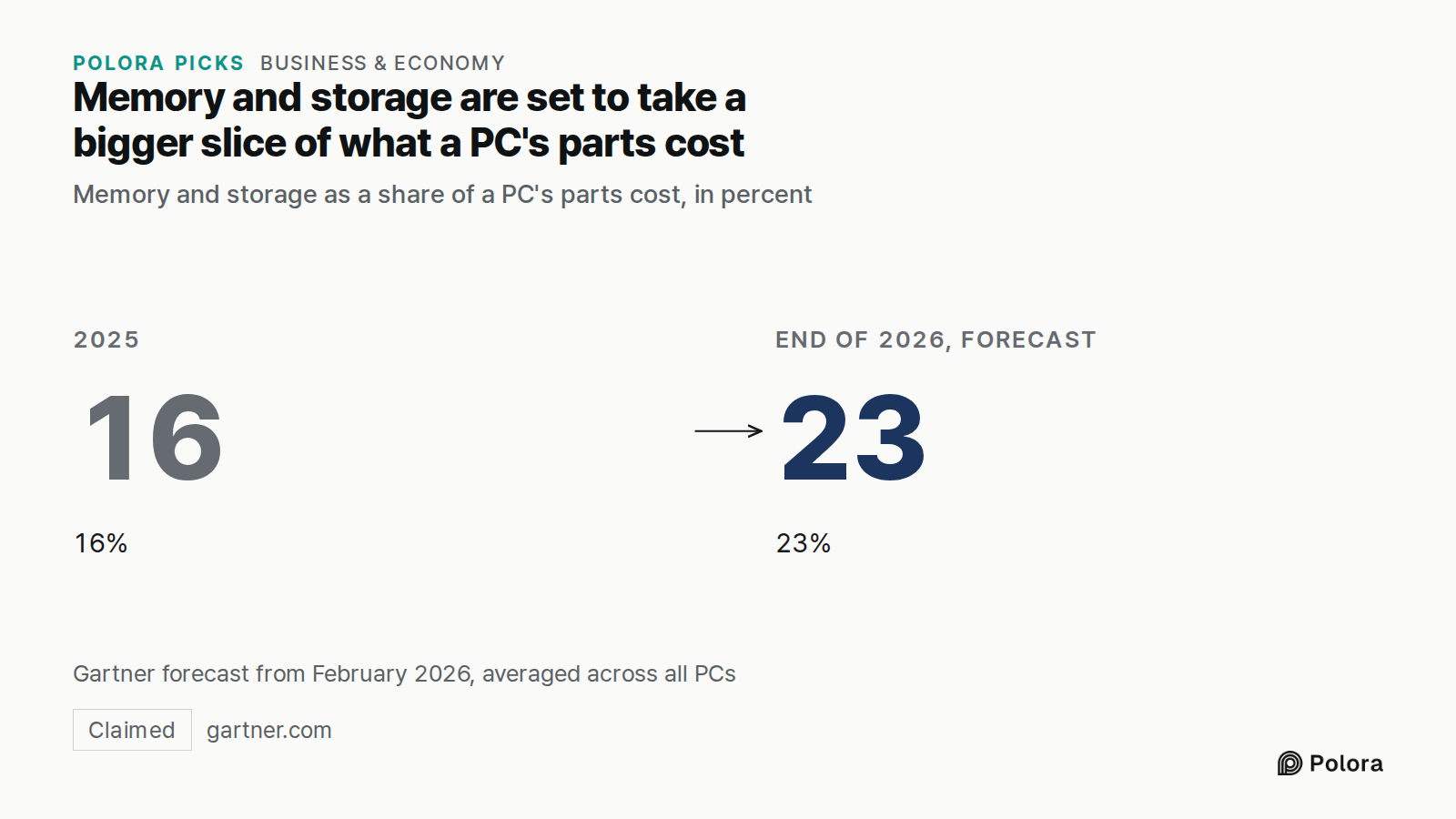
Memory and storage are set to go from a sixth to nearly a quarter of a PC's parts cost
In February, the research firm Gartner forecast that combined prices for DRAM and SSD storage would rise 130 percent by the end of 2026. On that basis it expected memory and storage to reach 23 percent of the cost of the parts in a PC, up from 16 percent in 2025, and the average price of a PC to rise 17 percent and of a smartphone 13 percent compared with 2025.
Storage is made from a different kind of chip, called NAND flash, so the three-to-one wafer arithmetic above explains only the memory half of that forecast. And these are forecasts and averages across all PCs and phones. A 17 percent average does not mean every laptop costs 17 percent more. Gartner expects the cheapest devices to be hit hardest, because a thin margin leaves the least room to absorb a costlier part.
Apple, LG and Samsung have already raised their prices
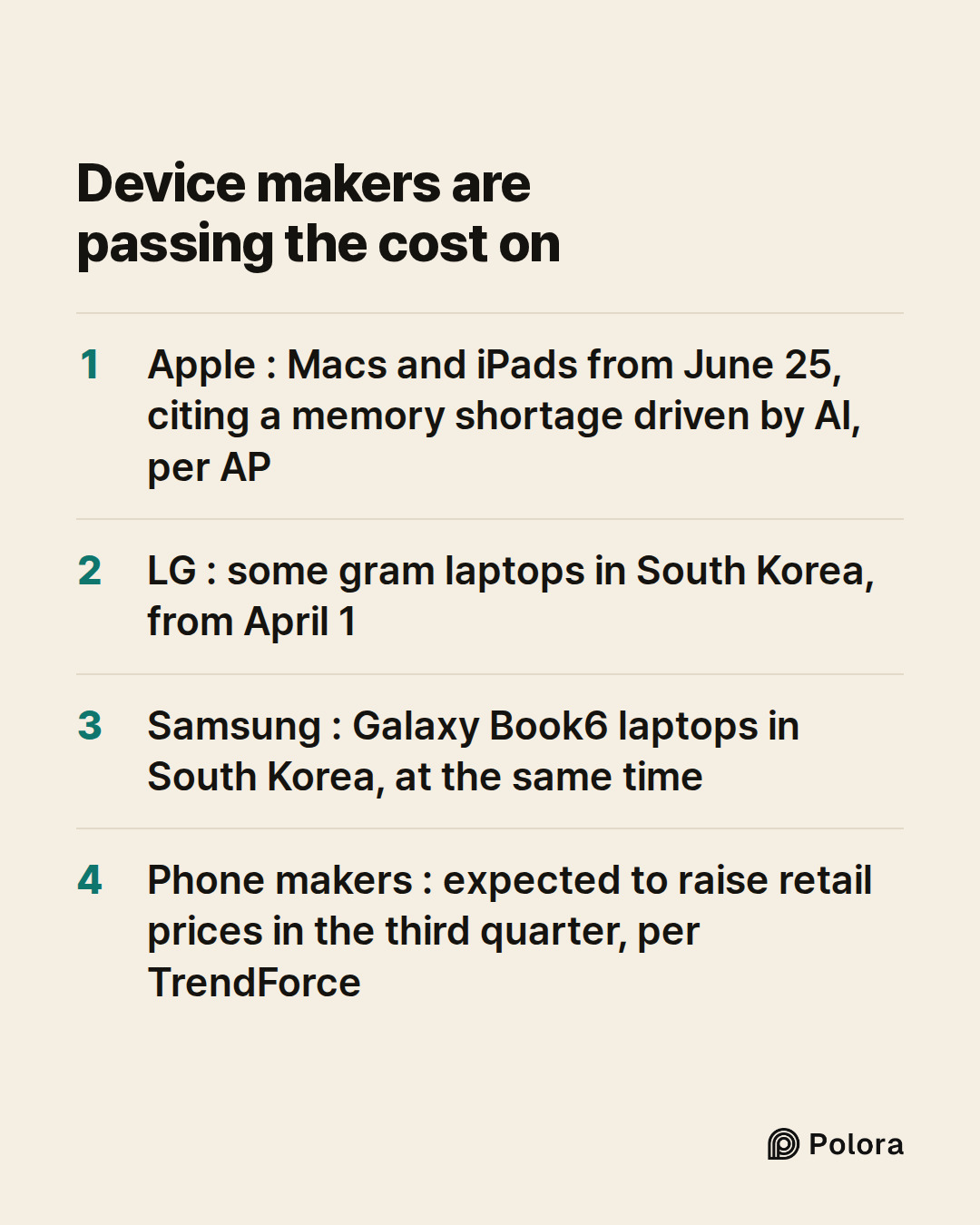
On June 25, Apple raised the prices of Macs and iPads. The MacBook Air had launched in March starting at 1,099 dollars ; after the increase, the model with 512GB of storage cost 1,299 dollars. According to AP reporting, Apple attributed the increases to a shortage of memory chips driven by the expansion of AI data centers.
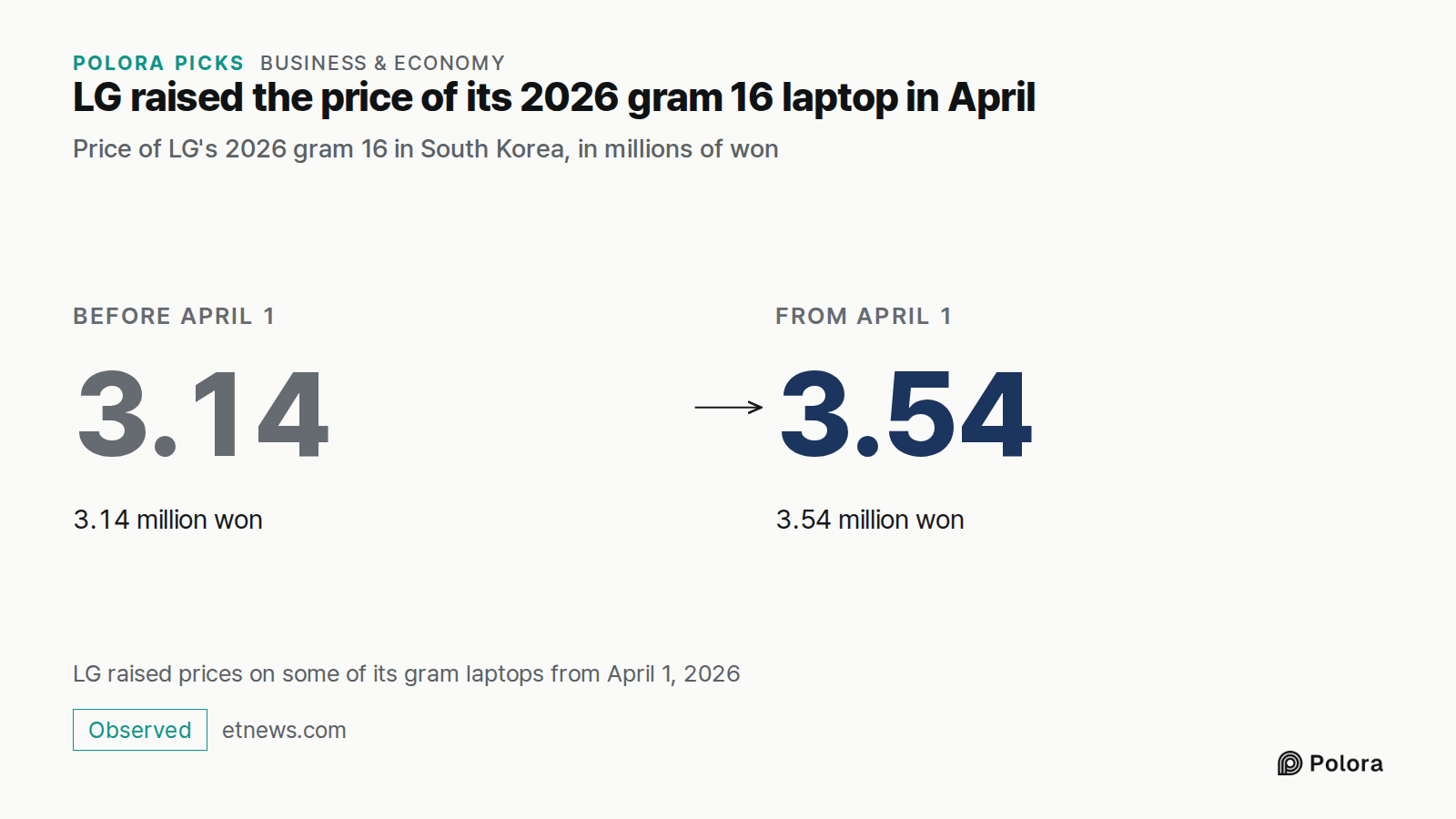
In South Korea, LG raised prices on some of its gram laptops from April 1. The 2026 gram 16 went from 3.14 million won to 3.54 million won. Samsung raised prices on its Galaxy Book6 laptops at the same time.
Phones follow by a different road. Their memory is a mobile variety of DRAM, made in the same factories, and TrendForce reported in July that smartphone makers were expected to raise retail prices in the third quarter to offset its persistently high cost.
The price of your phone now depends on how a wafer is divided
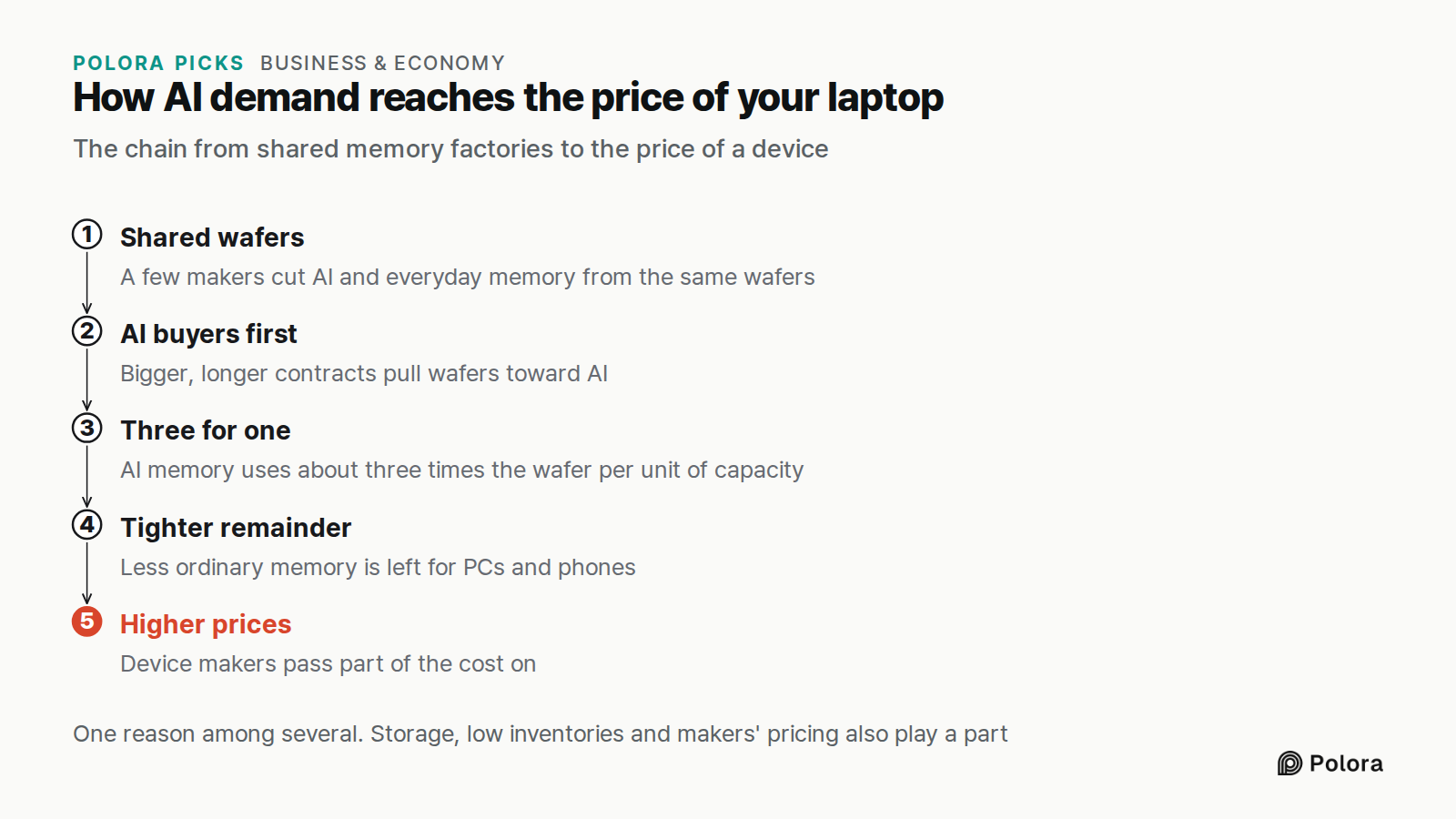
The fact to keep is not this year's percentages, which will move. It is the arrangement underneath them : a handful of companies make the memory for both AI servers and everyday devices, from one shared supply of wafers, and today's AI memory needs about three times the wafer that ordinary memory needs for the same capacity. As long as AI buyers sign bigger and longer contracts, ordinary devices compete for a tighter remainder. That is not the only reason a given laptop costs more, since storage, low inventories and makers' pricing all play a part, but it is the one most people never see.
Whatever changes that arrangement will also have to run through the wafers. New factories take years to build and fill. A maker that adds ordinary memory, as CXMT has been doing, adds ordinary supply. And if demand for AI servers cooled, the wafers would flow back. Until one of those moves, the price on a laptop or phone is partly set in decisions made far from the store.