Three companies, each spending over $40 billion a quarter
Microsoft and Alphabet report results after the US market closes on October 28, 2026, and Amazon reports on October 29. When this was written on October 28, none of the three had published its numbers for July to September. So the figures here are from the last quarter each one has reported, April to June 2026. The new numbers can be read the same way when they come out.
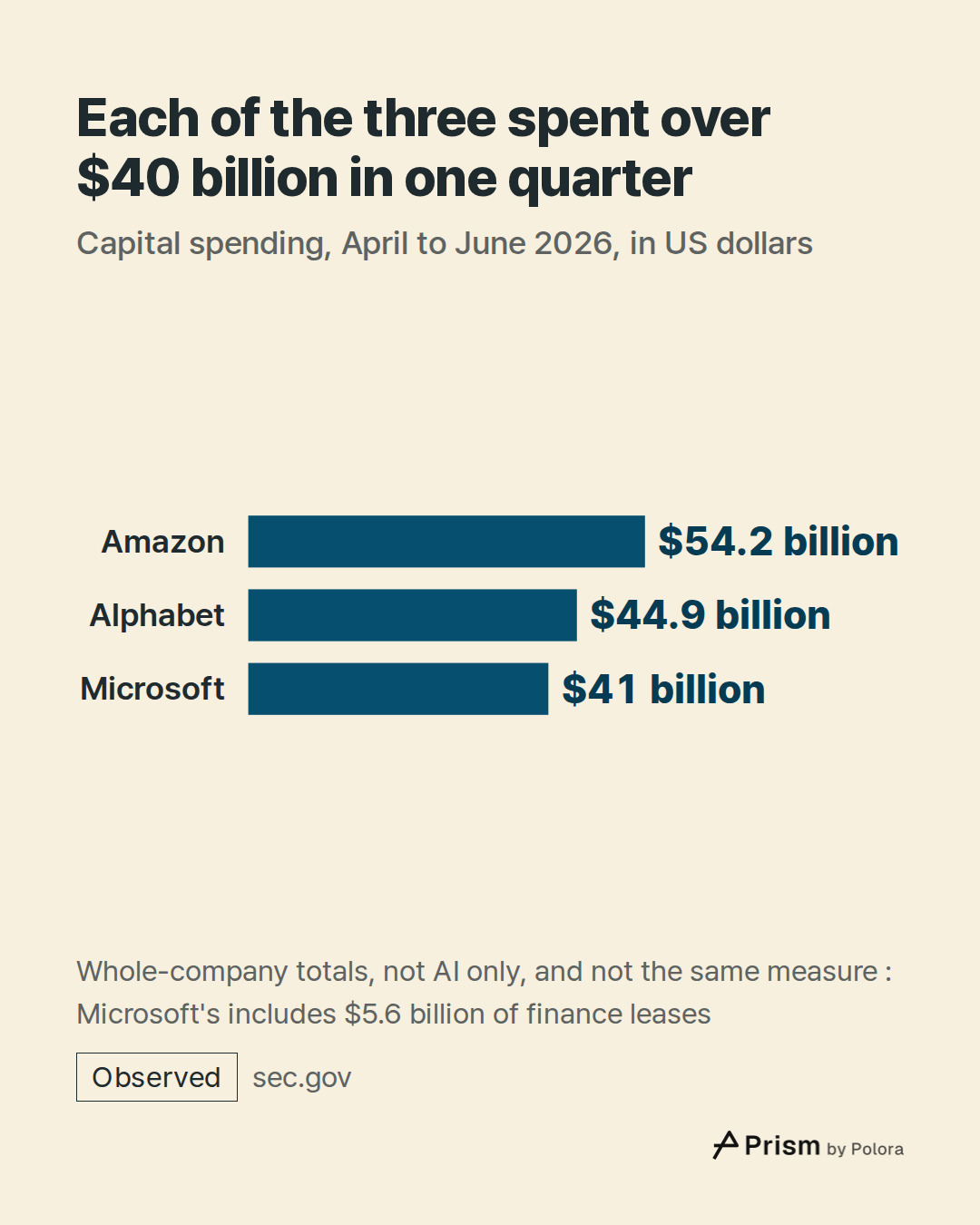
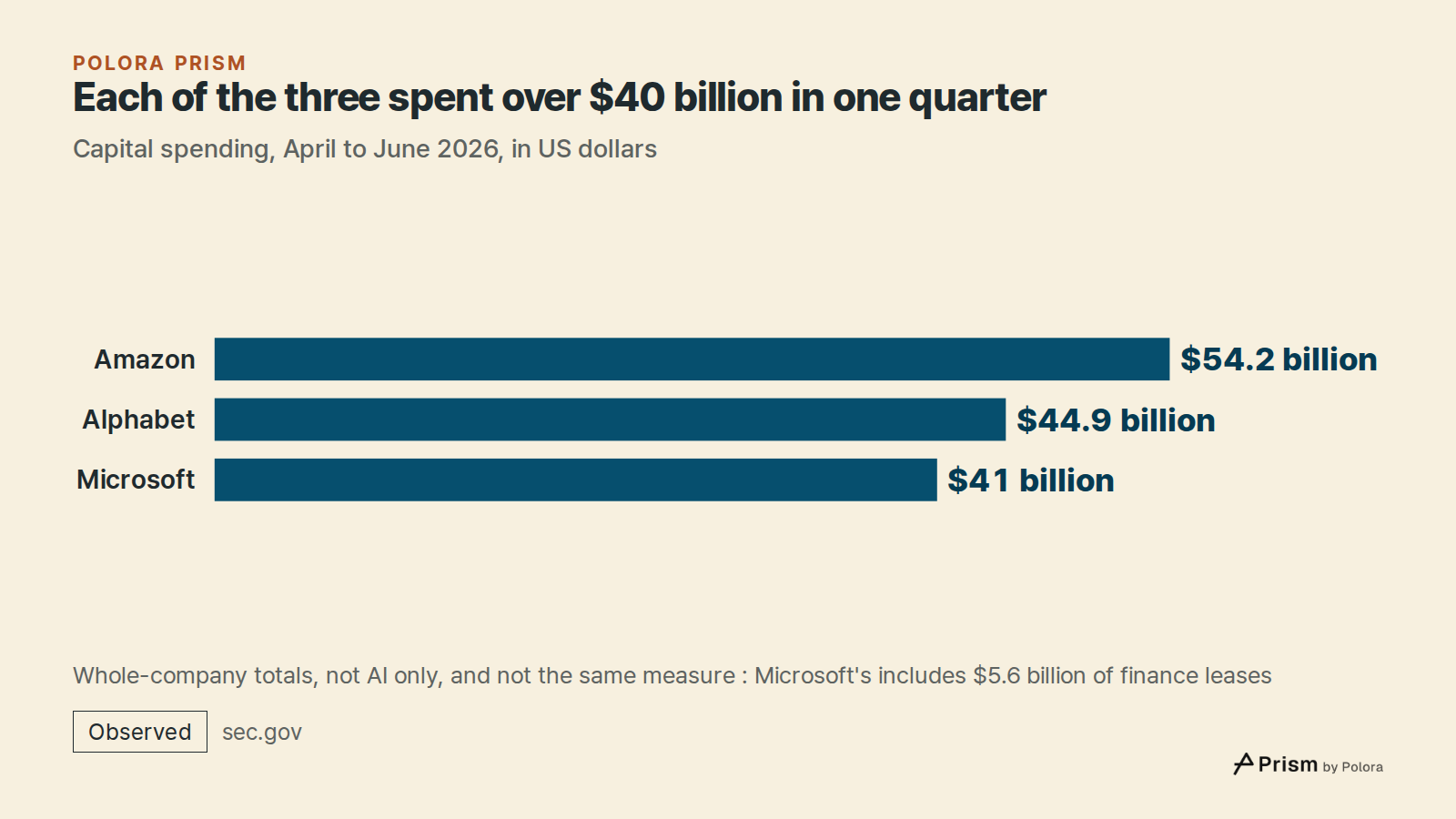
In that quarter Alphabet paid $44.9 billion for property and equipment, mostly servers and data centers. Amazon's purchases of property and equipment were $54.2 billion, and it separately described its cash capital expenditures as $53.1 billion. Microsoft said its capital expenditures were $41 billion, a figure that includes $5.6 billion of data centers taken on through finance leases. Its cash payments for property and equipment were $35.8 billion. These numbers are not the same measure, and the gap between Microsoft's two figures is one of the things this piece explains.
None of these figures is an AI-only number. They cover everything each company bought in equipment and buildings, and none of the three reports a separate line for how much of it went to AI. AI infrastructure is a large part of the buildout, but the totals cannot say how large.
Microsoft's financial year ends on June 30. The report due October 28 is the first quarter of its fiscal 2027 and covers July to September 2026. In September Microsoft said it expected capital expenditures above $50 billion for that quarter, "including the impact of the useful life update." That update comes up again below.
- Microsoft announces quarterly earnings release date
- Alphabet earnings release announcement
- Amazon Q3 2026 earnings announcement
- Alphabet Q2 2026 earnings release (Exhibit 99.1)
- Amazon Form 10-Q for the quarter ended June 30, 2026
- Microsoft FY2026 Q4 earnings
- Microsoft FY2026 Q4 earnings release (Exhibit 99.1)
- Microsoft Exhibit 99.1, September 2026
Cash leaves the day the bill is paid
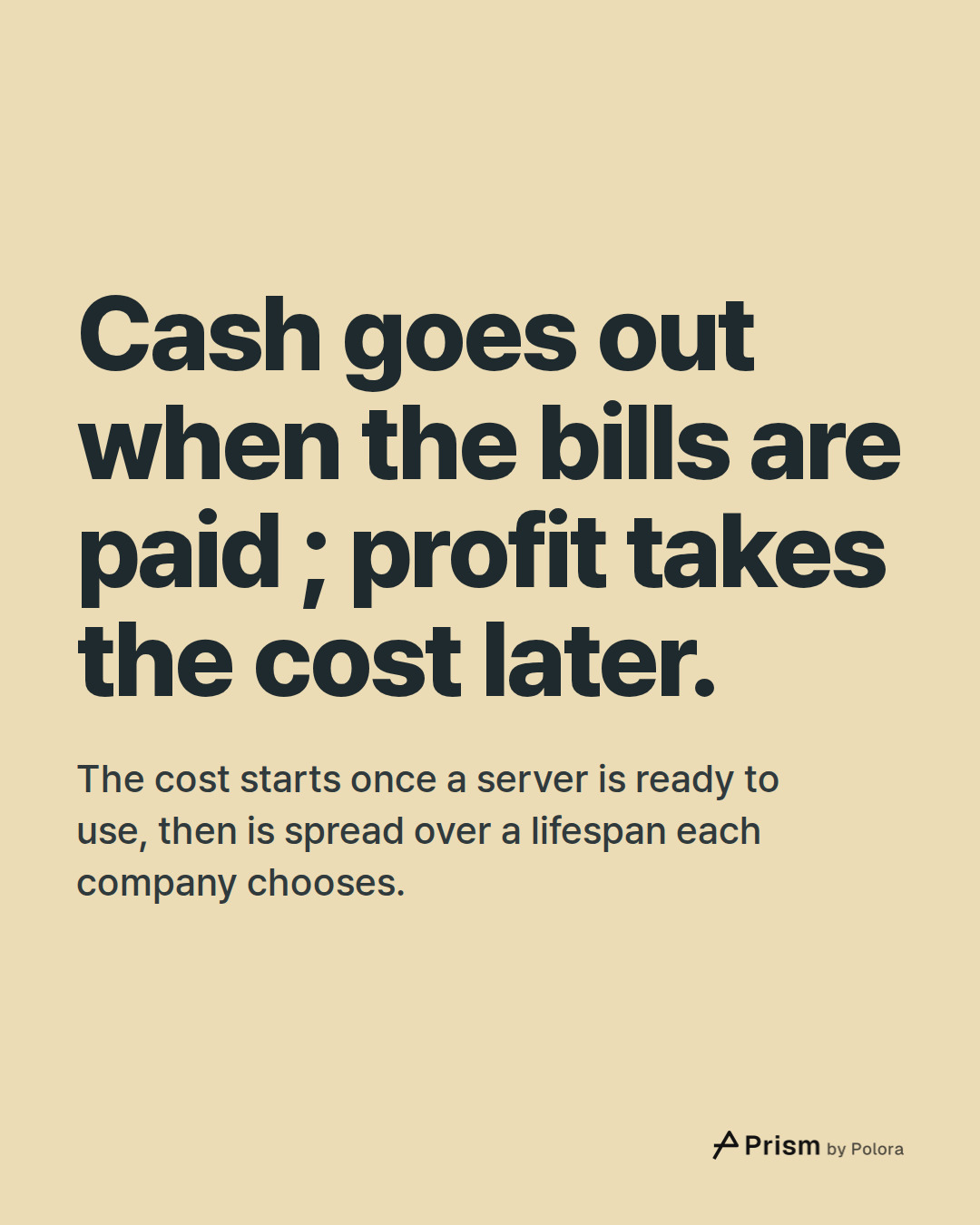
Capital expenditure, or capex, is money spent on things that will be used for years, like servers, chips, land and buildings. In the cash flow statement it counts in the quarter the money actually goes out. That is not always the quarter the equipment arrives, because a purchase can be recorded first and paid later. Microsoft's capex figure also includes buildings taken on through finance leases, which are not paid for in cash all at once.
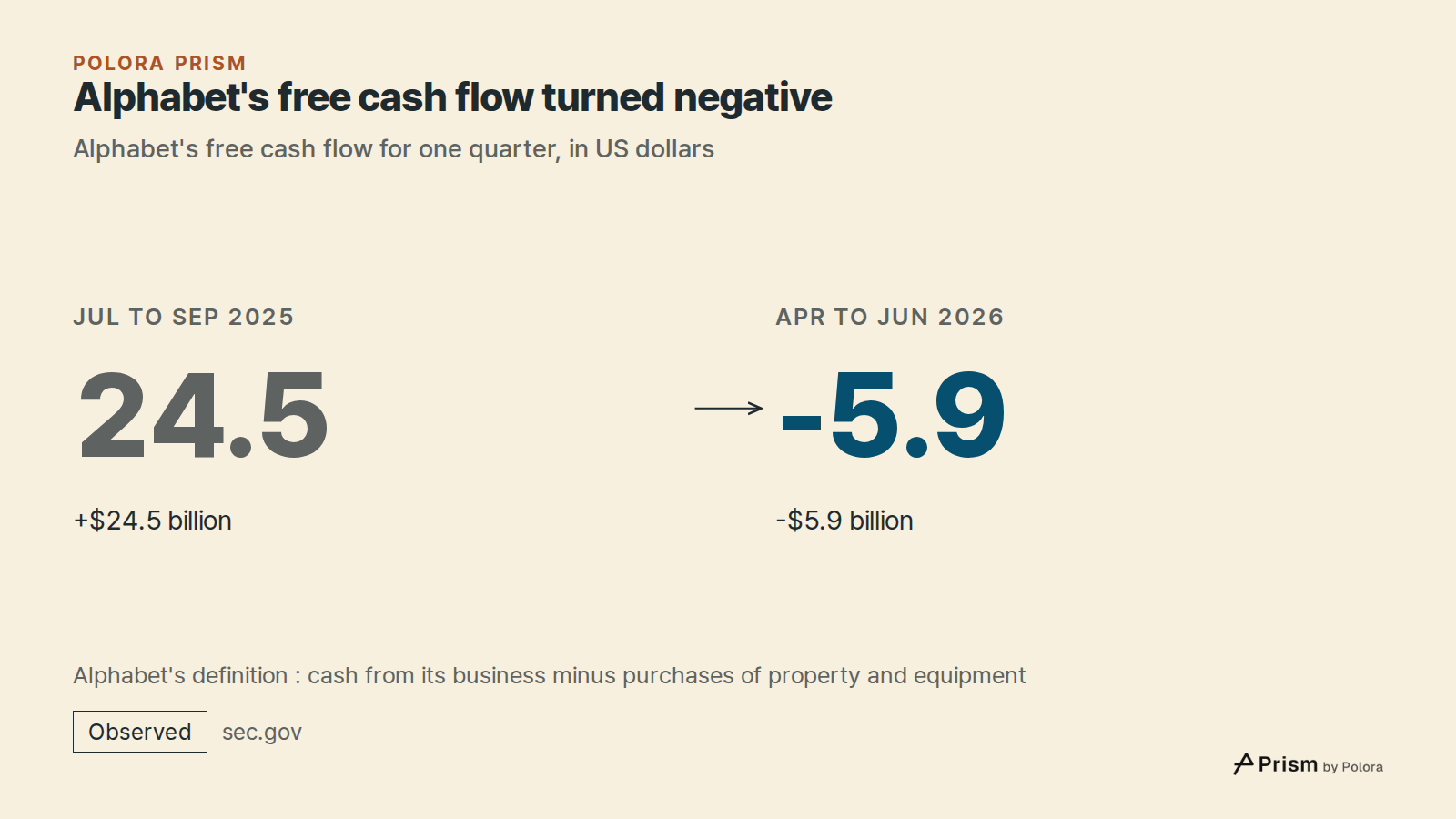
Free cash flow captures the cash side. It starts with the cash a company's business brings in and subtracts what it paid for equipment. Alphabet and Amazon publish the figure, and each defines it a little differently. Alphabet subtracts its purchases of property and equipment. Amazon subtracts its purchases net of what it gets back from asset sales and incentives. Microsoft does not present a free cash flow line in its earnings release, though it gives the figure on its earnings call.
In April to June 2026 Alphabet's business brought in $39.1 billion of cash and Alphabet spent $44.9 billion on equipment. That left free cash flow of minus $5.9 billion, compared with plus $24.5 billion in the July to September quarter of 2025. Over the twelve months to June 2026, Amazon's free cash flow was minus $7.6 billion. Microsoft's free cash flow, worked out as cash from its business minus cash paid for property and equipment, was about $19.6 billion in April to June, the figure it also stated on its call. Calculated the same way, it was about $25.6 billion a year earlier. A definition that also subtracted finance leases would give a lower number.
The cost waits until the server is switched on
Profit works differently. A server bought today is not counted as an expense today. It sits on the balance sheet as an asset, and its cost starts to reach profit only once it is ready to use. The name for that gradual charge is depreciation.
Alphabet says this in its own filing. Depreciation begins when an asset is ready for its intended use, and the time from purchase to that point "may extend from months to years." A data center is built in phases. Land is bought, buildings go up, then servers are installed.
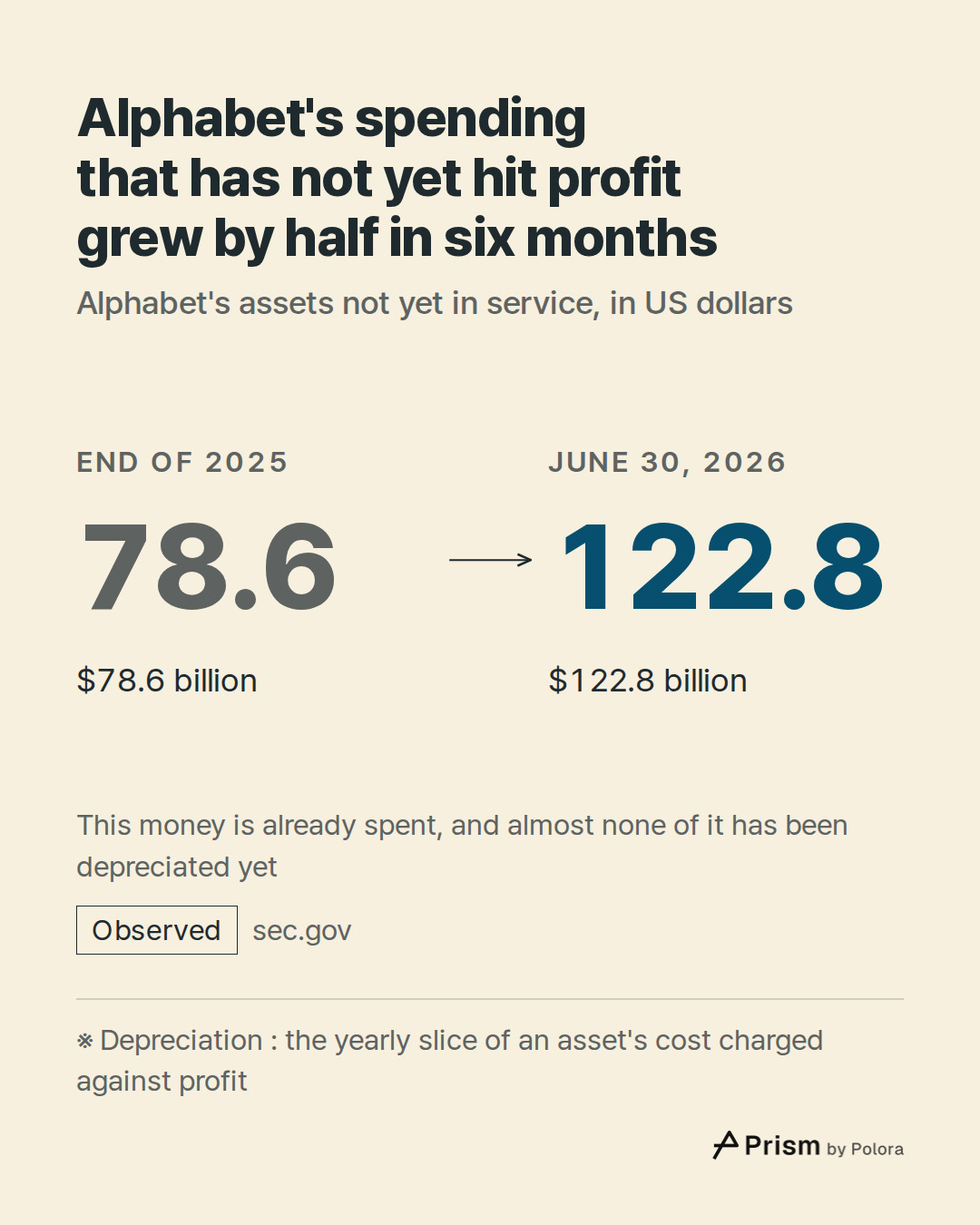
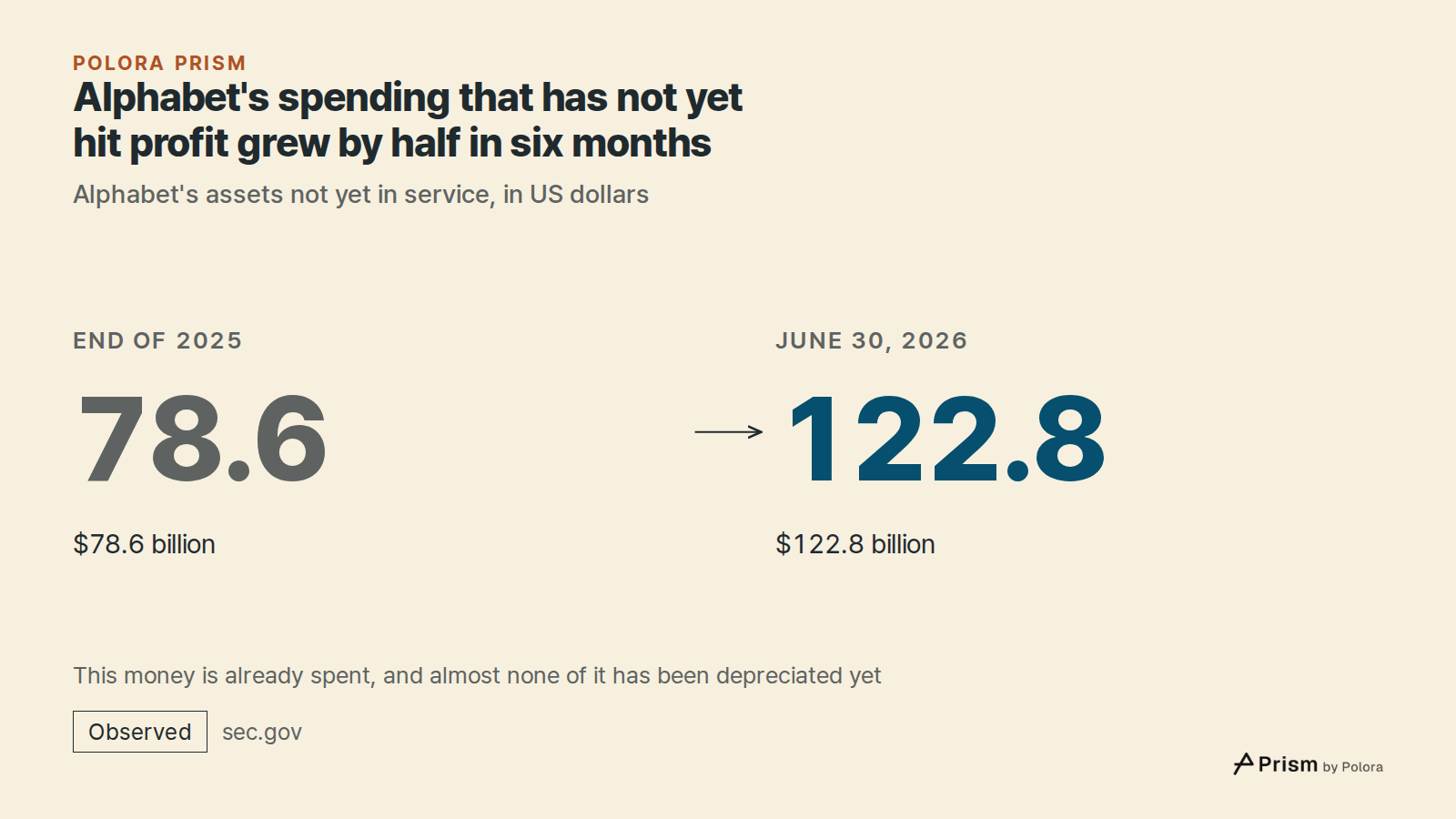
Alphabet's assets not yet in service grew from $78.6 billion at the end of 2025 to $122.8 billion by June 30, 2026. At Amazon, construction in progress was $71.7 billion at the end of 2025, up from $46.6 billion a year earlier. All of that money has already been spent, and almost none of it has reached profit yet.
Then it arrives in slices, over a lifespan the company chooses
Once an asset is in use, its cost is split into equal yearly slices over its expected life. Take a hypothetical $6 billion batch of servers. Depreciated over six years, it costs $1 billion a year. Over five years it costs $1.2 billion a year. The longer the assumed life, the smaller each slice, and the higher the profit in the meantime. The cash spent is the same in both cases.
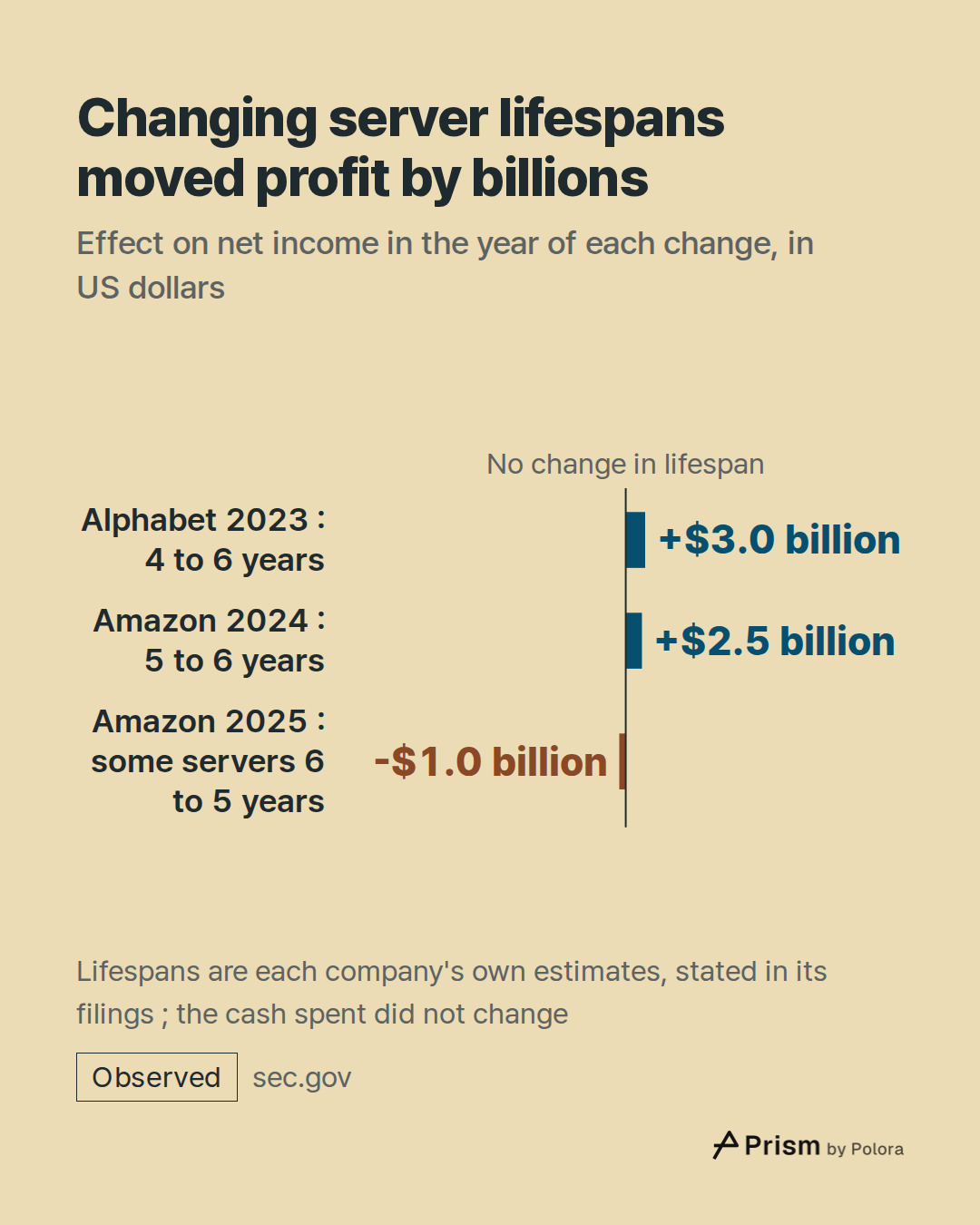
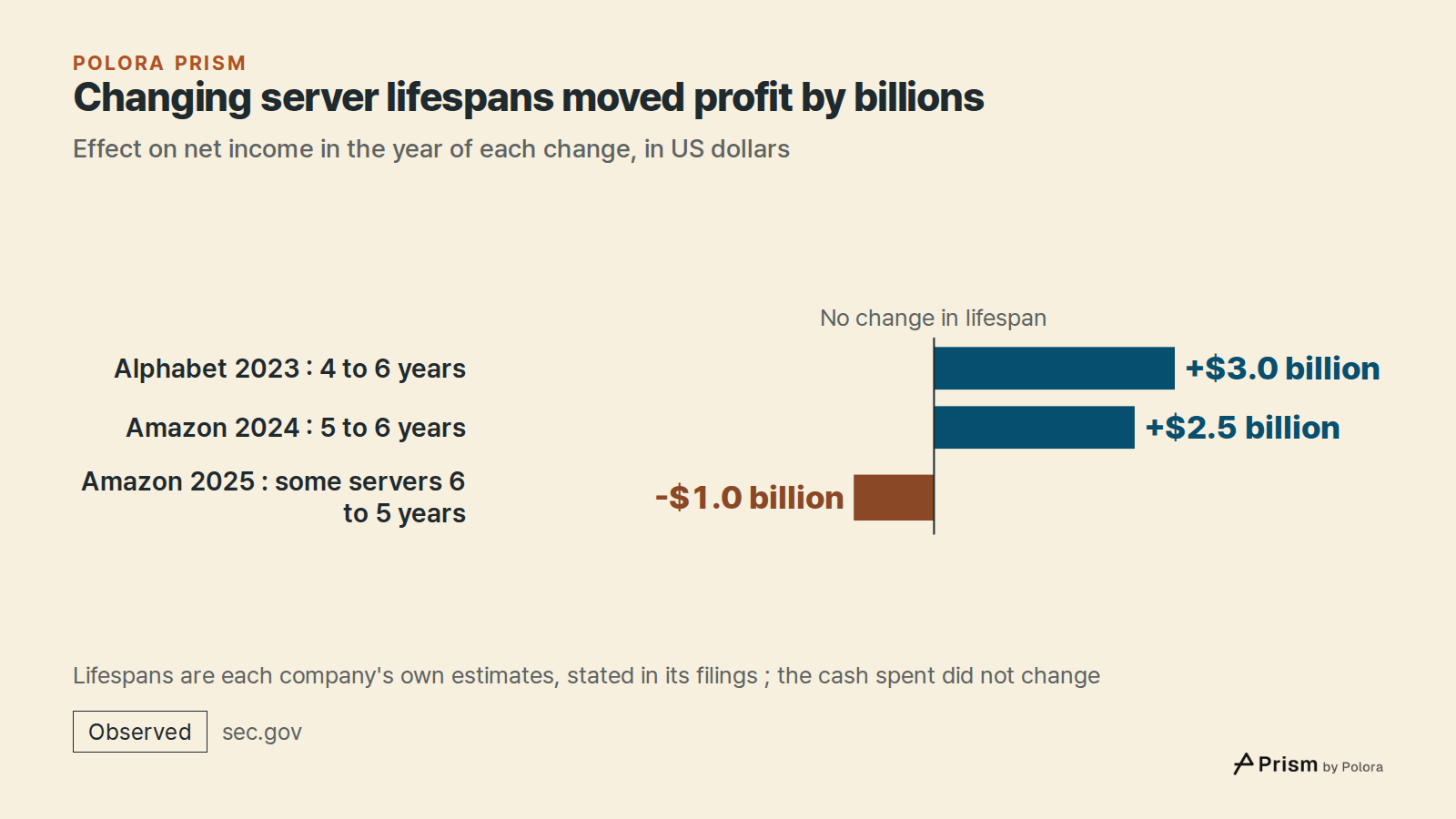
Each company picks its own lifespan and states it in its filings. Alphabet depreciates servers and network equipment generally over six years. It moved servers from four years to six in 2023, which lowered that year's depreciation by $3.9 billion and raised net income by $3.0 billion. Microsoft gives a range of two to six years for servers and network equipment.
Amazon has gone both ways. From January 2024 it lengthened server lives from five years to six, which cut 2024 depreciation by $3.2 billion and added $2.5 billion to net income. From January 2025 it shortened a subset of servers and networking equipment from six years back to five, "due to the increased pace of technology development, particularly in the area of artificial intelligence." That added $1.4 billion of depreciation in 2025 and took $1.0 billion off net income. Same machines, two choices a year apart, and profit moved by billions each time.
Lifespans are judgments, and the filings explain the reasoning behind them. The lesson is not that one company is right. Reported profit carries an assumption about how long the hardware will stay useful, and that assumption is printed in a note most readers skip.
How a lease can take spending out of the capex number
Not every data center is bought. Many are leased, and accounting splits leases into two kinds. A finance lease is treated much like a purchase, so it goes on the balance sheet as equipment and Microsoft counts it in capital expenditures. An operating lease is treated more like rent, and it is not counted in capex.
Whether a lease is one kind or the other depends partly on how long the building is expected to last. From the start of fiscal 2027, in July 2026, Microsoft lengthened the estimated life of its data centers and office buildings from 15 years to 25. This change is about the buildings, not the servers inside them, whose range of two to six years is a separate policy. Microsoft's finance chief said it would have a "minimal benefit" to fiscal 2027 operating income. She said the greater effect is that more future data center leases will become operating leases, which are not in capex. Microsoft said its calendar-2026 investment plans were otherwise unchanged and that it now expects capex of about $175 billion for the year.
So the capex figure fell because of how the leases are classified, not because the plans changed. The rent on those buildings still has to be paid. It shows up over time as operating expense and in lease commitments instead.
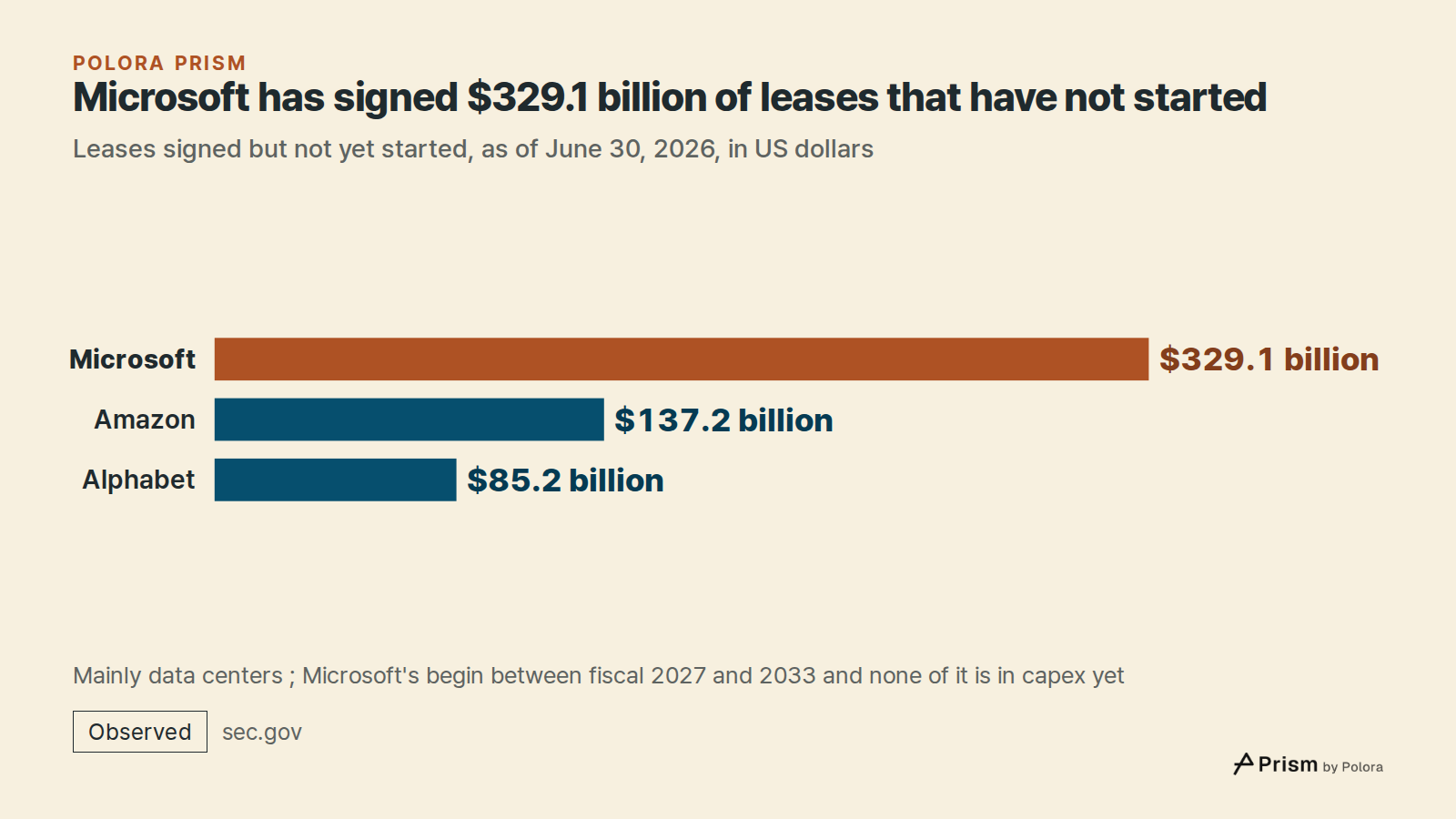
Those commitments are large. As of June 30, 2026, Microsoft had signed $329.1 billion of leases, mainly for data centers, that had not started yet and begin between fiscal 2027 and fiscal 2033. Alphabet listed $85.2 billion of such leases. Amazon listed $137.2 billion. None of this is in capex or depreciation yet.
Profit and cash, side by side
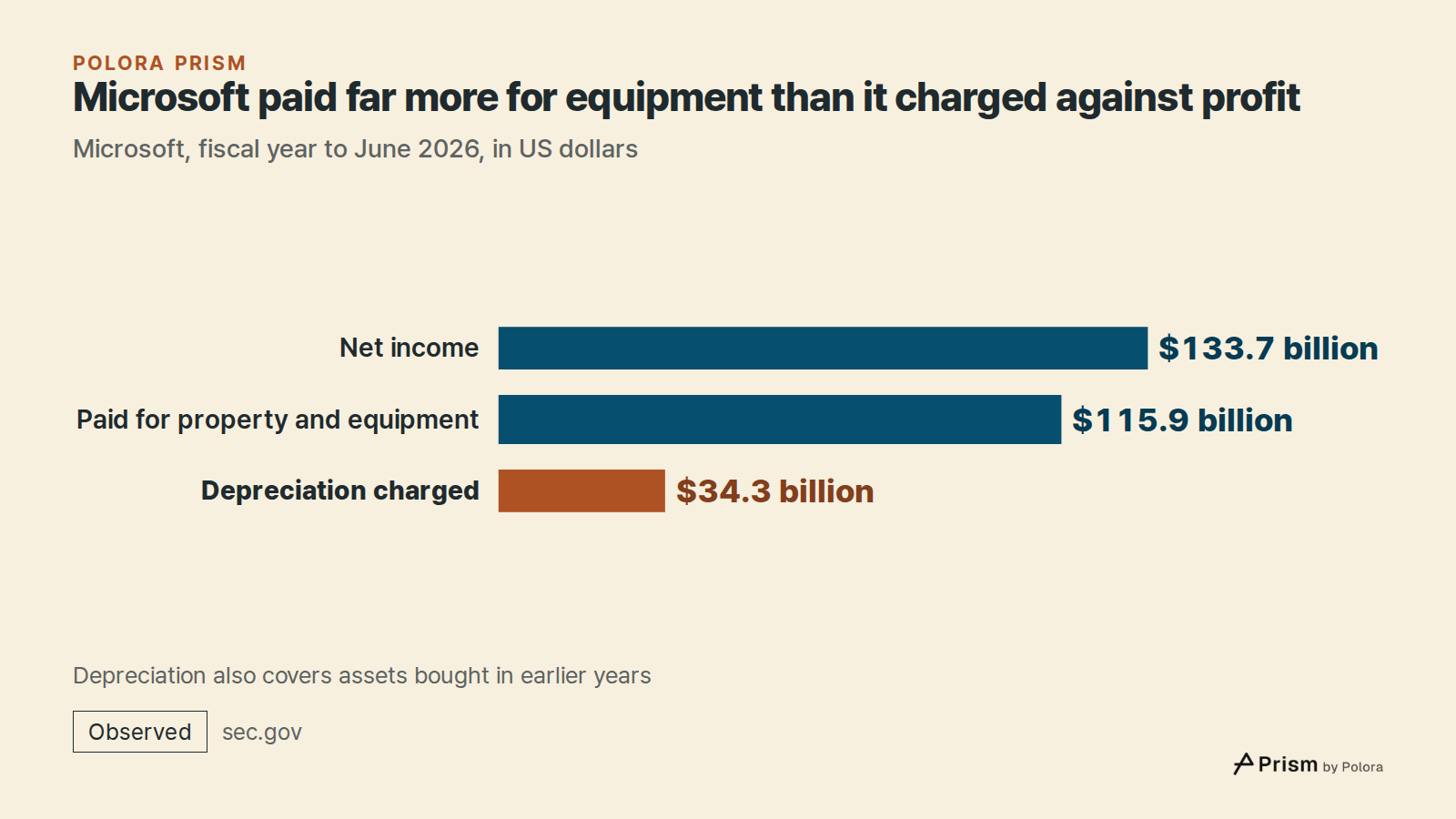
Put the two measures next to each other and the gap is plain. Over its fiscal year to June 2026, Microsoft earned net income of $133.7 billion and recorded $34.3 billion of depreciation, while paying $115.9 billion for property and equipment. Cash from its business minus that spending came to about $67.0 billion, half its net income.
Alphabet's free cash flow was minus $5.9 billion in April to June 2026. Its net income for the same quarter was $112.2 billion. Most of the difference had nothing to do with servers. The quarter included a $99.0 billion unrealized gain on equity securities Alphabet holds, which raised net income by $77.1 billion after tax with no cash coming in.
Amazon shows the same pattern. Its net income for April to June 2026 was $62.6 billion, including $50.5 billion of upward revaluations of private-company stakes, which the filing attributes mainly to its nonvoting preferred stock in the AI company Anthropic. Over the twelve months to June, net income was $135.3 billion and free cash flow was minus $7.6 billion.
So in this quarter the gap between profit and cash had two main sources. Most of the equipment cost had not reached profit yet, and revaluation gains had. That does not make the profit a paper figure. The businesses themselves still brought in large amounts of cash, $39.1 billion at Alphabet in the quarter alone. Neither source of the gap is a sign of trouble or of health on its own. Each is something to know before reading the headline number.
What to read when the new numbers land
Capex and free cash flow show how much cash has gone into the buildout. Depreciation shows how fast that cost reaches profit, at a speed set by assumptions each company chose. None of these numbers says how much of the spending is for AI, or whether it will pay off, and this piece takes no view on that.
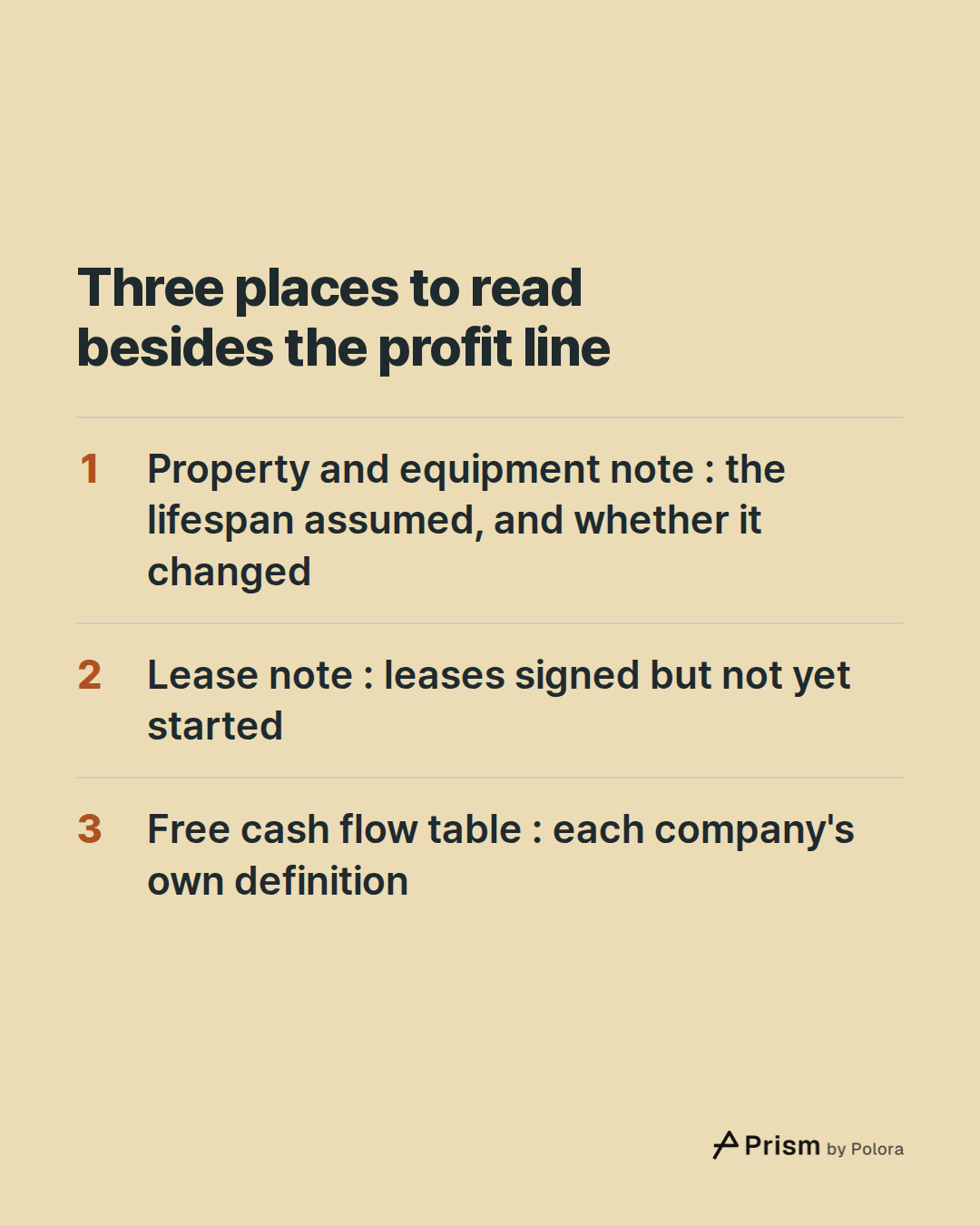
When the reports for July to September come out, three places are worth a look besides the profit line. One is the property and equipment note, for the lifespan each company assumes and whether it changed. Another is the lease note, for leases signed but not started. The third is the free cash flow table, with each company's own definition. Next to the headline profit, they show how much of the spending has already been paid for and how much has yet to show up as a cost.