The date on the yogurt is not saying what most people think
A pot of yogurt in the fridge, one day past the 'best before' date on the lid. It is easy to read that date as the moment the food stops being safe. On most labels it does not mean that.
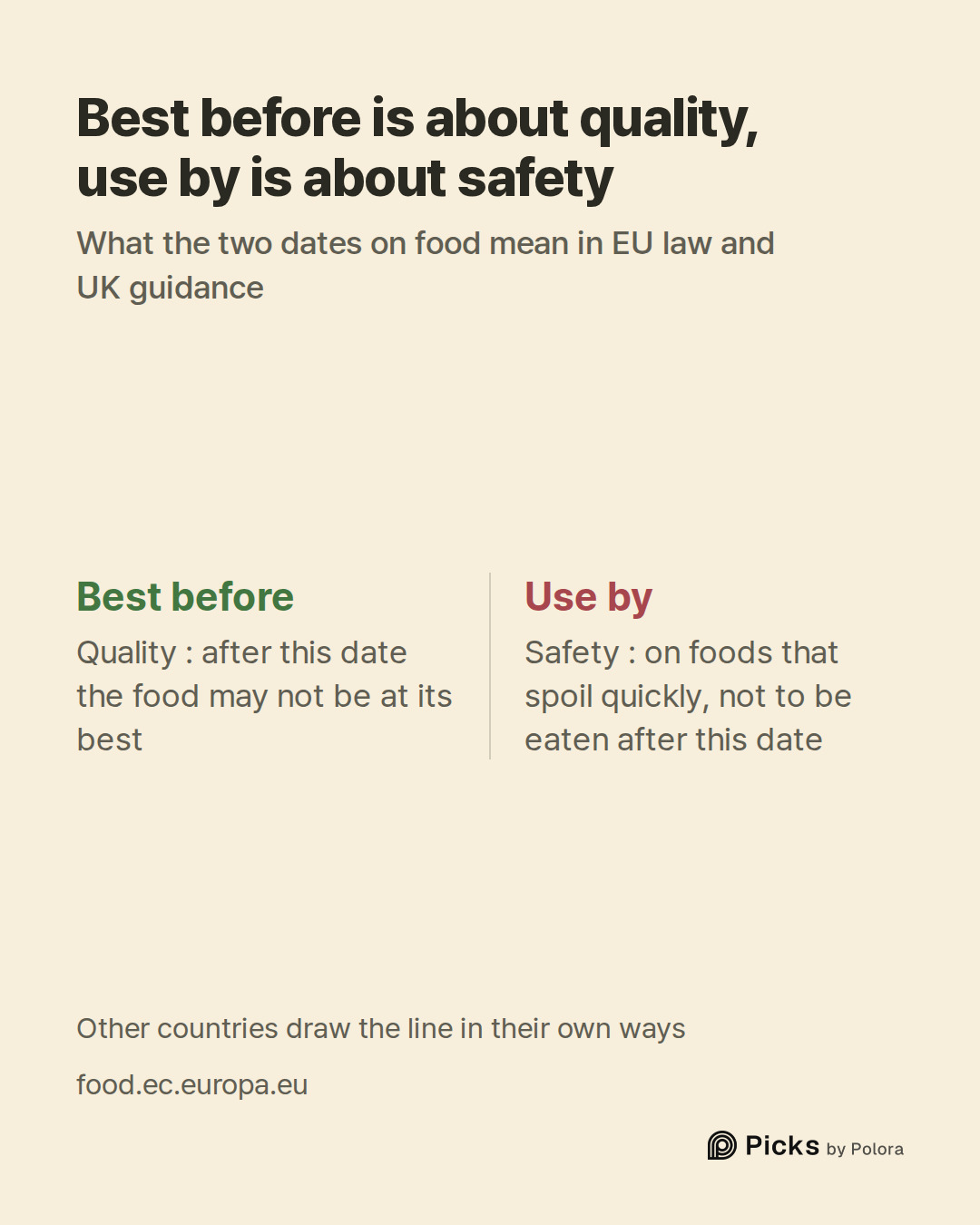
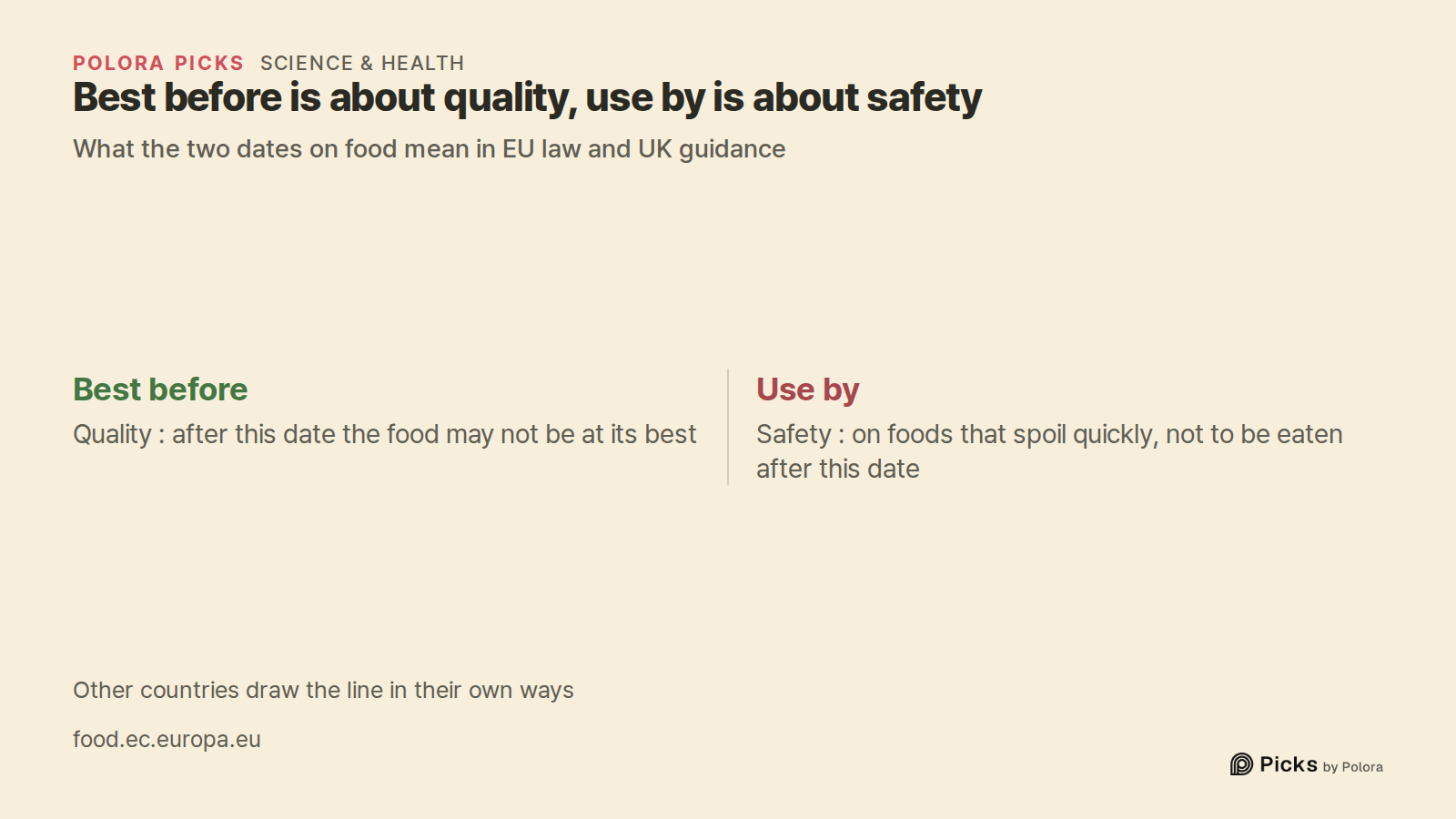
Many countries put two different kinds of date on food. One is about quality : the point after which the food may not taste or feel as good as the maker intends. The other is about safety, and it goes on a narrower group of foods that spoil quickly. 'Best before' is the quality date. 'Use by' is the safety date. The two look alike on a package, but in the UK and the EU they mean different things in law, and other countries draw the line in their own ways. So if a yogurt carries a use by date instead, the date on its lid is saying something else.
Two dates, two meanings, in Europe and the UK
European Union rules set out both dates. The European Commission calls 'use by' an indicator of safety, the date after which food should not be eaten. It calls 'best before' an indicator of quality, the date after which quality may decline. Under the regulation itself, Regulation (EU) No 1169/2011, use by is required on foods that are highly perishable from a microbiological point of view, such as fresh meat or chilled ready meals, and food past its use by date is deemed unsafe. Best before covers most other foods, though some foods are exempt from carrying a date at all.
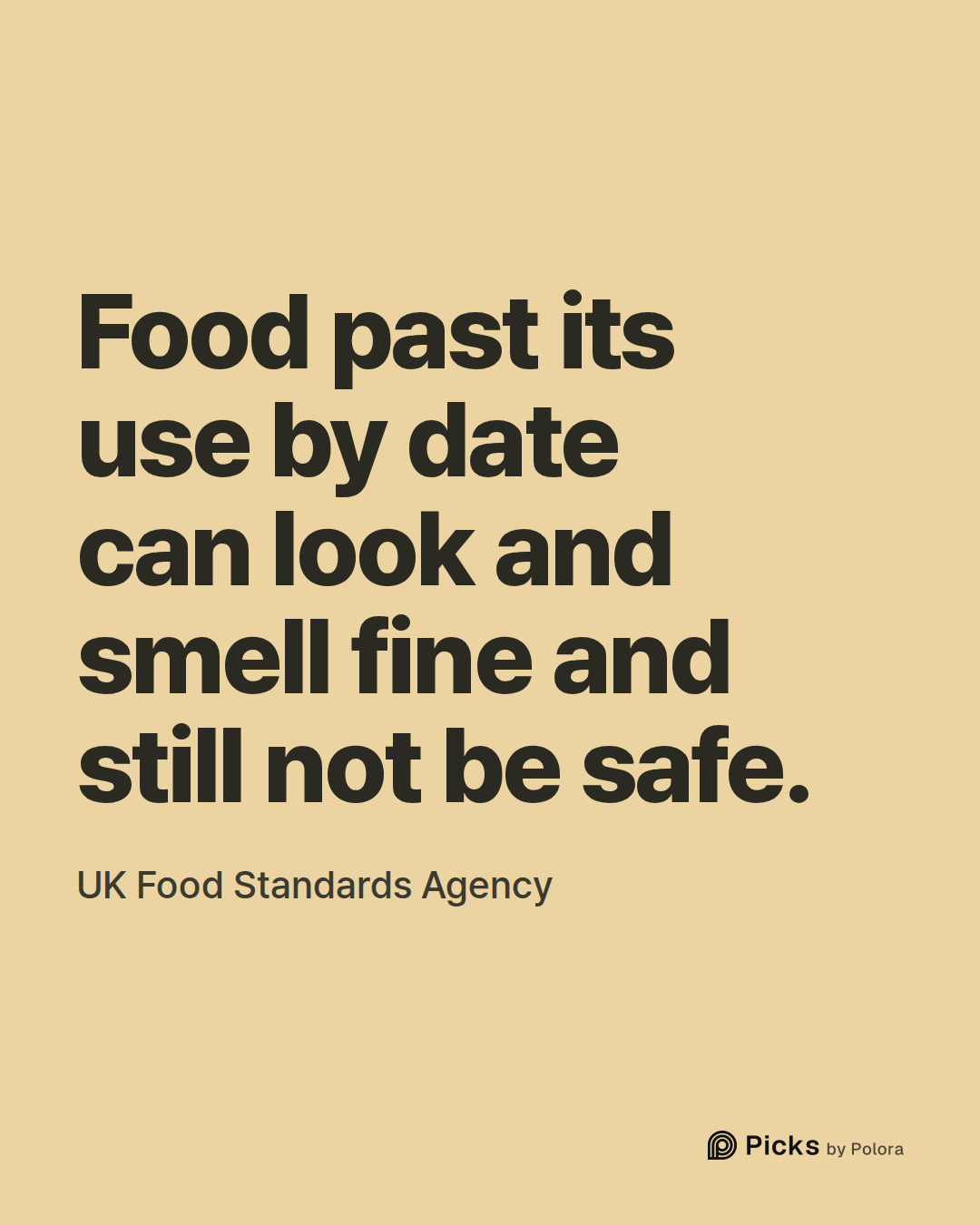
The UK kept the same pair. Its government guidance puts it in one line : use by dates relate to the safety of food, whereas best before dates relate to quality. It warns that eating food after the use by date could make you ill. The UK Food Standards Agency adds that food past its use by date can look and smell fine and still not be safe.
Who picks the number on the package
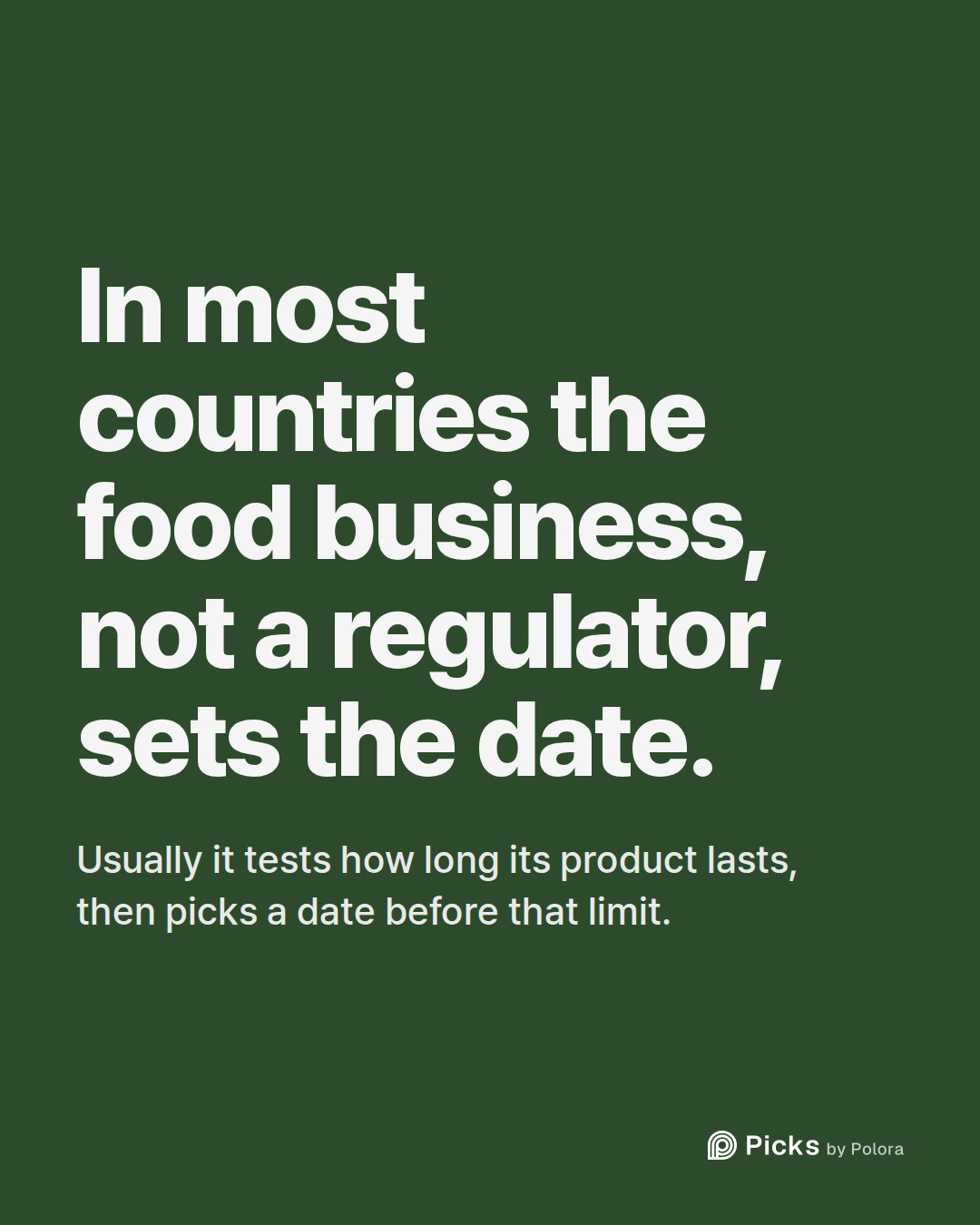
In most countries no regulator prints the date. The food business sets it and has to be able to back it up, usually by testing how long its product lasts and then picking a date before that limit. The gap between the tested limit and the printed date is a margin the business chooses, within whatever guidance applies.
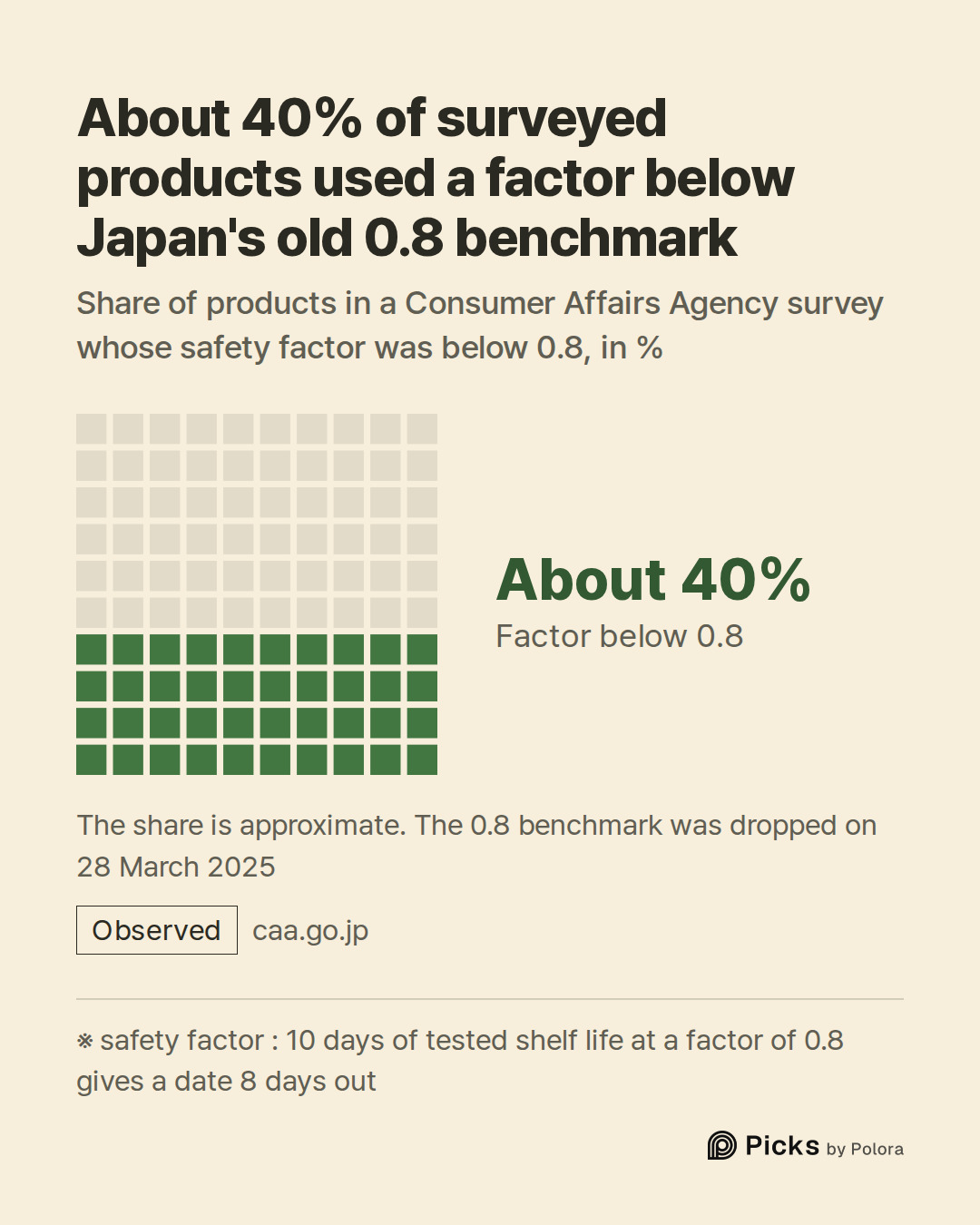
Japan shows this most clearly. It also has two dates : shohi kigen, a consume-by date for foods that spoil quickly, and shomi kigen, a best before date for the rest. Both are to be set on scientific, reasonable grounds, usually shelf-life tests, and the tested shelf life is then multiplied by what Japan calls a safety factor. A food that lasts 10 days in testing, labeled with a factor of 0.8, gets a date 8 days out. For years the official Q&A suggested 0.8 or more as a benchmark.
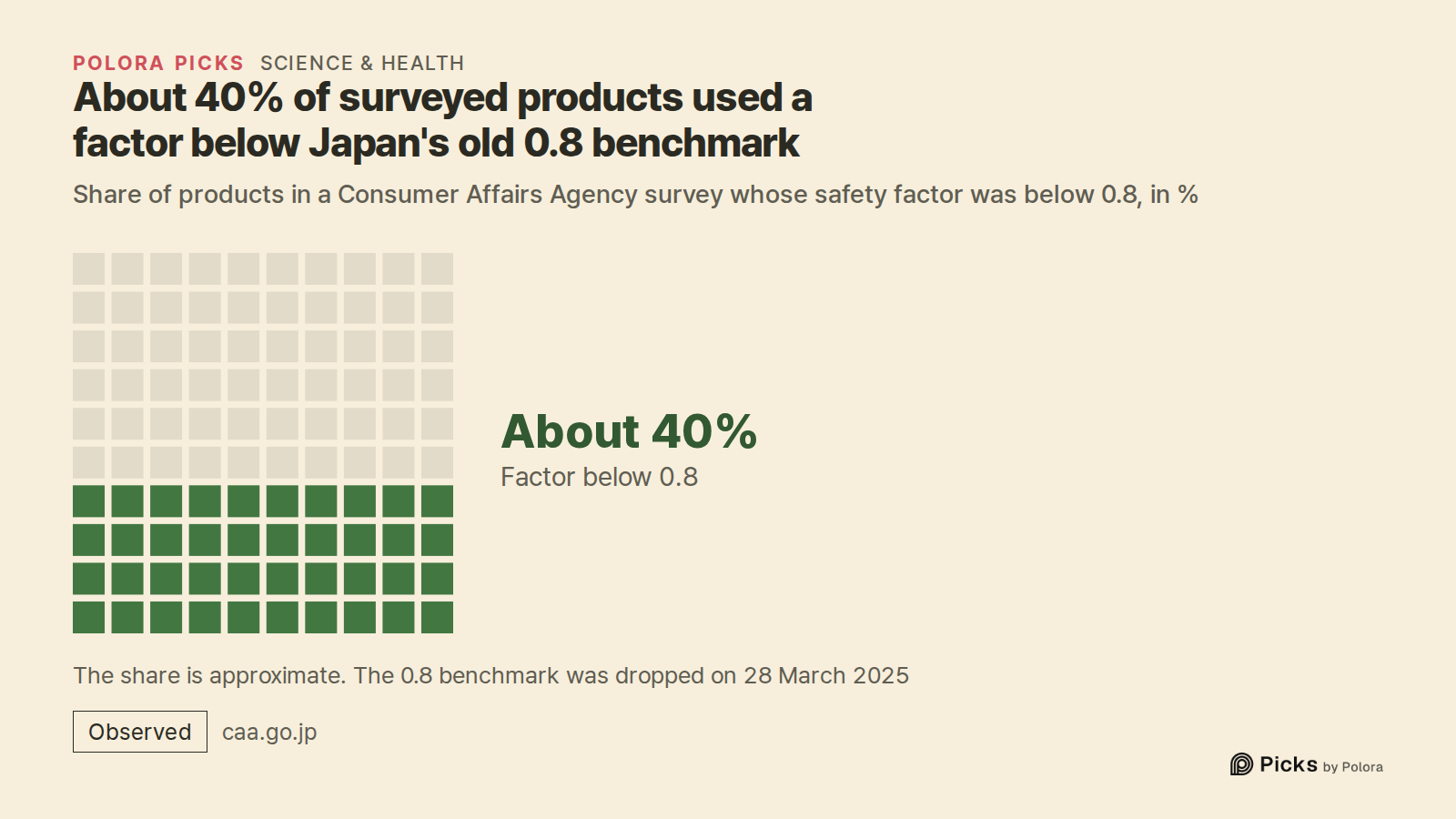
When Japan's Consumer Affairs Agency surveyed actual practice, it found that about 40% of the products surveyed used a factor below 0.8, and some makers applied a factor even to canned and retort pouch foods whose safety is already secured by heat sterilization. On 28 March 2025 the agency revised its guidelines and dropped the 0.8 benchmark. It now says the factor should be as close to 1 as possible, and that well-protected foods may not need one at all. It still asks for a margin on foods where microbes can grow or quality varies a lot. A regulator asking companies to shrink their margins shows how much of the margin was left to their own judgment.
Korea swapped a selling date for an eating date
Until 2022, Korean packages carried a yutong gihan, a sell-by date : how long a shop was allowed to sell the product after it was made. From 1 January 2023 Korea replaced it with sobi gihan, a consumption date : the period within which the food is safe to eat if the storage instructions on the package are followed. Products made from that day on use the new date, with a one-year transition for old packaging. Refrigerated milk has a longer grace period, until 2031.
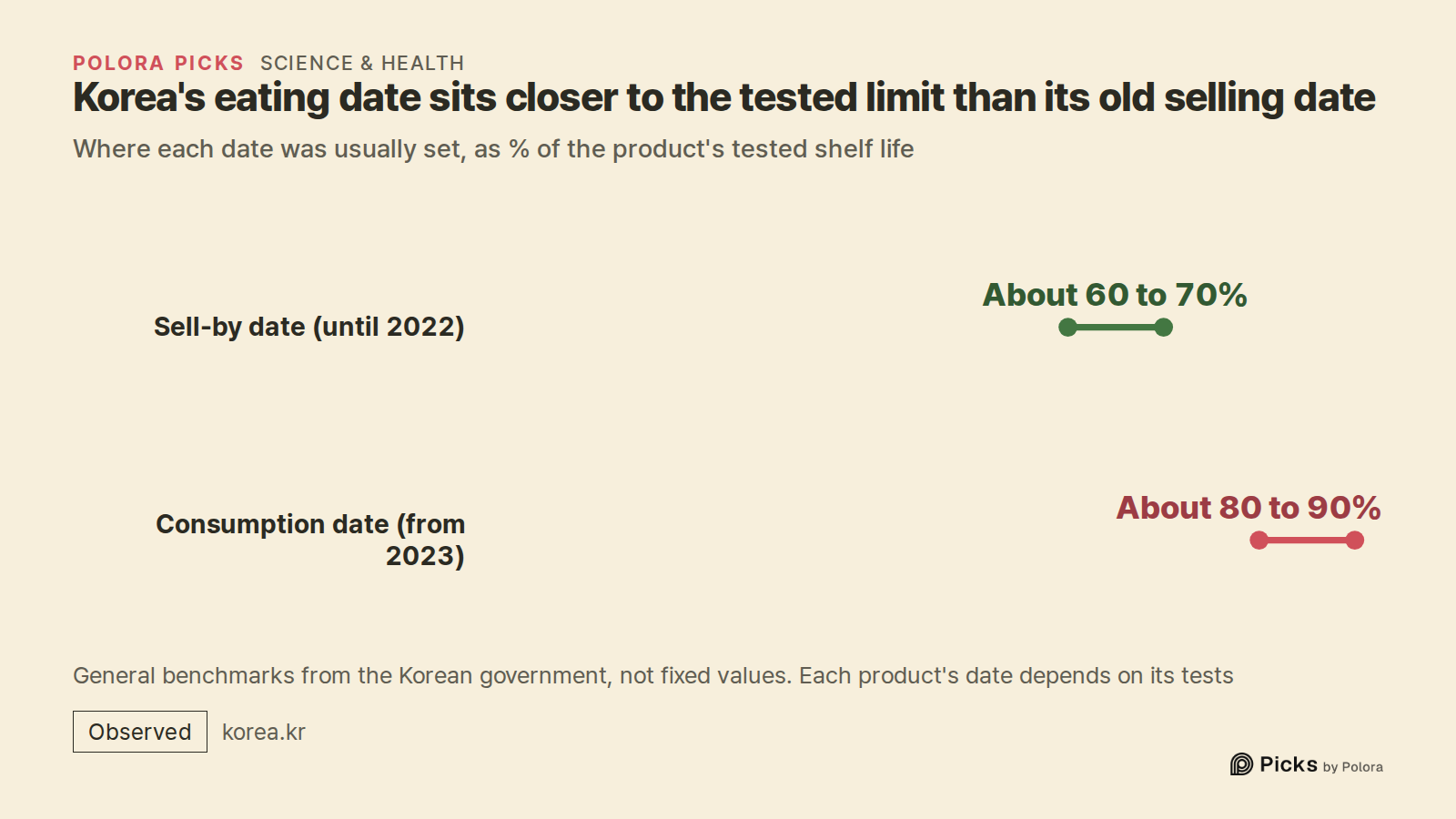
The two dates sit at different points on the same test. The Korean government explains that a sell-by date was usually set at about 60 to 70% of the tested limit, and the consumption date at about 80 to 90%. These are general benchmarks, not fixed values, and the actual date depends on how each product behaves. Here too the food business sets the date, usually from tests on its product, though Korean rules also let it rely on data from comparable products or published reference values. Korea also keeps a third label for some products, pumjil yuji gihan, a quality date : how long the food keeps its own quality when stored properly.
In the US, federal law asks for a date on one food only
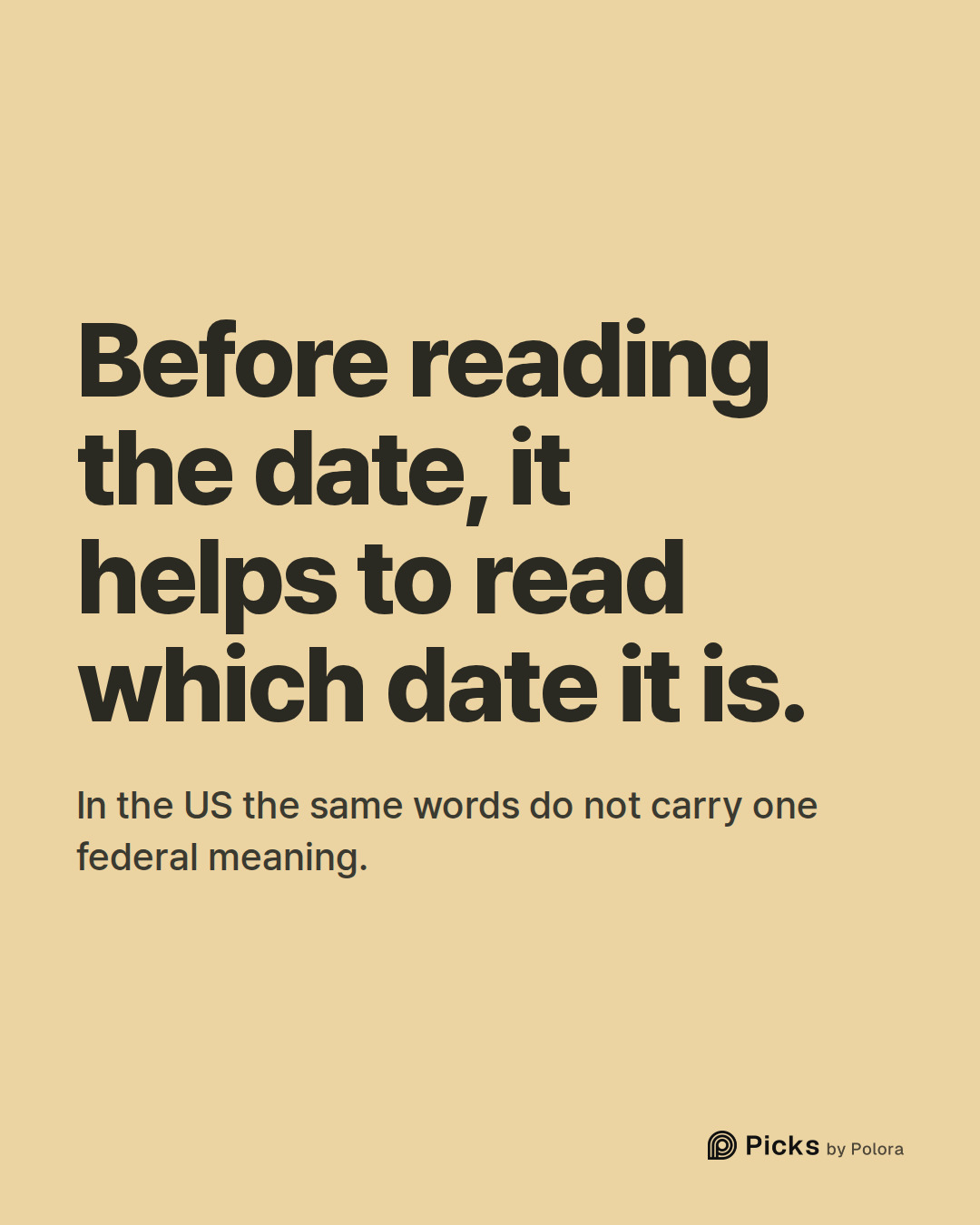
The US Department of Agriculture's food safety service says that, except for infant formula, product dating is not required by federal regulations. On infant formula the required use by date is about nutrition : eating it by then makes sure the formula still holds the nutrients the label lists. For other foods, the agency recommends that makers who print a date use the phrase 'Best if Used By', and it treats that phrase as a quality signal. A 'use by' on an American package therefore does not carry, by federal rule, the safety meaning it has in the EU and the UK.
California has gone further. A state law known as AB 660 took effect on 1 July 2026. Packaged food made from that day and sold in the state must use 'BEST if Used by' for a quality date and 'USE by' for a safety date. 'Sell by' is banned on consumer-facing labels, apart from coded dates meant only for stock control. Food made before that day is not covered.
Why governments care about the wording
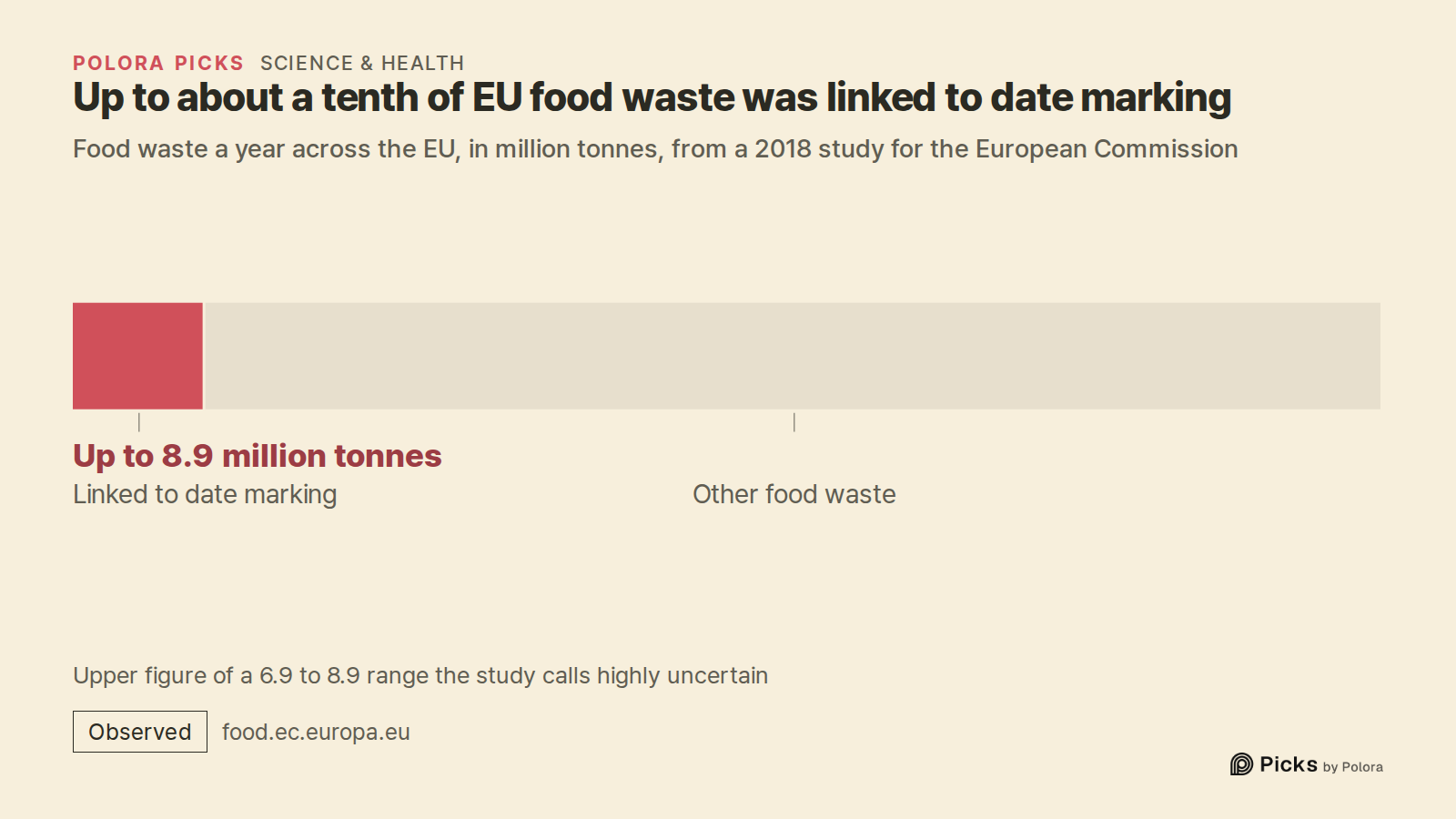
Confusion over dates sends food to the bin. A 2018 study for the European Commission put food waste linked to date marking at 6.9 to 8.9 million tonnes a year across manufacturing, retail and households. That counts waste linked to date marking in general, not only food thrown out because shoppers misread a label. The upper figure is about 10% of the 88 million tonnes the EU was estimated to waste each year at the time. In households, the study's estimate was 9.5 to 12% of food waste. The study itself calls such estimates highly uncertain. The Commission's current estimate of total EU food waste, around 58 million tonnes, is calculated by a different method, so the two totals cannot be compared directly.
The changes point the same way in each place. Japan is shrinking the margin, Korea moved from a date for shops to a date for eaters, and California cut the menu down to two phrases. Each tries to make the words on the package match what the date actually measures.
What a best before date does and does not promise
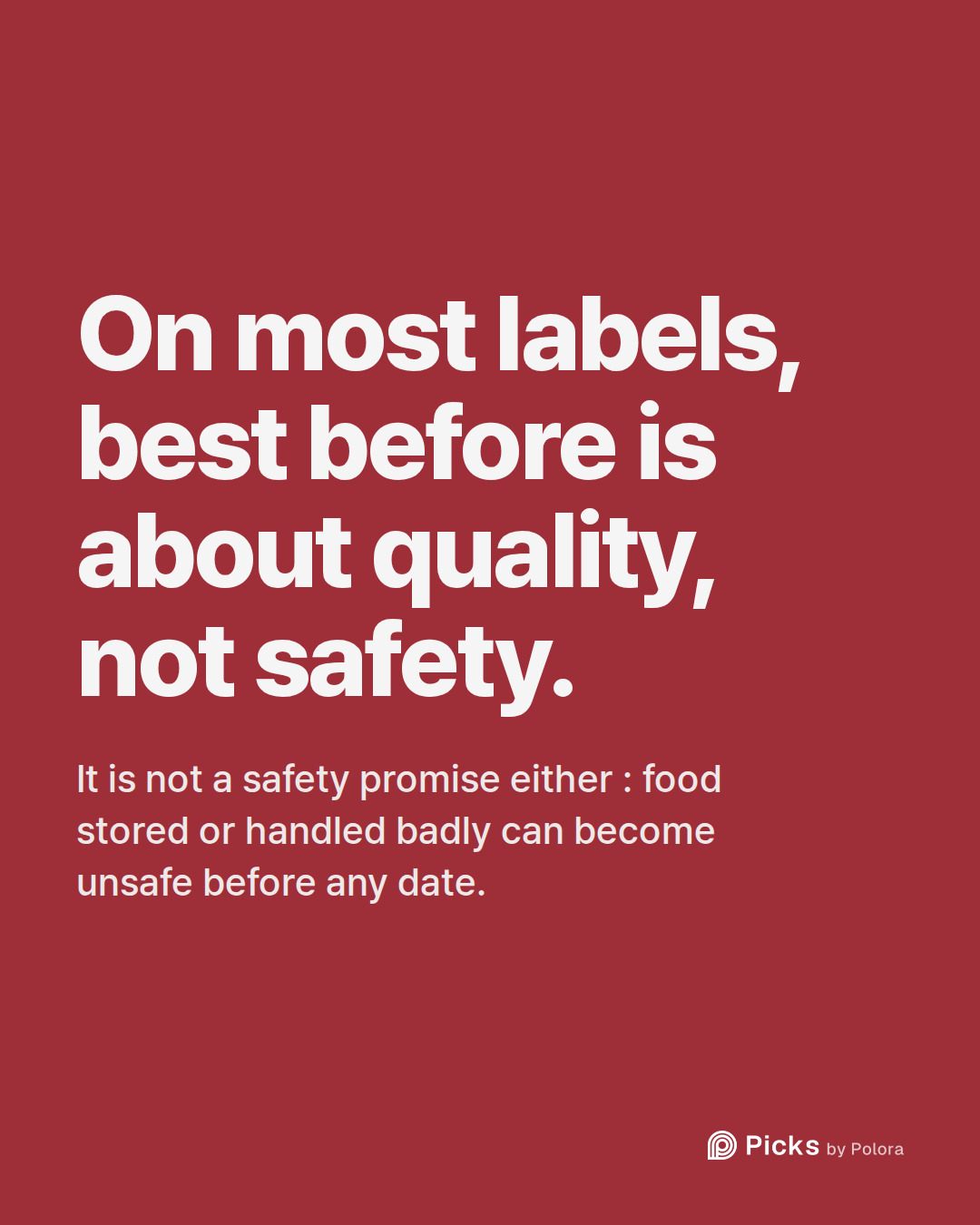
A best before date is an estimate, set by the food business, of when the food stops being at its best, with a margin the business chooses within whatever guidance applies. It is not a safety deadline. It is not a safety promise either : food stored or handled badly can become unsafe before any date. In the UK and the EU, a use by date is a different label, on foods that spoil quickly, and it is the one that concerns safety. In the US the same words do not carry one federal meaning. Both kinds of date depend on storing the food the way the package says. Before reading the date, it helps to read which date it is.