Why a cruise from Miami has to stop in another country
If you have taken a week-long cruise from Miami, Seattle or another American port, the ship almost certainly called somewhere abroad : Cozumel in Mexico, Nassau in the Bahamas, Victoria in Canada. That stop is there partly because the law requires it.
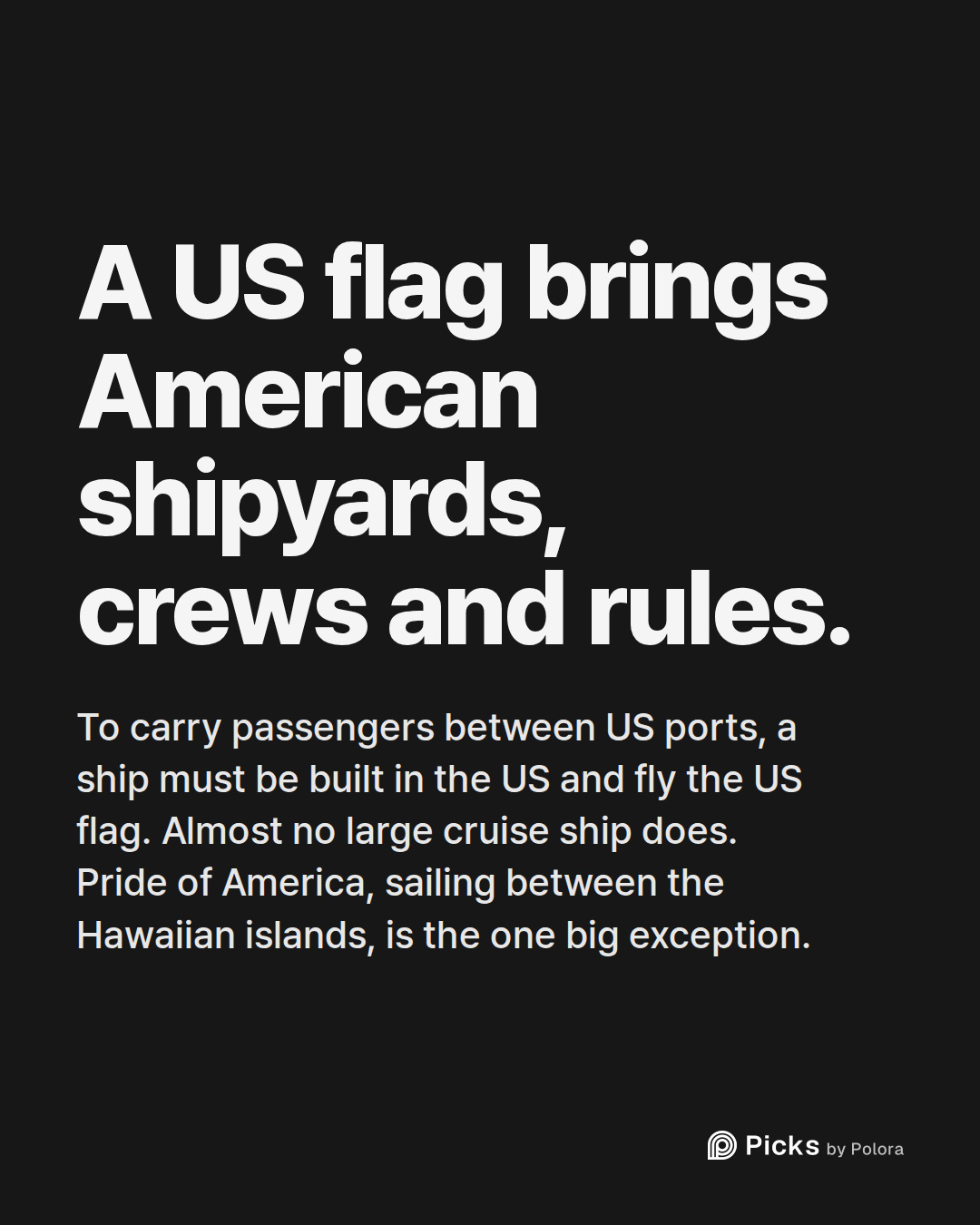
A US law from 1886, the Passenger Vessel Services Act, says a ship may not carry passengers from one American port to another unless it is owned by Americans and documented for trade along the US coast. To get that document, a ship has to be built in the United States and fly the US flag. Almost no large cruise ship meets those conditions.
So a foreign-flagged ship that leaves Miami and brings its passengers back to Miami calls at a foreign port on the way. Alaska cruises that start and end in Seattle stop in British Columbia for the same reason. The foreign stop does not make every itinerary lawful, though. US customs rules distinguish nearby foreign ports from distant ones, and a stop at a nearby one generally still does not let a passenger board at one US port and leave the ship for good at another. What counts is where each passenger gets on and where they get off.
The one big cruise ship that flies the American flag
There is one large exception. Norwegian Cruise Line's Pride of America sails between the Hawaiian islands without ever calling at a foreign port. It can do this because it flies the US flag. A provision written specifically for this Hawaii service allowed the ship to be completed in a foreign shipyard and still be documented in the United States. It was not a general exception for foreign-built cruise ships.
The company's annual filing shows what comes with that flag. The ship answers to US agencies including the Coast Guard, the Food and Drug Administration and the Department of Labor, and its income is subject to US federal and state income tax. US law also requires the master and officers of a US-flagged ship to be American citizens, and on a US passenger ship at least 75% of the unlicensed crew must be US citizens or permanent residents.
That is the plain reason so few cruise ships sailing from American ports fly the American flag. For a ship carrying passengers between US ports, the flag brings American shipyards, American crews and American rules with it.
What a ship's flag actually decides
Every ship is registered in one country, called its flag state. Under international law, the flag state carries the main responsibility for the ship wherever it sails, whatever the owner's nationality or the ship's home port. That responsibility covers certification and the ship's technical, administrative and social matters. The flag state is not the only authority, however. International conventions apply, and the countries whose ports the ship visits can inspect it as well.
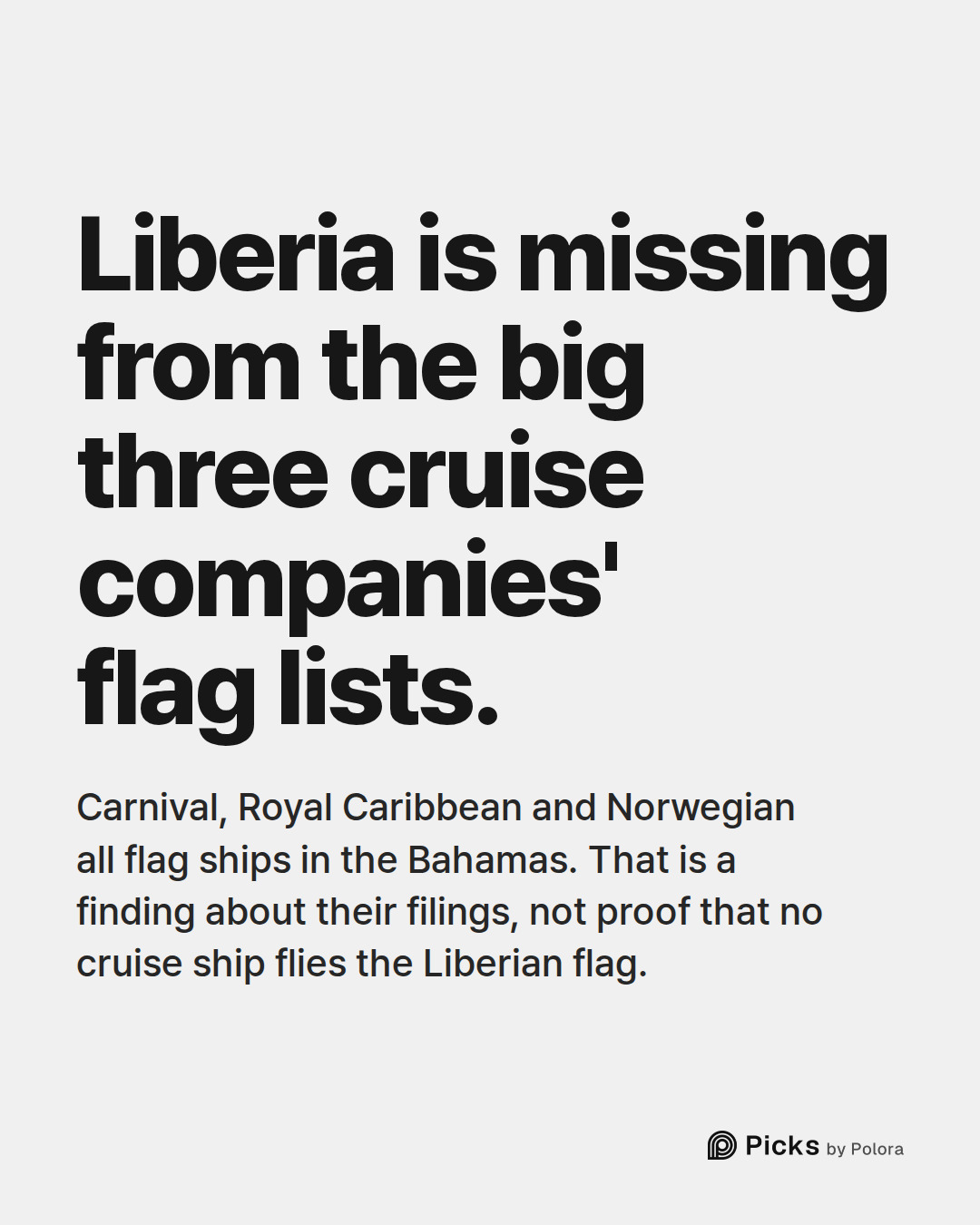
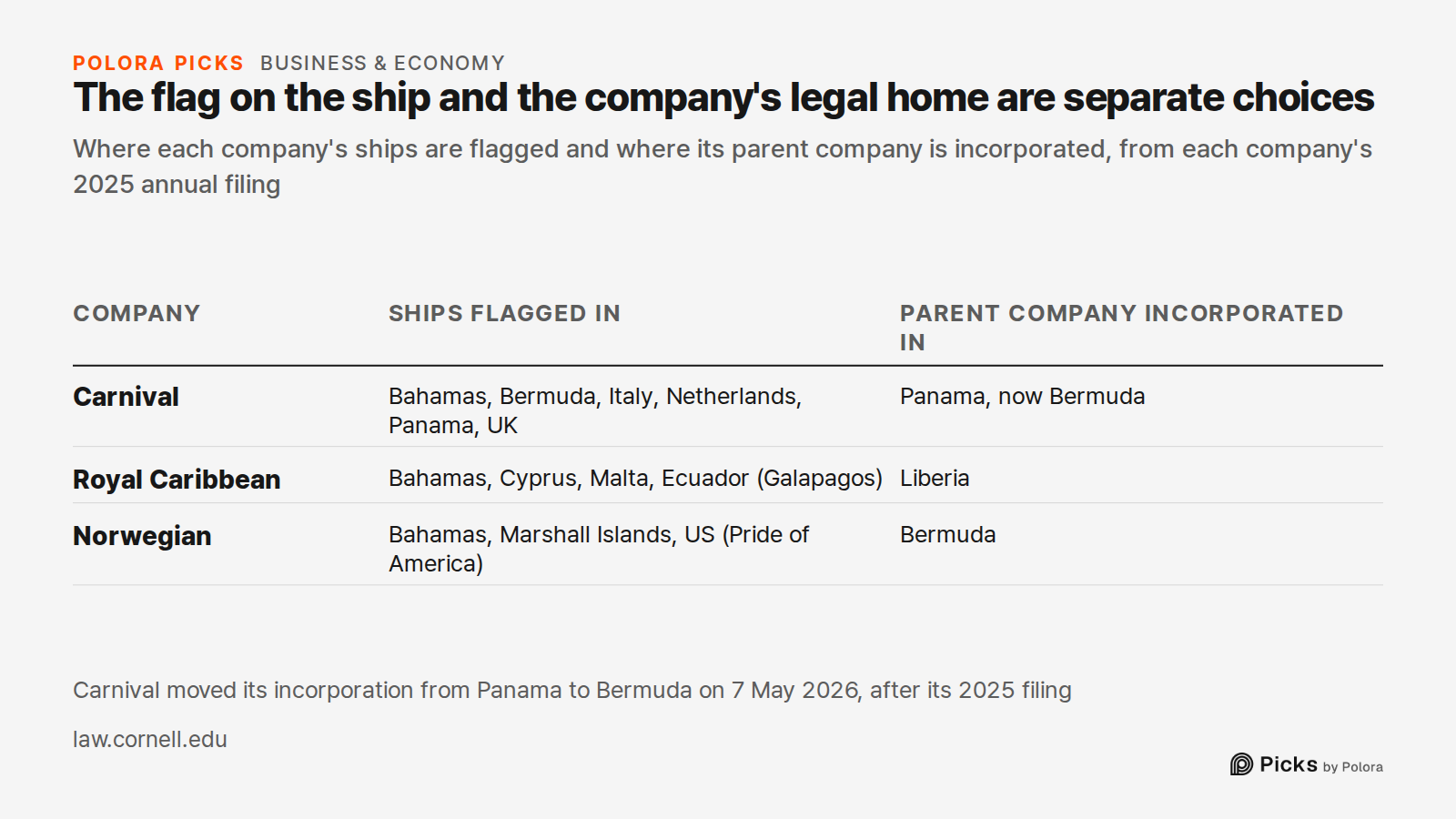
Carnival's annual report for its 2025 financial year says its ships are flagged in the Bahamas, Bermuda, Italy, the Netherlands, Panama and the UK. It says these flag states regulate health, environmental, safety and security matters for guests, crew and ships through international conventions, and that their own inspectors check compliance.
Royal Caribbean's ships are registered in the Bahamas, Cyprus and Malta, and in Ecuador for ships sailing in the Galapagos. Norwegian's are registered in the Bahamas and the Marshall Islands, apart from Pride of America.
Look at what is missing. Liberia, one of the three countries people name, does not appear in the flag lists these three companies give in their filings. That is a finding about these filings, not proof that no cruise ship anywhere flies the Liberian flag. Liberia turns up somewhere else.
The tax break follows the company, not the flag
Many people assume a cruise ship registers in Panama or the Bahamas to avoid tax. In the filings of the three big cruise companies listed in New York, the US tax exemption on their shipping income depends on a different choice : the country where the parent company is incorporated.
Section 883 of the US tax code exempts a foreign company's income from operating ships internationally, on two conditions that matter here. The country where the company is organized must give American shipping companies the same exemption, and the company's shares must trade regularly on an established market such as the New York Stock Exchange. Those tests are about the company, not the flag on the ship.
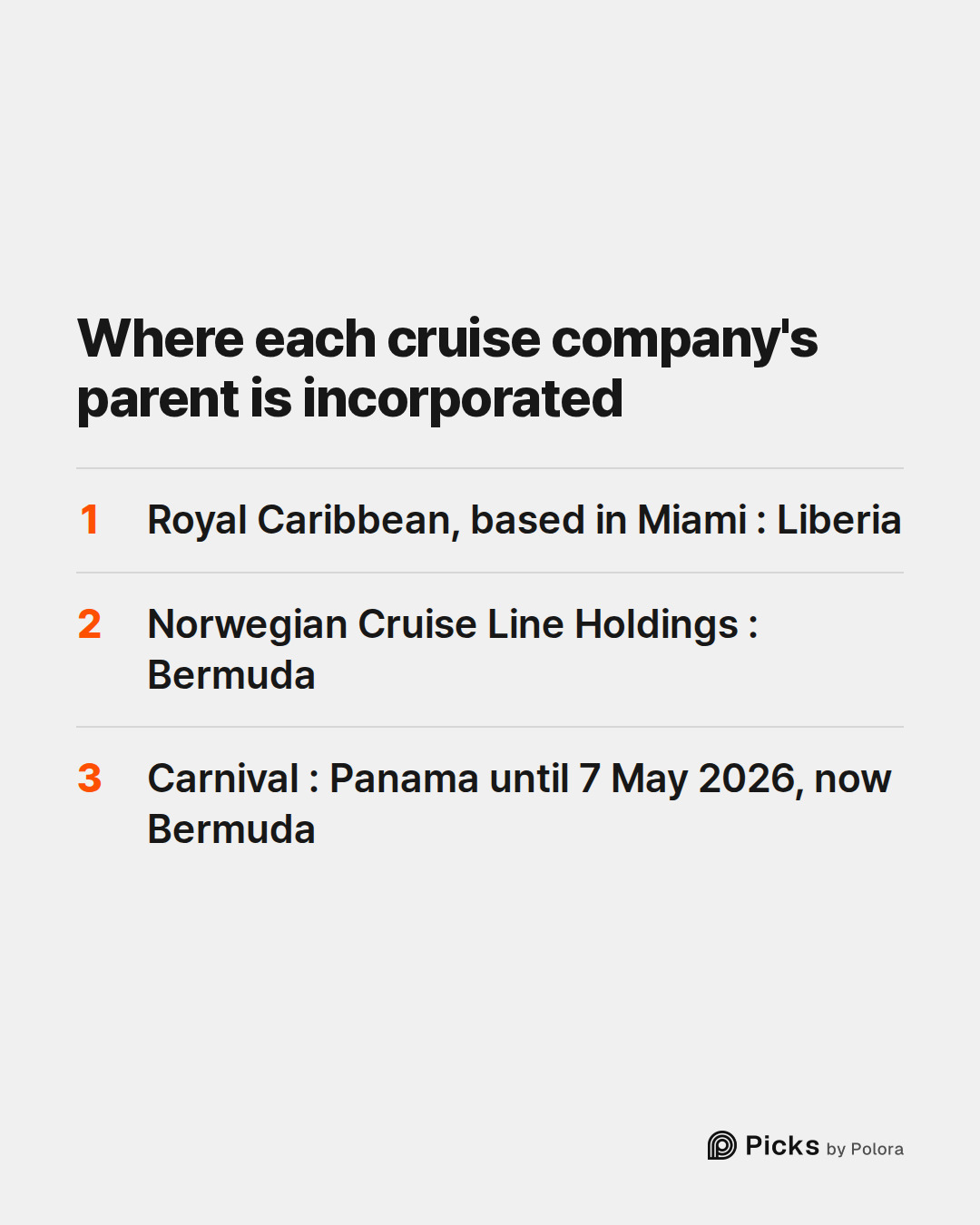
Royal Caribbean, headquartered in Miami, is a Liberian corporation, and its filing says it and its ship-owning subsidiaries qualify for Section 883 because they are incorporated in Liberia. Norwegian Cruise Line Holdings is a Bermuda company and makes the same claim on the basis of Bermuda. Carnival was a Panama corporation until 7 May 2026, when it completed a move of its incorporation to Bermuda and became Carnival Corporation Ltd., keeping its headquarters in Miami. Its 2025 annual report was filed before that move.
So Liberia and Panama sit in this story mostly as places where cruise companies have been incorporated, not as the flags on the stern. Incorporation does not settle every tax question on its own, either. Norwegian's filing says the income of its US-flagged ship is taxed in the US. The Treasury rules say selling or arranging single-day shore excursions is not part of operating ships internationally, so that income falls outside the exemption. How any company's income is taxed still depends on its own facts.
- 26 U.S. Code § 883, Exclusions from gross income
- 26 CFR § 1.883-1, Exclusion of income from the international operation of ships or aircraft
- Royal Caribbean Group Form 10-K, fiscal 2025
- Norwegian Cruise Line Holdings Form 10-K, fiscal 2025
- Carnival Corporation Form 10-K, fiscal 2025
- Carnival Corporation & plc completes unification of dual listed company structure and redomiciliation to Bermuda
- Carnival Corporation & plc completes redomiciliation to Bermuda (PR Newswire via Morningstar)
Why Liberia and Panama lead world shipping anyway
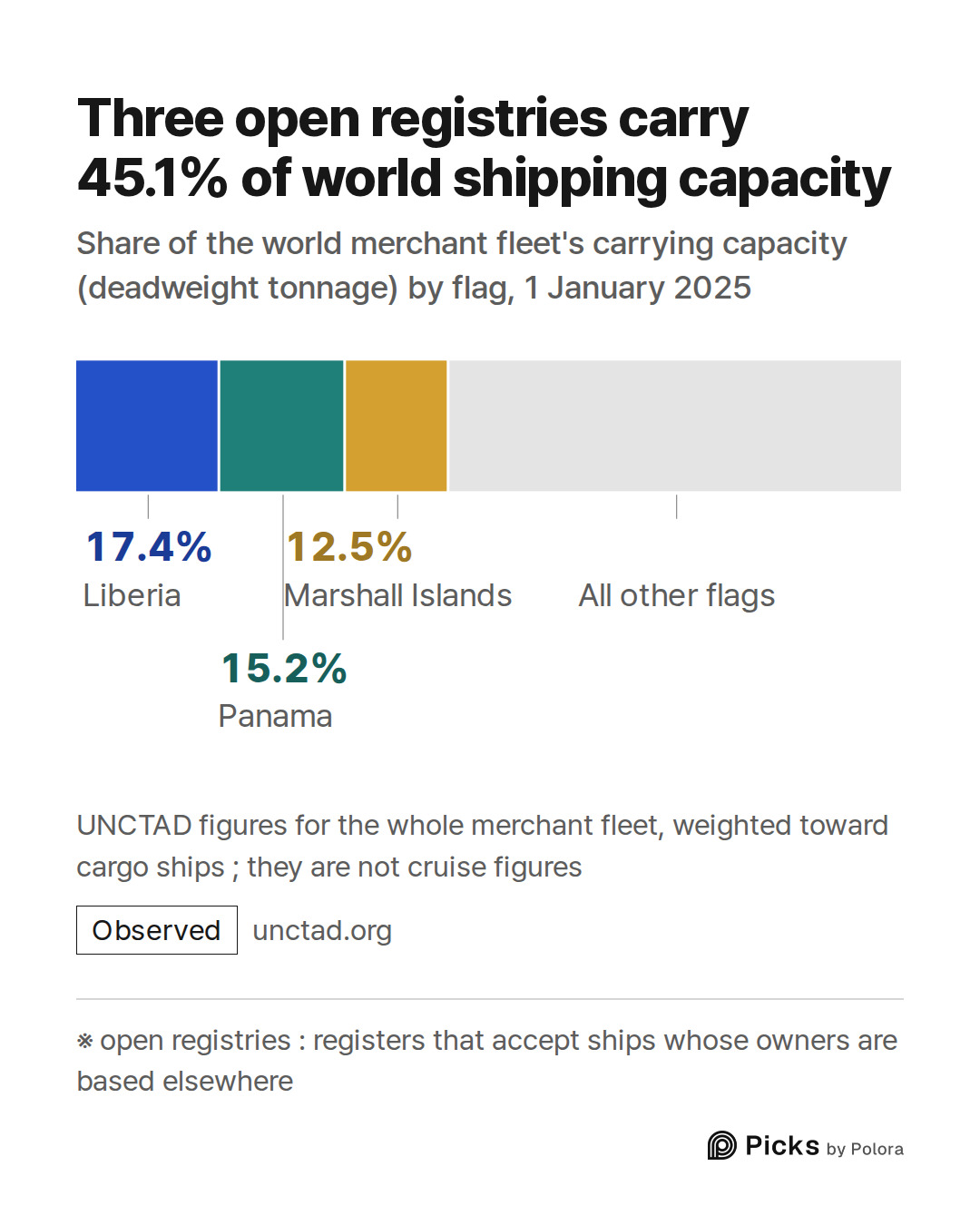
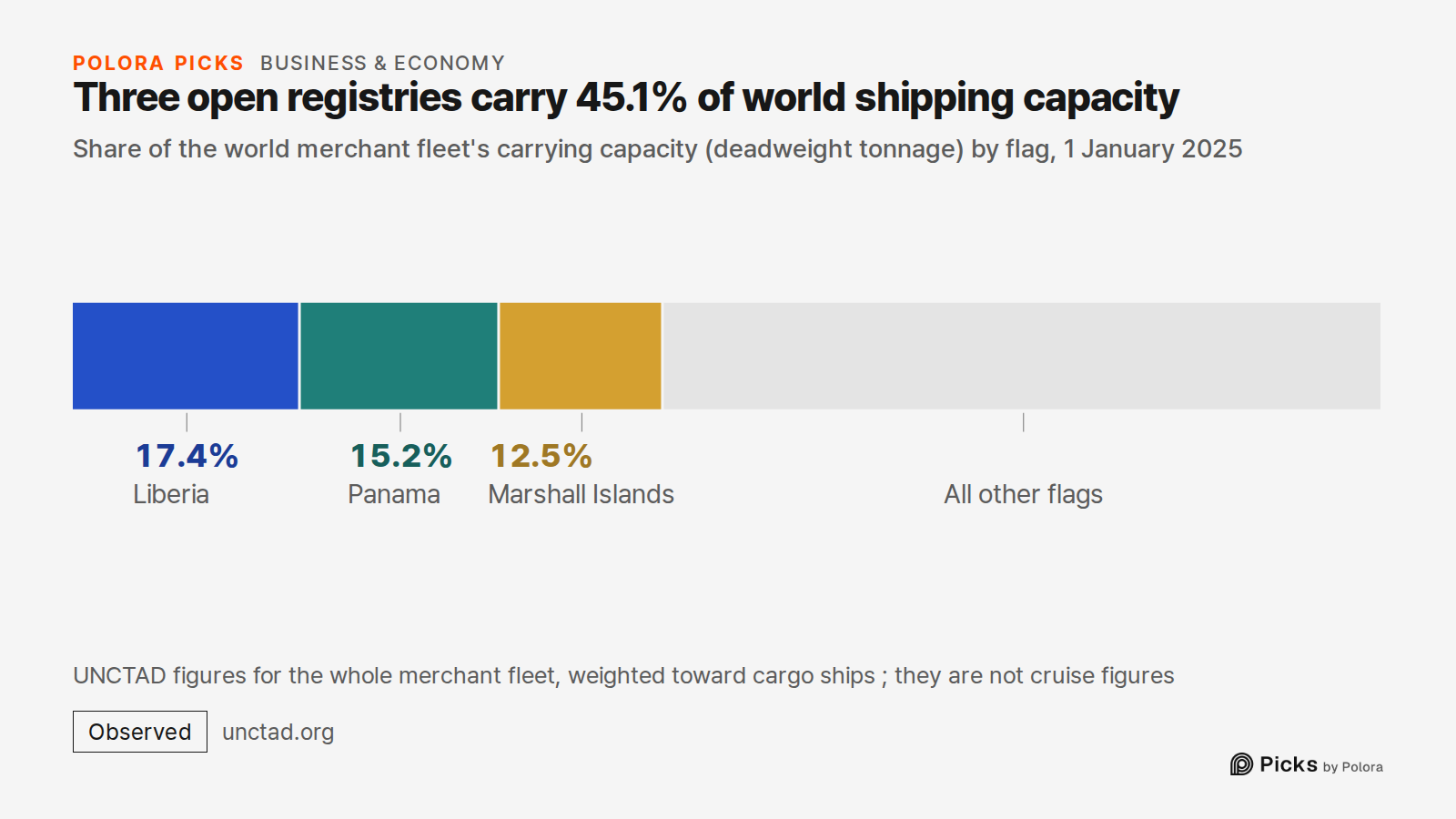
The countries in the question are not random. Registers that accept ships whose owners are based elsewhere, often called open registries or flags of convenience, dominate merchant shipping as a whole. On 1 January 2025, according to the Review of Maritime Transport 2025 from UNCTAD, the UN's trade and development body, ships flagged in Liberia held 17.4% of the world's carrying capacity, Panama 15.2% and the Marshall Islands 12.5%, together 45.1%.
Those figures measure the entire merchant fleet by deadweight tonnage, roughly how much cargo a ship can carry, so they are weighted toward cargo ships such as tankers, bulk carriers and container ships. They are not cruise figures, and they cannot show how many cruise ships fly the Liberian or Panamanian flag. In the cruise companies' own filings, the one flag all three share is the Bahamas.
- UNCTAD Review of Maritime Transport 2025, chapter 2
- UNCTAD Review of Maritime Transport 2025, overview
- UNCTAD Trade and Development Board document
- IMO, Registration of ships
- Carnival Corporation Form 10-K, fiscal 2025
- Royal Caribbean Group Form 10-K, fiscal 2025
- Norwegian Cruise Line Holdings Form 10-K, fiscal 2025
The fare is only part of what a cruise earns
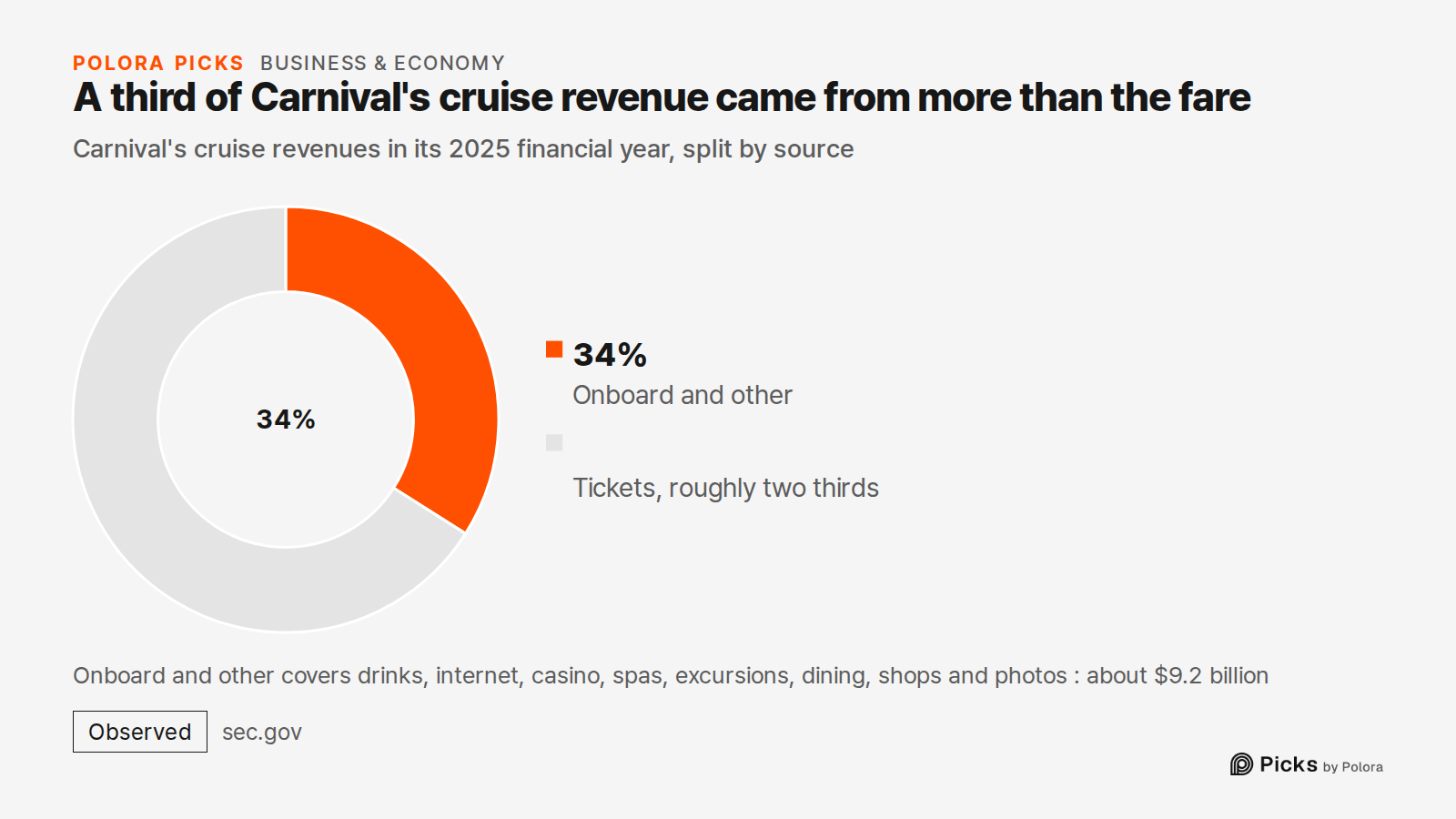
The business has one more layer people rarely see. Carnival's annual report for its 2025 financial year says 34% of its cruise revenues came from onboard and other goods and services : drinks, internet, casino gaming, spas, shore excursions, specialty restaurants, shops and photos. That was about $9.2 billion.
Many of these can be bought before boarding, singly or as packages. By that report, tickets made up roughly the other two thirds of what a cruise brings in.
Two choices, both legal, often mistaken for one
Registering ships abroad and incorporating the parent company abroad are both legal, and the companies describe both openly in their filings. They are separate decisions that touch different things.
The flag decides which country carries the main responsibility for a ship's safety, certification and crew rules, and a ship without the US flag is not bound by US shipbuilding and crewing requirements. It is still inspected in the ports it visits, including American ones. Where the parent company is incorporated goes a long way toward deciding whether its international shipping income is exempt from US tax. The country painted on the stern tells you who is mainly responsible for the ship. It does not tell you where the company pays tax.