Who actually makes the store brand?
Look at the store's own pasta, painkillers or dog food and most shoppers settle on one of two guesses. Either it is secretly the famous brand on the next shelf, or it is a cheap copy from some unknown factory. Neither guess holds up well.
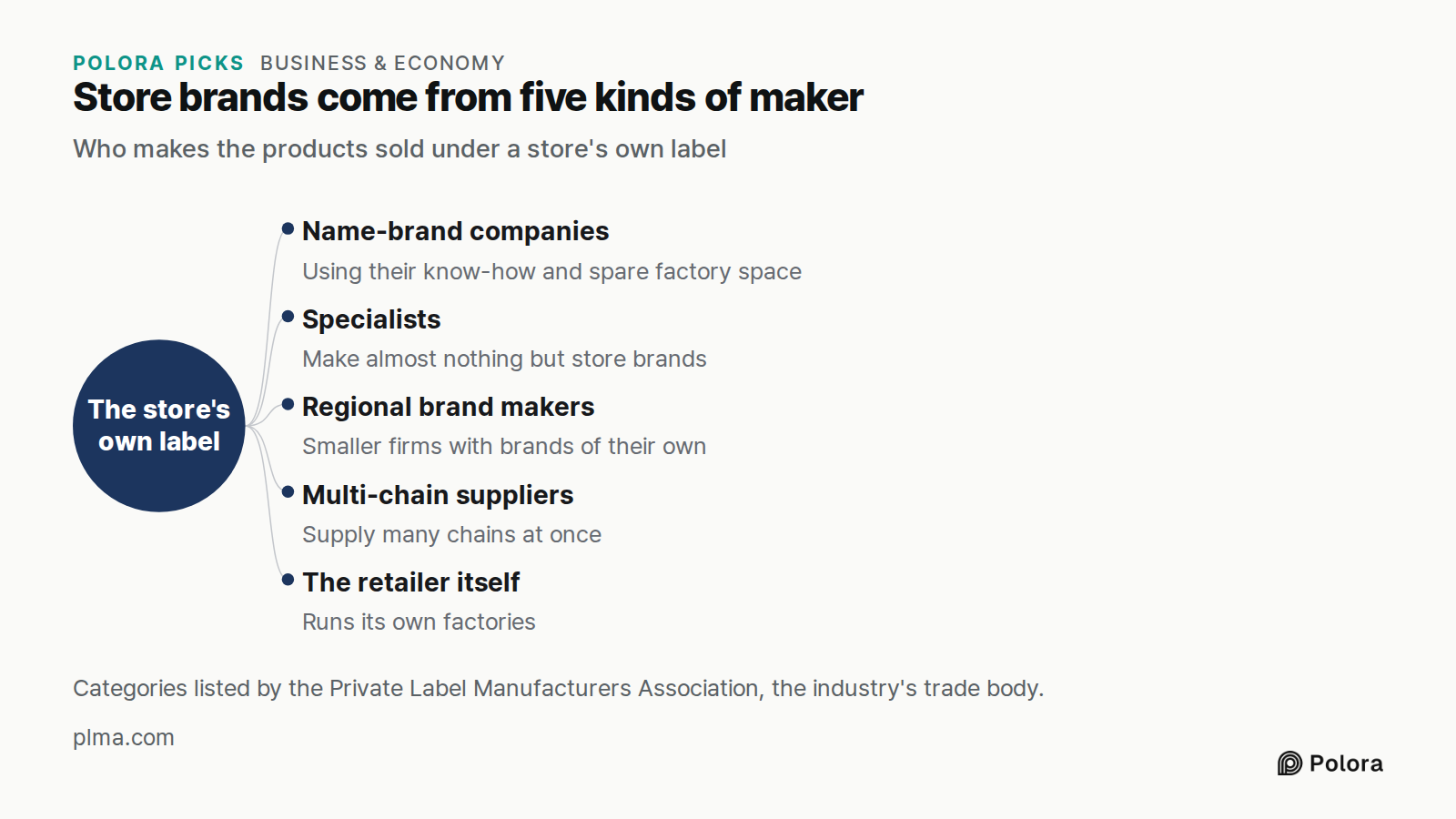
Store brands come from several kinds of maker. The Private Label Manufacturers Association, the industry's trade body, lists five : large name-brand companies using their know-how and spare factory space, small specialists that make almost nothing but store brands, regional brand makers, large firms that supply store brands to many chains at once, and retailers that run their own factories. A single store's shelf can draw on all five.
What the different makers have in common matters more than how they differ. The store commissions the product and sets the specifications it must meet, and the maker's name almost never appears on the box.
The one place researchers could see the full list
Supplier lists are hard to come by, so most of what people say about who makes store brands is guesswork. A 2024 study in the Journal of Marketing is an exception. Its authors obtained the names of the store-brand suppliers at six of Spain's largest grocery chains, including Mercadona, Carrefour and Dia, in more than 260 product categories, for 2012 and again for 2017.
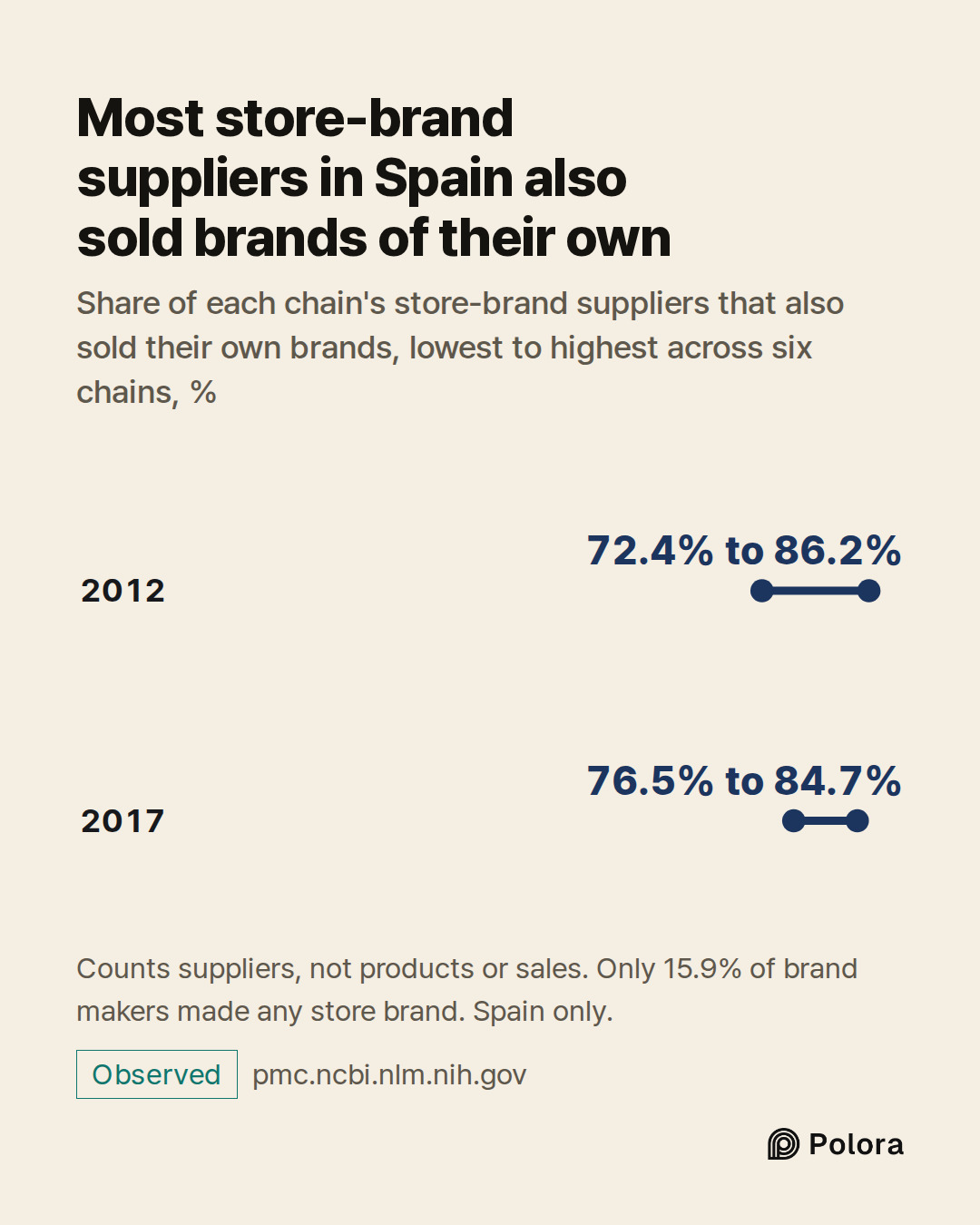
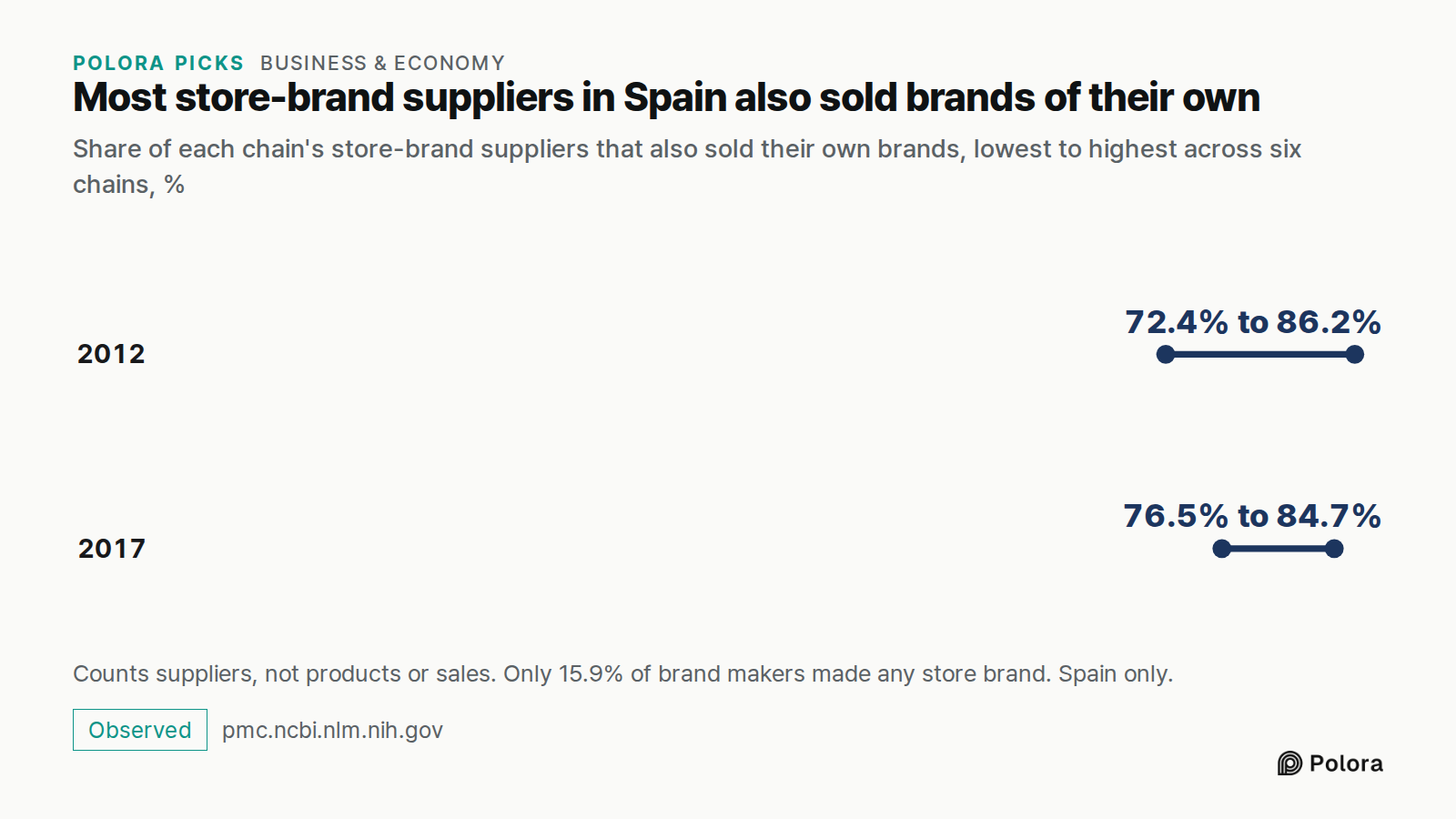
The result runs against the idea that store brands mostly come from anonymous specialists. In 2012, between 72.4 and 86.2 percent of each chain's store-brand suppliers were companies that also sold their own brands in Spain, and in 2017 the range was 76.5 to 84.7 percent. The authors call such companies dual branders and conclude that supplying store brands is "the rule, not the exception" for brand makers.
Several limits keep this from meaning the store brand is the famous brand in disguise. The study counts suppliers, not products or sales, and a "brand maker" here can be a small regional firm rather than the market leader next to it. Seen from the other side, only 15.9 percent of brand makers in the data, 554 of 3,480, made any store brand at all, and almost 30 percent of their store-brand contracts were in categories where they sold no brand of their own. And the study describes one country. No comparable list exists for American or other shelves, where what is known comes from scattered company filings and recalls.
Name-brand companies that list store brands in their own filings
In the United States, some brand makers say openly in their annual reports to regulators that they make store brands. McCormick, the spice company, says in its latest annual report that alongside its own brands it is "a leading supplier of private label items, also known as store brands." The same filing warns that unhappy customers might switch to "private label items that may or may not be manufactured by us."
Kimberly-Clark, the maker of Huggies, shows that doing this is a choice. Its 2025 annual report records the exit from its private-label diaper business in the United States, without naming any customer. The customer's name comes from news reports instead. Trade press, relaying a Bloomberg report, said Kimberly-Clark had stopped making Costco's Kirkland Signature diapers and that another manufacturer, First Quality, took over from January 2025. Neither Costco nor First Quality confirmed it publicly.
What a pet food recall revealed about one factory
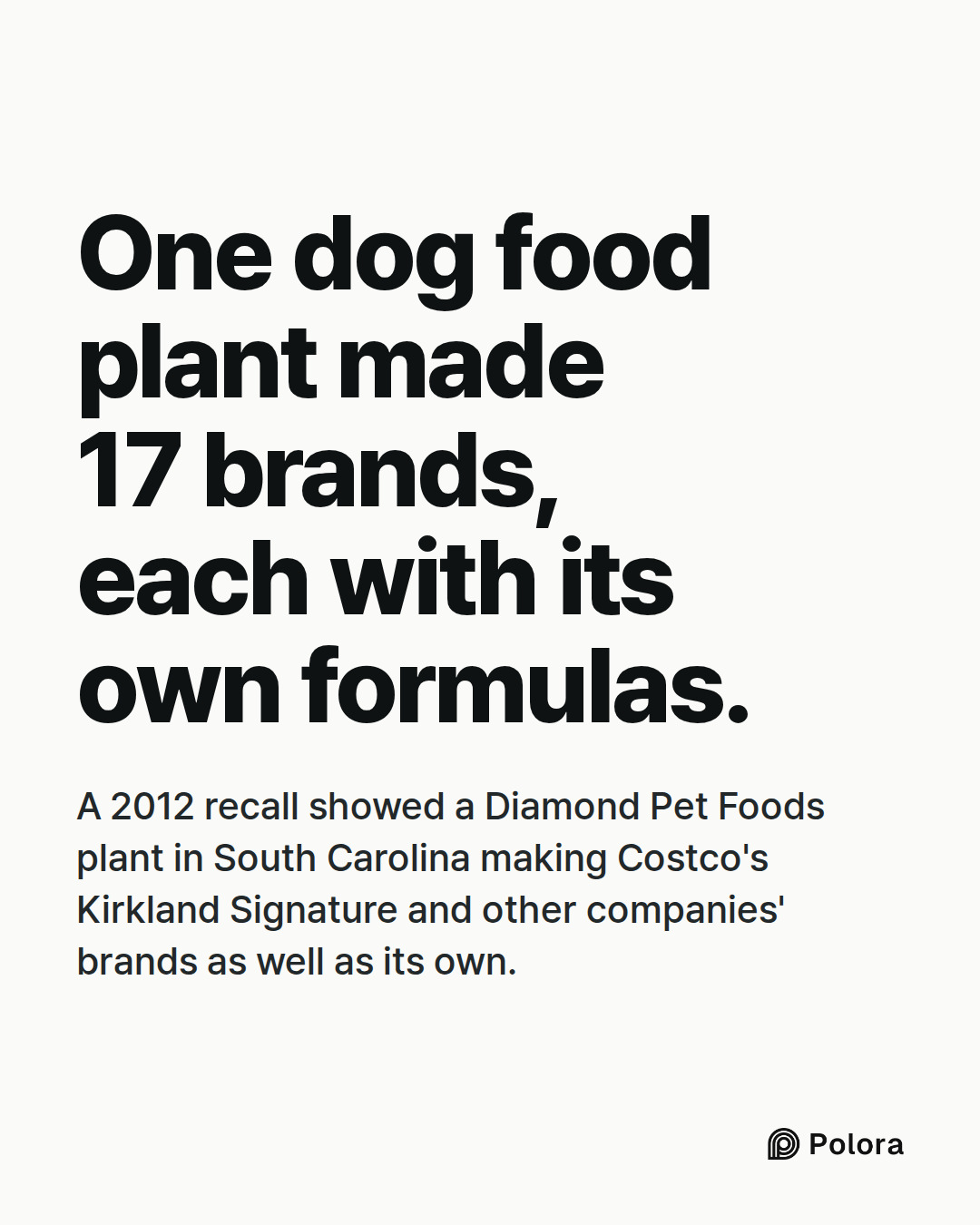
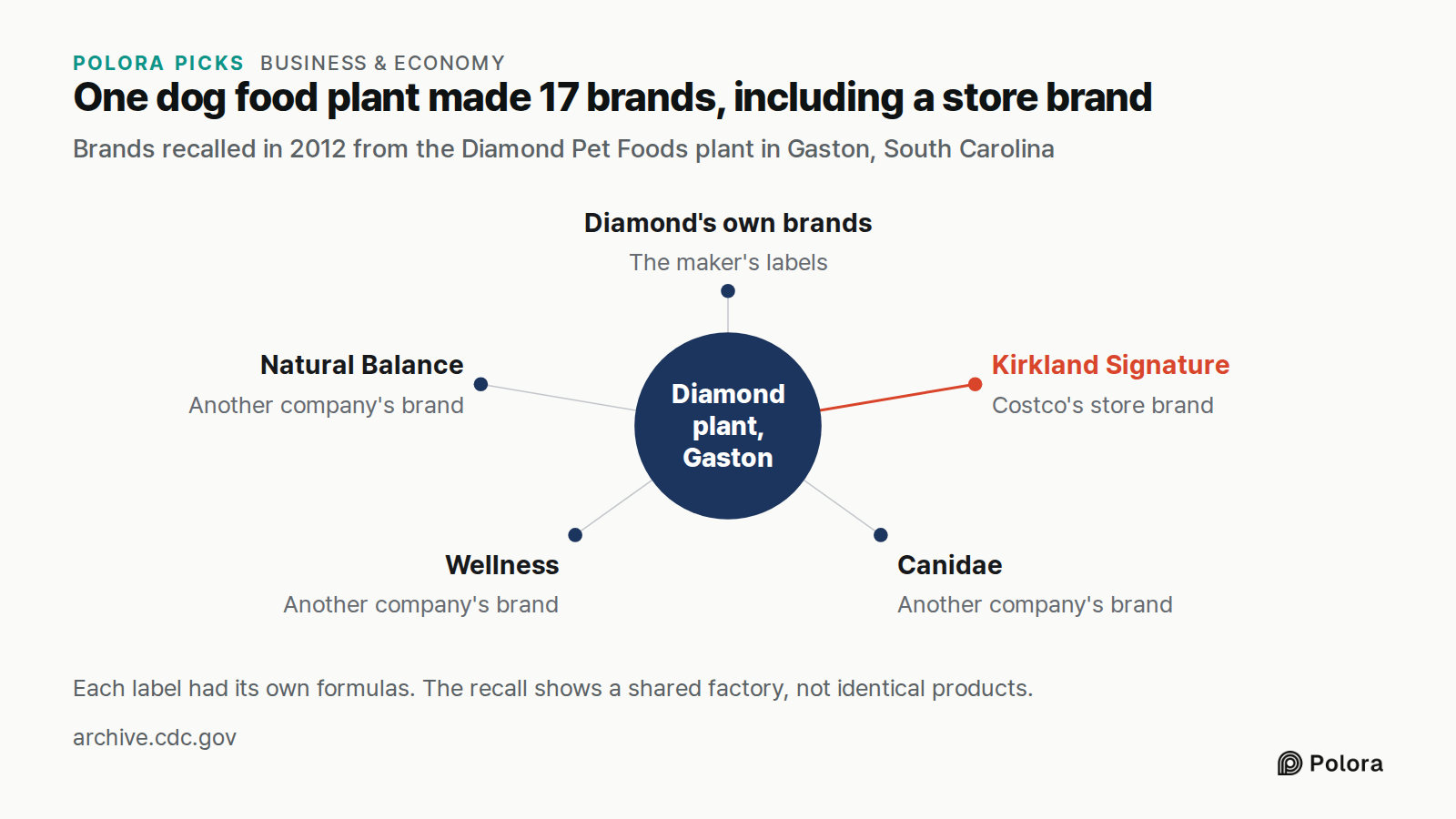
Sometimes the maker becomes public only when something goes wrong. In 2012, US health officials linked a Salmonella outbreak that sickened 49 people, 47 in the United States and two in Canada, to dry dog food from a single Diamond Pet Foods plant in Gaston, South Carolina. The recalls that followed covered 17 brands and more than 30,000 tons of food made there.
The recall notices showed how much came out of that one plant. They included Diamond's own brands, Costco's Kirkland Signature pet food, and brands that belonged to other companies, such as Canidae, Wellness and Natural Balance. Diamond turned out to be making store brands and other companies' name brands as well as its own.
This shows that one factory can make many labels. It does not show that the products inside were the same. Each label had its own formulas, and the recall notices listed them separately.
Specialists, and stores that run their own factories
Specialists exist too, and some are large. TreeHouse Foods describes itself as a leading private brands snacking and beverage manufacturer in North America, and Walmart alone accounted for about 23.9 percent of TreeHouse's sales in 2024. Its annual report notes that big retail customers rarely sign contracts with fixed purchase commitments and can usually end them at will.
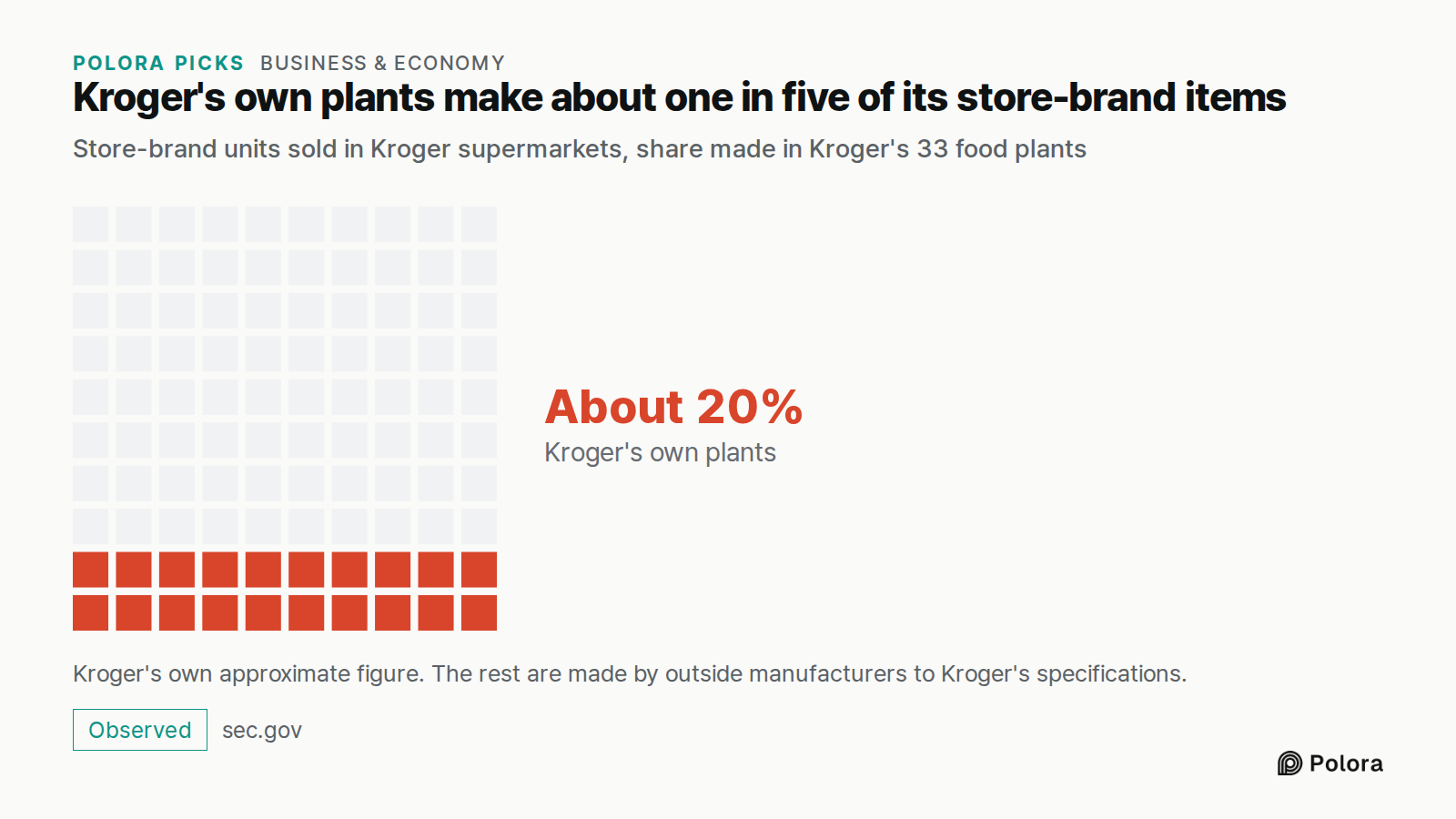
Some stores make their own. Kroger owns 33 food production plants, mostly bakeries and dairies, which supply about 20 percent of the store-brand units sold in its supermarkets. The rest, Kroger says, "are produced to our strict specifications by outside manufacturers." That phrase sums up how the business works at Kroger and, by most accounts, elsewhere : the maker produces, but the store sets the specifications.
Why a famous brand would make its own rival
Making a store brand means making a cheaper competitor to your own product. Research on dual branders lists the reasons brand makers do it anyway. It earns money from factory space that would otherwise sit idle, especially when their own brands are not growing. It also wins goodwill with the store that decides how much shelf space their brands get.
That goodwill shows up in the Spanish data. When a brand maker started supplying a chain's store brand, its own brands gained wider distribution on that chain's shelves. When it stopped, they lost some. Their market share did not move either way.
The same research names the costs. The store gets a close look at the maker's costs and new products. And if shoppers learn that a brand maker also fills the store's boxes, they may start to doubt that the brand is worth its higher price. The authors note that while everyone knows dual branding happens, which company supplies which store is "generally a well-kept" secret.
How a store brand makes the name brand cheaper for the store
The store's side of the bargain is less obvious. Studies of supermarket data find that retailers' percentage margins are higher on store brands than on name brands. A store brand sells at a lower price, though, so the profit in dollars on each item can still be smaller. Neither finding means every store brand earns the store more.
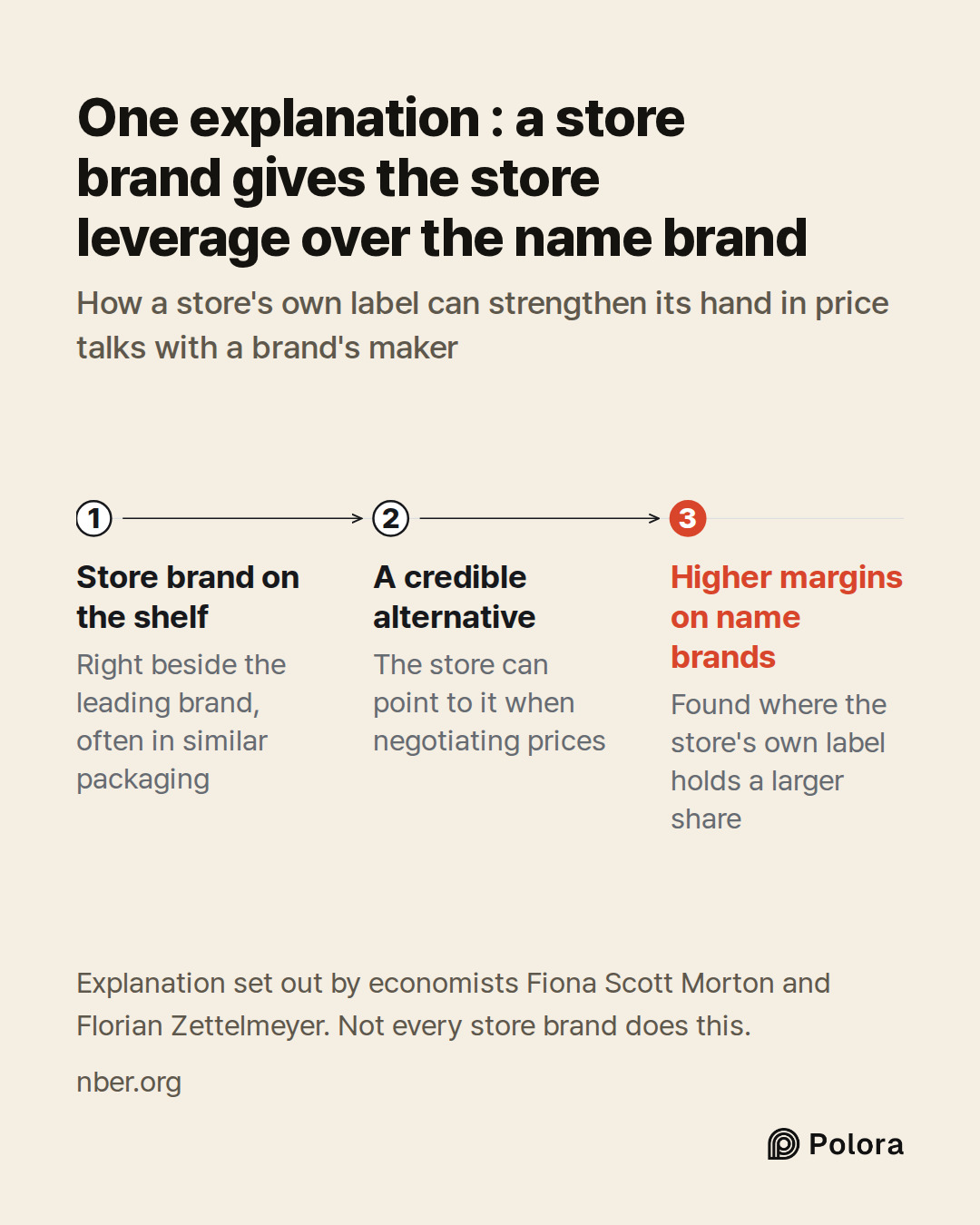
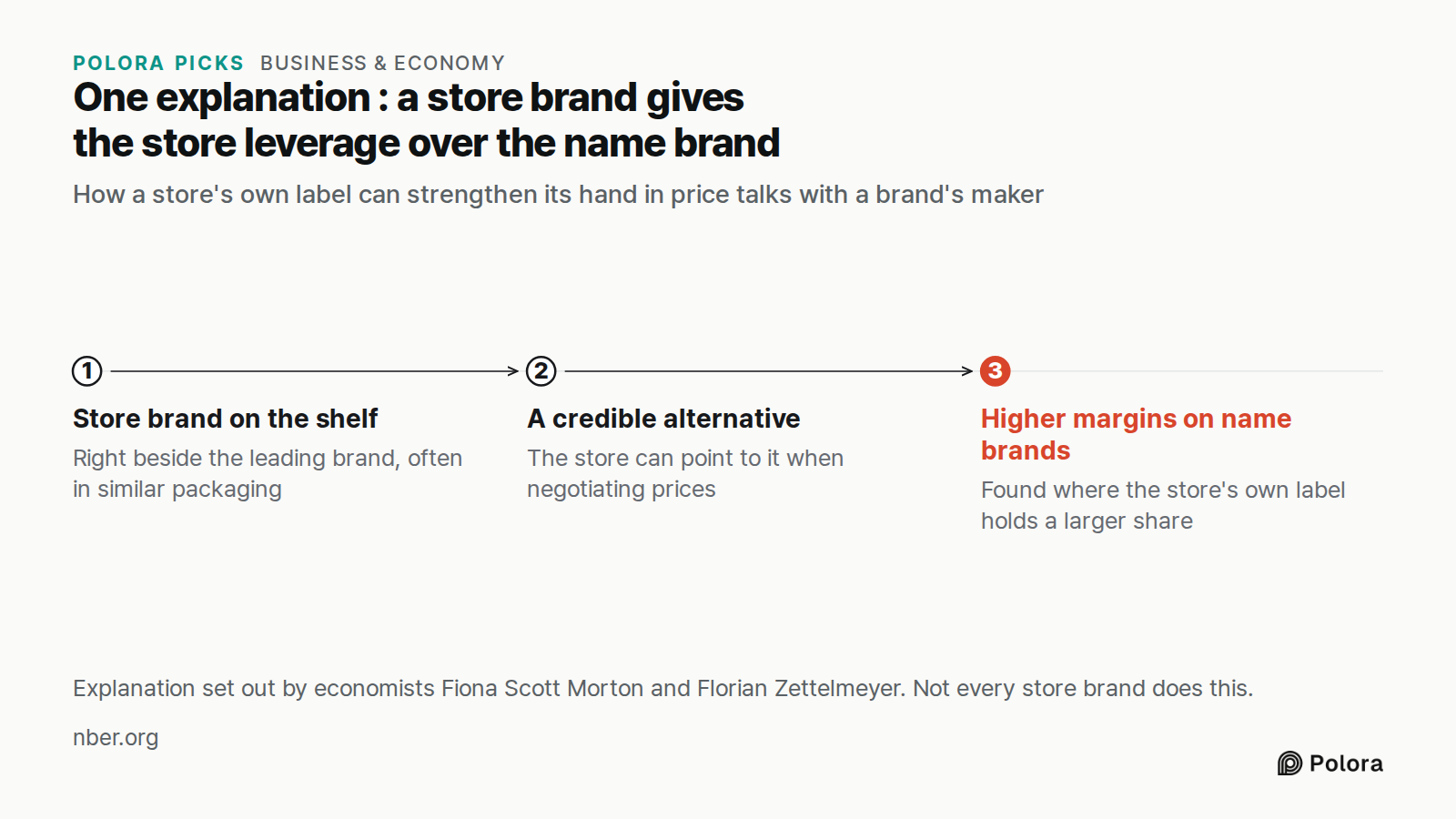
The less familiar effect is on the brands beside it. Several studies find that where a store's own label holds a larger share, the store also earns higher margins on the name brands. One explanation, set out in a paper by economists Fiona Scott Morton and Florian Zettelmeyer, is bargaining. A store brand placed right next to the leading brand, often in similar packaging, gives the store a credible alternative when it negotiates prices with that brand's maker. Their data showed stores were more likely to launch their own label in categories where the leading brand was strongest.
Leverage like that works only if the store brand belongs to the store. The store owns the label and the shoppers' trust, and it can move production to another factory. A shopper who saw it as some other company's product sold under a new name would have less reason to stay loyal to the store's label. None of these studies asks retailers why they keep suppliers' names off the box, and no retailer has given that reason on the record. The link is an inference, but every incentive the studies document points the same way.
One in five dollars in America, nearly two in five in Europe
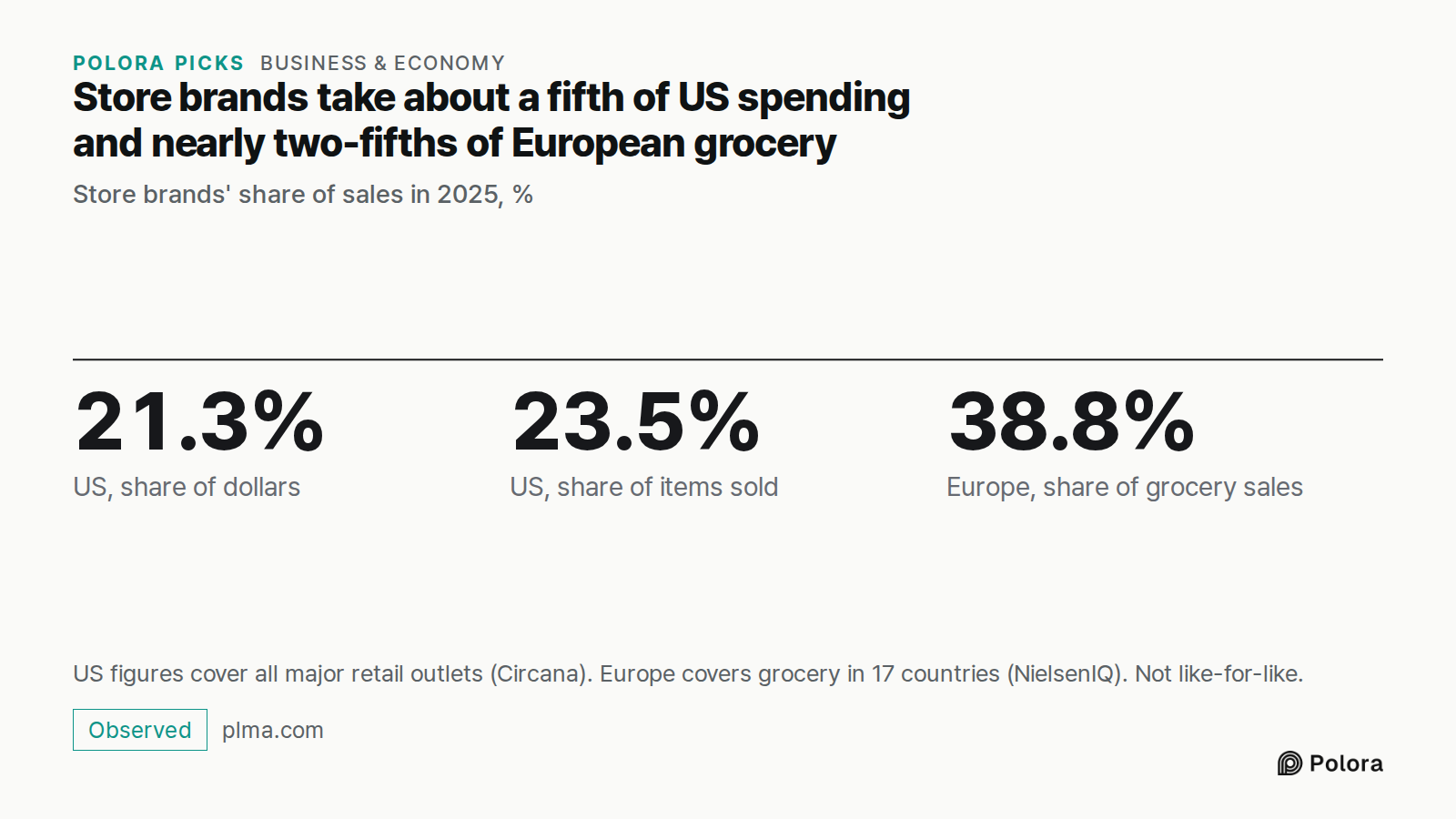
This is not a niche. Across all major US retail outlets, from supermarkets and drugstores to mass merchandisers, club stores and dollar stores, store brands sold a record 282.8 billion dollars in 2025, according to the trade association's figures from the data firm Circana. That was 21.3 percent of dollar sales and 23.5 percent of items sold, both records. In the first half of 2026, their share of items rose again to 23.8 percent, while their share of dollars was 21.2 percent, just below the record.
Europe goes further, though the figures measure something narrower. NielsenIQ figures for grocery alone in 17 monitored countries put store-brand sales at 387 billion euros in 2025, a 38.8 percent share of that market. Switzerland was above 50 percent, Portugal at 48.2 percent and Norway at 23.6 percent. Because one count covers all of US retail and the other only European grocery, the two shares are not a like-for-like comparison.
What the box can and cannot tell you
The store brand may well come from a company that sells its own brand, sometimes in the same aisle. That still does not make it the same product, and it does not tell you that the name brand beside it is the one that company makes. The store writes the specifications, a single plant can make many different formulas, and nothing public shows that a given store brand matches a given name brand inside. For any particular pair on the shelf, the answer is usually unknowable without evidence naming the maker.
The research suggests why the maker's name stays hidden : it works for both sides. The brand maker protects the price its own label commands, and the store keeps a product it controls, earns a higher percentage margin on and can use against the brands beside it. The rare times the public sees who makes what are recalls, company filings, and the occasional researcher who gets hold of the supplier lists.